One of the experiences we always inflict on our visitors is the tour at the Willie Creek Pearl Farm. It’s really interesting, I love it. Our current visitor took a pass on the tour but had heard it was a great place to fish. Intelligence was, low tide. So we headed out first thing this morning. He caught nothing … should have taken the tour.
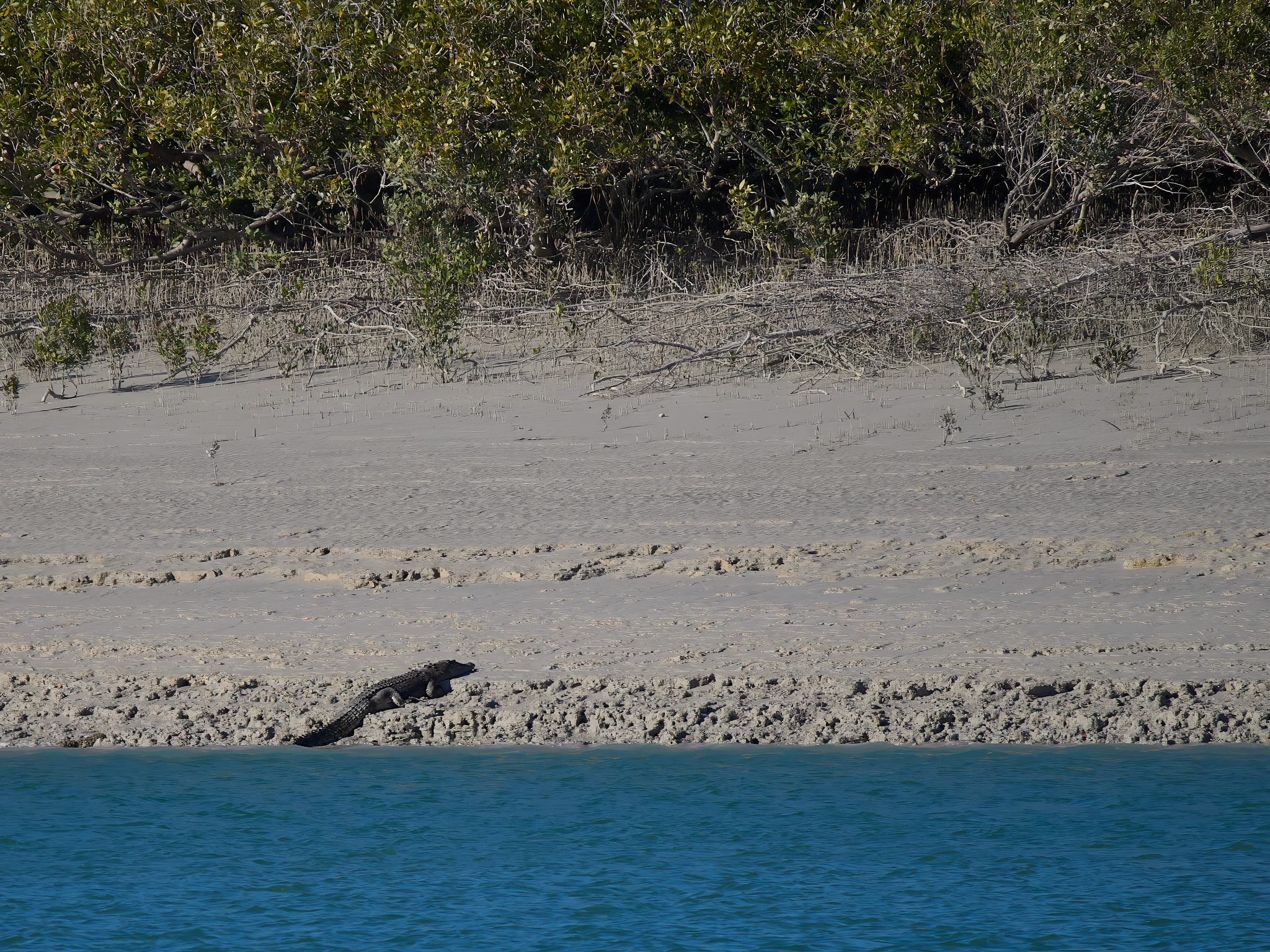
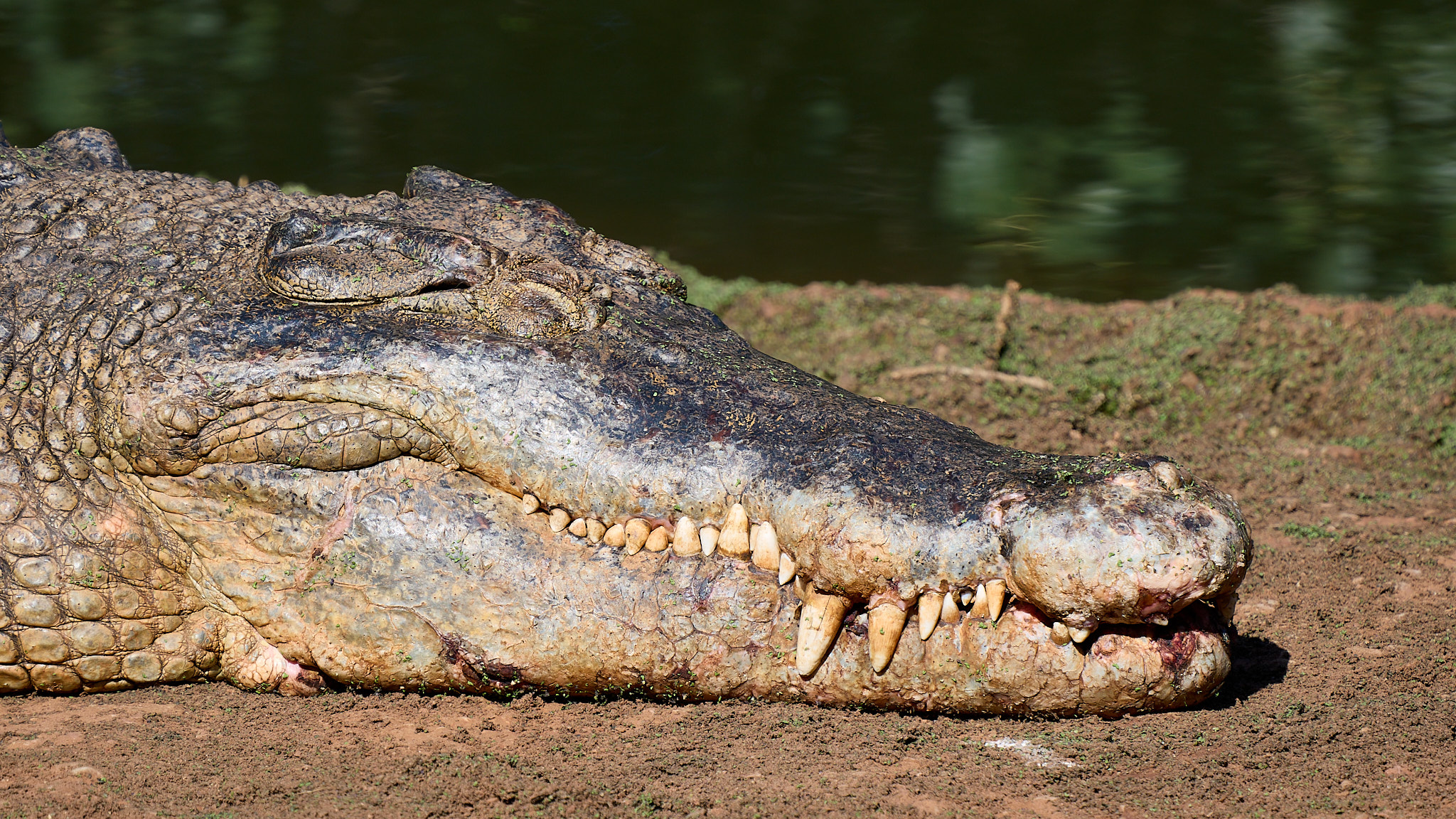
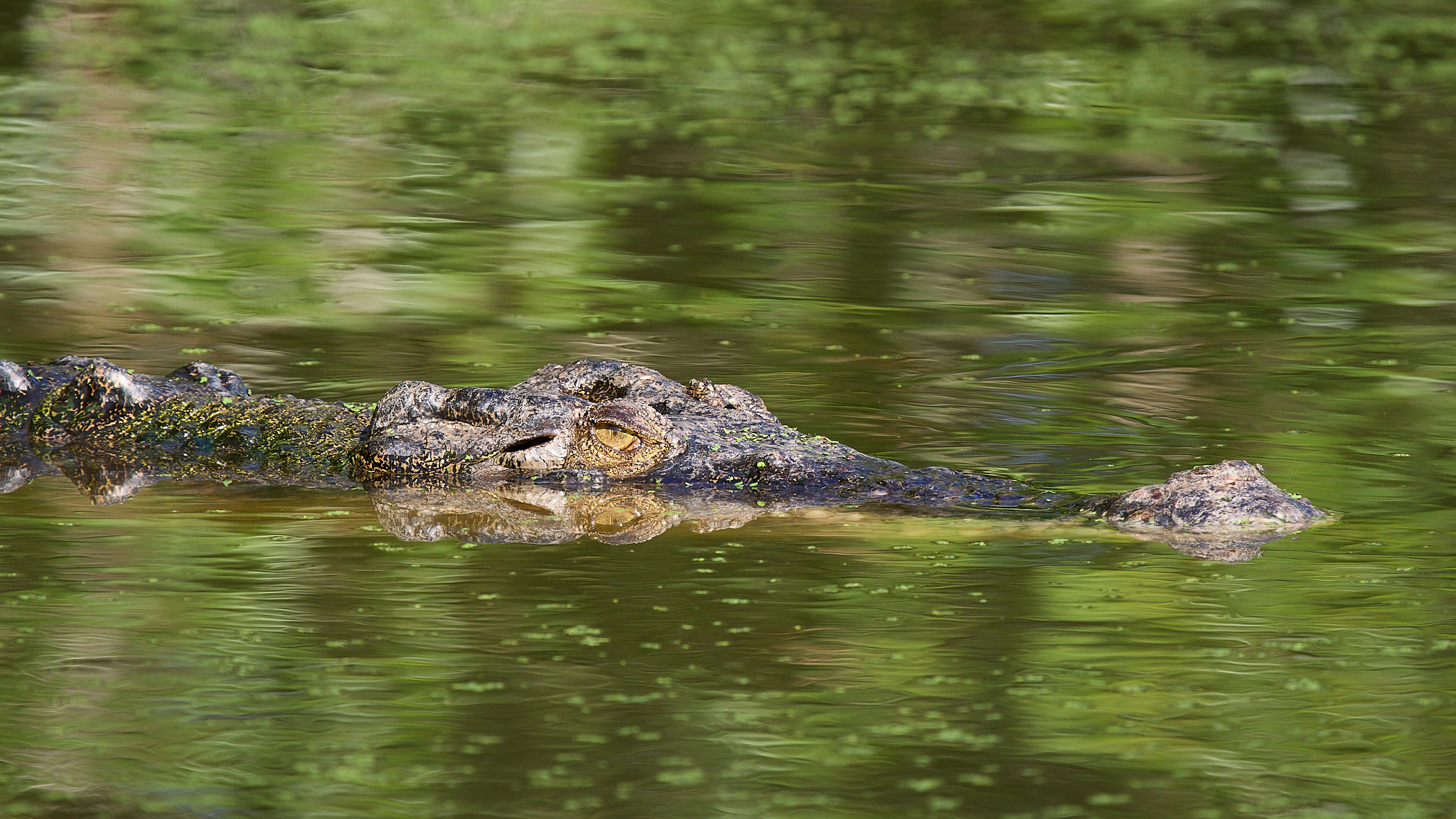
I went for a wander and soon had the perfect view of a crocodile hauled out on the beach. Not, perhaps perfect for a photo, but perfect for an encounter. The best place for closer encounters is the Malcolm Douglas Wildlife Park. We were there recently. A top priority for a croc farm is ensuring the visitors are not eaten by the residents. Photography is not a high priority at our croc farm, too many fences … but you can hold little crocodiles (adorable). So, compare and contrast crocodile photography wild versus captive (you shouldn’t have any trouble working out which is which) …
I took my dearly beloved to the Willie Creek Pearl Farm on her birthday once. You’ll never guess what I bought her. It was a hot day and she really appreciated it. The ice cream that is.
We have a visitor at the present time escaping the deep freeze of a Victorian winter. Just as small children are an excellent excuse to go to the zoo, a visitor is an excellent excuse to go to the croc farm and to head out whale watching. Having inflicted these activities on our guest we gave him the choice of what to do next. His response was to swim at Cable Beach.
So off we went to Cable Beach and found the beach closed. Someone had detected the presence of Irukandji … the hard way. This is much more of a wet season phenomenon so they were extremely unlucky.
Back in the days when the pearling was done by men in old fashioned diving helmets most of their skin was well covered but from time to time a diver would be stung by nobody knew quite what leading to extreme pain, vomiting and a profound sense of dread and depression.
On the opposite side of the continent, north of Cairns, beach goers were similarly affected in the summer months. This was in the ancestral land of the Irukandji People and in 1952 Hugo Flecker gave it the name Irukandji Syndrome. What caused it was a puzzle. Subsequently Dr Jack Barnes, a general medical practitioner, thought he had the answer in a casserole dish, a tiny jellyfish retrieved from the waters of Palm Cove.
Jack would have been familiar with Koch’s Postulates published in 1890 when medicine was coming to grips with which agent caused which disease. The third postulate requires that the supposed agent cause the appropriate disease when a healthy organism is exposed to it. The good doctor’s activities had drawn a crowd so right there and then, on the beach, he called for volunteers to make contact with the jelly fish.
Enthusiasm was limited. In the end Jack himself, his 10 year old son Nick and a Lifesaver named Charles “Chilla” Ross elected to be stung. There is some delay before the onset of stomach cramps, vomiting and severe pain but it wasn’t long before Koch’s postulate was satisfied. Jack drove into town to obtain medical care for the trio from his colleagues. It was December 1961, medical experiments are done a little differently these days – now you have to sign a consent form first.
Quod erat demonstrandum and the jellyfish was named Carukia barnesi, in honour of 10 year old Nick I hope. It has subsequently been joined by perhaps as many as 15 more similar species under the catch all name of Irukandji Jellyfishes.
They are tiny (about the size of a finger nail) and transparent. They have 4 tentacles, the stinging organs (nematocysts) are found on the tentacles and around the bell. The toxin is extremely potent. In 2020 some 23 people were stung in the vicinity of Palm Island, Queensland. Seven required hospitalisation, none died but deaths have occasionally been reported.
Many of the nematocysts at the site of a fresh sting are not discharged. Rinsing them off seems like a good idea. There is a lively and unresolved debate as to whether this should be with vinegar or not but your mother was right – don’t rub it.
I have not photographed Irukandji nor am I rushing off to Cable Beach to try and catch one but I have scoured the internet and shamelessly filched a couple of photos …
A trip to the beach in the last few weeks has revealed a massive influx of jellyfish (and tourists). These particular jellyfish (and many of the tourists) have a distinct red colouration.
The third shot was achieved by getting in the water and shooting upwards including the reflection from the surface.
Calling, once again, on the amazing resource that is iNaturalist I believe that this is Crambione mastigophora common enough in the Indian Ocean and known to “bloom” from time to time. The dome grows to about 15cm in diameter. They feed on invertebrates and small fish. When prey come in contact with those tentacles they are stung and then transferred to the mouth under the dome.
The common name given by iNaturalist is Sea Tomato but that is shared by some other critters including a sea anemone in the Mediterranean. Elsewhere I have found it called Tomato Jellyfish which I think a better choice.
As I point out from time to time Roebuck Bay is the Shorebird Capital of Australia. The shores are in part accessible by car from Broome. Other parts are more of a challenge to reach and are therefore less well studied and less frequently disturbed. Bush Point is 22km due south of the Port of Broome and not easily accessible except by boat. That’s not to say that other means have never been employed. Over the years hovercraft and 4WD vehicles have been used but boat is the most practicable. However boat does have the drawback of limiting time ashore to about one hour on each side of high tide. It’s the 10 metre tides that expose the mud that feeds the birds that make the bay the Shorebird Capital of Australia. Deal with it.
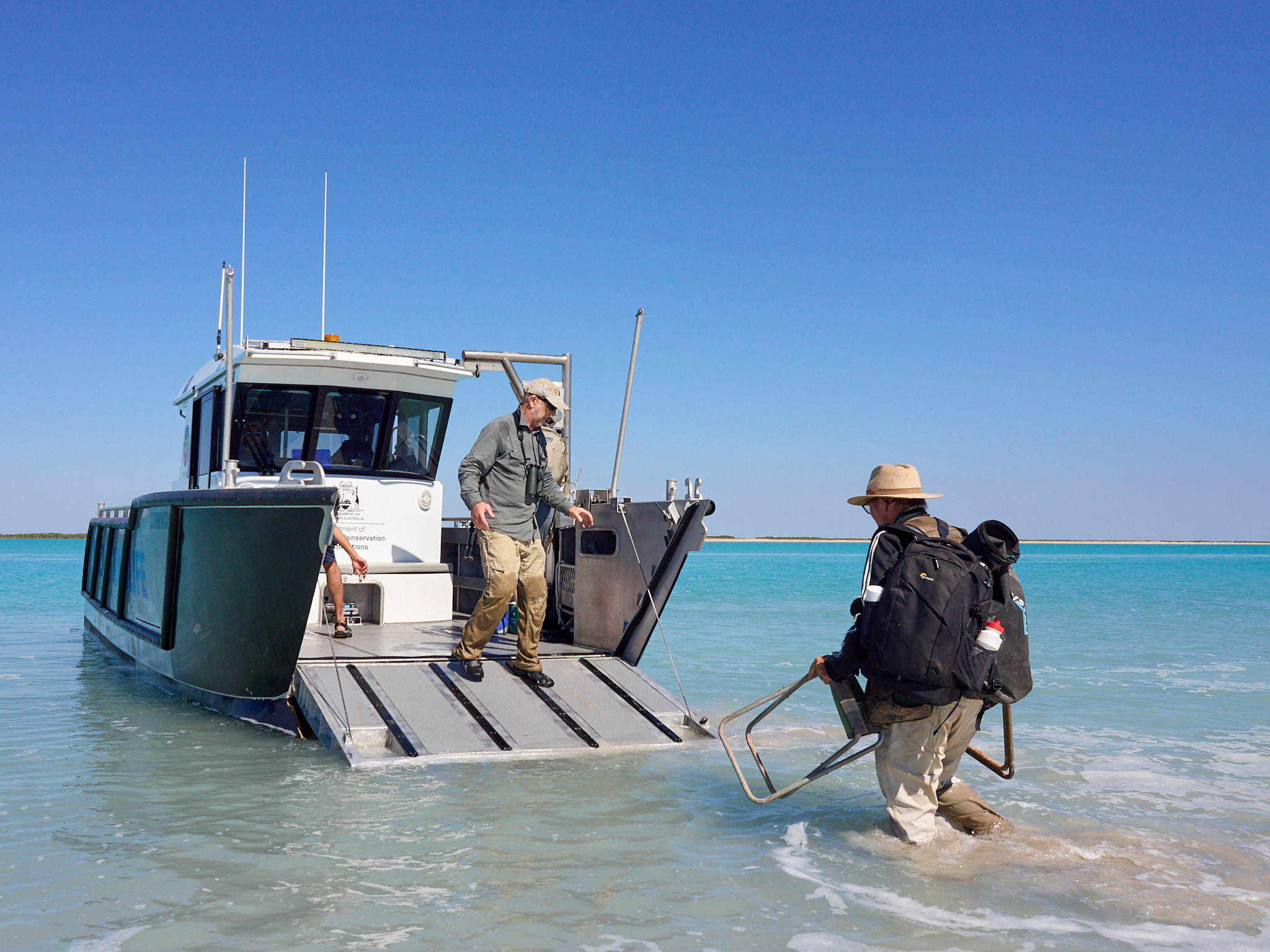
The other day I had the enormous privilege to accompany a party of keen volunteers ably led by Chris Hassell of the Australian Wader Studies Group on the regular winter count at Bush Point. The project has been running for 24 years. Parks and Wildlife provided the boat, a landing craft style catamaran that ripped along effortlessly at 25 knots across the bay. The front was lowered and we stepped off into a few inches of water, not a crocodile in sight.
A winter count is revealing. A migratory shorebird with any intention of breeding is somewhere between here and Siberia. Birds on the beach are mostly too young to breed. The age that they reach maturity varies from species to species. Some species will return north in their first year others spend one or more years in the southern sunshine before going. As a rule the bigger birds wait longer than the smaller ones. If summer counts are available comparing the two gives some indication of breeding success over the recent past.
Our priorities were straight forward. First and foremost to count the migratory shorebirds, secondly the resident shorebirds and we were to avert our gaze from anything not a member of the Charadriformes. This is ornithology, guys, not merely bird watching. We were divided into two groups and sent forth to count. Easy …
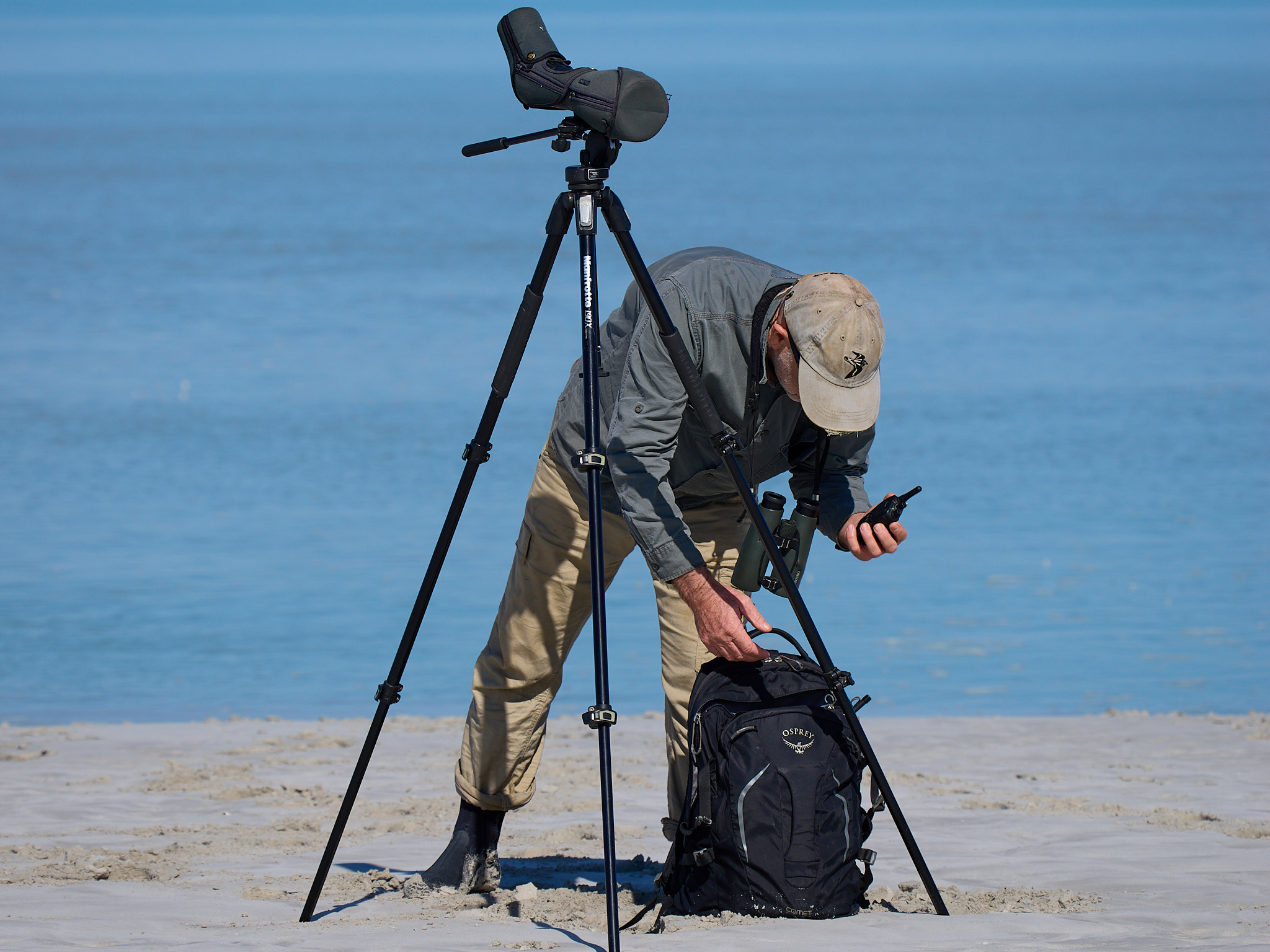
Well, easier when they’re on the ground and keeping them on the ground means a little stealth and maintaining a considerable distance. Identification and counting is done with telescopes.
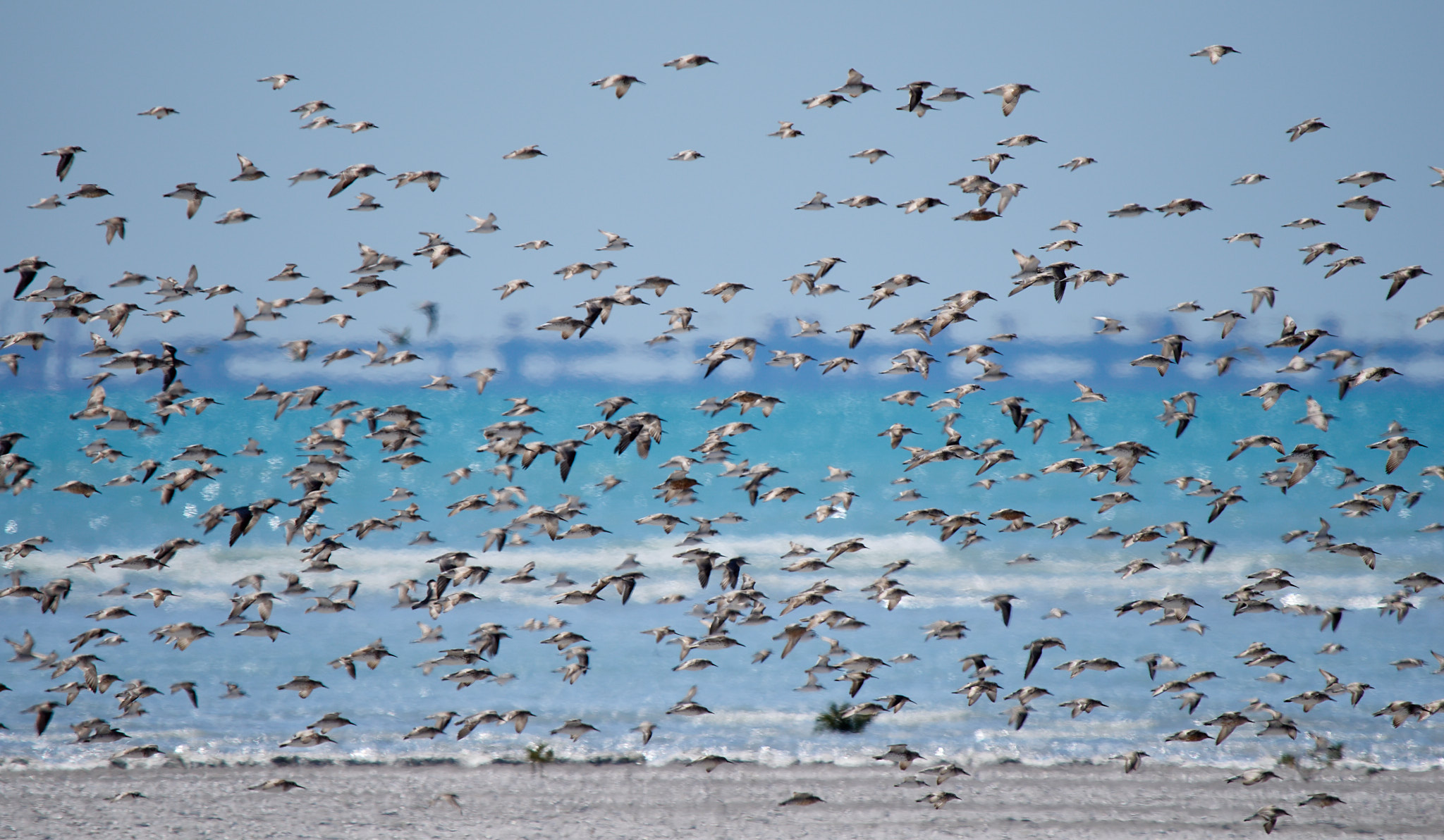
Opportunities for photography were very limited. If a group flew by you might just get a shot …
Great Knots and a Terek Sandpiper
An hour after high tide the volunteers reconvened for the journey home.
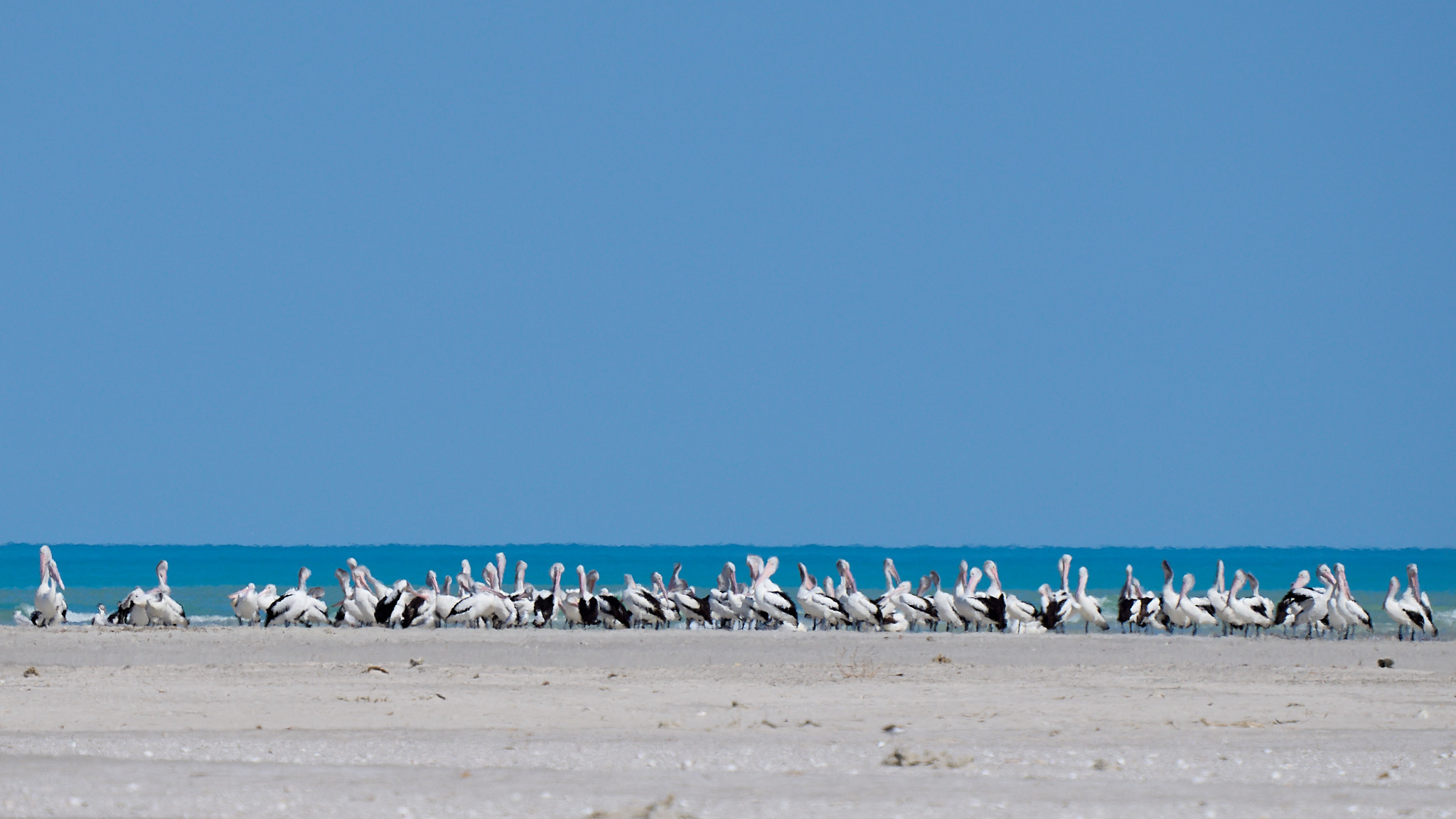
So what did we find? Two parties covered about 4km of beach amassing a total of 13,400 individual migratory waders representing 20 species. Red-necked Stints were the most numerous and these would be in their first year of life. Whimbrel and Great Knot were well represented.
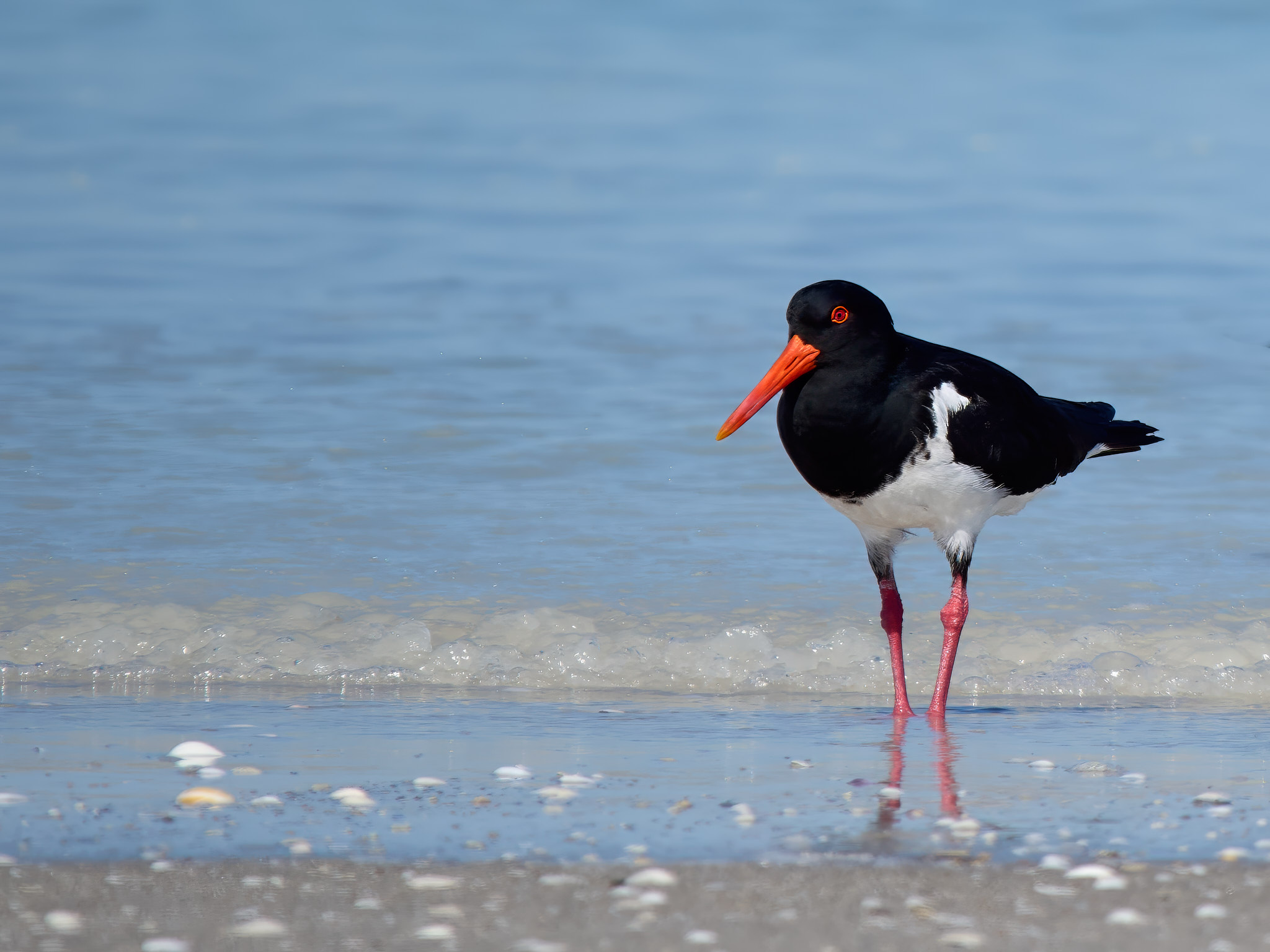
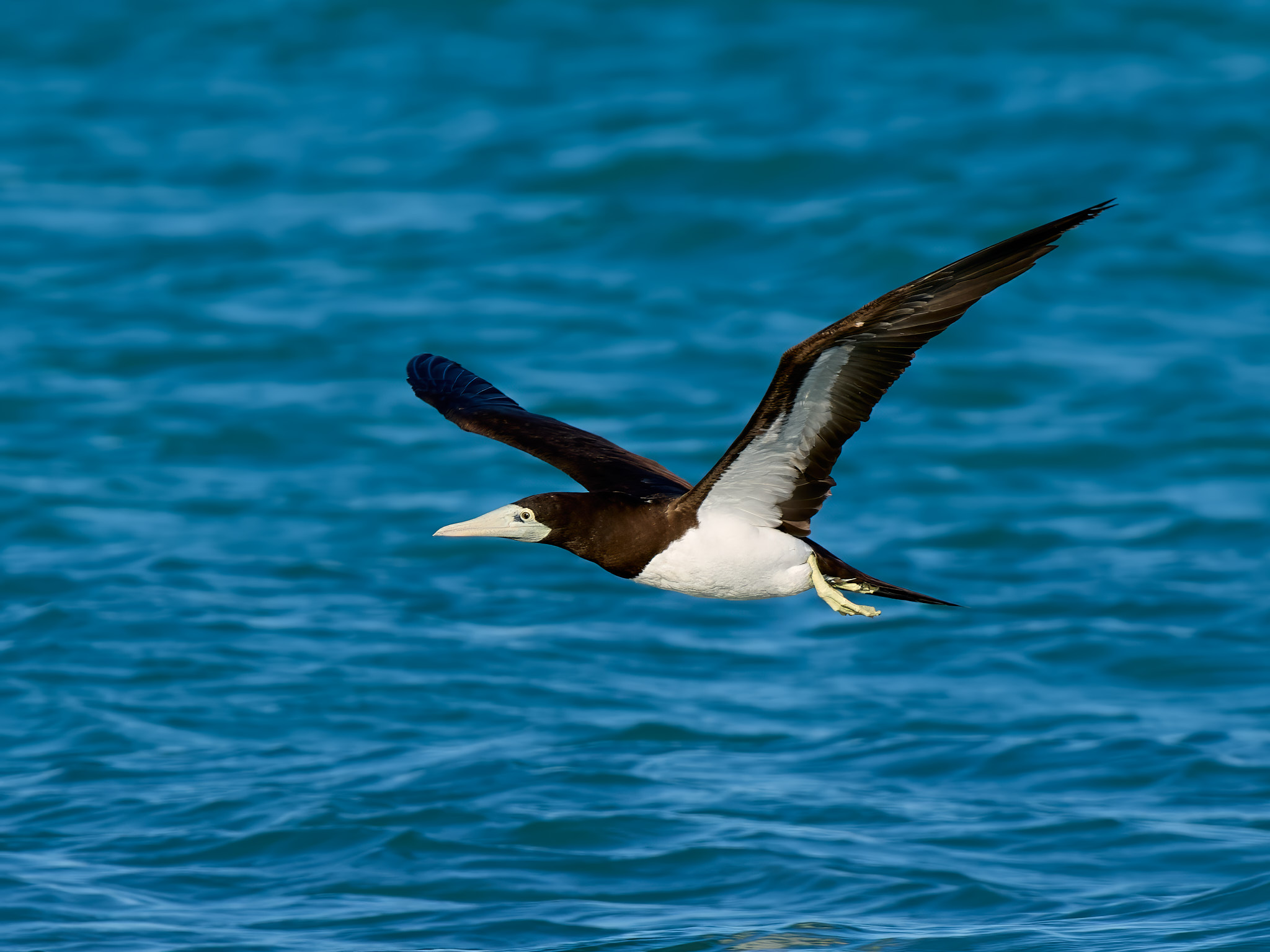
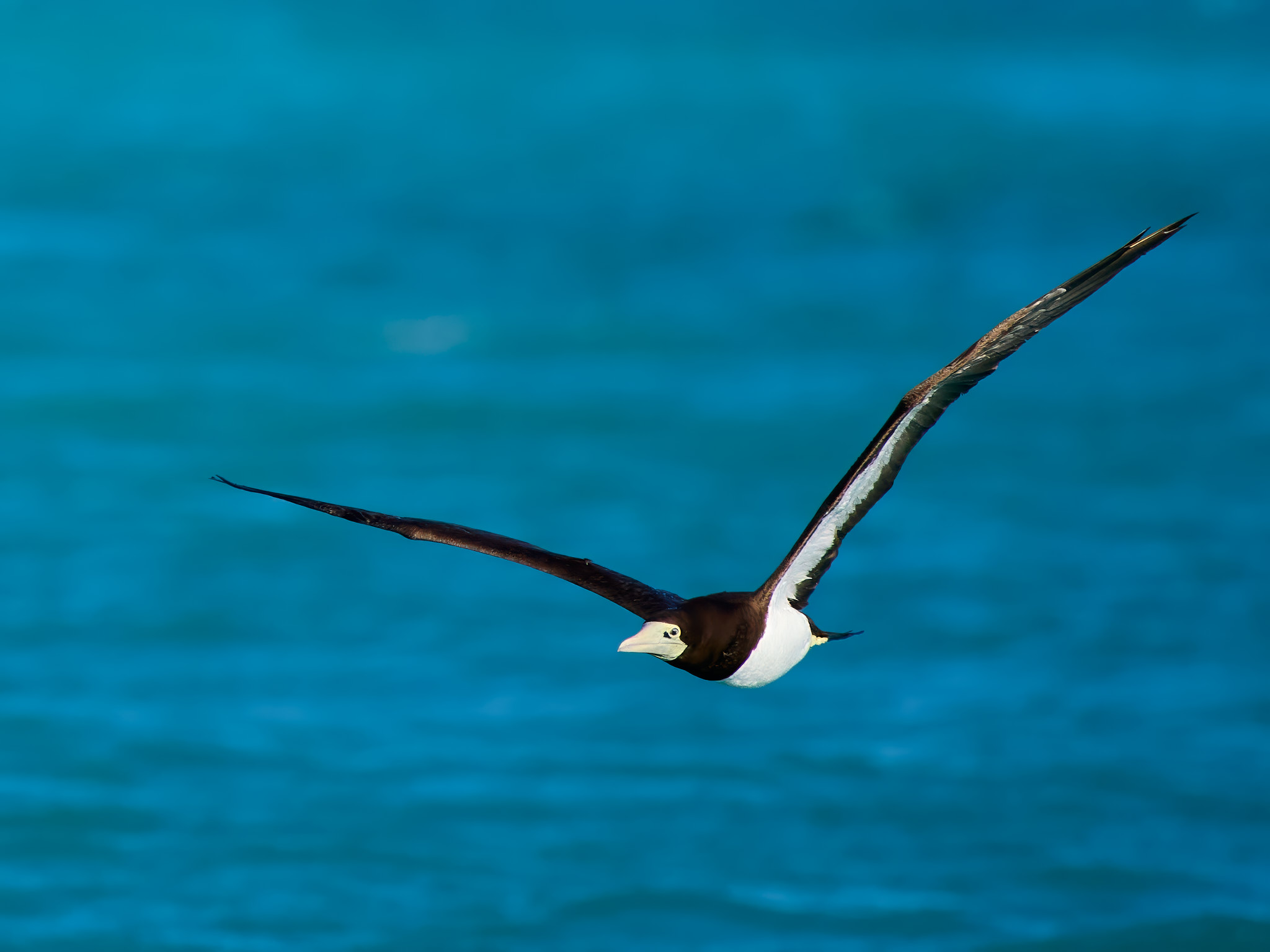
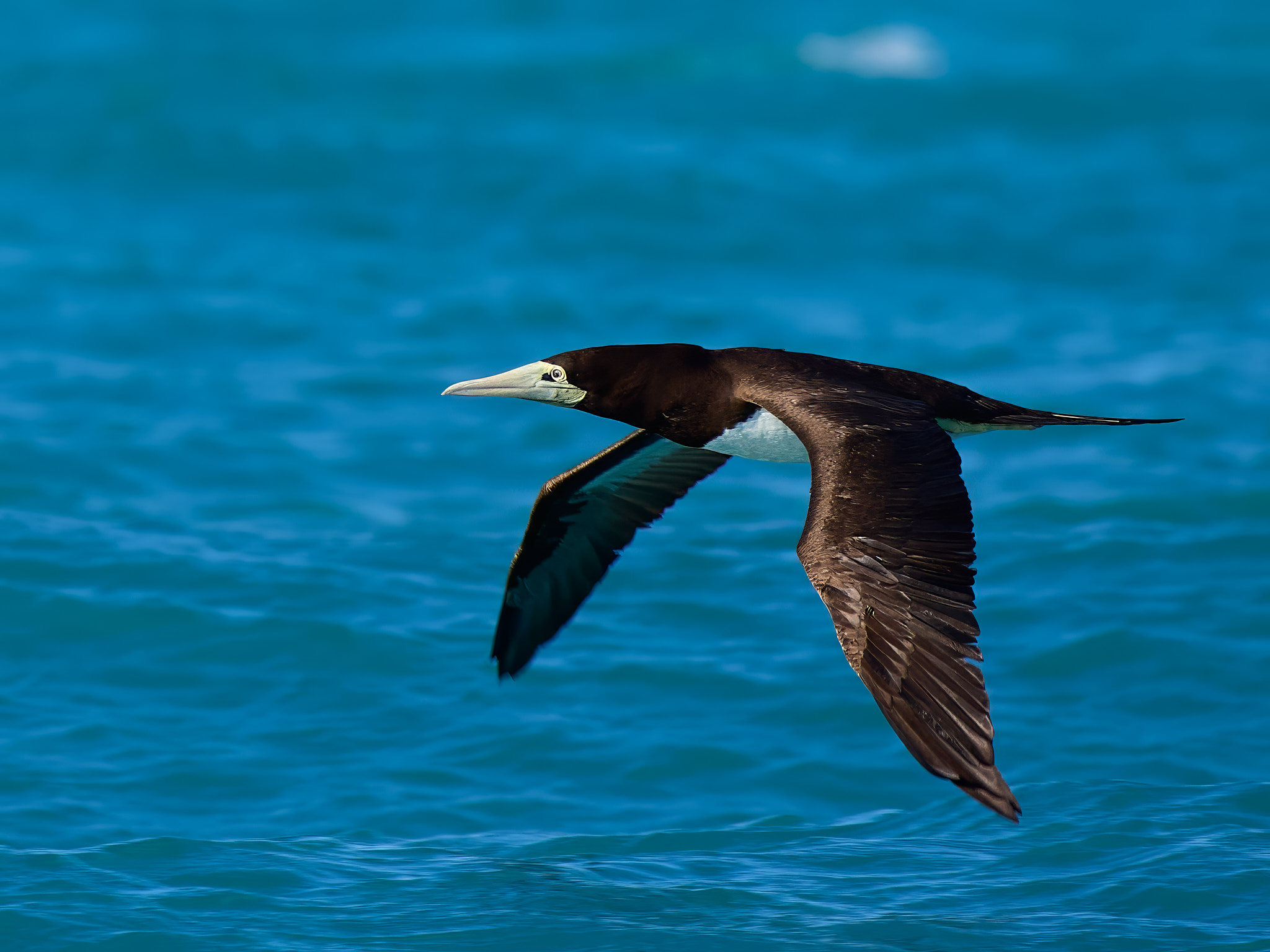
In the few minutes before being put on a short leash and obliged to trudge for miles through soft sand while being sun burnt and bitten by sand-flies (Gallipoli and Normandy were worse, I believe) I did get to point the camera at non-target or low priority species …
There is an anecdote, apocryphal I’m sure, relating to the days when Bird Week was a thing at the resort on Fraser Island, Queensland. The leaders were on the ferry. Our hero is a well known birder, author and broadcaster. As the boat neared the shore he started dancing with excitement calling out, “Boobies, boobies”. His fellow bird nerds were in in-principle agreement but more restrained. Quite what the tourists made of it is a matter of speculation.
There are nine members of the Sulidae. Three temperate species are called Gannets, the remainder prefer warmer waters and these are the Boobies. They all have similar body forms and feed on fish and squid by plunge diving. They are restricted to marine habitats and for the most part stay fairly close to shore.
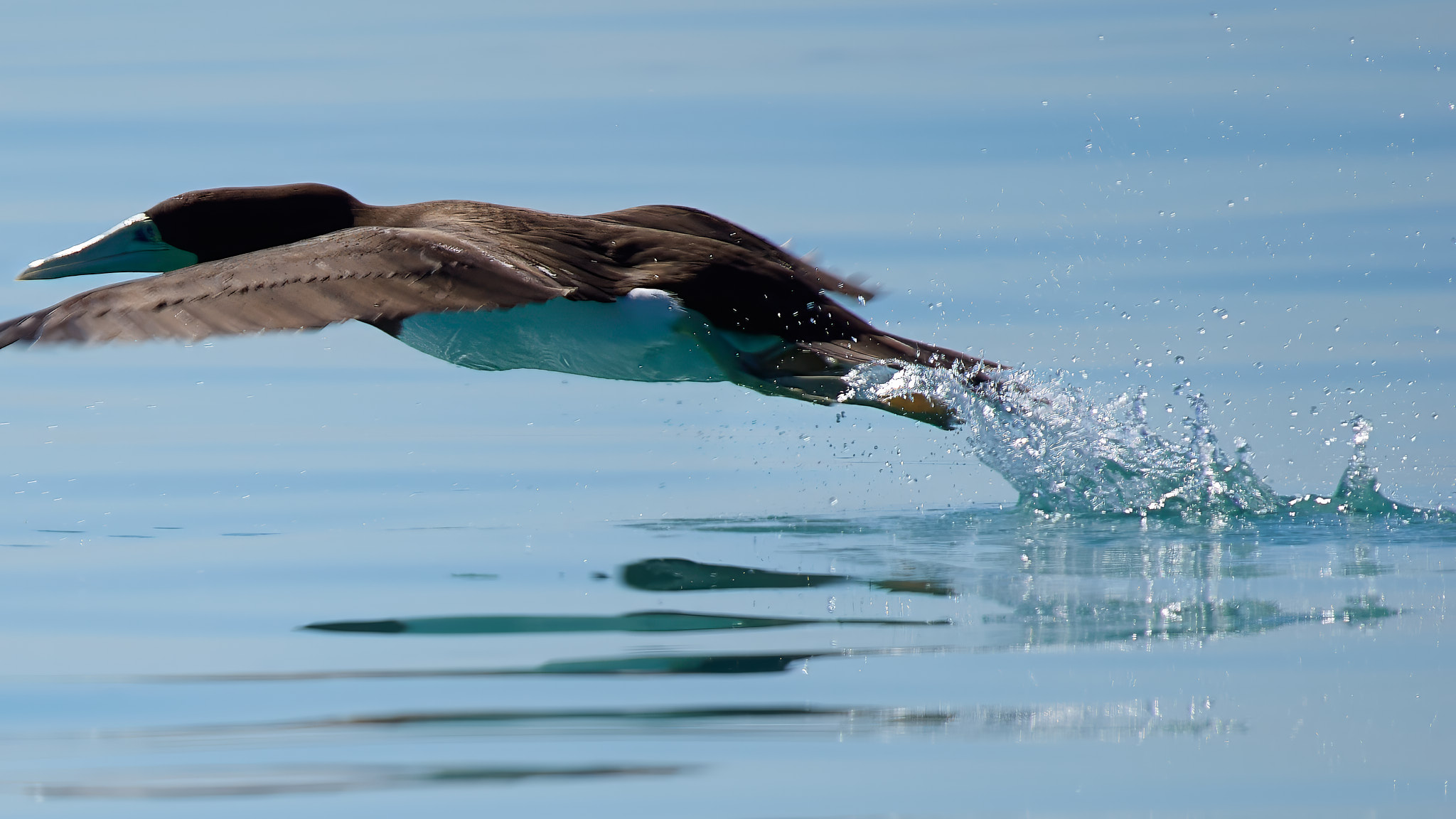
The species I see most often is the Brown Booby. It is found near tropical shores all around the globe with the exception of the west coast of South America. They can often be found at the Port of Broome or the nearby Entrance Point. They loaf on rocks or floating navigation aids when they’ve nothing better to do. They are quite happy to feed close to shore. They patrol up and down and plunge onto their prey. They tend to do this singly or in pairs or a trio. It’s good to watch and each one does the best it can but it’s not the spectacle of a frenzied mob turning the surface to foam that flocks of Gannets occasionally provide.
The scientific name is Sula leucogaster, the sulid with the white belly which doesn’t advance your identification at all because all the sulids have white bellies. The common name, Brown Booby, doesn’t help greatly either. At anything greater than arms length they look black and white. They are the only sulid with a dark hood cut off sharply across the upper breast.
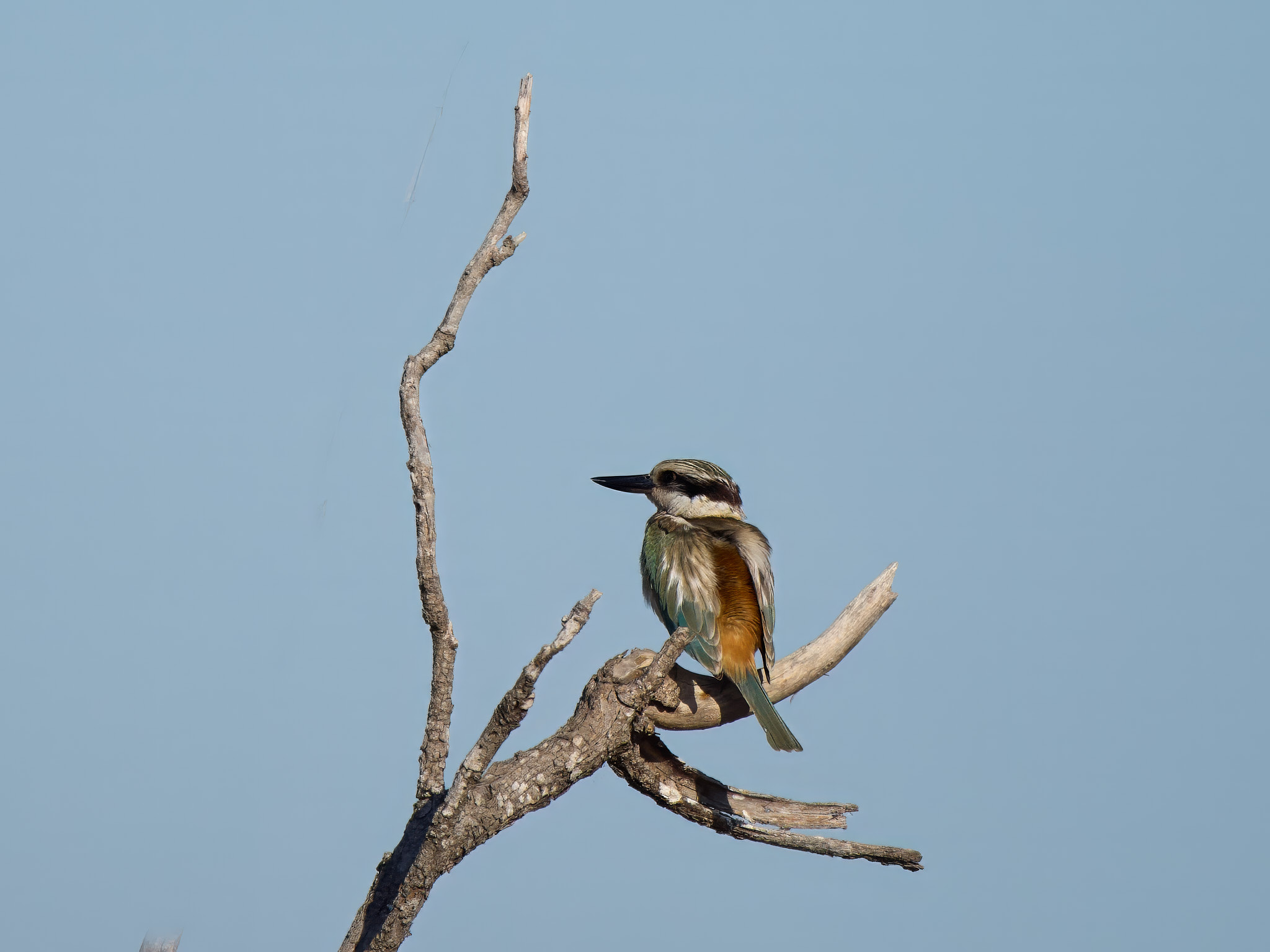
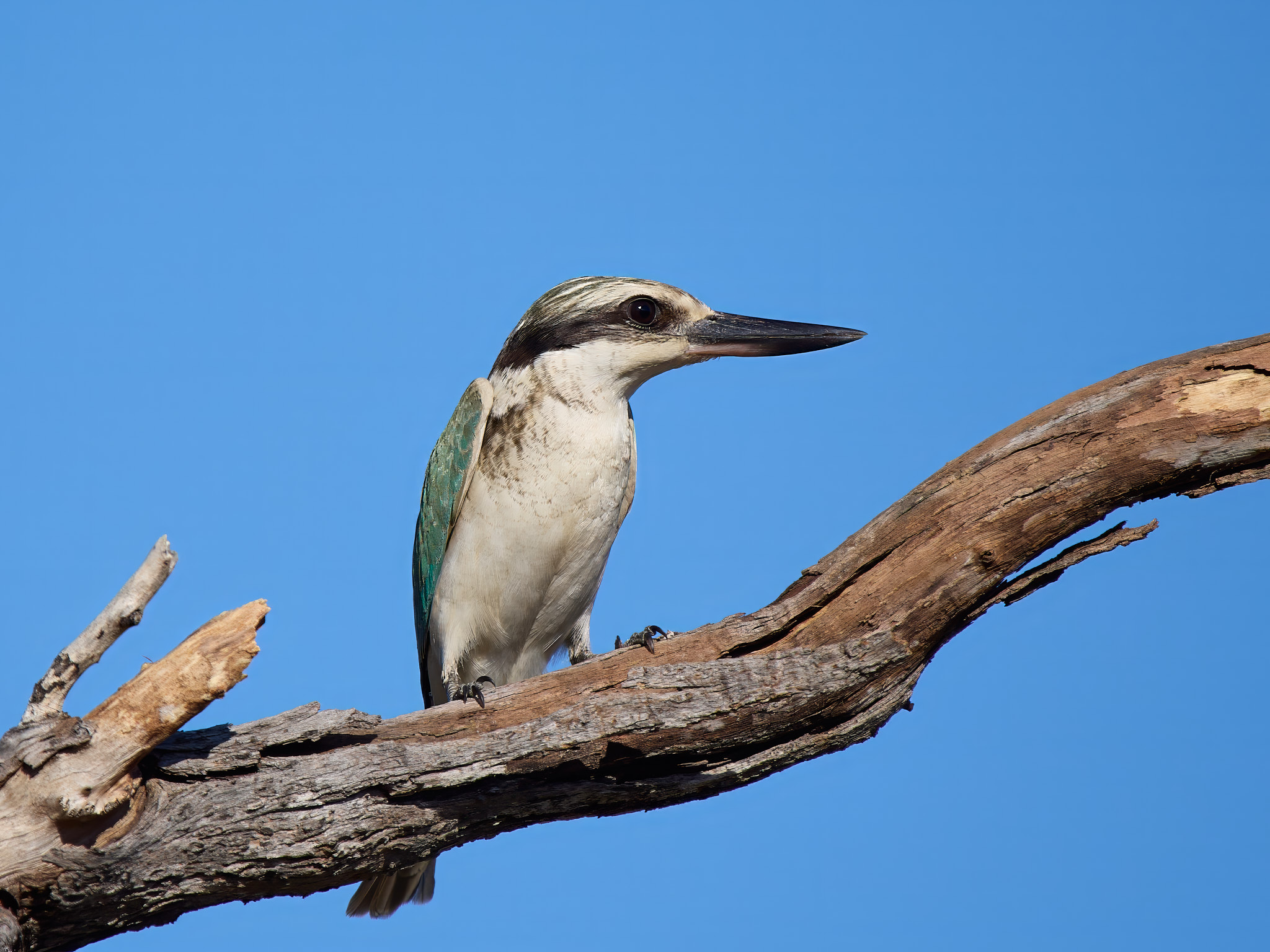
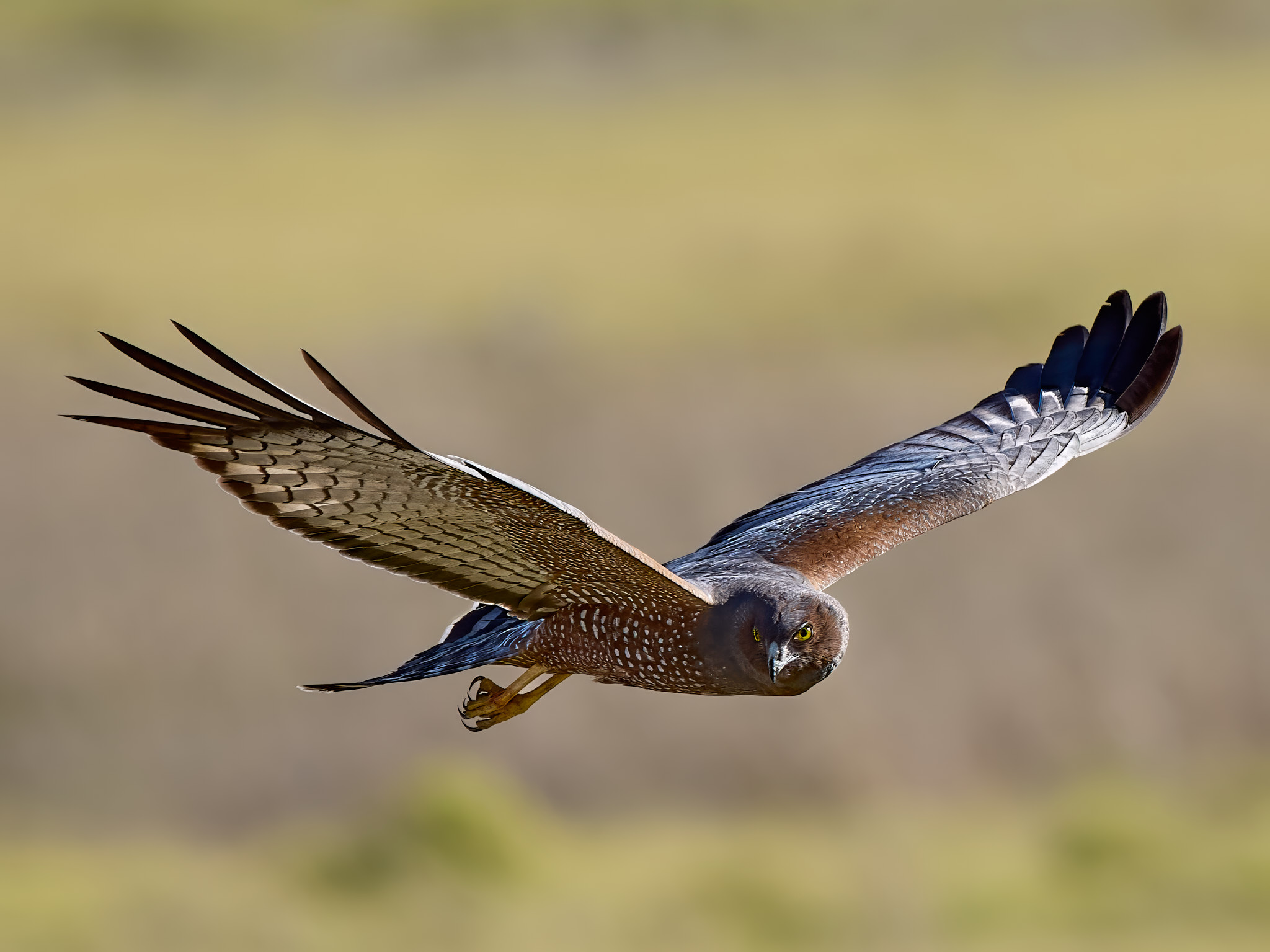
William woz here. Dampier that is. Twice, in 1688 and 1699. He left his name on the peninsula and both his ships have also been immortalised in the names Cygnet Bay and Roebuck Bay. In the latter there is a little island called Buccaneer Island in his honour. Behind Roebuck Bay the Roebuck Plains stretch off into the distance, open country, occasionally flooded, few trees. sometimes swarming with ducks and Magpie Geese, the nesting place for terns. Other times a dry grassland, home to the beautiful Spotted Harrier and the Red-backed Kingfisher. And like most of Australia’s Kingfishers the Red-back wouldn’t know what a fish is.
Dampier was a pirate, a naturalist and an author. He circumnavigated the world three times. His botanising increased the sum of human knowledge, his writing added plenty of new words to the English language and inspired Banks, Humboldt and Charley Darwin himself. He published the first English language recipes for Guacamole and Mango Chutney. Where would we be without guacamole? Living in Broome I trip over his name almost every day but on the whole he is not as well known as he should be. I recently watched a YouTube video that gives a reasonable account of the guy. You may enjoy it …
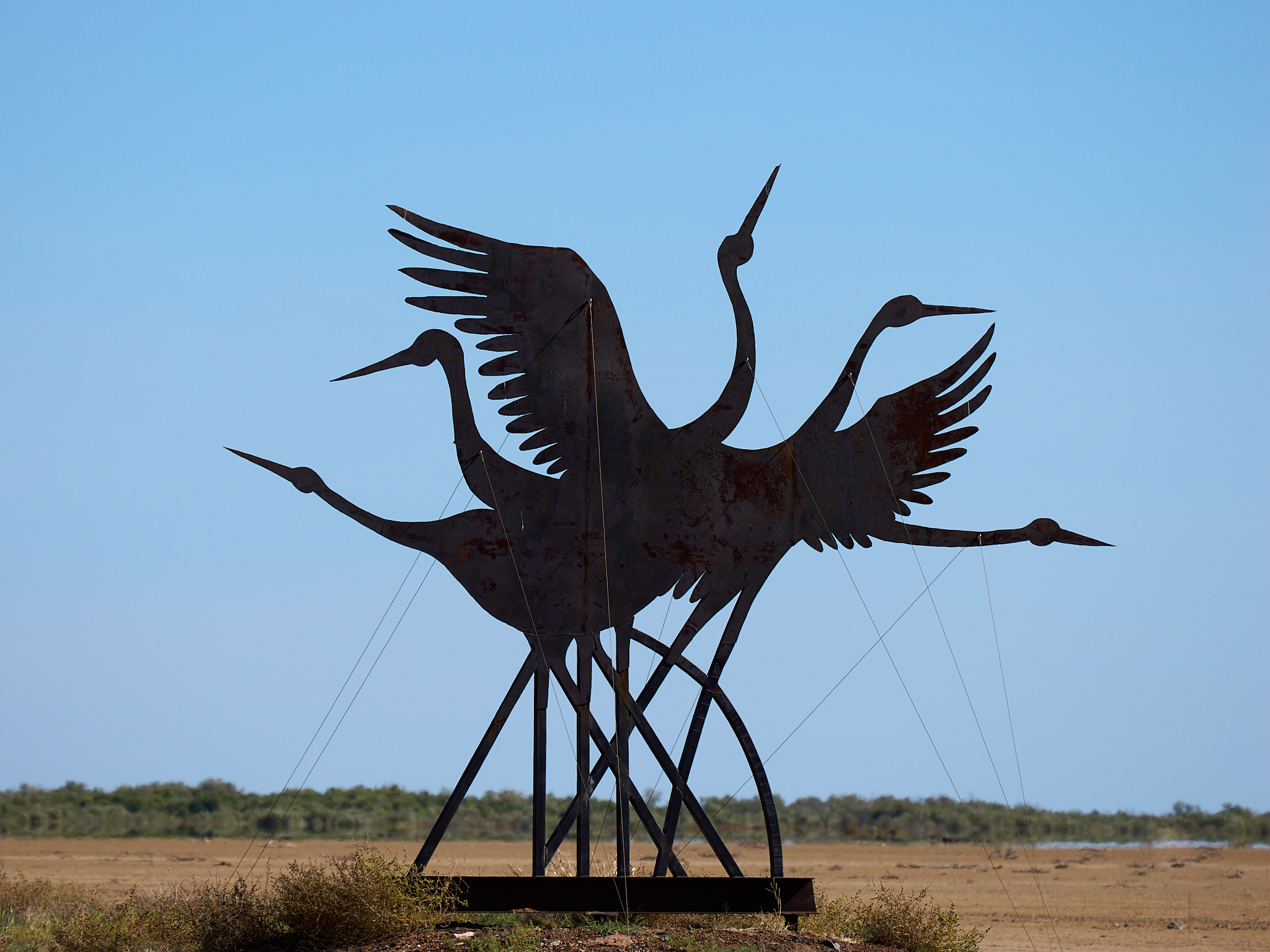
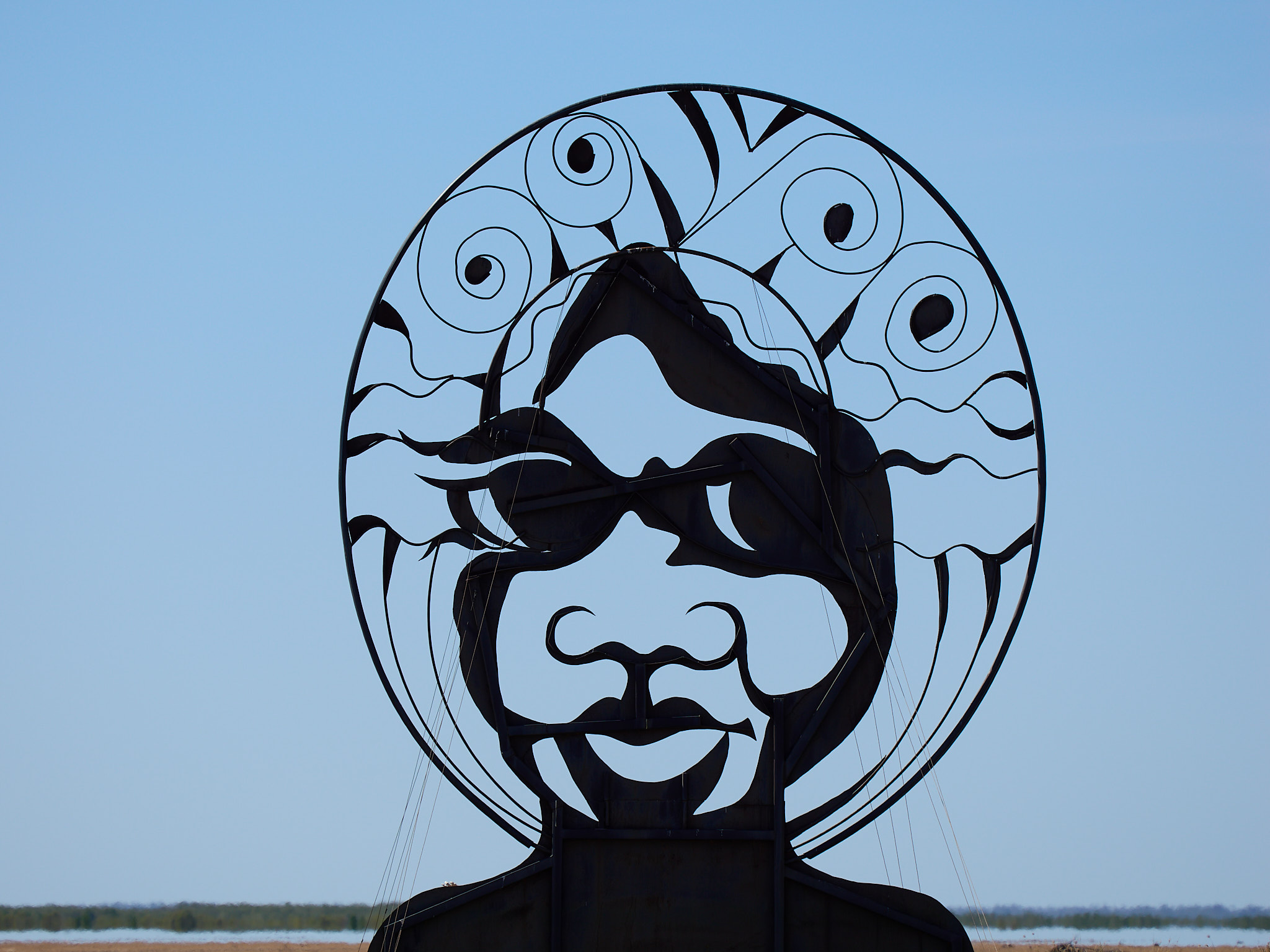
Not Ar Derby pronounced in the English style, they’ll look at you funny. This is the far north of Western Australia we’re talking about. Population 3,325 unless someone has gone to Broome for the day which is a little over 200km to the south. The main tourist attraction is the Prison Boab and it has a port and some interesting sculptures. There are no take-away alcohol sales on Sundays or Mondays. The sculptures are best seen at sunset (Tuesdays to Saturdays).
The birding is good. The number one hot spot is the water treatment plant and the adjacent wetland. Access is via Conway Street off the Derby Highway and can be interesting in wet weather. You are sure of a good list of the regular suspects and it gets more than its fair share of rarities.
The port area is also good. It lies across a causeway on the shore of King Sound famous for its 11 metre tides. A lot of mud at low tide, good for waders in the summer not so much in the dry. Always a chance of a nice crocodile. All the mangrove species are close at hand but they are easier to see in Broome (take the Broome Bird Observatory Mangrove Tour).
Munkajarra Wetlands are 21km south of town, the last couple of kilometres are on an unmade track. Easy going if the weather is dry. The lake will be on the eastern side of the track therefore best in the afternoon. Mosquito repellant, long sleeves. You know the drill.
In town the ovals and even the median strip can turn up some nice birds especially in the wet. I have seen Little Curlews running around down the main street.
For a nice quiet drive birding from air conditioned comfort start at the Pioneer Cemetery and follow Lovegrove Street south east until it meets the Gibb River Road. It’s, for the most part, a one lane sandy track through open savanna and tidal flats. It’s about 8km and I have yet to encounter another vehicle on the route.
Where to stay? Birdwood Downs Station, about 17km out of town and there is a nice walk among the Boabs and some good birding. Cabins and un-powered camp sites.
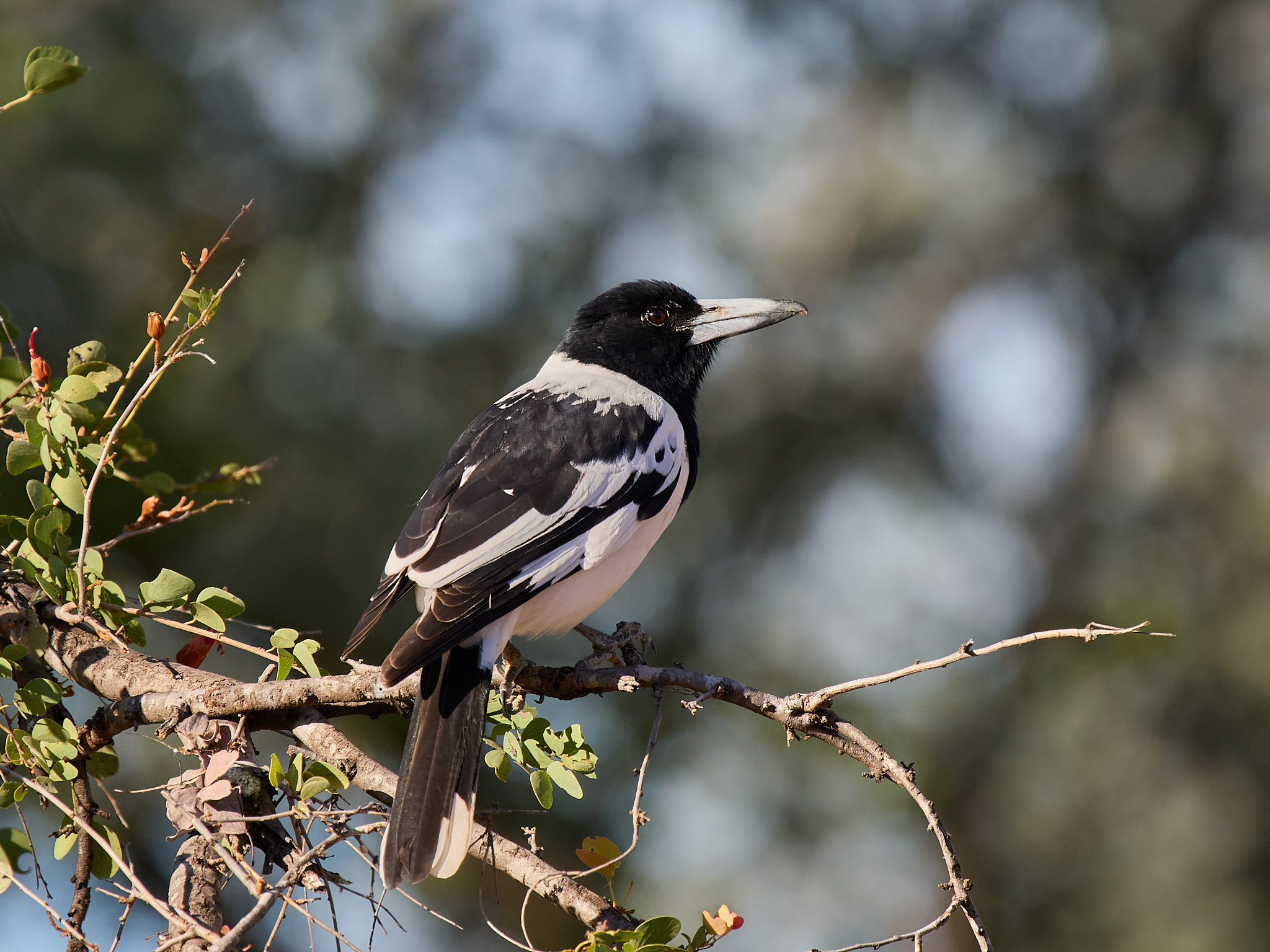
The Pied Butcherbird is sitting in a Jigal Tree Lysiphyllum cunninghamii otherwise known as the Mother-in-law tree. In Aboriginal culture a man does not talk to, or sit facing his mother-in-law. The paired leaves of the Jigal face away from each other. It has nice red flowers. Click on the gallery for a better look.
Broome’s little peninsula points south. Roebuck Bay is to the east, the Indian Ocean to the west. Shores are rocky or sandy or covered by mangroves. Habitats galore …
Friends have a little dog. He’s only young but he’s had a very tough life, brought to death’s door by thrombocytopenia. Saved by a blood transfusion and a lot of medication, he is very precious to them. They’ve recently had a well deserved holiday and rather than put little Wilco in a kennel they opted to have people that he knows look after him in his own home. That’s Gayle and me. It just happens that they live on a bush block and routinely put out water for the birds. So much birdier than in town. Volunteering was a no brainer.
Then came some unexpected rain, very high tides and a steady wind that delivered hordes of ravenous mosquitoes. All of which reduced the opportunity to wander around enjoying the outdoors.
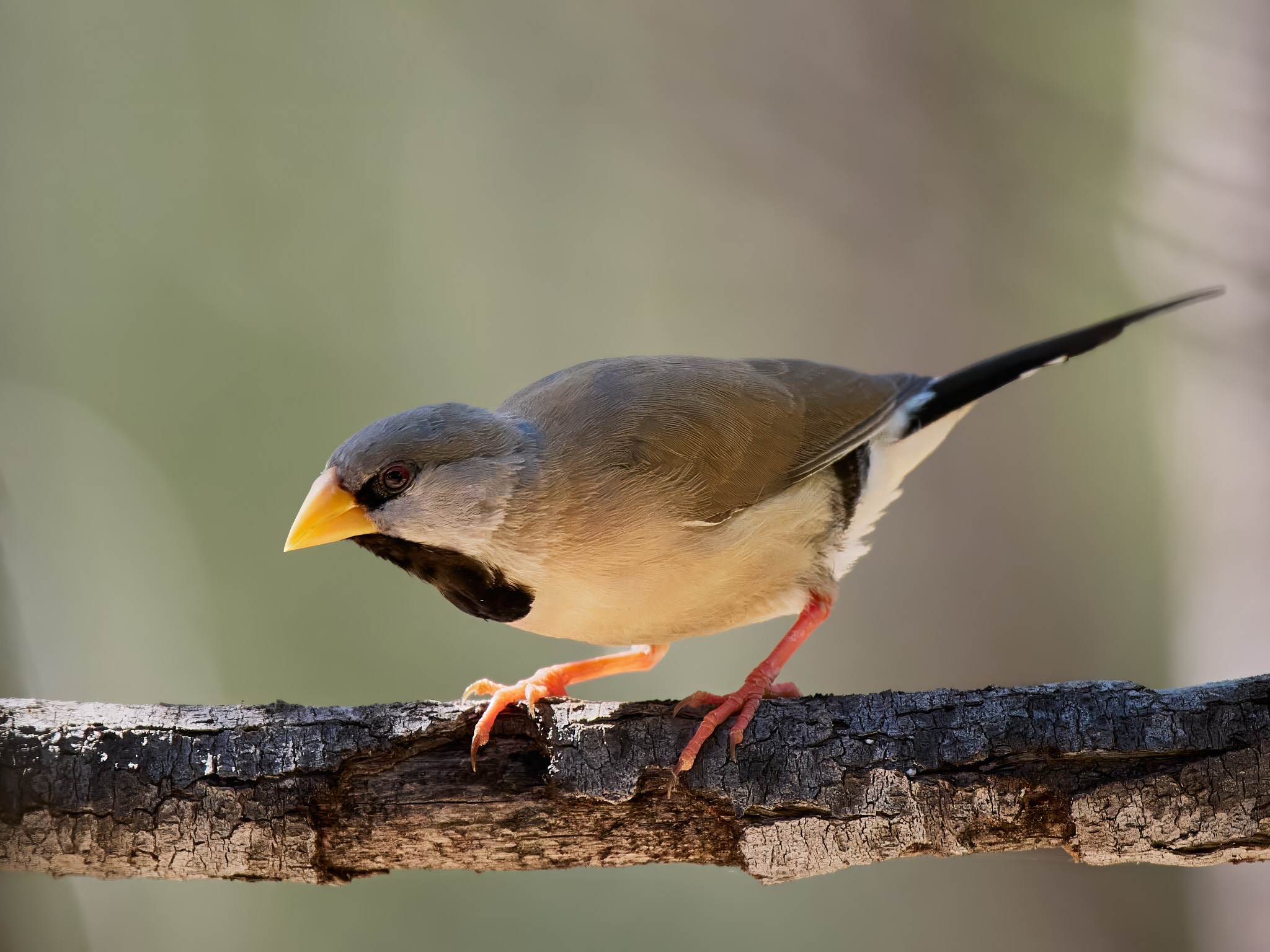
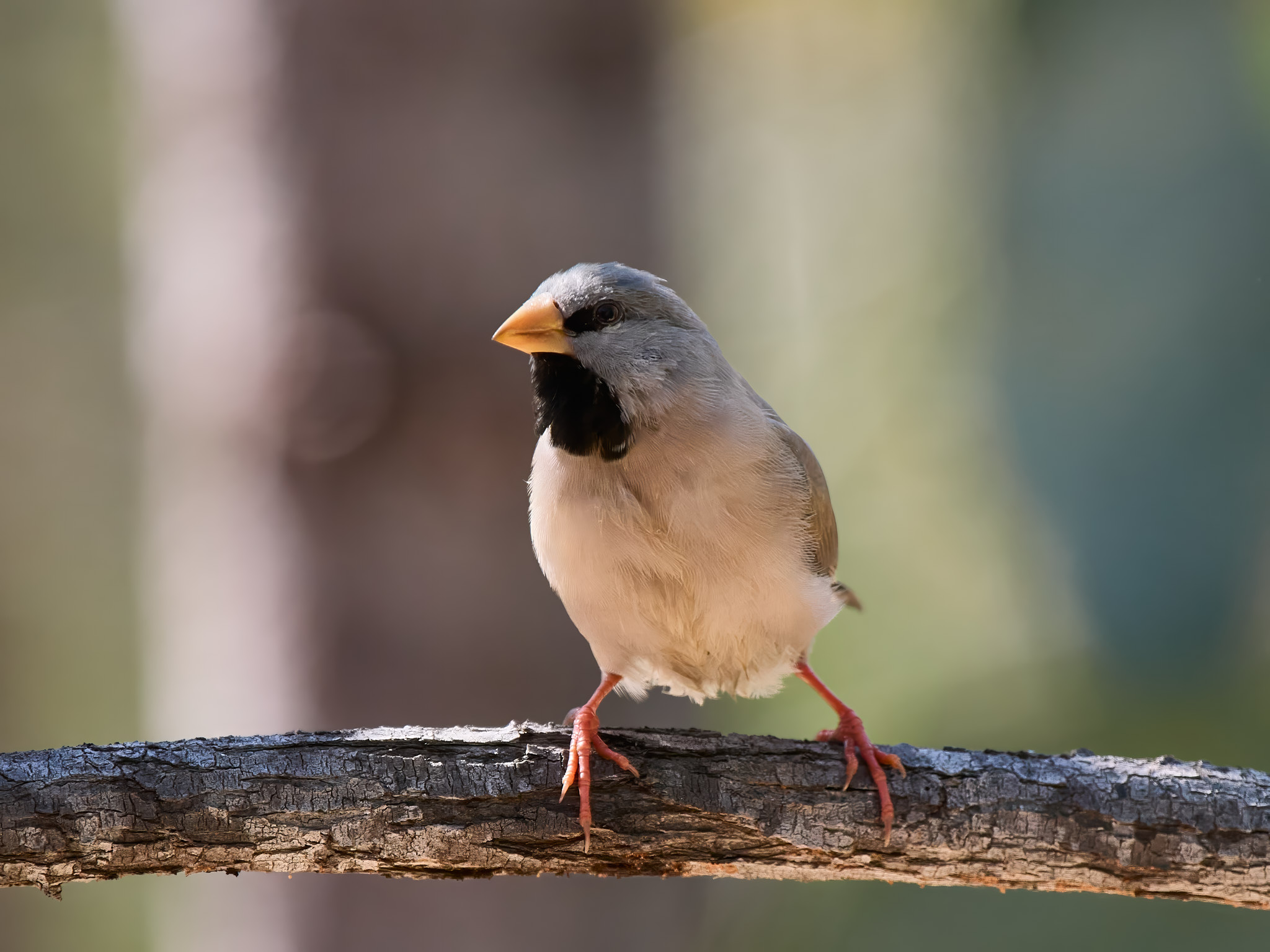
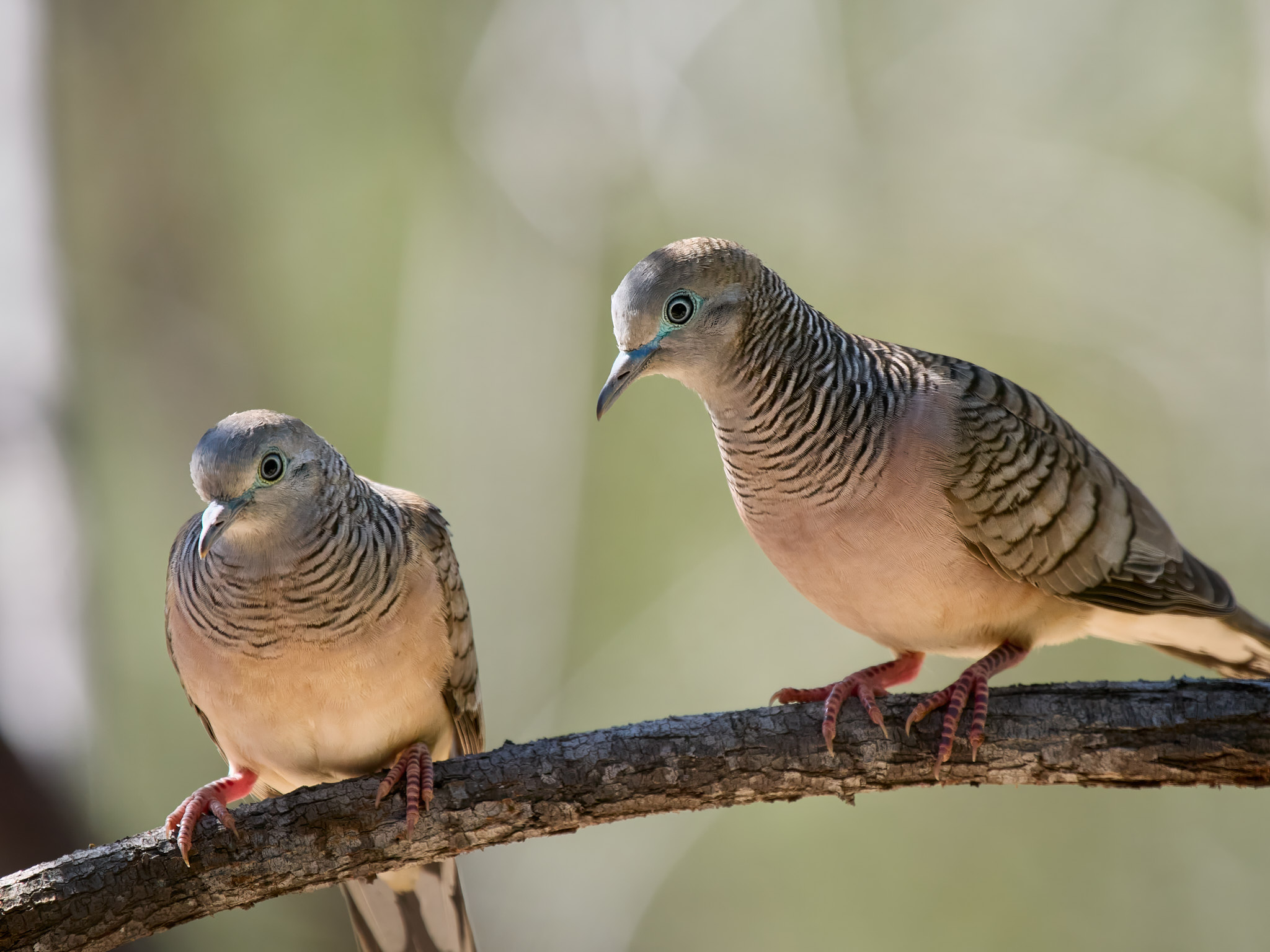
My usual mode of bird photography is to go for a walk and take photos opportunistically. I enjoy it but backgrounds are often messy. Branches intrude on the subject or twigs seem to grow out of their heads. The alternative is to build a set-up and entice the birds to come to you. In a dry country water is usually a sufficient bribe to bring in some birds. If the background is uniform and well behind the subject it will produce a nice creamy bokeh. You can even scour the countryside looking for a particularly photogenic perch.
So I set up close to the house, offered water and took some photos standing at the kitchen sink straight through the window. The frustrated mosquitoes queued up at the door.
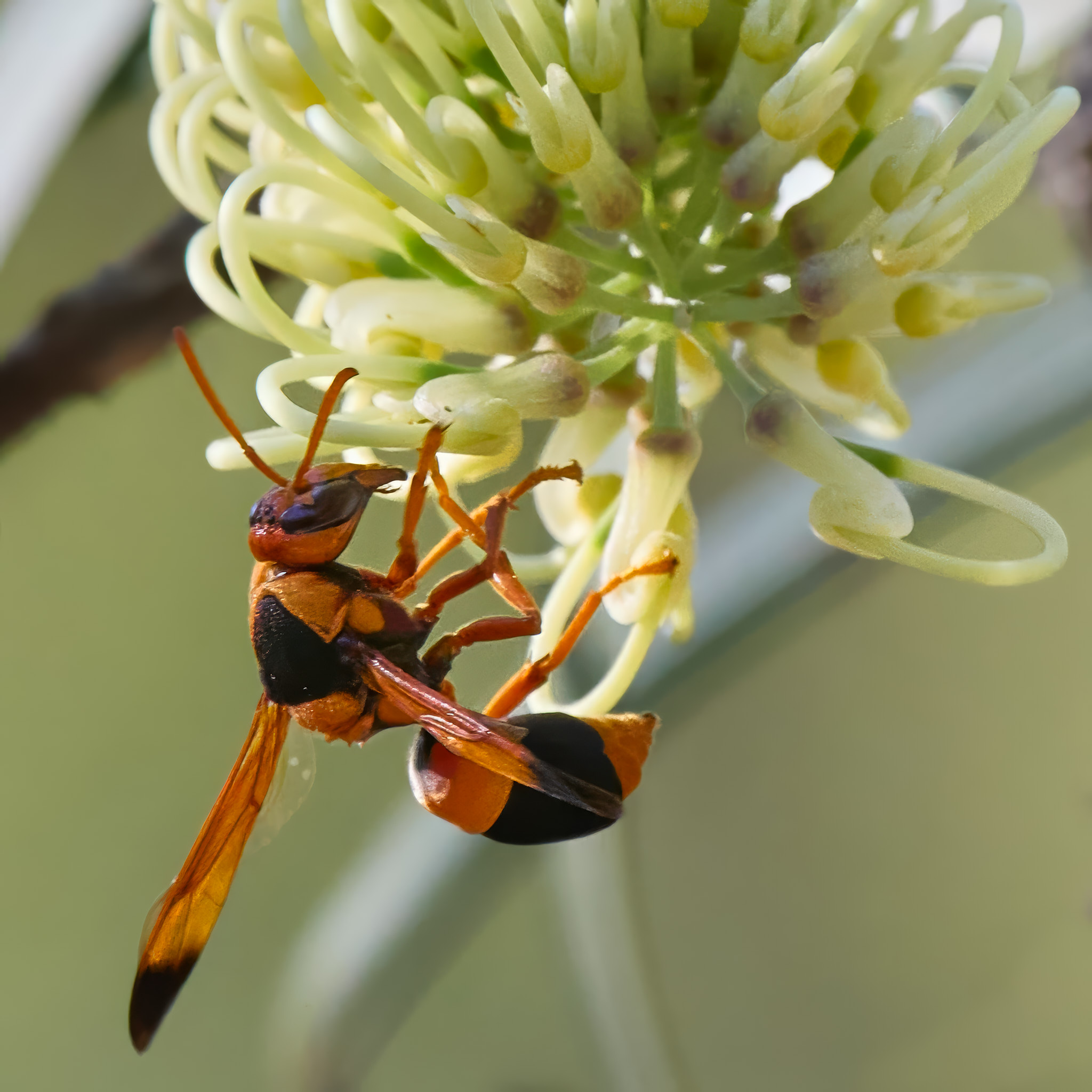
It’s called the Australian Hornet (Abispa ephippium)but it’s not a true hornet and it’s not nearly as nasty. This is one of the potter wasps (subfamily Eumeninae). The female builds a mud nest which it stocks with paralysed spiders for the larvae to feed on. They occur in all the mainland states of Australia.

















 bobmcgee