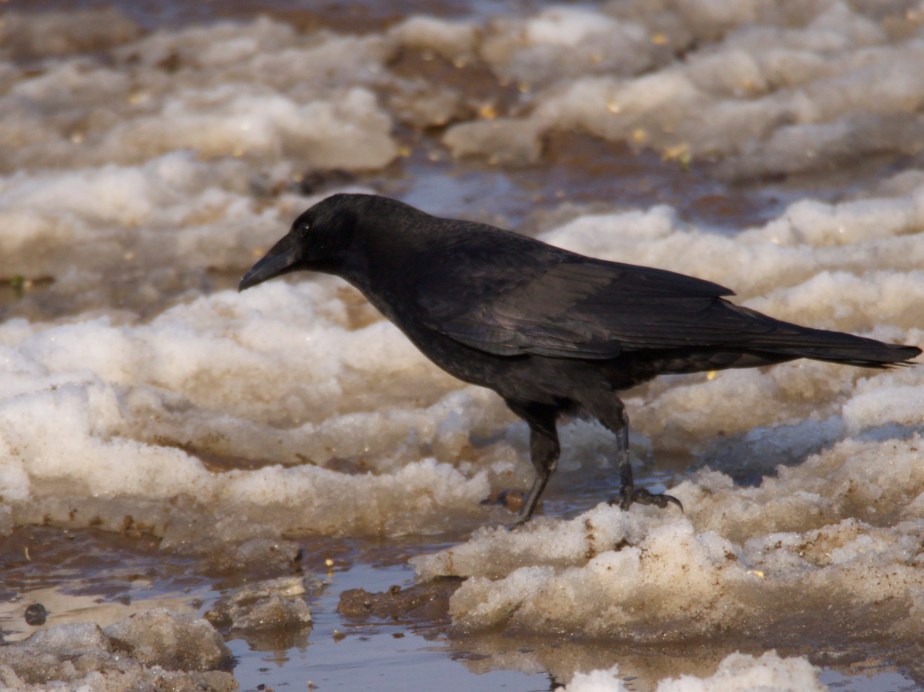
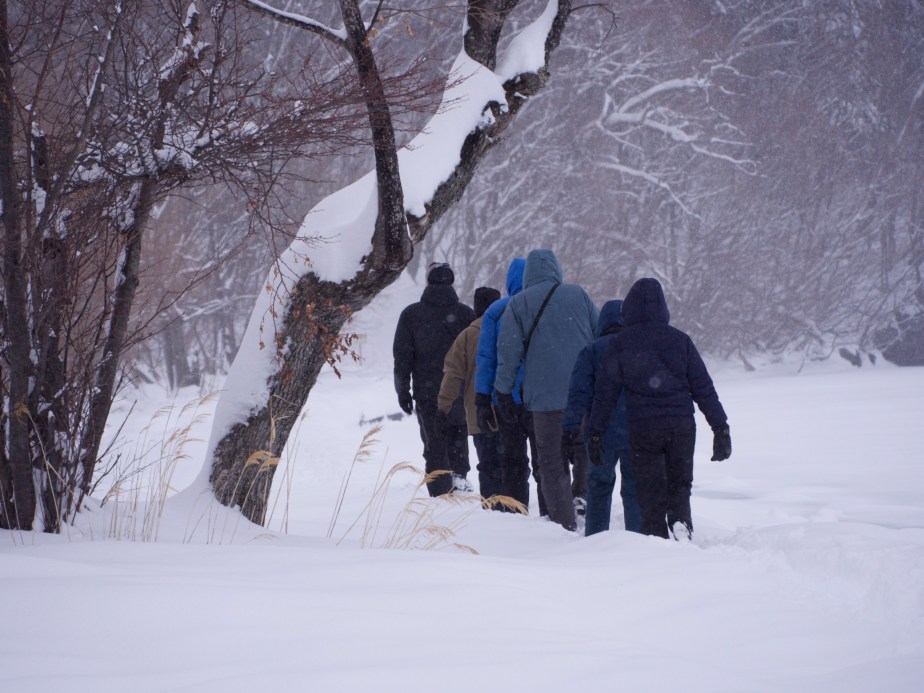
Kushiro …

Stepping out of the airport in Kushiro was all it took to realise why the packing list had called for serious cold weather gear. Quickly onto the bus and off to the hotel. The hot spring bath soothed away the day’s travel stress and warmed me through. Ready for the dawn …

P1060378

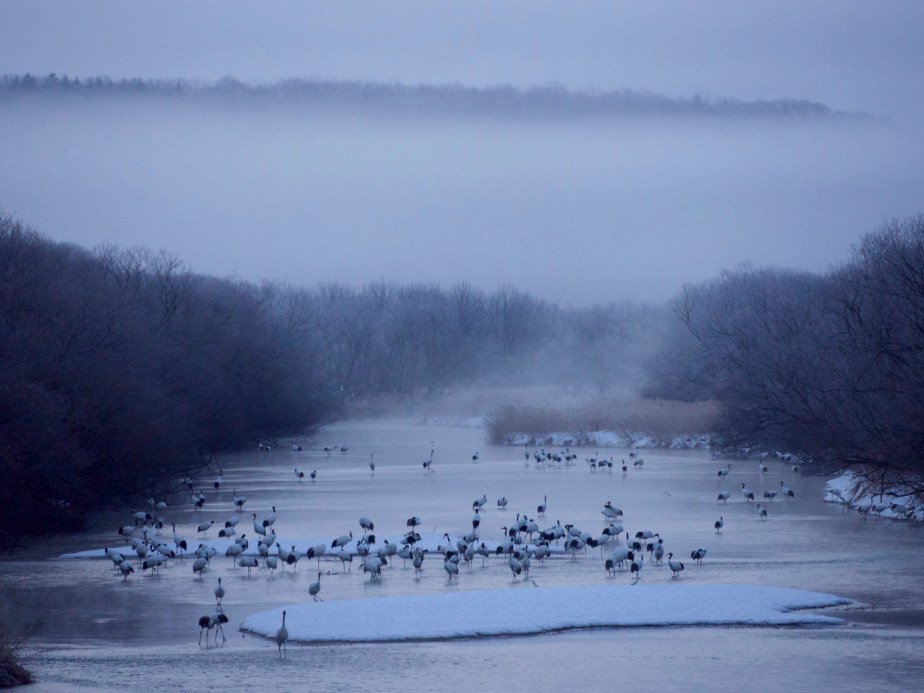
This is the view from the Otawa Bridge, dawn will be along shortly.

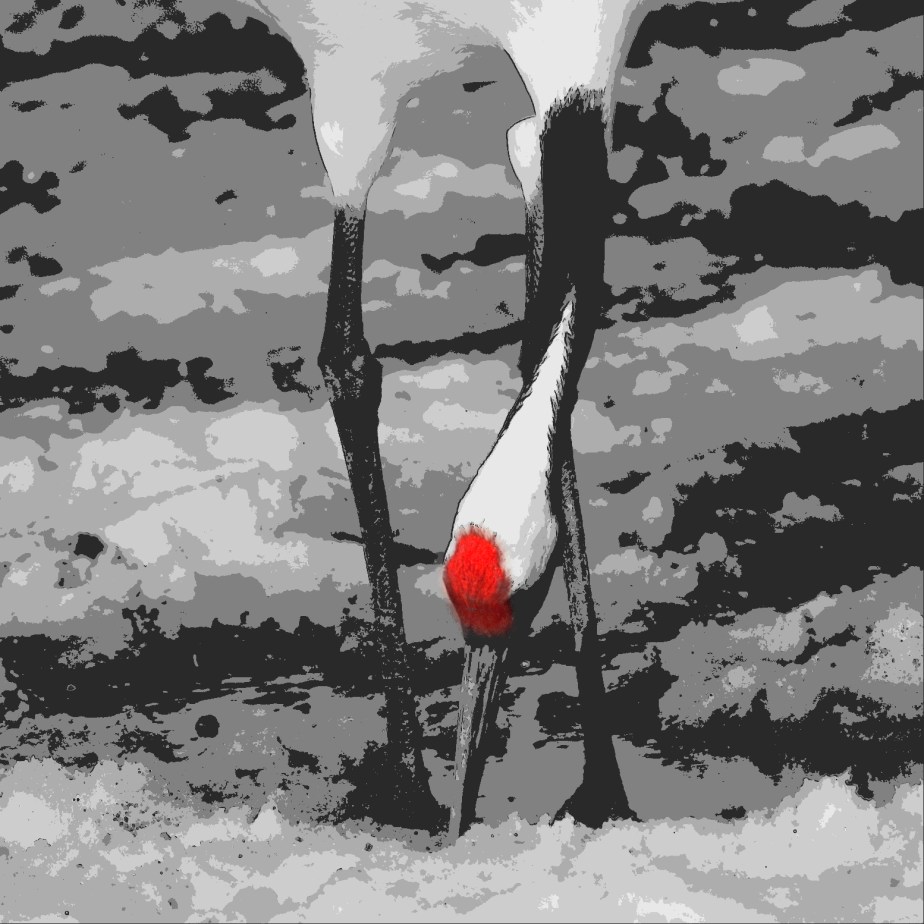
The bridge is already lined with photographers. This is the place to shoot Red-crowned Cranes, the only accessible overnight roost. Every time a bird blinks there is an epidemic of  shutters in hyperdrive.

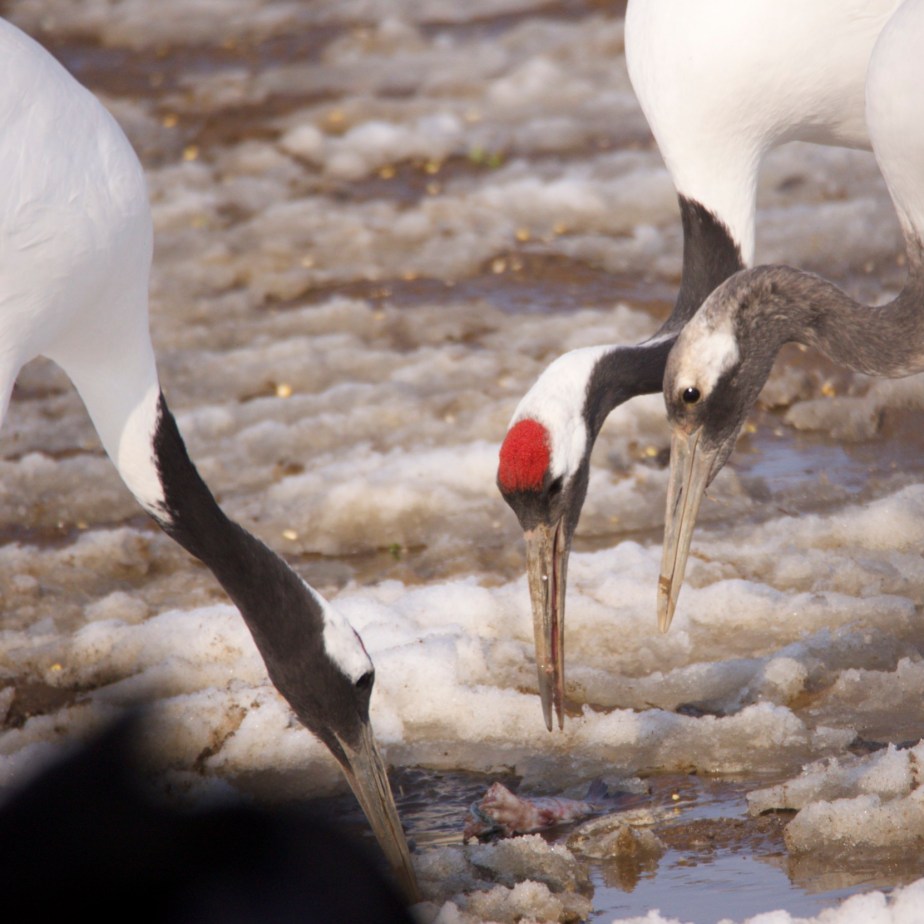
The cranes spend the night standing in the river. As the light gathers they become active and vocal. They will fly out to feed in the fields and marshes, sometimes in twos and threes sometimes in flocks. The mist hanging over the Setsuri River puts a special luminosity on the scene.

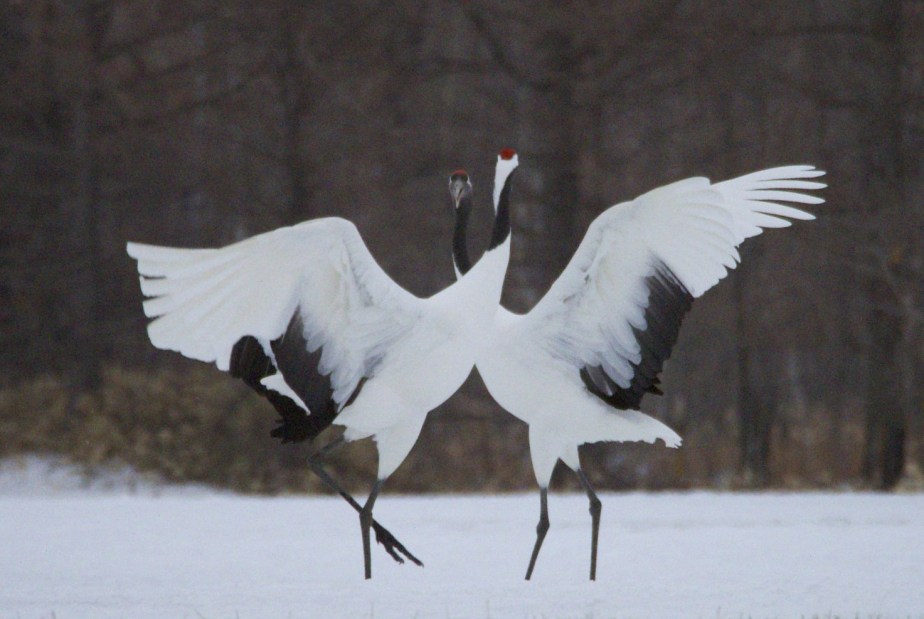
The Red-crowned Crane is an east Asian species that, on the mainland, breeds in Siberia and north-eastern China and migrates south for the winter. The Hokkaido population is resident, found in large flocks in winter but widely dispersed when breeding. They are endangered. Slightly more than a third of the world population are in Hokkaido where they are protected and numbers are increasing.

P1060391

This is the only crane that breeds in Japan, this is the one that epitomizes the values of health, longevity and fidelity in Japanese tradition. This is the real crane, symbol of JAL, and to the Ainu the Sarurun Kamuy, god of the marshes.

P1070331

P1060987

Blakiston ….

Thomas Wright Blakiston  (1832 – 1891) was born in Hampshire, England. His first career was in the military, serving with the Royal Artillery in Ireland, Nova Scotia and the Crimea. In 1857 he joined an expedition that explored the Canadian Rockies.   From there it was off to Canton where he commanded a detachment of artillery in the war of 1859 with China. Whilst there he organised and led an expedition to explore the middle and upper reaches of the Yangtse River. He produced a chart of the river for which he was recognised by the Royal Geographical Society.

Winding up in Shanghai and not enjoying either the heat or the mosquitoes he thought it would be nice to go somewhere cooler and took a ship to Hakodate on the southern tip of Hokkaido. When he arrived there towards the end of 1861 there were only twenty foreigners in the town. This was seven years prior to the Meiji Restoration that would open Japan to a greater measure of foreign influence. He resigned his commission and stayed for twenty-three years.

He went into business in sawmilling and coastal shipping to support his passions – exploration and ornithology, and he seems to have been more successful at his hobbies than he was at business. Hokkaido was, at the time, the Japanese frontier, far less developed than further south. He made some prodigious journeys and seemed to take all sorts of hardships in his stride. For instance, in 1873, he took ship on the PMSS Ariel …

When Captain Newell and myself slid down a rope from the fore chains, the vessel had sunk so far aft that the water was on the upper deck forward of the paddle boxes, and the whole after hurricane deck was submerged. Fortunately there was little swell, so that all the boats in the darkness of the night reached the shore, and chanced to strike parts of the beach between the reefs. The headman of the little village of Toyoma whom I found with the assistance of a fisherman and his paper lantern, made arrangements for the accommodation of the eighty-four shipwrecked people, and the villagers were all extremely civil. (Japan in Yezo).

All that was visible of the good ship Ariel the following morning was the top of a mast. Arrangements were made to ship the survivors to Tokyo but Blakiston preferred the more direct alternative of walking home to Hakodate. He needed an official passport to make such a journey. This was denied him, he set off nonetheless. Over the next fortnight he travelled 352 miles, an average of 27 miles a day through the sleet and snow of early winter.

Blakiston contributed specimens to museums in Japan, Britain and the US, and published papers in the ornithological literature of the day. One of the birds he collected was a very large owl.

But his most significant contribution was to recognise that there is a distinct difference between the fauna of Honshu and Hokkaido. Although the Straits of Tsugaru are not quite 20 km wide at their narrowest point and can freeze, animals to the north are related to northern Asian species, whereas those on Honshu to the south were related to those from southern Asia.  He published his findings in 1883, the zoogeographic divide has come to be known as Blakiston’s line.

Now you know why I interject these biographical notes between leaving Honshu and arriving in Hokkaido. We have crossed the line and left the Macaque and Serow and a good number of birds behind. In the next week or so I very much hope to get a glimpse of the world’s largest owl, Blakiston’s Fish Owl and I very much hope that I don’t have to slide down a rope from the fore chains …

(The biographical material is largely drawn from a paper published in 1999 (Japan Library) in Britain and Japan: Biographical Portraits, Vol.lll. by Sir Arthur Henry Hugh Cortazzi.)

When All Your Ducks Line Up …

P1060326

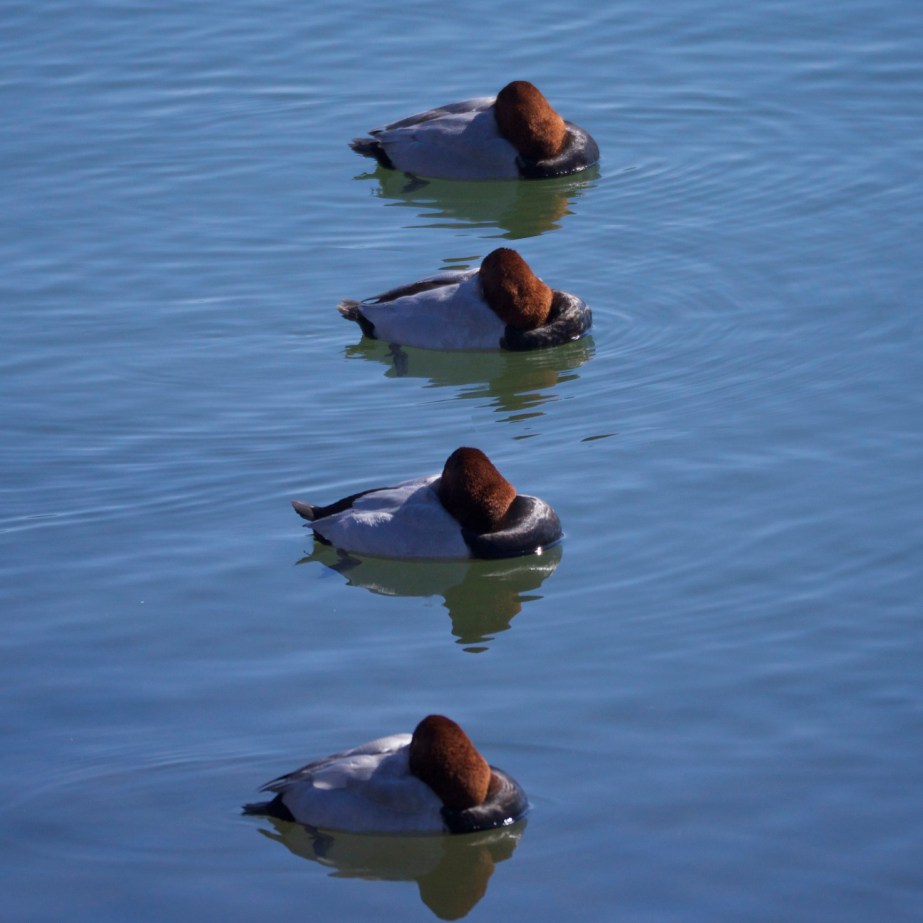
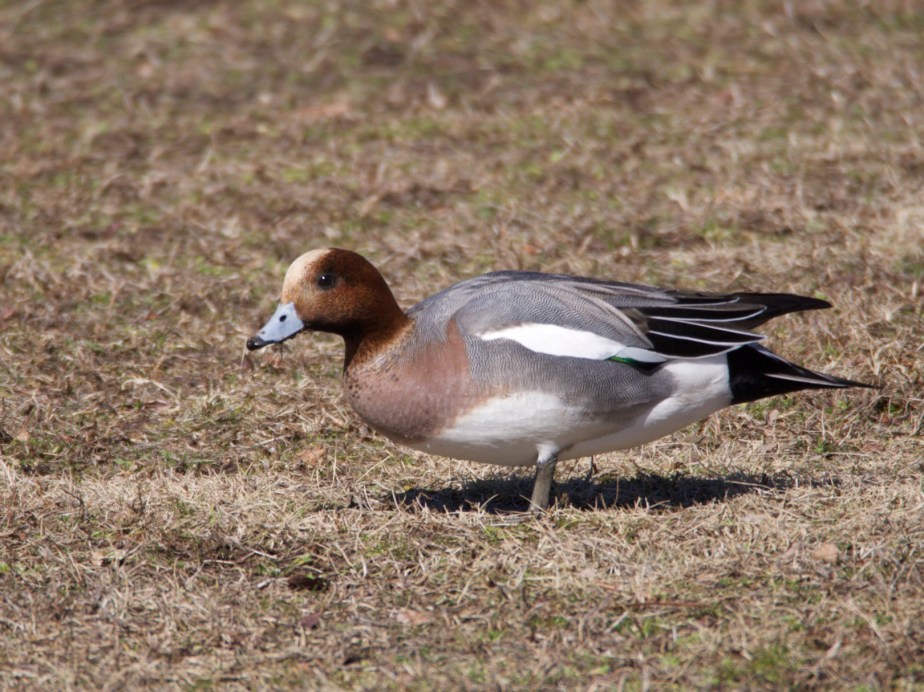
Obviously a very auspicious day to fly from Tokyo to Kushiro in eastern Hokkaido. First we have to drive from the mountains of central Honshu to Tokyo. This takes us via Suwa, home of the Seiko watch, and Lake Suwa which provides some nice views of waterfowl. The sleepy heads above are Common Pochard and below we have …

Eurasian Wigeon
Eurasian Wigeon
Northern Pintail
Northern Pintail

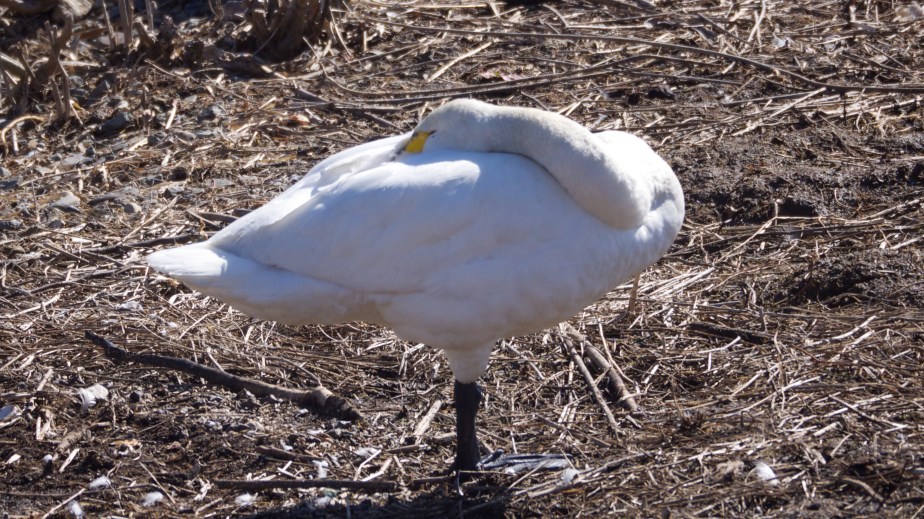
and there were plenty of Tufted Ducks, some Mergansers and a Smew or two. And a very sleepy swan …

Tundra Swan
Tundra Swan

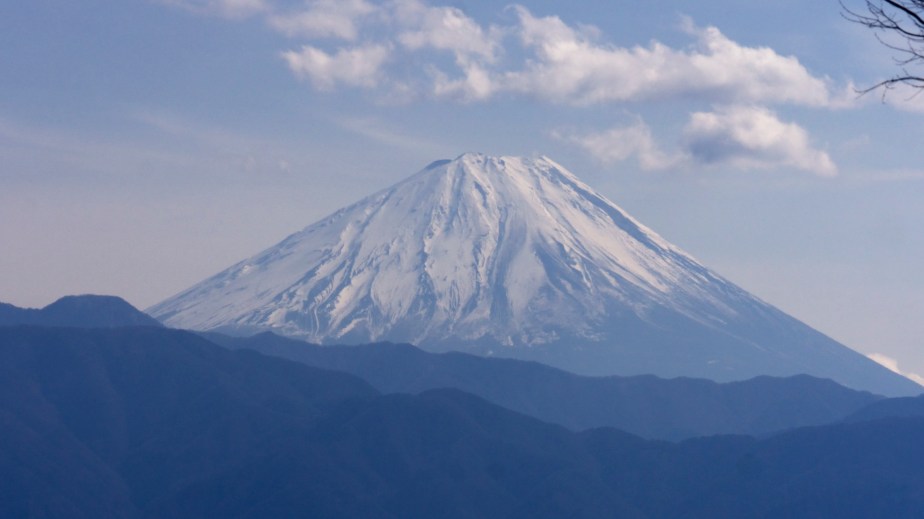
We were blessed with good views of Mount Fuji as we passed by …

P1060368

and the Tokyo traffic was, on this occasion, very cooperative.

Mountains of Central Honshu …

P1050875

The two days spent in Jigokudani, the valley of hell, were far too pleasant to prepare me for any future place of residence. Yes it was cold and occasionally snowing but there was so much going on the weather hardly mattered.

P1060277

As well as taking several layers of pixels off every passing macaque an eye had to be kept on the sky and the opposite hillside. At one moment a Golden Eagle drifted over at great height before slipping out of sight behind the mountain tops. It re-emerged lower and for a moment seemed to be the absolute master of the valley. Then a peregrine falcon came over the hill above it and stooped viciously down on it. Although it dwarfed the falcon the eagle did not linger.

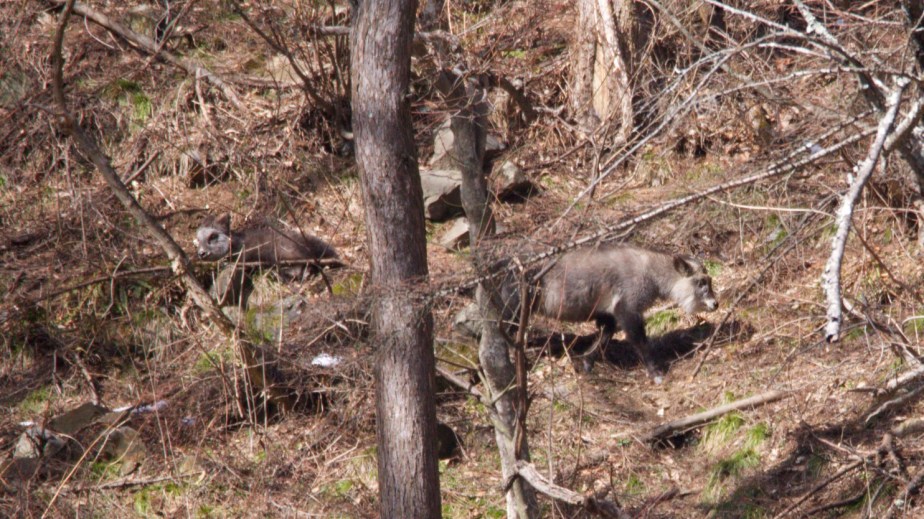
Careful surveillance of the opposite slope was eventually rewarded with the sighting of a couple of Japanese Serow. This is an enigmatic beast. There are six species of Serow distributed patchily in east Asia. All are in the genus Capricornis. It is an even-toed ungulate which puts it in the same evolutionary ball park as antelopes, sheep and cows but exactly where it fits in the scheme of things has been a little difficult to decide.

P1050943

This is mother and young. They feed morning and evening and rest up in the middle of the day. They moved slowly and steadily but are reportedly capable of making a swift and agile retreat when threatened. They inhabit steep forested hillsides in the major Japanese island except for Hokkaido.

They have been over-hunted in the past but numbers are now secure because of conservation measures.

P1060290

Jigokudani …

P1050676

This was the view from my hotel balcony at Kambayashi Onsen as the sun made its presence felt in the sky.

After breakfast we walked a couple of kilometres up to the valley of hell, Jigokudani. This is a snowy hell with added steam. A mountain stream runs through a steep sided valley, natural hot springs provide the steam. The sun penetrates to the valley floor for only a fraction of the day, we were warmly dressed.

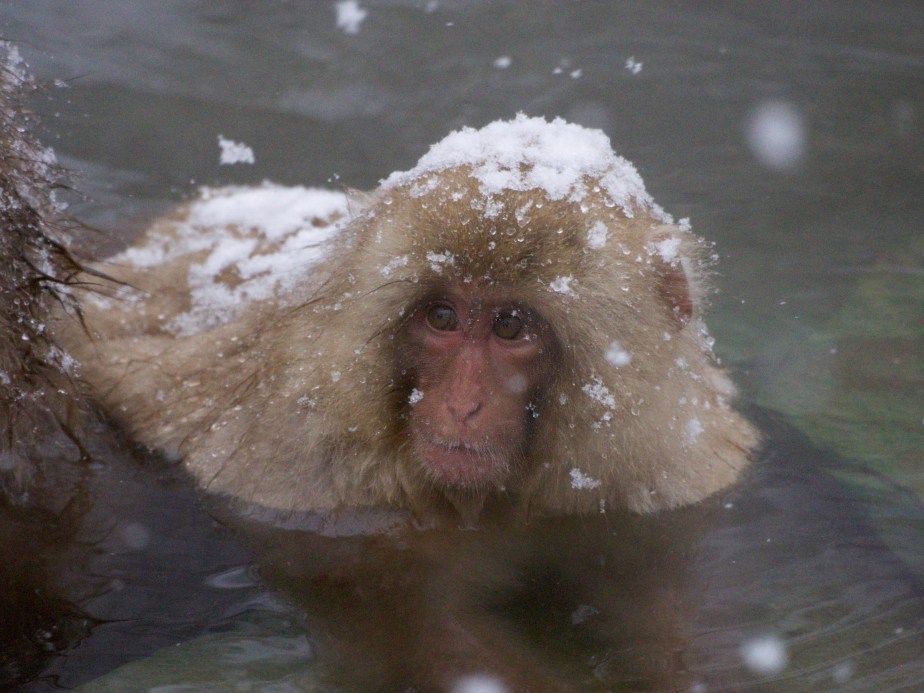
This is the site of the Snow Monkey Park, adults ¥500, children half price. The only place in the world where you can see Japanese Macaques taking a dip in the onsen.

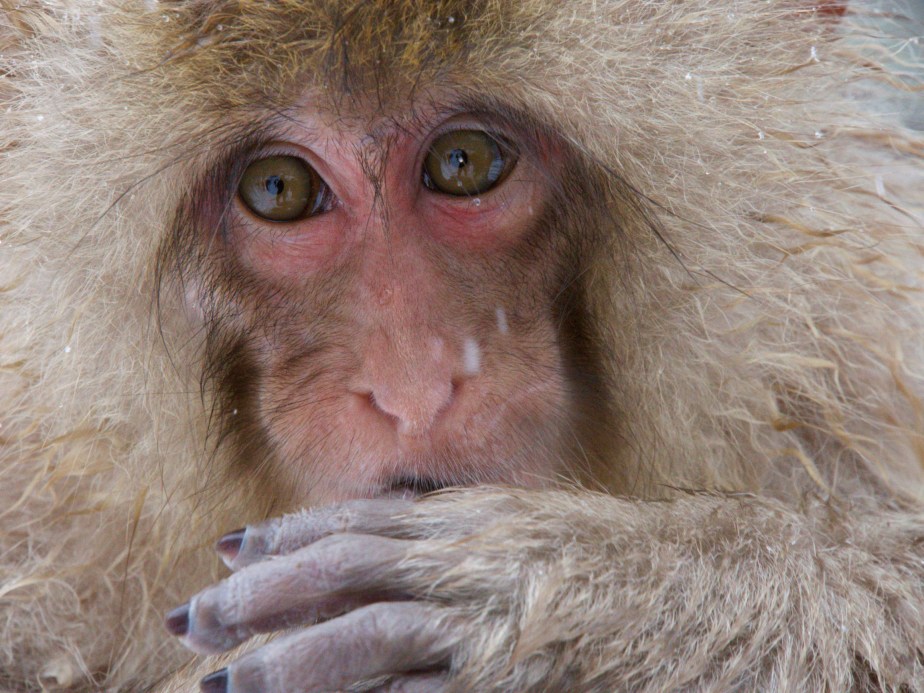
Japanese macaque are found throughout the main islands of Japan, except Hokkaido, and many of the small islands. Studies of them began in 1948 on the southern island of Koshima. Following the troop was impractical because of terrain and vegetation so the researchers used food to bring the monkeys to them. This is especially effective in the winter when the monkeys have a fairly hard time. It became the pattern in Japanese primate research.

Macaques are intelligent creatures, if you present them with food you also present them with some spare time.  In 1953 a young female in the Koshima group, given the name Imo, began washing her sweet potatoes. Her mother picked up the practice. By 1962, about three quarters of Koshima monkeys over two years old washed their food. Imo’s next stroke of genius was to find a way of separating wheat and sand. Drop a mixed handful on water, sand sinks, wheat floats, scoop up wheat and eat. Researchers have seen a number of such innovations and they tend to come from the youngsters.

Way to the north, in the mountains of central Honshu, also in the fifties another troop of monkeys began another novel practice of hopping into the onsen. They didn’t wash first and their toilet habits were less than ideal so they weren’t exactly welcome at the local tourist establishment that they began visiting. So they were provide with their very own spa pool.

P1060125

They are fed three times a day, good numbers are present in the winter, fewer in summer.

Hang on to your possessions around the monkeys. I saw several thefts of property. It is reported that monkeys in Mino near Osaka have learned to steal purses and wallets and take out the coins and use them to buy drinks and snacks from vending machines.

Their natural diet is broad, mainly but not exclusively vegetarian. A male weighs 10 – 14 kg, females are smaller at 8 – 10 kg. They live in groups that are day active. The groups are hierarchical, males gain seniority with age, females inherit their status from their mothers. This difference may be explained by the fact that females usually stay in their natal group whereas the males disperse to other groups as they approach maturity.

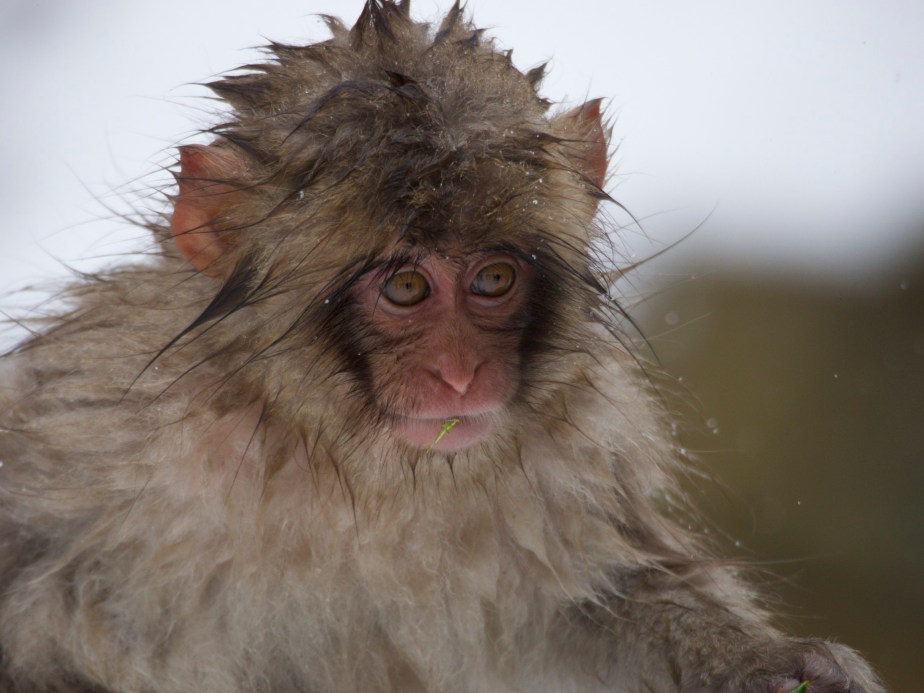
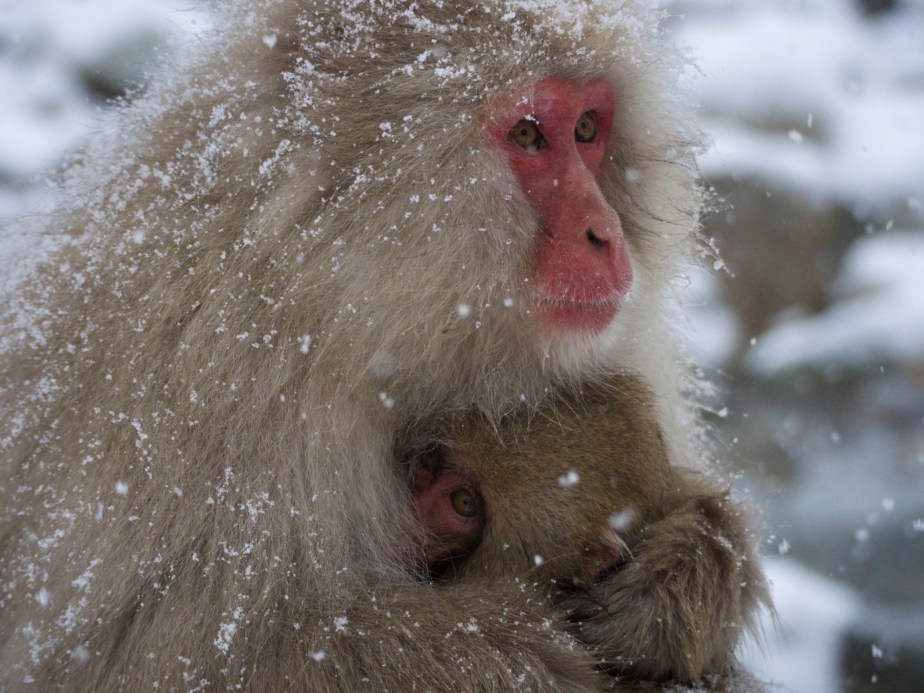
I spent a couple of days watching the macaques. Adults spend a lot of their time grooming and being groomed, the youngsters are fond of play, squabbles are frequent only rarely getting close to the point where actual harm is inflicted. Mothers are attentive to their babies. Mating gestures, often with the same sex, are fairly frequent and are mainly about showing and acknowledging rank. This though is for real …

P1060159

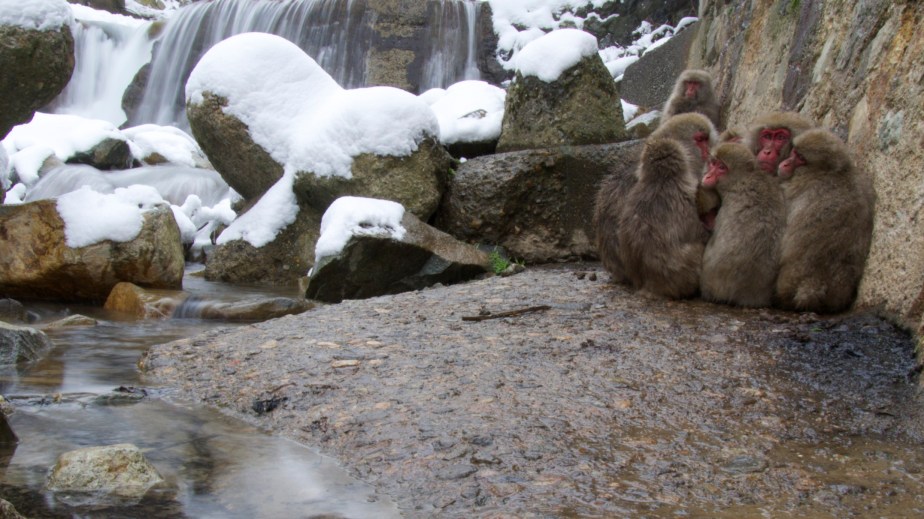
Much of the time it’s all about keeping warm …
P1060284

P1060031

P1060007

P1060140

P1060048

Monkeys …

We had wandered around Matsumoto castle and the adjacent museum and taken a turn around the moat which was, in fact, not a bad spot for finding a few birds.

Mute Swan
Mute Swan
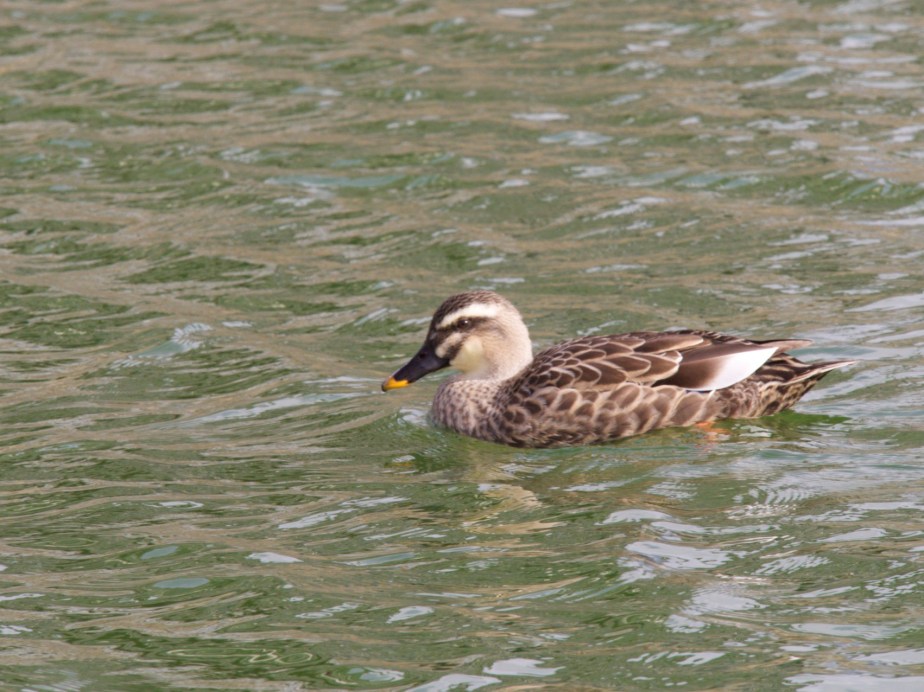
Eastern Spot-billed Duck
Common Kingfisher
Common Kingfisher

Then we headed for Kambayashi.

We made a brief stop at a mountain pass on the way. Once back on the bus Mineko-san was immediately on her mobile phone, no doubt to alert the hotel of our impending arrival. As always, her telephone conversation was accompanied by much bowing, nowhere in the world needs video accompaniment to the telephone more than Japan.

And beyond her, through the bus window, I saw our first Japanese Macaques. Tomorrow we would get much better views …

Crow Castle …

Japan’s oldest and most splendid castle, Matsumoto.

P1050613

Whilst there had been a fort on this site from about 1510, construction of the castle began in the 1580’s and was completed by 1595. It was built of wood and stone by impressed labour. The black walls and roof along with the appearance of wings readied for take-off led to its nickname, crow castle (烏城).

P1050647

The castle came very close to demolition in 1872, following the Meiji Restoration. It was sold at auction and was likely to have ended up as firewood with the site redeveloped. Fortunately a community campaign persuaded the local government to acquire it. Substantial renovations have been needed to keep it the splendid monument that we see today. There is an interesting museum adjacent.

Takayama …

Tourist town, shopping fix.

P1050527

The old town is certainly attractive. Traditionally famous for carpentry and its festivals, it well deserves its place on the tourist circuit.

P1050569

You can sample the sake …

P1050513

The Tanuki is especially fond of sake, he wouldn’t be seen without a bottle …

P1050567

He has seven more important features

  • a hat to protect against trouble or bad weather;
  • big eyes to perceive the environment and help make good decisions;
  • a big tail that provides steadiness and strength until success is achieved;
  • an over-sized scrotum that symbolizes financial luck;
  • a promissory note that represents trust or confidence;
  • a big belly that symbolizes bold and calm decisiveness;
  • and a friendly smile.

The flowers are optional. Prefer cats? Pop into an antique shop.

P1050524

Or find some outdoor evidence of wood working skill.

P1050563

The festivals are held in spring and autumn. They are splendid and very popular affairs involving street parades that feature massive carved antique floats. These are manoeuvred ponderously through the streets. These days great care is taken of the floats but it seems that in the good old days it was part of the fun to ram your rivals.

Shirakawa-go …

We flew from the south of Kyushu to Nagoya on the main island, Honshu. Then onto the bus and up into the mountains. It was late afternoon when we arrived at Shirakawa-go, one of a couple of world heritage villages.

As wikipedia puts it …

These villages are well known for their houses constructed in the architectural style known as gasshō-zukuri (合掌造り). The Gasshō-zukuri, “prayer-hands construction” style is characterized by a … roof resembling two hands joined in prayer.

This is the sort of hyperbole that could only have been hatched by a real estate agent and a travel agent over a liquid lunch. But whilst the roofs looked nothing like two hands joined in prayer they were steeply pitched, strongly made and thickly thatched, ideally suited for a region of heavy snow fall. In addition the buildings were large and designed for group occupancy making them more efficient to heat.

Shirakawa-go is tucked away in the mountains where, in time past, growing enough rice to pay the annual burden of tax would have been difficult. Access these days is via lengthy road tunnels. The tax collector would have had a much harder time, perhaps the people here were, to some extent, immune from his attention. There are still some rice fields in the valley bottom but the main industry formerly was silk production.

P1050367

P1050446

P1050436

It happened that we were there on one of the few nights that the village is floodlit at night. So after a splendid evening meal in a restaurant there we re-emerged and wandered through a quite magnificent scene.

P1050482

P1050489

Moving right along …

Our stay in Kyushu was at an end.

The scenery had been beautiful, the weather atrocious. Our leaders, Mark Brazil and Mineko Dohata, by being flexible with the timetable, had done a sterling job of providing the best experience available in the prevailing conditions.

A degree of cohesion was emerging within the group. We had been trained to extract our own lunches from Japanese convenience stores with the minimum of wasted time. This was a great adventure since none of us could read the labels! Amidst the dazzling array of multi-coloured shelves Mineko-san flew around keeping meat products out of vegetarian shopping baskets and wheat away from the gluten intolerant. Taking pot luck with the soft drinks gave some very interesting results. But chocolate is chocolate anywhere, the ideal lunch.

The crane centre at Arasaki was a highlight for McGee the birder but a dismal failure for McGee the photographer. From the ground, fencing and distance gave poor results, from the roof the angle was poor. Seventeen thousand cloacae and 34,000 feet plus rain had made a mess of the background and the rotten light made the flight shots grainy. The surrounding fields would have been a better option but for the rain running down your neck.

But it is what it is, and everything seemed so much better in the onsen which had quickly become a daily ritual.

Time had come to fly north. The hotel staff turned out to wave us on our way. They stood in the rain, bowing and waving by turns until the bus was out of sight.

P1040741