When my dearly beloved and I moved to the bush we bought a bread making machine.
Every now and again you eat bread that has the perfect crust, the finest crumb and a taste to die for. Nothing like that ever came out of the machine. It made bread that was better than a supermarket loaf. That’s setting the bar not far above dog turd so means very little. It was functional and fairly easy. Then one day I came across Steve …
Inspired, I followed the instructions and made this …
The key features of the process are the Dutch Oven and the wet mix plus long proof.
The wet mix is convenient, tends to give an open crumb but makes it impossible to shape the loaf except with a container. It works.
The Dutch Oven does for a single loaf what a traditional bakers oven did when loaded to the brim with loaves by helping to ensure the heat is evenly distributed and the moisture in the dough is available to help caremalise the crust. My first Dutch Oven was a cast iron camp oven and worked perfectly but after a few more adventures you may want to use a different method and it pays to buy one that can be used either way up …
If you bake in a bread pan instead of a Dutch Oven you need to get some steam in when the dough first goes in. If your oven is so equipped that can be a burst of steam, alternatively a shallow tray of water can go into the oven five minutes before the dough.
Twelve fluid ounces equals 355ml, 450°F = 230°C. I find that 235° gives a better result and I bake 20 minutes covered and 20 minutes uncovered.
The idea of beer bread took my fancy. Beer and bread are both the result of exposure of carbohydrates to yeast and have been linked since the beginning of history. I might also have started here instead …
Writing up the big trip to Japan was easy. I finished just as my monthly internet allotment ran out with two weeks to wait until I could get back into it. By that time I had lost the urge.
Why don’t I get unlimited access, you ask, anyone who can afford to go to Japan can surely buy a bit more broadband. The explanation is simple. I live in the bush. The block I live on has no mobile service to speak of, sometimes you can find a bar or two half way down the drive. A copper wire snakes across the countryside from the Rathscar Telephone Exchange which is housed in a small corrugated iron shed and not ADSL capable, nor is there a plan to ever make it so. The internet and I communicate by satellite. I am only permitted so much and this measly amount must be shared with my dearly beloved and her Facebook fan club.
Get used to it, Robert, you live in the Australian Bush. Japan is so exciting. There is a reason for this … you live in the Australian Bush. If you lived in Japan the Australian Bush would be exciting. So snap out of it, most of your followers don’t live in the Australian Bush so tell them what it’s like.
Well, it’s nice, I like it.
This was the view from my front gate yesterday. If you click on it you will get a better look, the back arrow on your browser brings you back here. I took it because of the cloud. We don’t see a lot of cloud. We had 11mm of rain overnight. Winter crops have just gone in, people had put it off as long as they could because of the long dry summer. That 11mm will decrease the suicide rate around here considerably.
The shops are 15km away. A pizza is a 30km round trip. I bake my own bread and make my own pizza bases. The place is alive with birds. There were kangaroos in my back yard this morning.
Do I sound excited? Well, I’m trying. Let me tell you all about baking bread.
Quite a change from Hokkaido but home in time to head to Terrick Terrick National Park to lend a helping hand in some fauna monitoring.
The Terricks are in the northwest of Victoria, 225 km from Melbourne, 60 km north of Bendigo. Some granite outcrops had got in the way of agricultural development so some forest had survived. This was the core of a state park and it preserves some very nice, revegetating Calitris woodland. North of that there is some marginal grazing country that had been lightly stocked and never cropped. It is the principle refuge of Victoria’s remaining Plains Wanderers, cute little birds whose closest relatives are the seed snipes of South America. Some of this country has been added to the park with a view to managing it for the benefit of our cute but endangered little birds. And somewhere along the journey the enlarged park became a National Park.
The management plan for the grassland seemed an excellent one, I am sure the Plains Wanderers would have been thrilled with it. Sadly Parks Victoria have done a woeful job of sticking to it. Still, the Wanderers are hanging on, just.
Finding them is a night-time task. They are not nocturnal but their eyes show up well in a spotlight and they tend to run rather than fly, they can be caught with a hand net, banded and released. Volunteering has its rewards …
Plains Wanderer
And on a warm night the grassland can turn up other delights …
Fat tailed DunnartEastern Scaly foot
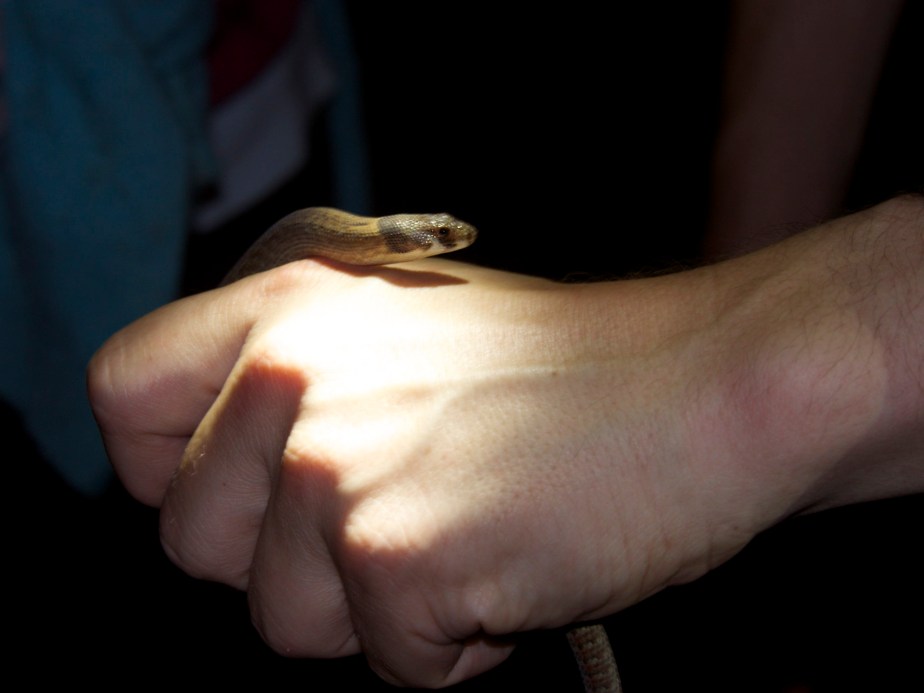
And whilst some are a handful of cute don’t try it with this one, it might result in being very unwell …
Curl Snake
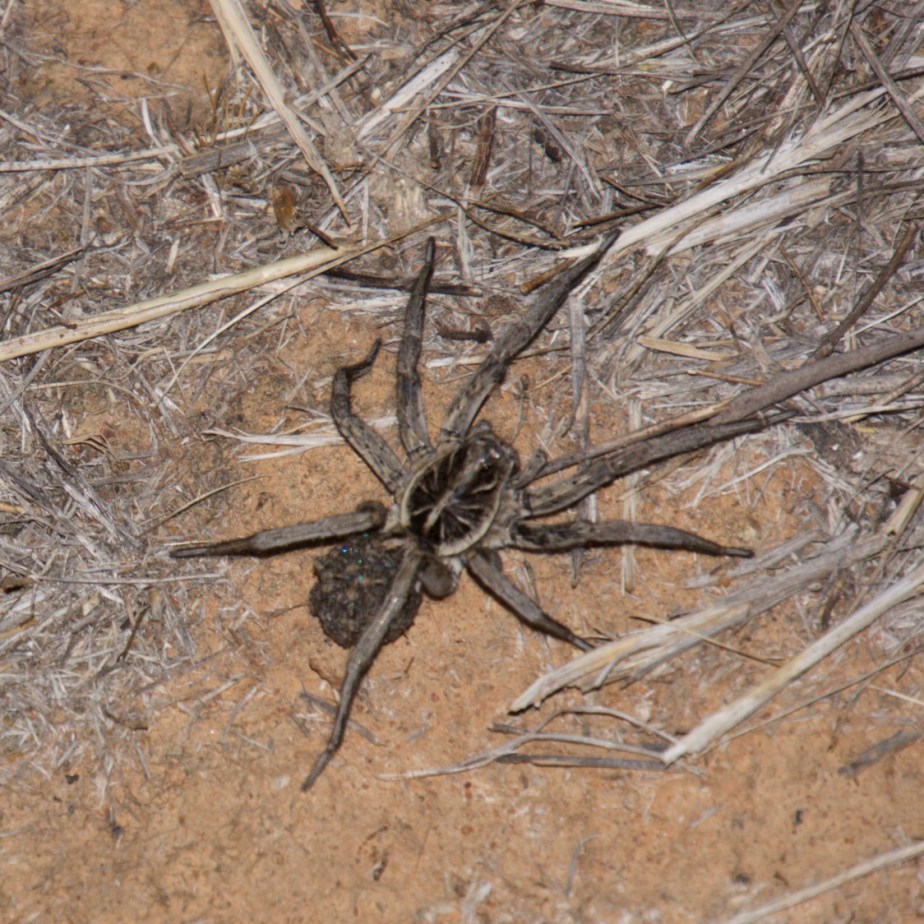
and most people would prefer not to handle this one either …
but they are cute in their own way, the little blue dots are the eye reflections of some of its babies that are riding on its back.
What’s wrong with this guy? All the way to Japan interested primarily in the wildlife. Well I’m not the only one. Nature rated third in this survey at Japan-guides.
I am nearly done with my account of the trip. It was a great trip, one to remind you of why you travel at all. We tend to imagine that the whole world runs on the same rails that we do, or would do if they had a choice. The reality is quite different, there are many people, indeed whole societies, out there who have a totally self-confident and utterly different outlook on life.
Owls have acquired symbolic meaning at different places and at different times. In the west we tend to think of the wise old owl and that was true for the ancient Greeks as well. The owl was the companion of Athena, goddess of wisdom and also associated with wealth. But they don’t always give folk the same impression, back in the dark ages they were associated with witches, black magic and evil doings.
The Japanese for owl is fukuro 梟. Other kanji can be combined to render the same syllables. One way is 福来郎 which means luck will come. Another way is 不苦労 which means no suffering. So, by a play on words, the owl offers good fortune and protection. It is a popular lucky charm in Japan.
About a dozen species of owl have been found in Japan. In a short visit you obviously aren’t going to find too many. The easiest seems to be this one …
Ural Owl
They tend to roost at the entrance of a sizable tree hollow. Suitable hollows are fairly uncommon. Some roosts are well-known and reliable, the bus stops seemingly in the middle of nowhere and a well trodden path leads off through the snow to a roped off viewing spot.
The Ural Owl is found throughout Japan and through a large area of the adjacent Asian mainland.
The ultimate owl, though, is Blakiston’s Fish Owl. On the one hand this is rare and endangered on the other hand it is large and spectacular, a heady mix, enough to make any twitcher twitch. They are only found north of Blakiston’s line (what a tragedy it would have been if Blakiston’s owl didn’t care two hoots about Blakiston’s line). Their stronghold is in east Hokkaido where they are found in steep-sided , forested valleys adjacent to the coast.
As rare as they are my chances of seeing one were excellent because my guide was none other than Mark Brazil. He is on intimate terms with some pairs having carried large and heavy nest boxes up suitably steep and forested valleys to make up for a shortage of natural hollows. He has earned his knowledge the hard way and handsomely repaid the birds in the process.
So it was off to the coast at twilight.
We staked out a spot where the stream ran from a valley under a road bridge and into the sea and waited for dark.
Even before it was pitch black we could hear the low double note call of the male. Initially it was given every few minutes and went unanswered. Then it was answered. The response was a single note, even deeper than the male’s, you could feel it as much as hear it. From then on it was as though it was a single bird calling. The technical term is antiphonal duetting. It sent a tingle down the spine (technical term frisson).
After a while I became aware that, well away from the lights, a bird had landed silently on the bow of a small boat. The binoculars gathered just enough light to turn the tingle into a twitch but could do nothing to satisfy the camera. Continued study through the gloom revealed another bird, how long it had been there was anybody’s guess. Then two more sitting on nearby boats. The whole family had come down to the sea to fish for their supper. The male, the female and two large youngsters.
One did fly closer and into the outer reaches of the lighting on the dock … but I won’t bore you with the photo because two nights later one flew and landed under the outside lighting of a streamside building. What are the chances?
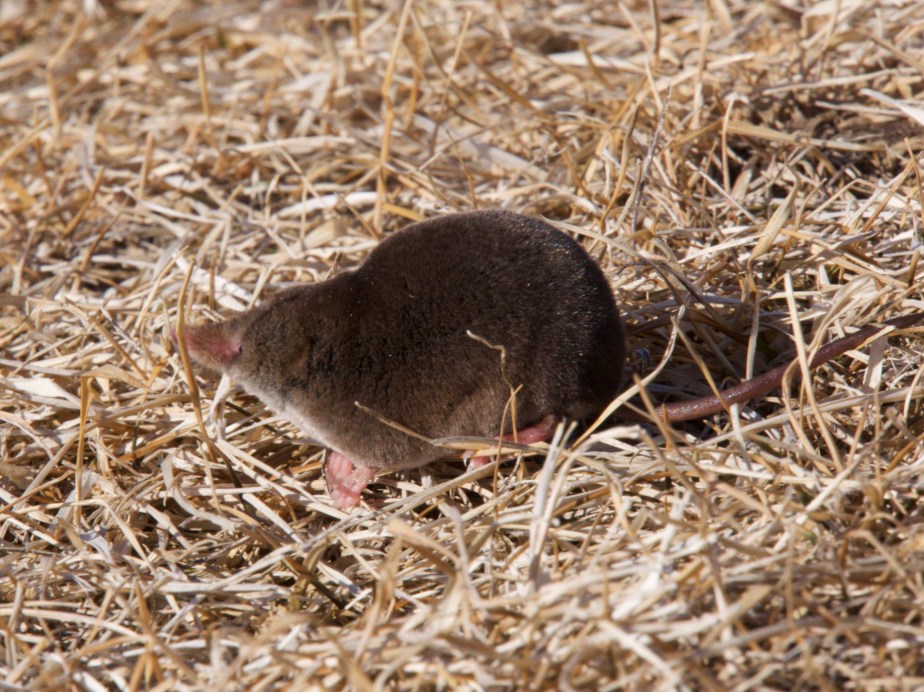
Hokkaido has quite a list of mammals, it still has Brown Bears for example. These are formidable creatures closely related to the Grizzly. They may reach more than two meters tall, weigh about 300 kg and can run at a speed of 50 kph. They mostly eat shoots and salmon but are not averse to the occasional hiker. It does nothing for your comfort to know that, not only can they outrun you, they can out swim and out climb you as well. According to a Japan Times article the government started keeping records in 1962, between then and 2008 there were 86 attacks 33 of which were fatal. The article has some amusing suggestions for people venturing into bear country. They hibernate from mid-December to late March. So no photos this trip, here’s a Long-clawed Shrew to make up for it …
Long-clawed Shrew
Blakiston’s line divides the Brown Bear, found only in Hokkaido, from the Asiatic Black Bear of Honshu and Shikoku. The Long-clawed Shrew is also found only to the north of the line.
For more on bears in Japan, including the story of the Sankabetsu Brown Bear Incident of 1915 go <HERE>. The Long-clawed Shrew standing on its hind legs would barely make 10 cm, it weighs up to 20 g moves quite slowly and has never been involved in attacks on humans.
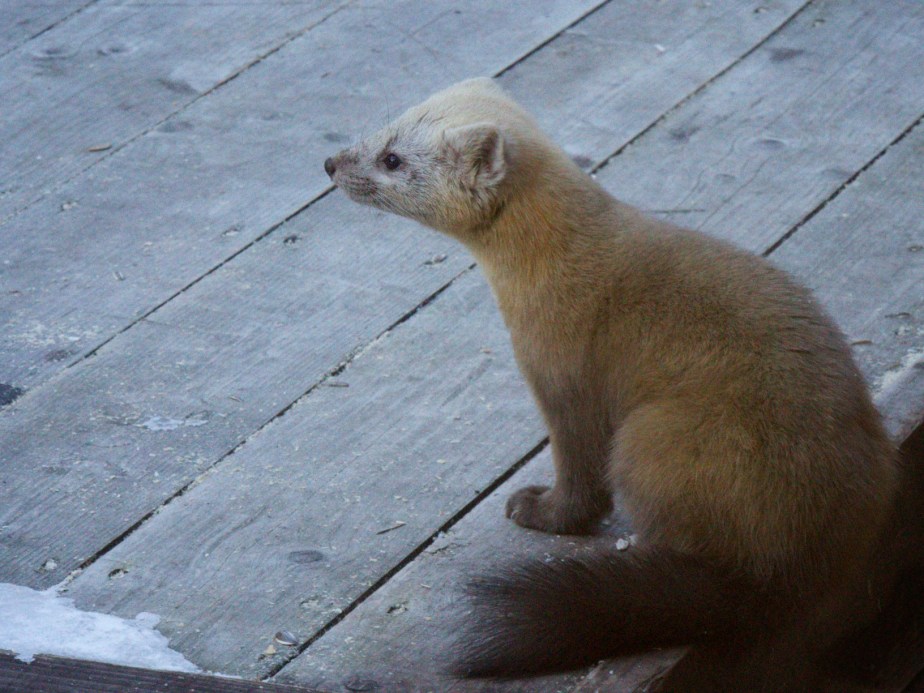
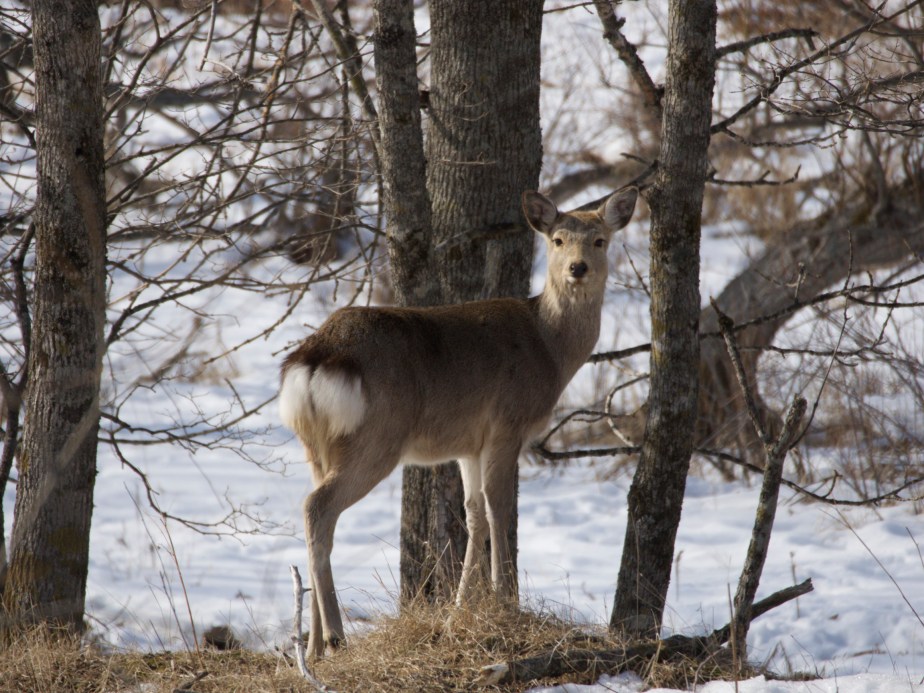
A few other mammals were kind enough to pose. This Sable, once again only found north of Blakiston’s line, had its den under the deck of one of the hotels I stayed at.
Sable
It is a Mustelid along with weasels, badgers and otters. It is happiest eating squirrels, smaller rodents, birds and fish but will also eat berries, vegetation and pine nuts when the going gets tough. This one mostly ate bread.
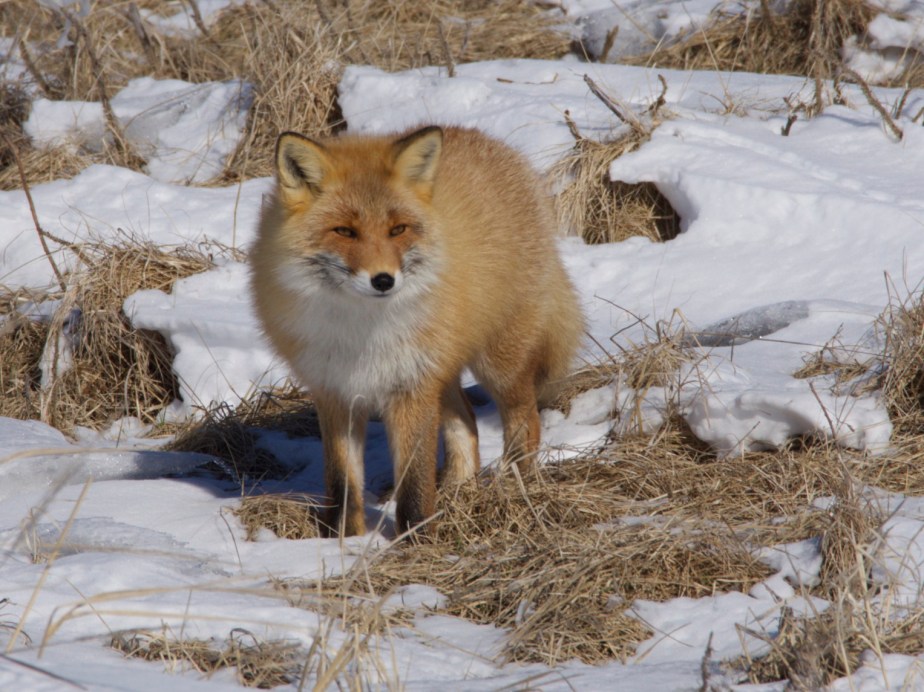
The next couple of species have no regard for Blakiston. They do not toe the line.
A man of action needs to be where the action is. Back in the 1700’s there was plenty to do in the Russian far east. Vitus Jonassen Bering, a Dane, had joined Peter the Great’s navy and in 1724 led an expedition that sailed north into the Arctic sea. This confirmed that Siberia was not attached to Alaska. Bad weather had hampered the expedition and there remained much to put on the charts, it led to a second expedition, once again commanded by Bering. This became an epic. It left St Petersburg in 1733 and didn’t get afloat until 1740.
Georg Wilhelm Steller was born in Windsheim, Germany in 1709. The original spelling of his surname was Stöhler which subsequently became Stöller and ultimately was immortalised as Steller. He studied medicine, as well as theology, and the natural sciences including botany at the University of Wittenberg. He joined the Russian army and travelled to St Petersburg as a surgeon on a troop ship. There he left the army and laid the foundations of a career as a physician for the archbishop of Novgorod, married and continued his interest in natural history.
It was an exciting time to be interested in natural history, Linnaeus published Systema Naturae in 1735. Here was a method by which to organise the natural world, there was an enormous catalogue just waiting to be filled.
Steller volunteered to join the Great Northern Expedition and headed east. He left St Petersburg in January 1738 and reached Okhotsk and the main expedition in March 1740 as Bering’s ships the St. Peter and St. Paul were nearing completion. In September the expedition set sail. It was late in the season, the two ships rounded the Kamchatka Peninsula and laid up for the winter in Avacha Bay on the Pacific coast. Steller went ashore where he helped organize a local school and began exploring Kamchatka.
On June 4th 1741 the great adventure finally got under way, Bering commanded the St.Peter, Aleksey Chirikov commanded the St. Paul. Steller was on the St Peter. Steller’s new companions may not have enjoyed his company much. Corey Ford tells the story in Where the Sea Breaks Its Back and describes him thus …
hypersensitive himself and yet insensitive to the feelings of others, indefatigable and brilliant but dogmatic and without tact, an irascible genius who lacked the saving grace of humility, and who was unable to tolerate any difference of opinion.
We could put it more bluntly, a genius but an arrogant prick. He and I have so much in common.
The ships were separated in stormy weather, Chirikov put some of the Aleutian Islands on the map. Bering stayed further south, Steller urged a more northerly course and when the wisdom of his advice was finally heeded the St Peter made landfall on Kayak Island, Alaska on July 29th 1741. Steller was the first ashore and was allowed a mere 10 hours to make his mark on North America’s natural history.
Which of course he did, Steller’s Jay. He recognised the similarity of this new Jay to the better known Blue Jay that he had read about, and deduced from the relationship that he was indeed in North America. He recorded the details in his journal, the bird was named in his honour after his death.
On the return journey the St Peter was driven ashore on what has become Bering Island. Storms had made it impossible to fix their position for more than a week. Land, believed to be the Kamchatka Peninsula but in reality one of the Commander Islands, was sighted on November 4th. That night in wild weather, the St Peter was swept over a reef and found itself in a lagoon from which there was no escape.
The next morning the crew landed. With their limited supplies they set about preparing their new home. It was to be a hard winter. Vitus Bering died on the 8th December, the cause usually being cited as scurvy but he was ill prior to the shipwreck. Twenty eight of his men followed him to the grave with scurvy rather more certainly to blame. Steller, meanwhile ate berries and fresh greens and encouraged others to do likewise.
Whilst the men filled their time beating off Arctic Foxes and gambling, Steller spent his beating off Arctic Foxes and studying the flora and fauna, including detailed observations of Steller’s Sea Cow; the only detailed observations because it was soon to be extinct.
In the spring the St Peter was stripped and a new boat built from the salvaged materials. The new St Peter sailed on August 13th 1742 and arrived in Petropavlosk 12 days later.
The glory, such as it was, had gone to Chirikov, commander of the St Paul. The crew of St Peter, it was assumed, had all perished. Peter the Great was dead, Empress Elizabeth had turned Russia in on itself, men of action from foreign parts were no longer welcome. Steller remained in Kamchatka, kept body and soul together teaching and by other odd jobs, and continued his studies. His writings made it back to civilisation but little of his collections survived.
His sympathies for the native people combined with his lack of tact towards their imperial overlords got him into strife. He was arrested for treason and sent towards St Petersburg, but exonerated and freed along the way, and, because communications were poor in those days, arrested again and freed again. Circumstance had led him to Tyumen in Siberia where he caught a fever and died. He was 35.
He wrote of himself, “I have fallen in love with nature”.
It was through his writings that he reached the outside world. He discovered scores of new plants, several new mammals, birds, even fish. His contribution has been recognised by the biologists that followed him in the names of things …
Time to head to the coast and the fishing port of Rausu.
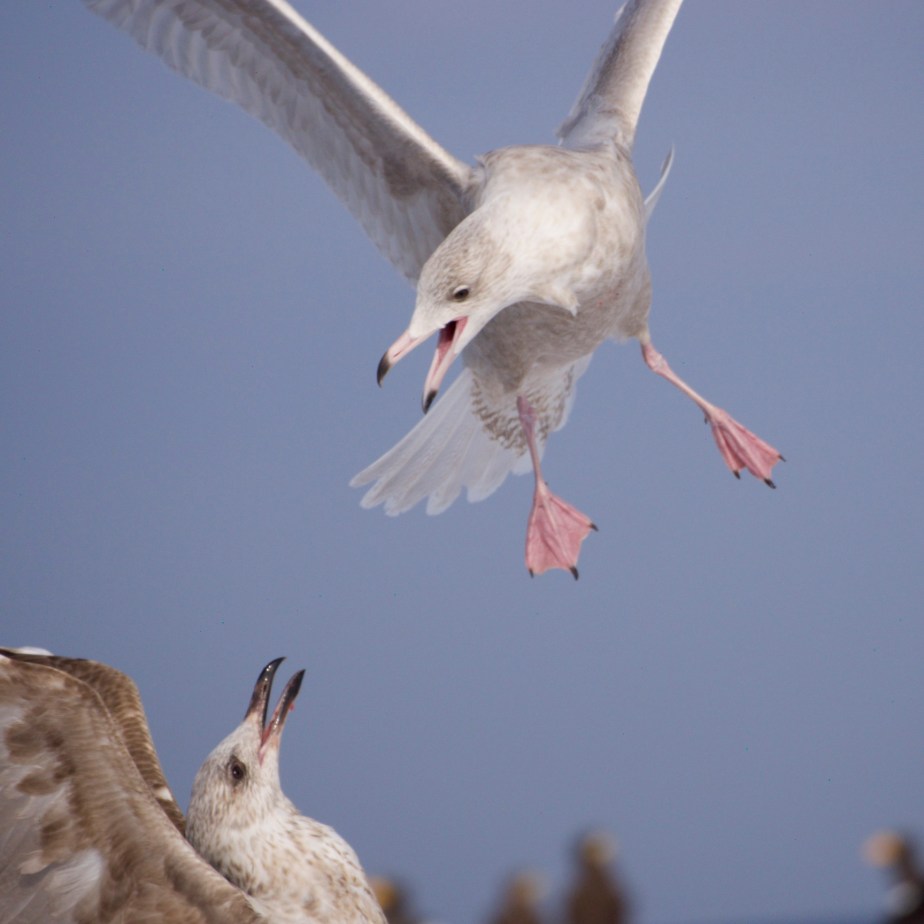
We were going to sea to get some stunning views of some eagles. We donned our life jackets, packed several trays of frozen fish, which meant that they were pretty much at ambient temperature and headed out onto the briny. The gulls were quick to take an interest, this is a regular event for them …
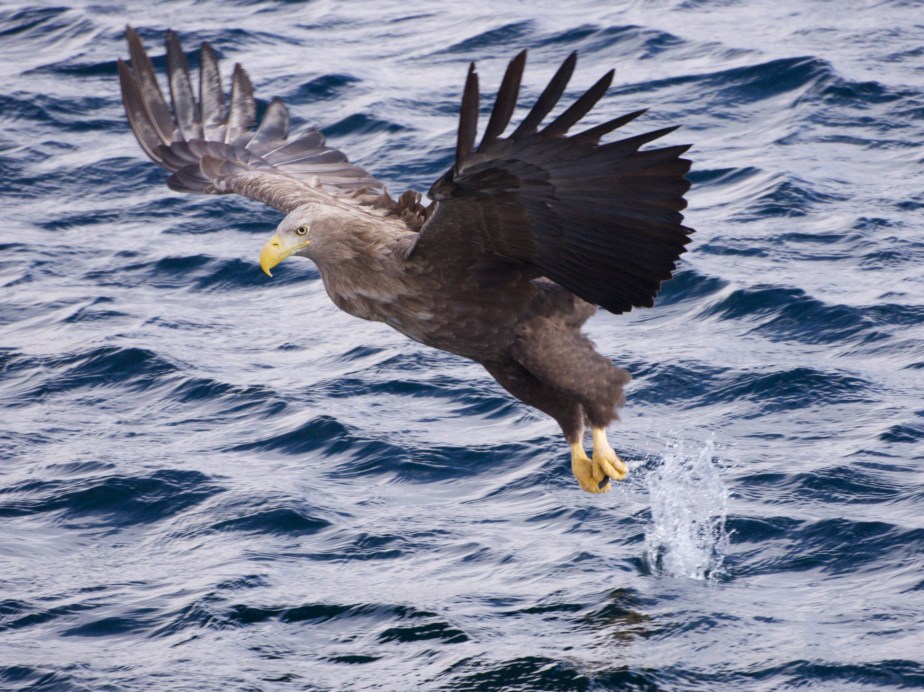
But once we started throwing out the fish they were obliged to make way for the White-tailed Sea Eagles,
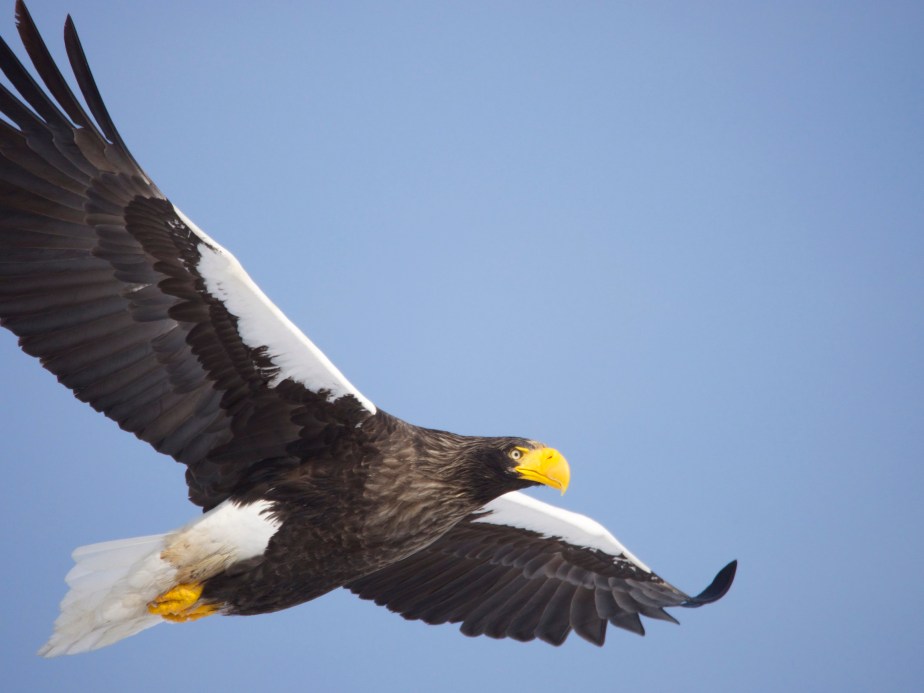
and when the big guys show up, look out. Steller’s Sea Eagle was the bird I had come to Japan to see. On a previous trip I had been on a ship outside Petropavlosk. The Russian port authorities, perhaps because there were mainly Americans on board, had kept us waiting for hours. By the time we docked it was time to head straight to the airport. The only significant result of that was to deny some dollars to the local economy. I was not too upset, I spent the whole time looking for the world’s largest and most spectacular eagle. I would have stayed an extra day … in fact I would have needed to. None showed up. Going hungry improves the appetite, dipping on a bird sweetens the eventual sighting …