An unexpected source of irony …
Rice, the staple diet of half the world’s population produces about 17% of anthropogenic methane.
Methane traps about 20 times as much heat as carbon dioxide.
The world’s population is increasing.
Rice does the photosynthesis thing in its leaves. The resulting carbohydrates find their way to the seeds. That’s a good thing. Much also finds its way to the wet soil around the roots. That’s where microorganisms make the methane. That’s a bad thing.
The distribution of the carbohydrate is, to some extent under genetic control. You may have already caught on to where this is going.
… the addition of a single transcription factor gene, barley SUSIBA2, conferred a shift of carbon flux to SUSIBA2 rice, favouring the allocation of photosynthates to aboveground biomass over allocation to roots. The altered allocation resulted in an increased biomass and starch content in the seeds and stems, and suppressed methanogenesis, possibly through a reduction in root exudates. Three-year field trials in China demonstrated that the cultivation of SUSIBA2 rice was associated with a significant reduction in methane emissions and a decrease in rhizospheric methanogen levels. SUSIBA2 rice offers a sustainable means of providing increased starch content for food production while reducing greenhouse gas emissions from rice cultivation.
G M Rice could feed the masses without pushing up the temperature. What will Prince Charles make of that?
Unprecedentedly accurate …
Thank goodness we got that settled …
The earth is 15 years from a “mini ice-age” that will cause bitterly cold winters during which rivers such as the Thames freeze over, scientists have predicted.
Solar researchers at the University of Northumbria have created a new model of the sun’s activity which they claim produces “unprecedentedly accurate predictions”.
They said fluid movements within the sun, which are thought to create 11-year cycles in the weather, will converge in such a way that temperatures will fall dramatically in the 2030s.
Solar activity will fall by 60 per cent as two waves of fluid “effectively cancel each other out”, according to Prof Valentina Zharkova.
In a presentation to the National Astronomy Meeting in Llandudno, she said the result would be similar to freezing conditions of the late 17th century.
Blind …

Not uncommon amongst cyclists.
ABC …
Apparently the A in ABC stands for Australian …

For Sale …

Destination …

From the Tiwi Islands to Darwin was an easy overnight cruise. We had an appointment with the pilot for first light.

The travel company that managed the cruise was Zegrahm Expeditions and, as always, they added a great deal of value to the product. The cruise director made sure that we had the opportunity to extract the max and he was well supported by guides who really knew their stuff. They included Chris Done who had been the regional manager for the state’s Department of Conservation and Land Management, Terry Done, a marine biologist, Shirley Campbell, anthropologist from ANU and Brent Stephenson, a first rate ornithologist.
The ship was part of the Coral Princess fleet, first class facilities and a wonderful crew.
Off the ship early and flying late; what to do? Go birding.
The only disappointment of the day was finding a new fence around the Palmerston sewage ponds, you can no longer see the birds that it attracts. Yet another sewage pond falls by the wayside, every one of them a sad loss.
Tiwi …
Blown Apart Gulf was a mill pond.
The Tiwi Islands are in Australia’s Northern Territory about 100km north of Darwin. There are two large inhabited Islands, Melville and Bathurst and nine small uninhabited islands. The largest settlement is Wurrumiyanga on Bathurst Island with a population of about 1500. From there Melville Island is a short car ferry ride away.
The Tiwi are aboriginal folk that have a different language and some significant cultural differences from their neighbours in Arnhemland, the nearest part of the mainland. Local Government is the responsibility of the Tiwi Land Council, an outsider needs a permit to visit. This is true of a number of areas under aboriginal control. As an Australian I always find it odd that I need a permit to walk down an Australian street, a Tiwi Islander doesn’t need one to walk down my street. But hey, I had one, and the Tiwi guides made us very welcome.
Wurrumiyanga is a tidy little town of well maintained houses and gardens. We had the opportunity to visit three art galleries, the museum and the church. Along the way we got to see kids at a school that could have been anywhere in Australia.
The strongest feature of the local art was, I thought, the carving which often featured birds. Here are some housed in the museum but there were many fine examples for sale.
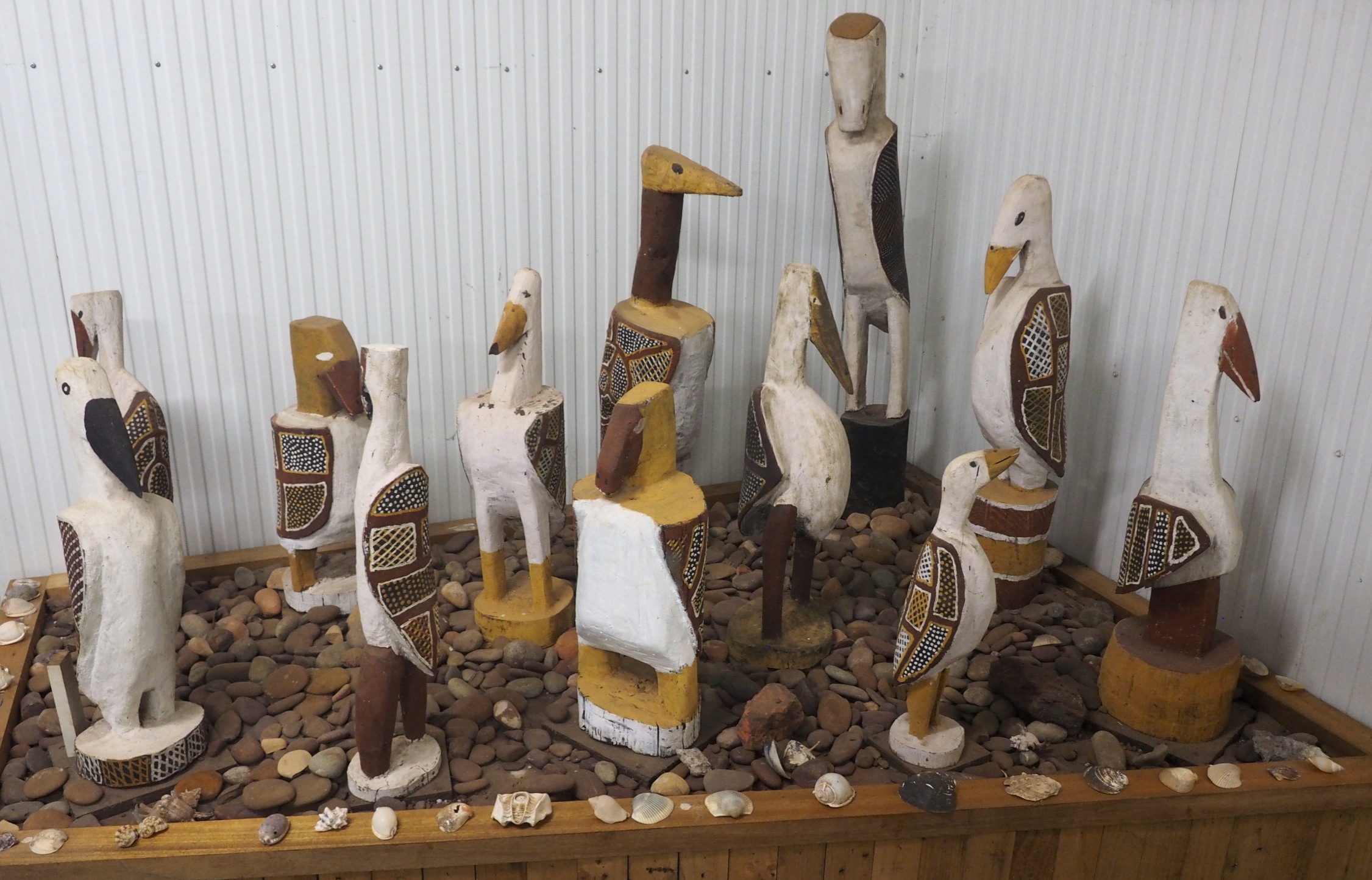
Carving has its greatest significance in the Pukumani which are carved for the dead. The Pukumani poles are carved by men selected by the deceased’s family but not closely related. They are placed by the graveside in a ceremony that takes place two to six months after burial.
Some of the beautiful designs are also committed to fabric by a technique similar to batik.
As well as their indigenous culture two outside religions have been adopted … Aussie Rules football and Catholicism.
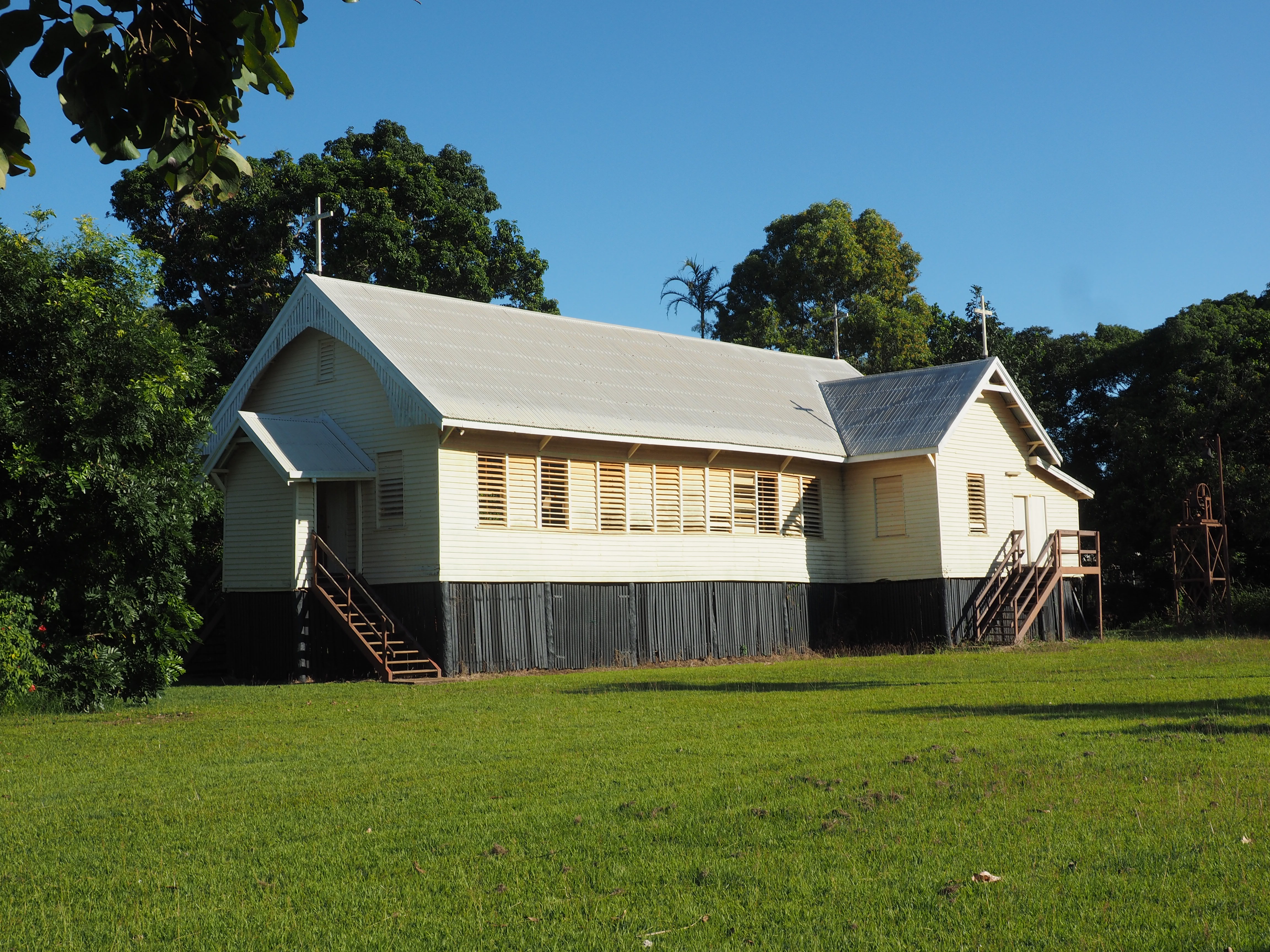
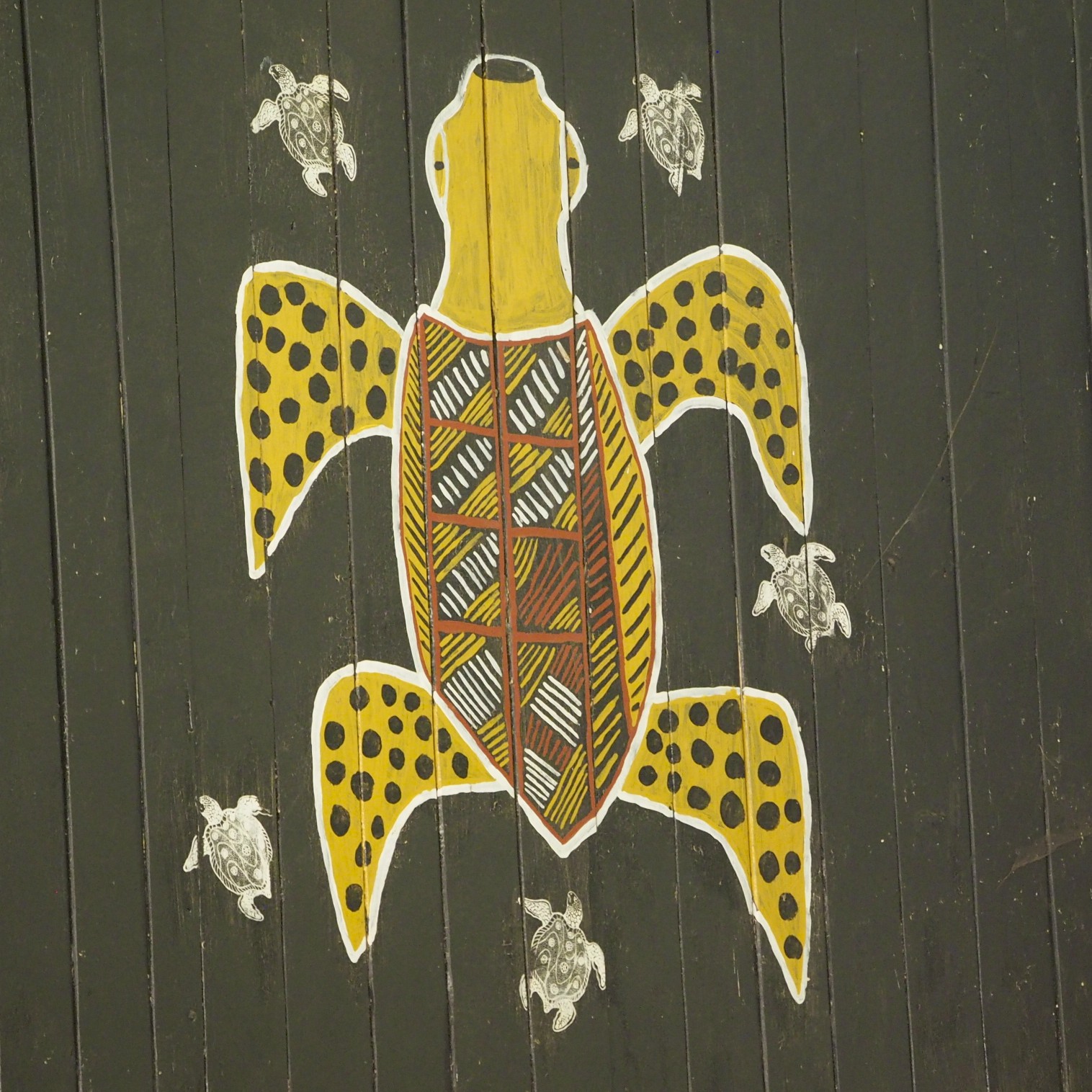
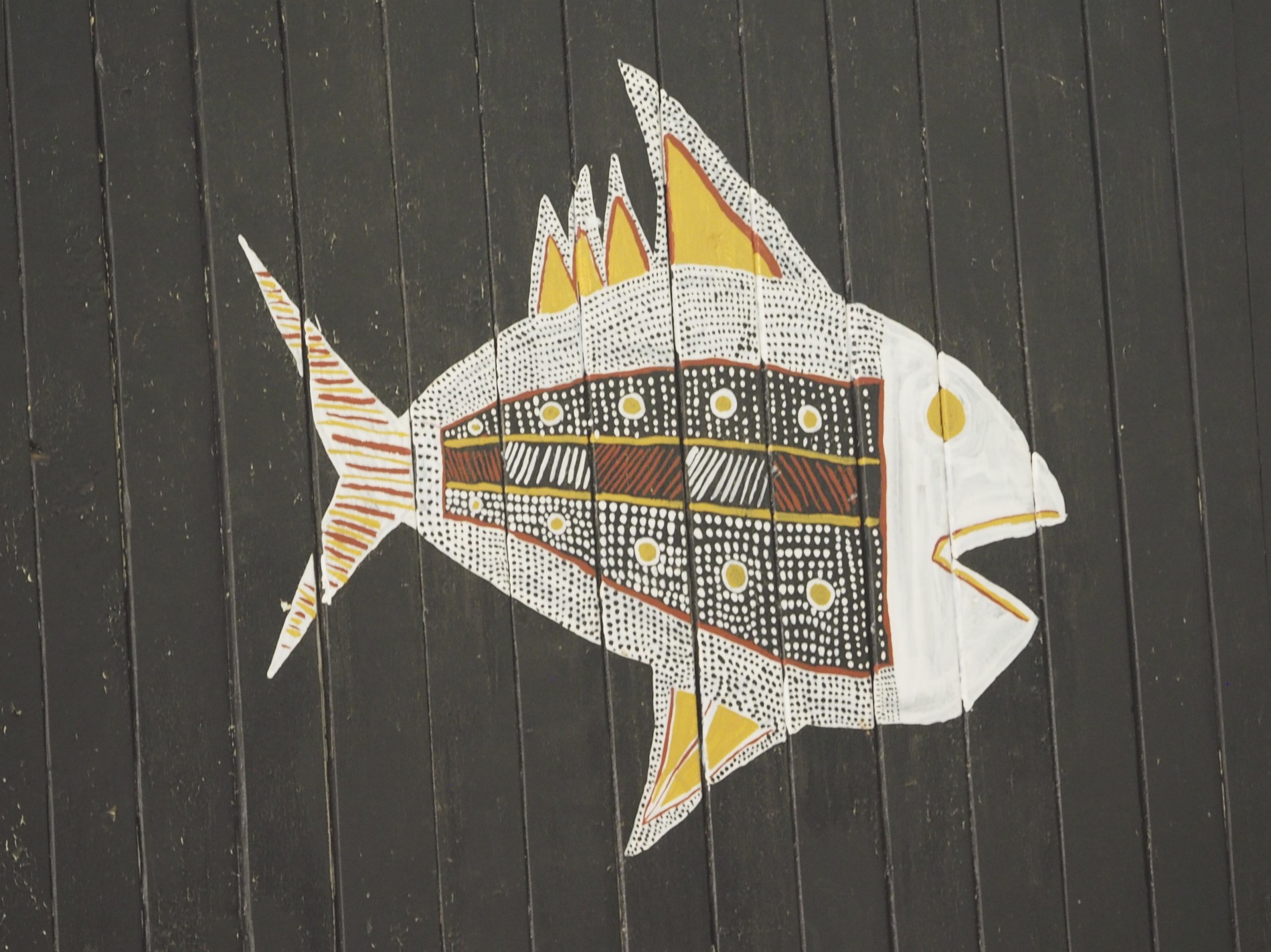
Catholicism came first, Father Gsell founded the mission in 1911. The Church is rather lovely with the interior decorated in the local style.
Panels behind the altar …
Standing next to the church is a little radio shack. From here Darwin was warned of impending bombing raids during the Second World War. Local people also captured a Japanese pilot during the war as well as assisting in the rescue of some friendly combatants.
Combat these days is on the footy field. The Tiwi have taken to Aussie Rules with a passion, about a third of the population are active participants in the local league and some of the great AFL names learnt the basics right here, including Michael Long and Cyril Rioli.
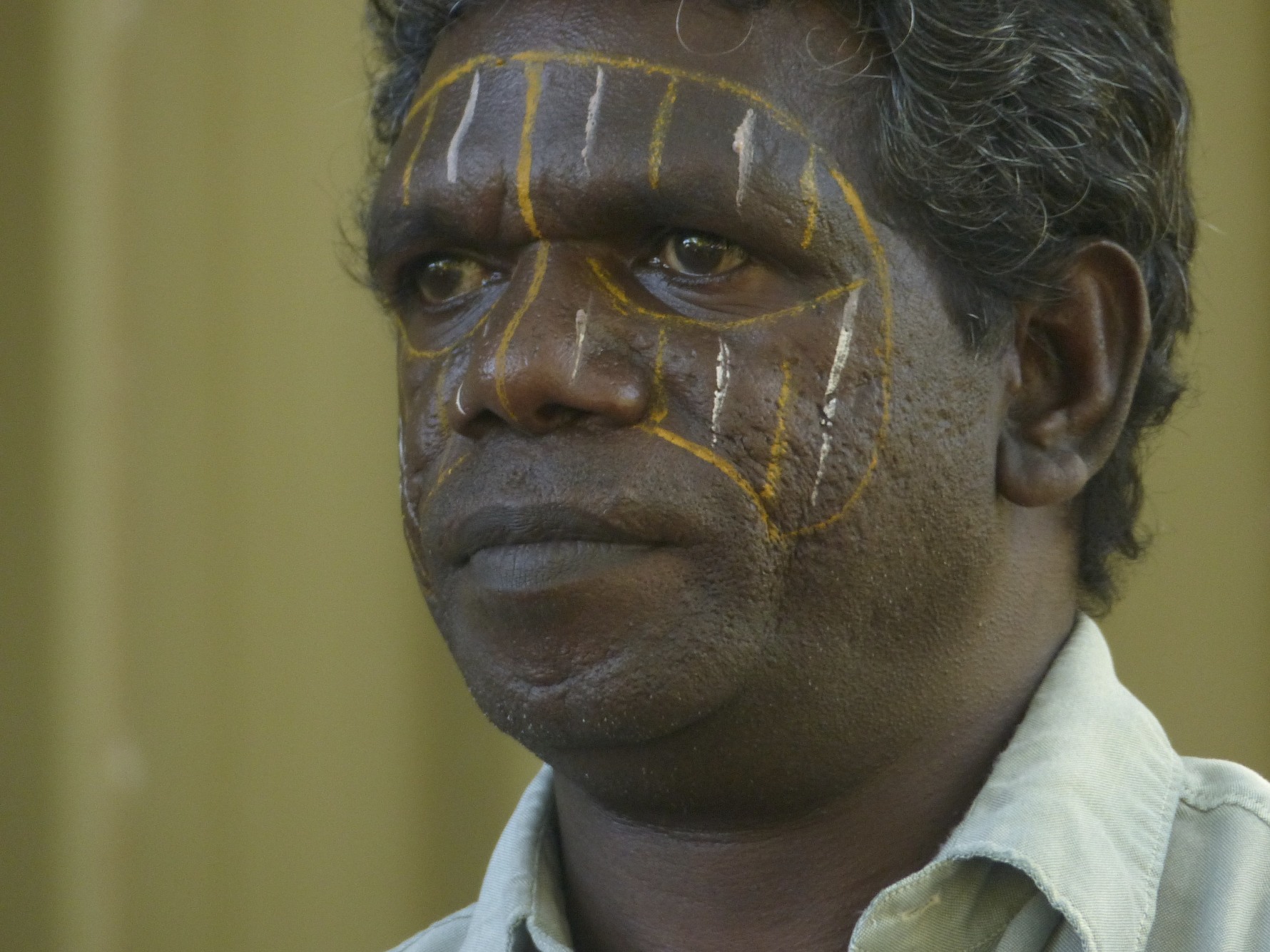
The last activity on the agenda was tea and some traditional dancing. Here is one of our guides ready to impart some culture …
Kimberley Wildlife …
I hope that it’s obvious to anyone who has read this far into the trip that I get a great deal of pleasure from this sort of travel. But if I had to say what is the most important component of it all I would say the wildlife. And if pressed to be even more specific it would be the birds.
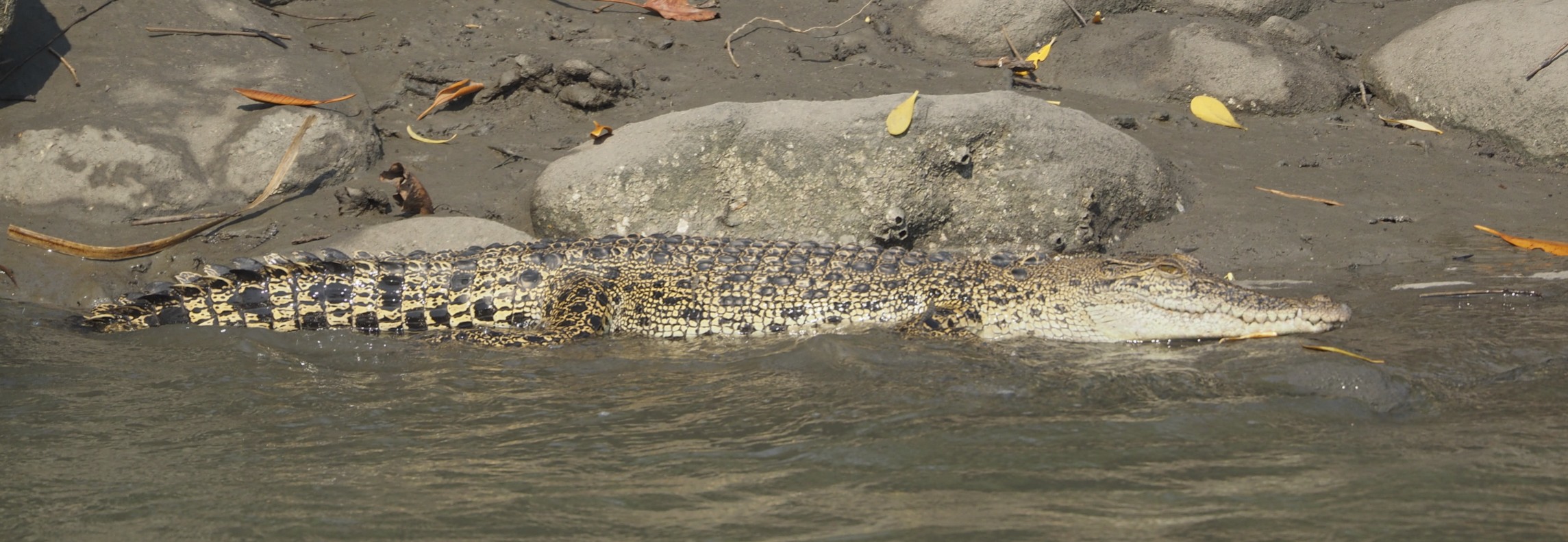
My hope was that I would get a look at the Kimberley Honeyeater, it would have been the only likely chance of a new species for my Ozzie list. It was not to be, I will have to go again. I’m glad to have done the cruise but next time it will be 4WD again, it is far more productive in wildlife encounters … of every sort except hopefully crocodiles.
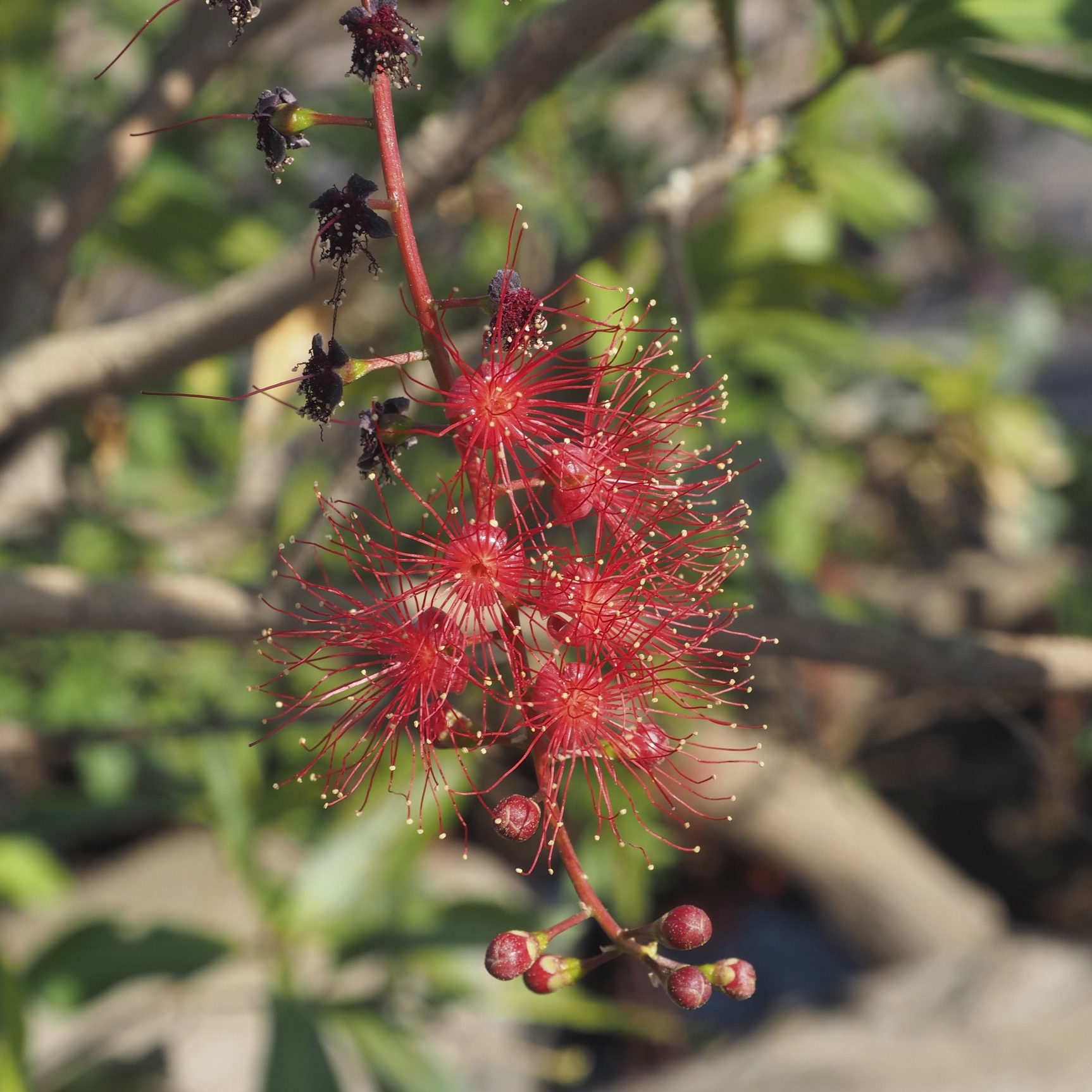
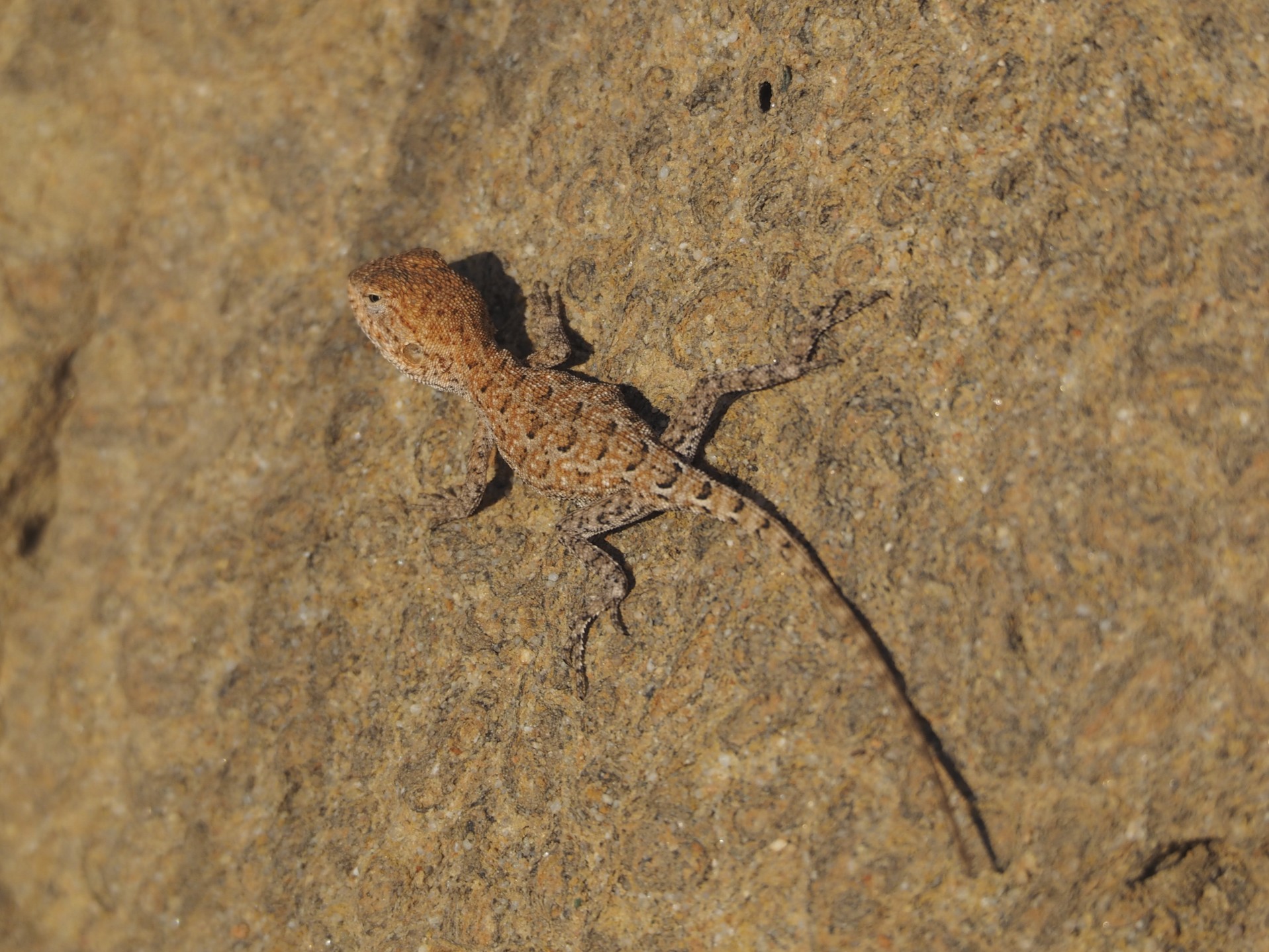
But before leaving the Kimberley let me share a little more of the flora and fauna that I caught up with.


But the cruise ain’t over yet, we now have to turn the corner and cross Bonaparte Gulf en route to the Tiwi Islands. The gulf, commonly known as Blown Apart Gulf, has an ugly reputation.
Let them eat pheasant …
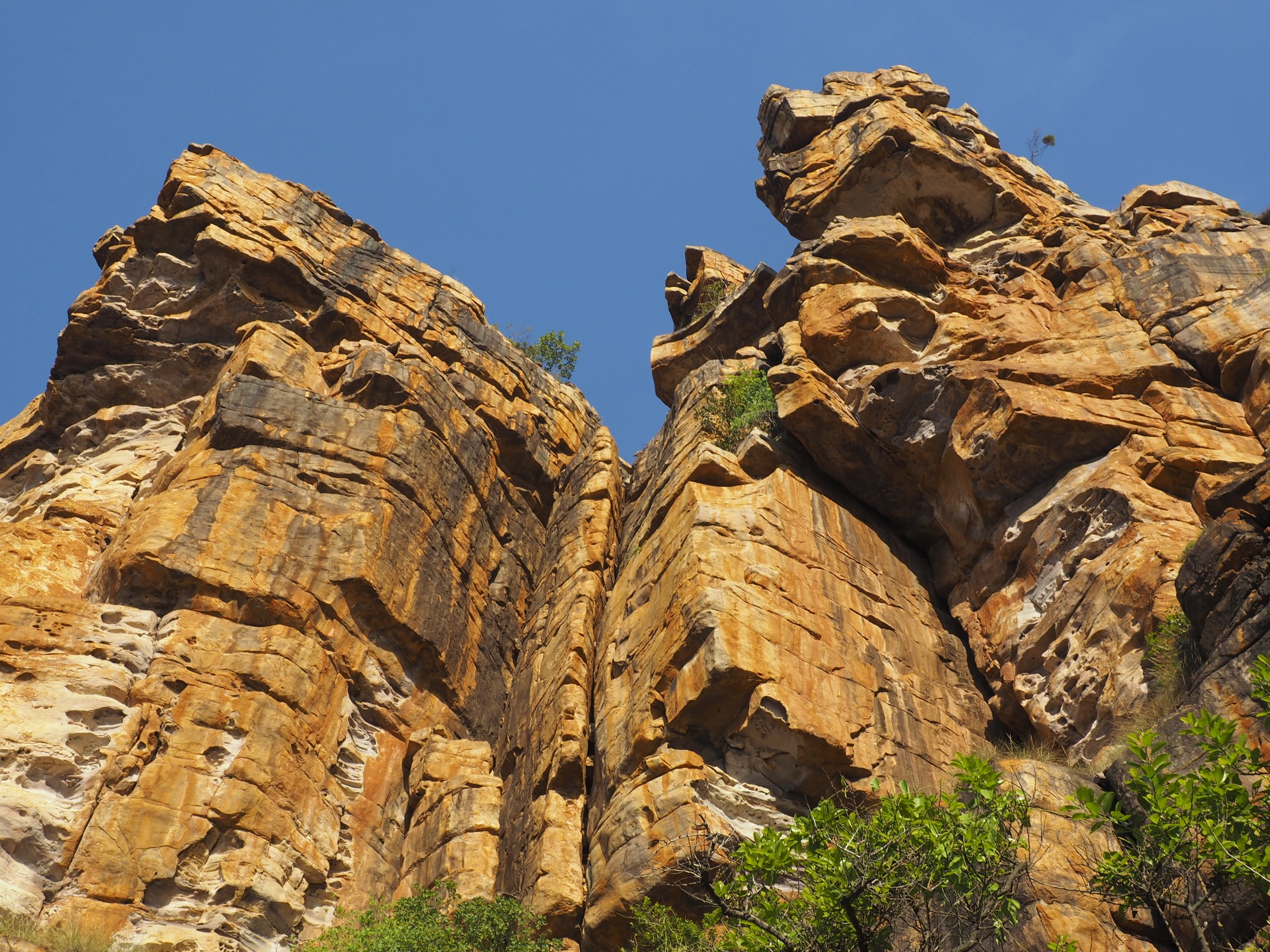
The Kimberley cruise was rapidly approaching its end but there was one last splendour to see, the King George Falls. These tumble from the top of 100 meter high cliffs into tidal waters of, neatly enough, the King George River.

Not named after that King George who lost America to the unwashed rabble living there but King George V who gave us the house of Windsor. Prior to 1917 the Royal House was called Saxe-Coburg but the activities of his first cousin, Kaiser Wilhelm II of Germany was attracting some opprobrium so he changed his name.
As well as taking a zodiac cruise directly under the falling water we also climbed a steep path to the top.
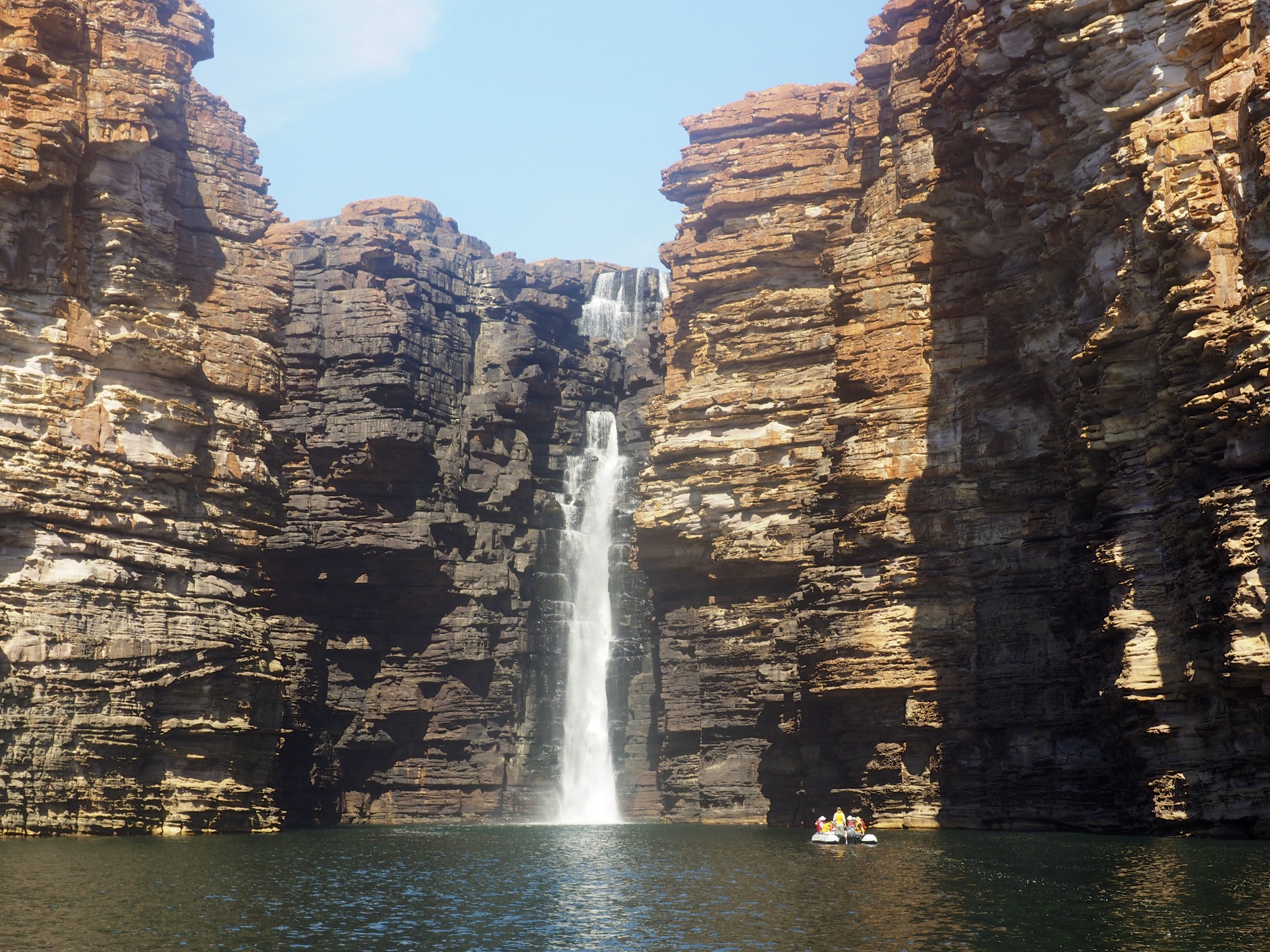

The catamaran down below was a Seawind 1200 and at that moment I could not imagine a more perfect fit between place and mode of transport. Sit me there and pass me a beer.
Waiting for us just a few metres from the edge of the falls was a very cooperative White-quilled Rock Pigeon …
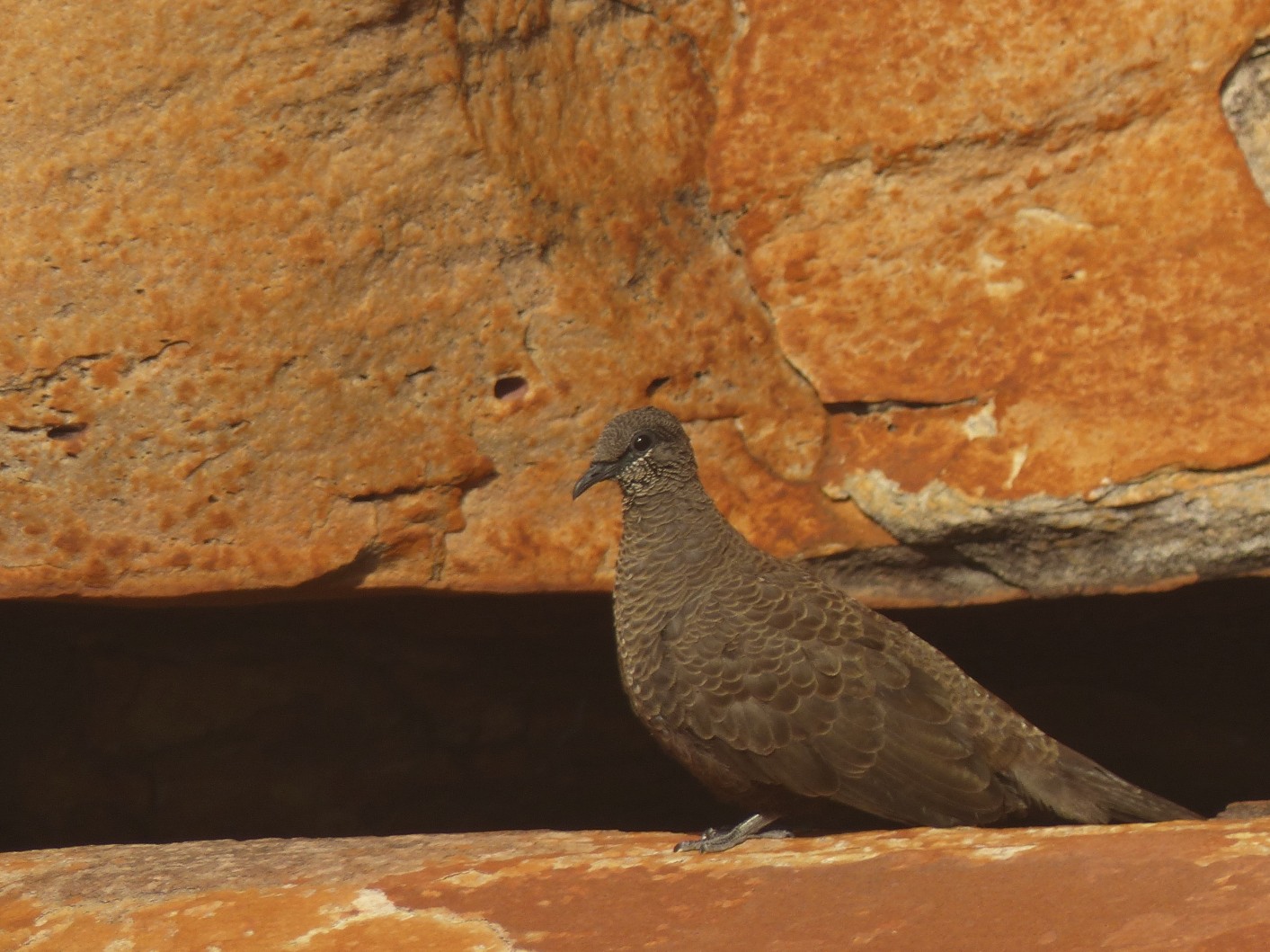
Good King George would doubtless have shot it, having despatched over a thousand pheasants in six hours on 18 December 1913. Other notable achievements included shooting 21 tigers, 8 rhinoceroses and a bear over 10 days in Nepal, what a guy.
 bobmcgee