The Time Has Come …

The call came at about 2am. First encounter …

The time has come,the Walrus said, 
   To talk of many things:
Of shoes and ships and sealing-wax
   Of cabbages and kings
And why the sea is boiling hot 
   And whether pigs have wings.

   Lewis Carroll
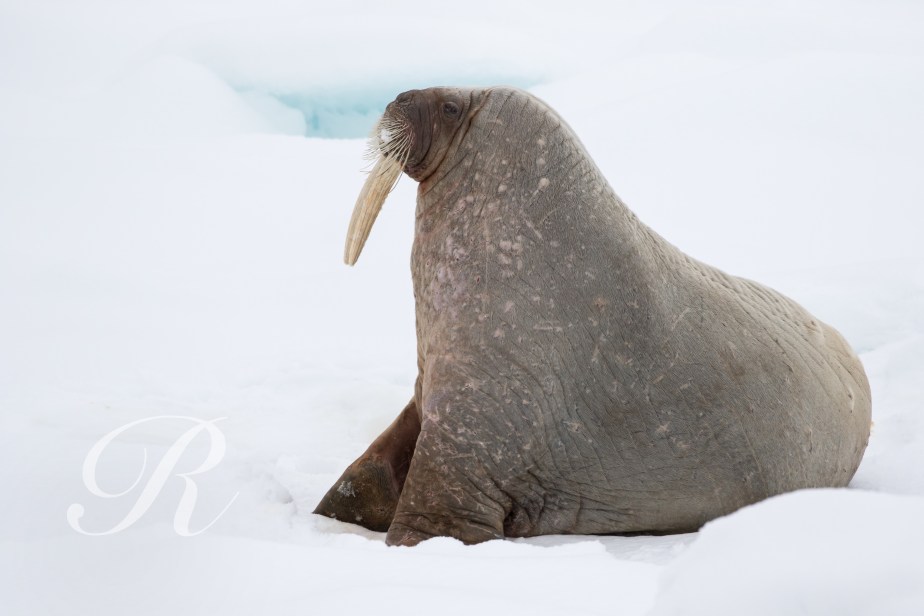
Walrus

The seals and their allies are grouped as the Pinnipedia consisting of three families, the Phocidae – True or Earless Seals with about 18 species; the Otariidae – the Eared Seals, about 15 species; Odobenidae – the Walrus sole member of its family.

A newborn Walrus weighs about 55kg. Around Svalbard a fully grown male will be about 3 metres long and weigh about 900kg. Add about 10% to that for Pacific specimens.

They reach this impressive size mainly on a diet of clams which they identify with their sensitive whiskers, clear the shell of covering substrate with a jet of water from their mouth and then suck out the contents with a powerful piston-like movement of their tongue. Under no circumstances insert any part of your body into a walrus’s mouth.

They dive to a maximum depth of about 80 metres and generally do not stay submerged for more than about half an hour. As pinnipeds go this is small beer.

The Atlantic population plunged almost to extinction in the 19th century due to hunting for blubber and ivory. It is now on the way up again.

You may not find walruses particularly handsome but this one finds himself adorable. I nicknamed him Narcissus …
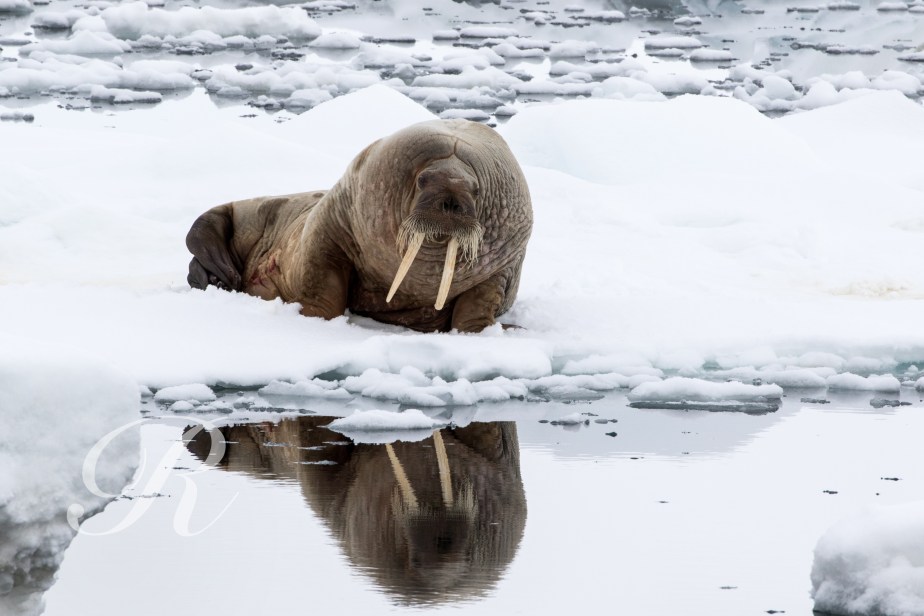
pining away …

It is reported that their eyesight is poor. After watching them at a haul-out for a couple of hours I am amazed that any still have eyes at all.
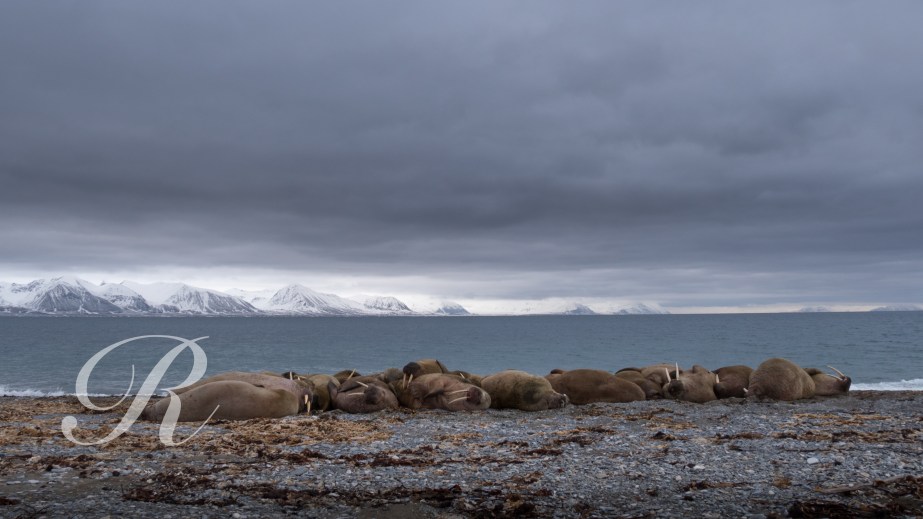
I have about 3 000 photographs of Walrus. You may see more.

Freya At Sea …

The sun was shining on the sea, 
   Shining with all his might:
He did his very best to make 
   The billows smooth and bright-- 
And this was odd, because it was
   The middle of the night.

We were not about to head for the open ocean. Our interests lay on or close to land. The scenery could wait until tomorrow but wildlife encounters could not. And as Lewis Carroll had told us the sun would not be setting on this cruise. We retired to our cabins knowing that we could be called from our beds at any time.

We acquired some new avian companions as soon as we sailed …

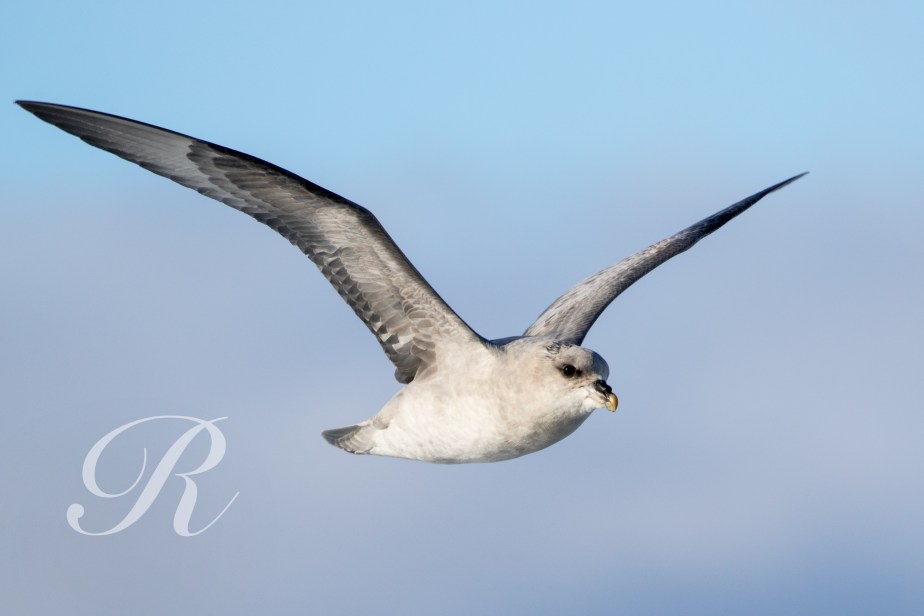
Northern Fulmar

There is a great variety of tube-noses, Procellariiformes, in the southern oceans but north of the equator there are only a few species. The Northern Fulmar would be the only representative of the family we would see around Svalbard, but we would see plenty of them.

On the other hand there are no Auks down south and plenty north of the equator. We would see several species and millions of individuals.

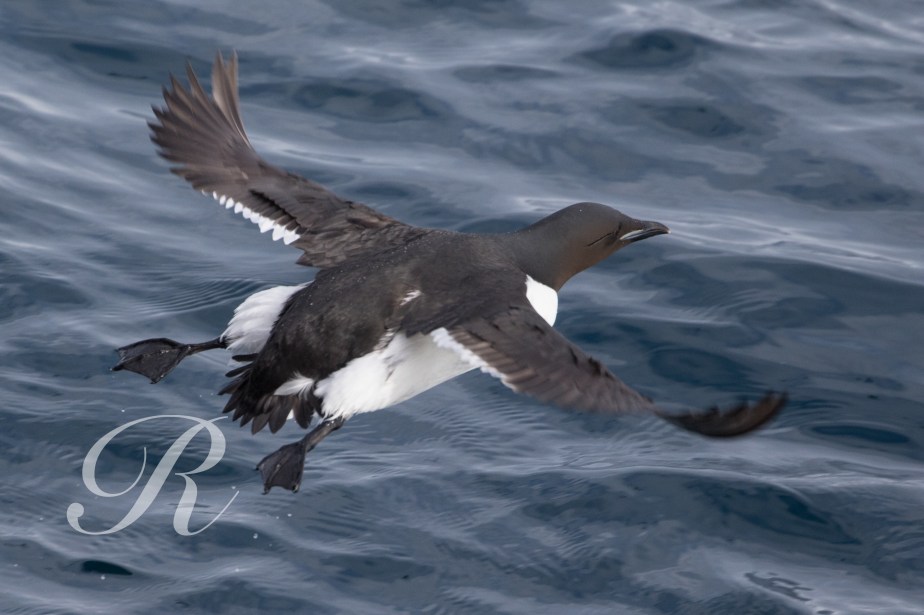
Brünnich’s Guillemot

The Americans call this bird the Thick-billed Murre, the Poms prefer Brünnich’s Guillemot (even though they are an umlaut-deprived people). Morten Thrane Brünnich was a Danish zoologist, if he were alive I suspect he would also prefer the latter. Since the demise of the Great Auk this is the largest of the Alcidae.

And the scenery was magnificent …

Freya’s Wedding …

The news in Melbourne on my return was, of course, all doom and gloom. Amongst the lesser disasters though was this …

… an ornate, custom-made whisky decanter in the shape of Thor’s hammer, Mjölnir, was allegedly stolen from Viking-referencing bar and restaurant Mjølner in Melbourne’s CBD.

Thankfully, the Norse God of Thunder will be reunited with his hammer after investigators found the decanter at Melbourne Airport this morning …

Shortly after the hammer was found a 52-year-old Western Australian man from Mindarie presented himself to Perth Police Station. The man is currently assisting police with their investigation. (Broadsheet)

It’s rumoured that he has a hell of a hangover.

Not the first time that Thor’s hammer has gone missing. In the Norse original it was stolen by the giant Prymr who demanded the beautiful Freya’s hand in marriage for its return.

Freya was not about to help out in this matter so Freya’s wedding was held in her absence. Thor dressed up as a woman and presented himself to Prymr who was delighted. Despite eating an ox at the wedding feast Thor managed to keep up the pretense until that part of the ceremony where Mjölnir was placed in his hand.

The bride was widowed moments later.

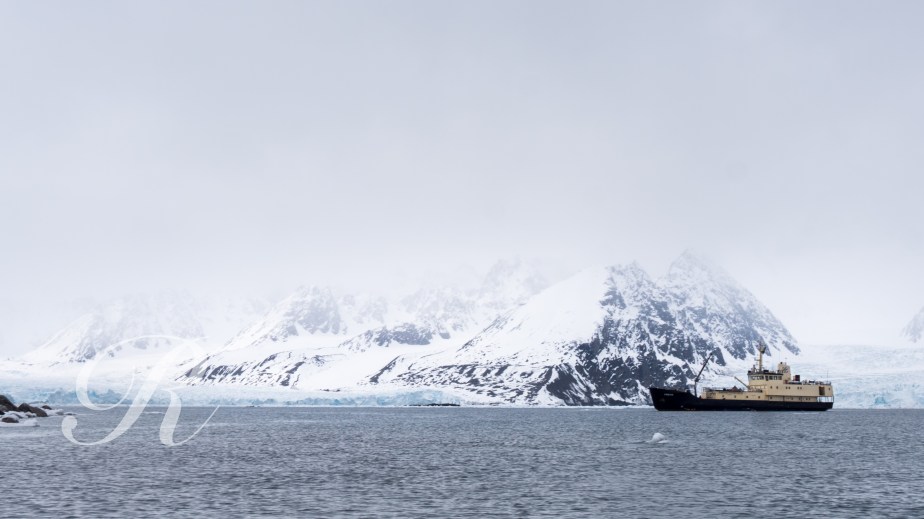
Time to join the very comfortable expedition ship Freya …

This was to be a Pete Oxford Expeditions expedition. I’ve known Pete for many years and have been looking forward to traveling with him ever since he formed his own company not too long ago. Pete is an outstanding photographer, a passionate conservationist and a very generous human being. Put him in front of a wildlife photo-op and his face lights up like a five year old.

On the other hand I doubt he could organise a trip to the supermarket without his wife Renee Bish. If Pete is all charisma then Renee is all hard work but just as gorgeous. I’d caught up with them at Oslo Airport and flown the last leg to Svalbard with them a few days earlier.

Just as well there were a few days to spare because their luggage stayed in Oslo and it took two more days for it to arrive. Pete is a foot taller than me … he looked really cute in my parka.

The remaining participants were members of Birdlife International. I was traveling with a group who collectively had done an amazing amount of good for the world’s birds. Including Renee and Pete there were thirteen of us. Two local guides were with us to make sure we found what we were after and keep us safe whilst we did it. The ship’s crew were outstanding, the food was great, the beds were comfortable. There was plenty of space.

There was one thing missing from the group which I’ll try to remember to tell you about at the end of the trip. For now though just concentrate on Pete and Renee expertly helping strangers become friends.

Let go the ropes, we’re away.

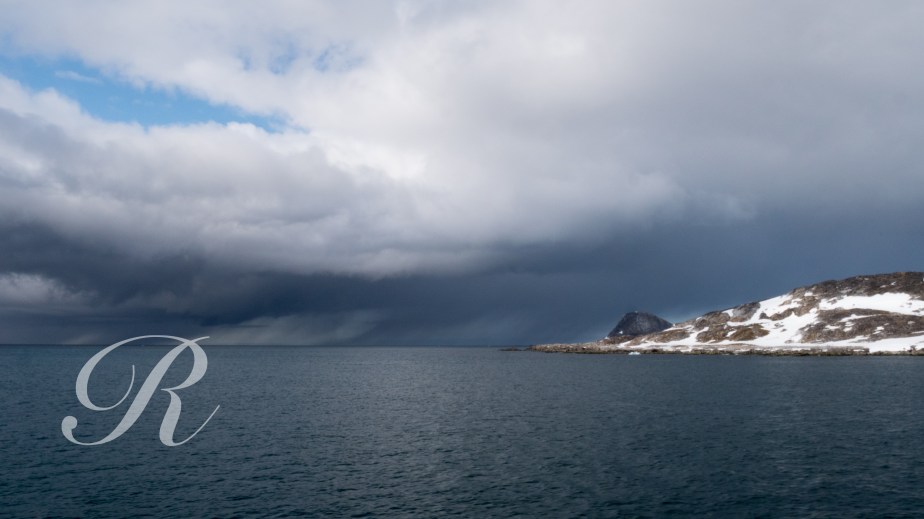
The weather and the sea will be kind to us but this is the Arctic. These photographs were taken on the first day just thirteen minutes apart …

Arctic Wildlife …

High mountains and high latitudes are harsh places. There are not a lot of creatures that can make a living.

I have arrived in Longyearbyen a few days early for a cruise that will take me further north in the archipelago and have been wandering around the outskirts of town with my camera. It isn’t wise to go too far because one of the animals around here is quite happy to eat the adventurous.

Whilst I have seen only a small number of species I have had the time to get some photos …

Black Guillemot
Barnacle Goose
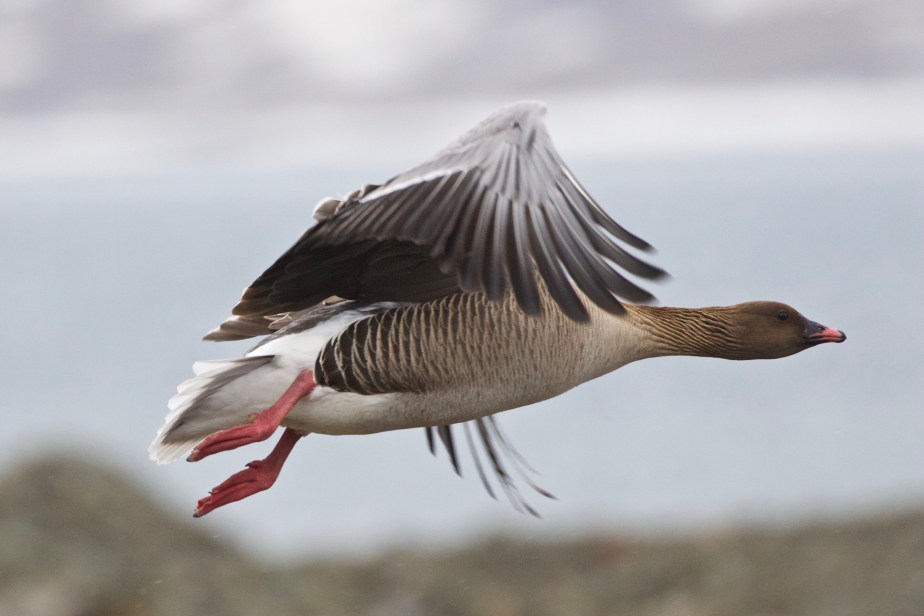
Pink-footed Goose
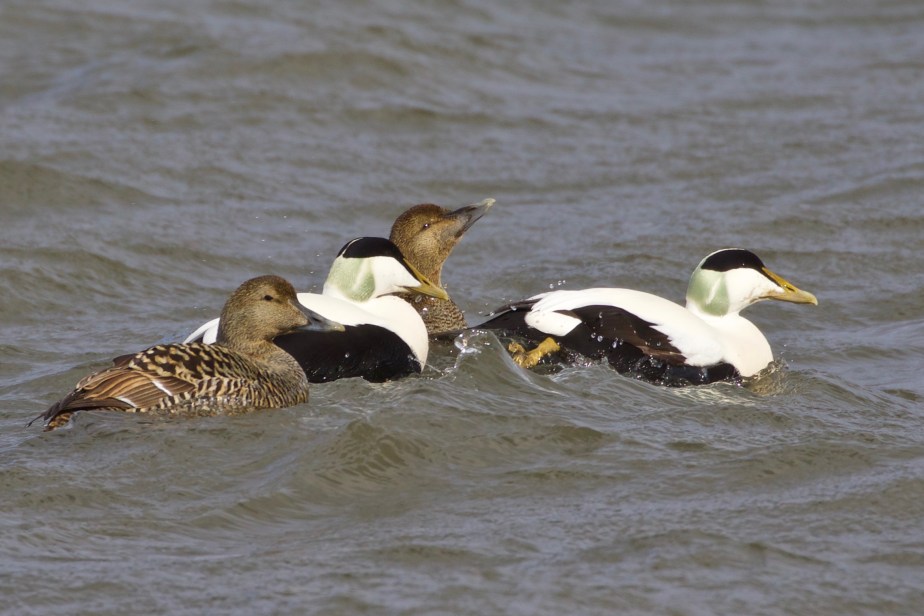
Common Eider
King Eider
Reindeer
Snow Bunting
Rock Ptarmigan

Cold Shores …

Half way between Norway and the north pole and well inside the arctic circle there is an archipelago  discovered and named Spitsbergen by the Dutchman Willem Barentsz in 1596. He failed to recognise that it was a group of islands. Since the 1920s Spitsbergen has been  the name of the largest island, the archipelago as a whole is known as Svaalbard and is politically part of Norway.

It was a true terra nullius when Barentsz found it but it is now the world’s most northerly full time settlement. There is some mining, tourism and it is the home of the world famous seed bank. Wikipedia tells us that soccer is the most popular sport and that there are three football pitches. It’s not surprising then to find that the population is only small. In July 2017 it was estimated to be 2,583. The population growth rate is -0.03%, they won’t be needing an extra soccer pitch any time soon. The largest town and administrative centre is Longyearbyen. It is a free trade and demilitarised zone.

The climate is described as

arctic, tempered by warm North Atlantic Current; cool summers, cold winters; North Atlantic Current flows along west and north coasts of Spitsbergen, keeping water open and navigable most of the year.

About 60% of the land surface is glaciated.

Tourists obviously don’t come to buy ice cream and football boots. Mostly they come to see polar bears, whales, walruses and sea birds, reindeer and the northern lights. The latter will not be in evidence until the sun sets next …

Mining the Archives …

For a long time I have been promising myself that I would get my photos into some sort of order.

So far I have found photos on four different computers, three generations of Mac and a PC. None of the external hard drives lying around would actually do business with all of them. I ended up clearing the oldest Mac with a USB stick, not the nice new one with heaps of storage but an old one that would cope with just 200 files at a time. I still have to find some more photos. One other Mac was stolen some years ago, that’s a collection of photos that I won’t be seeing again and but there is hope that some others are filed away on cd somewhere. Must sort them out while I still have a means of reading cd’s. Anyway most of the digital era is now assembled in one place … must back it up!

Because of some problems with my Olympus camera I’ve also had reason to sort through and put back into use some old camera gear. Reviewing my old photos and being forced to think about my photography has been a most instructive revision course. I got the brand new camera yesterday but before I start showing off what it can do lets see what went before.

Wildlife and landscapes it’s what I do …

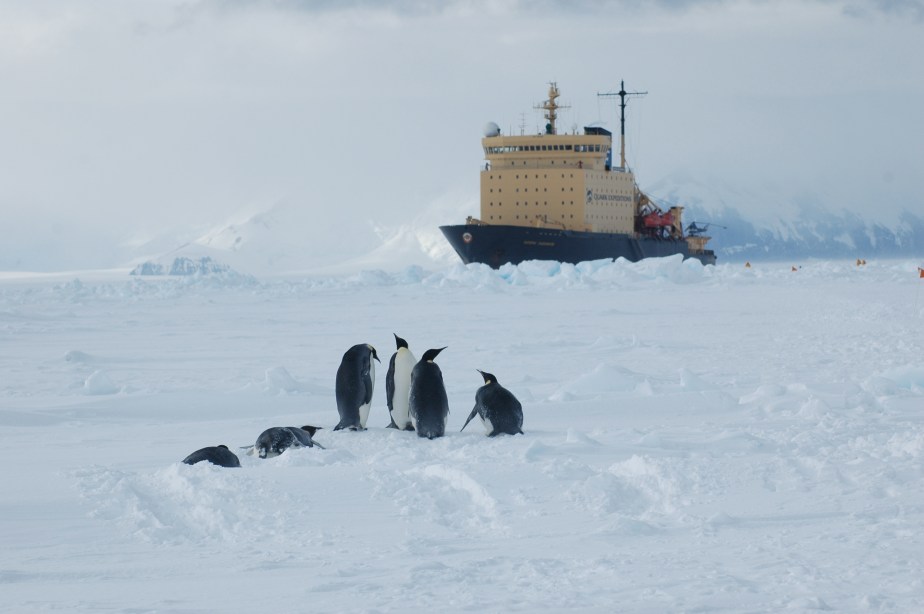
Antarctica 2005
Antarctica 2005


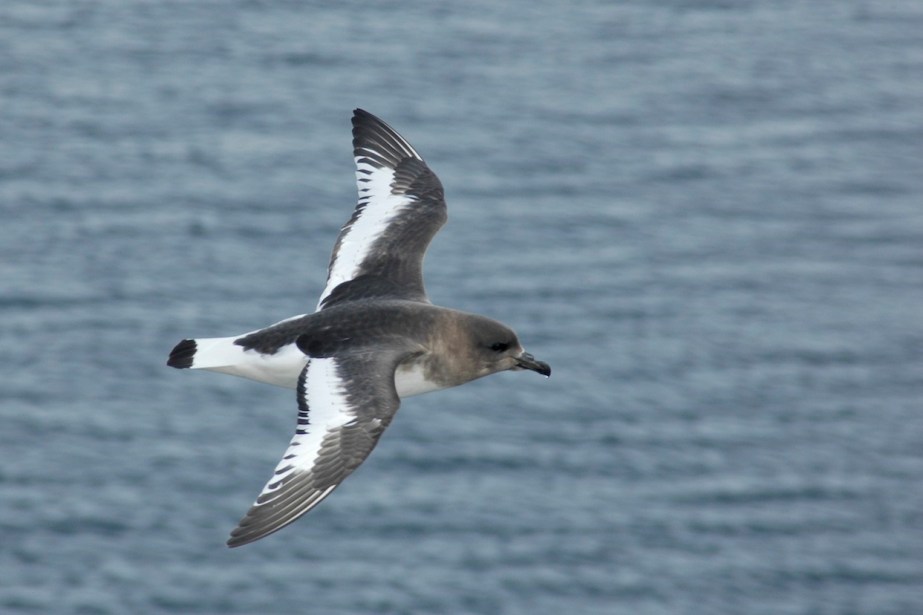
Antarctic Petrel
Antarctic Petrel


Eureka Sound 2008
Eureka Sound 2008


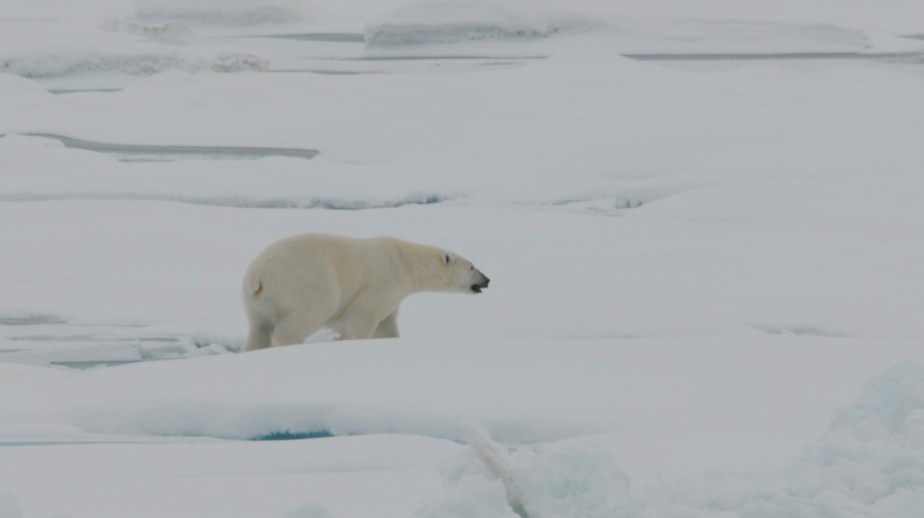
Polar Bear
Polar Bear


Ellesmere Island 2008


Galapagos 2007
Galapagos 2007


Great Frigatebird
Great Frigatebird


New Zealand 2008
New Zealand 2008


New Zealand 2008
New Zealand 2008

Wall to wall walrus …

It seems a shame,’ the Walrus said,
      To play them such a trick,
Dreadfully sad news for the Walrus.
ANCHORAGE, Alaska (AP) — Pacific walrus that can’t find sea ice for resting in Arctic waters are coming ashore in record numbers on a beach in northwest Alaska.
628x471It’s another remarkable sign of the dramatic environmental conditions changing as the result of sea ice loss,” said Margaret Williams, managing director of the group’s Arctic program, by phone from Washington, D.C. “The walruses are telling us what the polar bears have told us and what many indigenous people have told us in the high Arctic, and that is that the Arctic environment is changing extremely rapidly and it is time for the rest of the world to take notice and also to take action to address the root causes of climate change.”

I’m sure it brings a tear to the eye …

I weep for you,’ the Walrus said:
      I deeply sympathize.’
Funnily enough this strange new behaviour, hauling out on land, has been noted before. The walrus was virtually unknown to Europeans until 1604 when the good ship “Speed”, commanded by Stephen Bennet, on its way back from the Kola Peninsula, came across a haulout of Walrus. Naturally they slaughtered a goodly number for their tusks, leaving the meat to rot on the beach.
The size of this gathering could be seen as good news, plenty of oysters, perhaps. It may even be the result of creating a reserve for their protection

The Walrus Islands State Game Sanctuary (WISGS), protects a group of seven small craggy islands and their adjacent waters in northern Bristol Bay, approximately 65 miles southwest of Dillingham. The WISGS includes Round Island, Summit Island, Crooked Island, High Island, Black Rock and The Twins. The WISGS was established in 1960 to protect one of the largest terrestrial haulout sites in North America for Pacific walrus (Odobenus rosmarus divergens). The sanctuary also protects important habitats for several species of seabirds, Steller sea lions (Eumetopias jubatus) and other marine and terrestrial birds and mammals. The Alaska Department of Fish and Game (ADF&G) manages the sanctuary primarily to protect these important habitats and wildlife species, and secondarily to provide for public use and enjoyment of these resources including the opportunity for scientific and educational study, viewing, and photography.

Best known among the WISGS islands is Round Island, where each summer large numbers of male walruses haul out on exposed, rocky beaches. Round Island is one of four major terrestrial haulouts in Alaska; the others are Capes Peirce (Togiak NWR), Newenham (Togiak NWR), and Seniavin (near Port Moller). Male walrus return to these haulouts every spring as the ice pack recedes northward, remaining in Bristol Bay to feed they haul out at these beach sites for several days between each feeding foray. The number of walrus using the island fluctuates significantly from year to year. However, up to 14,000 walrus have been counted on Round Island in a single day.

So maybe it’s business as usual for the walrus they just gather round and talk

Of shoes — and ships — and sealing-wax —
      Of cabbages — and kings —
And why the sea is boiling hot —
      And whether pigs have wings.’
You can read Lewis Carroll’s poem <HERE>.

Yachting …

The election is getting to me.

Should I have a cold beer with CartoonMick or go sailing?

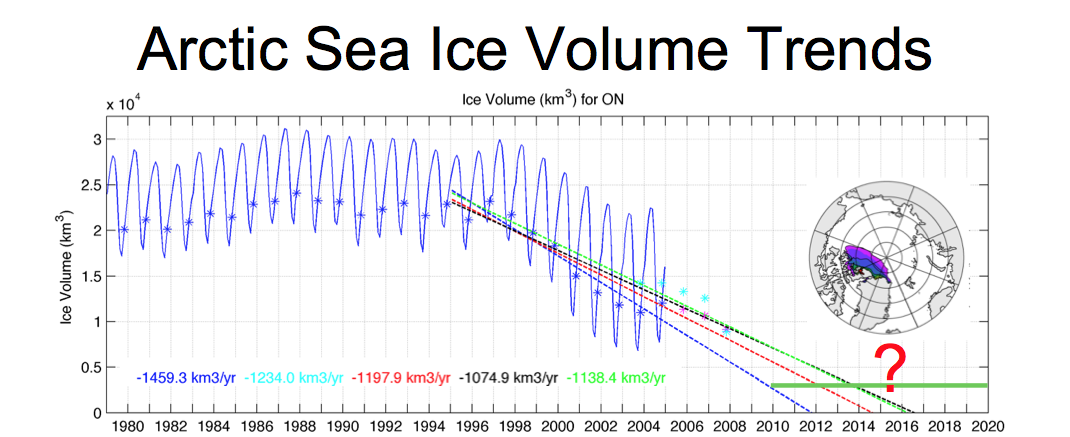
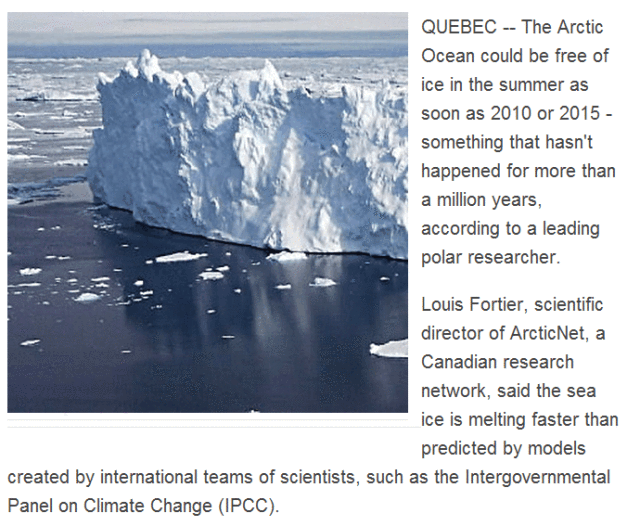
Hang on the beer’s all warmed up. Catastrophe. Sailing it is. I always fancied the North West Passage and given the melting it should be a lot easier now than it was for Roald Amundsen who was the first to do it, completing the feat in  August 1905. Indeed we can look at recent predictions and see that by now it should be a cakewalk …

Screen Shot 2013-09-04 at 2.29.11 PM

screenhunter_93-apr-25-20-53

So no trouble at all, easier than kayaking off the north Australian coast. I’ll just check the latest news first …

World temperature …

Arctic ice at record lows, Antarctic ice at record highs.

All to be expected in a warming world says Seth Borenstein …

Shifts in wind patterns and the giant ozone hole over the Antarctic this time of year — both related to human activity — are probably behind the increase in ice, experts say. This subtle growth in winter sea ice since scientists began measuring it in 1979 was initially surprising, they say, but makes sense the more it is studied.

Of course it makes sense, warmer water more ice. That must be why the experts predicted the opposite, as catalogued by Jo Nova

The IPCC Experts in AR4 prediction (thanks to Bishop Hill)

“In 20th- and 21st-century simulations, antarctic sea ice cover is projected to decrease more slowly than in the Arctic (Figures 10.13c,d and 10.14),”

See also IPCC #15.4.4where they discuss the impact of decreasing sea ice, but not of the possibility it might increase.

USGS (2010):

Ice shelves are retreating in the southern section of the Antarctic Peninsula due to climate change. This could result in glacier retreat and sea-level rise if warming continues

British Antarctic Survey:A thaw of Antarctic ice is outpacing predictions by the U.N. climate panel and could in the worst case drive up world sea levels by 2 meters (6 ft) by 2100, a leading expert said on Wednesday.

Byrd Polar Research Center at Ohio State University:

Most models predict that both precipitation and temperature will increase over Antarctica with a warming of the planet.

Al Gore, Jan 2012

What happens to the rest of the world as that frozen water is released, at ever increasing rates, as a result of the rising temperatures caused by climate change?

[In 1988] Scientists expected that as climate change accelerated, Antarctica would be one of the fastest warming areas of the planet. This prediction has proven true

Well not according to the …

Latest ICEsat estimates thanks to Zwally et al:

“During 2003 to 2008, the mass gain of the Antarctic ice sheet from snow accumulation exceeded the mass loss from ice discharge by 49 Gt/yr”

Latest GRACE satellite data also shows Antarctica is gaining ice mass.

And how quickly are we warming, take a look at the latest Hadcrut 4 data …


Over the last 15 years you’d have a lot of trouble picking a signal out of the noise.

Oh, why won’t the climate do what the models tell it to?