Next stop after the coast was Northam home of the sublime Mute Swan …
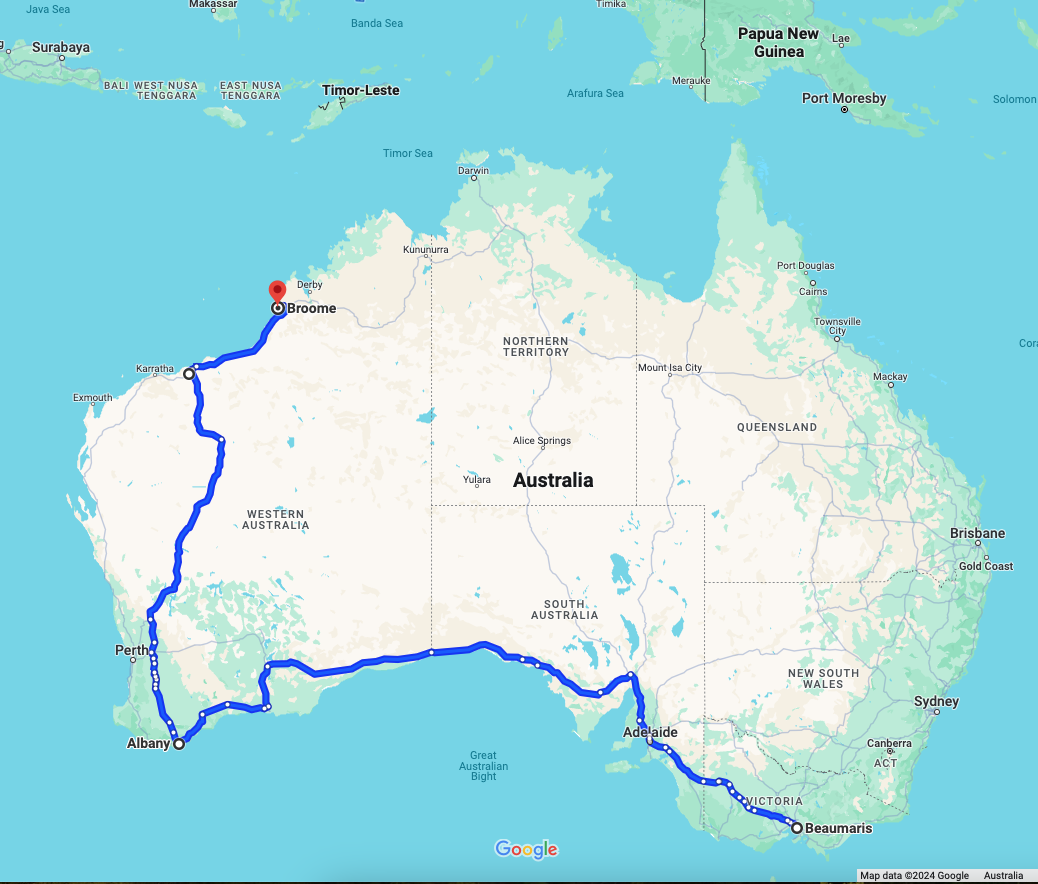
and also the decision point. Two roads lead from Perth to Broome, an inland route 1970km or a coastal route 2368km.
The inland route has the advantage of being 400km shorter and in the event of a cyclone there would be a greater chance of the caravan staying on the ground. We’d have chosen the shorter route but it was closed by flood.
In particular, the Fortescue River near Newman was close to setting new records. The coastal route was open but what falls inland then sets off towards the sea. We decided to put in a couple of very long days in order to get north of the Fortescue and the De Grey.
There is a roadhouse overlooking the Fortescue River and we stopped for a yarn. A young lady working there had been looking for the water coming down for a couple of days but not a trickle so far. A local elder was of the view that the desert would swallow it all on the way and there’d be little or none to see. It just hadn’t rained for long enough. A trucky taking a break had caught the arrival of a flood in 2021 and recalled how impressive it was on that occasion. When we crossed the bridge there were just a few puddles to be seen.
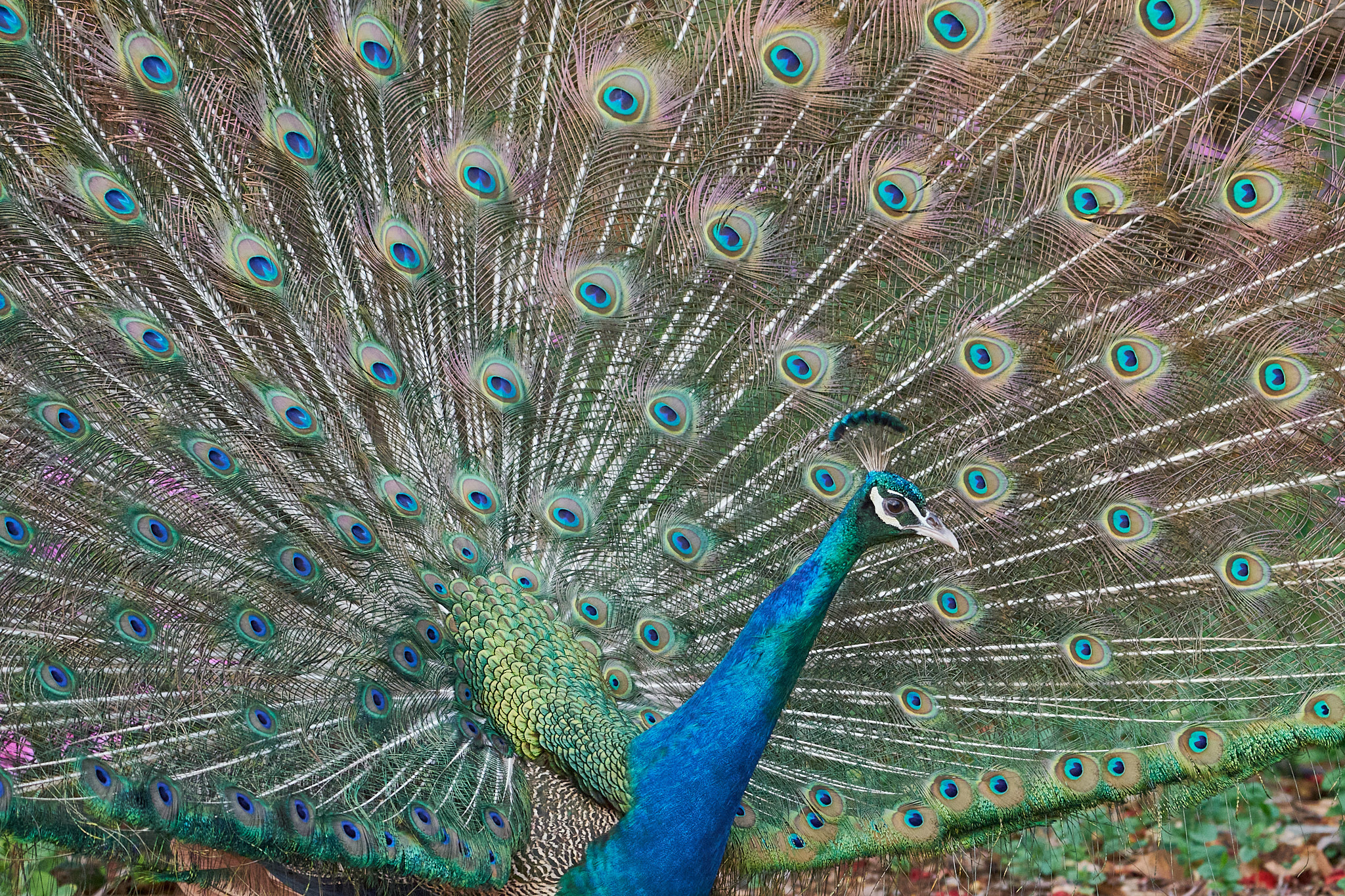
On the second long day we crossed the De Grey. It too was underwhelming. That night we stopped at the Sandfire Roadhouse. Home of the ridiculous Peafowl.
Last night we slept in our own bed. It was a bit on the warm side!
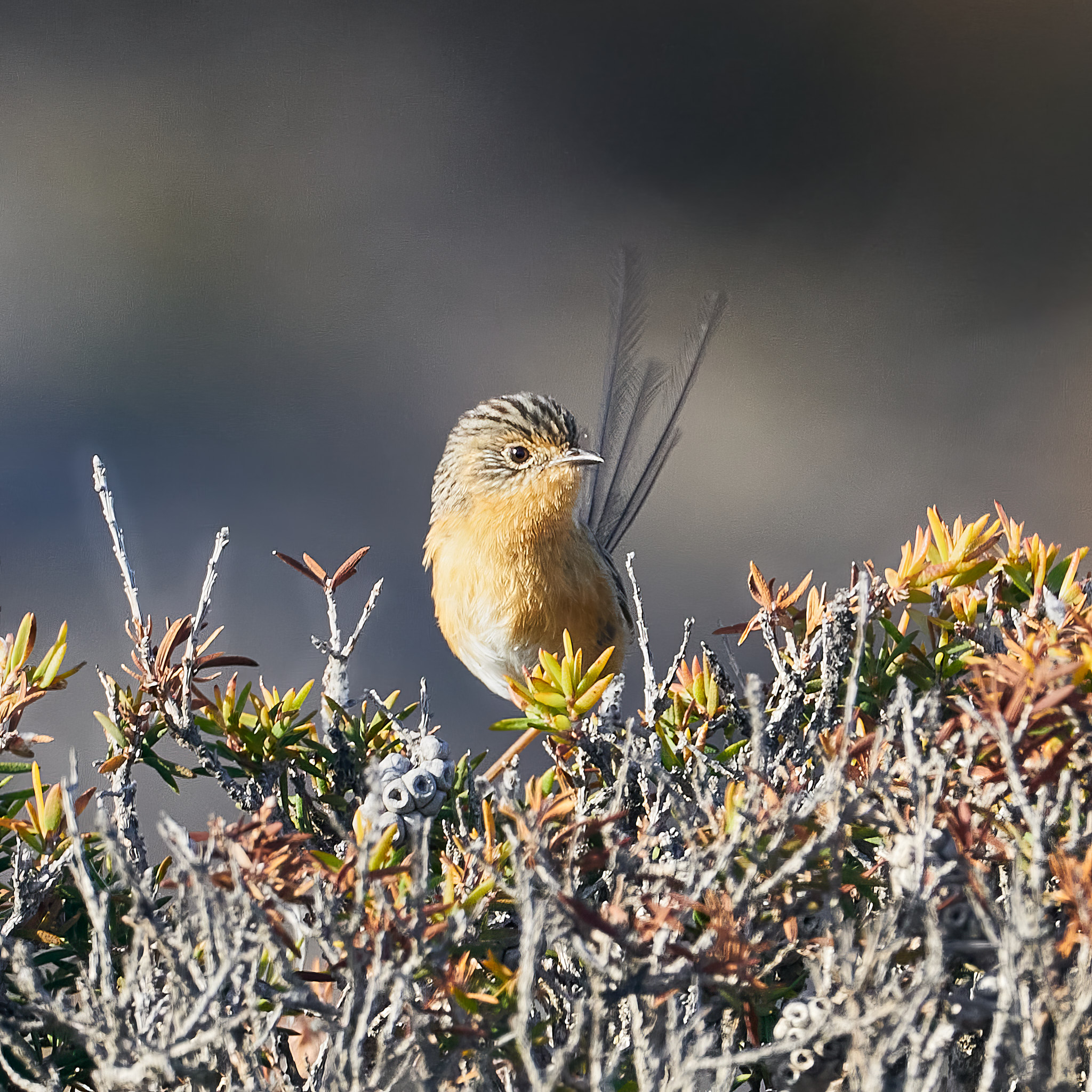
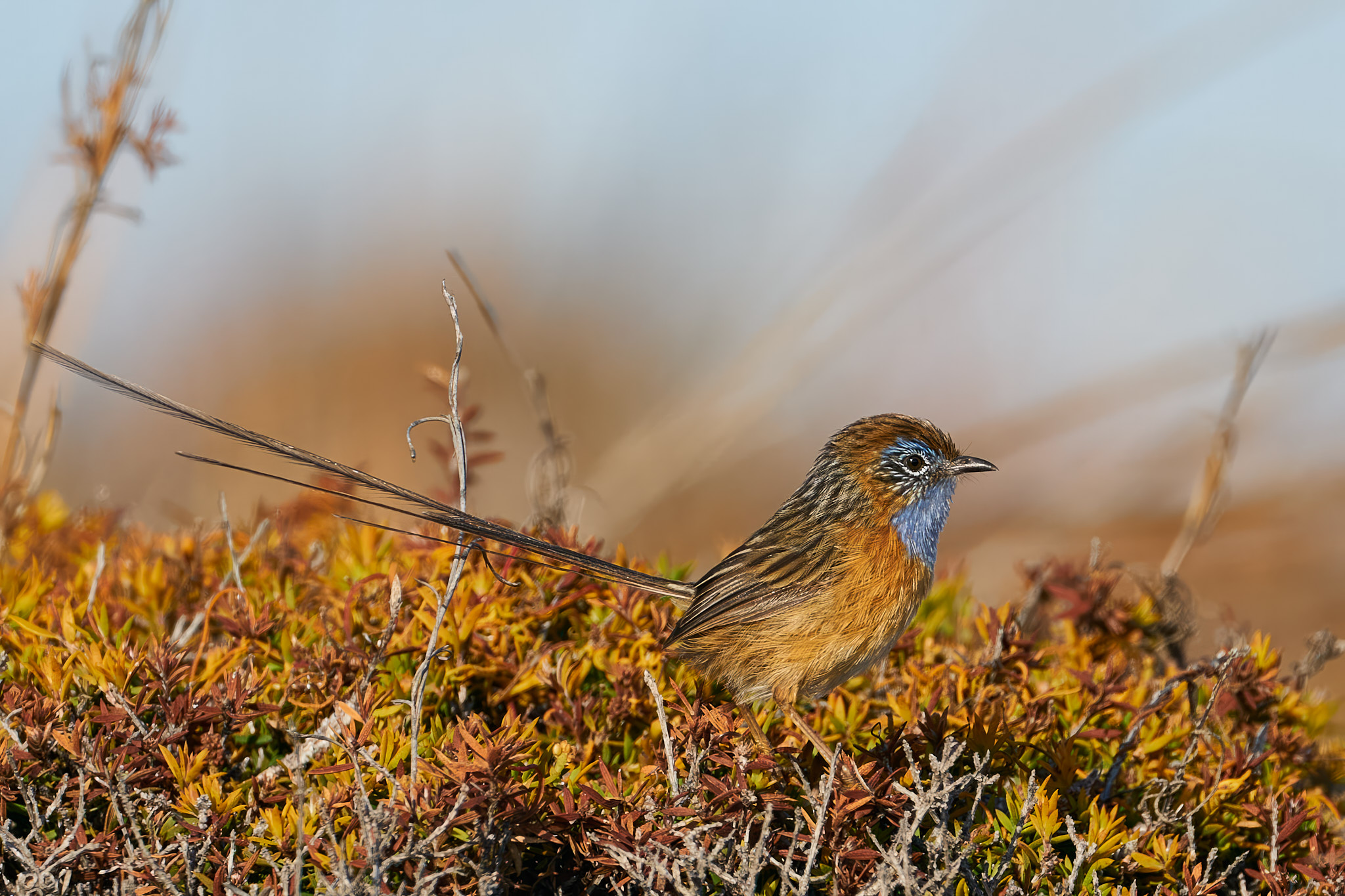
Because we made good time across the Nullarbor we have had four nights in the Great Southern region of WA. The first was on the edge of the Sterling Range National Park and then three on the Kalgan River just outside Albany. The birding has been excellent, Two Peoples Bay and Lake Seppings especially. My target species was Western Whipbird and, once again, I managed not to see it. Regional endemics such as Red-capped Parrot and Red-eared Firetail have been easier to find but not prepared to pose for me. Here are some of the photographic highlights …
Our decision not to travel north via the Stuart Highway then west through Fitzroy Crossing was a good one. Flooding has closed roads in a number of places and it will be a while before they reopen. Not that we are completely out of the woods. Our intended route was closed by fire a day or so ago near Newman. That problem is solved – the road is now closed by flood. Hopefully that will soon reopen. No cyclone brewing off the west coast presently. We head north tomorrow, only 2000km to go.
We made good progress on the Eyre Highway. Kimba is very much a wheat growing area. The next sizable town is Ceduna on the coast. It has a more mixed economy. Going west from there you encounter a few more small wheat growing towns until at Penong you find a store that declares that it’s the last shop for a thousand kilometers.
The mallee woodland slowly peters out until you’re on the treeless plain that is the Nullarbor. There is practically no surface water out there partly because not a lot of rain falls but also because the limestone lets it all run straight through. In the summer of 1841 Edward John Eyre set out to walk from Fowlers Bay to King George Sound – the modern day Albany which is just down the road from where we are camped on the bank of the Kalgan River. He covered the 1368 km trip in about 5 months, five men set out, two arrived.
Eyre found water at Eucla. The modern day traveler finds a quarantine inspection site. The rules are complicated but basically fruit, vegetables, honey and soil can’t go with you into Western Australia.
From there west the landscape changes back into patchy woodland, then the trees become taller and more continuous and, once you’re off the Eyre Highway you enter wheat country again.
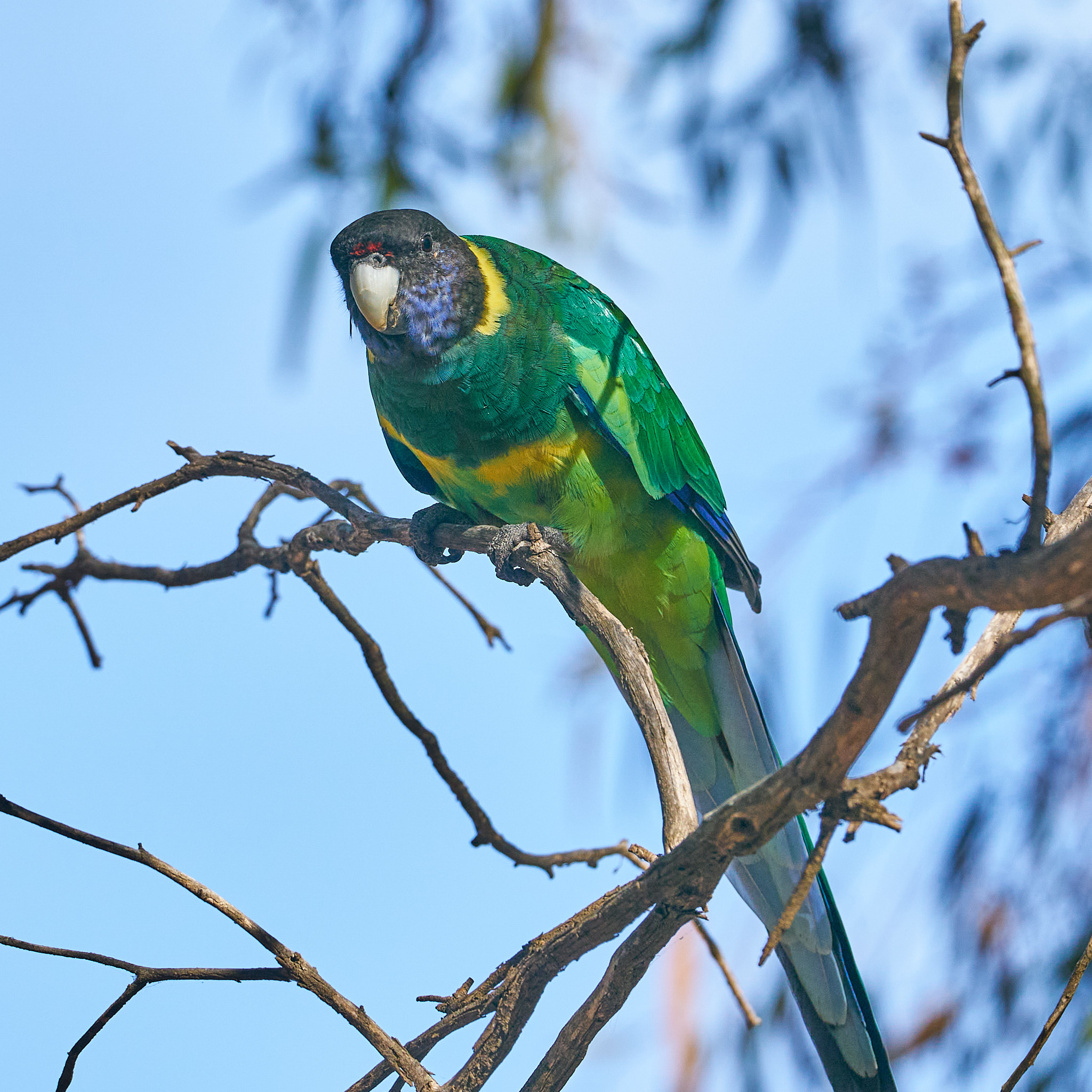
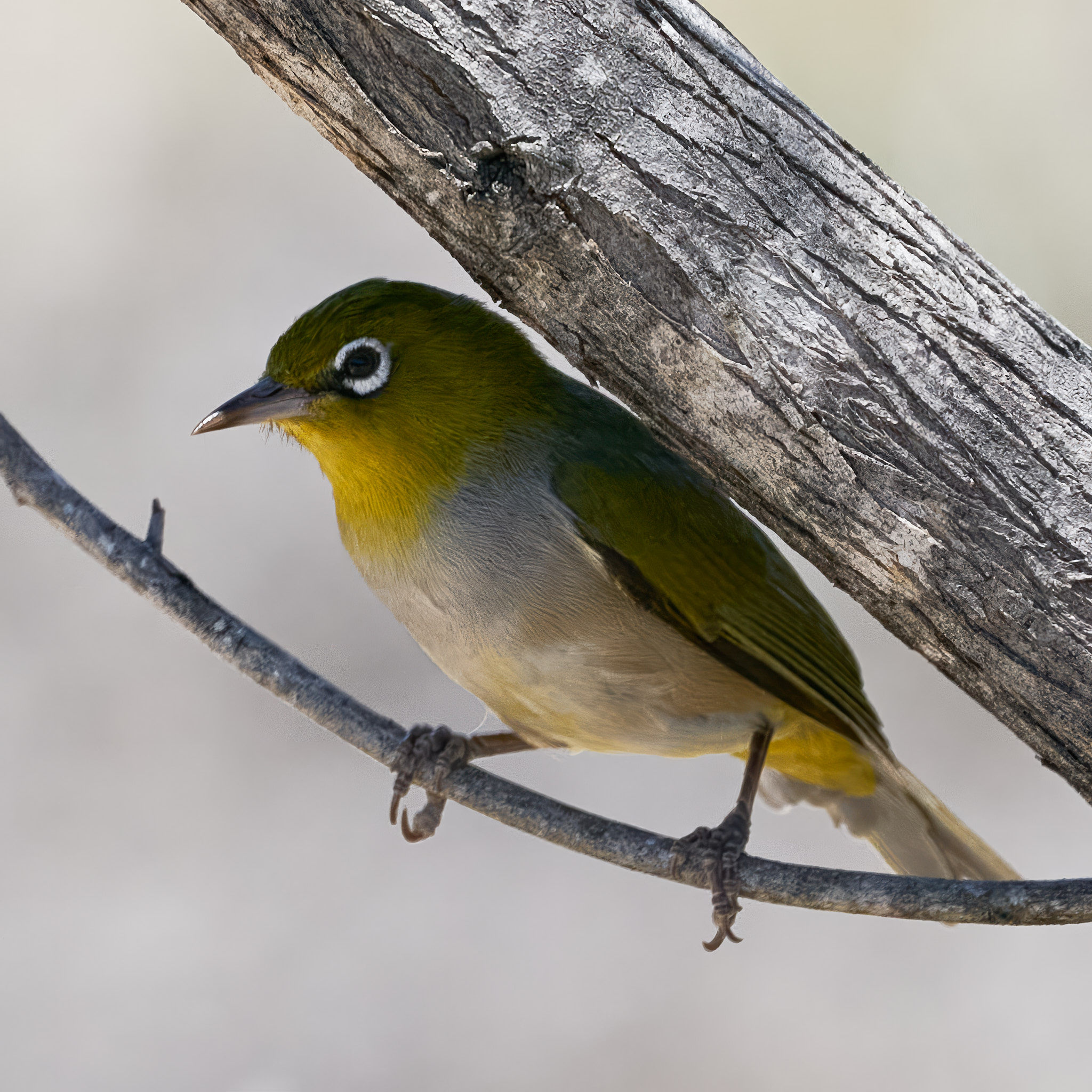
Australian RingneckCaspian TernSilvereyeAustralian Ringneck
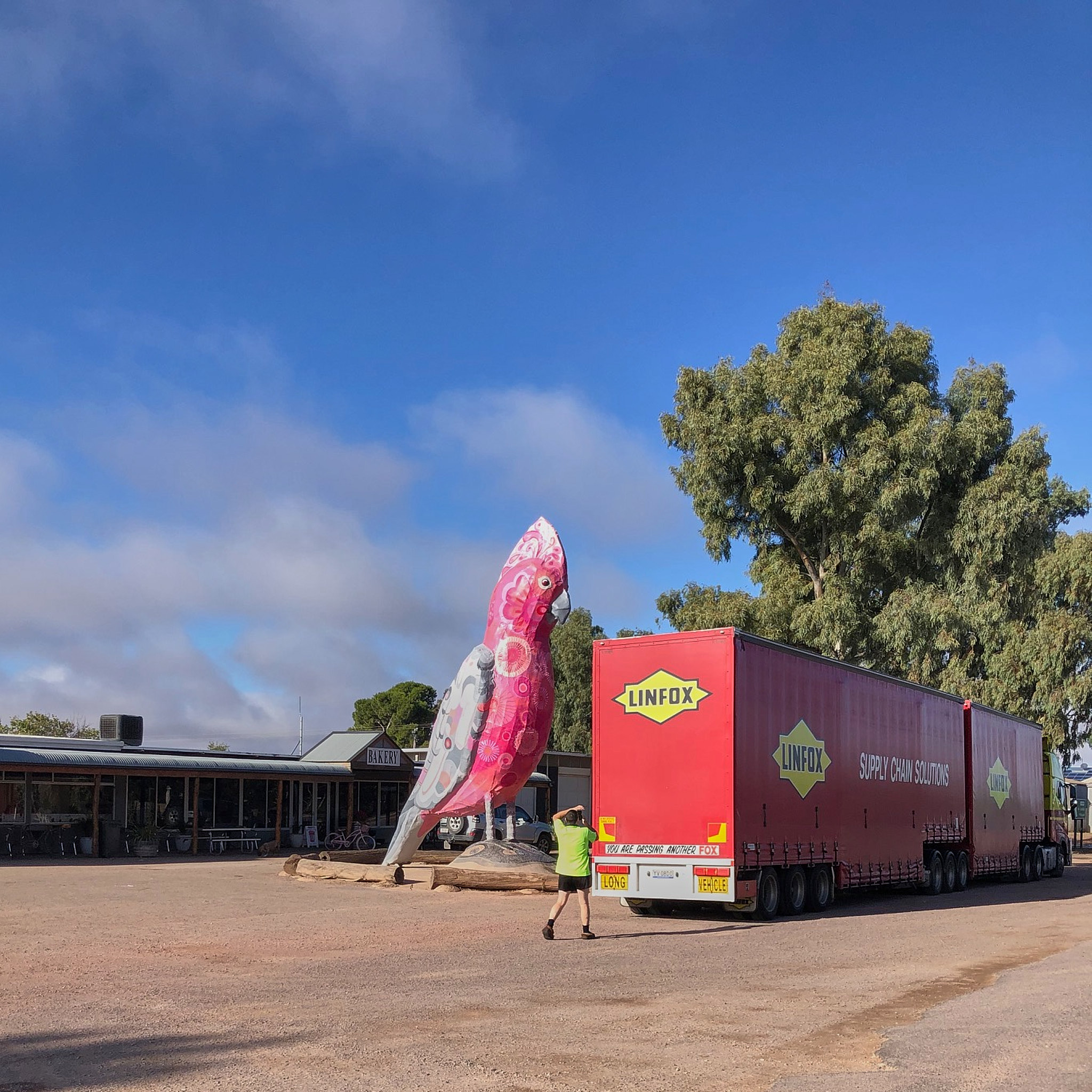
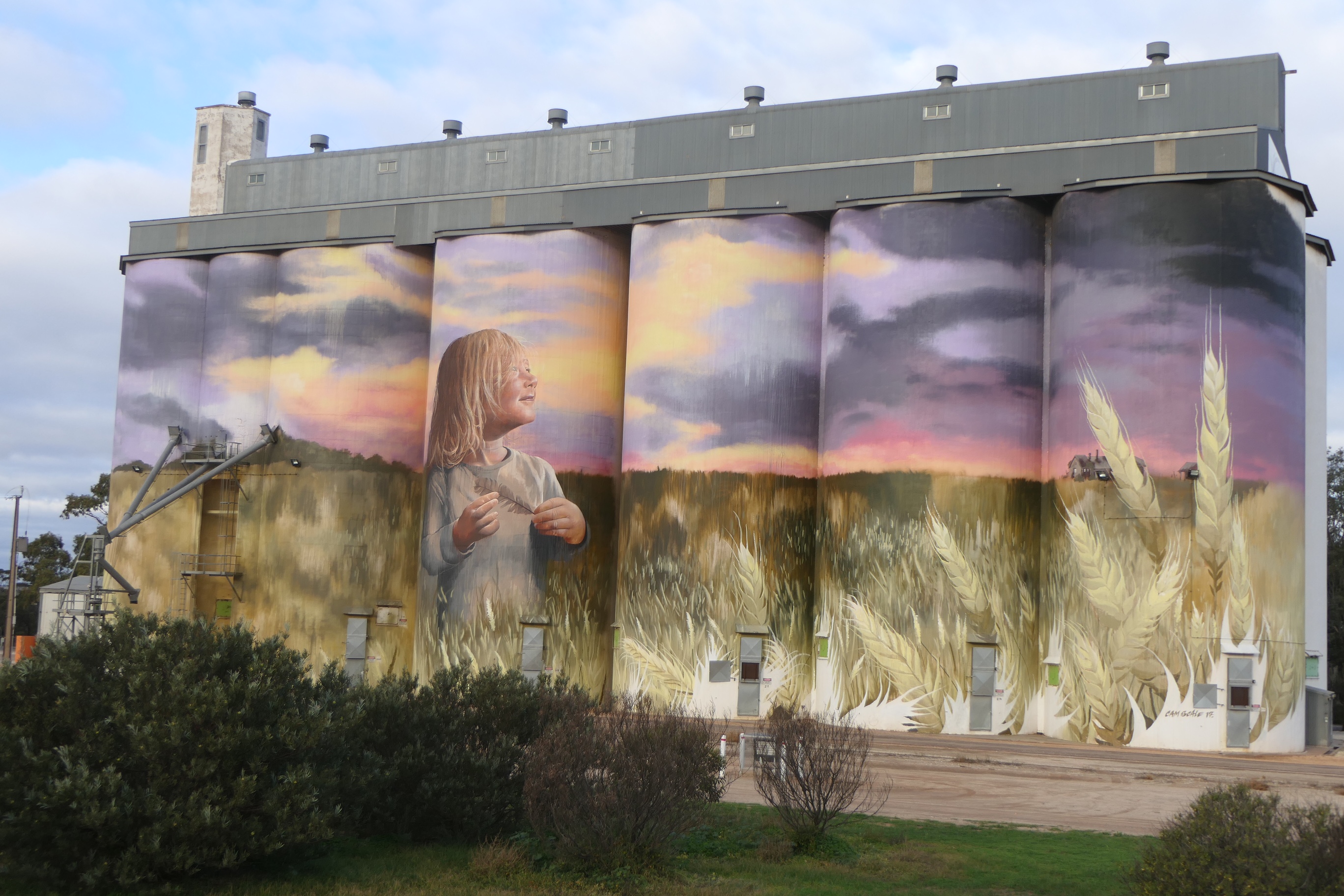
… is often the day on our travels when tempers tend to fray. This time it has passed without incident bringing us to Kimba in South Australia’s wheat belt. Established in 1915, population 1,300 it took its name from the local aboriginal word for bushfire. It’s now the home of the big Galah, some silo art and the Kimba Tigers footie team.
Our first day out took us to the Victorian Goldfields for a farewell dinner with some of our good friends there. Gayle and I have an association with the district that stretches back more than three decades. We have never seen it so green in January in all that time …
The next day we crossed the border into South Australia and spent the night at Tailem Bend. The day had reached 38°C but overnight rain cooled the world down considerably.
We made an early start this morning and drove through Adelaide (founded 1836, population about 1.4m about 1.2m of whom have hyphenated surnames.) 77% of South Australians live in Adelaide because most of the rest of the state is covered by salt lakes.
Google tells me that I have 5,978 km ahead of me, 64hours of driving and warns me that my destination is in a different time zone. It’s not the most direct route, that would be via Alice Springs and the Tanami, shorter but not quicker because an enormous chunk of that is not on sealed road. We decided against going up the middle and across the top because that would expose us to the inland heat for much longer and increase the risk of being stranded by flood. Of course we don’t have to go via Albany – there just happens to be a bird there I want to see. From there it’s pretty much due north finishing with a dash up cyclone alley.
Our comfort will depend very much on the weather and the only certainty there is that the Bureau of Meteorology will get it totally wrong.
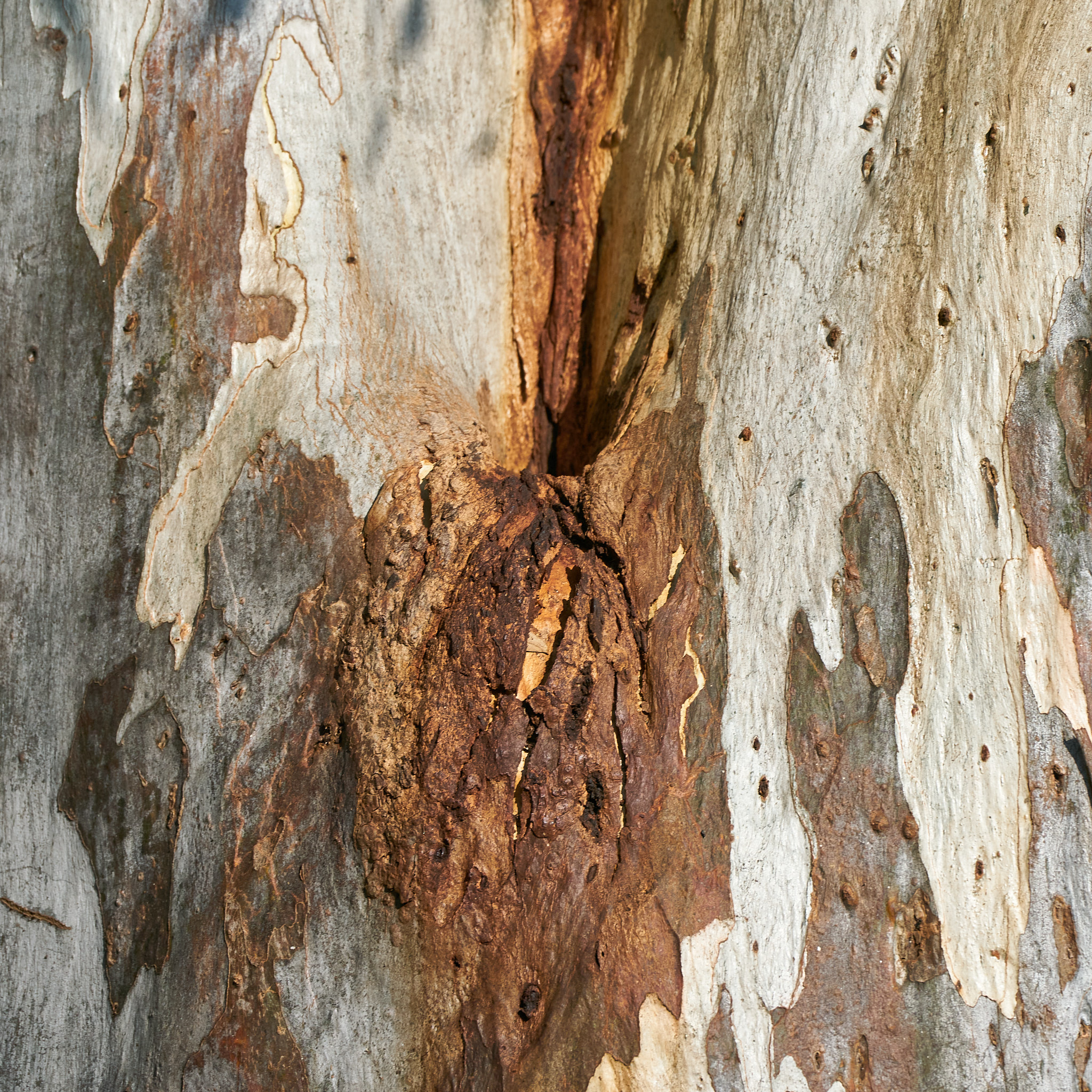
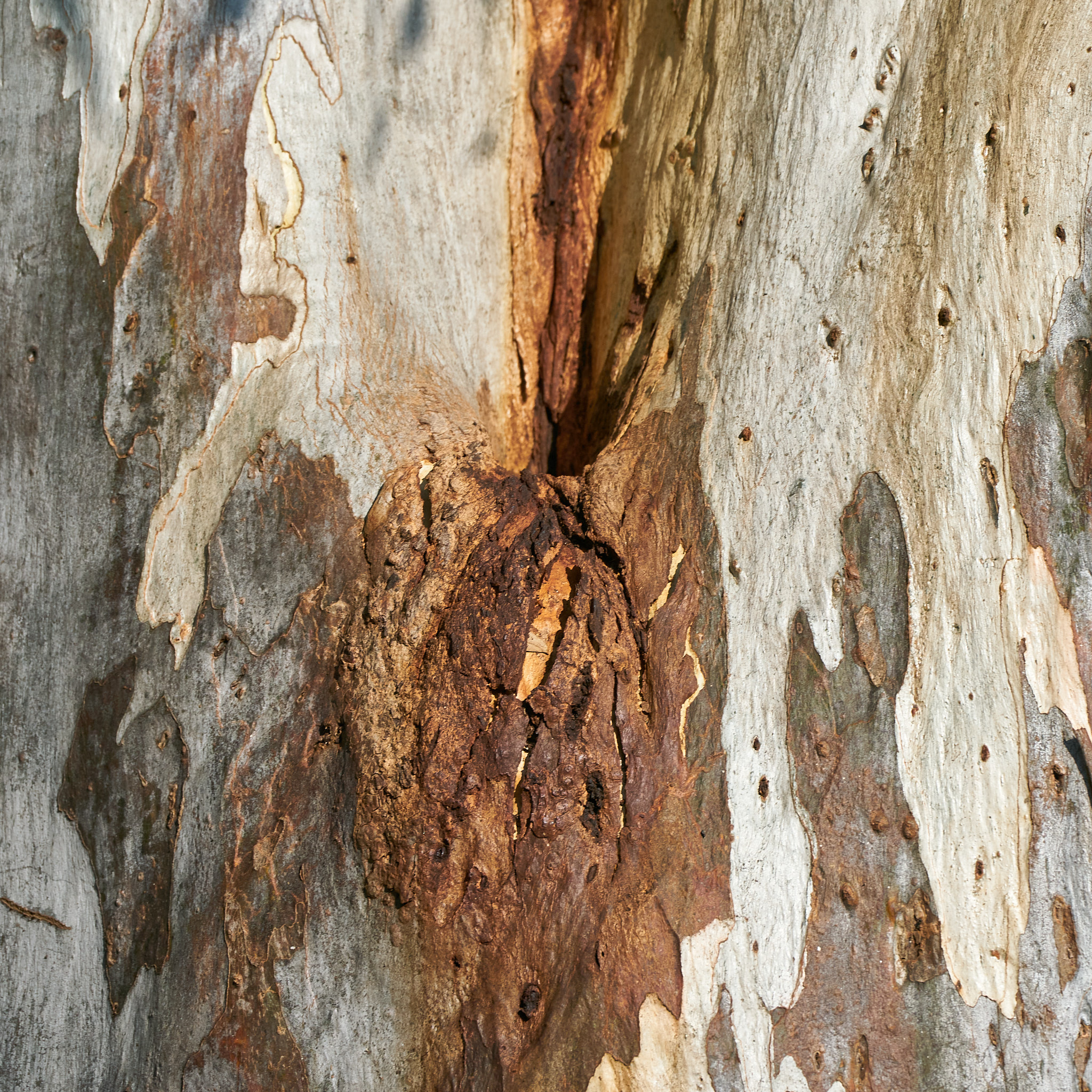
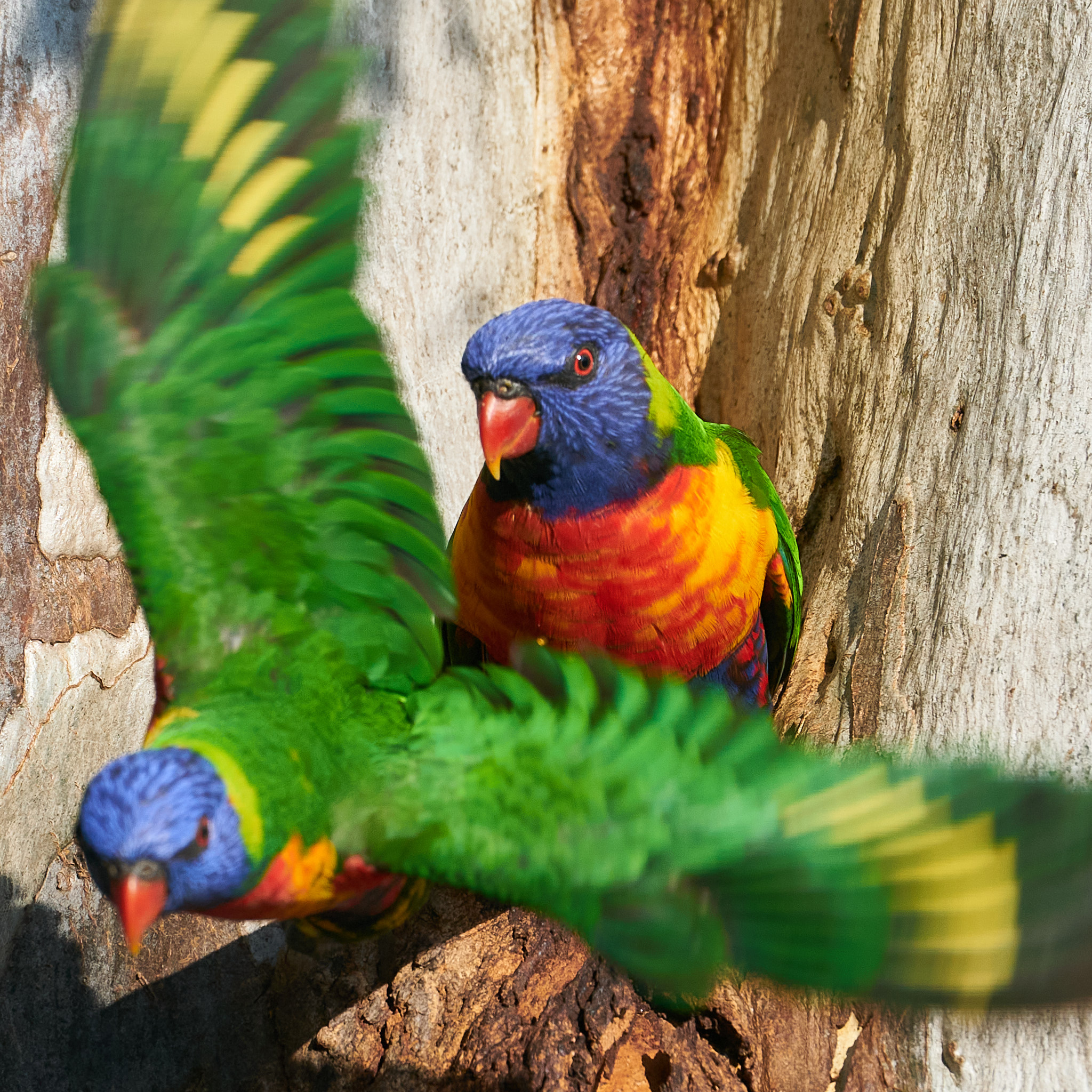
The story starts with a small and inconspicuous hole in a River Red Gum …
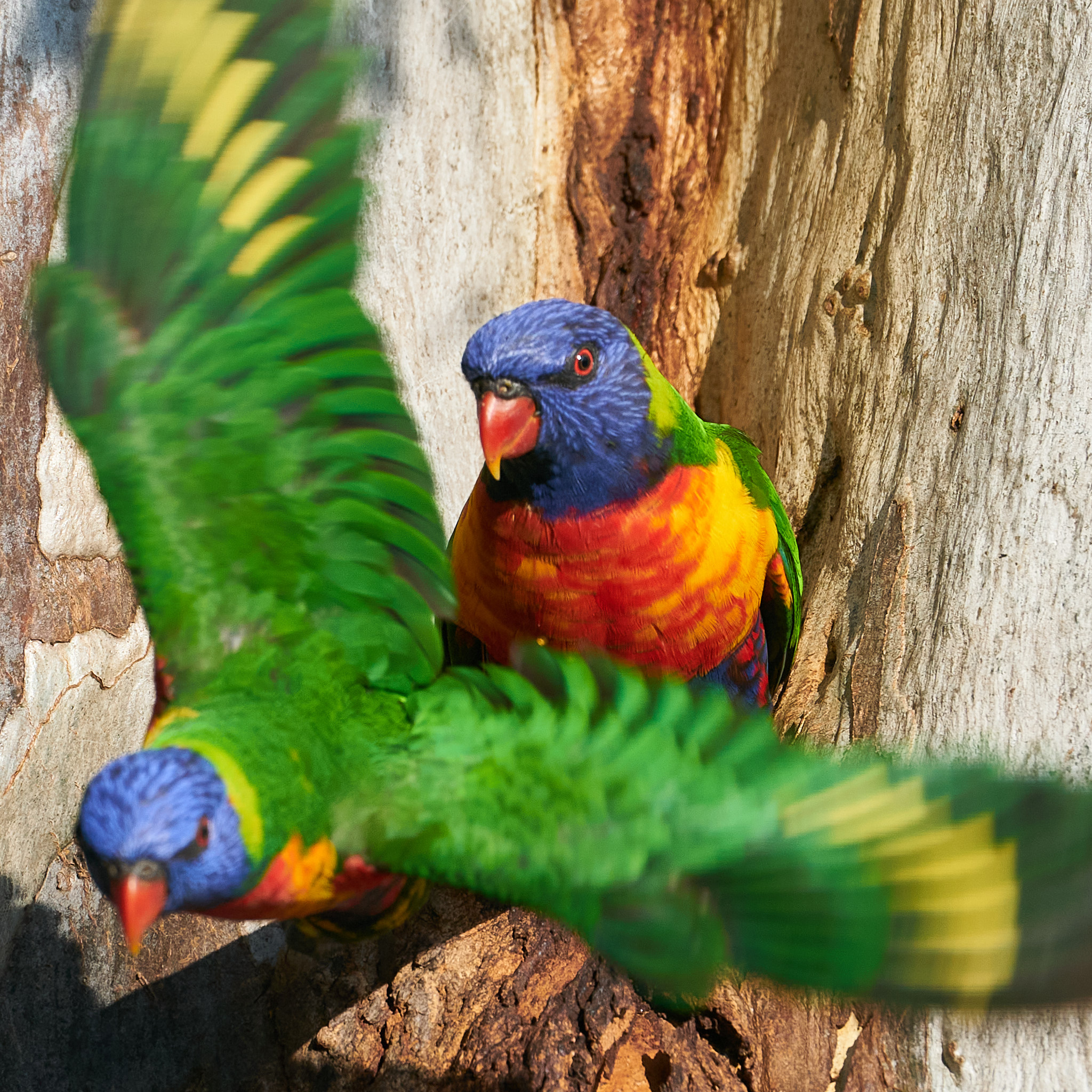
from which the colourful head of a Rainbow Lorikeet emerges …
It’s a tight squeeze …
and there’s limited space on the veranda.
Which won’t stop another one making their debut …
but one of them will have to make way.
I knew they were in there because I saw them go in. Given the size of the hole I was surprised when the first one disappeared. Even more surprised when the second one disappeared. The cavity inside must be bigger than the opening suggests. There may be a nest full of baby lorikeets in there. It was a good five minutes before the adults reemerged.
Here they are again in a gallery that you can run through at bigger scale. Enjoy.
I was born in a big city, I’ve lived most of my life in a big city but me and the big city are not a match made in heaven. I’m currently dagging about in Melbourne looking forward to the day when I can set off home to Broome.
My spell checker is objecting to dagging and some of my non-Australian readers are probably equally mystified – in this context just substitute hanging. It’s complicated. The noun dag refers to the lump of wool and feces that tends to form at the rear end of a sheep, best removed if you want to avoid fly strike. It’s also used, affectionately, believe it or not, for someone who is not smartly dressed or a little odd, your wife or husband may be a bit of a dag. If you’re working you are not dagging about, if you’re bored you probably are.
To relieve the boredom this morning I headed off bright and early to Braeside Park, one of the best places for bird watching in the eastern suburbs. I made a circuit of the main lake. The birding was good.
Long term readers will know that this blog is a strange eclectic mix. I do the research largely to satisfy my own curiosity, the photography because I just can’t help it. Travel, variety, novelty all help to push up the output. When I’m not on the move the output falls off. The blog is not monetised in any way, I just enjoy doing it. That anyone reads it is a bonus … and, amazingly, it does get read. There were 2,591 page views in 2023. And not all of you are my aunts and uncles – the USA and China figure prominently in the readership.
So to all of my readers I say “Thank you” and I wish you all a safe and successful New Year.
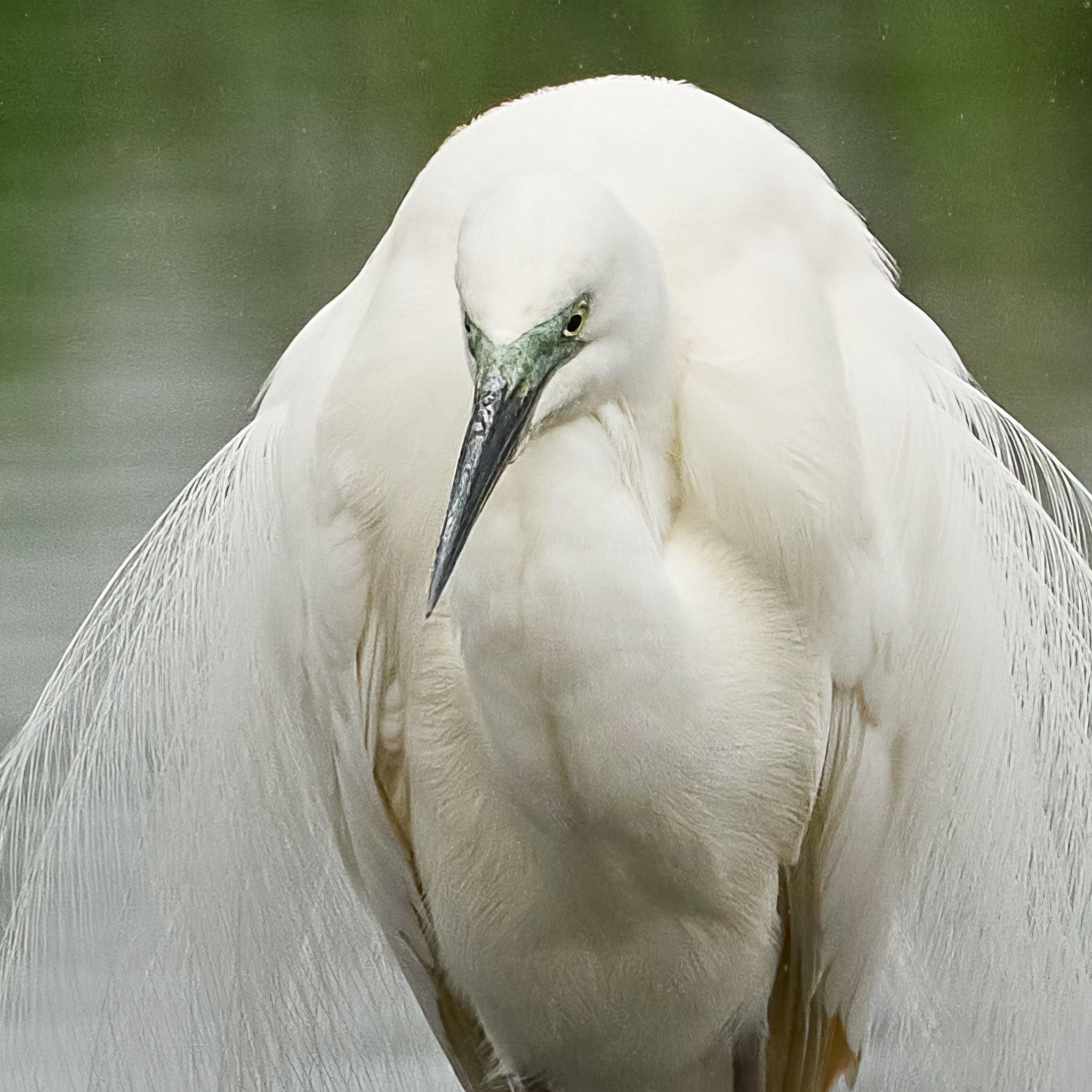
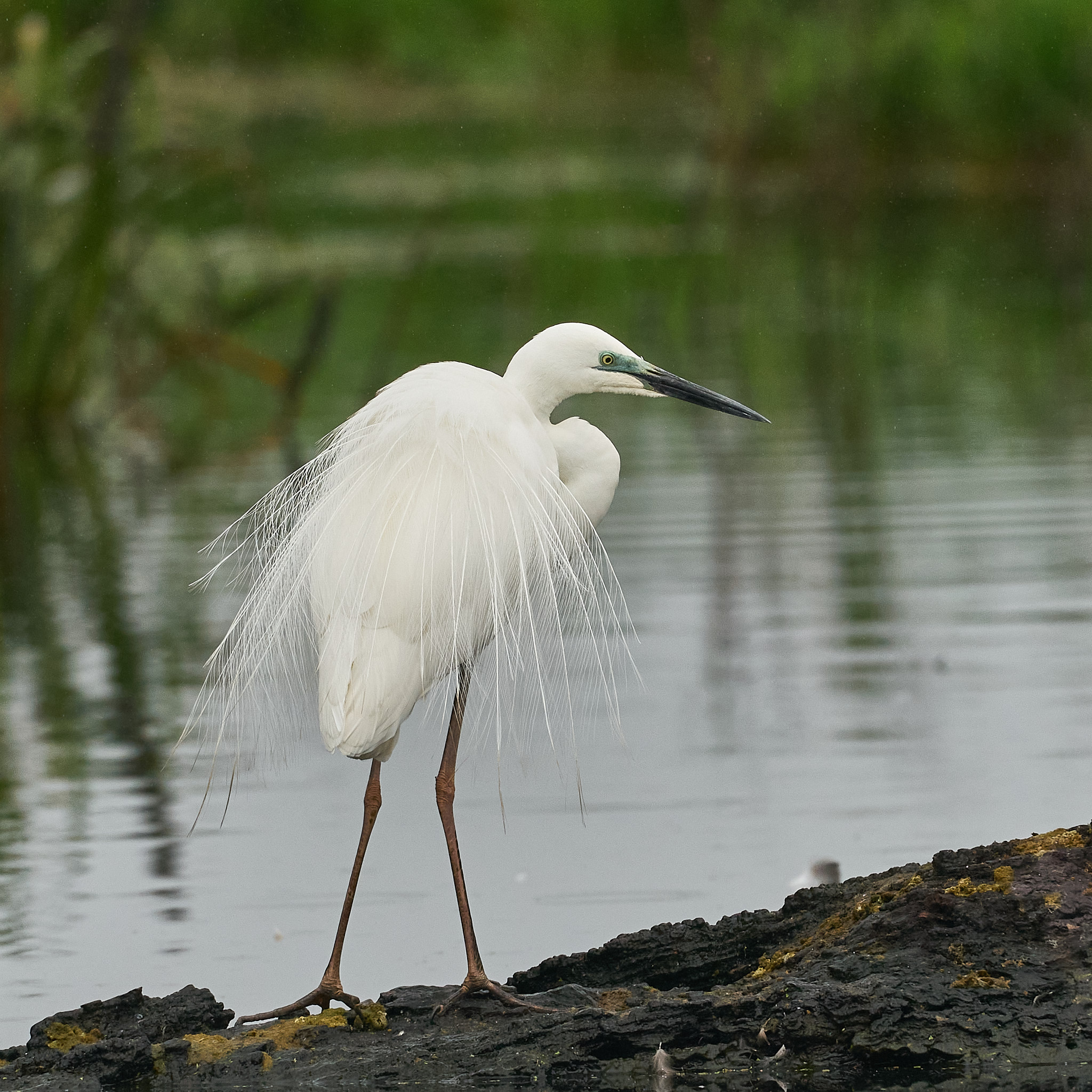
I was lucky enough to come across this Great Egret in all its breeding finery the other day. I don’t know whether this is the bride or the groom but the dress is absolutely splendid.
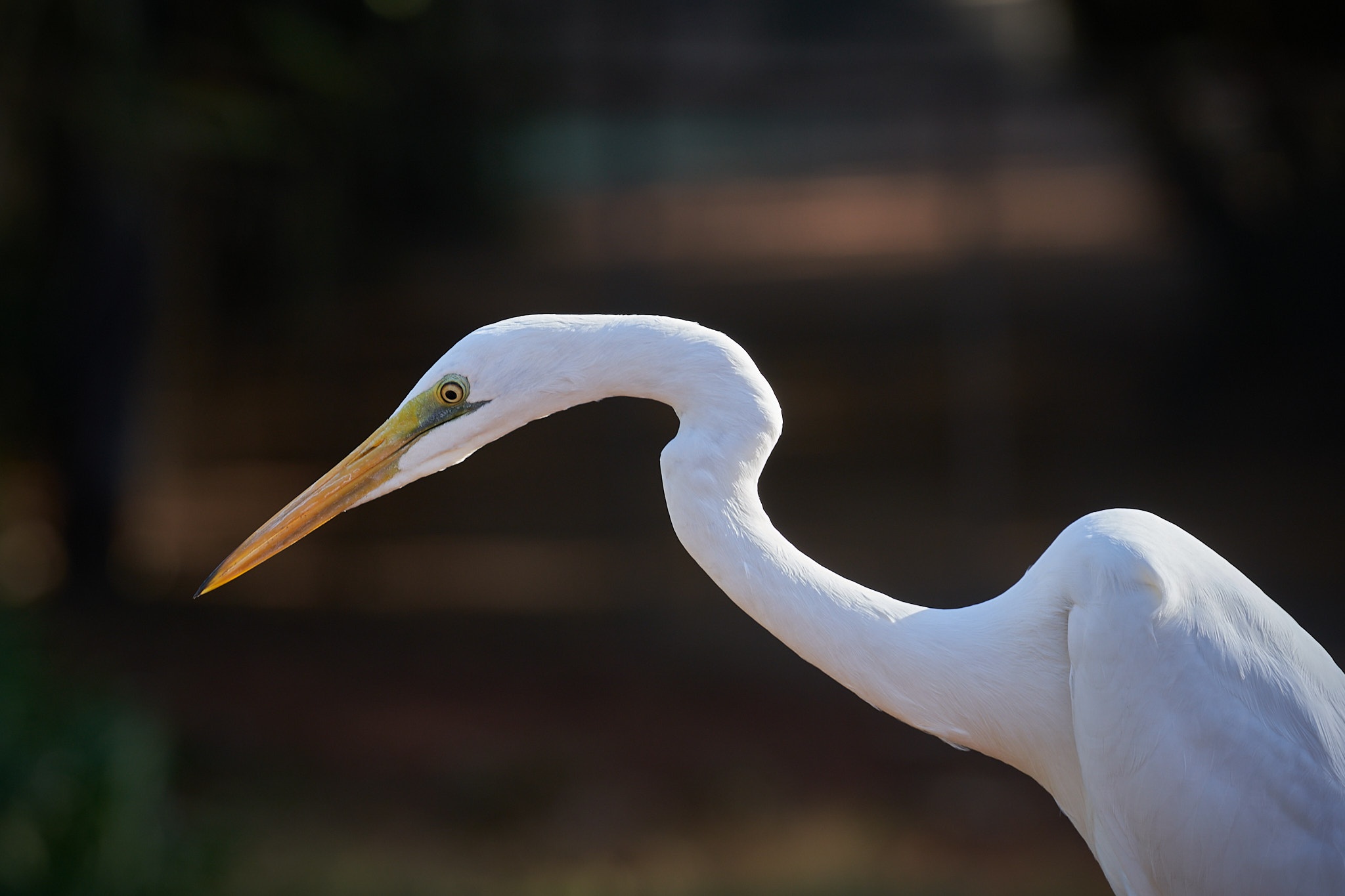
Regular plumage is devoid of the lacework, the bill is yellow and the bare parts of the face are also mostly yellow. You can see this in a photo that I took in WA a few months ago. The remaining photos were taken at Braeside Park, Melbourne, Victoria. The sufficiently obsessed can confirm the ID by looking at the angle of the mouth, it is behind a line dropped from the back of the eye.
non-breeding plumage
Great Egrets nest in trees over water often in association with other egrets, Ibis or cormorants. They lay two to six eggs.
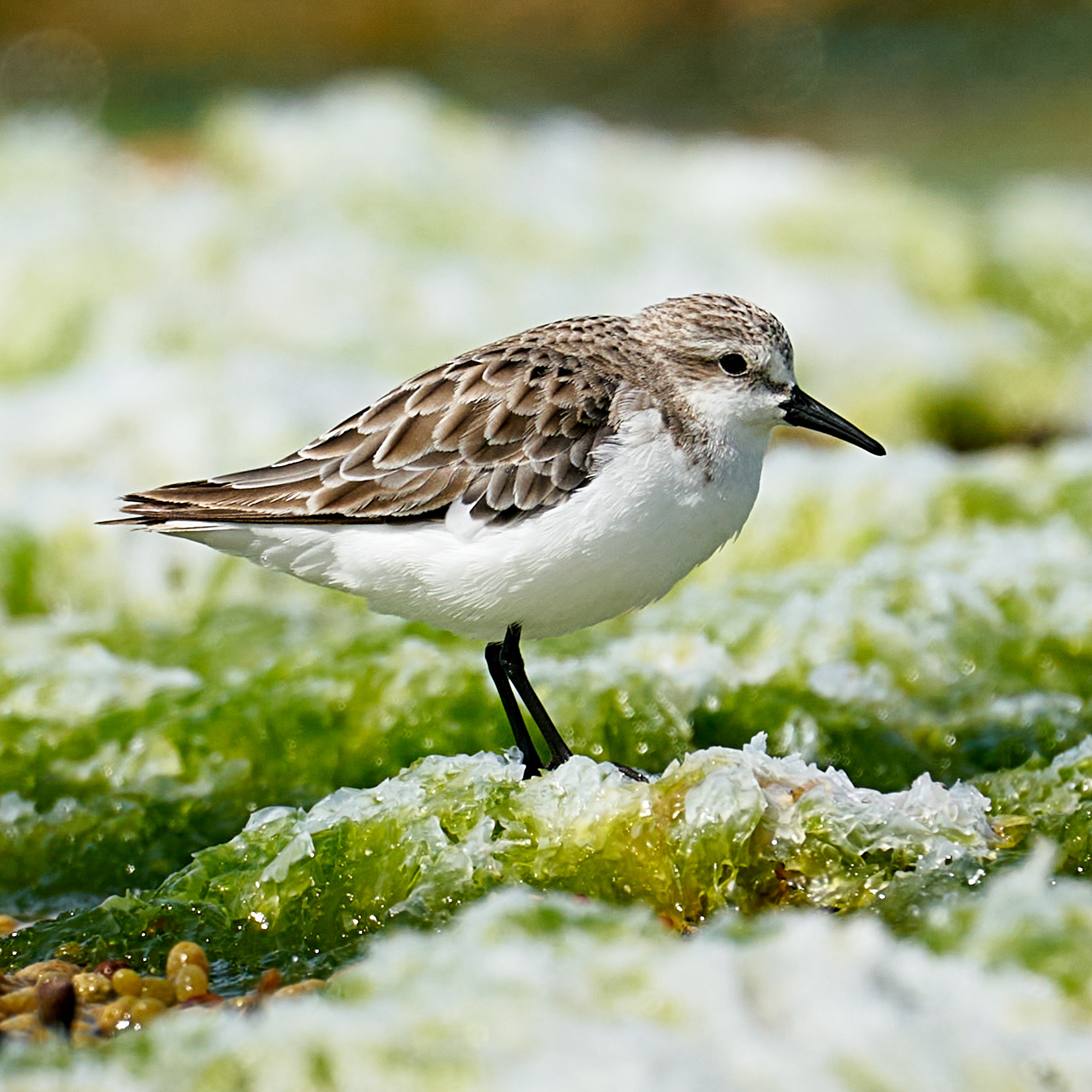
A few months ago this little guy hatched in the Siberian tundra. He or she started feeding themself almost immediately, grew fairly quickly and soon outfitted themself in their first suit of feathers. The parents provided some measure of protection at first but then abandoned it. Our little hero then flew 12,000 km to Australia’s south coast. It weighs about 30g. (Barely more than an ounce for American readers).
Red-necked Stint (juvenile)
When overwhelmed by the need to procreate it will fly all the way back again. What a crazy strategy but it’s one that millions of migratory shorebirds will pursue. Thirty-seven species regularly spend the northern winter in the Australian summer sun.
The route these birds follow is the East Asian Australian Flyway or EAAF for short. There are other flyways in the Americas and Europe to Africa. The birds that do this perform amazing feats of endurance. Read about the Bar-tailed Godwit that holds the record non-stop 13,500 km flight Alaska to Tasmania <HERE>. That tiny Red-necked Stint will overwinter in Oz this year but after that it will do the 24,00 km round trip every year for the rest of its life. And its life span may well be as much as 18 years.
How do we know this? The answer to that is that interested people have caught them and put bands on their legs and caught them again in subsequent years, sometimes numerous times. Scientific bird banding started in Denmark in 1899 when bands were placed on 162 young Starlings. The first recovery of a banded bird in Australia predates that and has nothing to do with science. In 1887 an albatross was found near Triggs Island, Western Australia, with a tin collar around its neck carrying the message “13 naufrages sont refugies sur les iles Crozet 4 Aout 1887′. (13 shipwrecked sailors have taken refuge on the Crozet Islands, August 4 1887). Sadly they perished about a month before the help summoned by their ingenuity reached them.
One drawback of numbered metal bands is that you need to catch the bird to read it. In recent years engraved flags enable birds to be identified in the field. That’s handy for life span studies. Not so handy over the horizon on their long journeys but advances there mean that our 30g stint can now be followed by means of 0.3g geolocator.
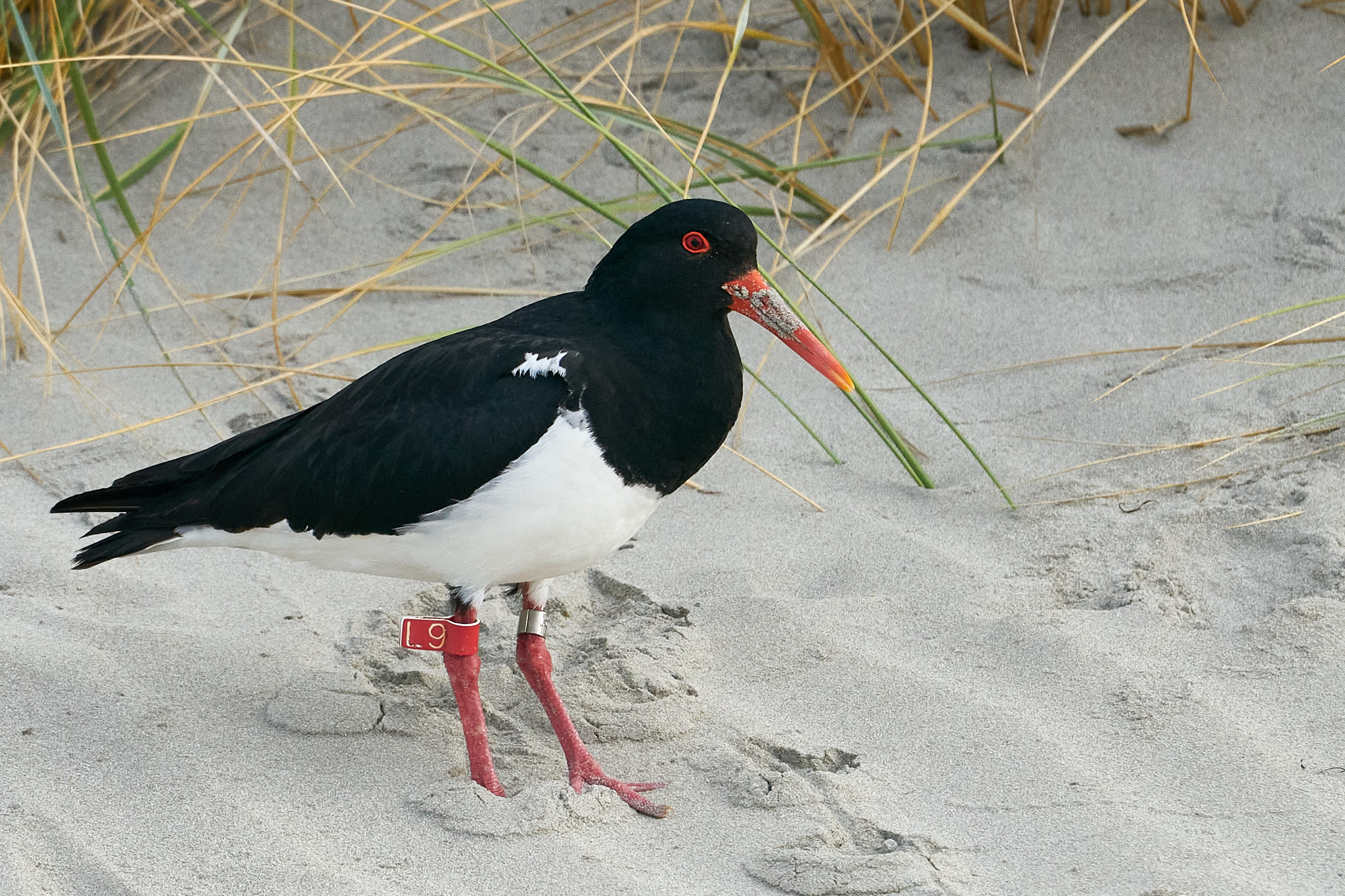
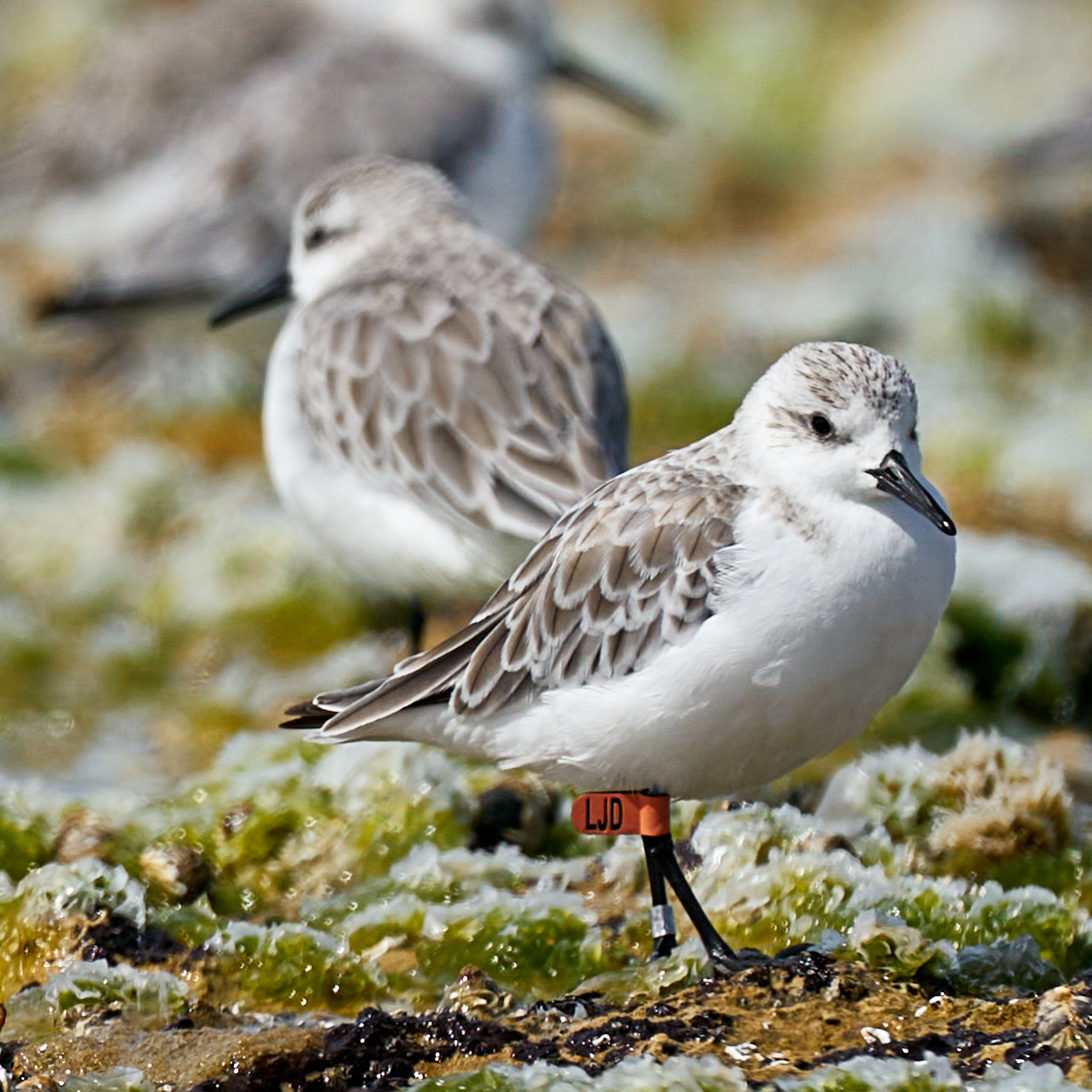
I’ve spent the last couple of weeks in Port Fairy on Australia’s south coast and I’ve come across a number of flagged birds. I photograph these when I can and report them, a minor contribution by way of citizen science.
Bird banding is heavily regulated. In Oz it’s by the Federal Government through the Australian Bird and Bat Banding Scheme and it’s to them that you report your observations – online <HERE>. Similar bodies exist in other countries and these too can be found online. A photograph is nice but isn’t essential just a sight record will do. If you come across a dead bird with a band on make a note of the numbers on it and submit that. Use the same form.
The ABBBS will eventually get back to you with a report. The scientist that placed the band will also get details of your interaction. In the case of the Sanderling, the only migratory wader in the gallery above – the other two breed locally, I now know that it was banded at Killarny, Victoria 11 months ago. It was 2+ at the time meaning it was in its second year of life or older (in other words an adult). I found it at Yambuck 26 km away. It may have flown a lot further than that given that it is an adult and there has been a breeding season between banding and sighting. Sanderling breed in the arctic as far north as they can get before finding themselves in the sea.
Many birds can be aged accurately from their plumage in their first year of life, some even into their second or even third year. If a flag is placed on a bird of known age its age at subsequent sightings can be determined. The Pied Oystercatcher was judged to be in its third year when it was banded 12.5 years ago which makes it 15 years old now. It was banded by the Victorian Wader Studies Group 286 km east of where I found it. Long may it prosper.
I haven’t received the report for the Red-capped Plover yet.
It’s impossible to mount an argument for conservation without data. A sighting you make on an ordinary day out is a valuable contribution but only if you submit it.























 bobmcgee