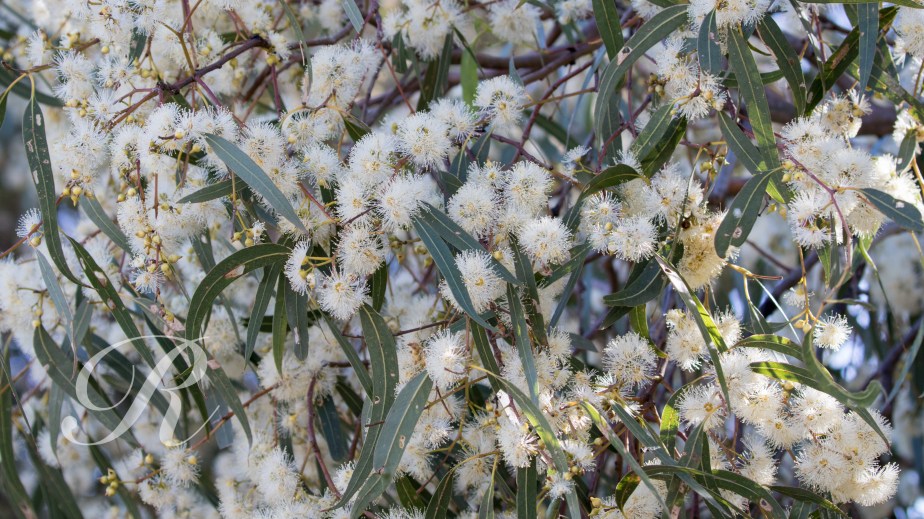
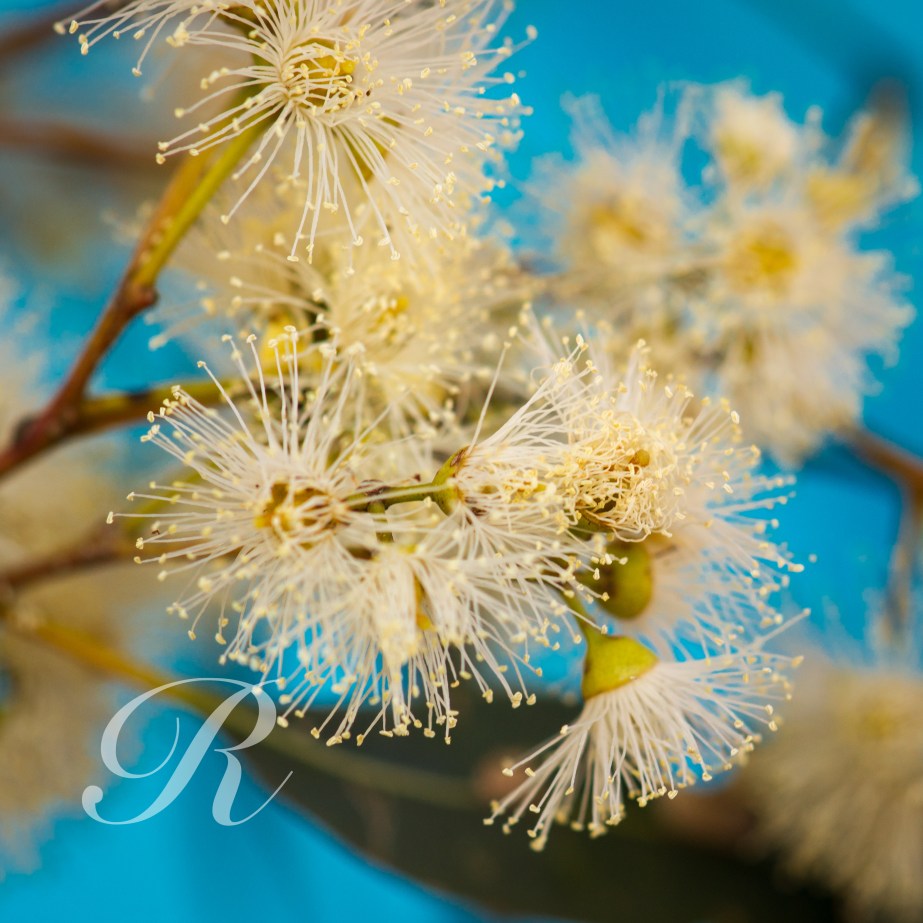
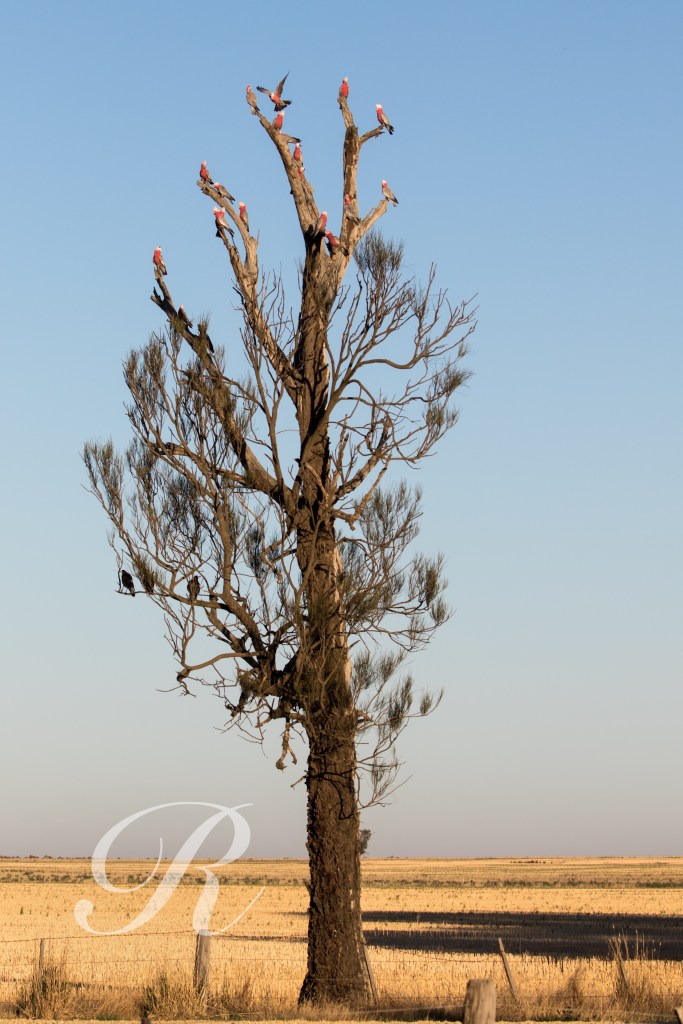
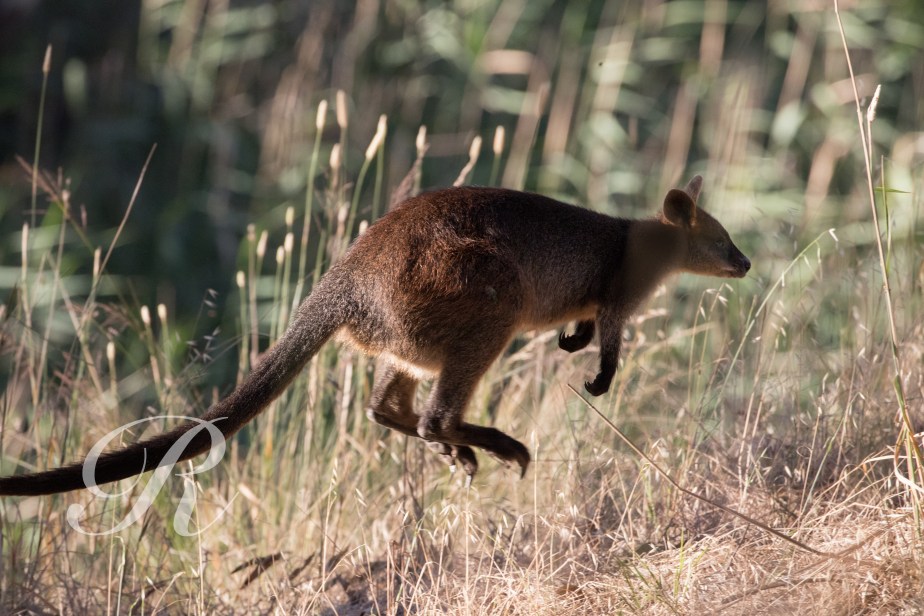
It started a week or so ago with a few isolated trees, now most of the River Reddies in the neighbourhood are in flower. The smell is just like honey.
Eucalyptus camaldulensis
The River Red Gum (Eucalyptus camaldulensis) is Australia’s most widespread eucalypt found mainly along watercourses in otherwise fairly dry country. Flowering occurs mainly in December and January but it’s not every year that we get a big flowering event like this one.
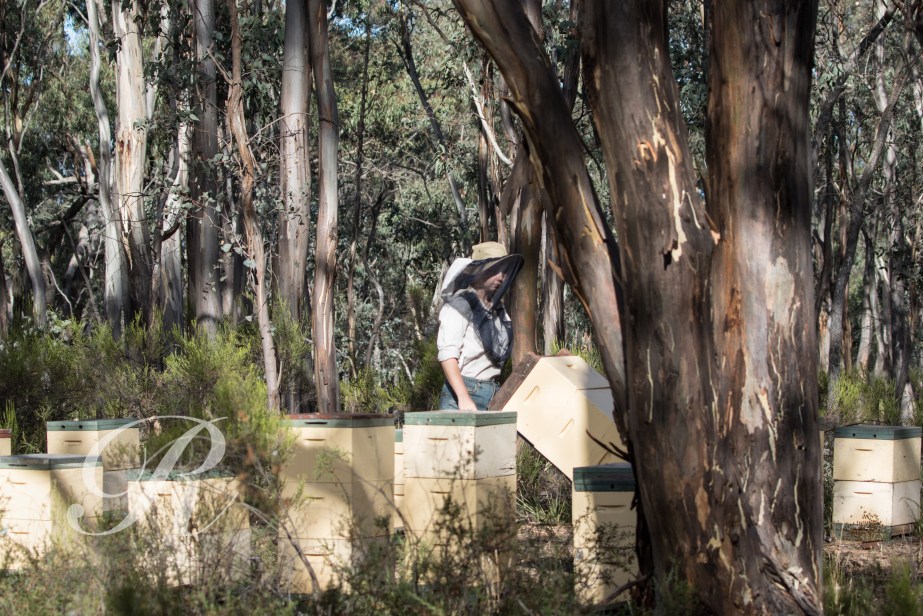
There are always a few hives in the local woodland reserve but the beekeepers have been quick to recognise the potential and were busy installing reinforcements this morning …
There haven’t been a lot of lorikeets or honeyeaters about lately but I expect that to change in coming days.
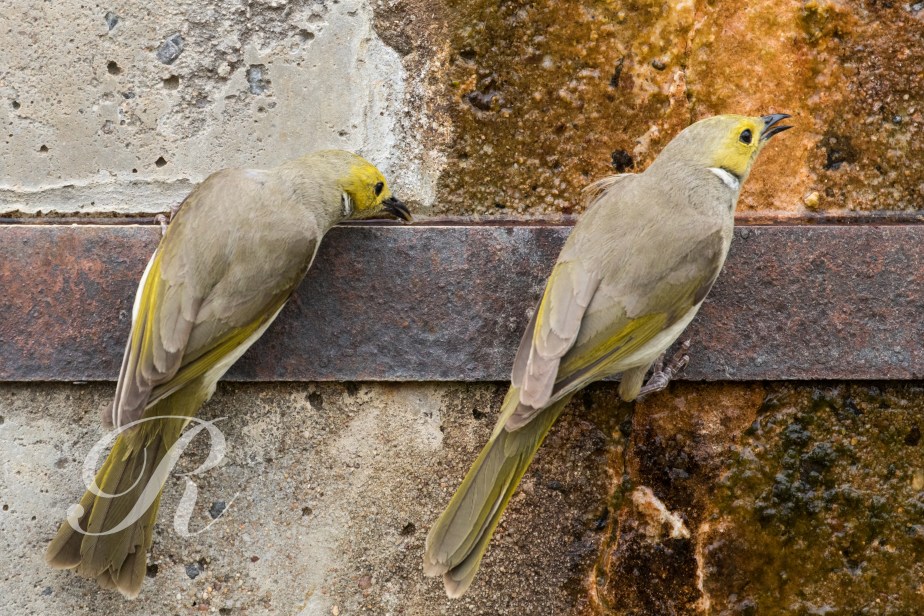
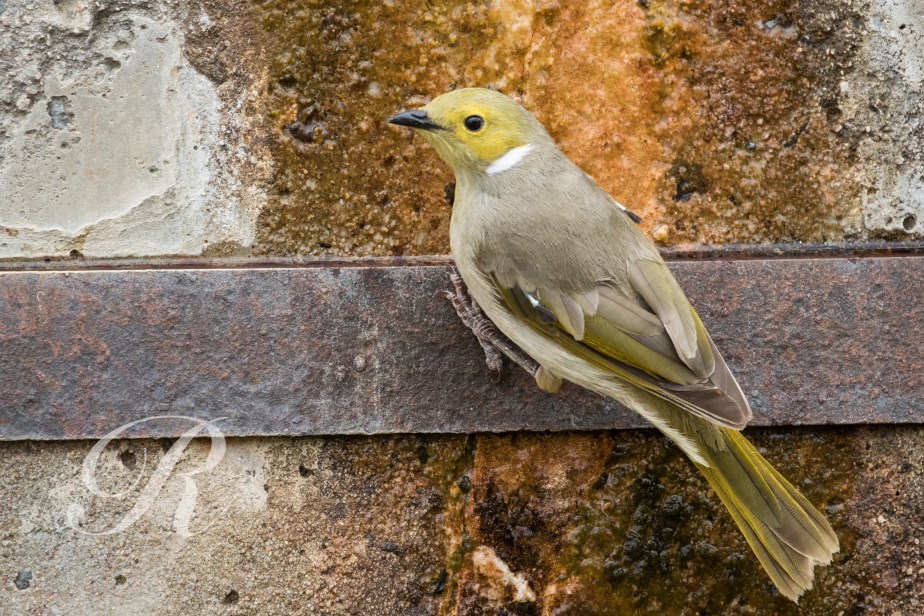
One of my concrete water tanks has a minor leak. It was 30°C (86°F) yesterday which is slightly below average, some of the locals are finding it a very convenient place to get a drink.
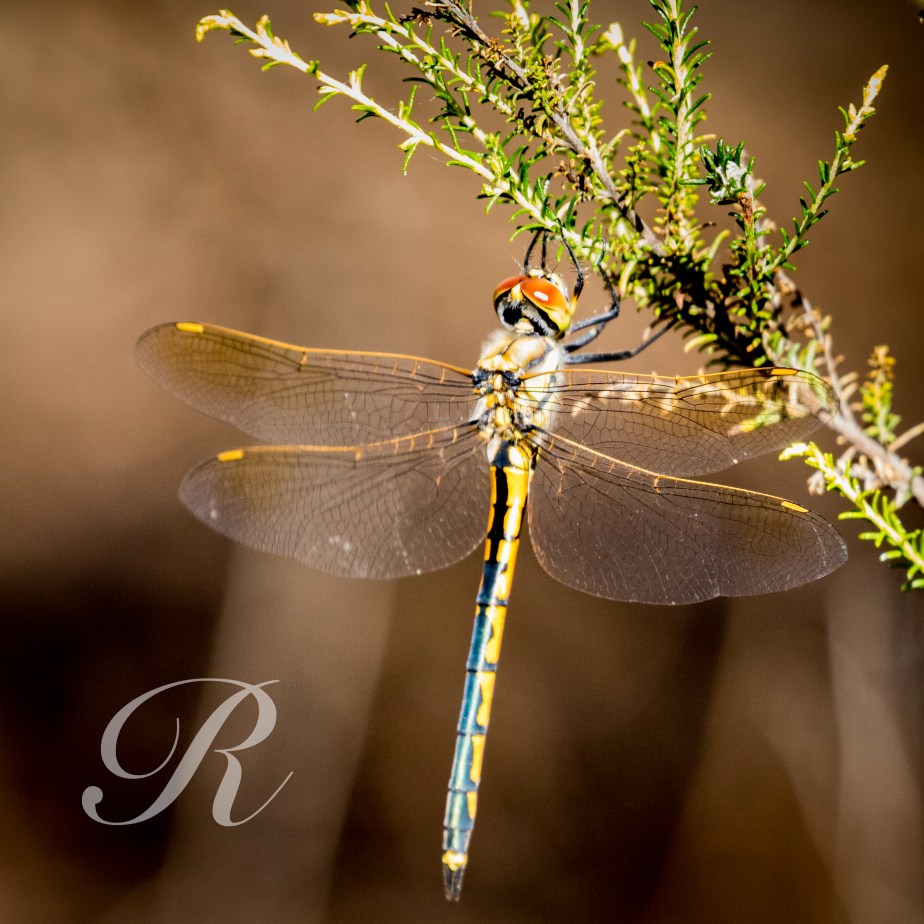
Today I saw the dragon-fly
Come from the wells where he did lie.
An inner impulse rent the veil
Of his old husk: from head to tail
Came out clear plates of sapphire mail.
He dried his wings: like gauze they grew;
Thro’ crofts and pastures wet with dew
A living flash of light he flew.
Alfred Lord Tennyson
Well something like that although this one was encountered in dry woodland devoid of grass and certainly devoid of dew.
There is a handy key to Australian Dragon and Damselflies <HERE> from which I learnt that this is a Tau Emerald (Hemicordulia tau).
Some birds are residents, some are migrants. Some birds just wander around in response to conditions, none of them care a fig about state boundaries. So if you hang out near the borders of your state or territory your list will grow.
I live in the western half of Victoria where sooner or later you can expect to find Budgerigars, Diamond Doves, Black and Pied Honeyeaters and other occasional visitors. These are birds that spill out of the more arid interior.
Over in the east of the state their counterparts are birds of the east coast forests that wander around the corner from New South Wales, usually in summer. There have been reports recently of a few congregating in one particular front yard in the little town of Metung. It seemed a good time to put in some time in the Gippsland Lakes region. The weather gods thought it might be a good time to visit the same area.
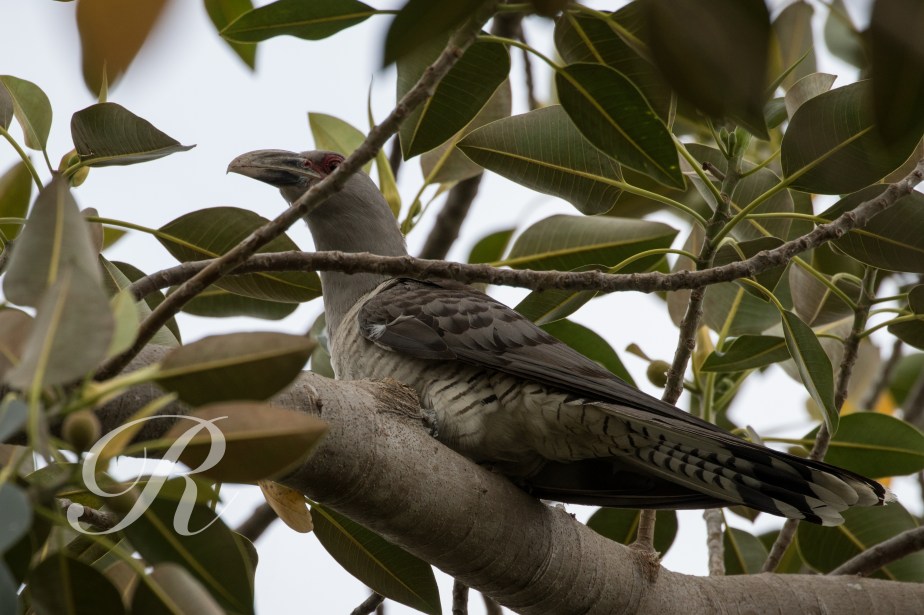
The Fig Trees of Mairburn Road deserve to be as famous as the Flame Trees of Thika. In the space of half an hour I saw Koel, Channelbill Cuckoo, Topknot Pigeon, White-headed Pigeon and Figbird. All in or close to two enormous Morton Bay Figs thoughtfully planted as ornamentals in somebody’s front garden. Thanks, mate.
These three were new to my Victorian list …
Channel-billed CuckooTopknot PigeonFigbird
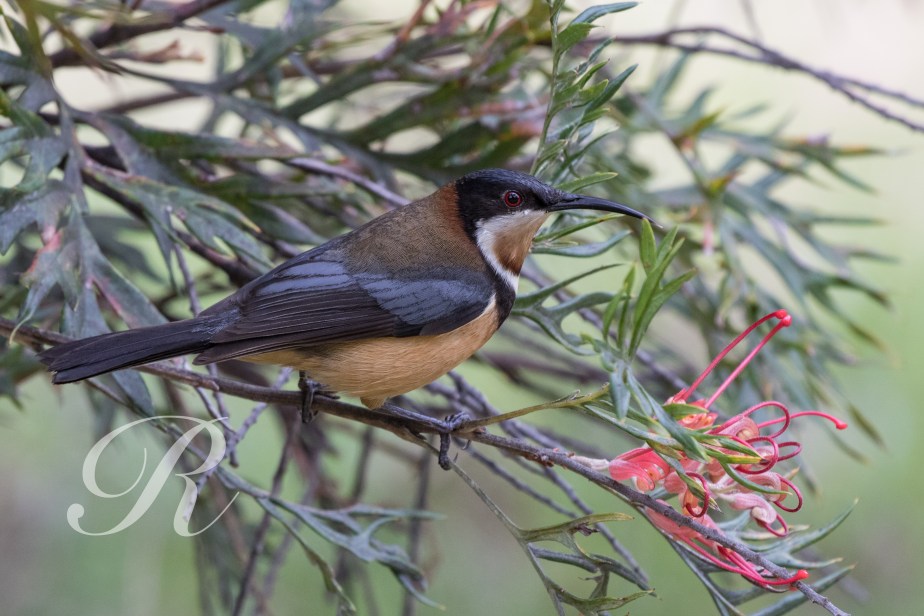
You can’t spend all your time pointing your binoculars and telephoto lens into fig trees in people’s front gardens. You have to consider the Grevilleas in their back gardens …
The view from outer space (courtesy of Google Earth) shows the guano on Lawrence Rocks. You can also just make out a tiny spot more on Point Danger, the nearest point on the mainland. The cloacas at work belong to these …
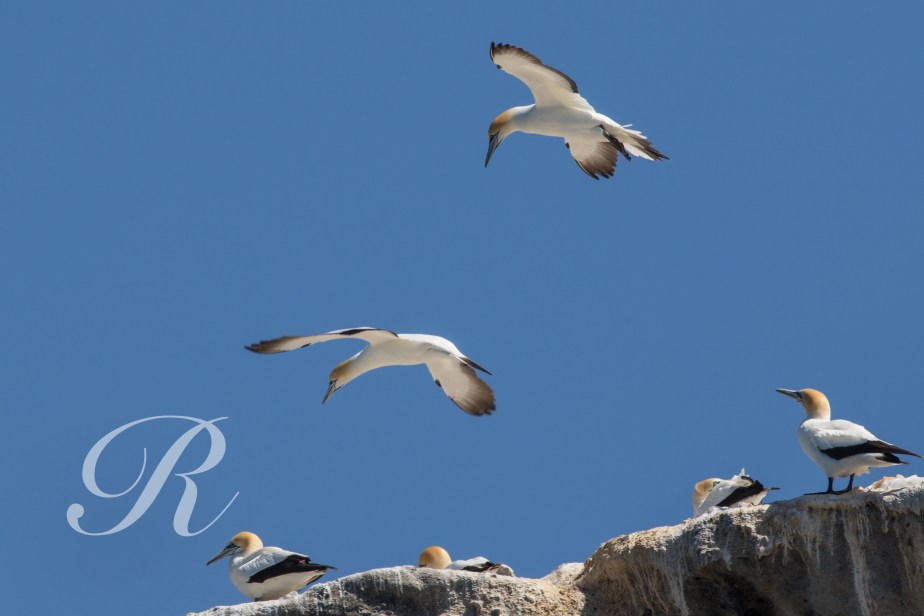
Australasian Gannet
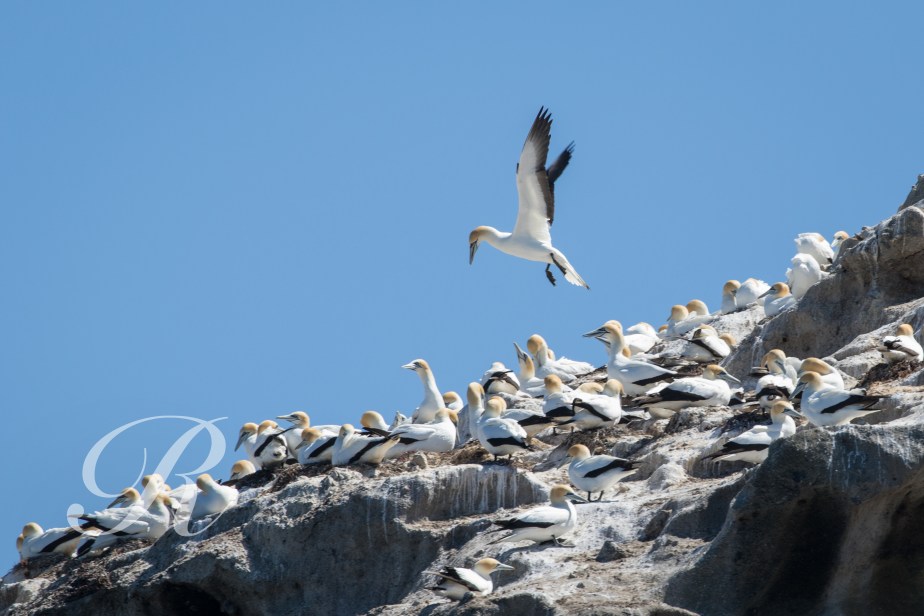
The colony on the rocks spilled over onto Point Danger, the only mainland breeding colony of Australasian Gannets. It’s survival has been greatly assisted by fencing that keeps out foxes and other terrestrial predators.
The rocks also provide a resting place for Black-faced Cormorants and Australian Fur Seals. In winter the White-fronted Terns can usually be seen here. Crested Terns are common all year.
Portland is close to the western extremity of the Victorian coast. It was settled illegally by the Henty brothers back in 1834. It provides a reasonable harbour which has been important in whaling and fishing and these days live meat and woodchip exports.
The attraction for the sea bird enthusiast is its proximity to the edge of the continental shelf, where the lighter blue meets the darker blue in the image above. Most of Victoria’s coast is deep water deprived. Upwelling water at the shelf edge brings in the long distance wanderers of the sea, the true pelagics.
So eight birdos assembled on the dock in the early morning looking like they had been dressed by a Salvation Army Op shop and carrying about 80,000 dollars worth of optics. Tragics in search of pelagics.
The sea was initially a metre plus slop on top of almost no swell whatever, reasonably comfortable for the 50 km ride out to the shelf. Once there the dispensing of handfuls of shark liver soon attracts the birds which are then continuously and thoroughly depixellated to the machine gun like sound of overheating motor drives … for about four hours.
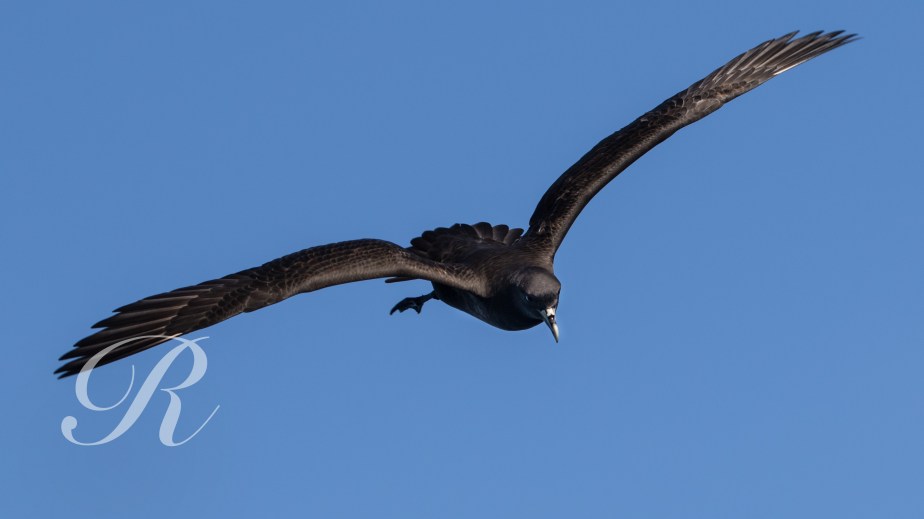
It was not a day of great variety. White-chinned Petrels dominated the scene with Shy Albatrosses running second, two flavours of Shearwater showed themselves at various times along with the odd Fairy Prion and a few also rans.
Shy AlbatrossFairy Prion
The wind and sea picked up as the day wore on heading towards a forecast 30 knots. We had a less comfortable and fairly wet ride home.
On the way we stopped for a look at Lawrence Rocks just off Point Danger at the entrance to Portland Bay. It is home to a massive breeding colony of Australasian Gannets and a good place to rest for a variety of terns, cormorants and fur seals.
There’s about 25 km of beach running from Gantheaume Point north to Willie Creek. This is Cable Beach, sun, surf, camels, tourists, very popular. But the further north you get the fewer people you encounter. The numbers would drop off faster if driving on the beach was forbidden, sadly it is permitted. There is some debate as to whether a full-time or part-time four-wheel drive is better on the beach. Personally, I think the best car for the purpose is somebody else’s car.
About 13 km up the beach from the Cable Beach Resort, or 25 km by road, is the suburb I know as Coconut Well, officially Waterbank. If you have a spare three or four million you can buy a nice home here. It won’t have mains electricity or town water but it will have a nice view.
At low tide there are some rocks exposed that are interesting to poke around in. Fish dart around in the tidal pools. There will be some migratory shorebirds about and perhaps a Frigatebird will fly over and if you’re really lucky you may see a Beach Stone-curlew …
Silver GullBeach Stone-curlew
The photo at the top is of an Eastern Reef Egret hunting through the pools. They often stand motionless, sometimes with their wings out to create some enticing shade. When a morsel presents itself the neck uncoils like a spring.