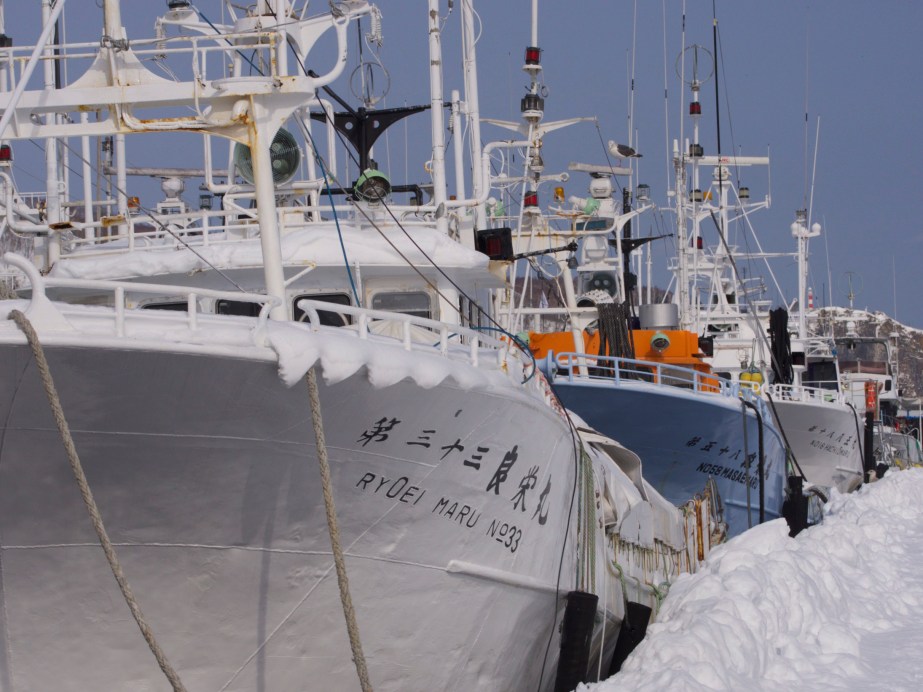
Time to head to the coast and the fishing port of Rausu.
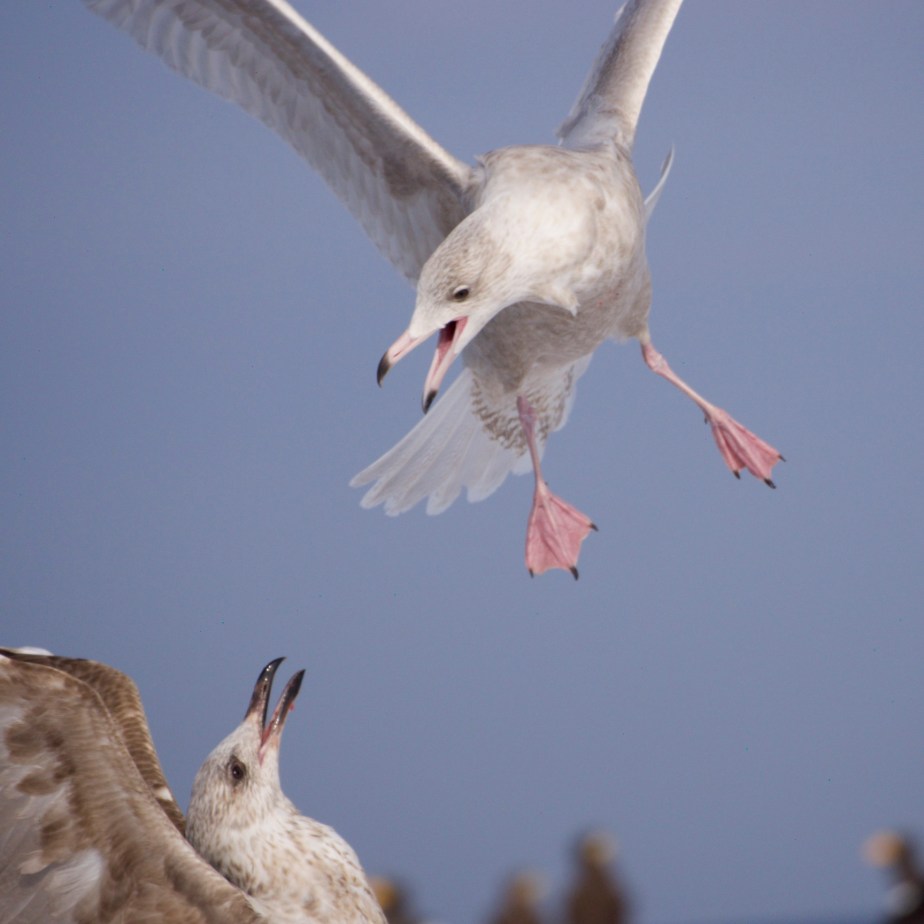
We were going to sea to get some stunning views of some eagles. We donned our life jackets, packed several trays of frozen fish, which meant that they were pretty much at ambient temperature and headed out onto the briny. The gulls were quick to take an interest, this is a regular event for them …
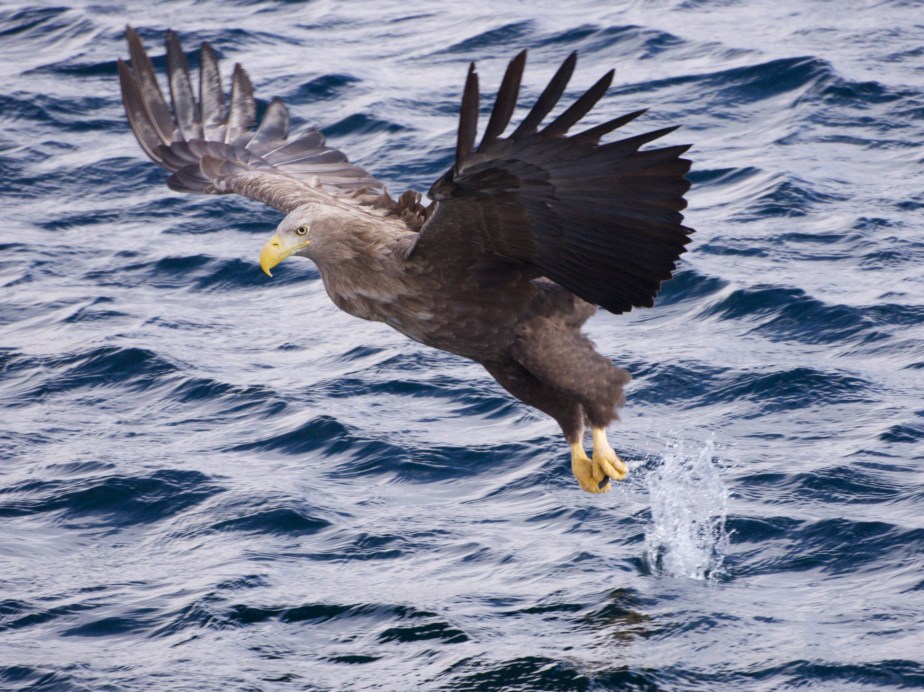
But once we started throwing out the fish they were obliged to make way for the White-tailed Sea Eagles,
and when the big guys show up, look out. Steller’s Sea Eagle was the bird I had come to Japan to see. On a previous trip I had been on a ship outside Petropavlosk. The Russian port authorities, perhaps because there were mainly Americans on board, had kept us waiting for hours. By the time we docked it was time to head straight to the airport. The only significant result of that was to deny some dollars to the local economy. I was not too upset, I spent the whole time looking for the world’s largest and most spectacular eagle. I would have stayed an extra day … in fact I would have needed to. None showed up. Going hungry improves the appetite, dipping on a bird sweetens the eventual sighting …
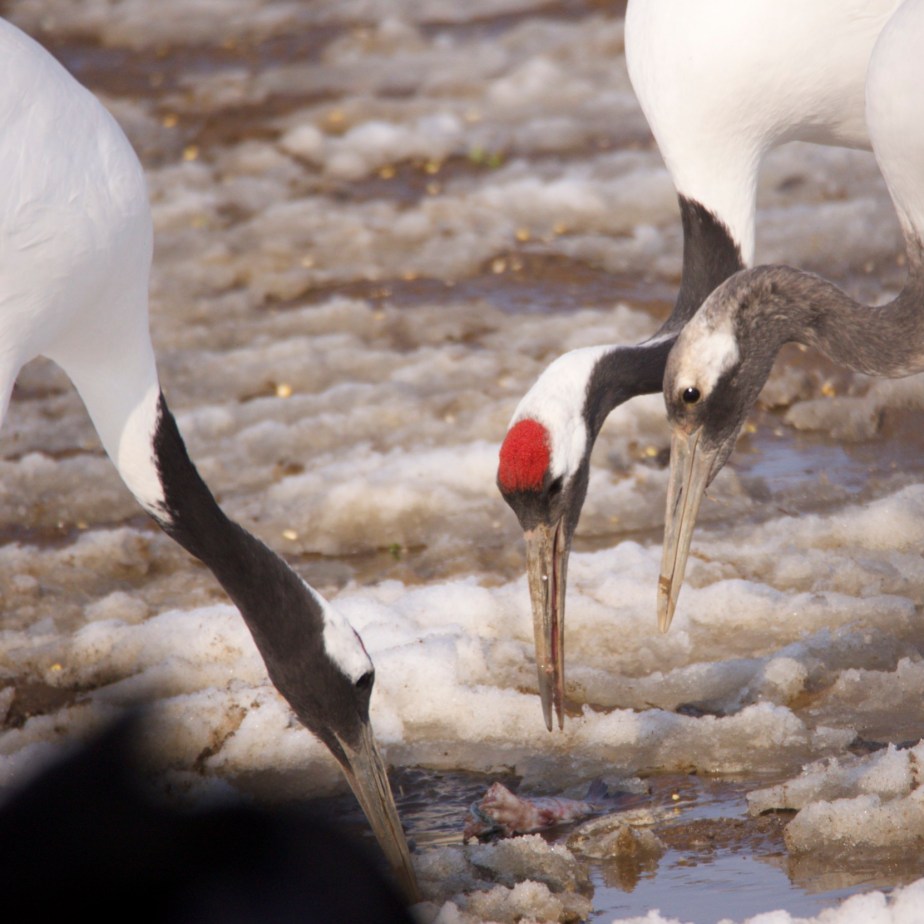
The Red-crowned Crane is on the way back from the brink of extinction in Japan. Protection and active assistance have helped. In return the cranes have added to the local economy by becoming quite a tourist magnet. There are several crane reserves where supplemental feeding mean that good numbers can be seen and photographed in the winter. In the summer breeding season they are widely dispersed, harder to find and hard to approach.
At one of the reserves spring feeding includes fish, added protein to assist in breeding readiness.
Red-crowned Crane
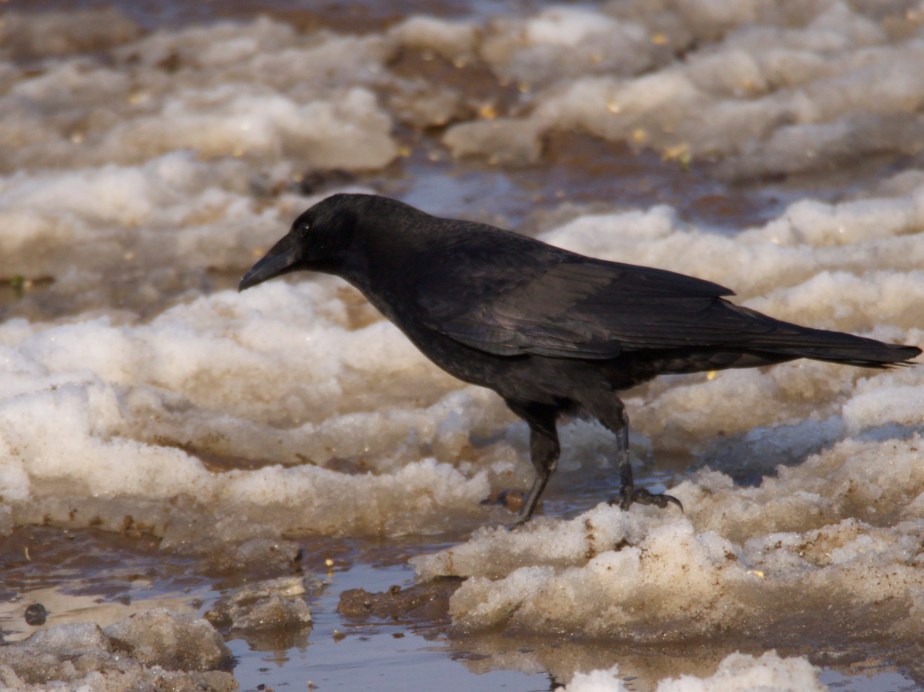
A free feed is obviously going to attract other eager participants. There are two common crows in Japan, this is a Carrion Crow, the other is the Large-billed Crow which is easily distinguished by its steep forehead.
Carrion Crow
Also common and always happy to share food that it doesn’t have to catch for itself is the Black-eared Kite. In some taxonomies this is included in Milvus migrans, the widespread (including Australia) Black Kite.
Black-eared Kite
But sharing top billing with the cranes, a large and very impressive eagle …
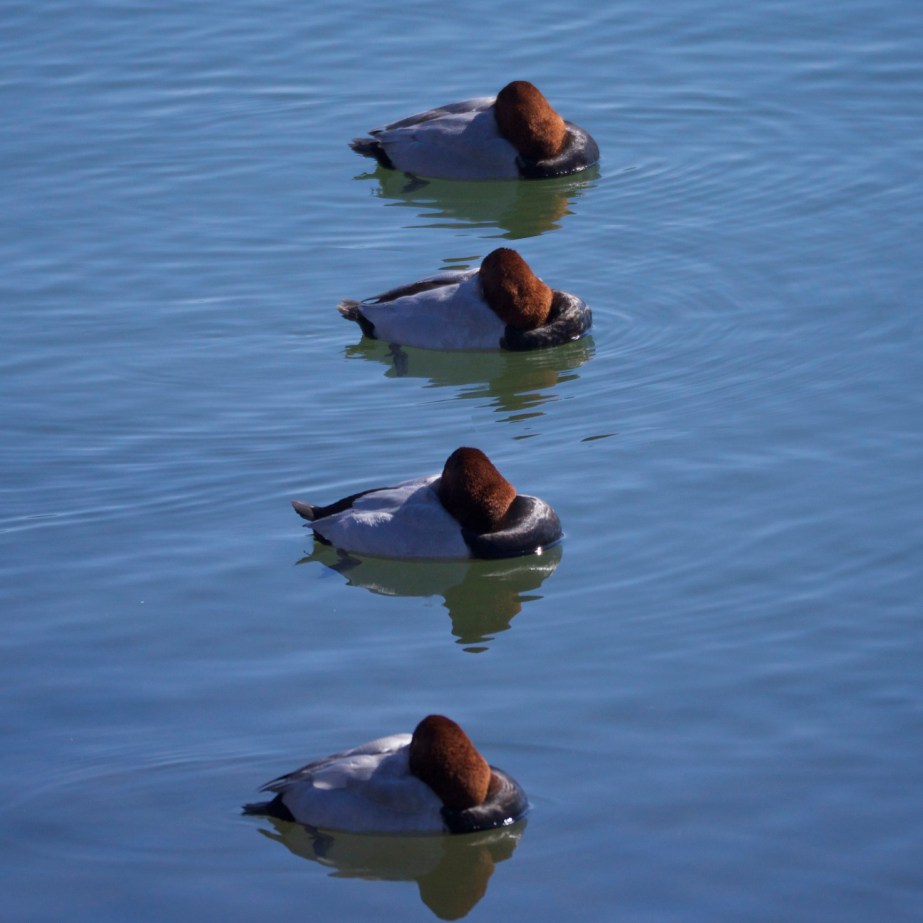
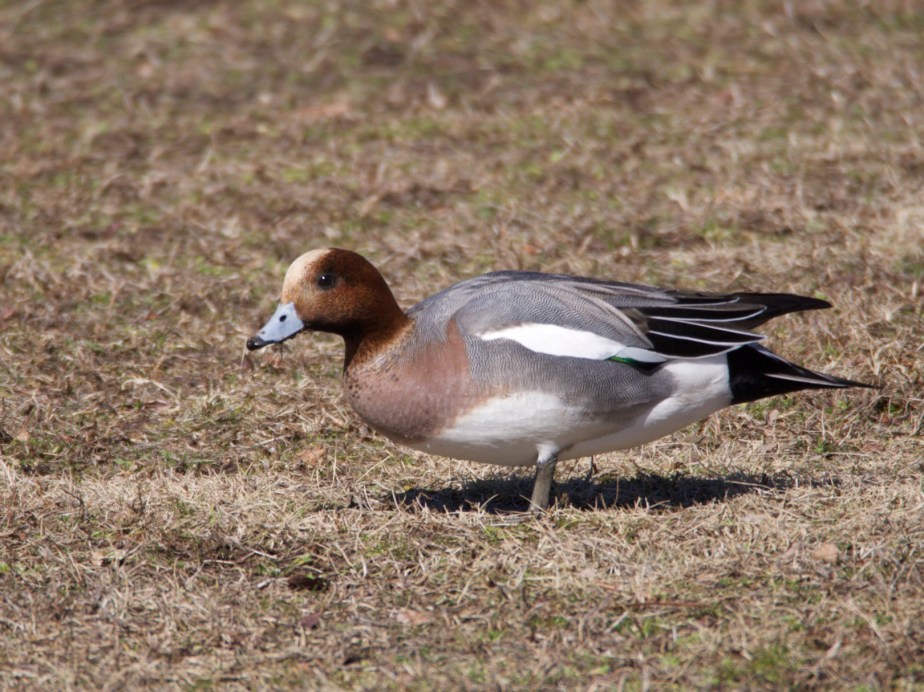
Obviously a very auspicious day to fly from Tokyo to Kushiro in eastern Hokkaido. First we have to drive from the mountains of central Honshu to Tokyo. This takes us via Suwa, home of the Seiko watch, and Lake Suwa which provides some nice views of waterfowl. The sleepy heads above are Common Pochard and below we have …
Eurasian WigeonNorthern Pintail
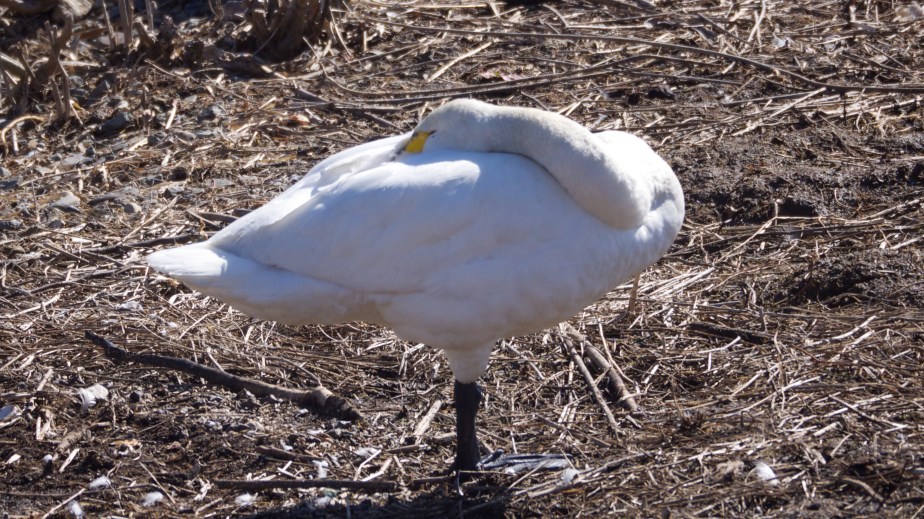
and there were plenty of Tufted Ducks, some Mergansers and a Smew or two. And a very sleepy swan …
Tundra Swan
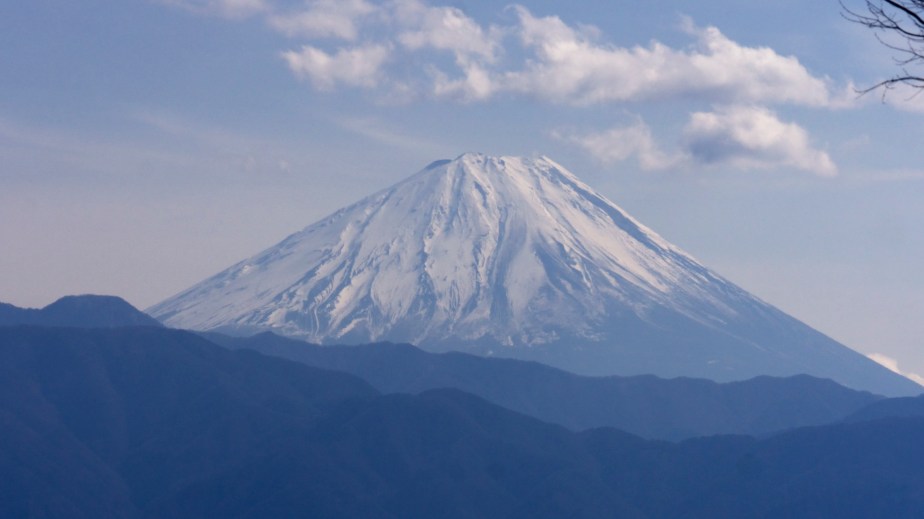
We were blessed with good views of Mount Fuji as we passed by …
and the Tokyo traffic was, on this occasion, very cooperative.
In Japanese folk tradition, the crane is a symbol of fidelity, honesty, health and longevity. A crane will live a thousand years and if you fold a thousand paper cranes one will carry a wish to heaven for you. That wish may well be for a long and happy marriage.
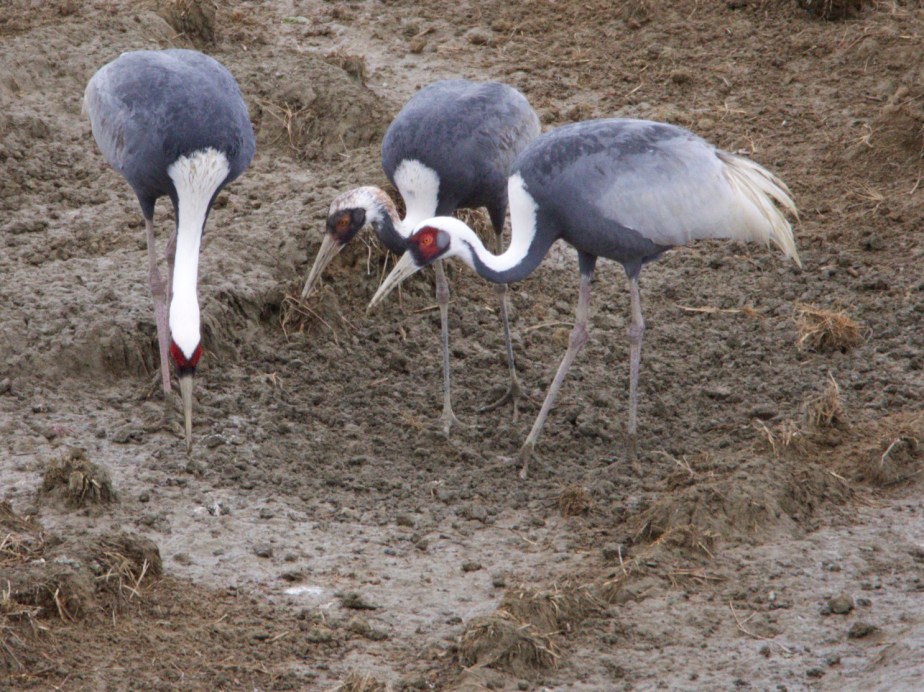
At Arasaki in Kagoshima prefecture you have every chance of finding just the right crane to entrust your wish to. It is the wintering place for perhaps as many as 17,000 of them. The majority are Hooded Cranes, almost all the rest are White-naped Cranes. Both these species fly north via the Korean peninsula to nest in swamps in continental Asia.
At Arasaki there is a visitor centre with an outdoor observation deck. Grain and fish are put out for the cranes. They are quite a tourist attraction but the birds are assured of a little peace by fences that keep out the people. Some fields are kept flooded, the cranes always spend the night standing in water.
They start to arrive in mid October, start to leave in February and are gone by March. Numbers have risen over time from less than 300 in the late 1940’s to 17,005 (an unlikely degree of precision) in 2015. That is very likely good news for cranes although there are now fewer of them wintering in other locations.
The pair bond is maintained during the winter and last year’s young stay with their parents until it’s time to go north again, so as you watch what can seem like an amorphous mass of birds you soon start to pick out adult pairs that may have one or two youngsters with them.
At times they are a fairly noisy bunch and as spring approaches they start to dance and display.
Just occasionally you can find a Sandhill Crane or two. Their breeding ground is further north and most cross the Bering Strait to winter in North America but a few come south to Kyushu. I was also lucky enough to see a Common Crane that had wandered east from its normal range. It was keeping company with a Hooded Crane, the two species do occasionally hybridise.
The donation of free food attracts a few other birds as well. Black-eared Kites, Grey Herons, Eastern Rooks, Daurian Jackdaws and Common Starlings (not at all common in Japan) all drop in for a feed.
In the marshes not far away we encountered nine distant spoonbills. Seven were Eurasian Spoonbills, two were Black-faced. This was indeed a treat, the Black-faced Spoonbill is rare and endangered (and new to my list).
The big city is not my cup of tea. The conurbation of Greater Tokyo is the biggest of them all, 37.8 million people in 13,500 km².
I have a day adrift here. The options …
Sit in room, suck thumb. Ultra safe.
Go for a walk unravelling a ball of twine behind me (or taking good notes). Adventurous.
Take rush hour public transport across Tokyo and hope to get back. Verging on insanity.
Really, where can a boy go bird watching in Tokyo. Mayumi, a friend, had suggested the Meiji Shrine.
Haneda Airport has an information desk. The staff speak good English and are keen to help. To get to the Meiji shrine take the train. There is a stop at the airport (Keikyu line). Why didn’t Melbourne think of that? Change to the JR Yamanote line at Shinagawa get off at Harajuku. You’re at the gate. Entry is free. Reverse the process to get home. They were kind enough to write it all down for me.
You can buy a single trip ticket at the station (why didn’t Melbourne think of that?) from a machine that can be switched to English. It didn’t, however, list stations individually, the missing part of the jigsaw was knowing which cost zone Harajuku would be in. Puzzled foreigner stares stupidly at machine. When dealing with foreign machines stare slowly and clearly.
A smartly dressed mid-career type man coming from the platform volunteers to help. He enquires at the information office and comes back with the missing piece, supervises the administration of the money and points me in the right direction. I thank him. He bows.
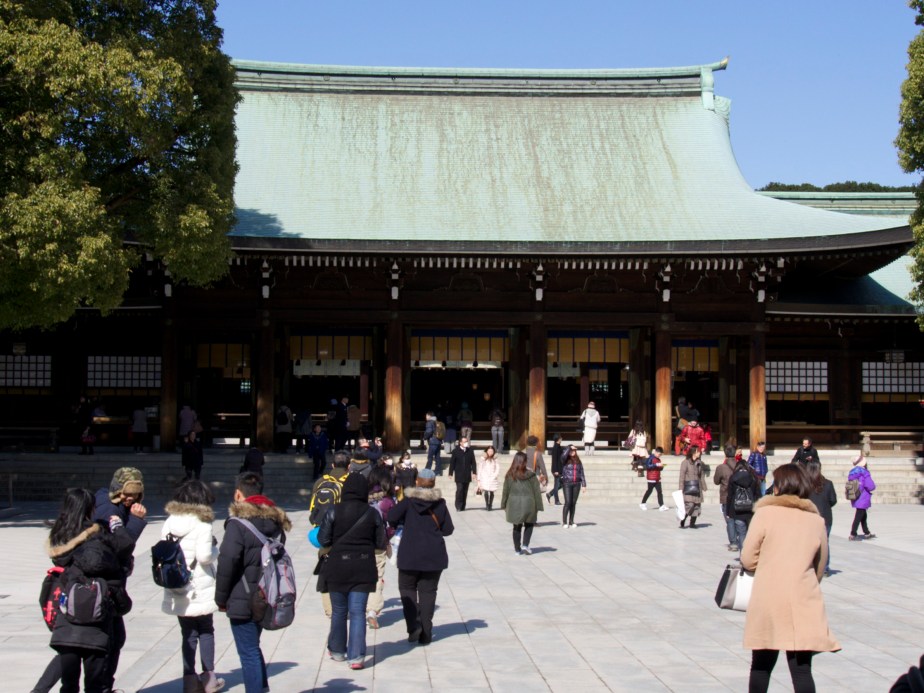
The Meiji Shrine commemorates the divine souls of Emperor Meiji and Empress Shoken, central figures in the Meiji Restoration of the 1860’s. This period saw the end of the Tokugawa Shogunate and an opening up of Japan to western influences.
The Emperor died in 1912 and the Empress two years later. Their tombs are in Kyoto. An area was set aside in Tokyo and trees planted in their honour. Established in 1920, it is now a mature forest that includes a couple of lakes providing excellent habitat for birds such as Oriental Turtle Dove, Japanese Pygmy Woodpecker, Mandarin Duck, thrushes, redstarts, waxwings … and the shrine.
And surprisingly, it’s the shrine that gets all the attention. It happens to be the number one (of 228 attractions) on TripAdvisor.
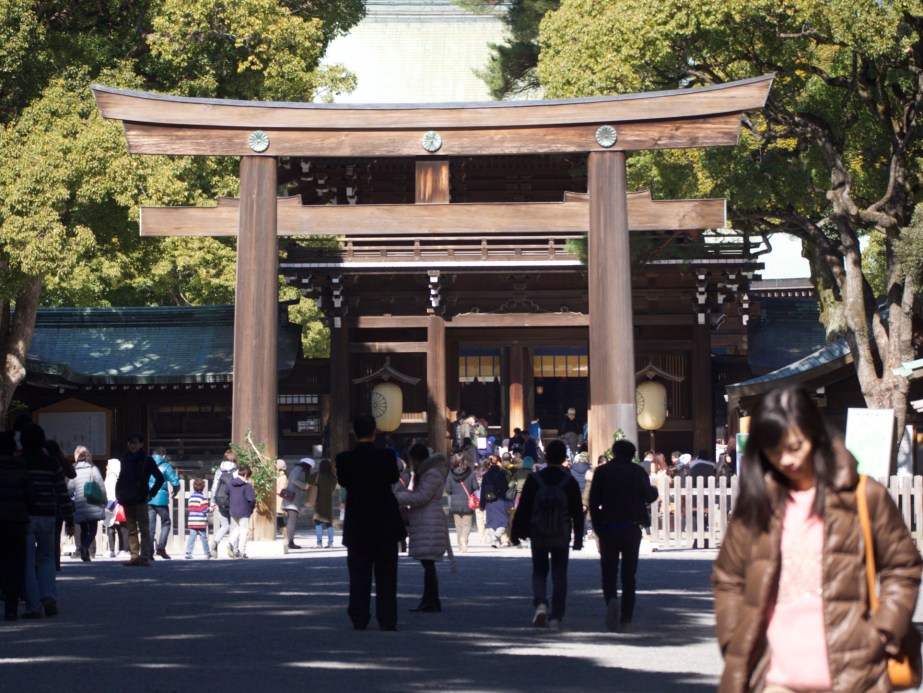
Below is one of the splendid torii gates that mark the various approaches to the shrine …
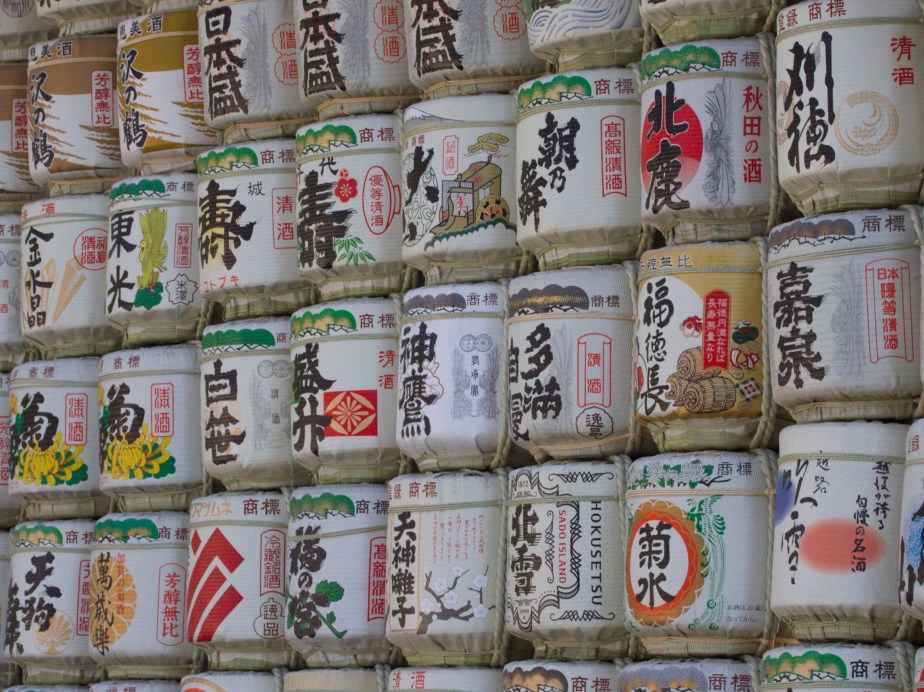
Sake brewers donate barrels of sake wrapped in straw and paper to the shrine.
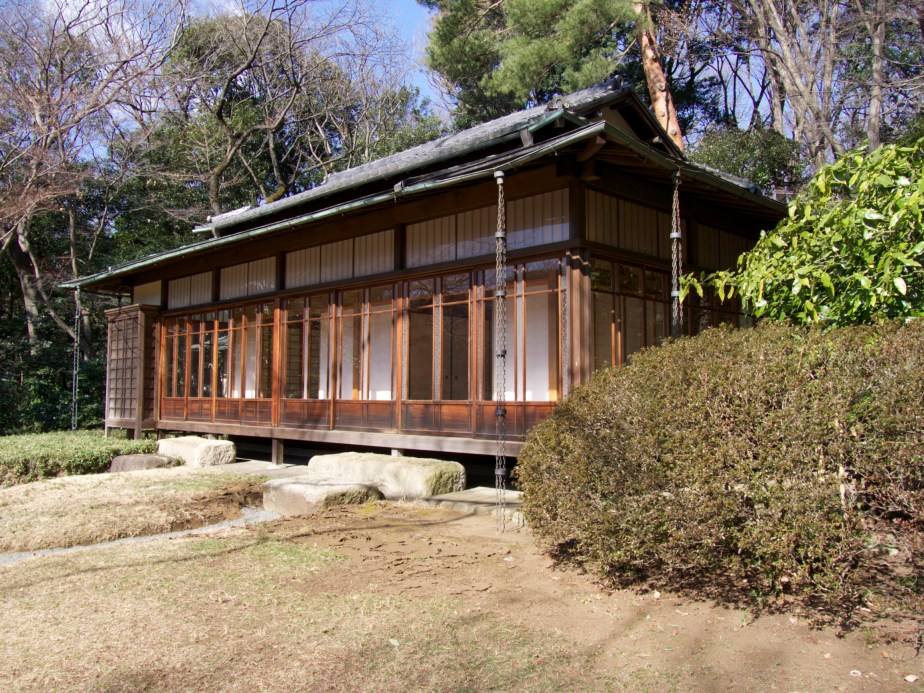
A small payment is required to enter the beautiful inner garden (¥500). This garden existed prior to the Meiji Shrine and the Emperor hand a hand in its design. Here you can find this tea house. It is probably the most photographed garden shed in all of Japan.
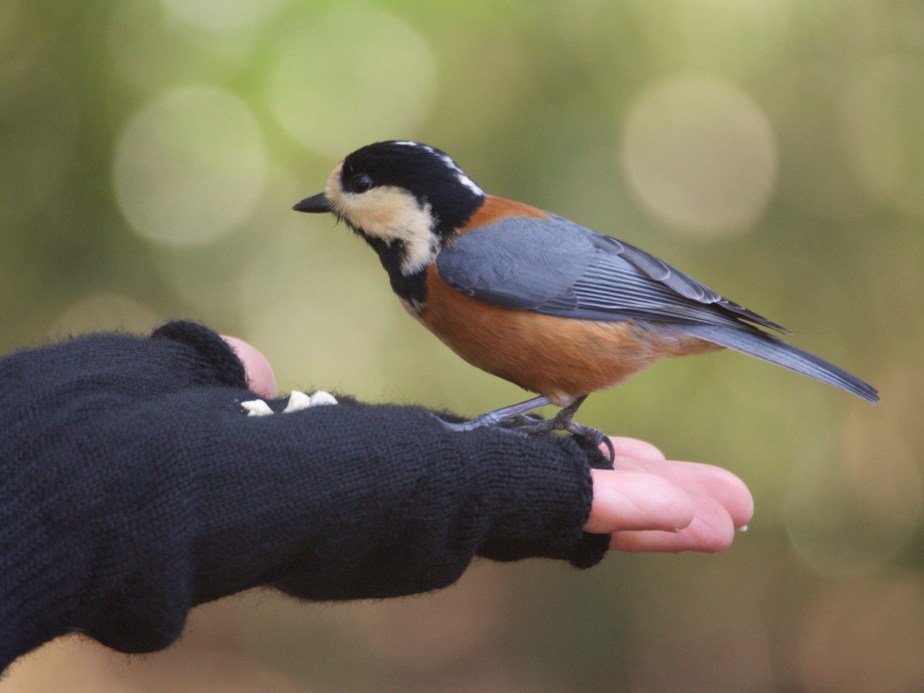
There is also a small pond in the inner garden, crafted to raise the spirits of Empress Shoken, there where I came across a very attractive Kingfisher and various small birds were coming for a handout.
Varied TitBlack-faced Bunting
It was a great place to spend the day. Now to get back to the Haneda Excel Tokyu Hotel.
Stupid foreigner stares slowly and clearly at ticket machine trying to remember how much money to contribute. Slender, young, attractive Japanese woman volunteers to help. She makes a quick trip to the enquiry desk, supervises the donation and points me in the right direction. Her English is impeccable. I thank her. She bows. Helplessness has its rewards.
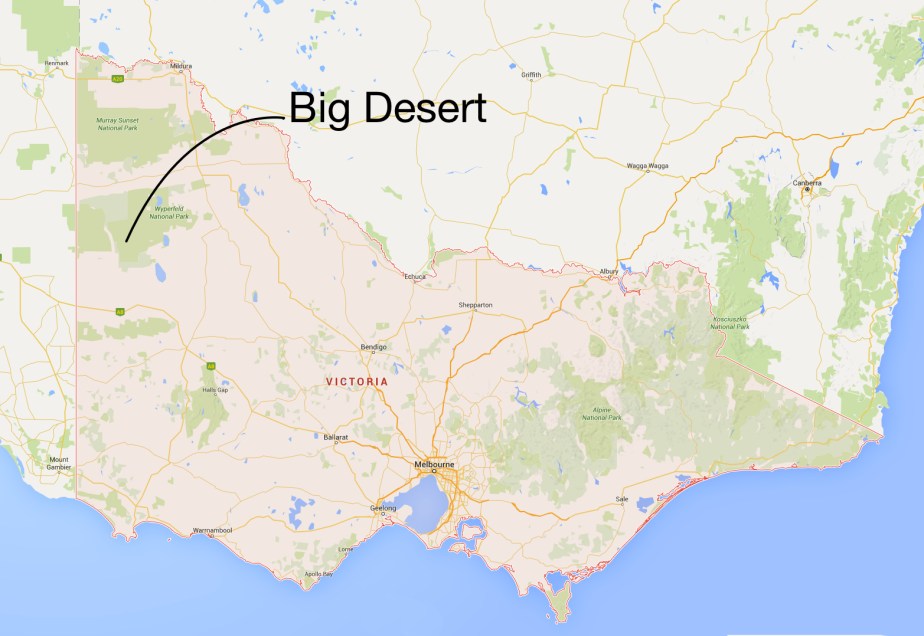
The south west of Victoria has a reasonable rainfall and fertile volcanic soils. Imaginatively named the Western District it is a rich agricultural area. Moving north rainfall diminishes and temperature increases. To the north of the Western District Victoria has its deserts. The sand was donated by South Australia during past ice ages brought by the prevailing westerly winds. These deposits are known as the Lowan sands. The Big Desert is in the middle, to the north is the Sunset Country, to the south the Little Desert. They are dry, they are hot in summer but they are all quite well vegetated. Too well vegetated to be real deserts.
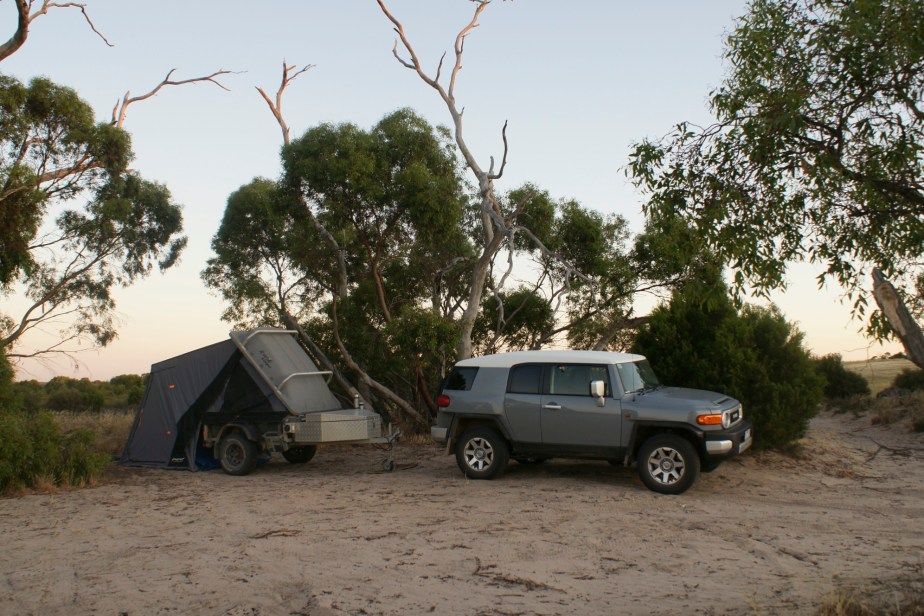
I thought the Big Desert would be a good place to try out the new FJ Cruiser on the sand. Here it is with my trusty Pod Camper on the edge of the desert.
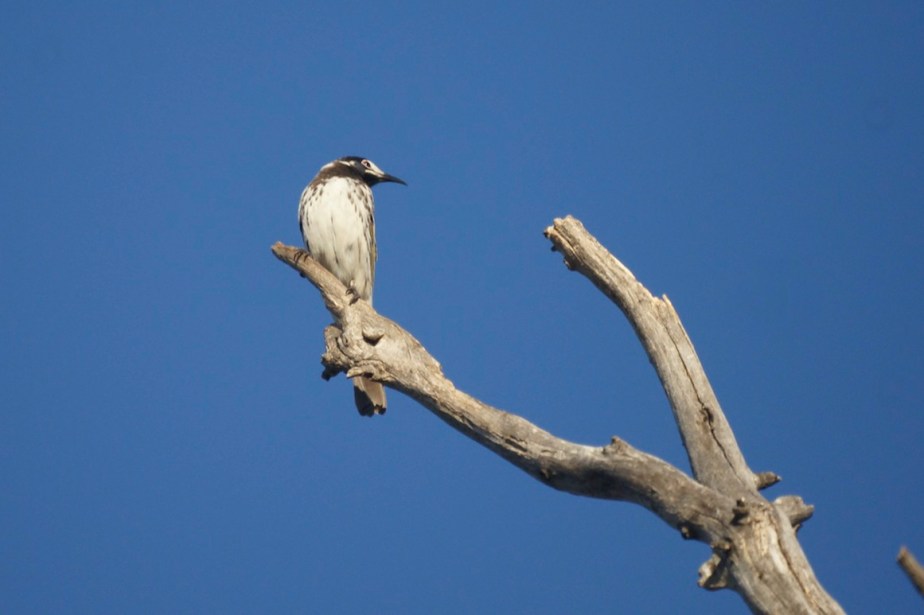
The next day was a hot one. Birds were fairly scarce except for a patch where the Mallee Eucalypts were just bursting with blossom. I took a seat close by and photographed the incoming flock. The White-fronted Honeyeaters came in good numbers …
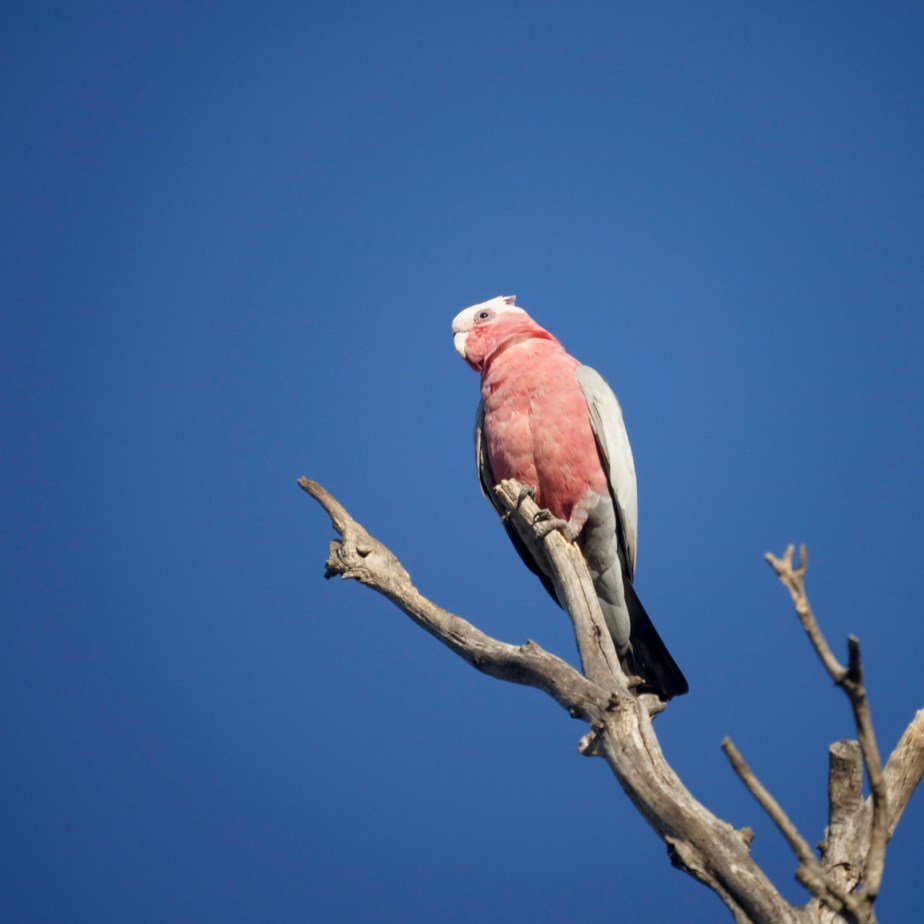
and the ubiquitous Galah posed nicely …
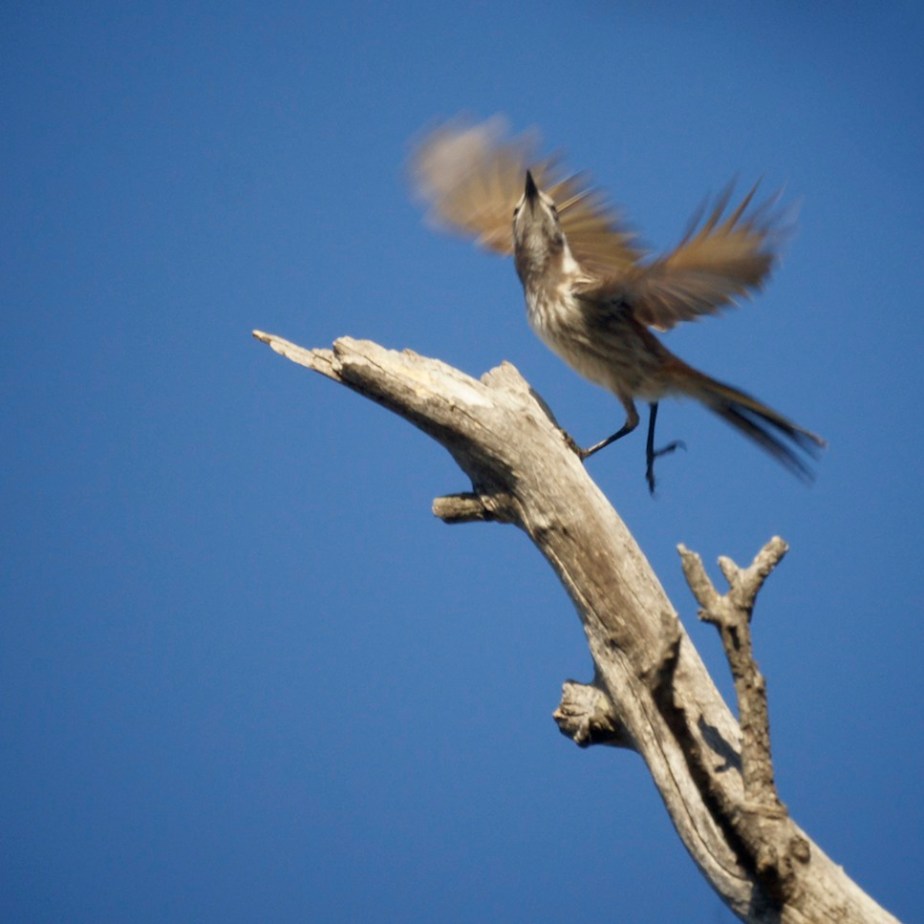
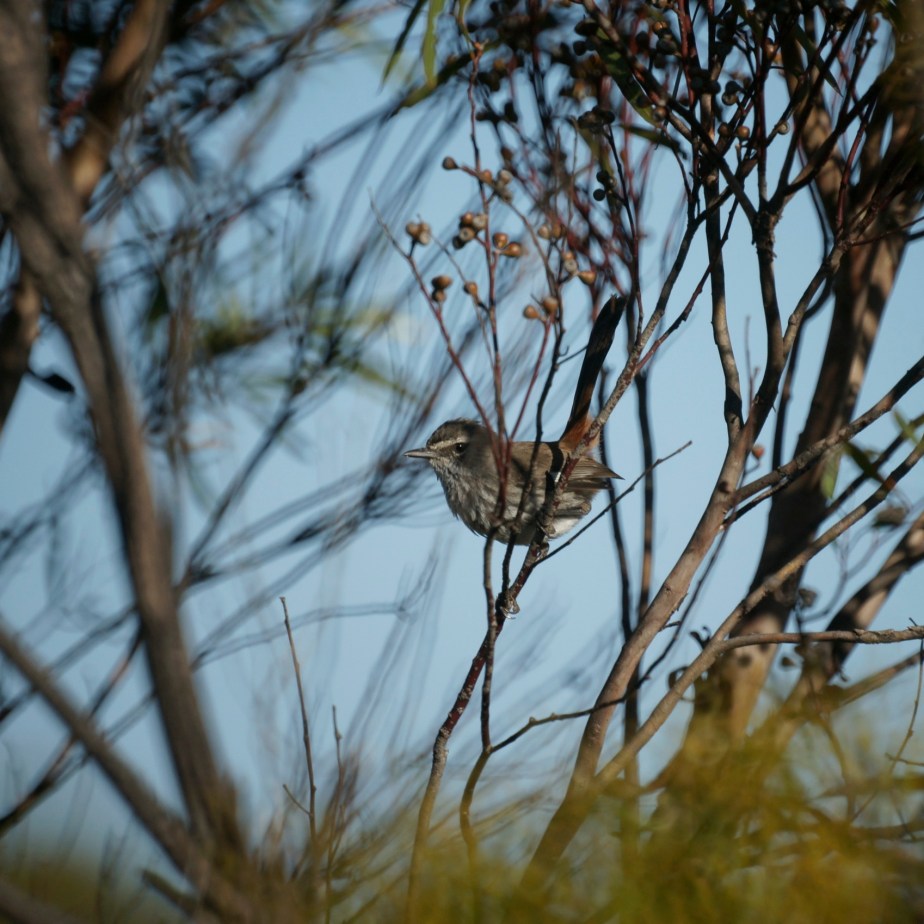
I had to work a little harder for this one …
This is the Shy Heathwren, Hylacola cauta. There is another species in the same genus, the Chestnut Rumped Heathwren, that is even harder to find. It has been said that the Chestnut-rumped Heathwren makes the Shy Heathwren look like a social butterfly.
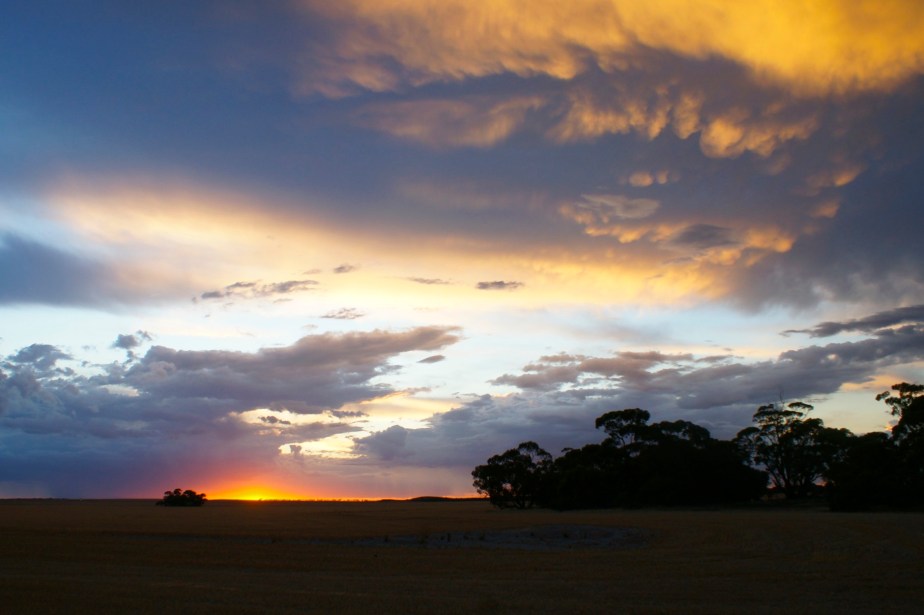
A rewarding day, day’s end brought yet another treasure …
Victoria lies in the south east of the Australian mainland. The colonies around it were given a degree of definition when Victoria was just the Port Phillip District of New South Wales. Tasmania, then van Deiman’s Land was separated from NSW in 1825 and was given virtually all the Bass Strait Islands even most of those that you can see from our most southerly point. Jibbed. (Tassie was renamed in 1856). South Australia happened into existence in 1834. Its eastern boundary was defined as the 141°E meridian (but a curious thing happened).
When Victoria was mooted the formula for its northern boundary was to start on the east coast at Point Howe, draw a line to the source of the nearest tributary of the Murray and then follow the left hand river bank until bumping into the South Australian border that already existed. Easy. So NSW got all the river, jibbed again, a Victorian needs a NSW fishing licence to fish from Victoria’s bank and where is the top of the bank in a flood, or where it has been altered. Wars have been fought over less. Anyway everyone knows that Victoria has none of the river.
And that popular view is wrong, South Australia’s turn to be jibbed. When their eastern border was surveyed between 1846 and 1850 it was set two minutes too far to the west. The mistake was discovered in 1868. Victoria was unwilling to give up the little slice of SA it had received by luck. The case ran for quite a while until the Privy Council ruled in favour of Victoria in 1914. For 10 km of river Victoria is on the left bank and South Australia is on the right and for that 10km the border runs right down the middle of the river. Ten kilometres of half a river is better than none. If you have a Victorian fishing licence you can use it here!
Even though Victorians have very little stake in it, it remains a mighty river 2,508 kilometres (1,558 mi) in length. It is joined by the Darling and together they drain about one seventh of Australia’s total land mass.
There is one little bit of the Murray that is of considerable interest to the Victorian birdwatcher, the Barmah Forest is the only place in Victoria where the Superb Parrot, essentially a denizen of the inland slopes of the Dividing range of NSW, deigns to cross the border. If you want it on your Victorian list you have to go to Barmah. If you will give me a few minutes I will search the internet and see if I can filch a photo of one …
Once again it’s Graham Chapman that I’ve parasitised, I hope he will forgive me, it may help my cause if you visit his splendid site.
I spent a couple of days there just before Christmas. The Superb Parrot eluded me. The Yellow Rosella came to say hello. They are common in the Red Gum forest along the Murray and don’t wander far from there. Officially they are a subspecies of the Crimson Rosella but they rarely interbreed in the wild.
Noisy Friarbirds share the same tastes in habitat. Some are resident but their numbers are boosted by a summer influx across the river.
I camped right on the bank. A pair of Azure Kingfishers were feeding three youngsters. They soon became fairly comfortable around me. It would not have been safe to leave sardines on the table.
You are in the game on January first. To stay in the game you have to add at least one species of bird to your year list for each day elapsed. A big day on the first makes you safe for a while. If you fall behind the days elapsed you are out. The last one to go out is the winner or by reaching 366 (it’s a leap year) there could be any number of winners.
My total last year was 386. An insignificant achievement when compared to Sean Dooley’s 703 in 2004. Sean wrote a book about that year called The Big Twitch. I get an acknowledgement in the book, not, I suspect, because of my enormous assistance but rather so I would buy the book. It worked.
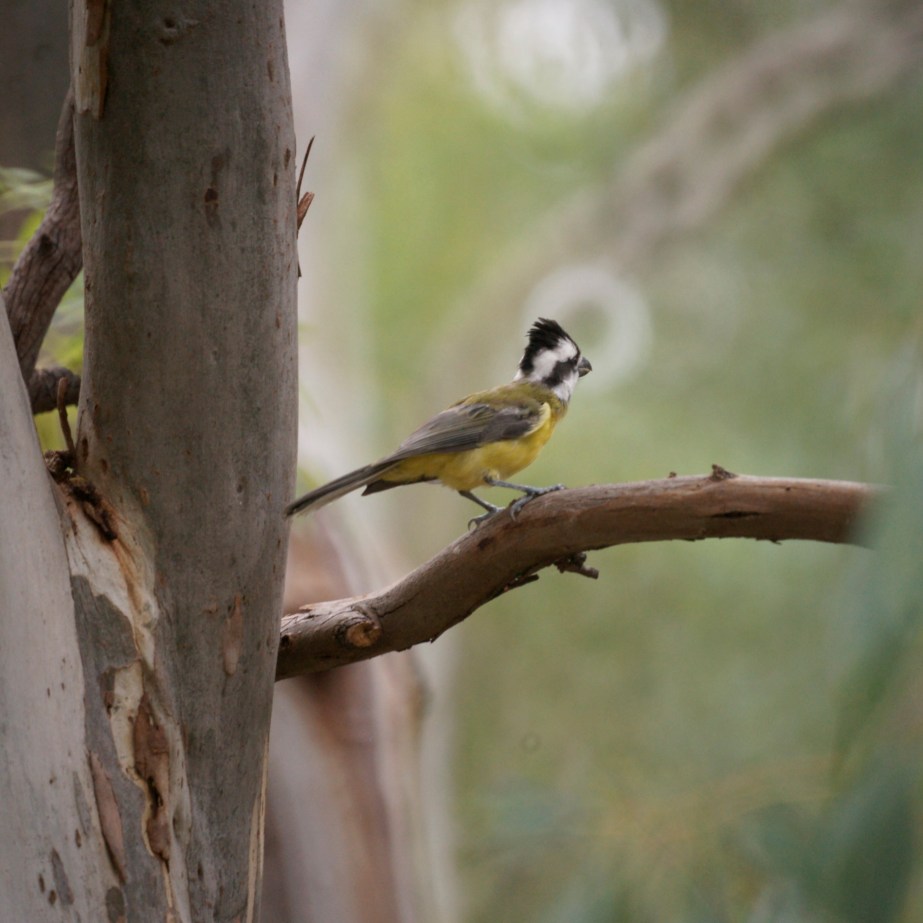
This morning I was out of the house at 6 am. It was 24°C (75°F) already and would become hot and windy. It’s been a dry old time. One of the local hot spots is, by coincidence, Dooley’s Road. It backs on to the Maryborough (Victoria) sewage treatment plant and has some much abused remnant vegetation and I visited the sewage ponds as well. Plus some local box ironbark forest. I chalked up 50 species including Crested Shriketit, Little Eagle and the elusive Freckled Duck. No point staying out after noon. Safe until mid February. The Crested Shriketit has a viscous little hook on the end of its bill that it uses to tear away bark to get at the insects underneath …
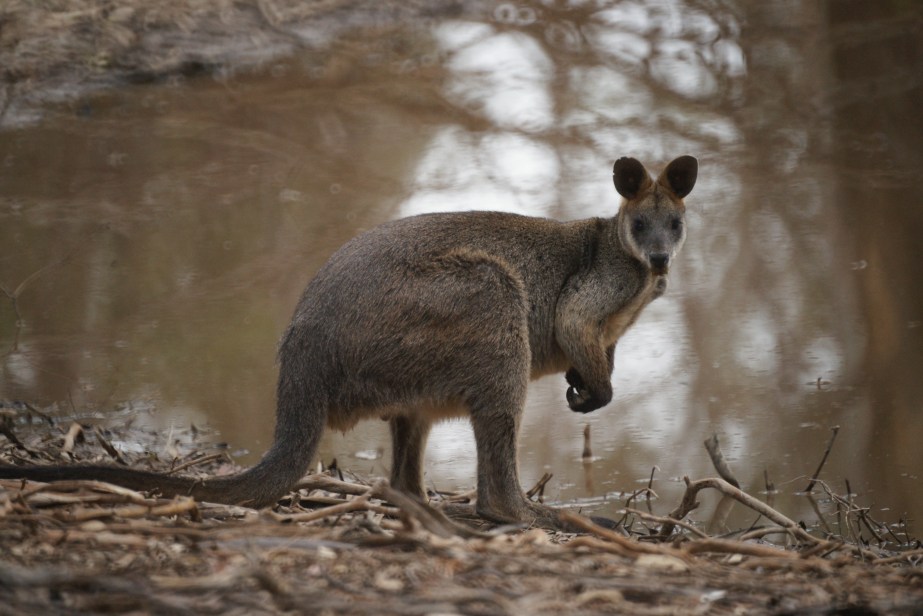
Playing the game with mammals wouldn’t get me through January but I did see Eastern Grey Kangaroo and Swamp Wallaby. Many prefer the name Black Wallaby for the Swampie on the grounds that it has no preference for swamps which is very true, but nor is it black. The scientific name is Wallabia bicolor, the two coloured wallaby. Also untrue, it’s dark brown with rufous around the ears and a whitish stripe on the face, the tip of the tail is often white. The poor creature stands in need of an appropriate name.
By all means join the game. Wherever you are in the world. Post your tally in the comments, I look forward to hearing from you.
Time for me to get back to the thrilling account of my trip through the desert …
Jewel of the wet tropics, every Australian bird watcher makes a pilgrimage here.
Cooktown was our furthest north, we took the easy way from there via Lakeland. Two nights spent at Wetherby Station, a splendid place to camp, gave us a full day up the mountain.
To get there head north from Julatten on the Mossman-Mount Molly Road, turn left at the Highlander Tavern and follow the aptly named Mount Lewis Road as far as you want to go. The road is narrow and steep but in dry conditions it can be handled by 2WD vehicles, after rain the verges become very slippery and it becomes fairly easy to get stuck.
Most visitors head for a clearing which is the famous site for the Blue-faced Parrot-finch. It is also a good spot for Mountain Thornbill. There is some parking here and a foot path that leads up hill away from the clearing into forest that is home to such mythical and highly desirable creatures as Tooth-billed Bowerbird, Spotted Catbird …
Chowchilla, Bower’s Shrike-thrush, Atherton Scrubwren, Grey-headed Robin, Golden Bowerbird and Fernwren …
This little beauty was calling loudly right at my feet.
You can follow the track up and around to the left to a dam where you might add a cormorant or heron to your rainforest list. There was once a much visited Golden Bowerbird bower here but it is no longer tended.
Back at the car you can continue on the road for quite a ways until the road ends at a beaten up corrugated iron shelter. An old logging track heads off slightly to the right at the end of the road. This can be followed on foot although it becomes a little more overgrown with each passing year. And of course the birding is good along the Mount Lewis road itself. Beware of the stinging trees, remember, heart-shaped leaves with little hairs, often insect-eaten, contact equals months of pain. Progress off the roadside or the paths that I’ve mentioned is made difficult by the dense bush and the Wait-a-whiles, very spiky vines that grab your clothing or your skin and are reluctant to let you go. With typical Aussie humour they are often called lawyer vines.
As you wander about look out for Boyd’s Forest Dragon. This is a lizard that is often found quite stationary, a few metres up a tree trunk. It has a body up to about six inches in length (150 mm) plus a tail that is about twice that.
Mt Lewis is also home to some mammals that have a very limited distribution such as the Lemuroid Possum and the Daintree River Ringtail Possum, so we awaited nightfall at the end of the road and then slowly spotlighted down the hill. Our reward was a splendid view of a Daintree River Ringtail.