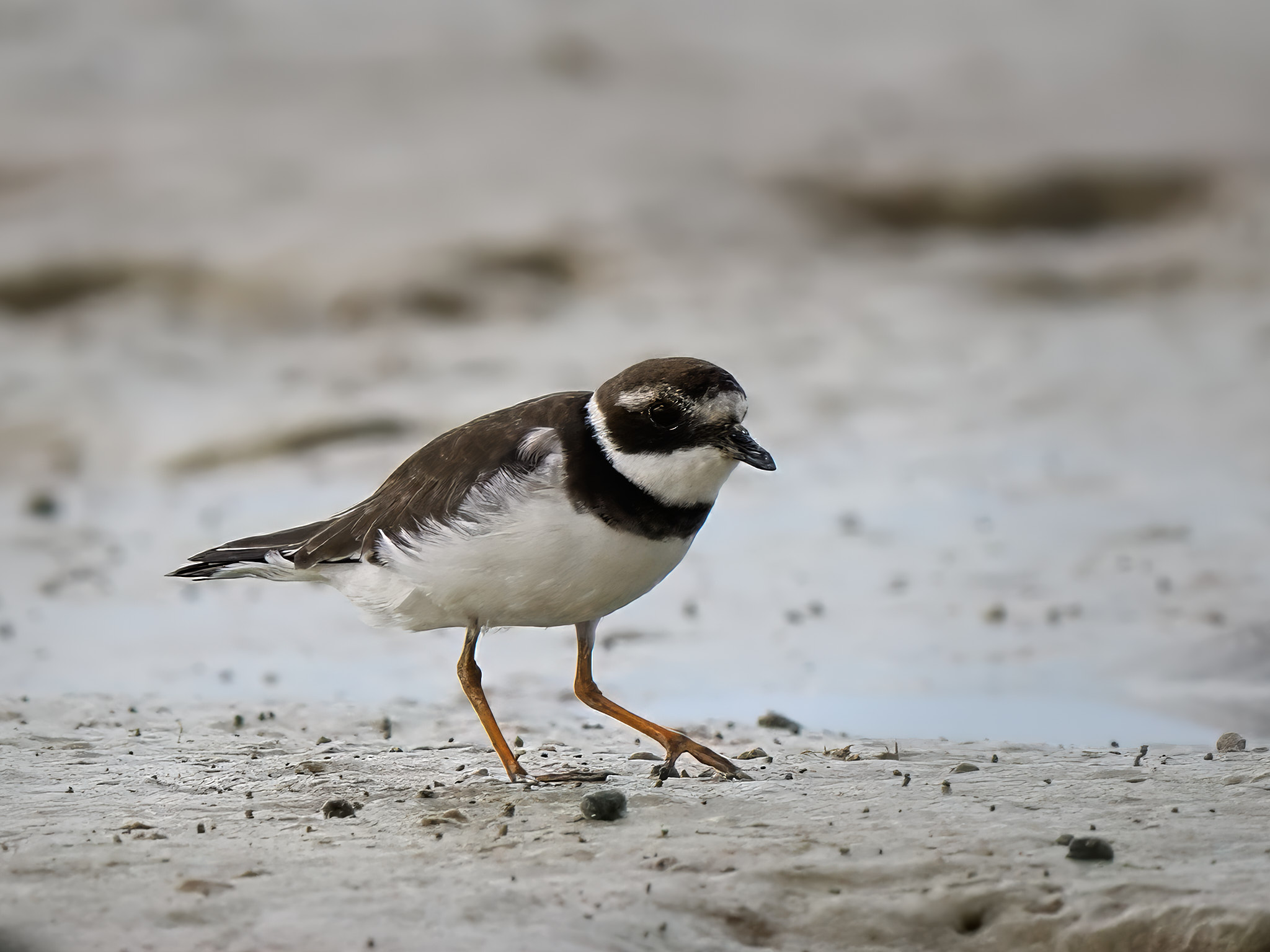
Spring has sprung and the migratory waders are back in Roebuck Bay. These are birds that breed in the far north of the northern hemisphere taking advantage of their short summer period of great abundance. The abundance is so great that the hatchlings feed for themselves. That’s a great saving in effort for the parents but at the expense of a long flight to escape the coming winter and capitalise on abundance elsewhere.
In those species that breed across a range of latitudes those that breed furthest north generally winter further south than those that breed in the southern part of their range. This leapfrog pattern of migration appears to have been brought to science’s attention by J A Palmén as long ago as 1874. One particularly good example of this is the Common Ringed Plover Charadrius hiaticula. Those that breed in southern Sweden or Britain winter in southern Europe whereas those breeding in the arctic mostly take the trip to Africa.
Mostly, but for the last three or four years a single bird has been turning up a stone’s throw from the Broome Bird Observatory in Roebuck Bay. This is presumably the same individual which must make it a leapfrog champion. There have been sightings of Common Ringed Plover further south but they are decidedly rare here in Oz.
Guys, this was your big chance but no, I was not inundated with ID suggestions for the snake with the paddle for a tail. Fortunately there is iNaturalist and the snake now has a certified, research grade identity (drum roll) …
photo Tiffany Kosch
It is, of course, an Olive Sea Snake Aipysurus laevis. It is reasonably common and one of the better studied sea snakes. It feeds on fish, fish eggs and crustaceans utilising a particularly nasty venom. One of its most interesting features is its photosensitive tail. It spends its off-duty moments hidden in holes in rock or coral when it must feel a lot safer knowing that its tail is not sticking out in the sunlight.
The flattened tail tells the tale. It’s a sea snake. I found it at Broome’s Town Beach. About 31 species are known from Australian waters, not all come to this part of the coast. They are mostly found in the tropics. Most feed on fish and are highly venomous but not aggressive to people. They swim well but cannot slither along on land. They are live bearers which enables to spend their entire lives in the water but they do need to come to the surface to breath. They are closely related to Australia’s terrestrial elapids.
I can’t identify this one to species. About 10 species are known from this area but that doesn’t guarantee that it’s one of them. It has a relatively large head which does rule out a few species. If you can solve the mystery please let me know in the comments.
… is a popular place to watch the sun set over the Indian Ocean. Yesterday was unusually cloudy. A crowd had gathered at Gantheaume Point but it was clear that the spectacle was not going to be up to its usual standard. The sun was visible with fifteen minutes to go but it sank into cloud before it reached the horizon. And the crowd melted away.
Four people and a dog stuck it out to see if the sky would catch. We were rewarded about 25 minutes after sunset.
The Point was named by the French explorer Nicolas Baudin (whose own name is appended to one of our cockatoos) in honour of Honoré Joseph Antoine Ganteaume, a notable French admiral and friend of Napolean.
I know, I know. I said goodbye and I’m still here. Don’t you hate that. This post was in the works. I didn’t think I’d have it ready but I’ve worked deep into the night. So here it is. Goodbye. I’m off to the KImberley.
The story begins in July 1999 when some 4WD’ers found a bicycle and some camping gear on a lonely sandy track in the Great Sandy Desert.
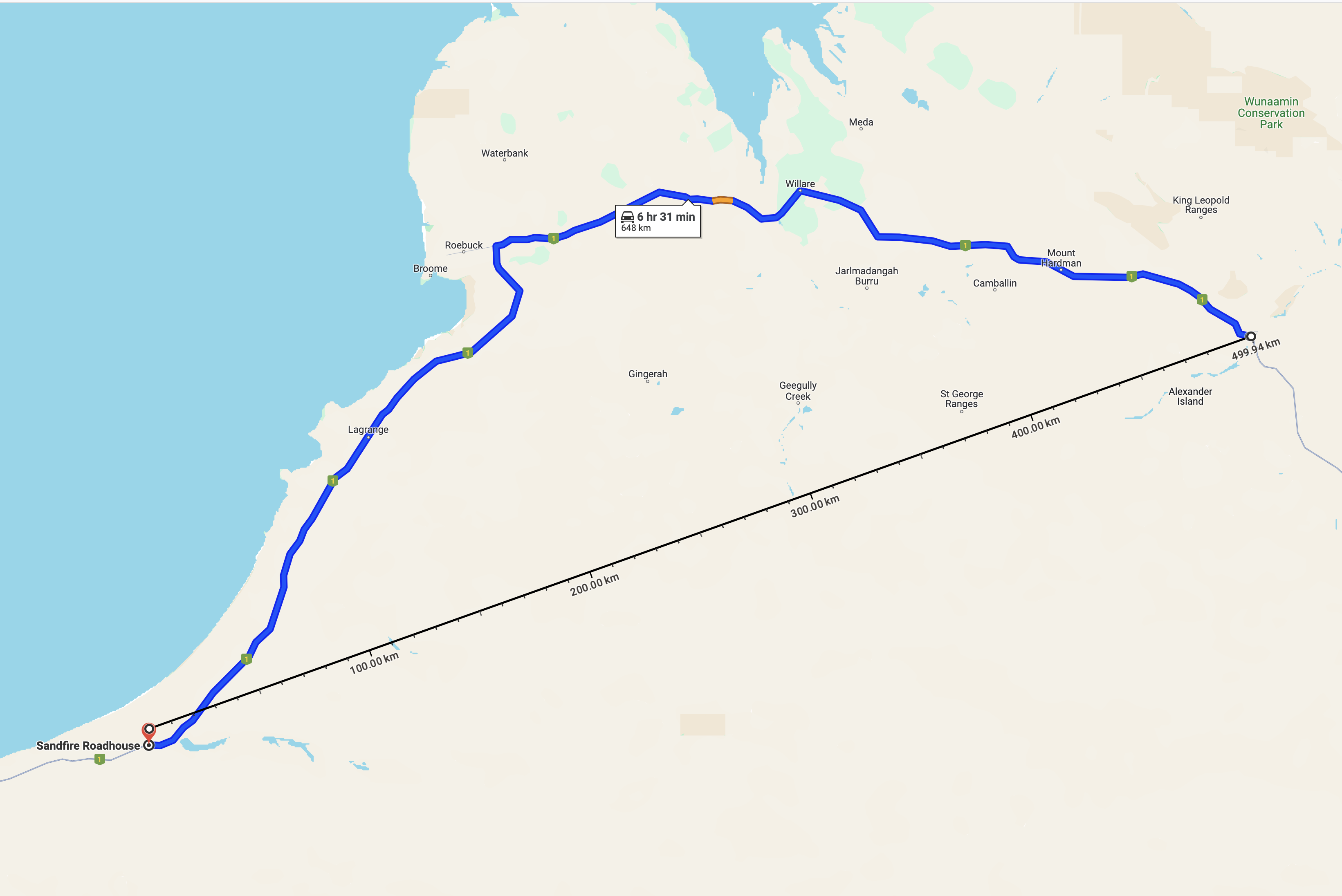
Once the first mystery was solved a search began for one Robert Bugucki, a fire fighter from Alaska who had set out to cycle across the Great Sandy from the Sandfire Roadhouse to the small town of Fitzroy Crossing. There is a bitumen road from one to the other. It takes a gentle curve around the desert. Google suggests 35 hours of peddling time should do the trick. However our Robert had chosen the short cut. 500 km as the crow flies, nothing but desert in between. What could possibly go wrong?
Broome police began a search. The initial finds were made about 50 km east of the highway. With the aid of Aboriginal trackers they covered another 150 km before their 4WD vehicles could go no further. The search continued from helicopter. And was then abandoned. Mr Bogucki’s girlfriend was said to have told the police that he may have been hiding from them in order to extend his time in the wilderness for spiritual reasons. He was a very religious man.
At that point Mr Bogucki’s future depended on accurate navigation, stamina and his ability to find water.
Mr B’s parents thought more should be done and commissioned the 1st Special Response Group founded and headed by Vietnam and Gulf War veteran Garrison “Gunslinger” St. Clair. They flew in from the USA and talked up a brand new Desert Storm. Don’t misunderstand me, some of my best friends are American but …
The circus had come to town. The chain smoking (cigars, of course) fast talking St. Clair and his team plus bloodhounds (with little boots to protect their feet from the spinifex) got to work … and saved the day. Without ever finding anything. “We are from America and have come to show you how it’s done” didn’t go down all that well. Channel 9 News sent a crew to cover the search. I suspect largely to document the debacle and make sure that St. Clair’s failure occurred in the glare of a good Aussie spotlight. As the Aussies said in WWll “Over paid, over sexed and over here”. Friendly rivalry.
This seems like the right moment to insert the fact that in reality St. Clair had no military record whatsoever but had done time in the States for fraud. When that news broke Gunslinger countered that when you were involved in black ops the records were concealed. He was happy with who he was. But perhaps unhappy that his criminal record hadn’t been sufficiently concealed.
The Nine Network crew chartered a helicopter and headed to the 1st Special Response Group’s camp in the desert. On the way there the pilot spotted a blue bed roll in the scrub, landed and found with it a bible and some hand written notes. This news was radioed to the searchers who headed across country to the helo and confirmed that it all belonged to the missing man.
The News crew prepared to head back to Broome to get the news of their discovery out to the world. St. Clair readied his bloodhounds. On the flight back to Broome, however, the pilot saw Mr Bogucki himself in the scrub, landed and after the filming and interview was finished – a scoop is a scoop – flew him back to civilisation.
Robert Bogucki had spent 43 days and 42 nights in the wilderness, had found water – he was clutching some muddy liquid when discovered – had lost a lot of weight and was lucid. He was at least 200km from his destination. Indeed he was at least 200km from the bitumen in any direction he might choose. He would surely have died a very lonely death had he not been found. Instead he made a complete recovery. All thanks to a sharp-eyed helicopter pilot named Andrew Beaumont flying a routine charter.
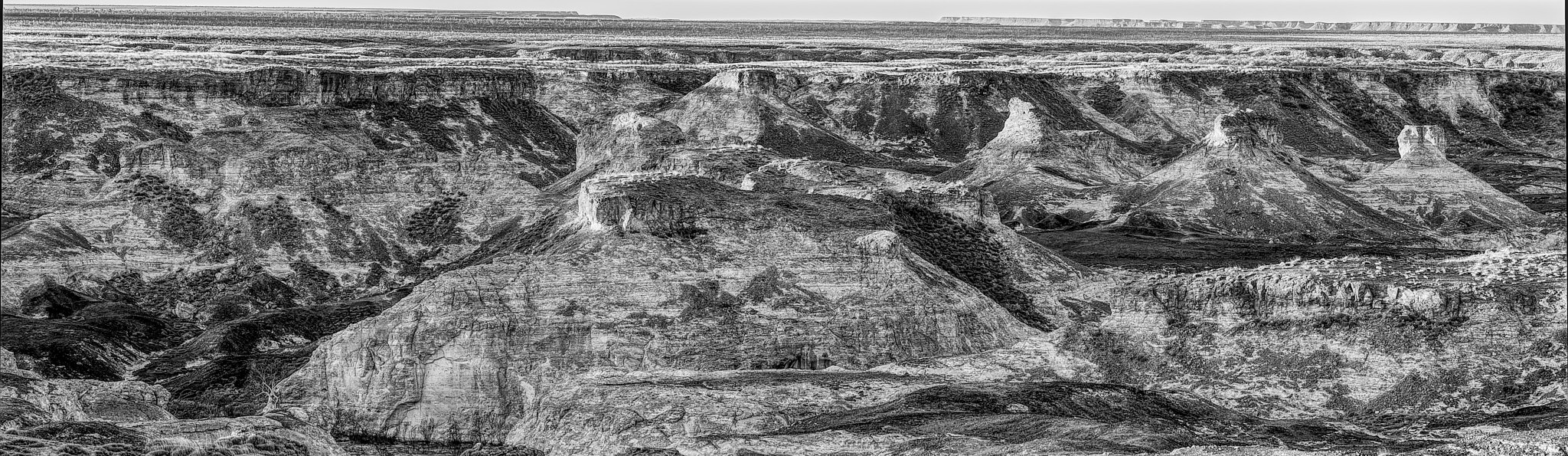
I haven’t been able to find exactly where Robert Bogucki was located but it was, I know, close to the gorge that I recently visited. Very tough country to walk in.
When I write about interesting places and I’m diligent in getting the posts up regularly my readership grows. If you’re new to these pages welcome, to my regulars welcome back. In either case thank you for coming.
I live in Broome. Top left hand side of the map of Oz. Many non Australians think that Australia is permanently hot and sunny. Broome is exactly that. Except when it’s pouring with rain. That happens in our summer … Occasionally.
About 15,000 people live here and we get plenty of visitors in winter because the truth is that Australia’s climate in more southerly regions is not warm and sunny all year round. Our tourists have barely thawed out by the time they get off the plane. We are about 10 days past the winter solstice. Today’s forecast maximum is 31°C (88°F) tonight’s minimum 16°C (60°F). It’s not going to rain.
There is just one road from Broome to the rest of Australia. About 35 km out it branches. Turn right for Perth, straight on for Darwin. Turn right and you’re heading south, the next town is Port Hedland, similar population, 610 km! Two road houses in between, negligible population. If you go straight on i.e. north-east you won’t get to a town as large as little old Broome until you get to Darwin, 1,871 km away. In between there are a few little towns that would struggle to qualify as hamlets elsewhere.
Why so few people? Because the country up here is permanently hot and sunny. Except when it’s pouring with rain. That happens in our summer … Occasionally. It’s a desert. Annual rainfall less than 250mm. Annual evaporation would be 3 to 4 meters if there were 3 to 4 meters available!
There are apparently ten deserts in Australia although I am unsure how they decide where one ends and another starts. The local desert is the Great Sandy Desert, a testament to the imagination of our forefathers (and yes, there is a Little Sandy Desert, you’ll recognise it when you see it. It’s only half the size. Also a Stony Desert). The Great Sandy (267,250sq.km) is our second largest (to the Great Victoria at 348,750sq.km).
About 200 km from home via a very lonely sandy track there is a gorge that I have been meaning to visit. I went out there for a couple of nights last week, camped alone, in the spinifex, under the stars on the lip of the canyon. Very biblical, only 38 more nights to go. Can they be served cumulatively or do they have to be accrued in one go?
WallerooSpinifex Pigeon
Broome is the administrative capital of the Kimberley region (which is northeast of here before you get to Darwin). In my view it ain’t really the Kimberly until you get among the Boab trees (not just street plantings, real Boabs). Anyway, that’s where I’m going. If I get the chance to post along the way I might drop in a teaser otherwise I’ll subject you all to the photos when I get back in a couple of weeks. Ciao for now.
It doesn’t come with a guarantee of zero rain but it feels so different. The nights are cooler, the sky is clearer and the humidity is way less. The dry is upon us.
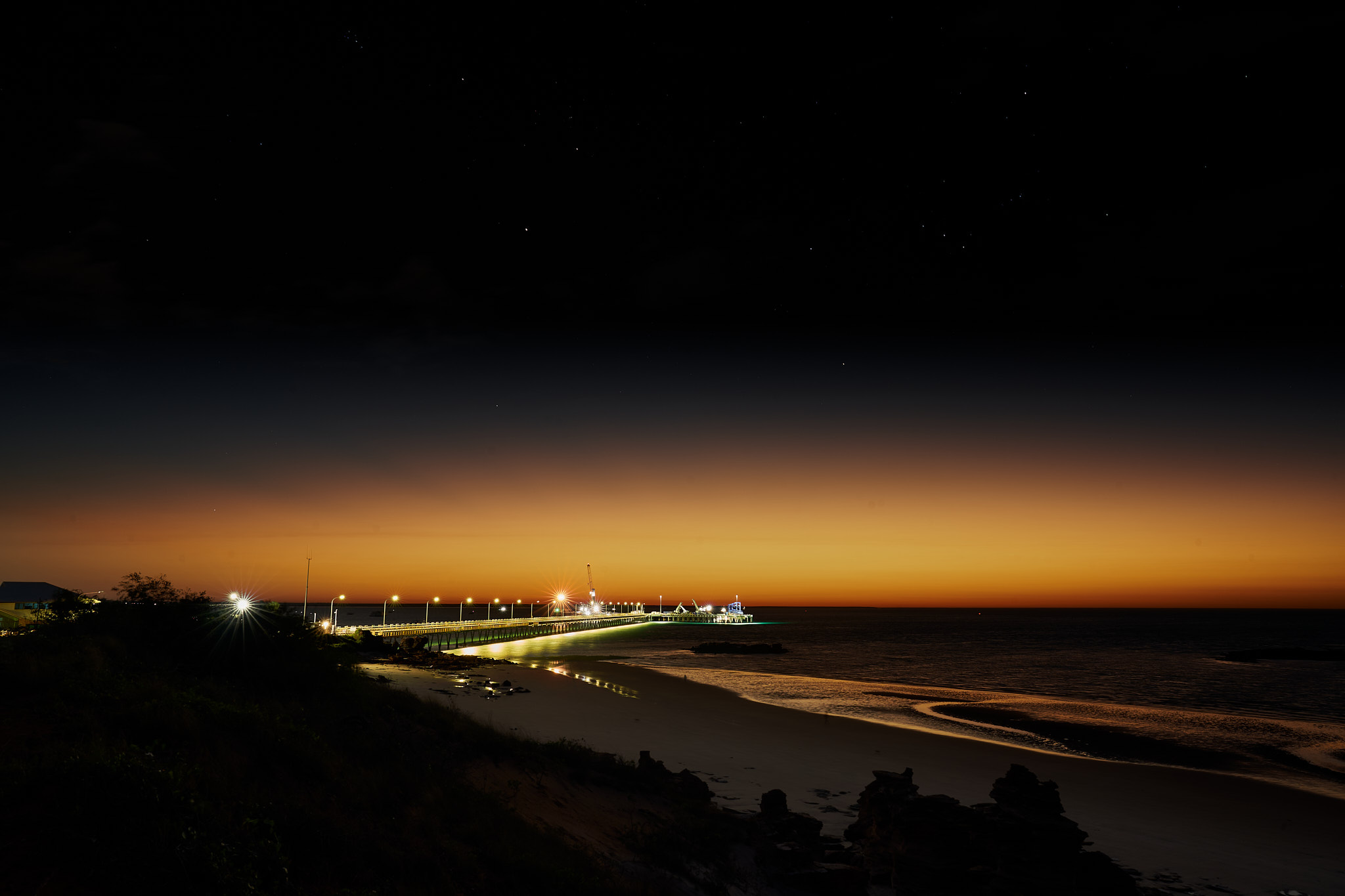
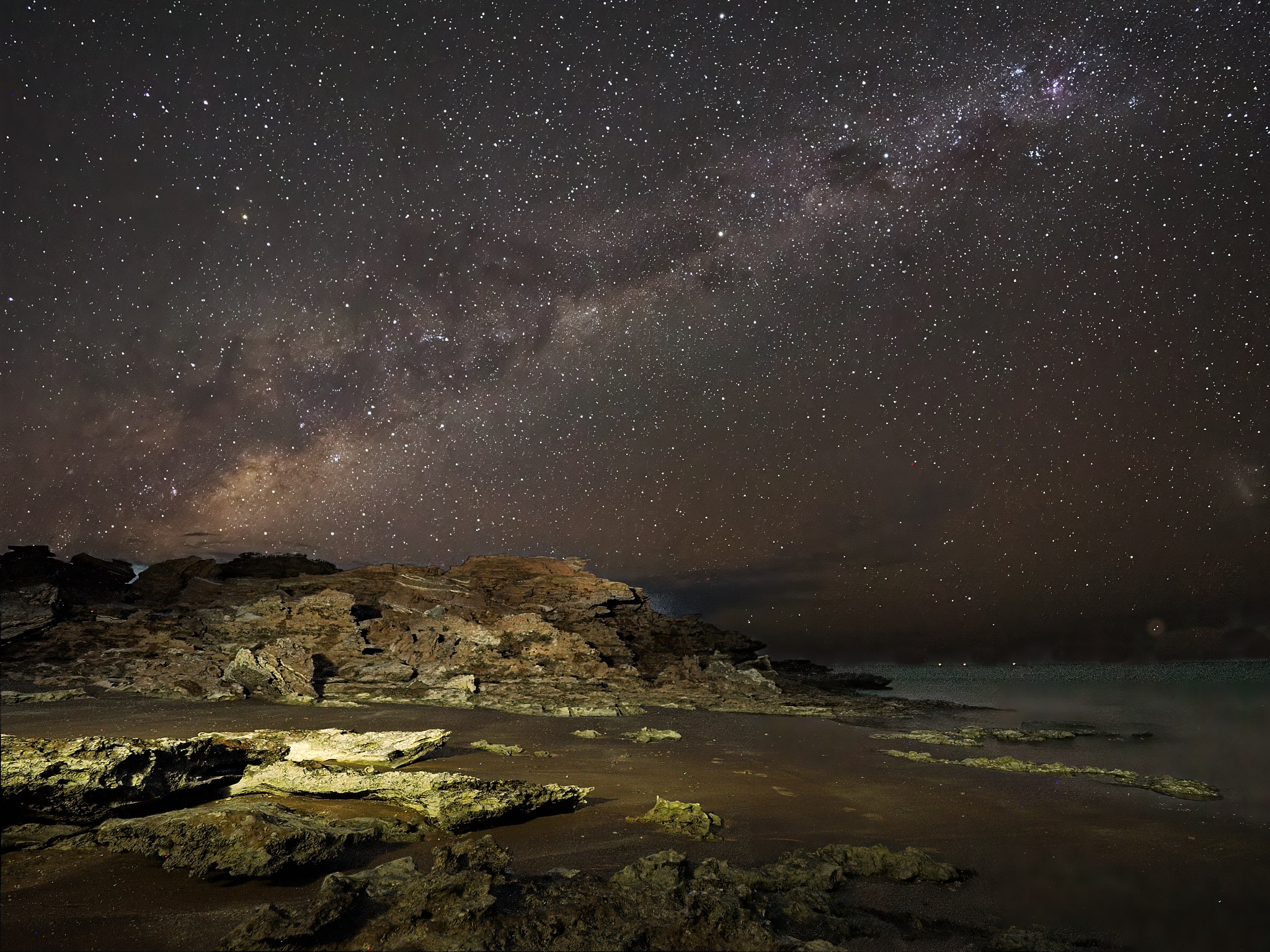
I thought I’d try out the new OM1 mark ii and the 7-14mm lens with a milky way shot. Rather than drive out into the country side I drove 10 minutes to the beach at Entrance Point and pointed the camera away from the city lights. With the camera on a tripod I used a single shot of the milky way – 15 seconds at ISO 6400 f/2.8 and combined that with a single light painted shot of the foreground at ISO 800.
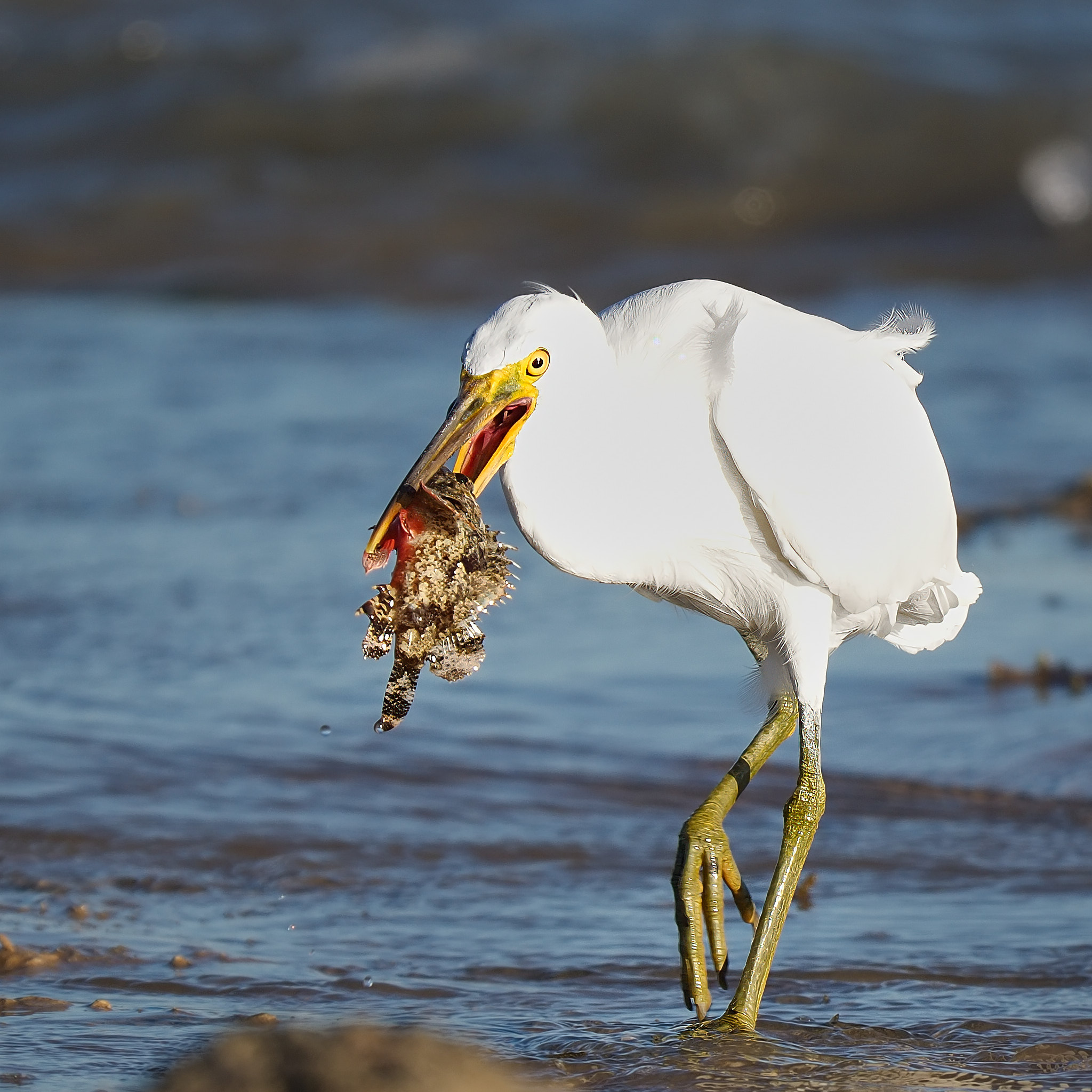
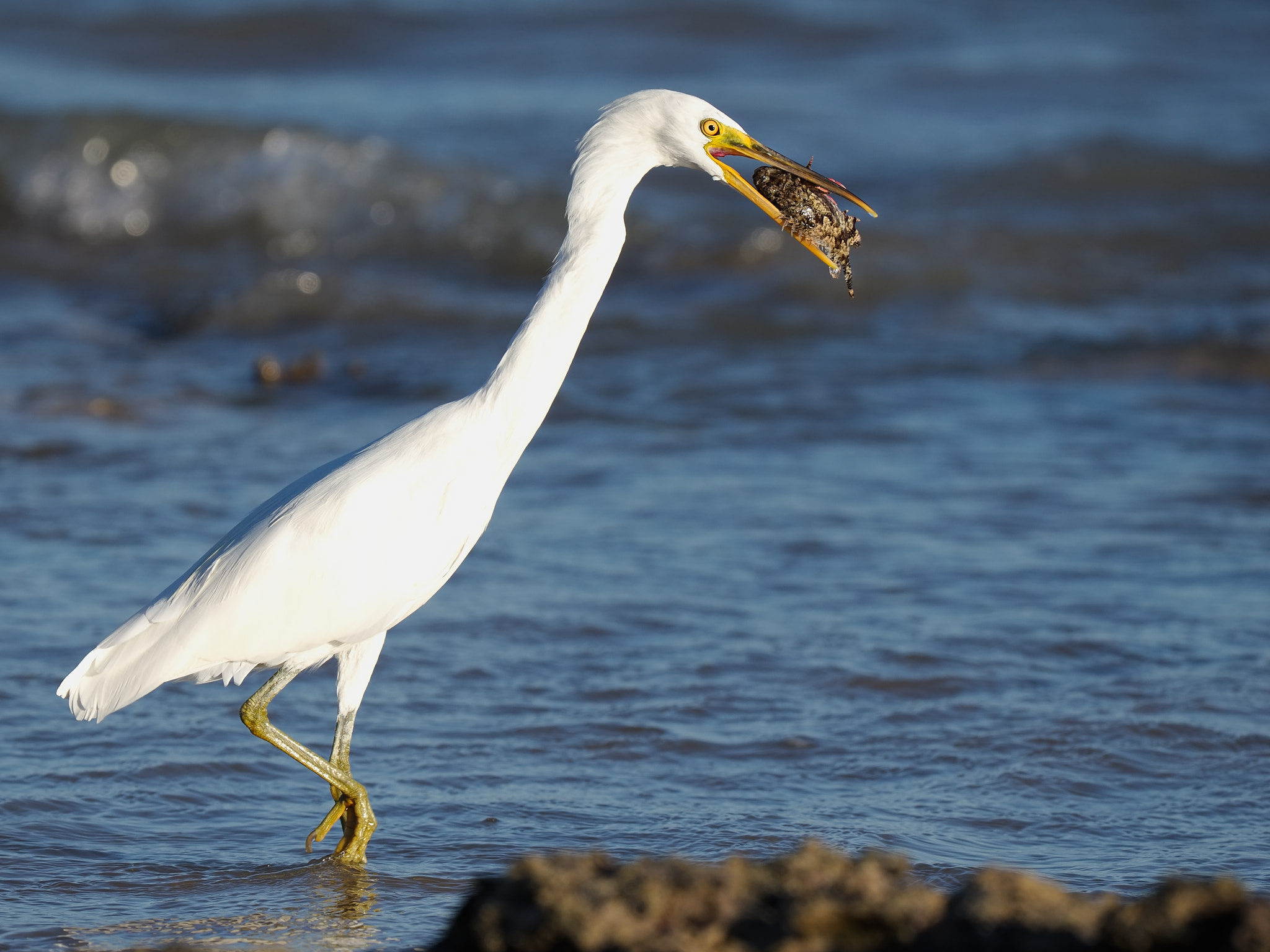
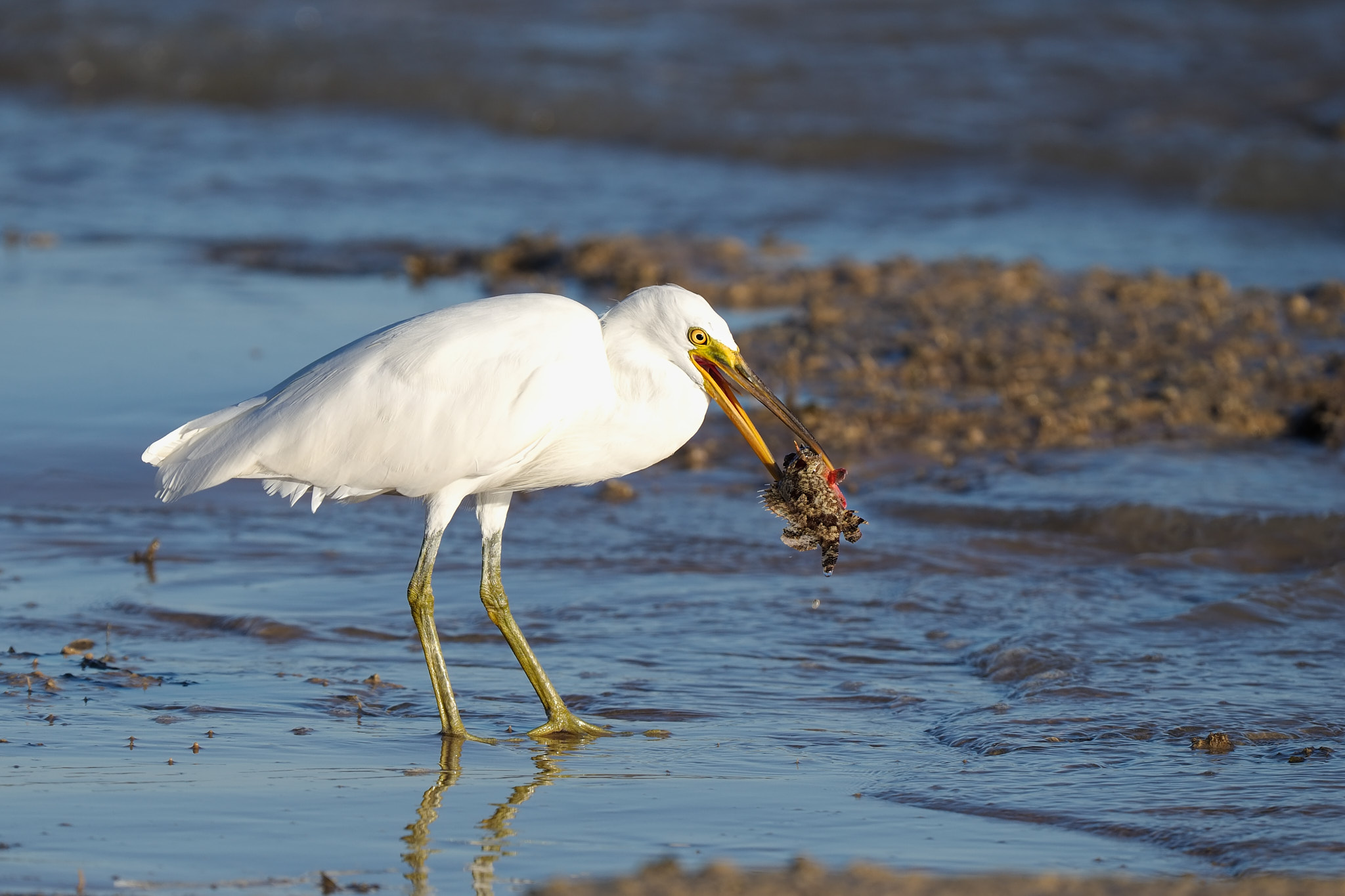
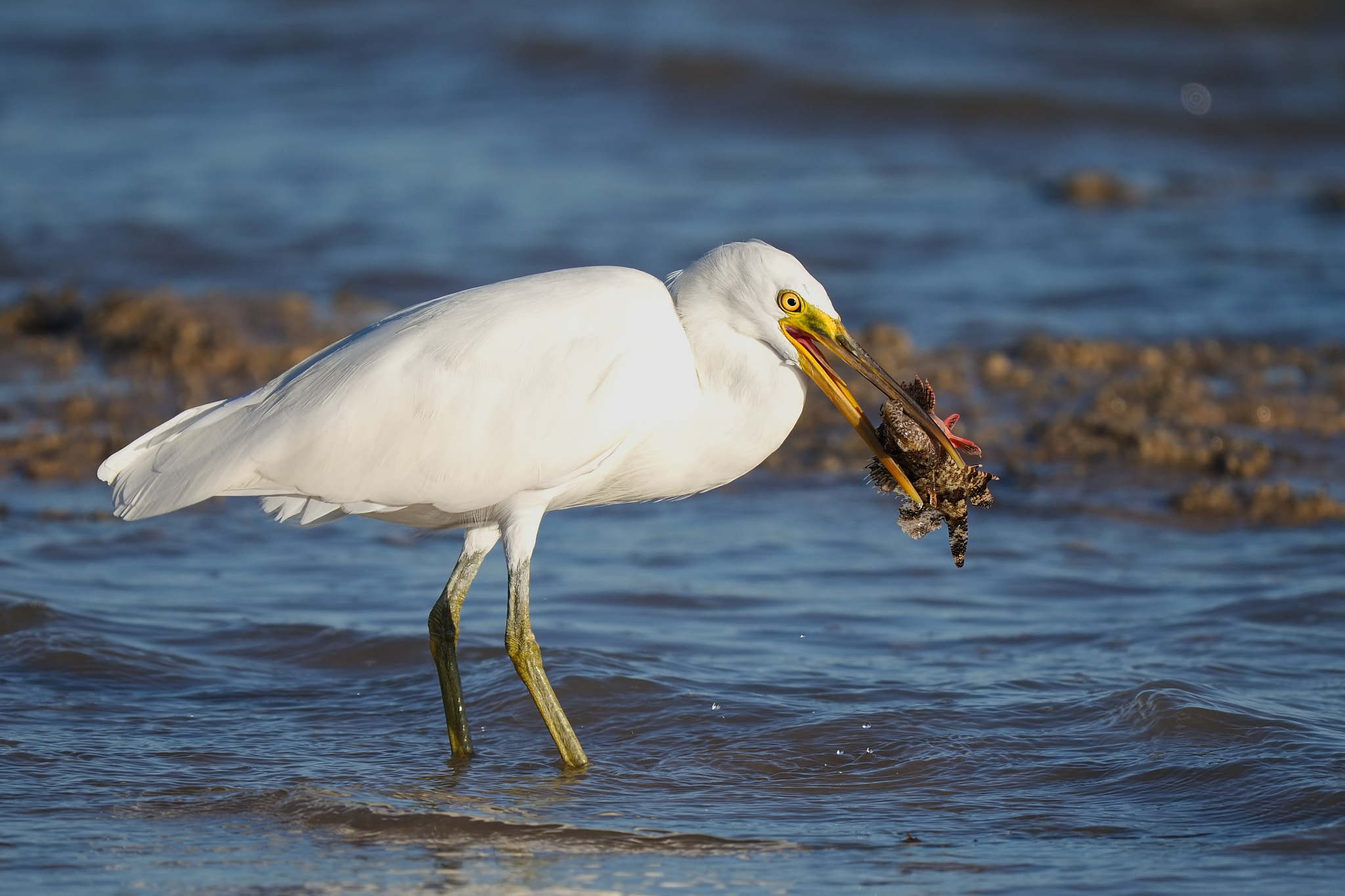
Eating a puffer fish is fraught with hazard. What about eating a Stonefish?
The bird is an Eastern Reef Egret. I’m pretty sure the fish is a Stonefish. The toxin in its spines causes extreme pain if injected into a human foot so when I’m walking on the reef at low tide I wear shoes. It has never occurred to me to put one in my mouth.
I spent about 10 minutes with the Egret during which time it carefully dropped and flopped the fish. Took it and washed it in the sea and made several trial fits in its mouth. Ultimately it abandoned it and flew off to hunt further up the beach. Maybe the risk from swallowing the spines was just too great.
Roebuck Bay is the premier Australian location to see waders. Mostly long legged birds in the order Charadriiformes. At low tide there is a vast area of mud flat housing huge numbers of invertebrates for them to feed on. Some of the species here are resident, living and breeding locally. Many more are long distance migrants breeding in the northern hemisphere and escaping from the snows of winter up there by flying all the way to sunny Australia. For some of these birds it means a 20,000 km round trip every year of their adult lives. For some of them the journey north starts today.
Different species typically depart at characteristic times. The early birds left from about the second week of March. Prominent among those are the Eastern Curlews and the Greater Sand Plovers. We are right in the middle of things now but most of the Red Knots and Red-necked Stints are still out in the bay putting on weight. Peak period for the stints will be next week. Most of the Red Knots will hold on until the first week of May.
I shamelessly filched the graphic from the Broome Bird Observatory website. If you click on it you may be able to read it.
The Broome Bird Observatory is a great place to watch the departures. Get there at about four in the afternoon, head to the beach and stay until about six. Observatory staff will be charting the departees and they will be happy to explain what’s going on. Just say hi.
What they and you are looking for are single species lines of birds forming up on the mud flats. There is much chattering and wing stretching. Then up they go. They may make a couple of orbits and go or a couple of orbits and land again. When they form a big boomerang shape and head north at a higher altitude than for local flights you know they mean business. Or not. Some may come back after a while, sometimes all of them come back. But if you want to make babies sooner or later you’re off.
Light a candle for them when you get home. They’ll still be flying after the candle is exhausted. Some will fly non-stop to China, 6,000 km plus, 5 days, no food, no drink, no rest. Some do stop on the way on the coasts of Indonesia, Vietnam and the Philippines.
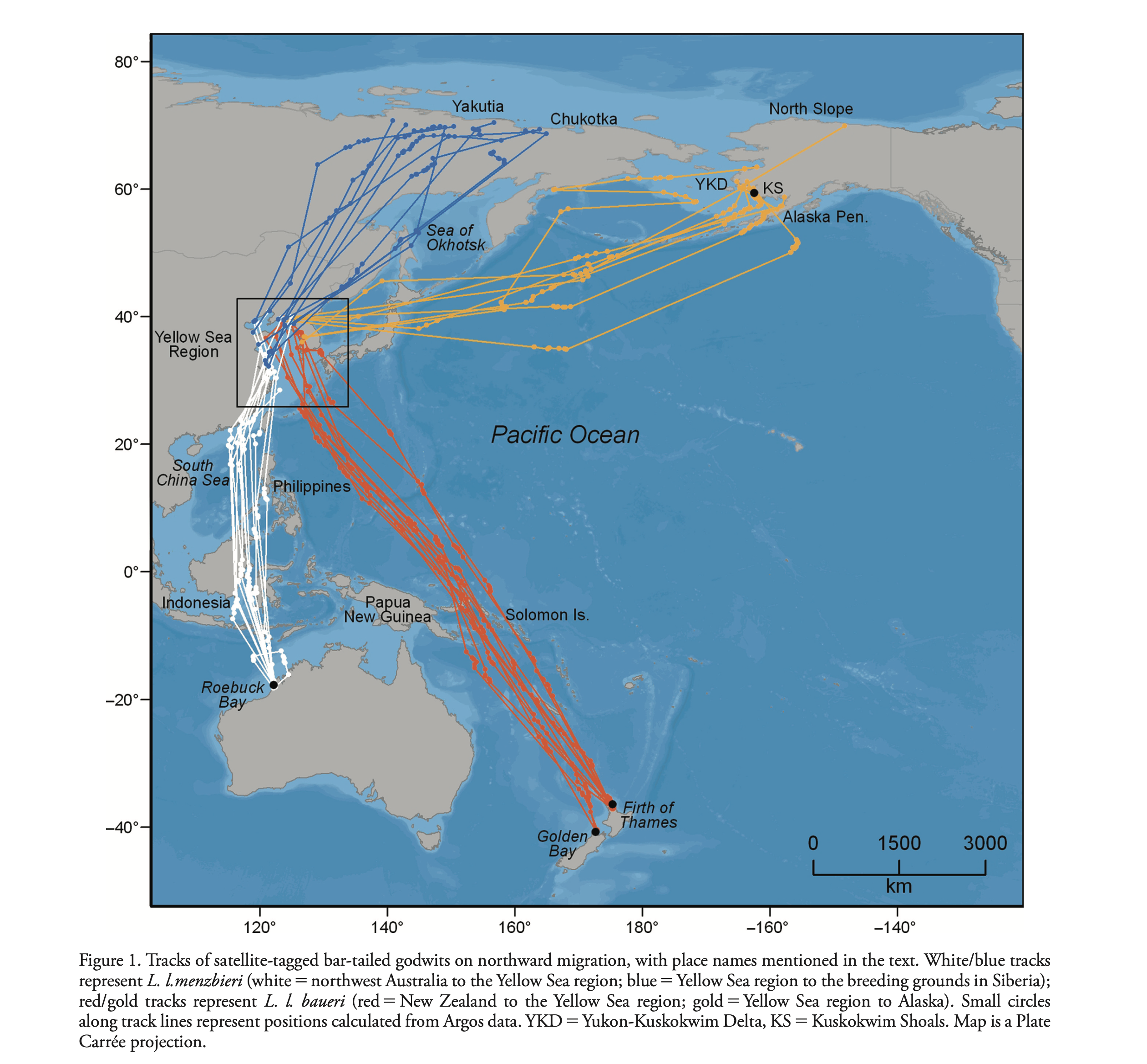
Birds can be equipped with transmitters so that their progress can be tracked. The transmitters are small but so are some of the waders so we know far more about the big ones than we do the little ones. The next map is pinched from a paper by Battley et al, Journal of Avian Biology 43: 21–32, 2012 and concerns Bar-tailed Godwits on their journey from Roebuck Bay and New Zealand.
The birds spend about a month re-fueling on the shores of the Yellow Sea before continuing to the breeding grounds. Those feeding grounds are absolutely critical to the species survival.
The pay off when they get home makes it all work. The tundra is uninhabitable in winter but in summer is so rich in insect life that the young chicks can feed themselves from almost the moment they hatch.
These are extraordinary journeys. I always feel a little emotional when I watch them go.













 bobmcgee