Karumba …

Leichardt’s Falls to Karumba is 224 km on a mixture of good dirt road and bitumen. Nearing Normanton you cross paths with the Burke and Wills expedition and you can visit their most northerly camp site, camp 119. Burke, Wills, Grey and King spent three days here in February 1861. Burke and Wills pushed further north, reached the tidal zone of the Gulf but were halted by mangroves without seeing the sea.

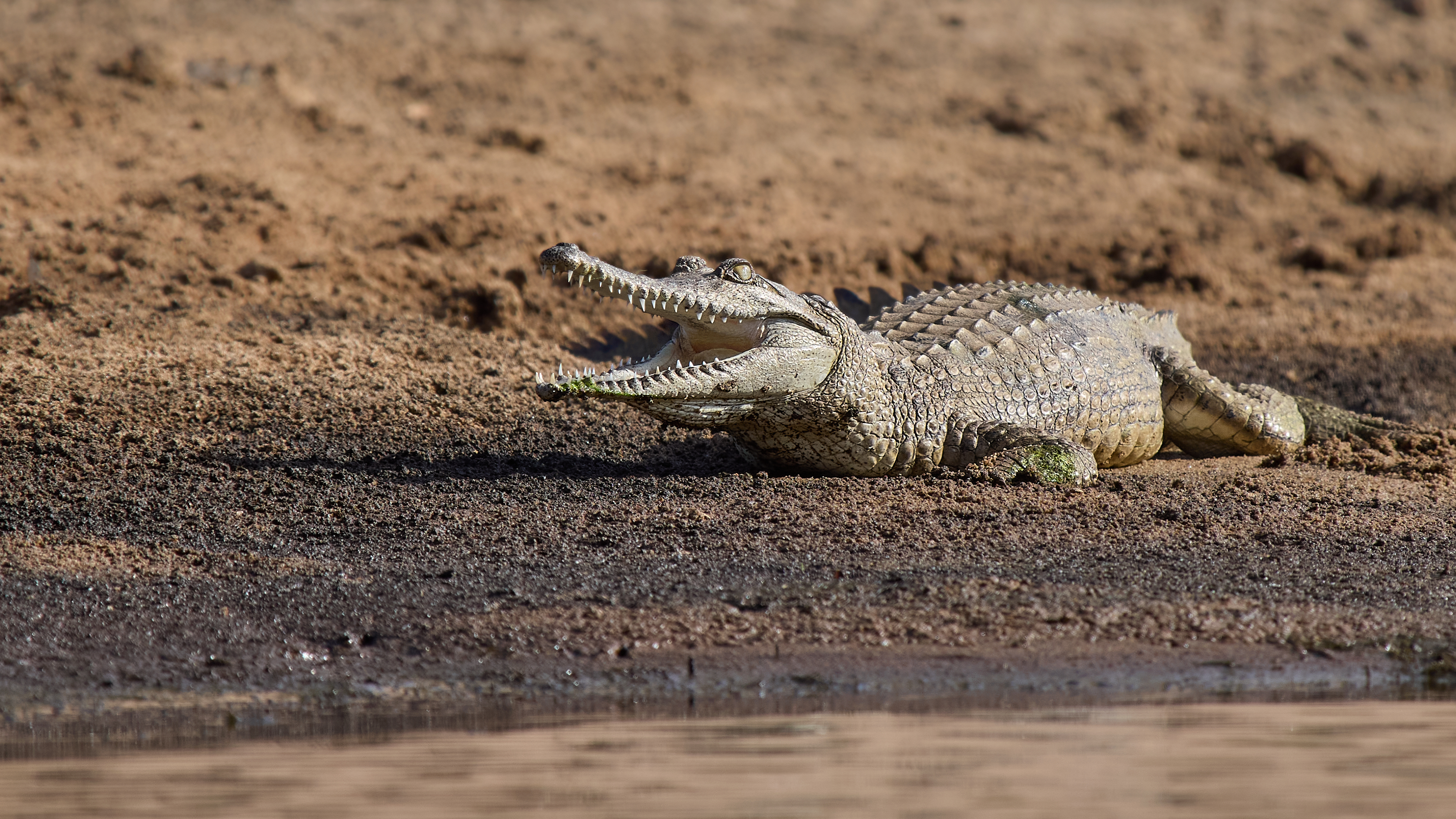
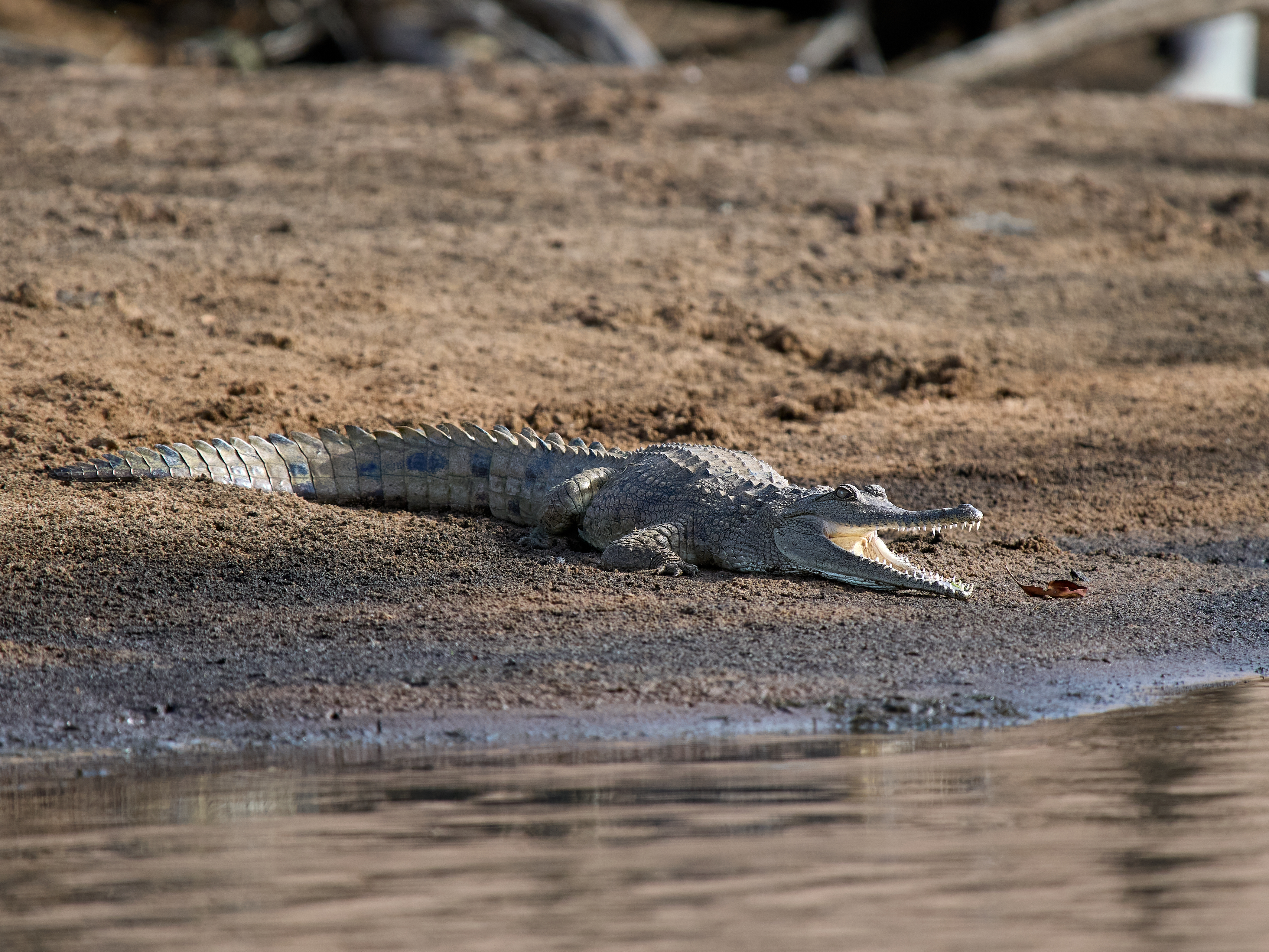
As Burke and Wills found, the gulf is well protected by mangroves and mud. Karumba is the only seaside resort on the Gulf. There is even a beach, of sorts. Swimming is not advised. There is no shortage of large salt water crocodiles here. Birders and fishermen are better off staying at the point rather than in town. We favour the Sunset Caravan park but expect to be cheek by jowl with your neighbours. We could have had a conversation with the five adjacent vans without anybody getting out of bed this morning.

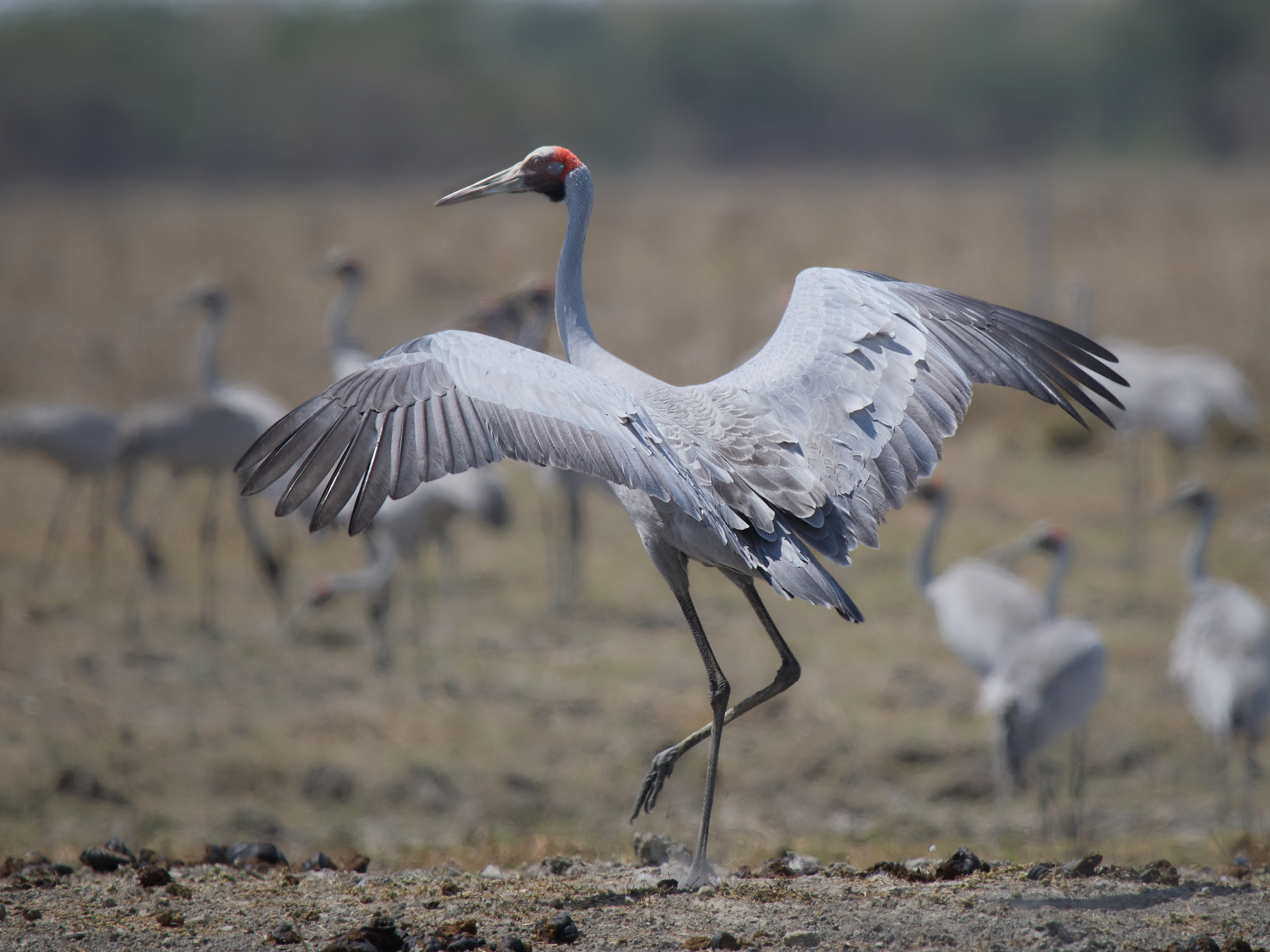
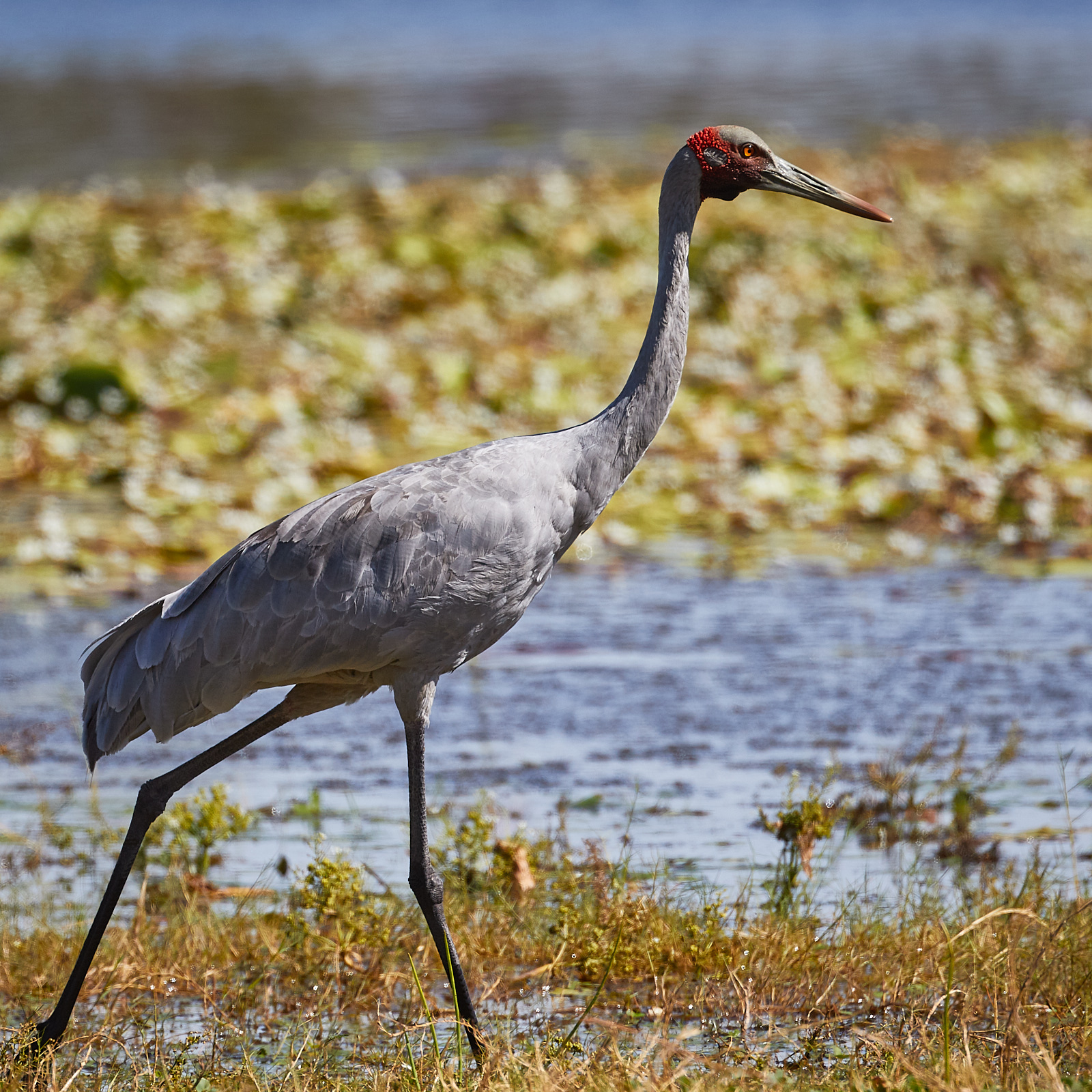
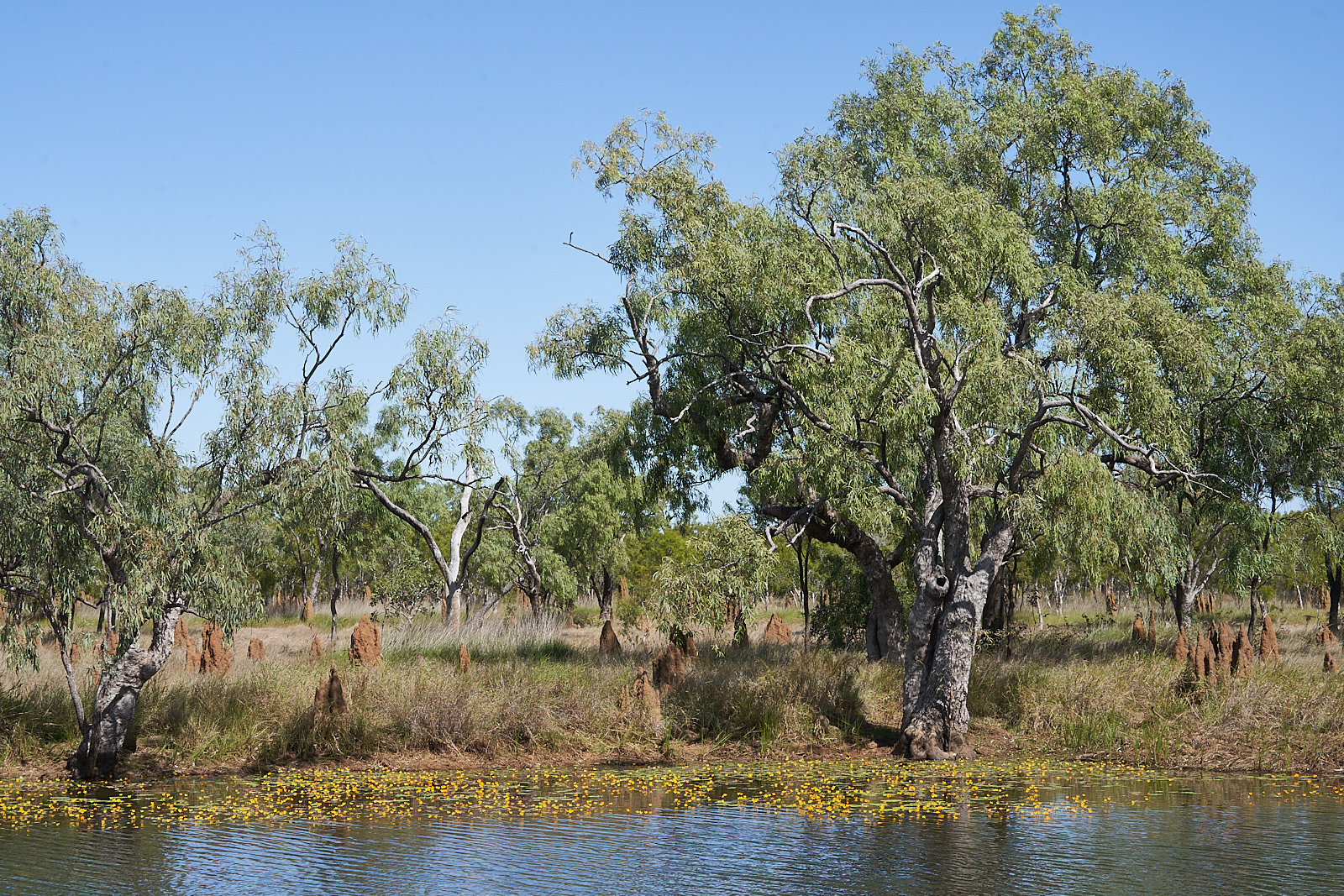
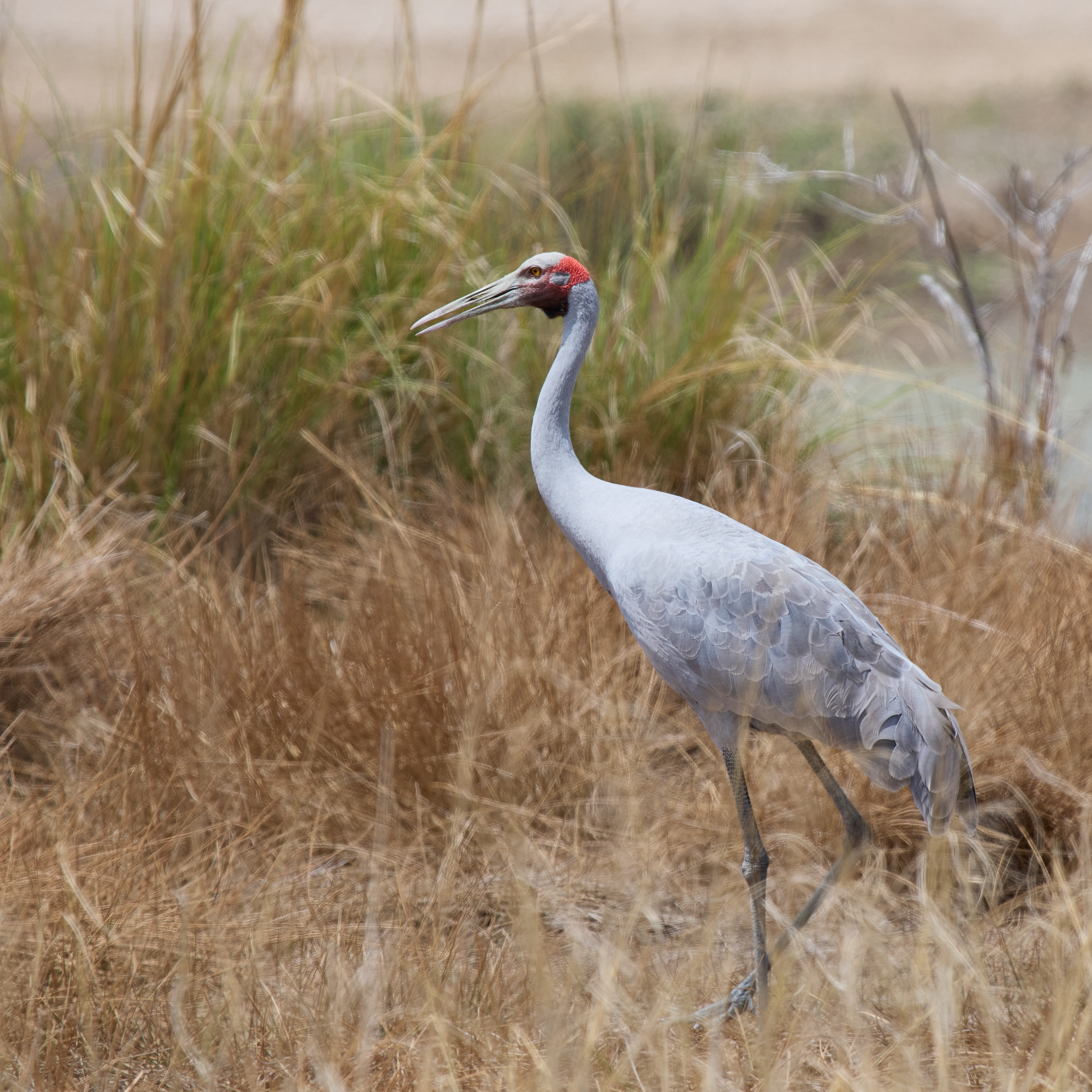
The birding is rich. We saw hundreds of Brolga between Normanton and Karumba. Among them there are a small number of Sarus Crane (about 3%). They are a slightly different shade of grey and the red band on the head extends down the neck. They seem more skittish than Brolga and so far I haven’t managed a photo that I am prepared to publish! There are plenty of mangroves and some accessible wetlands.
Tea at the Sunset Tavern this evening.
Leichardt’s Falls …

We are again in the footsteps of a great explorer, although we are going in the opposite direction. This time it’s Ludwig Leichardt. On his first expedition he and his party left Brisbane in 1844 and after traversing the Gulf of Carpentaria arrived at Port Essington (Darwin’s predecessor) in 1846. He’d been given up for dead by then. His third expedition has not yet been completed. He was last seen on 3 April 1848. I like to think he’s still out there exploring.

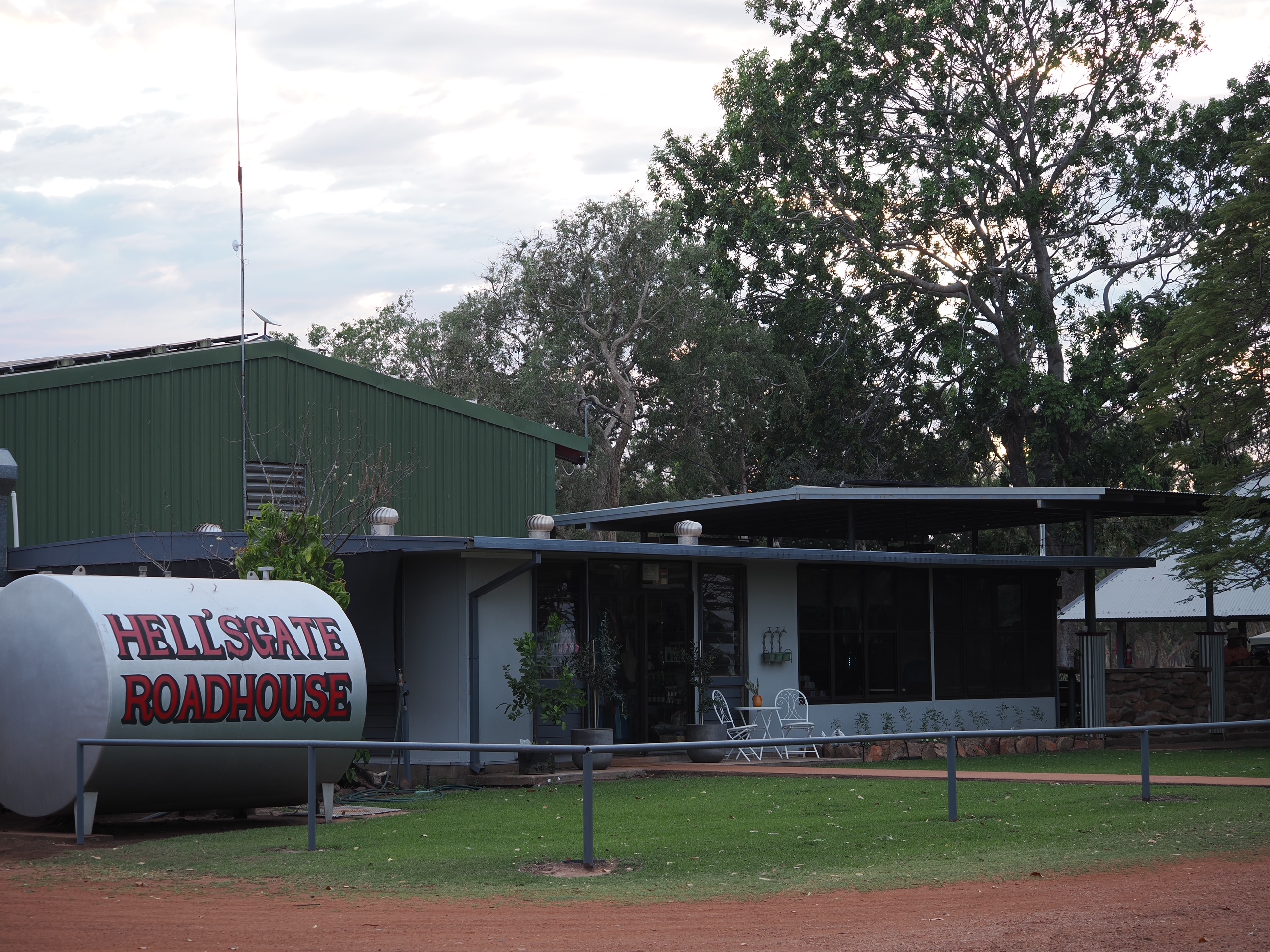
The journey from Hells Gate Roadhouse to Leichardt’s Falls was 249 km on a mixture of good dirt road and some made road. Easy driving in the main.

The scenery at the camp site is magnificent even though this late in the dry there is water above the falls and water below the falls but no water going over the falls. We had it all to ourselves. Access is via a downhill sandy track to a rocky area on the canyon edge. Easy. Egress is via the same track which suddenly seemed sandier and steeper. Less easy.

Getting to the water entails a fairly steep climb down the cliff on foot. I sat quietly at the water’s edge with my camera and was rewarded for my efforts.

Great-crested Grebe is rare at this location. They don’t roost in trees and they can barely shuffle along on land. They are either in the air or in the water. I couldn’t find it the following morning.

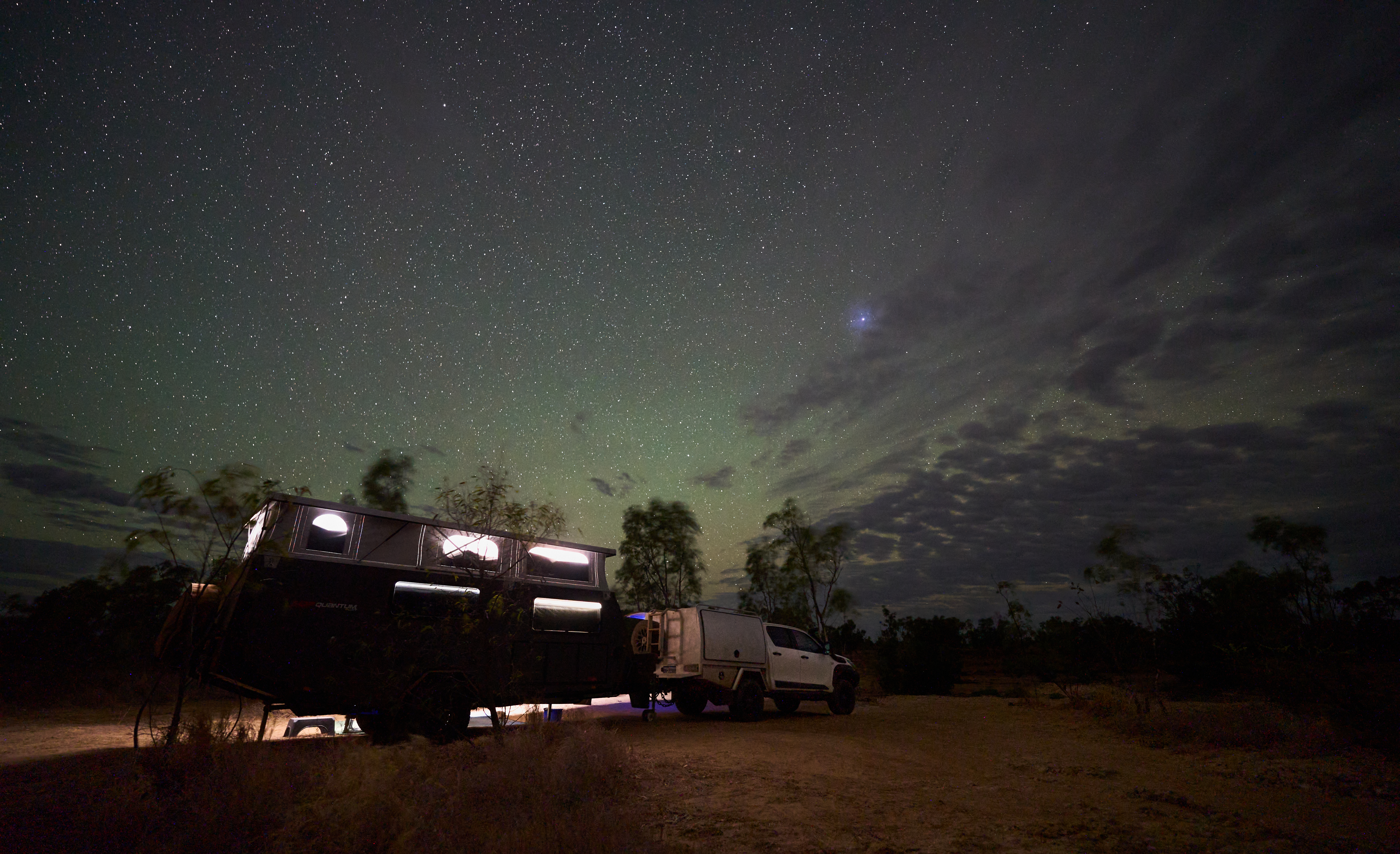
It wasn’t a great night for Milky Way photography, too much cloud and very windy. But hey, that’s not the only subject available …

Hell’s Gate …

We spent two nights at Borroloola. The first afternoon a caravan arrived and we got into conversation with the owner. Typical travelers tales. Where have you come from? Oh, that’s the way we’re going. How was the road?

The road, he said, was bloody awful, the bull dust had him fighting the steering wheel, the dips were ferocious, the corrugations were bone jarring. Would we like a look in the van?

It was a scene of devastation. The drawers and their contents were strewn across the floor. Red dust lay on everything. His car was in no better condition, the rear window was broken, red dust covered the interior. He was quite upbeat about the situation. He had survived the battle. Among the fragments of celebration he did mention 80 kph, getting airborne and that he never reduced his tyre pressures. It caused us some concern. For us, not him.

When it was our turn Gayle prepared the inside of the van with great care. When we got to the dirt road I let the tyres down 25% all round and we proceeded at moderate speed. 317 km to go. The creek crossings were mainly dry, the dips in and out were taken slowly. The bulldust was avoidable or manageable at modest speed. The corrugations were corrugations, choose the quietest route and vary speed to suit. Conditions varied with the underlying substrate, some sections were rocky, some sandy. There were two wet creek crossings and a couple of puddles to negotiate.

We had intended to take two days for the journey but progress was better than expected and at lunch time we moved the goal posts and went all the way to Hell’s Gate. No damage. No dust. No drama.

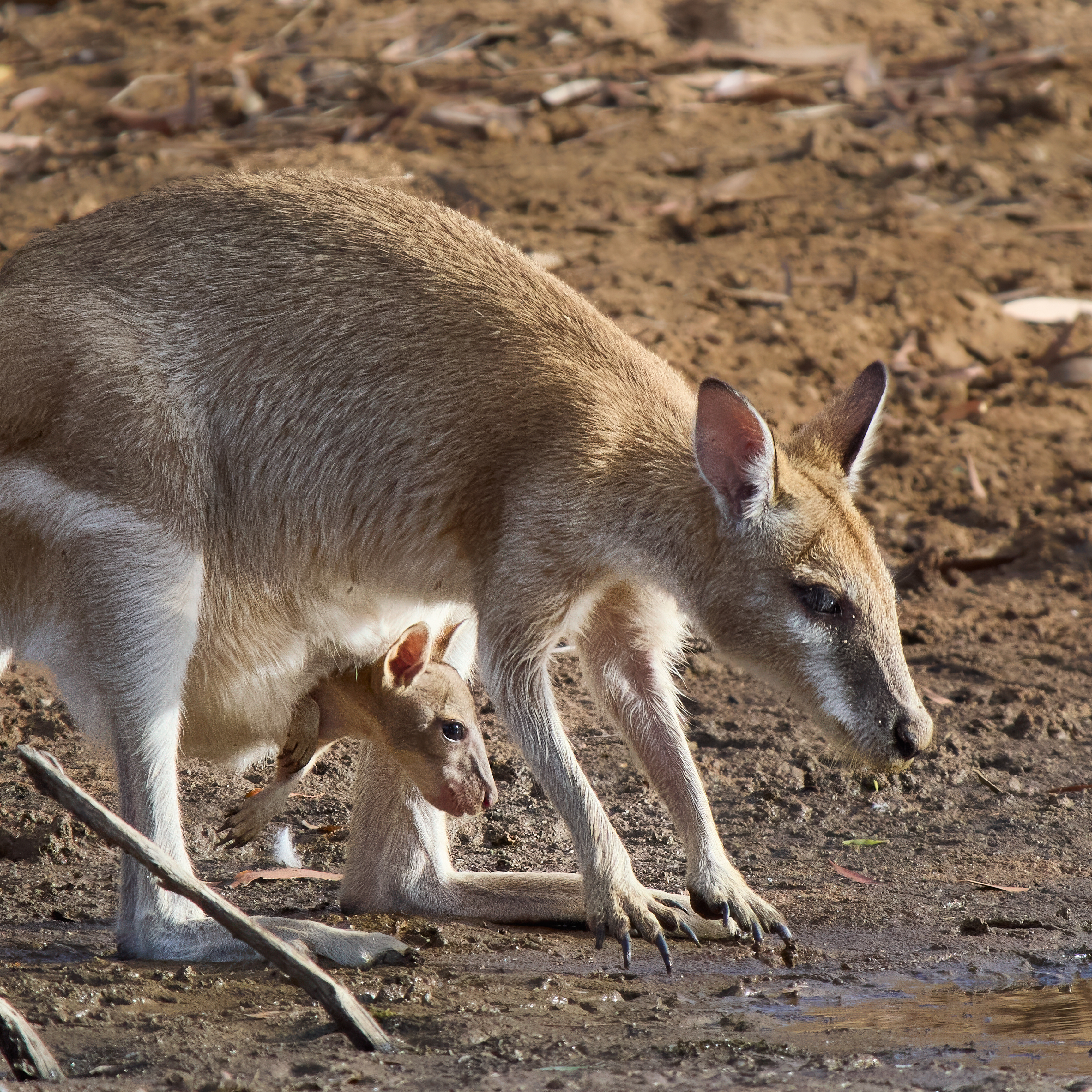
Nothing like hell or its gates. A pleasant campsite by a bore fed pond. The odd Agile Wallaby and Antilopine Walleroo passing by.

Normanton & Karumba …

Normanton started out as a port on the Norman River servicing the cattle industry. In 1885 gold was discovered at Croydon which gave its growth sudden impetus. The gold has run out and the port has ceased operation. These days tourism is the main driver of its economy with lesser inputs from pastoralism and it is the main administrative centre of the region. It’s a great spot for the bird watcher, normal people enjoy the fine visitor centre, a replica of the largest crocodile ever shot and some fine old buildings. Train buffs, clearly as mad as birdos, can ride on the Gulflander which runs once a week between Croydon and Normanton. The public toilets are not a rival for Queensland’s Maryborough but are certainly above average …

When Burke and Wills reached the Gulf they found that the mangroves prevented them reaching the sea. The one place where you can take a walk on the beach is Karumba about 70km by road north of Normanton. Fishing and tourism are the main economic activities here and these days Barramundi is what drives both. The Barramundi Discovery Centre is well worth a visit.

The population is only about 500 residents in two settlements one at the point the other at the port. The bird watcher is probably better off at the point. They should also check out the Ferryman Cruises.

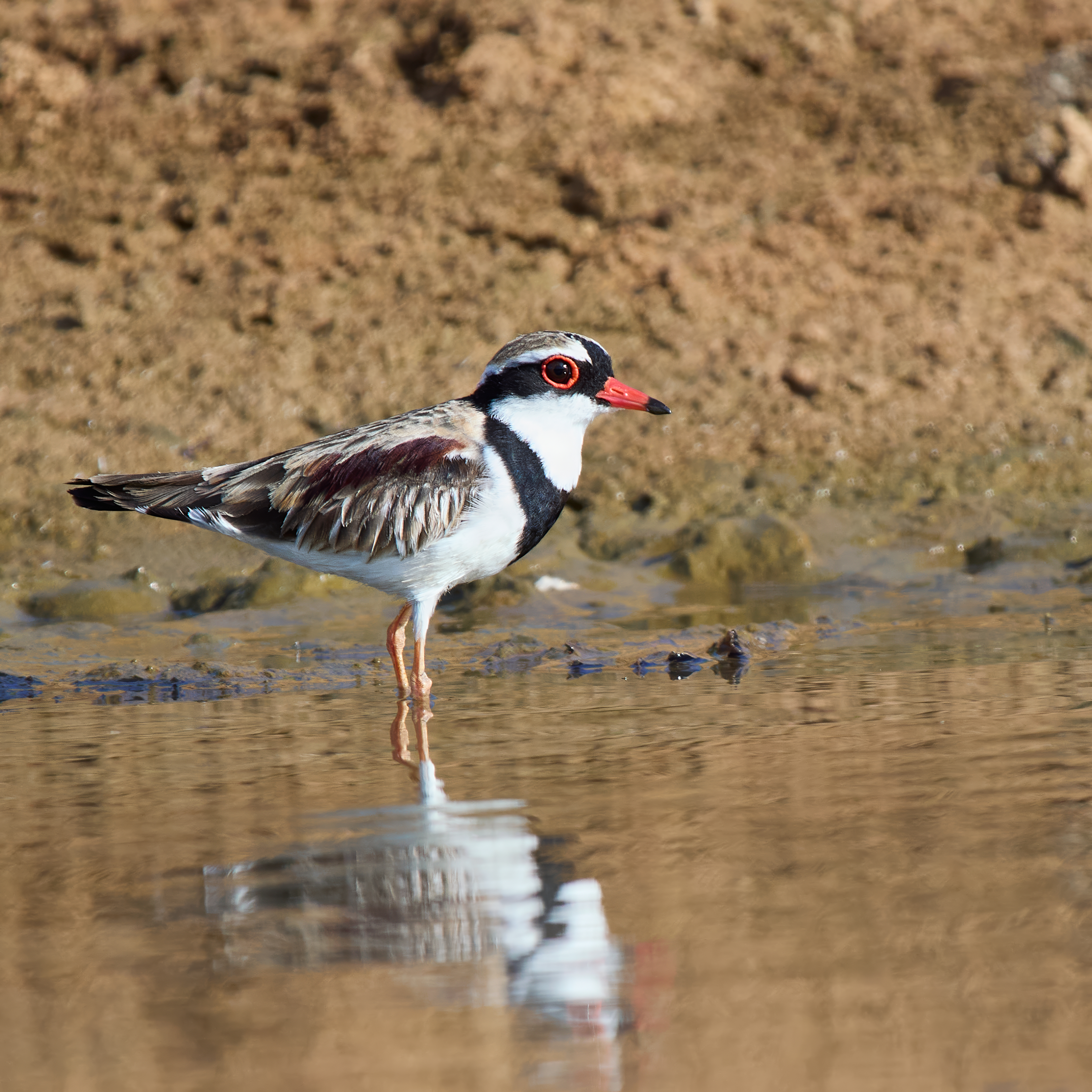
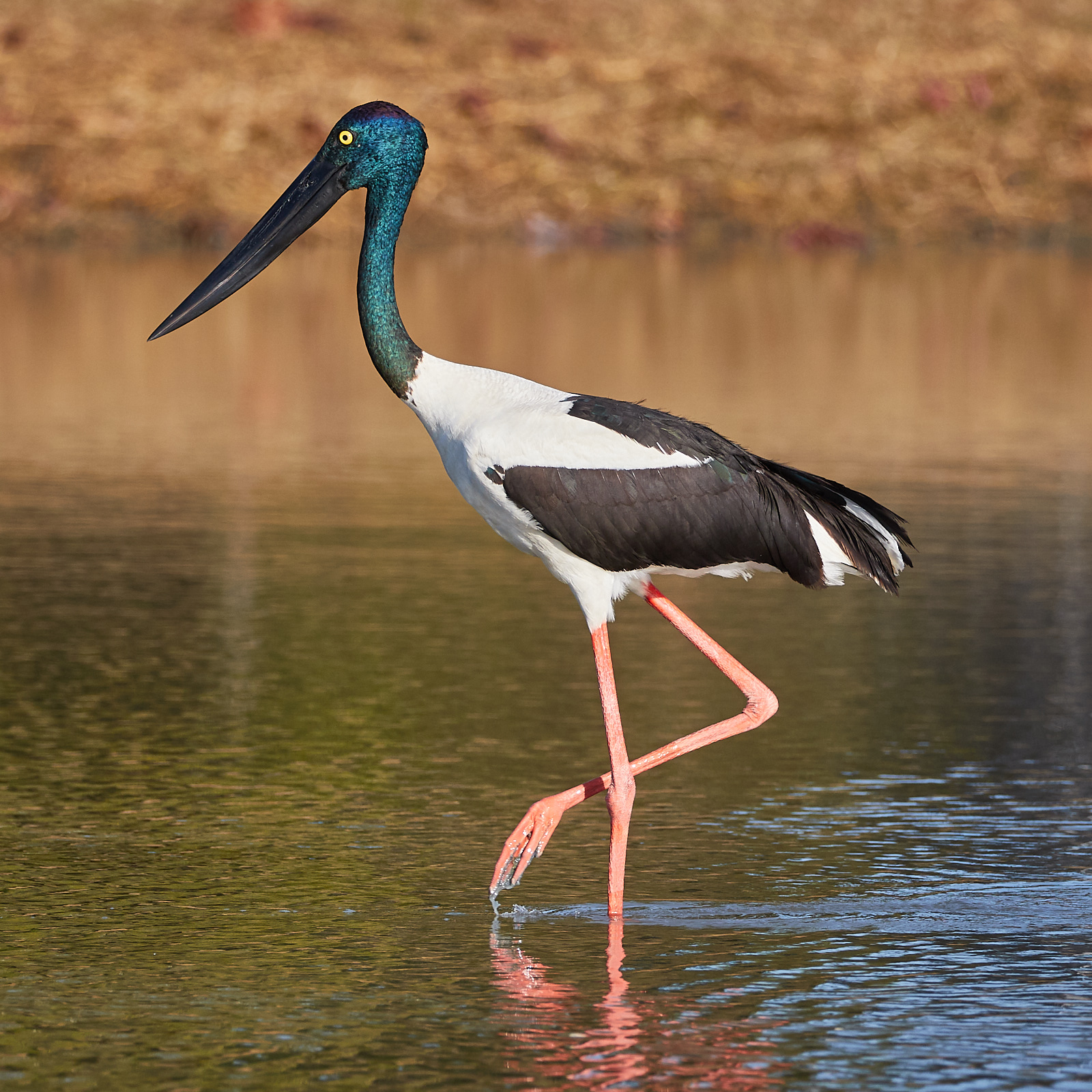
Wetlands and Savanna abound. Good for birds with long legs …

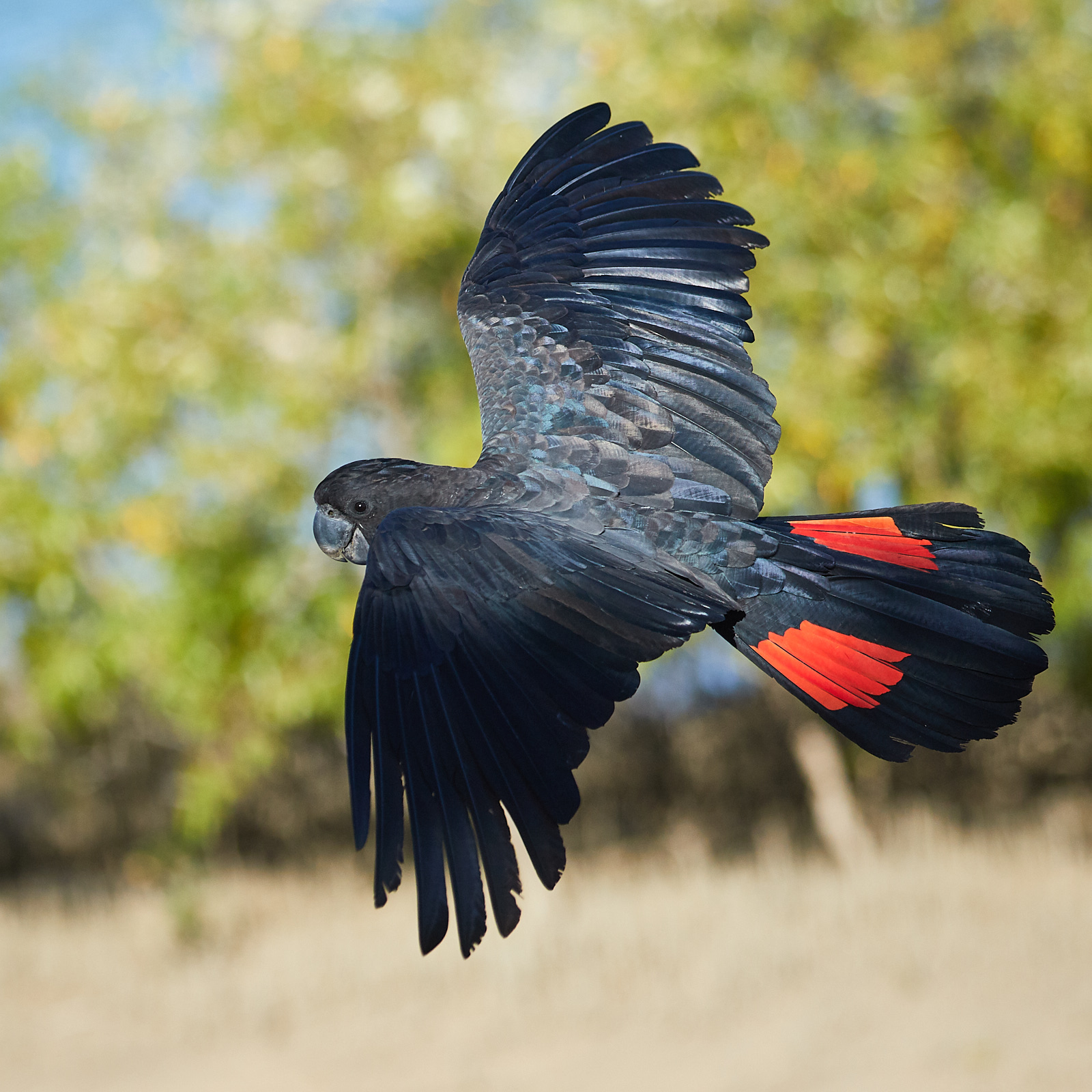
Although they don’t have a monopoly …

Red-tailed Black Cockatoo
A typical gulf country landscape