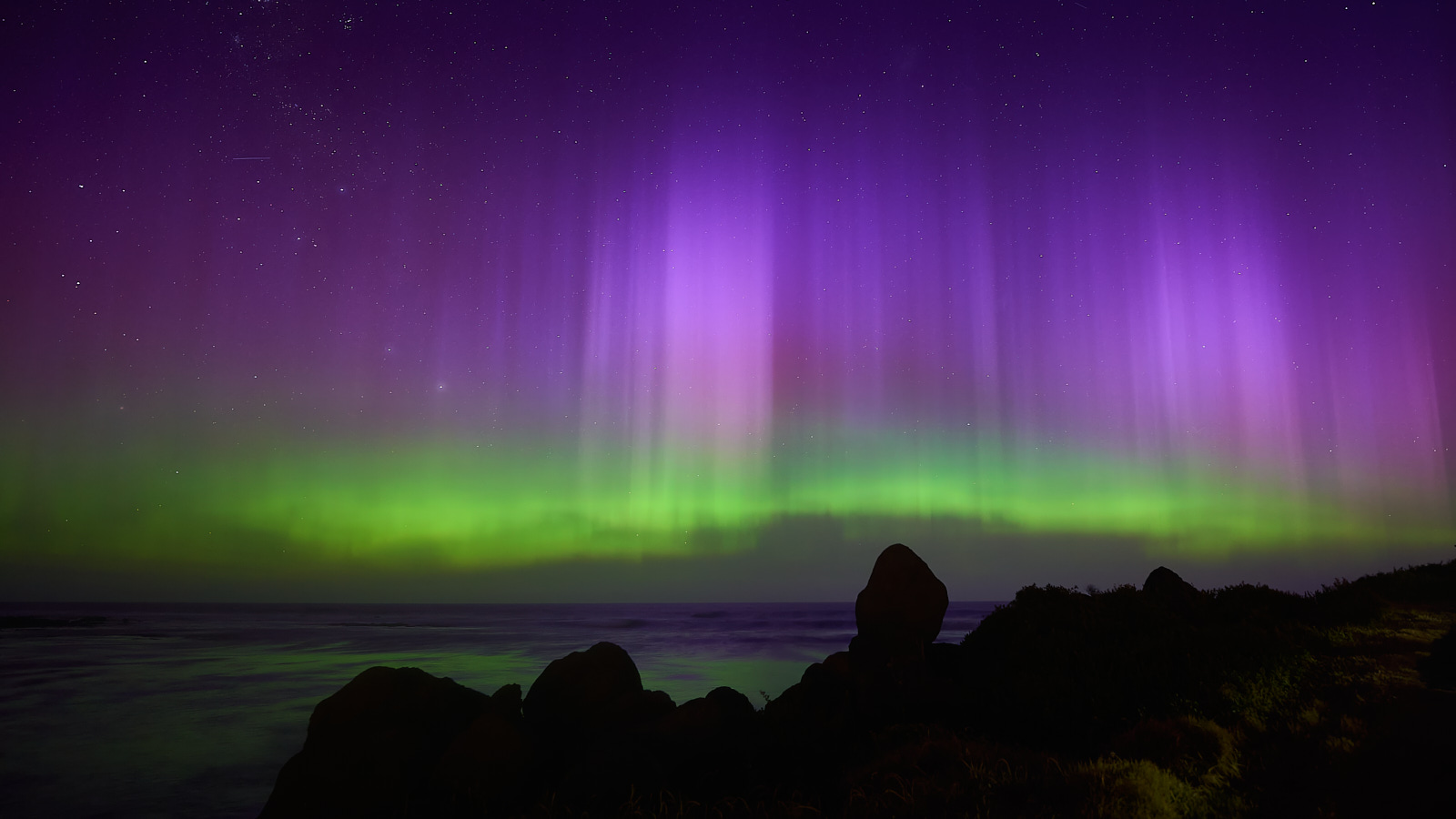
Once again it is my older son who is the brains behind this photo. He keeps a close eye on space weather and phoned me yesterday evening to get out there after dark. I thank him for the alert especially since he’s in Sydney for work, too far north to get a photo of his own.
The photo was taken from the car park overlooking the popular Port Fairy surfing spot known as the passage. For the nerds it was a Sony full frame camera with a 14mm prime lens at f/2, ISO 1600, 4 second exposure.
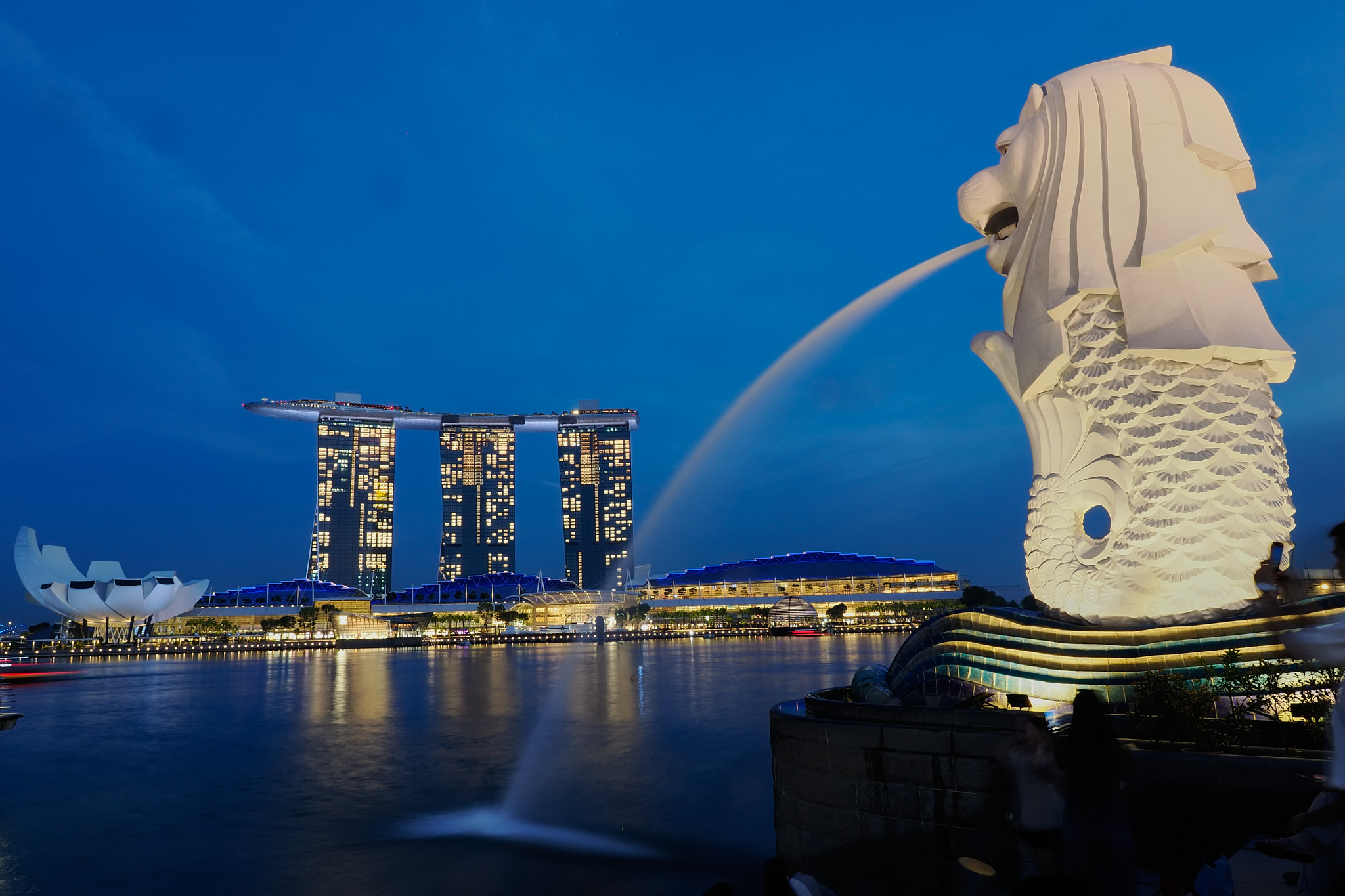
If you fly into Singapore at night you cannot help but be impressed by the lights of hundreds, perhaps thousands, of ships at anchor off the south coast. Singapore became what it is because of where it is. It sits at the bottom of the Malay peninsula at the mouth of the Strait of Malacca which connects the Indian Ocean to the South China Sea and the mighty Pacific. It has been important to seafaring folk since ancient times.
In more recent times the Portuguese and then the Dutch dominated trade around the Malay peninsula giving the Brits a rather hard time. The Brits of course had India and a rather lively trade with China. In 1819 Stamford Raffles by great acts of statesmanship (shorthand for bribery, corruption and threats of violence) founded a free port on the Singapore River. It got off to a flying start. And it’s still flying high.
When I first came here it was a city in transition. Modern high rise along side colonial architecture, shanties along the river bank, junks and bumboats on the water, roadside hawkers. The hawkers are now nicely accommodated in Hawker Centres, the shanties are gone. No one has lived on the river since the Clean up the river campaign of 1983. Now it is a very clean, very modern Asian melting pot reflecting rapid and recent immigration. 75.9% of the citizens and permanent resident visa holders are ethnic Chinese, with ethnic Malay and Indians comprising 15.0% and 7.5% respectively. There are no tent cities of the homeless. You will not be offered a baggy on your way into the park. Crime is remarkably rare. If you stand outside the metro station looking at your phone someone will soon ask you where it is you want to go and point out the way. Children give up their seats to adults on the train. Adults give up their seats to the elderly. English is the language of public communication and, the very pinnacle of civilisation – they drive on the left.
The total area of Singapore is considerably less than either Melbourne or Sidney and at ~6 million the population is considerably more than either. It is densely populated.
Most people live in high rise apartments. 90% of apartments are privately owned on a 99 year lease basis. A compulsory savings program akin to Australia’s Superannuation scheme exists and can be applied to purchasing an apartment. Hence the high level of home ownership.
To buy a car you must first purchase a Certificate of Entitlement. They are sold at auction every two weeks, with the government controlling the number of certificates for sale. Set aside at least $100,000 for a small car $150k for a luxury vehicle. Then you must purchase the vehicle.
For a typical income earner on about $70k the Singapore Mass Rapid Transit, henceforth the MRT, is looking like an excellent option. And it is indeed quick, clean and cheap. It is hard to travel more than 40km in any direction without falling off the edge in any case.
I hope to avoid living in a big city for the rest of my life but if I had to I’d choose Singapore over London, New York or Paris (especially Paris).
What I do like about cities, though, are the lights …
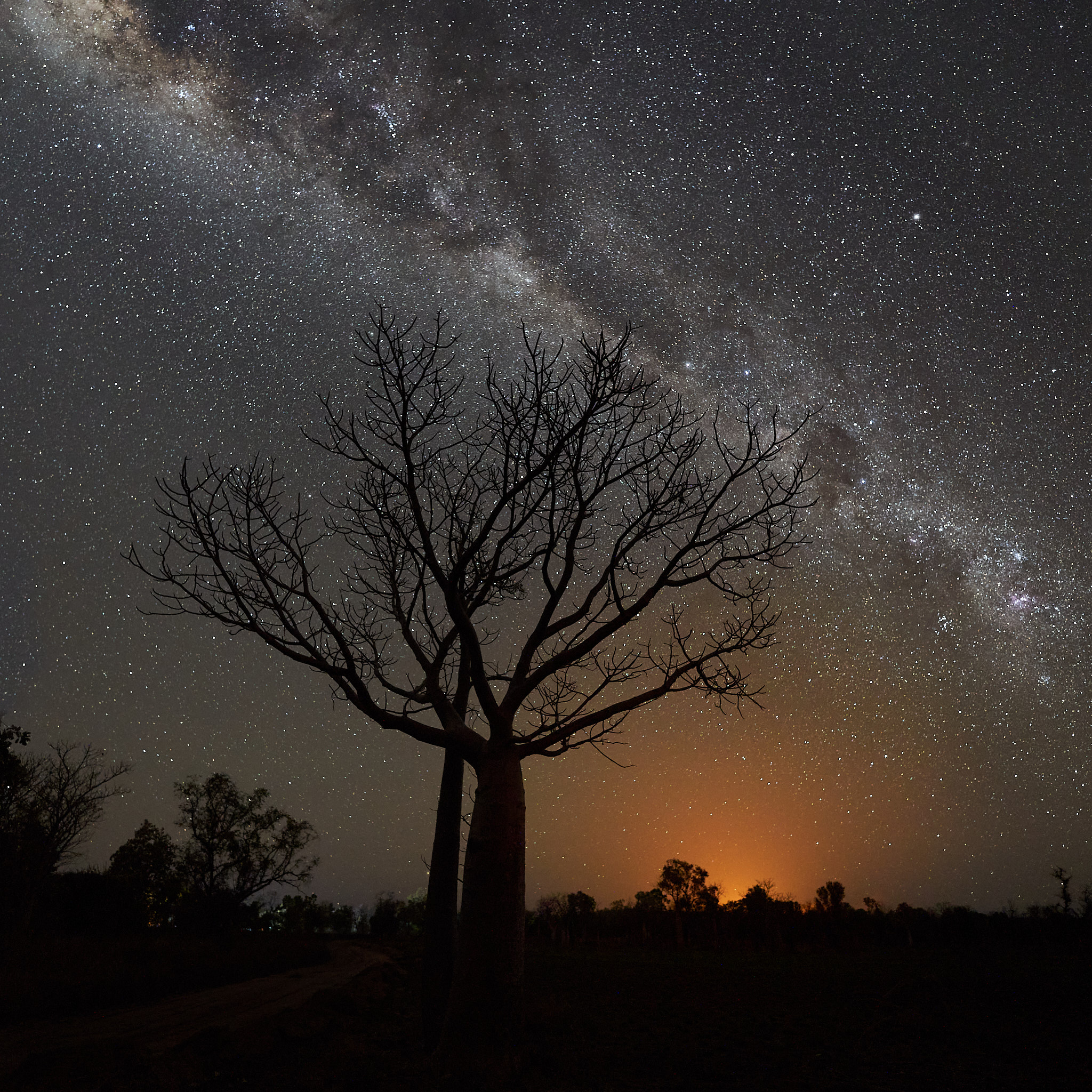
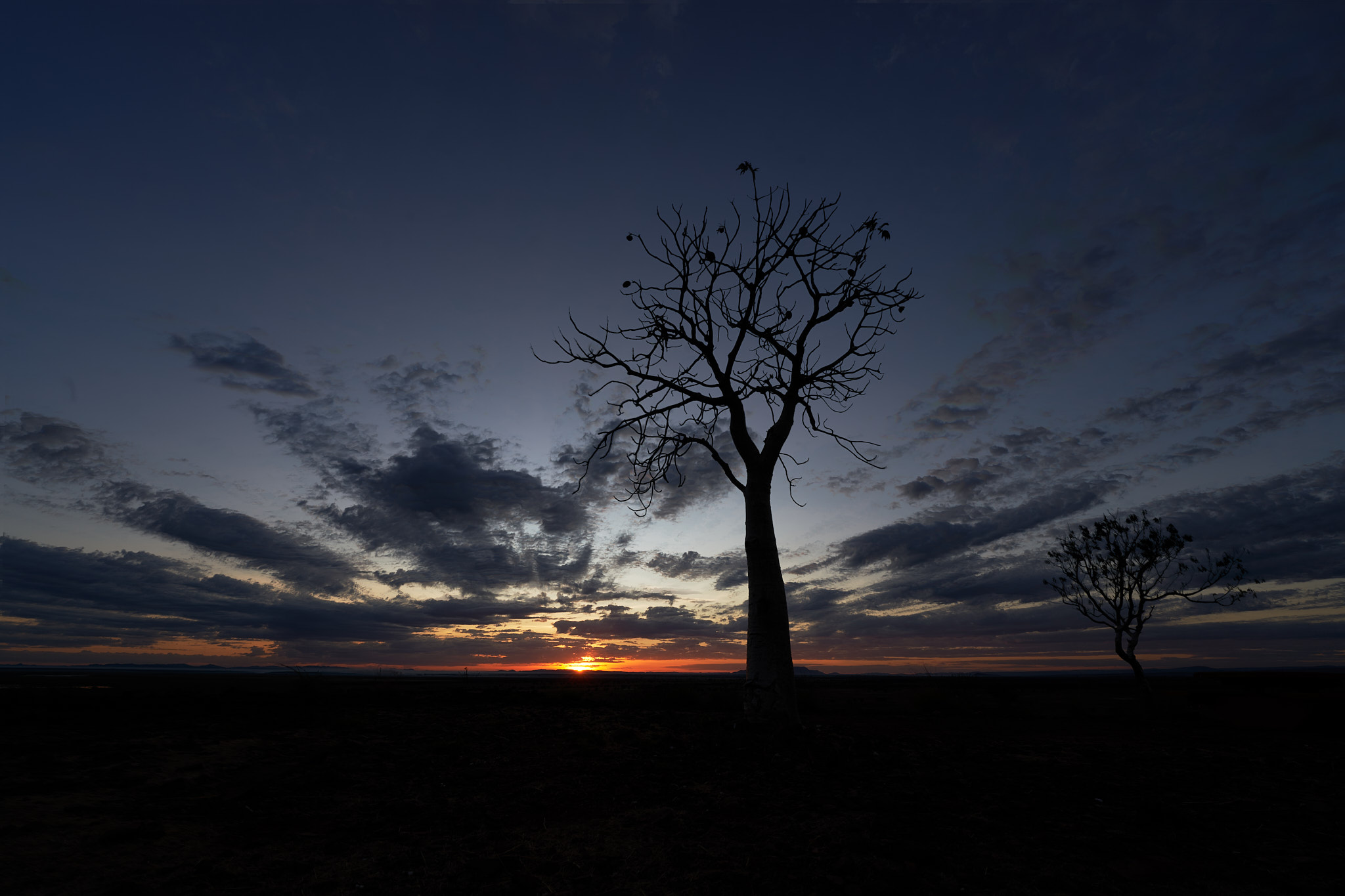
It has long been my ambition to shoot the milky way with Boab trees as the foreground. There are some beauties around Parry’s. I had chosen the timing of the trip to keep the moon out of the equation. I was not expecting the country to be on fire. Early in the dry season is a good time for managed fuel reduction fires, so called cool burns. Rumour had it that someone thought they were really cool and enthusiastically lit a whole bunch more. So I had to contend with a lot more ambient light than I expected. Somehow I coped.
Many years ago I made myself a kayak. Dangerous things kayaks. Combine them with swiftly flowing water and a fallen tree and it’s very easy to drown yourself. I came close.
That experience fits in the scope of Murphy’s Law but there is another inescapable law regarding canoes. If you want a fast canoe it will be long. It will not be manouverable. If you want a manouverable canoe it will be short. It will not be fast. You must choose your canoe to suit your intended purpose. The law of canoes has general application.
To make a photograph you need a lightproof box with a hole in the front and a surface at the back that reacts to light. You point the box at the subject, open the hole for a while, store the reaction and transform it into an image. Simple.
There are, however, some technical challenges. Too much light and your image will be white, too little and it will be dark. Getting the correct exposure depends on three things. Each of those things has to obey the law of canoes. A is for Aperture, the size of the hole. S is for Shutter Speed, the length of time that the hole is open and ISO is for the Sensitivity of the reactive surface to light. Balancing these three things will lead to a satisfactory image. Under most circumstances the modern camera can do that for you. It will trip up when the subject is dark and against a bright background, or white against a dark background or at night when light is at a premium. And on that brief and very expensive trip to Antarctica.
The bigger the aperture the more light gets in. Excellent. What’s the trade off? Depth of field. F/2 is a large aperture giving shallow depth of field, half your landscape will be fuzzy. F/16 is a tiny aperture your landscape will be in focus from somewhere near the front all the way to the back.
The longer the shutter is open the more light gets in. The trade off? For a crisp image the camera and the subject must stay still.
ISO represents the sensitivity of the sensor. The higher the number the greater the reaction to the light. The higher the number the greater the noise in the resultant image.
You’d like a sharp image, in focus from front to back and with no noise in the shadows? Sir, can I interest you in this very fast and extremely manouverable canoe?
If you’re taking control of the image you will have to decide what to sacrifice. To photograph birds I choose a high shutter speed. This guards against movement of the lens or the bird. To get in the light I have to open up the aperture. This sacrifices the depth of field. On a telephoto lens you soon bump into the limit regarding aperture so ISO will also have to increase …
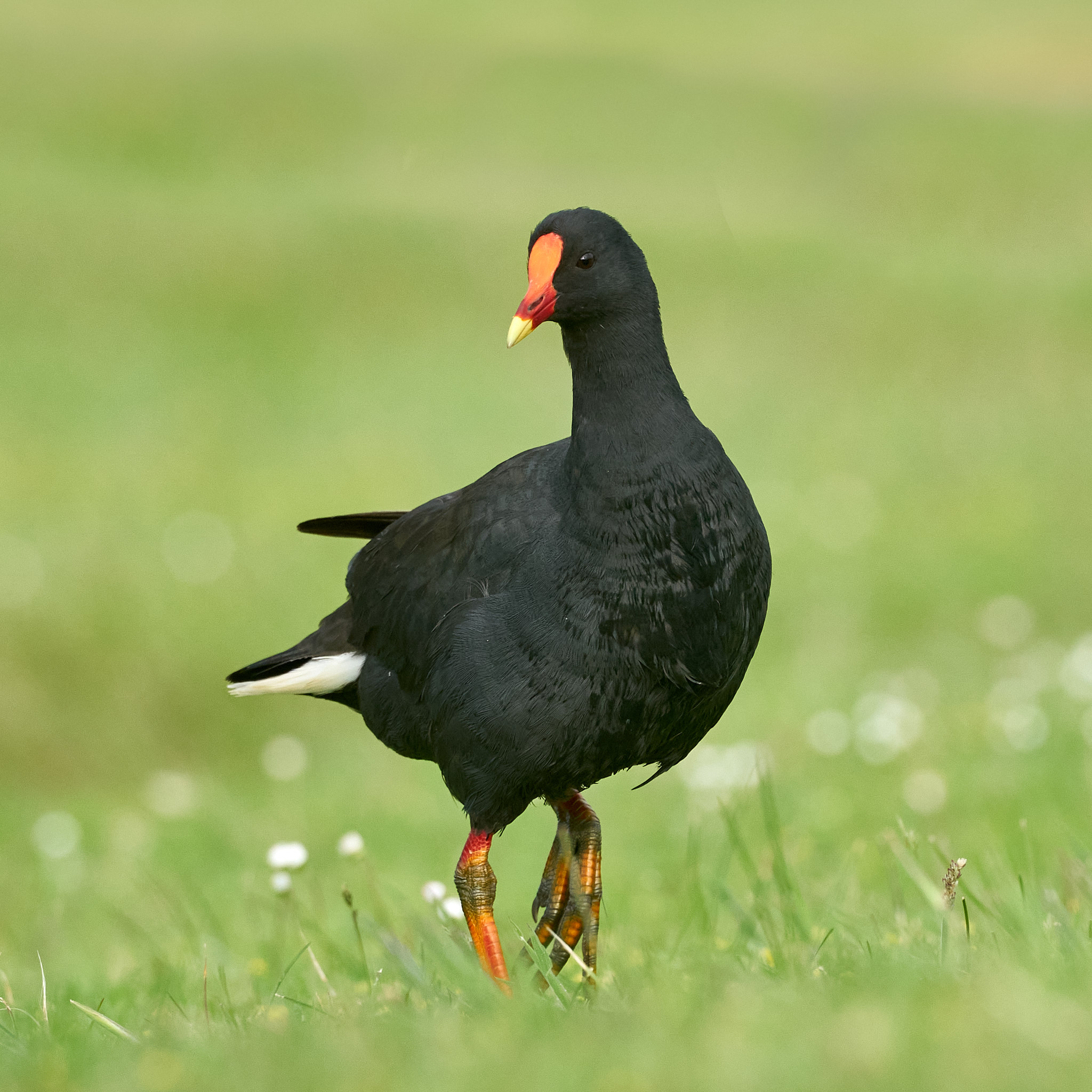
ISO 2000 1/1600s f/8 600mm
The sacrifice here is depth of field but it’s no sacrifice at all. The out of focus background helps the Dusky Moorhen to stand out. The eye and bill are sharp. A slow shutter speed would likely have resulted in a soft unusable image.
For landscapes I usually keep the ISO low, the aperture small and put the camera on a tripod. The shutter may be open for several seconds. Sharp focus from front to back and low noise are the result. On the other hand the wind in the trees may make the foliage blurry and the sheep and cows will not look too good. Long exposures are the source of dreamy seascapes and creamy waterfalls. As long as the camera and a good proportion of the picture stays still movement in the scene can be put to creative use.
ISO 100 30s f/11 70mm
The 30 second exposure flattens the sea and on a still day you can get away with the foliage. A tripod is essential.
The point of all this is about getting a handle on the compromises made for this next image …
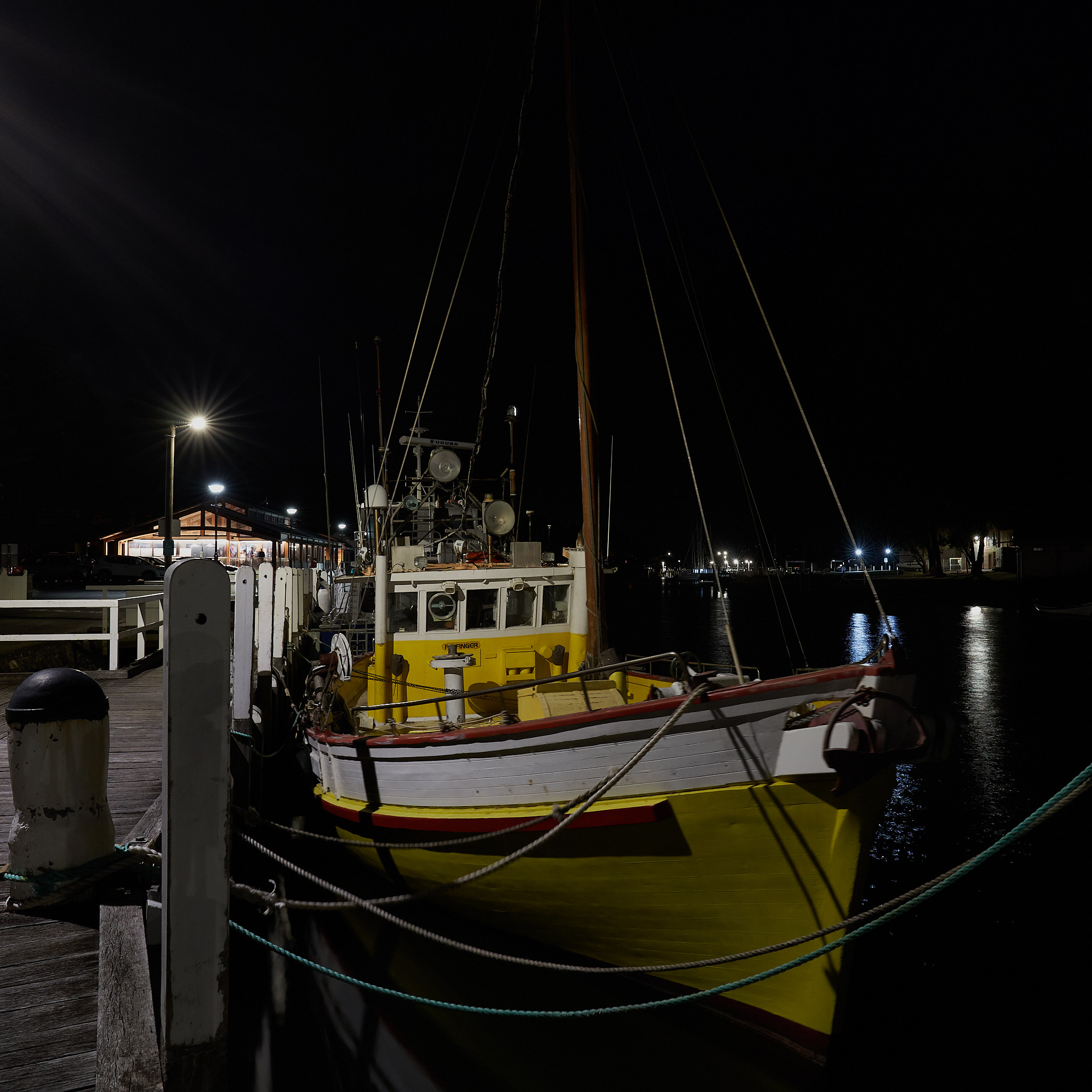
ISO 640 2s f/8 24mm
Boats are a nightmare for long exposure photography. They move. Usually just enough to ruin the image without moving enough to get an “artistic” effect. So a short shutter speed is highly desirable. We have a light source, the dockside lights. The sun flare effect from the lights only happens if the aperture is small f/16 is nice, f/11 works. I was lucky to get it at f/8. The tide wasn’t running hard, boat movement spoilt a couple of attempts but this one is sharp despite a 2 second exposure. ISO 640 doesn’t cause too much noise on the modern sensor especially if you resist the temptation to raise the shadows. I underexposed by a full stop to avoid blowing the highlights.
The subject is a beautiful wooden fishing boat called Putty’s Pride. It’s moored at Port Fairy. Keeping it in good nick must be a labour of love. Its owner has every reason to be proud.
If you arrive in Broome by road you will pass the Roebuck Roadhouse. establishments like this lend so much character to outback travel.
There is a pleasant caravan park attached. You can get a meal or a beer, friends speak very highly of the Big Breakfast.
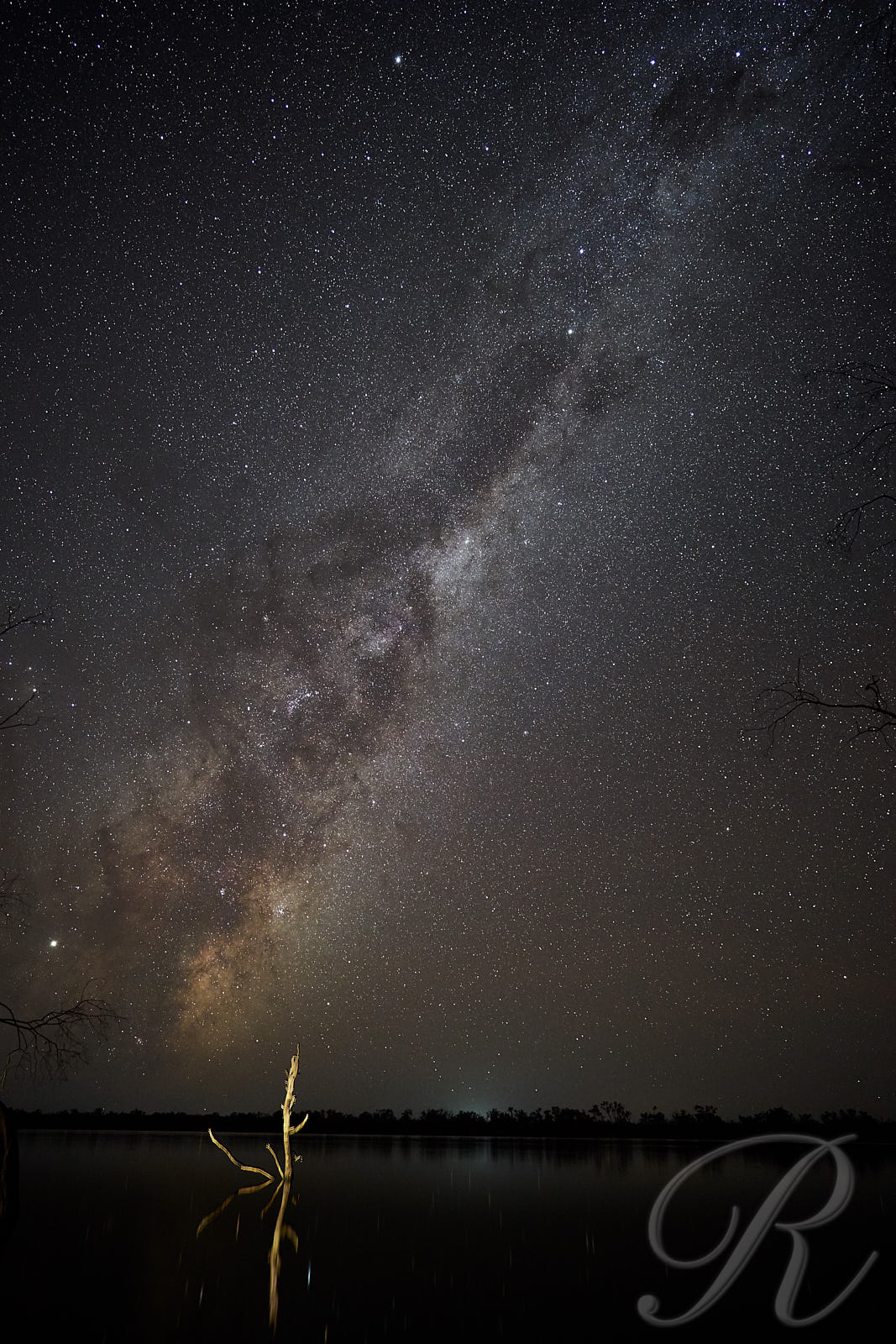
I stopped to take that shot on my way home from the middle of nowhere away from city lights where I took this shot. Putting the new lens through its paces.
I was complaining about the weather yesterday and today is no better. But last night the sky cleared and gave us a look at the stars. I put on my warmest clothes and sallied forth. Clear skies have been a rarity just recently. This was a good opportunity to complete a project that was conceived months ago.
The machine is a chaff cutter. It was built by Buncle of North Melbourne and after a busy life preparing horse feed is now retired.
John Buncle was a Scot who arrived in Melbourne in 1852 aged about 30. This was at the height of the gold rush. He was a skilled draftsman and engineer and had no trouble finding employment. After about a year as foreman at Langlands foundry he started his own business and became famous in the field of agricultural machinery.
He died in 1889 by which time he’d made a sufficient mark in Melbourne society to warrant an entry in the Australian Dictionary of Biography.
Then to bed. To sleep and dream until 3.00AM for this was the peak of the Eta Aquariid meteor storm. This is debris from Halley’s Comet. This little time lapse was shot in Victoria’s Western District from about 4am until just before dawn. The sky is at it’s most frenetic just as Venus comes up behind the gum tree.
So it’s new moon and I’m at the coast. The Night Augmented Reality module of Photopills shows the milky way emblazoned across the night sky with the lighthouse beneath. All that stands between me and a photogasm is a dense layer of cloud. The lights of Warrnambool are a poor substitute …
Box Flat in the Annuello reserve is a very pleasant place to camp. No reservation is required, no fee is charged and no facilities are provided. Perfect. I was the only human occupant.
I spent the morning exploring and was well rewarded with flocks of Mulga and Regent Parrots. The tracks through the reserve were in good shape, not necessarily the case after rain but there hasn’t been a lot of that lately. Annuello covers about 36,000 hectares and is well wooded mainly with Mallee eucalypts. If it had a nice sexy lake it would certainly be a National Park instead it’s even better. Quiet and with a little less over-regulation.
Leaving the reserve I made my way north to the mighty Murray and the Hattah-Kulkyne National Park. At the river I was greeted by large noisy flocks of Little Corellas and entertained by Whistling Kites circling overhead.
The environment in the national park is a little more varied and it does have some sexy lakes. These were my destination in search of some more photographs of the night sky.









 bobmcgee