Never Walk Backwards …

I never seem to visit Farina at New Moon. These shots were taken with a first quarter moon behind me …

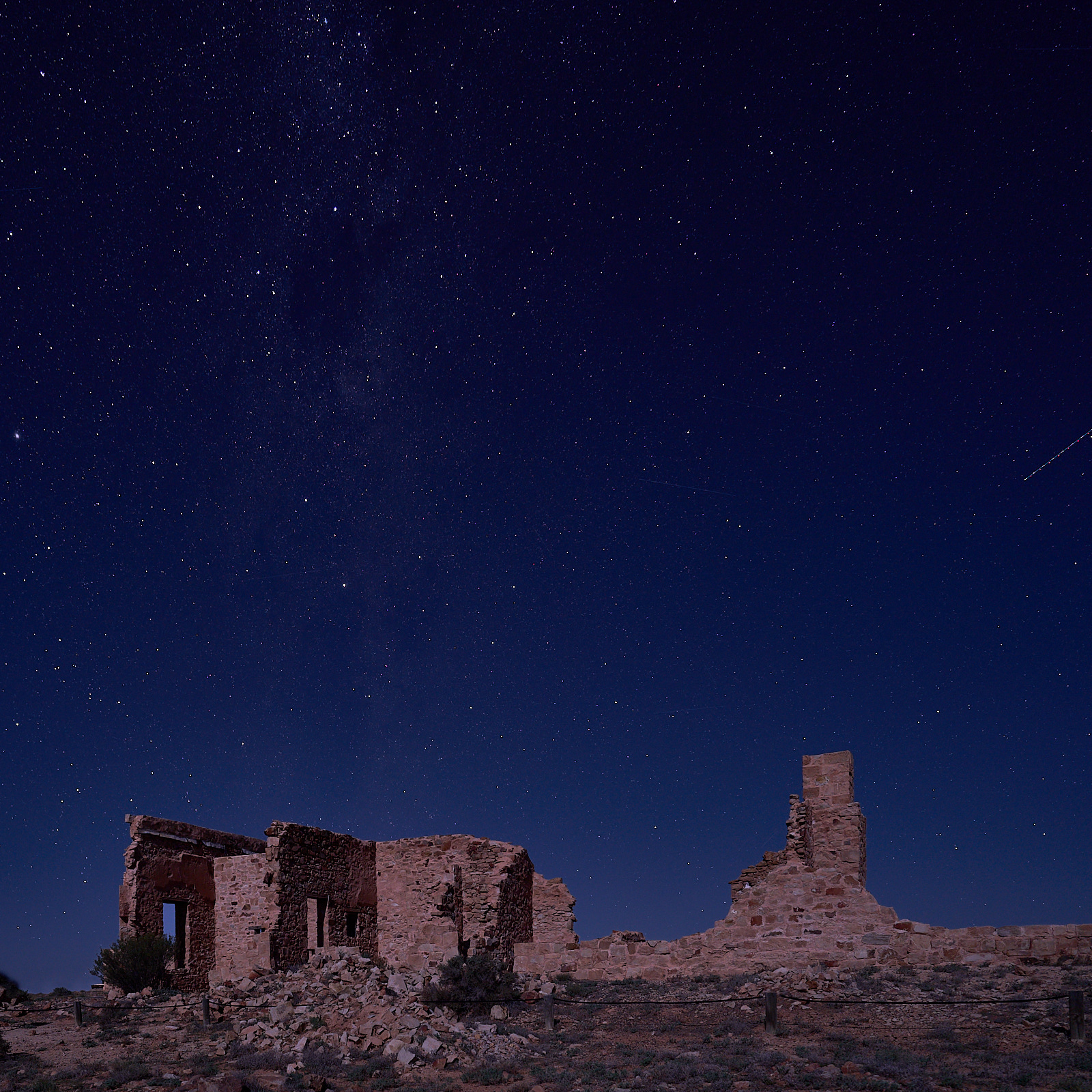
Poor old Farina is north of Goyder’s Line and south of the Great Artesian Basin. It had a big problem with fresh water. Once the Ghan was rerouted and the Telegraph fell into disuse it became a ghost town.

Goyder was the Surveyor-General of the then colony of South Australia. In 1865 he made a journey on horseback crossing some 3200km to come up with a line demarcating land suitable for agriculture from land prone to drought. This followed the 10 inch isohyet which Goyder determined mainly by reference to the vegetation. Settlers ignored his advice to their cost – the buildings at Farina are accompanied by numerous abandoned farm houses north of the line.

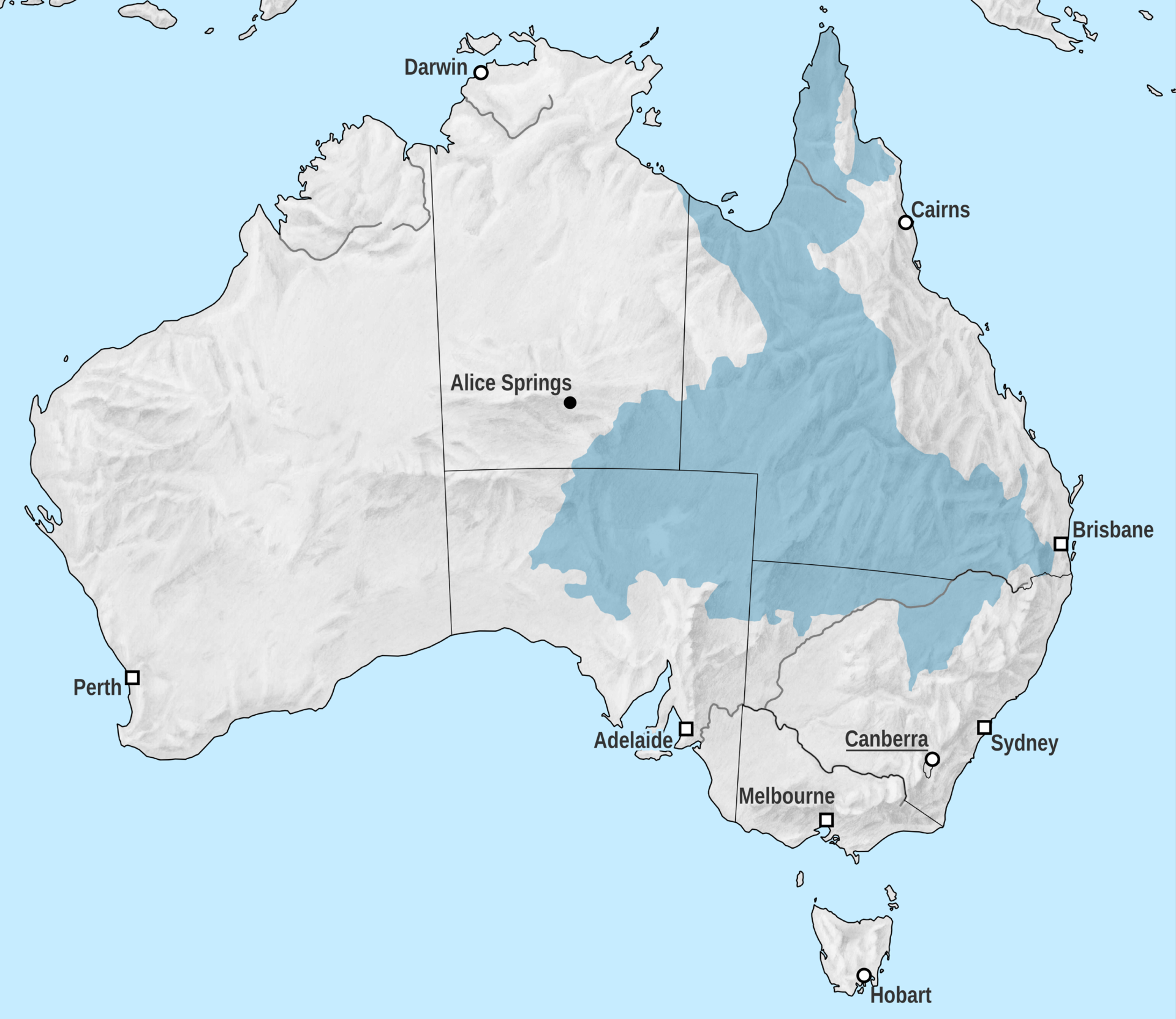
A number of wells were dug at Farina with minor success. Sixty kilometres north and plenty of water lies just below the surface. The Great Artesian Basin underlies about 22% of the continent .
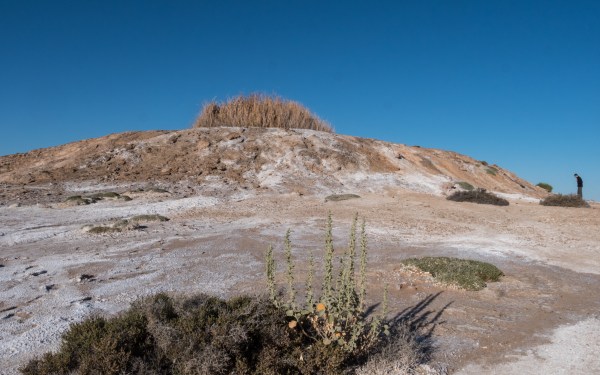
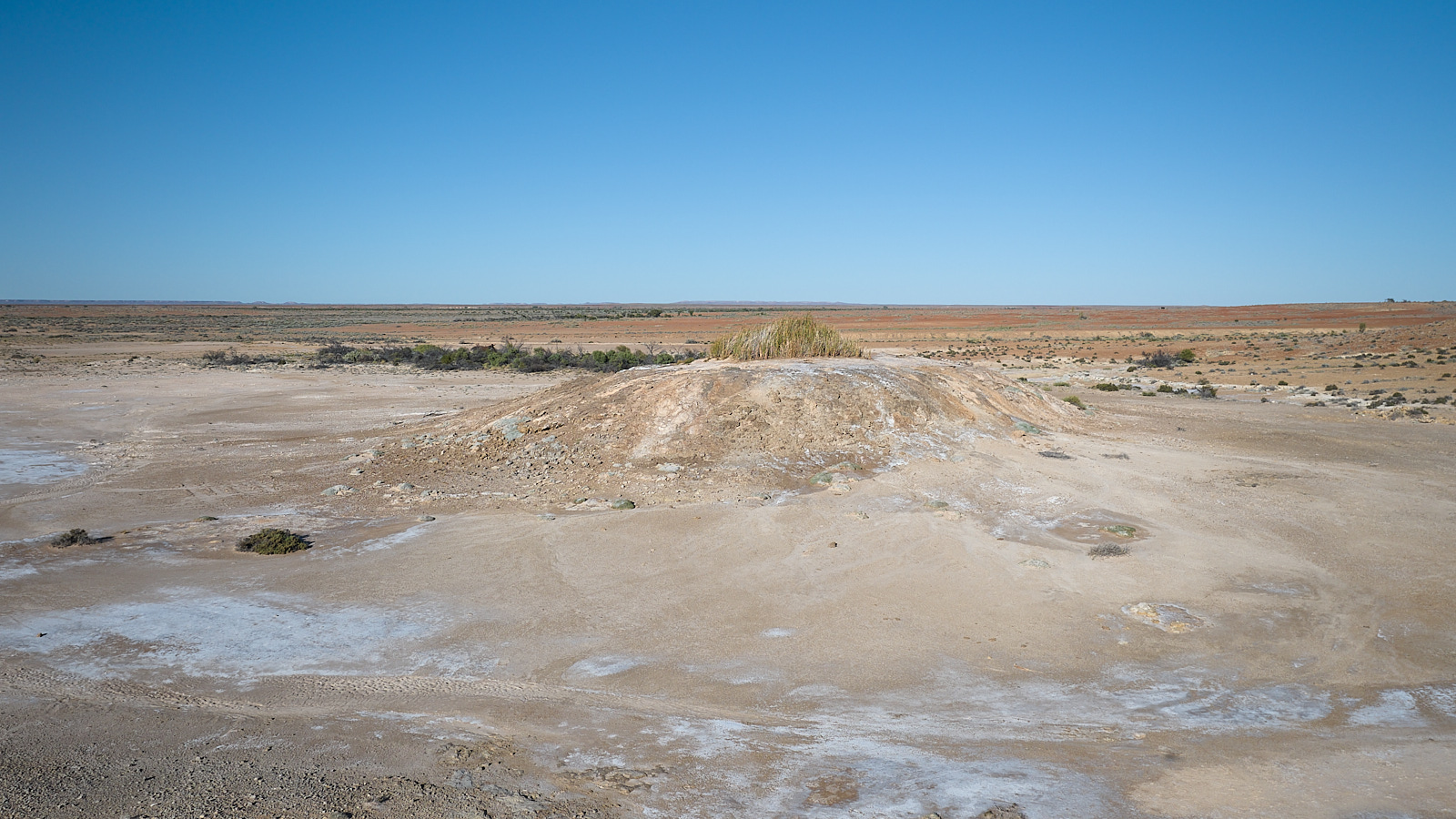
From Farina we traveled up the Oodnadatta Track to William Creek passing Lake Eyre South and spending the night at Coward Springs. There are quite a few springs along the southern edge of the Great Artesian Basin. As they bubble out of the ground they bring minerals that eventually produce a mound with a small pond on top. If the flow is strong enough a small wetland forms at the base. One can find water birds such as Spotted Crake right out here in the desert. Notable mound springs along the track are Blanche’s Cup and the Bubbler. I photographed a small, so far as I know, unnamed one just north of Coward Springs.

The Oodnadatta north of William Creek was closed to towing vehicles so we made a left turn and headed to Coober Pedy where there are opal mines and spoil heaps dotted across the landscape. A warning sign advised of open holes and sternly admonished the traveler “Never Walk Backwards”.

The road had not been as rough as we had expected. Cober Pedy is on the bitumen, the Stuart Highway. The next few days will be far less exciting than the last few days.
The Ghan …

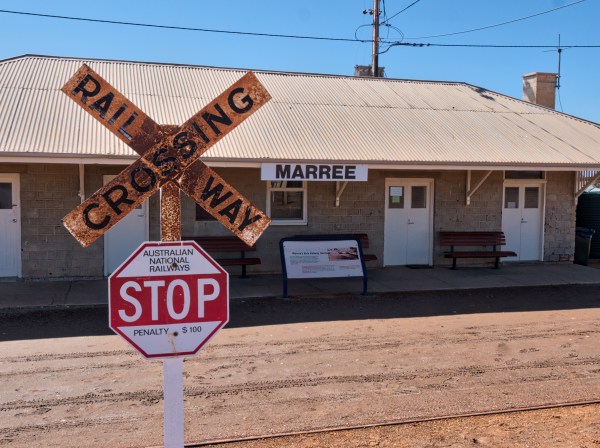
From Farina we headed north to Marree and then up the Oodnadatta Track through the tiny town of William Creek to the world-renowned Pink Roadhouse in Oodnadatta itself.

The sky is huge, the vegetation is sparse, the road is not sealed. The scene is occasionally punctuated by  a mound spring thrown up like acne by the underlying artesian basin. The road follows the same line as the telegraph and the railway, evidence of both is still present although the rails and wires are gone. This is part of the route pioneered by John McDouall Stuart but people lived here for thousands of years before he passed through.

The Australian Overland Telegraph line was completed in 1872. It stretched 3200 km from the south coast to the north. The poles were 80 metres apart, there were relay stations every 250 km. At Darwin it joined a submarine cable that went via Java to the outside world. It was the thinnest thread of 19th century high tech stretching through hostile country, usually dry but flood, paradoxically, a major hazard, and occupied by occasionally hostile people. The colonies of Victoria and South Australia were in competition to gain the commercial benefit of building the line. Part of the motivation behind Victoria’s Burke and Wills expedition was to find a suitable route. Stuart was largely financed by James Chambers who hoped to have a large stake in the resulting enterprise.

The railway followed. Construction went in fits and starts. Construction began in 1880 and the railhead moved slowly north to Hawker, Farina, Marree, reaching Oodnadatta in 1891. Here it took a pause until 1926  before pressing on to Alice Springs three years later. This was a narrow gauge line constructed for steam locomotives. The route needed to follow a line of artesian springs supplemented later with bores. The service ran at a loss and was notorious for washouts of the track and other delays. A flat car immediately behind the locomotive carried spare sleepers and railway tools, so that if need be the passengers and crew could work as a railway gang to repair the line.

It wasn’t until 2004 that the track reached Darwin. By this time diesel had replaced steam making it possible to reroute the southern section westwards to less flood prone ground. The railway still runs on the new route. It is now called the Ghan to commemorate the Afghan cameleers that it largely replaced (this seems to have started as a pejorative nick name). It’s in the non-urgent section of my bucket list – please give it a go to keep it running until I get around to it. Read all about it <HERE>.

Marree

As I said, the sky is huge and the veg is scarce, this is the Oodnadatta track …

Oodnadatta Track

It passes ruins that would have housed telegraph and railway workers and the occasional mound spring. This spring is producing the merest trickle of water but it shows you the form …

Mound Spring

Now imagine yourself on a bigger and more productive example …


Mound Spring


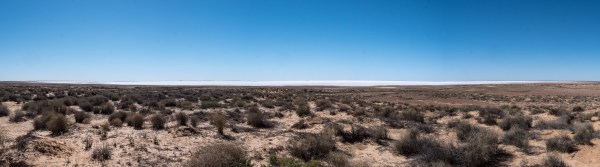
At Lake Eyre South the road, railway and telegraph are all very close to the lake edge. It is the ideal place to meditate on the way it was. Imagine yourself piling off the train and being put to work repairing the track, or simply stranded here for a week or so (click to enlarge) …

Lake Eyre South

The water that issues from these spring comes from the Great Artesian Basin that lies beneath 23% of Australia’s surface area, that’s the 1.7 million square kilometres shown in blue on this map.

220px-Great_Artesian_Basin

Water enters at the margins, mostly the eastern margin and is trapped in a layer of sandstone. It travels at a rate of one to five metres a year. Water coming to the surface in the south-west of the basin has been underground for about two million years. It comes out pretty warm and mineral rich but has sustained life in the desert where local rainfall is scant.

We overnighted at Coward Springs where the water flows freely enough to form a wetland. It is a commercial camp site but thoughtfully laid out. You can take a spa in the spring water but rather than do that I found a quiet spot in the reeds to look for the local inhabitants …

Ausstralian Spotted Crake
Australian Spotted Crake