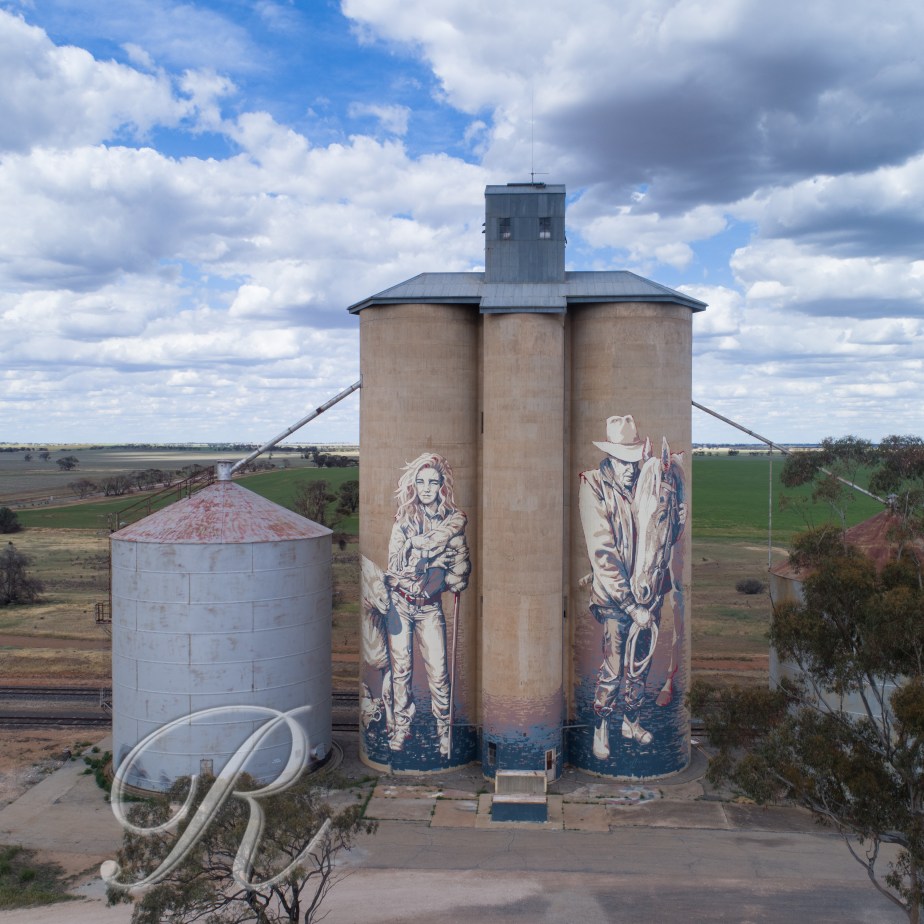
and Kaff-eine’s homage to country folk. Rosebery is 40km south of Lascelles.
and pray that there's intelligent life somewhere out in space
and Kaff-eine’s homage to country folk. Rosebery is 40km south of Lascelles.
The Silo Art Trail in western Victoria has grown a bit since I last drove it.
At Lascelles Rone has painted local farming couple Geoff and Merrilyn Horman, part of a family that has lived and farmed in the area for four generations. They occupy one silo each facing in opposite directions. Maybe they’re not talking to each other …
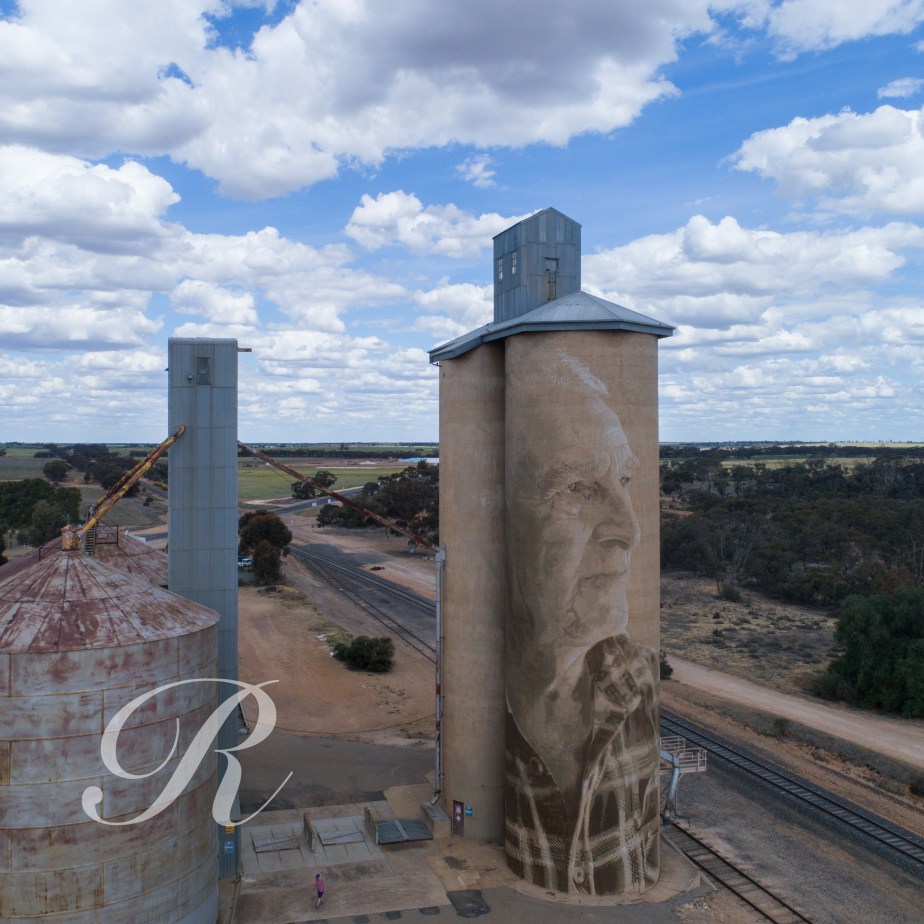
It has an unwanted effect for the photographer. When Geoff is nicely lit Merrilyn is contra jour.
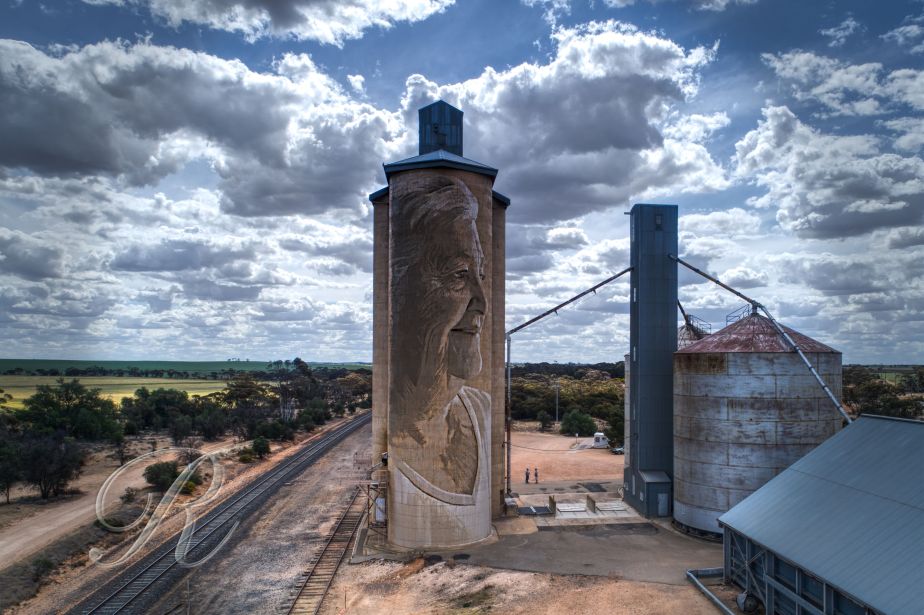
I’ll have to go back on an overcast day. Although the sky that day was being generous in other ways …

If you turn right out of Nindigully on National route 46 Thallon is less than 34km away. You’ll know when you’re close …
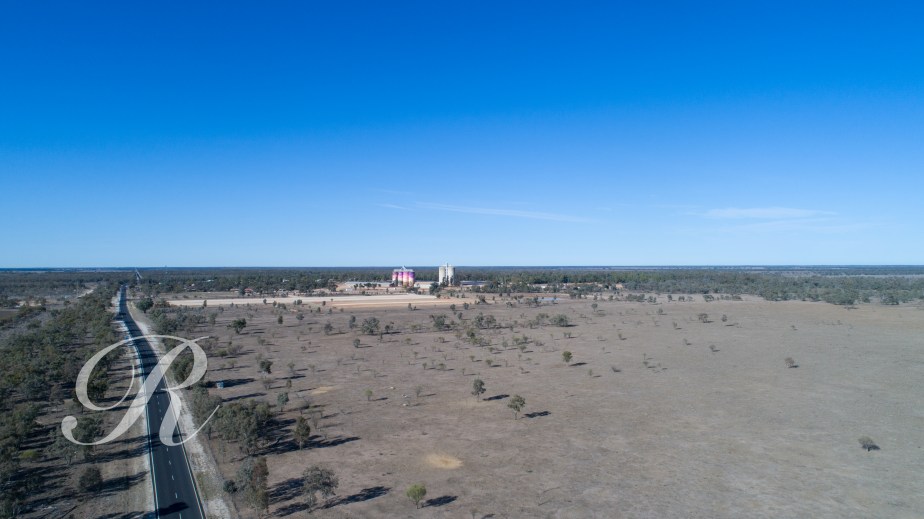
The silos face east, so morning is a good time to photograph them. You can see from the long shadows that I’d made an early start.
This work really is a splendid piece. The artists were Travis Vinson and Joel Fergie who took inspiration from the work of three local photographers and discussions with local people.

The scar tree and view of the Moonie River is based on a photographs by Lila Brosnan, the Pale-headed Rosellas on a photograph by Gary Petrie and the sheep Chantel McAlister.
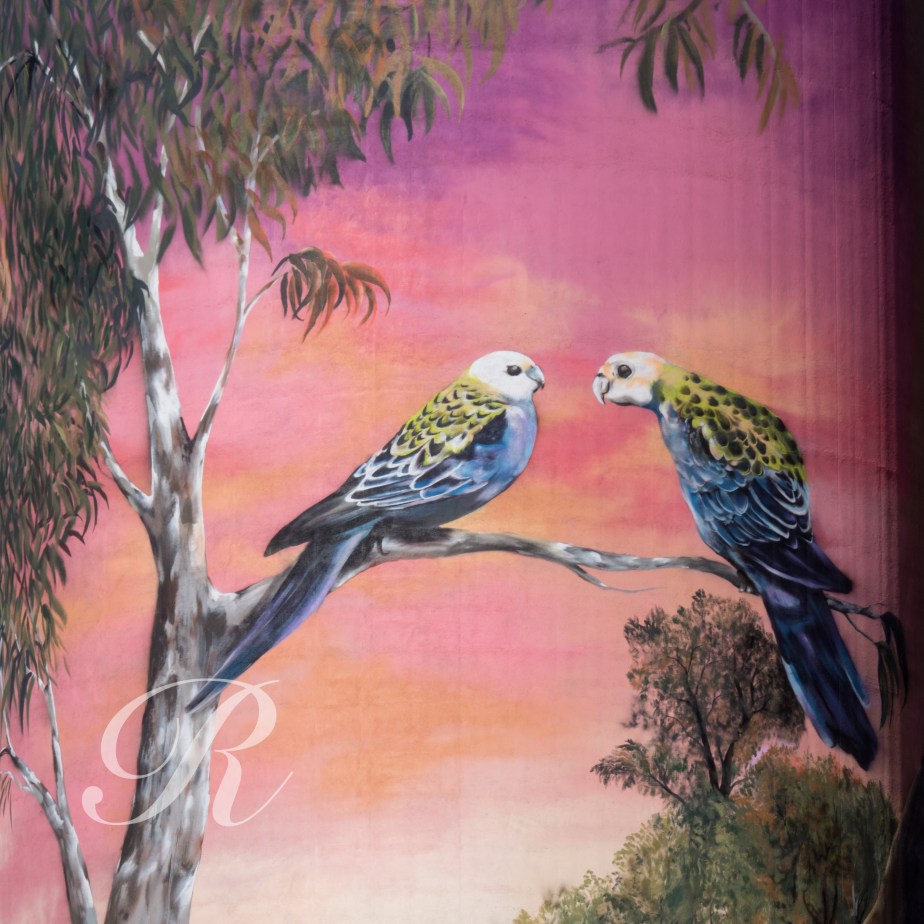

The silos are very much in use and Grain Corp would be grateful if you stayed in the designated viewing area so as not to be flattened by a truck.
Camping is available at the site and is of a very acceptable standard. The Moonie River is not far away and apparently there is a very large wombat in the park in town.
Of New South Wales, that is.
We left Weethalle bright and early with Collarenebri our destination. The road less travelled would take us through Tottenham the geographic centre of the state. Yes, you could balance NSW on a pin placed beneath a point just 33km north-west of town.
We didn’t make the 33km detour to that particular landmark because we got a flat not far from Tullibigeal. It took a little while to change the wheel and more time was wasted in Condobolin trying to get the tyre repaired, a wasted effort.
So onward ever onward. The countryside was very dry but the sky overhead black with cloud. A lot of the paddocks had been prepared for sewing and then left waiting for a rain that hadn’t come. Livestock were in good condition. Farmers out here know that there will be a drought in every decade and have already made the decision to destock or hand feed. It’s tough but so are they.
The native wildlife is not being hand fed. Kangaroos are attracted to the green pick along the roadsides where the camber delivers just a bit more water to the vegetation. Whilst they’re not dying of starvation a lot have fallen victim to the passing traffic.
At Warren we ran into the rain. The heavens opened.
At Coonamble we chanced upon this …

a water tower rather than a silo which a bit of research reveals was painted by John Murray of Lightening Ridge and Sooty Walsh a local aboriginal artist.
We arrived at Collarenebri after dark.
The general trend of this little jaunt is north-east to hit Australia’s coast at the most easterly point of the mainland. Joining a few dots along the way adds to the interest. The first dot was Goorambat the second is Weethalle in NSW.
This little town came into existence in the early 1920’s. Wheat started rolling out on the railway in 1923. Having nothing better to argue about the lovely Gayle and I speculated on the origin and pronunciation of the name as we drove. Clearly it’s from a Germanic/Nordic language meaning White Hall and pronounced with a hard T and the final E Weet-haller. Gayle begged to differ (actually insisted rather than begged). Take the V out of weevil and put in the TH from that and you have Weethell. Australians do some amazing things to words.
On our arrival we accosted a local who put us straight. It’s from an Aboriginal word for drink and it’s pronounced Wee-Tharlie. She ran off a list of mis-pronunciations that visitors had tried. Anyway it boasts a painted silo …
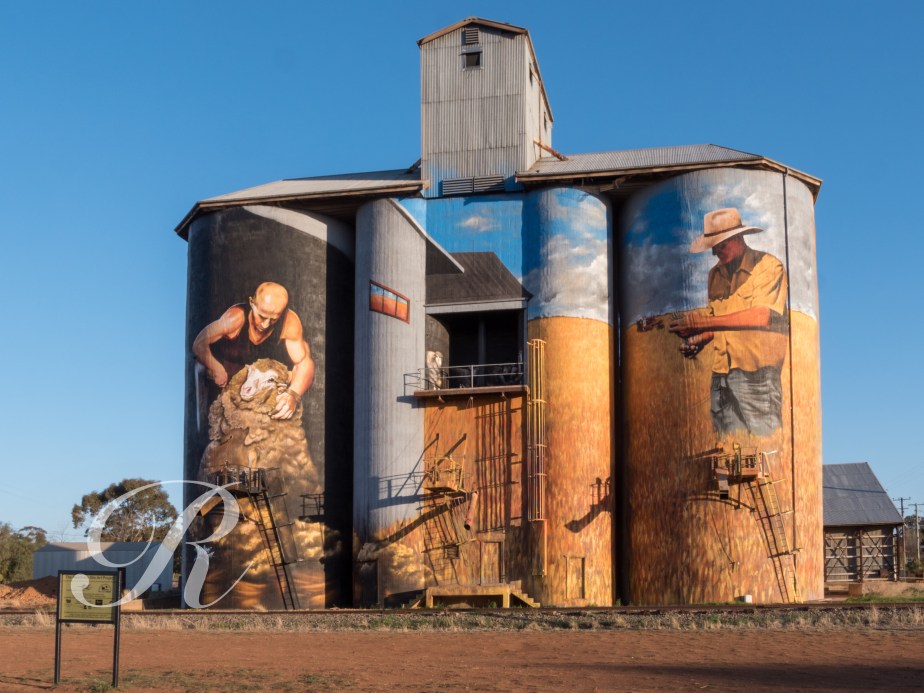
It’s the work of Melbourne-based artist Heesco Khosnaran who, it is said, used 200 litres of Haymes paint and 300 spray paint cans in the process.
We spent the night camping at the showgrounds. It’s $10 a night, instructions on how to make that small contribution are posted outside the toilet block. There is plenty of room and the toilets were nice and clean.
The annual Weethalle show was on the week before. Sadly, with the whole of New South Wales declared drought affected, it was rained out.

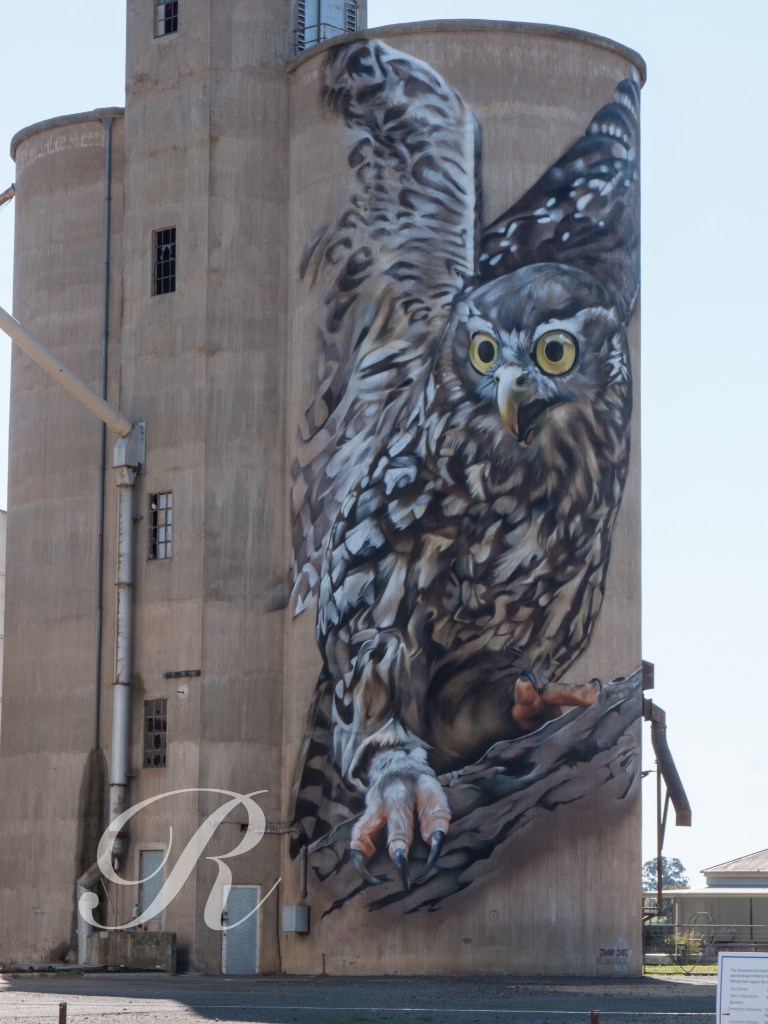
I was so impressed with the silos painted by Dvate at Rochester that I headed to Goorambat near Benalla to see his work there. Impressive. It was painted as part of the 2018 Wall to Wall Festival. The bird is a Southern Boobook.

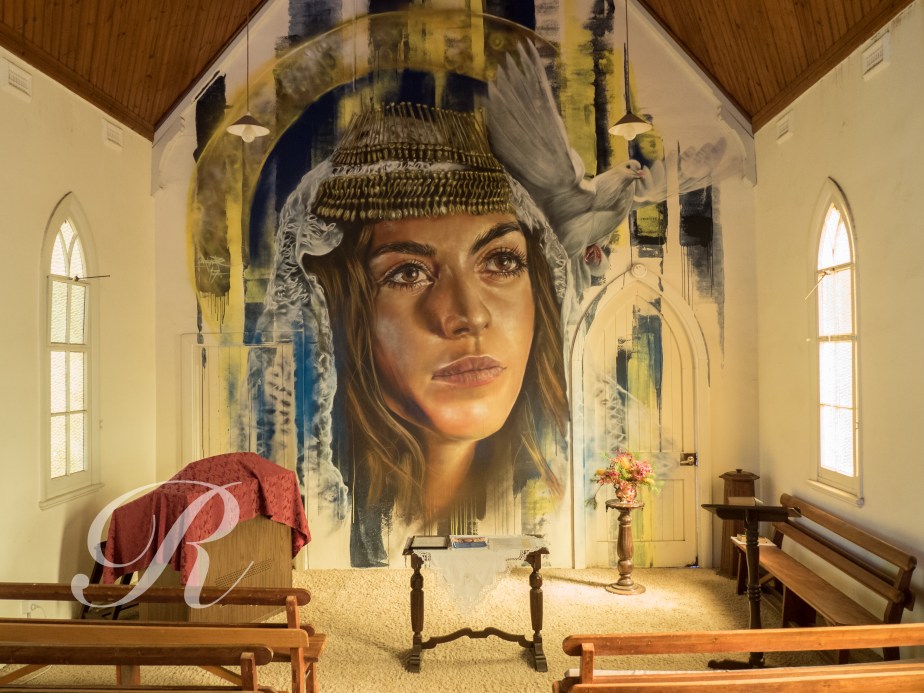
700 metres away there is a mural in the church painted by Adnate …
Rochester this time, a small town on the Campaspe River in northern Victoria.

The artist is Jimmy Beattie aka Dvate and the subjects are a Squirrel Glider and a Sacred Kingfisher. The glider is a rare resident in the woods along the Campaspe while the kingfisher is a fairly common and colorful summer visitor. The medium is acrylic on silo.
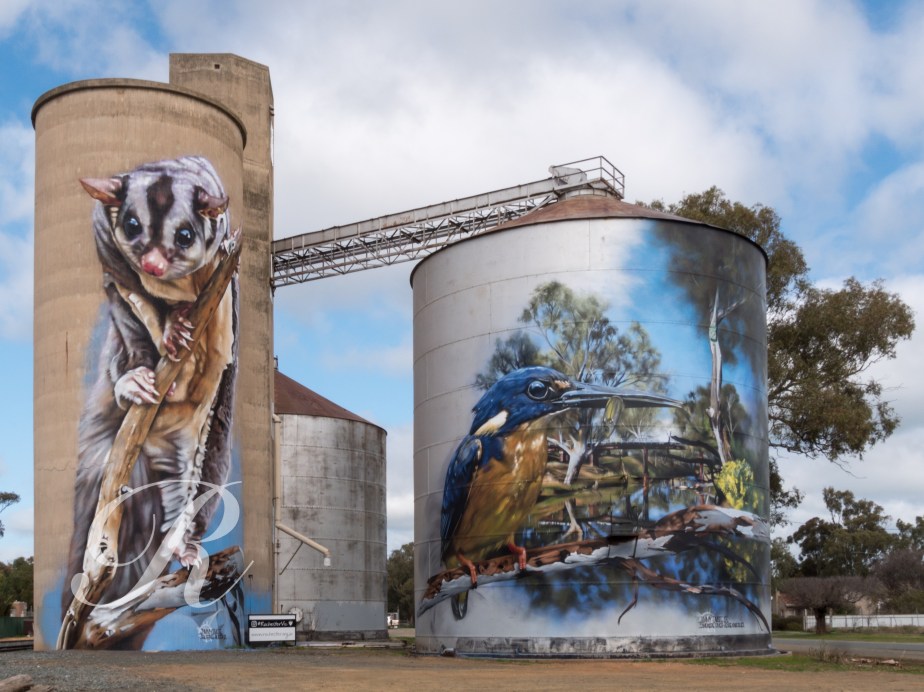
Dvate has painted another silo near Benalla which I hope to catch up with soon.
Many more places possessed of silos are queueing up for a painting. As an art critic I am entering a burgeoning field. I hear there are some north of the border as well.
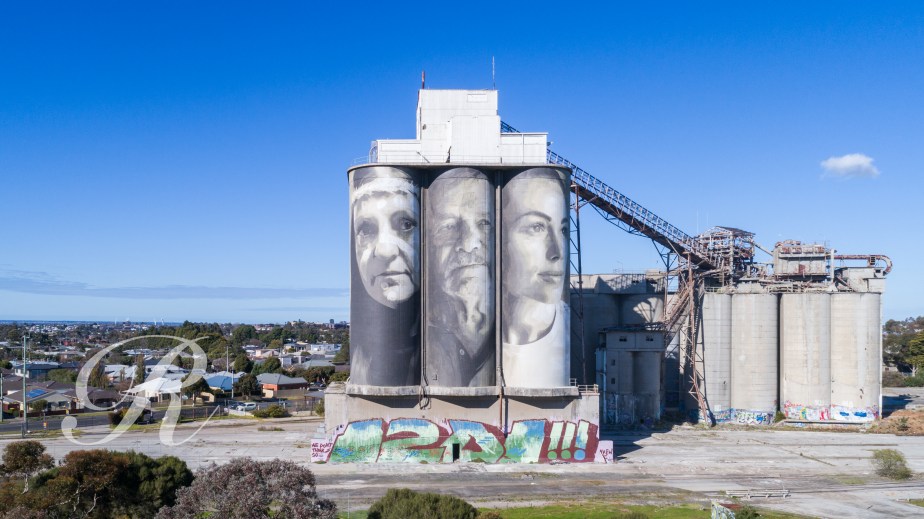
Another silo beautified, this one in a more urban setting. It is the old cement works overlooking Fyansford on the outskirts of Geelong, Victoria. The artist is Rone who has done great things in New York and London and has come home to Geelong for this project. The subjects are local folk. From left to right we have Corinna Eccles, a Wadawurrung elder, Cor Horsten who worked at the site for 35 years and Kelly Cartwright, an athlete who won gold in the long jump and silver in the 100 metres at the London Paralympics in 2012.
On the way home from Wail I took a little detour to Sheep Hills for another look at the silo.

It still looks great. It’s the work of Adnate, a Melbourne artist.
The silo art trail stretches from Rupanyup (Remember to say Re-pun-yip) to Patchewollock about 200 km north. It’s classic sheep-wheat country.

You can find the original of this map and more information <HERE>.
My favourite is the first one at Brim with Sheep Hills in second place but they’re all worth a look.

Way out west in the Wimmera the latest instalment in the silo art trail is taking shape.
This is a work in progress in the heart of Rupanyup – you know how to pronounce that, don’t you? If not you can find instructions <HERE>.

 bobmcgee