It would have been a tick …

It was 1999, the 8th of November to be more precise. The afternoon sun was taking its toll, we’d been birding since just before sunrise around Broome, Western Australia. Gayle and I are fortunate to have some very good friends in Broome, they were making sure we got the most from a short stay. Relentless would have been another way of saying it.

We were on a lake shore. Gayle was sitting in the shade of a tree. The three boys were taking turns at the telescope. Something unexpected turned up, a single Flock Bronzewing. Not impossibly out of range but certainly unexpected, and you might guess from its name to show up on its own was also out of character.

“Hey, Gayle, come and look at this Flock Bronzewing.”

She passed a weary hand across her fevered brow and waved us away. She later claimed that we said Common Bronzewing. That would not have been a tick, when it became clear to her she said something along the lines of “Oh, Flock, you said Flock.”
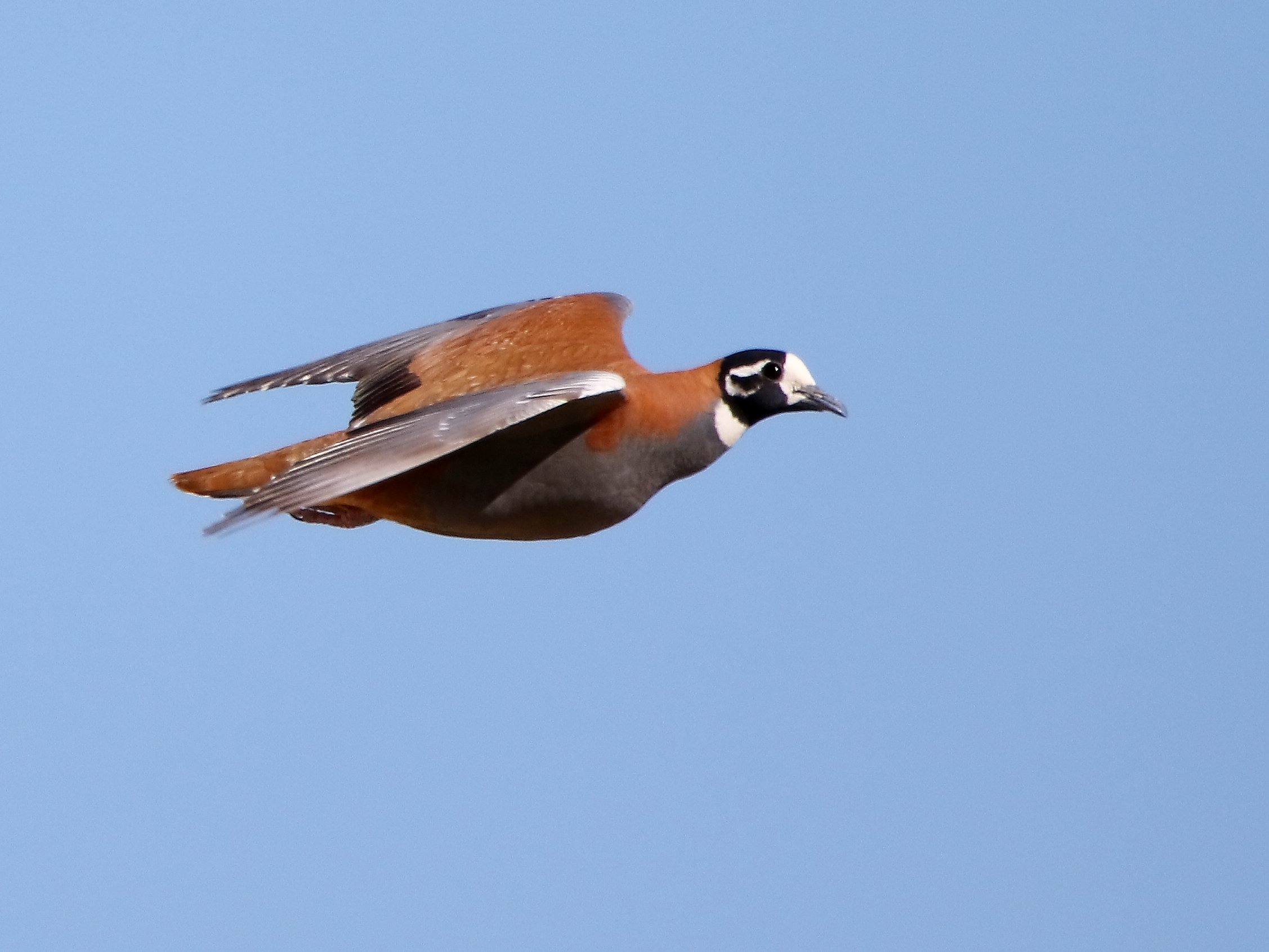
photo G Winterflood

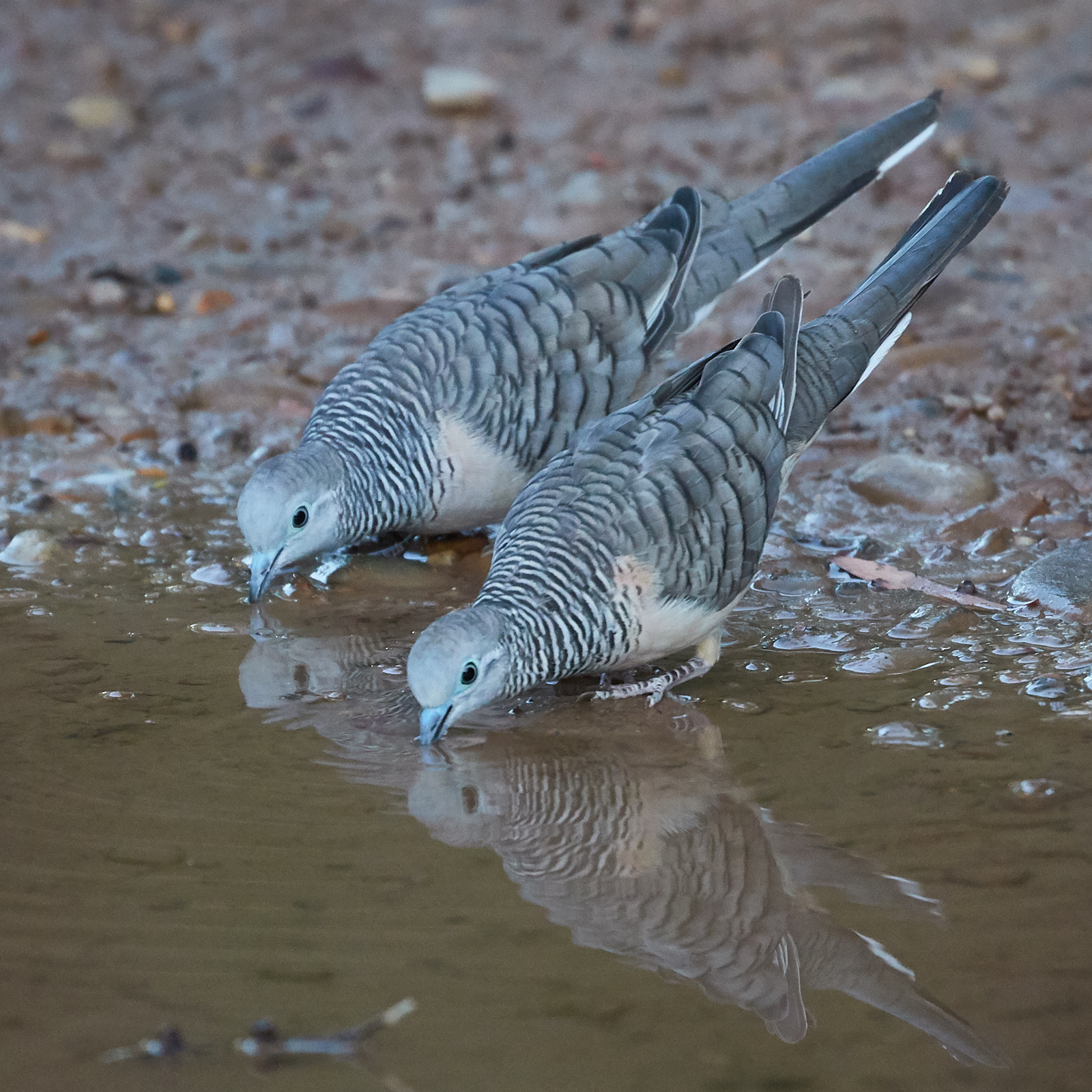
Fast forward to 2022. We put Camooweal in the rear view mirror and shortly after crossed the Northern Territory border heading west on the Barkly Highway, Australia’s own Route 66. In the course of the next hour we saw half a dozen flocks of 20 to 30 heavy-bodied brown pigeons flying rapidly north to south across the road. It had taken 8,267 more days to add Flock Bronzewing to her life list than it needed to. And just like London Transport buses you don’t see one for ages then they all come along together.

It’s at moments like this that Gayle is likely to remind me that she has seen Magellanic Woodpecker (Argentina) and Victorin’s Warbler (South Africa) and the near disaster of the South Georgia Pipit. She’d ticked that on our first day on South Georgia. I hadn’t spoken to her for a week when I got it at the very last opportunity! I imagine that almost as many bird watchers talk about the one that got away as anglers. I have stood within half a metre of a Western Whipbird while it shouted its identity and location at me but not got as much as a glimpse.

The prize for the most elusive group, though, has to go to the Grasswrens. Thanks to DNA analysis the number of species seems to be growing faster than I’m ticking them off. I have seen a few but I think I need more Grasswrens now than when I started.
The Magnetic Properties of Water …

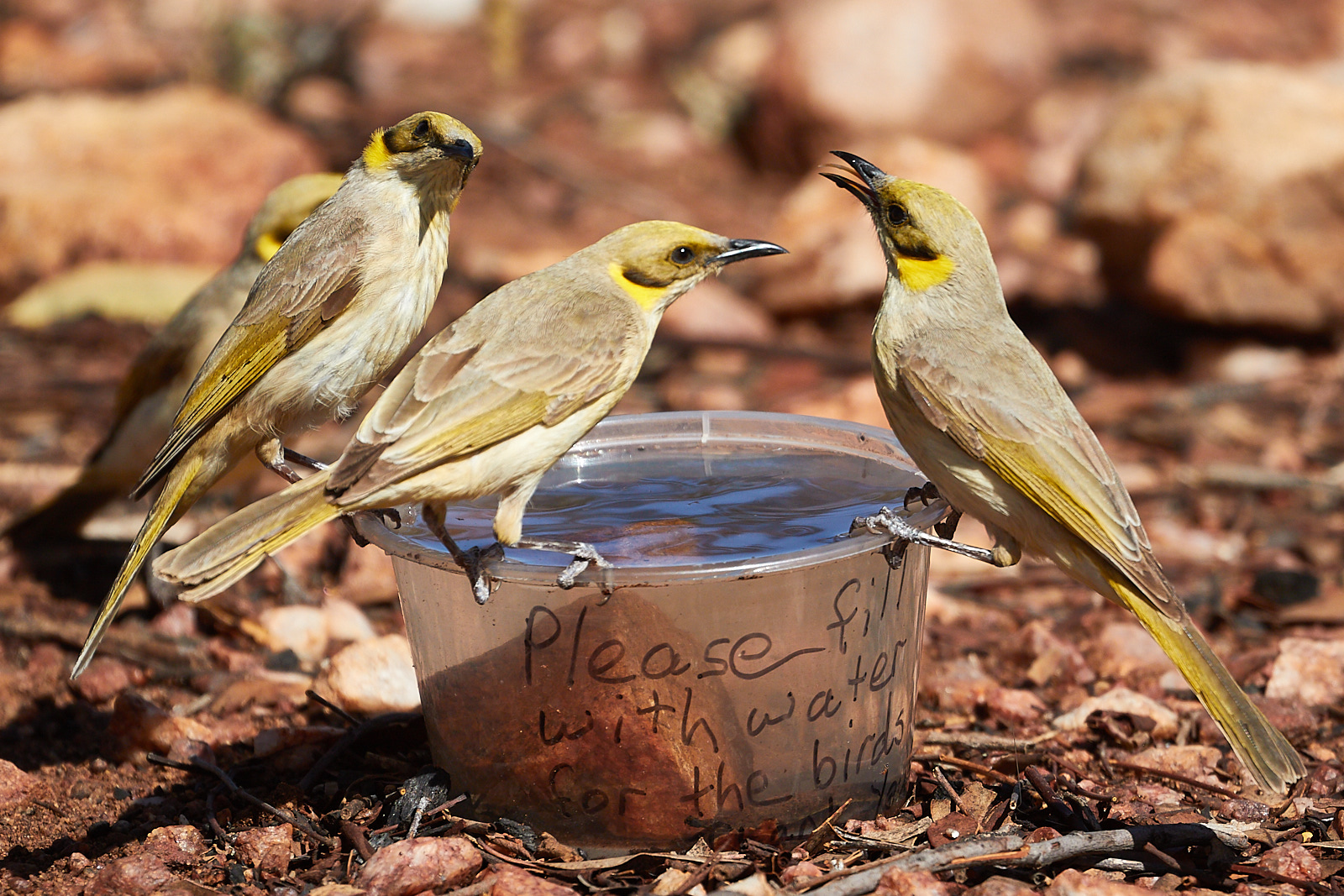
Someone had and the birds came

We woke at Gregory River. My diary entry for 24/06/2022 ….

Woke to the richest dawn chorus so far on the trip. Blue-winged Kookaburra led off, Whistling Kite followed and then the little birds had their say with White-gaped and Rufous-throated Honeyeaters prominent. Time for more photos, sadly the Buff-sided Robins would not pose and the Purple-crowned Fairywrens didn’t even turn up for the shoot.

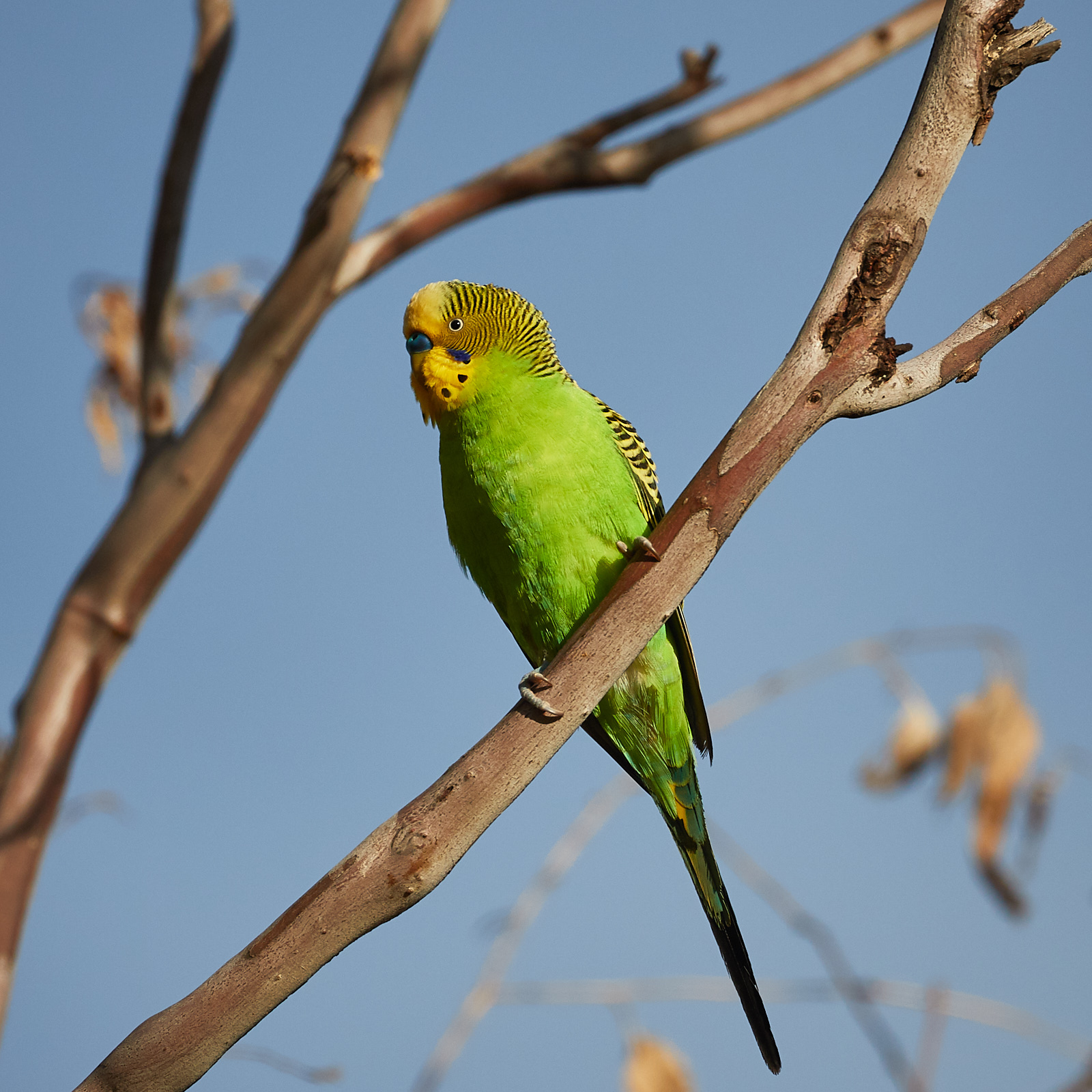
Then on our way south. Saw four Bustard just out of Gregory. Flocks of Cockatiels and Budgerigars, one of Red-tailed Black-Cockatoos, some Emu and flocks of Zebra Finches made the drive to Cloncurry a delight.

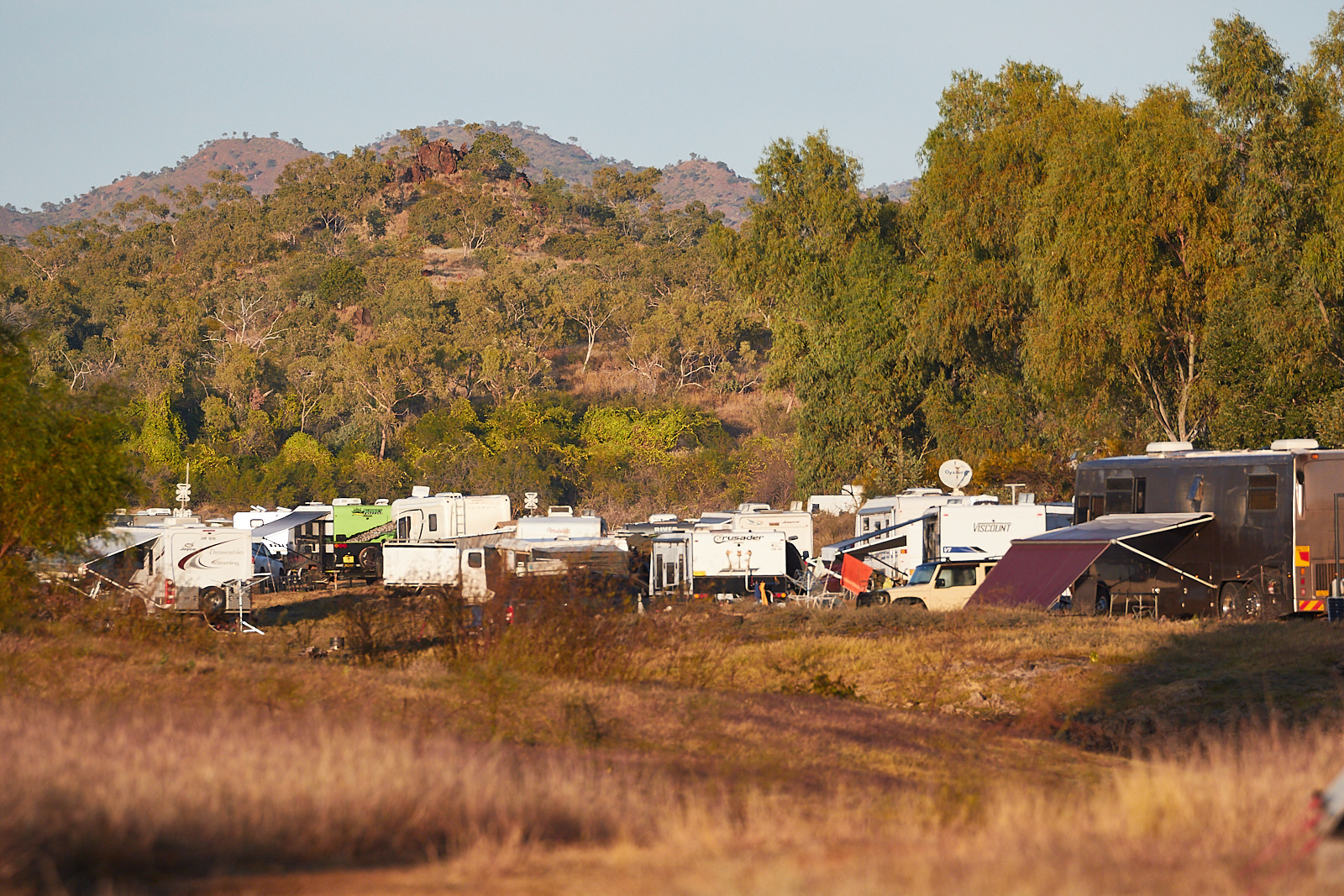
We are camped at Clem Walton Park AKA Corella Dam. Very crowded by the water. We are not by the water. The late afternoon birding has been superb.

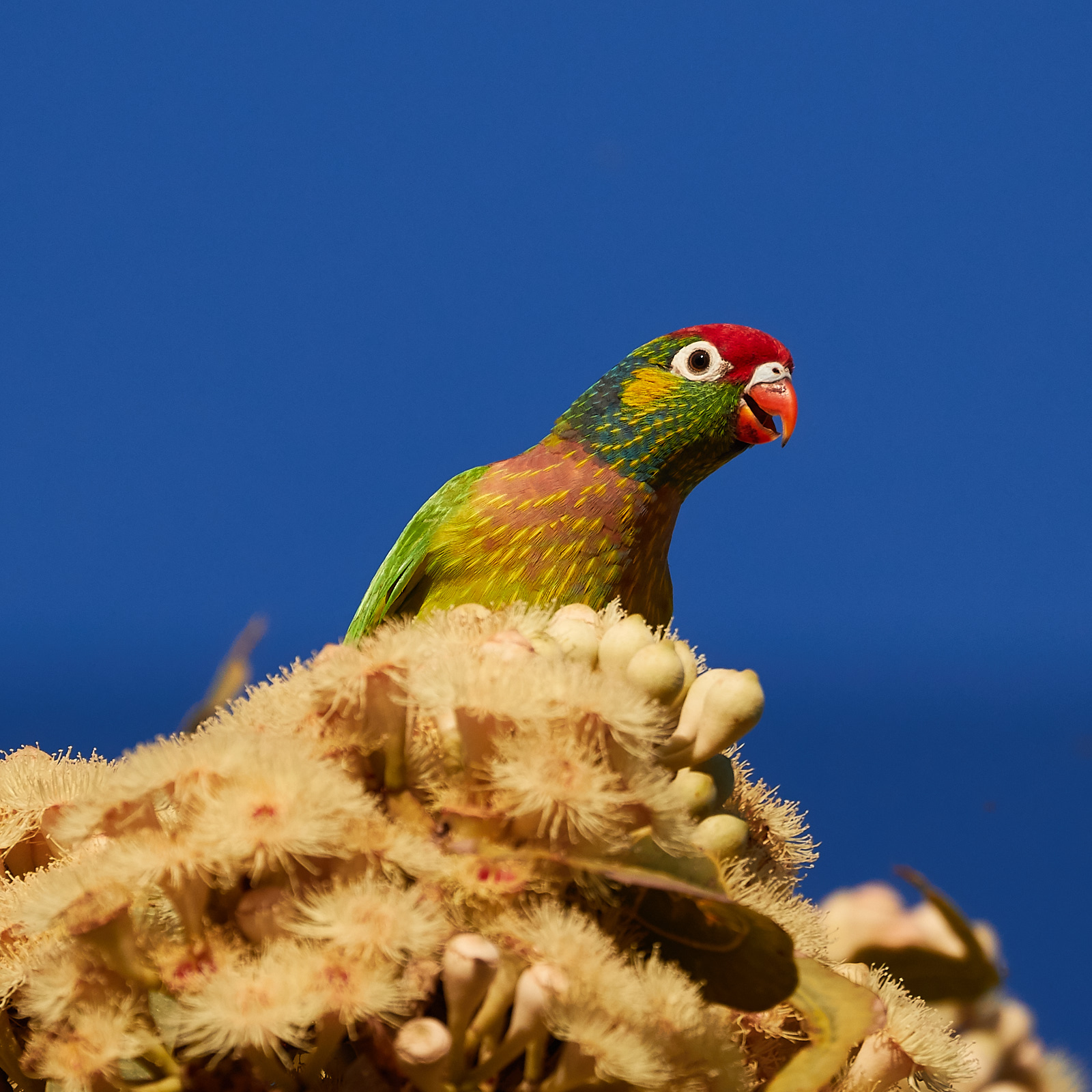
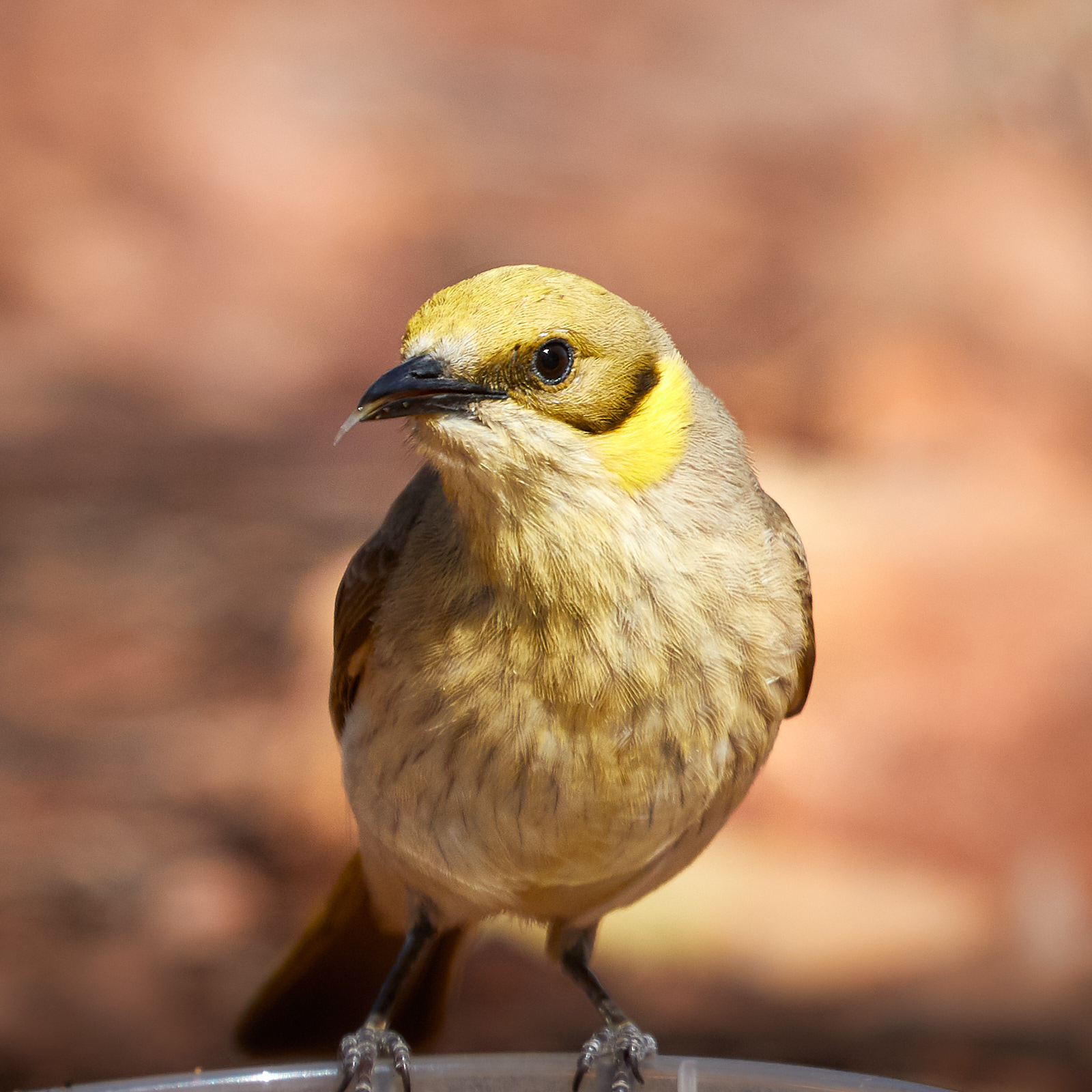
Bird of the day is a challenge. Budgie, Bustard or Varied Lorikeet. Added Grey-fronted Honeyeater to the list today. On a quieter day it could have been Bird of the Day. No internet and I’m too lazy to do the list the old fashioned way but we certainly pushed the trip list past 250.

Indeed, we were not by the water, everywhere you could get by the water looked like that. It’s not only birds that are drawn to water. But the birding at Corella Dam was pretty good for all that.

The Tupperware birds were photographed at a wayside stop. According to Jan Wegener, a great photographer of Aussie birds, there are three elements in a bird photo, the bird, the perch and the background and there are five common mistakes that bird photographers make …

Yes, a full set! But hey I don’t get to see Grey-fronted Honeyeaters everyday.

Moving on …

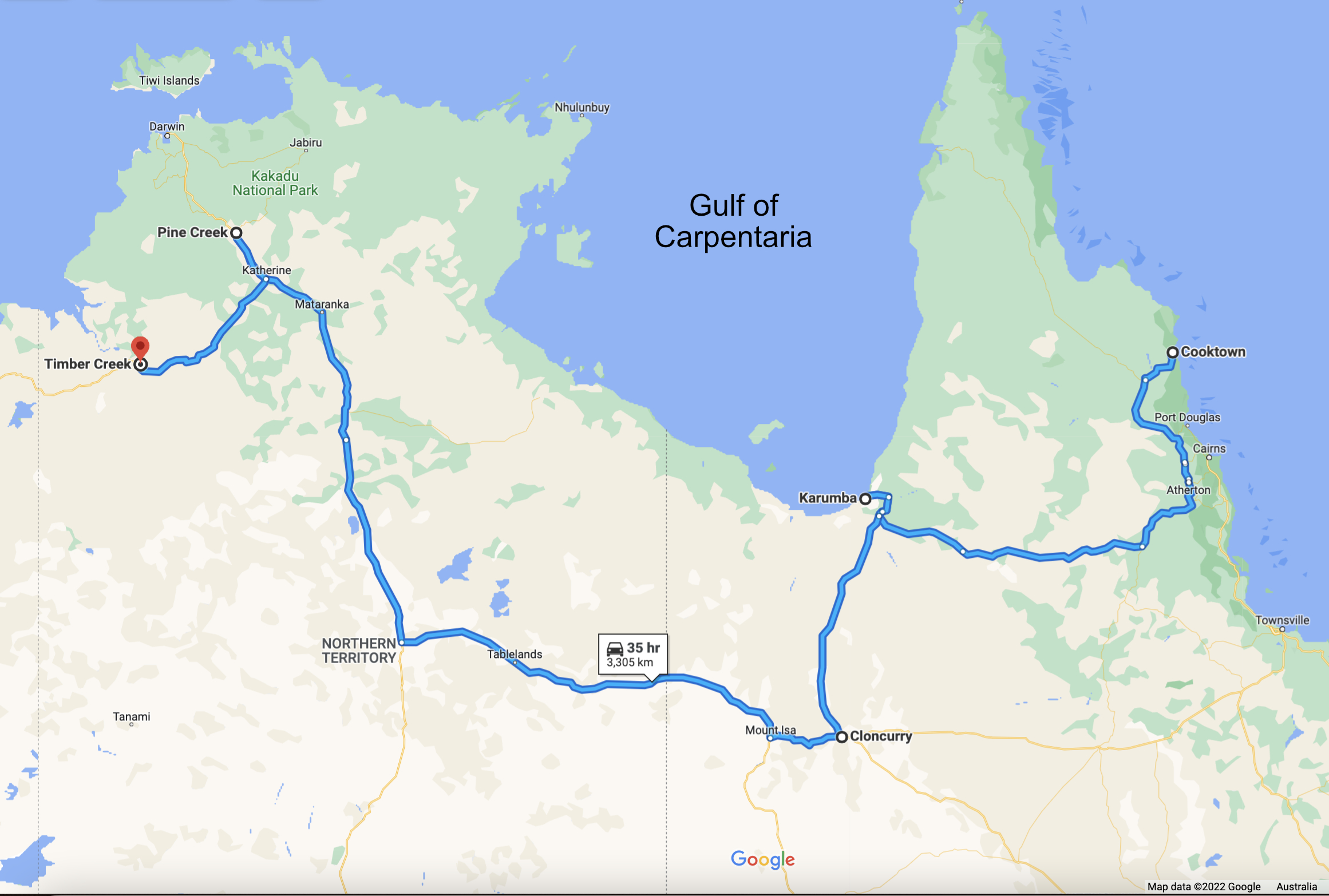
This trip was planned a couple of years ago and then put on ice for some reason. In the original we would have stayed with the gulf all the way to Borroloola which would have taken us through some entirely new country and through Hell’s Gate which sounds exciting. However the wet overstayed its welcome this year and our bus would probably not have coped with the roads. We turned left at Burketown and headed to the Gregory River.

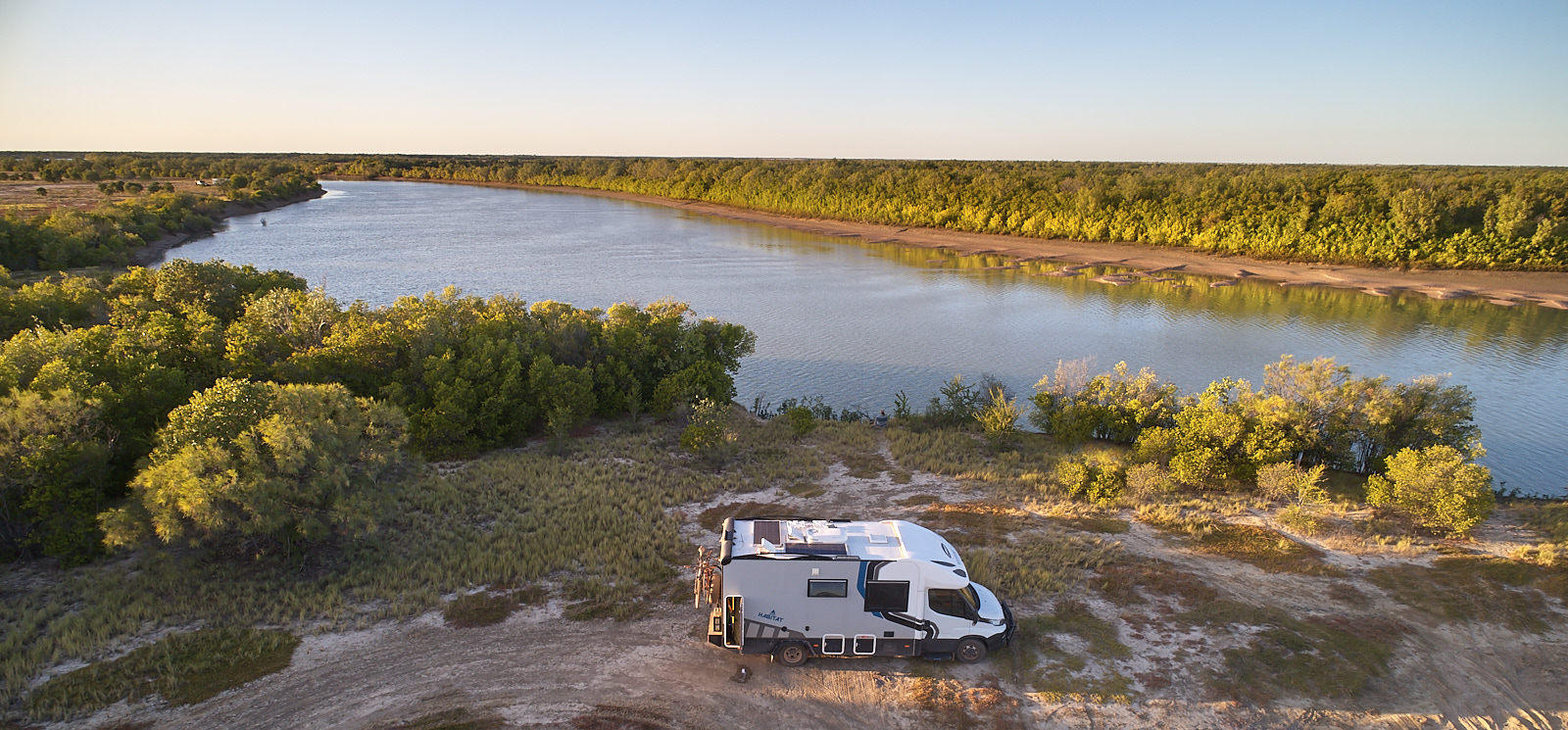
Our camp on the Albert River, Burketown

The Gregory River free camp is in a beautiful setting but a victim of its own success, very crowded. We’ve passed this way several times before on our way to Lawn Hill National Park. The river is lined with pandanus and far enough inland to be safe for a dip. The banks are quite birdy.

A couple of innocent pleasures are watching the launching of boats and parking of caravans. No boats on the Gregory, too shallow but there were caravans and not a lot of space. It’s often the case that Mum jumps out and waves her arms about, yelling instruction while Dad drives dutifully backwards and forwards. It’s a process that possibly leads to more divorces than does infidelity. There is a bridge at Gregory River beyond which there is no camping. Mum was determined to get as close to it as she could. “Back, back, a bit further …” as the wheels on the left reached the top of a shingle bank. Then the van slid sideways until it hit the bridge pier. It drew quite an audience, advice flowed freely. Eventually the van was retrieved. The damage was surprisingly light.

Normanton & Karumba …

Normanton started out as a port on the Norman River servicing the cattle industry. In 1885 gold was discovered at Croydon which gave its growth sudden impetus. The gold has run out and the port has ceased operation. These days tourism is the main driver of its economy with lesser inputs from pastoralism and it is the main administrative centre of the region. It’s a great spot for the bird watcher, normal people enjoy the fine visitor centre, a replica of the largest crocodile ever shot and some fine old buildings. Train buffs, clearly as mad as birdos, can ride on the Gulflander which runs once a week between Croydon and Normanton. The public toilets are not a rival for Queensland’s Maryborough but are certainly above average …

When Burke and Wills reached the Gulf they found that the mangroves prevented them reaching the sea. The one place where you can take a walk on the beach is Karumba about 70km by road north of Normanton. Fishing and tourism are the main economic activities here and these days Barramundi is what drives both. The Barramundi Discovery Centre is well worth a visit.

The population is only about 500 residents in two settlements one at the point the other at the port. The bird watcher is probably better off at the point. They should also check out the Ferryman Cruises.

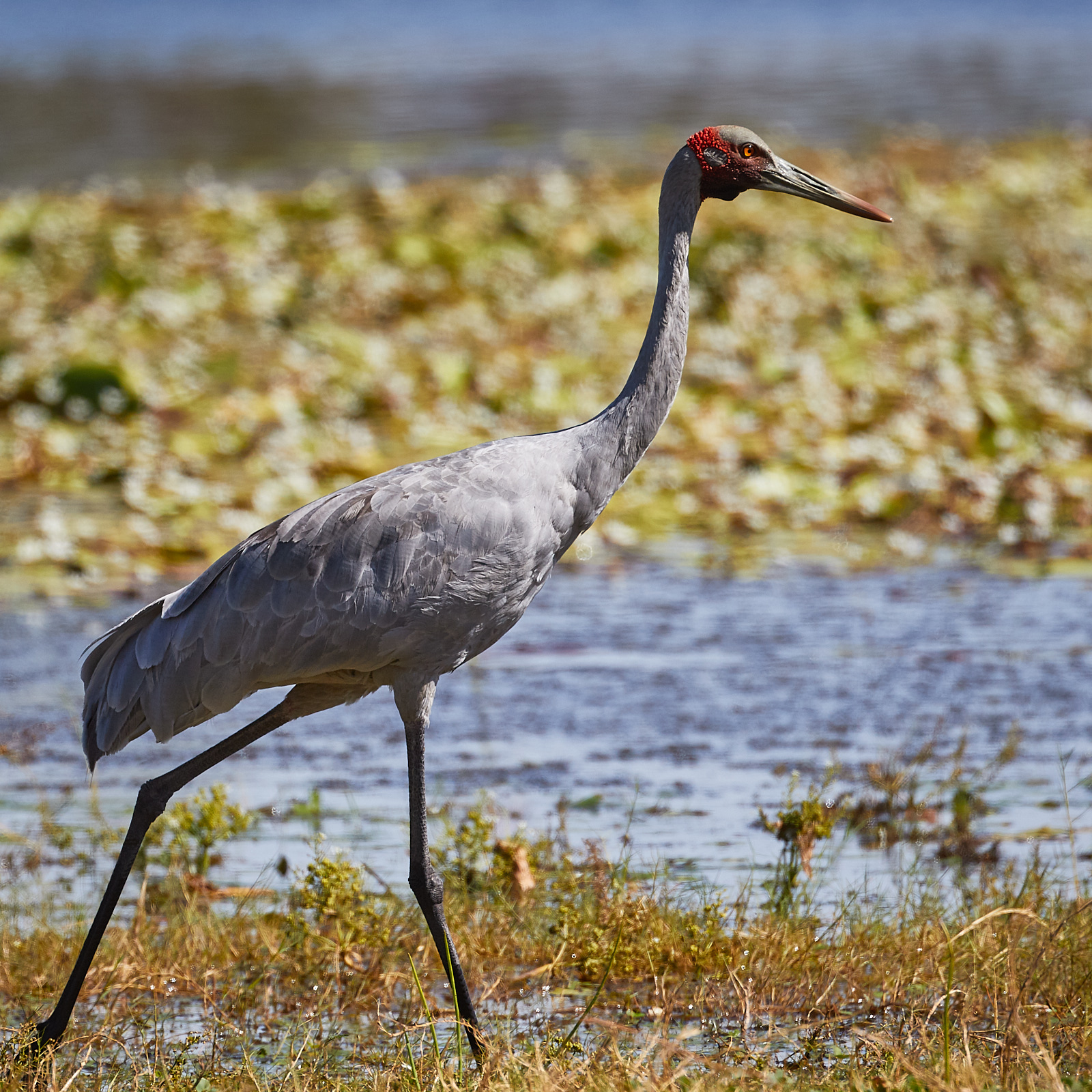
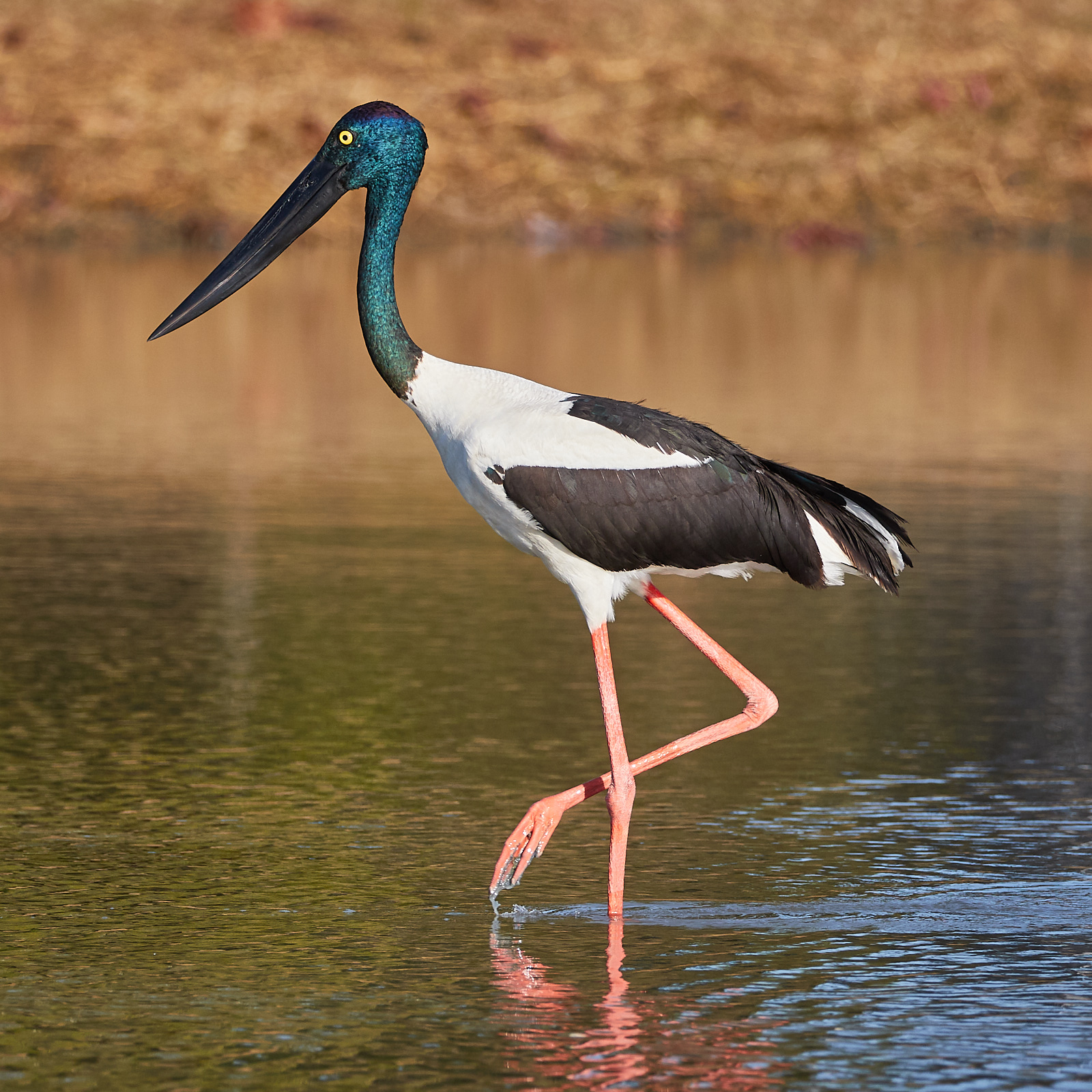
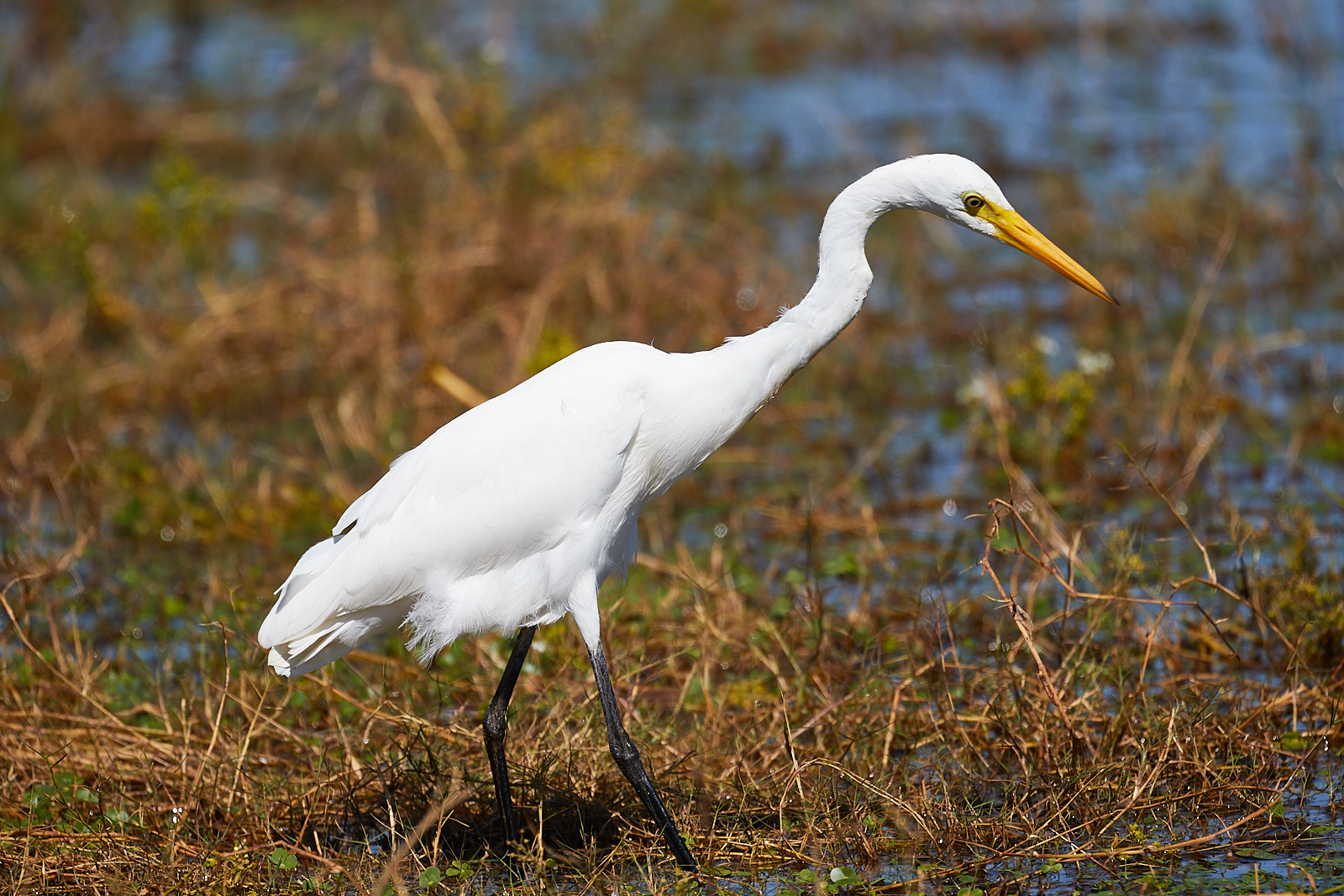
Wetlands and Savanna abound. Good for birds with long legs …

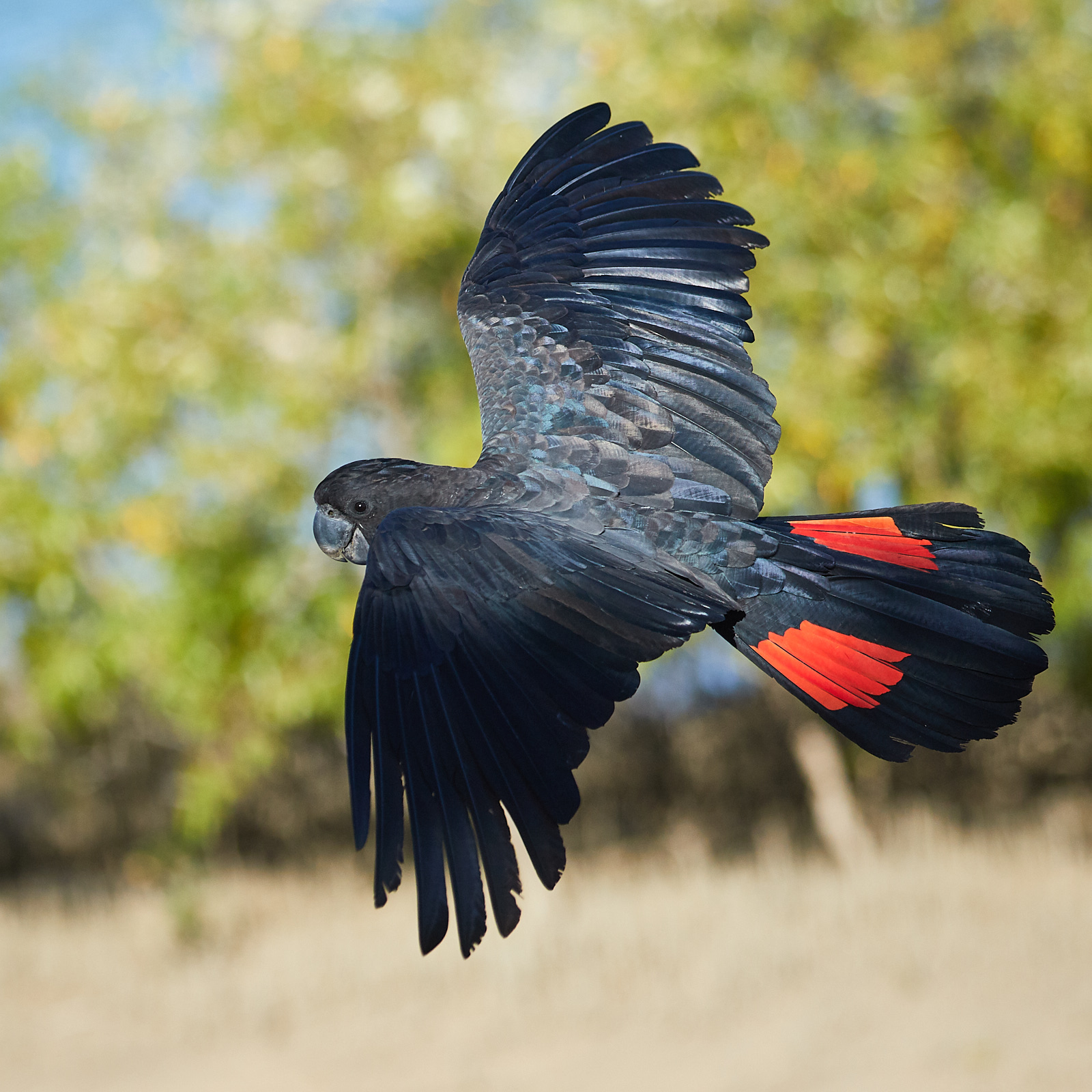
Although they don’t have a monopoly …

Red-tailed Black Cockatoo
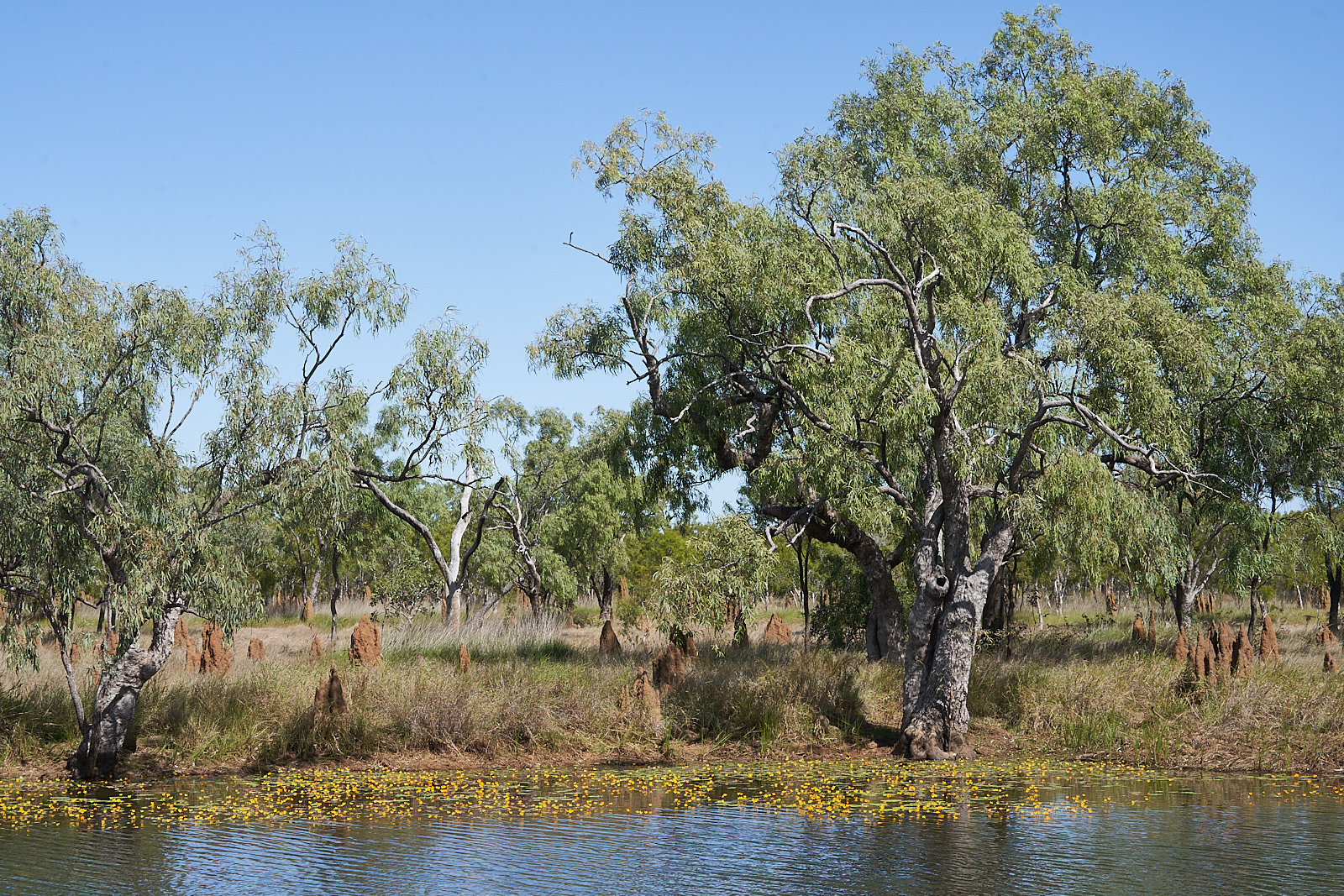
A typical gulf country landscape

Crocodiles …

LEPIDUS: What manner o’ thing is your crocodile?

ANTONY: It is shaped, sir, like itself, and it is as broad as it hath breadth. It is just so high as it is, and moves with it own organs. It lives by that which nourisheth it, and the elements once out of it, it transmigrates.

Shakespeare Antony and Cleopatra

The crocodilians first appeared in the fossil record in the Cretaceous 95 million years ago. They include the crocodiles, alligators, caimans and gharials. We have two species in Australia popularly known as freshies and salties. They are confined to the tropics and particularly common on the front page of the NT News.

The Estuarine or Saltwater Crocodile is the largest crocodilian of them all. It’s range extends from the East coast of India eastward along the Asian coast, around Papua-New Guinea and northern Australia. It penetrates the larger river systems. In its realm it is the apex predator.

Amongst the things that nourisheth our salties are people and therein lies a problem. It is reported that in the 33 years 1971-2004 there were 62 definite, unprovoked attacks, 17 of which were fatal. That averages out to 1.9 attacks each year in Australia, 70% of victims lived to tell the tale, sometimes a rather gruesome one.

So, chances of getting eaten by a crocodile are not high. The chances of a crocodile being eaten by a human on the other hand are higher. Currently selling at $32/kg from Southside Quality Meats – tastes like chicken. Crocodiles are, after all, birds closest living relatives.

Estuarine Crocodile

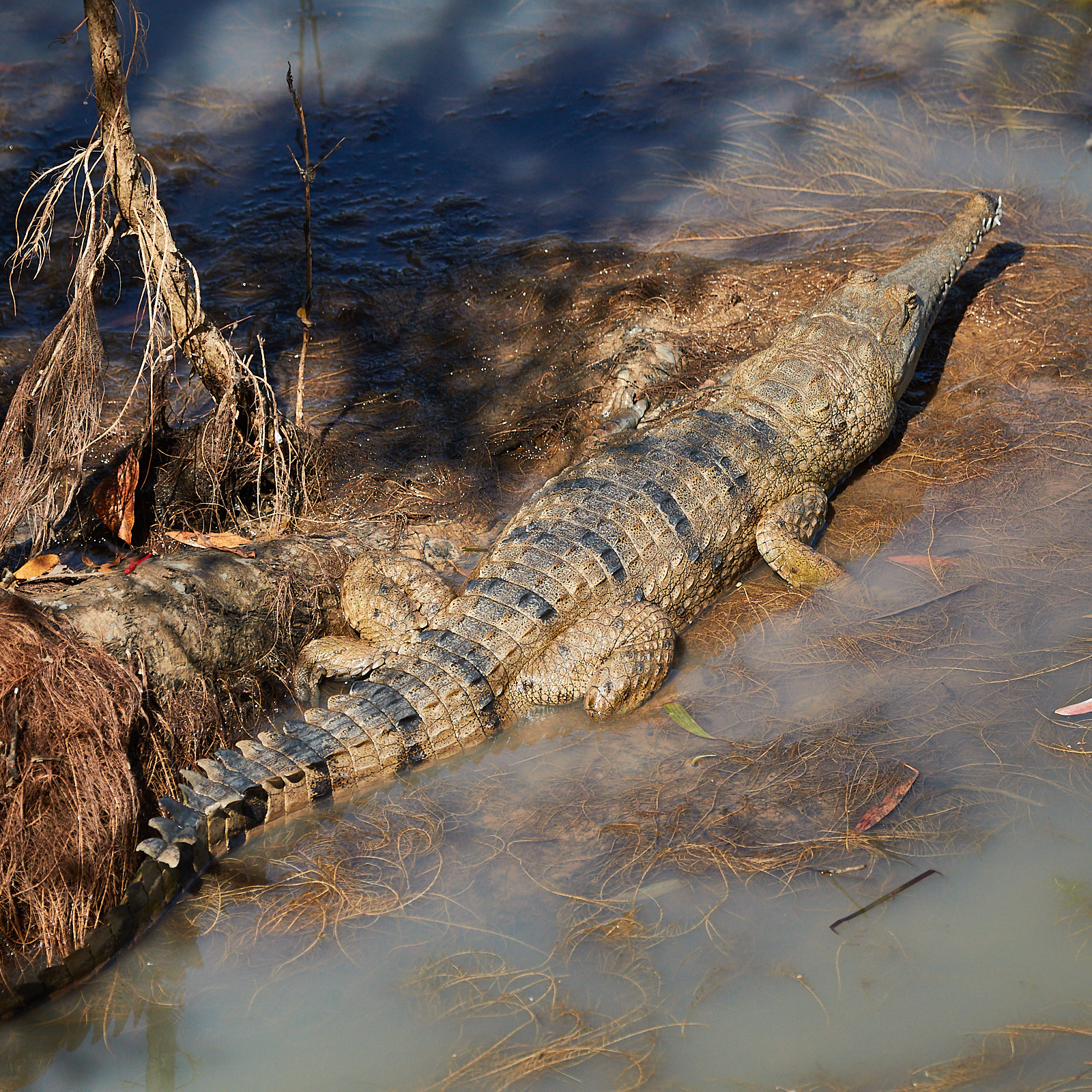
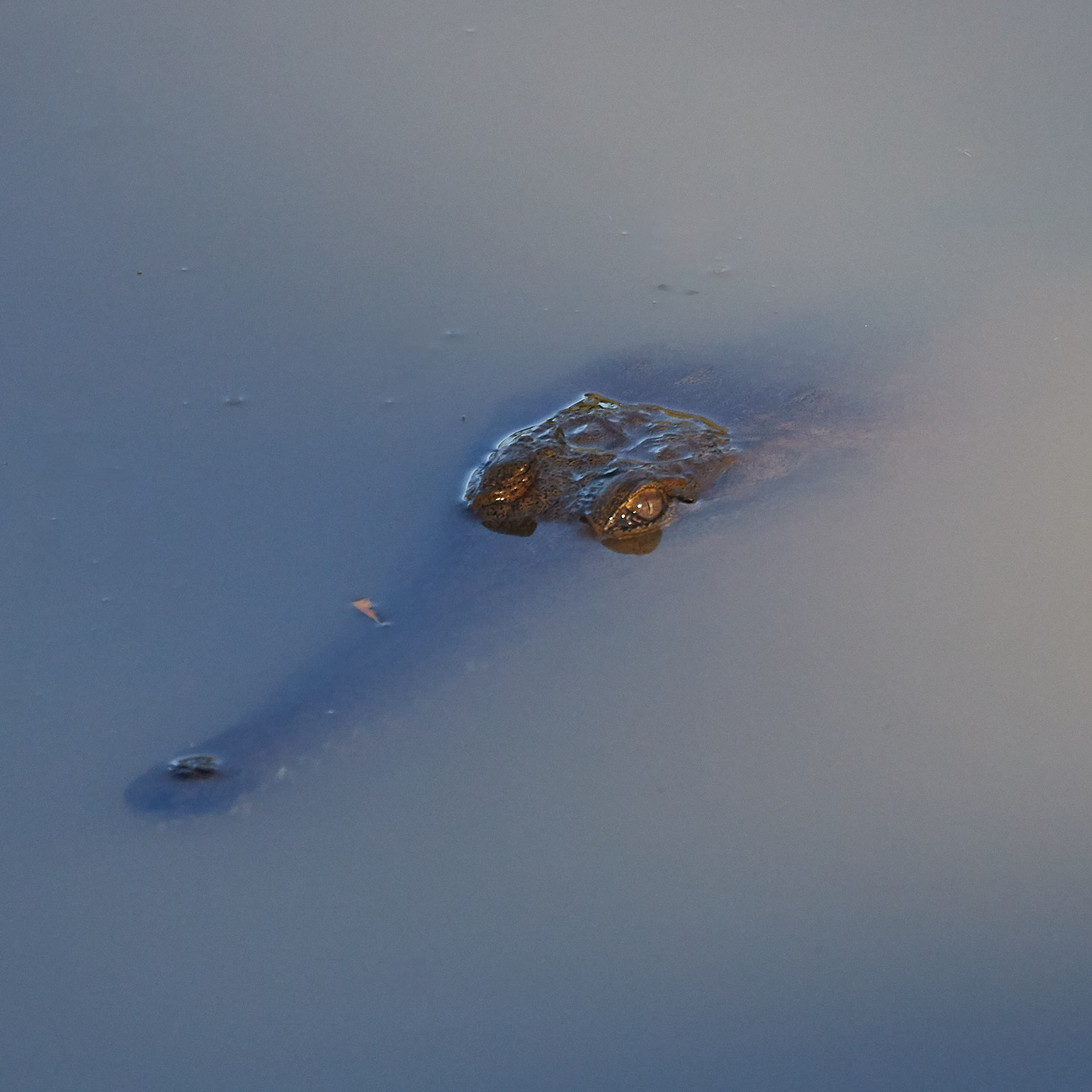
The Freshwater Crocodiles ha a longer narrower snout. It is mainly a fish eater, people are not on the menu but they can inflict a nasty laceration. Usually the culprit is a female guarding her nest.

Freshwater Crocodile, Norman River Qld.

Although risks are low there are ways to increase them. Have a read of the Crocodile Chronicles for examples. Jumping off the bridge at midnight into crocodile infested waters is definitely suboptimal. In Africa and Asia many people have no choice but to fish, wash and draw water from dangerous places. Figures are extremely rubbery but a thousand people a year taken by crocodiles is often quoted. In Africa it is the Nile Crocodile with the fearsome reputation.

Young Nile Crocodile, Nile River, Uganda.

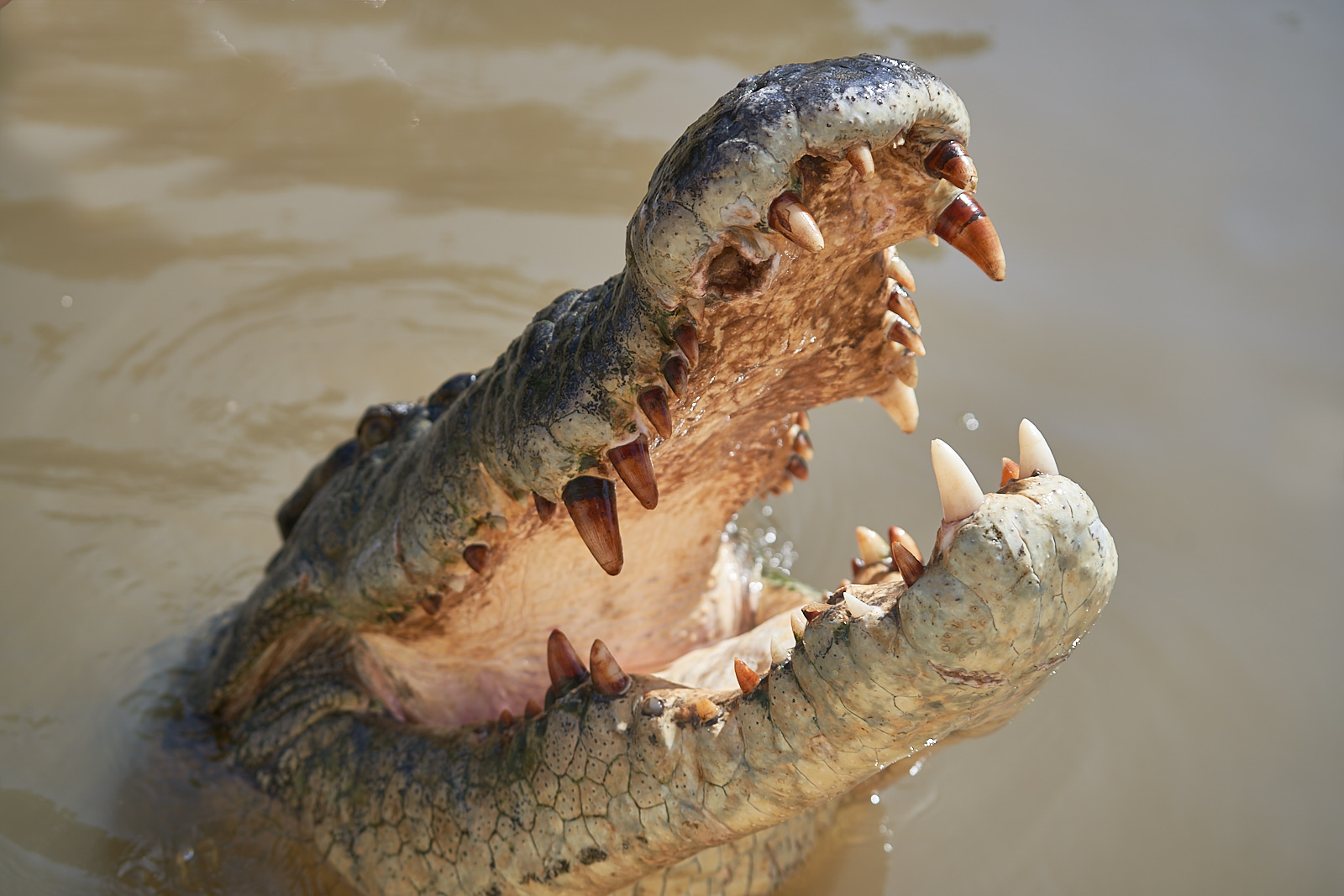
I took the next photograph on an Adelaide River Jumping Crocodiles cruise …

These guys have learnt to jump out of the water chasing pieces of meat tied on a string. It passed me so close that I could hear it ticking. The only thing between me and it was air. Connie, our guide, said “If it takes a fancy to you there’s not much I can do with a pork chop on a string.”

LEPIDUS: ’Tis a strange serpent.

ANTONY: ’Tis so, and the tears of it are wet.

Leichhardt’s Lagoon …

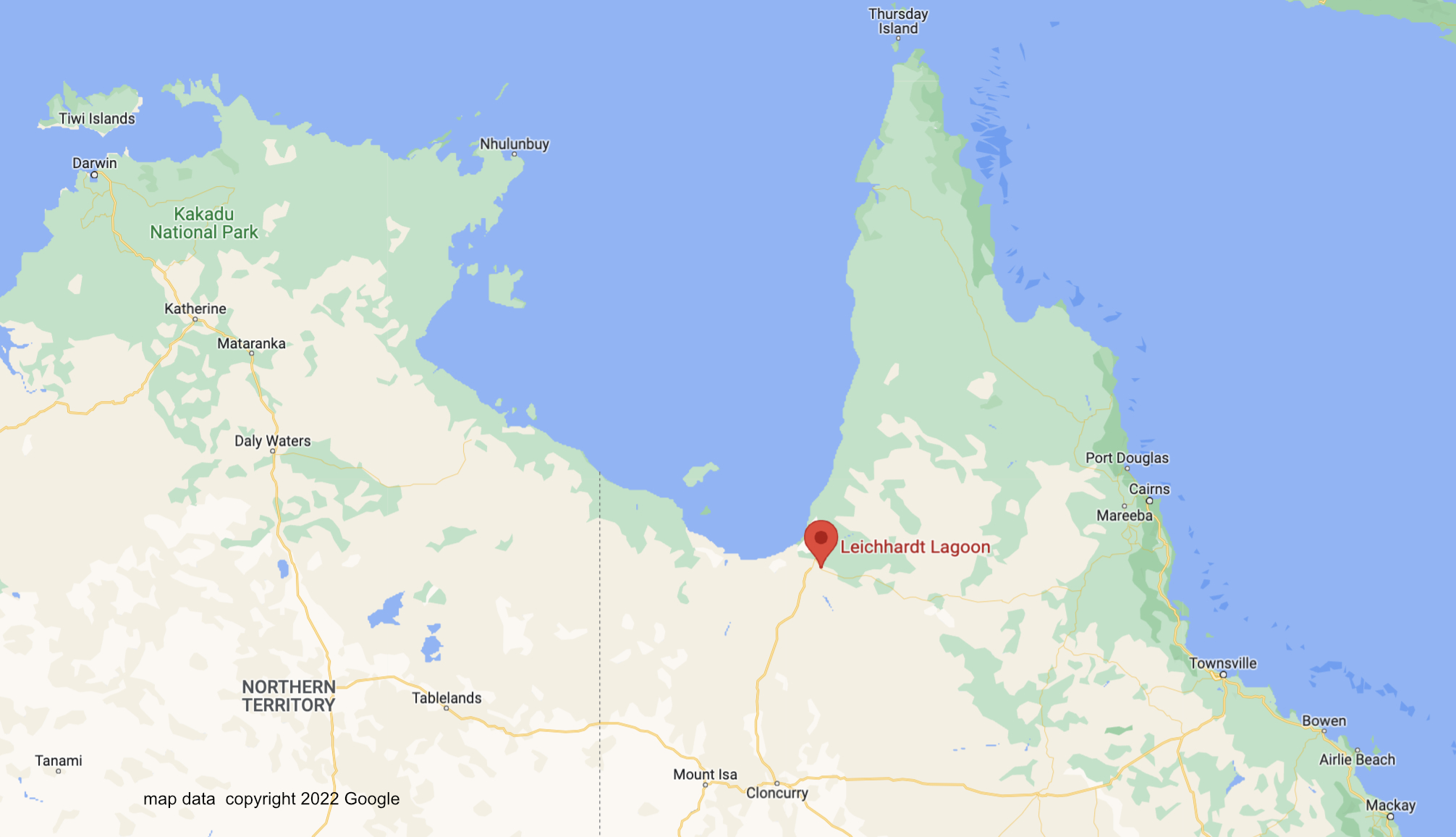
Coming from the east on Highway 1 from Croydon you cross the Norman River a little more than 20km shy of Normanton. Leichhardt’s Lagoon is on the left soon after. It’s one of my favourite camp grounds. No streams run in or out. Flood waters from the river fill the lagoon in summer, the level drops during the dry but it remains a refuge for water birds until the next wet. It’s not a flash camp site but for ambiance and natural values it’s hard to beat and the manager is the most obliging man in the gulf.

Bee-eaters and Kingfishers plied their trade around the van while Egrets and Cranes wandered along the shore 25 meters away. Magpie Geese browsed in the shallows, Cormorants and Darters fished in deeper waters. On the far bank a crocodile sunned itself. The raptors patrolled overhead.

Click on any of these photos for a closer look.

Time for a swim?

Heading West …

Our last night in the Atherton Tablelands was spent at Innot Hot Springs. The west side of the tablelands is drier, the forest in the uncleared areas tends to be eucalypt rather than rainforest and the birdlife slowly changes too but we were there mainly for the hot springs. You can enjoy the raw product just by wading into the creek. The disadvantage of that is choose the wrong spot and you could be on your way to the burns unit or you could be up to your knees in cold water wondering what all the fuss is about.

Somewhere in between is the place that is just right. It’s a shallow pool scraped out of the gravel. Goldilocks has already claimed it, she’s nowhere near as attractive as you imagined and she’s probably brought the three bears with her.

The better option is to stay at the campground and enjoy the nice man-made pools within. Entry is included in the price of your accommodation. The pools are deep enough to immerse yourself in and you can choose one at a temperature that suits. Some are outdoors but the hottest are indoors. It’s not quite up to Japanese standard, you would be out of place naked, but very refreshing and extremely relaxing.

As a bonus the campground is quite pleasantly grassed and treed and adjacent to a billabong. The birds like it here too.

Innot Hot Springs is on Highway 1. That is the gentler road across the base of Cape York which is the way we went this time, via Croyden to the eastern corner of the Gulf. The adventurous can take a more northerly route via the Burke Development Road – carry an extra spare wheel and don’t forget the jack!

Lake Eacham …

Moving south on the Atherton Tablelands brings you in easy reach of the crater lakes and some fine rainforest remnants. Lake Eacham and its surrounding forest survived because of its scenic splendour when surrounding land was carved up for agriculture and is now preserved as national park in the World Heritage listed Wet Tropics. It makes a good base for exploring the region.

The lake originated when molten magma came into contact with ground water suddenly producing so much steam that an explosion ensued. In other words it’s a maar. Lake Barrine is another example. The Atherton Volcanic Province covers an area of 1800 square kilometers with 52 eruptive centres. It’s been quiet for the last 10,000 years which may mean it’s extinct … or perhaps not.
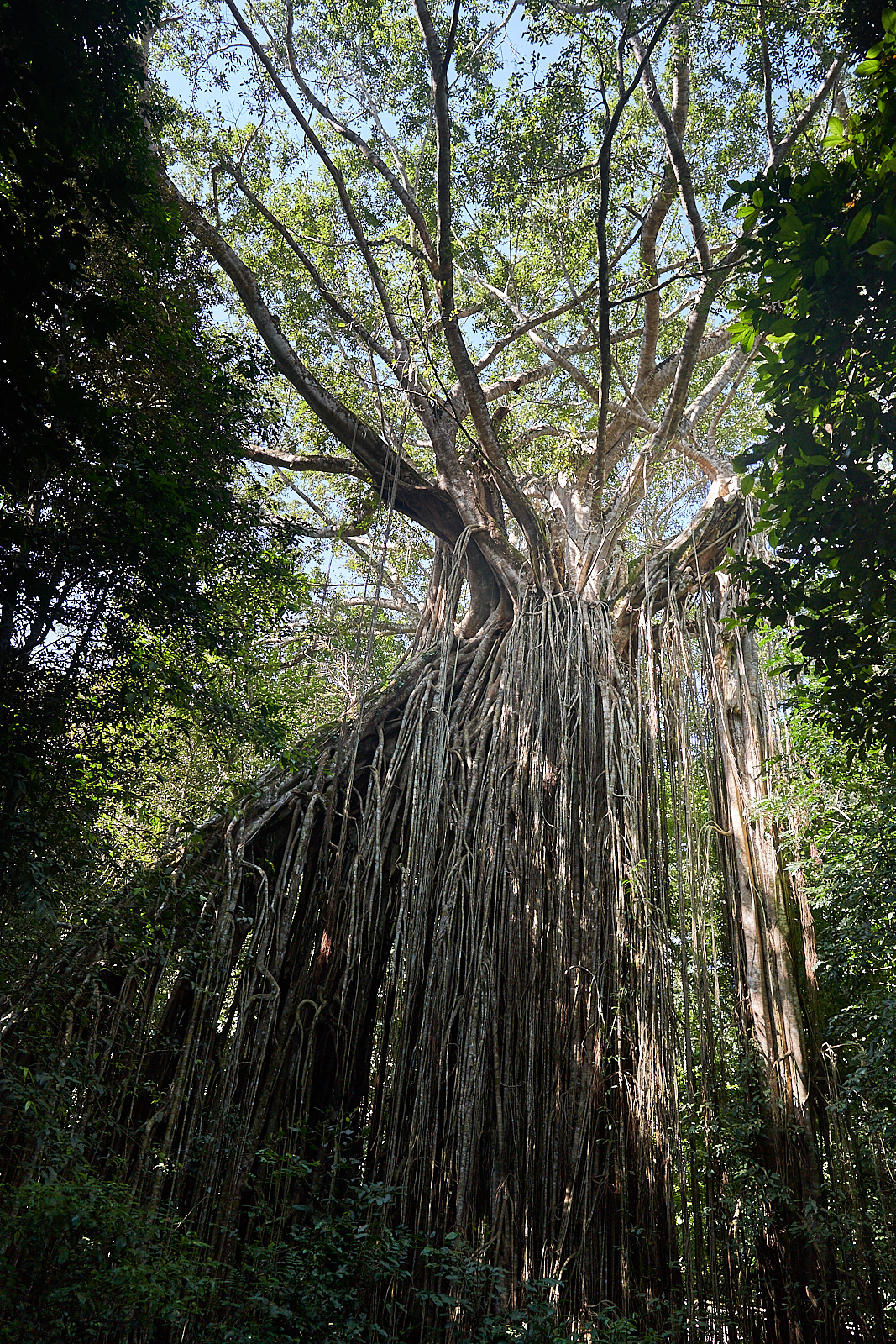
The avid bird watcher will want to visit both these lakes as well as other rainforest remnants, Hasties Swamp and Hypipamee National Park. One evening the sunset should be enjoyed at Bromfield Crater where hundreds of Brolga and Sarus Cranes fly in to spend the night. Spectacular but dress warmly!

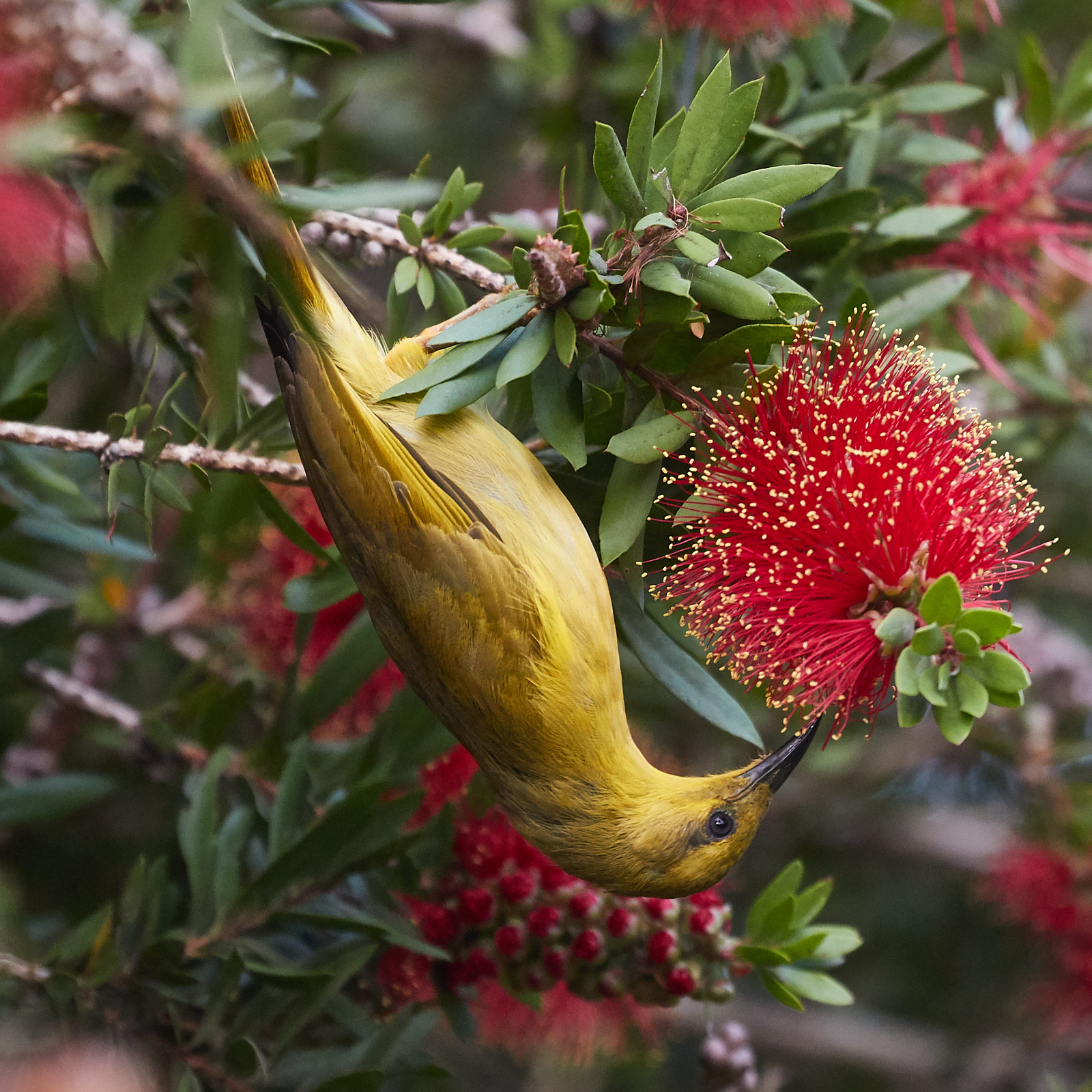
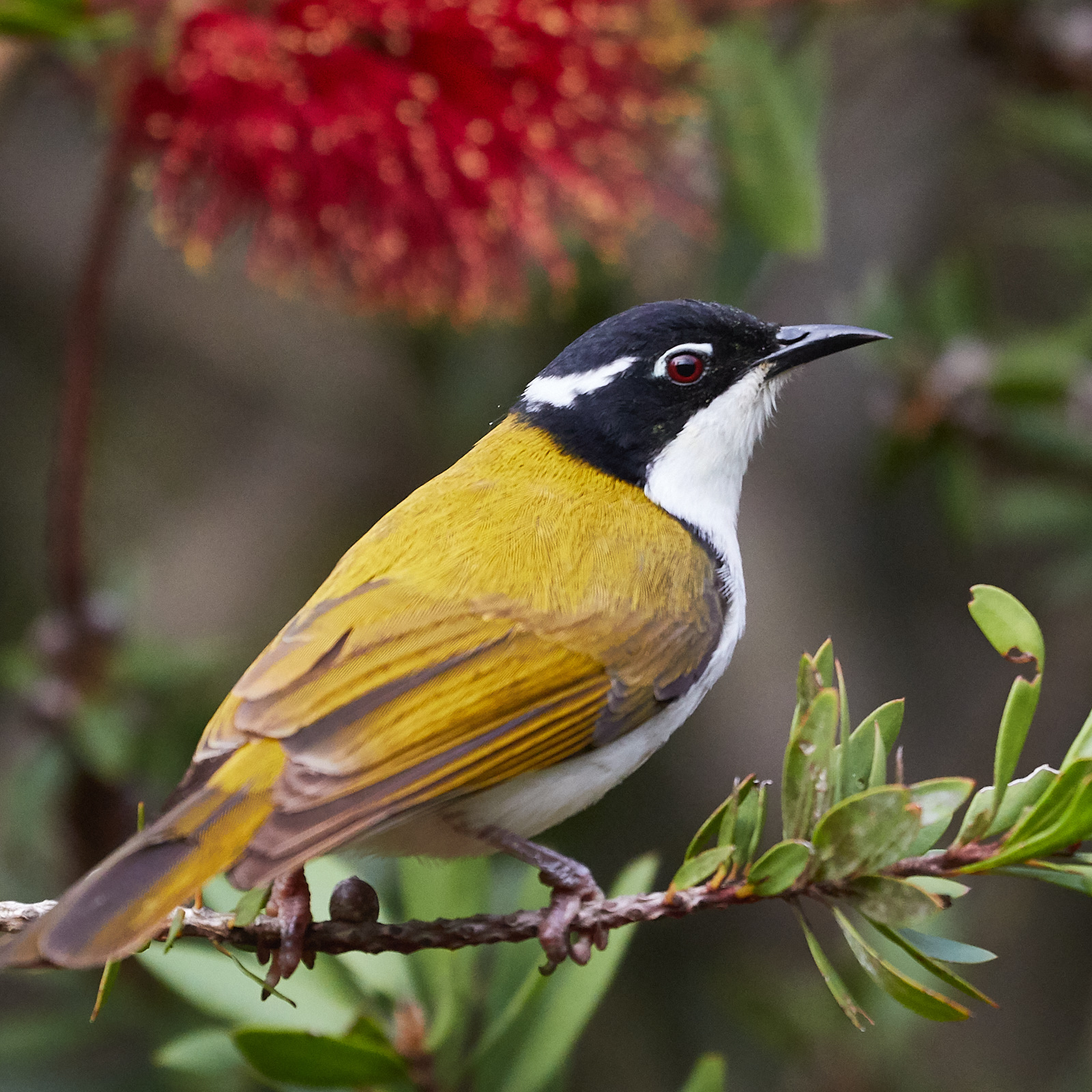
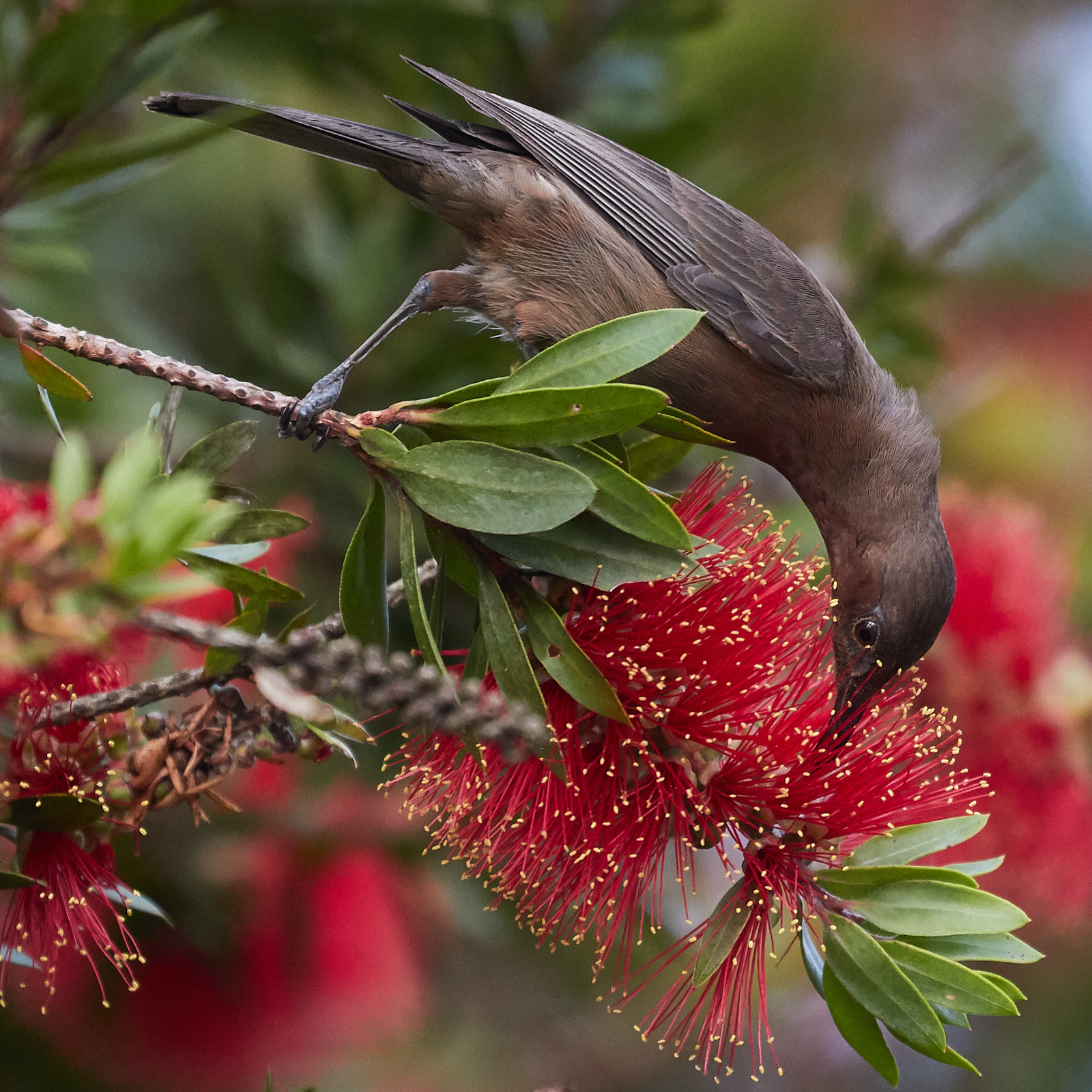
Scarlet Honeyeater

Atherton Tablelands …

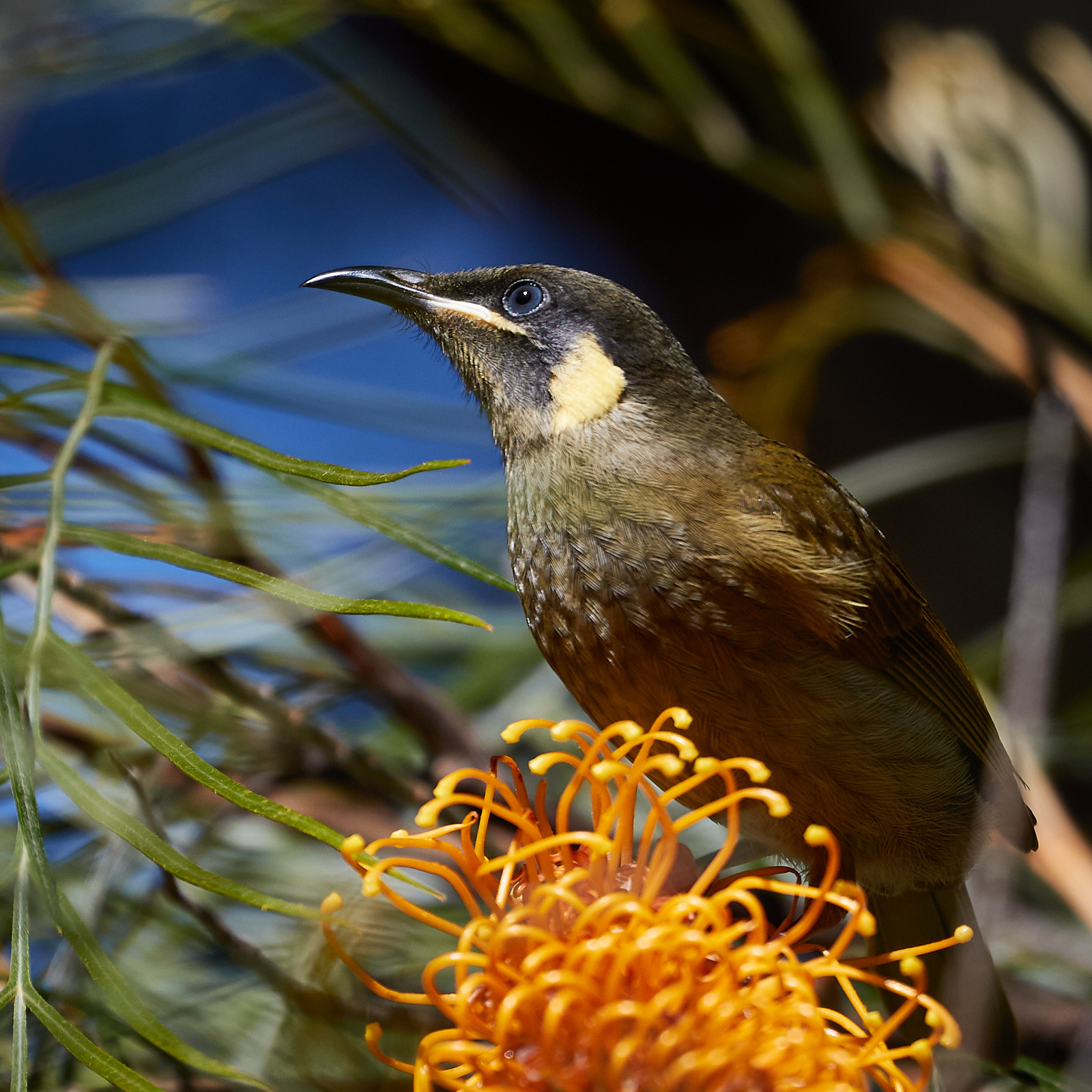
Macleay’s Honeyeater

The Atherton region is the richest birding hot spot in Australia. From mangroves and mudflats at the coast via lowland rainforest, wetlands, agricultural country to cool tropical forest at the top of Mount Lewis there is diversity every step of the way. Any budding birder would do well to make it their next holiday destination.

We stayed at Wetherby Station for a few days. It’s an old favorite of mine because it is handy for Mount Lewis and beautiful in its own right. It is a working cattle property which offers some accommodation options. It seemed to be just waking up from a covid induced slumber, hopefully it will be in full swing again soon. Without going out the gate you have three lagoons, some gardens, woodland and pasture. Just down the road along Rifle Creek there is some rainforest where you can find Pale Yellow Robin and Lovely Fairywren.

Some time in the garden was well rewarded. You’ve gotta love callistemon …
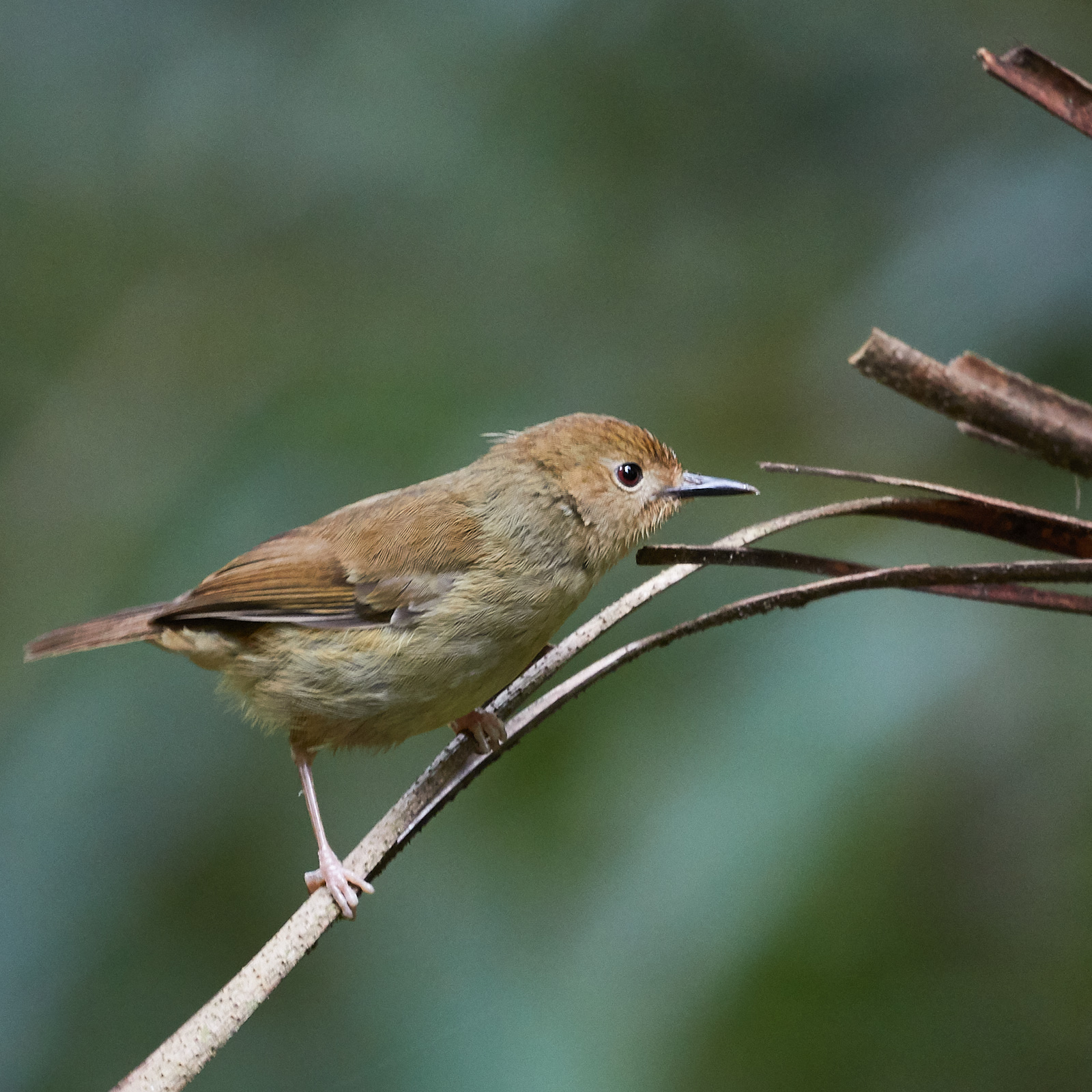
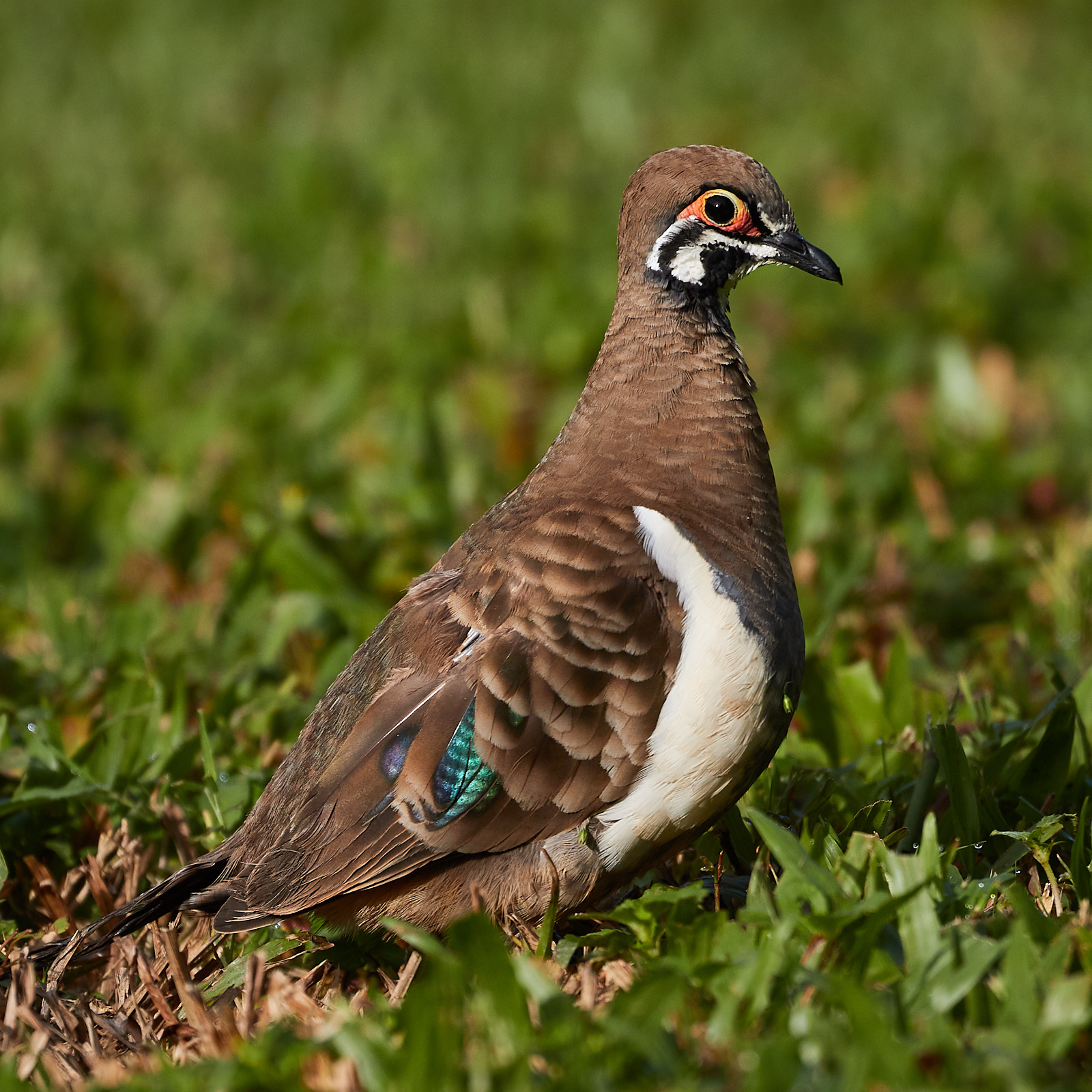
Along the entrance road I found something larger …

Squatter Pigeon

Cooktown part 2 …

The starting point for the westerly leg of this year’s big trip, a journey that will follow the paths of great explorers and cross the paths of other great explorers. But before we leave let me revisit Cook’s contribution to the map of Australia.

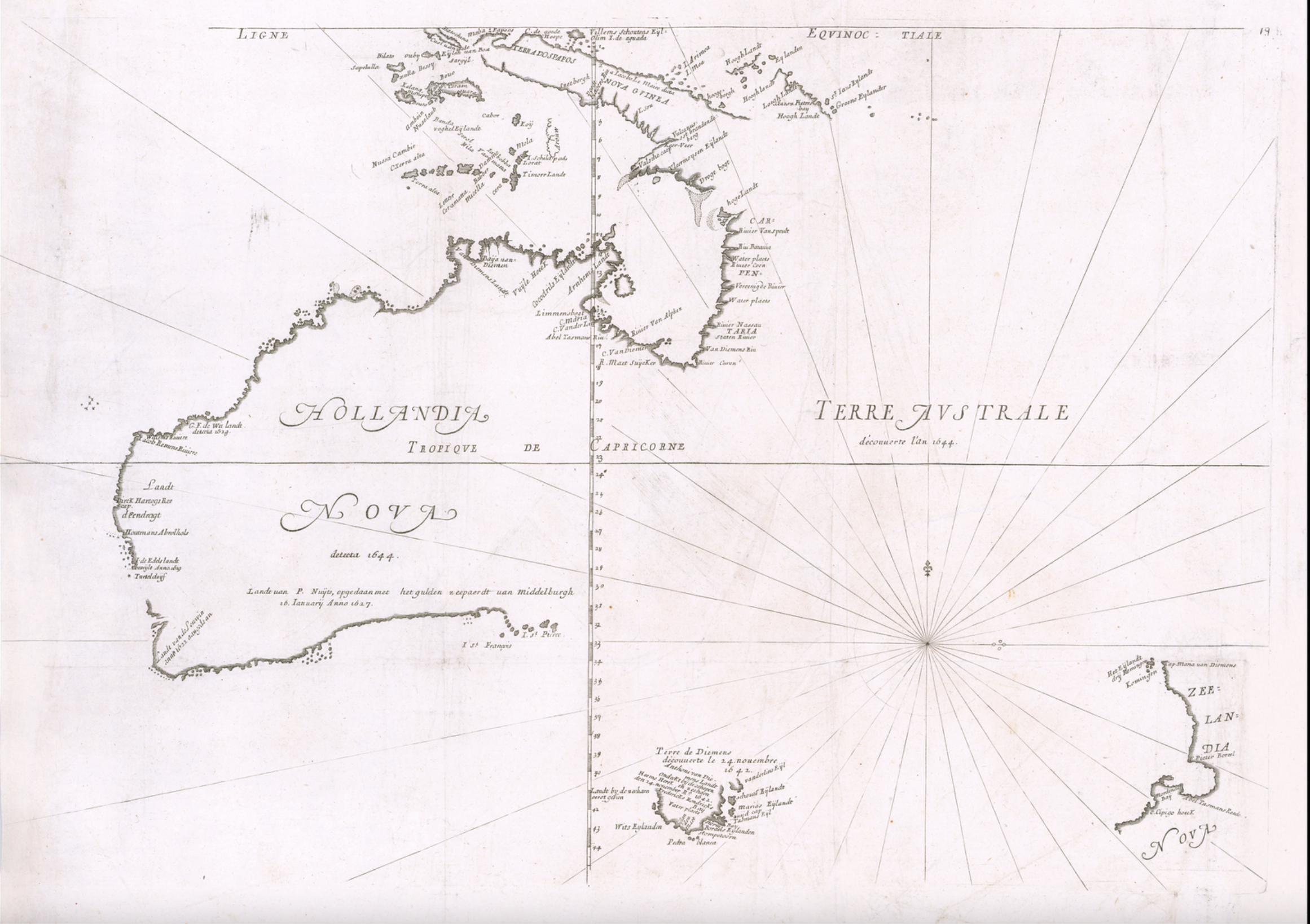
Take a Captain Cook at this map …

It was published around 1672 by Melchisédech Thévenot in his famous Relations de divers Voyages. It’s based on the work of the Dutch explorers including the then recent discovery of Van Dieman’s Land and Nova Zeelandia by Abel Tasman. Note that New Holland is still attached to New Guinea despite Luís Vaz de Torres having sailed through the strait that now bears his name in 1606. New Zealand is pretty sketchy although the Banks Peninsula helps align it with modern maps.

What Cook did do was put the east coast of Terre Australe and the west coast of Nova Zeelandia in something like their proper places. He knew they had to be there, in 1770 he went and found them. What he didn’t do was discover Australia. I don’t think that diminishes his achievements in any way. He was an outstanding mariner, explorer and servant of his country. They did it tough in those days.

So now to the next leg of my little foray equipped with inner spring mattress and air conditioning.

Don’t miss the next exciting episode in which we visit the Atherton Tablelands.

Posted from Coober Pedy which looks very much like the moon will look when we get around to mining it.