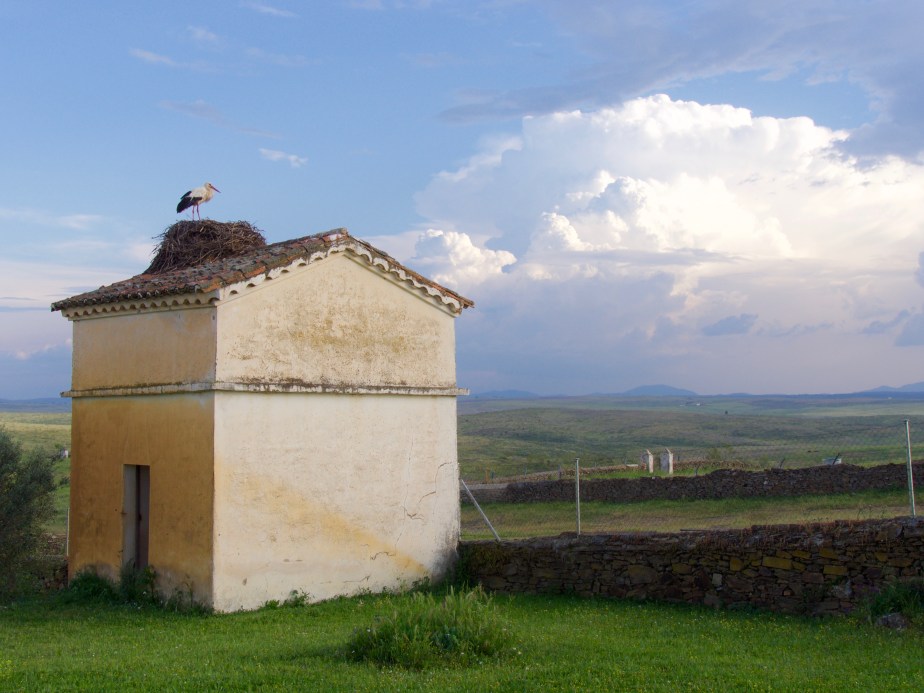
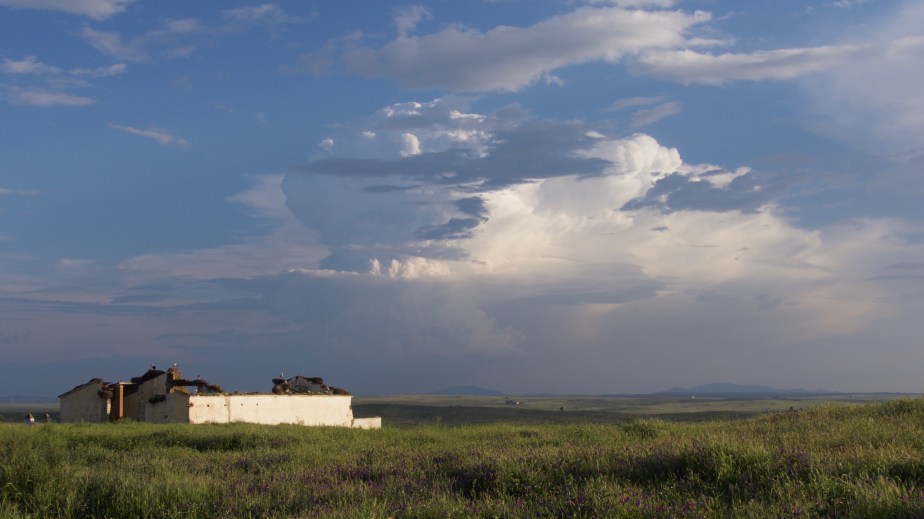
Comes as a bit of a shock after sunny Spain.

and pray that there's intelligent life somewhere out in space
Comes as a bit of a shock after sunny Spain.
Half way between Norway and the north pole and well inside the arctic circle there is an archipelago discovered and named Spitsbergen by the Dutchman Willem Barentsz in 1596. He failed to recognise that it was a group of islands. Since the 1920s Spitsbergen has been the name of the largest island, the archipelago as a whole is known as Svaalbard and is politically part of Norway.

It was a true terra nullius when Barentsz found it but it is now the world’s most northerly full time settlement. There is some mining, tourism and it is the home of the world famous seed bank. Wikipedia tells us that soccer is the most popular sport and that there are three football pitches. It’s not surprising then to find that the population is only small. In July 2017 it was estimated to be 2,583. The population growth rate is -0.03%, they won’t be needing an extra soccer pitch any time soon. The largest town and administrative centre is Longyearbyen. It is a free trade and demilitarised zone.
The climate is described as
arctic, tempered by warm North Atlantic Current; cool summers, cold winters; North Atlantic Current flows along west and north coasts of Spitsbergen, keeping water open and navigable most of the year.
About 60% of the land surface is glaciated.
Tourists obviously don’t come to buy ice cream and football boots. Mostly they come to see polar bears, whales, walruses and sea birds, reindeer and the northern lights. The latter will not be in evidence until the sun sets next …
And that wraps up my Spanish sojourn.
I only scratched the surface. In Extremadura the pseudo steppe country around Trujillo turned up such delights as Great and Little Bustards, Stone Curlew and the Great Spotted Cuckoo. Monfrague was gorgeous and Vulture heaven. Villuercas delivered some very nice birds of prey. The countryside in Extremadura was awash with wild flowers and in the towns history dripped from every stone.
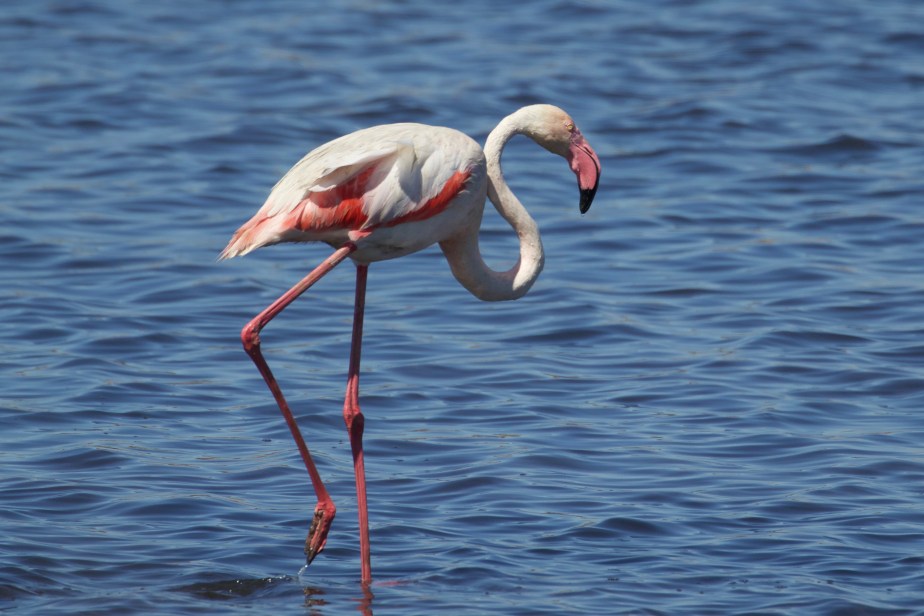
It was the perfect time to visit Doñana in Andalucia, the water birds were abundant and El Rocio was becoming lively in the run up to the fiesta.
You can’t beat local knowledge and that came in the form of Peter Warham. He is a longtime resident in Spain. He organised our accommodation, drove us around and helped at every step of the way with translation. He is a very amiable guy, he knows his birds and knows how to find them. We thought his rates very reasonable. He puts in from dawn to dusk. He can be contacted at pwarham@hotmail.co.uk.

I’m writing this in a hotel room in Oslo. Tomorrow I head for Svalbard where the sun will not set until 11.58pm on Saturday August 25th although I won’t be there quite that long.
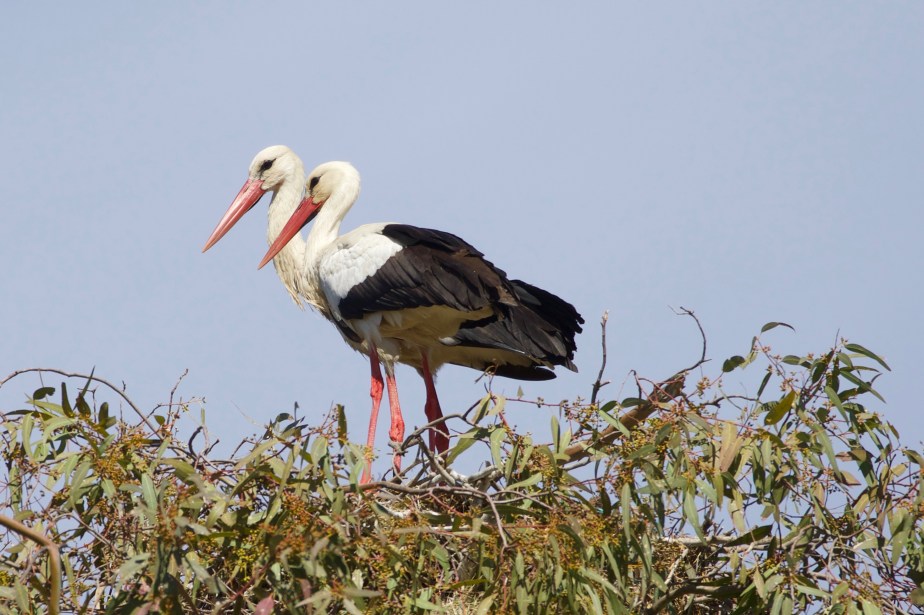
Our trees have conquered the world. On my travels I occasionally crush a few leaves to transport me to home and I’m always amused to see alien creatures nestled in Aussie foliage. White Storks for example …
But if this next tree really belongs in Oz then the bird clearly belongs in Sub-Saharan Africa …
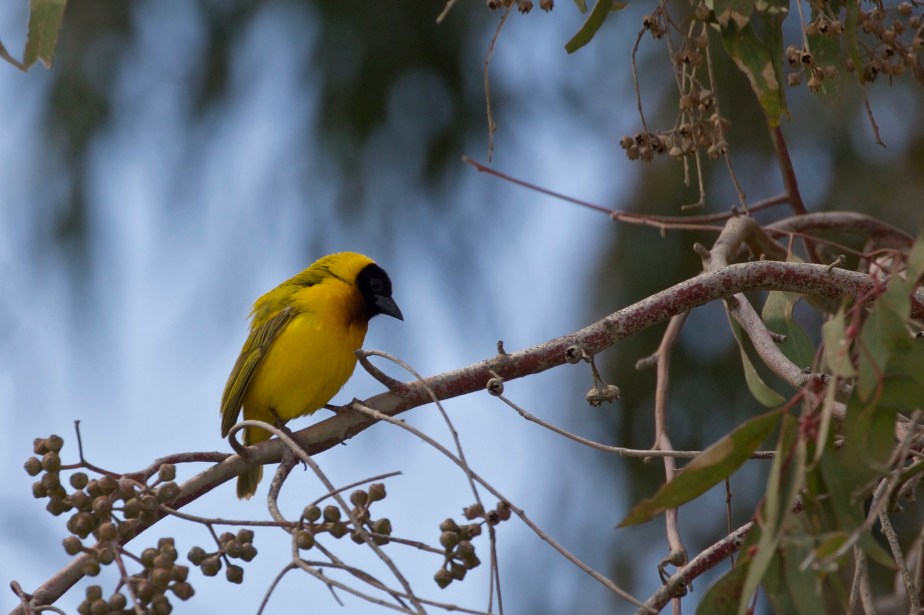
and the photograph was taken by the side of an irrigation channel in Andalucia!
A colony of Black-headed Weavers has established itself here. The earliest records are from Portugal and presumed to be aviary escapees, they seem to have spread from there.
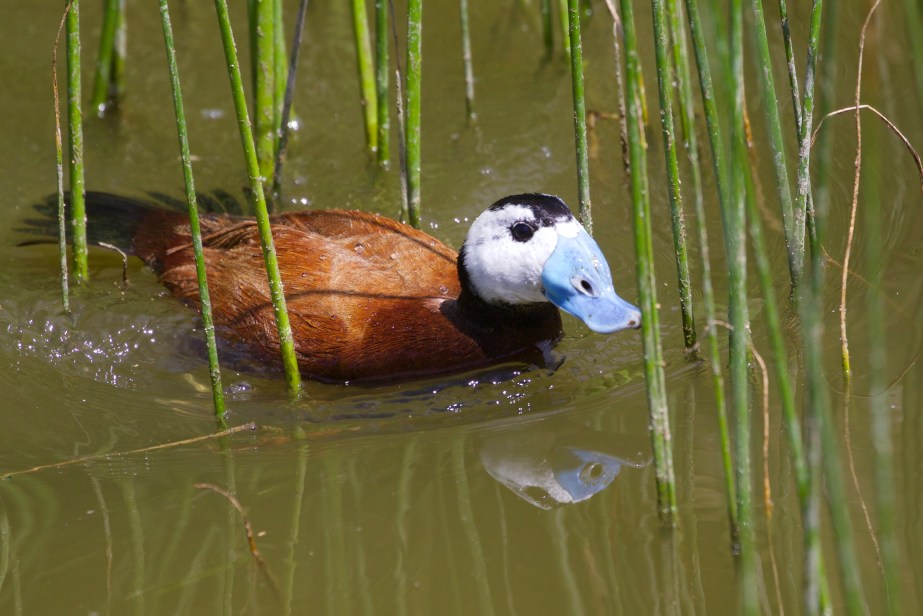
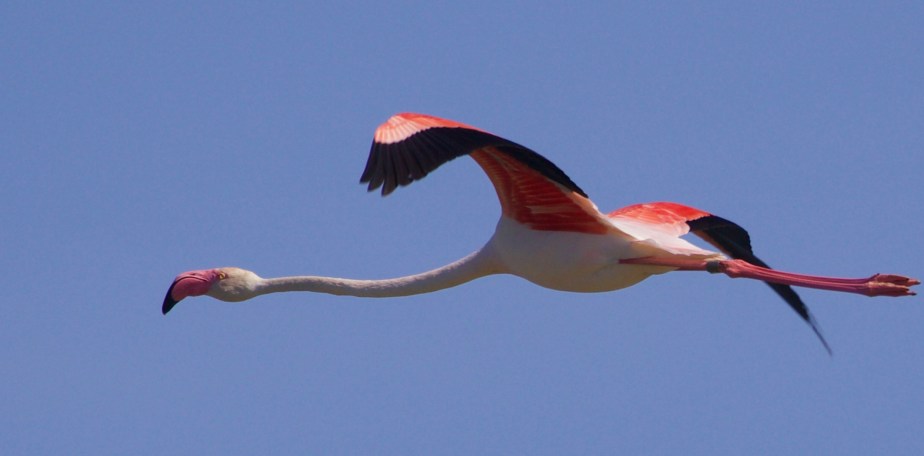
Doñana National Park has its own pilgrimage. Bird watchers flock to the place from all over the world and for very good reason …
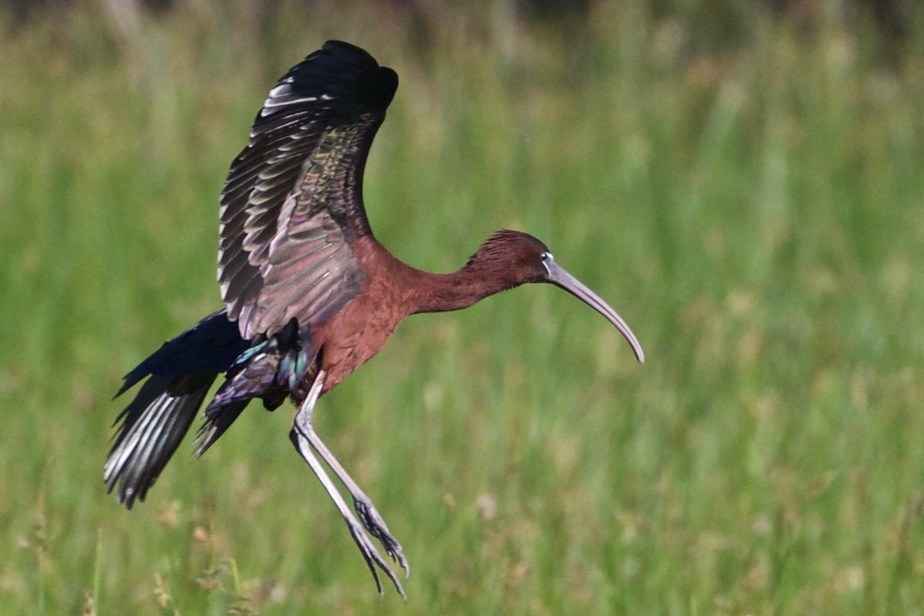
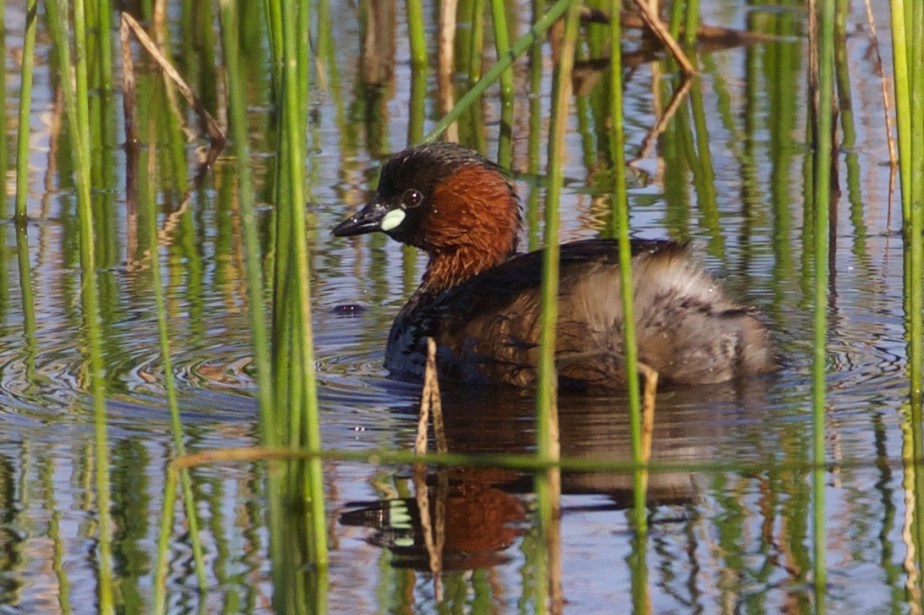

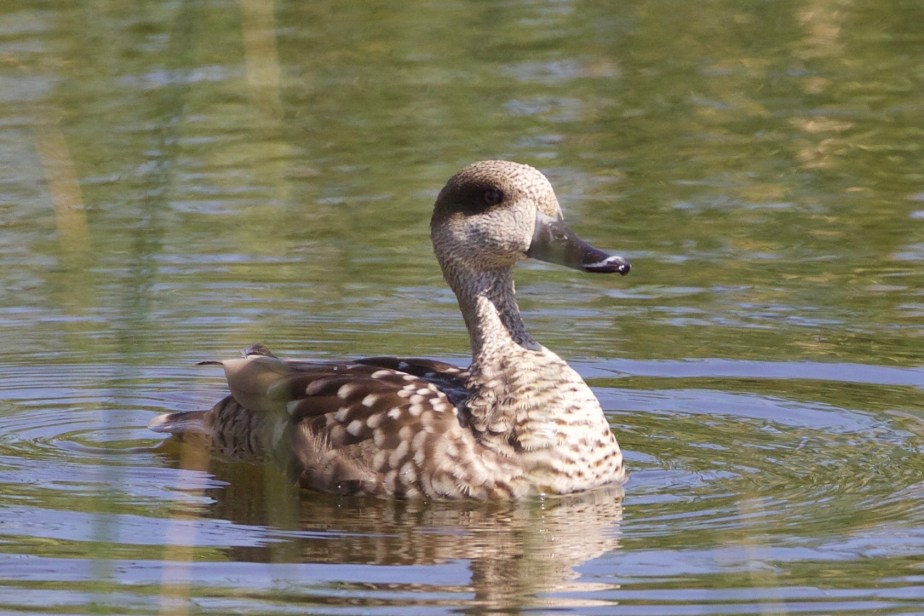


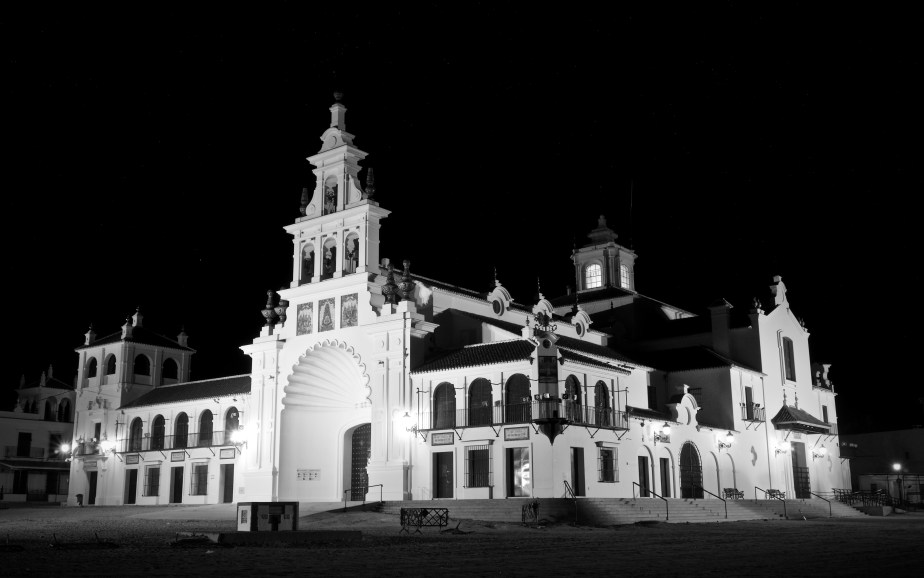
Modern roads lead to the edge of El Rocio and then stop. In the town the roads are sandy, much better for the horses.

Although the town is small it’s currently preparing itself for an influx of about a million pilgrims. They will walk or ride or arrive in old fashioned caravans drawn by tractors. A few will come in carts drawn by bullocks. The women will be dressed in their flamenco finery. The roads will be blocked with traffic, some already are. No cars will be parked in the town.
They will be coming to pay their respects to the Virgen Del Rocio or Virgin of the Dew but they may well have a party while they’re there. The tradition dates back to the 13th Century.
Mass will overflow from the lovely old church. A grandstand has been erected in the square to hold some of the overflow.
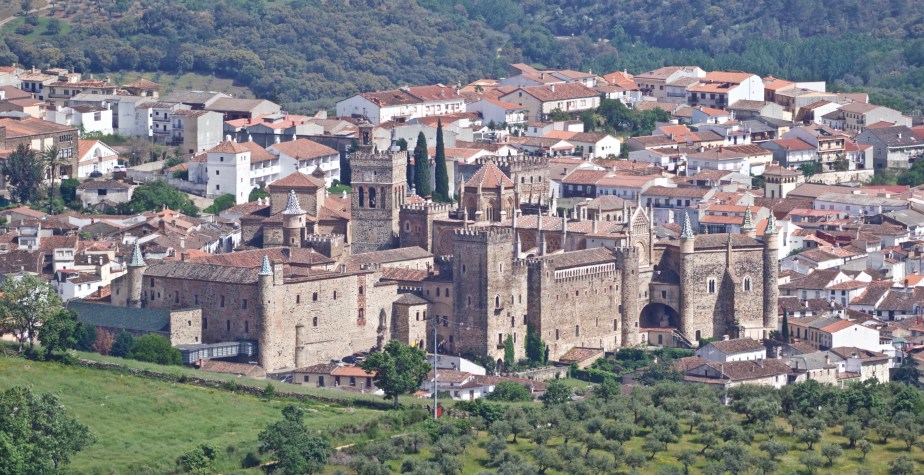
After a day’s birding in the Villuercas park we slipped over a pass that led to a point looking down on historic Guadalupe …

It is the home of one of the Black Madonnas. It was here that the Spanish monarchs Isabel and Ferdinand signed the documents that authorized the first voyage of Christopher Columbus to the New World in 1492
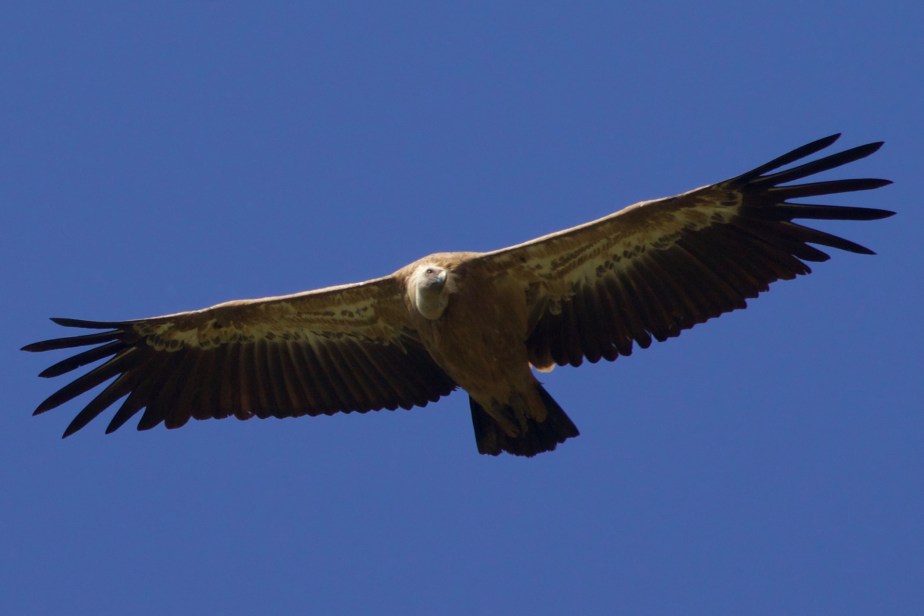
Spain is home to four species of vulture. The Lammergeier is rarely seen outside the Pyrenees but Black, Griffon and Egyptian Vultures are more widespread. A great place to see these three is in Monfragüe National Park.


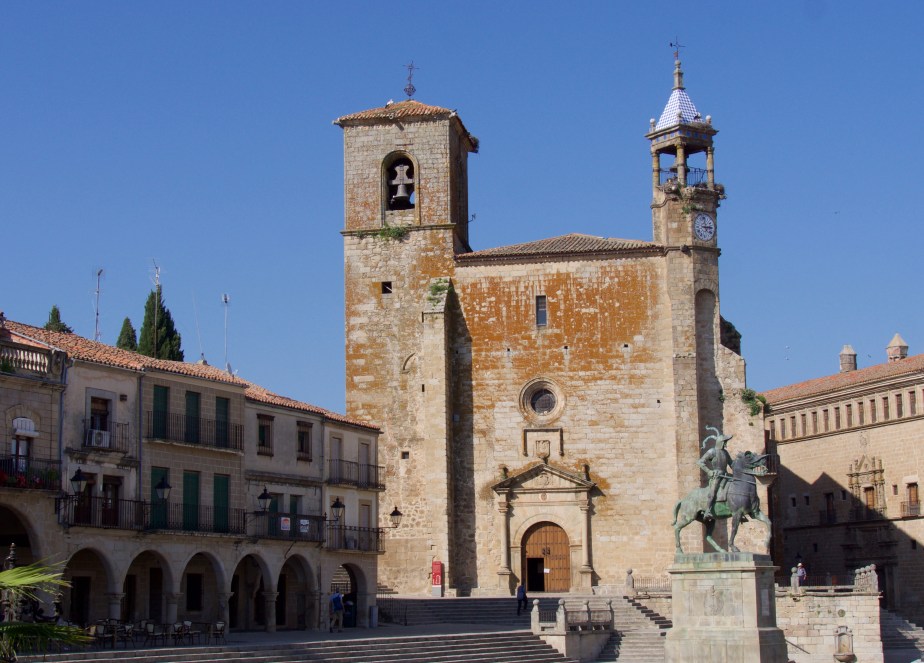
Francisco Pizzaro came from Trujillo. He was the conquistador who subdued the Inca Empire in 1533. Today his statue dominates the town square but otherwise the centre of town has changed little.

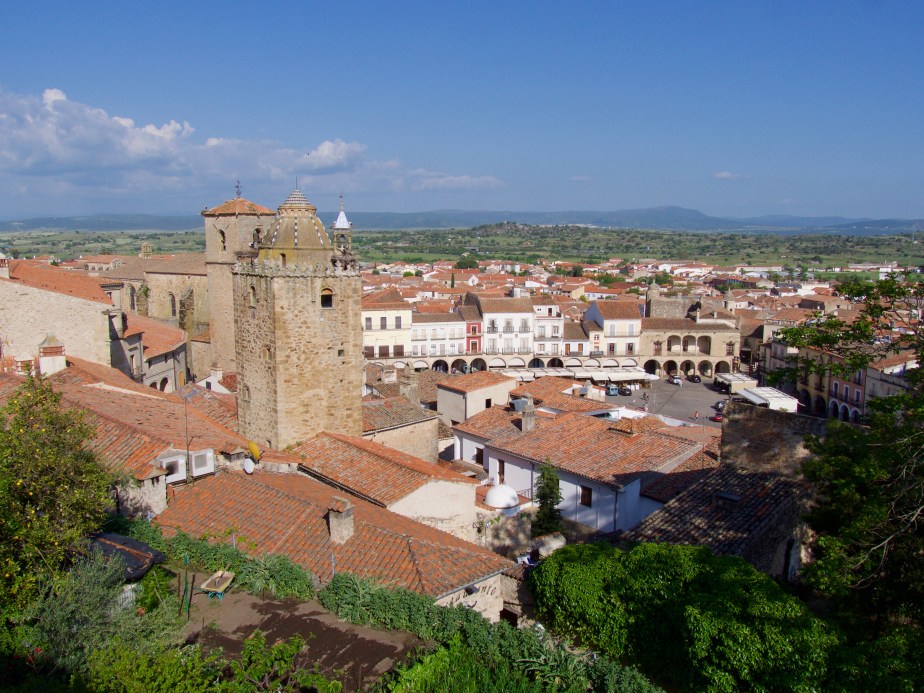
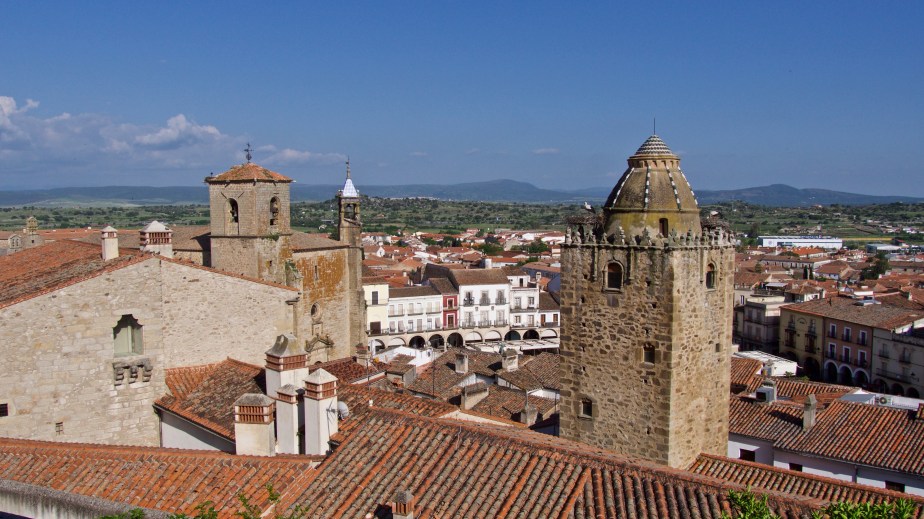
You can dine in the square. Late in the evening I sat with a wine in front of me watching Common and Pallid Swifts sweep low through the plaza. White Storks are nesting on the surrounding buildings. They take no notice as the bells ring out right beneath them.
Not far from Trujillo.