Flitting About …

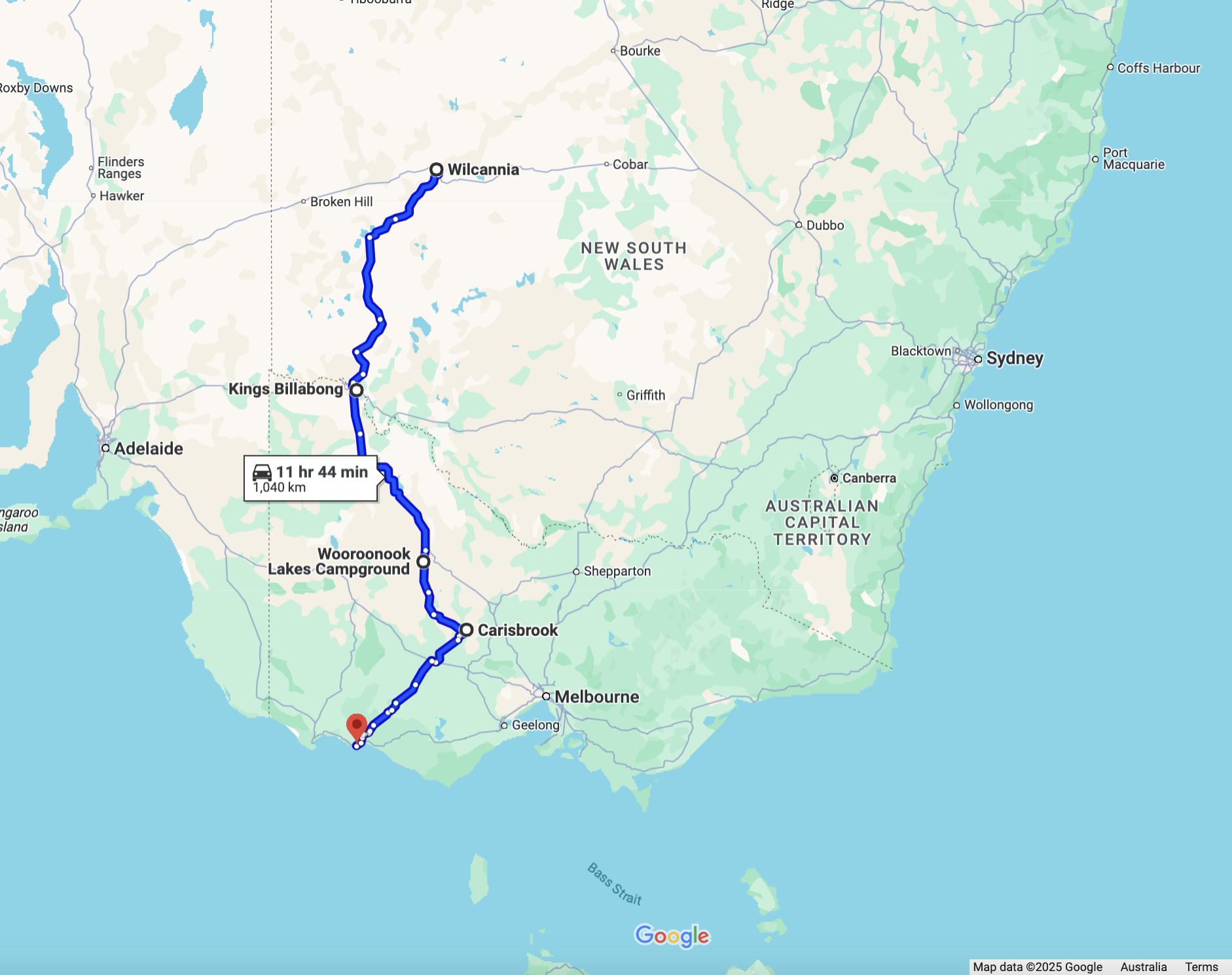
Yesterday we arrived in Port Fairy on Victoria’s south west coast and here we shall pause for a week . We will taking bracing walks in what passes for the summer heat and look for goldfinch and greenfinch to bolster our year list! Here is a simplified map of progress since Wilcannia. Simplified because since crossing the Victorian border we have been flitting about like flies on a cow pat visiting favourite places, favourite people and a caravan repair yard for a bit of plumbing work.

Rainfall in the interior of Australia and much of the west coast is unpredictable and usually sparse. For the north and east coastal fringes, north of Brisbane, summer rainfall is the norm. From Brisbane south and around the south coast and for a triangle in the south of Western Australia winter rainfall predominates. This pattern has held up on this trip, indeed it may be somewhat exaggerated this year. Since leaving Queensland the country has been as dry as a chip.

In Wilcannia the bird watcher should stay at Warrawong on the Darling. The camp ground is adjacent to a couple of billabongs. These are usually productive but on this occasion one had little water and the other was dry. The river Darling itself had plenty. There are some 4WD tracks across open plains to patches of River Red Gum woodlands along the banks and if clean toilets and warm showers are of any interest it even has those.

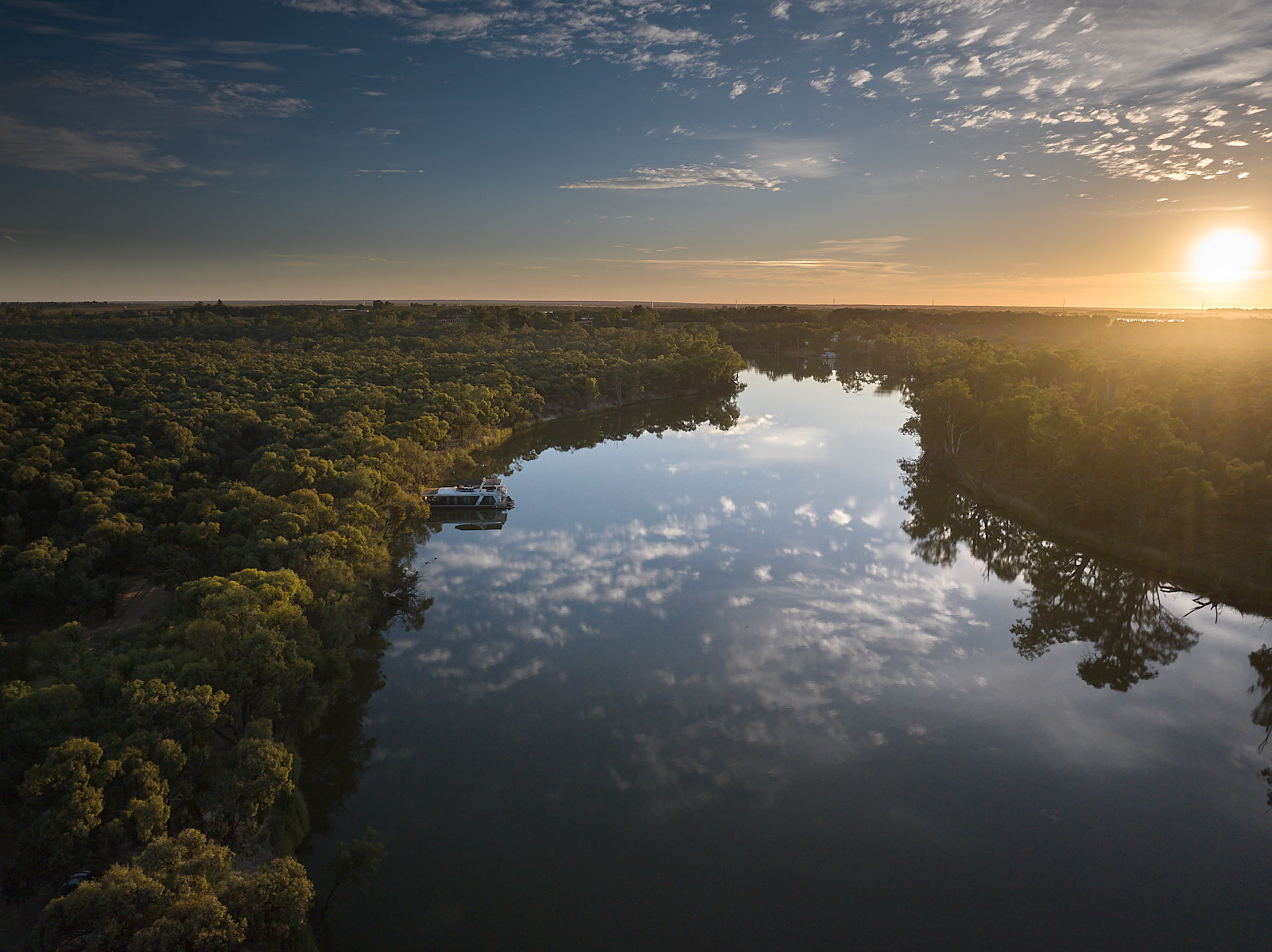
From there it was on to the banks of the mighty Murray not far from Mildura and then various much loved locations in the Victorian Goldfields. And now Port Fairy which is unique in Victoria in very nearly being quaint. The surrounding countryside, the Western District of Victoria, is brown and dry, drier than we have ever seen it.

There is a Short-tailed Shearwater colony in Port Fairy and I’ve just got back from watching the Shearwater parents returning to feed their chicks. They come in just after dark, land near their burrows and then run to the waiting chicks. It is a wonderful experience to sit in the colony and have them flying in around you.

Mixed Messages …

The morning rides have been a bit on the chilly side. I had a close brush with frostbite just the other day, well cold fingers anyway. Flame Robins have deserted the high country for the winter and have been moving through this district in recent days, always a welcome sight. Winter is also the time when we see more Crimson Rosellas and Grey Currawongs.

But here we are only just past the winter solstice and some of the birds are singing from a different hymn book entirely. Just west of Dunolly in recent days I have encountered a Fan-tailed Cuckoo emitting its mournful whistle and yesterday I was swooped by a couple of Magpies, one in desultory fashion and one with great enthusiasm. The latter made contact with my bike helmet a couple of times. I knew there was a good reason to wear one.

We are, of course, talking about the Australian Magpie Gymnorhina tibicen not the original Eurasian Pica pica.

Frostbite … ?

It was a chilly one this morning. The grass was crackling under my feet and the puddles were frozen as I got the bikes out of the garage.

Readers from elsewhere in the world may have the notion that Australia is a land of never ending sunshine and warmth. Not so. South-east Australia even has some ski resorts. The Victorian goldfields are on the inland side of the Great Dividing Range away from the moderating influence of the sea. We have some knockout frosts. The last couple of mornings -2° C.

Having said that, though, it’s the cloudless nights that produce the lowest temperatures. Cloud cover helps to hold the warmth in. Snow (below 1000) meters is therefore unusual.

Plugging away at 25 kph into a 5 km headwind made the fingers numb after a while. I haven’t solved the problem of the appropriate gloves yet – I’m on to my third pair presently. Do avoid neoprene it doesn’t keep out the cold but sure does a good job of keeping in the sweat. Anyway, the mind turned to consideration of frostbite. Is the wind that is generated by the forward motion of the bike sufficient to turn an uncomfortable experience into a dangerous one?

Once home again and thawed out I consulted the internet. I found a couple of windchill calculators that talk metric after a fashion. One at calculator.net can be persuaded to accept metric input. It then calculates a metric answer and also a Fahrenheit answer which you can look up in a nice graphic.
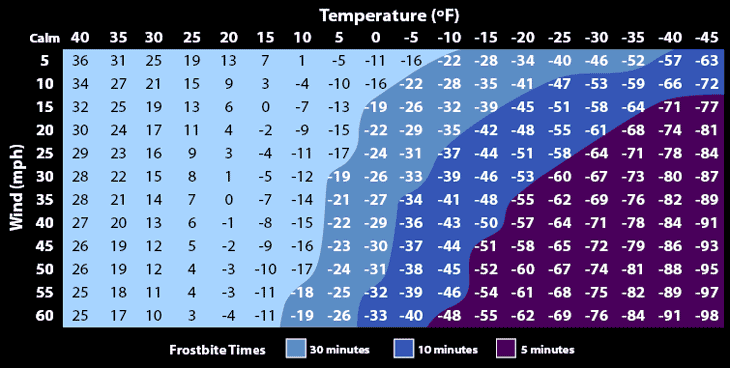
Another at  romseyaustralia.com is very informative but having got your answer you consult a table to discover the likely outcome for your fingers and toes which is not quite as intuitive as the graphic. It was at this site that I learnt …

Twelve volunteers (six men and six women) participated in the clinical trials. These consisted in four walks, at 4.8 km/h, on a treadmill in a refrigerated wind tunnel at the Defence and Civil Institute of Environmental Medicine in Toronto, Canada: one walk at each of -10, 0 and +10 deg C, plus a “wet trial” at +10 deg C during which participants received, every 15 seconds, a light one-second splash of water in their faces. During each 90-minute walk, the volunteers were walking while facing a wind of 2 metres per second (m/s) for 30 minutes, followed by 30 minutes at 5 m/s, and 30 minutes at 8 m/s (or about 4, 10 and 16 mph, respectively). Sensors were fixed to participants’ forehead, cheeks, chin and nose, as well as to the inside of one cheek, to measure skin temperature and heat loss. The results from these trials were used to determine the various thresholds for frostbite, as seen on the new wind chill chart.

The new wind chill equation is now in use in both Canada and the United States. Therefore, there is now a consistent wind chill formula across North America.

Where would we be without volunteers?

Should you distrust the calculator and prefer to compute your own here’s the formula …

Twind_chill = 13.12 + 0.6215*T – 11.37*(v0.16) + 0.3965*T*(v0.16)

If you were surprised to discover that Australia has ski resorts you probably won’t be surprised to discover that my fingers and toes were in no danger whatever. At -2° C. the wind would be uprooting trees before it caused sufficient chilling to freeze my extremities. Hypothermia, though, is another issue.
Job Done …

It was a late lunch but gee I enjoyed it.

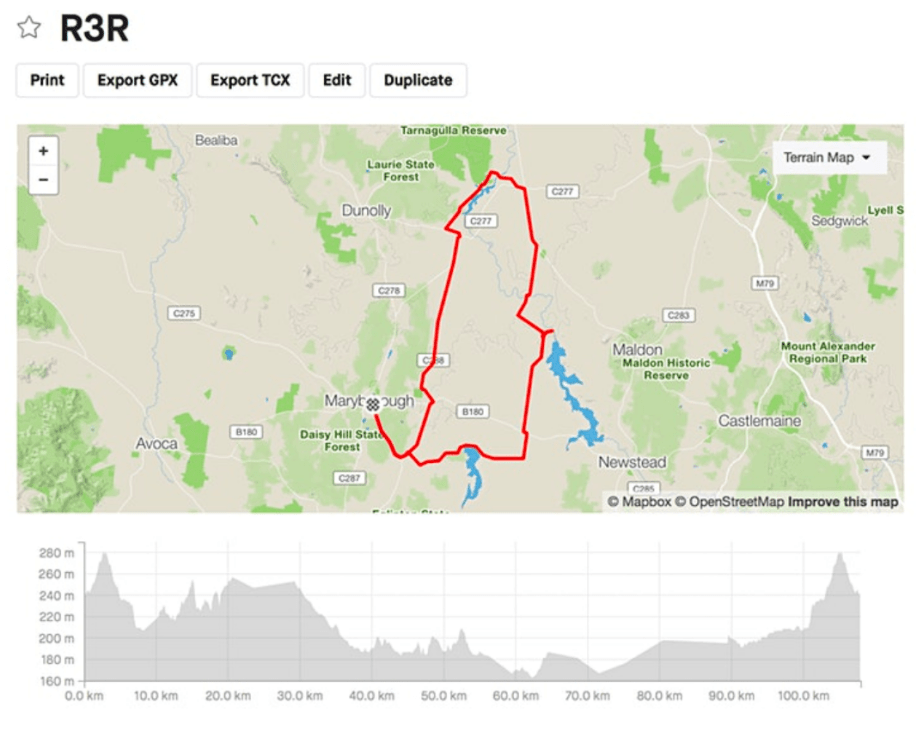
The ride took me through Maryborough, out to Majorca and around Tullaroop Reservoir. Out to the right from there I could see Mount Tarrengower at Maldon, the highest point for  miles around. A Black Kite followed me for a couple of kilometers there. Perhaps it thought I would expire.

North past Cairn Curran reservoir, north again to the little town of Eddington. I must have blinked because I didn’t see any sign of it. Into the gold rush town of Dunolly and then south over the Mount Hooghly Ranges to home. Not a lot of people know the Mount Hooghly Ranges largely because there is no such geographical entity. A passenger in a car would hardly notice the hills. On a bike they make more of an impression. I reached the highest point of the ride at kilometer 103 – I organised that well!

I did it that way around because some of the route was unfamiliar and Dunolly being reasonably large was going to be easier to find than places like Baringhup West that are really nothing more than names on the map.

115 km at 24.3 km/h, 674 meters of climb. And that nailed the Strava May Distance Challenge with four days to spare. Another merit badge for the Trophy Cabinet.

What next you ask. Well, the other non-trivial monthly challenge is the climb.

An Event …

It is at least 25 years since I last entered an endurance event. As I recall it was a 42 km cross country ski race, the Kangaroo Hoppet at Falls Creek. I finished. It may have been 3000th, but I finished. I even had the cheek to sprint past some other poor bastard at the line condemning him to 3000 and 1st or so.

So now that I am a trained endurance athlete having completed three months of cycling about 20 km five times a week I am (or may be) ready for the R3R Charity Ride. It’s tomorrow and it’s not a race (not a race, not a race, not a race …)

The ride not race is organised by the Maryborough Rotary and sets off from the famous railway station. It is so impressive that Mark Twain described Maryborough as “A railway station with a town attached”. Unless, of course you believe the Twain scholars who tell us that he said no such thing. Even if he didn’t he should have.

If you want to join me you had better hurry up. Go <HERE>.

The route visits the three local reservoirs, hence the name, and the full journey is 108 km. However there is also an R2R – 73 km and an R1R – 33 km. I’ve signed up for the R1R. I know, pathetic.

But I will cut a dash. I am borrowing Gayle’s gloves. They will go on. It’s getting them off that’s the challenge but I’ll have all afternoon. I have invested in cycling shorts so that’s OK. The hi-vis work shirt tops the ensemble off, hopefully hiding the belly a little. Admittedly my fat wheels will put me at a disadvantage compared to road bikes. Nonetheless I do expect to be quicker than some grannies at least those accompanying very small children.

Wish me luck.


T’is the season …

Well of course it is, the mince pies are back in the shops. No carols yet, though.

In Darwin, Australia’s most northerly state capital, the inhabitants from the dawn of time identified six seasons. Presently it’s Gurrung, the hot dry period, time to hunt file snakes and long-necked turtles. When the white fellah showed up he simplified matters to just two seasons, wet and dry.

Melbourne, the most southerly capital of mainland Australia, has four seasons … most days.

In my little patch of Victoria it’s spring. The last week or so of winter was very summery. I do occasionally see a long-necked turtle but I’d starve to death if I had to rely on hunting them. I tend to notice the passage of the seasons by the birds. I heard the first Rufous Songlark on October 29. The following day they were everywhere singing and displaying for all they were worth.

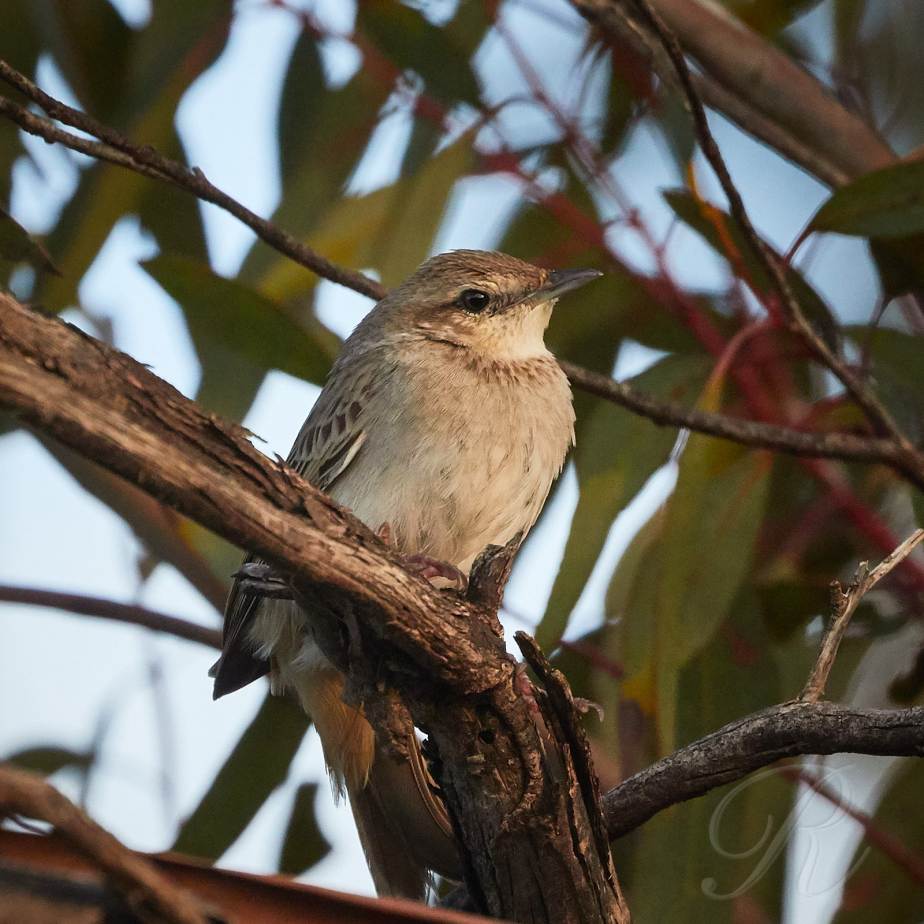
Rufous Songlark

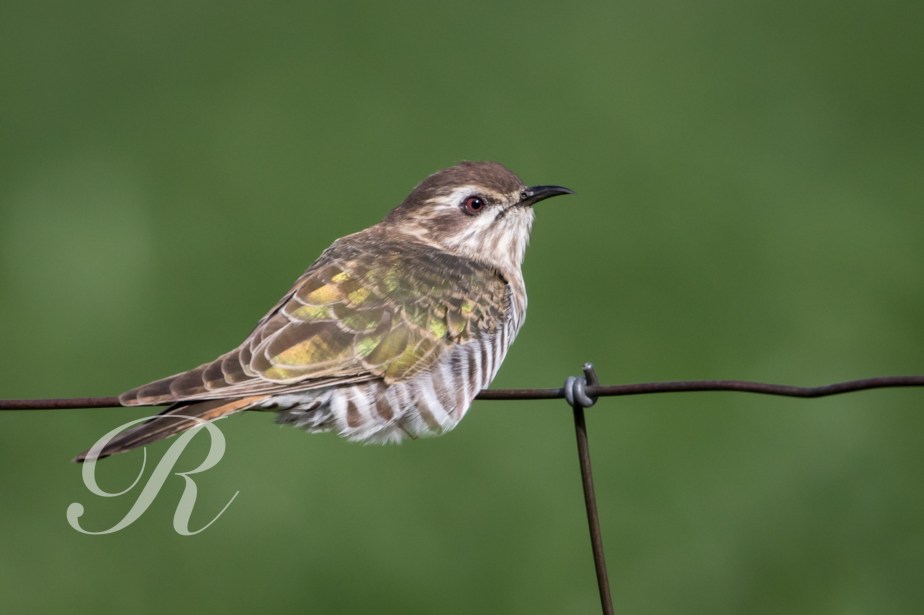
Horsefield’s Bronze-Cuckoos were hot on their heels.

Horsfield’s Bronze-Cuckoo

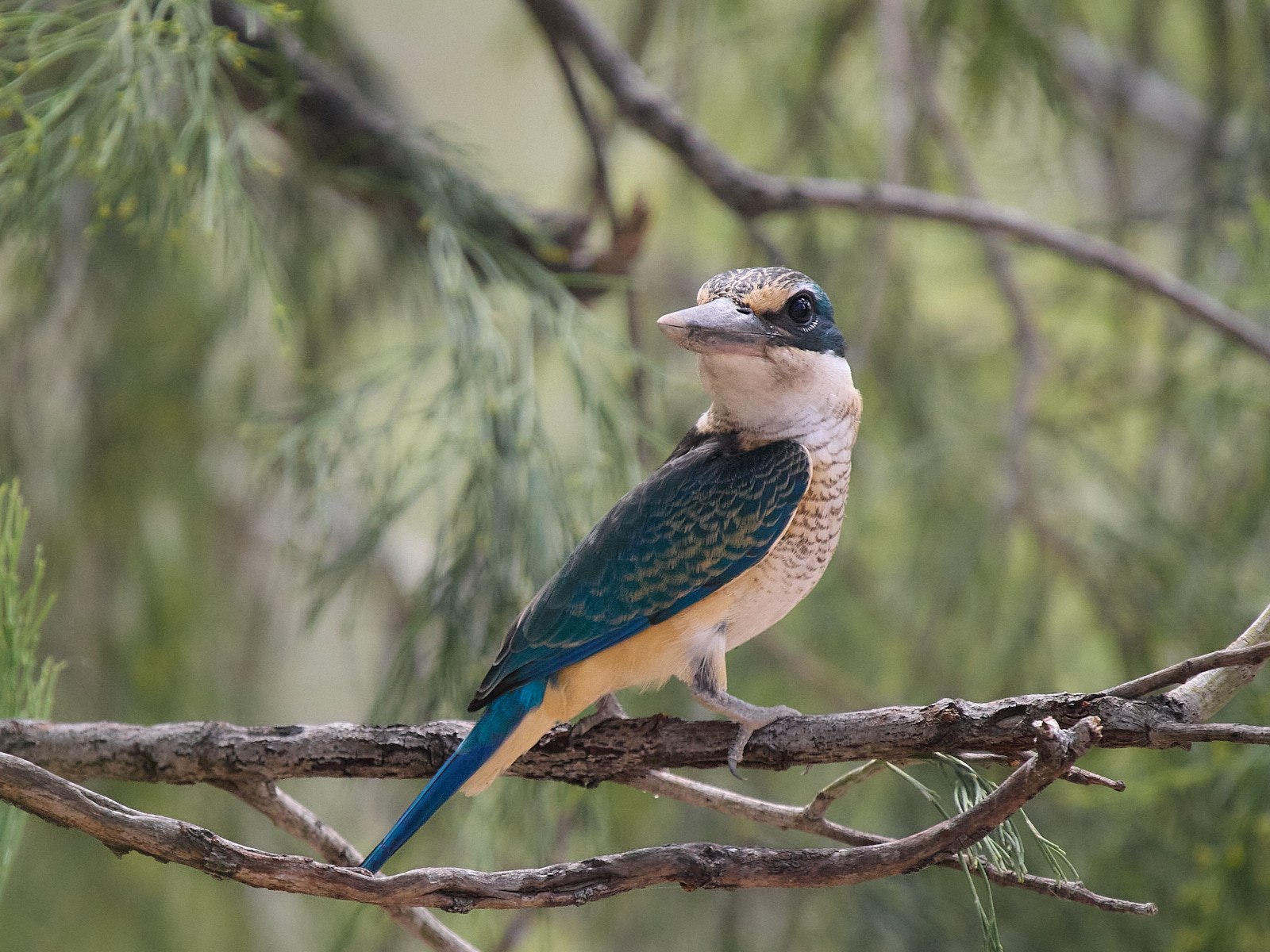
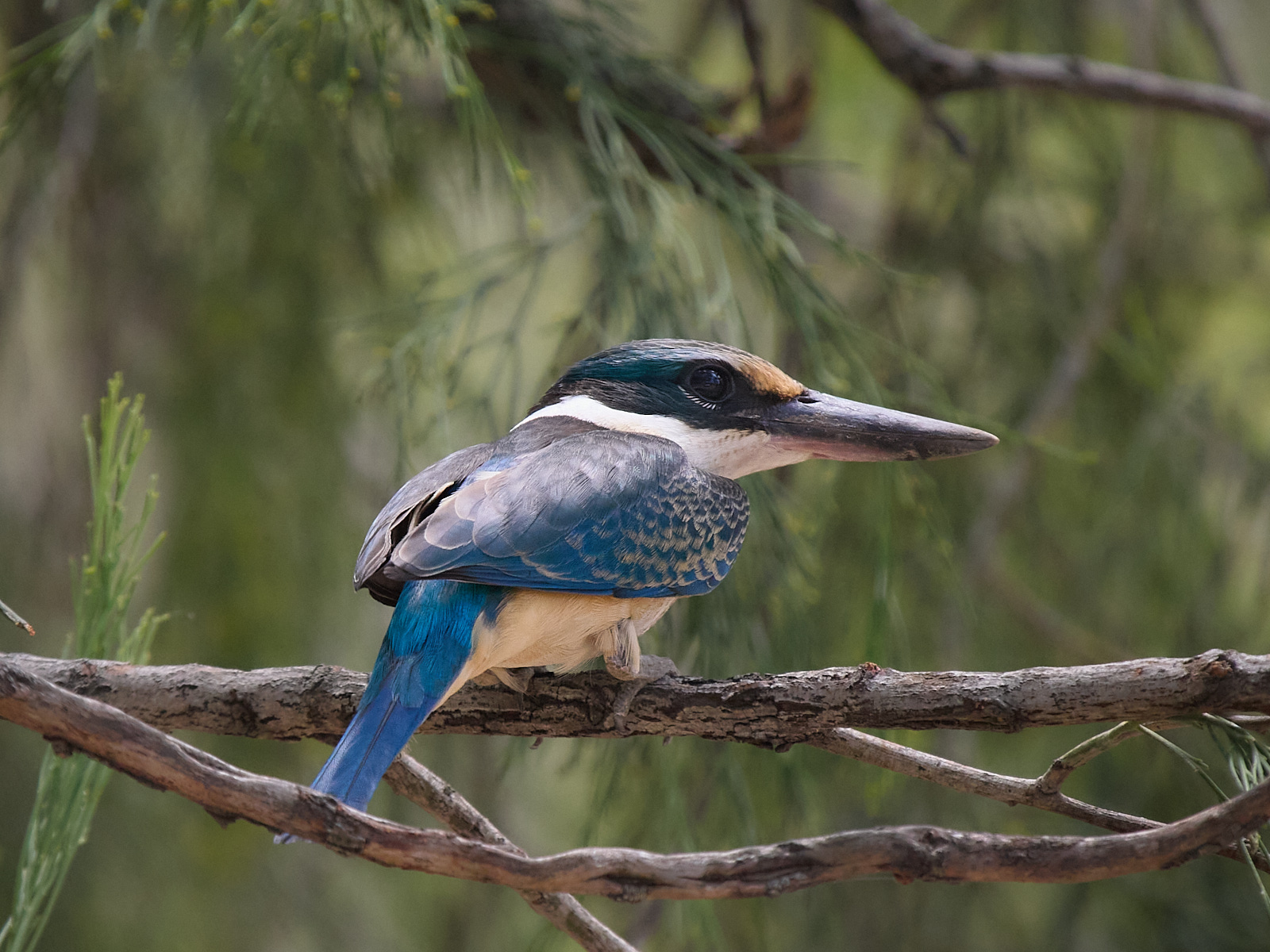
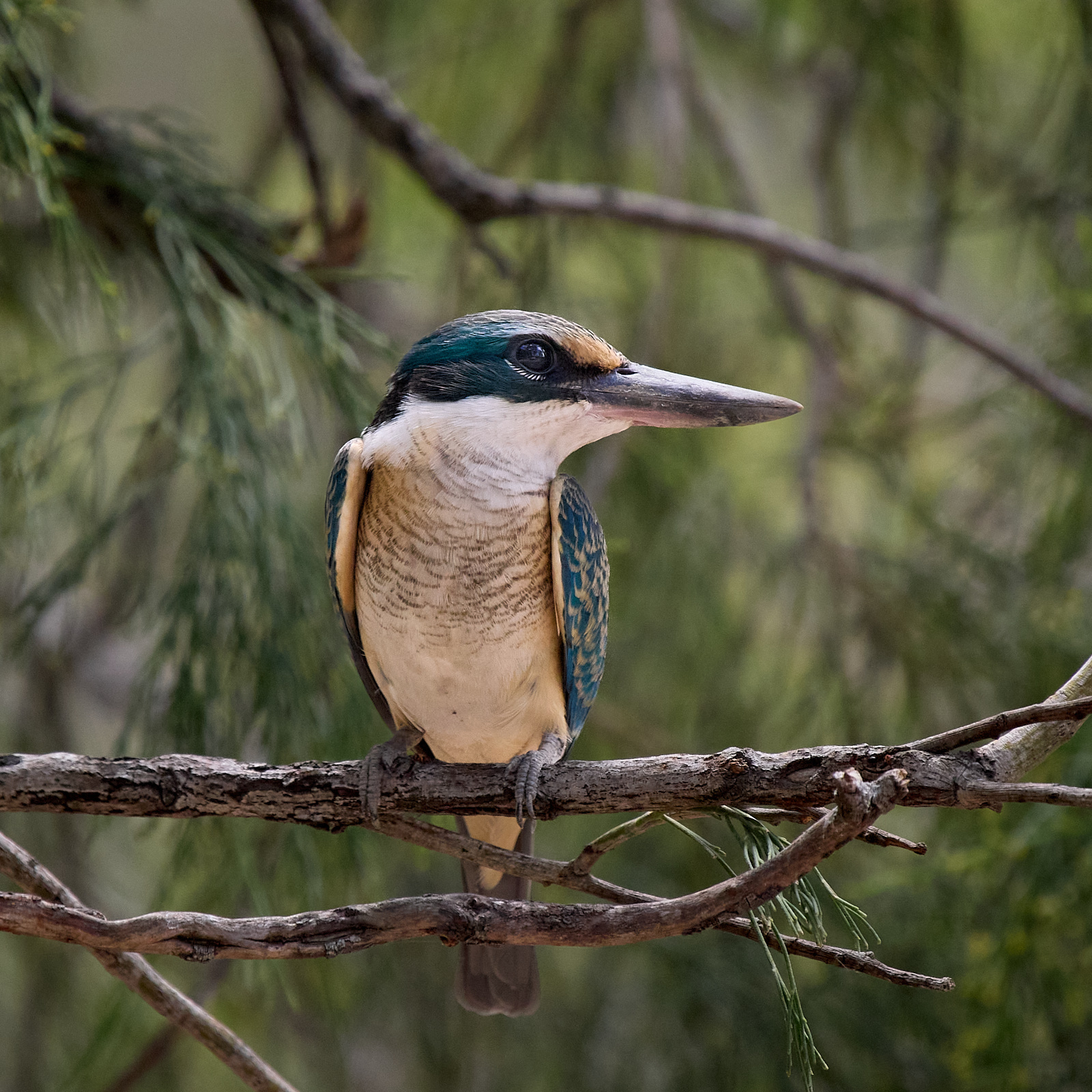
No sight or sound yet of the Sacred Kingfishers.

They were all greeted by an icy blast. Since the calendar ticked over the weather seems determined to return to winter.

Despite the cool weather the first Brown Snake of the year turned up in the dog yard this morning.

My neck of the woods is nice and green. Winter rain was about average and the crops locally are looking good. That’s not true for inland Australia even as close as north-west Victoria it’s been very dry. This has brought a few nomads into the state. It was my chance to add Pied Honeyeater and Crimson Chat to my Vic List. To find them I headed to Goschen and I found them both within an hour or so.

Crimson Chat has to be the most gorgeous bird in the Australian Field Guides but they are rarely as attractive in real life as they are on the page but some of the males on this occasion were at their finest …

The Yellow Robin that showed up recently in the driveway is still around. I hold out little hope for it finding a mate however.

Home Sweet Home …

Home looked beautiful. In the winter the surrounding country turns so green that it would give Ireland a run for its money. OK I exaggerate a little and on close inspection the foot high grass surrounding the house was Cape Weed. And it was cold.

First job was to cut some wood and get the fire going then it was onto the mower for a first run round.

The creek was flowing and debris in some lower branches showed that it had almost overflowed its banks while we were away. One of the deeper pools had a couple of platypus swimming around. In summer you only get to see them at sunset and sunrise. In cold cloudy weather they can be seen during the day as well. In either case the light is never good. I’ll get a respectable photo one day.

My first visit to this property was about 30 years ago when it belonged to my in-laws. The creek is one boundary. Beyond that there is a nature reserve. On an early visit I saw an Eastern Yellow Robin in the reserve. That wasn’t entirely unexpected so I thought little of it.

Despite regular visits I didn’t see another one until this past summer when I encountered a pair on a number of occasions. One even had the audacity to venture briefly to my side of the creek and onto the birdlist for the property.

Thirty years ago the driveway was an avenue of flourishing wattle trees. The millennial drought and old age, wattles only last about thirty years, saw them die off. My father-in-law was talking about planting olives in their place. That spurred me to volunteer to plant some native trees instead (which may have been his underlying intention). I left the skeletons of the dead trees as perches and as an insect supply for the birds and planted Red Ironbarks in between. These are indigenous to the area and have deeply indented barks that are much liked by Brown Treecreepers. The Treecreepers were common enough in the reserve but rarely bothered crossing the creek. As the trees have grown so the Treecreepers have moved in.

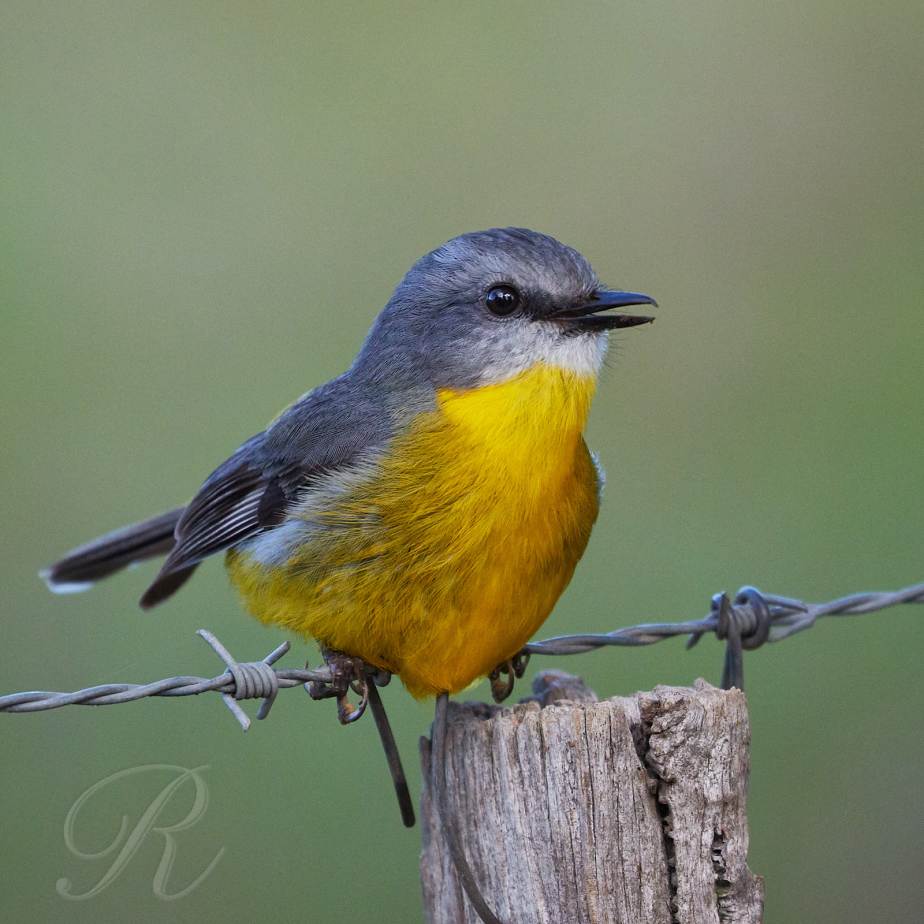
And so, too, has an Eastern Yellow Robin. For the past few days he or she has been watching me at work in the driveway. I hope that the habitat is good enough that they stay and hope that they find a friend to join them. I wonder if this is the offspring of the pair I saw in the summer.

Eastern Yellow Robin

Watching me at work in the driveway?  Well yes, there are these bloody wattle trees that keep falling over and need to be cut up! There are still a few more to go.


Chaff cutter to the stars …

I was complaining about the weather yesterday and today is no better. But last night the sky cleared and gave us a look at the stars. I put on my warmest clothes and sallied forth. Clear skies have been a rarity just recently. This was a good opportunity to complete a project that was conceived months ago.

The machine is a chaff cutter. It was built by Buncle of North Melbourne and after a busy life preparing horse feed is now retired.

John Buncle was a Scot who arrived in Melbourne in 1852 aged about 30. This was at the height of the gold rush. He was a skilled draftsman and engineer and had no trouble finding employment. After about a year as foreman at Langlands foundry he started his own business and became famous in the field of agricultural machinery.

He died in 1889 by which time he’d made a sufficient mark in Melbourne society to warrant an entry in the Australian Dictionary of Biography.