The change of seasons in Victoria is far less dramatic than in the US or UK. There as summer fades the leaves change colour and a big proportion of breeding birds head south for winter. An influx of winter birds take refuge from what will soon be a snow-covered landmass further north.
Here autumn is a bit of a flop. The plants tend to be evergreen and there is no major landmass to the south to provide us with a winter influx. Antarctica doesn’t have much to start with. Tasmania does its best for us with a couple of parrot species. New Zealand sends us a tern and a shorebird.
But spring is everything it should be. The wild flowers bring some colour. The Superb Fairywrens take on their breeding plumage. Bird activity and numbers increase.
Our Clamorous Reedwarblers arrived the other day and a big flock of White-browed Woodswallows has passed through.
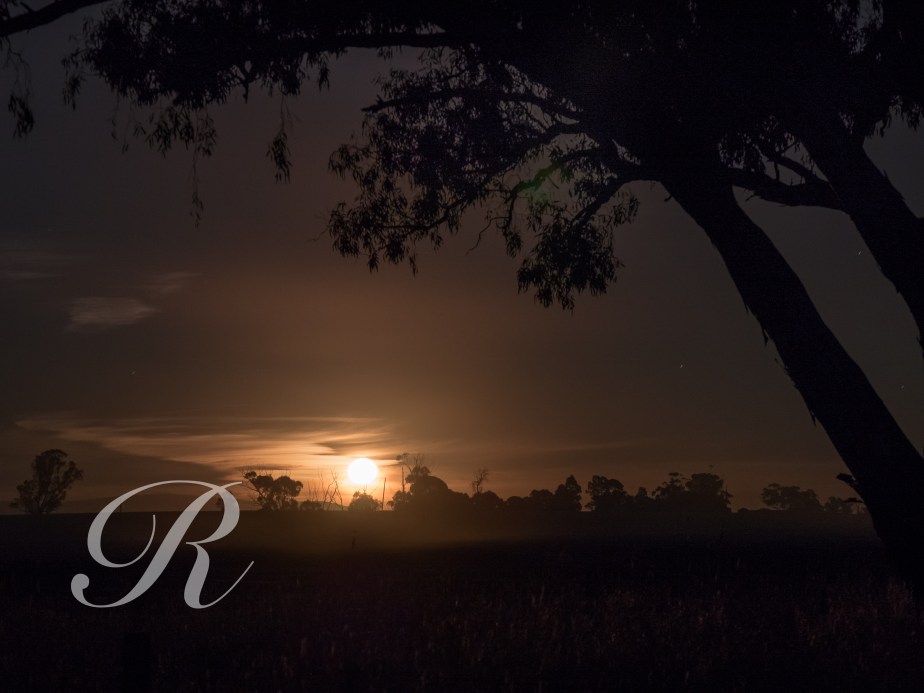
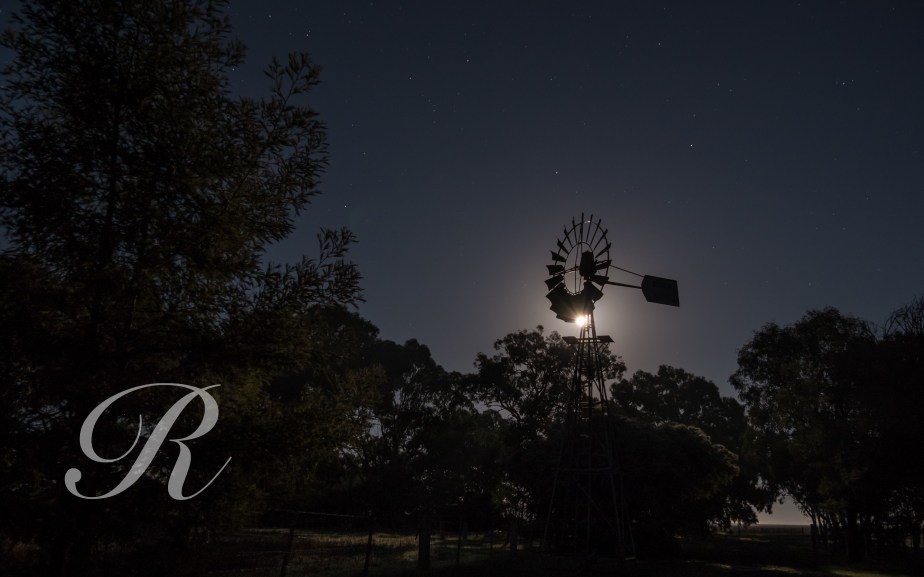
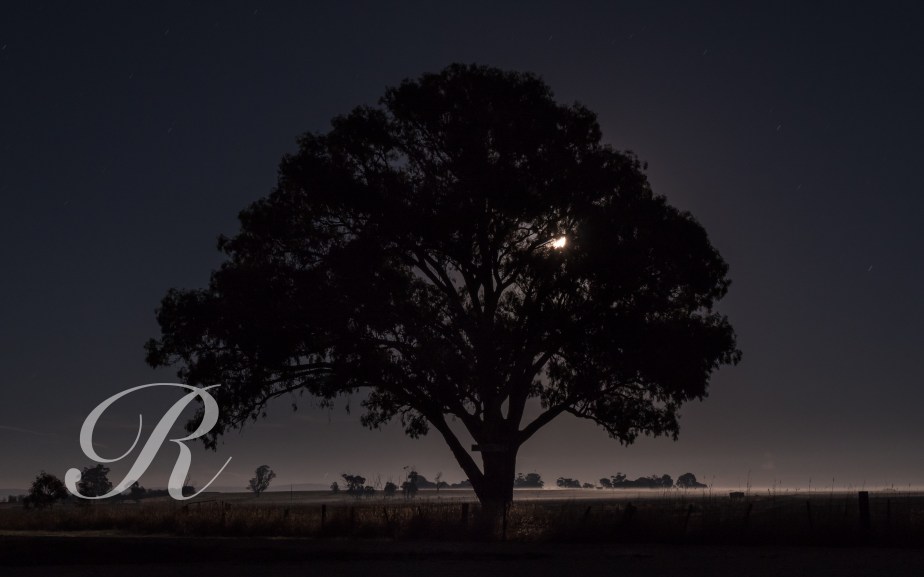
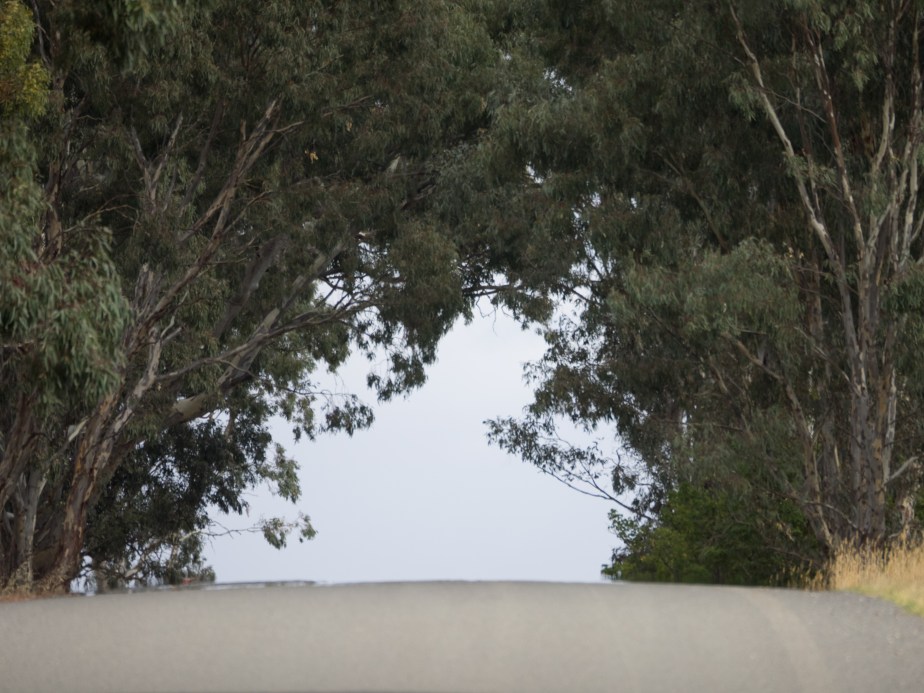
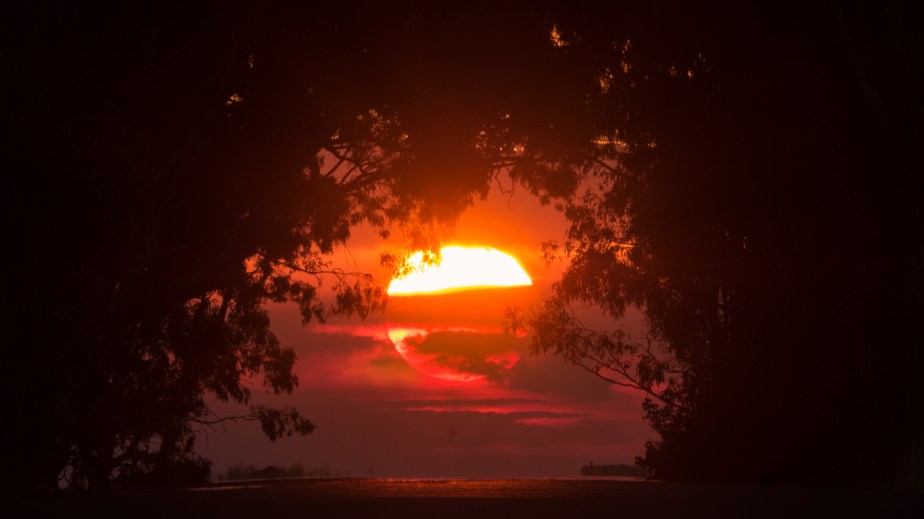
As I’ve been driving home of an evening in recent weeks I have been aware that the sun has been setting a little further north on the western horizon each day. One day, in the not too distant future, it would set right at the end of a local road framed at the end of an avenue of trees. Imagine it right in here …
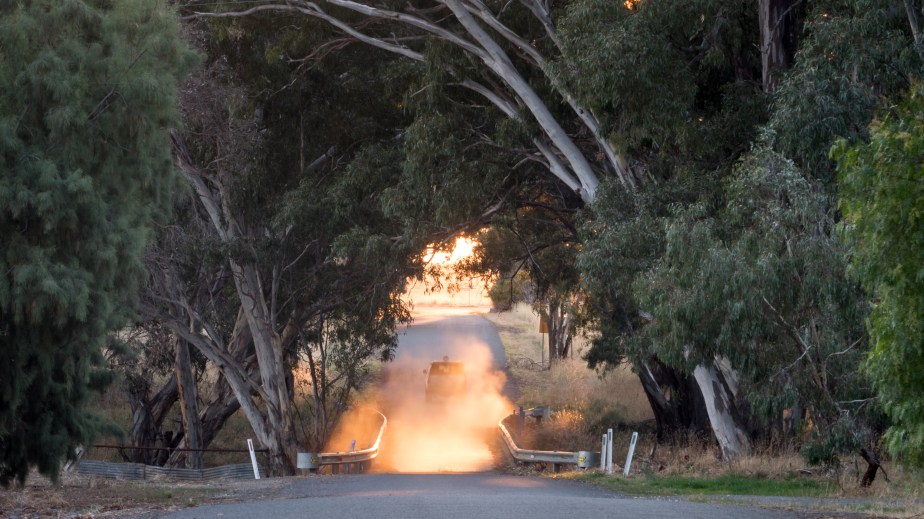
I pulled up The Photographer’s Ephemeris and wound on the clock until April 5 at 6:15 pm. I use this photographer’s aid with some trepidation. Just as certainly as the sun and moon will rise and set at a certain place and time so it is certain that clouds will obscure the event. At least it seems that way. None the less I was there. The sky was partly cloudy. I had chosen my camera position in advance but a couple of hundred metres east of that I saw that the sun was spotlighting a bridge quite beautifully and thought that, even if I got nothing else, this would be a photo. Just to put the icing on the cake a car drove past at a very convenient moment …
Having captured that it was time to see if my plan would come to fruition …
It’s a little warmer, it’s light a little earlier. Spring has been creeping up on us antipodeans. And then suddenly it’s a full on assault on the senses. For me it starts with the Rufous Songlark. It doesn’t stick around for Victoria’s frosty winter. I saw plenty recently up in the centre of the continent presumably making their way back south. The first one in my neighbourhood arrived a few days ago and announced its presence with its scratchy, far from euphonious song. You will never be commemorated for singing in Barclay Square but welcome back.
Other arrivals have followed quickly. A solitary Australian Reedwarbler was along the creek looking for some habitat. Yes you are in the right place, there were reeds here last year, they’ve been washed away in last week’s flood. The Dusky Woodswallows are also back and looking for somewhere to raise a family and the woodland was ringing to the sound of the Olive-backed Oriole.
Not far from where I live is Paddy’s Ranges State Park, just on Maryborough’s doorstep. There is a resident there that is very hard to find, the Chestnut-rumped Heathwren. It has a cousin, the Shy Heathwren, which is a positive exhibitionist by comparison. In spring the male makes a small concession to the birdwatcher by singing to attract a mate. For a short time you are in with a chance. So there I was and there it wasn’t.
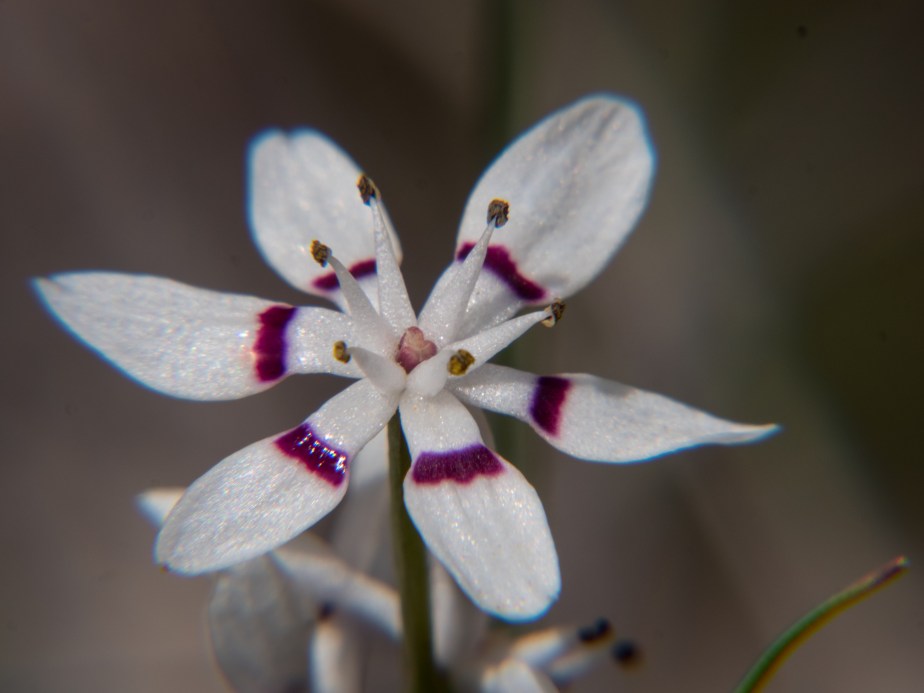
But the flowers were gorgeous …
Early Nancy
… tiny but perfect. The Riceflowers are bigger …
Common Riceflower
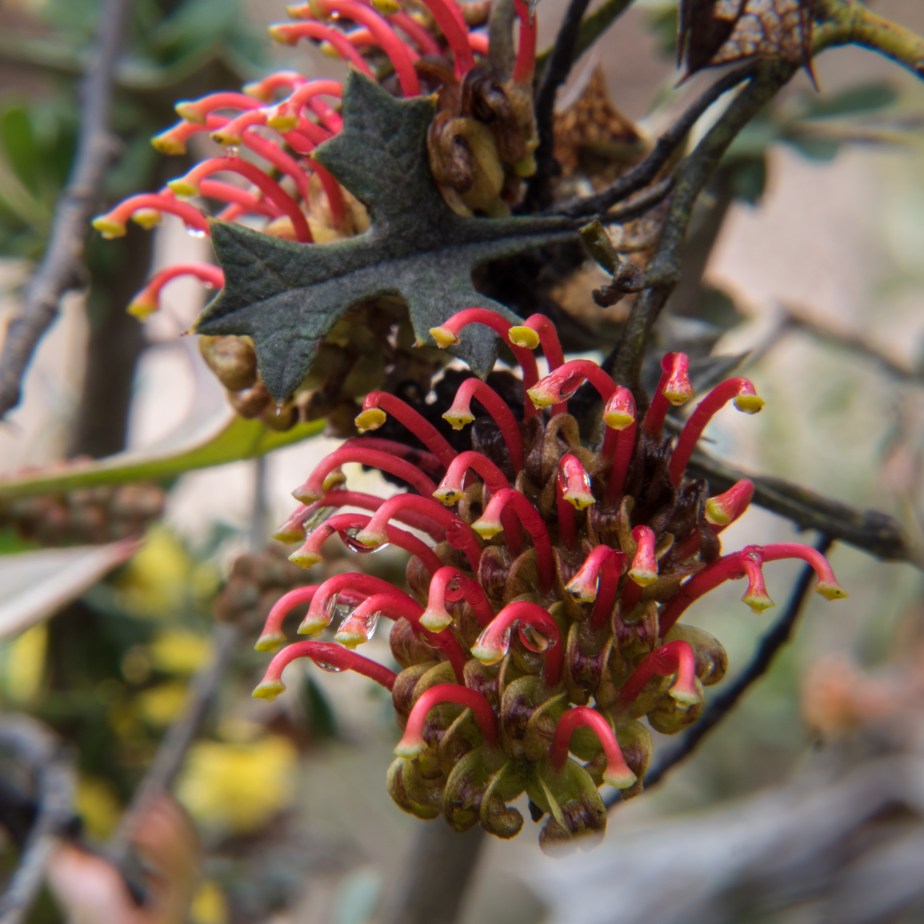
Prefer red? There were two quite different Grevilleas to choose from …
Goldfields GrevilleaCats Claw Grevillea
The Goldfields Grevillea is a threatened species, Paddy’s Ranges is very significant for its survival.
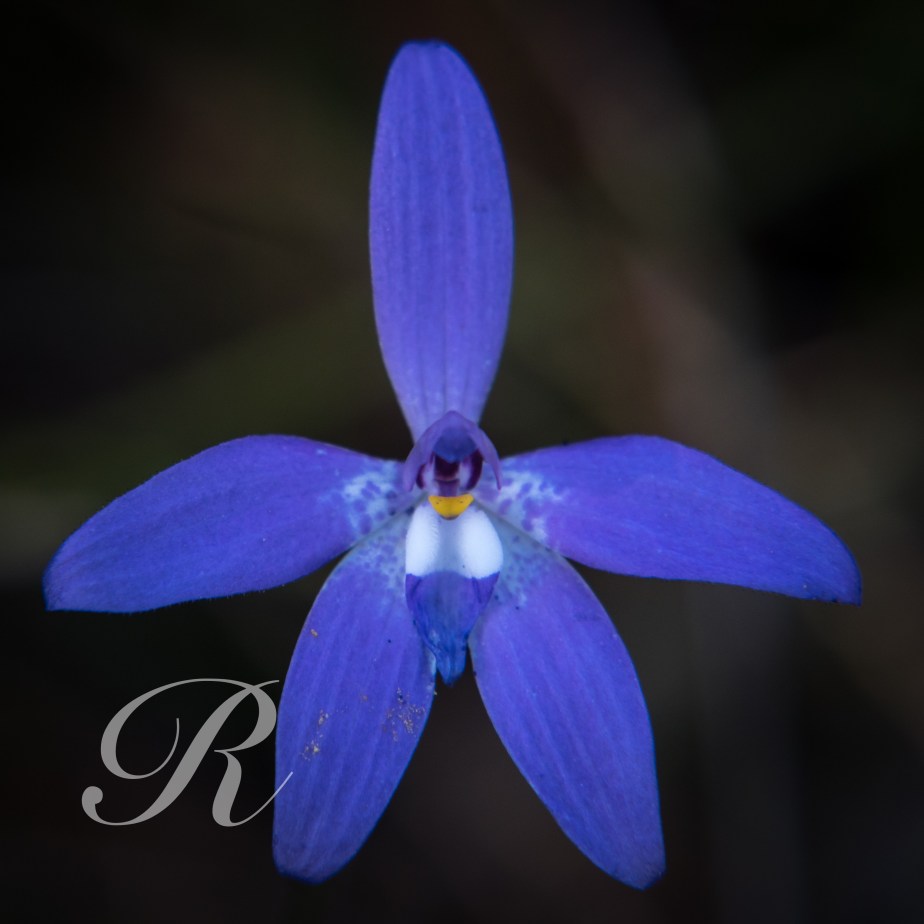
And what would spring be without an orchid or two? Australia has about 100 genera and more than 1200 species of orchid, mostly in the tropics where they tend to be somewhat showy. Here in Victoria we have to be content with rather discrete examples, mostly terrestrial and mostly just in spring.
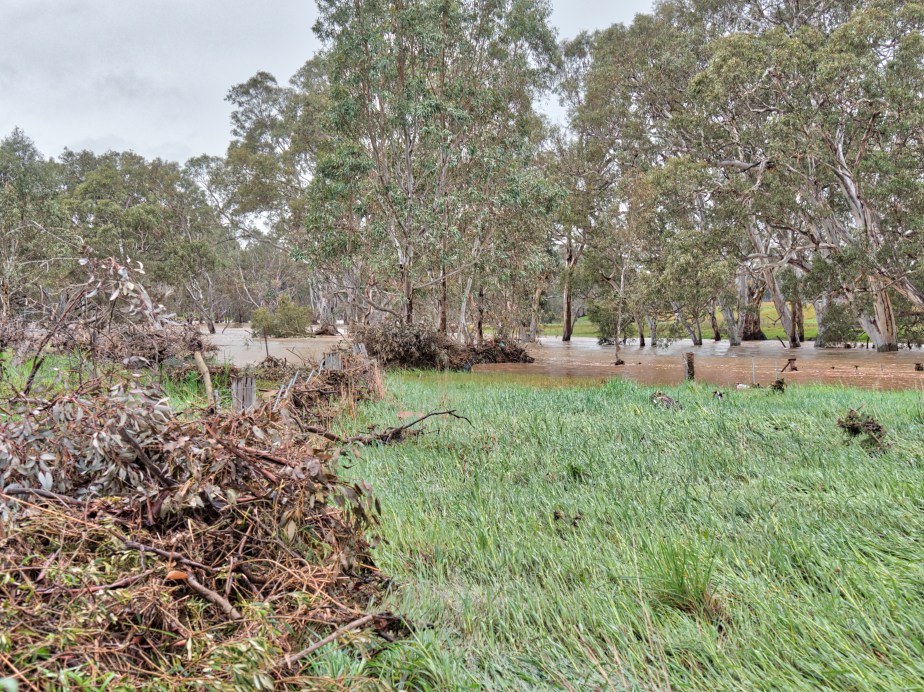
As the water receded the debris lodged in the fences became apparent …
With one exception the fences at right angles to the direction of flow were no longer standing. I’ve spent a couple of days removing most of them. This morning I got around to pulling the rubbish off those that are still standing …
Curled up in the debris was this little guy who wasn’t too happy to be pulled out …
Eastern Brown Snake
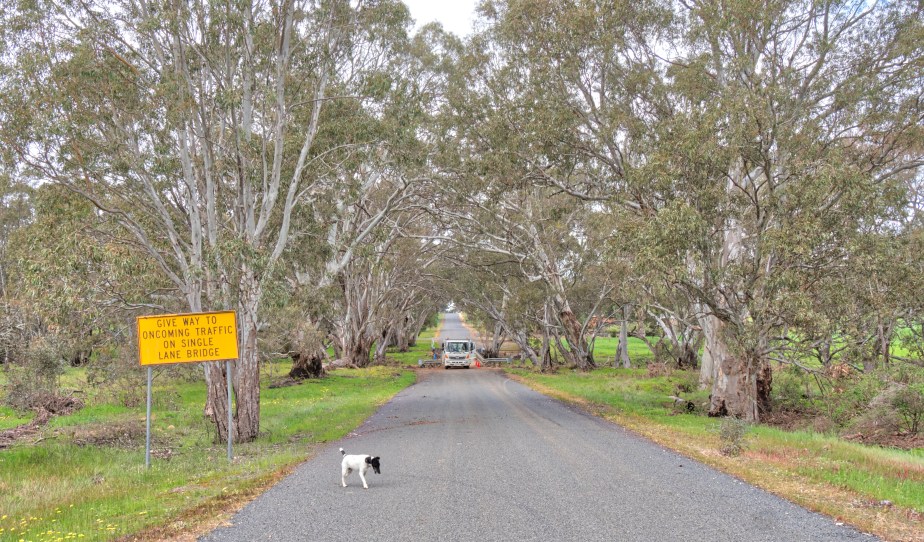
After we’d burned the rubbish Gayle headed for the shops to restock the pantry while the dog and I revisited a few of the places I’d photographed the other day …
WetDryWetDry
The road crew are hard at work repairing the guard rail.
The weather forecast for tomorrow is most interesting.
There I was trapped in Birdsville, less than a month later and 2000 km away here I am trapped in Victoria.
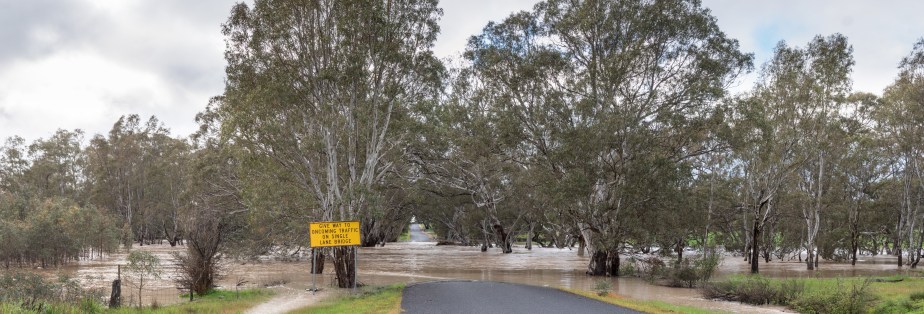
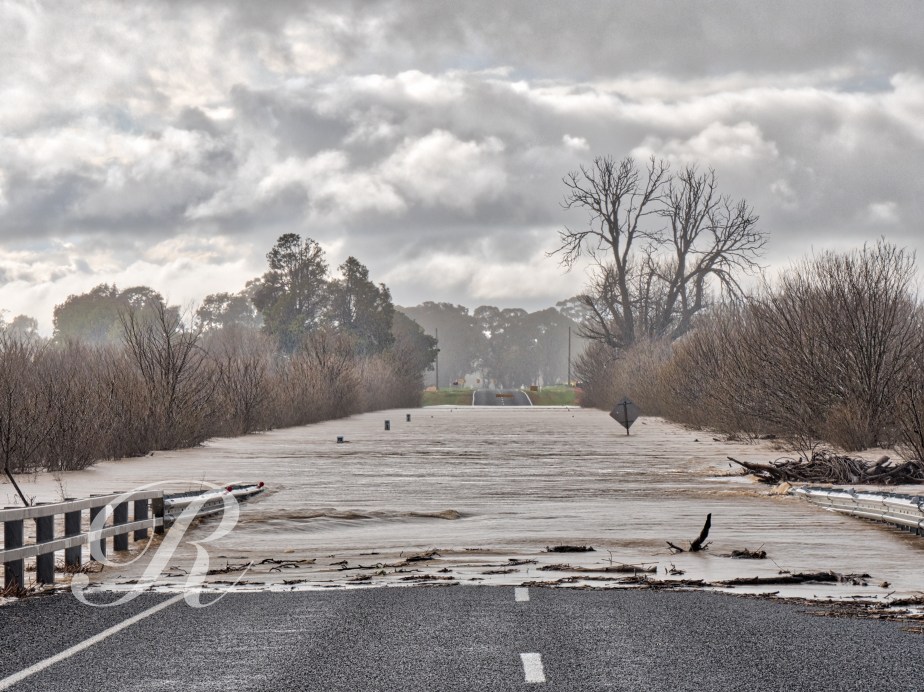
I live on the banks of an inoffensive little creek, I woke up this morning to find it lapping at my back door. I have the choice of a ford and two bridges if I want to go anywhere. The ford would be certain death, the photo of the nearer bridge doesn’t tell the story all that well – you can’t see the bridge! Here’s the other bridge …
The floorboards are still dry, there’s food in the pantry and beer in the fridge. I’m better off than many another …
For just about everything that Mark Twain is said to have said there is a Twain scholar to say he didn’t say it. For instance that thing about golf being the opiate of the masses, he never said that.
Not far from me is the Maryborough railway station which Twain thought so grand that he said “Maryborough, a station with a town attached”. It’s pretty certain that’s another of the things he didn’t say but he did say this …
Don’t you overlook that Maryborough station, if you take an interest in governmental curiosities. Why, you can put the whole population of Maryborough into it, and give them a sofa apiece, and have room for more.
He visited the town in 1895 during a year long world tour at a time when he was deeply in debt in the US. It invites comparisons with our own Clive Palmer, up to his eyes in debt and living it up. However Twain’s was a lecture tour intended to raise the funds to repay his debts. Which to his enormous credit he did, despite the fact that he was protected by the bankruptcy laws and could have walked away from them. So no comparison after all.
The station is a bit of a curiosity. It’s part of popular local mythology that it was actually meant to be built elsewhere. There is a Maryborough in Queensland which still causes confusion. I’ve also been told with all apparent seriousness that Madras has a little station and Maryborough a huge one because the plans were accidentally switched. In reality it was erected just as intended, just where intended at a very important intersection of various country rail lines.
It was begun in 1890, completed in 1891. Passenger services stopped in 1993 but resumed in 2010. I took my camera along recently when an old diesel locomotive brought a train full of enthusiasts to town …
The McGee country residence is in the Victorian Goldfields. The passage of the seasons is marked by the coming and going of migrant birds.
The first Flame Robin is back at the farm. They are altitudinal migrants. The nearest I can find them in summer is on Mount Cole, south of us on the Great Dividing Range … this far west more the subtle dividing range rather than great. They will be with us until spring, they like the fences adjacent to short grass, or any other low perch from which they can pounce on their prey. The males bring some welcome winter colour.
Also present yesterday was a Fan-tailed Cuckoo, a first for the farm list. It was likely a youngster in the process of dispersal. It is unlikely to make its home here, the environment is a little too dry for it.
Today has been a truly beautiful first day of spring.
The country estate in Victoria’s Goldfields has been wet, wet, wet all winter. The last few weeks have seen the grass grow to waist-high in places whilst all too wet to mow. For someone who likes to keep on top of things very frustrating (for me … not so bad).
Spring brings a change of the guards, I last saw Flame Robin about a week ago and Swift Parrot about a week before that. A few Crimson Rosellas are still around but almost all of those will retreat to higher country as it grows warmer.
The archetypical harbinger of spring for me is the Rufous Songlark.
The first one arrived yesterday afternoon. By this afternoon there were half a dozen. Whoever called it a Songlark was very generous. It makes a lot of noise, from a perch or in flight but hardly sweet. It draws its inspiration from a fork sliding across a plate. Nonetheless it brings good weather, buds and blossoms. The Gold Dust Wattle is looking great and I’m looking forward to collecting some seed soon.
Not long now and the Cuckoos and the Clamorous Reedwarbler will be back. Life is good. Enjoy.
Across the creek from the McGee country estate, in the Central Victorian Goldfields, is a bushland reserve.
Someone loves the reserve and has put up some nest boxes. I pass two of the boxes on my morning walk. Both are chewed and worn around the opening in the front, indicating that some creature has used them. One of them, though, has since been taken over by feral bees.
Having seen nothing come or go during daylight I deduced that the inhabitants might well be mammalian, perhaps there might even be gliders at the bottom of my garden.
One evening in summer I took a camp chair and staked out the box, through the twilight and into darkness. I provided a considerable feast for the mosquitoes but saw not a glimpse of a glider.
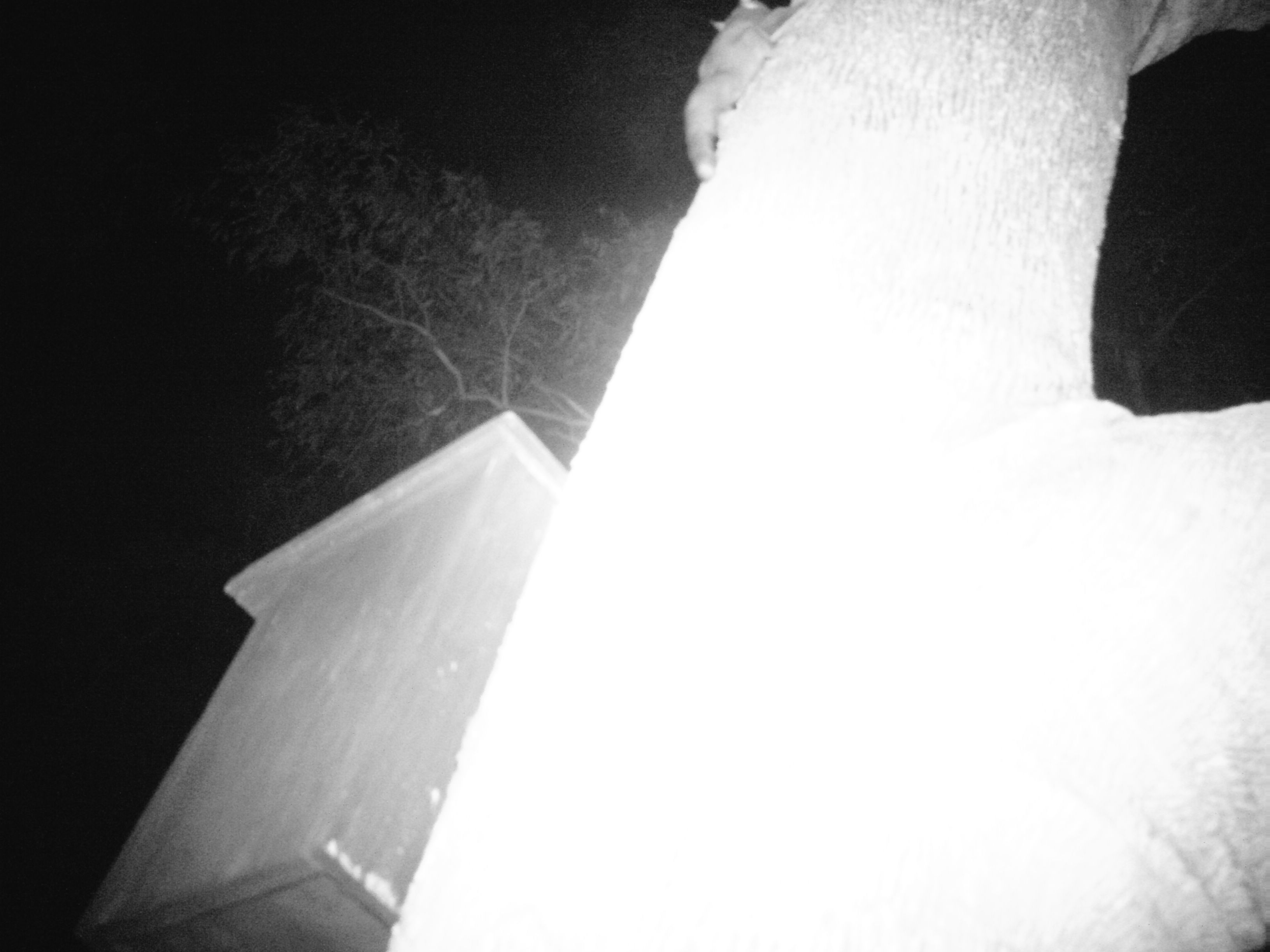
I subsequently bought a Trail Camera from Faunatech. It is mosquito-proof. I mounted it where it could see the box and also the canopy. It sat there for two nights and three days. It took pictures, almost exclusively of the canopy swaying in the breeze, by day this looks conventional enough, at night it uses infrared. I then examined more than 1200 photographs of a tree, a box and some swaying leaves and found four photos with a critter included. Here’s one …
My working diagnosis is Sugar Glider but I am discussing this with a more knowledgable friend, a scientist with Parks Victoria.
Congratulations to the people who provided the box. I will be erecting a few on my side of the creek.









 bobmcgee