Turning to credit cards and escorts, I have consistently from day one denied any wrongdoing in relation to these issues. I make it clear—and I hope I have already by painting a picture—that I had many enemies in the HSU, many enemies who did not like increased transparency, many enemies who preferred that there be no national office. I was the subject on numerous occasions of threats and intimidation. I had my door of my office graffitied. The national office shared an office with other Victorian branches of the Health Services Union.
Mr. Thomson was found guilty today of theft and obtaining financial advantage by deception after using the cards to pay for sexual services and to make cash withdrawals while he was national secretary of the Health Services Union.
He faces a maximum sentence of five years in prison.
India is just bursting at the seams with life, with colour and movement, noise, history, architecture. The only thing a visitor won’t find is ordinariness.
Phalodi is just a small town in Rajasthan about 140 km from Jodhpur. A quick skim through Tripadvisor reveals that the main reason for tourists to come here is for somewhere to stay close to Kichan and the famous Demoiselle Cranes. Exactly what took me there. More of them later.
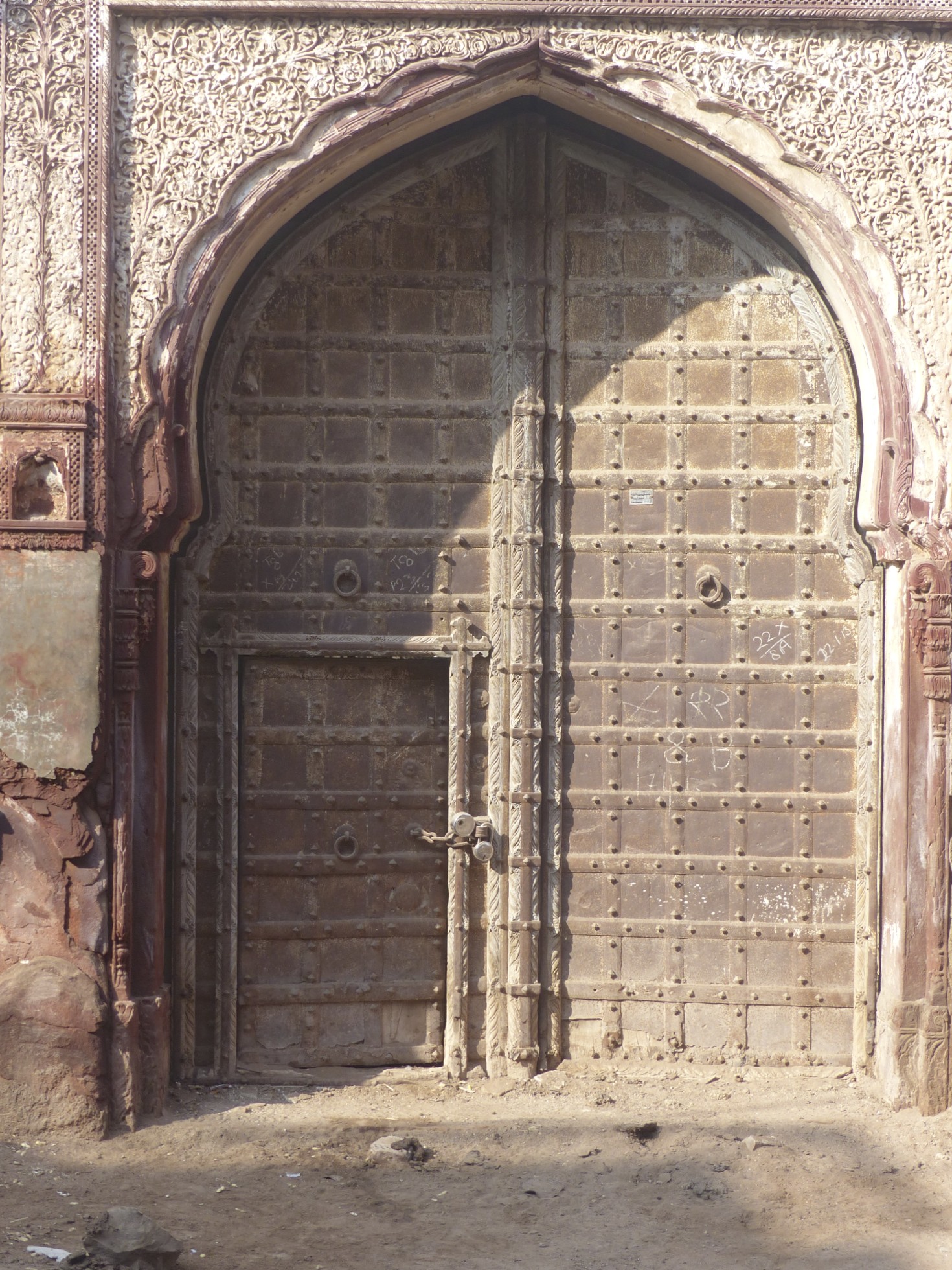
The town grew up on an important trading route and if you were a prosperous merchant two or three hundred years ago you built yourself a haveli. This was a private mansion built in a style heavily influenced by the Mughals. Behind a gate like this …
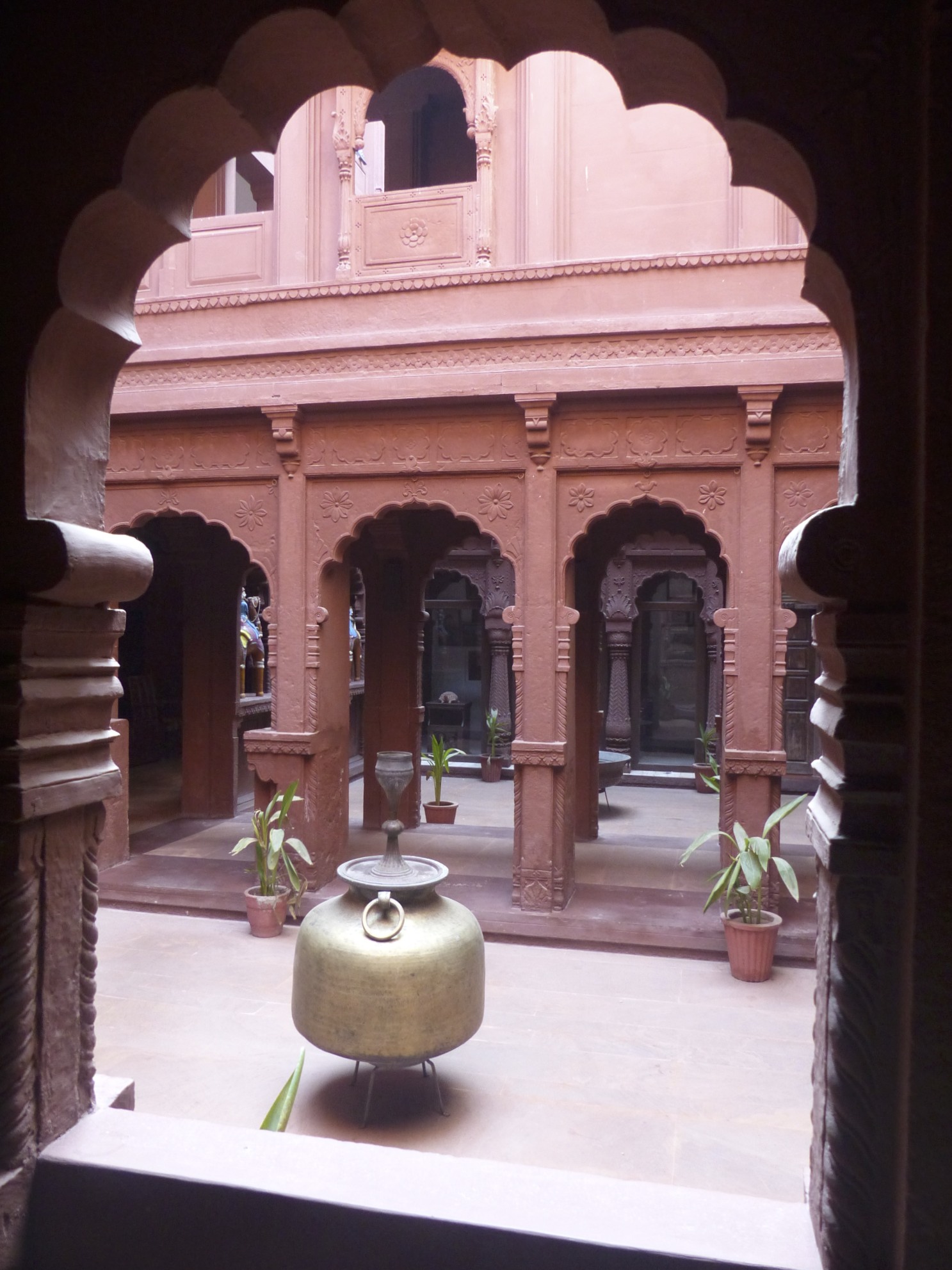
… there would typically be the main courtyard, often with a fountain, and beyond that a second smaller courtyard for the women. The mansion would surround the courtyards in such a way as to give privacy from the street and carefully segregate the sexes. A large haveli might have three or even more courtyards.
Built in 1750, Lal Niwas is a splendid haveli boasting of intricate craftsmanship on red sandstone. The traditional balconies, terraces and doors add an authentic royal touch to it.
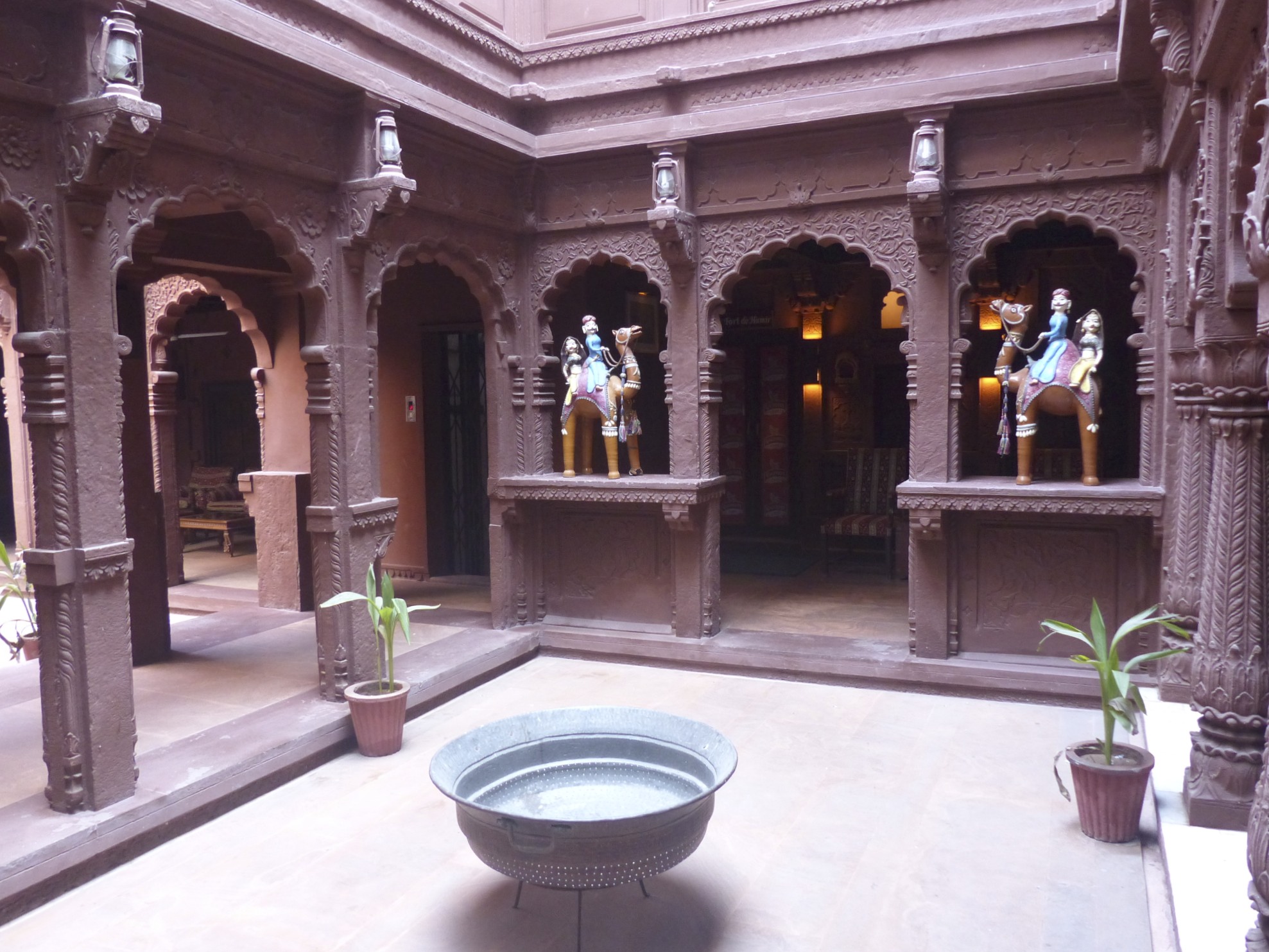
Fifteen glorious rooms await you. Not every reviewer found it glorious but I found it more than adequate. Two of the courtyards …
Lal Niwas.Lal Niwas.
Phalodi has a population of about 45,000 if transplanted to Australia that would make it the fifth largest town in the state of Victoria, above Shepparton and below Bendigo. If you fired a cannon down the main street of either on a Sunday you would be lucky to hit a pedestrian. Don’t try that in Phalodi. There are no buildings in either town dating from 1750 which was twenty years prior to Captain James Cook’s encounter with the east coast of Australia.
India has a turbulent history. At a time of intrigue and assassination an ambitious man could make a name for himself or die young or both.
Rao Jodha was born in 1416. In 1427 his father secured the throne of Mandore and subsequently extended his influence by a strategic alliance that saw him administering an adjacent area. In 1438 the alliance was dissolved in the time-honoured way, assassination. The young Rao Jodha escaped and mounted a campaign to regain the throne he had expected to inherit. His attempts to retake Mandore were unsuccessful until one day, so the story goes, he stopped at a farmer’s house where he kept his identity to himself. He was given a bowl of stew, khichdi. He would have eaten this with his right hand. Unwisely he began in the middle and burnt his fingers. The farmer’s wife said “Stranger, you are making the same mistake as King Jodha, khichdi is hottest at the centre and coolest at the edge”.
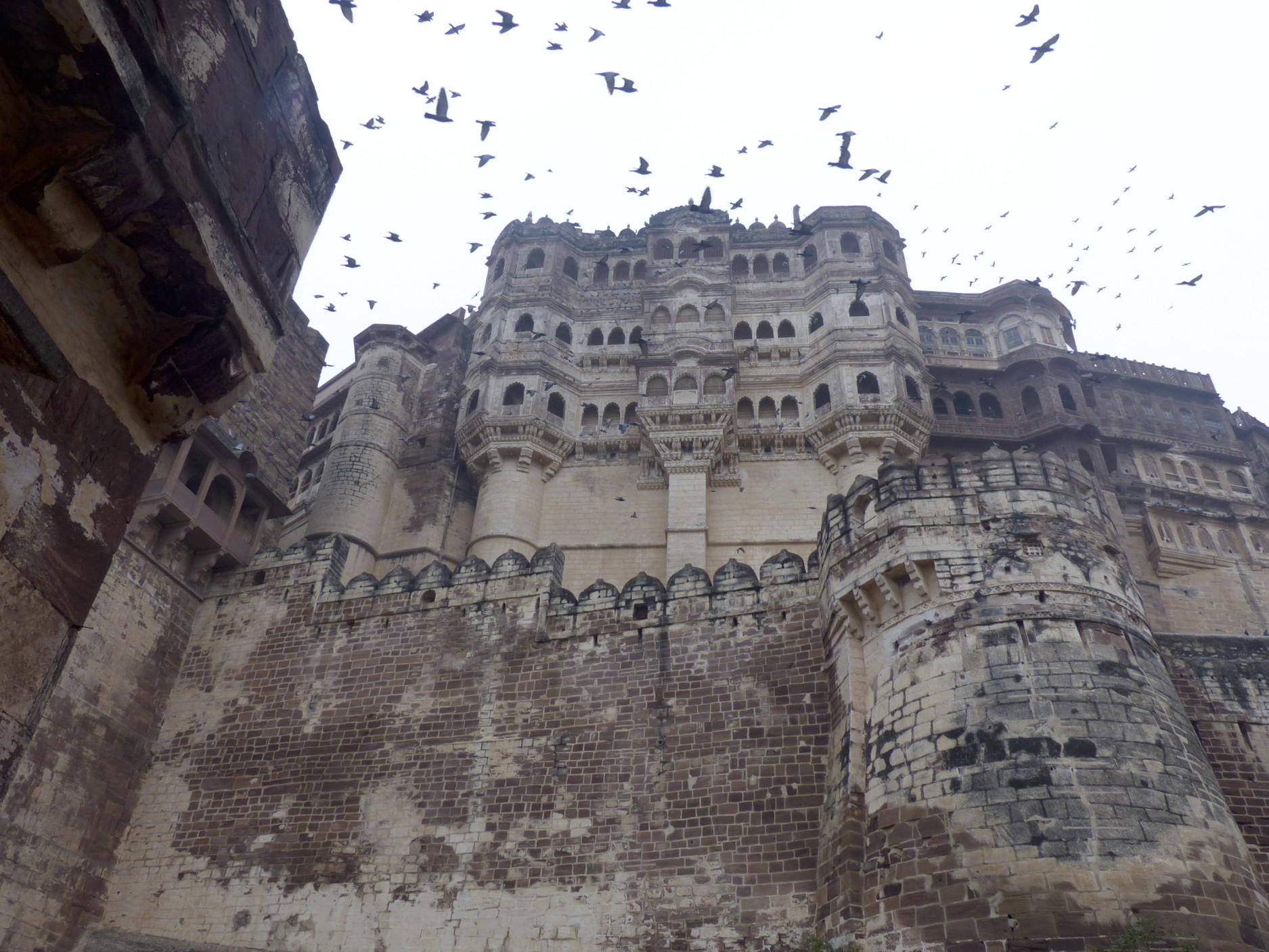
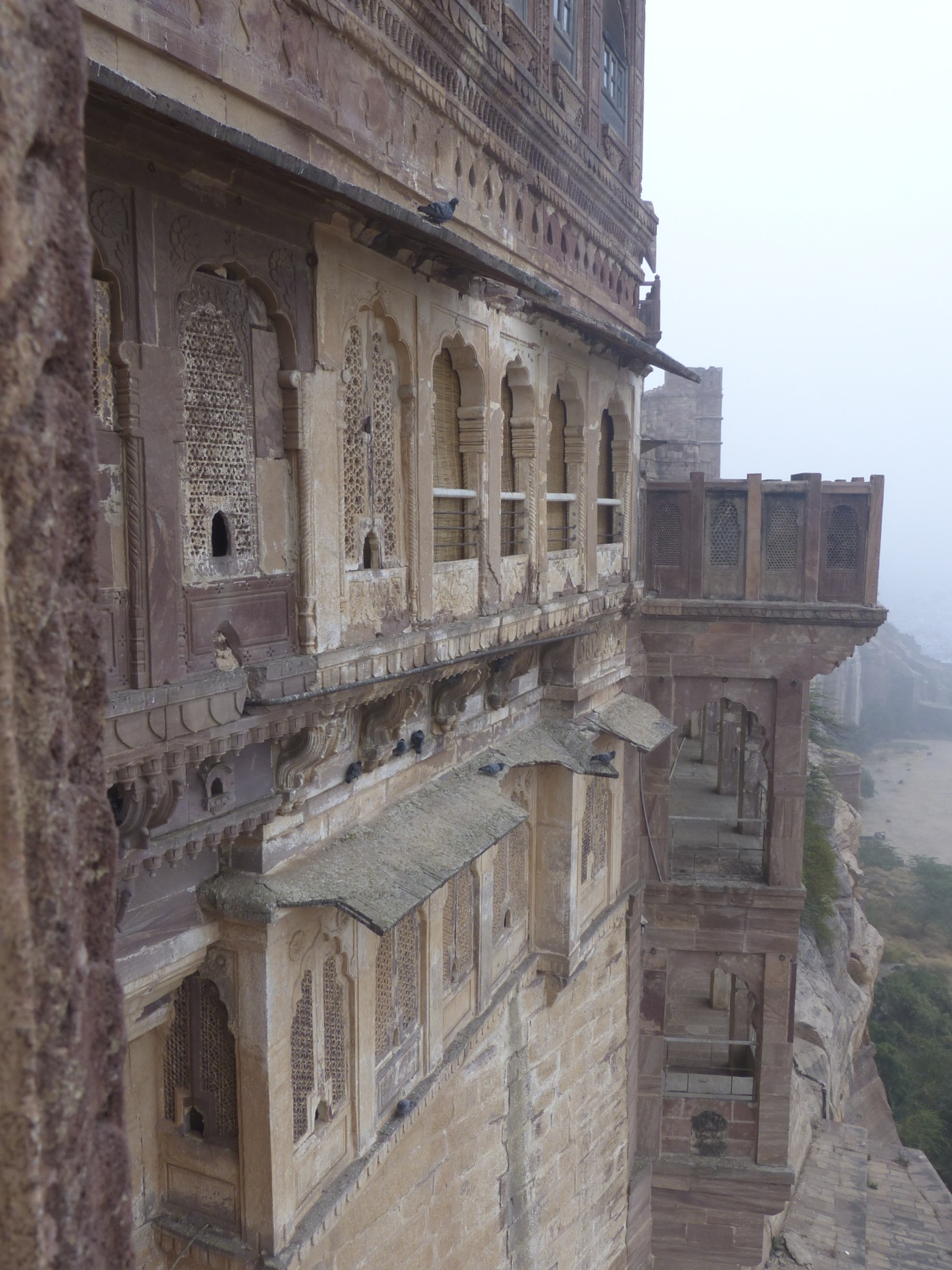
Jodha saw the wisdom in this, turned his attention to the outlying forts which he took with ease. Once these were secure Mandore fell into his lap. A more secure capital had a lot to recommend it, so in 1459 Rao Jodha founded the city of Jodhpur and began to build a hilltop fort, Mehrangarh.
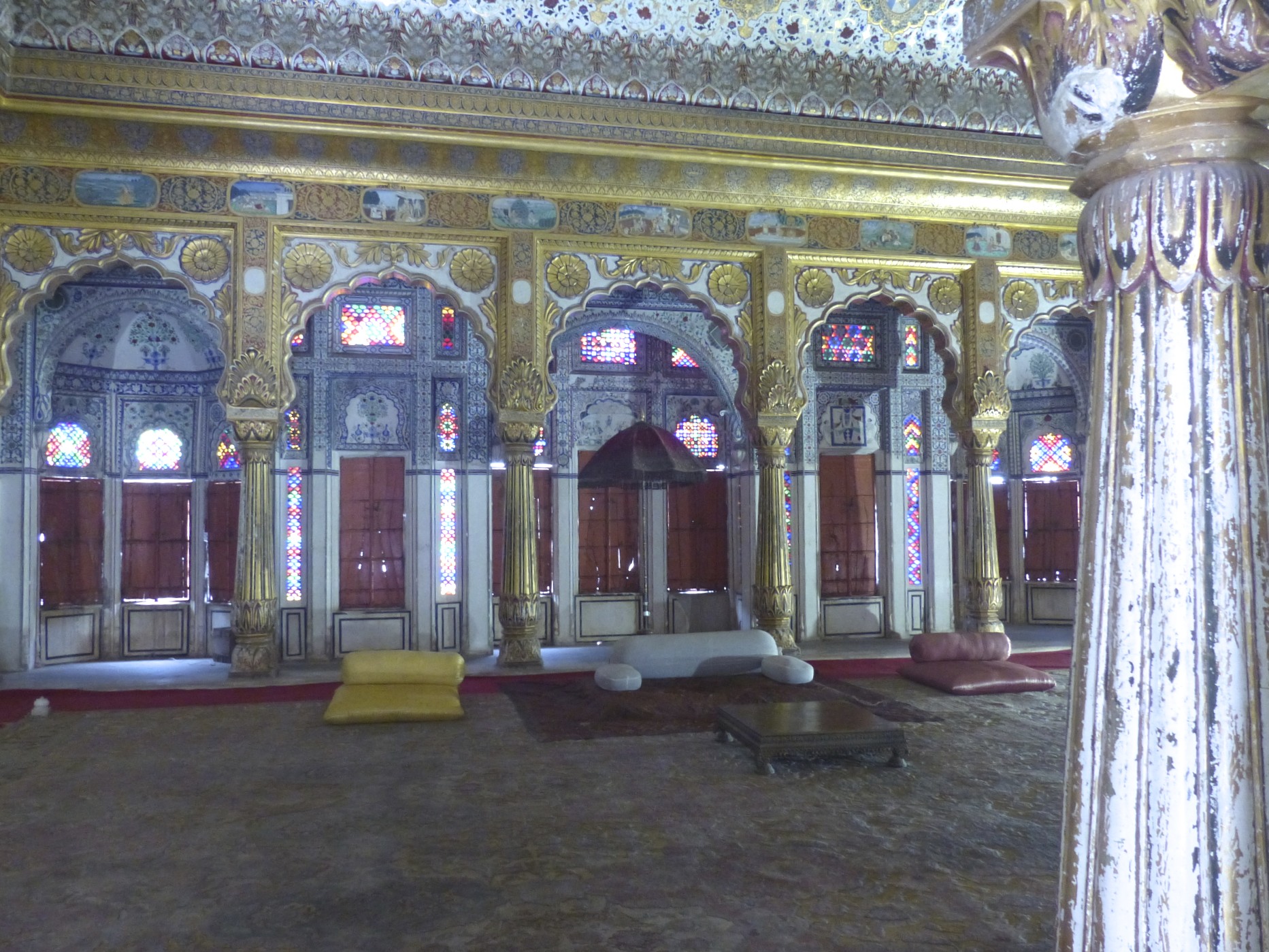
A combination of impregnability and luxury, Mehrangarh, enabled Rao Jodha to enjoy his kingdom until his natural death aged 73.
Our guide was very suitably clad …
Jodhpur is the second largest city in Rajasthan with a population of almost 1.3 million people. People make good use of their roof tops and also their basements.
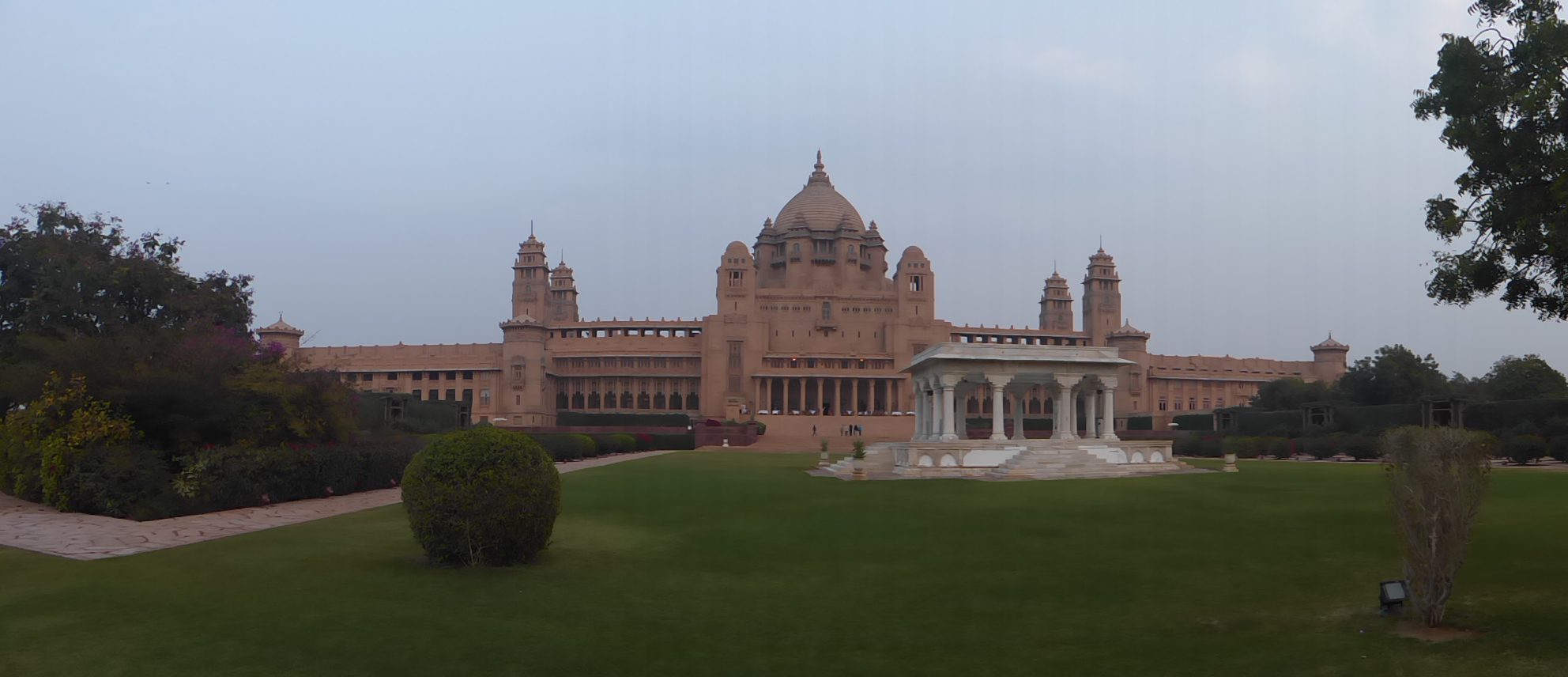
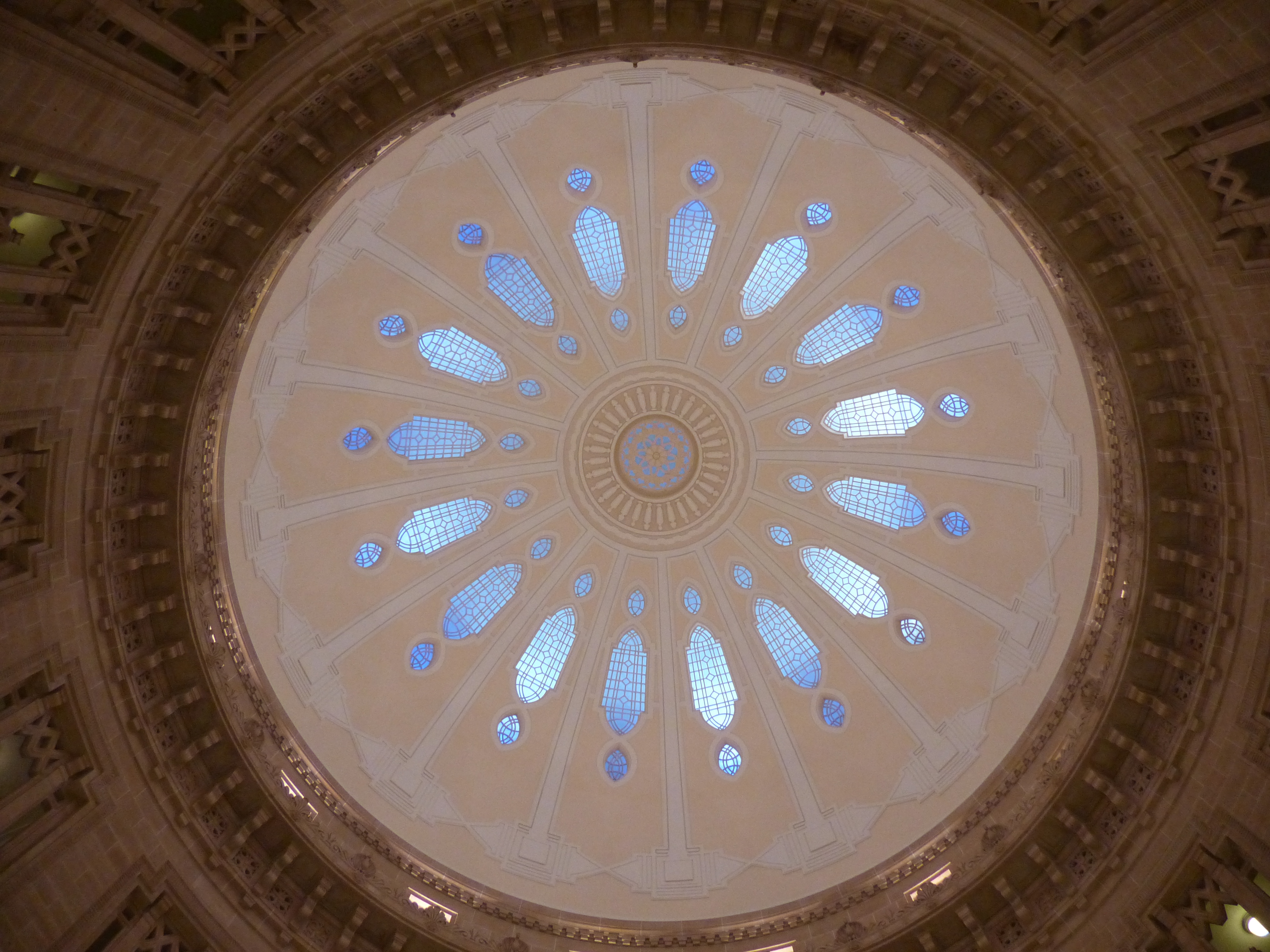
Whenever I visit Jodhpur I stay in utter luxury at the Umaid Bhawan Palace, well I stayed there once … for one night. Up the red carpet to a trumpet fanfare, a shower of rose petals, under a canopy held aloft by a welcoming party of five to have a garland draped around my neck by a pretty young lady and anointed on the forehead with a red dot by another. It has probably sealed my fate come the revolution. But hey, it was worth it.
As always, click on any of the photos for a better look. Clicking the back arrow in your browser returns you to this page.
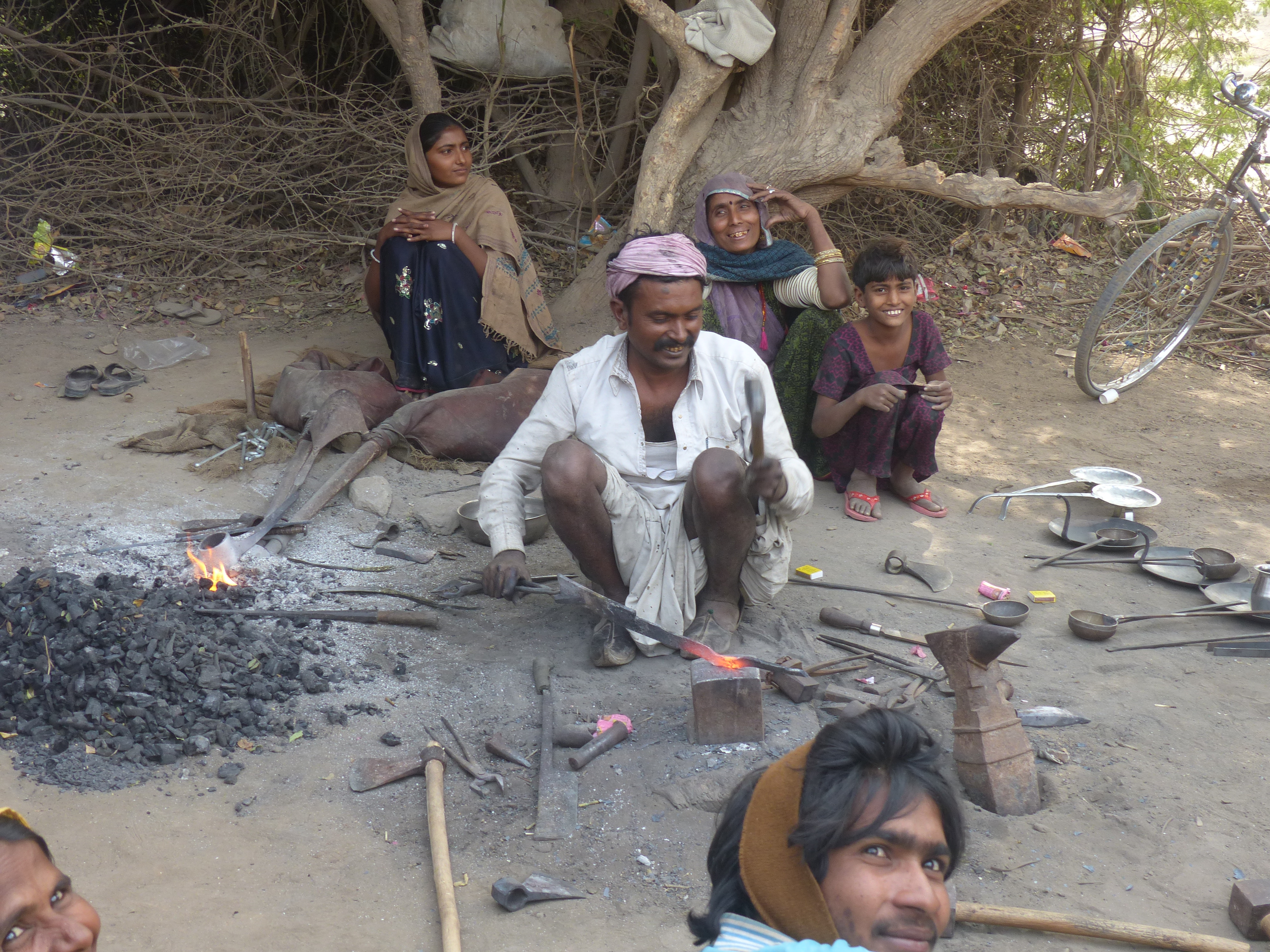
Walking through a small town in Rajasthan I came across a blacksmith at work. Not an uncommon sight but this man had drawn a bit of a crowd which seemed more to do with the banter which was going on than any particular interest in his work.
The lady behind the smith works a twin bellows. By alternating between them she provides a continuous blast of air. When the smith places his work on the anvil another man will deliver the necessary heavy blows with a large hammer. The smith does the fine hammering himself.
As you can see there is a smile on every face. A lady in the crowd has just called out loudly, another member of the crowd was kind enough to translate for me …
Don’t photograph that stupid piece of iron. Take photos of me!
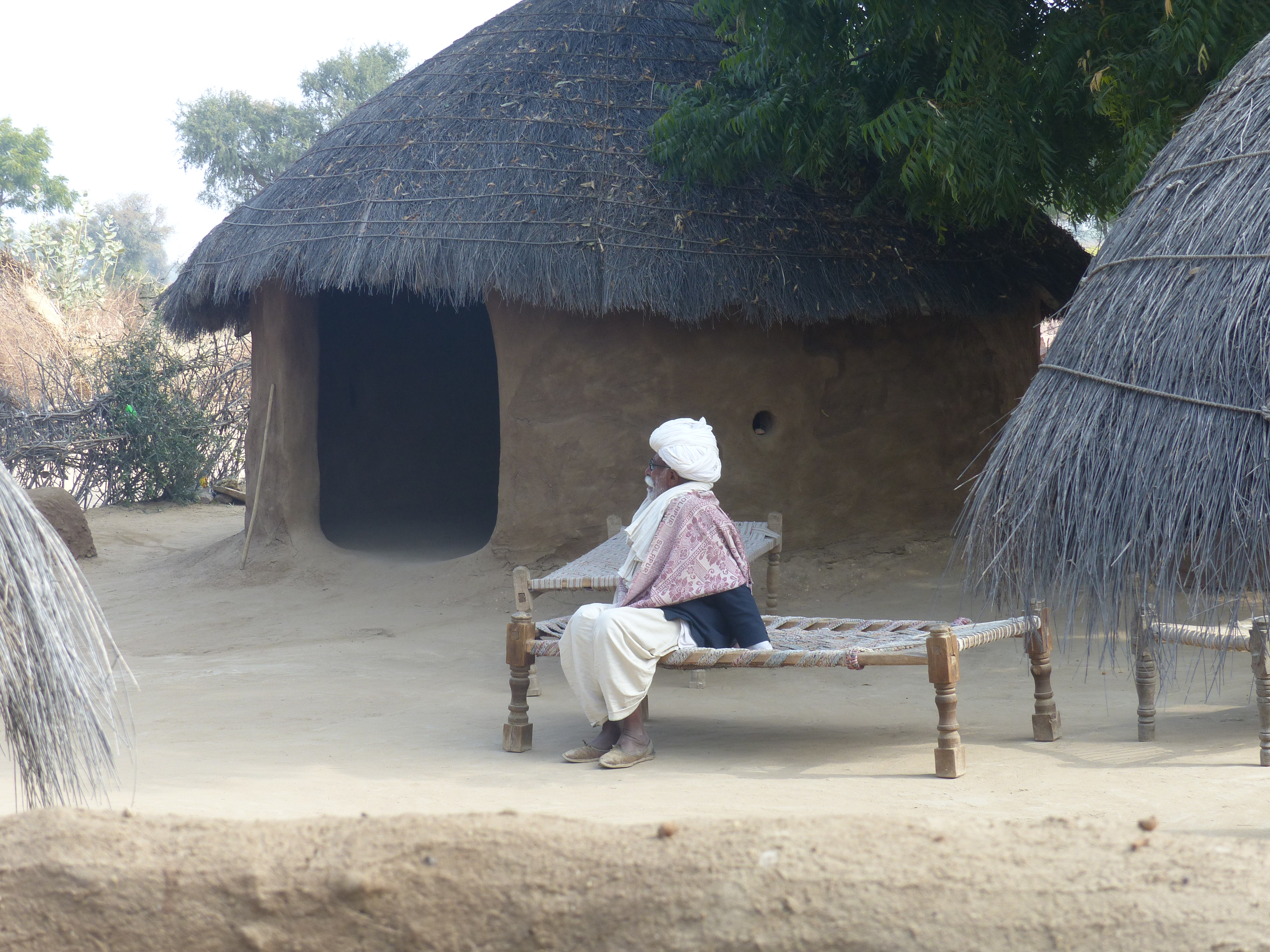
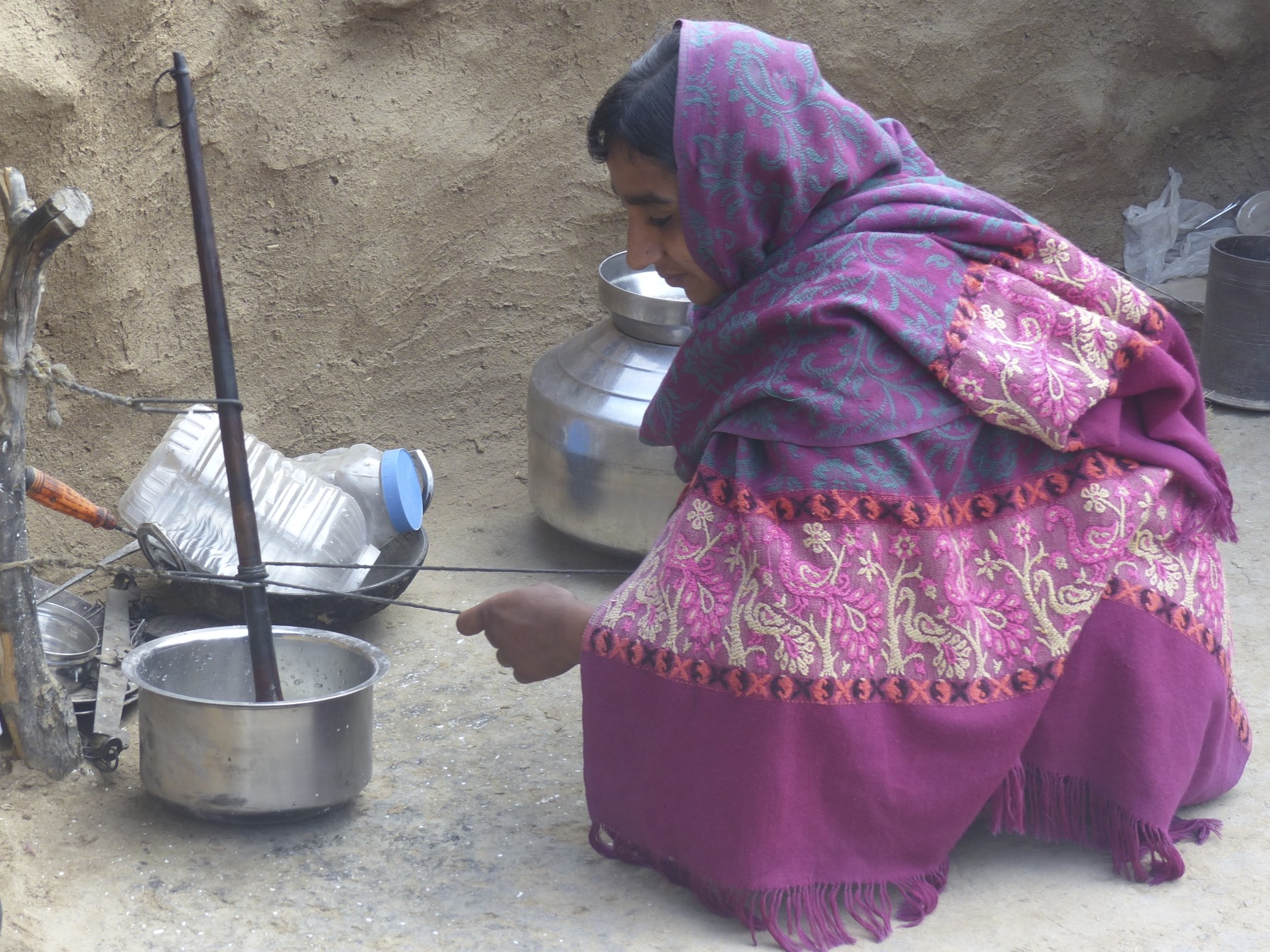
Whilst in Rajasthan I was lucky enough to visit a Bishnoi village.
These are followers of Guru Jambheshwar who was born in Rajasthan in 1451. He enunciated bis nai, ie twenty nine, principles by which life should be led. The principles cover hygiene, social interaction, the avoidance of intoxicants and a reverance for living creatures and trees. Bishnoi people will not kill animals or cut green trees, indeed, on occasion they have given their lives to protect nature. They are vegetarian and traditionally do not wear blue clothes because blue dye was formerly made from large quantities of shrubs. They take care with the dead wood that they use as firewood to ensure it is free of insects.
In 1730 Maharajah Abhay Singh of Jodhpur required wood for the construction of his new palace. He sent his men to fell a large number of trees at Khejarli. They were resisted by Amrita Devi, a Bishnoi woman who, along with more than 363 other Bishnois, died trying to save the trees. Some are buried at Khejarli where an annual gathering of Bishnoi commemorate their sacrifice. The tradition still survives, on January 29th this year a young Bishnoi man was killed trying to defend Indian Antelope or Chinkara from poachers. He was shot dead when he grabbed hold of one of the poachers.
A Bishnoi elder by his house.A Bishnoi woman thickening milk.
Vultures were once a very common sight in India. Cows are kept for milk but very few ever end up on a plate. Of the estimated 500 million head of cattle in India, only 4% are destined for consumption by humans as meat. Dead cows have traditionally been vulture food.
It was noticed in the 1990’s that vulture numbers were in decline. The decline became precipitous. Vultures are now rare in India. In my recent trip to India I saw about ten individuals of two species, Egyptian Vulture and around the rocky outcrops at Siana, Indian Vulture.
The decline has led to an increase in feral dogs and rats. These have brought an increase in rabies, anthrax and plague. India now accounts for about 30,000 deaths from rabies each year, more than half the entire world’s total. 70% of victims are children under fifteen. Do not pat or feed the village dogs.
The cause of Vulture decline is diclofenac poisoning. This is a non-steroidal anti-inflammatory drug that has been used extensively in veterinary practice and also in humans. The first signs of toxicity are lethargy and a drooping neck. It is followed by renal failure and death within two days. I have used diclofenac for the occasional bout of trochenteric tendonitis. Sadly I am unfit for vulturine consumption.
The governments of India, Nepal and Pakistan banned veterinary use of the painkiller diclofenac in 2006. A safe alternative exists in Meloxicam. Diclofenac remains readily available for human use and sadly some is still misapplied in livestock. By the end of 2012 it seemed that populations were no longer declining but birds that were once common and widespread are now rare and vulnerable to extinction.
Siana is located on the fringes of the Thar desert in the Indian state of Rajasthan. The desert sweeps from the Rann of Kutch, Gujerat, east and north through Rajasthan and across the border with Pakistan into Sindh and Punjab. Rainfall ranges from about 10 cm or less in the west to about 50 cm in the east and varies widely from year to year. The ground water is deep and usually salty.
The great advantage of this region for the wildlife watching tourist is that it is not a national park. This makes it possible to get out and about at night to see nocturnal mammals. Over the course of two nights we caught up with the Indian Gazelle or Chinkara, Desert Cat, Desert Fox, Indian Fox, Palm Civet, Striped Hyena and Indian Hare. A couple of night birds were also encountered, Indian Eagle Owl and Indian Nightjar. Leopard are present but we were not lucky enough to see one here.
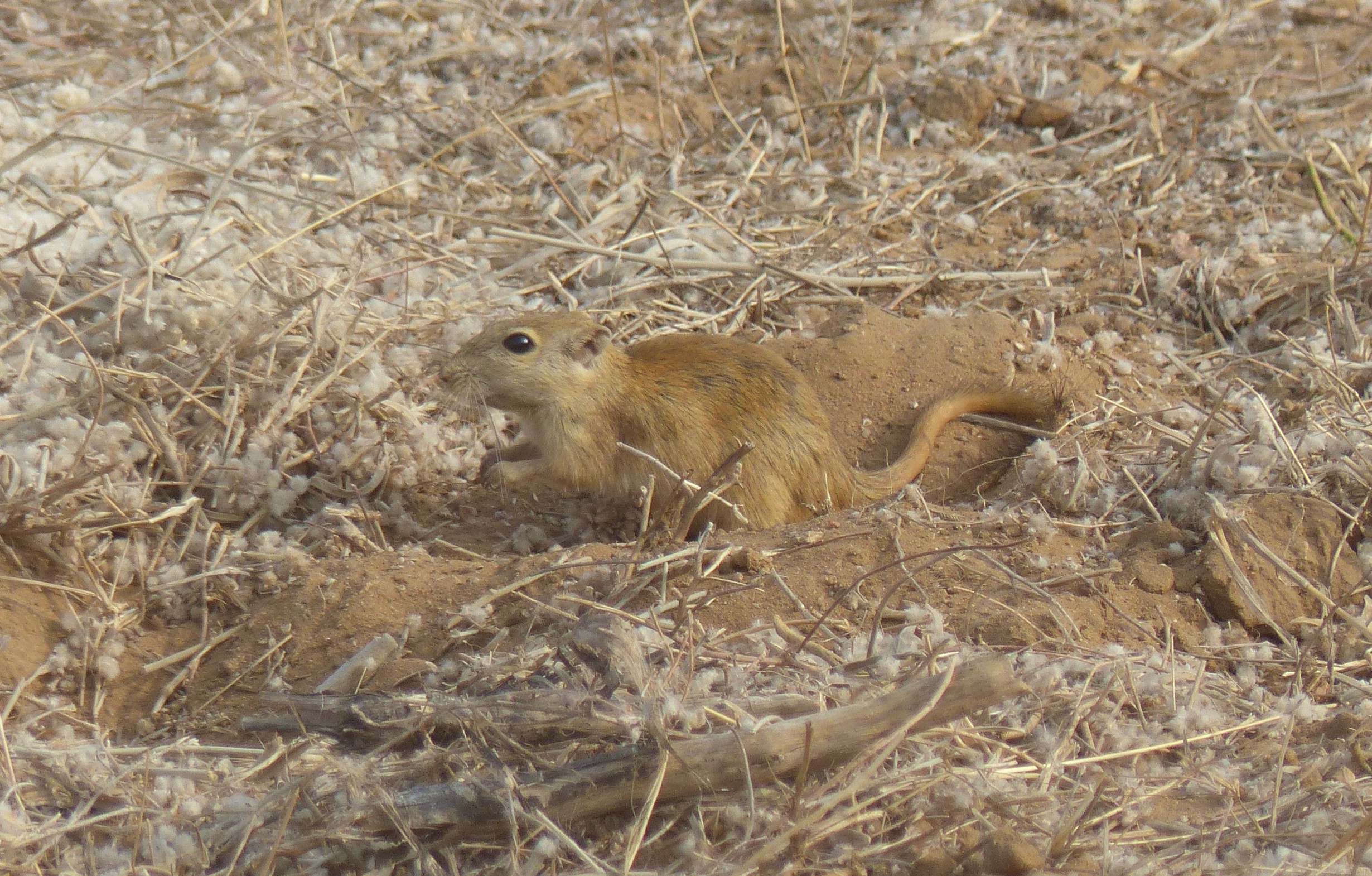
The Desert Jird is also present and with patience and a little luck you can get to see it. It is active late afternoon and early morning and lives in communal burrows in firm sand. I suspect that quite a lot of time can be wasted gazing in eager anticipation at abandoned burrows but eventually …
Desert Jird.
The Indira Ghandi canal has brought a measure of prosperity to parts of Rajasthan. It is 470 km long and enables crops to be grown in irrigated fields. In the vicinity of Siana, though, small scale livestock herding seemed to be the principle agricultural enterprise.
The red turban and white clothing is typical of Rabari men. It is the men that manage the livestock, the women take charge of the household and matters financial and are famous for being strong and shrewd. Traditionally they were nomadic but there is much less scope for this lifestyle in modern India. Most have now settled on the fringes of towns and villages.
Today’s drive would take us from Dasada, Gujerat 306 km north-east to Siana, Rajasthan, stopping for lunch at Balaram Palace near Mt. Abu, Rajasthan.
From this …
… to this …
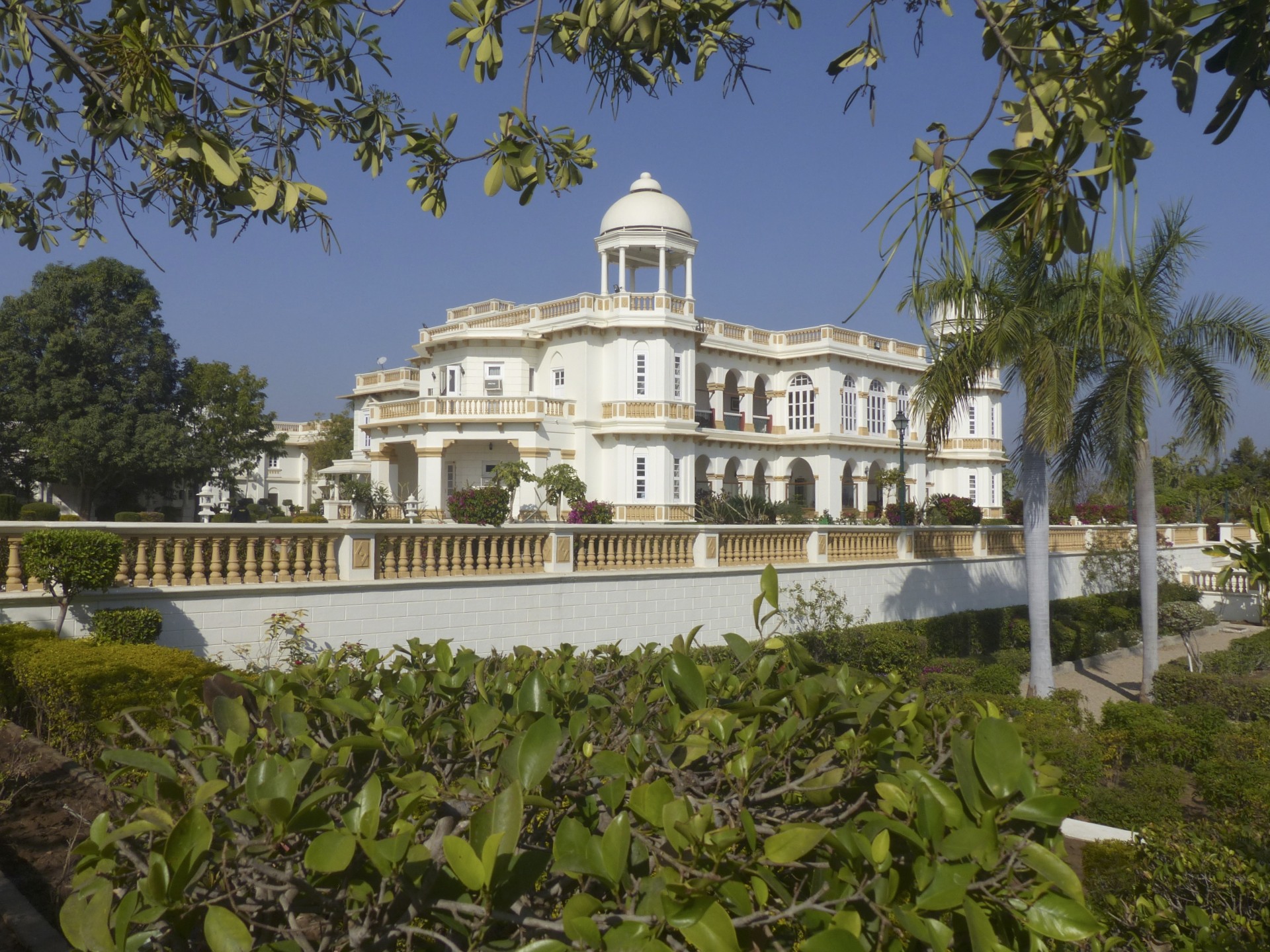
And the PBalaram palace was a very nice spot to break a drought …
Although, it may not have been the ideal preparation for the last leg of the journey …
Our intrepid leader, Mark Brazil.
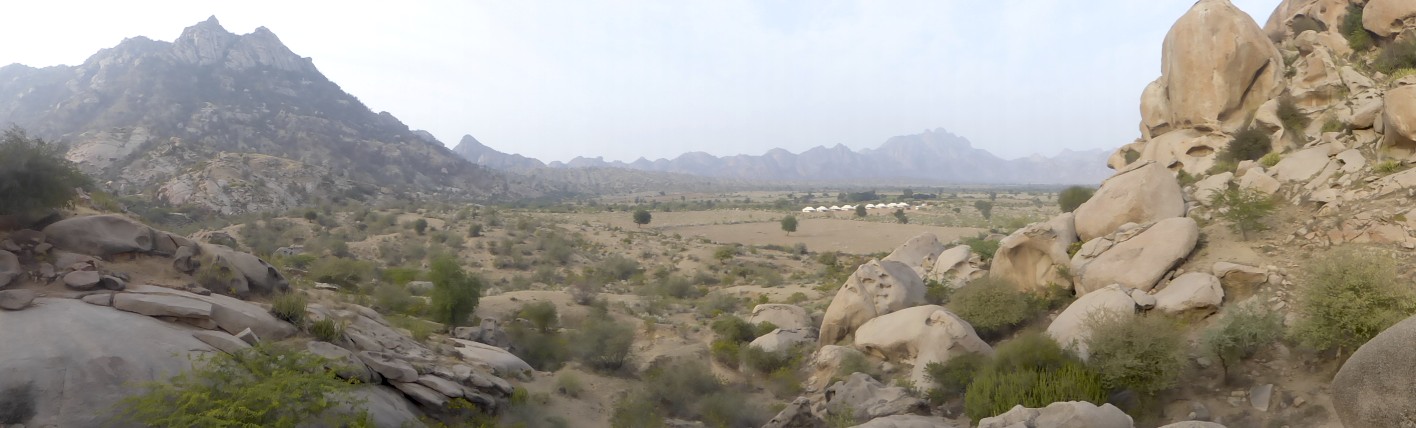
… by camel. Our camp lay on the other side of the saddle to be seen behind Mark Brazil. It really is worth clicking on this next photo (then the back icon to return to this page) …
Looks like luxury to me. And even more beautiful as the sun goes down.
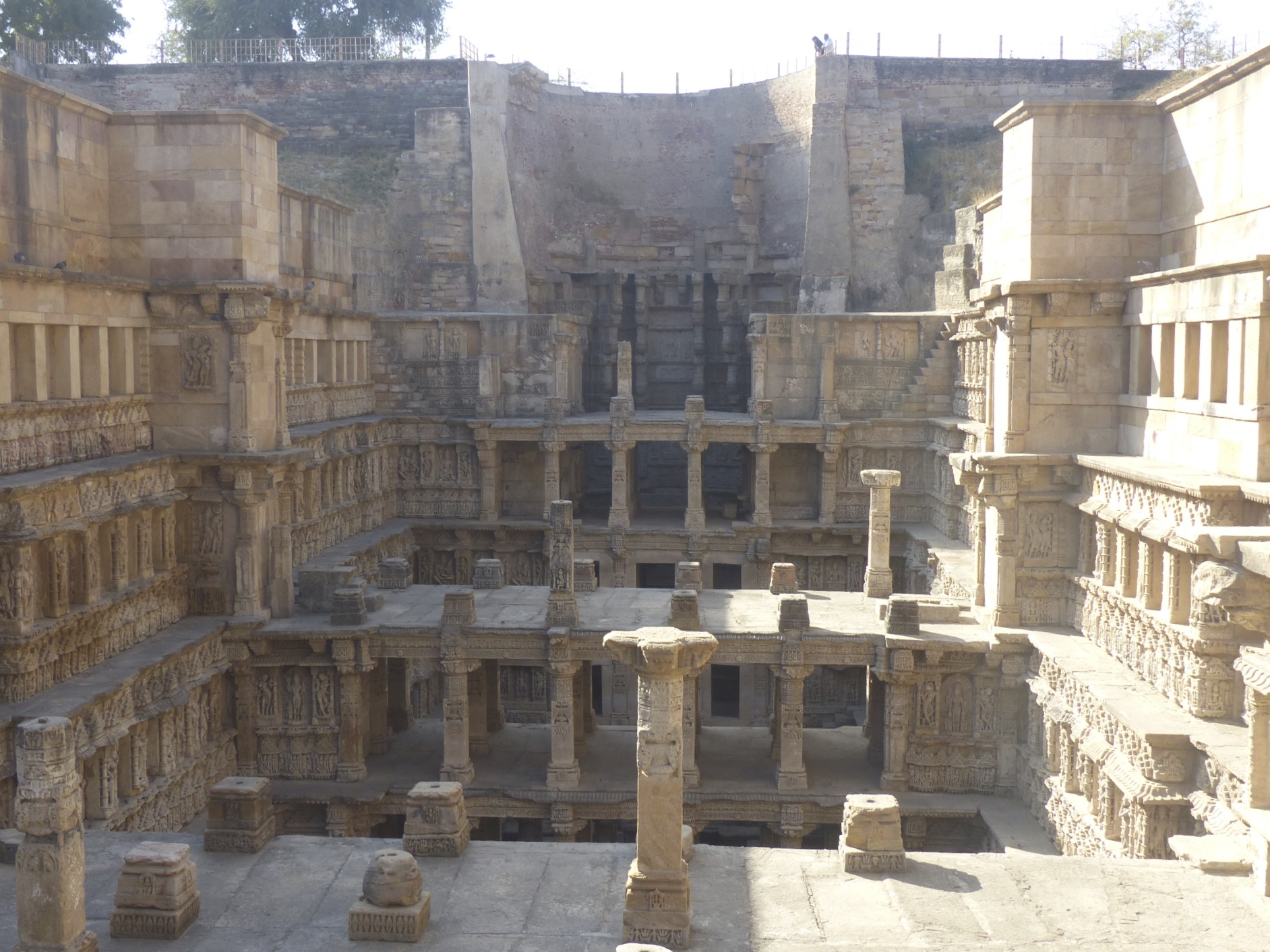
Gujerat is a dry state. In both ways … no alcohol and little rain. It is dry and sandy. Wells, therefore, had to be deep. A form of architecture evolved here where the wells would have steps down to the water, usually on just one side. They are mostly dug close to rivers or lakes and it came to be the case that providing such wells was seen as a meritorious act. The finest of them all is the Rani-ki-vav, or queen’s step well located just outside Patan close to the River Sarasvati. Once again it is a legacy of the Solanki dynasty. This one built by Queen Udayamati as a memorial to her late husband Bhimadeva I.
It is rectangular, the long axis runs east west and is 65m long 20 m wide and 27m deep. The well is at the west end. The walls are sheer except for the steps running down from the east end. It is large among step wells but the richness of the decoration places it above all others. In the lowest third of the rectangle there were a series of pavilions that braced the side walls. These have fallen into a state of disrepair, indeed the whole structure had fallen into disuse and debris had filled a good deal of the well. Considerable restoration has been undertaken.
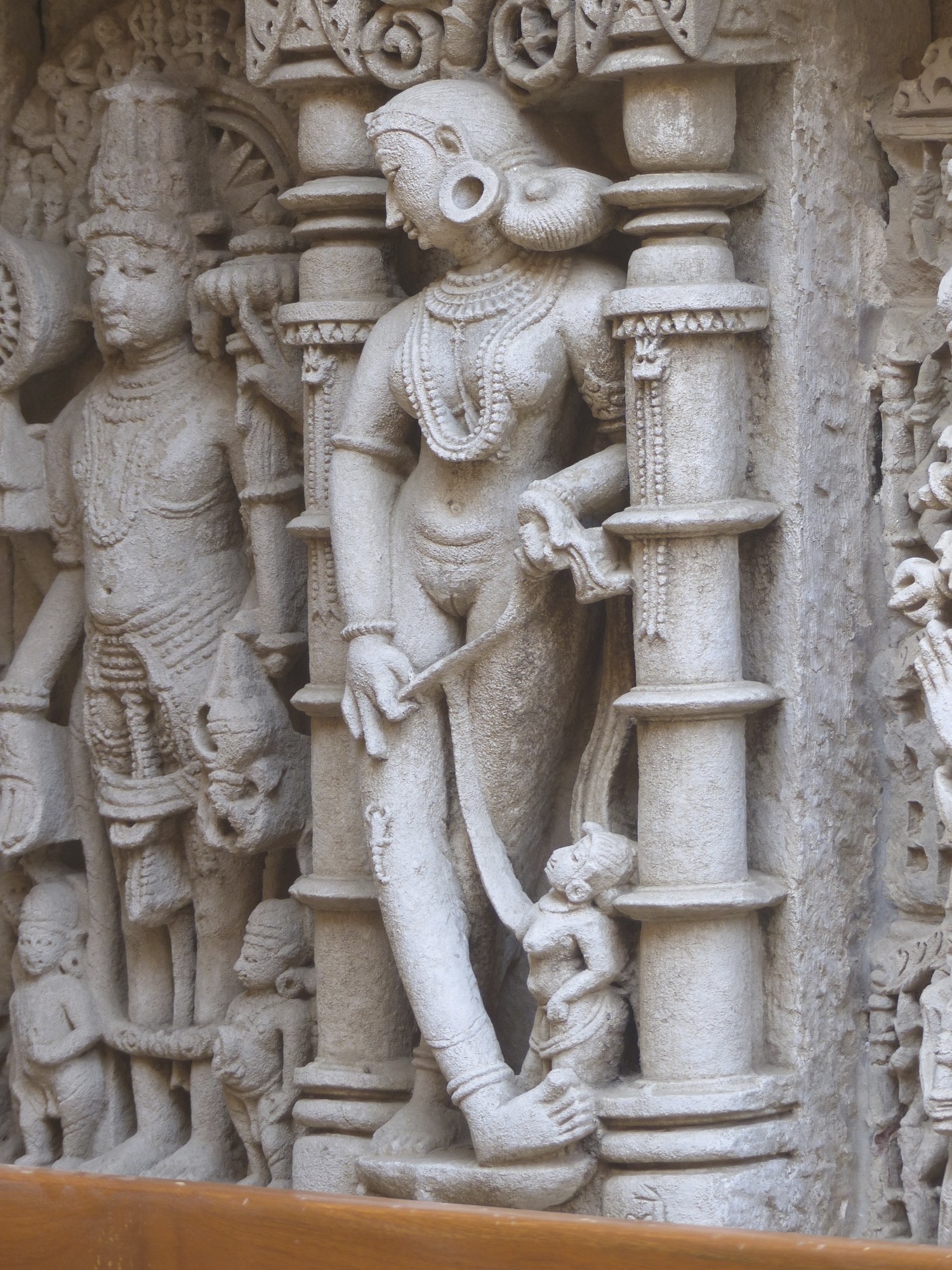
There are more than 800 elaborate sculptures among seven galleries. The central theme is the Dasavataras, or ten incarnations of Vishnu, which are accompanied by sadhus, brahmins, and apsaras (celestial dancers dressed in their celestial dancing outfits). At water level, no longer open to the public, there is a carving of Vishnu, reclining on the thousand-hooded serpent Shesha, resting in the infinity between ages.
Rani ki vav from the west end.
To negotiate the steps from terrace to terrace you turn left and right making patterns of progress as you choose your path. Long diagonals or short diagonals at your whim. Whenever you approach the walls you come close to the carvings including one of Queen Udayamati herself, seated on a cushion with a parasol held above her.
Looking west.About two thirds down into the well.
And a dancing girl to finish, take note of her plump beautifully formed owls.
This is part of a series that began with मुंबई … published 30/01/2014.
Most of the people I meet don’t have an accent. We’re all Australians. People from other places have accents, I’m sure you’ve noticed that.
Likewise, the ABC is not biased, right wingers are the only people who could possibly think otherwise.
Getup, a centrist organisation if ever there was one, is a good friend of the ABC determined to protect it from the IPA, clearly a fascist organisation. Really, every one with a brain realises that the Q&A audience are utterly typical of everyone with a brain. QED.
On the other hand, those of us that have got most of life’s major decisions right are not only likely to be of the right we also have the ABC to thank for the knowledge that not everyone is so blessed. For them the science is settled and if a voice is raised against the social monologue it must be shouted down ASAP. We, because we don’t think like that, are constantly reminded that science by its very nature is never settled and the social polylogue continues. It’s good to be aware of diversity.
Good but, perhaps, not worth a billion dollars a year, funded mostly by life’s higher achievers. The argument for a national broadcaster was compelling in a time when there was little else available. In this day and age we can source radio from anywhere in the world thanks to the web, there are TV channels aplenty, you can have the Age delivered or read the Times of India on-line instead. But even in modern Australia no other media organisation can have a TV channel or four, a Radio channel or four and an online print news service in the same market place.
It’s time to cut it loose. It’ll survive, it’s already receiving donations from little girls.












 bobmcgee