Next stop Spain.
Author: bobmcgee
Ely Cathedral …
Ely is about 70 miles slightly east of north from London not far from Cambridge.
An abbey was founded here by St Ethelreda, the wife of a Northumbrian king, in AD 673. The Norman Conquest brought a new standard of church architecture, the present magnificent structure was built in stages from 1081.
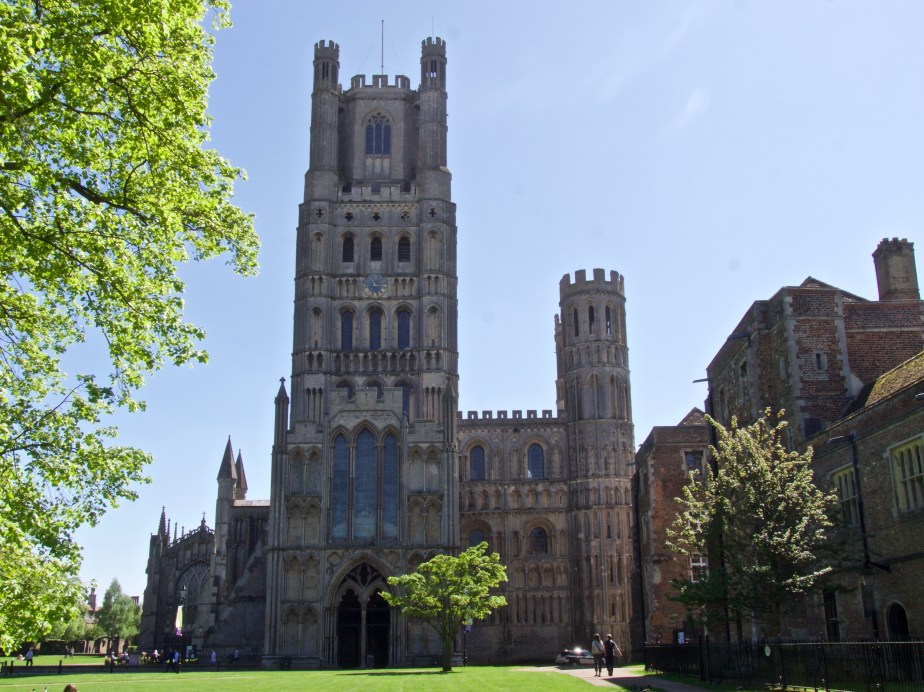
Ely is not a big city but its cathedral has the third longest nave in the UK. The Lady Chapel, completed in 1349, is the largest in the UK.

It has one of the few remaining resident choirs. During services they would be seated on either side of the photo above. In the video below they are standing in the Lady Chapel.

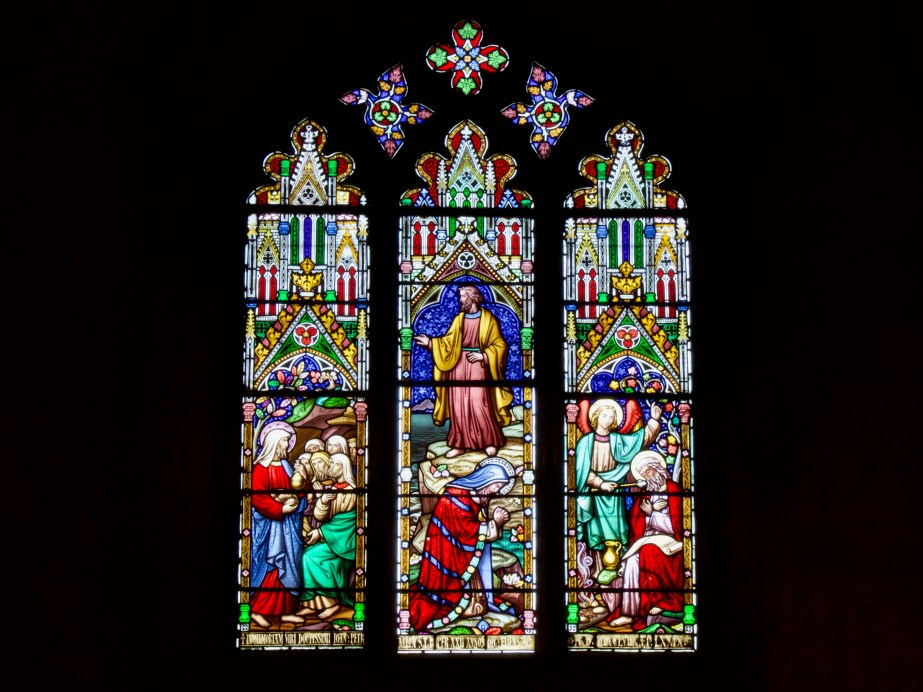
Henry Vlll’s reformation imposed a more austere regime on the great churches. Statuary and ornamentation were taboo. The Lady Chapel had a series of figures of the Madonna which would have been brightly painted. Sadly their heads have been knocked off (rather like Anne Boleyn and Catherine Howard).

For more information about the cathedral click <HERE>.
Fishers Green …
I was born in Hackney and lived in Wick Road until the entire neighbourhood was razed as part of the slum clearance program. Then it was Leyton until I left London to go to university.
My father was a policeman and a keen angler. The police had fishing rights to a stretch of the River Lea not far from Waltham Abbey. The opposite bank of the river was a gunpowder factory. It was the ideal place surrounded by farms and tucked away between the River Lea and the Lea Canal. It could be flooded in the event of an emergency simply by opening some sluice gates. The fishery may have been a means of ensuring a police presence. This was where I was introduced to the gentle art of turning fishing line into insoluble tangles. It was also where I learnt to avoid stinging nettles.
The factory became redundant. Gravel extraction followed. It must have been quite a sad transformation for my father. But when the gravel was gone the scene was transformed again. It is now a series of lakes, waterbirds abound and if you are very lucky you might even see an otter.
I was there yesterday, it was a glorious spring day. A cuckoo gave away its position by incessant calling and I notched up a good list of birds.


A network of paths takes you around the lakes and to the Lea Canal …
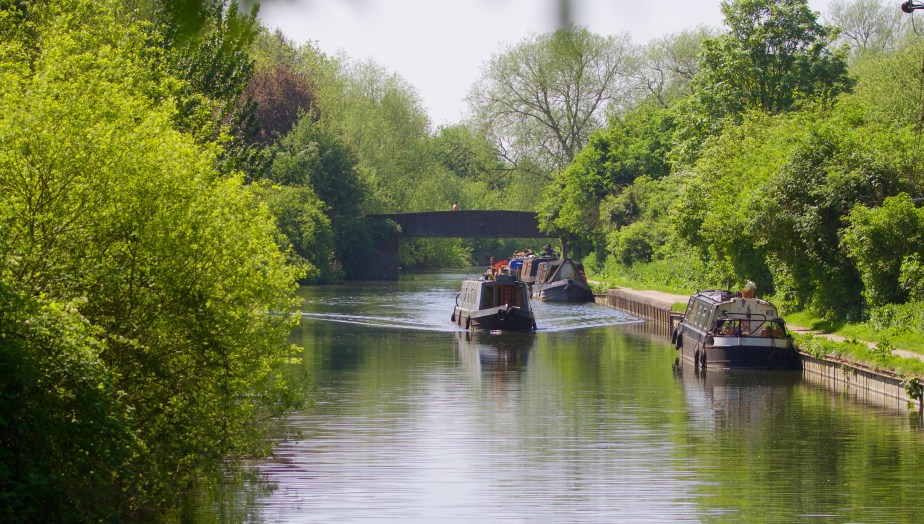
Then it was time for a late lunch at the Welsh Harp in Waltham Abbey. The pub dates back to the fifteenth century. The food was outstandingly good.

In the evening I went through my photos and found that one of the gulls was ringed …
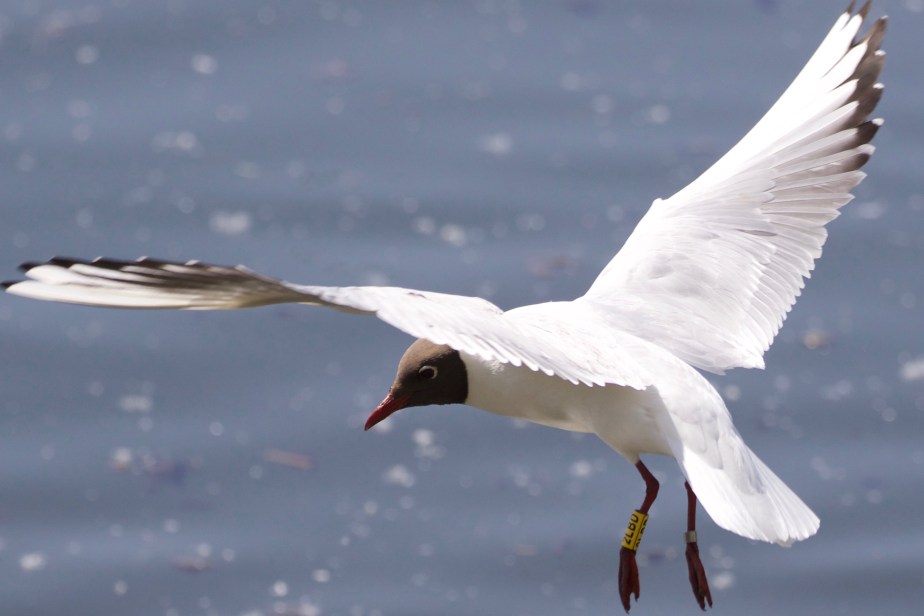

Bird banding in Britain is coordinated by the British Trust for Ornithology. It was a simple matter to find the BTO website and track down the research group that banded the bird. I submitted my observation and this morning I received a thank you note and some life history.
2LBD was banded at the place where I saw it as a chick in 2015. It was seen in Kent last year. This is the first time it’s been seen back at this colony this year.
England …
The following day was eventful.
Warned that getting to the departure gate in Bangkok could take longer than the time generally allowed I was early at the check-in counter. My boarding pass was in hand because I’d checked in on-line the previous evening. The flight was cancelled.
Sri Lankan were apologetic, pleasant and optimistic. For those passengers heading to Colombo there would be a delay. Those flying on to other destinations would be re-booked on other airlines. The upshot was that I was on a Thai Airlines flight direct to London getting there two hours earlier than scheduled. Such hardship.
I’m staying with an old friend in Leytonstone. We met when I was working in a greengrocers at the top of her street. There’s not a lettuce in sight it’s now a kebab shop.
First stop was the Hollow Ponds. This was where the birdwatching all began. As a primary school kid I set off with a pen and a notebook and made a list of the birds I found. These days I take along some binoculars and a camera but essentially the activity is just the same.
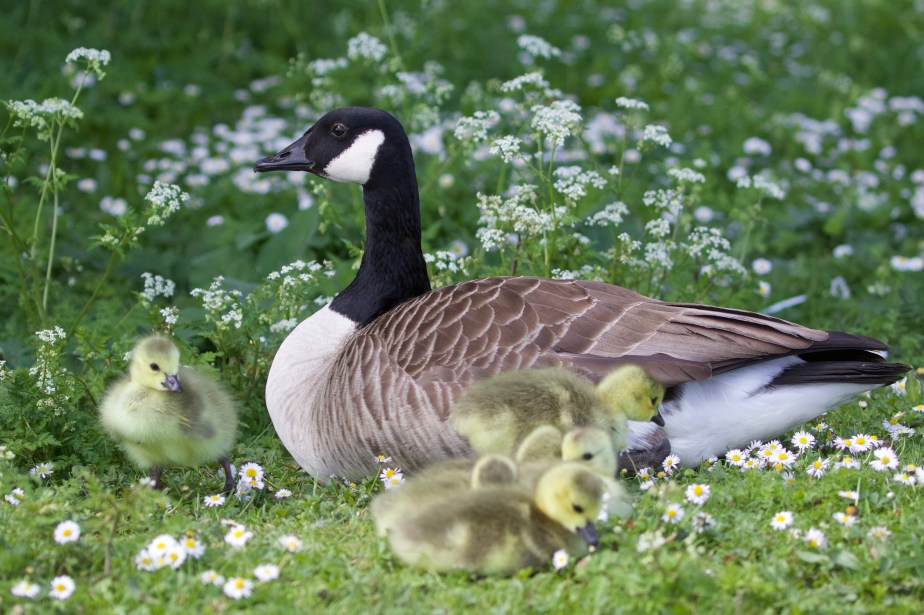
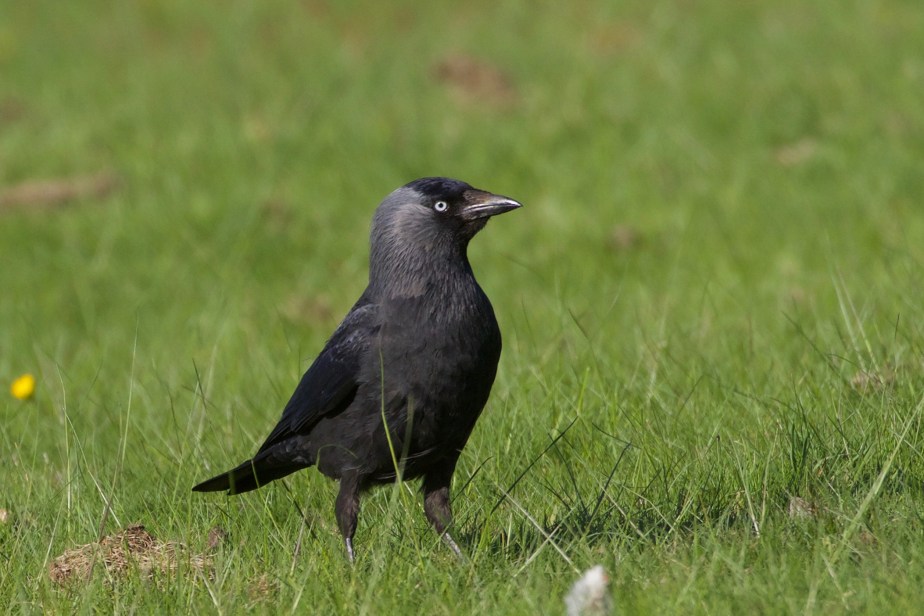
The bird population has changed a bit. Finches do seem to be down. Buzzards are up. Canada and Greylag Geese are in plague proportions. The birds I most enjoyed seeing as a kid were Great Crested Grebe and the Jay. It’s great to see that they’re still around.
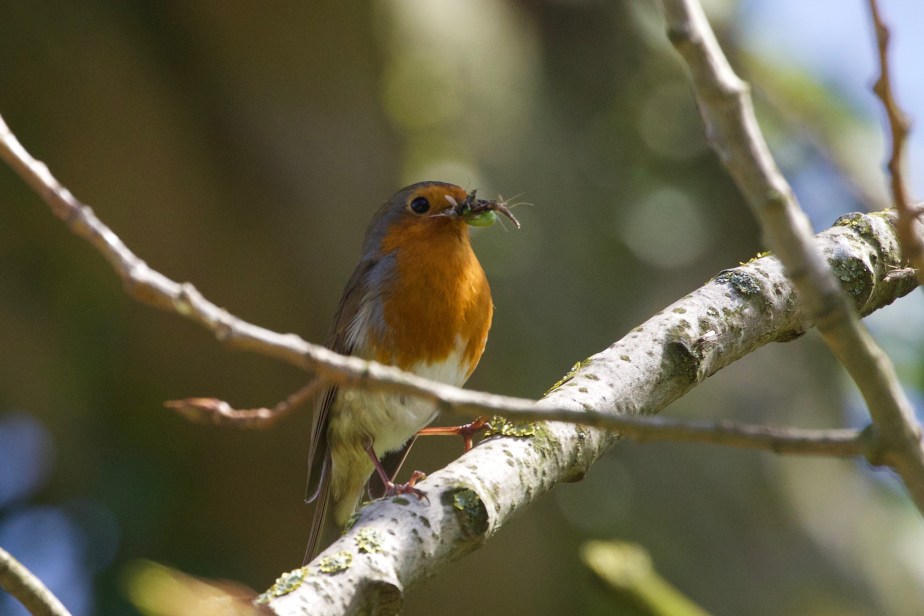
And of course it’s spring, the Blackcaps are singing, the Chiffchaffs are chiffchaffing, the Coots are at their most aggressive. There is no better time to be watching tits.


Farewell Bhutan …
Drukair, otherwise known as Royal Bhutan Airlines, has flown me efficiently and luxuriously to Bangkok.
My stay in Bhutan was amazing. I went in search of birds and found so much more. The scenery was fabulous, the people warm and friendly, the history and culture fascinating.
No unaccompanied tourism is permitted, I was on a Rockjumper Birding tour. There were 12 clients in the group. As well as two Rockjumper bird guides we had a local bird guide and a local cultural guide. We also had the most amazing driver. When the driver turns up carrying binoculars and a telephoto lens birders can expect a good time. He was a keen and knowledgeable birder and a very capable driver. Both Rockjumper and the ground agent, Yangphel provided outstanding service.
One thing that was missing was bandwidth. Although the hotels I stayed in had wifi it was rarely capable of keeping up with emails let alone accessing the web.
Tonight is a night of unaccustomed luxury in the Novotel at Surarnbhumi Airport.

When I get home I will provide an account of the trip to Assam and Bhutan but that won’t be immediately. Tomorrow I fly to London, UK. The adventure continues.
Mongar …
Bhutan has a population of about 800,000 people. None of its towns are particularly large. Mongar is the twelfth largest town in the country. It’s a regional centre in the east with a population of about 3000 people.

Day breaks in Bhutan …
As you walk across the border from India you enter a different world. Traffic chaos is left behind. You’re greeted by people in traditional dress. You are in no doubt that you are in a Buddhist kingdom. The architecture is different, so too the faces.
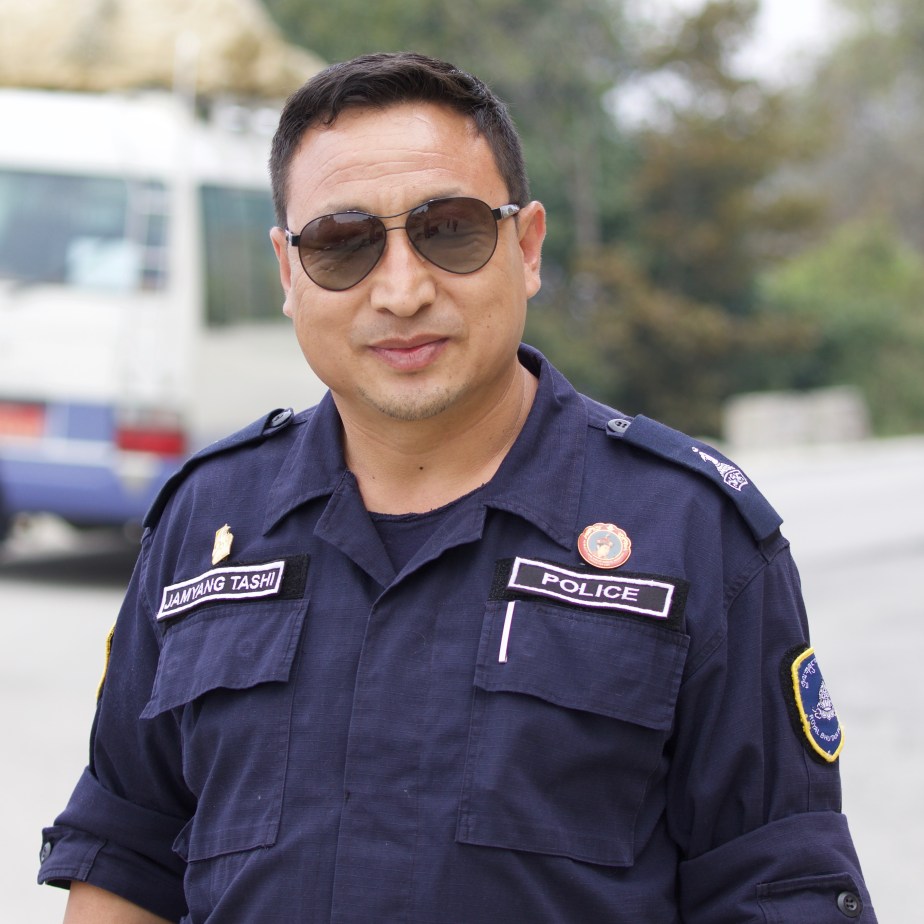
Stupas and prayer flags. Relaxed and friendly people … a policeman was happy to have his photo taken.

Land of the Thunder Dragon …
Bhutan is situated on the southern slopes of the eastern Himalayas. Tibet is to the north, India to the south. The capital is Thimphu. The population is in the order of three-quarters of a million people, mostly Buddhist. 80% of the population are engaged in agriculture. The most important crops are maize and rice.
It is governed as a constitutional monarchy placing a premium on the happiness of its people.
Steep sided valleys intersect mountains that reach to above 7000 metres. The highest is Gangkharensum Puat 7,570 metres (24,840 ft), the highest unclimbed mountain in the world. The countryside is extensively forested. It has an impressive array of mammals and more than 770 species of bird have been recorded.
For those not satisfied with mammals and birds there are forts (dzongs) and temples.
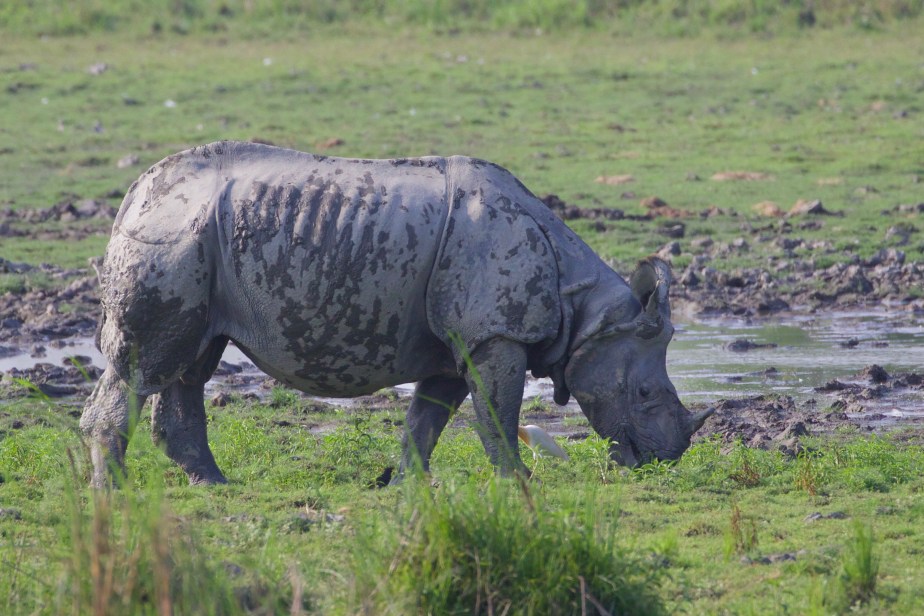
Tea and Rhinos …
Assam, north-east India, famous for its tea and for the World Heritage Kaziranga National Park.

Next stop Bhutan.
Guwahati …
Frank Sinatra visited Australia and was greeted at the airport by the press. A reporter asked him what he thought of it so far. Under the circumstances his answer was extremely diplomatic, “You have very nice roof tops”.
Until about half an hour ago my impressions of the subcontinent was it now has very nice airports. They give the impression that middle class India (and Sri Lanka) is thriving. Cosmopolitan architecture, cosmopolitan brands, perhaps a little less bureaucracy. This is my fourth visit to this part of the world, it’s changing.
But when you get out of the airport India is still India. Traffic chaos, hooters hooting, cars going too fast and too close. Cows grazing along the roadside as well the odd goat and flock of ducks, dogs, some on leads. Messages on the back of trucks, which on my last visit were always “Horn please” this time are more diverse “Dip your lights” and “Wait for side”. Bamboo scaffolding, hazy atmosphere, busy people.

The French are quite smug about how Gallic France is. France is nowhere near as Gallic as India is unself-consciously, chaotically, noisily, delightfully and occasionally frustratingly Indian. It’s good to be back.
 bobmcgee