After pushing the button on the last post I received this …
This is the road to the Broome Bird Observatory and that’s the warden checking the depth to which it’s flooded. It would indeed be a great adventure and yes it would be illegal. There are big penalties for driving on closed roads. To get to that point from the highway may well have taken you through worse!
The forecast for the next few days is warm and dry. It will soon reopen but it will still be an adventure – 4WD only for a while.
The late May deluge has so far amounted to 123mm (almost 5inches in the old money) or 4.5 times Broome’s average monthly rainfall in just two days. A trip out to the Broome Bird Observatory at the moment would be a great adventure (and probably illegal). Bike riding has taken a brief holiday. It has given me a chance to review and edit some recent photos.
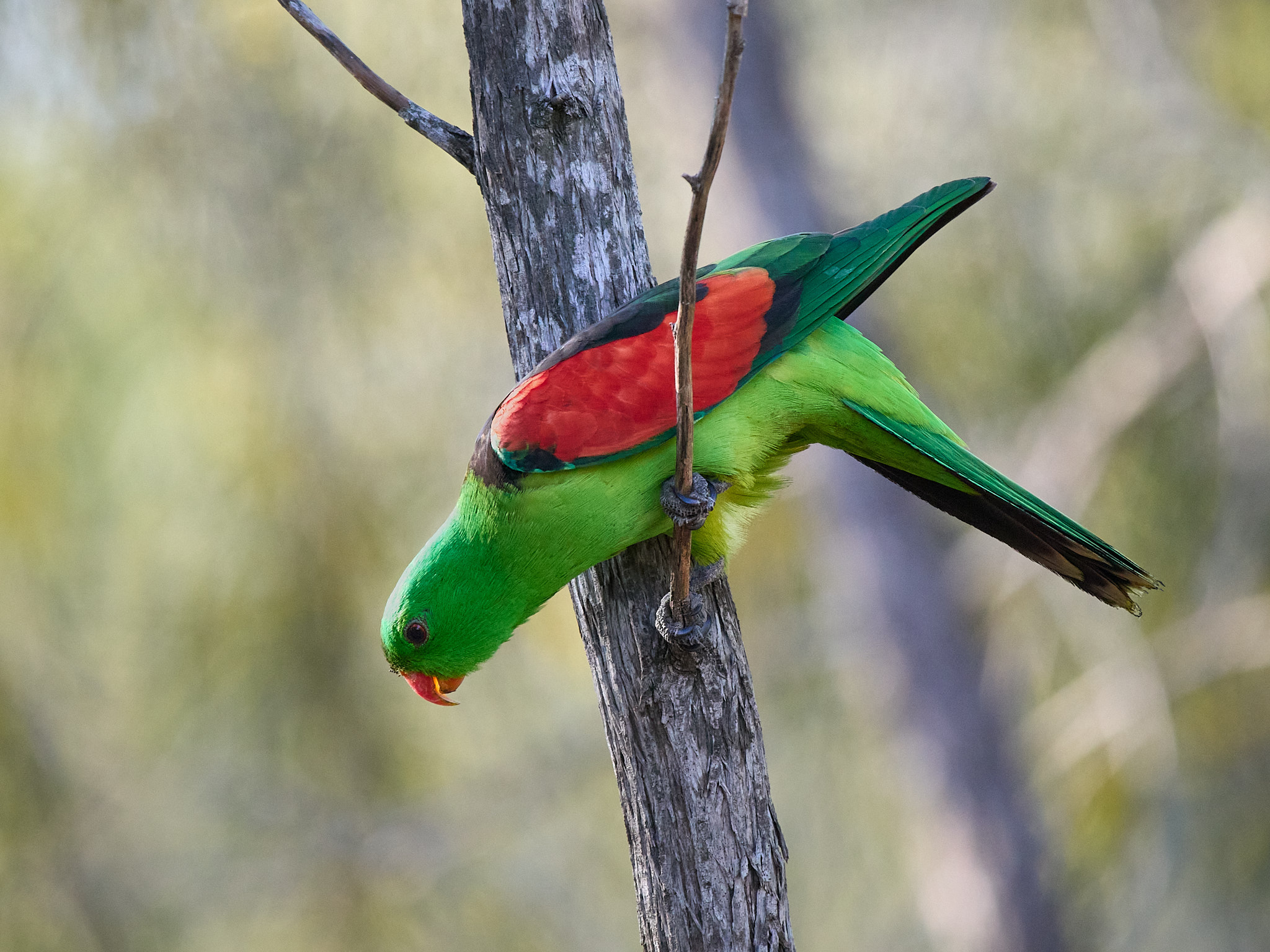
Broome is not the place to come looking for Australia’s colourful parrots. We do have Red-collared Lorikeets and occasionally Varied Lorikeets but when it comes to the larger parrots (I’m excluding Cockatoos from this discussion) Red-winged Parrots are the best we can hope for. They come and go. Just recently they have been abundant. And they are gorgeous especially the males.
They eat flowers, seeds and berries. They are mainly found in woodland and have a broad distribution. which extends northward into Papua New Guinea. Broome is close to their western limit.
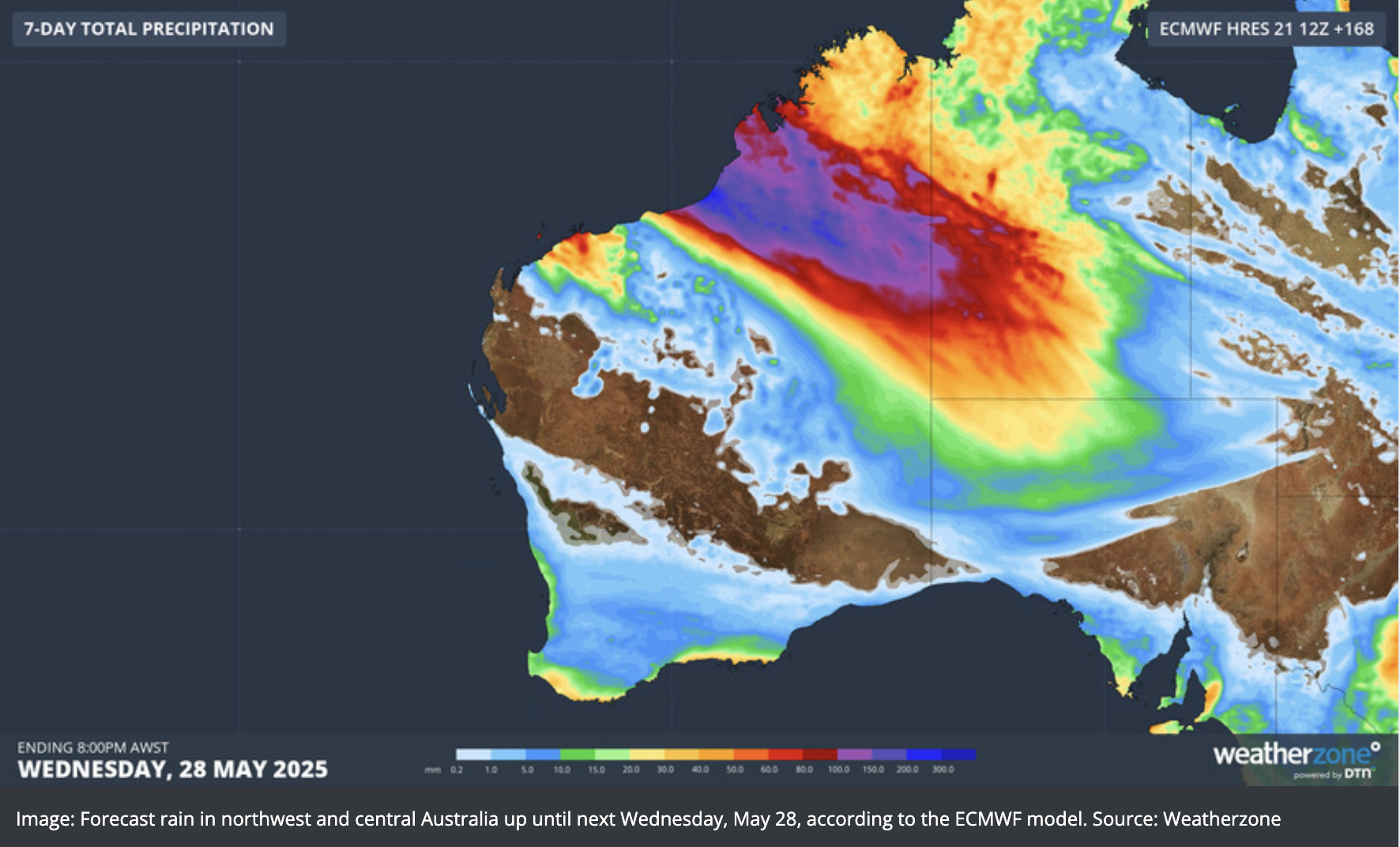
I started to get worried about a couple of days ago when Weatherzone published Unusual late May deluge for northern Australia with the news that “The coastal tourism hotspot of Broome sees just 27mm of rain in on average in the whole of May but is expecting as much as 80mm next Tuesday alone.” It was accompanied by a very colourful map …
and followed by local government warnings about driving into flood waters and a flood alert for the Great Sandy Desert. I have little faith in weather forecasts.
Just to illustrate how bad they are today’s forecast was for showers this afternoon amounting to about 4mm. I headed out for my morning ride at 0630 in a very light drizzle and made it back by 0700 looking like a drowned rat. There was at least 4mm in my left shoe alone.
Readers who’ve been with me for a while may remember a flurry of posts proclaiming that cycling is the best form of exercise for the mature human. What became of all that? Well, it persisted. It’s part of my life. I enjoy it. It does me good. But …
You knew there was a but coming didn’t you? A good time to ride is early morning, especially in the tropics. The best time to watch birds is early in the morning, especially in the tropics. At home it’s OK to fit them in side by side. Some mornings the bike, some mornings the binoculars. On my expeditions the suite of birds is changing fairly quickly. The bike goes with me but the birds win out.
Having settled back into Broome it’s time to charge up the little toys that cyclists attach to their conveyance, oil the chain, pump up the tyres and head out. I consulted Strava. I presume there is some algorithm in the core of its soul that takes account of recent activity (none) and perhaps age (ancient) and comes up with a suggested target. It did a splendid job and suggested 15km per week. An excellent idea, I thought. Sadly it was immediately vetoed by my dearly beloved. Thirty five today she insisted. A short ride to ease back into it.
On with the Lycra. I felt like a multi-coloured whale. Then the zip popped. A stranded multi-coloured whale that had bloated and burst. That was my largest top but fortunately I found a smaller one with a stronger zip.
Swing onto the saddle, clip in, wobble. I could not have felt more alien. My new multifocal sunglasses conspired to create the illusion that I was on top of a penny-farthing but the legs felt really good … for a while. After 35 km it all felt like old times (apart from my bottom, that is). Just like riding a bike.
Looking for Whales at Entrance Point
Broome has one major road in and out. Large trucks, speed limit varying between 90 and 110kph for the main part. The alternative is to ride around town. You have to be creative to come up with a long enough ride and then it does become repetitive but you can take in some beautiful spots like Cable Beach and Entrance Point. You do have to share the road to the Port with road trains that are four trailers (60m) long but they are driven by professionals. I’m actually more frightened of the old men towing caravans.
And, in winter, the weather is perfect. Get out early to avoid sunburn. It isn’t going to rain.
About half way between Cygnet Bay and Broome, close to the community of Beagle Bay, there is a turnoff to the west that leads to Banana Well. The road is unmade and presently the last 4km is pretty rough. The camp site is grassed and the facilities are adequate. There are some ponds adjacent to the camping area. It’s a couple of kilometres from the “beach” across tidal flats that are not without hazard. It’s a great spot for the birdo, hopeless for a family beach holiday, seems popular with some fisher folk but would be a bugger of a place to launch a boat.
It’s not hard to get into this situation but expensive to get out. I’m pleased to say that’s not me. I took the photo on a previous visit. Had he taken his foot off the accelerator when the wheels started to slip we could have pulled him out. He gunned it and managed another 150 metres ending up well beyond solid ground. The momentum system of four wheel driving has its drawbacks!
There is a marked walking trail starting from the camp ground that visits the ponds, some savanna woodland, tidal flats, mangroves and some fairly dense Melaleuca. Birding is excellent around the ponds.
There is a large population of feral Donkeys in the neighbourhood.
The Grey-crowned Babblers were busily building a nest but this doesn’t necessarily mean it’s breeding season for them. They build dome shaped nests for roosting as well as for egg laying.
I finished the gallery with the two noisy ones. The Donkeys seemed less shy this visit and the Kookaburras are never shy.
We got home to Broome. I heaved a sigh and settled into a torpor.
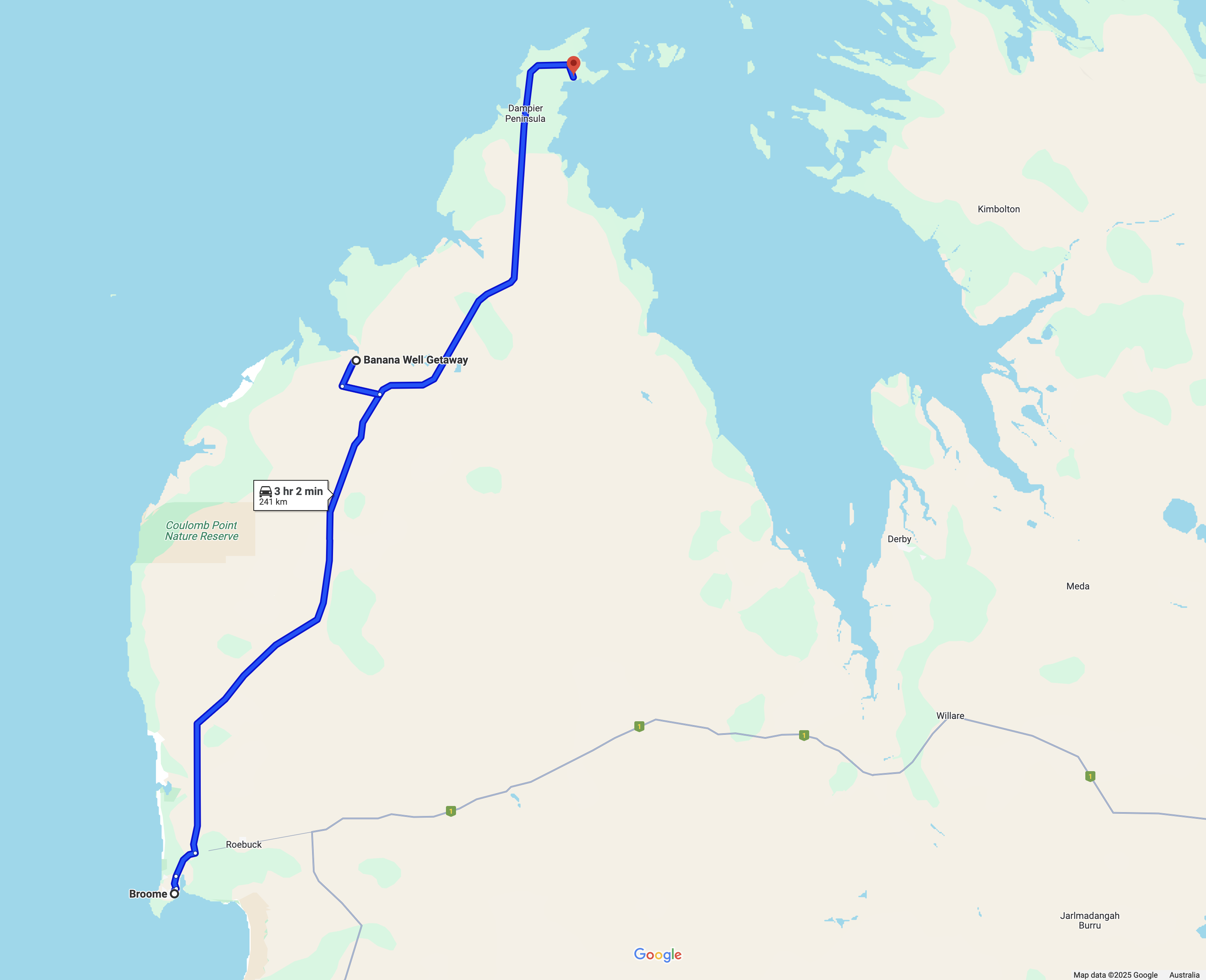
There is a limit to how much torpor I can do. So the van was rolled out again for a short expedition up the Dampier Peninsula. Broome is on a little peninsula hanging, – like a little boy’s tossel, off a big peninsula. The big peninsula is named for William Dampier (1651-1715), the first English man to explore Australia. In January 1688 his little ship the Cygnet was careened near the tip of the peninsula.
Off to the east of Cygnet Bay is King Sound with Derby near the southern end, an area famous for it’s 11 meter tides. The other blue stuff on the chart is the Indian Ocean. Highway 1 comes up from Perth on the left hand side of the map then curves around and heads east towards the Northern Territory. The country enclosed by the highway is the Great Sandy Desert. The peninsula is not desert and therein lies much of its charm.
Until just a few years ago the road up the peninsula was dirt. It was a great adventure for the tourist in the dry but a nightmare for the aboriginal communities in the wet. It is now a beautiful sealed road. The drive takes you through savanna, a few patches of open grassland and, in places, genuine forest. The blacktop stretches out in front of you fringed by bright red dirt. The dirt gives way to spear grass, some of it twice my height and the trees. Soon the Woollybutts (Eucalyptus miniata) will flower and the scene will go from beautiful to spectacular.
At Cygnet Bay and in other odd places on the peninsula there are patches of semi-deciduous tropical vine forest. That’s quite a mouthful, unpack it if you will or just think – jungle.
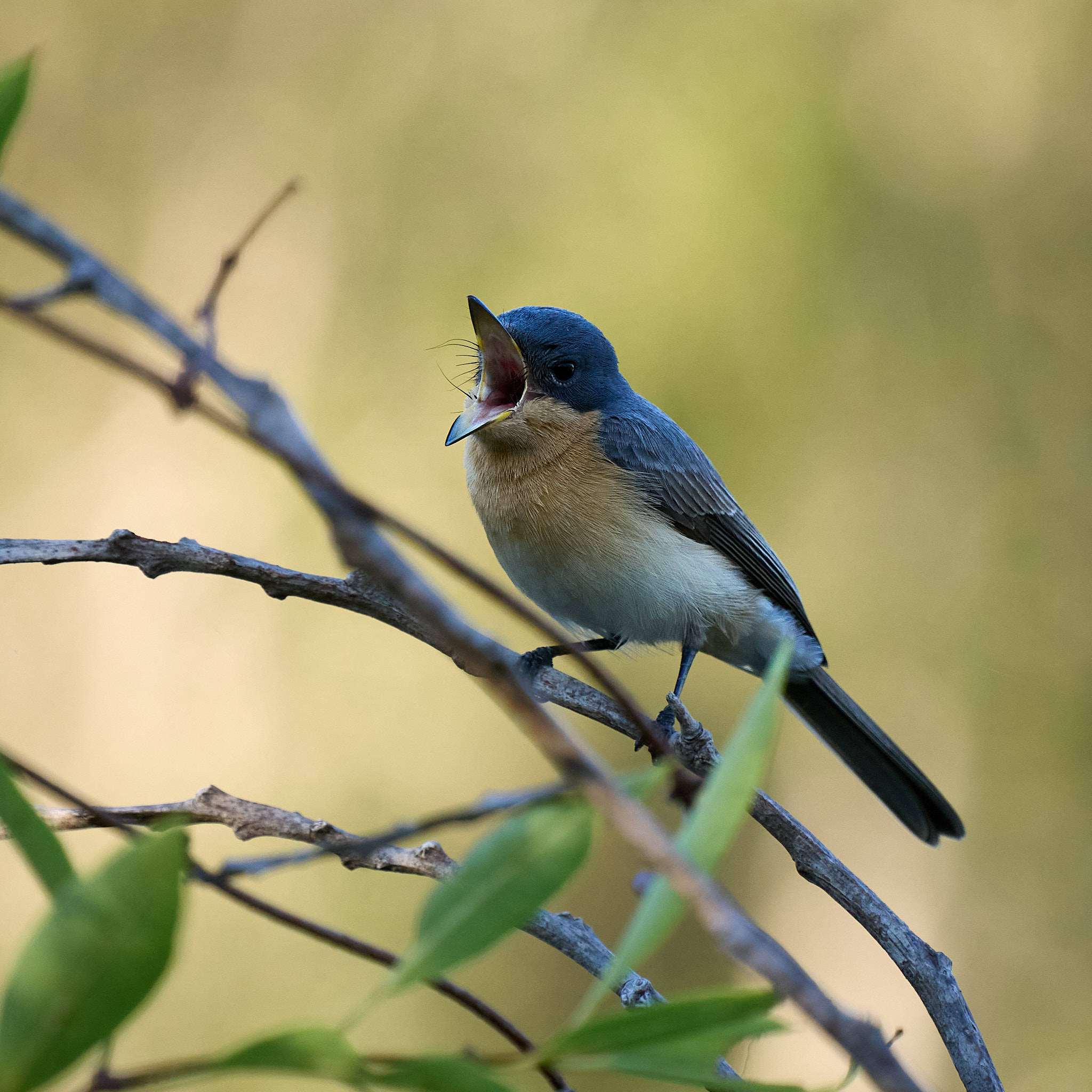
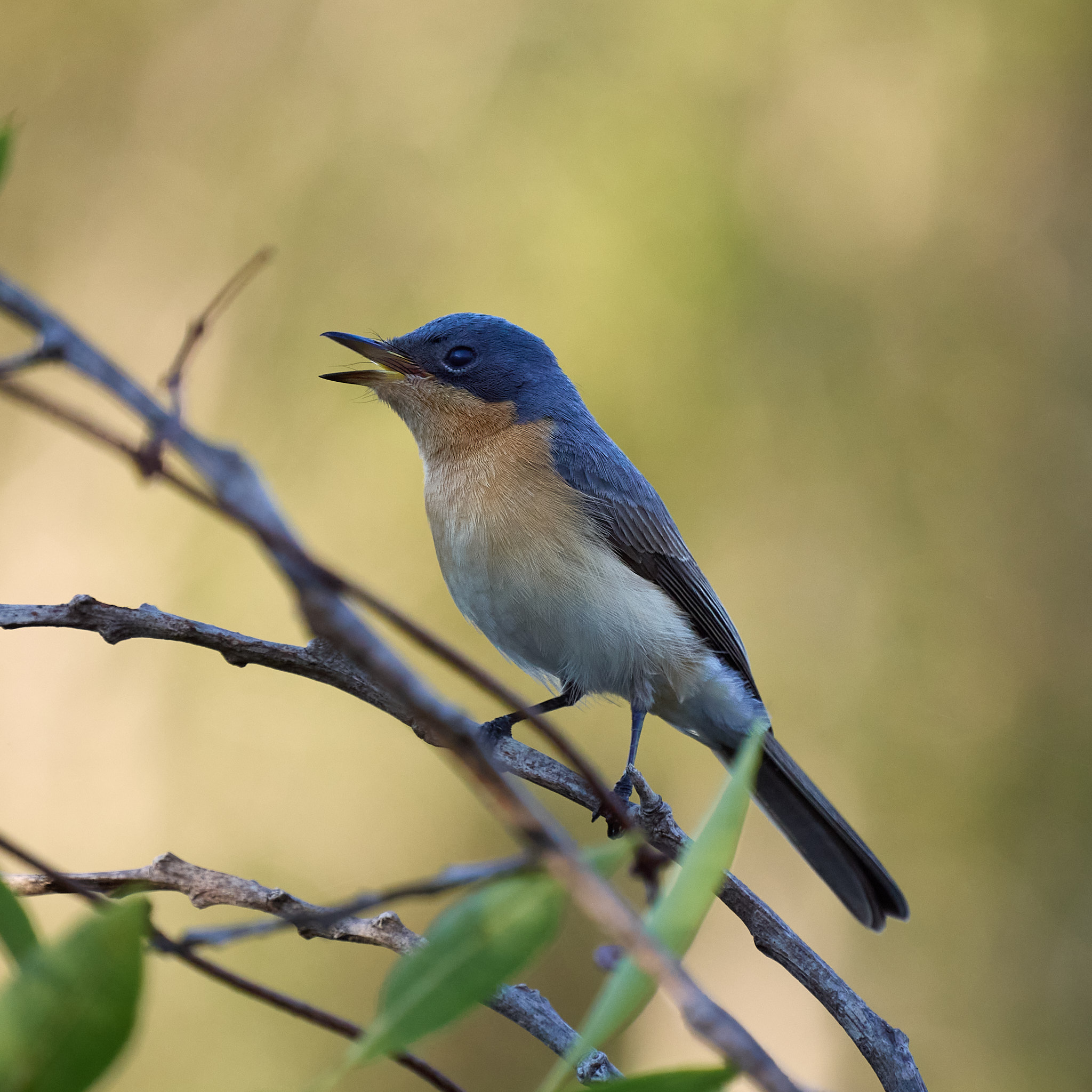
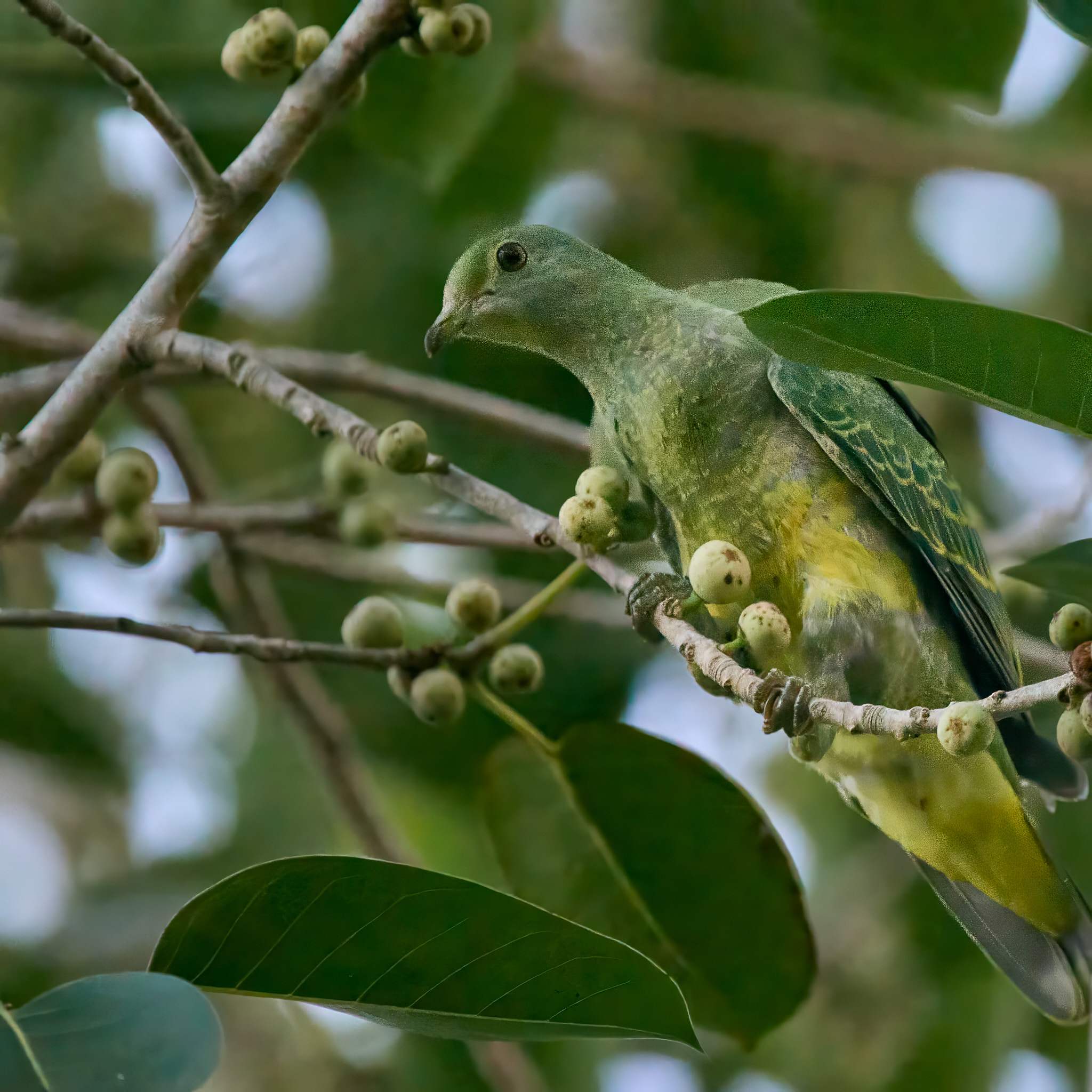
This is the western end of the north coast and the western limit of a number of north coast birds. It is still in the Shire of Broome so guess where every Broome birdo worth their salt comes to add Rose-crowned Fruit Dove, Shining Flycatcher and Mangrove Robin to their year list? Pathetic isn’t it? There is a very pleasant campground, a restaurant and a pearl shop. The Fruit Doves can be found conveniently close to the bar, and there are plenty of other birds to find as well.
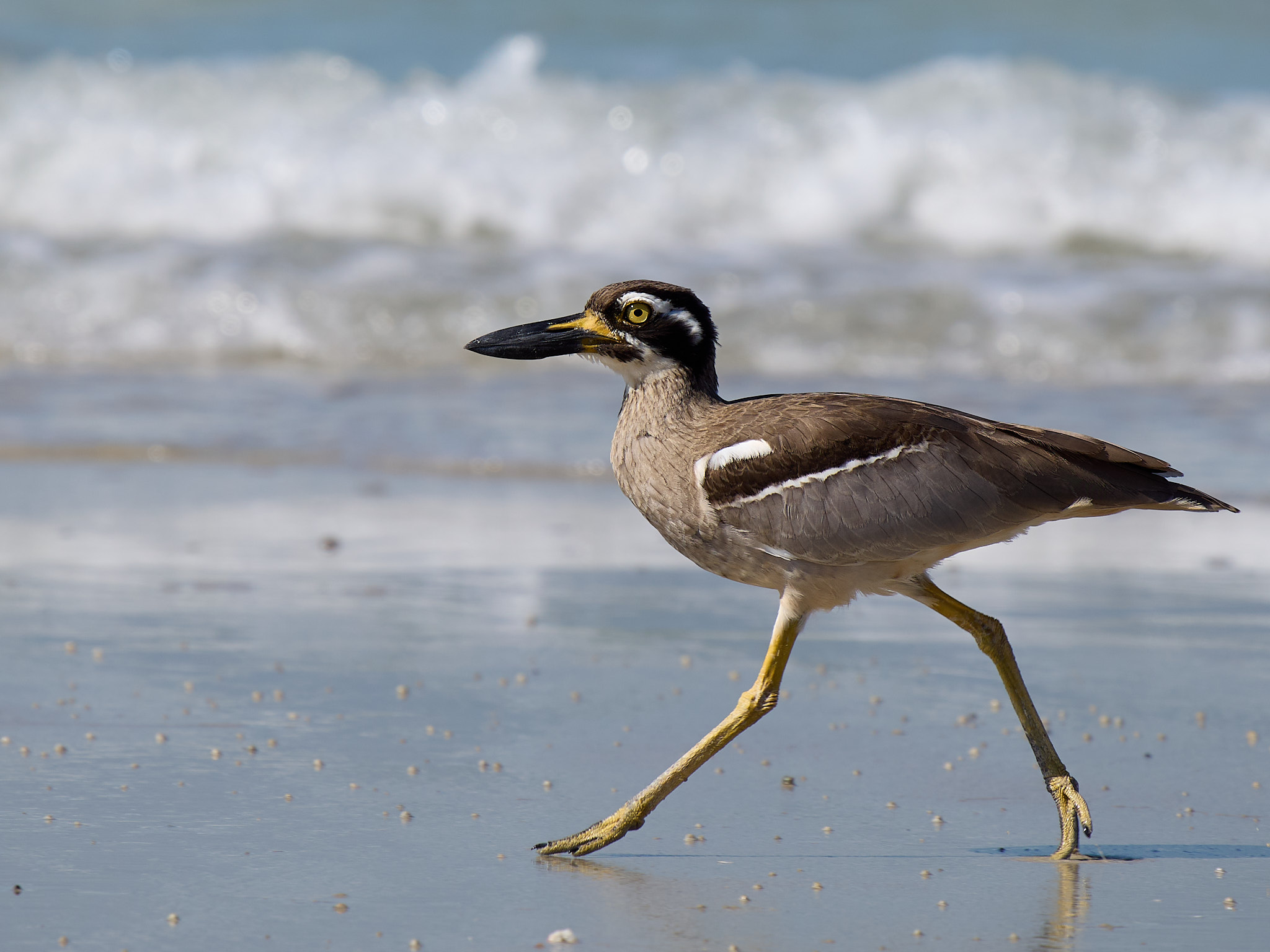
That’s a hermit crab in the Beach Stonecurlew’s grasp. I don’t know if it would crush the shell or just swallow the lot. It is a ferocious looking beak.
We spent three nights ay Cygnet Bay. On the way home we spent another night at Banana Well.
The road trip comes safely to its end. The trip meter ticked over to 23,258km. The new van performed admirably. The binoculars feasted on 305 species of bird. It was a hugely enjoyable journey. The final few days looked like this …
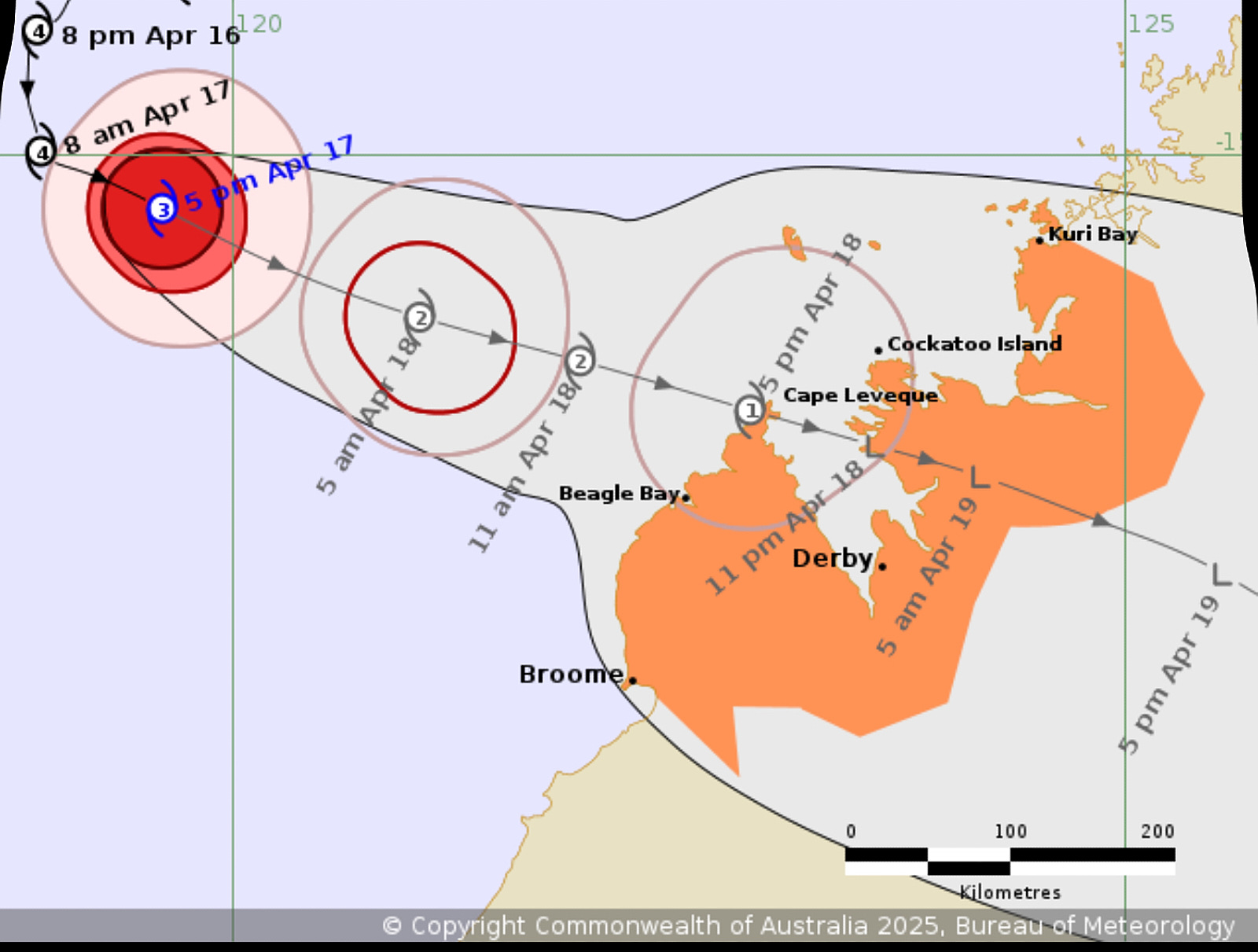
Cyclone Errol did eventually fall in line with predictions (not hard for it. Just about every possible scenario had been predicted over the last few days). It had reached category 4 strength but was weakening as it headed for the coast north of Broome. We were bracing for possibly damaging winds and heavy rain but have only had overcast skies, moderate winds and high humidity. The top of the Dampier Peninsula was expected to take the brunt of it. Hopefully it has done little damage there.
It’s good to be home. Now to plan my next road trip.
Having succumbed to the temptation of Pine Creek what’s another 200km? And when it comes to additions to the year’s tally of birds Darwin has a few absolute gimmes.
Darwin is the capital and most populous city of the Northern Territory but still a modest sized town of about 140,000 people. Charles Darwin visited Australia on the Beagle in 1836. In a subsequent voyage (1839) the Beagle visited what would become Darwin. Captain John Wickham named Port Darwin after Charles Darwin long before he became famous. On the origin of species was published in 1859. The name of the city followed in 1911.
I believe Mark Twain made a visit to Darwin and I have read that Charles Darwin was fond of Twain’s writings for bed time reading.
The Overland Telegraph and Pine Creek had a lot to do with Darwin getting off the ground. The telegraph had to reach the coast somewhere. In 1872 gold was discovered in Pine Creek and that somewhere suddenly welcomed a major influx of people.
I have visited Darwin quite a few times and have a well worn track around the birding spots. This is the first time I’ve brought a dog with me and sadly half my regular places do not allow dogs. Add to that the persistence of the wet season and a few changes had to be made to the routine. The first afternoon saw a storm deliver 35mm of rain in about 20 minutes followed by another 25mm over night. Nonetheless the list was made to grow and a few nice photos have followed over the last few days.
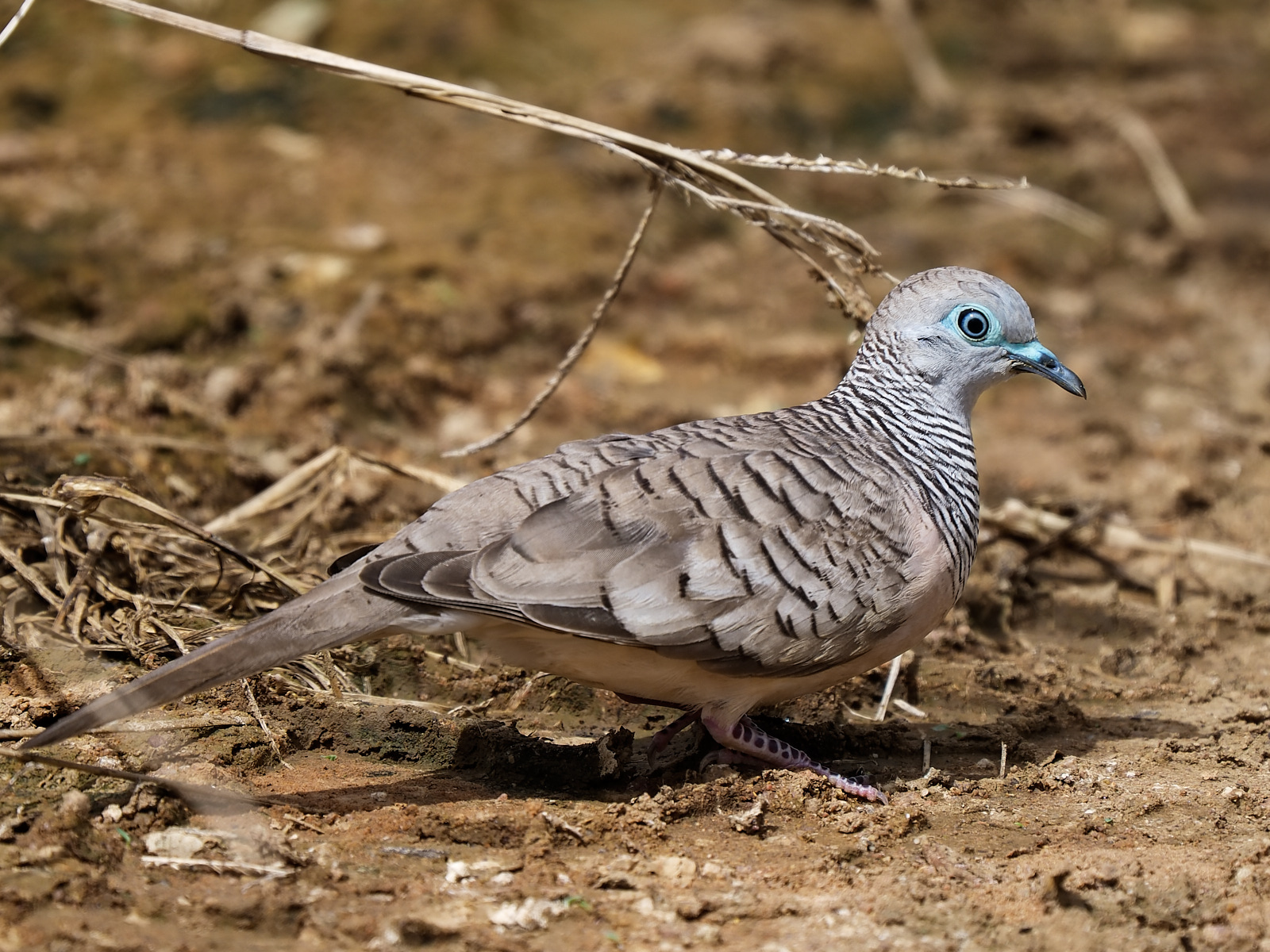
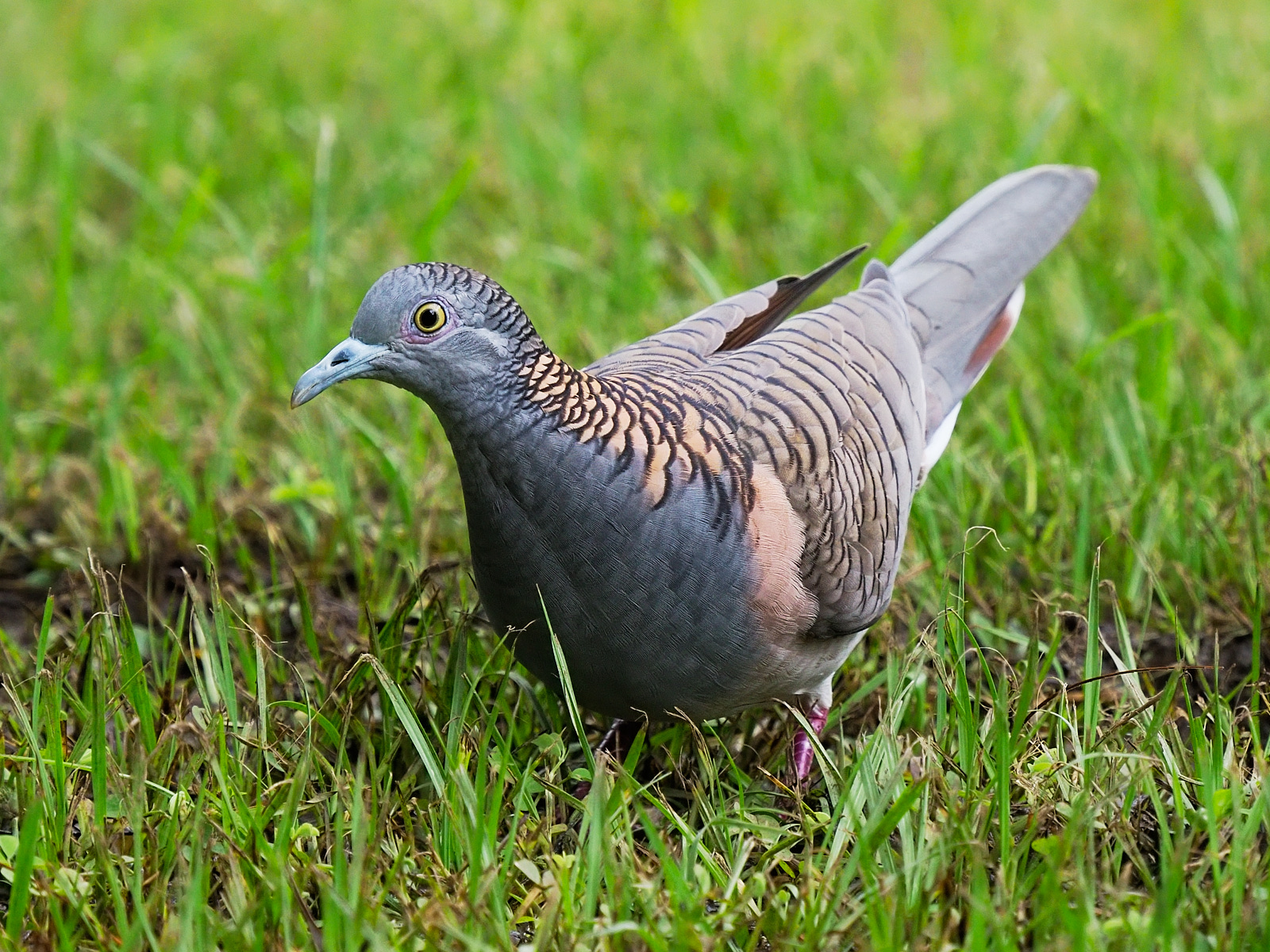
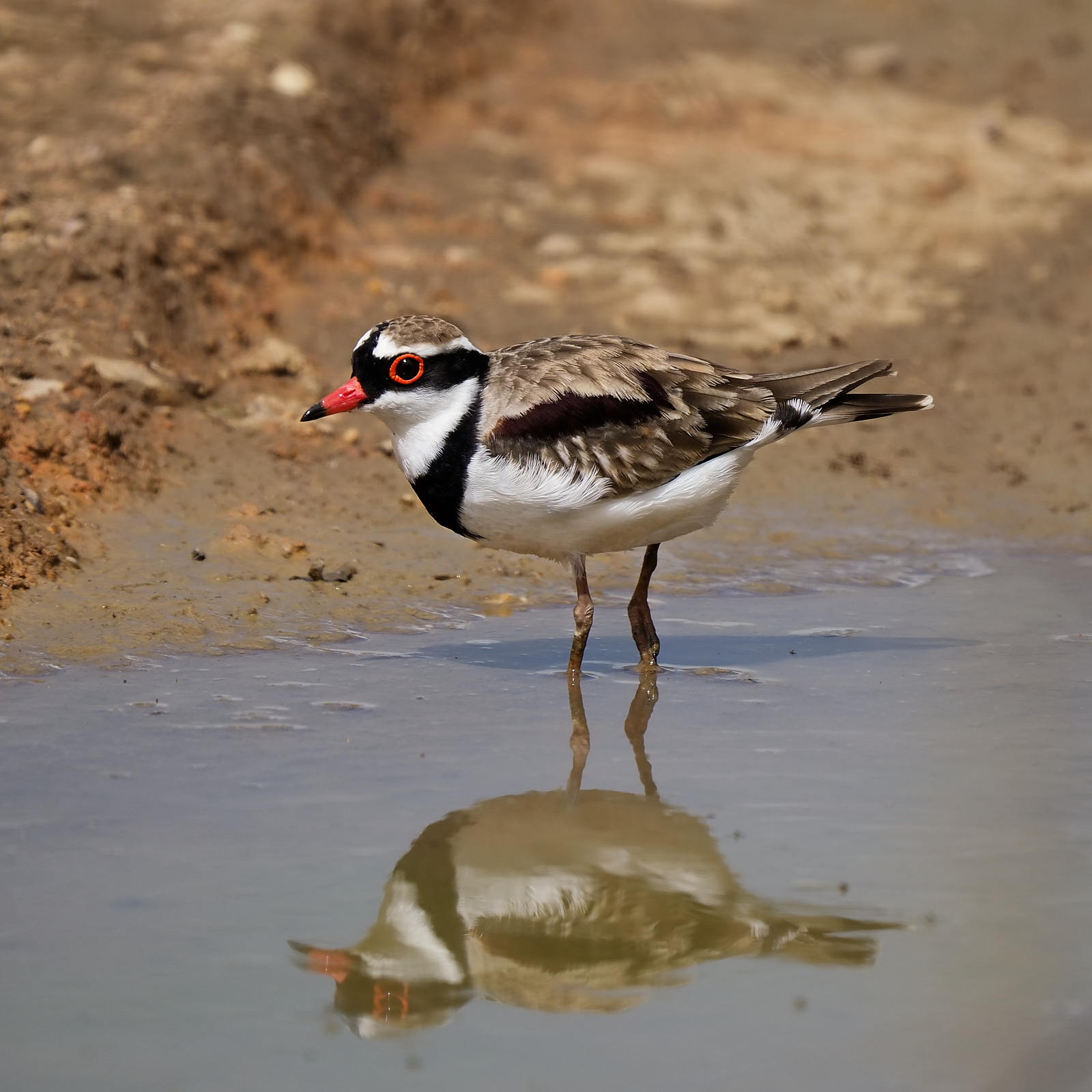
Varied TrillerSpangled DrongoNankeen Night HeronPeaceful DoveBar-shouldered DoveBlack-fronted Dotterel
Now we must head for home. Cyclone Errol may or may not complicate the journey to Broome. Predictions vary so greatly they are to all intents and purposes useless. We shall find out.
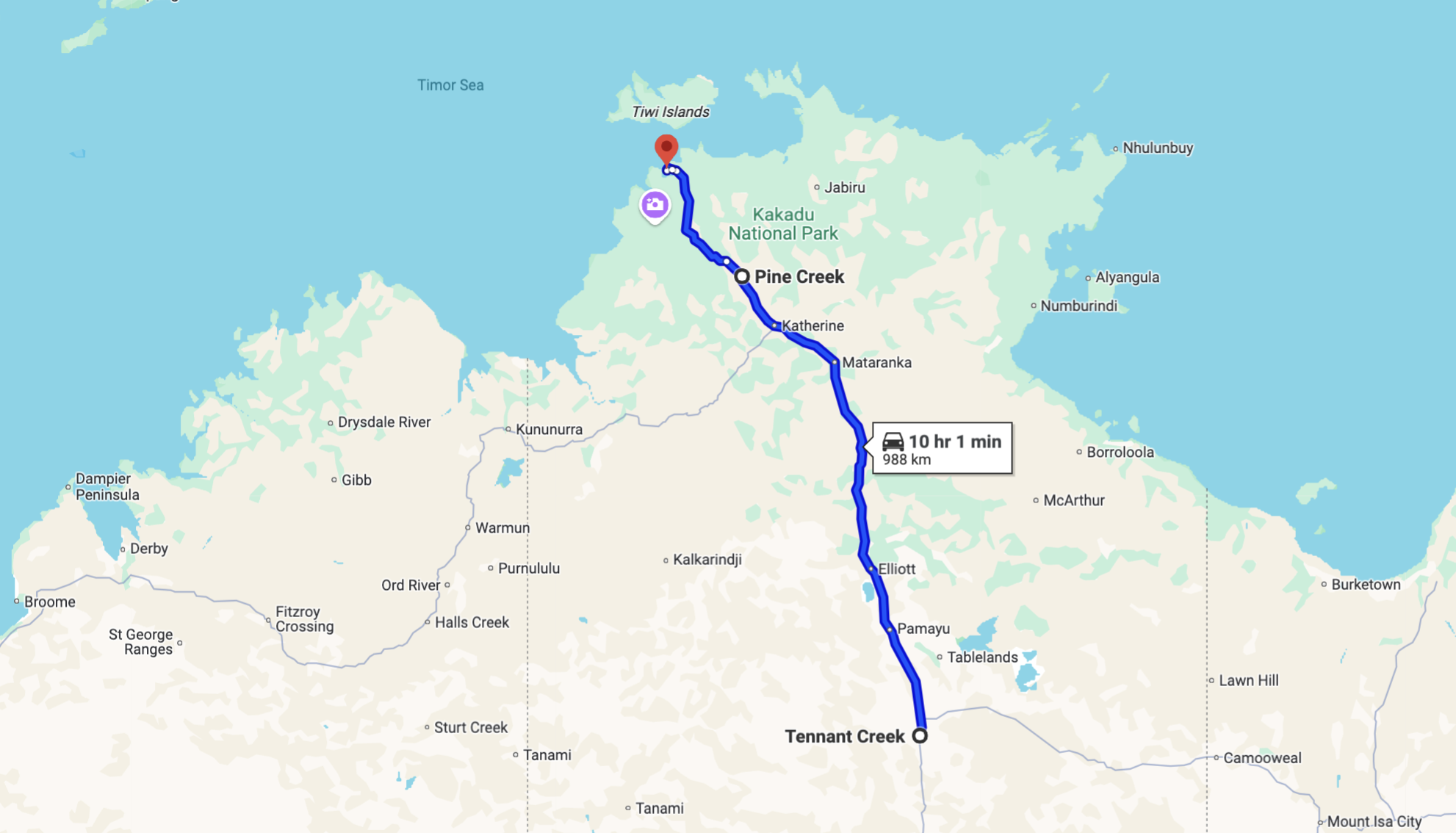
From Tennant Creek we headed north. We spent a night at Mataranka to soak in the hot springs. Hot springs were closed due to flooding. No soak. Shopping in Katherine then a diversion … to Darwin. We stopped two nights en route at Pine Creek.
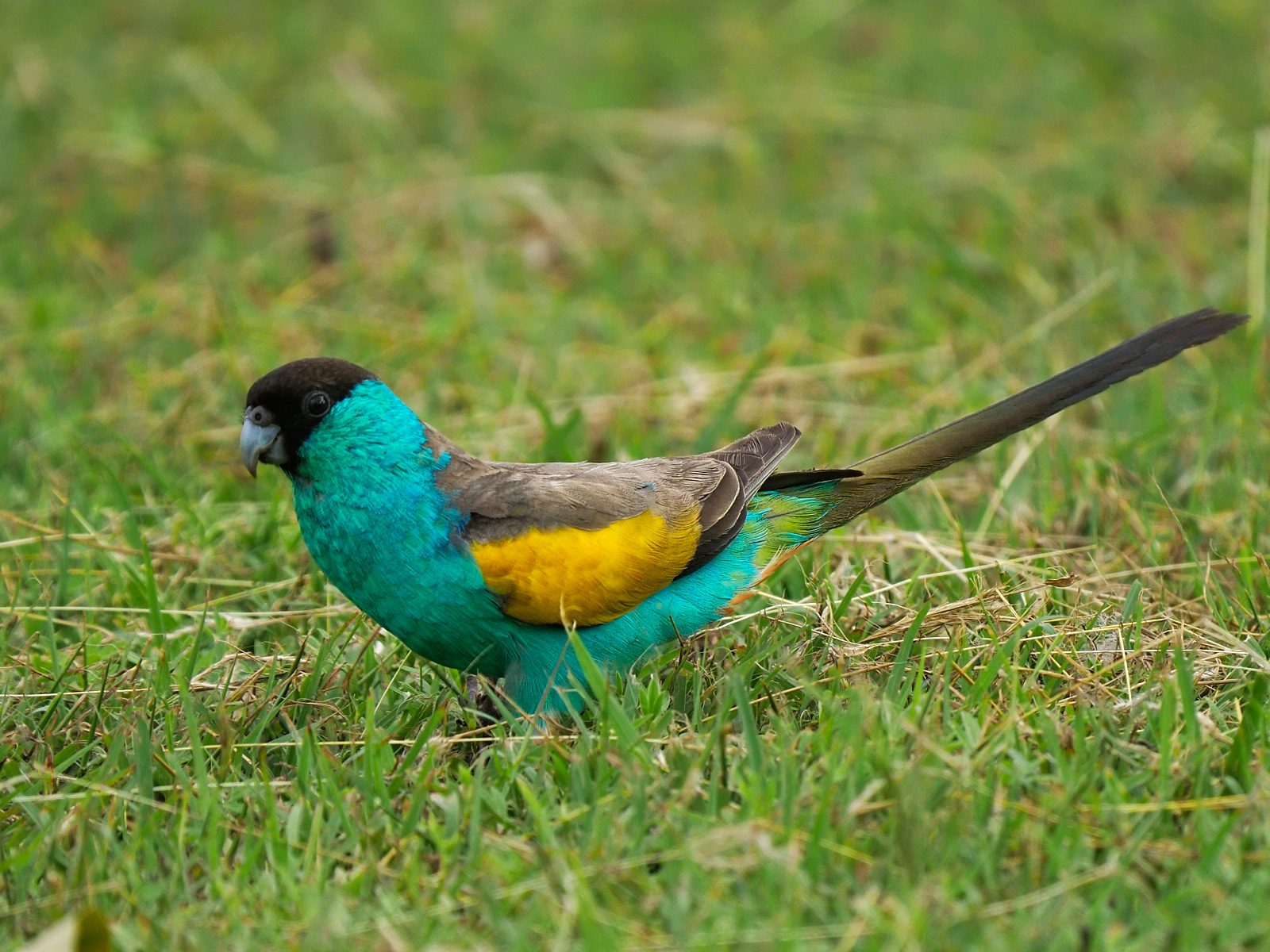
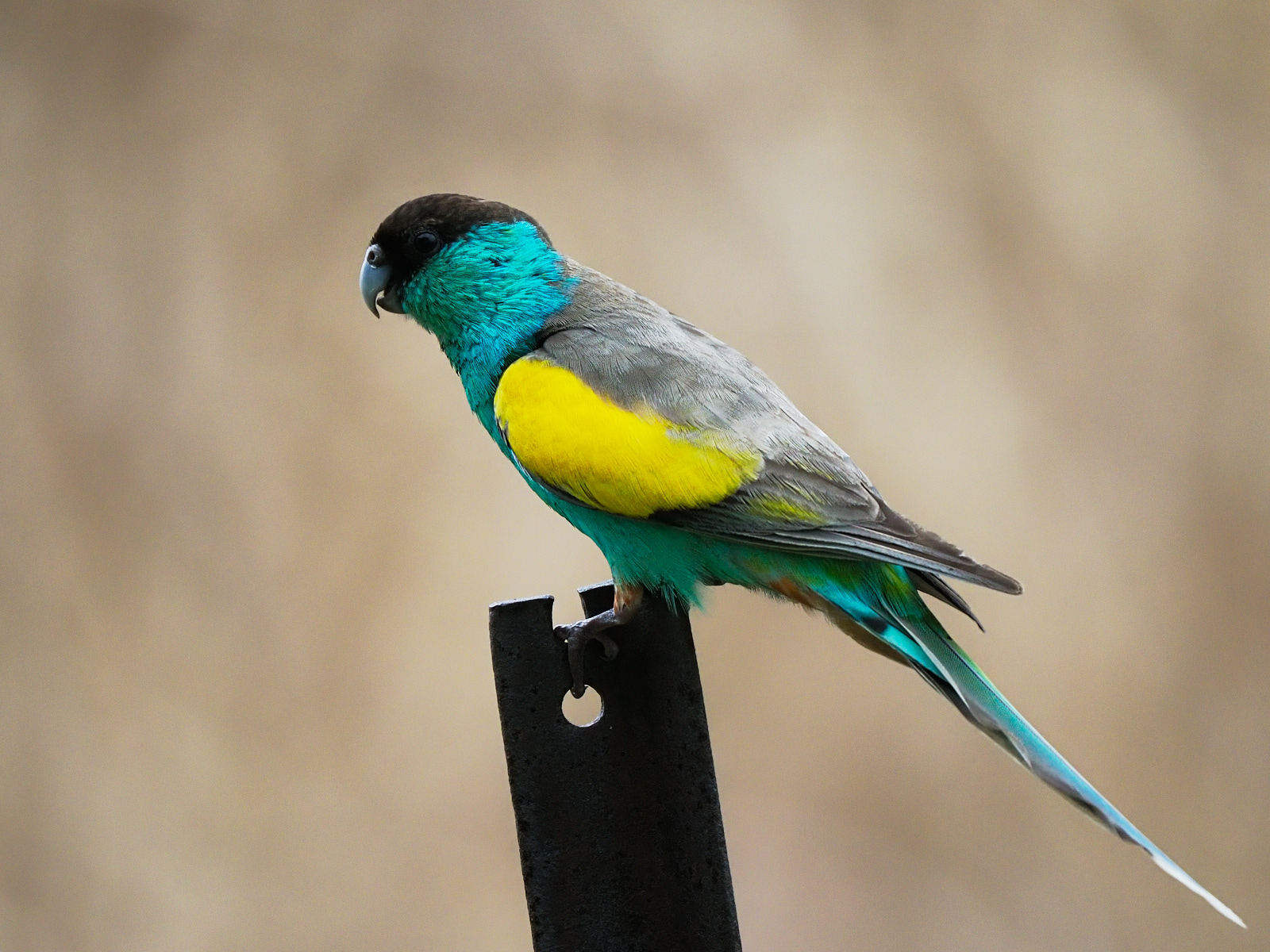
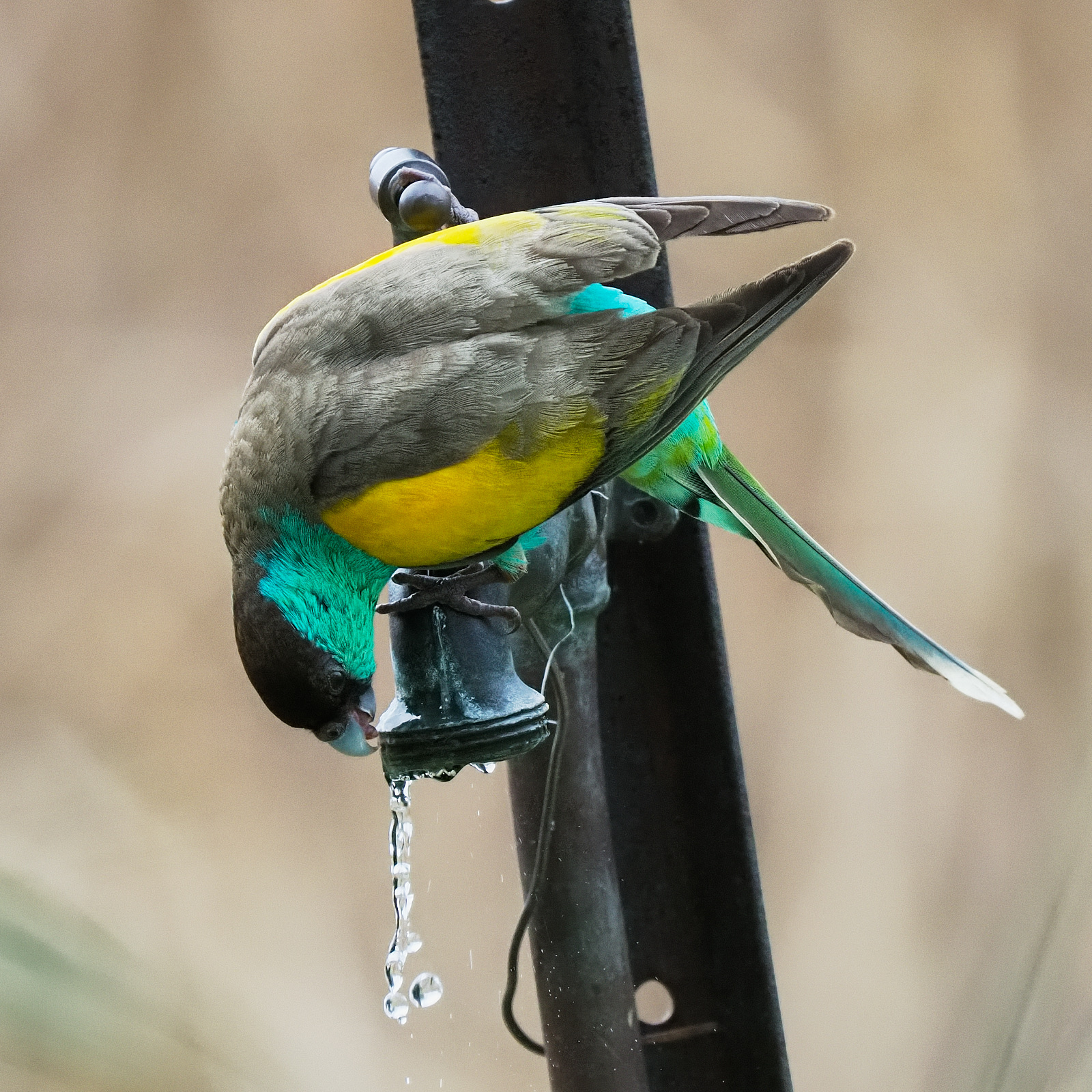
Pine Creek owes its existence to gold. It’s now a very pleasant stopping point for the traveler heading to Darwin. For the birdo it has the special sauce, Hooded Parrot. These are savanna woodland dwellers restricted to a small part of the Northern Territory. They have declined in much of their range but are secure in protected areas and are not hard to find around Pine Creek. They nest in termite mounds. The boys are far better looking than the girls.
For the aficionado (should that be afflictionado?) Pine Creek also has a very fine sewage treatment plant. Pine Creek is a place where the twitcher can listen to the Yellow Oriole by day (a mellow al ca hol) and the Barking Owl by night (wook wook) and run around wildly with the camera. Paradise.
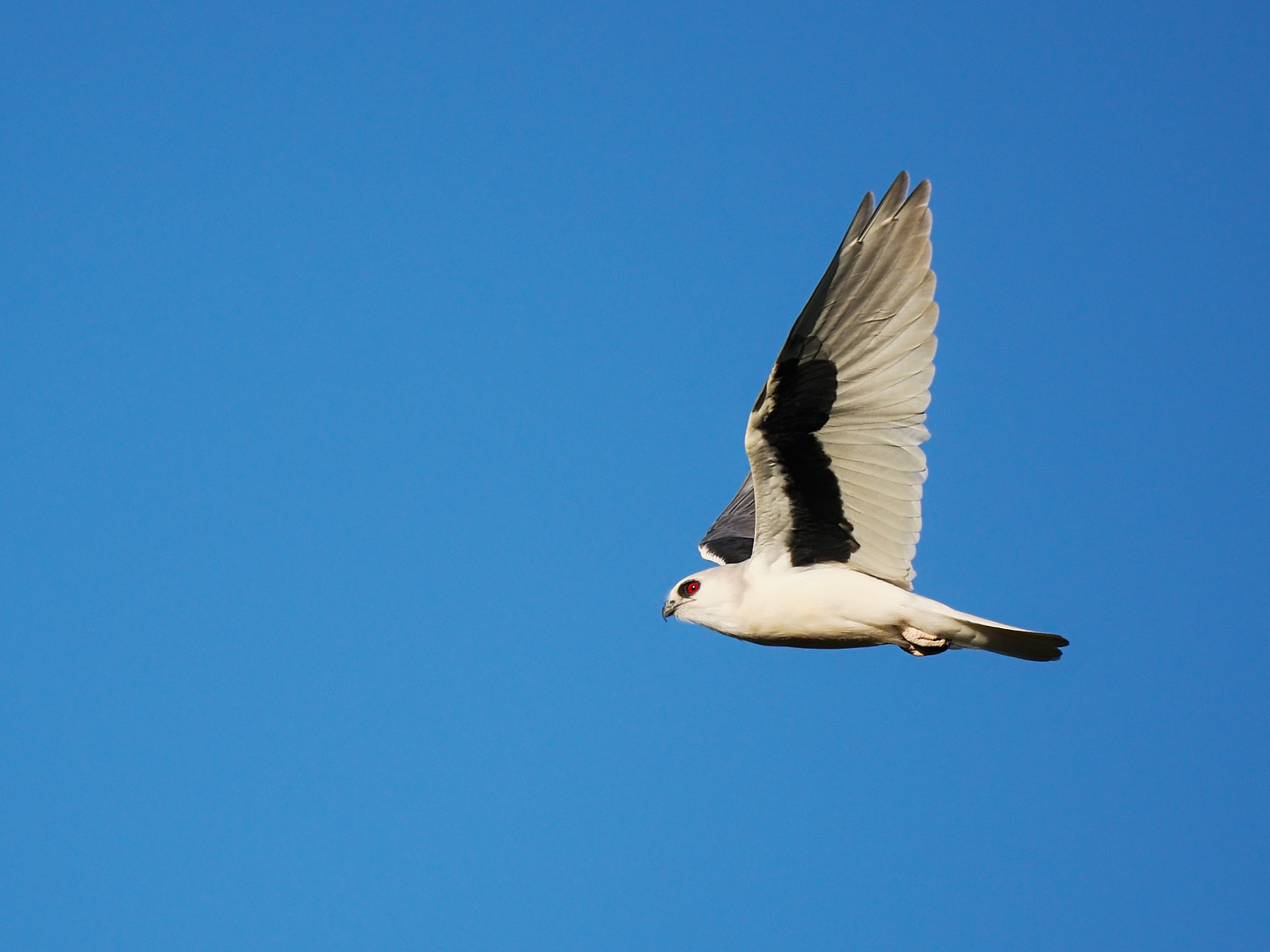
I saw the the gorgeous and rare Letter-winged Kites at the Athelle Outback Hideaway where we stayed the night. Nice place, 28km off the Stuart Highway north of Alice. Naturally I posted the sighting on eBird. I got a phone call today from the owner of the camp ground to tell me that her phone had been running hot and asking for more information.
These birds are usually confined to a small area in central Oz where they enjoy a diet of rodents, especially the Long-haired Rat. If the rat population booms they boom. When the rat population goes bust they wander far afield in search of food and can even turn up at the coast.
If you’re in the neighbourhood click the link above and get out there before they are completely depixelated.


















 bobmcgee