Budongo …

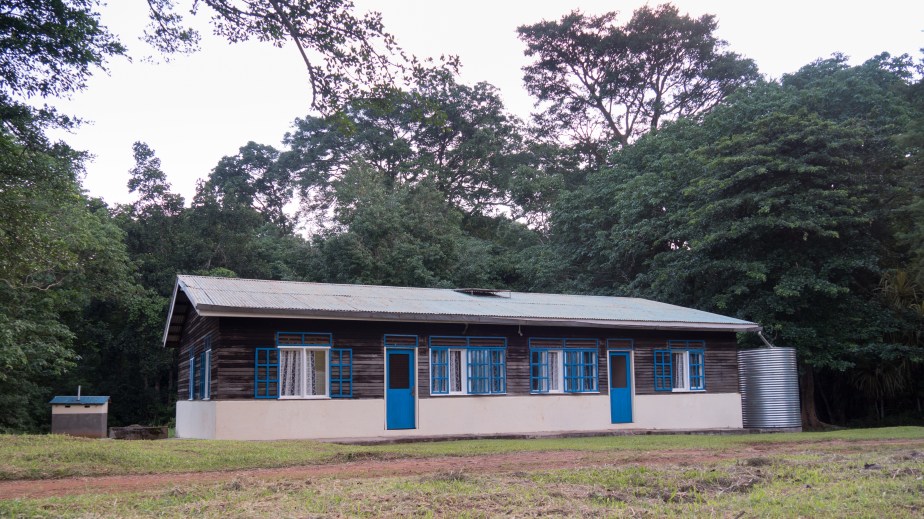
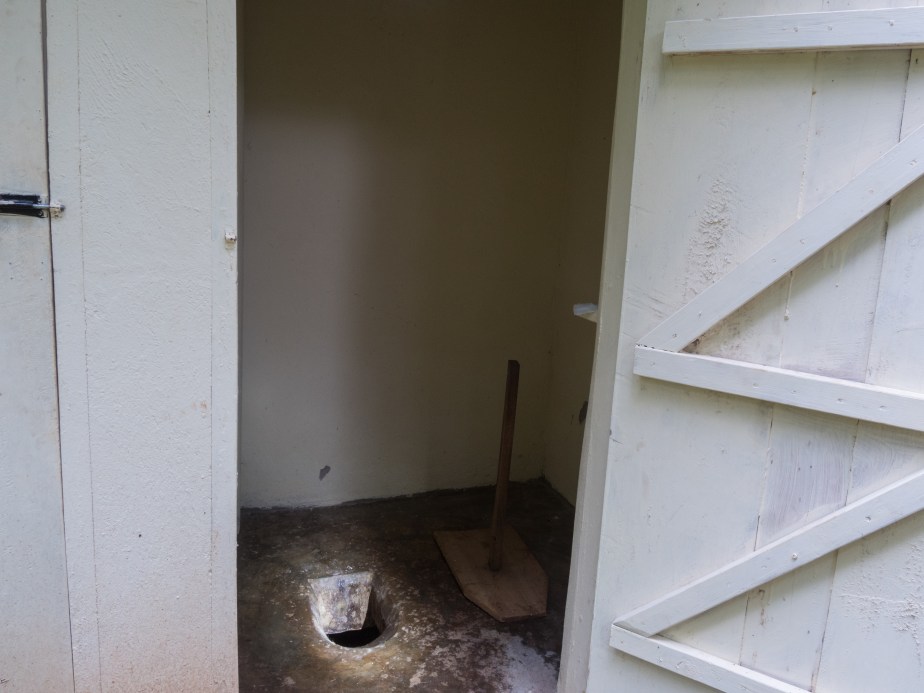
After arriving at the Budongo Research Station we were each assigned to a single room in one large house. The toilet was in the back yard and consisted of a concrete slab with a hole in it. Beneath that  was very deep hole in the ground. Zephyr, the always genial manager of the accommodation showed us where to put our feet if we were to be successful with our aim. Very useful advice. And for the novice squatter it’s a bit further forward than you think.

Our house
The dunny

The showers were about 150 meters away. The fire would be lit at 4.00 pm every day, if you wanted to shower before that it would be cold.

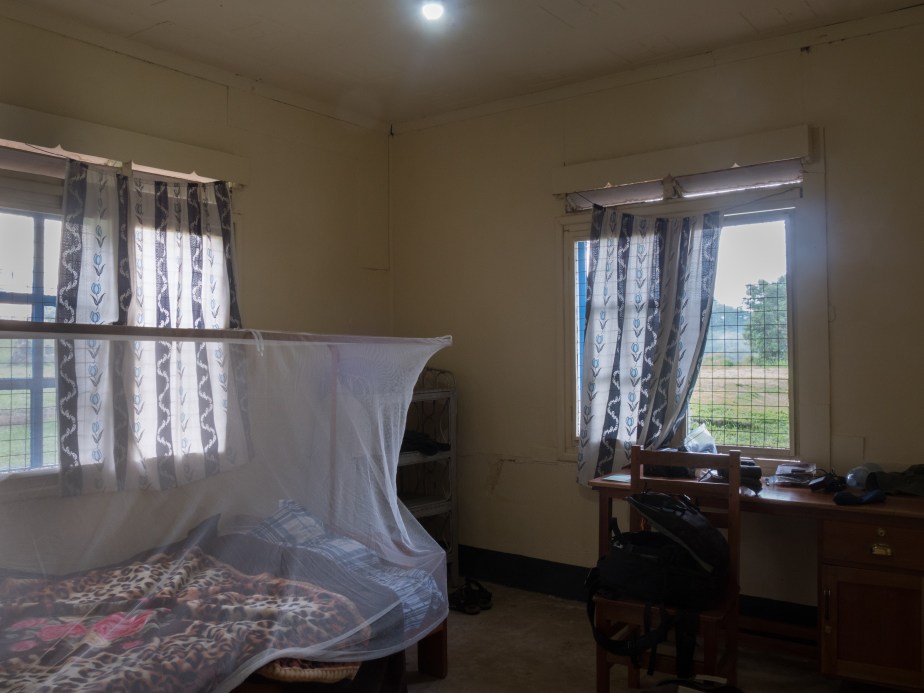
It was  basic, a bare bulb in a bare concrete room, but a comfortable bed with a mosquito net, a bolt on the bedroom door and on the outside door to keep the baboons out.

My room

Tomorrow would start with a comprehensive briefing followed by a lecture on chimp health. Since chimps are prone to many human diseases, especially upper respiratory tract infections new humans are kept away from them for five days. There is plenty to do, however, in the afternoon we wandered down the Royal Mile for some bird watching.

There are about 700 chimps in the Budongo forest. Two groups, about 150 individuals, have been habituated and are tolerant of human proximity. These are followed, quietly, on a daily basis by visiting researchers and field assistants. The researchers may be doing undergraduate honours research or more advanced studies. The field assistants are the real experts, most have been working at the station for years and all can recognise and name all the chimps by sight or even sound.

Days three, four and five are occupied with phenology, bird banding and then following monkeys.

Phenology (my spell checker hasn’t heard of it either) is the study of the progression of plants, in this case food trees, from budding through leaf formation to fruiting. We followed transects scoring marked trees essentially for their usefulness as primate food sources at that instant. Not the most exciting component of our stay but a 12 km walk in a tropical forest has to be good for you.

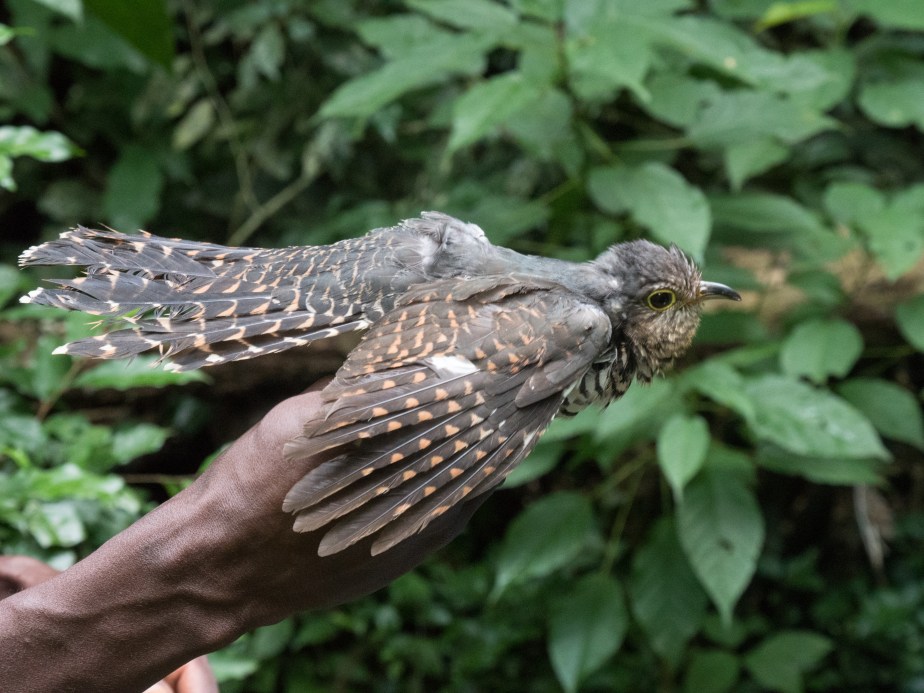
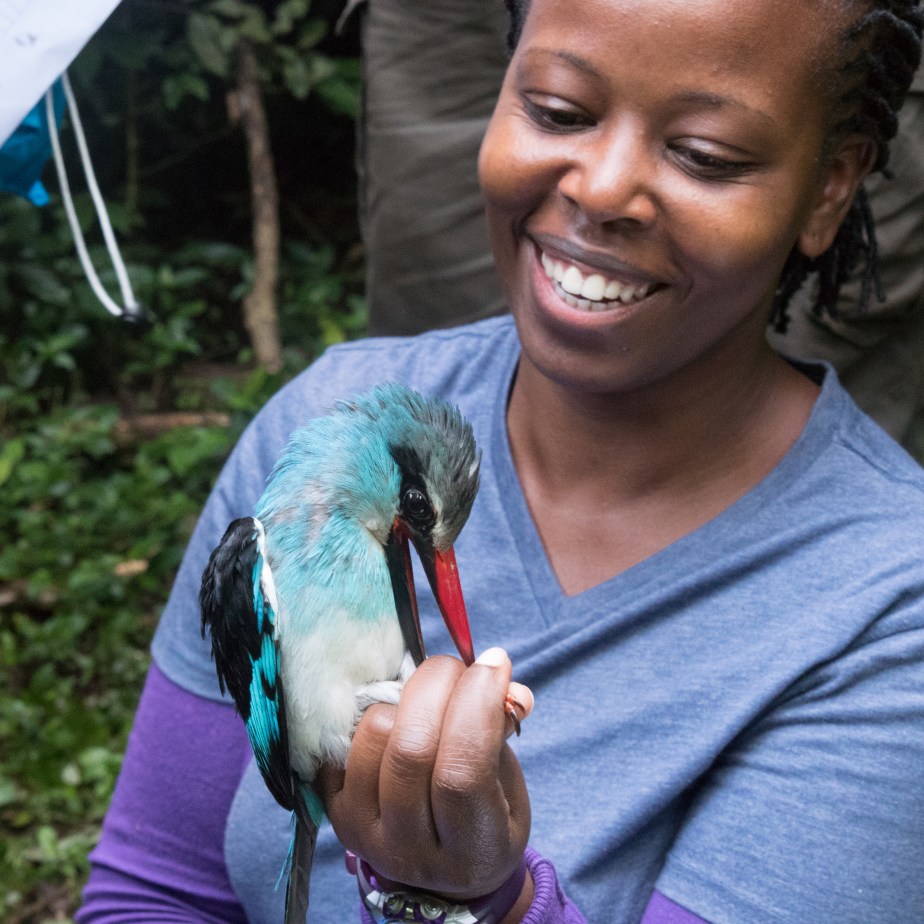
The bird banding was our chance to shine. Stay tuned.

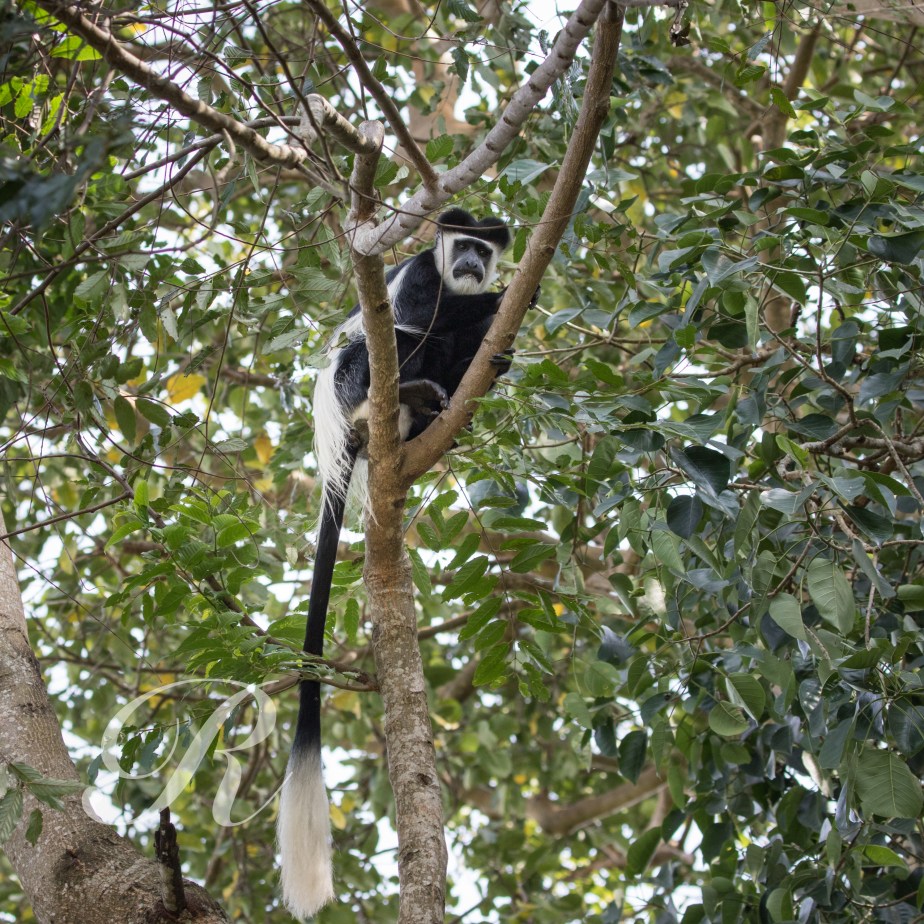
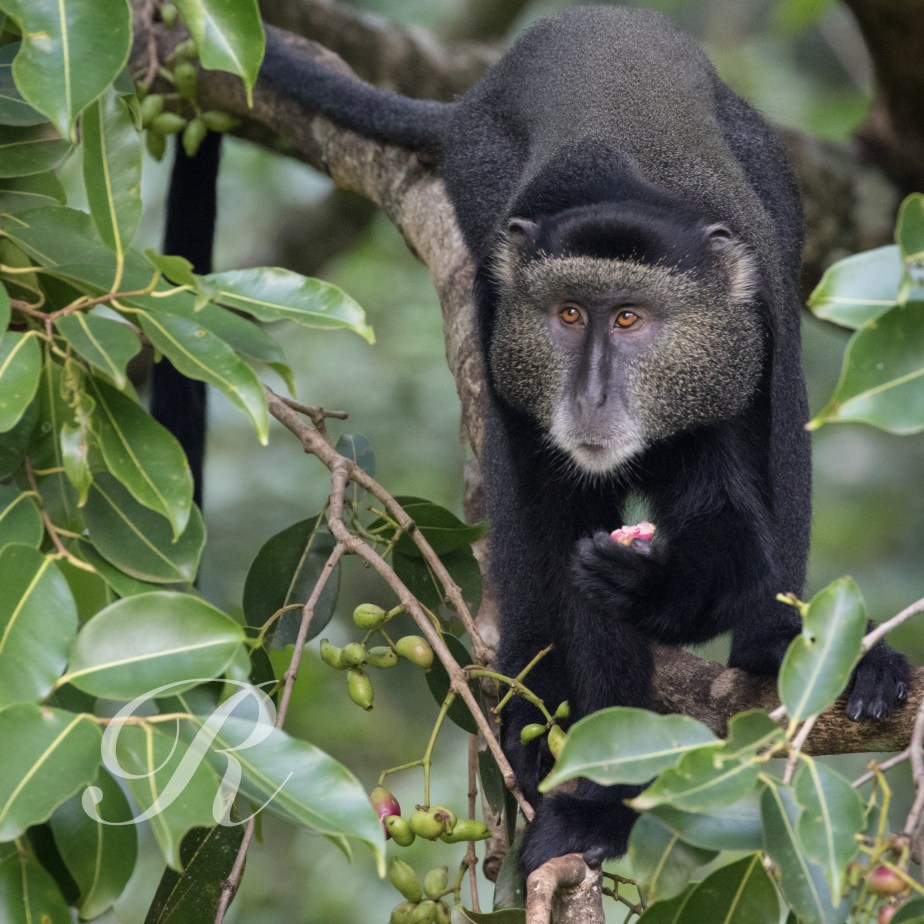
Monkeys are definitely more exciting. They don’t come close enough to catch the flu and are excellent practice for following the chimps. With clipboard in hand we watched a target monkey for ten minutes at a time, recording their behaviour and if they ate, their food.

For instance , they might eat young leaves and unripe fruit, move trees, call, groom and resume eating. Or they might spend ten minutes resting. Or they might disappear into foliage and not be seen again in which case you choose a new one to follow.


Blue Monkey

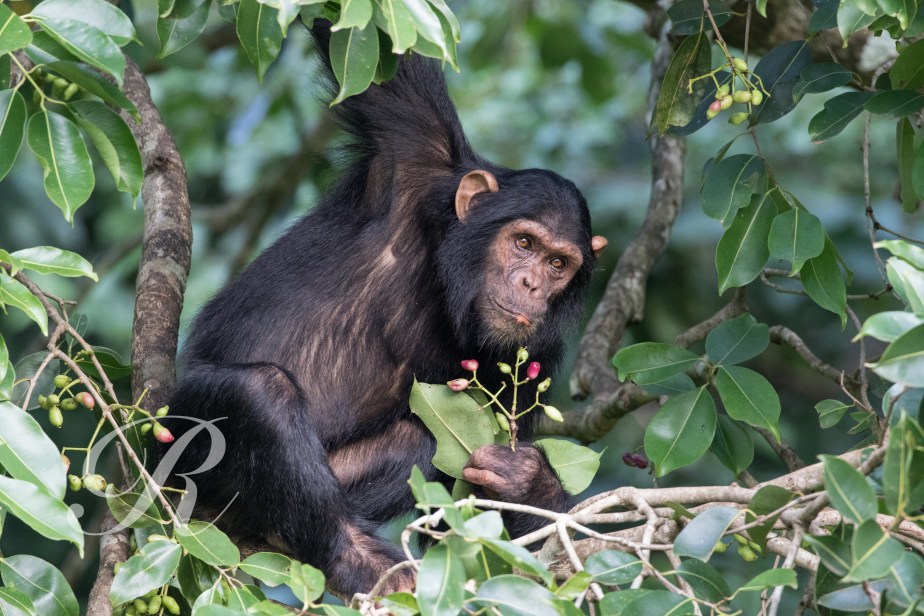
If we’d had to wait five days for our first glimpse of a chimpanzee we would, by this stage, be at fever pitch. In fact we’d seen chimps every day, we had just had to be well behaved humans and keep a safe distance away to safeguard their health.

Note the presence of mature leaves, ripe and unripe fruit. For the moment please ignore the chimpanzee …


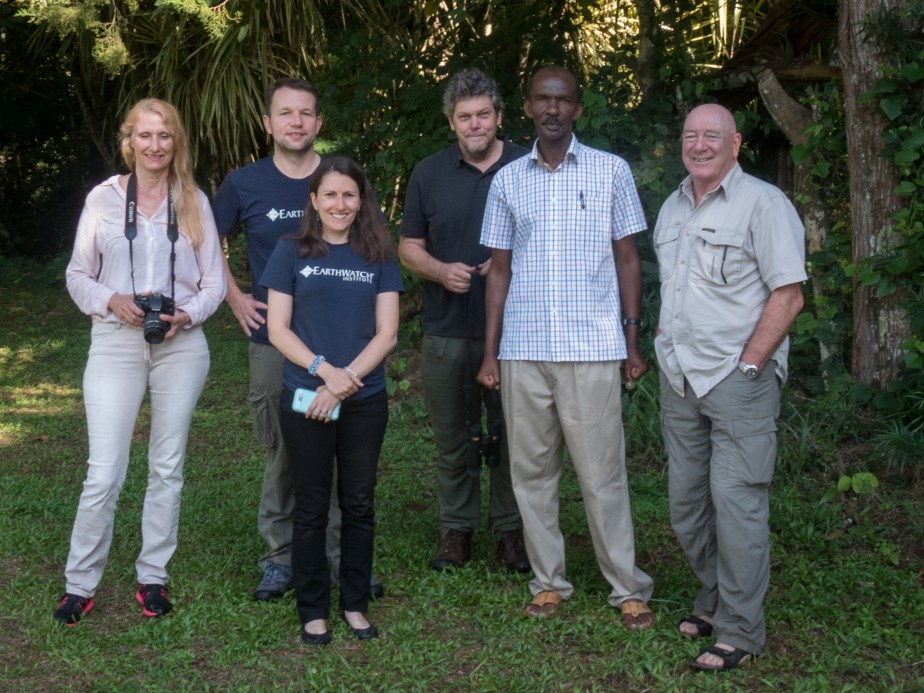
Meet the Team …

I started bird watching at about eight years of age. A book that my parents had and a keen classmate got me going, after that it was self sustaining. It usually consisted of a long walk making a list of what I found, I loved doing it then and I still love doing it 60 years later.

Along the way I took the time to study ornithology and earn a Graduate Diploma. I got involved in some research projects and have a Licence to Band Birds. While banding migratory waders I met Dr Will Steele who got his PhD studying sea birds on Marion Island. I met Dr Mark Antos whilst banding bush birds, he earned his PhD studying foraging in forest passerines. They are both professional biologists. We have been friends for many years.

We were in Uganda to join an Earthwatch Project investigating threats to Chimpanzees but we would also get the chance to share our knowledge of bird banding with a local team.

At breakfast the next morning the group of three Aussies were joined by Cristina and Silvana. Cristina, originally from Brazil, is a zoo keeper at Dallas Zoo looking after Chimpanzees, Gorillas and Baboons. Silvana is a banker from Switzerland.

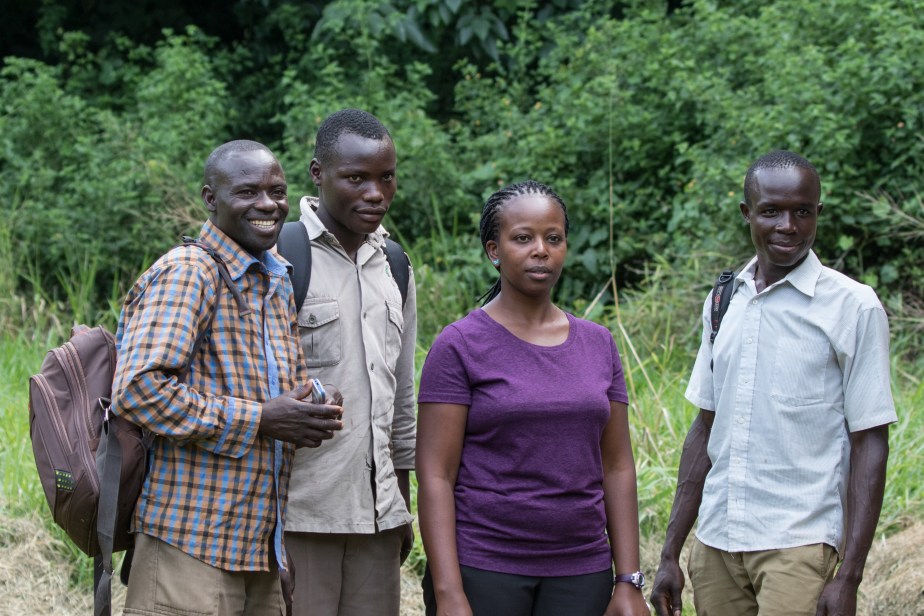
l to r – Silvana, Mark, Cristina, Will, Geoffrey, McGee

At 8.00 am two vehicles pulled up, Geoffrey Muhanguzi, director of the Budongo Research Centre, was driving one. We were soon on our way. Our route took us north through the outskirts of Kampala then on to Masindi where we had lunch. After lunch we left the main road and slowly bumped our way north-west to the Budongo Forest arriving late afternoon. The journey was a shade under 300 km, it took about 5 hours actual driving. The traffic around Kampala was chaotic, the main road was fairly poor, beyond Masindi it was really poor.

Along the way we got to see life on the streets.

And almost everything you could imagine being transported on a motorbike from building materials to furniture. Mum Dad and three kids, no problem, four adults likewise. To transport a few planks lay them across the saddle and sit on them, just don’t try going through a narrow gap, the same technique will work for a dining table.

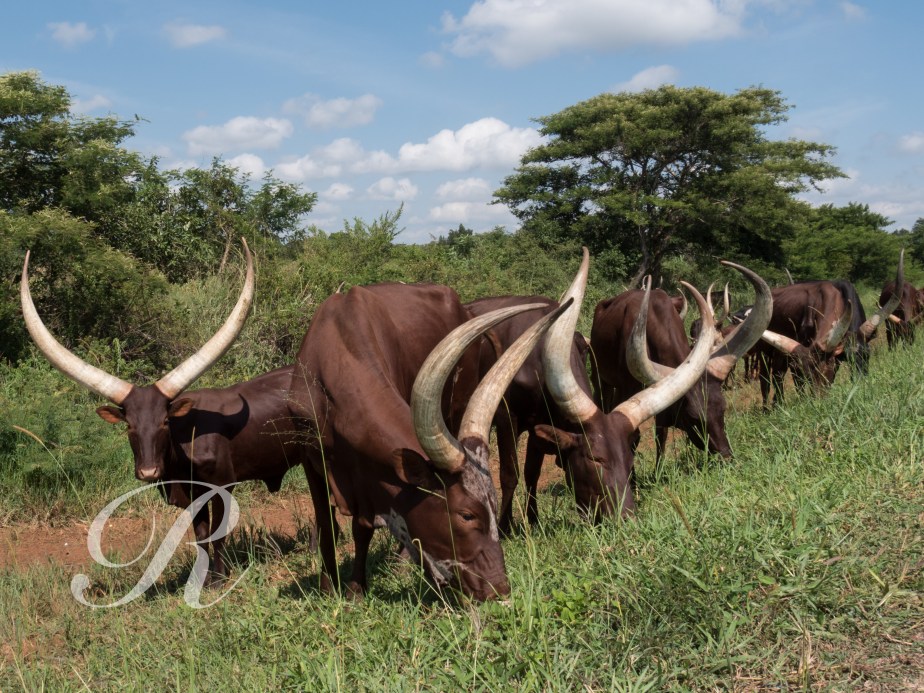
In the country side we passed the odd herd of extremely well horned cattle …

And eventually we reached our destination …

Entebbe …

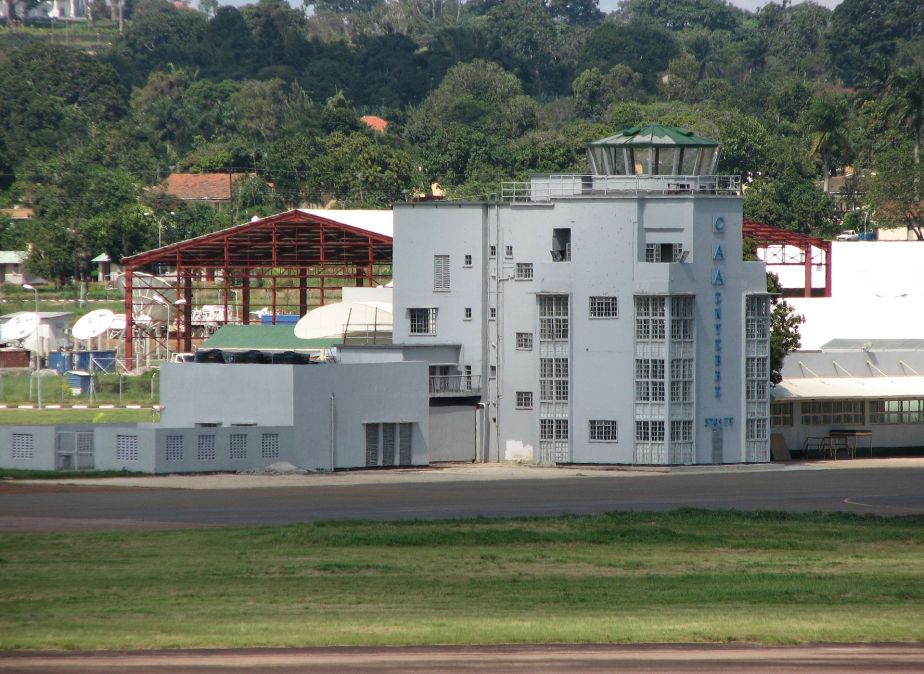
From the plane window we could see part of the old terminal as we taxied in. When the Israelis made a brief visit in 1976 it looked like this …

photo Micha Sender (Wikipedia)

Once we were parked it was obscured by the new building added to the front. New is a relative term, the new terminal is looking pretty shabby.

The taxi ride to the Airport View Hotel took about 10 minutes. The streetscape was typical Africa, concrete terraced shops, razor ribbon on the walls, a security guard armed with a rifle outside a corner store, people walking, in fact lots of people walking. We turned left off the main road onto a deeply rutted dirt road. The places on either side were large with impressive fences and gates, a stark contrast to the road. A nice neighbourhood and a nice comfortable hotel.

We wasted no time getting out into the surrounds. The hotel gardens offered up African Grey Parrots, Sunbirds, Weavers, Storks, the gorgeous Ross’s Turaco and this beautiful Double-toothed Barbet …

Double-toothed Barbet

A promising beginning.

In the course of the evening meal we sampled a couple of the local beers and agreed that the Nile Special got the blue ribbon.

A little guide book in my room informs me that Uganda has a population of about 38 million, the capital is Kampala (about 1.8 million), the President is Yoweri Kaguta Museveni (since 1986) and the currency is Ugandan Shillings ($1 Au will currently buy you 2,700 Shillings, $100 and it will be hard to close your wallet).  The local languages fall into five groups. Within each group people can understand other dialects but there is too great a difference between the groups for any of them to be the lingua franca, for that reason the official languages are English and Swahili. The power plugs are 3 pin English style, 240 volts.

Perhaps not everything you need to know about Uganda but a handy start.


The End …

On my first visit to Africa, many years ago, I watched the sunrise in Botswana. A massive, symmetrical, leafless Baobab tree slowly became silhouetted against a red sky. Then a magnificent red sun slowly emerged. It was cold but that wasn’t the only reason for the shiver that ran down my spine. This is the continent where humanity first saw the sun rise. We are all Africans. Coming here is like coming home.

This morning I saw the sunrise from the terrace of the Step Town Hotel, Kigali, Rwanda. This is the last day of this trip to Africa. This evening I will be at the airport ready to fly back to Australia. The journey has been eventful, successful, enjoyable.

In a few days I will begin at the beginning and share it with you.

Entebbe bound …

Just a few last minute arrangements and then airport here I come to catch a Qatar Airlines flight for Entebbe via Doha.

Hey, that’s the same Qatar that just got ostracised by the rest of the Gulf states for their support for terrorism. Entebbe rings a bell too.

June 27, 1976, Air France flight 139, Israel to France, hijacked in Greek airspace by four Palestinian sympathisers. It was diverted to Benghazi, Libya, another familiar name, and after refuelling there it flew to Entebbe where it received a warm welcome from President Amin. Four additional freedom fighters joined the original hijackers. The army made some helpful alterations to the old airport terminal to where the hostages were transferred.

In subsequent days some of the 248 passengers were released. Ultimately the hijackers were holding 106 hostages which included 12 crew and 84 Israelis. They issued some demands and set 1 July as the date on which the killing of hostages would start. Diplomatic efforts saw that put back to July 4, it suited Amin, whilst the spotlight was on him he could fly to Mauritius to hand over chairmanship of the Organisation of African Unity.

And it suited the Israelis just fine too. It gave them just enough time to put together a rescue mission that was spectacularly successful. Seven hijackers were killed, somewhere between 33 and 45 Ugandan soldiers were killed when the troops opened fire on the rescuers and 11 fighter planes were destroyed on the ground.

Three passengers and the Israeli commander were killed in the raid. Some were injured. Dora Bloch, 75 years old, was left behind.

Idi had a major tanti. Kenya had given some minor assistance to the Israelis. Hundreds of Kenyans living in Uganda were murdered as a consequence. Poor Dora Bloch was dragged from her hospital bed and killed, as were doctors and nurses who tried to intervene.

It sometimes seems as though the world has gone mad but it was always thus. Would I be better off heading to London, Paris, Manchester? As the French say plus ça change


Africa …

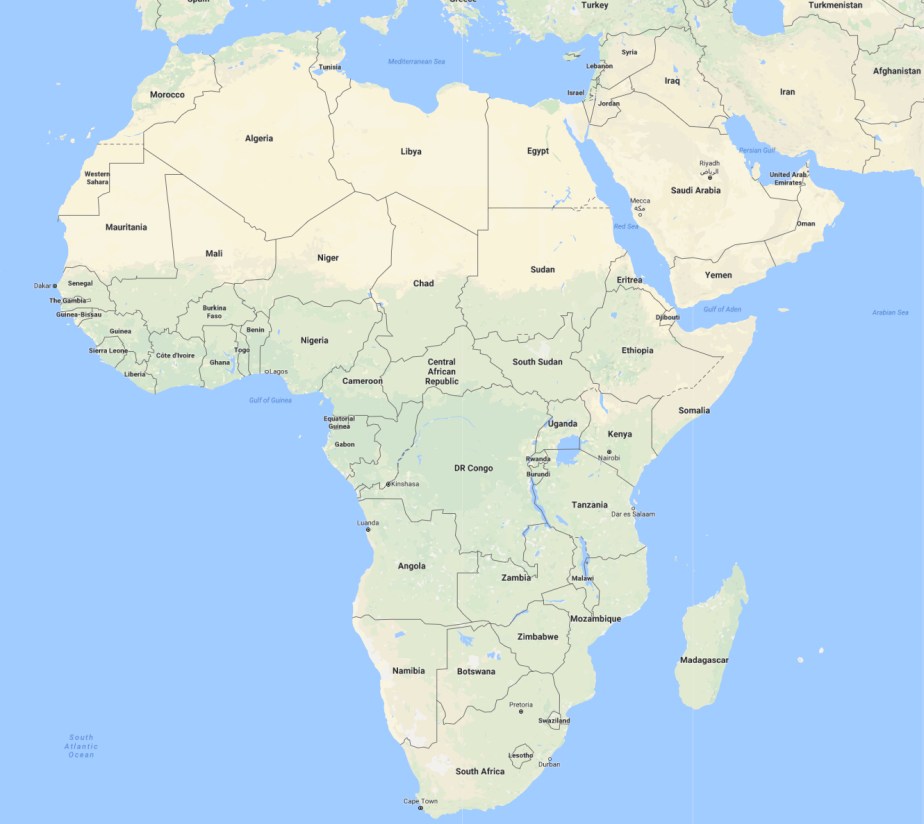
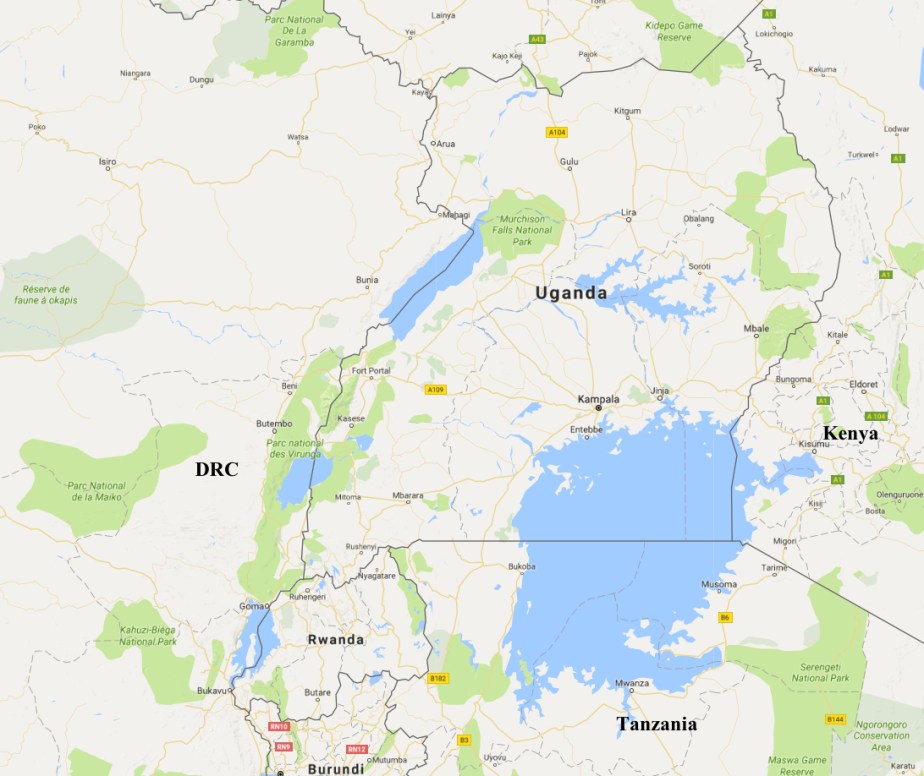
and here’s a map just to prove it …

If you drop a line from the Libyan/Egyptian border and come down about half way to the Cape of Good Hope, cast your eyes a little to the right you’re here …

and in a few days so will I be.

The largest lake, at the intersection of Uganda, Kenya and Tanzania is Lake Victoria. The chain of lakes to the west of it lie in the western branch of the East African Rift Sytem. The most northerly lake in the chain is Lake Albert and this part of the rift system is often called the Albertine Rift. The rift system is not only of great interest to the geologist, there are 41 species of bird found only along the Albertine rift.

Uganda made its first real impact on my life in 1972. I was studying at Sheffield University when Idi Amin expelled Uganda’s Asian community.

We are determined to make the ordinary Ugandan master of his own destiny, and above all to see that he enjoys the wealth of his country. Our deliberate policy is to transfer the economic control of Uganda into the hands of Ugandans, for the first time in our country’s history.

Said Idi, accompanied by the veiled threat that any remaining Asians would face a Hitlerian final solution. About 80,000 people, more than a quarter of whom were Ugandan citizens, had 90 days to leave the country. Most of those displaced came to England. I played basketball with a young man who had played for the Ugandan national team. The enterprises and personal goods left behind were distributed among ethnic Ugandans. The economy nose-dived (and basketball languished – it wasn’t until 2015 that Uganda took part in the African Championships finishing 15th.)

Rwanda provided even greater drama in 1994 as the news of the genocide slowly percolated into the consciousness of western nations. In about 100 days the majority Hutu population fell upon the Tutsi minority and the even smaller population of Batwa people resulting in the death of about 750,000 people (perhaps more). The United Nations distinguished itself by standing idly by  just as it would in Srebenica.

At the time everyone carried an ID card with their ethnic affiliation on it. Checking IDs at roadblocks followed by summary execution with a machete was just one of the strategies utilised in the carnage.

Just something to ponder in Australia as we consider inserting ethnicity into our constitution. In post conflict Rwanda it is illegal to talk about one’s ethnic affiliation.

I shall also be visiting the Democratic Republic of the Congo, often called Congo Kinshasa to distinguish it from the Republic of the Congo or Congo Brazzaville. The DRC was formerly called Zaire.

I hope to come back with photos of Chimpanzees and Gorillas, Shoebills and many other birds and even some of a seething red-hot lake of volcanic lava. I hope to share the experience with you … see you in about five weeks.


Fifi McGee …

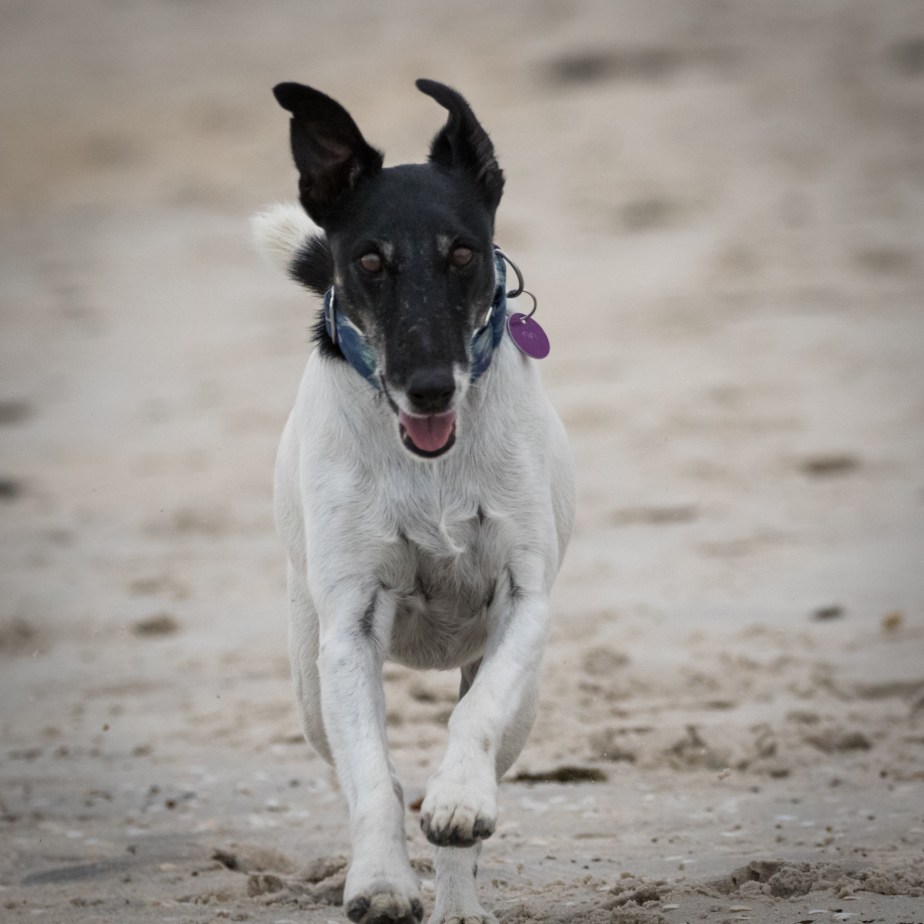
Since I happened to mention the dog I thought I might give you her back story.

Grandpa and Grandma lived on a farm in the Victorian Goldfields. They have two daughters. One is the lovely Gayle, my current squeeze, and henceforth TLG. The other is TLM. If you read any journal articles you will adjust quickly to the abbreviations, if not you’ll get the hang of it eventually.

TLM is married to TUJ. The two daughters between them have provided Grandpa and Grandma with three granddaughters. So far I have mentioned nine humans, now lets tally the dogs. This is a dog family. Between them they had eight dogs at the time in question. Which meant that there was a significant deficiency. Grandpa and Grandma normally had a dog each but Grandpa’s Border Collie had shuffled off this mortal coil.  TLG and Bobby McGee had no dogs, they liked dogs but also liked their freedom.

One of the granddaughters, Sara, loves her Grandfather and sought to address the deficiency. She had often heard his stories of Fox Terriers that he had kept in younger days. She would buy him a Foxie.

Since Grandpa was 87 at the time there was every prospect that there would be a dog left over at the time of his eventual demise. No problem says Sara – with so many dogs in the system there is bound to be a vacancy for a sweet little Foxie when the day comes.

Grandpa fell in love with the dog and named her Fifi.

Fifi was a monster, a total nightmare. She whined non stop, bounced all over her housemate Fleur, a beautiful old black labrador, she bounced all over the furniture. She reduced a couch to shreds. She bounced so much her feet barely touched the floor. On average she was an aerial dog. Grandpa doted on her, the rest of the world detested her.

A year later the folks had to leave the farm because of Grandma’s failing health. No dogs were allowed in the retirement village by order of the residents committee. TLG is one very persuasive human. She doorknocked every unit in the place and got the rules changed, one dog could go.

Now if that dog were Fifi the rules would soon change back again. Fleur got the nod, Fifi got the flick.

Next port of call for the unruly Foxie was TLM’s house. Confronted with a psychotic, rebellious dog that had never been confined or walked on a lead or disciplined or left alone, didn’t shut up and rarely touched the ground … it had to fail and it did. The decision was made in two days. Sara you got us into this mess you take her.

So Fifi joined two other dogs and proceded to turn its new residence upside down. TLG and Bobby McGee began to take her at weekends to give Sara some respite.

Sara lived in a suburb that limited households to two dogs. When someone dobbed* her in the choice was stark. She came to live with us. Fifi, not Sara.

No problem. I grew up with dogs and knew exactly what to do. The objectives were simple. The dog would :-

  • walk on my left without pulling
  • sit on command
  • come when called
  • sleep in the laundry
  • stay away from the table when we were eating
The retraining was intense and took about 12 months but in the end I was successfully retrained.

Five years have passed. Grandma and Fleur have both passed away. Fifi gets to see Grandpa most days and they are still very much in love. These days Fifi generally sleeps on our bed, will sit on command if the grass isn’t wet and sometimes comes when she’s called. TLG and I now camp in State Forests rather than National Parks.

And what could be better than two fine companions, a campfire and a bottle of wine?

Translator’s note * To dob in, Aussie slang for to tell tales, tattle, rat out.
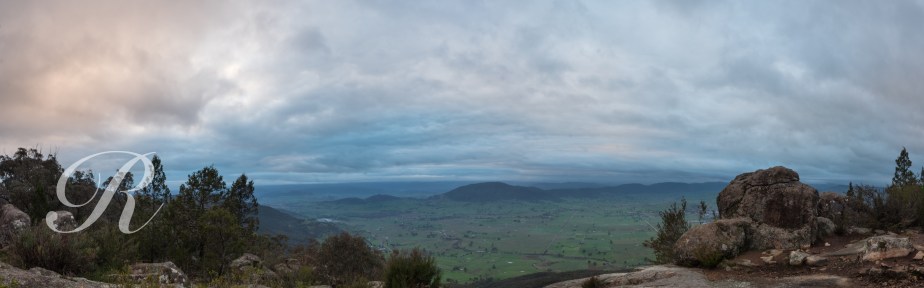
Mount Mitta Mitta …

AKA Mt Mittamatite is a little over 1000 metres and has its very own web page. Dogs are welcome on a lead and fires are permitted in the fireplaces provided. Camping is possible at the summit and at Emberys Lookout. There are no bookings and no fees. There is an aircraft navigation facility on top.

The view from Emberys (above) is impressive, it is a popular launching site for the hang gliding fraternity. You have to work a bit harder for a view at the summit.

I was hoping for more mist and less cloud. I’ll have to go back.

The weather was closing in with a vengeance. Yesterday’s snow was the start of a southerly outbreak which was only going to get worse. Time to head for home.

From Here to Victoria …

Here being Merimbula, NSW.

As an aside, when we Victorians see NSW on a number plate we wonder if it stands for No Sense Whatever. In outback New South Wales they are fully aware that it stands for Newcastle, Sydney and Wollongong which is where the government expenditure goes.

The route takes us through Bega where the cheese in our lunch comes from, then Wyndham and the Robbie Burns Hotel, founded 1848 (by Robbie himself, I believe, and that’s his ute parked outside) …

On to Adaminaby and then over the hill. Given that the ski season is rapidly approaching my forward planning involved the lowest route available. As we ate our cheese sandwiches however, the navigatrix declared that a shorter route existed.

photo GHD

It was an instance when the shortest route proved to be simultaneously the road less traveled, the scenic route and the one that took the longest time. It did give us the opportunity to let the dog have her first encounter with snow. She was unimpressed … but I was. The Great Dividing Range at its greatest.

Victoria at last, we found our way to our intended campsite in the Mitta Mitta Regional Park … the Embery lookout perched high above the bright lights of Corryong.

And the first thing we did was light a nice campfire.