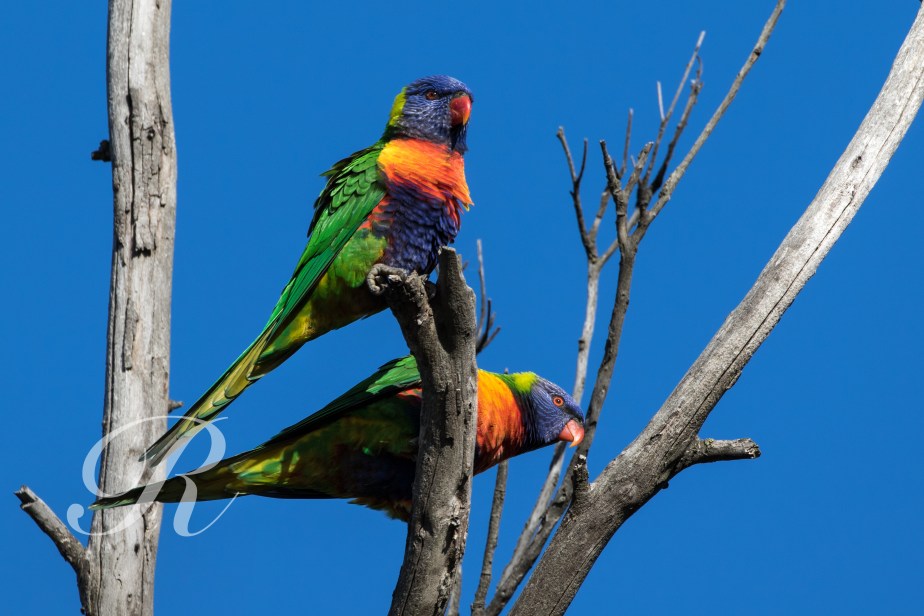
Jewel of the Sapphire Coast, or so merimbulatourism.com would have you believe. It certainly is pretty, lots of beach, a lake. It’s surrounded by national parks. It has an aquarium. It has grown apace in recent years.
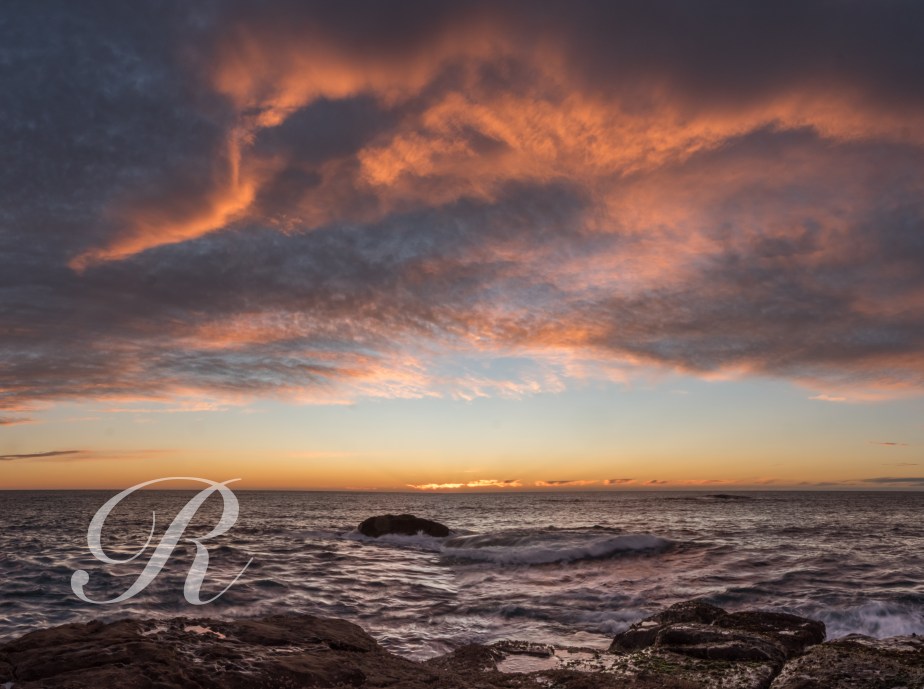
I was on the rocks at the end of Short Point as the sun prepared to rise out of the sea.
Then a long walk by the lake and around the town …
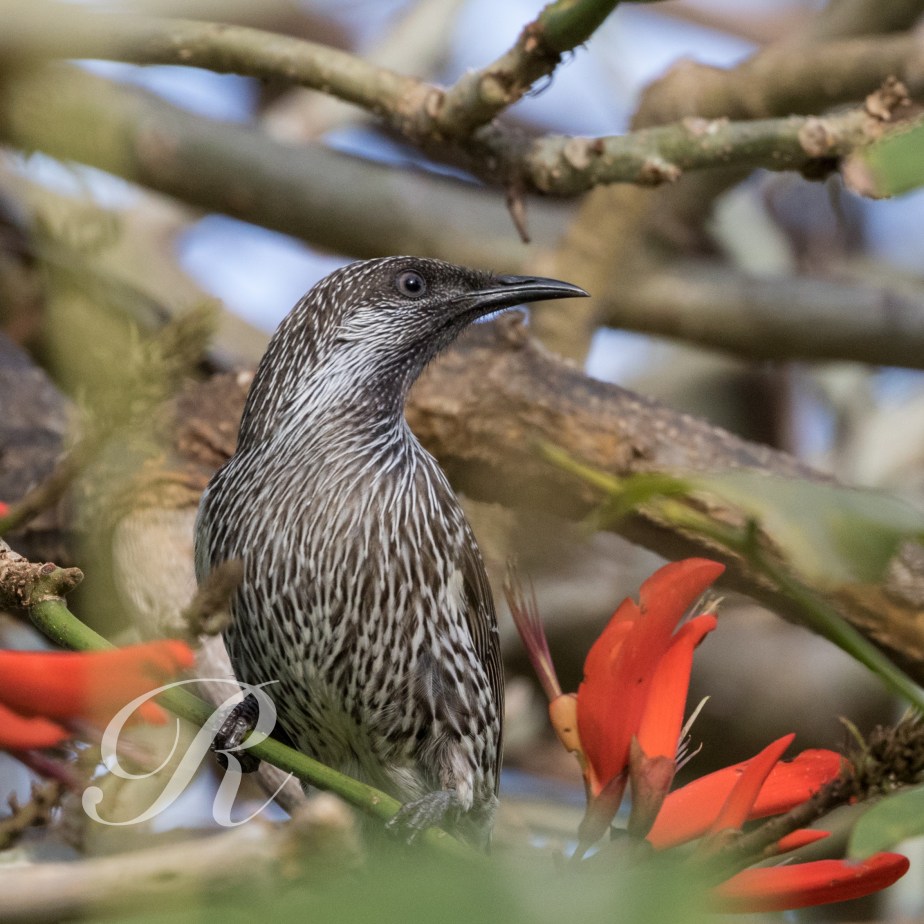
Little WattlebirdRed Wattlebird
The red flowers of this tree which I believe is Erythrina fusca, were extremely attractive to the local nectar eaters.
The subdued early light shows off the plumage of this heron to perfection.
White-faced Heron
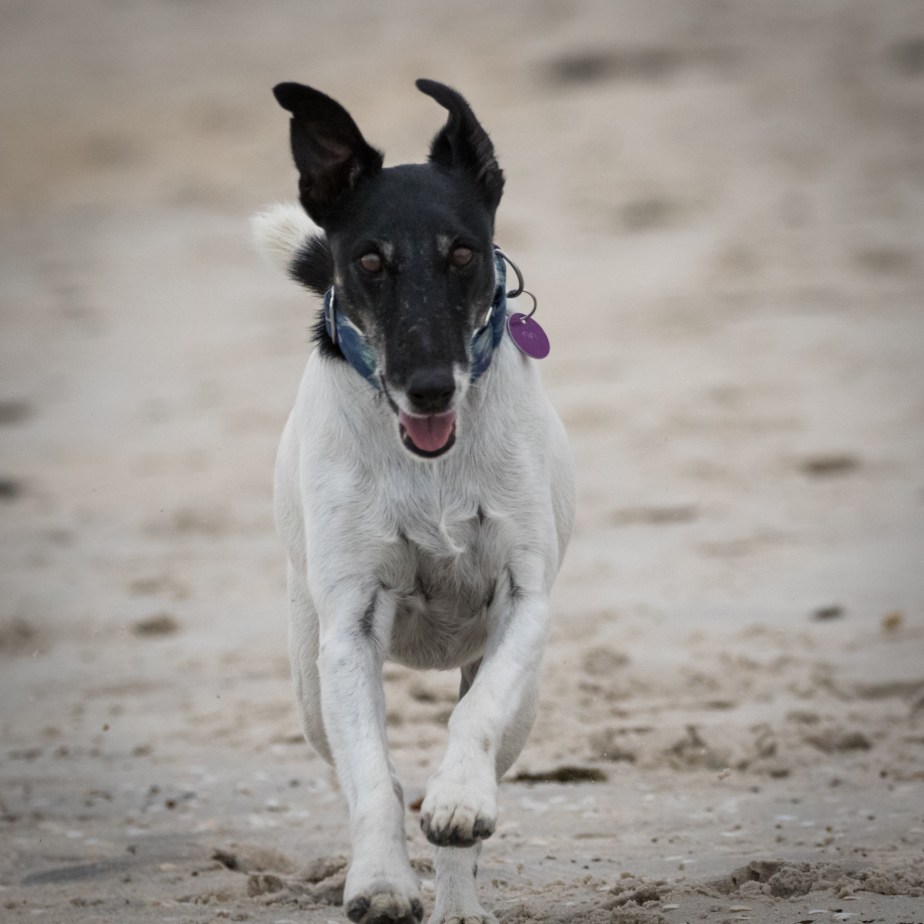
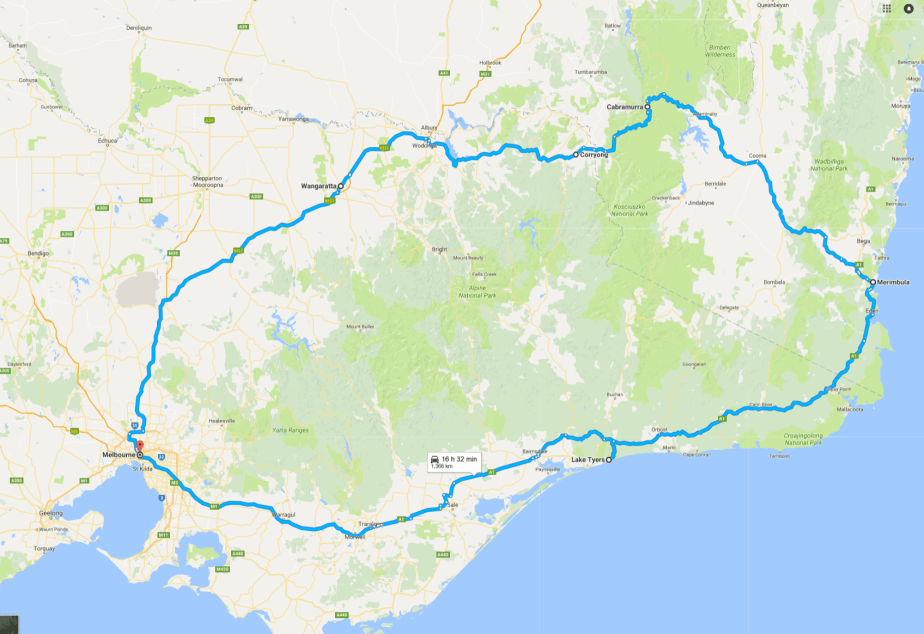
Today we wake in the Lake Tyers Forest Park. Tonight we will be in Merimbula. The population density in the intervening country could easily be the lowest in coastal south east Australia. We will be passing some of my favorite places, the Croajingalong and Ben Boyd National Parks. These are denied to us today because we have the dog.
One spot than we can visit is the Cabbage Tree Flora Reserve. Baron Ferdinand Jakob Heinrich von Muller is credited with discovering this isolated pocket of palms in 1854. It is said to be the only patch in Victoria and it is the most southerly occurrence of any Australian native palm.
Livistona australis
They grow quite tall, 20+ metres, along the creek surrounded by the wet forest .
As well as being scenically splendid this place is usually a birding hot spot. Not this day, the only creatures flying around were the mosquitoes.
The next port of call was Eden, watch out for the snakes, the first place of note in New South Wales. There is an old joke about spending a week in Adelaide one Sunday, you can do it in a Saturday afternoon in Eden. It does, though, have a very fine harbour.
We arrived in Merimbula just in time to catch the sunset.
Living in western Victoria there is some splendid countryside in easy reach but it’s nice occasionally to have a little variety. My home is just on the inland side of the Great Dividing Range. Great it is, but in length rather than height. It sweeps off to the east and then heads north. Its highest point is in southeastern New South Wales at Mount Kosciuszko which stands 2,228 metres (7,310 ft) tall. From there it continues north to the tip of Cape York in Queensland. It’s total length exceeds 3,500 kilometres (2,175 miles).
Whereas my part of the world is pretty dry, the Great Dividing Range catches a lot of rain. East of Melbourne, especially, it supports a lot of forest and that means a very different suite of birds.
I took the wife, the dog and my trusty camper trailer and spent a few days making a circuit of South East Australia.
We spent a couple of days in Melbourne at each end of the trip, in between we covered about 1400km in five days.
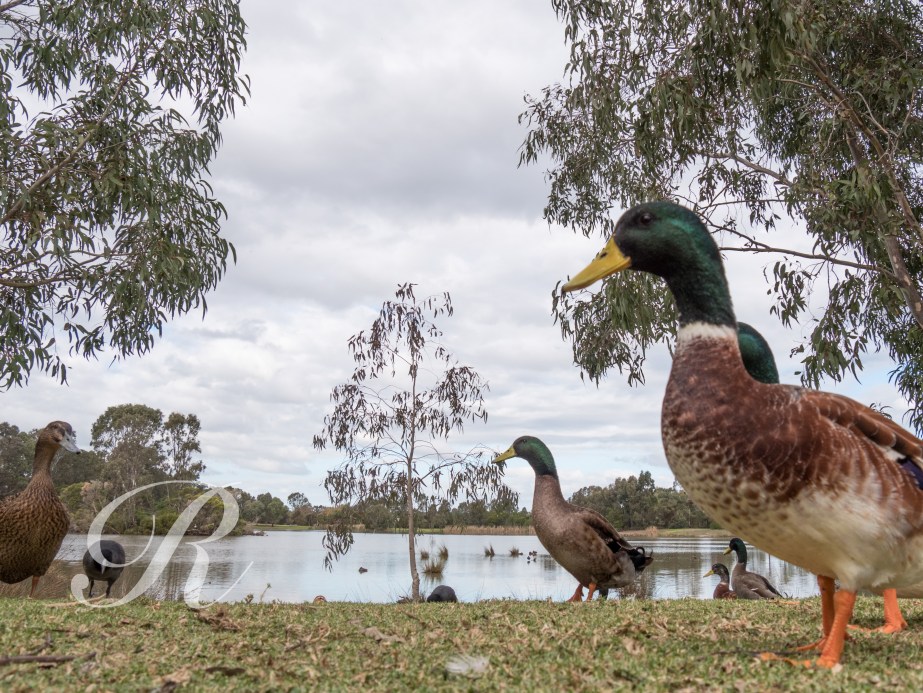
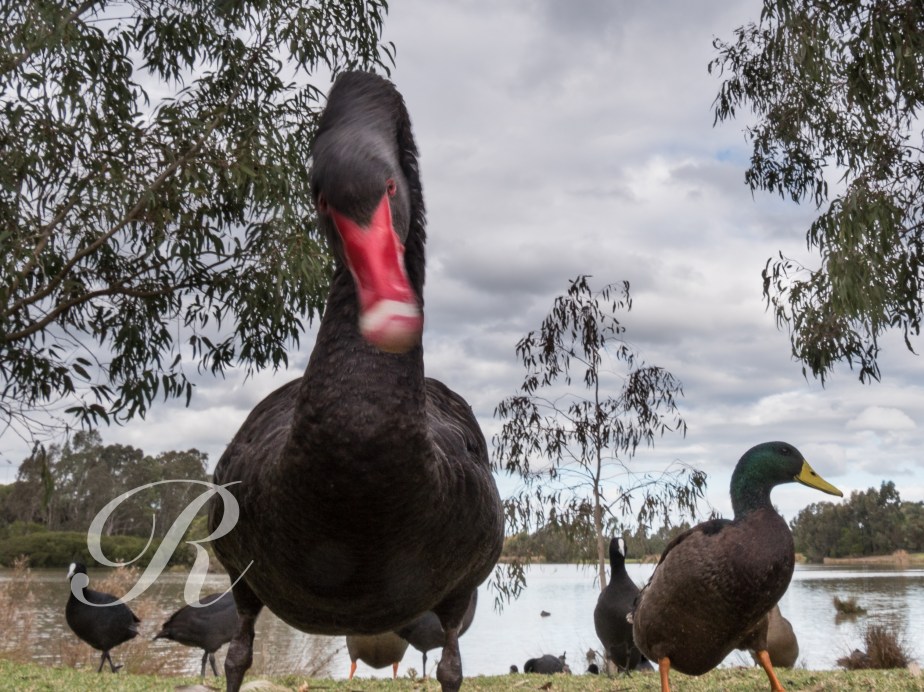
On day one we stopped for lunch in Sale. At a picnic spot by the lake the local avifauna consisted of an unruly mob of mostly rejected pets. They were quite happy to provide a close encounter so I sat down with a little bread and tried for a wide-angle close-up. It was hard getting them to pose nicely, their manners were appalling …
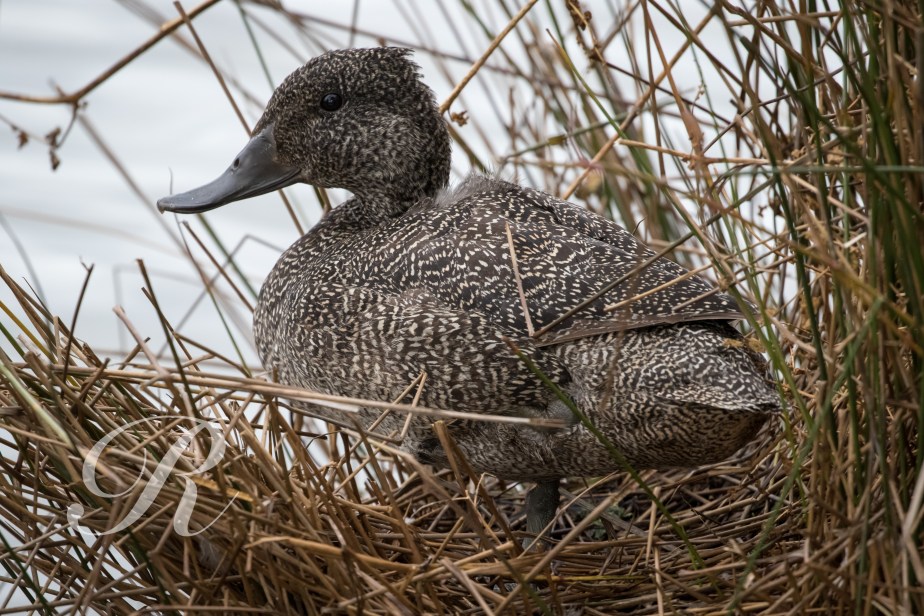
Whilst this guy was peering down at me I noticed that there were some much better behaved ducks on the water. Just a few feet away there were half a dozen Freckled Duck , not at least interested in the feeding frenzy nor all that bothered by my presence. They are Australia’s rarest waterfowl. A photo opportunity not to be missed …
Freckled Duck
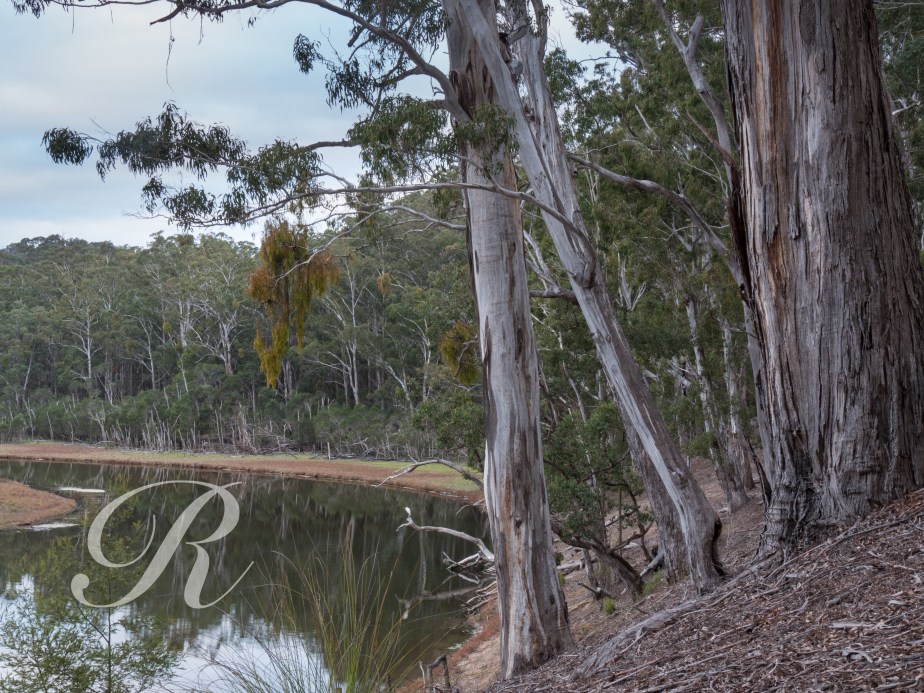
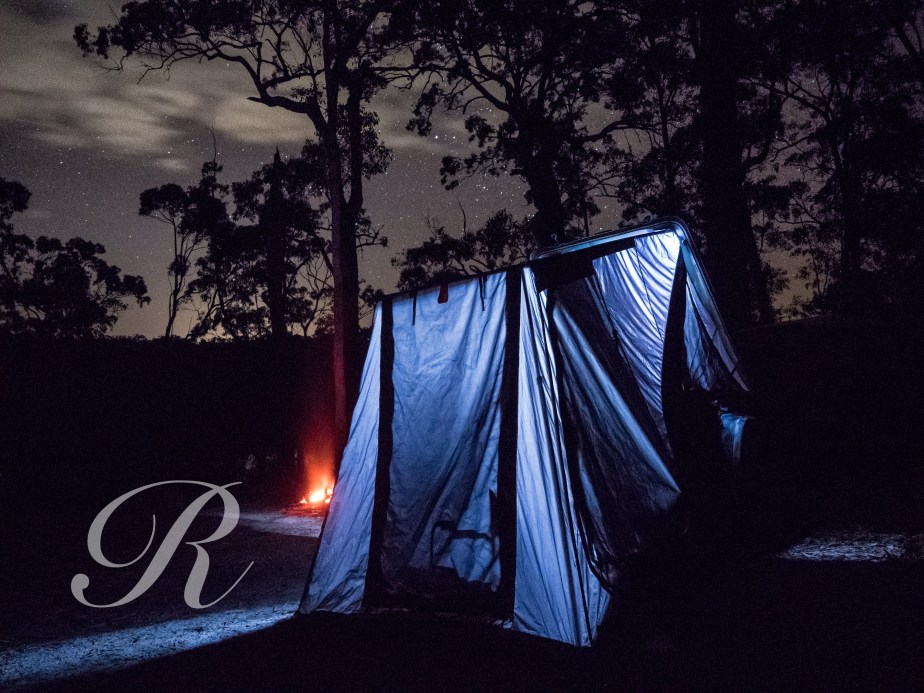
Our camp site that night would be in the Lake Tyers Forest Park. A beautiful spot where the dog is legal and so is a campfire.
There are several designated camp sites reached by Tyers House Road just east of Nowa Nowa.It was a crisp and starry night.
Yesterday I took the dog for a walk along the Beaumaris cliff top from the Motor Yacht Squadron to Table Rock. For the uninitiated this is a Melbourne suburb south east of the city on the edge of Port Phillip Bay.
The cliff is a deep red and way below our feet is …
… The fossils paint a vivid picture of life below a sea that once covered parts of Melbourne. They comprise remains of ancient whales, seals, dolphins, sharks, fishes and sea birds, crabs, shells, corals and sea urchins.
An added distinction of Beaumaris is that it is one of the only sites known in Australia where we find evidence of our ancient land mammals in rocks formed in the shallows of an ancient bay.
As land animals died, their carcasses were washed out to sea by what was an ancestral Yarra River. This co-occurrence of land and marine animals is world famous, enabling precise dating of the evolution of Australia’s unique marsupial fauna.
The Beaumaris Motor Yacht Squadron has already covered a part of this site, public land of inestimable value, with a carpark and would like to develop a commercial marina. Enriching for them, impoverishing for a landscape that inspired a couple of generations of Australian painters. Let’s hope the council has the wit to deny them that opportunity.
On the journey we pass a sign …
‘At this site in the summer of 1886 the artists Tom Roberts and
Frederick McCubbin first met Arthur Streeton. Together with Charles Conder these men were the founders of the Heidelberg School.’
Fine art has been made at virtually every lookout on the way, not only by Roberts, McCubbin, Streeton and Condor but also by John Perceval, Alfred Coleman, Clarice Beckett and many less famous artists. You can find more detail <HERE>.
It’s a place that has managed to retain a bit of bush and a little wildness despite the proximity of a busy road. For me it offers a chance to enjoy some of the local birds. I shot all of these within 45 minutes with the dog waiting patiently at my side …
Silver Gull
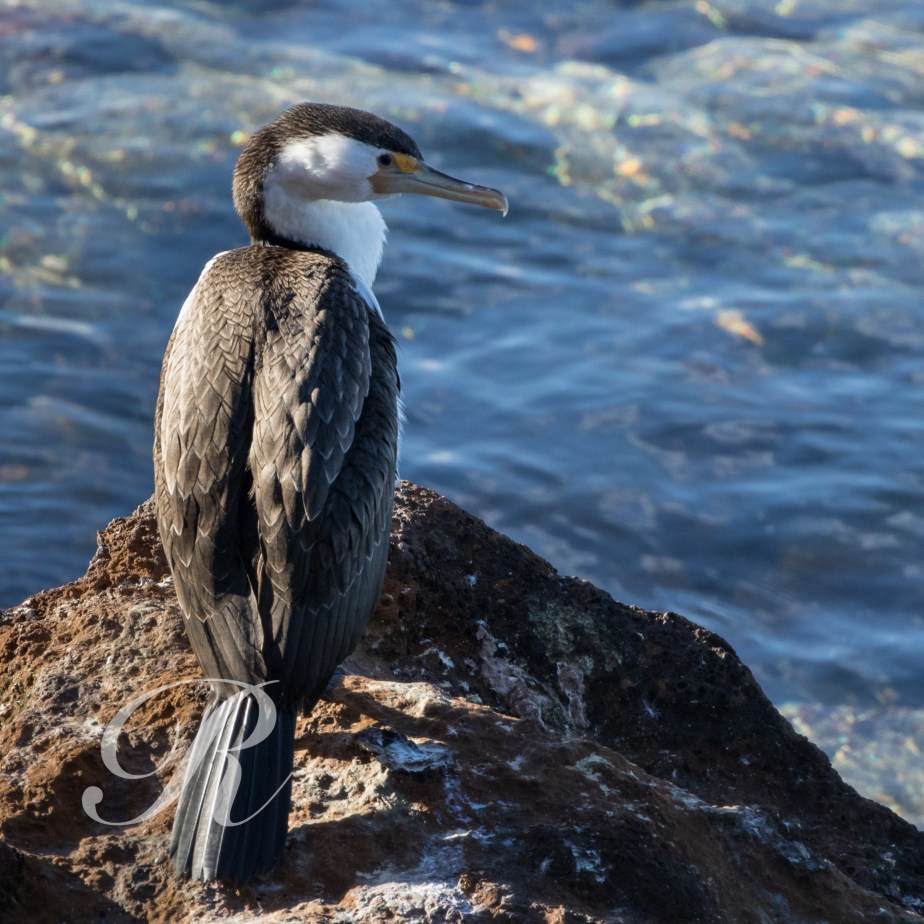
Silver GullCrested TernAustralian PelicanPied CormorantLittle Black Cormorant
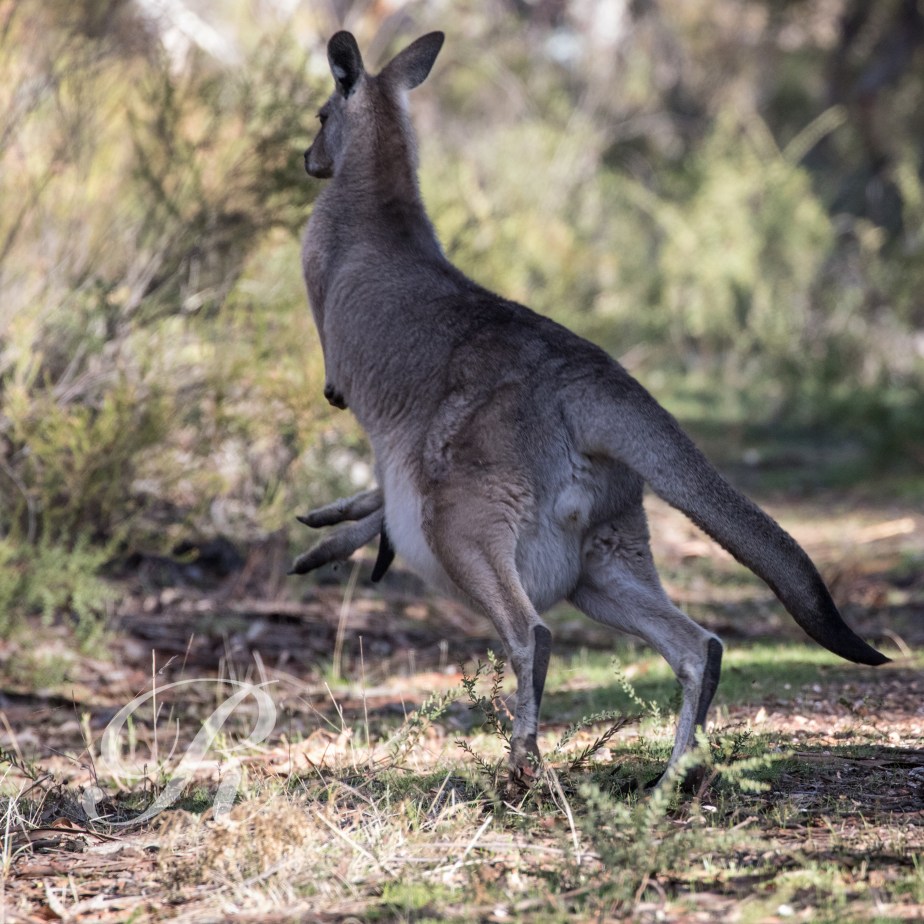
I woke up this morning to find a bunch of Eastern Grey Kangaroos at the back door. They were gone in a flash but I found this one again a little later and she was a little slower to flee …
Joey is getting a bit big for riding around in the pouch, the style is typically untidy. It is probably sharing the accommodation with a much smaller sibling fastened on a teat and there may be another sibling in utero in a state known as embryonic diapause.
Despite the heavy load, when it’s time to go it’s time to go …
Passenger Josephine Croft did not see anything but it was the sound that worried her.
“Hearing the engine switch off and the whole ‘gah-gunk’ [sound] was the first time I’ve actually felt like I’m sitting in the air in an aircraft and I’m not sure I’m ever going to be on the land again,” she said.
From where I live it’s a 30 km round trip for a takeaway pizza.
This has some advantages. For one thing you learn to make your own pizzas and they knock the insipid shop bought ones for six. Among the other advantages is the night sky. A clear night is a numinous experience.
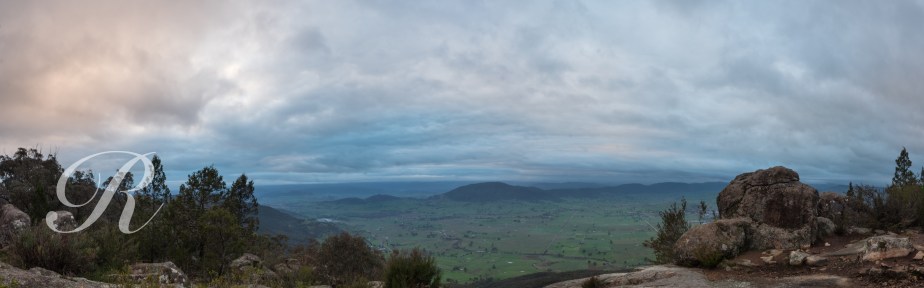
Sunset last night was at 5.30 and the moon would not be up until a little after 8. I drove up to a higher point not far from home hoping to get a photo with the milky way springing up brightly straight from the horizon. That wasn’t going to happen, the glow of the lights from Maryborough and Avoca, each about 15 km away, some smoke haze and a little cloud all conspired to make the horizon very soft. Overhead though was pretty good.
That the stars had coalesced into a large R was very exciting but not enough to enliven the composition. Fortunately, I had a foreground element with me which could be made visible by judiciously washing over it with my headlamp …
Improving but the action is really higher in the sky. Home again to my trusty windmill …
I love my windmill. When the wind blows it pumps water from an underground aquifer into my dam. Sadly the water is too salty to use for irrigation but stock could drink it. Perhaps I should get some stock. The dam doesn’t hold water very well. I like to think that it leaks back into the aquifer. My very own hydrological cycle and so immensely aesthetic.
By which time the moon could wait no longer. One day I will get a milky way photo that I can be proud of. For now I’ll settle for a moonrise …
Australian customs officials destroyed two irreplaceable plant specimens that were being loaned to scientists by international institutions, prompting one of the institutions to suspend all transfers to Australian scientists.
France’s National Museum of Natural History and New Zealand’s Landcare Research Allan Herbarium had sent the samples, which dated back to the 19th century, to help with Australian research, but they were intercepted by customs officers due to inaccurate paperwork …
… Neither the French or New Zealand institutions were informed of the decision to destroy their lichen, nor were the Australian scientists who were due to receive the samples. Normally a sender or recipient would be informed if there was a threat to destroy imported items.
Michelle Waycott, a professor of plant systematic at the University of Adelaide and chairwoman of the Council of Heads of Australasian Herbaria, said the specimens were to be used to determine whether new plant species had been discovered in Australia.
“These specimens are also the last remaining evidence that they were present in a particular location,” Professor Waycott said.
Presumably they were in separate packages coming from two different senders. Who was it that said “To lose one husband is unfortunate, to lose two is careless“?
The capture was reported to quarantine services and the bird was removed by Department of Agriculture officials.
The bird in question was a Nicobar Pigeon, The Australian reports …
If the extinct dodo was dumb, its closest relative the Nicobar pigeon may be considered adventurous, after one of the birds native to South East Asia and the South Pacific was found in Western Australia’s north.
The indigenous Bardi Jawi rangers first spotted the colourful, near endangered bird last month at Chile Creek on the Dampier Peninsula in the Kimberley region – far from its usual habitat between India and the Solomon Islands.
Senior ranger Kevin George said there were many sightings of the bright bird before it was captured at a One Arm Point front yard earlier this week.
This is a species that is mostly found on islands but does visit adjacent mainland coasts. It is found in Timor and New Guinea. The article gives the impression that it has made a huge journey to get here – it ain’t necessarily so. Timor is about 600 km north of the Dampier Peninsula and the crossing is made easier by the Islands of Ashmore Reef , directly on route.
Nicobar Pigeon
Australia is a part time home to dozens of migratory species that cross the sea to our north. If the Department of Agriculture is going to collect them all they’re going to be very busy.