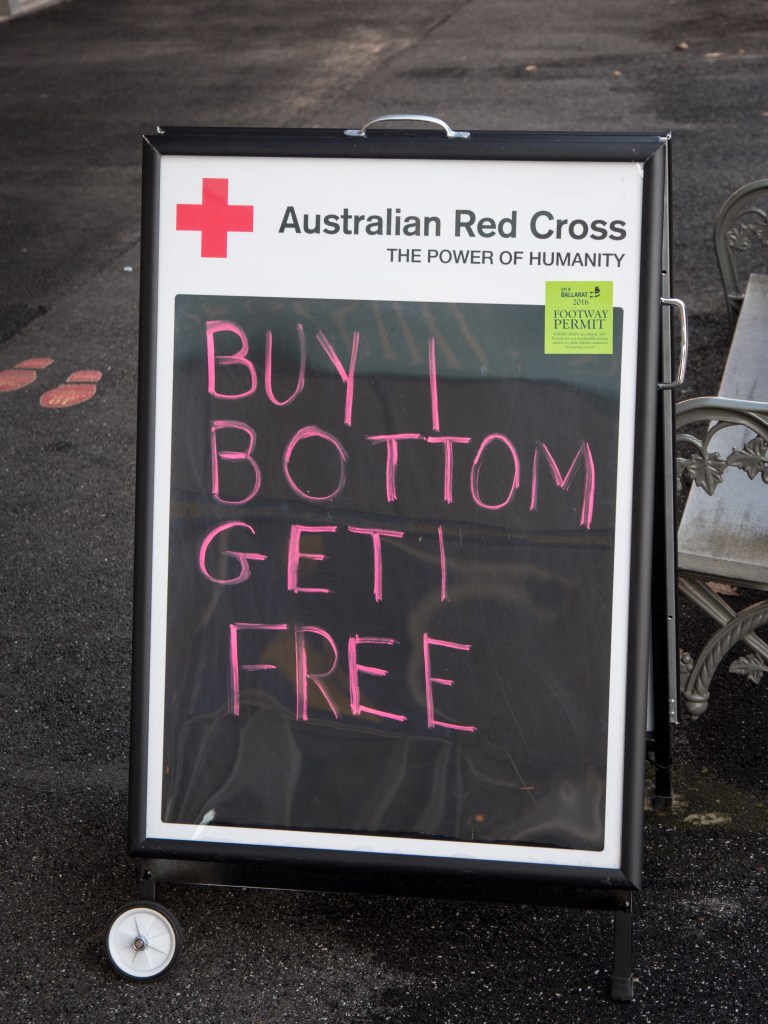
I came across this sign in the main street of Ballarat the other day.
Things must have been difficult for the priests here since the Royal Commission. It’s good to see the Red Cross helping out …
and pray that there's intelligent life somewhere out in space
I came across this sign in the main street of Ballarat the other day.
Things must have been difficult for the priests here since the Royal Commission. It’s good to see the Red Cross helping out …
What do these bowlers get up to?
The Photographer’s Ephemeris revealed that a spot on the Yarra River near the Westgate Bridge would give me a great view of the sun coming up over good old Melbourne Town and this time, the ephemeris had much better control over the weather. Just before sunrise …

The glow intensified and I was rewarded for my efforts by this …
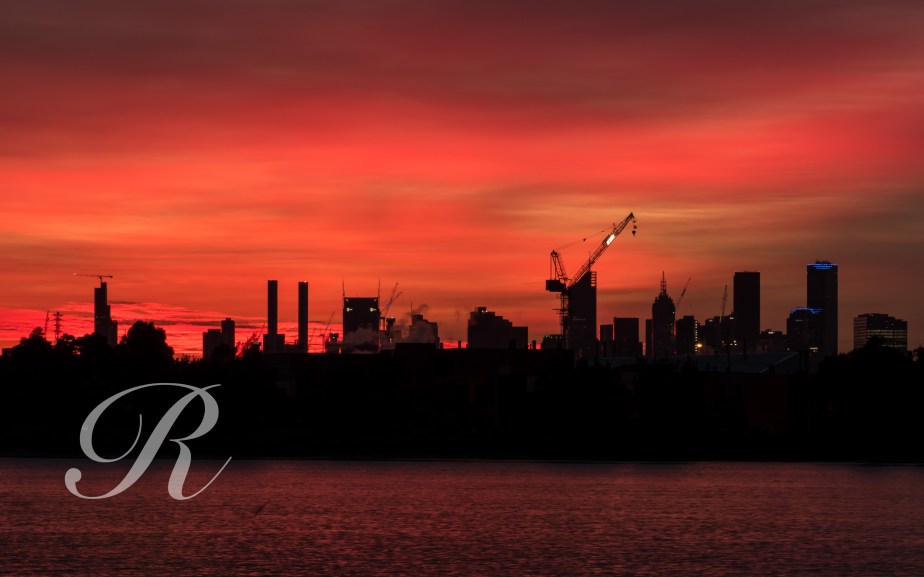
A short walk gives a better view of the docks …

and if you look very carefully you can see a number of hot air balloons (and you can always get a better view by clicking on the photos, the back arrow on your browser returns you to this page), I wasn’t the only one saying good morning Melbourne. I retraced my steps and caught them as they crossed the city skyline …

What an adventure they were embarked on …
Nine passengers have jumped from a hot air balloon hovering over Melbourne’s Port Phillip Bay onto a police boat below following fears the balloon, which was low on fuel, would ditch into the water.
While the drama unfolded over the bay, a second hot air balloon crashed into a suburban street in nearby Aspendale Gardens.
No one was hurt from either balloon. The one over the bay was sufficiently buoyant, once the passengers had jumped off, to fly on and land ashore.
I’m in the big smoke for a few days. The weather was fairly wild the other day so I headed to Frankston to see what the waves were doing.
They were trying to knock down the pier …

No one was game enough to fish off the end.
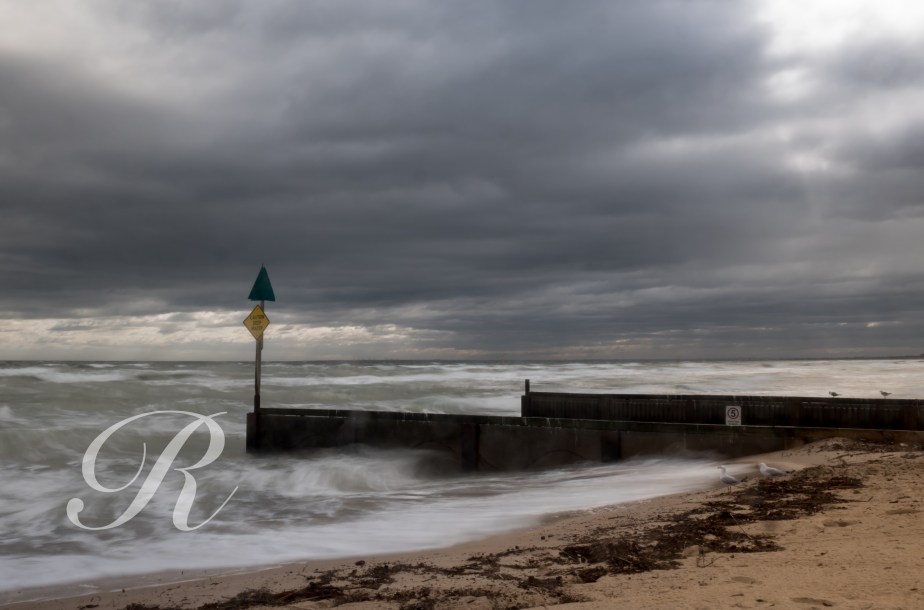
The bridge over Kananook Creek is something of a local landmark …
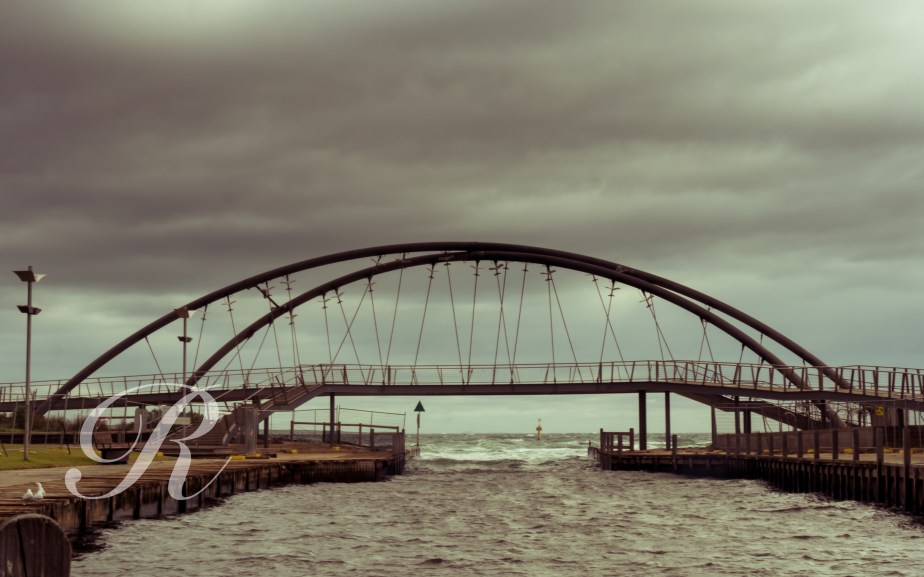
Which brings me finally to the point. The Photographer’s Ephemeris will show you where the sun and moon will rise and set as well as where they will be any time in between and as it happened that very day the sun would set right under the bridge …
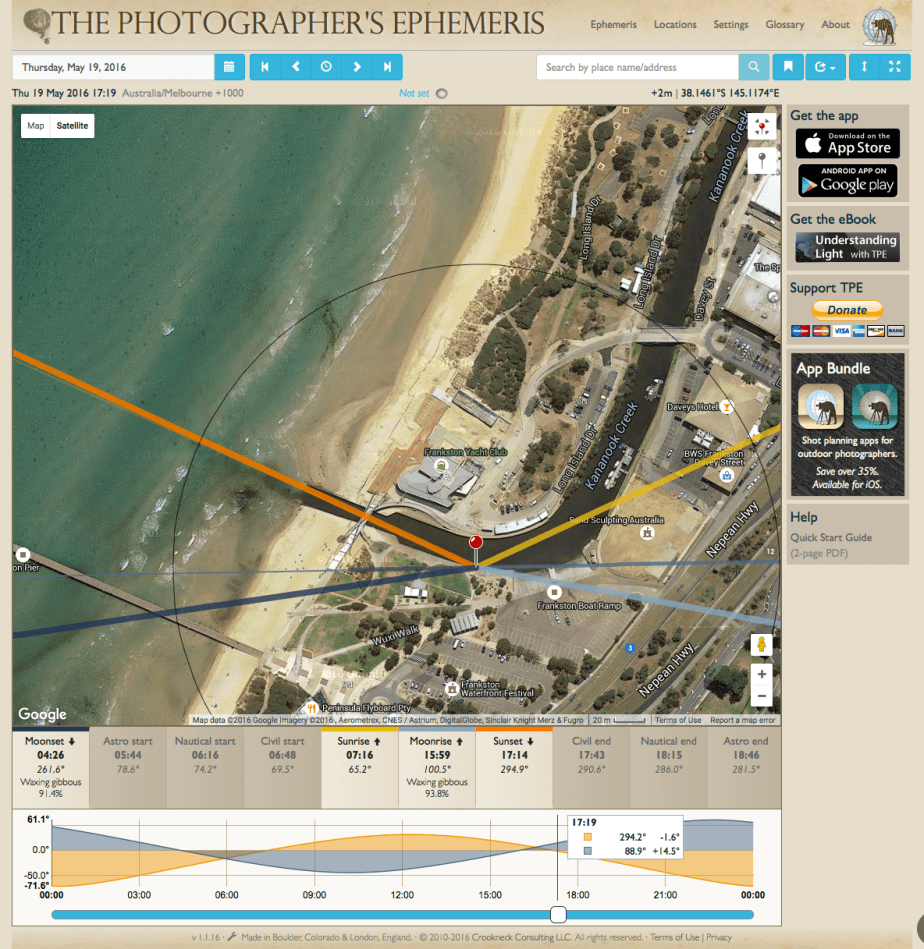
The pin marks the spot where the camera was situated for the photo above it. The orange line shows the direction of the sun at sunset which would be at 1714. That, I thought, would convert an ordinary photo into something more interesting.
I was on the spot at 1714. It was pouring with rain, the sun wasn’t even represented by a glow through the cloud.
So it’s been a little over the week since you received the good oil on bread. No doubt you have now produced seven or so perfect loaves. What next?
Well, we can up the efficiency a bit by making enough dough for three loaves at time, it will keep in the fridge for about two weeks. And we can get a bit more serious about weights and measures by using the kitchen scales.
Bakers use a system that gives proper proportions in the mix, the Baker’s percentage. Since the flour is the most important ingredient let the flour equal 100%, then for the no-knead method you will need about 74% of that amount of water and 1 to 2% of that amount of salt. For three loaves thus:-
The water should be lukewarm. After that easy mixing process the dough should sit in a warm room for about three hours then into the fridge it goes. The next day break off a third, flop, fold and bake it. Just the same method as Steve has taught us, the Dutch Oven should be thoroughly preheated, then 235°C for 20 minutes covered and a further 20 uncovered.
It’s also time to start experimenting with a few variations. You can substitute up to about 200g of that 1500g of baker’s flour with wholemeal, spelt or rye flour without needing to change the system. A few sesame seeds on top makes the result look even more pleasing.
My first spelt loaf …

… tasted as good as it looks.
This all becomes very addictive. There are a heap more variations and it may well be time to invest in The New Artisan Bread by Hertzberg and Francois published by Thomas Dunne Books, the no-knead system explained in depth with enough variations on the theme to keep you going for months.
Whatever you do don’t buy Tartine Bread by Robertson from Chronicle Books or The Bread Baker’s Apprentice by Reinhart, Ten Speed Press or watch anything on YouTube about sourdough. Those things are seriously addictive …
The next episode … how to make a sourdough starter.
Episode one.
When my dearly beloved and I moved to the bush we bought a bread making machine.
Every now and again you eat bread that has the perfect crust, the finest crumb and a taste to die for. Nothing like that ever came out of the machine. It made bread that was better than a supermarket loaf. That’s setting the bar not far above dog turd so means very little. It was functional and fairly easy. Then one day I came across Steve …
Inspired, I followed the instructions and made this …
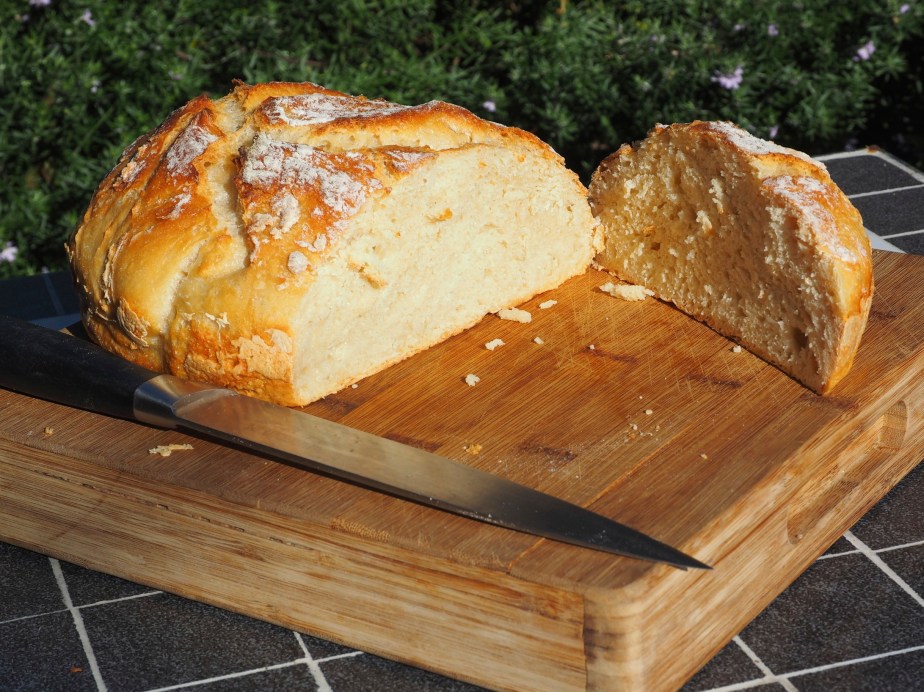
The key features of the process are the Dutch Oven and the wet mix plus long proof.
The wet mix is convenient, tends to give an open crumb but makes it impossible to shape the loaf except with a container. It works.
The Dutch Oven does for a single loaf what a traditional bakers oven did when loaded to the brim with loaves by helping to ensure the heat is evenly distributed and the moisture in the dough is available to help caremalise the crust. My first Dutch Oven was a cast iron camp oven and worked perfectly but after a few more adventures you may want to use a different method and it pays to buy one that can be used either way up …

If you bake in a bread pan instead of a Dutch Oven you need to get some steam in when the dough first goes in. If your oven is so equipped that can be a burst of steam, alternatively a shallow tray of water can go into the oven five minutes before the dough.
Twelve fluid ounces equals 355ml, 450°F = 230°C. I find that 235° gives a better result and I bake 20 minutes covered and 20 minutes uncovered.
The idea of beer bread took my fancy. Beer and bread are both the result of exposure of carbohydrates to yeast and have been linked since the beginning of history. I might also have started here instead …
Give it a try and let me know how you go.
Episode two will be about a week off.
Writing up the big trip to Japan was easy. I finished just as my monthly internet allotment ran out with two weeks to wait until I could get back into it. By that time I had lost the urge.
Why don’t I get unlimited access, you ask, anyone who can afford to go to Japan can surely buy a bit more broadband. The explanation is simple. I live in the bush. The block I live on has no mobile service to speak of, sometimes you can find a bar or two half way down the drive. A copper wire snakes across the countryside from the Rathscar Telephone Exchange which is housed in a small corrugated iron shed and not ADSL capable, nor is there a plan to ever make it so. The internet and I communicate by satellite. I am only permitted so much and this measly amount must be shared with my dearly beloved and her Facebook fan club.
Get used to it, Robert, you live in the Australian Bush. Japan is so exciting. There is a reason for this … you live in the Australian Bush. If you lived in Japan the Australian Bush would be exciting. So snap out of it, most of your followers don’t live in the Australian Bush so tell them what it’s like.
Well, it’s nice, I like it.

This was the view from my front gate yesterday. If you click on it you will get a better look, the back arrow on your browser brings you back here. I took it because of the cloud. We don’t see a lot of cloud. We had 11mm of rain overnight. Winter crops have just gone in, people had put it off as long as they could because of the long dry summer. That 11mm will decrease the suicide rate around here considerably.
The shops are 15km away. A pizza is a 30km round trip. I bake my own bread and make my own pizza bases. The place is alive with birds. There were kangaroos in my back yard this morning.
Do I sound excited? Well, I’m trying. Let me tell you all about baking bread.
I suspect this is a Black-headed Gull in non-breeding plumage and I think the footage may be fake …

Filched from Visual Consumer, which gives me hours of good fun.
Sunny Victoria, Australia.
Quite a change from Hokkaido but home in time to head to Terrick Terrick National Park to lend a helping hand in some fauna monitoring.
The Terricks are in the northwest of Victoria, 225 km from Melbourne, 60 km north of Bendigo. Some granite outcrops had got in the way of agricultural development so some forest had survived. This was the core of a state park and it preserves some very nice, revegetating Calitris woodland. North of that there is some marginal grazing country that had been lightly stocked and never cropped. It is the principle refuge of Victoria’s remaining Plains Wanderers, cute little birds whose closest relatives are the seed snipes of South America. Some of this country has been added to the park with a view to managing it for the benefit of our cute but endangered little birds. And somewhere along the journey the enlarged park became a National Park.
The management plan for the grassland seemed an excellent one, I am sure the Plains Wanderers would have been thrilled with it. Sadly Parks Victoria have done a woeful job of sticking to it. Still, the Wanderers are hanging on, just.
Finding them is a night-time task. They are not nocturnal but their eyes show up well in a spotlight and they tend to run rather than fly, they can be caught with a hand net, banded and released. Volunteering has its rewards …

And on a warm night the grassland can turn up other delights …

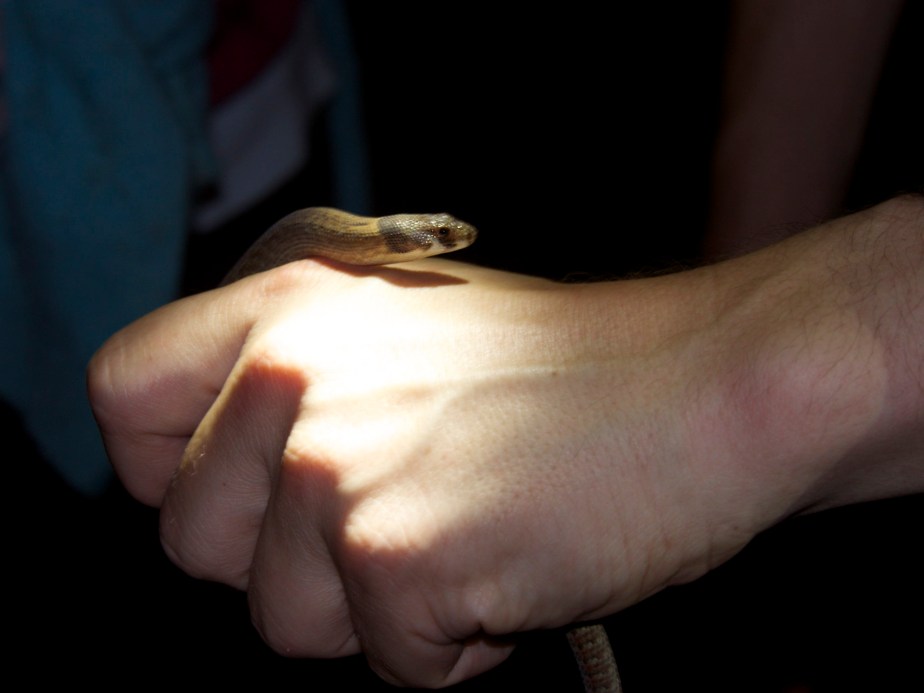
And whilst some are a handful of cute don’t try it with this one, it might result in being very unwell …

and most people would prefer not to handle this one either …
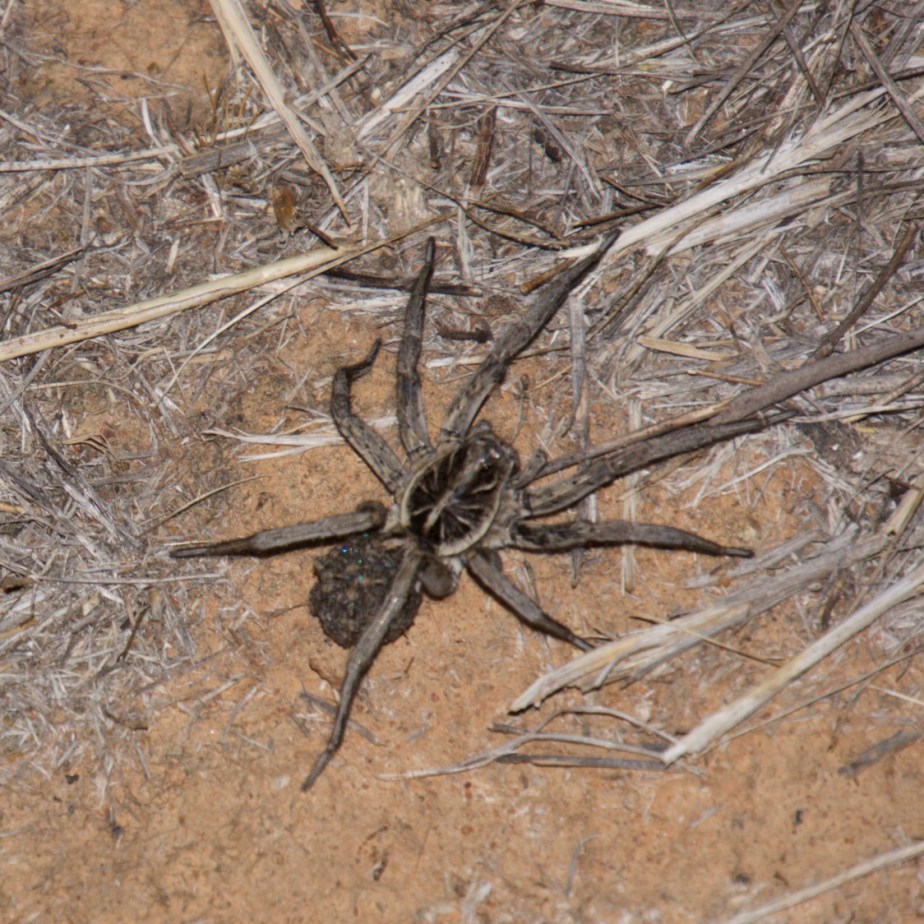
but they are cute in their own way, the little blue dots are the eye reflections of some of its babies that are riding on its back.
Back to the big city. In time to enjoy a splendid farewell dinner.
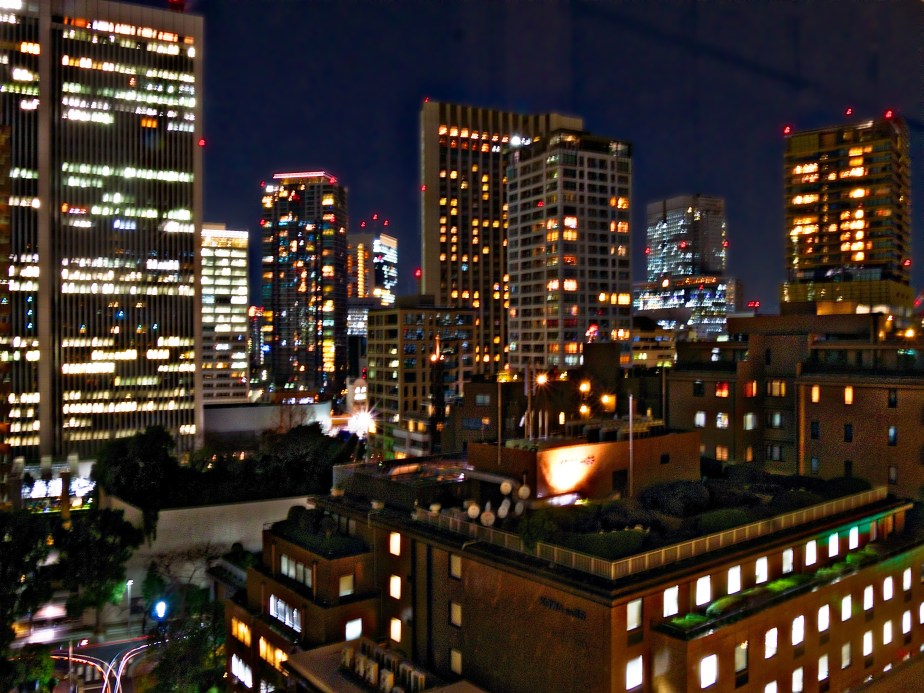
The next day there was time to stroll around central Tokyo …

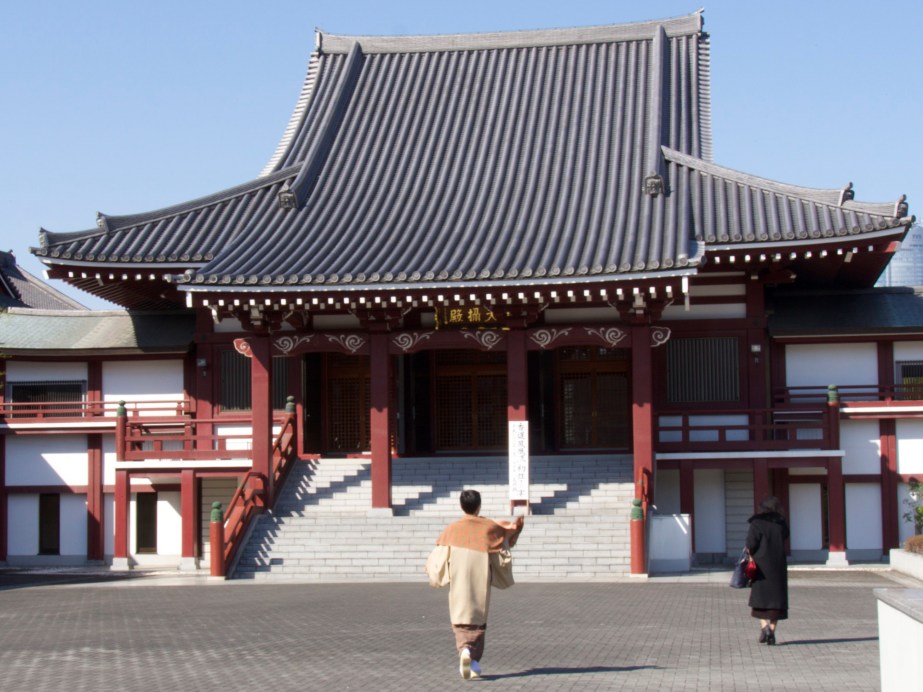

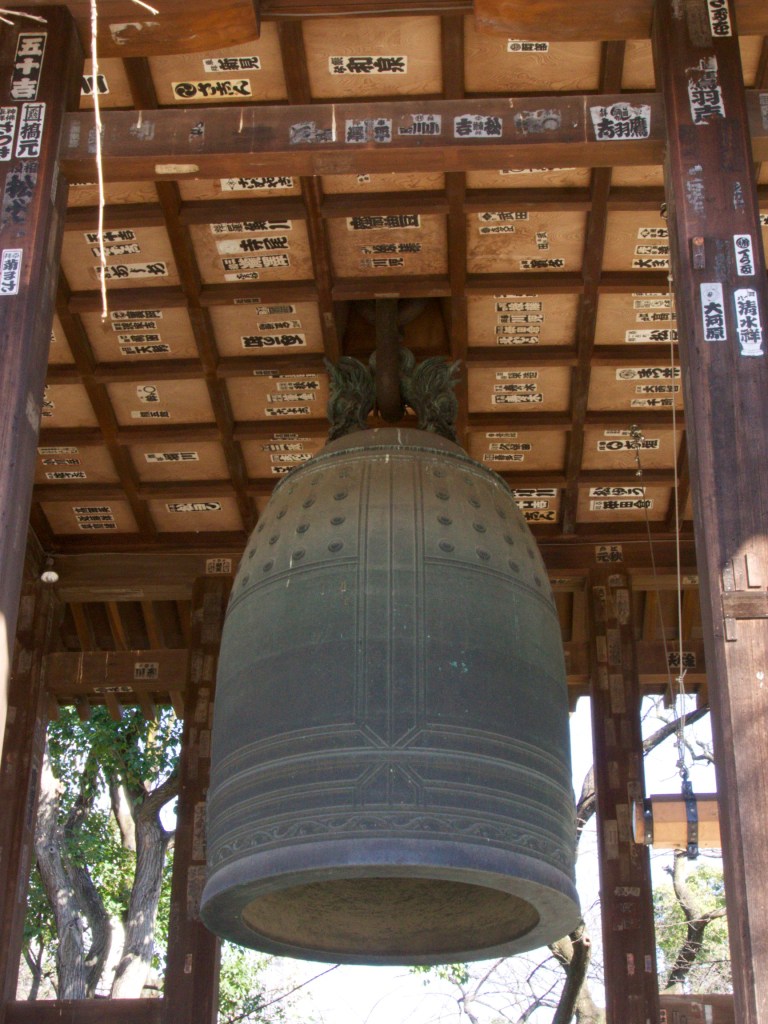
Then Qantas time and home to Oz.
 bobmcgee