Gold and Water …

Our most northerly point on the journey through Western Australia was at Wyndham, a little port on Australia’s challenging north coast. It rose briefly to prominence as the entry and exit point for WA’s first gold rush at Halls Creek.

A string of other places on our route have also been gold towns, Marble Bar, Meekathara, Wiluna, Leinster, Leonora, Coolgardie, Southern Cross and of course the big one – Kalgoorlie. Rushes and even towns have come and gone but gold is still a very important money spinner for WA. In 2015-16 it was the third most valuable export behind iron ore and petroleum.

As Kalgoorlie and Coolgardie rose to prominence in the 1890’s insecurity of water supply became a significant issue. The Irish born Engineer-in-Chief, Charles Yelverton O’Connor came up with the solution – build a pipeline from Perth to Kalgoorlie. It would be more than 500km long, involve lifting water 390 metres over the Darling Escarpment and the cost would equal WA’s annual budget. Debate was fierce, the project was condemned as madness by many but the premier Sir John Forrest threw his weight behind it and work commenced in 1898. Water flowed out the other end in Kalgoorlie on January 24 1903.

Sadly, Mr O’Connor never saw the successful outcome of his great project. He committed suicide in March 1902.

The pipeline runs through the wheat belt and is still delivering water, 40% is used in Kalgoorlie the remainder is used along the way.

A busy railway follows much the same route. In the days of steam water was essential to drive the engines and they were very thirsty beasts. After Gayle’s encounter with the skimpy barmaid the night was spent at Karralee Rocks where an excellent example of water harvesting, although in urgent need of some conservation, is still just functioning.

Rain falling on a large granite rock is directed into a small dam by carefully contoured walls running around the perimeter. The dam overflows into an aqueduct that conveys the water into a large holding dam. From there it was pumped to the railway. We had 15mm of rain overnight and we were able to watch the process in action the following morning.

Kalgoorlie, Here We Come …

Farewell to Broome. Until next time.

We’d spent longer than we’d planned because of vehicle problems but we were still sad to leave. In any case it was the ideal place to wait for repairs. What if it should be Merredin or some place like that.

We turned right at the Roebuck Roadhouse and headed south. Our destination for the first night would be the De Grey River. It is the only self respecting river in a very long way so it was the obvious over-night spot for a lot of folks. There were more than enough stars to share …
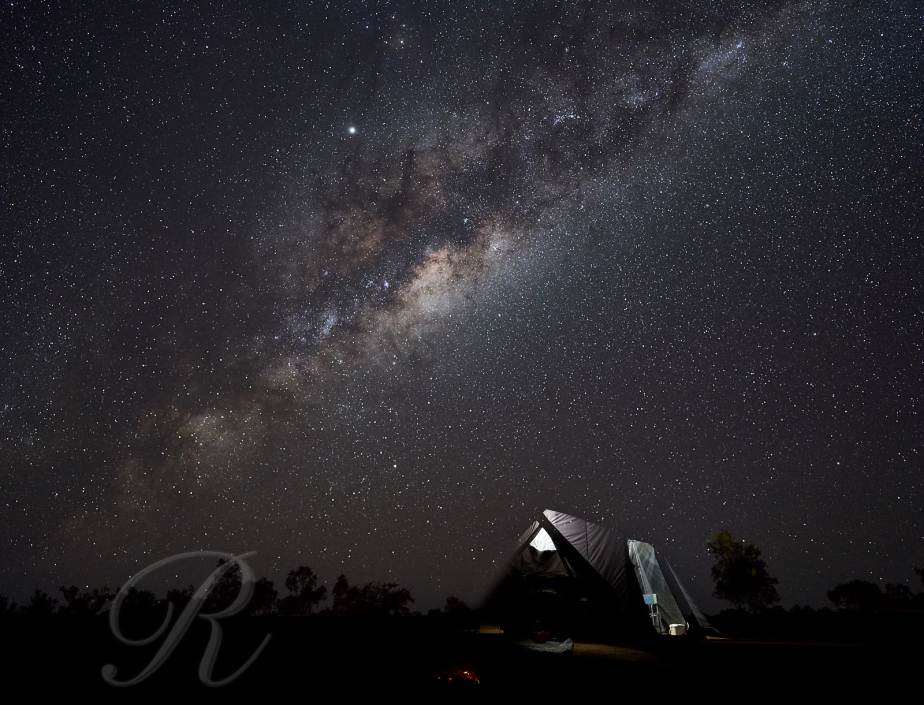
Sadly access to the river bank is not allowed presently in an effort to stop the spread of Noogoora Burr.

… a native of the south of North America, Mexico and the Caribbean. It aliawas first noticed in Australia on Noogoora Station, Queensland in the 1870s, where it was probably introduced as a contaminant of cotton seeds. It has since spread over much of Queensland and New South Wales. Other infestations occur in Victoria, South Australia, the Northern Territory and certain sections of the Kimberley in WA. The total infested area in Australia exceeds two million hectares.

We turned off the Great Northern Highway and the bitumen so that we could take in Marble Bar, a small mining town that has the unenviable reputation (not undisputed) of being the hottest town in Australia. It wasn’t quite as we had expected. They had gone to a lot of trouble to water the grass verges and a small park softening the impact of unrelenting aridity on the soul. And the Iron Clad Hotel had run out of stubby holders so no souvenir!

The scenery between there and Nullagine is truly beautiful. It’s well worth taking this back road, the landscape more than compensates for missing Port Hedland. Actually a week in jail would compensate for missing Port Hedland.

The next campsite was just after the Roy Hill mine. This time it was very nearly deserted. The early morning light was delicious …

We rejoined the bitumen and called in briefly at Newman. This is quite a large place with a nice modern shopping centre. A caravan park that we passed seemed to specialise in accommodation for single men presumably fly in fly out workers at the various mines.

Not far south of Newman you cross the Tropic of Capricorn.

At Wiluna the roadside art was a cut above the average. A sculpture celebrates a story of true love …

The Mandidjara were nomadic people living in the Gibson desert but had moved to settlements like Willuna. Warri and Yatunga met in the 1930’s and fell in love. They were forbidden to marry under tribal law because they were not of compatible “skin groups”. To do so would bring severe punishment perhaps even death. They ran off together and lived traditional lives in the desert for the next four decades. They had a daughter who died in infancy and two sons who survived them.

In 1977 there was a severe drought, the waterholes were drying up. The tribal elders had long since forgiven the couple for their crime and were concerned for their safety. They initiated a search for them. They were found alive although near starvation and brought to town. Where they lived until their deaths a few years later. They died within weeks of each other.

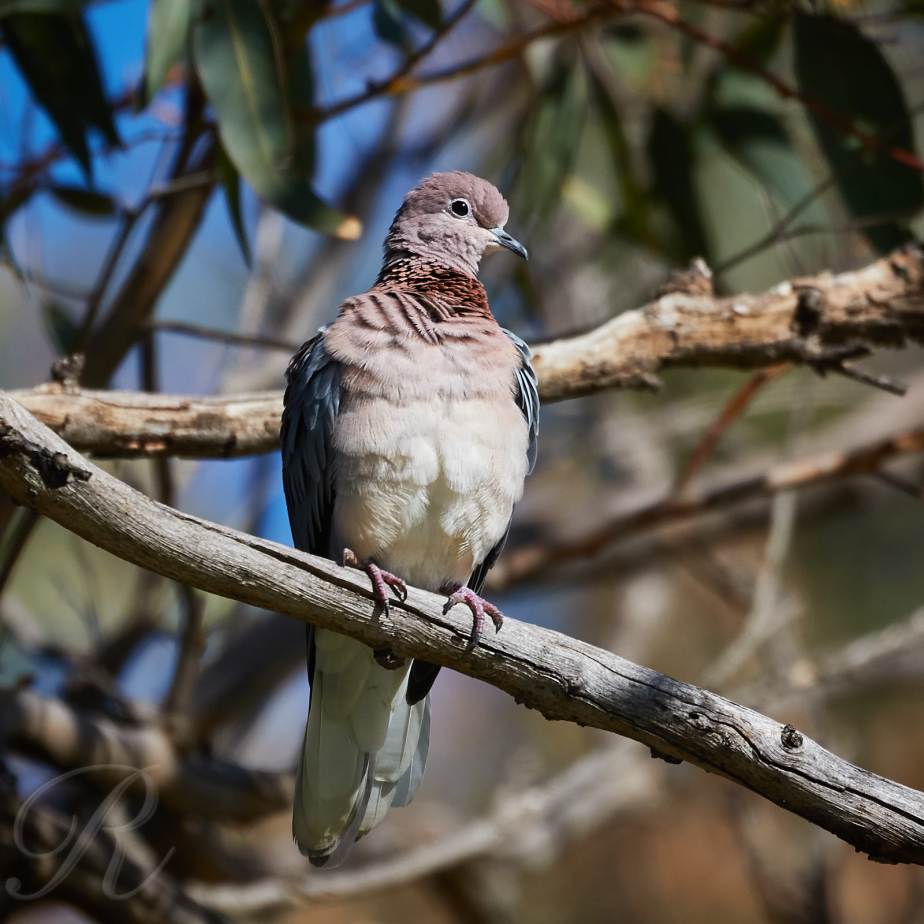
Large flocks of Cockatiels were seen along the way, impressive but mostly uncooperative. This flock permitted a tolerable photo.

Bilyuin Pool was our campsite that evening and again it was the morning light that demanded the photographers attention.
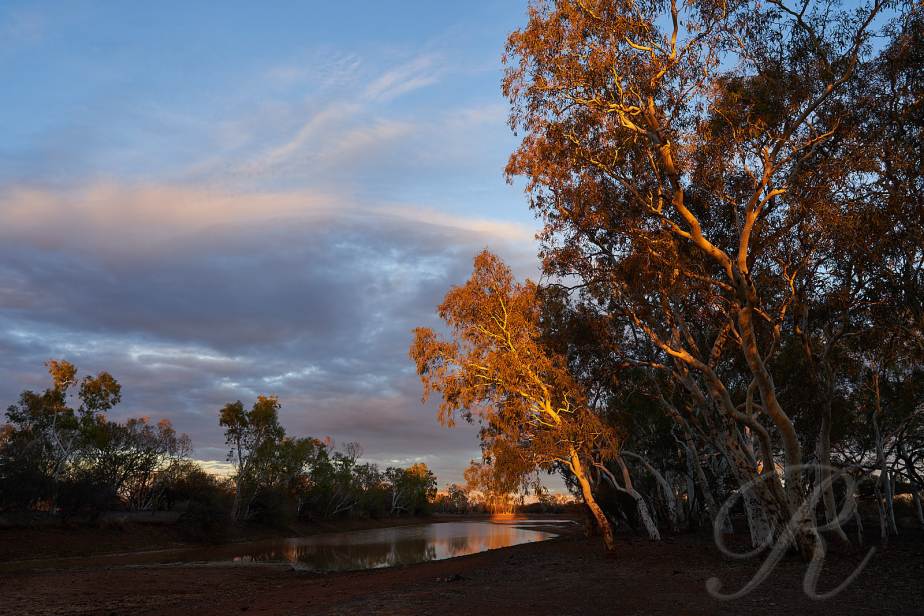
Our final night on this leg of the journey was spent at Malcolm Dam near Leonora. From there it was a morning’s drive to Kalgoorlie.

I knew from the media that Kal is a small rough town with a pub on every corner and is surrounded by desert. I was completely wrong about everything except the pubs. It’s situated in beautiful mallee woodland. It has a population approaching 30,000 people. We had lunch in the arboretum beside a nice pond. Then cruised down the main street.

Having been denied a stubby holder souvenir in Marble Bar I was keen to buy one here. Parking with the trailer was impossible so I dropped Gayle off outside the Exchange Hotel and drove around the block. In she went.

She was ill-prepared for the sight that greeted her. Behind the bar was a beautiful and very fit young lady, about six feet four tall and wearing a G-string and fishnet stockings. Nothing else (perhaps shoes and a wrist watch but Gayle was distracted). She asked if she could help but Gayle just gulped. She had by this time forgotten what she had gone in for and after another polite inquiry and another gulp she fled.


Broome …

My first visit to Broome was as a participant in an Australian Wader Studies Group expedition. With a bunch of other volunteers we caught, measured, banded and released shorebirds over a period of about six weeks. I made good friends on that trip and some of them decided to make Broome their home.

The power steering failure in the car was due to a cracked transmission fluid cooler. It was beyond repair. A replacement would have to come from Sydney via Perth and would take a week.

This was a good time to have good friends in town, especially since the Broome caravan parks do not take dogs during the tourist season.

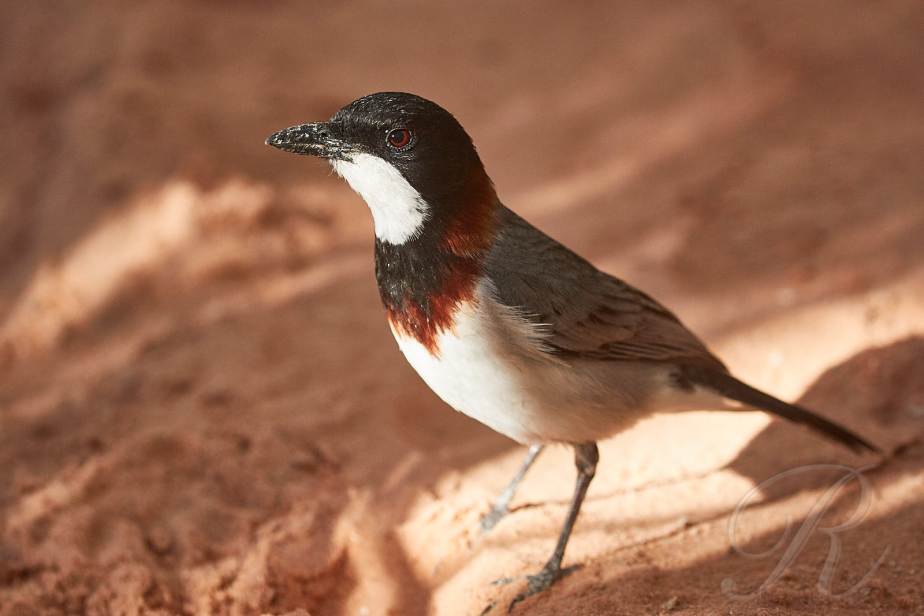
I am unsure of the collective noun for ornithologists but I favour a clutch over a flock. So a clutch of ornithologists were quick to chide me for my ID of Grey Butcherbird in the Kimberley, it was split years ago and is now the Silver-backed Butcherbird confirming the description by John Gould in 1836 as Cracticus argenteus. My apologies, here it is again this time correctly labelled …

Silver-backed Butcherbird

Broome is one of my favorite places. Let me give you a taste in a few photos.

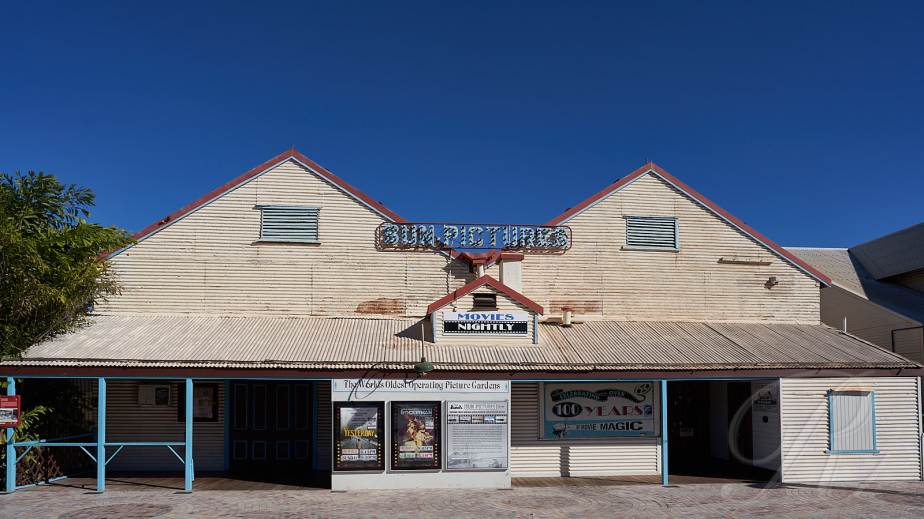
Sun Pictures is the world’s oldest outdoor movie garden. It was built in 1903 as an Asian emporium owned by the Yamasaki family, part of it was used for Noh theatre. Tod Hunter, a pearler, bought it in 1913 and converted it to a cinema holding 500 patrons. It opened in 1916 with a racing drama Kissing Cup. The first talkie was Monte Carlo in 1933.

Until 1974 when a levee bank was built Carnarvon Street and the theatre was flooded at very high tides. It was joked that you could fish as you watched the movie.

It’s still going strong.

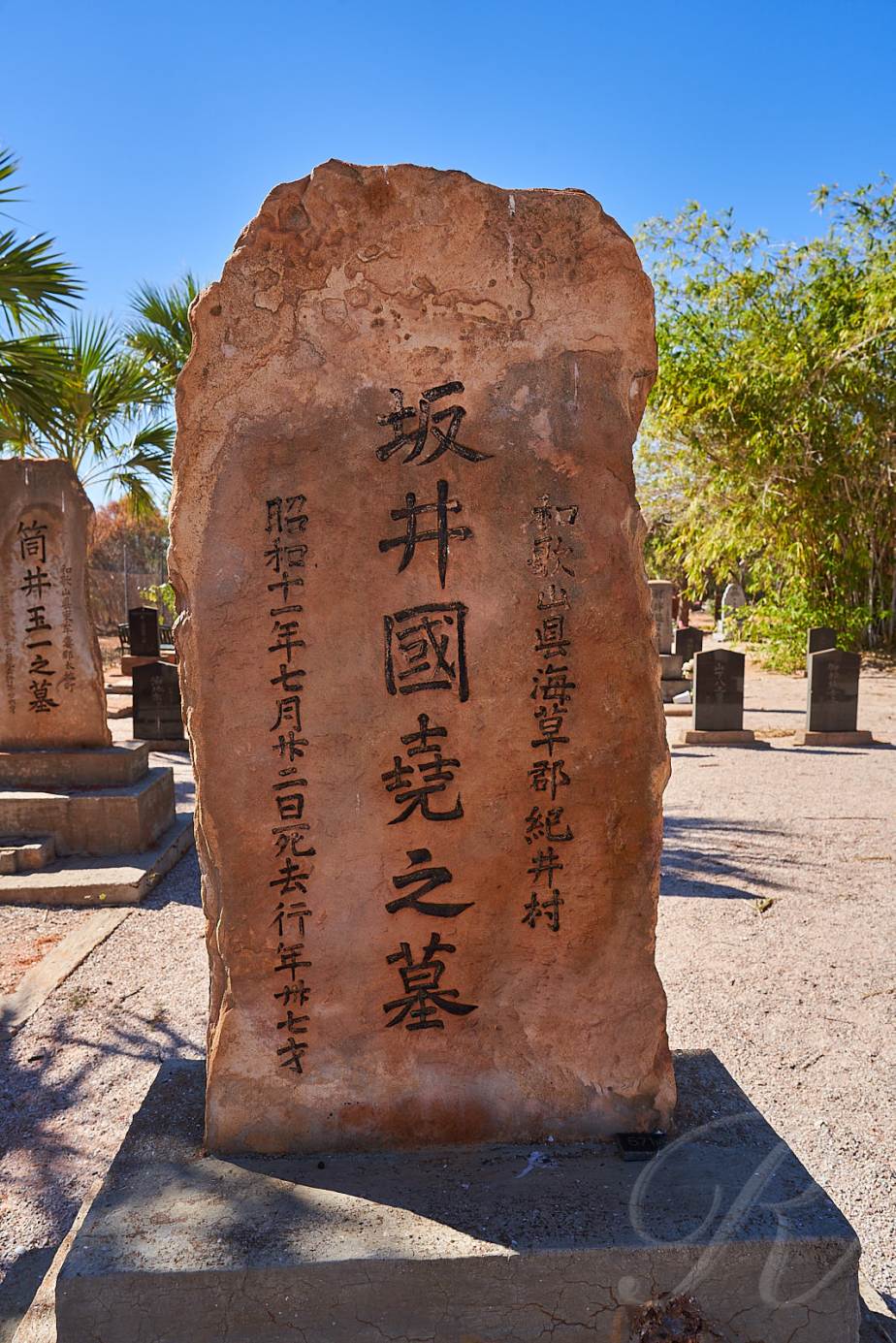
The Japanese played a major role in the pearling industry. The Japanese cemetery is one of the tourist stops.

The highlights for me are the natural areas, Roebuck Bay, the mangroves, plains and lakes.

Black-necked Stork
White-breasted Whistler

And on moonless nights there are plenty of stars …

The car was fixed very efficiently by Minshull Mechanical Repairs in Guy Street otherwise known as the 4X4 MegaStore (the Toyota Dealership being too busy to book it in for at least two weeks.)

It was time to thank Kerry and Chris for their very generous hospitality and hit the road.

Going straight …

AKA the Kimberley part 3.

After saying good morning to the Kimberley form of the Grey Butcherbird, an isolated subspecies Cracticus torquatus latens, we headed for the Mt Barnet Roadhouse.

The previous day we had set up the satellite phone and taken advice from our home mechanic regarding the steering. It was suggested that we get the car towed. That’s a 1200km round trip tow. What about the trailer? Or that we pour oil into the empty reservoir and try our luck. The appropriate oil is ATF if that wasn’t available try anything light. I was considering cooking oil as a field expedient, it would have made an interesting story for the blog but Mt Barnet was well stocked with all sorts of oils including ATF. We filled the reservoir and hit the road.
At intervals we refilled the reservoir. Fortunately we had bought quite a lot of ATF because the system had a bloody great hole in it somewhere inaccessible. Driving in a straight line was easy, anything else was not.

Some of the Gibb River Road’s best scenery is in that stretch.

It wasn’t our intention to stay in Derby but we broke the drive to Broome into two stages. It gave me the chance to photograph a sculpture that is carefully arranged to be at its best against the setting sun.

Next morning we did the sights of Derby and headed for Broome.

Derby port


The Kimberley part 2 …

Dragging ourselves away from Parrys Creek it was time for the Gibb River Road. It’s sealed as far as the entrance to El Questro, the famous dude ranch. I understand that the drive in from there comes as a bit of a shock to the dude caravaners but I haven’t tried it. In any case the Gibb will rattle their crockery if they are driving the full length of it.

On this occasion our destination was Mount Barnet and Manning Gorge, about 390km for the day. Once we reached Mt Barnet turning right off the main road the steering felt rather heavy. It’s a popular camp site and dog friendly. We tucked ourselves way down the back where we could enjoy the illusion of bush camping.

We set up camp, had a swim in the waterhole, drank a beer and plucked up the courage to look under the hood. Searching amongst the tightly packed mysteries we located the reservoir for the power steering fluid. It was empty. Bugger.

Early next morning I abandoned Gayle and the dog and hiked the waterfall trail. First you pull yourself across the creek in a tin boat by a rope and pulley arrangement. Then it’s about a 40 minute walk, some of it uphill and rocky underfoot. Your reward is an amphitheatre into which pours a cascade that thrills the onlooker. Well it would when it’s more than the current trickle. It’s pretty and a nice place for a swim. Most visitors content themselves with that but for the intrepid a scramble down stream leads to a truly beautiful gorge.

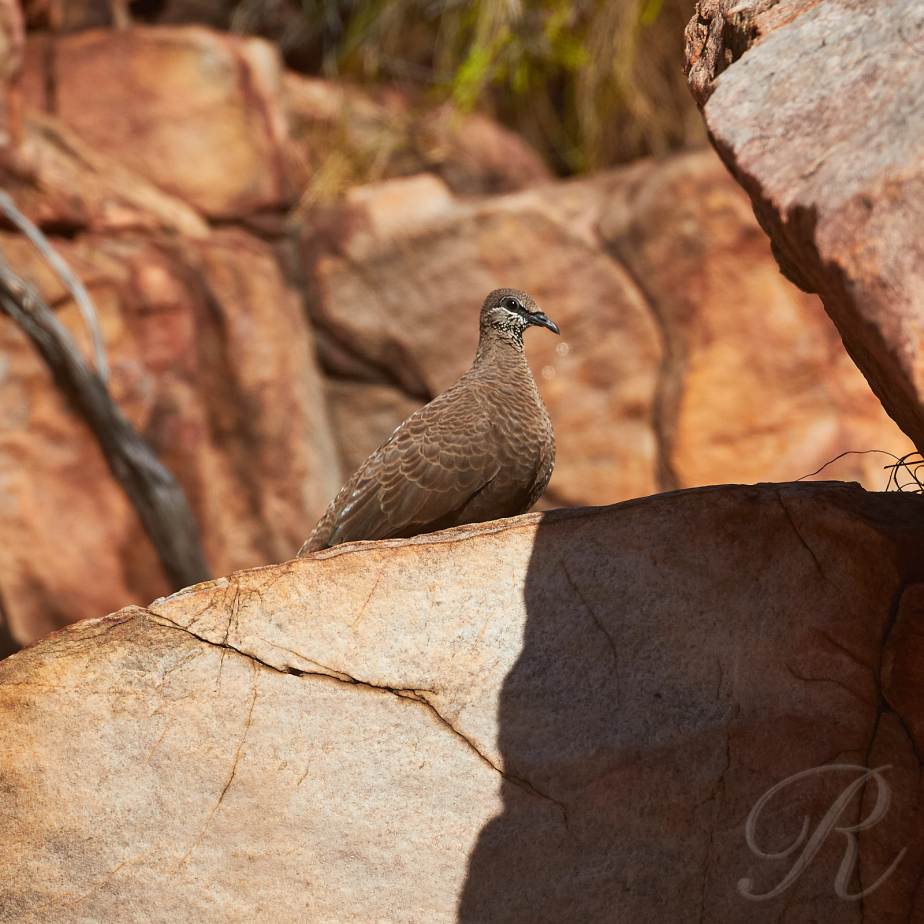
It’s a spot where you may see one of the Kimberley’s special birds, the White-quilled Rock Pigeon. Look for them in the shadows and ovehangs.

Petrophassa albipennis

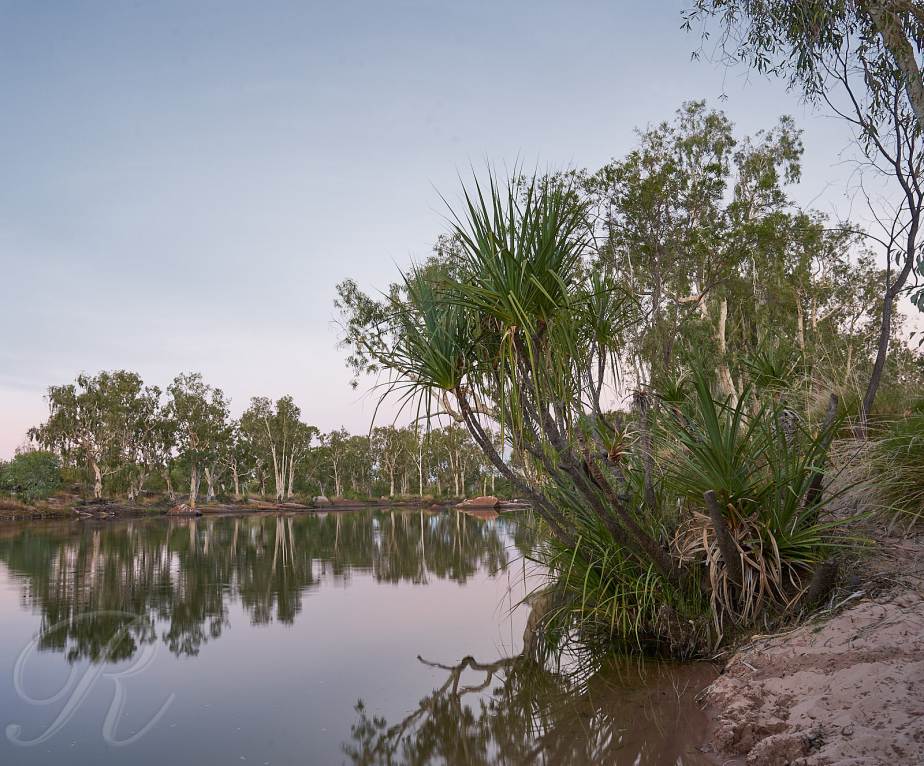
The waterhole back at the camp is also very charming.

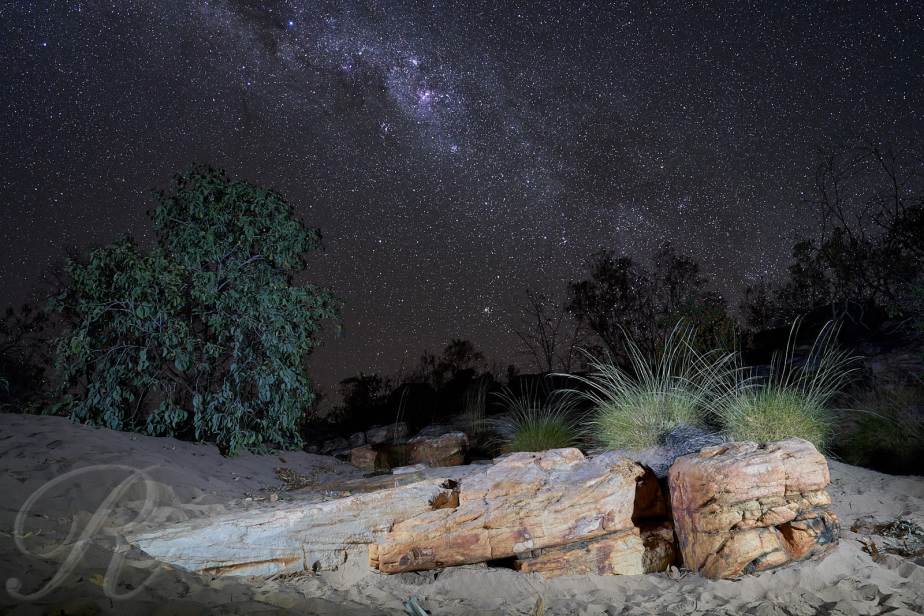
The moon is a few days past full now so it rises more than an hour after sunset. This means a good look at the milky way is now available.


The Kimberley part 1 …

We arrived in Halls Creek, Heart of the Kimberley, from the Tanami and headed for Broome, the administrative centre via Wyndham and the Gibb River Road.

I could spend six months here without getting bored and without seeing it all. On this trip we would dash around in under a week.

The Kimberley is huge … 423,517 square kilometres (163,521 sq mi), and has a permanent population in the order of 35,000 (many more in the winter). That’s just 0.8 of a person per square kilometre. Two thirds of those live in the towns of Broome, Derby and Kununurra.

Our first stop was just outside Wyndham at Parrys Creek Farm. This is situated on the margin of a large conservation area. The camp site is by a lagoon and is dog tolerant. We spent three nights here giving me the chance to visit the Marlgu Billabong at dawn and dusk (no dogs here) and for the three of us to visit Wyndham and Kununurra during the day.

The billabong is in the Ord River flood plain and rivals any tropical Australian wetland that I’ve visited. I won’t bore you with lists, let’s just say I cleaned up and the bird numbers were impressive. The site has a short boardwalk to a well situated hide.

Marlgu Billabong from Telegraph Hill
Magpie Geese at dawn
Pied Heron
Australasian Grebe

Poor old Wyndham has a somewhat sad aspect to it. The website Aussie Towns puts it this way …

Wyndham, Western Australia’s most northerly town, sits on the edge of the Cambridge Gulf surrounded by uninviting salt lakes, desert and mudflats which stretch to the horizon.

The town was founded in 1885. It got off to a good start as the gateway port to the Halls Creek gold rush. From 1919 to 1985 there was a meat works in operation. The port still functions serving mining operations.

Wyndham Port from Five Rivers Lookout

There is a Big Crocodile on the outskirt of town (which is adjacent to the opposite outskirt and doubles as the town centre). You could probably find some real ones if you went wading.

The population is less than 700 people. It has a hospital and an excellent cafe called The Croc Cafe.

Wyndham is on a side road that leads no where else and is bypassed by most travelers. Kununurra is right on the highway and on a scenically splendid lake. It  is a stark contrast. There is good shopping and the caravans are inserted with surgical precision at impressive densities in the caravan parks. Give me the quiet of Parry Creek Farm.

Coming across the arid interior of Australia after a brutal summer and a poor wet season the birding was very quiet. Fortunately I’m past peak obsession. At Parrys Creek we had a good dawn chorus at last, you’ve got to love the Blue-winged Kookaburra, poor thing can’t raise a laugh.Add to it a polyphony of White-gaped Honeyeaters and screeching Little Corellas … you won’t be sleeping in.

There is opportunity to get close up to some beauties …

Yellow Oriole
Rainbow Bee-eater

And it’s easy to find a subject at sunrise …


The Tanami …

The adventurous way from Alice to the Kimberly is via the Tanami.

The route runs through Aboriginal controlled land and a permit is required to visit the various settlements. Fuel is available at Tilmouth Well half way to Yuendemu and in emergency might be sought at one of the settlements but the traveler is encouraged to stick to the road and make it to Halls Creek, a stretch of about 900km. The road is sealed to Yuendemu and can be rough beyond that.

There are some operating gold mines along the way and road trains ply the route. It’s arid, remote and a test of the vehicle and to top it off the only beer you can buy at the takeaway in Halls Creek is Cascade Light.

We took the journey at a very leisurely pace over four days and three nights. It could be done in a calm two days or an arduous and frenetic single day.

We refuelled and had lunch at Tilmouth and spent the first night at Renehans Bore.

We encountered a lone camel the following day in country that was fairly typical of the Tanami.

We got a puncture just as we stopped for lunch. Gayle who rarely hears anything I say heard the hissing. We had the wheel changed before it fully deflated. We carry an extra spare and a repair kit for remote journeys.

That night we camped among the termite mounds just on the Northern Territory side of the border.

From there on the country was dry savanna rather than desert. We spent the final night on the bank of Sturt Creek, WA, where wild horses and Galahs were enjoying some surface water, the first we’d seen for a while.

Shortly after Sturt Creek we passed Billiluna, the top end of the Canning Stock Route – must do that one day – and also Wolfe Creek, site of a meteor impact crater which we have visited in the past.

Then we were refueling in Halls Creek which bills itself as the Heart of the Kimberley. We got the tyre fixed and bought some light beer.

Ross River …

On our first visit to Alice Gayle and I flew, rented a car and stayed in town. On our first full day we drove out to have a look at the West MacDonell Range. The morning sun is behind you on the way out. The vista is magnificent and when the day is done the sun sets behind you as you drive home.

The next day we checked out the East MacDonells. The sun is in your eyes going and coming and the scenery seemed less impressive.

On subsequent visits we’ve camped in the West MacDonnells but there’s not much you can do out there if you take your dog along so this time we opted to stay at the Ross River Resort at the eastern end of the bitumen and were pleasantly surprised. Resort fortunately is an exaggeration, it’s more like bush camping with added amenities. And the scenery is splendid. This was the view from outside our tent …

Grey-crowned Babblers were frequent and noisy visitors to the campsite …

and not far away there was plenty of opportunity for the landscape photographer.

The Ross River Resort gets the McGee seal of approval and I hope to get back there to explore the East MacDonnells more thoroughly.


Alice …

This little flurry of updates is being posted from the waiting area of ARB in Alice Springs. The aerial is being replaced by a much larger and sexier one that will hopefully prove more durable. The next leg of the journey will be across the Tanami Desert. The road is used by road trains and the ability to communicate with them may keep us out of trouble. Channel 40 is the word.

Meanwhile tonight will be our second night at Ross River which is at the end of the bitumen running east from Alice. It’s a lovely spot to camp at. I will tell more and bring you some photos when I get the chance.

Oodnadatta Track …

The bitumen extends almost to Marree these days. It’s another spot where you choose your adventure – the Birdsville Track or the Oodnadatta Track. This time it’s the Oodnadatta Track.

This road is all about its history. This is the way that Mr Stuart charted his path north. Once he had found the route the Overland Telegraph (1872) soon followed and the the railway slowly crept north reaching Marree in 1884, Oodnadatta in 1891 and Alice Springs in 1929. If you were going to Alice between 1891 and 1929 you completed the journey by camel!

Darwin had to wait until 2004 for the train to arrive by which time the southern section had been rerouted along a more westerly path. So although the Ghan is still running the Oodnadatta Track runs alongside an abandoned railway passing little ghost towns along the way.

There’s a train standing in the station at Marree with nowhere to go. Not far from it is one of Tom Kruze’s trucks retired from sterling service on the Birdsville …

From Marree to Oodnadatta the country is dry. Much of it is gibber plain. Eucalypts are only found along the drainage lines, even the Mulga struggles out here.

At William Creek you can get a beer or even have a driving lesson. If you choose to come by plane you can park virtually at the pub door.

Because we’d chosen to bring the dog we couldn’t take a side trip to see Lake Eyre currently in flood.

Not to worry we’d seen it both wet and dry before. We spent two nights on the track. The first at Coward Springs partly for a plunge in the hot tub (luke warm really) but mainly for the birds which are attracted to the wetland formed by the bore.

Beyond Oodnadatta the country seems a little more prosperous. We saw a few Red Kangaroos and there were cattle grazing. The second night was passed on a creek bank not far short of Marla.

There had been a lot posted on the web regarding the state of the road. It was really pretty good. We probably averaged 70 to 80 kph without much discomfort. Some of the traffic going the other way were managing even higher speeds and one of them put a chip in our windscreen. Bugger.