I just know from an Australian cricket perspective, we hold our heads high and I’d be very disappointed if one of our team members did that … David Warner 2016
It is an enormous honour to represent your country. And that’s exactly what you do, you represent it. If you do well you enhance its reputation. If you cheat you diminish it.
I’m all for holding a trial before the execution. Steve Smith has pleaded guilty which makes that part of it quite easy. He has sought to share the blame as widely as possible but so far I think we only have his word on that, for what a cheat’s word is worth.
I was obviously nervous about it because with hundreds of cameras around that’s always the risk, isn’t it?
Said Bancroft, what a cretin, bright yellow tape – you’d have thought he would have been smart enough to conceal some carborundum in sticky tape on his fingers.
Leadership group? I doubt that we’ll see the minutes of the meeting. It matters little really, it’s more about the responsibility group. Smith as captain is the one who must ensure that sportsmanship prevails. He should be assisted by his vice captain … if he’s not too busy in a bout of fisticuffs. And the whole philosophy of the team is the business of the coach.
It’s time for the three of them to go. And I do mean go. None of them should ever have the honour of representing their country again.
I heard a standup comedian on the radio the other day. His shtick was essentially based on the notion that men are always flat out busy whilst women just get things done. I doubt his career is going to rocket along, as comedy it was quite unfunny and if it was a snivelling attempt to curry favour with women he’s forgotten that in the new snivellisation it’s at least a micro-aggression to suggest a gender difference.
But let me tell you, I have been flat out busy.
It was the vintage. Time to pick the grapes. The family gathers, the sun shines, the pretty girls ply the workers with their choice of chocolates or fruit, old uncle Joe plays his accordion, a glass of a previous vintage waits at the end of every row. Perfect bunches of fruit bursting with the elixir of life itself drop almost effortlessly into baskets that fill quickly without ever seeming to get heavier. Ah, the romance.
photo GHD
The reality may be a little different. The infinite number of people who will help you drink the wine haven’t turned up for work. You start the day early in the prolonged cold, wet, intimate embrace of dew laden foliage. You cradle a bunch in one hand cut the stalk (occasionally a finger) with secateurs wielded by the other hand, drop the fruit in your bucket and search for the next bunch. Your back is bent for most bunches, you’re on your knees for the low ones.
By 10 am it’s drying out and warming up. That’s when the European wasps arrive. Those bunches that you cradle may now be armed and dangerous. You carry your full buckets to the end of the row where band aids and empty buckets await, samples of previous vintages are nowhere in sight.
photo GHD
At the end of the day the fruit goes through the crusher-destemmer and into the vat. It’s funny how your windscreen wipers only pack up in the rain and your crusher-destemmer only refuses to work when you harvest. The day was extended by the time it took to take it apart, find that the drive chain was rusty, get that cleaned up, freed up and reassembled.
Then the grapes go in the hopper, most of the stems are ejected to one side, the grapes and their juice go through into the vat. A days picking goes through in a couple of minutes.
photo GHD
It was a productive year. It’s the second year that we’ve netted the ripening crop to keep the birds from eating it all. I was dubious but the lovely Gayle insisted and she has been proven right. She gets things done.
We have some white grapes too but my attempts at white wine have been disappointing so we just leave them for the birds. With the nets we can leave the grapes longer to develop a bit more sugar. By the time that they were ready to pick a vine without a net on was a vine without a grape on.
Yeast is added and fermentation begins. The liquid, now called must, ferments on the skins for a week. This will be red wine in due course and that’s how it gets its colour. The berries float on top and need to be pushed into the liquid four or five times a day, a process known as punching the cap.
Then it’s time to transfer the liquid to a variable capacity stainless steel vat and press the skins to get the last few litres.
photo GHD
Nature now takes its course. Time for a few days break at the seaside.
In this neck of the woods the leaves stay green, and for the moment the grass stays brown. Not for us the fall colors that give the American and English photographers fresh inspiration.
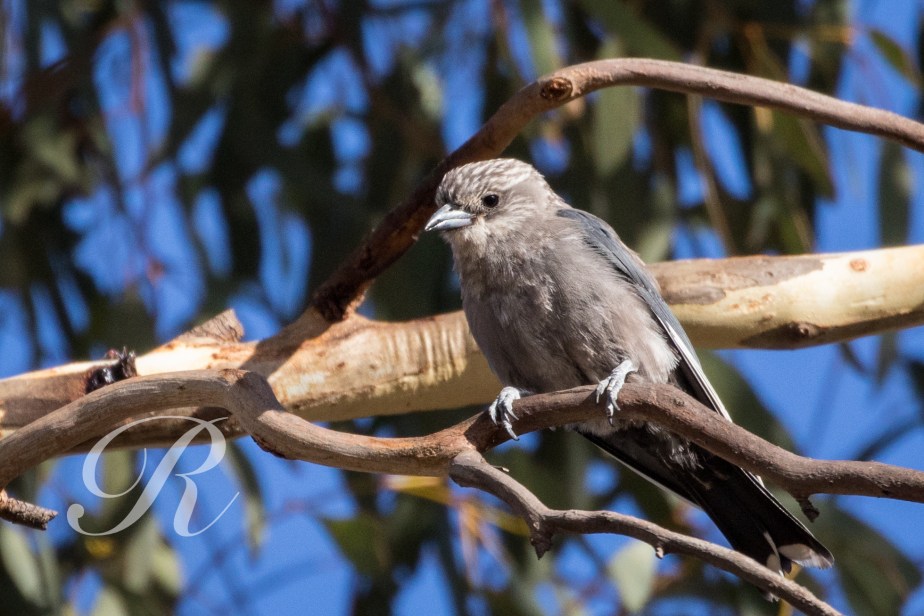
Walking in the bushland reserve just across the creek yesterday I saw dozens, perhaps hundreds of Dusky Woodswallows, many of them juveniles with their streaky heads. The reserve supports a couple of pairs that breed there most summers. The large numbers are the result of the previously dispersed population forming flocks and making their way north.
The Reedwarblers, Bushlarks and Sacred Kingfishers seem to have quietly departed already. Time to start looking for Swift Parrots and Flame Robins.
Dusky Woodswallow (juvenile)
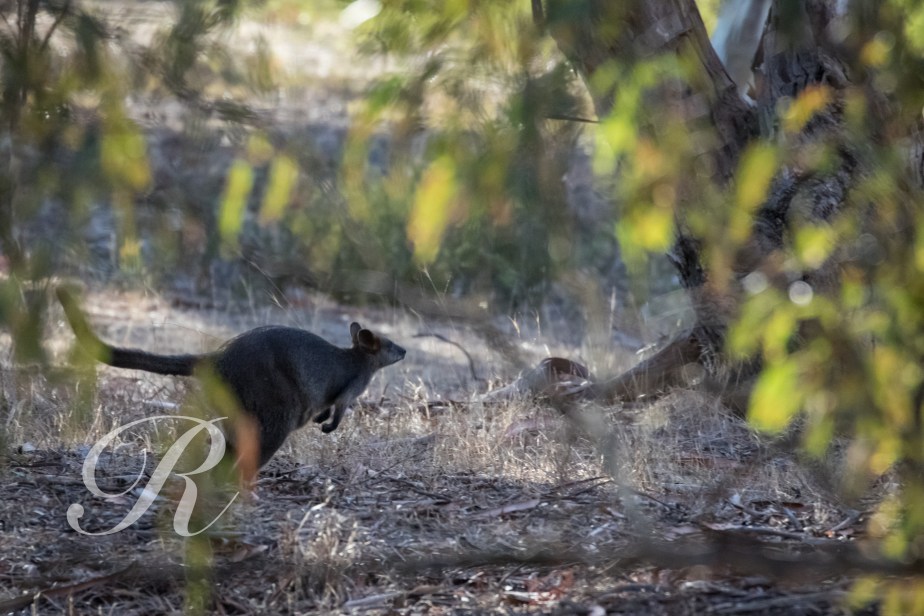
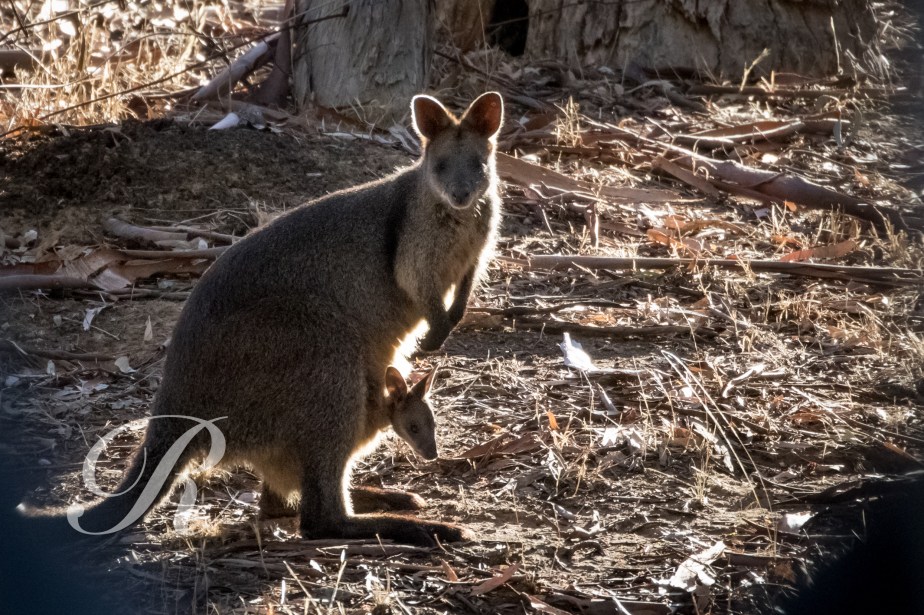
The Swamp Wallabies will be sticking around. At the moment they’re eating my grapes. I’m just about ready to pick what ever the birds and wallabies have left for me. Before the one above took off she gave me a moment of her time. Just long enough to grab this portrait of her and her joey against the early morning light.
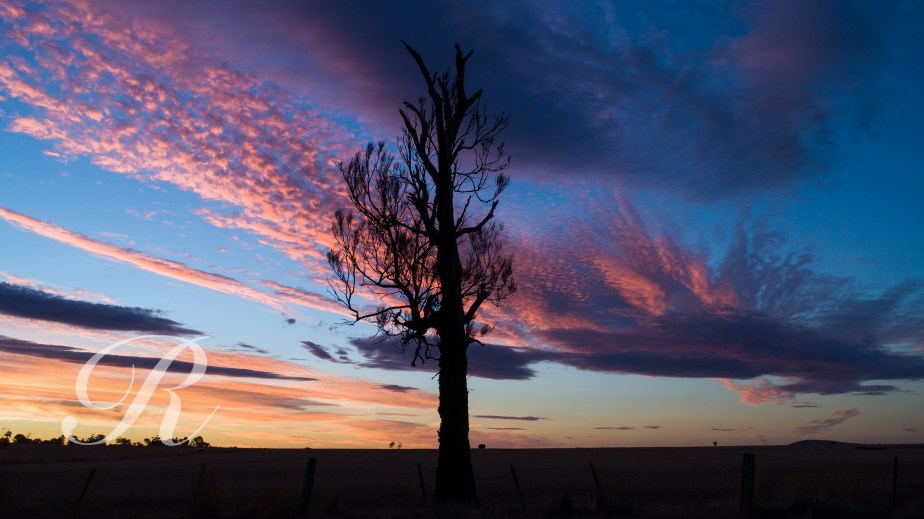
I’ve known this tree for about 30 years. It hasn’t changed a bit, half dead when I first saw it, half dead today.
Allocasuarina luehmannii has a broad distribution in the drier parts of southern and eastern Australia often on sandy soils. In Victoria the most fertile part of its range has largely been cleared for wheat growing. So there are far fewer than there used to be.
It is a hard wood. In fact, according to the not always reliable Wikipedia, it has the hardest wood in the world. Black Cockatoos are fond of it, they eat the seeds.
This particular tree sits nicely against the sky. I have photographed it often. This time at sunset.
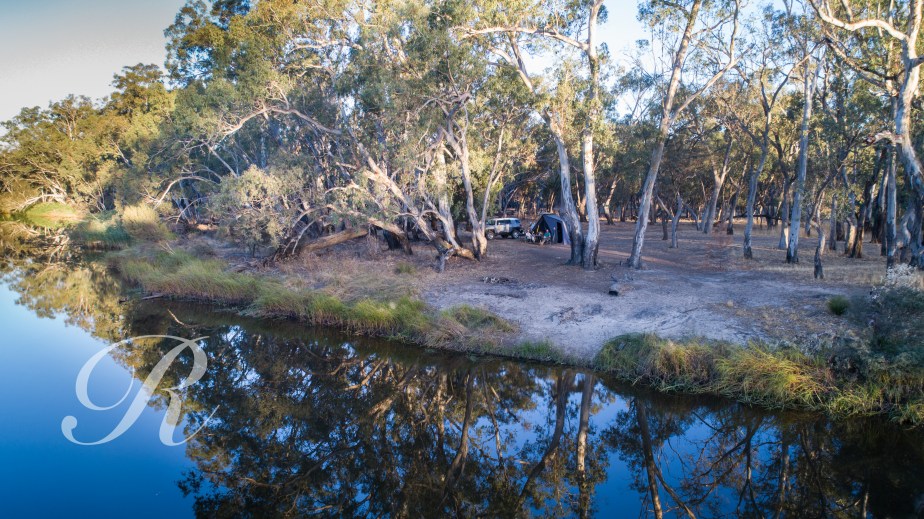
The Wimmera River rises on the inland slopes of the Pyranees Ranges near Ararat, western Victoria. It heads in the general direction of the Murray but it doesn’t make it that far. It flows through the towns of Horsham and Dimboola and usually discharges into Lake Hindmarsh. When times are particularly dry Lake Hindmarsh dries up. When times are particularly wet it may overflow and begin to fill a series of usually dry lakes on the fringes of the Big Desert. It is the longest land-locked river in Victoria.
Along the way the river forms the eastern boundary of the Little Desert National Park. It is one of my favourite places. Whether it should be called a desert is a moot point. It is certainly sandy and in places there are well formed dunes, the region is quite arid. On the other hand vegetation cover is pretty good for the most part. The further west you go the more convincing the argument for a desert becomes especially if you bog the wheels in deep sand on a hot summer’s day.
The river margins are quite different. Black soil covers the sand and some quite tall trees, River Red Gums mainly, attract the birds and other creatures. The trouble with national parks though is the prohibition of one of my dearest companions. Wail State Forest is on the eastern bank of the Wimmera River. You can camp on the bank and look into the park. Two hundred metres back from the water you can bog your wheels in deep sand, the same birds fly back and forth and you can take your dog.
I was there last night.
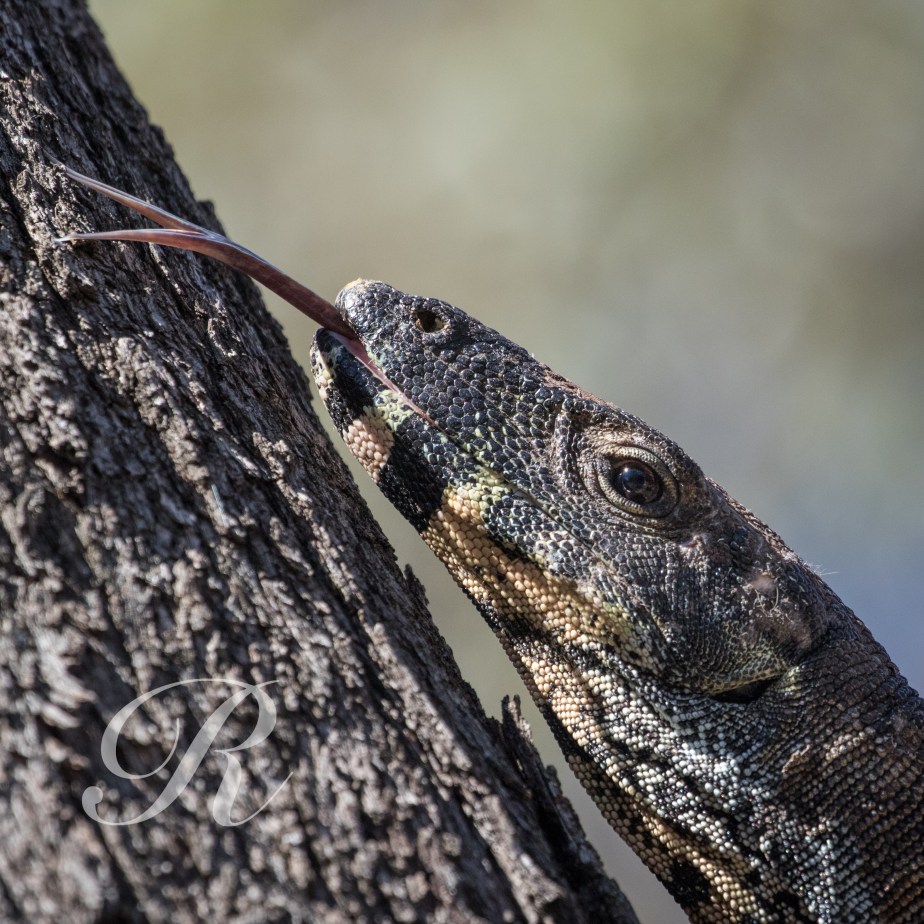
Varanus varius
I was setting up camp around midday when this big lizard decided that he’d be happier up a tree. The day before had been cold (by local standards, everything’s relative). It was a little sluggish. Usually they are quick to get well away from people, this guy was happy to sit in the sun for a while.
I surprised a second one later on and was able to get some closer shots in better light …
The claws are impressive, so too is the tongue …
Monitor Lizards are found in Africa, Asia and Australasia. There are about 50 species in all. The largest of them is the Komodo Dragon Varanus komodoensis in Indonesia. It gets to more than 3 metres in length. Australia has 27 described species but Victoria has only two monitor lizards, the Lace Monitor and Gould’s Goanna. A big Lace Monitor grows to a little over 2 metres whilst Gould’s can only manage about 1.6 metres. The dark and light bands under the lower jaw are diagnostic of the Lace Monitor, V. varius.
They eat birds eggs, nestlings and any other small animal they can catch. They lay their eggs in termite mounds, mum comes back to break the youngsters out when they hatch.
There is a vlogger posting regularly on Youtube by the name of Thomas Heaton. He is a landscape photographer who produces some truly beautiful images mostly from sites in the northern half of England.
He describes his thought processes in a very pleasant north country accent and conveys the impression that he is a really lovely guy. I’m sure he is. Watching his posts is one of the ways that I’ve tried to improve my own landscape photography. I would love to produce images like his but Australian landscapes are very different from the Lake District or the Isle of Skye.
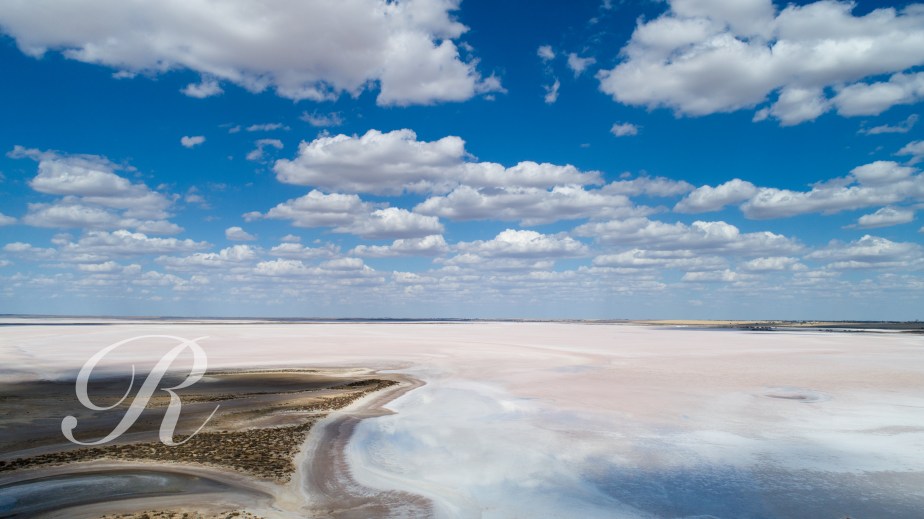
And this is as different as you can get …
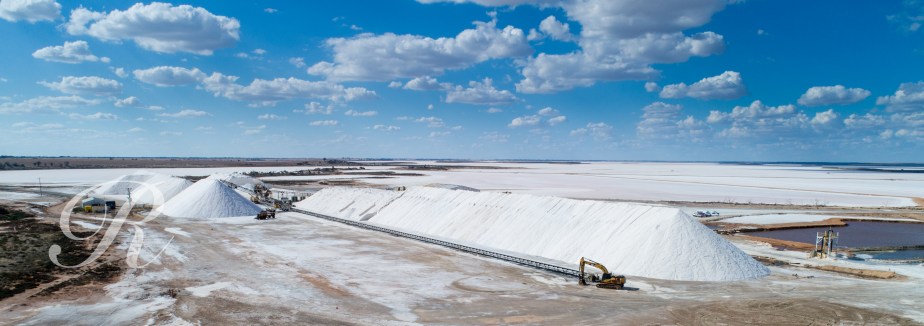
This is Lake Tyrrell, Victoria’s largest salt lake. On this visit the camera rather than the binoculars was given priority. And because it’s late summer the (alleged) road than runs around the margin presented no traction challenges, I was able to get around to the salt works.
Richard Cheetham founded the company in 1888. Their first plant was in Port Phillip not far from Geelong. I haven’t been able to find a date for the Lake Tyrell plant but it’s still going strong today.
But wait there’s more, as a bonus a free introduction to the work of Thomas Heaton.
Braeside Park was a regular haunt when I lived in Melbourne. It’s located in the eastern suburbs not far from the bay. The land has been used for a sewage treatment plant and then for horse agistment and training. There was a beautiful old stable there years ago. Every time I drove past I would say to myself “must take a photo of that”. I never did, can’t now. It burnt down. Let that be a lesson.
These days it’s an oasis of nature sandwiched between residential and commercial development. It preserves some River Red Gum grassland, some heathy woodland on an old sand dune and a wetland rich in swamp paperbark. It’s great place to watch birds. A three hour circuit will generally turn up at least 50 species.
This morning I concentrated on the wetland.
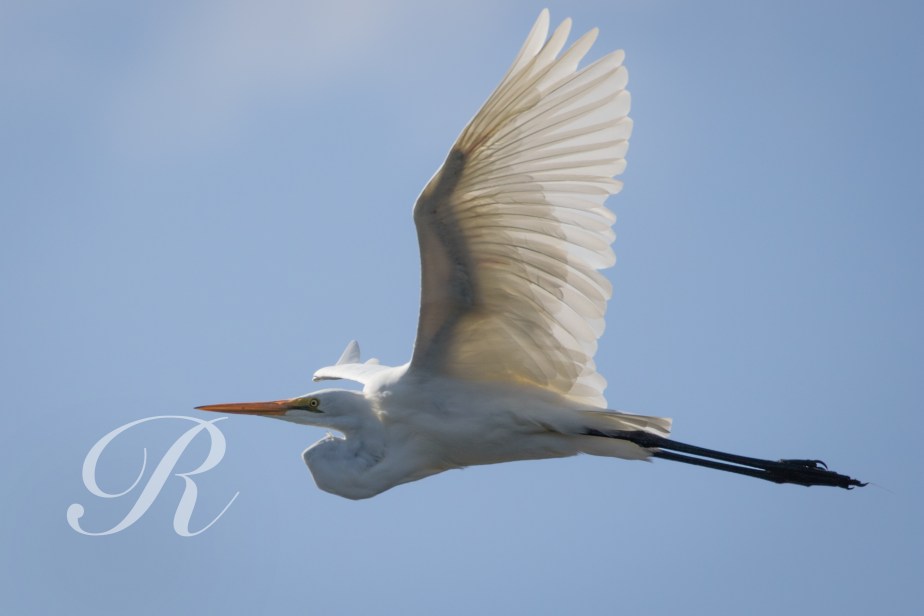
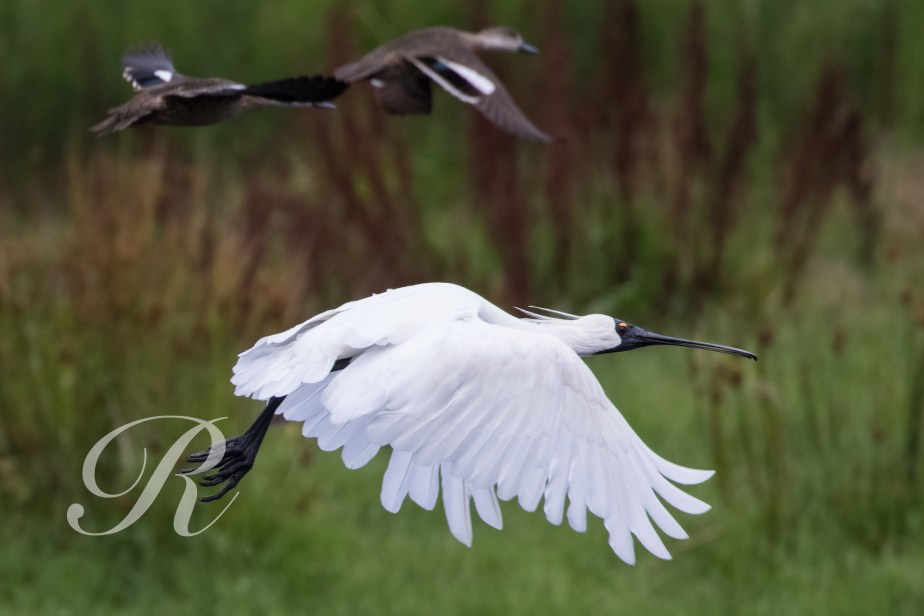
Great EgretRoyal Spoonbill
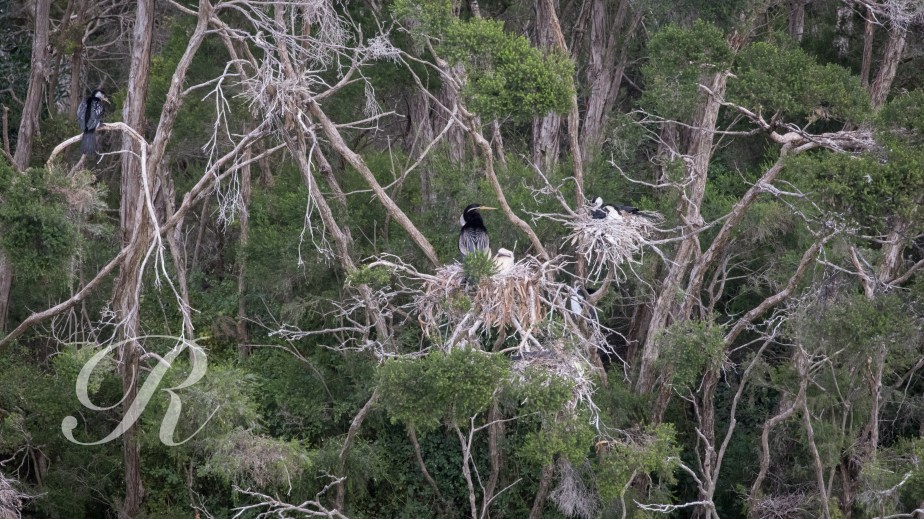
Darters and Little Pied Cormorants are nesting in the Paperbarks out on an island.
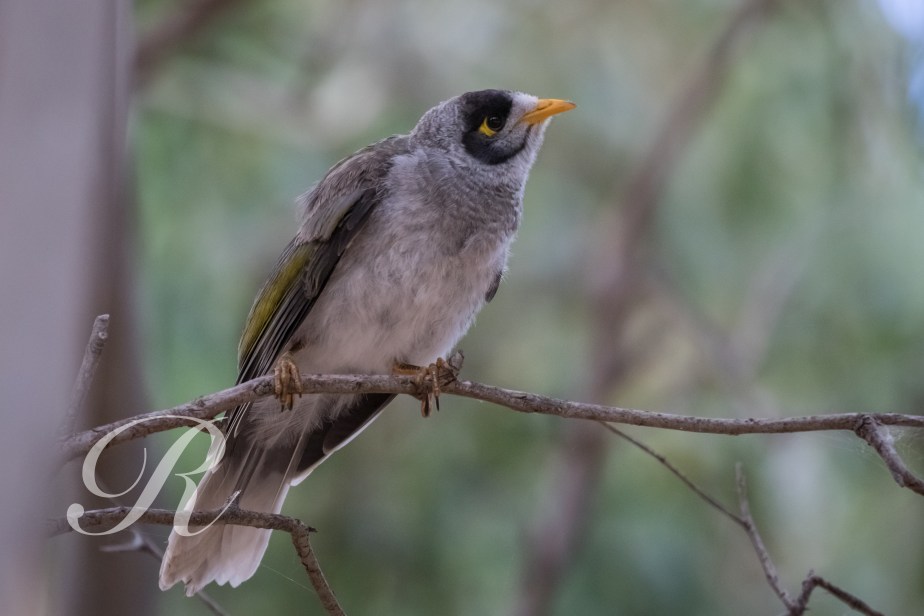
The woodland is home to a number of species. The ubiquitous and aggressive Noisy Miner and a bird that can hold its own against a pack of them were kind enough to pose …
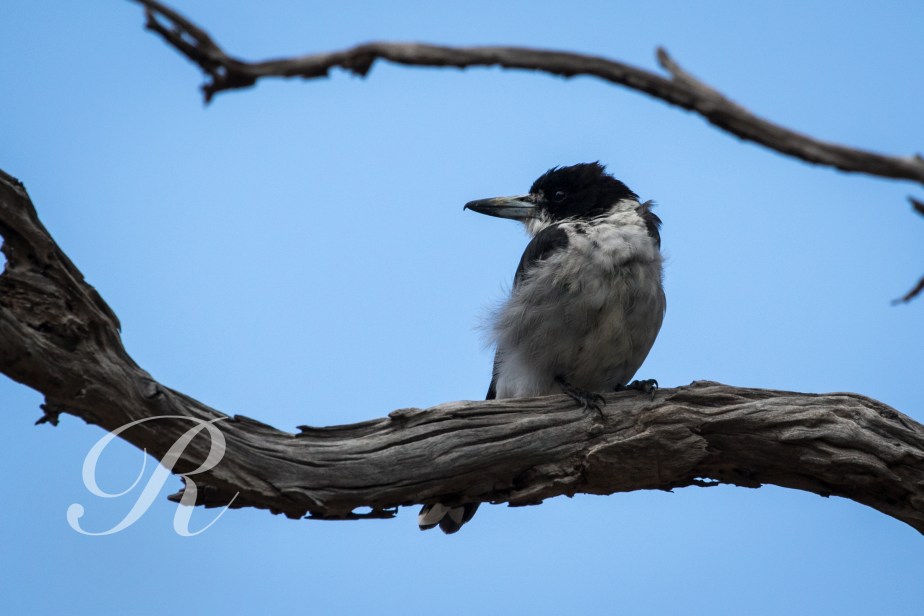
Noisy MinerGrey Butcherbird
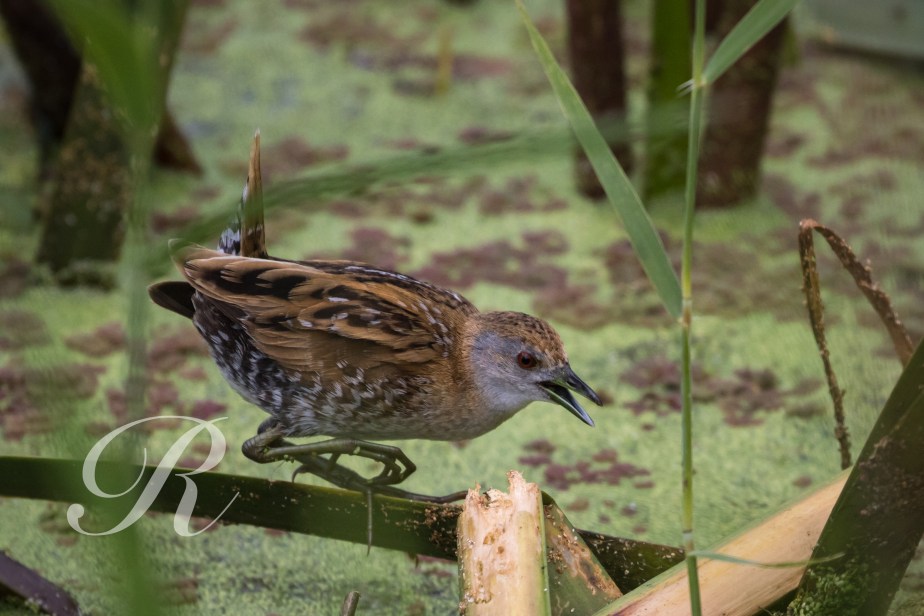
The highlight, however, was a bird that I rarely get to see. It is probably more common than we think but it mainly skulks in the reeds. When it does venture out it is always ready to bolt at the slightest alarm. Photos … forget it , you won’t get close and you won’t get time … unless luck is really on your side.
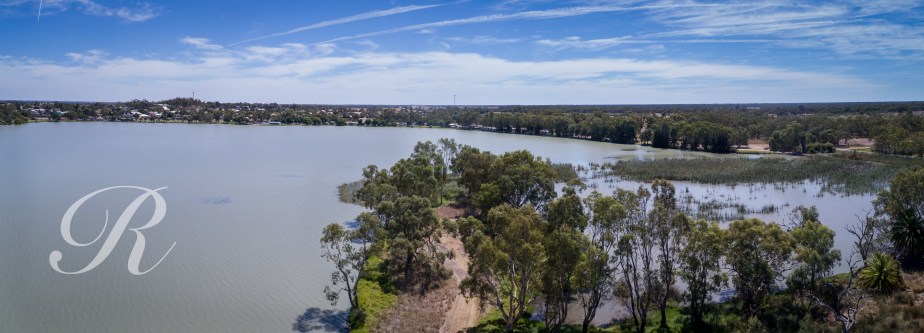
About 250km NNW of Melbourne the little town of Boort seems to thrive on tourism and agriculture. Its claim to fame is Little Lake Boort which I have never seen dry and is a popular water skiing destination. Lake Lyndger and (Big) Lake Boort are also adjacent but are often dry.
Major Mitchell and his party passed through the area in 1836 and gave a good report of its agricultural prospects. White settlers followed through the 1840’s. The town was founded in 1871. Prior to that the area had been the home of the Jaara people. There are still scar trees and shell middens around the lakes.
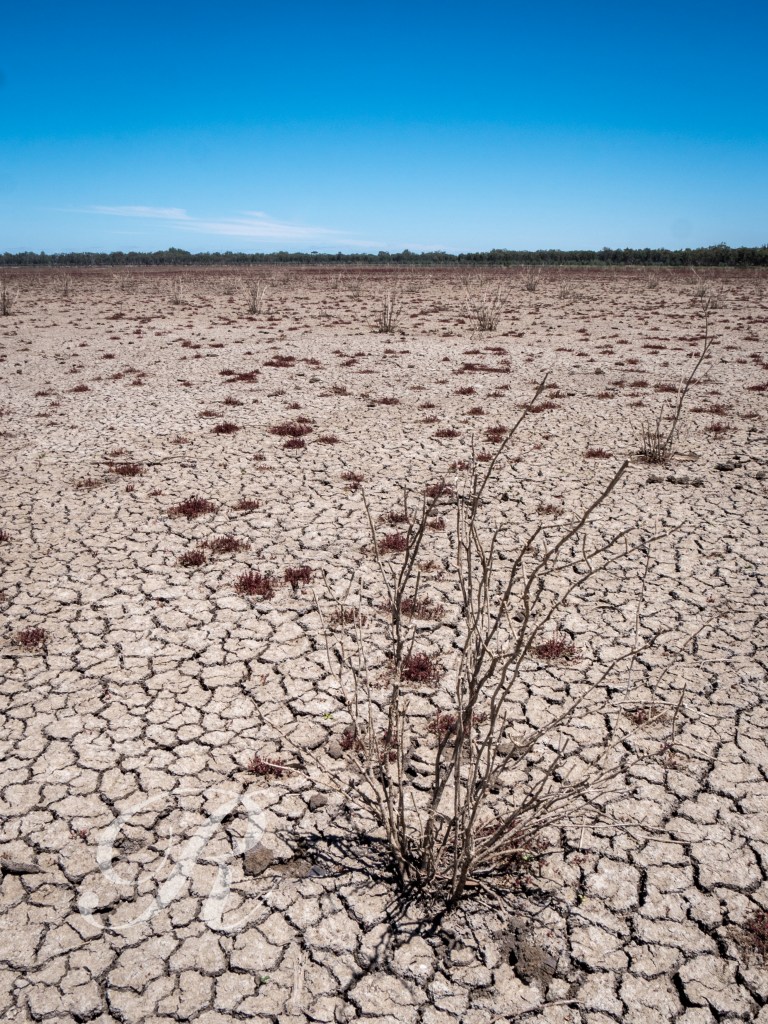
It’s a good spot to go birdwatching, and from where I live it is a pleasant day out. Today Lake Lyndger was dry …
Lake Lyndger
Lake Boort was mainly dry and nowhere near as green …
Lake Boort
but there was some water way out in the middle with some nice birds including Red-necked Avocets and Black-tailed Native Hens, always a pleasure to catch up with but too distant for portrait photos.
The top photo shows Boort looking across Little Lake Boort. Not surprisingly the birds were mainly around the margins of the water.
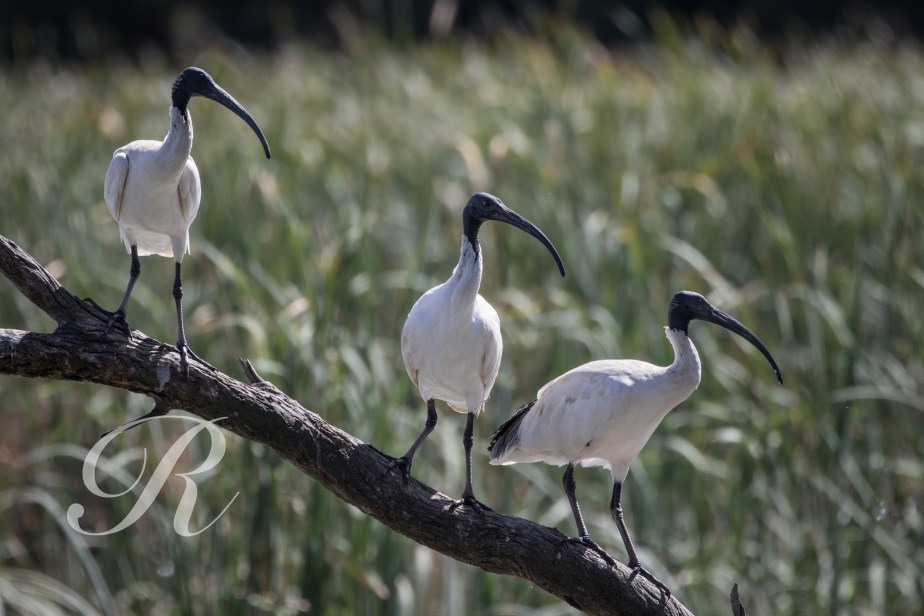
Great CormorantAustralian White IbisAustralasian (Purple) Swamphen
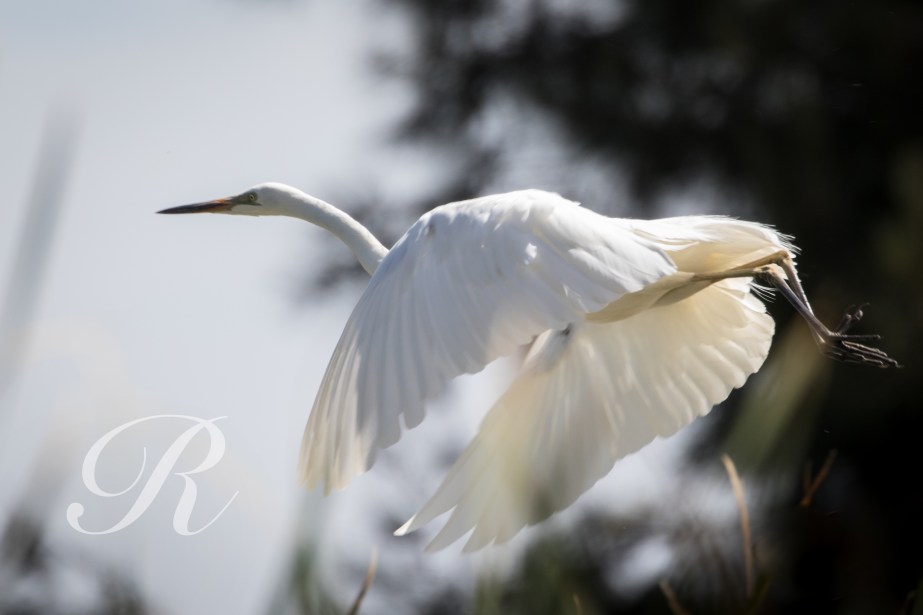
This Great Egret was quite skittish but I did get close enough to show off the breeding colours of its face and bill. When it gets over its reproductive urges the bill and facial skin will become yellow again. It also had a few plumes on its back although these are never as gorgeous as an Intermediate Egret’s finery …
Great EgretGreat Egret – breeding colours
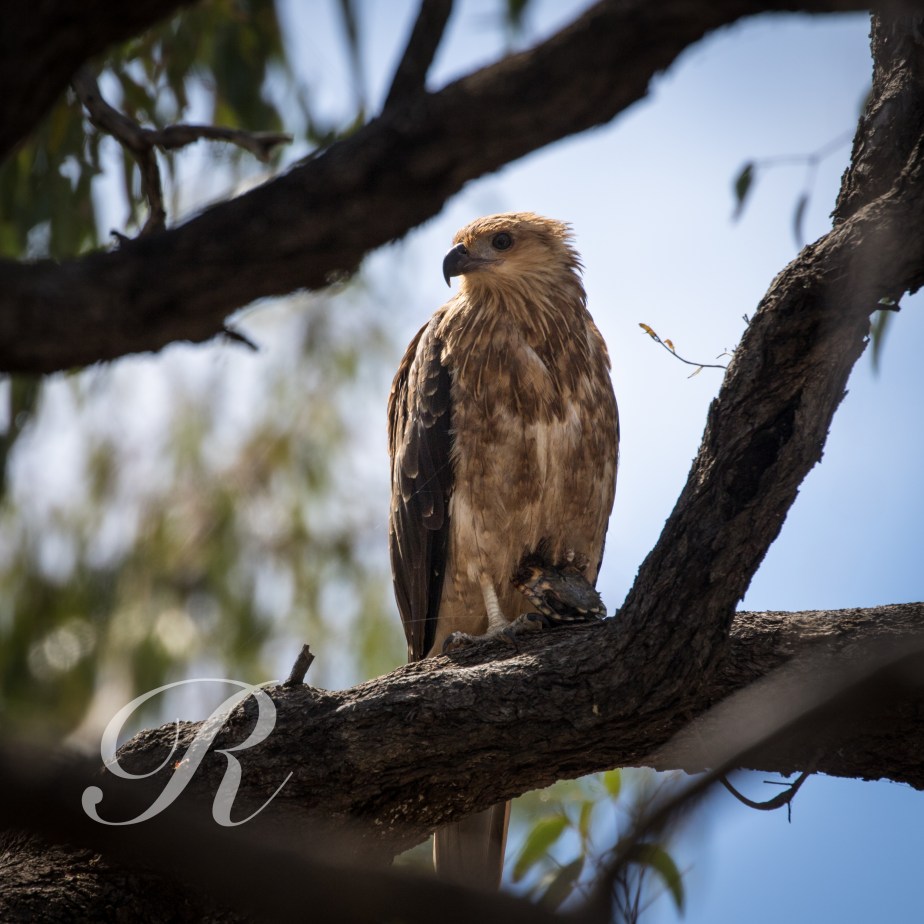
Whistling Kites were well represented. This one has taken a small tortoise …
Whistling Kite
Australasia’s largest bird family is the Meliphagidae – the Honeyeaters. The Noisy Miner is a common member of the family in south-east Australia. It is unpopular because of its aggression to other birds. The Miners hang around in flocks and where they are found other small birds are largely absent. It occurred to me that I had never bothered to work at getting a decent photo of them. Time to put that right …
My interest in birds goes way back to primary school in England. The reason for it is totally unfathomable, no one else in the family was so inclined although there were a couple of books about birds in our small collection. At the time I lived in Leyton, London within walking distance of Whipps Cross where there is some residual oak forest and the Hollow Ponds.
I doubt that parents these days would be comfortable with an eight year old wandering off by themselves to go bird watching but it seemed normal enough back then.
There were a couple of birds that I regarded as megastars – the Jay and the Great Crested Grebe. The Jay has a wide distribution across Europe and Asia but doesn’t make it to Australia which is where I now live. The Great Crested Grebe though does.
I went for a walk around Lake Wendouree in Ballarat the other day and there were several pairs swimming about.
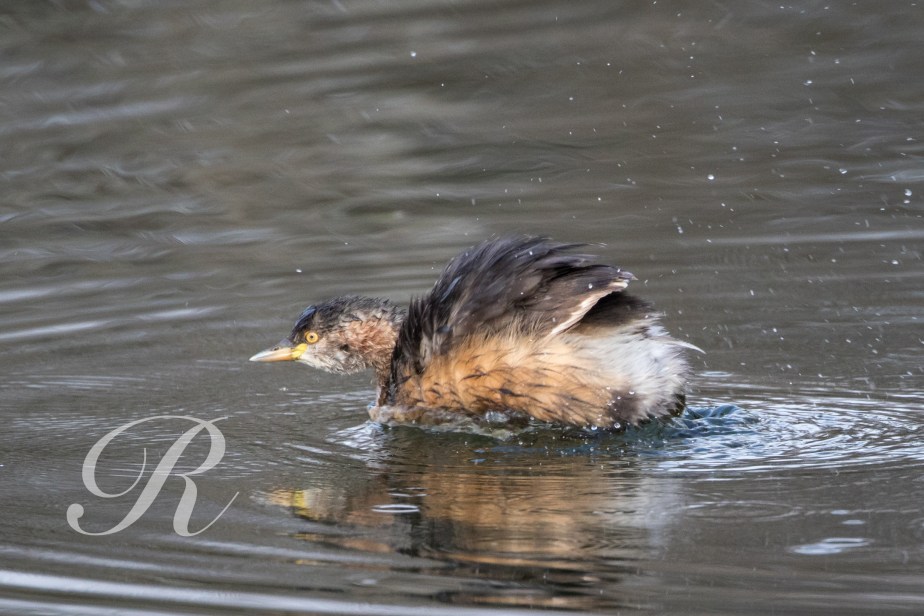
We have three species of Grebe in Oz. The Australasian Grebe is the smallest and occurs on shallow freshwater sometimes on surprisingly small ponds. The Hoary-headed Grebe is slightly larger and dives slightly deeper. It occurs on fresh water bodies and is also happy in sheltered salt water. The Great Crested is the largest of the three, dives deeper and is found on lakes rather than ponds.
Australasian GrebeHoary-headed Grebe
For the photographer none of the grebes are particularly cooperative. They like a comfortable distance between you and them. When I found myself close to a pair of Great Crested Grebes in some reeds I sat on the bank and waited hoping that they would emerge and give me a shot. Eventually one did …
Great Crested Grebe
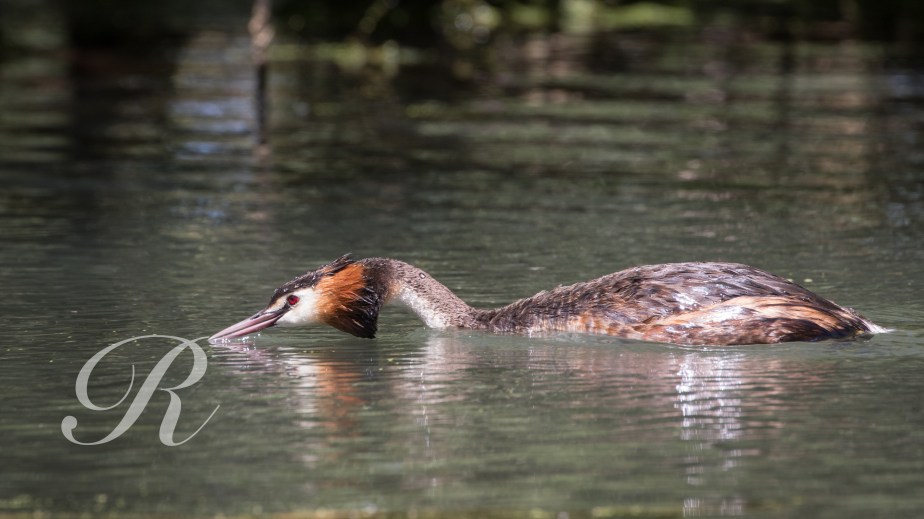
In concentrating on the first pair I had failed to notice a second pair coming from my right. They were quite close by the time I saw them, their necks stretched out in aggressive pose. Here’s a close up of one of them …
Great Crested Grebe
This was a territorial issue. Pair number one retreated into the reeds. Pair number two went in after them, there was a few moments of splashing, unfortunately hidden from my view. Pair number two re-emerged and stood guard for a couple of minutes. The edge of the reeds was clearly the territory boundary.
It was only then, it seemed, that they realised I was there.
Great Crested Grebe
The scientific name of the Great Crested Grebe is Podiceps cristatus, wherein lies a story …
















 bobmcgee