Early Morning Mangroves …

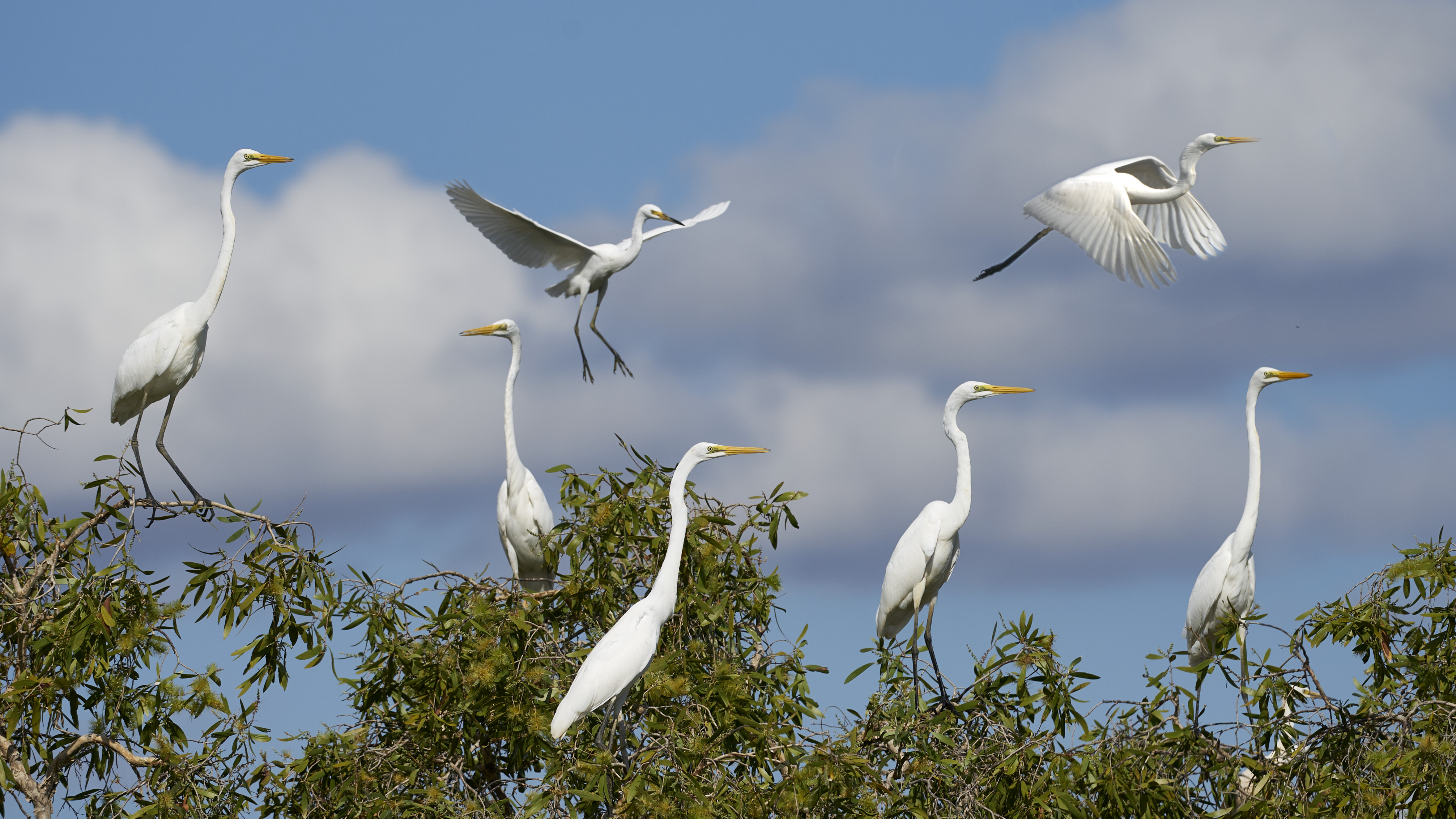
Streeters Jetty this time where there is a mix of mangrove species and a mix of bird species as well.

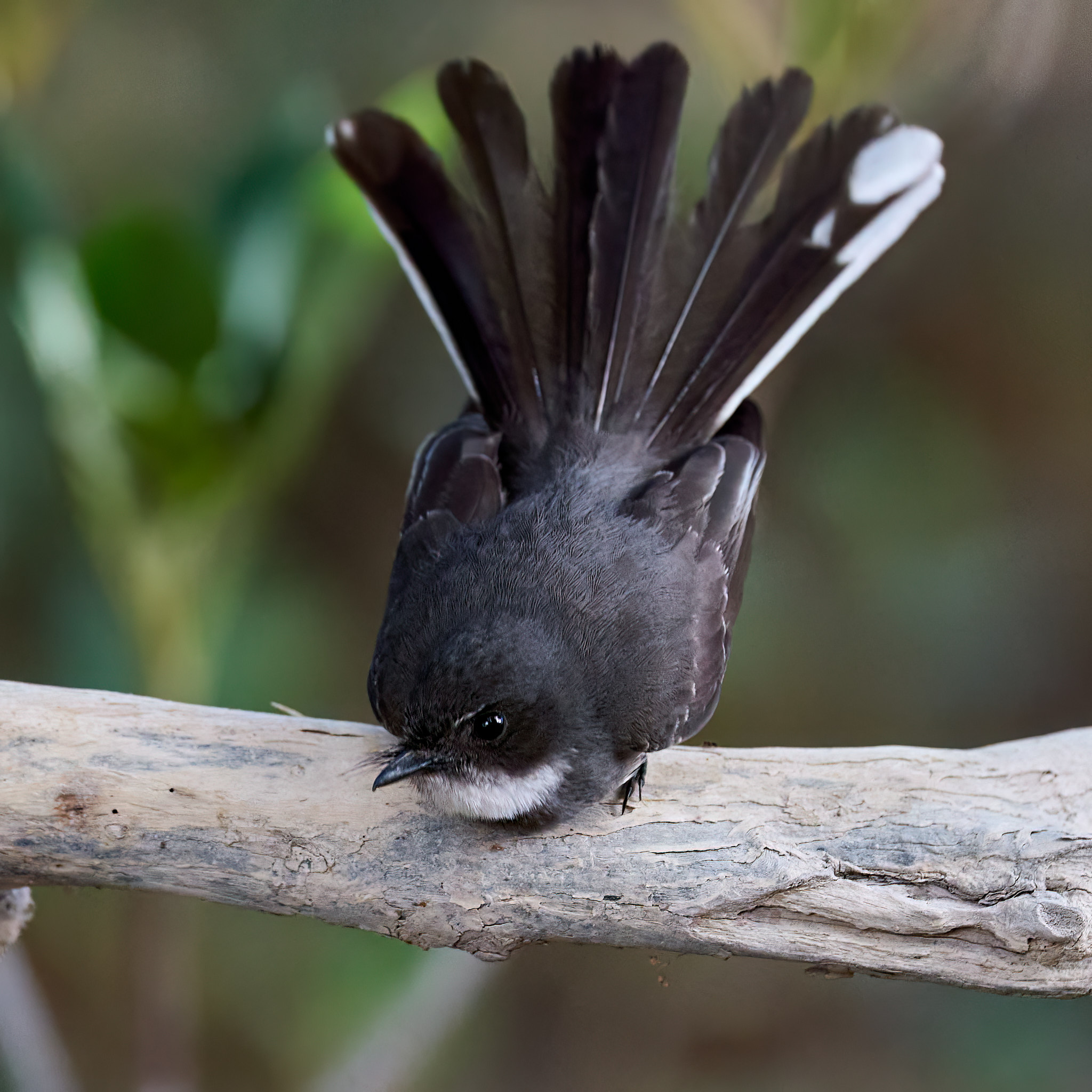
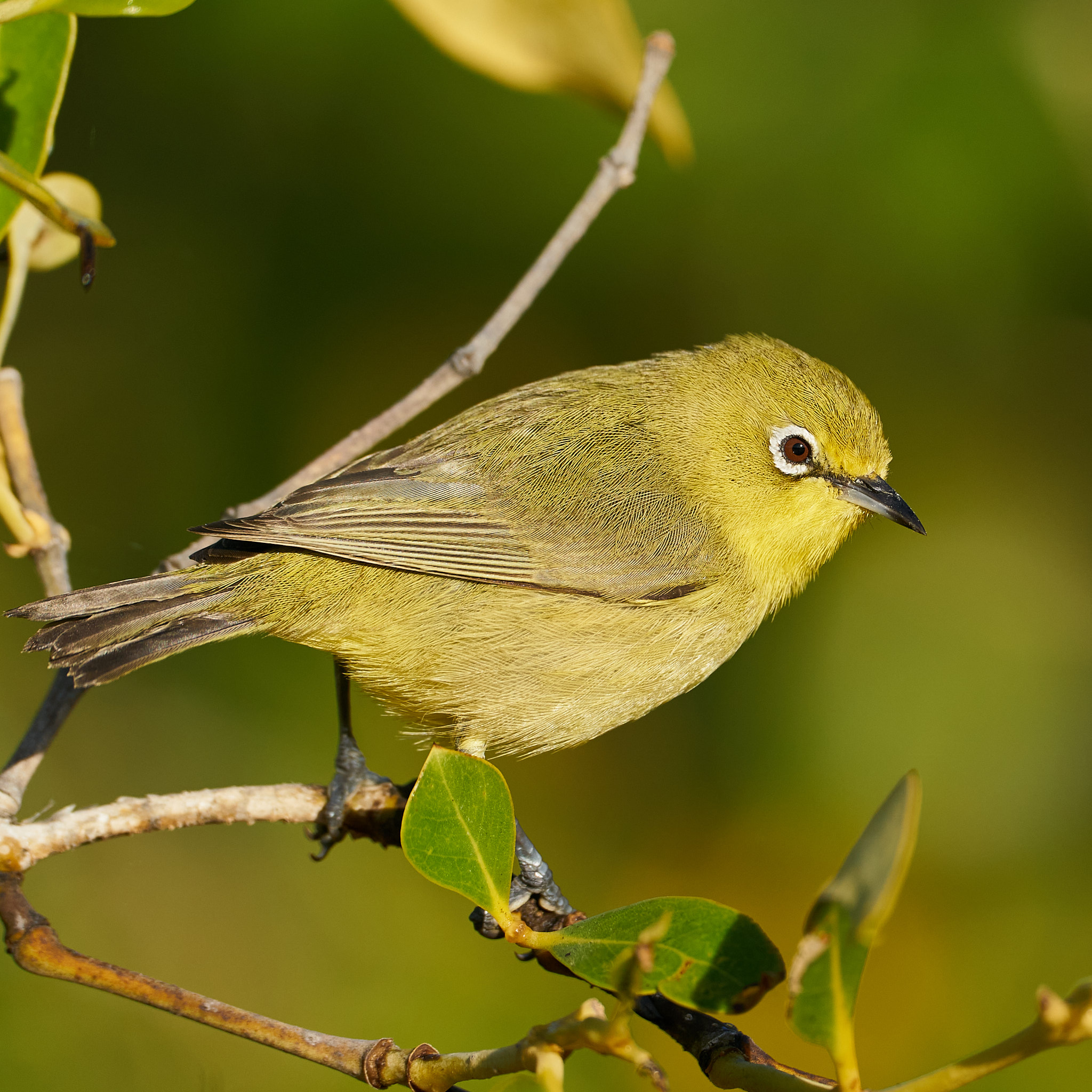
I was glad to see this guy because he (or she) has been eluding me for a while. She (or he) played hide and seek with me for a while but believe it or not this photo is diagnostic. Given the habitat and given that we’re in Broome the pale iris means that this little brown bird is a Dusky Gerygone.

It’s only found in dense mangrove along the coast of Western Australia from Shark Bay to a little north of Derby. An endemic – every twitcher needs one. The game of hide and seek did come to an end and I also came on a small flock that were less shy.

There were other good things about …
As always, clicking on the galleries will improve the experience.

Up until now I’ve mostly viewed the mangroves as a place to find the birds that inhabit them but they are interesting in themselves. The bible is Australia’s Mangroves by Norm Dukes but it’s out of print and my efforts to find a copy have not met with success. If anybody out there can spare one please let me know in the comments. Cheers.
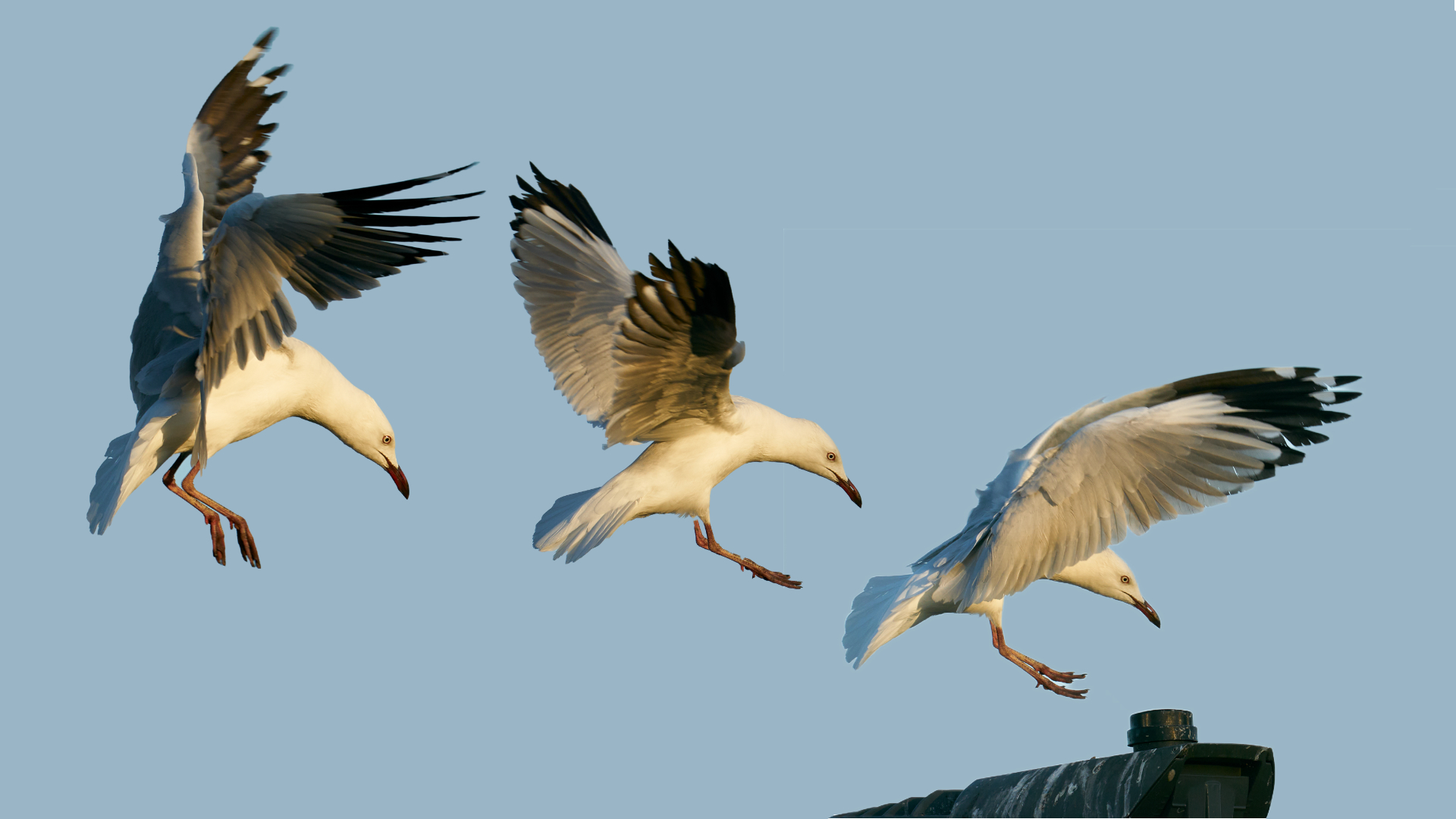
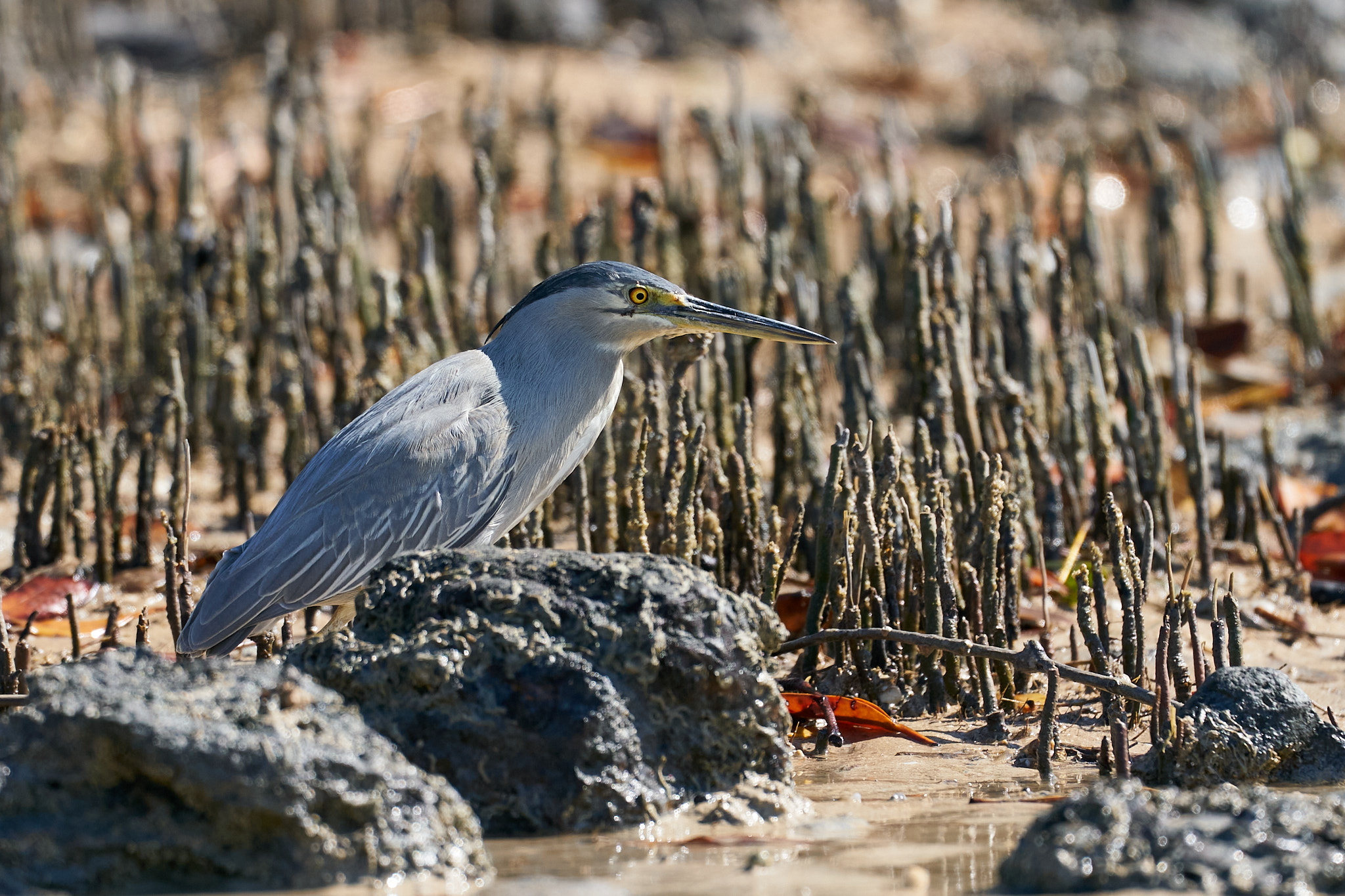
A Mangrove Heron …

The tide was on the way out this morning for my walk on Broome’s Town Beach. There is a patch of mangroves at one end running out as a small point. At the end there is a dead tree that is a popular perch for raptors. It was possible to reach it but it still had waves lapping around it, well worth checking out but on this occasion unoccupied.

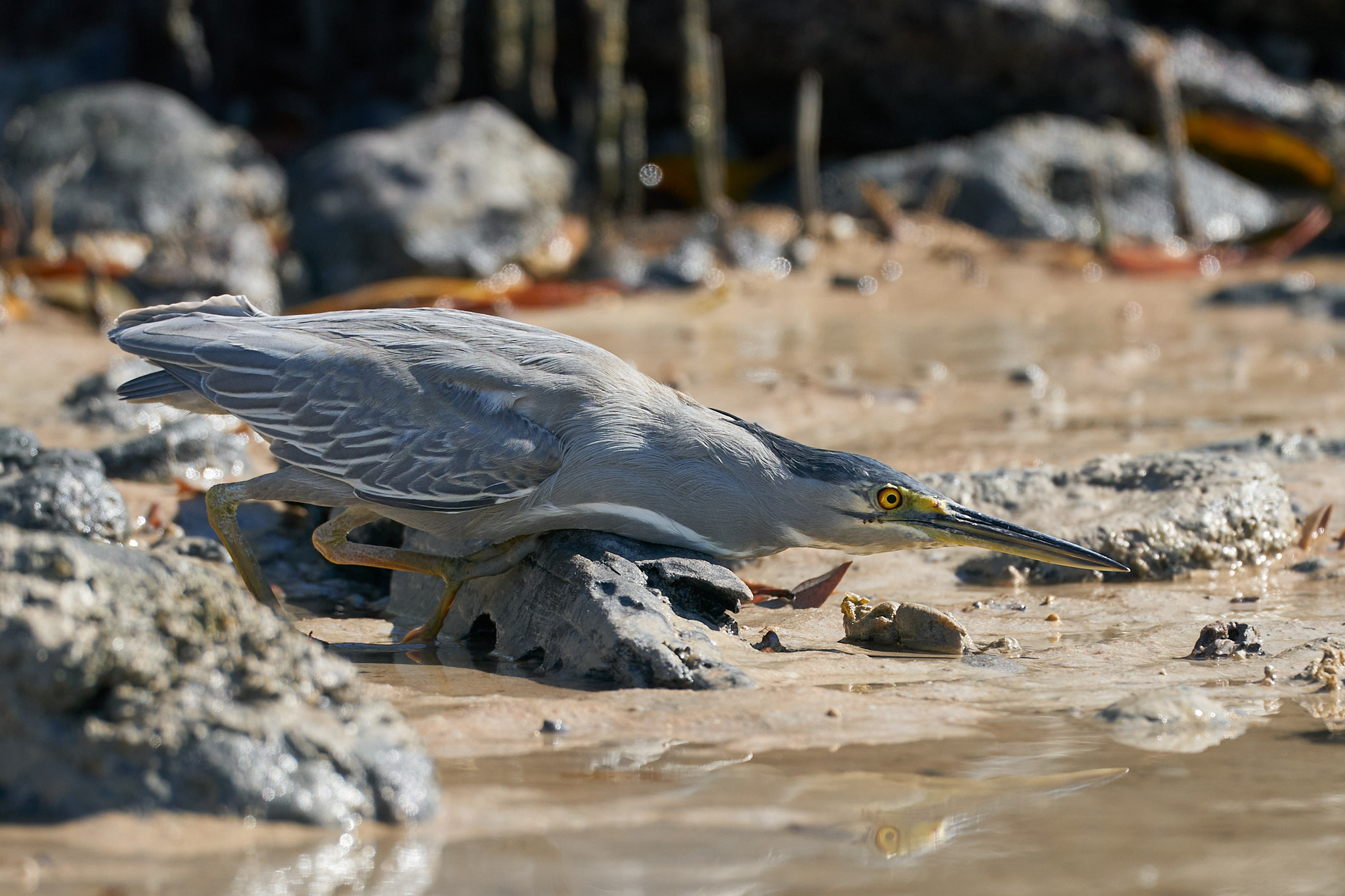
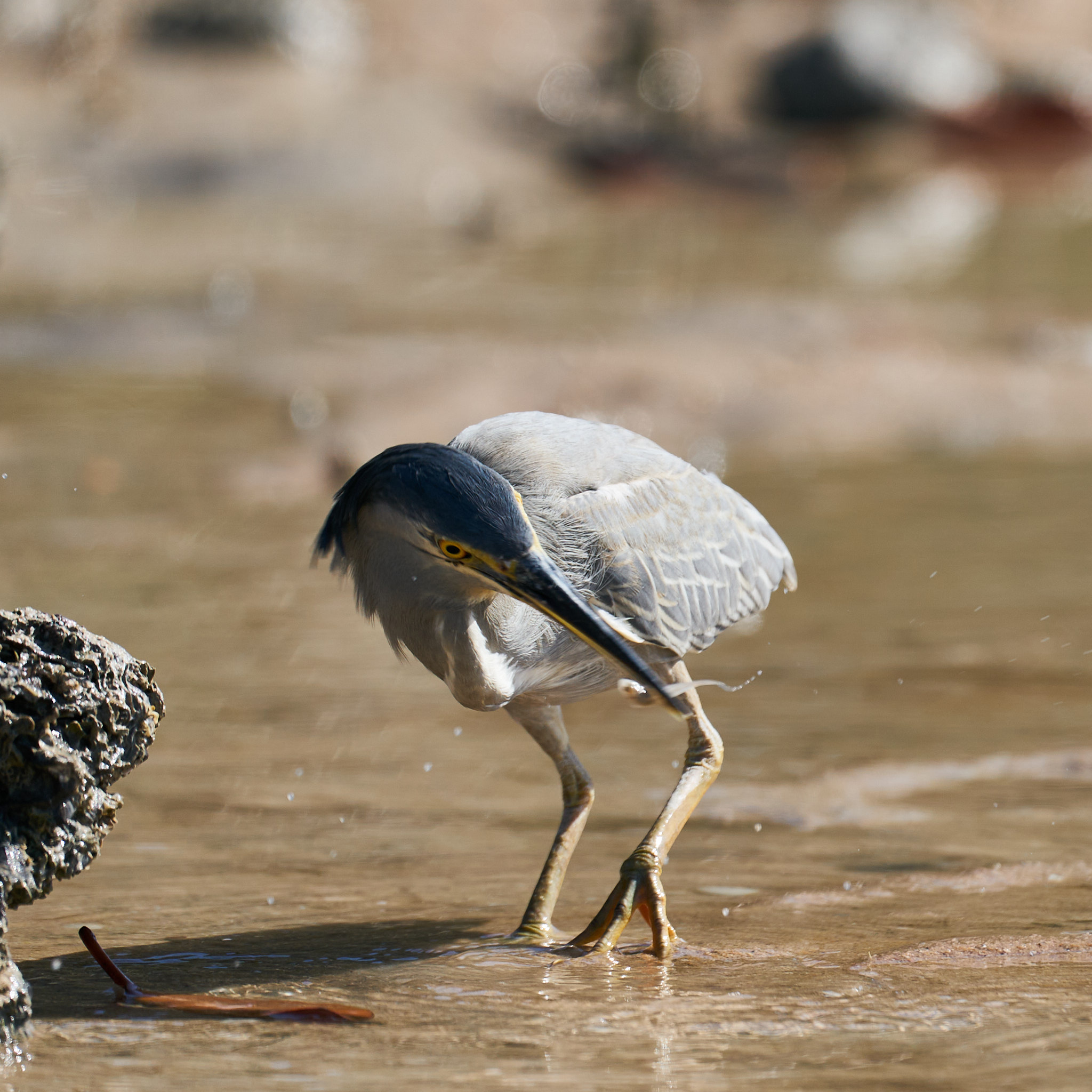
Returning to the beach around the seaward edge of the mangroves I found myself approaching a Striated Heron. It saw me before I saw it and was walking away into the trees. I suspect that stopping informs the bird that you’ve seen it and are interested in it, suspicious behaviour. I change direction, don’t look at the bird and slow down. Going off at a tangent means that the distance to the bird doesn’t decrease. On this occasion it worked well, the bird returned to the water’s edge, I sidled slowly closer. By the time I was kneeling in the sea, fully clothed it thought I was a harmless idiot and resumed feeding.

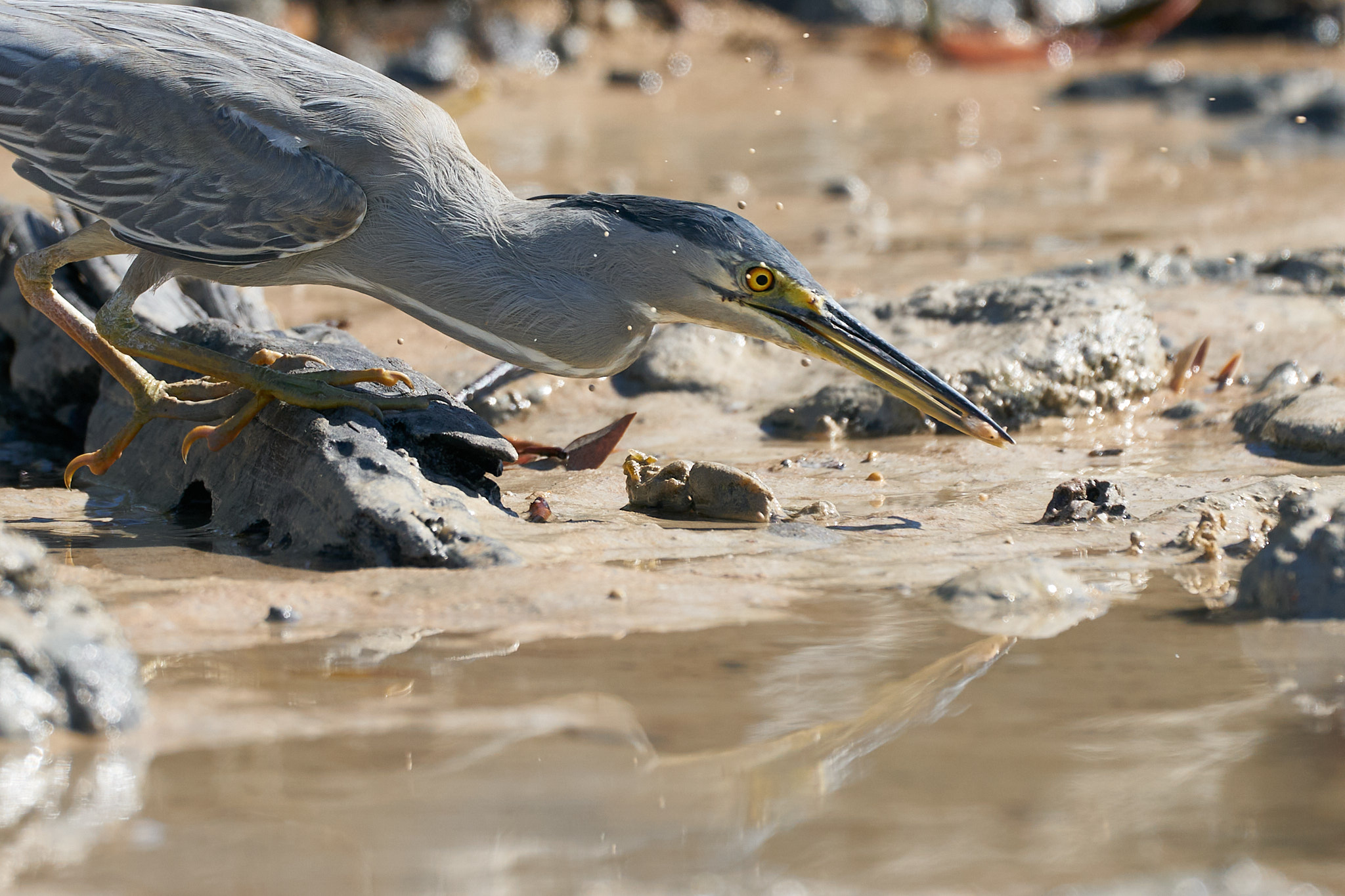
It was a successful hunter, the horizontal pose preceded a strike that was usually followed by a swallow. Small transparent fish are visible in some of the photos – if anyone can put a name to these please let me know in the comments.

The scientific name of the bird is Butorides striata. Buto is from Middle English Butor meaning Bittern, -oides is a Greek suffix meaning like, so like a bittern. Striata is from the Latin for streaked or striped. The rules of taxonomy a very strict but none forbid making a cocktail of any languages you like. An alternate popular name is Mangrove Heron and in the mangroves is where you are most likely to find it but it does venture further afield.

Sea Food …

Best eaten fresh.

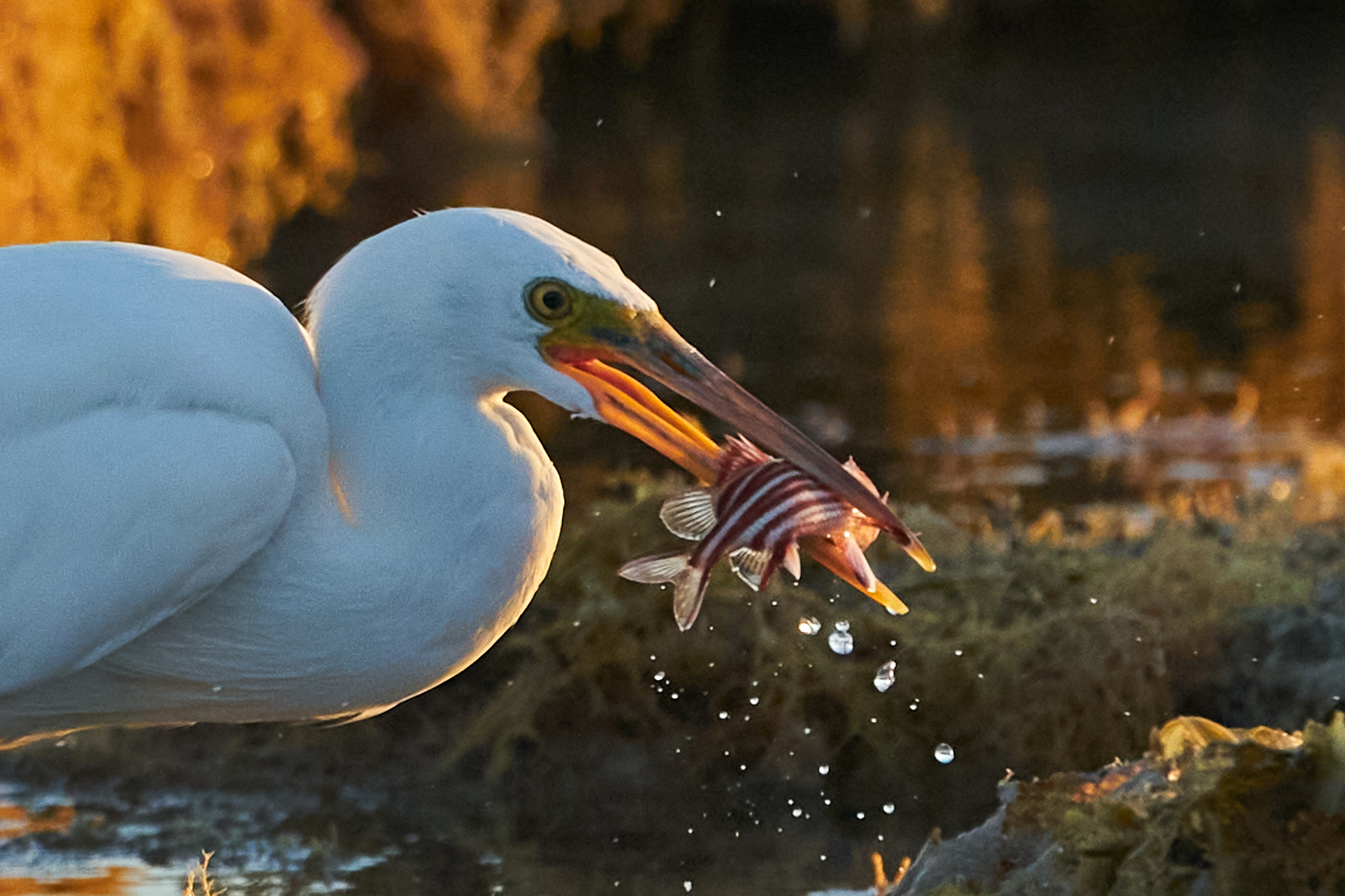
It was approaching sunset, the golden hour. The tide was very low. Eastern Reef Egrets come in two flavours, the white ones being less common than the dark ones. This guy caught my eye and I very slowly moved closer for a photo. It was a little edgy but something had caught its eye and it was torn between flight and food.

I eventually got as close as either of us dared. I settled down and started taking photos, it resumed hunting in the rock pool.

The evening meal.

The fish didn’t go quietly. It was a few minutes before it could be turned round to a suitable position for swallowing by which time it had erected a line of ferocious looking spines. A whole lot more manipulation was required before the bird could start thinking about dessert.

The Oscar for best supporting actor in this drama goes to the Red Squirrelfish, Sargocentron rubrum, a fish that has a wide distribution in warm seas usually associated with reefs. It’s a nocturnal feeder that grows to about 17cm … awarded posthumously.

I turned away, reflecting on that gossamer thread only to find another Reef Egret enjoying the ocean’s bounty. Bon appétit.

Khelidonios …

Ancient Greek for like a swallow. Mr Rafinesque came up with the notion that the Marsh Terns looked somewhat like Swallows in 1822 and coined the name Chlidonias for the genus. I have no problem distinguishing Terns from Swallows but distinguishing one tern from another is more of a challenge.

Marsh terns are relatively small as terns go and are most often seen over fresh water. Two species are fairly common in Australia, especially in the north and a third species causes considerable excitement when it shows up. The largest member of the genus is the Whiskered Tern, Chlidonias hybrida (Latin for hybrid because of the mistaken notion that it was a cross between two other species. Taxonomy has its rules, the oldest name prevails, thus the specific name bestowed by Pallas in 1811 later found itself combined with Greek – no respect for the classics).

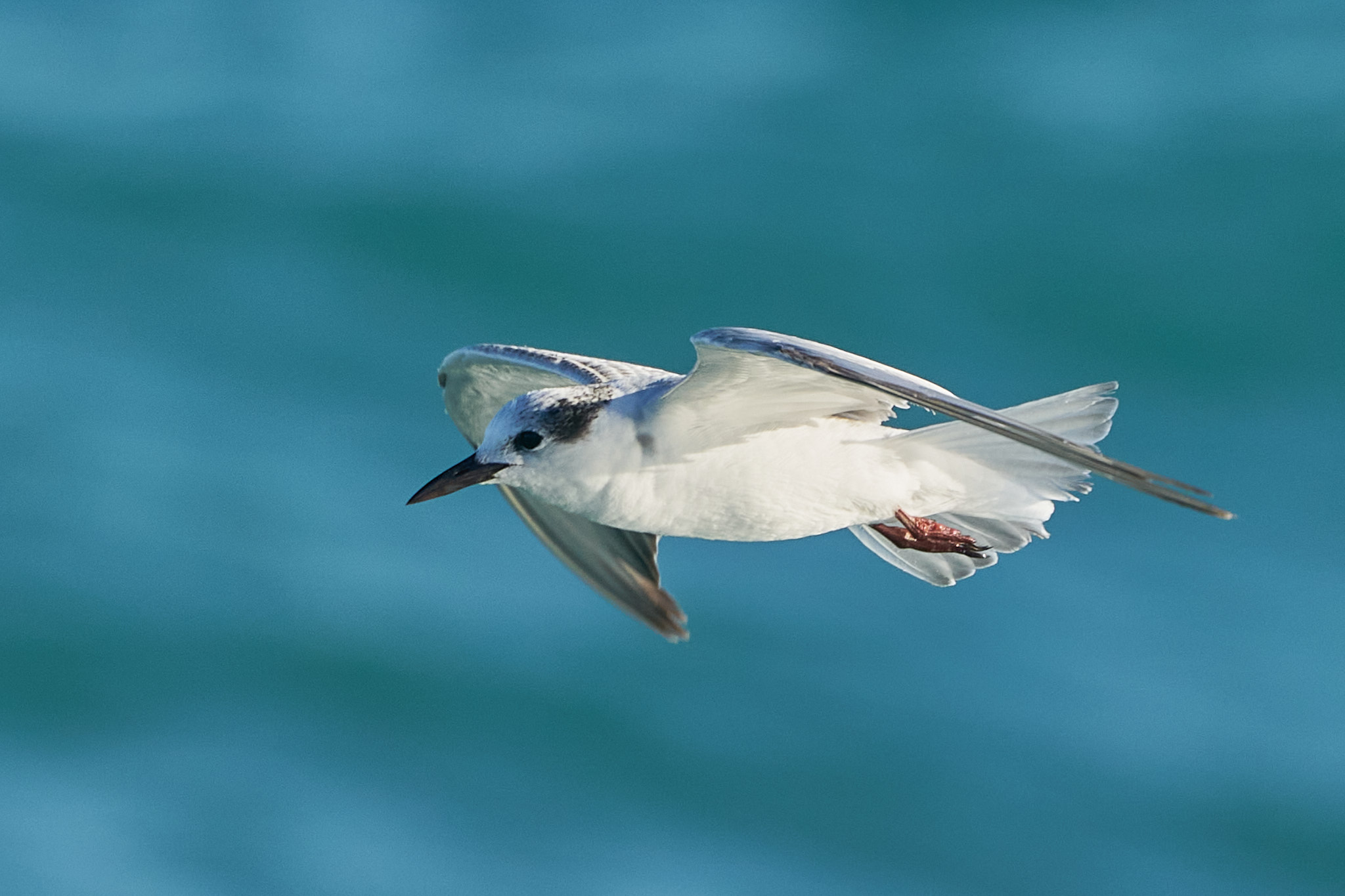
Whiskered Terns do venture over the sea. These photographs were taken at Entrance Point adjacent to the Port of Broome. There were two present, both post-breeding adults undergoing moult.

Aficionados will observe that the inner primaries are fresh, P7 is nearing full development and the three outer primaries are old and soon to be lost. The secondaries are at much the same stage. Click on the pictures for a better look.

Black Kite …

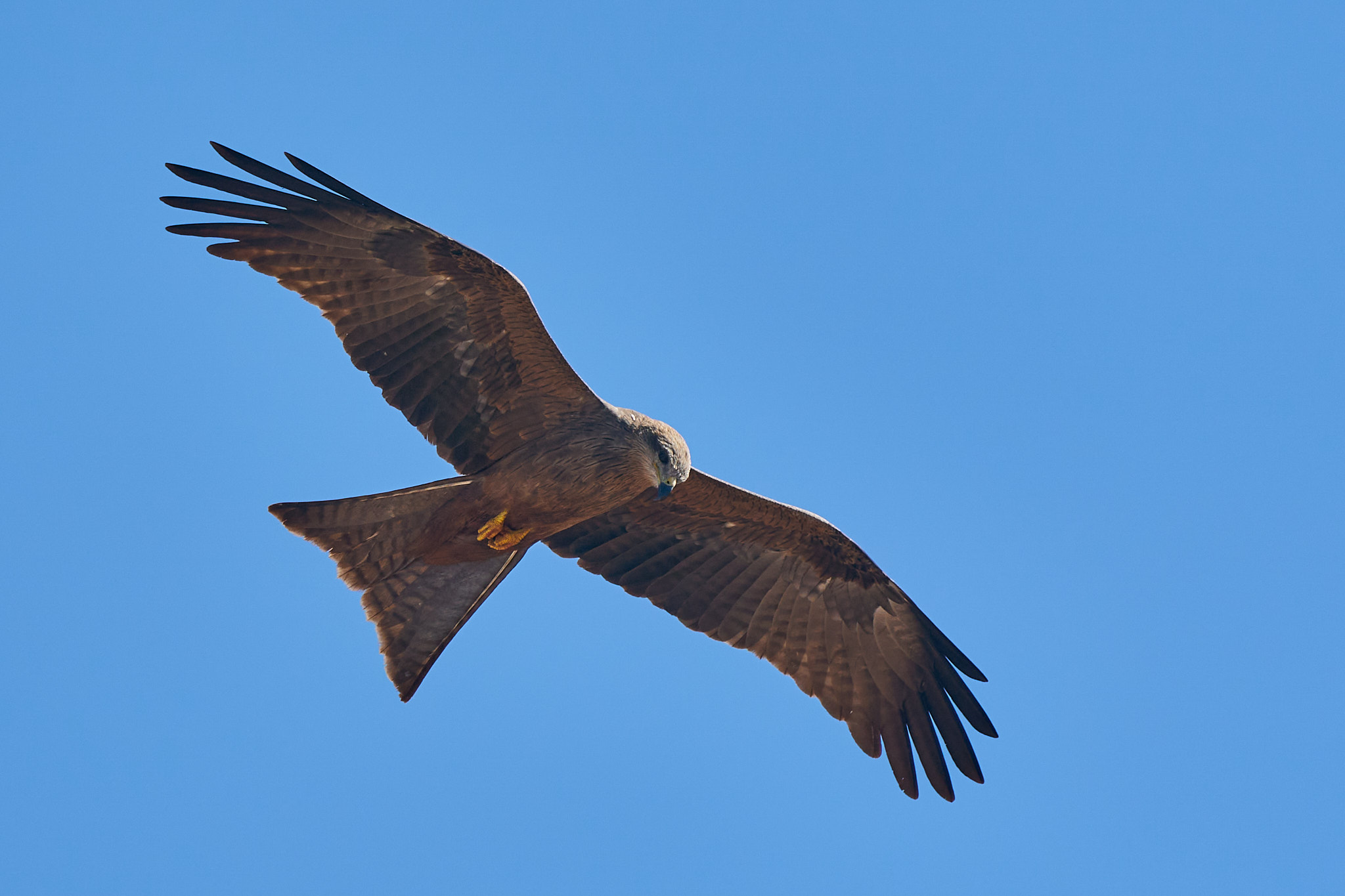
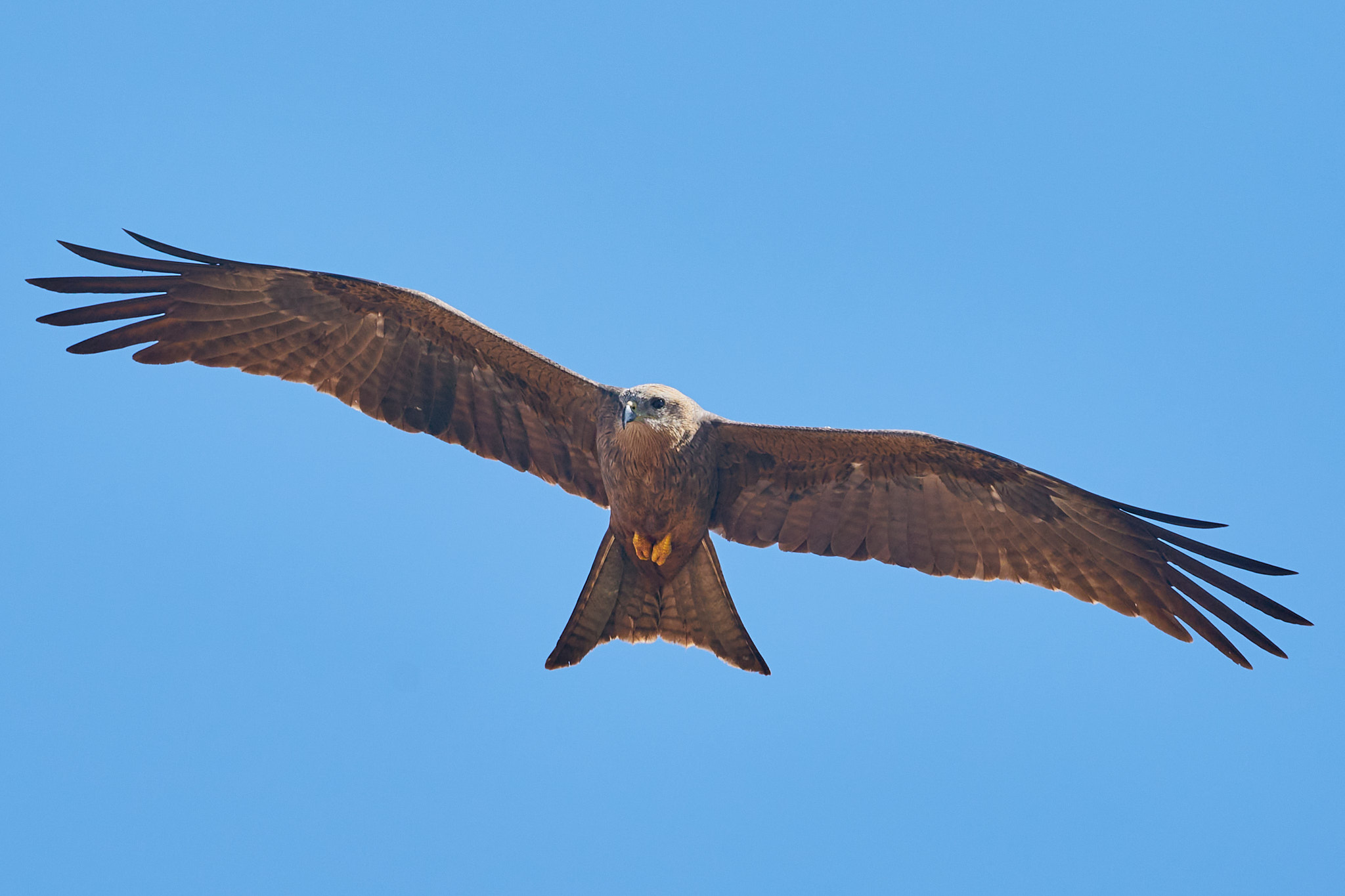
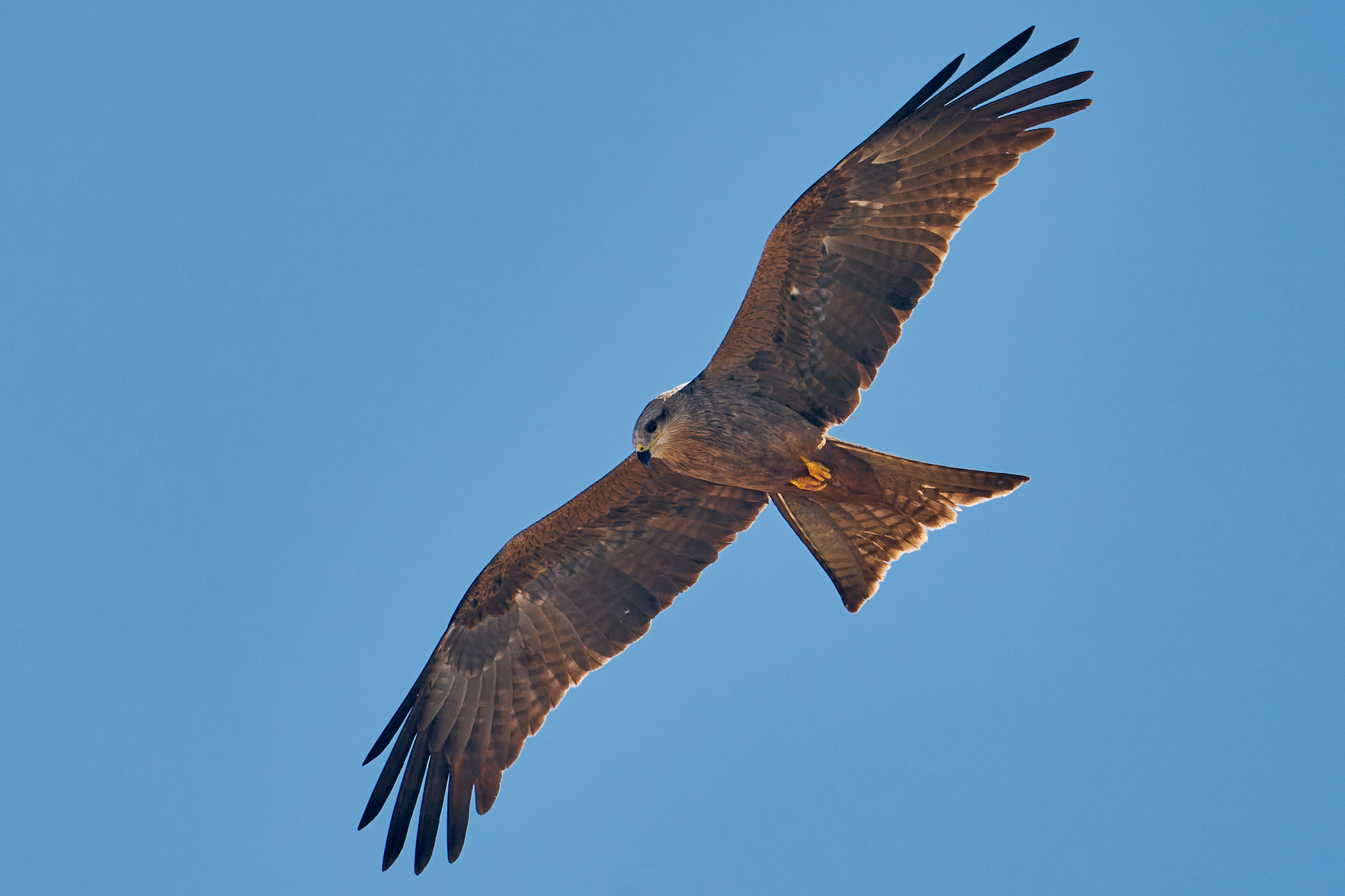
Some birds seem to fly with very little effort. Many seabirds fit the bill but still give an impression of great dynamism. Black Kites just float with a lazy nonchalance. They are common over Broome and are found throughout Australia. They are also found in Papua-New Guinea, Eurasia and Africa. Australian cricket fans will have seen them on TV when we play in India and South Africa.

Their legs are short and their talons are not especially powerful. They enjoy a bit of carrion, large insects and small mammals like mice. They congregate at rubbish tips and over bushfires. They have been known to help fires spread by carrying smouldering sticks into unburnt areas.

If you’re having a picnic watch out for your sandwich – pro tip, stay close to the trees.

Barmah …

I visit Barmah National Park from time to time largely because it’s the one spot in Victoria where the Superb Parrot turns up. I’d love to add it to my state list and one day I might.

The Sandridge track runs from the park entrance to River Road and the mighty Murray. It’s about 15km of dirt road and a good test of the camper trailer which passed with flying colours coping well with the corrugations and some muddy patches. And the muddy patches on the way in were nothing compared to the muddy patches on the way out after a night of steady downpour. It really was the first sharp bite of winter, there were blizzards and snow down to 700 metres in the high country.

I had a more realistic target as well as the elusive parrot which was to photograph the beautiful Azure Kingfisher. I was able to camp right on the river bank at a spot where I have seen adults feeding a brood of youngsters on a previous trip. The light was actually quite good during the afternoon so it was just a game of patience.

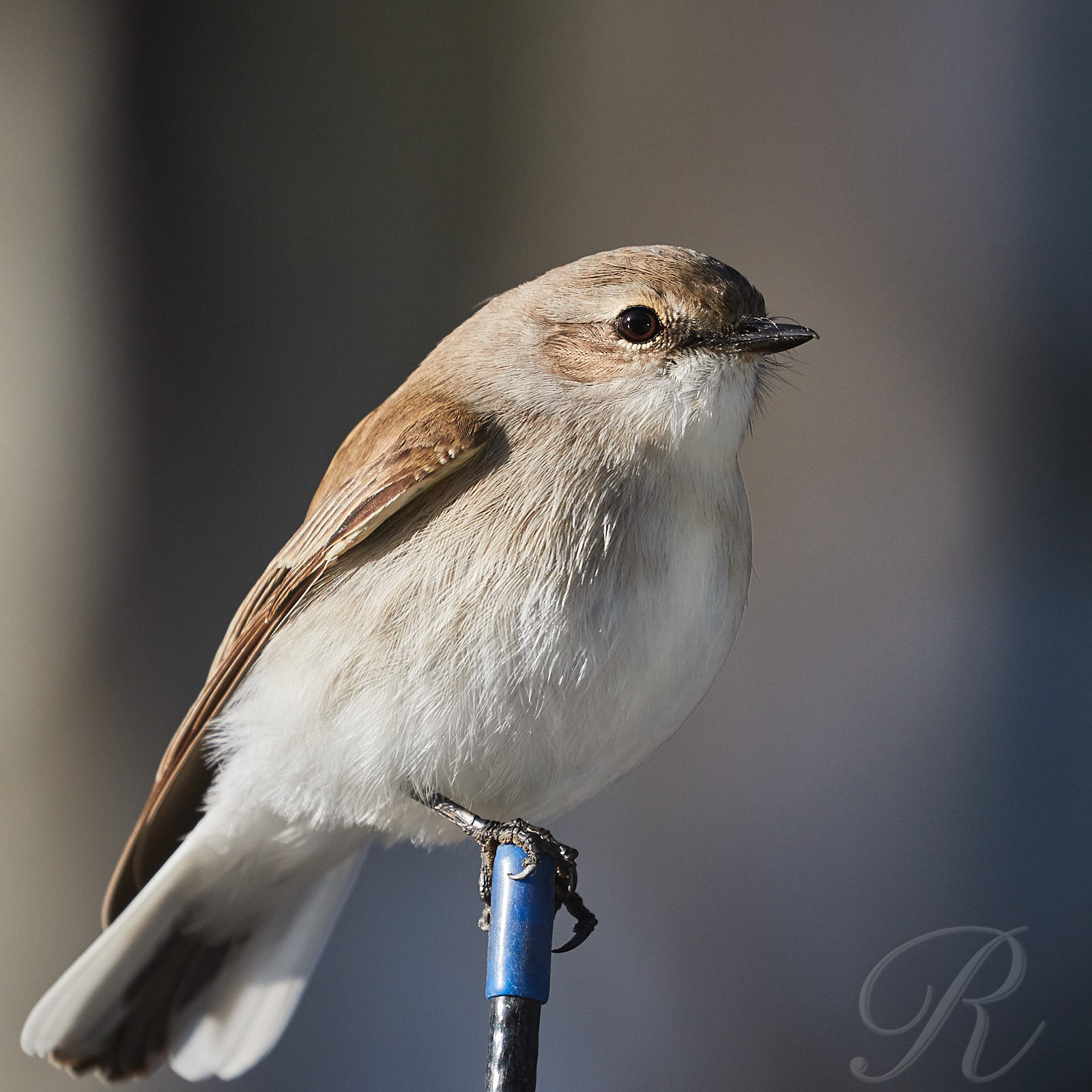
Good things soon happened. This Jacky Winter presented itself for a nice natural portrait. While the next one came even closer, posing on the UHF radio aerial.

A White-bellied Sea Eagle cruised up the river …

A Kangaroo checked me out.

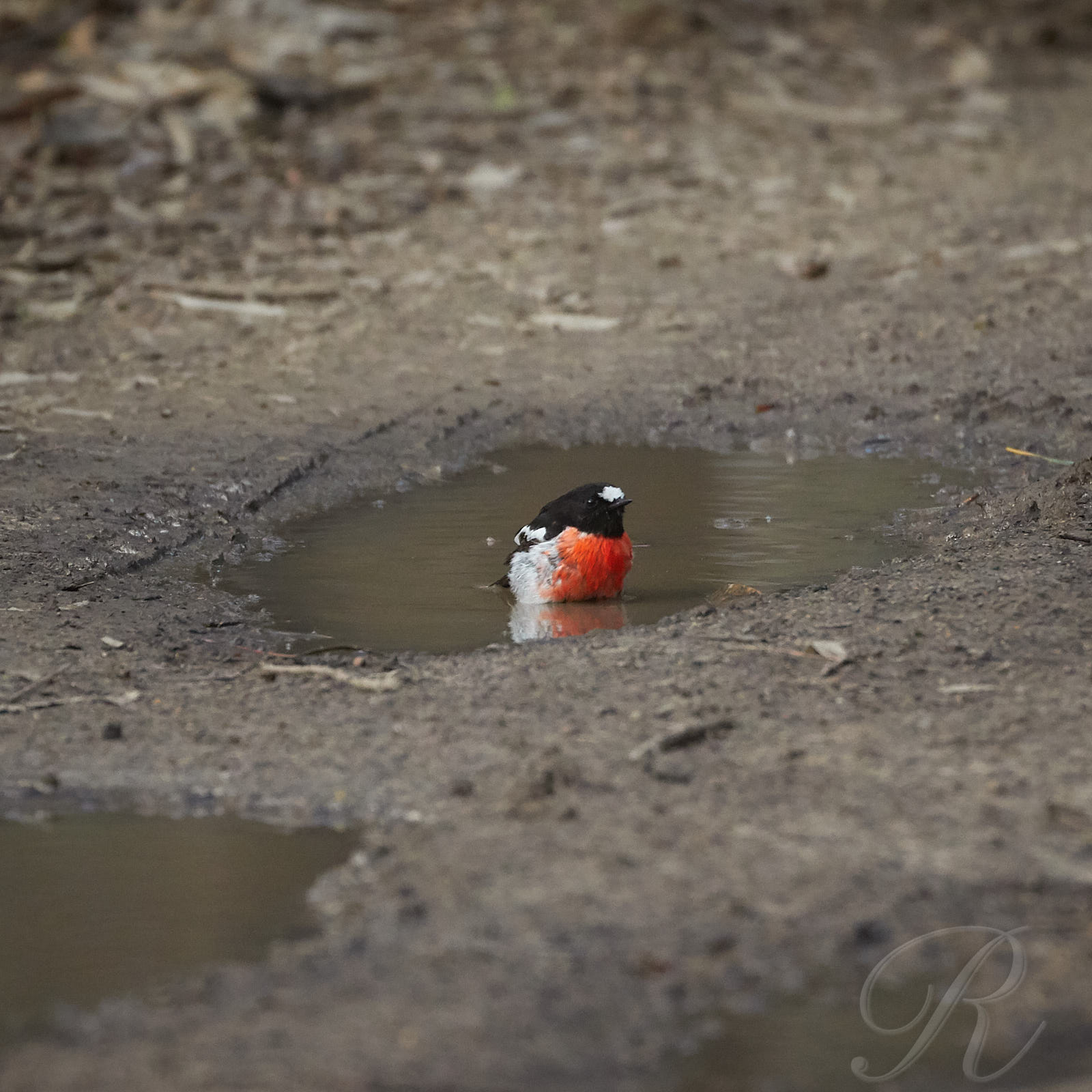
A Scarlet Robin took a bath not far off

And yes, the Azure Kingfisher played nicely.


Spotted Harrier …

Birds of prey make their living in different ways; Kestrels are fond of mice, Peregrines are fond of pigeons, Brown Falcons are fond of snakes. Hunting technique are appropriate to the creatures hunted.

Harriers go about their business fairly low over open country with wings upswept. In Australia we have a couple of members of the guild, Swamp Harrier and Spotted Harrier. One prefers wetter habitats the other drier habitats.

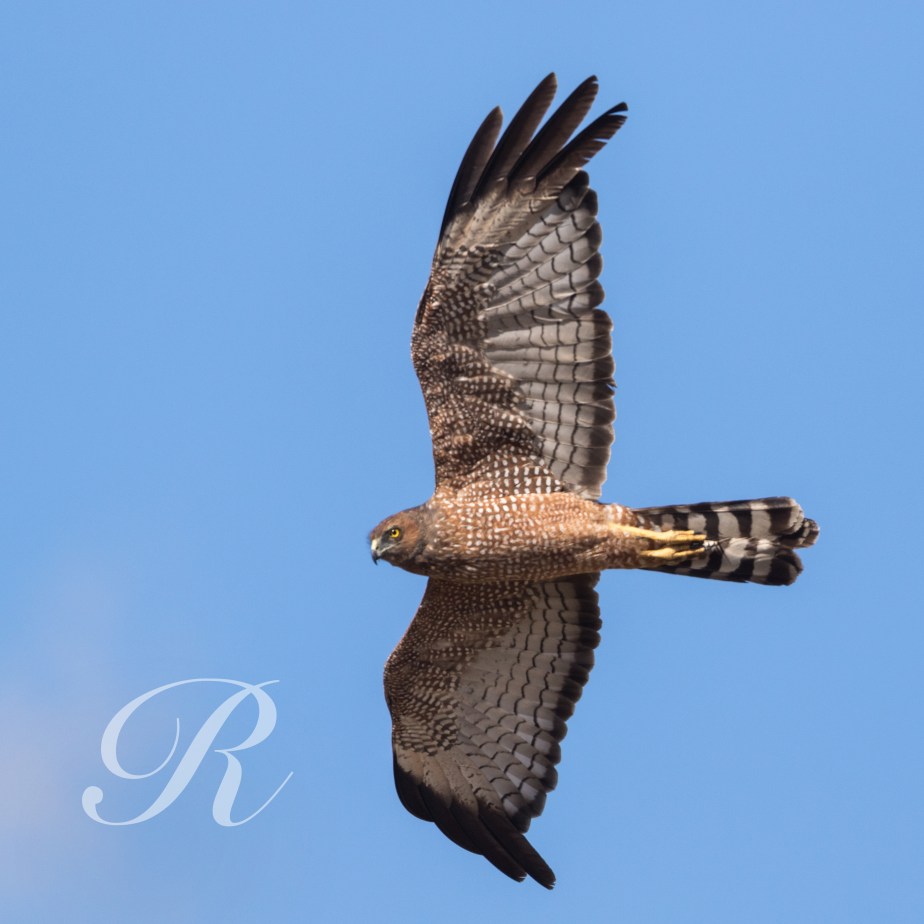
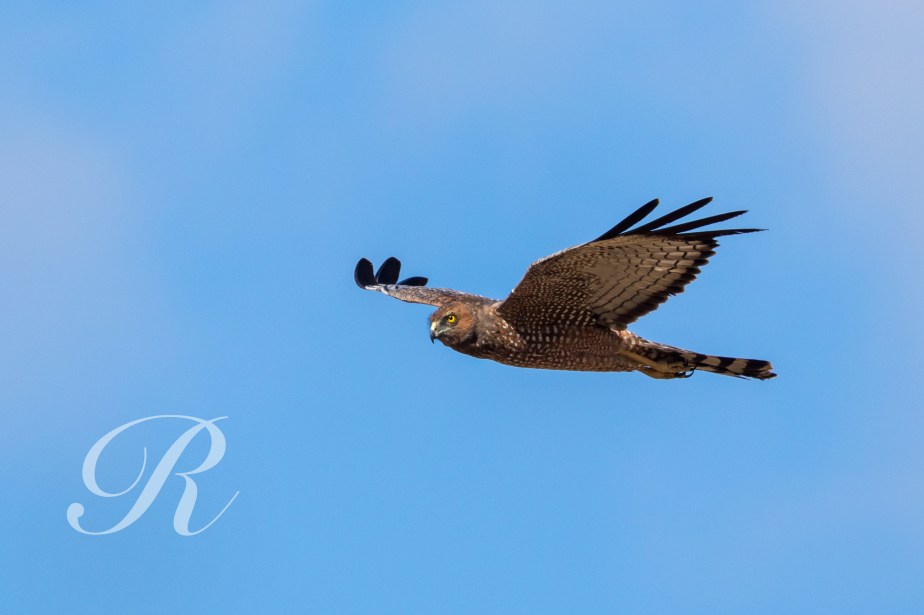
The dry plains around my home seem ideal for Spotted Harrier but for all that they are only occasional visitors. I was looking for quail when I encountered this one, so was he probably.

Spotted Harrier

When looking for mice in the grass slow flight is an advantage. Kestrels and Black-shouldered Kites can hover. They are both smaller birds, there is only so much energy in a mouse and hovering is expensive. The equation works for the small birds but hovering is too expensive for harriers to undertake except very briefly.

So slow flight it is. The upswept wings contribute to lateral stability, very helpful when flying close to stall speeds. If a wing stalls it drops relative to the other wing and the bird as a whole side slips to the affected side. Under these circumstances the lower wing develops more lift than the upper wing and tends to restore the bird to level flight (at a slightly lower altitude).

The upward angulation of the wings is called dihedral and it can be seen in this photo of our gliding harrier …

Spotted Harrier note the dihedral