First night was at Fitzroy Crossing. It has a nice new bridge, speedily built after its predecessor was destroyed by flood in the big wet of 2022/23. It also has a bad reputation for hostile natives, stones thrown at vehicles and theft from vans and cars. The Fitzroy River Lodge is a very lovely caravan park on the banks of the river. We enjoyed our stay, experienced no hostility whatsoever and wouldn’t hesitate to stay there again.
Safely home in Broome after an anticlockwise circuit of the beautiful Kimberley. We caught up with good friends and our little caravan survived the notorious Gibb River Road but not entirely unscathed.
With additional running around we traveled 2400km, saw 116 species of birds and took a few thousand photographs.
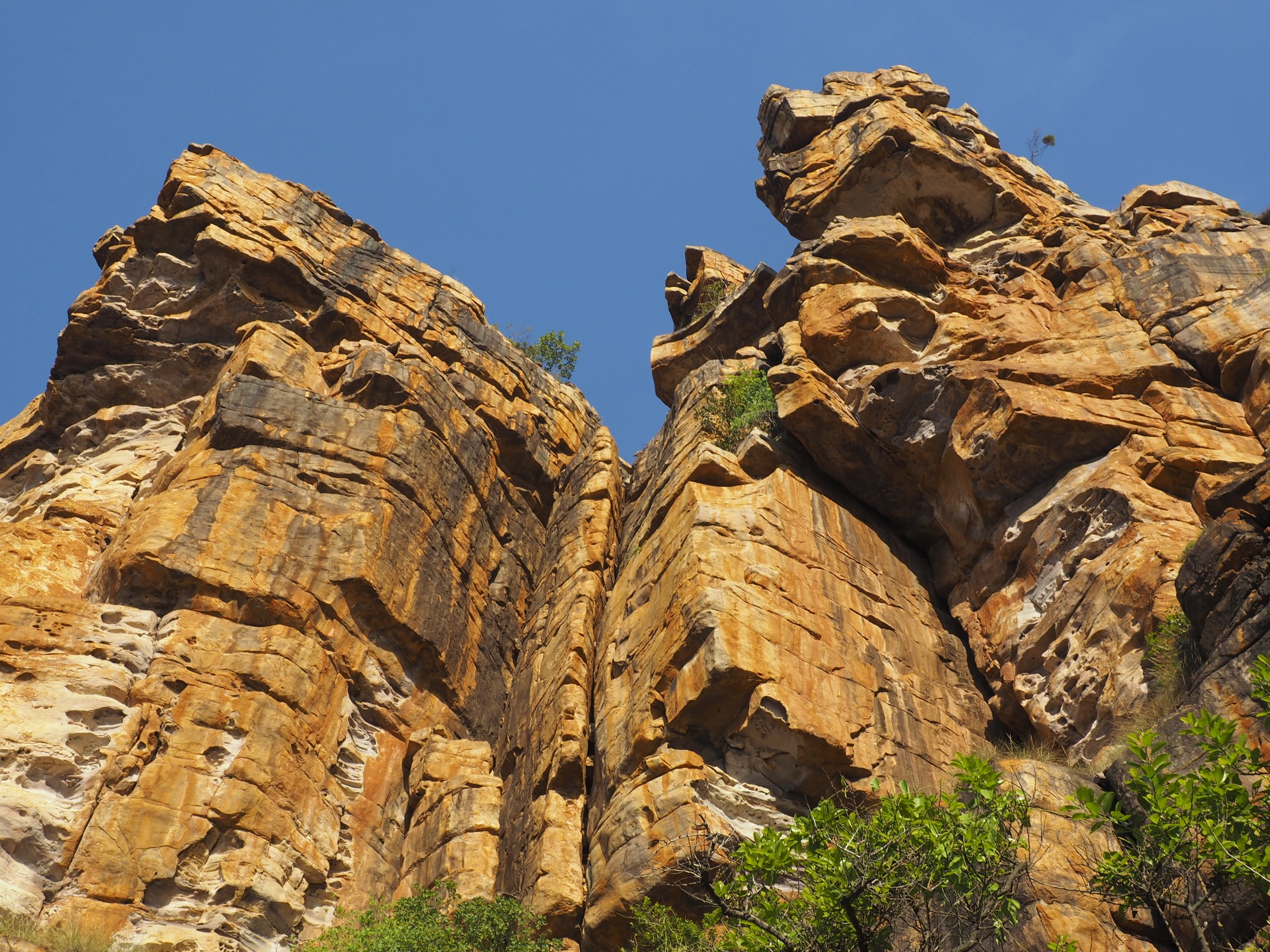
The Kimberley Craton is one of the oldest chunks of Australia. It collided (very slowly) with the Northern Australia Craton during the Paleoproterozoic era, 2.5–1.6 billion years ago. Sedimentary basin formation and time then conspired to produce the sandstone gorges and rocky ranges that make this area one of the most visually splendid in all of Oz.
And Boabs. There may be photos of Boabs (when I catch up with the editing).
Boabs are remarkable trees but for a successful photograph the intricate tracery of branches needs to stand out not be lost in the foliage of the trees behind. What was I thinking?
Having the camera on a tripod does encourage you to think about your composition. In the good old days I had a cable trigger so as not to jiggle the set up when pressing the button. These days I use a two second timer.
In that two second interval two Australian Bustard flew through the scene, the second hasn’t quite made it out. So let me present for you an unremarkable photo of twin Boabs and an unremarkable photo of a Bustard combined in a picture I am never likely to take again.
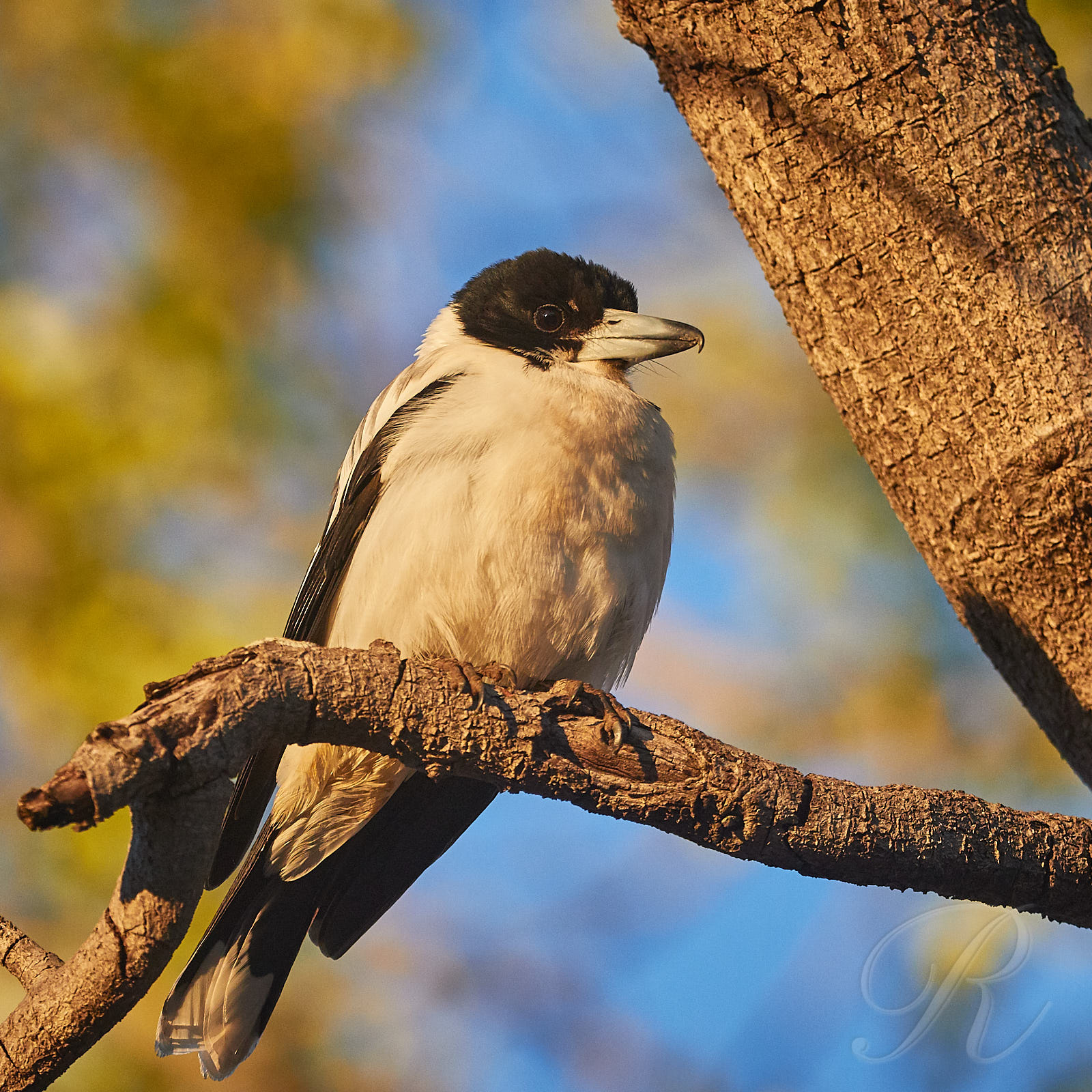
After saying good morning to the Kimberley form of the Grey Butcherbird, an isolated subspecies Cracticus torquatus latens, we headed for the Mt Barnet Roadhouse.
The previous day we had set up the satellite phone and taken advice from our home mechanic regarding the steering. It was suggested that we get the car towed. That’s a 1200km round trip tow. What about the trailer? Or that we pour oil into the empty reservoir and try our luck. The appropriate oil is ATF if that wasn’t available try anything light. I was considering cooking oil as a field expedient, it would have made an interesting story for the blog but Mt Barnet was well stocked with all sorts of oils including ATF. We filled the reservoir and hit the road.
At intervals we refilled the reservoir. Fortunately we had bought quite a lot of ATF because the system had a bloody great hole in it somewhere inaccessible. Driving in a straight line was easy, anything else was not.
Some of the Gibb River Road’s best scenery is in that stretch.
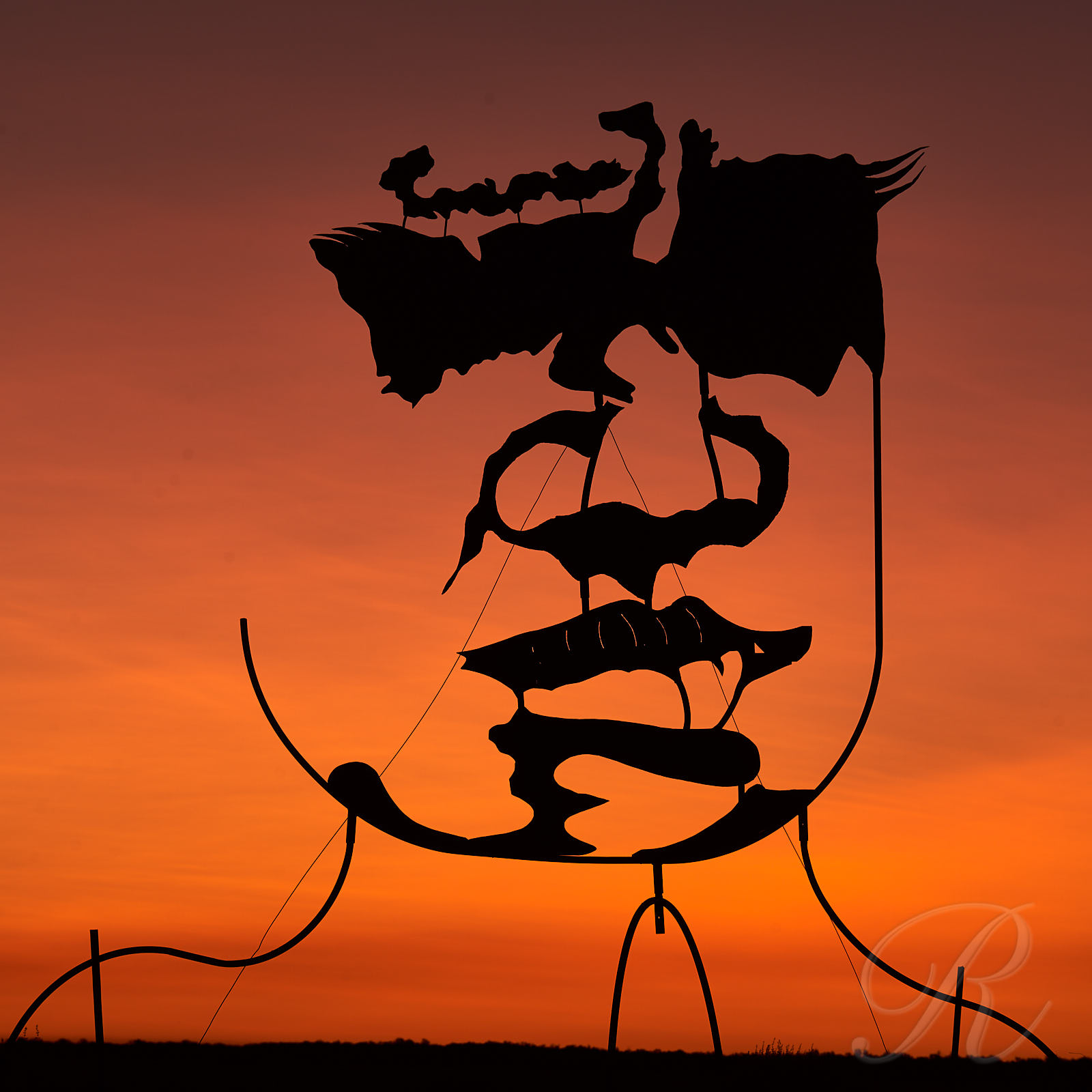
It wasn’t our intention to stay in Derby but we broke the drive to Broome into two stages. It gave me the chance to photograph a sculpture that is carefully arranged to be at its best against the setting sun.
Next morning we did the sights of Derby and headed for Broome.
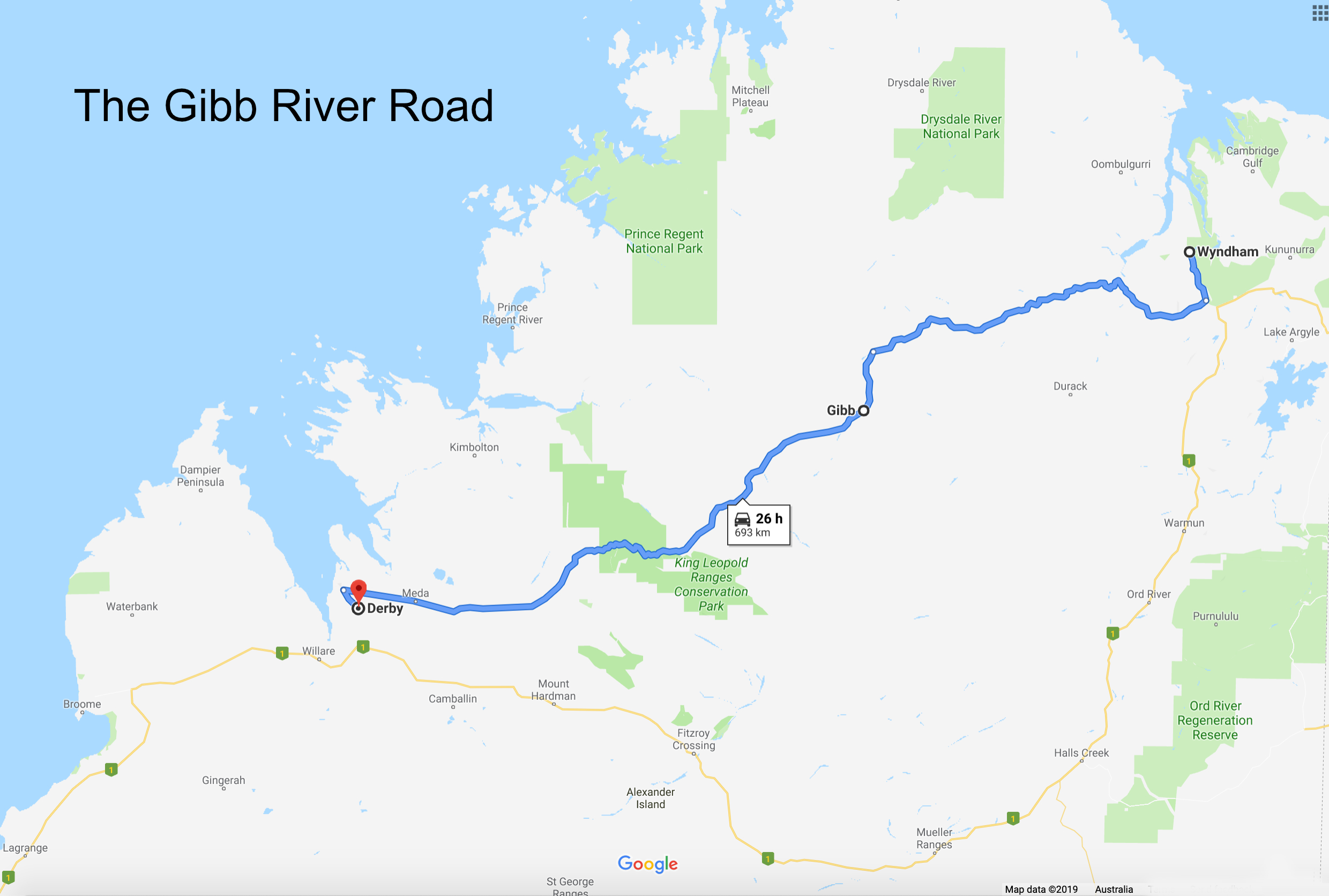
Dragging ourselves away from Parrys Creek it was time for the Gibb River Road. It’s sealed as far as the entrance to El Questro, the famous dude ranch. I understand that the drive in from there comes as a bit of a shock to the dude caravaners but I haven’t tried it. In any case the Gibb will rattle their crockery if they are driving the full length of it.
On this occasion our destination was Mount Barnet and Manning Gorge, about 390km for the day. Once we reached Mt Barnet turning right off the main road the steering felt rather heavy. It’s a popular camp site and dog friendly. We tucked ourselves way down the back where we could enjoy the illusion of bush camping.
We set up camp, had a swim in the waterhole, drank a beer and plucked up the courage to look under the hood. Searching amongst the tightly packed mysteries we located the reservoir for the power steering fluid. It was empty. Bugger.
Early next morning I abandoned Gayle and the dog and hiked the waterfall trail. First you pull yourself across the creek in a tin boat by a rope and pulley arrangement. Then it’s about a 40 minute walk, some of it uphill and rocky underfoot. Your reward is an amphitheatre into which pours a cascade that thrills the onlooker. Well it would when it’s more than the current trickle. It’s pretty and a nice place for a swim. Most visitors content themselves with that but for the intrepid a scramble down stream leads to a truly beautiful gorge.
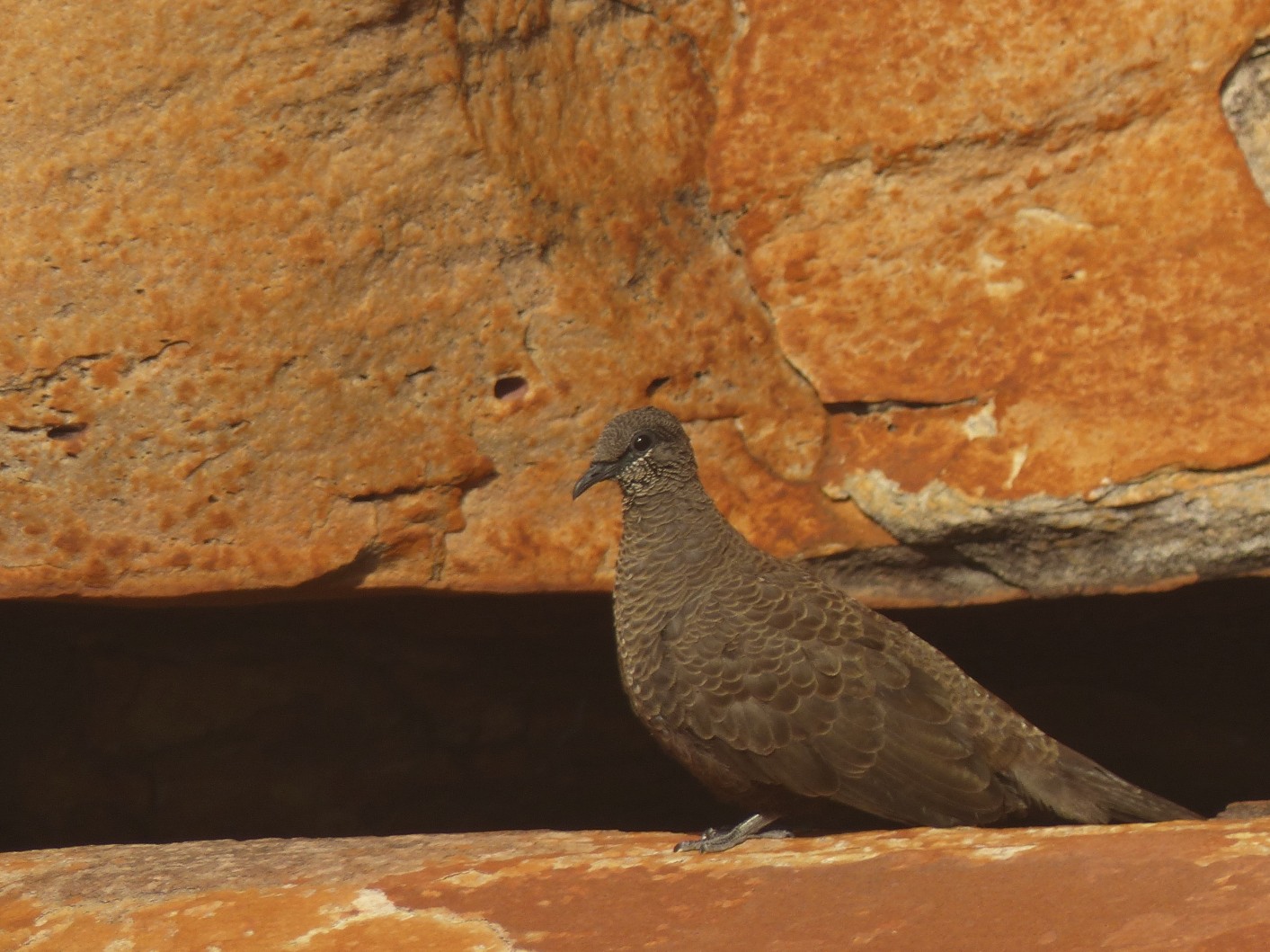
It’s a spot where you may see one of the Kimberley’s special birds, the White-quilled Rock Pigeon. Look for them in the shadows and ovehangs.
Petrophassa albipennis
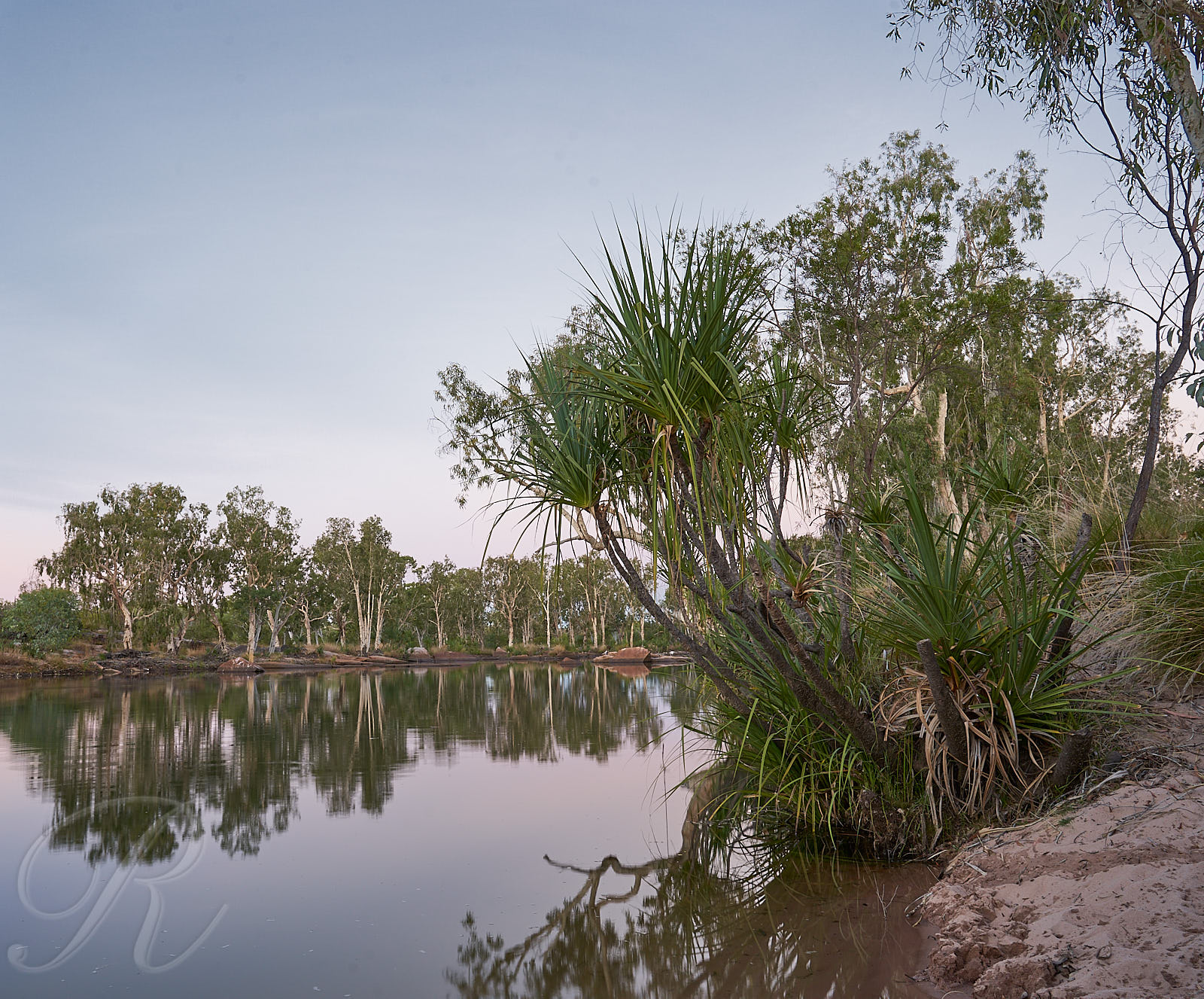
The waterhole back at the camp is also very charming.
The moon is a few days past full now so it rises more than an hour after sunset. This means a good look at the milky way is now available.
We arrived in Halls Creek, Heart of the Kimberley, from the Tanami and headed for Broome, the administrative centre via Wyndham and the Gibb River Road.
I could spend six months here without getting bored and without seeing it all. On this trip we would dash around in under a week.
The Kimberley is huge … 423,517 square kilometres (163,521 sq mi), and has a permanent population in the order of 35,000 (many more in the winter). That’s just 0.8 of a person per square kilometre. Two thirds of those live in the towns of Broome, Derby and Kununurra.
Our first stop was just outside Wyndham at Parrys Creek Farm. This is situated on the margin of a large conservation area. The camp site is by a lagoon and is dog tolerant. We spent three nights here giving me the chance to visit the Marlgu Billabong at dawn and dusk (no dogs here) and for the three of us to visit Wyndham and Kununurra during the day.
The billabong is in the Ord River flood plain and rivals any tropical Australian wetland that I’ve visited. I won’t bore you with lists, let’s just say I cleaned up and the bird numbers were impressive. The site has a short boardwalk to a well situated hide.
Marlgu Billabong from Telegraph Hill
Magpie Geese at dawn
Pied Heron
Australasian Grebe
Poor old Wyndham has a somewhat sad aspect to it. The website Aussie Towns puts it this way …
Wyndham, Western Australia’s most northerly town, sits on the edge of the Cambridge Gulf surrounded by uninviting salt lakes, desert and mudflats which stretch to the horizon.
The town was founded in 1885. It got off to a good start as the gateway port to the Halls Creek gold rush. From 1919 to 1985 there was a meat works in operation. The port still functions serving mining operations.
Wyndham Port from Five Rivers Lookout
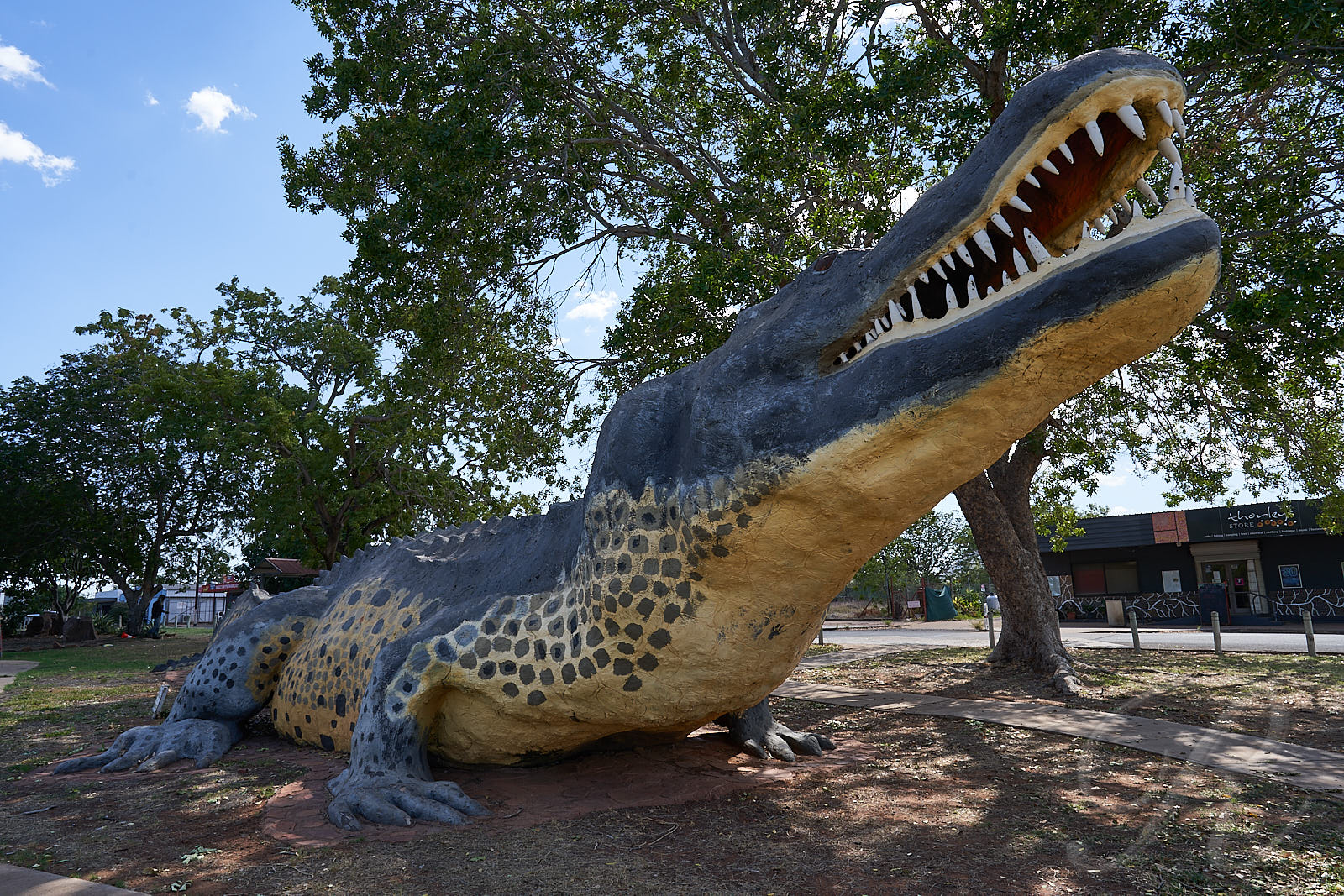
There is a Big Crocodile on the outskirt of town (which is adjacent to the opposite outskirt and doubles as the town centre). You could probably find some real ones if you went wading.
The population is less than 700 people. It has a hospital and an excellent cafe called The Croc Cafe.
Wyndham is on a side road that leads no where else and is bypassed by most travelers. Kununurra is right on the highway and on a scenically splendid lake. It is a stark contrast. There is good shopping and the caravans are inserted with surgical precision at impressive densities in the caravan parks. Give me the quiet of Parry Creek Farm.
Coming across the arid interior of Australia after a brutal summer and a poor wet season the birding was very quiet. Fortunately I’m past peak obsession. At Parrys Creek we had a good dawn chorus at last, you’ve got to love the Blue-winged Kookaburra, poor thing can’t raise a laugh.Add to it a polyphony of White-gaped Honeyeaters and screeching Little Corellas … you won’t be sleeping in.
There is opportunity to get close up to some beauties …
I hope that it’s obvious to anyone who has read this far into the trip that I get a great deal of pleasure from this sort of travel. But if I had to say what is the most important component of it all I would say the wildlife. And if pressed to be even more specific it would be the birds.
My hope was that I would get a look at the Kimberley Honeyeater, it would have been the only likely chance of a new species for my Ozzie list. It was not to be, I will have to go again. I’m glad to have done the cruise but next time it will be 4WD again, it is far more productive in wildlife encounters … of every sort except hopefully crocodiles.
But before leaving the Kimberley let me share a little more of the flora and fauna that I caught up with.
Caspian Tern
Lesser Crested Tern
Native Hibiscus
But the cruise ain’t over yet, we now have to turn the corner and cross Bonaparte Gulf en route to the Tiwi Islands. The gulf, commonly known as Blown Apart Gulf, has an ugly reputation.
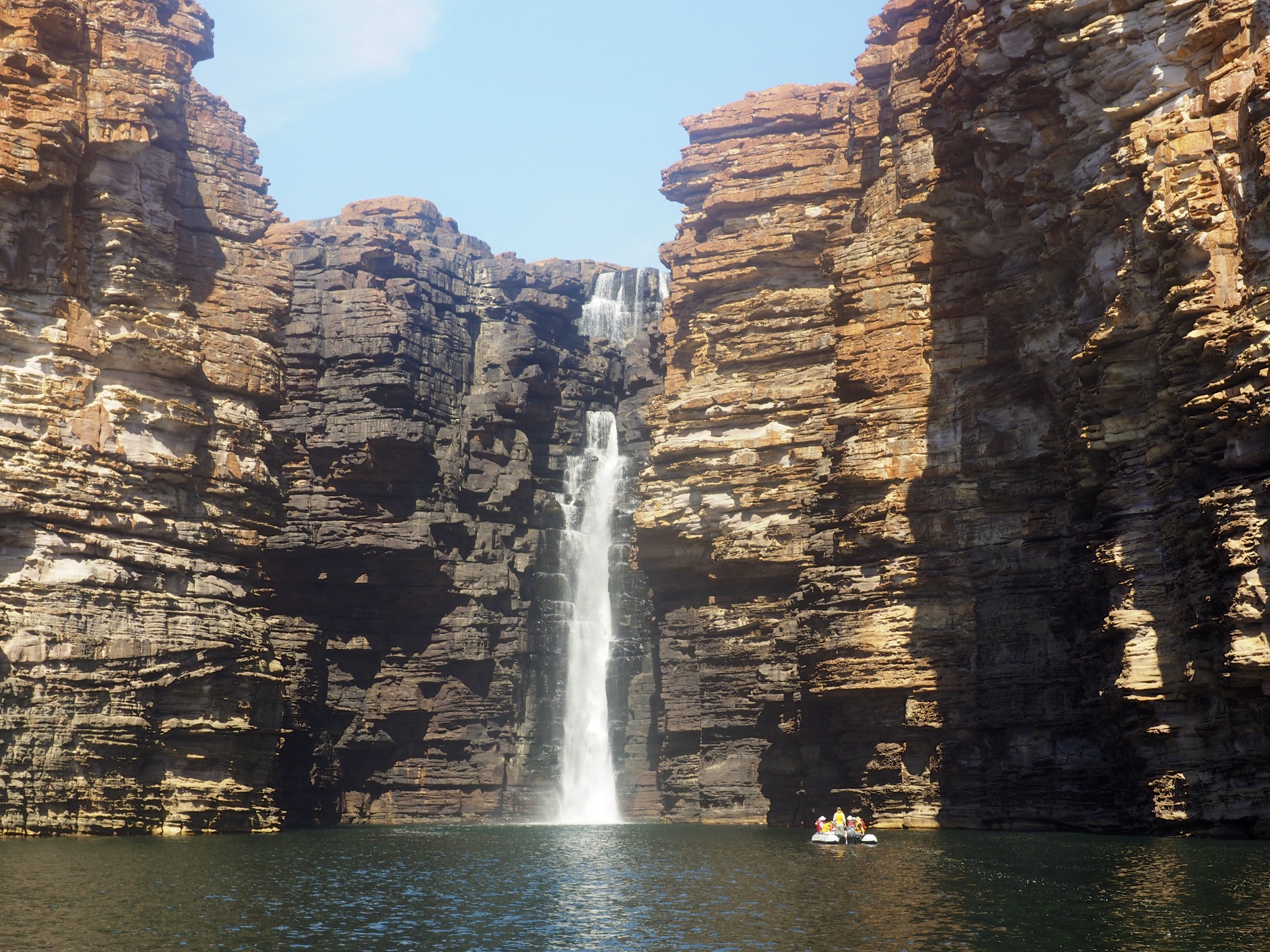
The Kimberley cruise was rapidly approaching its end but there was one last splendour to see, the King George Falls. These tumble from the top of 100 meter high cliffs into tidal waters of, neatly enough, the King George River.
Not named after that King George who lost America to the unwashed rabble living there but King George V who gave us the house of Windsor. Prior to 1917 the Royal House was called Saxe-Coburg but the activities of his first cousin, Kaiser Wilhelm II of Germany was attracting some opprobrium so he changed his name.
As well as taking a zodiac cruise directly under the falling water we also climbed a steep path to the top.
The catamaran down below was a Seawind 1200 and at that moment I could not imagine a more perfect fit between place and mode of transport. Sit me there and pass me a beer.
Waiting for us just a few metres from the edge of the falls was a very cooperative White-quilled Rock Pigeon …
Good King George would doubtless have shot it, having despatched over a thousand pheasants in six hours on 18 December 1913. Other notable achievements included shooting 21 tigers, 8 rhinoceroses and a bear over 10 days in Nepal, what a guy.
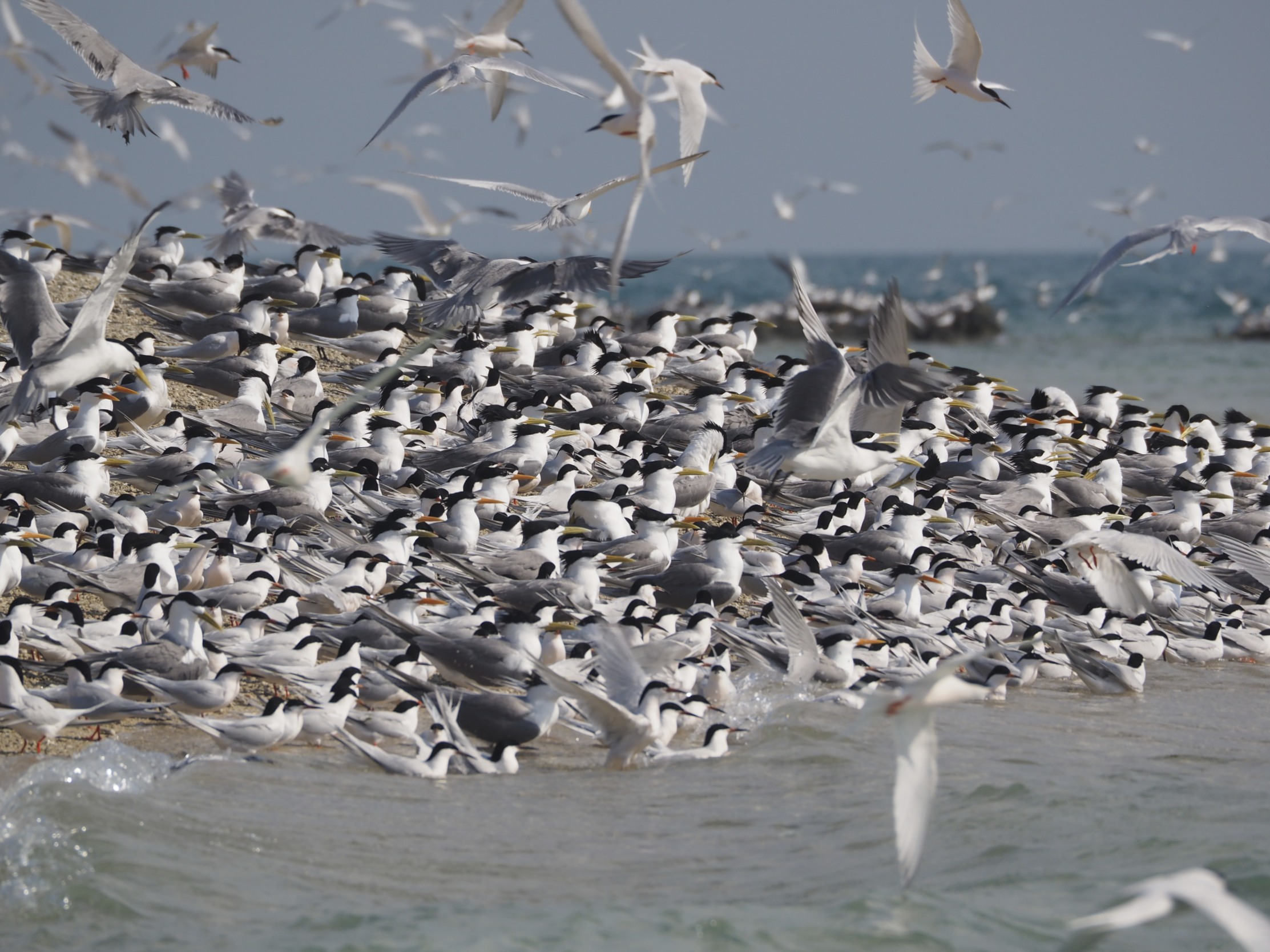
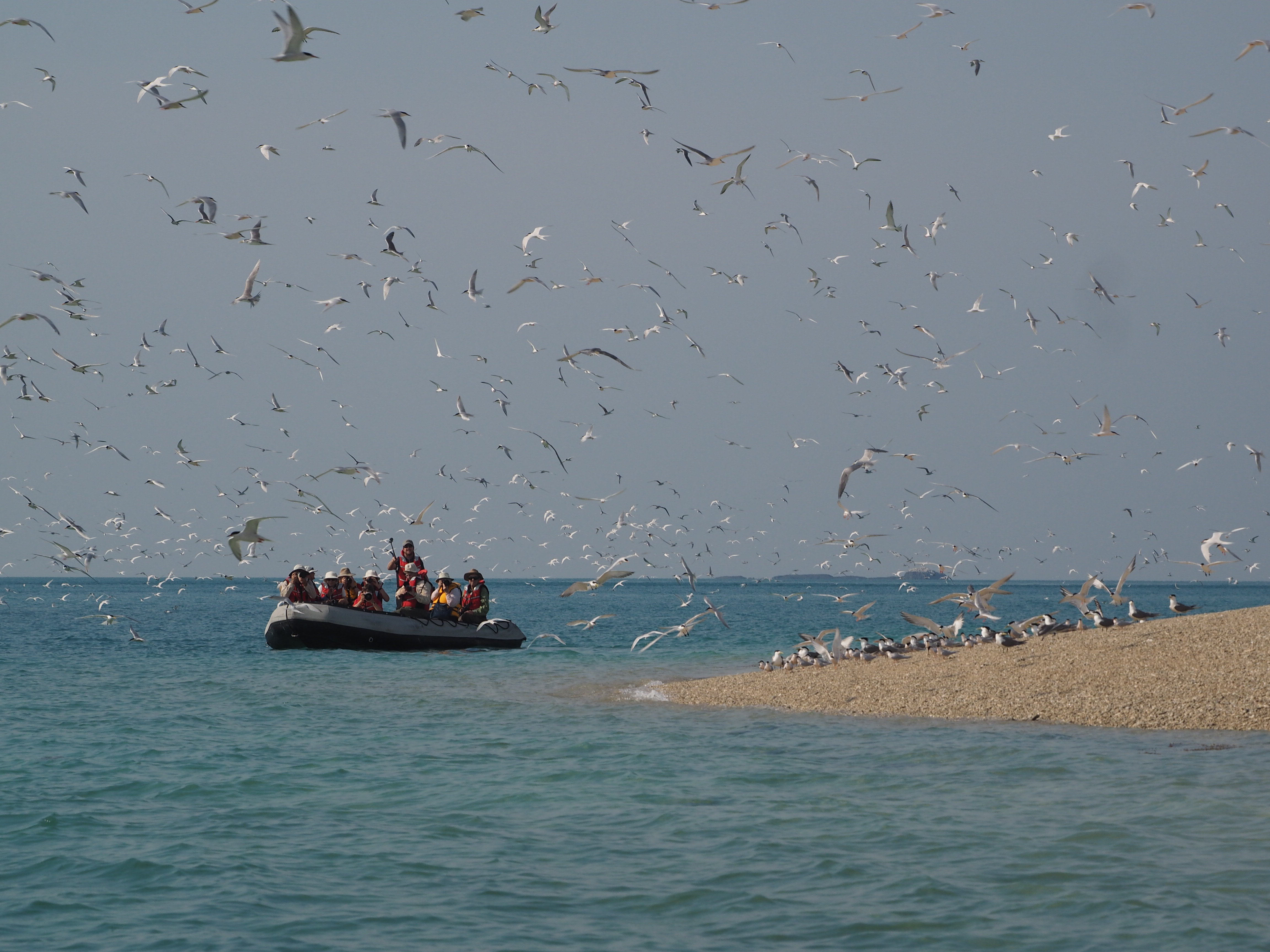
Not far from Bigge Island was, for me, one of the highlights of the Kimberley trip, Sterna Island. If you click on the photo it will fill your screen and you can try your diagnostic skills. There are three species of Tern to be found. If you find a fourth let me know. The back arrow in your browser brings you back to this page.
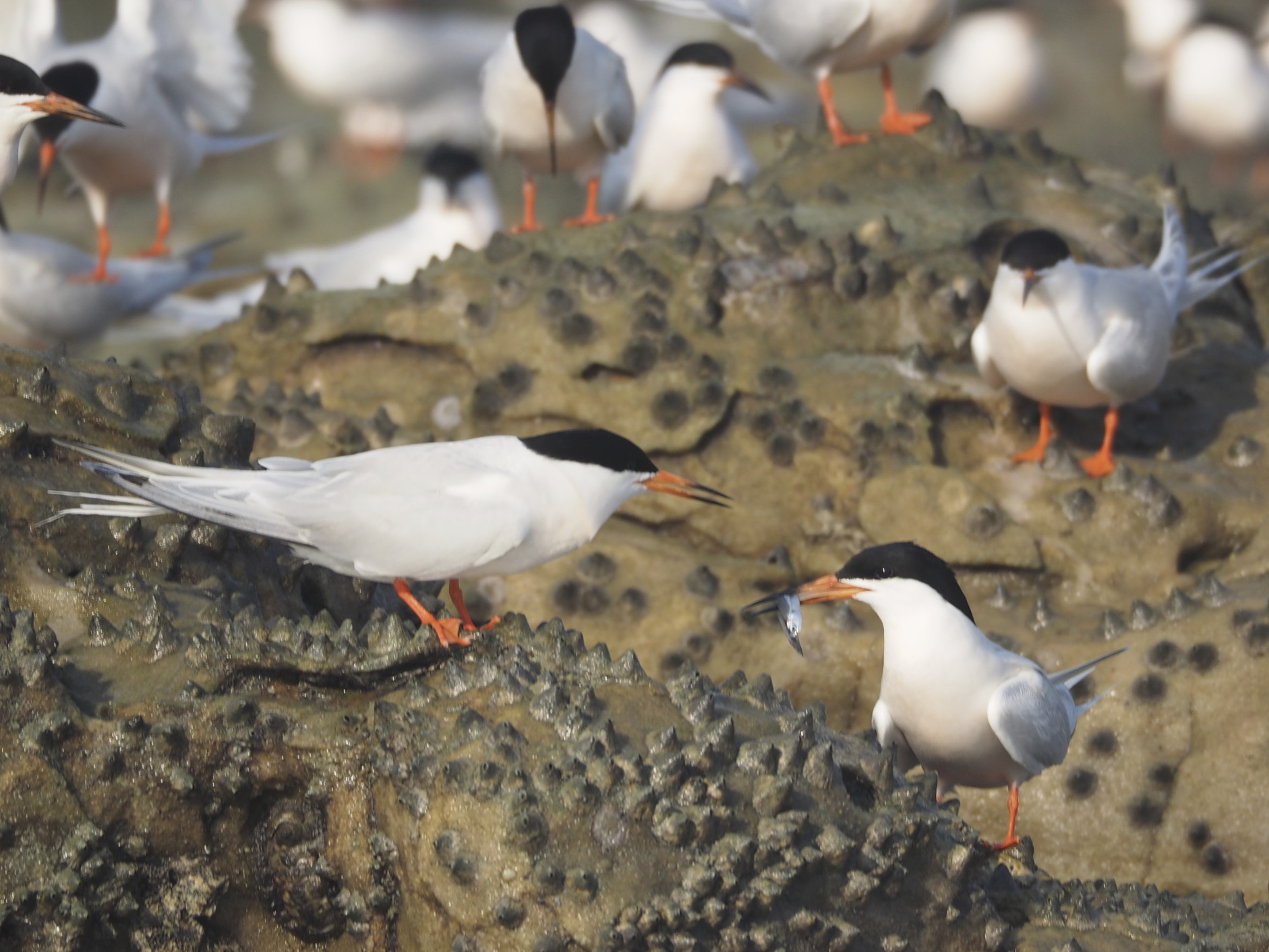
There were many thousands of breeding pairs of terns. Plus a pair of Peregrines that could have lunch whenever they wanted and one did before our very eyes. A White-bellied Sea Eagle also flew through causing a fair bit of mayhem. But it was mostly about the terns. The Roseate were in peak breeding plumage …
The presentation of a fish serves the same purpose as a rose on Valentines day.
The next photo shows Crested and Lesser Crested Terns in the one view. To tell them apart just remember the Crested has a bill the colour of Lemon peel, the Lesser Crested has a bill the colour of Orange peel …
Birds just bursting with energy. You have to click on this one …




















 bobmcgee