… and very cooperative Rail.
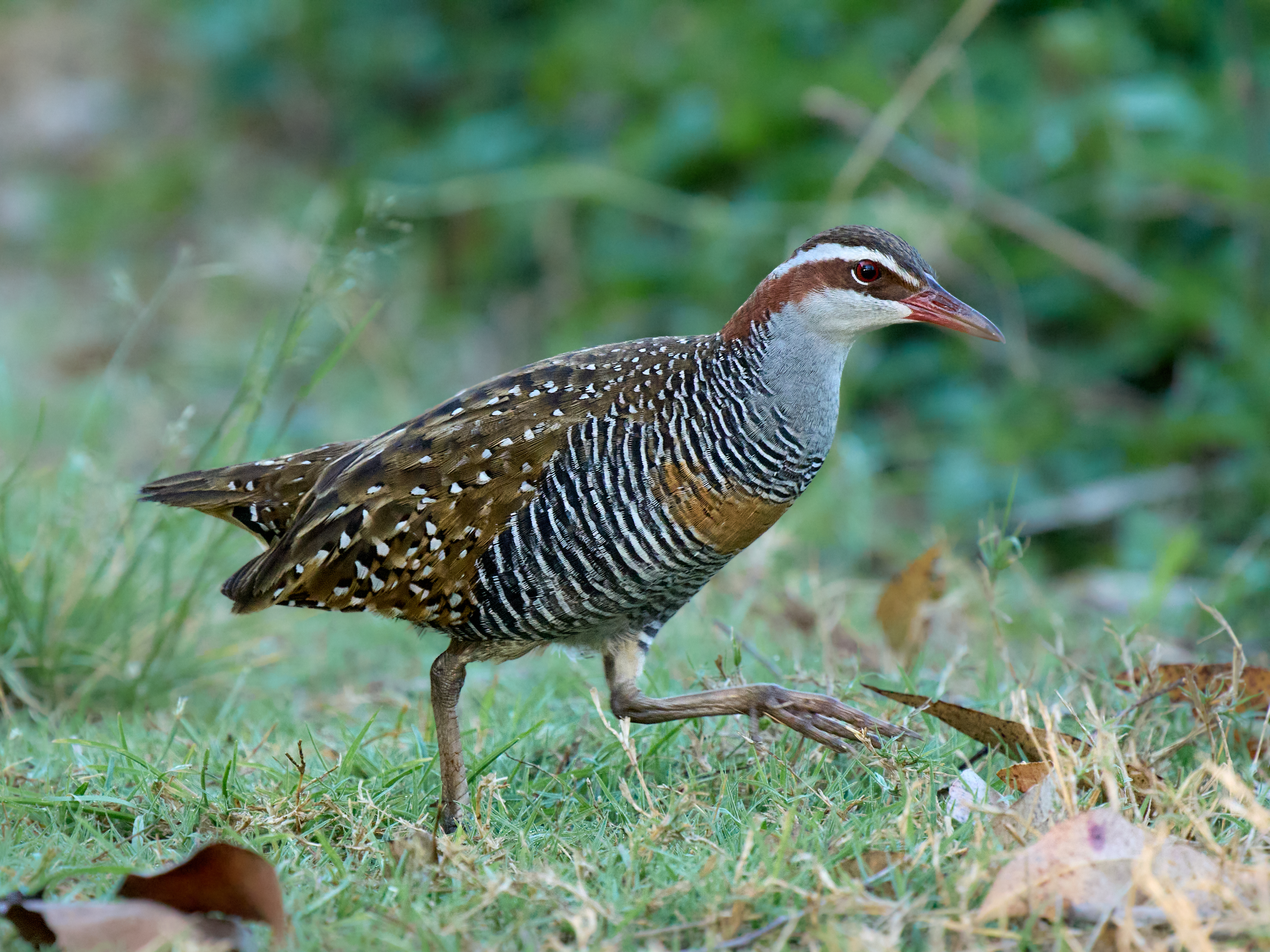


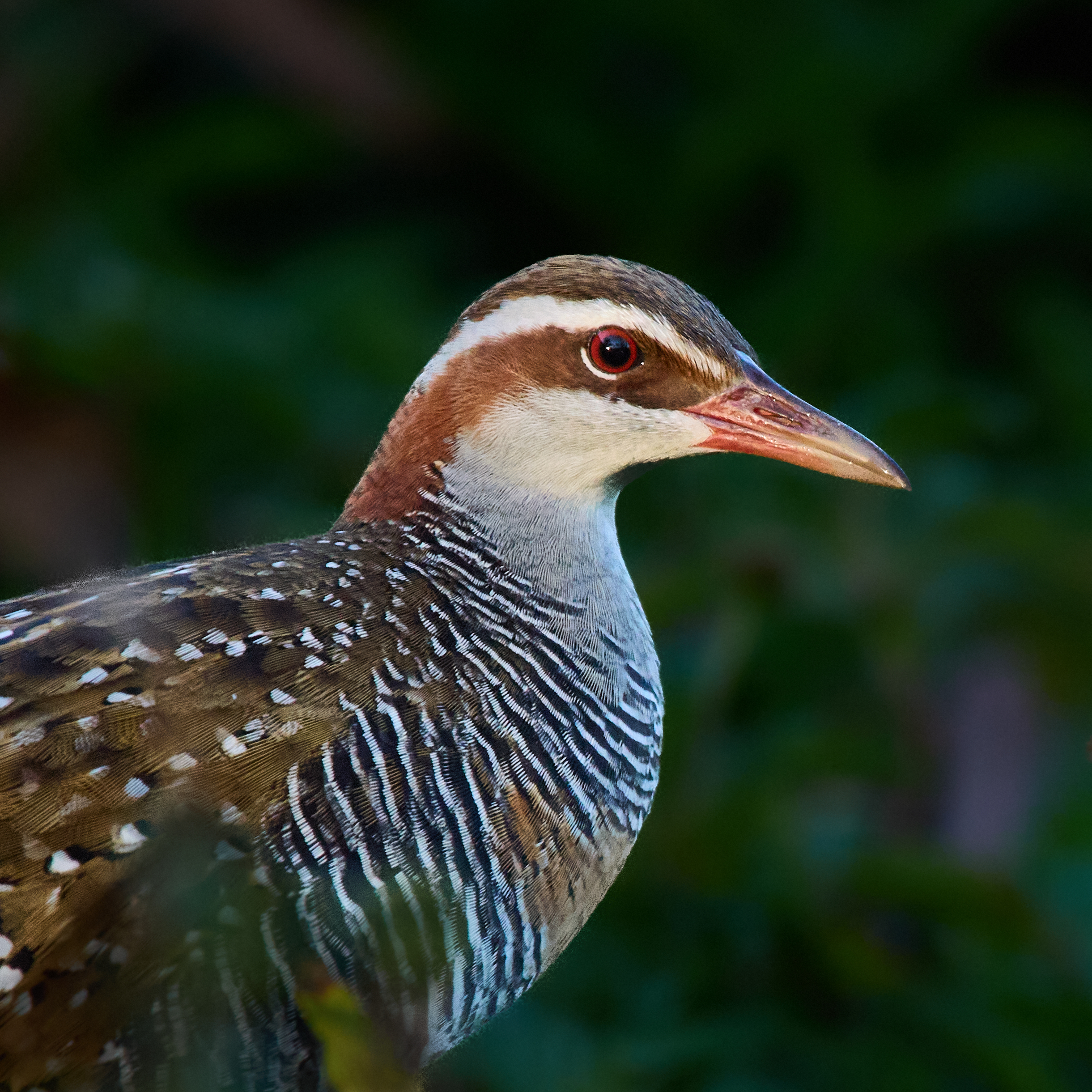
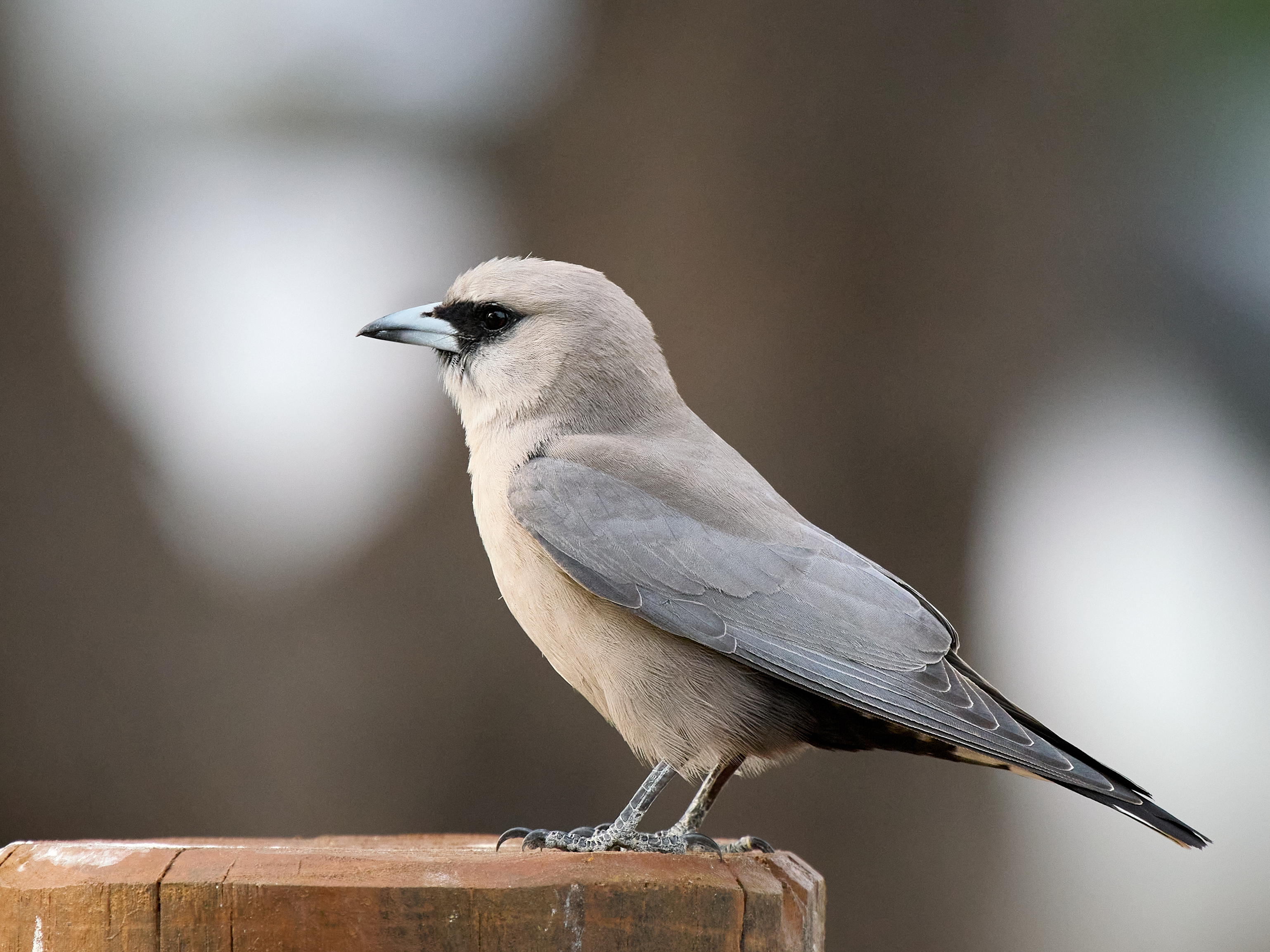
Widespread and not uncommon. Found in all Australian states, absent from the deserts. Also found in Indonesia, the Philipines, New Guinea and Pacific Islands. Usually in rank vegetation near water.
and pray that there's intelligent life somewhere out in space
… and very cooperative Rail.
Widespread and not uncommon. Found in all Australian states, absent from the deserts. Also found in Indonesia, the Philipines, New Guinea and Pacific Islands. Usually in rank vegetation near water.
The Atherton Tableland is a different world from the thousands of kilometres of savanna just a short distance behind us. It’s cooler, it’s very much greener and it’s much more populated. It would once have been a forest. Now it’s scattered remnants separated by farmland. We are camped at Lake Eacham just outside the National Park. This is home for four nights.
A short walk takes me into dense rain forest, the light hardly penetrates through the trees towering above. The birding is tough, done largely by ear. The photography is even tougher done largely without light! Bird density seems low but the variety is high. Lists are not long but there seems to be something new on every one.
The crater lakes are Lake Eacham and Lake Barrine. They formed when magma approached sufficiently close to the surface to turn the groundwater to steam producing explosions that created the craters now filled with water. These events were fairly recent. Barrine is the older forming about 17,300 years ago. Eacham formed about 9,130 years ago. Both are surrounded by lush rainforest and are National Parks.
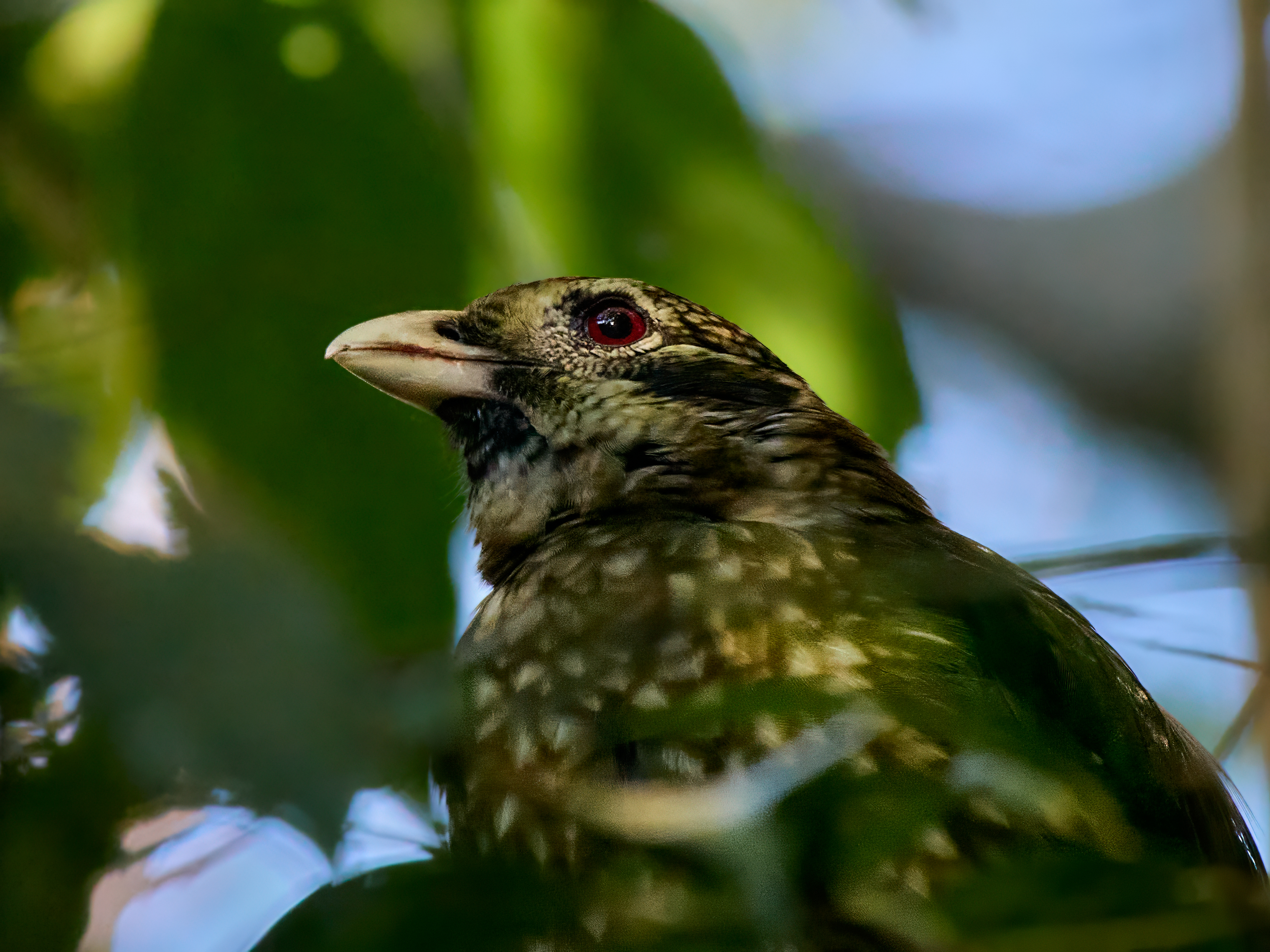
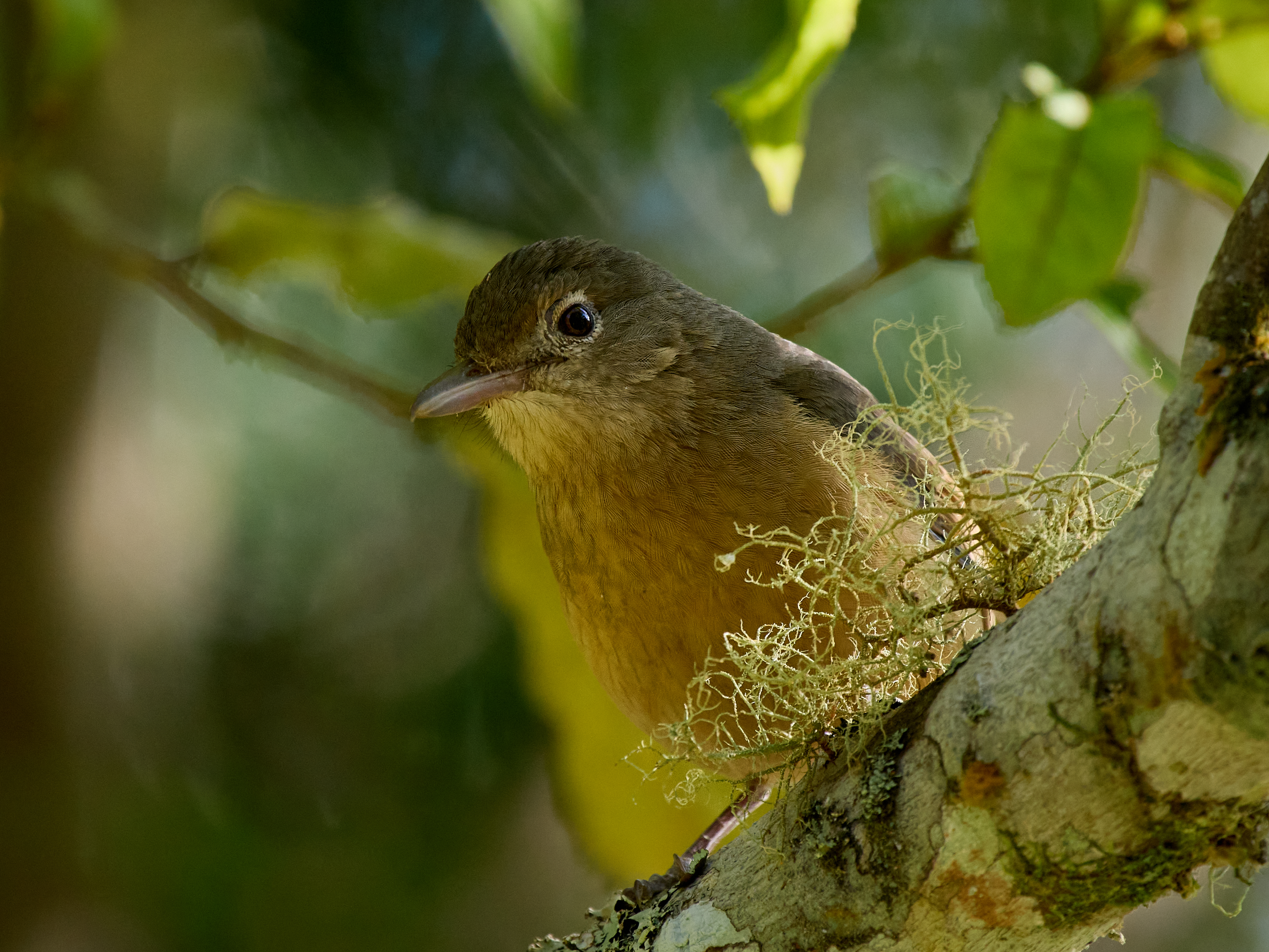
The wet tropics has 23 bird species that are either endemic or largely confined to the region. Nine of those species are only found at higher altitudes, essentially the Atherton Tableland. And there’s no shortage of more wide ranging species. Those tall trees are so inviting you can even find Kangaroos in the canopy. It is a very special place.
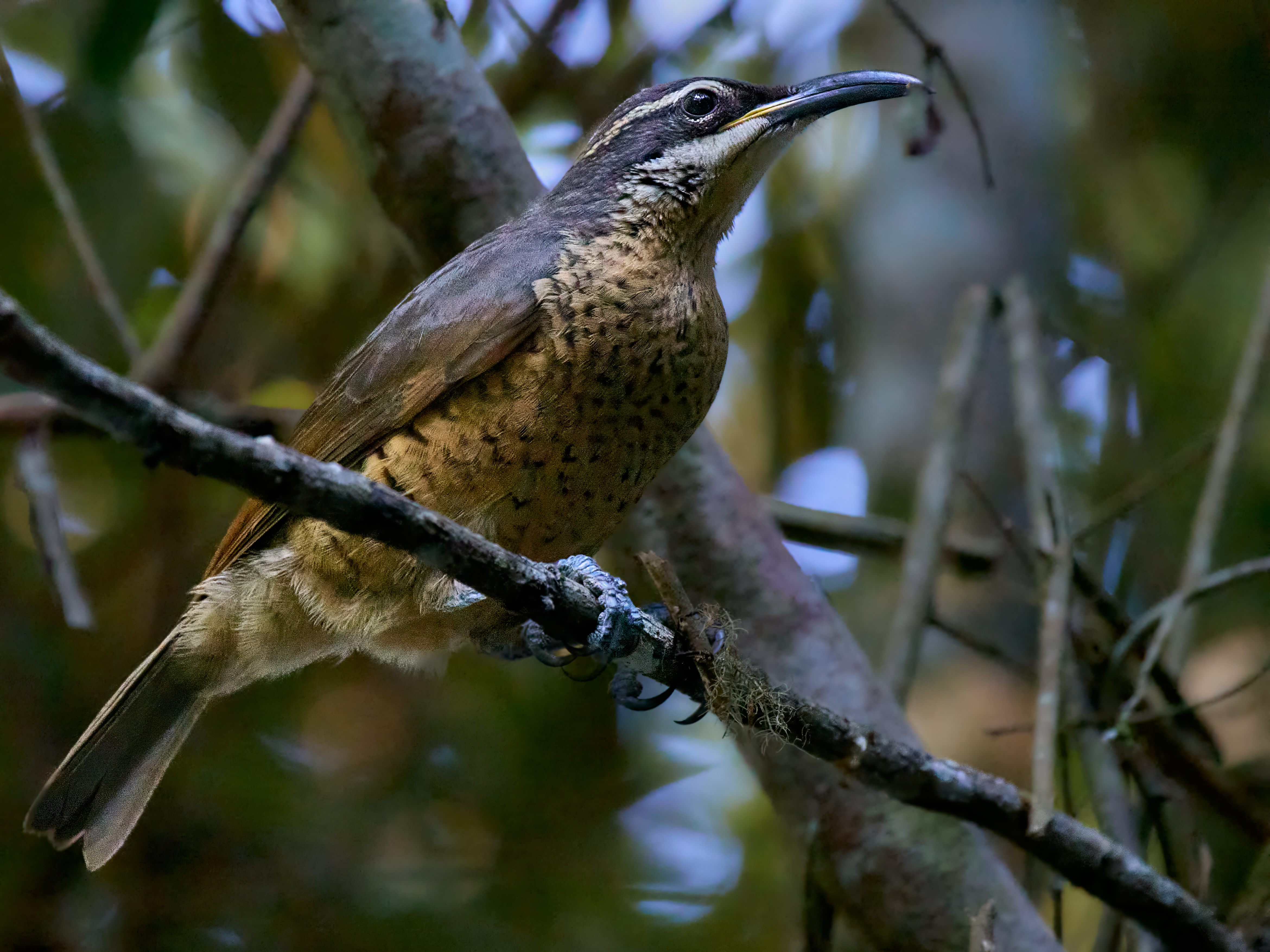
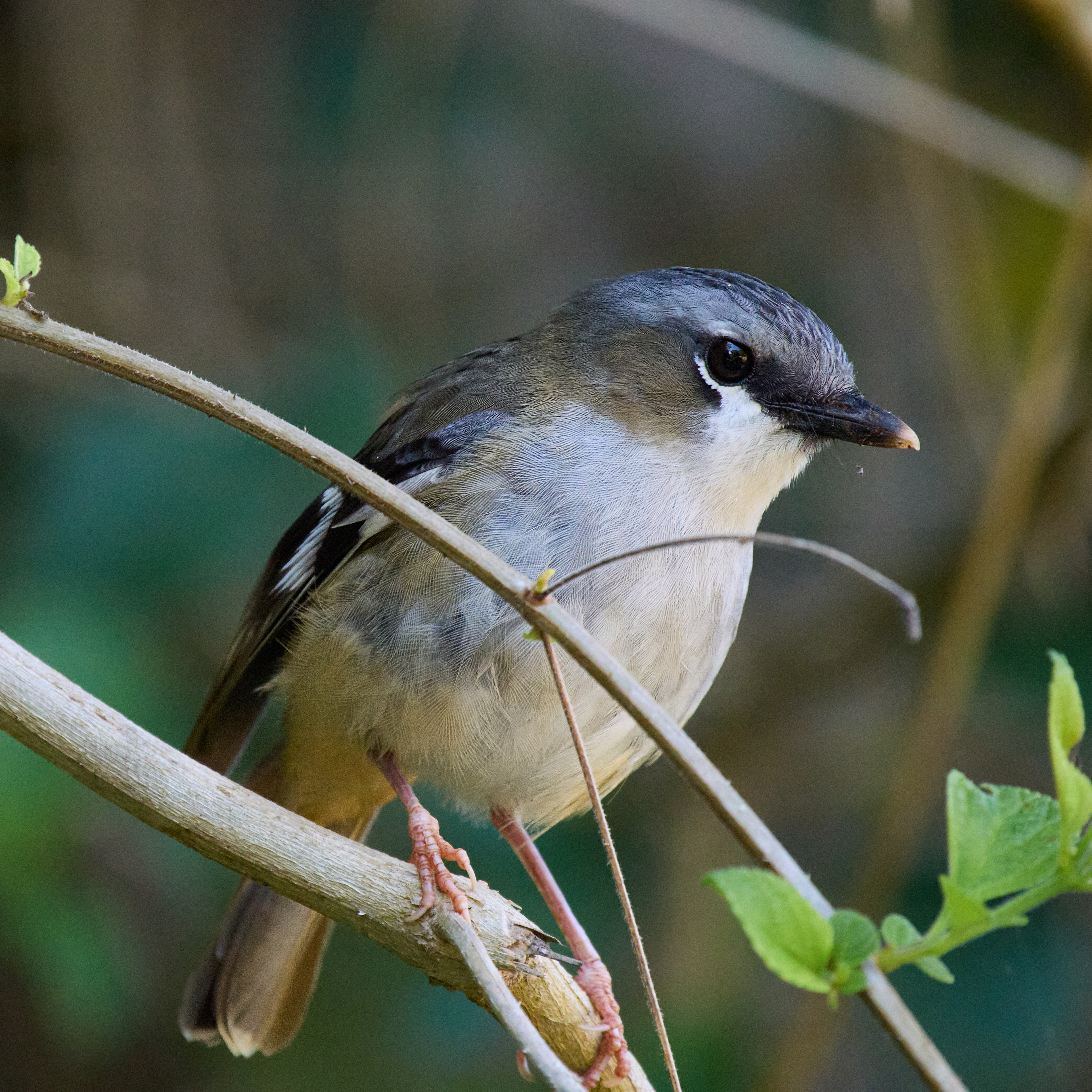


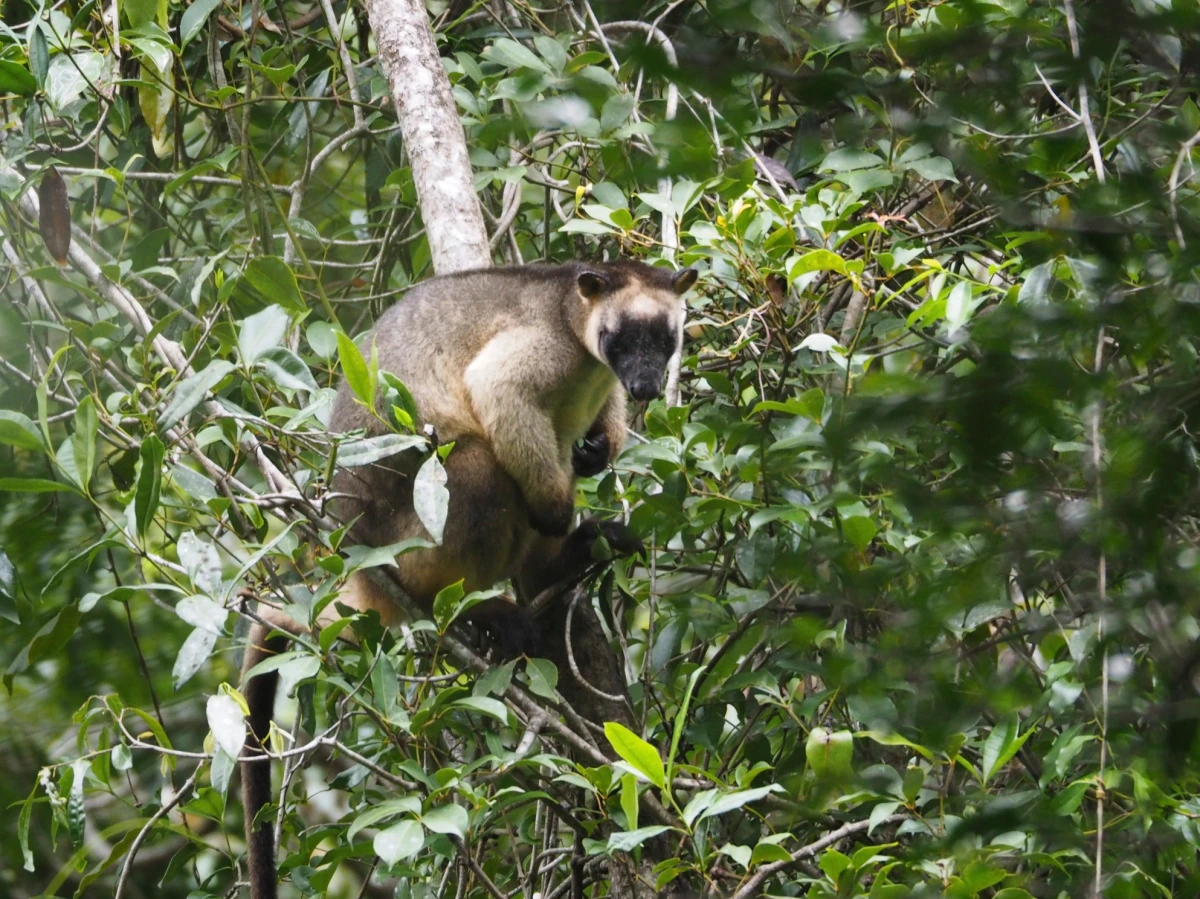
That’s Lumholtz’s Tree Kangaroo, very hard to spot during the day. I took this photo on a previous visit.
Karumba to Croydon an easy 224 km mostly on good dirt road. Croydon has a population of 215. Gold was discovered in 1885 by 1887 it was the fourth largest town in the colony of Queensland with 7,000 occupants. Gold was shipped out by train to Normanton, the railway still runs as a tourist venture, The Gulflander. Lake Belmore is a short drive from town, scenic and not bad for birding. Even better birding at Cemetery Swamp (called Croydon Lagoon on eBird). There is a caravan park or you can camp at the rodeo ground – get a permit at the visitor centre.
Croydon to Innot Hot Springs 379 km of made road although intermittently a single strip of asphalt shared with oncoming traffic.
The Savannah Way goes on another 145 km to Cairns but the savanna itself has just about run out. A new suite of birds is already intruding. Today introduced Pied Currawong, Crimson Rosella, Noisy Friarbird and Grey Butcherbird. Rainbow Lorikeets have replaced the Red-collared. Tomorrow we climb up onto the Atherton Tableland and the change will be even more dramatic. So this is where I will wind up the Savannah Way trip list.
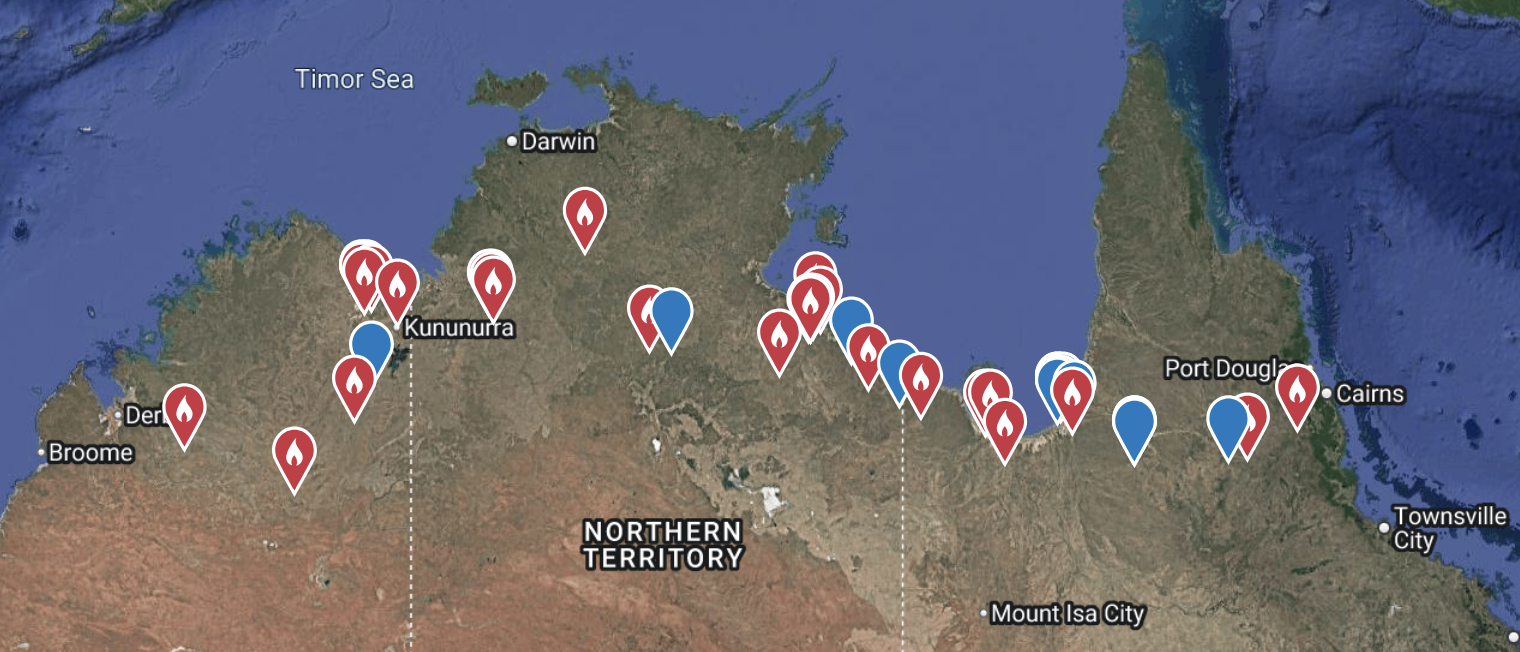
The trip meter reads 4350 km, that’s Broome to Innot Hot Springs and the running around at each stopping place. Each symbol on the map represents a place where I submitted a bird list. It adds up to 146 species in two weeks.
I know you are waiting with bated breath for news on the Calendar Game. The trip has added five species to the year list, now at 335. Twenty-nine to get and only three month to do it. I’m feeling confident.
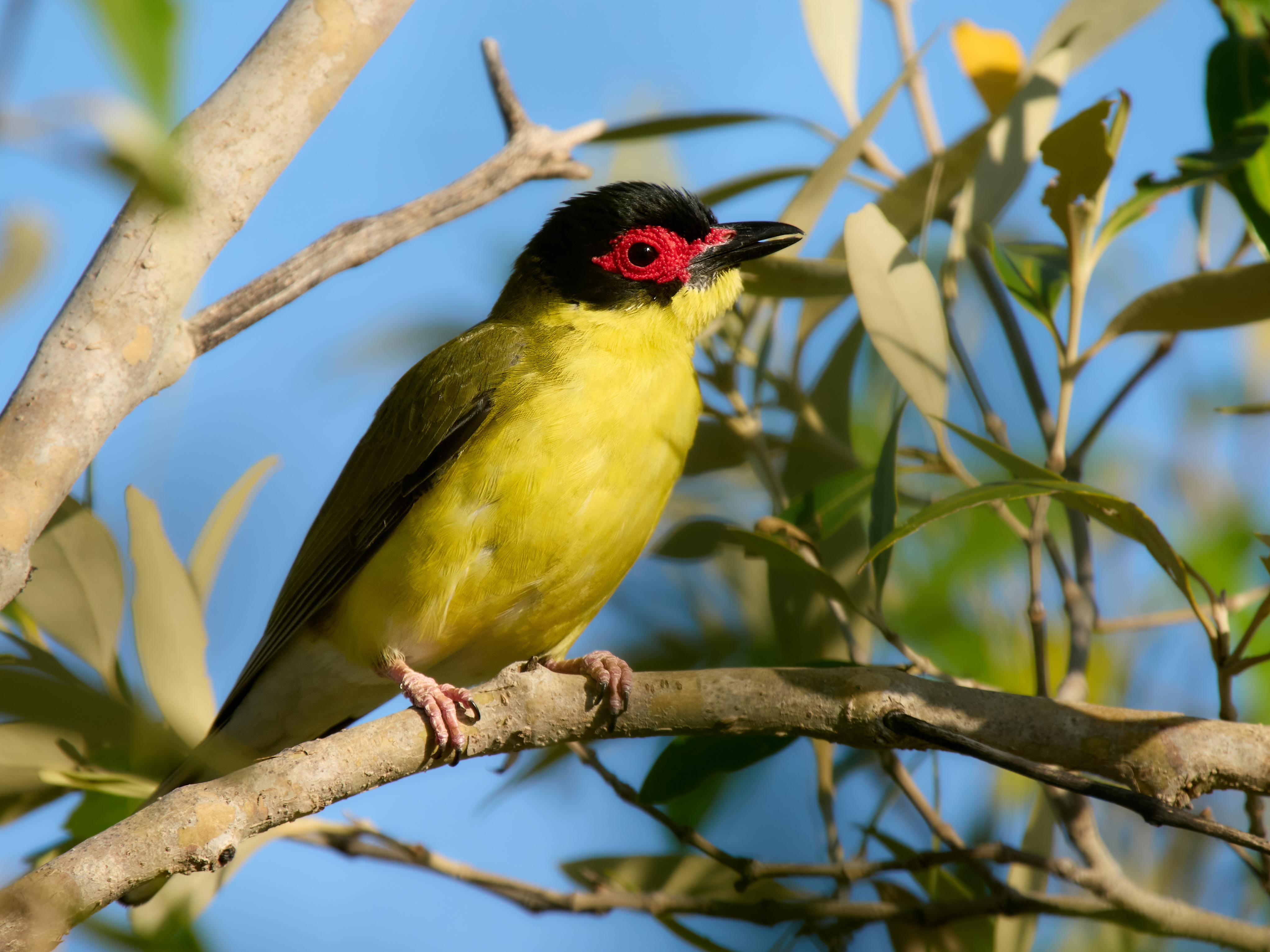
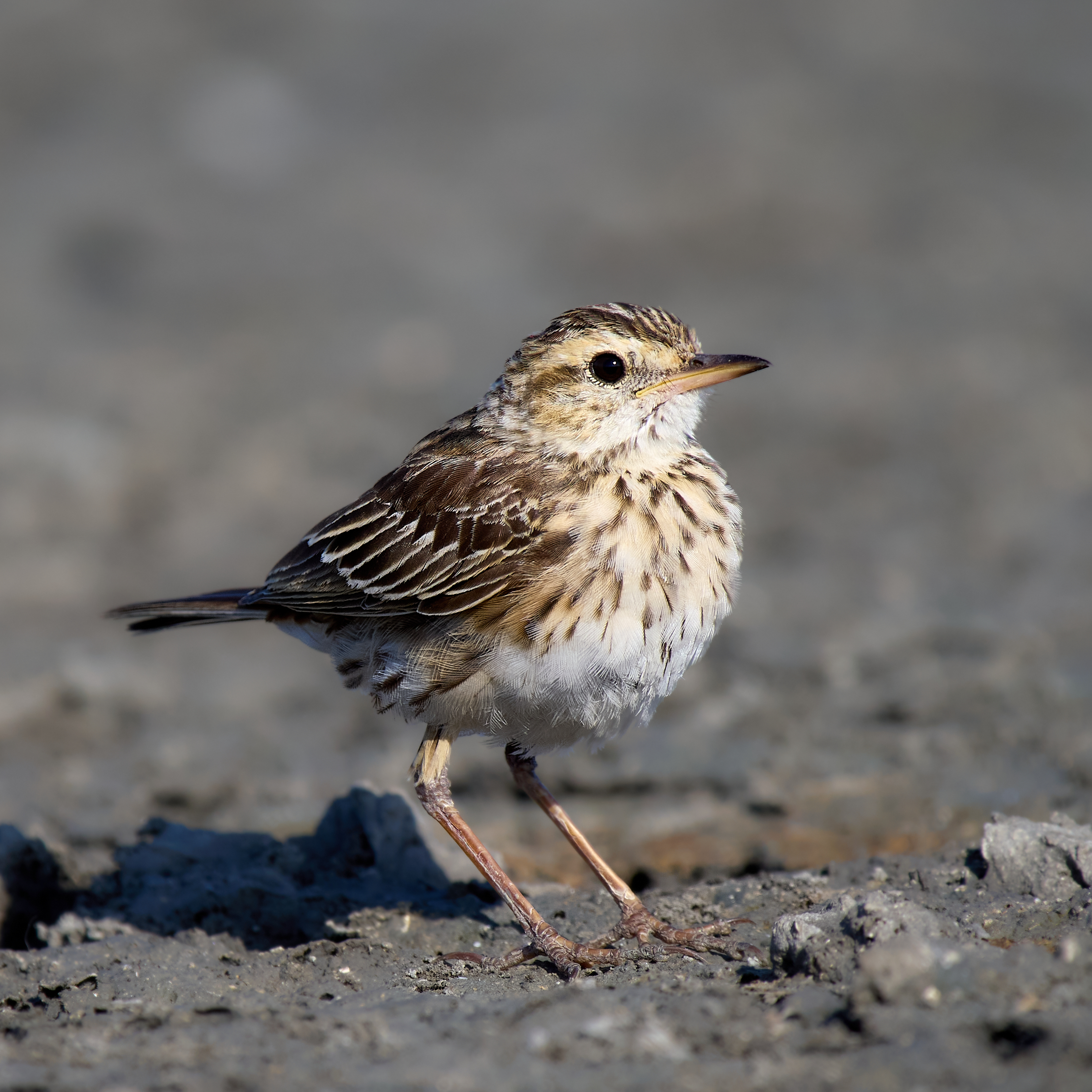
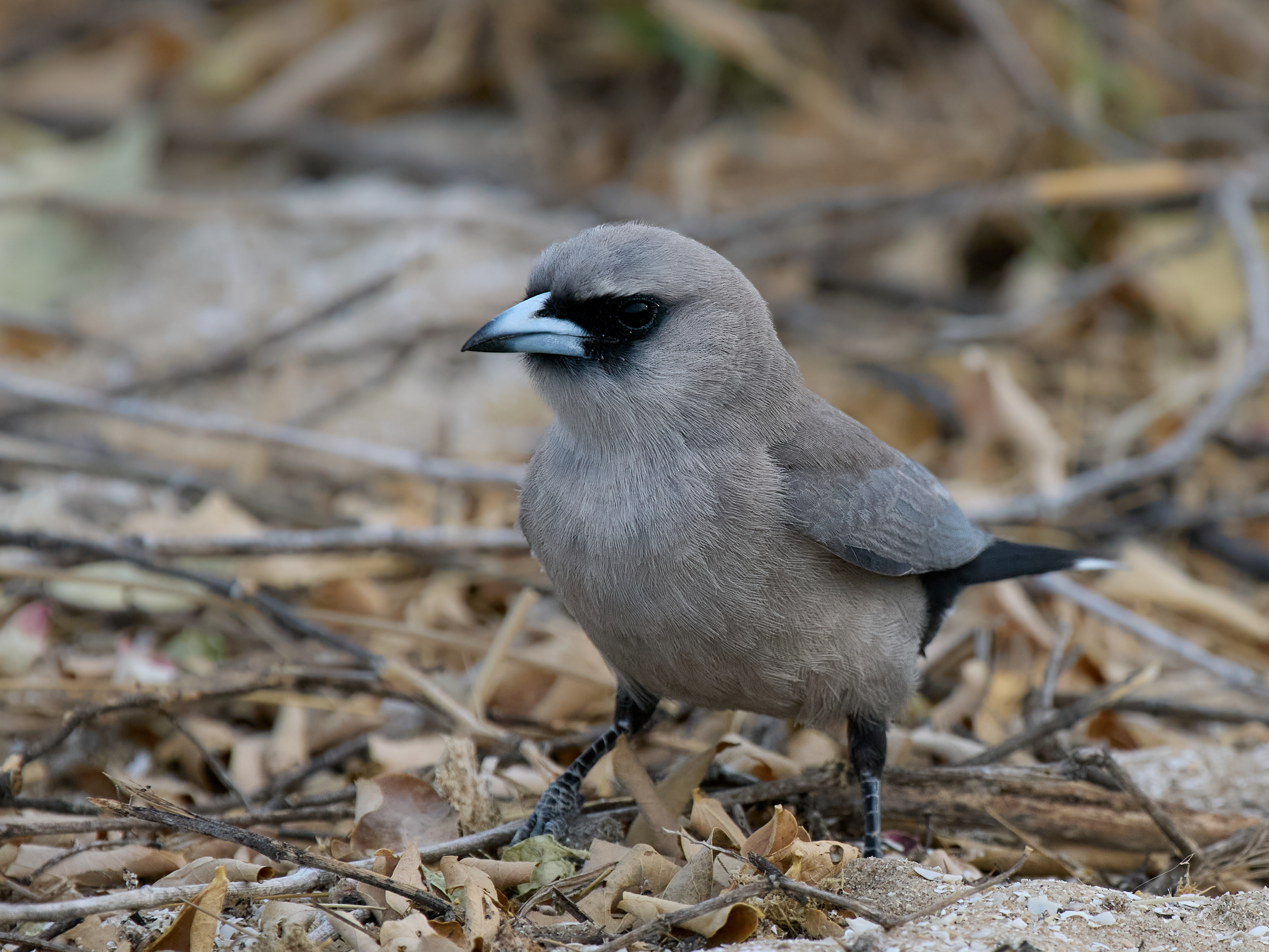
I shall now go and luxuriate in the hot spring water.
Tomorrow begins a new phase, the Atherton Biogeographic Region with Cooktown and Cairns thrown in.
Leichardt’s Falls to Karumba is 224 km on a mixture of good dirt road and bitumen. Nearing Normanton you cross paths with the Burke and Wills expedition and you can visit their most northerly camp site, camp 119. Burke, Wills, Grey and King spent three days here in February 1861. Burke and Wills pushed further north, reached the tidal zone of the Gulf but were halted by mangroves without seeing the sea.
As Burke and Wills found, the gulf is well protected by mangroves and mud. Karumba is the only seaside resort on the Gulf. There is even a beach, of sorts. Swimming is not advised. There is no shortage of large salt water crocodiles here. Birders and fishermen are better off staying at the point rather than in town. We favour the Sunset Caravan park but expect to be cheek by jowl with your neighbours. We could have had a conversation with the five adjacent vans without anybody getting out of bed this morning.
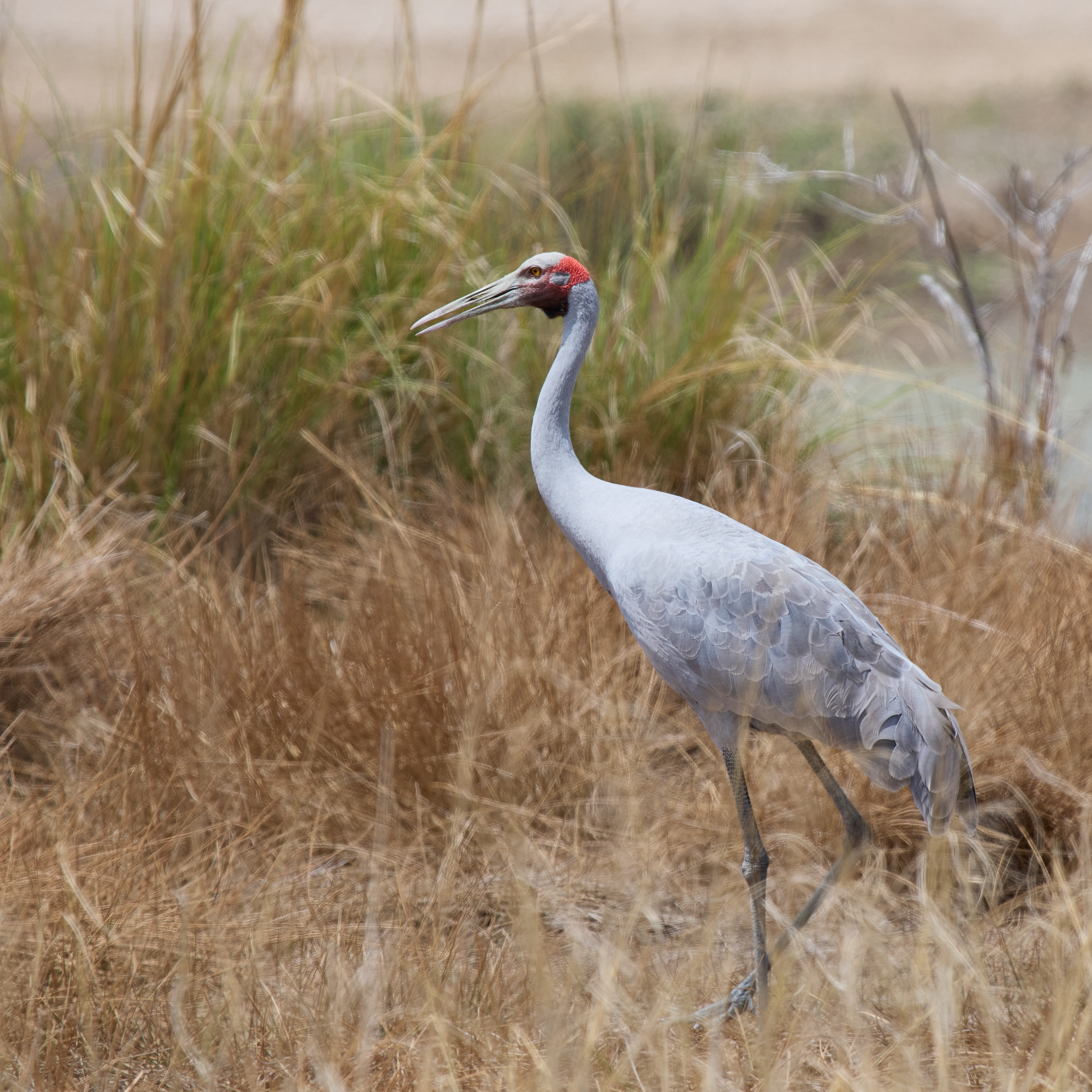
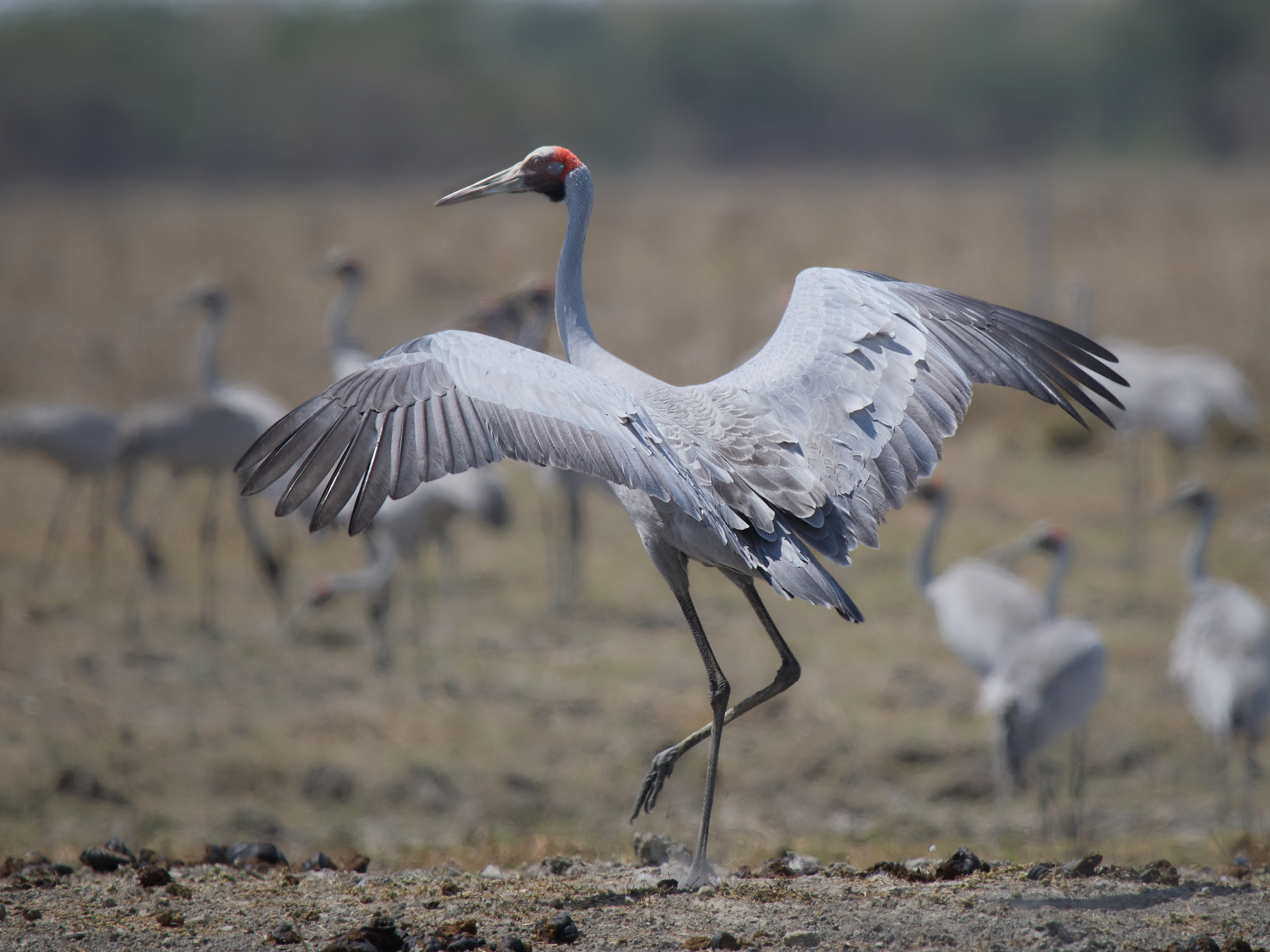
The birding is rich. We saw hundreds of Brolga between Normanton and Karumba. Among them there are a small number of Sarus Crane (about 3%). They are a slightly different shade of grey and the red band on the head extends down the neck. They seem more skittish than Brolga and so far I haven’t managed a photo that I am prepared to publish! There are plenty of mangroves and some accessible wetlands.



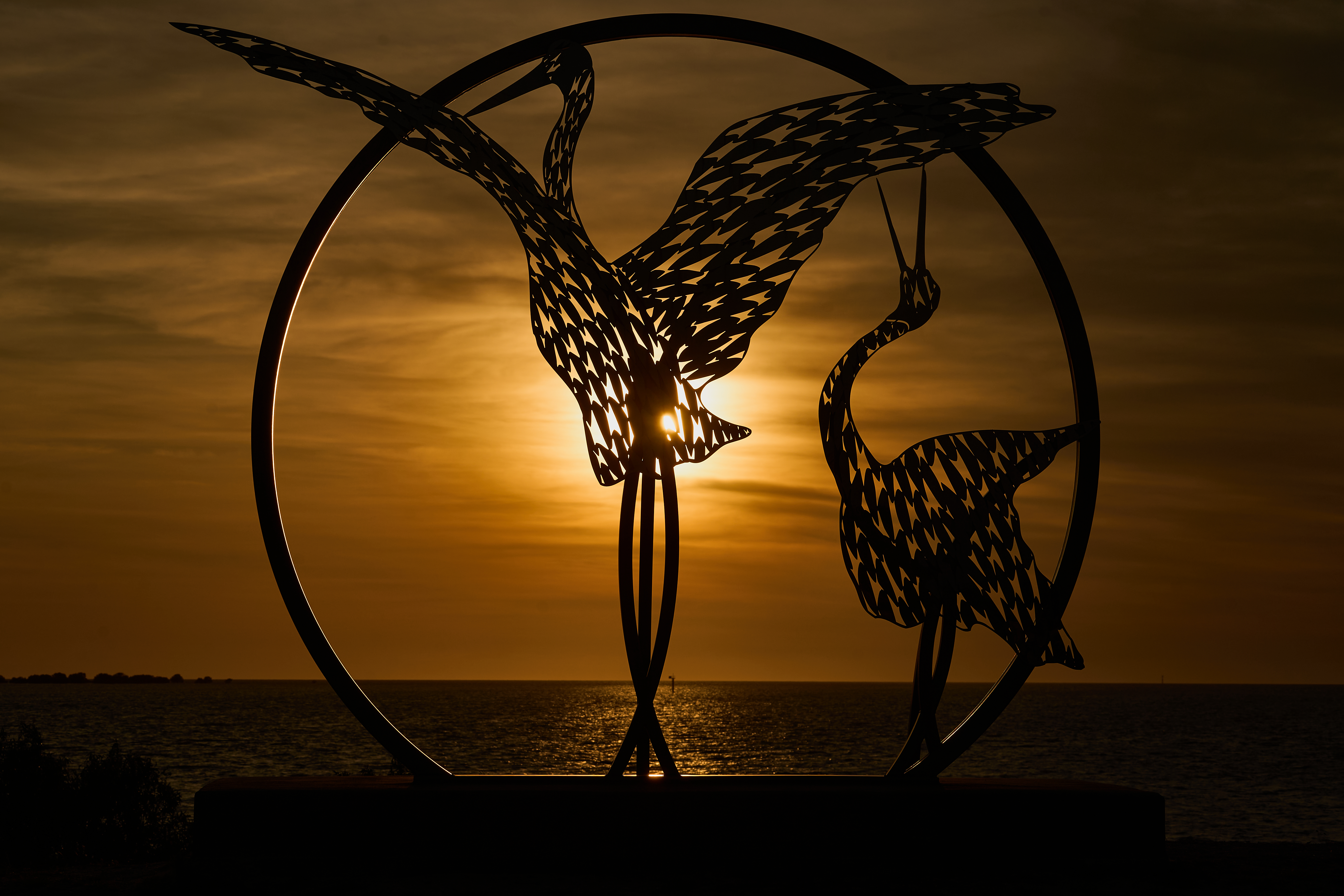
Tea at the Sunset Tavern this evening.
We spent two nights at Borroloola. The first afternoon a caravan arrived and we got into conversation with the owner. Typical travelers tales. Where have you come from? Oh, that’s the way we’re going. How was the road?
The road, he said, was bloody awful, the bull dust had him fighting the steering wheel, the dips were ferocious, the corrugations were bone jarring. Would we like a look in the van?
It was a scene of devastation. The drawers and their contents were strewn across the floor. Red dust lay on everything. His car was in no better condition, the rear window was broken, red dust covered the interior. He was quite upbeat about the situation. He had survived the battle. Among the fragments of celebration he did mention 80 kph, getting airborne and that he never reduced his tyre pressures. It caused us some concern. For us, not him.
When it was our turn Gayle prepared the inside of the van with great care. When we got to the dirt road I let the tyres down 25% all round and we proceeded at moderate speed. 317 km to go. The creek crossings were mainly dry, the dips in and out were taken slowly. The bulldust was avoidable or manageable at modest speed. The corrugations were corrugations, choose the quietest route and vary speed to suit. Conditions varied with the underlying substrate, some sections were rocky, some sandy. There were two wet creek crossings and a couple of puddles to negotiate.
We had intended to take two days for the journey but progress was better than expected and at lunch time we moved the goal posts and went all the way to Hell’s Gate. No damage. No dust. No drama.
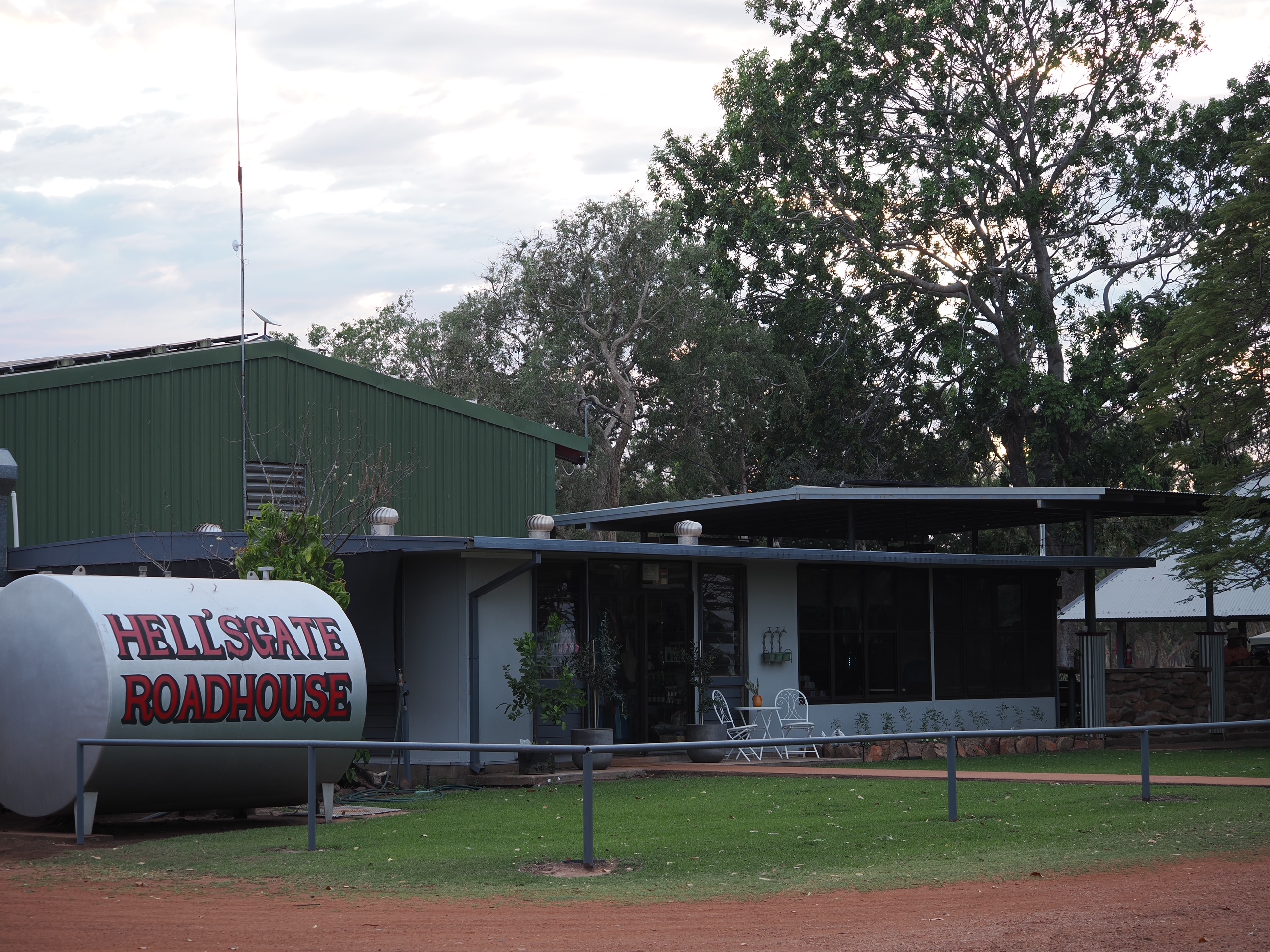
Nothing like hell or its gates. A pleasant campsite by a bore fed pond. The odd Agile Wallaby and Antilopine Walleroo passing by.
Yes, I feel the need for a road trip. Seems like ages since I finished the last one (goodness, is it 6 months already?). Sit here much longer and I’ll take root. Origin Broome, WA, destination Broome. Pick somewhere in between, say Port Fairy, Vic. We like Port Fairy and summers are coolish there. A loop then. How big a loop? Let’s go for the max. Anywhere special on the way?
The classic Highway 1 loop covers roughly 15,000 km (9,400mi). This is Australia, there will be any number of special places on the way, unavoidably. But there is one place the lovely Gayle and I have not visited. It’s been on proposed itineraries but the weather has denied us every time. In this dry, dry continent nothing stops outback traffic faster than rain. Borroloola, NT, population 755. Setting off towards the end of the dry we have a fairly good chance of making it this time. It’s not flooded at the moment. An early start to the wet, though, could soon fix that!
That determines the direction of travel. It will be clockwise again this time. The journey breaks down into four major legs. The journey across the top, Broome to Cairns, is the Savannah Way. It can be completed on sealed road but there are a couple of alternate sections. If Borroloola is included then it would be remiss not to include Hell’s Gate and then Burketown, 365km of corrugated suffering. Tape your beer cans so they don’t rub through. It gets easier from there to Normanton. At that point you choose to take the Burke Development Road via Chillagoe, once again shaking your teeth out of their sockets or the bitumen via Croydon. We’ve traveled both before and unless overtaken by a bout of masochism I suspect we will opt for the latter (and a soak in the Innot hot springs).

Before dropping into Cairns we will pause on the Atherton Tableland, our first opportunity for a flurry of new (for the year) birds. Then up to Cooktown.
The next leg is the east coast, but all in good time. First you will need to endure heart wrenching bulletins of the trip to Hells Gate.
… is complete. The AOR Quantum plus has had its first trial and its first service. Tomorrow we cut the umbilical cord and head into the outback.
The tour took in a circuit of south east Queensland, covered just over 2000km of towing over two weeks and looked something like this …
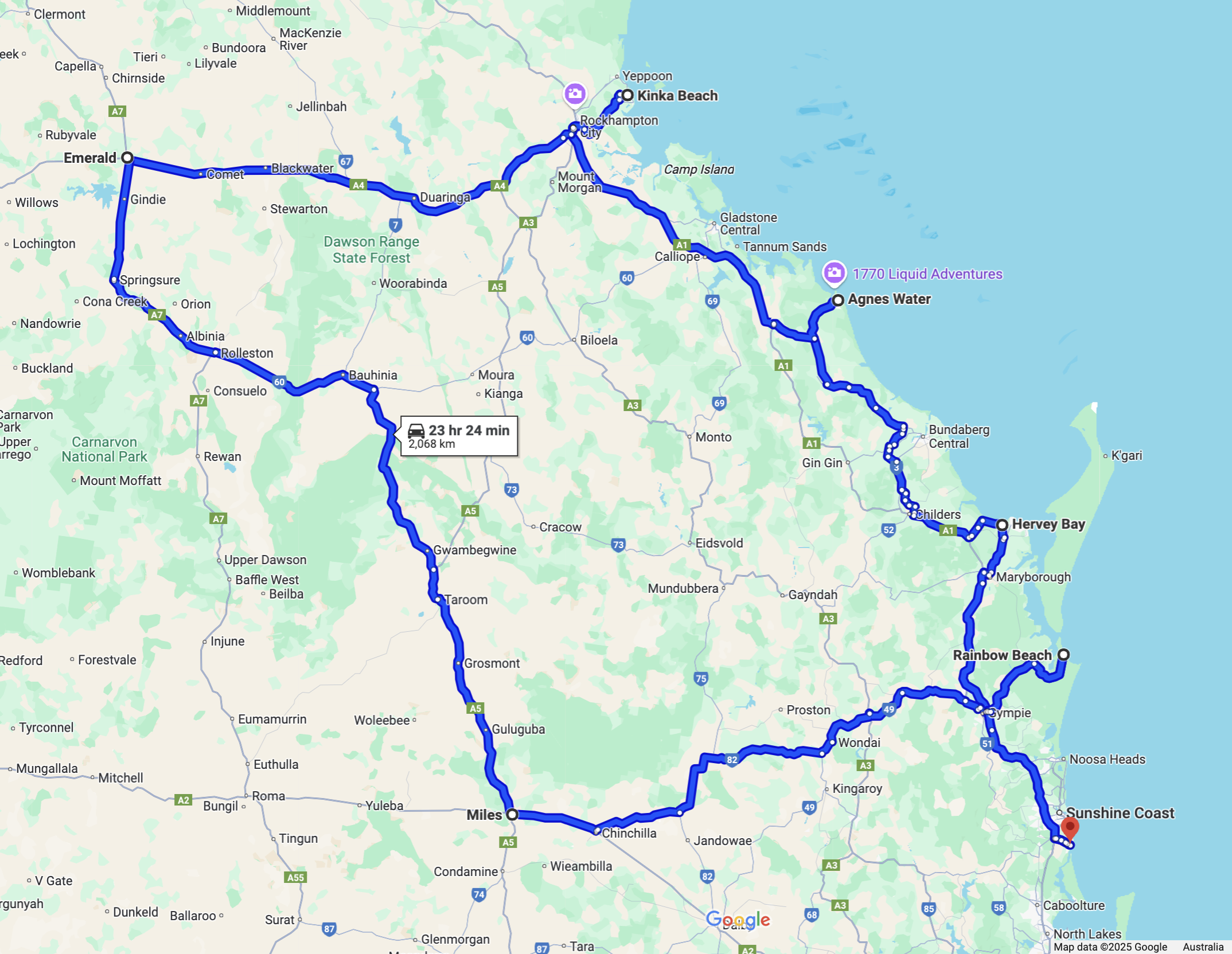
The Quantum plus passed with flying colours. Minor teething troubles have been fixed. The three burner stove was fixed before leaving Caloundra. A stabiliser leg needed minor attention and a shock absorber was replaced on our return. I have tried to avoid a millimetre by millimetre account of the rainfall but the weather has been dreadful. The Quantum+ does not leak and the awning can withstand some hefty gusts.

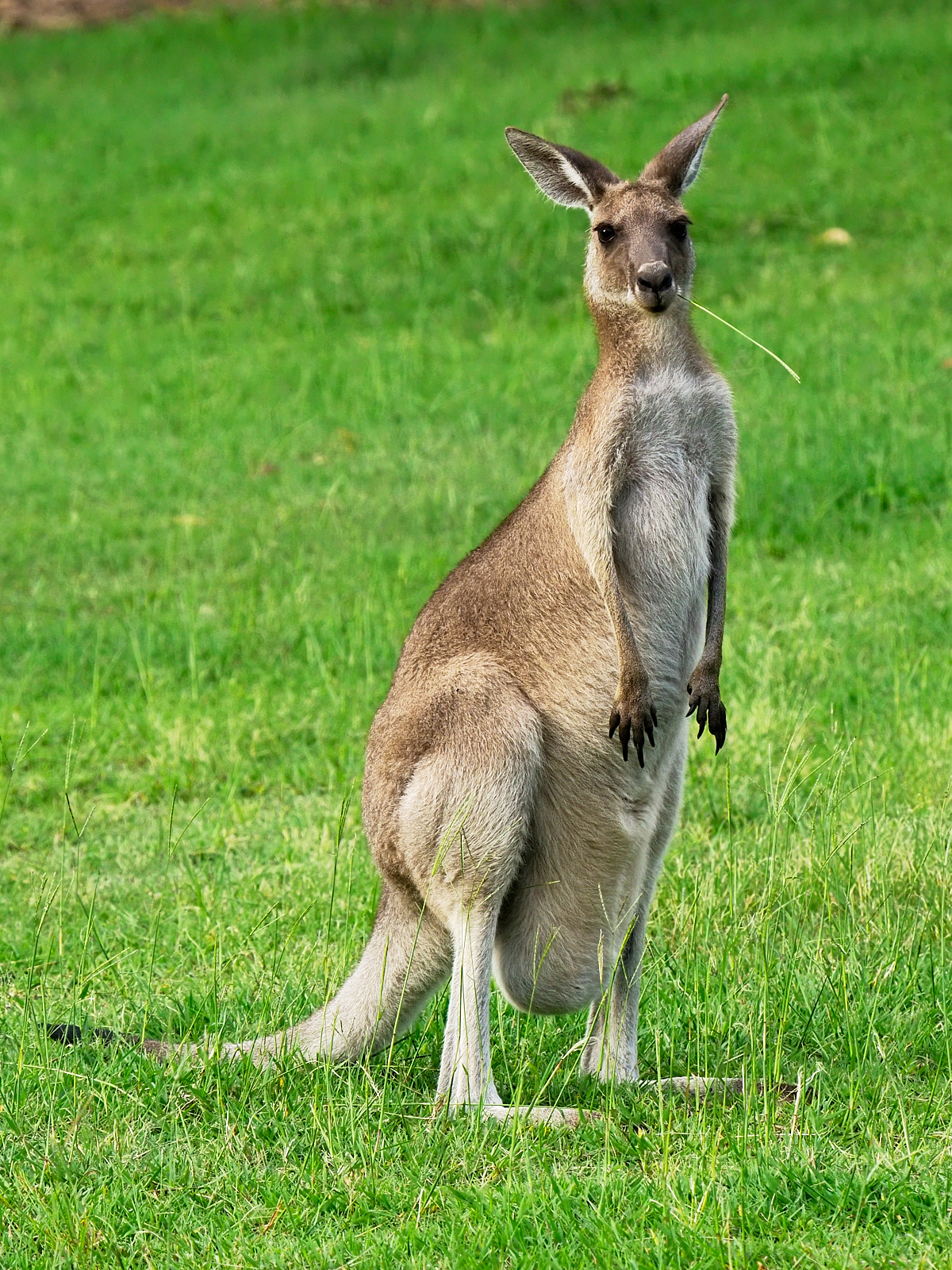


We are still ensconced on our hill above Agnes Water. The weather has been terrible. An intense low pressure system centred off to our north has been wreaking havoc on the coast of Queensland. We have got off quite lightly compared to Townsville where flooding has caused mass evacuation and, sadly, loss of life. We have explored the nearby country and made the most of our time.
I had to take just a few steps from the van to take these shots of a beautiful Pale-headed Rosella.

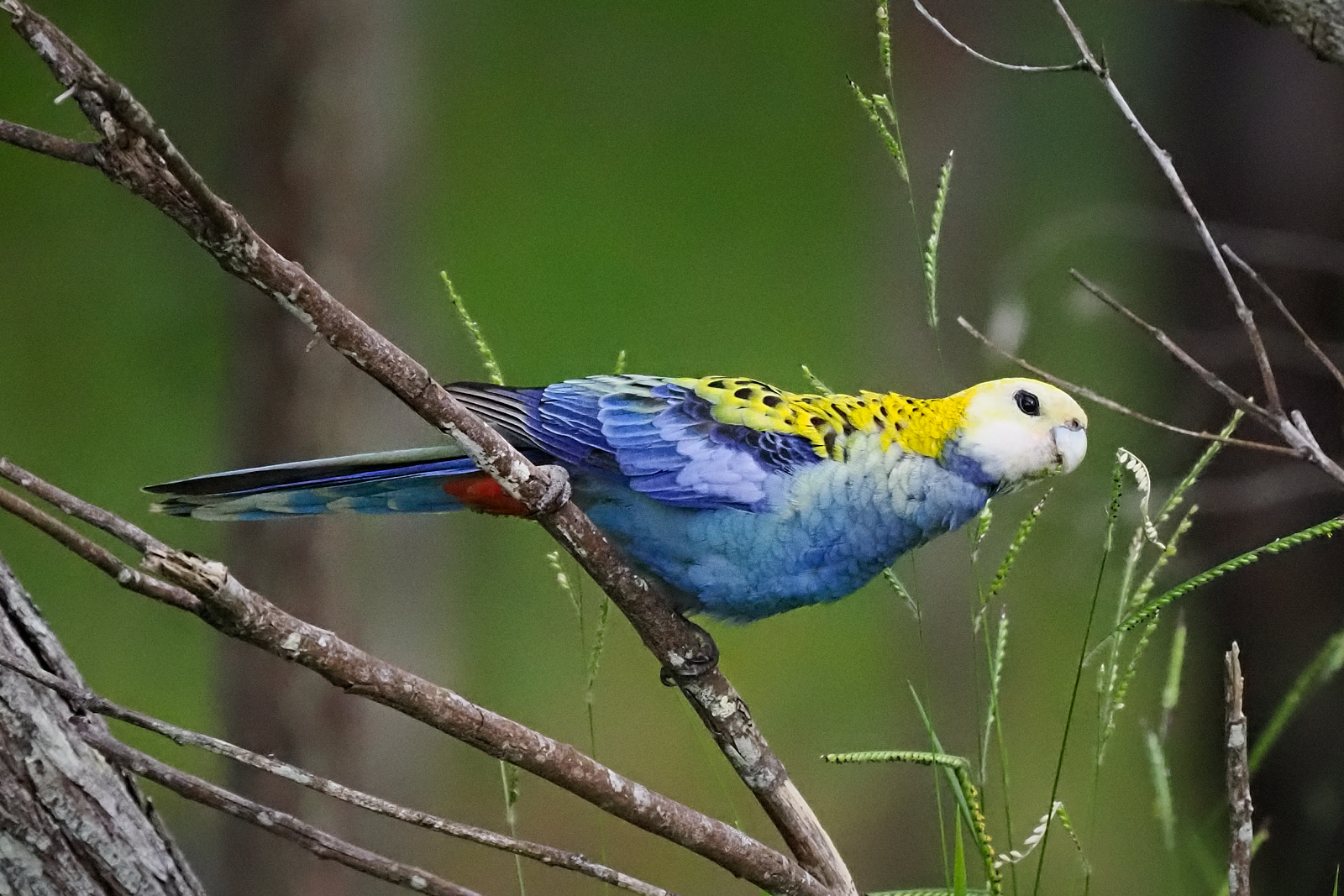

It’s all there, honest. You just have to click on the gallery.
This is a species restricted to eastern Queensland and north-eastern New South Wales. They usually move about as pairs and they are fond of grass seed. They are rarely as confiding as this one.
Our little van is now parked on then side of a hill above Agnes Water, Queensland. Not far away is the little town of 1770. Lieutenant James Cook, captain of the good ship Endeavour made landfall in only four spots on Australia’s east coast and 1770 was one of them.
Cook’s voyage had as its first objective to make observations of the transit of Venus in June 1769 from Tahiti. Once this was completed his instructions were to unravel the problem of terra incognita australis. Having unraveled New Zealand he sailed west until Lieutenant Zachary Hicks espyed Australia on April 19 1770. Cook bestowed the name Point Hicks on the spot now in Victoria.
Hicks is one of the unsung heroes of the voyage. He was born in Stepney in the east end of London not far from where I was born, one of the reasons I have a soft spot for him. The far more famous Cook, Banks and Solander owed their lives to Hicks’ quick thinking when they were attacked by Maori in New Zealand. Sadly he died on the voyage home probably from tuberculosis.
Cook turned right, sailed up the coast and made his first landing at Botany Bay. It didn’t take him long to realise that New South Wales was a dreadful place and sail north to Queensland where he made three stops. The first was on May 17 1770 at Bustard Bay now called 1770 (AKA Seventeen Seventy and The Town of 1770 because just calling it 1770 leads to confusion). The second Queensland stop was at Cooktown in far north Queensland to repair the Endeavour after she struck the Great Barrier Reef.
His final Queensland stop was on a small island off the tip of Cape York, Posession island, where he hoisted the flag and claimed everything he’d set eyes on for His Majesty King George lll (more than adequate compensation for America).

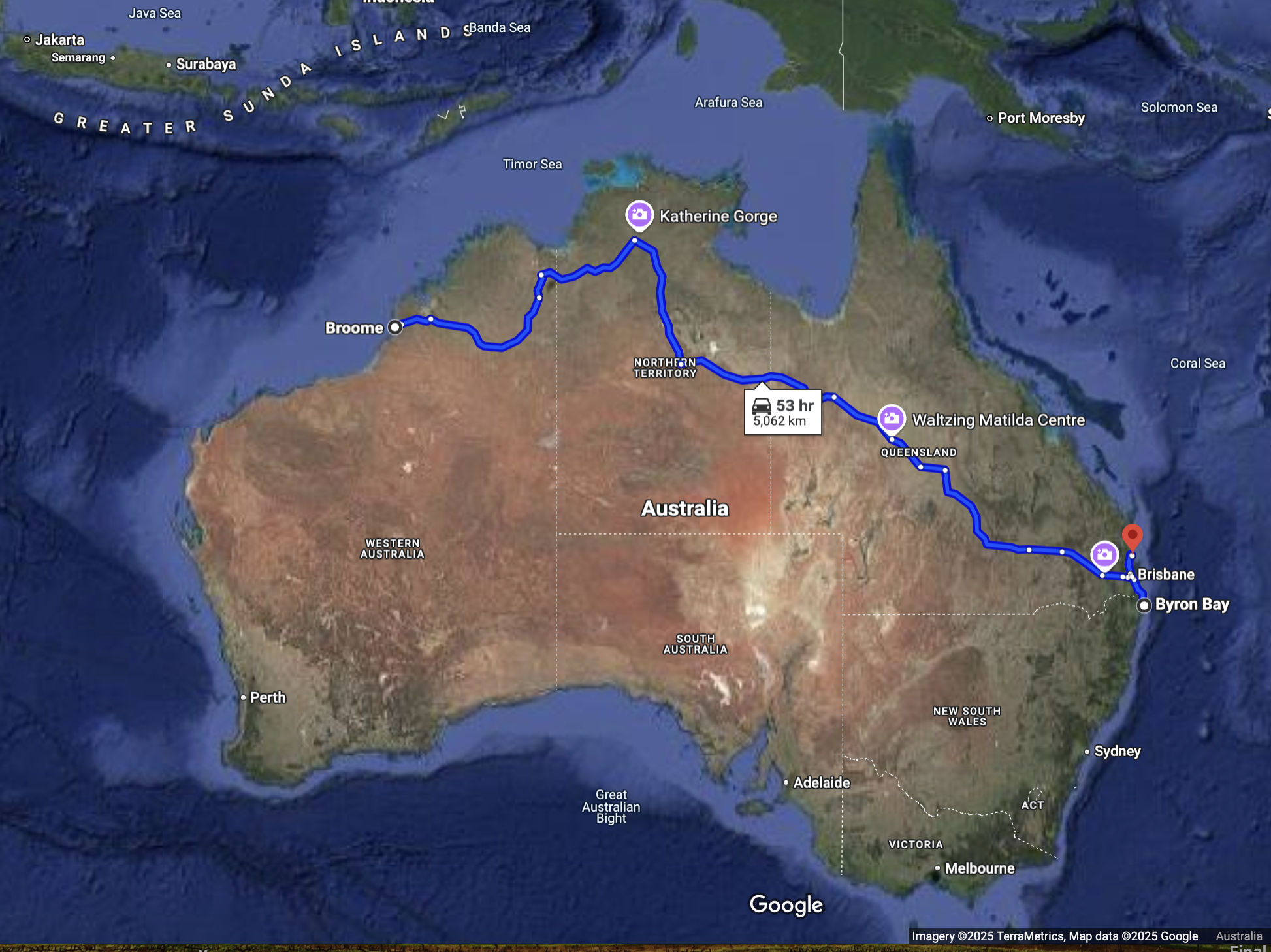
We made it for our appointment at the AOR showrooms in Caloundra and picked up our hybrid camper trailer. Broome to Caloundra is quite a hike. The journey was uneventful and we had time to catch up with friends.
Our Quantum+ van looks like something like this this …

although this photo was filched straight from the AOR Website. Ours is a much nicer colour. Here we are driving it away …
So far we are very happy. The handover was very thorough. It took about 4 hours. We left with a reasonable chance of putting up the awning and managing the various facilities. We stayed that night at the nearest caravan park.
There was a small problem with the stove but that was fixed the next day. We are now at Hervey Bay. I suspect the van will meet our expectations but let’s not attempt a review until we know what we are talking about – this is not Youtube after all.
 bobmcgee