Rocky …

Just north of the Tropic of Capricorn and about 40km from the coast lies the City of Rockhampton. European settlement occurred for the grazing, the discovery of gold in 1859 gave it a push on elevating it to the city of “sin, sweat and sorrow” according to Anthony Trollope. Some of the fine Victorian buildings still survive, the population now stands at close to 79,000 and the general look of the place is more tired old lady than red light district.

It stands on the Fitzroy River which floods occasionally and the city is also subject to cyclones. Possibly the earthquake of 1918 was the most exciting thing that happened here, but give it its due, the weather is quite nice in winter.

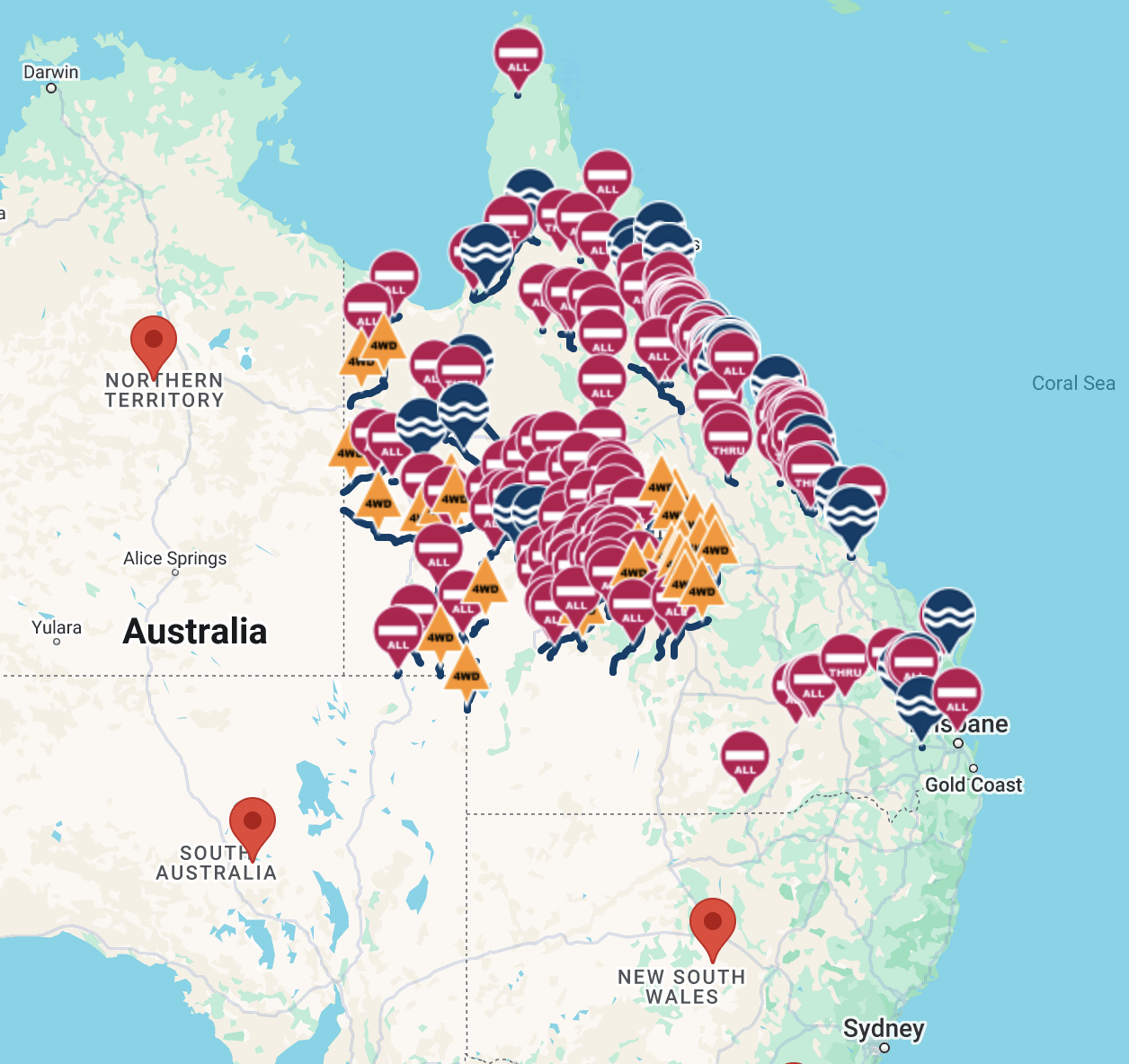
Our planned itinerary would have taken us further north but flooding has closed a few roads. The traffic Queensland map looks like this today.
This is a shakedown tour for the van, we have to be back in Caloundra for a service in a week. So time to turn. Presently we are at Kinka Beach which has been quite productive for bird watching between the showers.

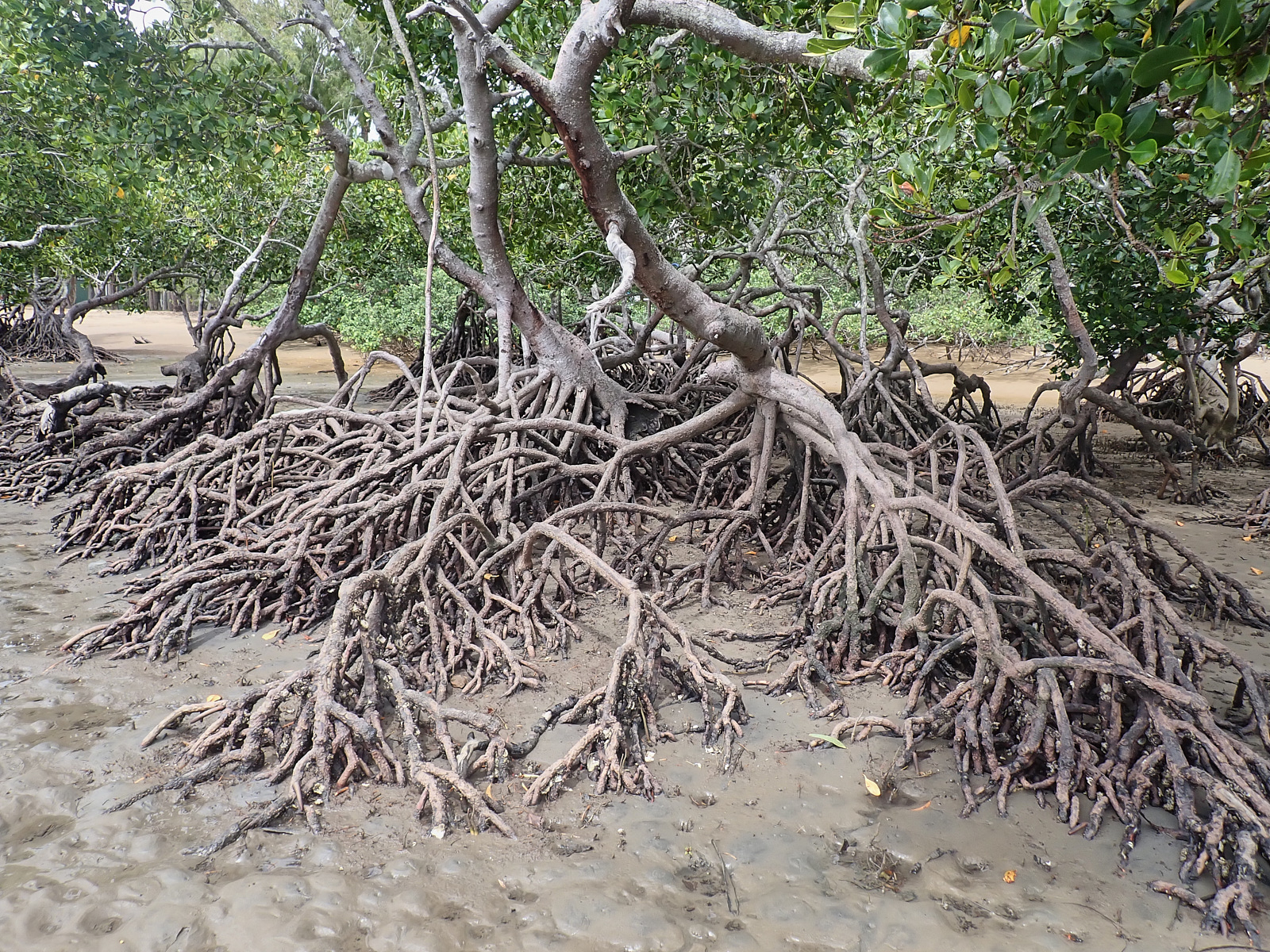
The highlight was Kinka Wetland. This is about 1km off Kinka Beach Road via Young Avenue. Despite its name the alleged avenue is an unmade track currently subject to many puddles. The surface is nice and solid despite all the rain, no problem with traction but having 4WD in reserve was a source of great comfort. Kinka Beach and the Causeway Lake are also worth a look.

1770 …

Our little van is now parked on then side of a hill above Agnes Water, Queensland. Not far away is the little town of 1770. Lieutenant James Cook, captain of the good ship Endeavour made landfall in only four spots on Australia’s east coast and 1770 was one of them.

Cook’s voyage had as its first objective to make observations of the transit of Venus in June 1769 from Tahiti. Once this was completed his instructions were to unravel the problem of terra incognita australis. Having unraveled New Zealand he sailed west until Lieutenant Zachary Hicks espyed Australia on April 19 1770. Cook bestowed the name Point Hicks on the spot now in Victoria.

Hicks is one of the unsung heroes of the voyage. He was born in Stepney in the east end of London not far from where I was born, one of the reasons I have a soft spot for him. The far more famous Cook, Banks and Solander owed their lives to Hicks’ quick thinking when they were attacked by Maori in New Zealand. Sadly he died on the voyage home probably from tuberculosis.

Cook turned right, sailed up the coast and made his first landing at Botany Bay. It didn’t take him long to realise that New South Wales was a dreadful place and sail north to Queensland where he made three stops. The first was on May 17 1770 at Bustard Bay now called 1770 (AKA Seventeen Seventy and The Town of 1770 because just calling it 1770 leads to confusion). The second Queensland stop was at Cooktown in far north Queensland to repair the Endeavour after she struck the Great Barrier Reef.

His final Queensland stop was on a small island off the tip of Cape York, Posession island, where he hoisted the flag and claimed everything he’d set eyes on for His Majesty King George lll (more than adequate compensation for America).

Bigfoot …

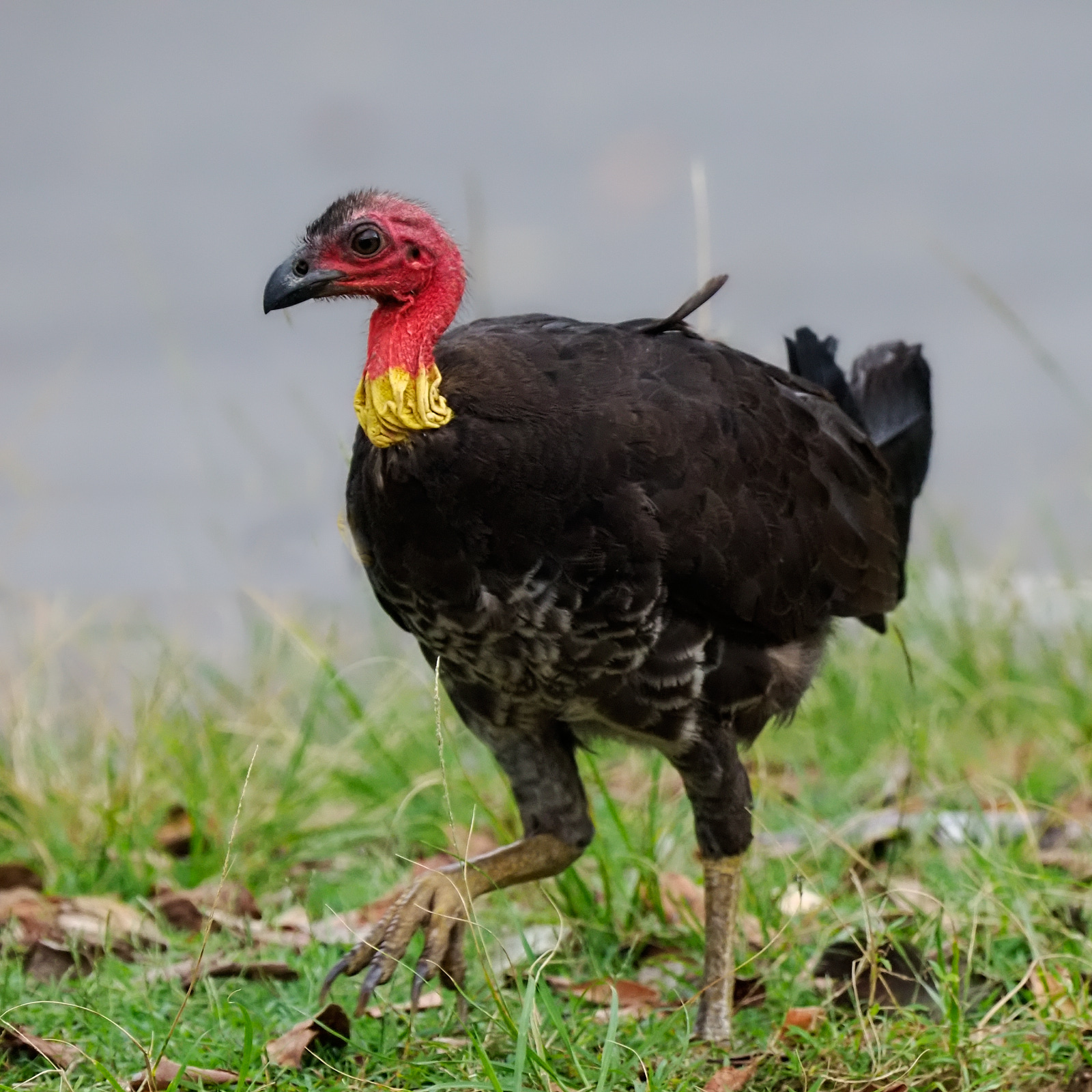
At Byron Bay we found our first Brushturkeys of the trip. They are found in rain forest of Australia’s east coast. They have large strong feet which they use to rake the leaf litter to find their food. Along with the Junglefowl and the Malleefowl they make up the Australian contingent of megapodes.

Megapodes have a very specialised mode of reproduction. The male megapode uses his big feet to create and maintain a mound which includes enough composting leaves to create heat. The females visit and once the eggs are fertilised they are laid in an excavated hole in the mound which then provides all the heat needed for incubation.

When the chicks hatch they have to dig their way out. They emerge into the domain of a father who wants nothing more to do with them and is very jealous of his territory. They must find shelter from him and from predators. Fortunately they can already fly and feed themselves. Henceforth they are on their own.

When the boys grow up they must either inherit or create a mound of their own. If they choose your back yard the petunias are in big trouble.

The road trip has moved up the coast to Brisbane.

Lazy Day in Byron Bay …

And just for a change torrential rain, thunder and lightning. Byron lost its electricity supply for a few hours. All in all a chance to take stock and catch up on some editing.

We are 4,800km from home. The trip bird list stands at 103 species. The symbols on the map show where I made my observations. The red symbols are places that are frequently birded, the blue ones are other spots where I found some interesting birds.

I would certainly have seen more if we could have taken our time, a lot of roses left unsmelt on the trip so far but the tempo will change.

I managed a few nice photos along the way …

Gayle has gone to catch up with a friend. Their friendship began on their first day at kinder and survived despite separation whilst still in primary school. I think that’s rather special.

Dog Farts …

Roma to Byron Bay – 618km.

Fifi McGee is a Fox Terrier. She is 15 years old and she has been with us for about 13 of those. No, we did not choose the name. She is blind in one eye and partially sighted in the other, she struggles to determine how far away things are. She is totally deaf, you could let a bomb off next to her and she wouldn’t notice. On the positive side she is no longer bothered by thunder, there is little downside – she never did take any notice of verbal commands.

She is a very widely traveled little dog and a good camper. There is one problem though. After a few days on the road she starts to fart. There is nothing more potent than a dog fart in a closed car. Shame it doesn’t kill flies.

The Roma dawn chorus this morning was dominated by the Laughing Kookaburra. There are two kookaburra species in Oz. Across the top end we have the Blue-winged Kookaburra which winds up ready for a laugh but just can’t finish the job. I feel quite sorry for it. The Laughing Kookaburra is an east coast bird, (also introduced to the Perth region of Western Australia). They overlap in coastal Queensland from Brisbane northwards. An English survivalist, Ray Mears, made a film about survival in the Top End. The soundtrack features a Laughing Kookaburra that isn’t found there. What would a pom know about survival in Australia? Loony.

The Roma Bush Gardens are mainly the work of local volunteers over a quarter of a century. They have done a magnificent job. It is a great place to find a good mix of bush and water birds. Bird of the day is awarded to Plum-headed Finch.

And we crossed another border. Byron Bay is in New South Wales. Clocks forward one hour because NSW has Daylight Saving Time through the summer.

Contingency …

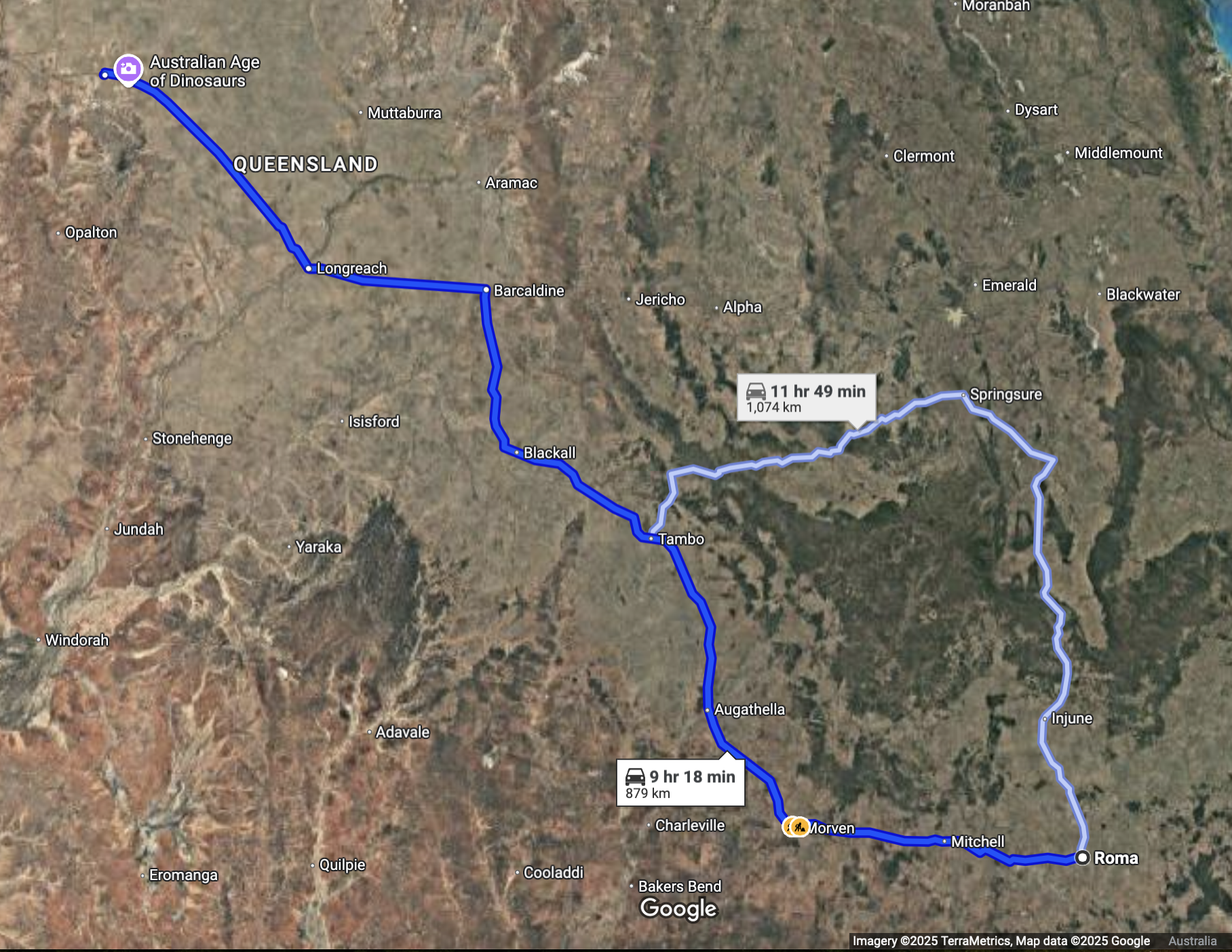
Winton to Roma – 880km

Things have gone very well for us so far. Behind us the route is open but extreme caution is called for because of flooding at the Fitzroy and Victoria Rivers. We have friends stranded in Geraldton trying to get home to Broome. Not only have they been held up for a few days they had to swelter through 49.3°C (120.7°F).

We were well aware of the risk of flooding. Our contingency plan was to give ourselves plenty of time to wait out a road closure or two if need be. Our contingency plan for arriving early is to impose on, sorry I mean catch up with, some dear friends rather than spend a week sitting outside our tent. Tomorrow’s destination is Byron Bay.

On the birding side of things we have been adding a bunch of species to the trip list. As we fueled up this morning we saw our first House Sparrows for nearly a year. Broome is virtually devoid of introduced species. We added more plastics (twitcher speak for introduced species) at Roma as well as some attractive natives like Pale-headed Rosella and Rainbow Lorikeet.

Presently I am sitting outside the tent, the evening is mild, the sky is clear. I am well fed. Life is bloody great.

Queensland …

Barkly Homestead, NT to Winton, Qld – 918km.

A fine morning, the sky is blue with just a few small fluffy cumulus clouds. Sped across the Barkly Tablelands. I have never seen it so green.

Across the border, new state new time zone, clocks forward half an hour. Increasing cumulus. A quick pause at the Georgina River which in a wet year will send its water all the way to Lake Eyre and close the road for extended periods. Through Camooweal and on to Mt Isa for lunch. Mt Isa has a population of about 17,000. We have traveled 2,840km since leaving Broome (population 15,000), Katherine the largest town in between at fewer than 6,000 people. Broome has no traffic lights Mt. Isa has a fetish for them. Cumulus coalescing and beginning to tower.

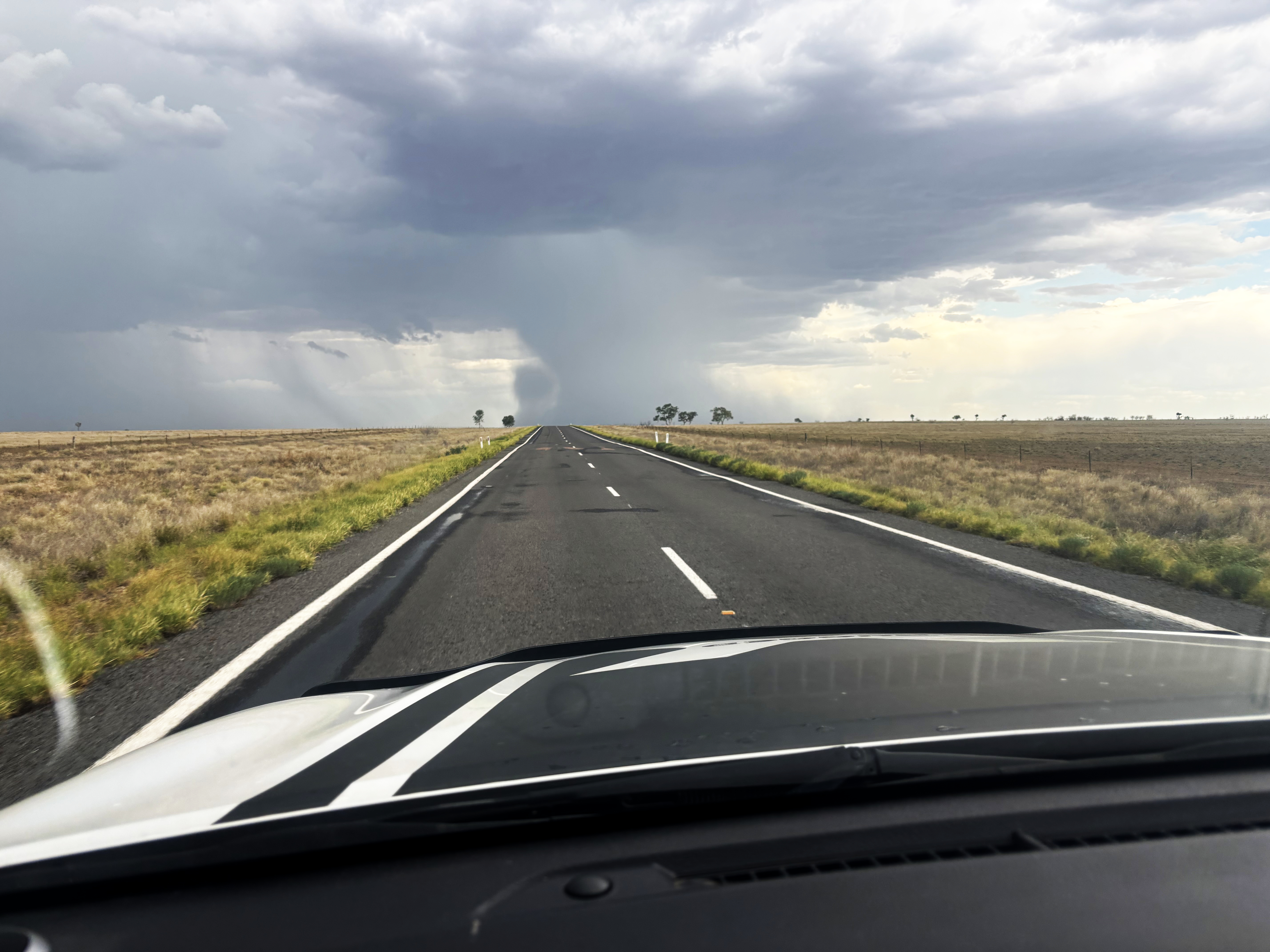
It was about 4pm that the inevitable thunderstorm hit. We saw it coming …

We couldn’t see much at all when it hit. The storm followed us to Winton …