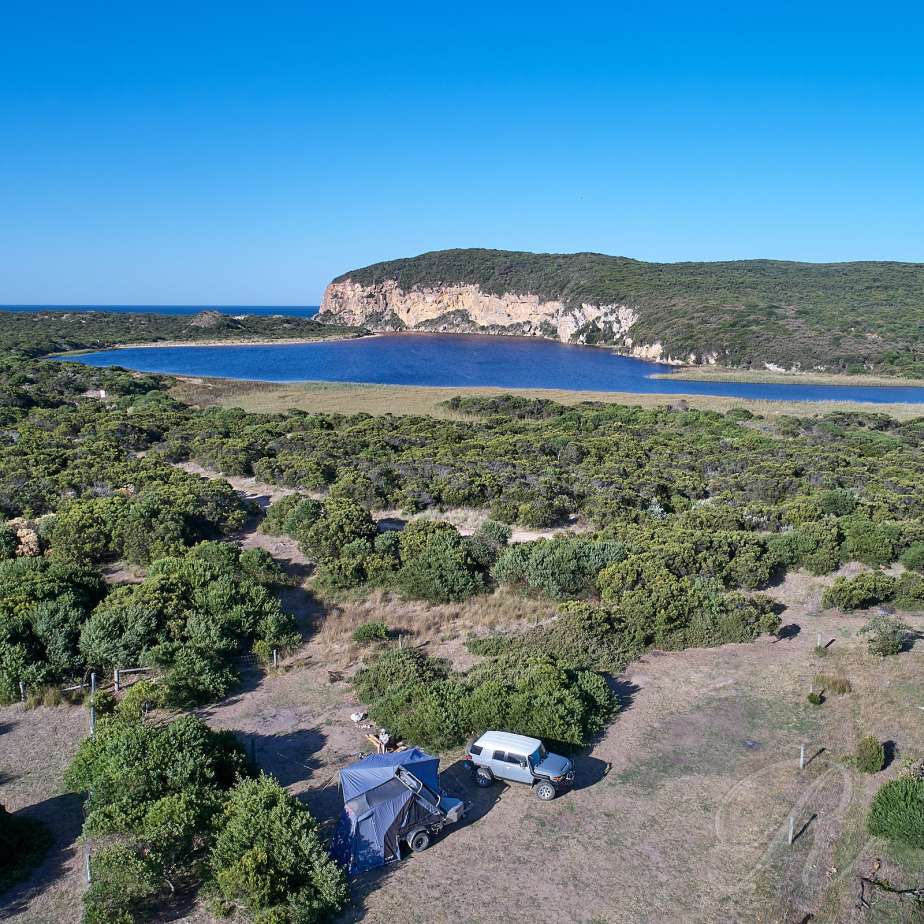
Ross River …

On our first visit to Alice Gayle and I flew, rented a car and stayed in town. On our first full day we drove out to have a look at the West MacDonell Range. The morning sun is behind you on the way out. The vista is magnificent and when the day is done the sun sets behind you as you drive home.

The next day we checked out the East MacDonells. The sun is in your eyes going and coming and the scenery seemed less impressive.

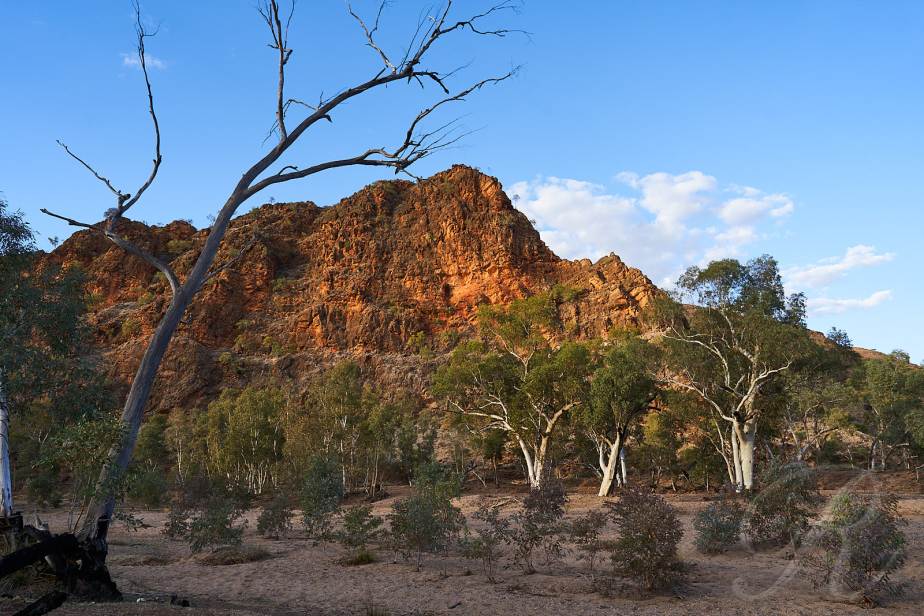
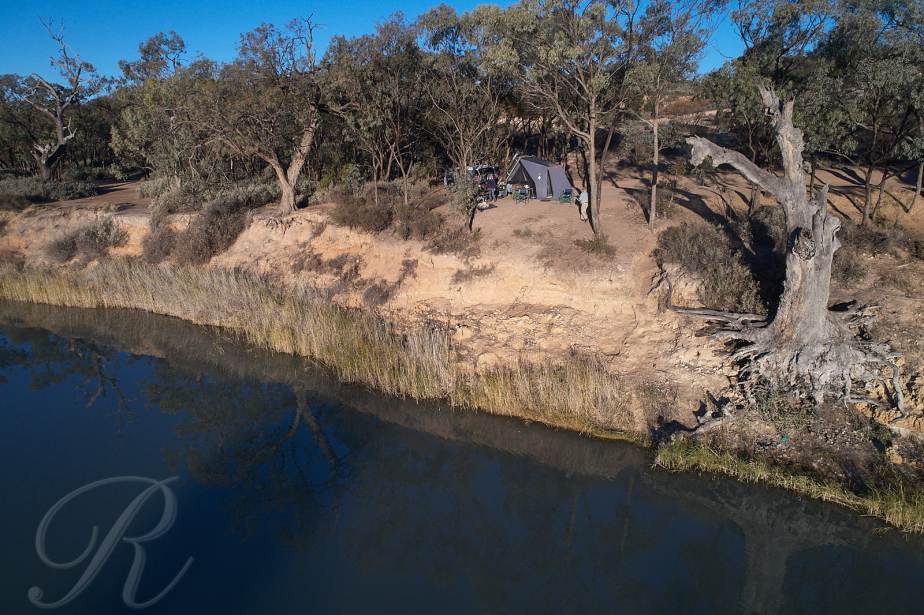
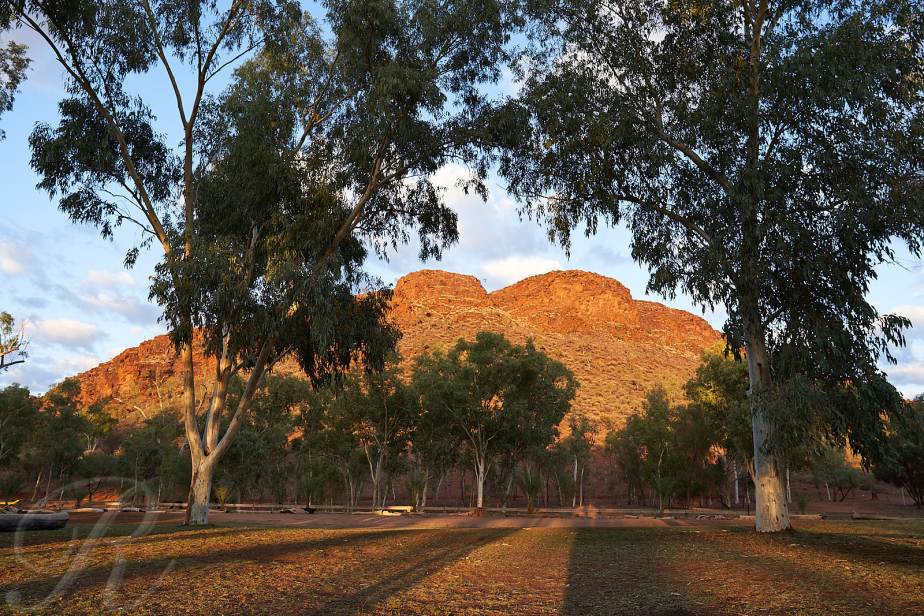
On subsequent visits we’ve camped in the West MacDonnells but there’s not much you can do out there if you take your dog along so this time we opted to stay at the Ross River Resort at the eastern end of the bitumen and were pleasantly surprised. Resort fortunately is an exaggeration, it’s more like bush camping with added amenities. And the scenery is splendid. This was the view from outside our tent …
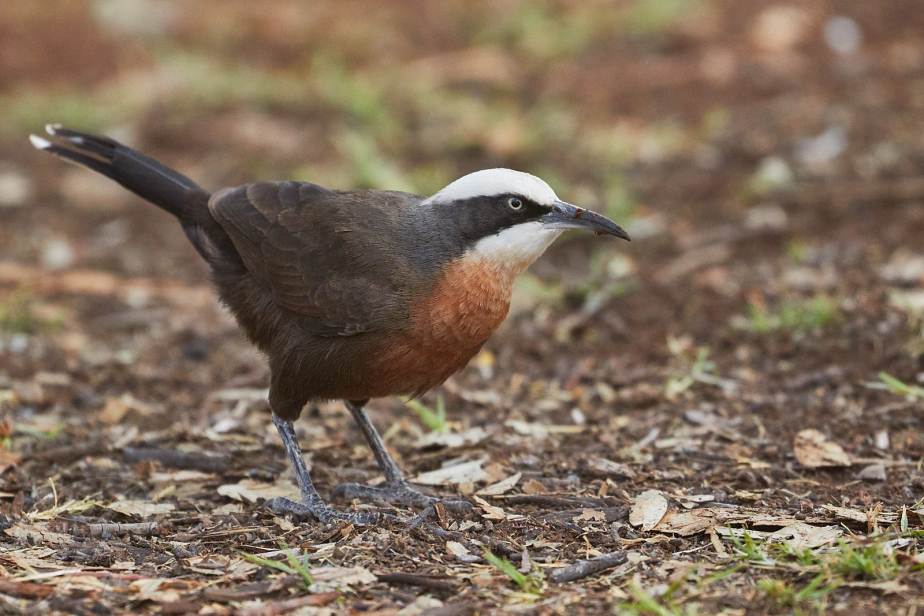
Grey-crowned Babblers were frequent and noisy visitors to the campsite …
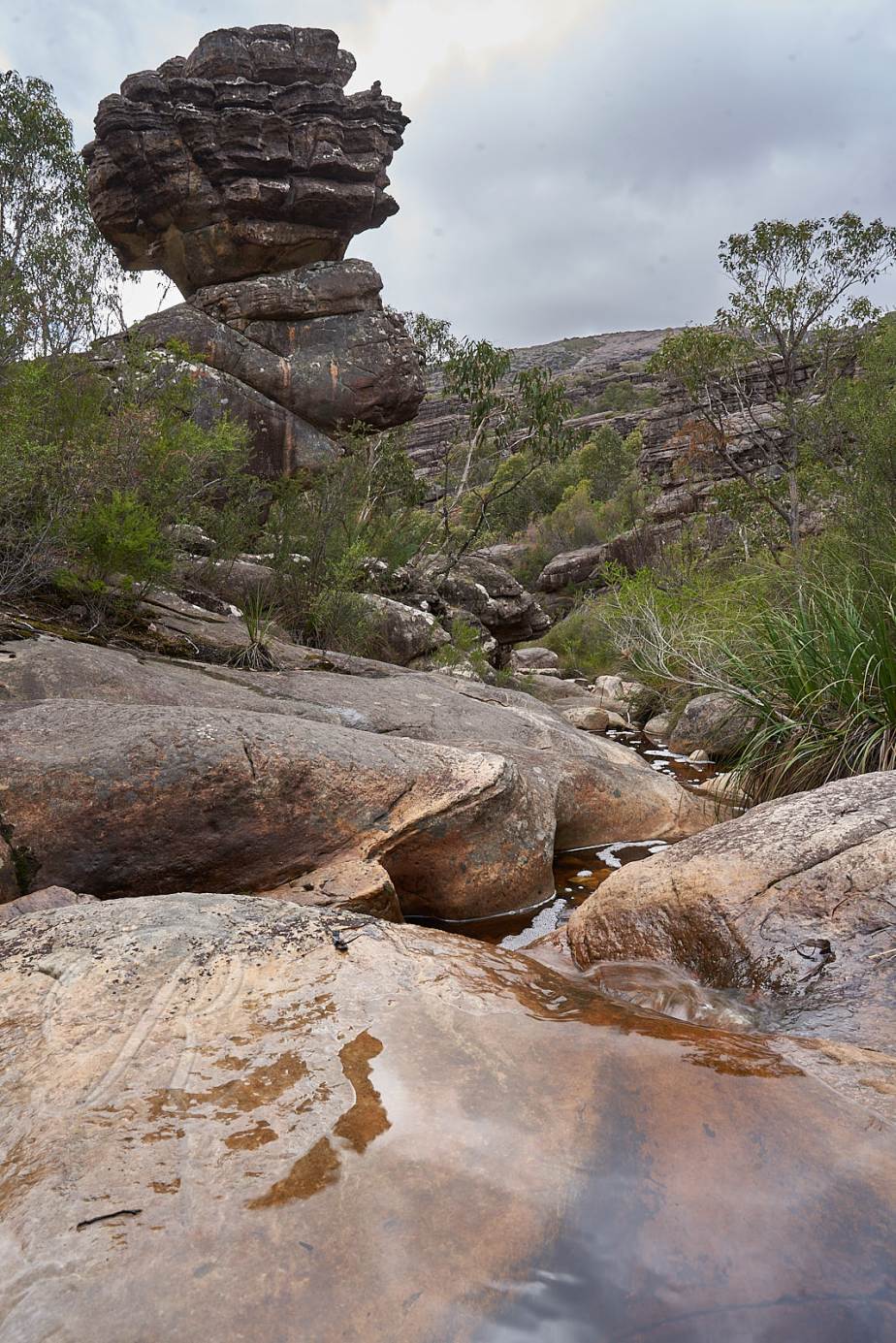
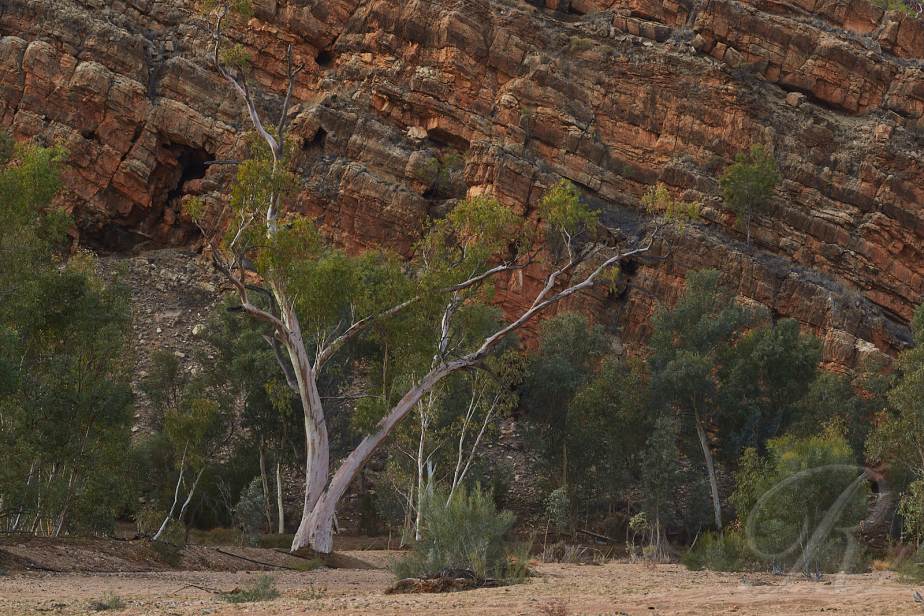
and not far away there was plenty of opportunity for the landscape photographer.
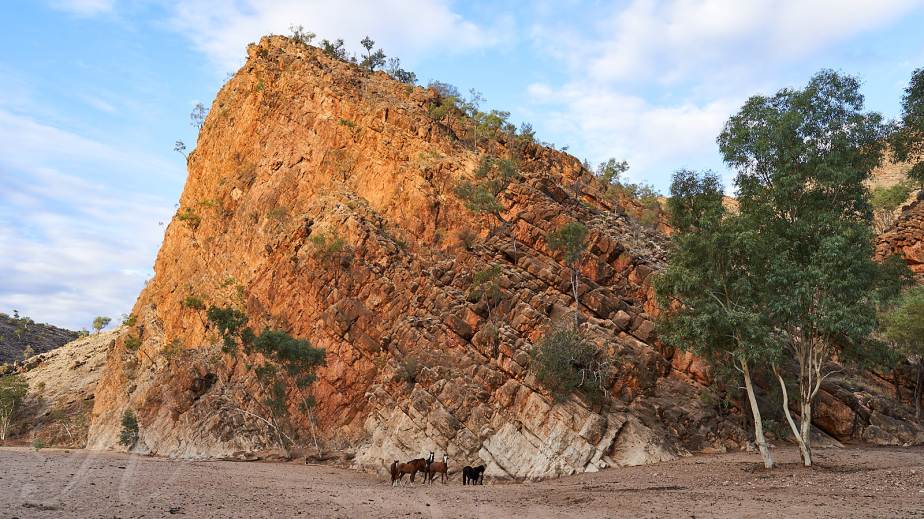
The Ross River Resort gets the McGee seal of approval and I hope to get back there to explore the East MacDonnells more thoroughly.

 

Alice …

This little flurry of updates is being posted from the waiting area of ARB in Alice Springs. The aerial is being replaced by a much larger and sexier one that will hopefully prove more durable. The next leg of the journey will be across the Tanami Desert. The road is used by road trains and the ability to communicate with them may keep us out of trouble. Channel 40 is the word.

Meanwhile tonight will be our second night at Ross River which is at the end of the bitumen running east from Alice. It’s a lovely spot to camp at. I will tell more and bring you some photos when I get the chance.

Oodnadatta Track …

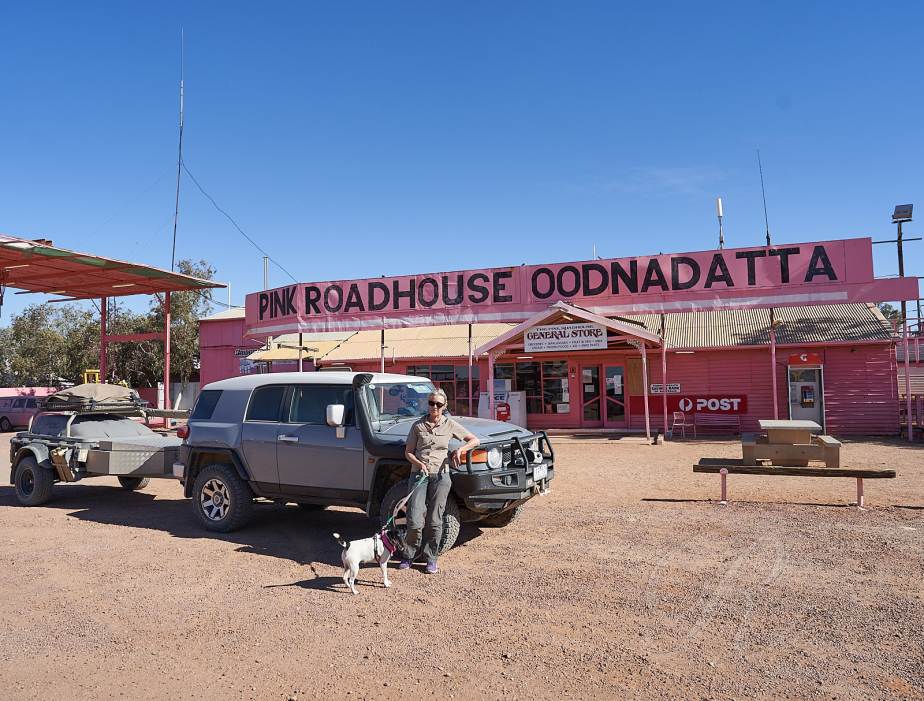
The bitumen extends almost to Marree these days. It’s another spot where you choose your adventure – the Birdsville Track or the Oodnadatta Track. This time it’s the Oodnadatta Track.

This road is all about its history. This is the way that Mr Stuart charted his path north. Once he had found the route the Overland Telegraph (1872) soon followed and the the railway slowly crept north reaching Marree in 1884, Oodnadatta in 1891 and Alice Springs in 1929. If you were going to Alice between 1891 and 1929 you completed the journey by camel!

Darwin had to wait until 2004 for the train to arrive by which time the southern section had been rerouted along a more westerly path. So although the Ghan is still running the Oodnadatta Track runs alongside an abandoned railway passing little ghost towns along the way.

There’s a train standing in the station at Marree with nowhere to go. Not far from it is one of Tom Kruze’s trucks retired from sterling service on the Birdsville …

From Marree to Oodnadatta the country is dry. Much of it is gibber plain. Eucalypts are only found along the drainage lines, even the Mulga struggles out here.

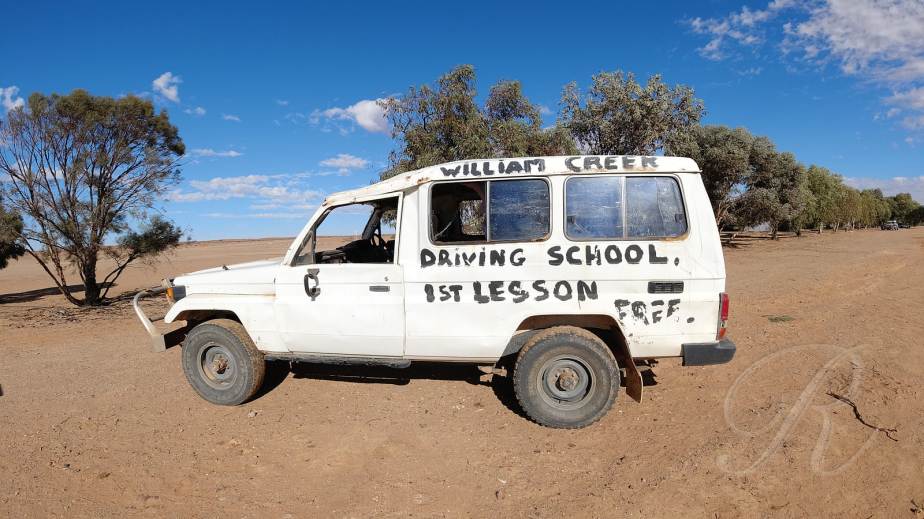
At William Creek you can get a beer or even have a driving lesson. If you choose to come by plane you can park virtually at the pub door.

Because we’d chosen to bring the dog we couldn’t take a side trip to see Lake Eyre currently in flood.

Not to worry we’d seen it both wet and dry before. We spent two nights on the track. The first at Coward Springs partly for a plunge in the hot tub (luke warm really) but mainly for the birds which are attracted to the wetland formed by the bore.

Beyond Oodnadatta the country seems a little more prosperous. We saw a few Red Kangaroos and there were cattle grazing. The second night was passed on a creek bank not far short of Marla.

There had been a lot posted on the web regarding the state of the road. It was really pretty good. We probably averaged 70 to 80 kph without much discomfort. Some of the traffic going the other way were managing even higher speeds and one of them put a chip in our windscreen. Bugger.

Heading North …

From Waikerie it was a northward trip through the picturesque town of Burra, passing south of the Flinders Ranges then north with the hills on our right. We were traveling in the footsteps of the explorers Eyre and Stuart.

Eyre had been thwarted to the east by the mud of the salt lake, Lake Torrens. He ascended a peak at the top of the range and could see more salt lake to the west and the north. He was out of water. He turned back with the belief a horseshoe shaped salt lake blocked travel to the north.

It was John McDouall Stuart from 1858 onwards that found a way between the lakes culminating after six attempts in the first return trip north south across the continent. He could always find a drink, unfortunately when in town that was alcoholic.

At Lyndhurst you have a choice of adventures, the Strzelecki Track runs off to the right Marree and Farina, our next waypoint, are straight ahead. We pulled into the Farina camp site as the light faded. Its a ghost town presently getting a face lift. One of the old bakeries is up and running and the bread is beautiful.

I have written about Farina previously <HERE>.

A run out in the surrounding country the next day produced the first casualty of the trip. The aerial for the CB radio snapped about 100m into the first corrugations we had encountered. Bugger.

Day one …

Central Goldfields, Victoria to Wakerie, South Australia – 615km.

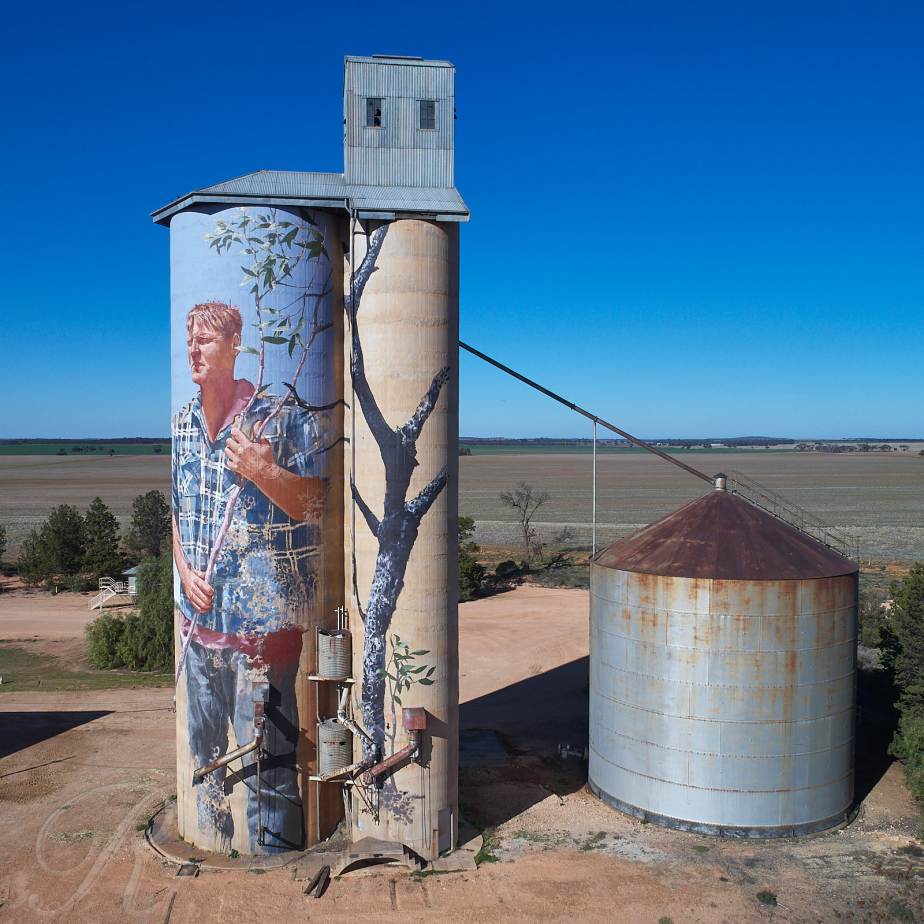
A long day to get a good step over the familiar. Travelling north west through the sheep-wheat-painted silo country of Victoria, pausing at Patchewollock to admire the art work and allow Fifi McGee to stretch her legs.

Next step the border, quarantine and new time zone. The quarantine station was unmanned which made for a speedy transition.

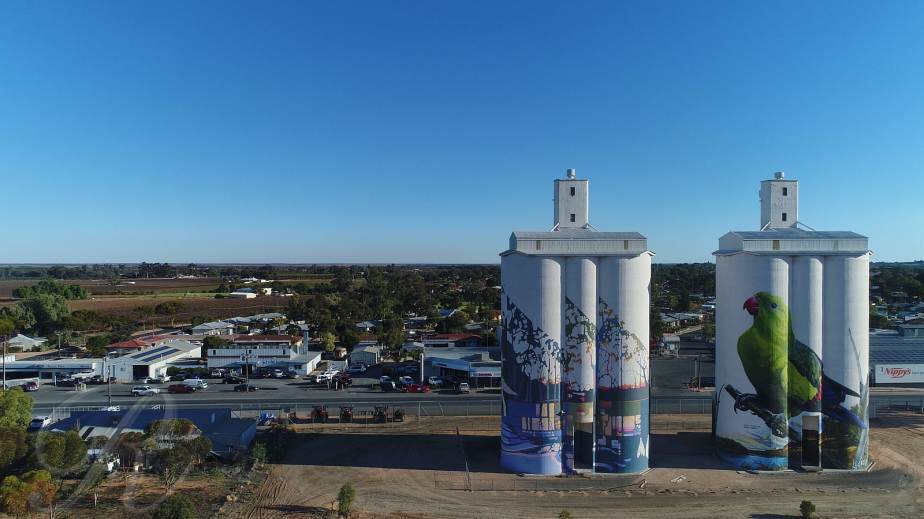
Onto Waikerie and the newly minted silo art, a double sided affair …

Three silos together make for a wavy canvas that is hard for the artist to get a great result from.

The campsite we chose is at Holder Bend on the banks of the mighty Murray. Quite picturesque but very close to the Sturt Highway. The dawn chorus was a competition between a Darter and a choir of Mac trucks.


Today’s diagnosis …

On the rare occasions that I see my doctor I go armed with a self diagnosis. Given my background I have enormous scope to work with. My GP is a very tolerant and lovely man. He reassures me in mellifluous tones and diverts attention to real problems like my cholesterol level.

The weather today in the Victorian Goldfields is bitter. A biting wind is roaring in from the south, the temperature is going to top out at a mere 11 degrees (Oh, and that’s centigrade – I’m sure my Canadian readers are full of sympathy) and the next shower will be coming in horizontally. Today’s self misdiagnosis is SAD.

Seasonal Affective Disorder, here’s a link <SAD> so that you can suffer from it too should you wish. My self prescribed cure is a road trip to somewhere warm. Kimberleys here I come …

Since this is the southern hemisphere we can take advantage of the coriolis effect to reduce fuel consumption by traveling anticlockwise. The start and finish point is in the lower right hand corner.

The camper trailer had a little work last week, the car goes for a service tomorrow. Over the next six weeks they will travel about 11,000km (~6,800miles). I’ll be taking in the Oodnadatta Track, passing Lake Eyre currently holding water, crossing the Tanami Desert and the Nullabor.

I shall experience climate change. Observations from the local airport – Maryborough reveal that average June temperatures range from a minimum of to a maximum of 13°C. In Broome the averages are 15° to 29°C. I once heard a guy on the radio telling us that a climate change of 4° would bring photosynthesis to a halt. I shall carefully check the vegetation for any hint of surviving chlorophyll. The return journey takes in Marble Bar which boasts that it is the hottest town in Australia. Here I’ll be able to cook on the bonnet of the car. A fried egg takes only a couple of minutes by which time the flies have eaten half of it. Or so they say.

Gayle’s ready.

There’s still a little shopping to do – corks for the hat etc. Departure is four days away.


A Day in the Grampians …

The Grampians National Park is one of Victoria’s jewels.

If you think of the Great Dividing Range as starting in north Queensland, sweeping south inland of Australia’s east coast and around the bend into Victoria the Grampians is where it makes its last desperate attempt to be mountainous. And a very scenic effort it is.

It and Wilson’s Promontory are the two Victorian parks under the greatest visitor pressure. At peak season the crowds are really bad, but don’t expect to feel lonely the rest of the year.

It has given Parks Victoria every opportunity to indulge itself in regulations, warning signs, railings and outrageous penalties. The rock climbing fraternity are the latest victims.

For a photographer who likes to use a drone as one of his cameras the frustration is immense. Drones cannot be flown without written permission on any Parks Vic property no matter how remote or lonely. Which locks away most of the great landscapes in the state.

Nonetheless it’s still worth a visit. My intention was to do some waterfall photography but I also felt the need for some exercise so I got there early with a view to climbing Mount William, the highest point. Although there was nothing on the Park’s website I found the Mount William Road closed. My 4 km hard hike had turned into a 24km hike, I wasn’t that early.

I settled instead for a ramble up to the Pinnacle via the Grand Canyon and Silent Street a 4.2km return hike from the Wonderland car park. There are plenty of excuses available to the photographer to rest along the way.

The view from the top is heavily polluted with man made constructions but with careful placement of the camera, towns, dam walls, railings, signs and tourists can all be avoided.

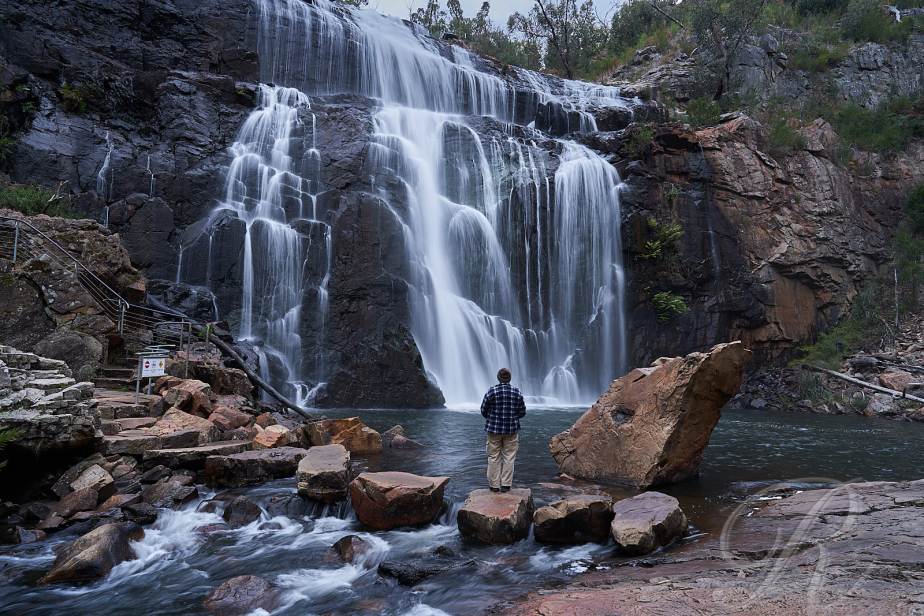
From there it was off to Mackenzie Falls for the late afternoon light.

Swimming, of course, is forbidden.

Isabella Was Here …

Captain John Hart saw Cape Nelson off to starboard and set his course for Adelaide. It was March 30th 1837 he was sailing from Launceston, Van Dieman’s land (known since 1856 as Tasmania) to Adelaide in the three masted barque Isabella with a cargo of livestock and the Pearce family as passengers.

Not long after that the Isabella was wrecked. She ran into the real Cape Nelson. Captain Hart had misidentified Lady Julia Percy Island.

Twenty five passengers and crew took to the boats and made it safely to Portland which had been settled about three years earlier, the first town in what would become Victoria. I doubt the livestock fared as well.

It’s a wild and woolly spot now guarded by a lighthouse.

The Classics …

Let’s start early morning …

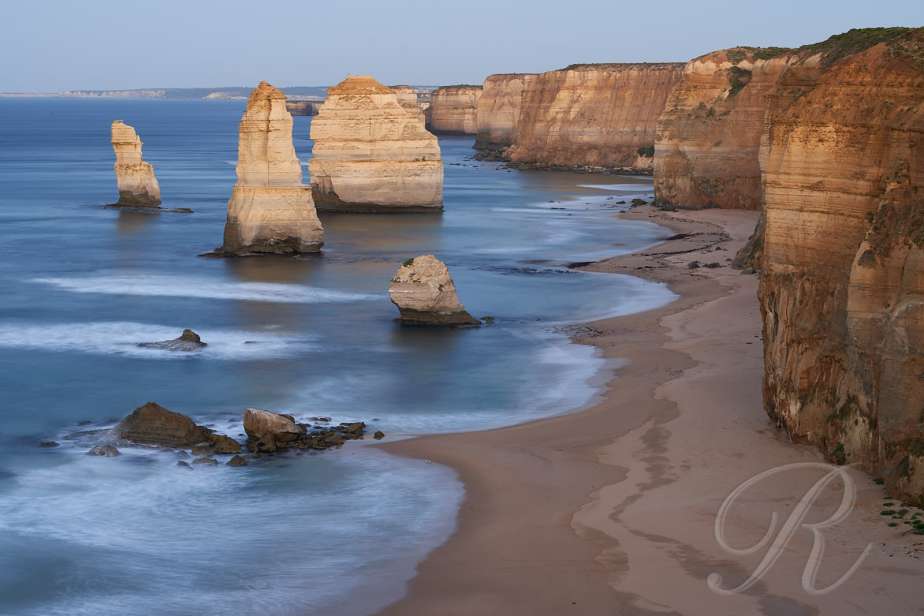
The Twelve Apostles

I didn’t even attempt a sunset – the crowd scared me off. Early morning is a better option. Not so many people are prepared to get up before dawn and some of those that do prefer the east facing lookout to watch the sun come up. I was happy with long exposure blue hour shots looking west.

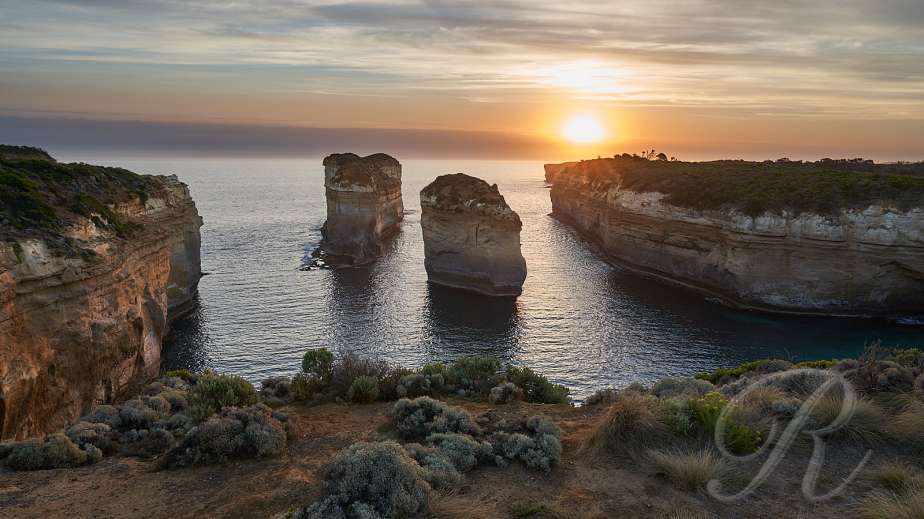
Loch Ard Gorge is not so packed. There’s plenty of room and several lookouts so to some extent you can pick the spot that best utilises the sun’s position that day.

Loch Ard Gorge

Once the sun had gone I went to an east facing lookout for another image …

Loch Ard Gorge

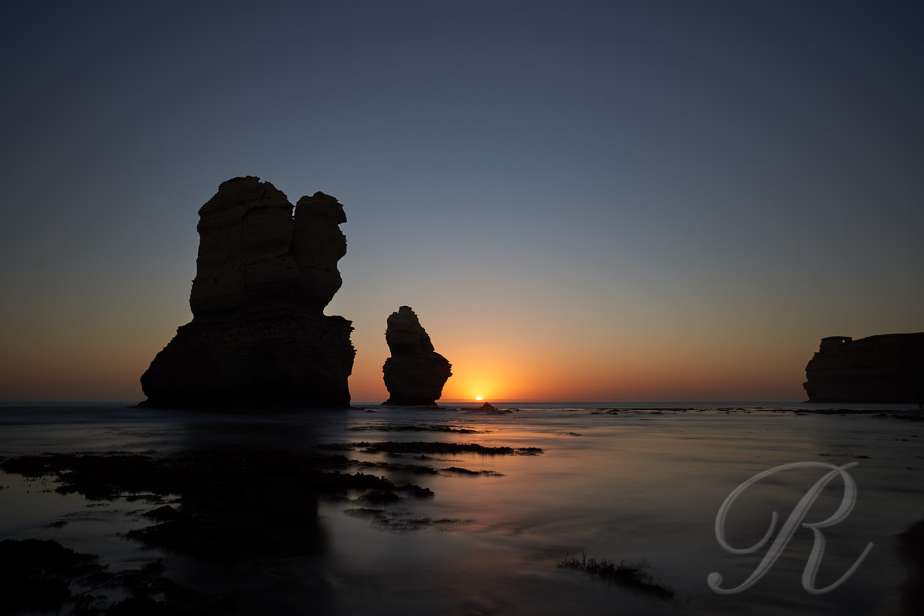
The previous evening I was on the beach at Gibson Steps for sunset. I certainly wasn’t alone but the crowd was limited to those fit enough to climb back up the cliff!

Gibson Steps

Great Ocean Road west …

This February has been an extremely busy month. I really needed a couple of days to relax so it was off to the western end of the Great Ocean Road to take a few photos of the iconic scenery. I visited the eastern end back in January and blogged about it from January 20 and following days.

This time it was under canvas at Princetown a spot that looks like this during the day …

and like this (sometimes) at night …

It is very handy for getting to the Twelve Apostles and nearby attractions and I will share the photos …