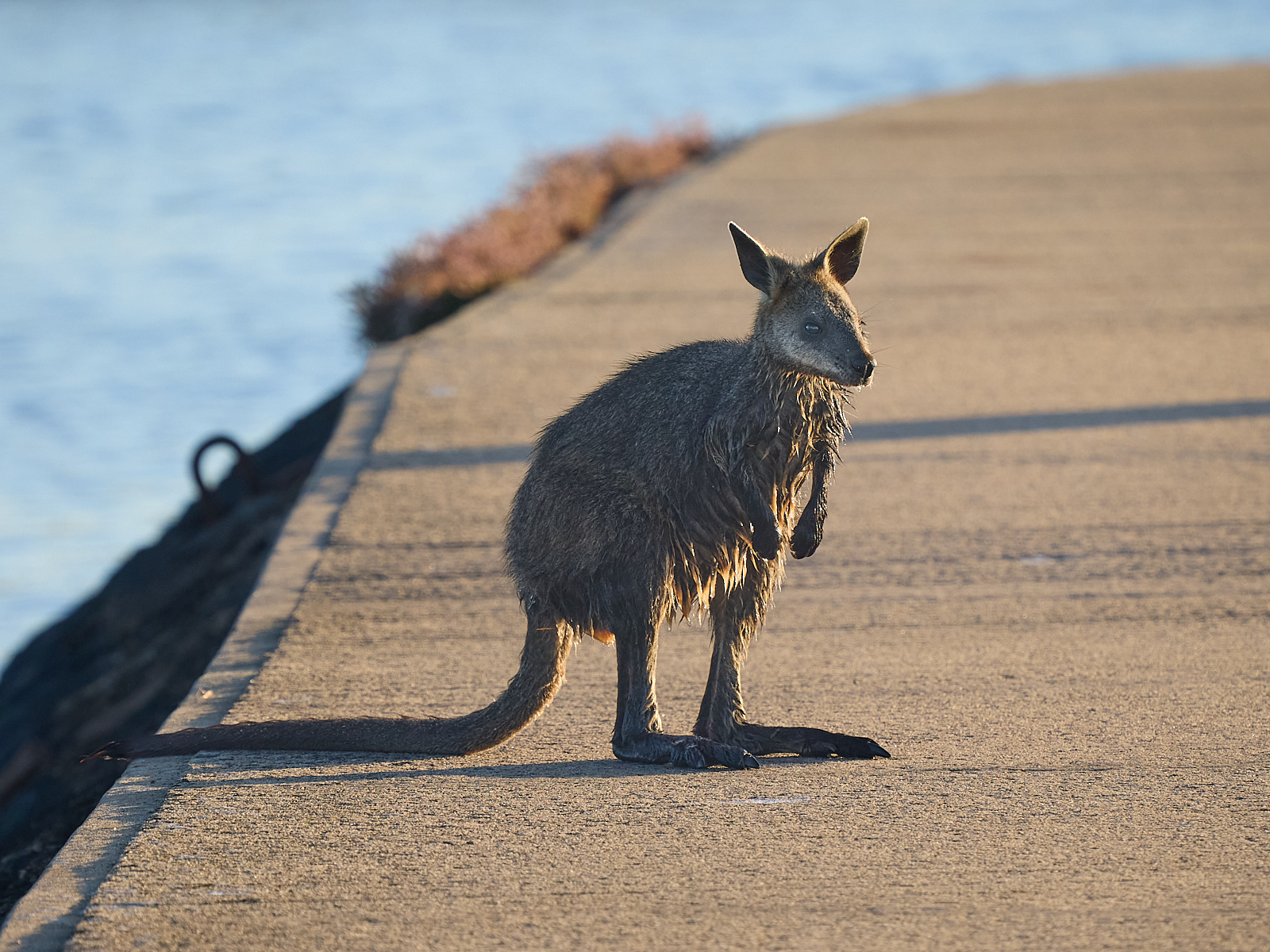
This little guy clambered up onto the causeway to Griffiths Island, Port Fairy. It’s a Swamp Wallaby. They are quite common on the island and sometimes come and go via the causeway. This is the first time that I have seen one choose to swim the Moyne River to get there. Kangaroos and Wallabies swim well as you can see in this Youtube clip …
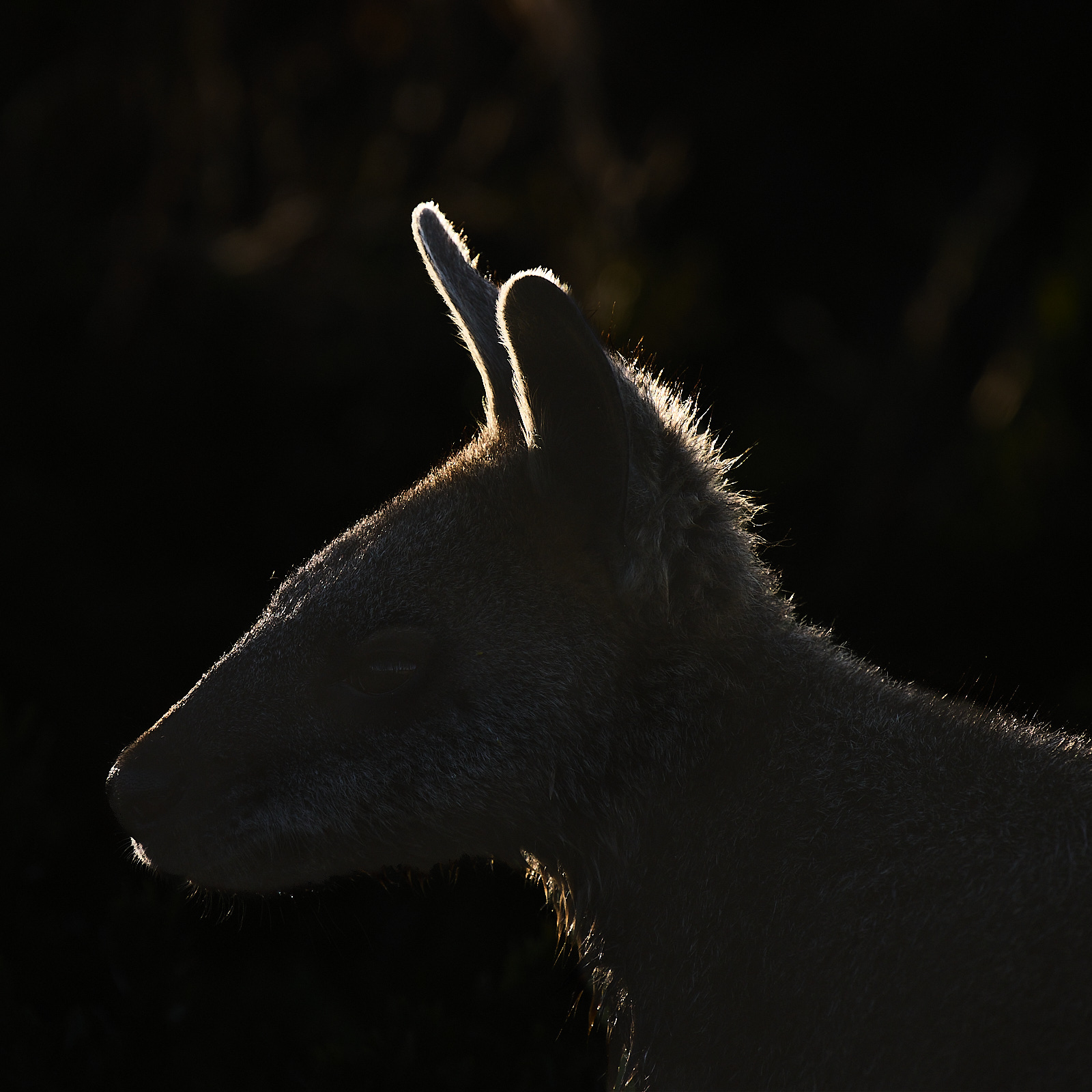
You can see in the photo that the early morning sun is casting a long shadow. A few minutes later I was able to take advantage of that to get a back lit photo …
There is a little slice of paradise hidden away on the road between Warrnambool and Cobden in south west Victoria. It’s owned by the Trust for Nature, preserves some beautiful riparian forest and is home to the endangered Long-nosed Potoroo. It’s the Ralph Illidge Sanctuary. Admission is $2, no dogs and closed on days of total fire ban.
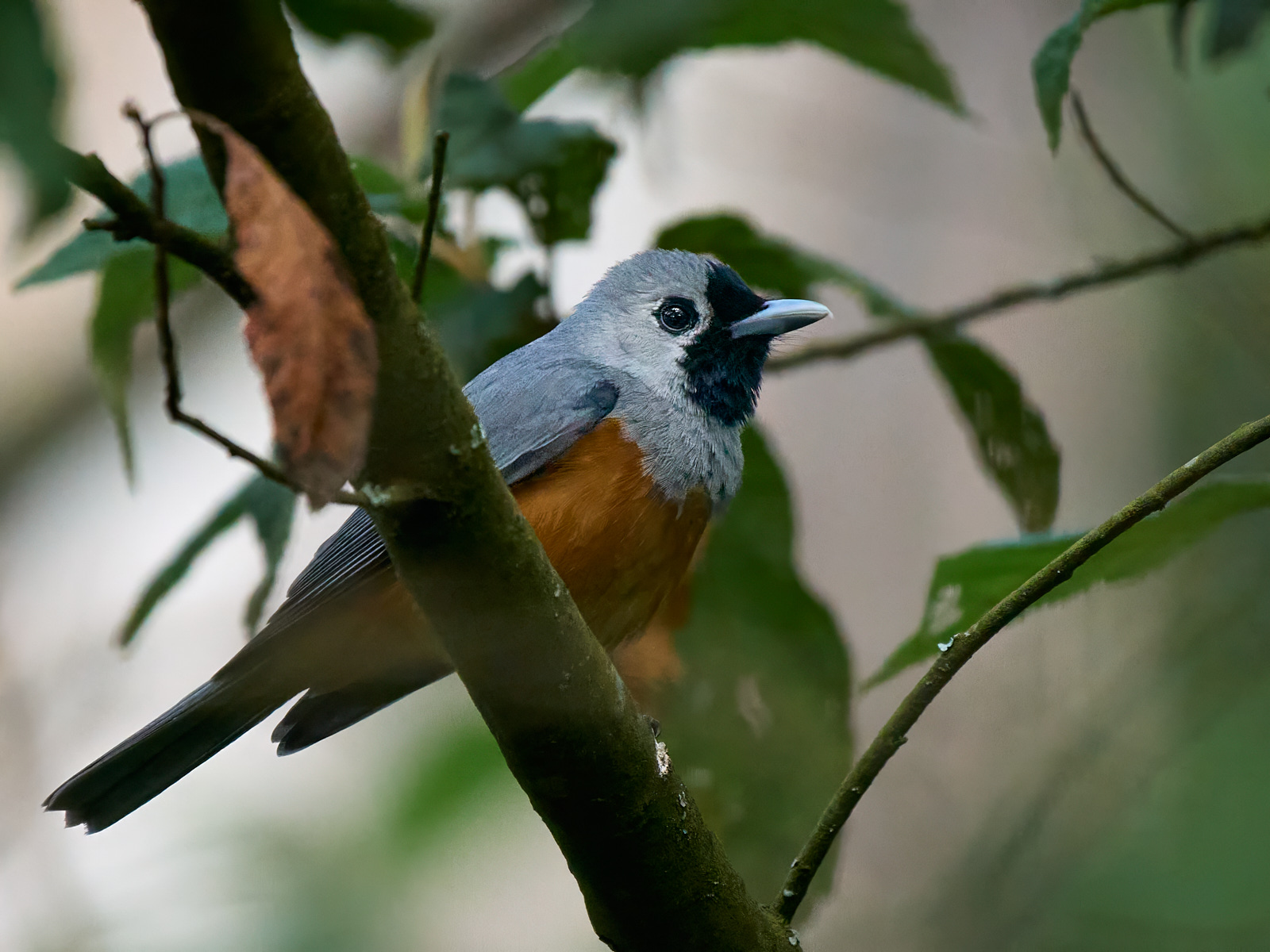
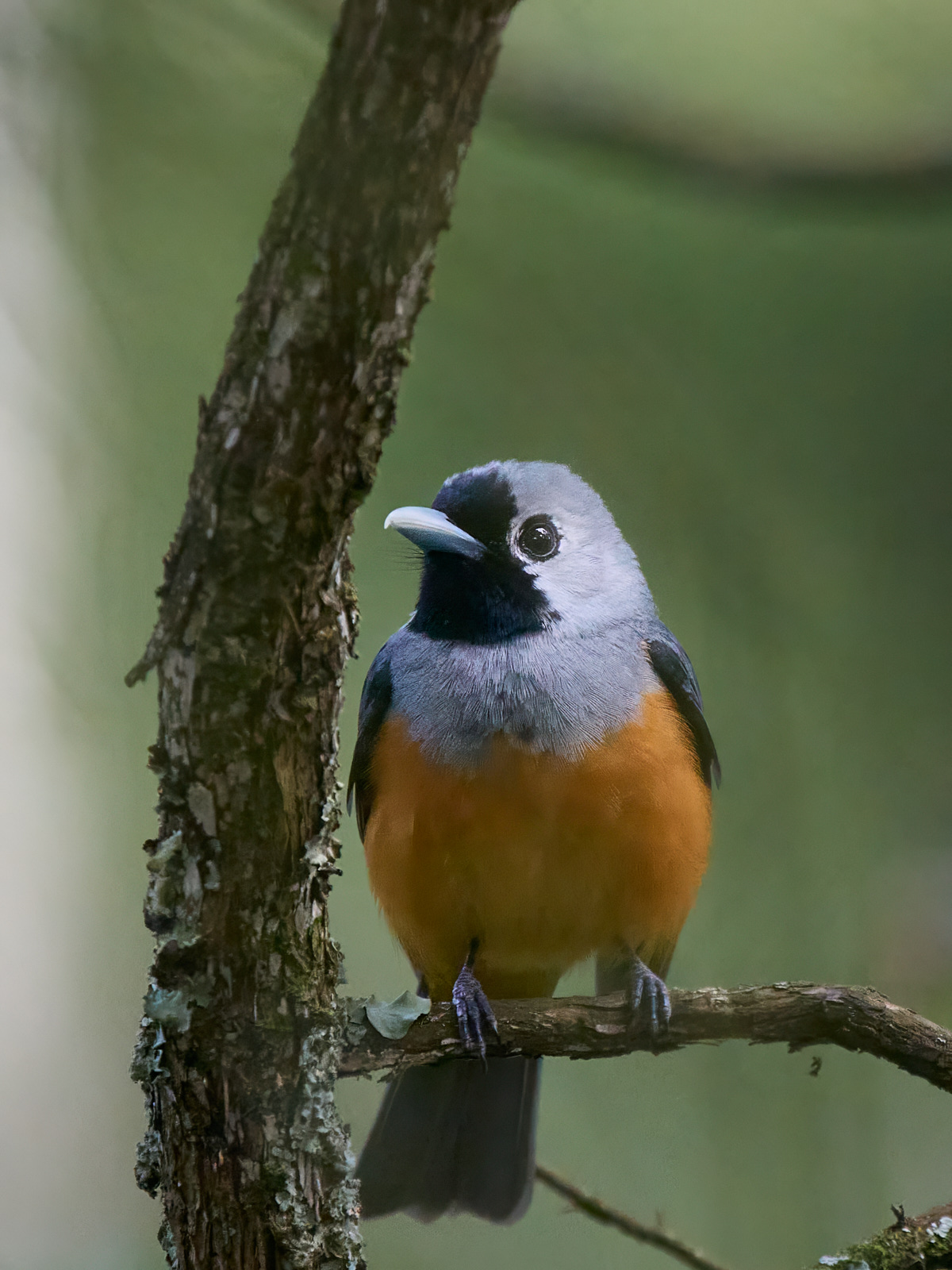
I’ve been giving it quite a lot of attention lately because a Black-faced Monarch turned up there in mid December and every twitcher in the shire has seen it. Except me. Until this morning. Although the previous time I was there another birdo did show me a very nice photo on the back of his camera.
The Monarch in question is a breeding migrant to the east coast of Oz, spending winters in New Guinea. A few come around the corner to the south coast in Gippsland (eastern Victoria). This one is the furthest west I’ve encountered one, and it does seem to be on its own. There is a price to be paid for being a pioneer.
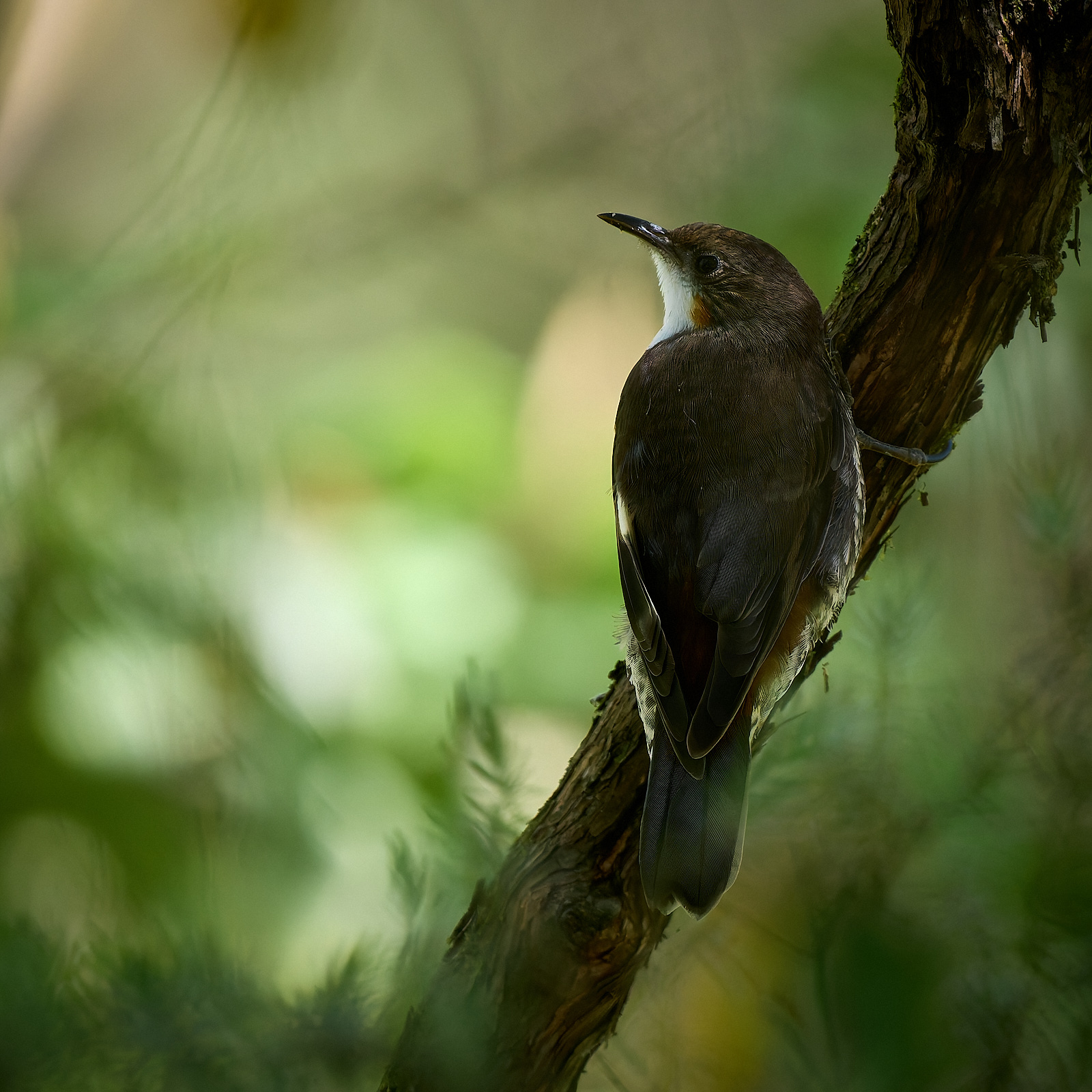
The sanctuary is an excellent spot for forest birding well worth a visit any time. The Potoroo is nocturnal and elusive so don’t count on seeing one. The sanctuary website also mentions the Rufous Bristlebird. The last eBird record was is in 2015, the Great Ocean Road is a much better bet for this species.
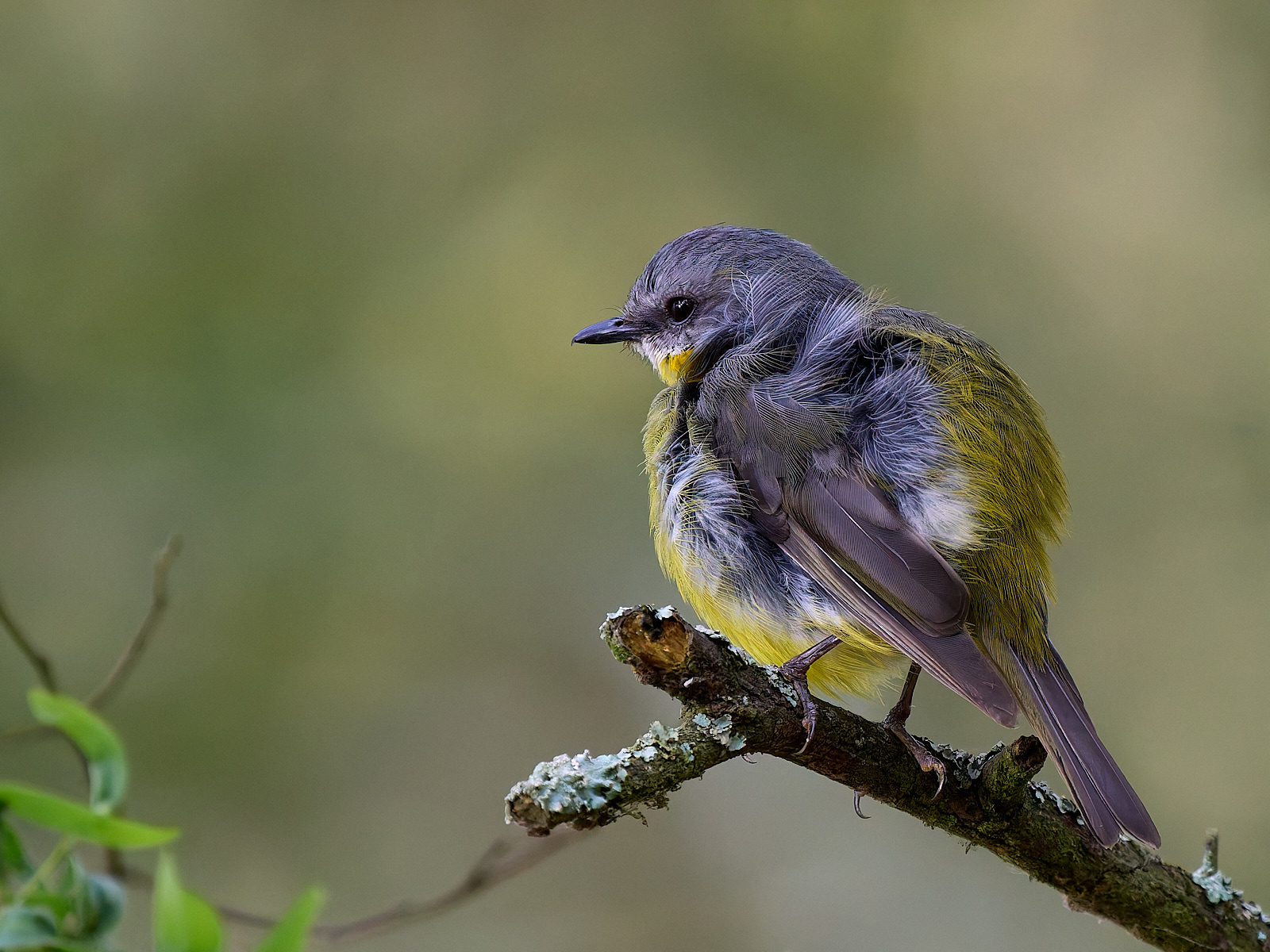
The photos in this gallery were all taken in the sanctuary in the last month …
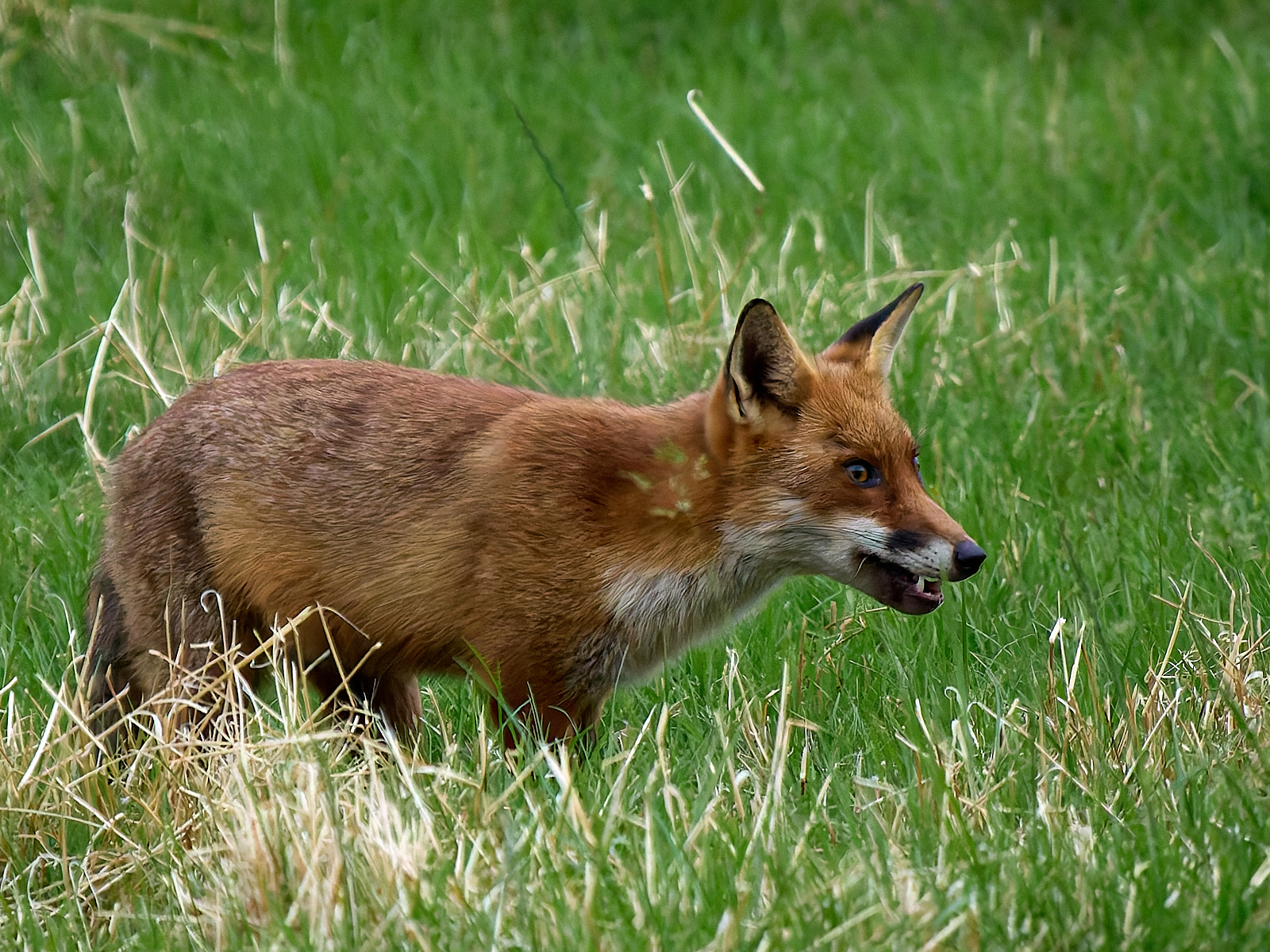
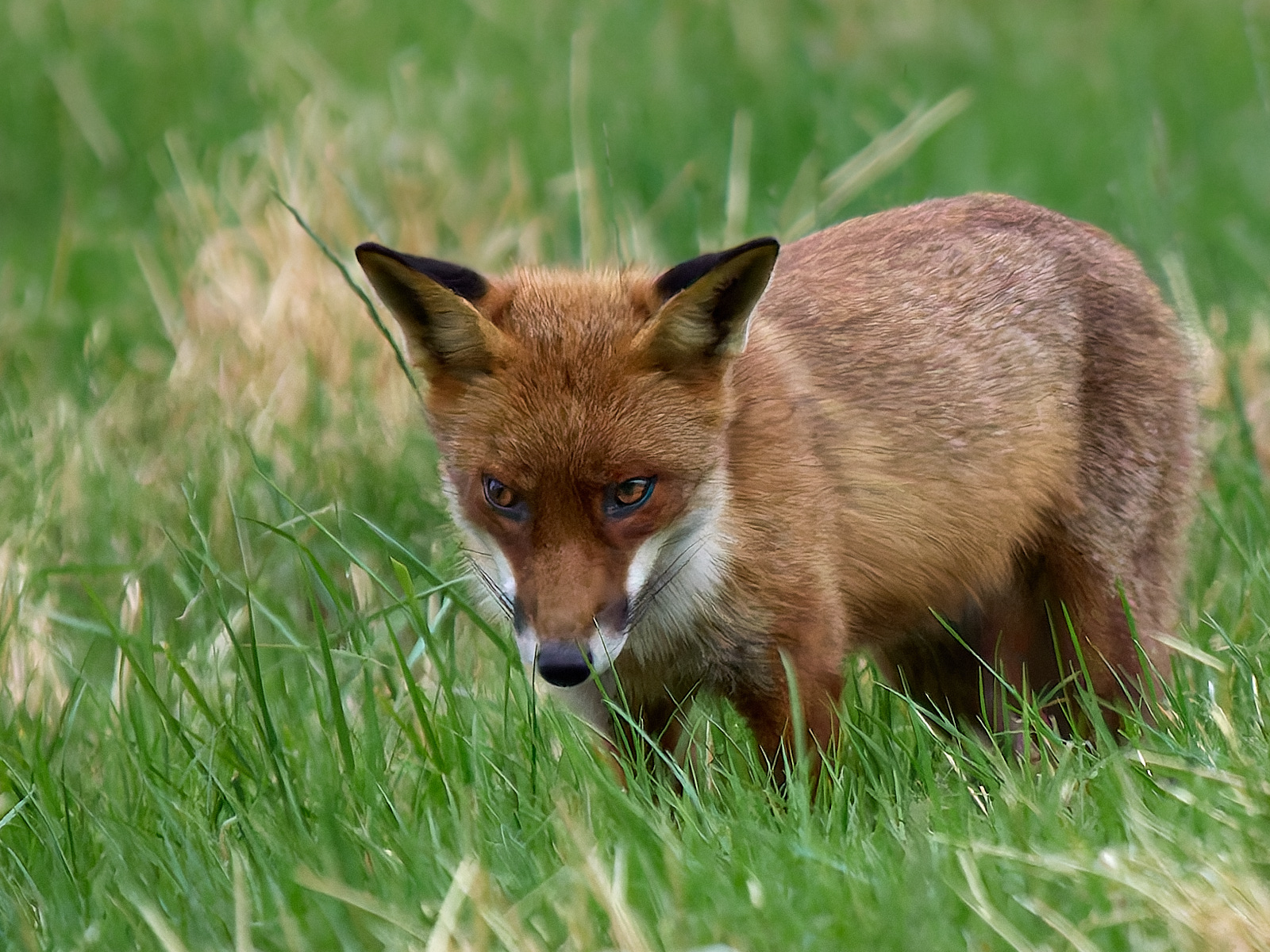
The Red Fox was introduced to Australia. Van Dieman’s Land received them in 1833 or thereabouts but that introduction was a failure. The mainland was next in the 1840’s and that proved more successful. All so the landed gentry could don their red coats and hunt with hounds. They are now established in all the mainland states although they have not been particularly successful in the tropics.
They have been blamed for the loss of a number of native species although untangling the cause of extinctions is complicated by the success of feral cats and the Dingo that preceded both. Foxes are a major problem in nesting colonies of the Little Penguin and other ground nesting birds. Not that they are confined to the ground. They climb well and have been implicated in killing young Koalas.
They can become tame in urban settings but in the bush they remain wary. I spotted this one coming across a field well before it spotted me and kept very still as it approached. When it saw me it bolted.
A happy and prosperous new year to everyone who deserves it, which is almost everyone after subtracting the despotic, criminal and corrupt.
January the first. A new calendar game. Go for quantity or quality? Early to bed last night up at four this morning. I decided on some forest birding and headed about 90 minutes drive east of Melbourne to Mount Worth State Park. Tall forest of Mountain Ash with Blackwood beneath and Tree Ferns in between. Epiphytic ferns on everything and enough fungi to poison your whole family. Beef Wellington anyone?
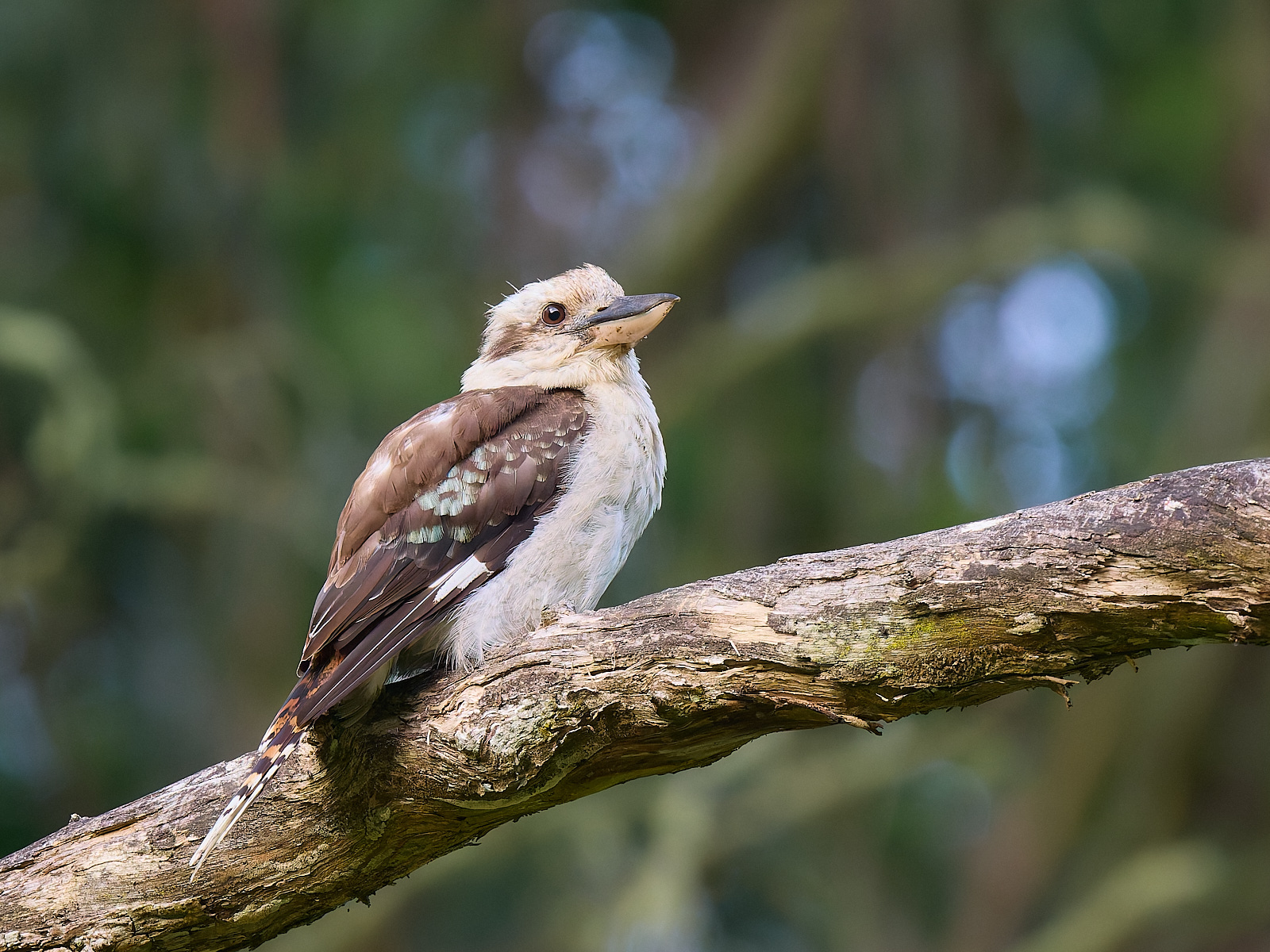
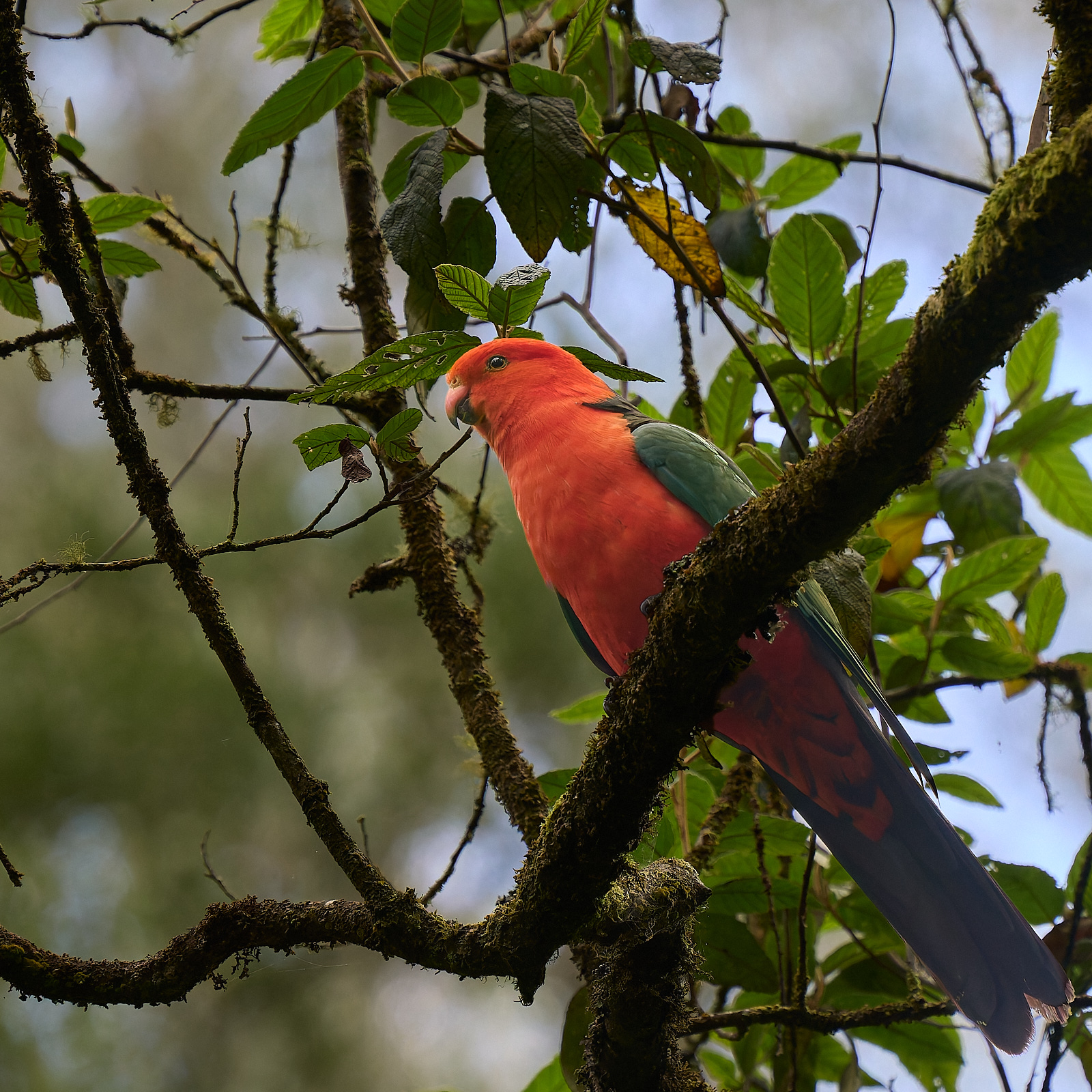
The first birds on the list were quintessentially Australian – King Parrot, Laughing Kookaburra and Australian Magpie. First native mammal was a Wombat running for its life. They run with rather more grace than you would expect from such a short legged stocky creature.
Laughing KookaburraAustralian King Parrot
The list extended to just 21 bird species but included Lyrebird and Large-billed Scrubwren and it’s unlikely that I’ll see them again until late in the year.
For a nice introduction to the trails in the park click this <LINK> but be aware that the Giants Circuit is currently closed (cos Parks Vic, what can I say).
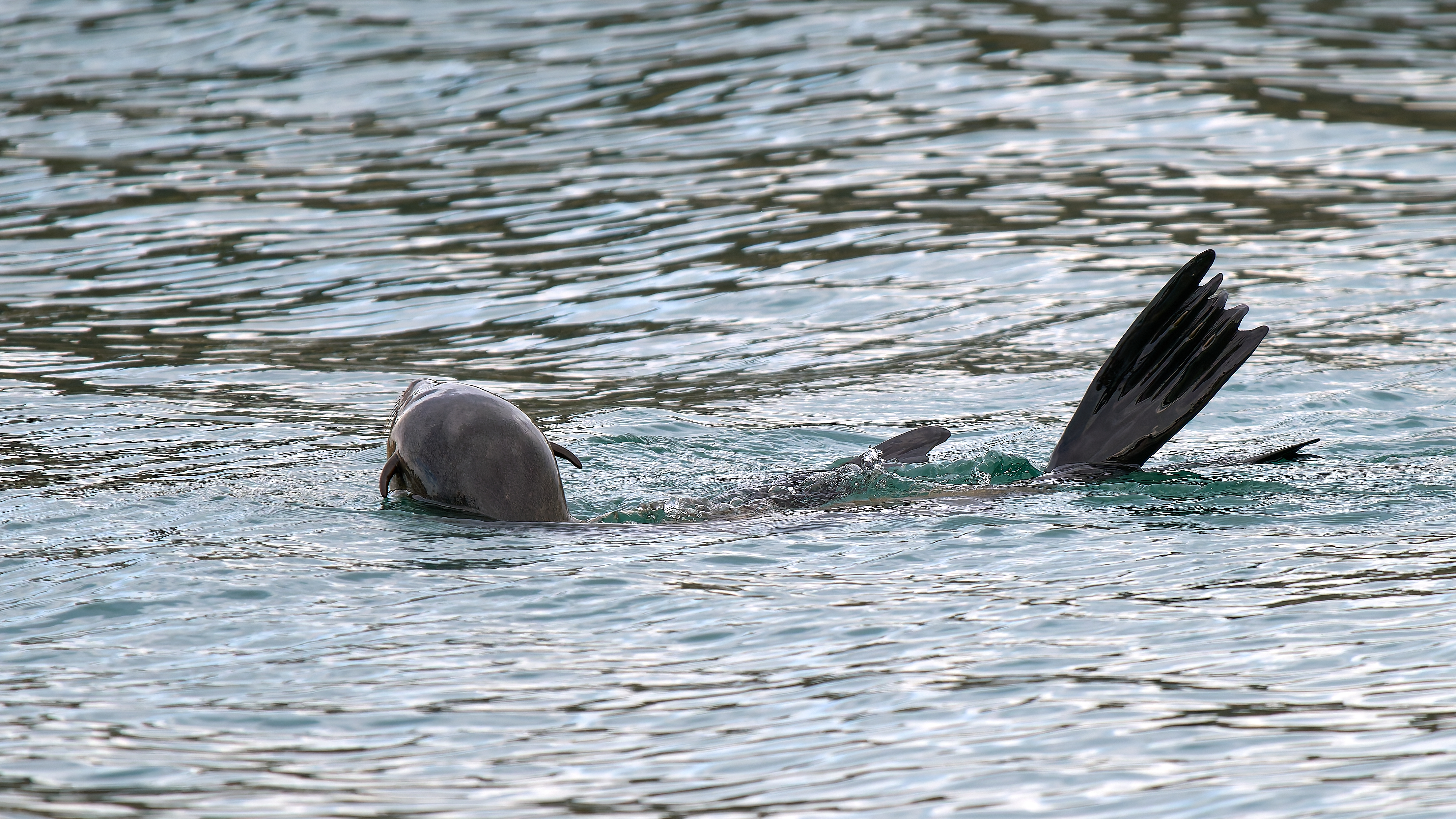
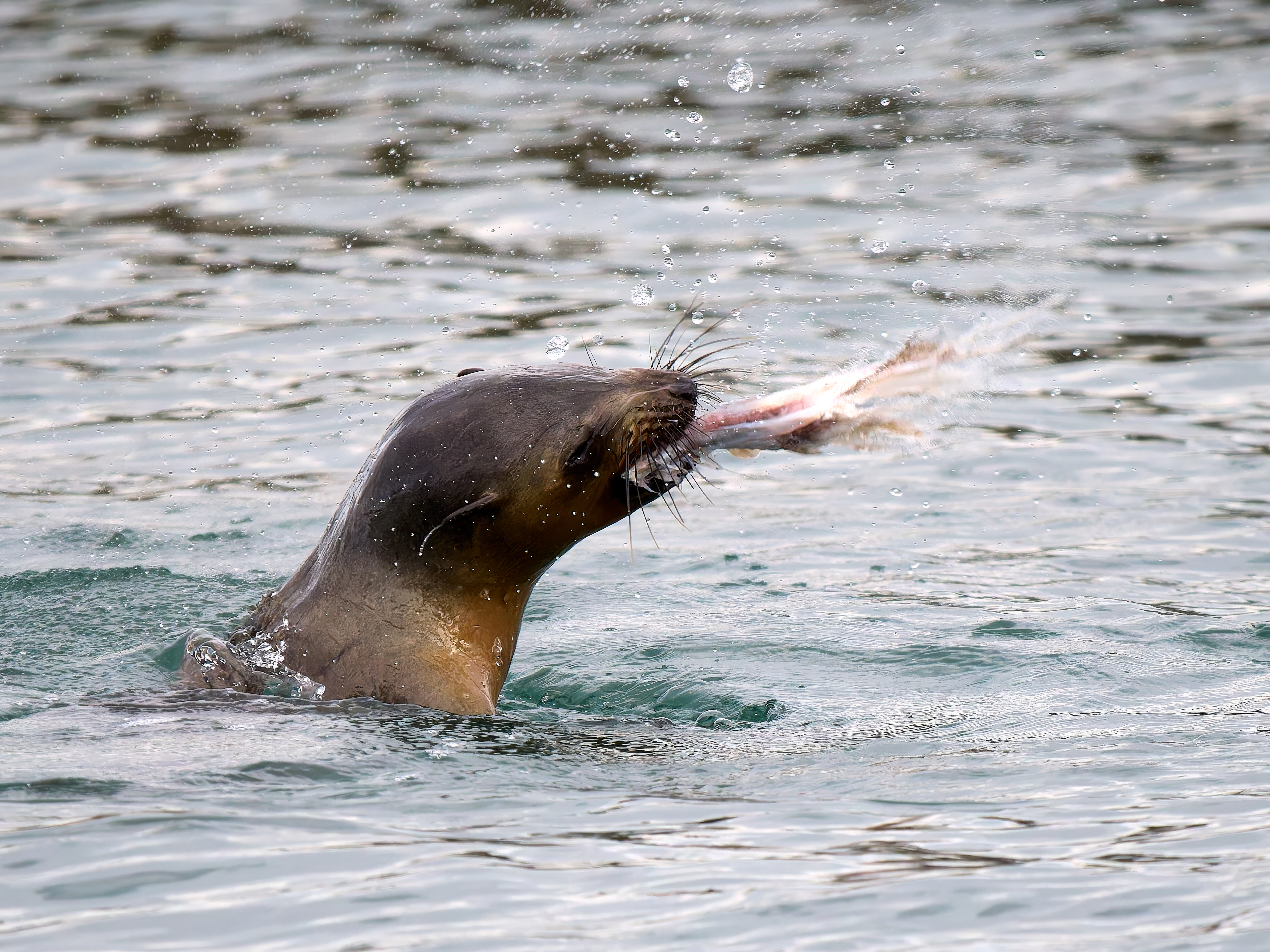
There is a seal colony on Lady Julia Percy Island about 22km from Port Fairy and occasionally a seal or two will pay us a visit. I found one this morning in the mouth of the Moyne River playing with a fish fillet that looked more like it had been donated than caught. The seal was shaking it and throwing it and occasionally chewing on it. It was having a grand old time.
The Australian Fur Seal Arctocephalus pusillusdoriferus is a subspecies of the Brown Fur Seal. It is found around the shores of Bass Strait and Victoria, it breeds colonially on smaller islands. Adult males will weigh between 190 and 280 kg (420–620 lb) the girls are a bit smaller. The nominate subspecies is found around the shores of southern Africa.
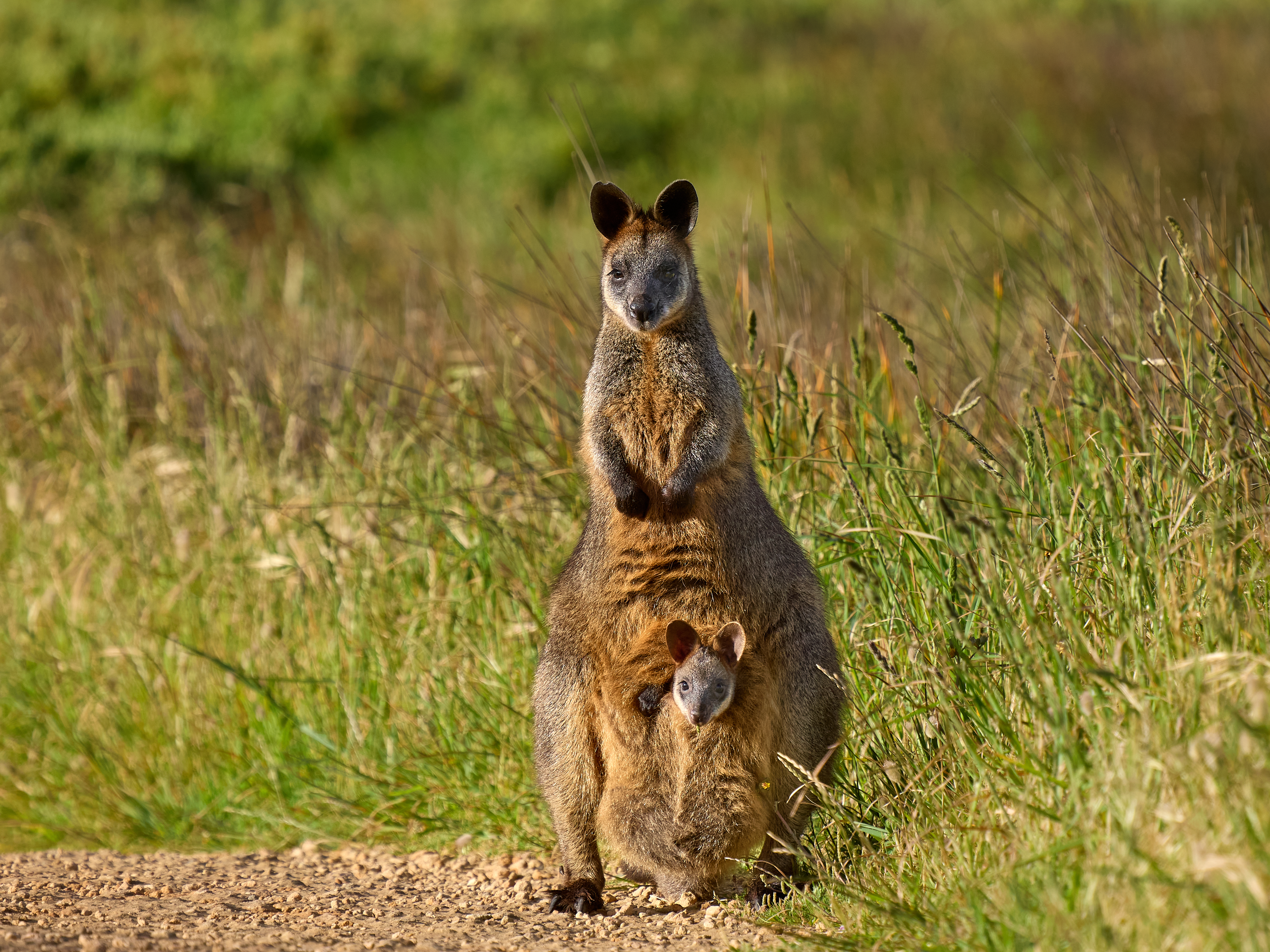
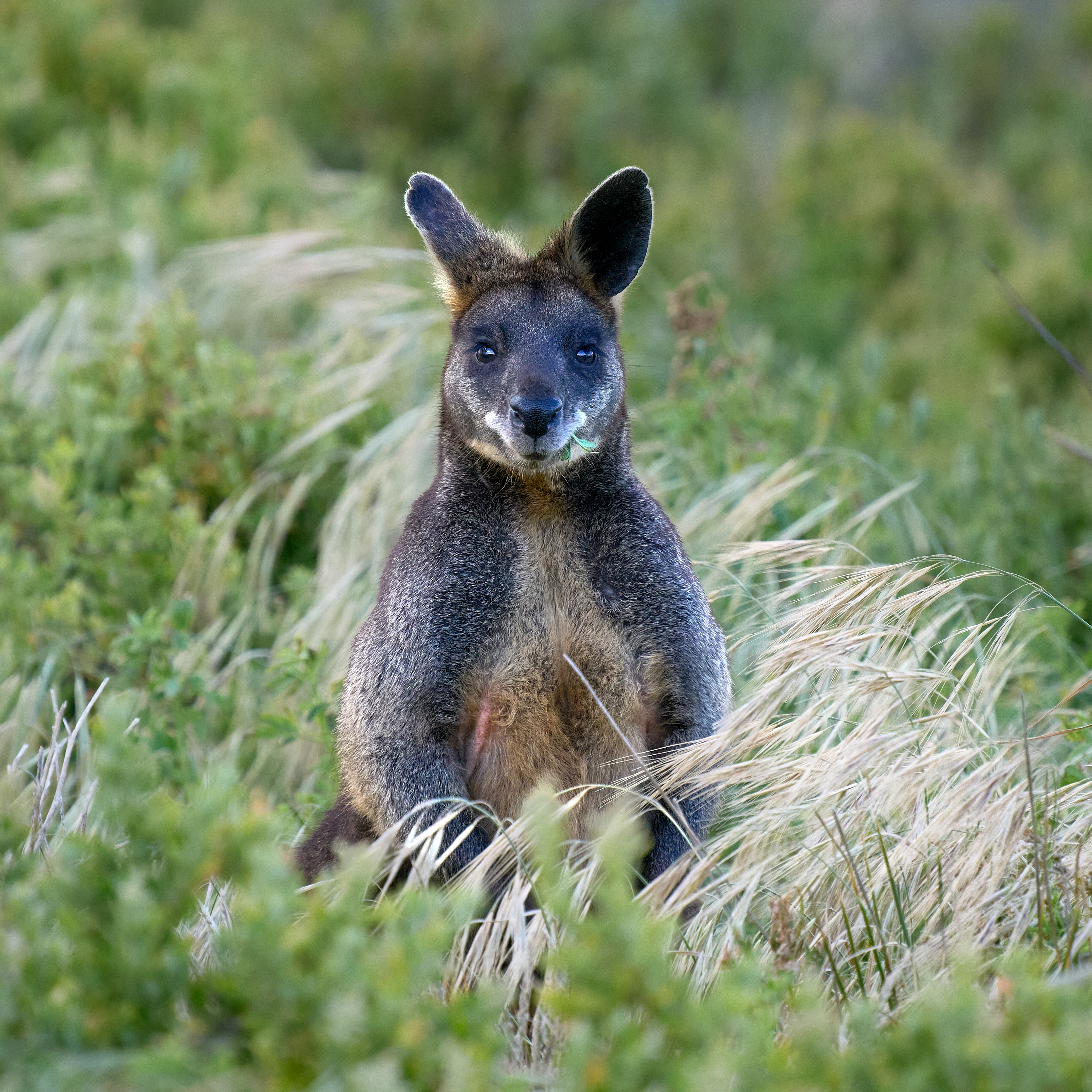
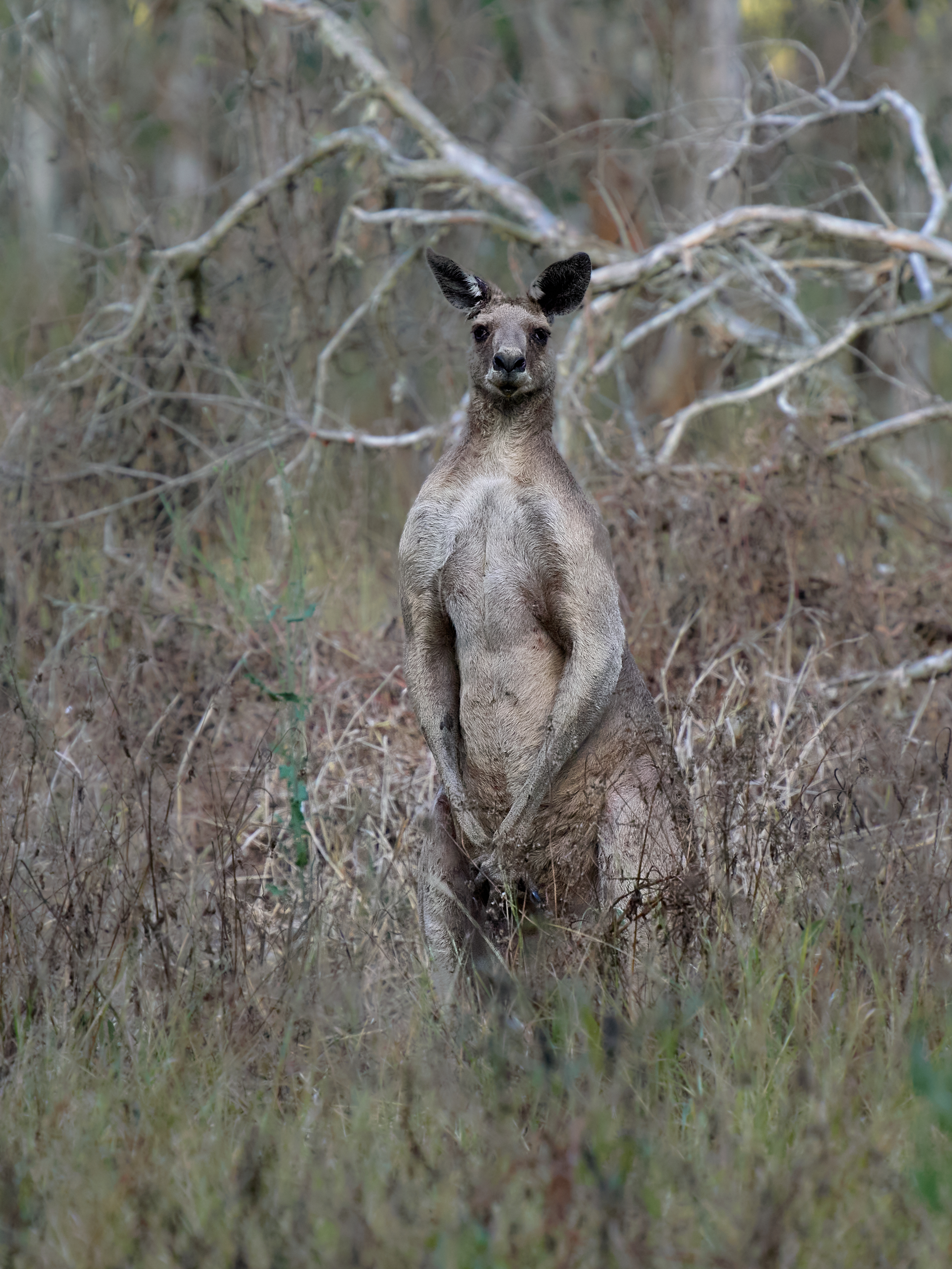
A walk around Griffiths Island, especially early or late in the day will almost always turn up a few Swamp Wallabies. As long as you don’t go too close they tend to just stand and look at you. Occasionally you might also see an Eastern Grey Kangaroo, they are not so tame. When they’re bounding along Swampies tend to keep their heads low and travel in a horizontal posture. Eastern Greys are more upright.
Despite their name Swamp Wallabies are not regularly found in swamps. An alternative popular name is Black Wallaby but they’re not black. Their scientific name is also a dud Wallabia bicolor since they are rufous, black and cream.
Mallacoota is a visually splendid, isolated town with a resident population of 1,183 in the last census. It is situated on a lake system and surrounded by the forest of Croajingalong National Park. Summer visitors outnumber the locals, they come to fish, bird watch, hike and for the wild flowers. The town is 25km from the Princes Highway via a narrow winding road through the forest.
In late December 2019 a lightning strike in the national park started a fire about 60km from Mallacoota. There may have been 10,000 people in the town at that time. Strong winds and high temperatures were expected in the next few days. Many people left. There were still about 4,000 people there when the road out was closed on the 30th of December.
The fire reached the town on the 31st destroying some homes and businesses. The firestorm was so fierce and the smoke so dense that the small airport could not be used for evacuation or fire suppression. After the fire had passed the roads in its wake were unusable. The Royal Australian Navy commenced evacuation by sea on the 3rd of January.
That would have been a summer holiday never forgotten.
The forest has recovered well as Australian forests will but there are still charred trunks and many dead branches emerging above the canopy. We saw Grey Kangaroos and Red-necked Wallabies and were serenaded of an evening by a male Koala. Goannas were out and about and the birding was good. We spent five nights there before taking a couple of days to drive from the far east of the state to the far west.
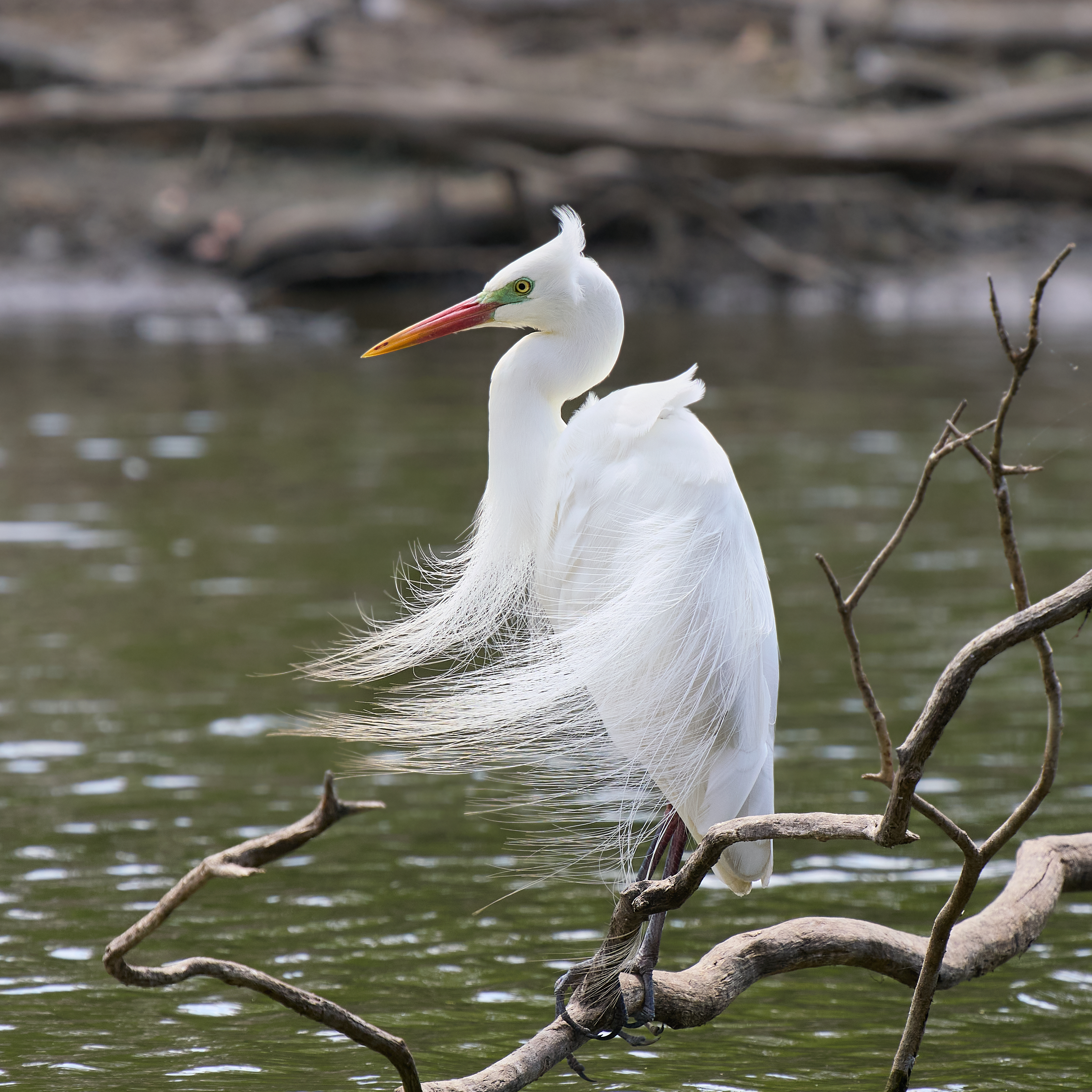
Bell MinerCommon BronzewingEastern Grey KangarooMasked LapwingCaspian TernGreat Egret
This is my (temporary) new way of expressing temperature. In Mallacoota, Vic it’s 5am and 8°C. In Broome, WA, it’s 26°C, Of course it’s only 2am there and the humidity is 77%. So for a Broomite in exile it feels like -18°B. Which is better – snuggled under the doona frightened to come out or lying on top in a lather of sweat?
For those of you who live not far north of the Gulf formerly known as Mexico that’s 46°F, 79°F and feels like -33°B. For those in Canada I apologise for being such a woos. Heading into a winter like yours and living next to the Rufous Doofus it takes a lot of courage to be a Canadian.
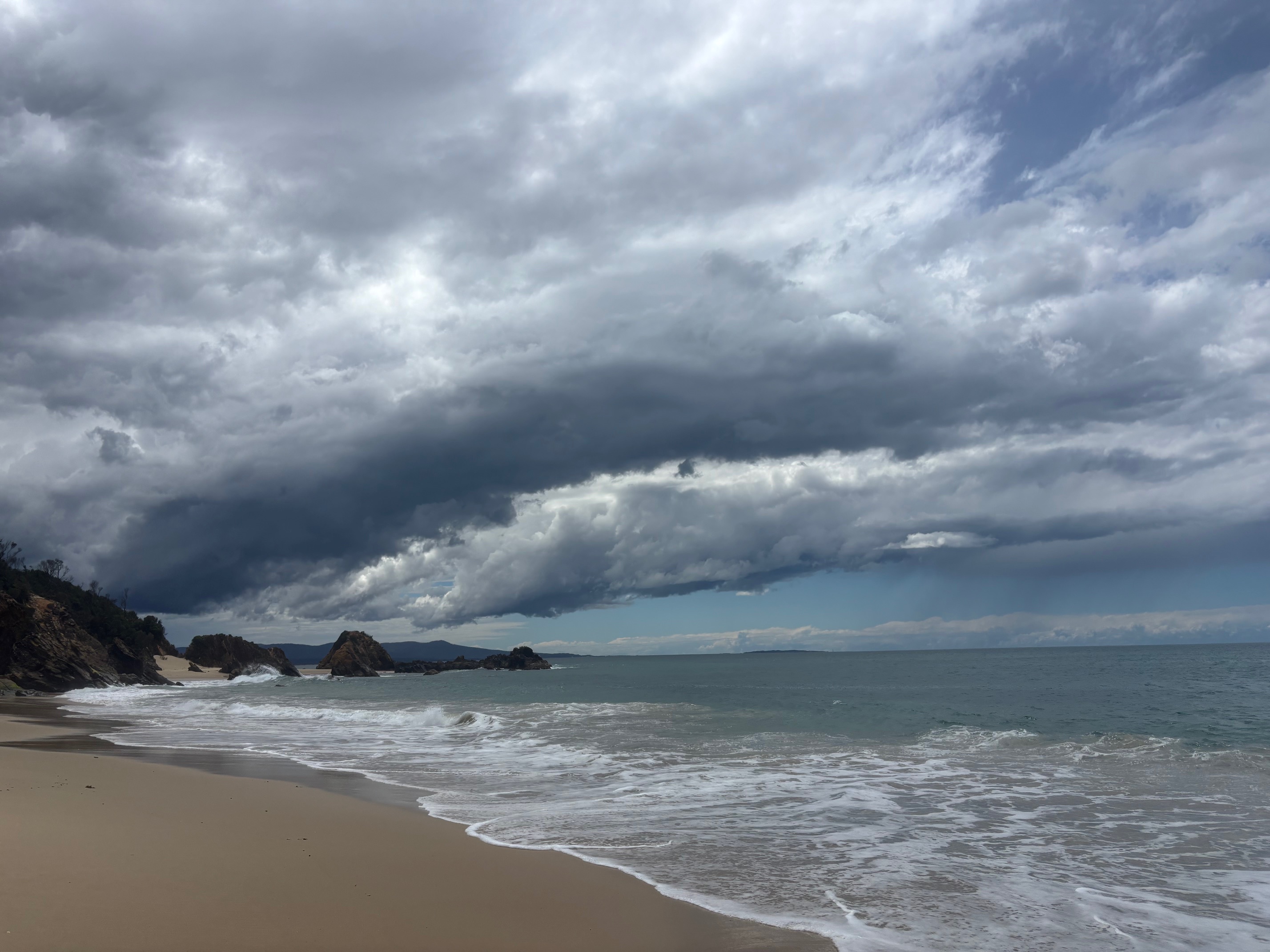
Yesterday’s weather (before the very impressive thunder storm) photographed by Gayle McGee …
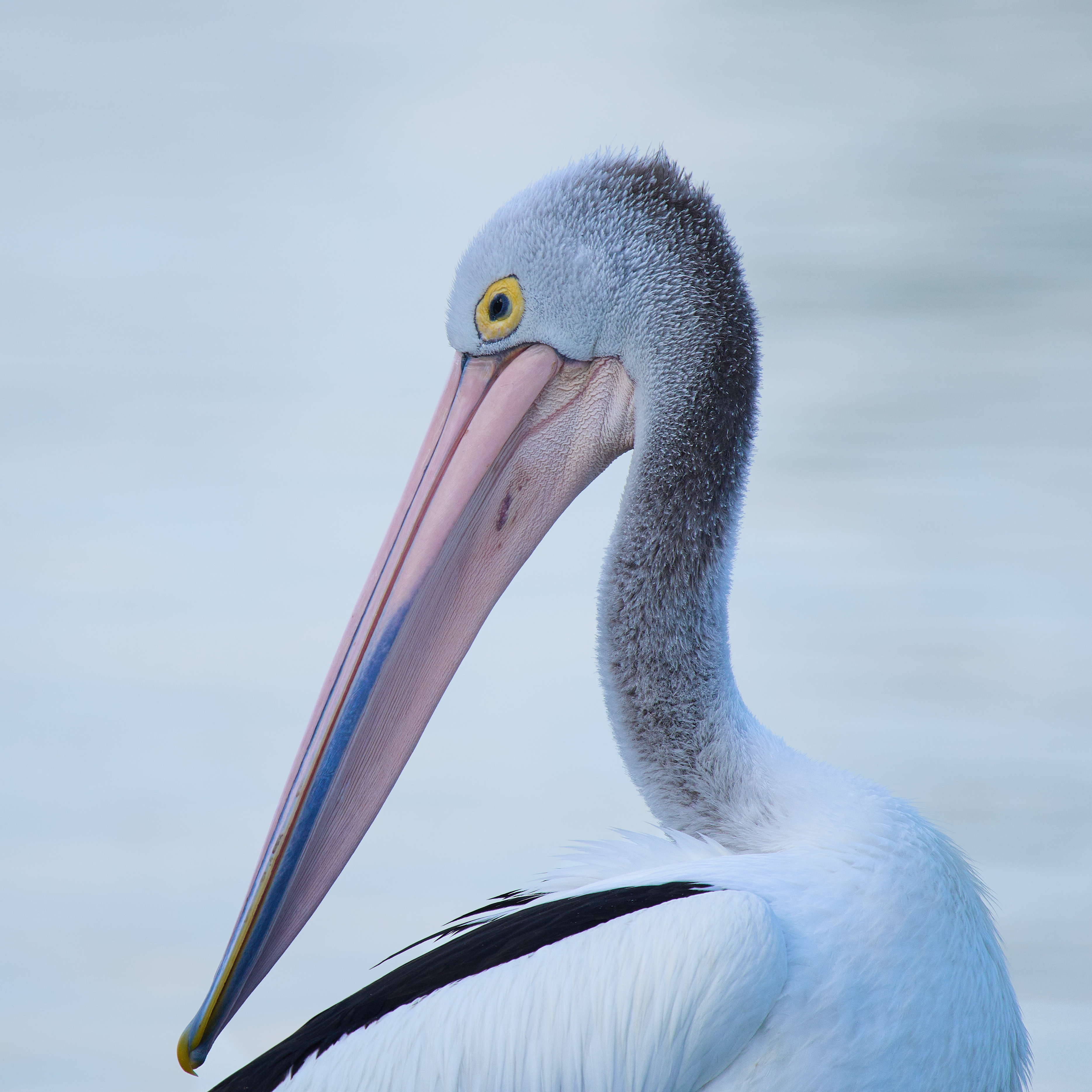
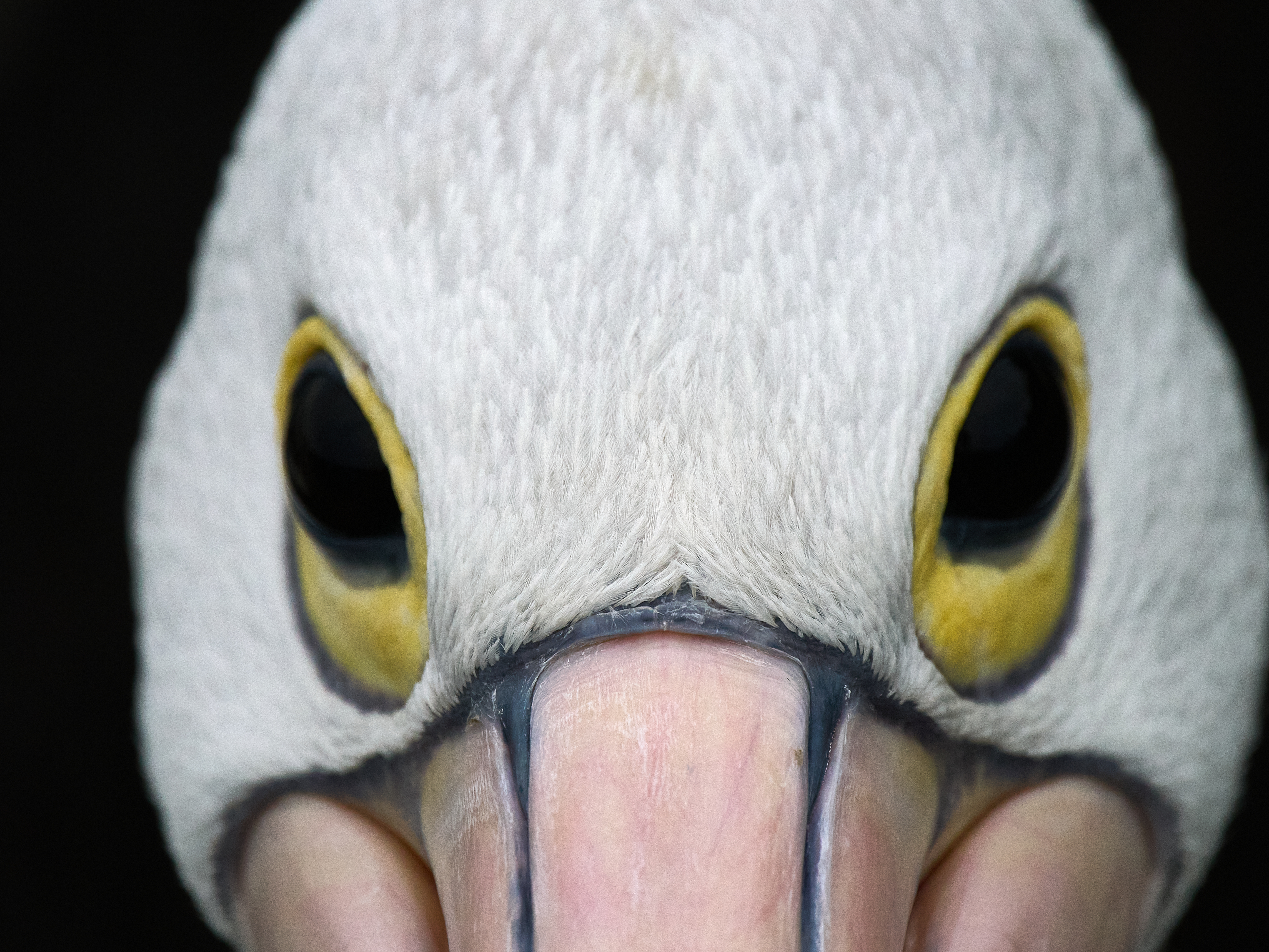
Meanwhile the long lens has been getting a workout. The Pelicans here are well educated creatures that gather where fishermen gut their catch. They too are feeding chicks.
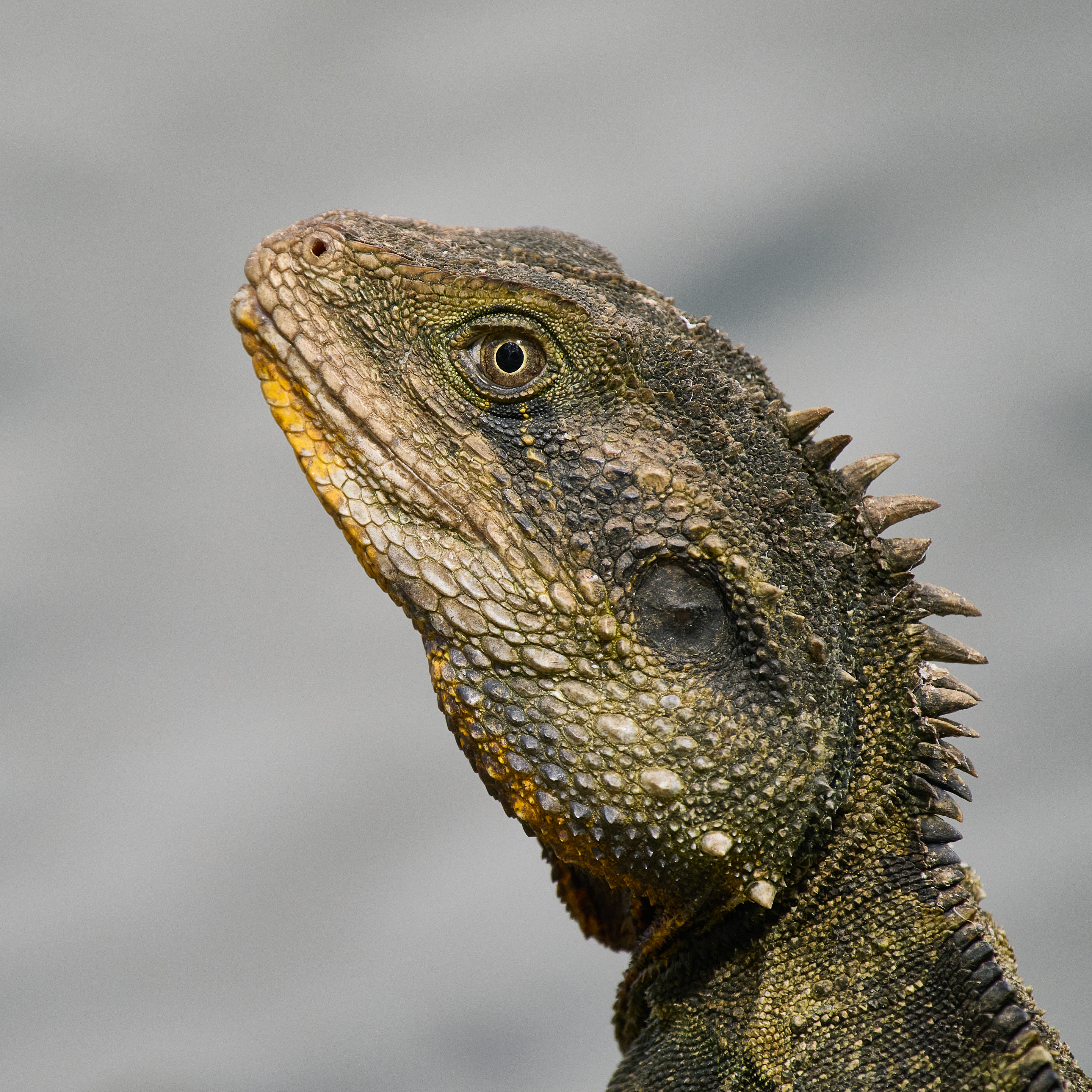
Rum, Ginger Beer, Sugar of course, macadamia plantations, the Burnett River and 73,747 people. Plus a dog friendly botanic gardens with rather more wildlife than the average, nesting birds, turtles and Eastern Water Dragons in abundance.
Pluymed Whistling DuckEastern Short-necked TurtlePlumed EgretEastern Water DragonEastern Water Dragon
We left Ingham in the rain but arrived at Finch Hatton in bright sunshine. The caretaker at the Show Grounds was complaining about the heat and we were pleased to take advantage of the shade offered by some large fig trees. Cane harvesting was under way with trucks bringing in cages of cut cane for transfer to the trains which are such an interesting feature of the sugar country.
Finch Hatton is a good base to visit Eungella National Park, Eungella Dam, Kinchant Dam, Finch Hatton Gorge and a new find for us, De Moleyns Lagoon. If you search Google Maps for it you will find it in two places. Being a lagoon the one with the blue patch associated with it is the one you want which didn’t stop my in-car navigation system from directing me straight across a cane field to the other one. I ignored the advice. The one true lagoon can be found by taking Brand Road to what appears to be its end at the Council Tip. Keep the tip on your right and continue on a gravel track to a locked gate. The astute bird watcher will quickly solve the problem posed by the gate and drive on to the water’s edge. It is worth the effort.
That night we went to bed to the sound of a raucous argument between a Little Red Flyingfox and a Ring-tailed Possum over who owned the figs above our heads. We woke the next morning to the equally raucous and persistent calls of a Channel-billed Cuckoo.
The next camp site was 213km south at St. Lawrence adjacent to another excellent wetland birding place.
Today we made another step down the Bruce Highway, crossed the Tropic of Capricorn near Rockhampton and tonight we are are camped at Tannum Sands near Gladstone. It feels so urban after our sojourn in the less densely populated north and northeast of the country.


















 bobmcgee