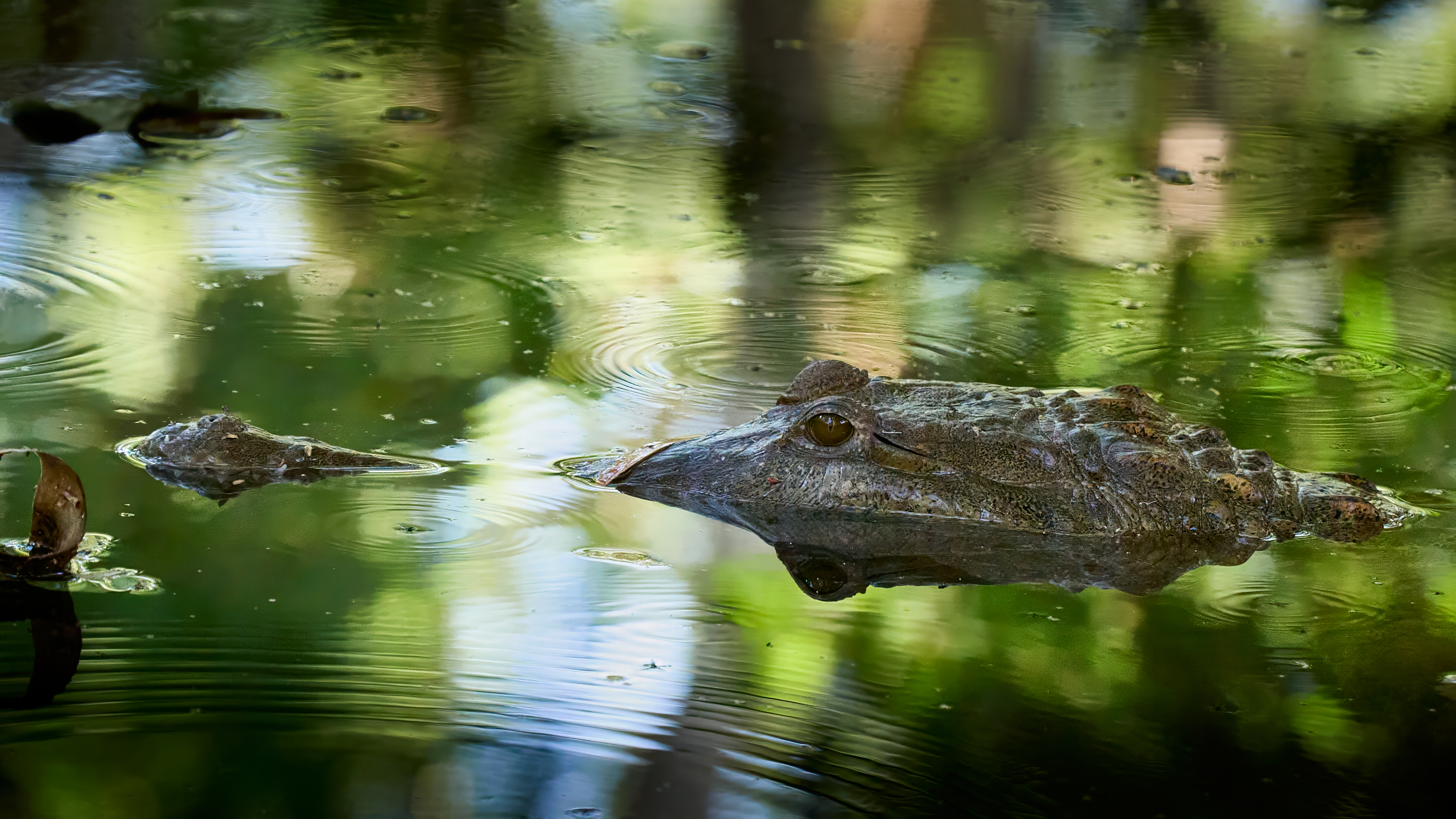
Years ago any trip to Far North Queensland meant a trip on the Daintree River with Chris Dahlberg. He had a great deal of charm, knowledge and a boat. His patter included a routine that never failed to amuse. He would spot something and say “Come with me” which was of course unavoidable when captive in a boat surrounded by crocodiles. When Chris gave it away there was a vacuum into which came a guy with a boat … bring your own knowledge and charm. But now there is a worthy successor in Murray Hunt and the Daintree Boatman Wildlife Tours. Depart at 0630 from the Daintree Village boat ramp. Murray knows his stuff.
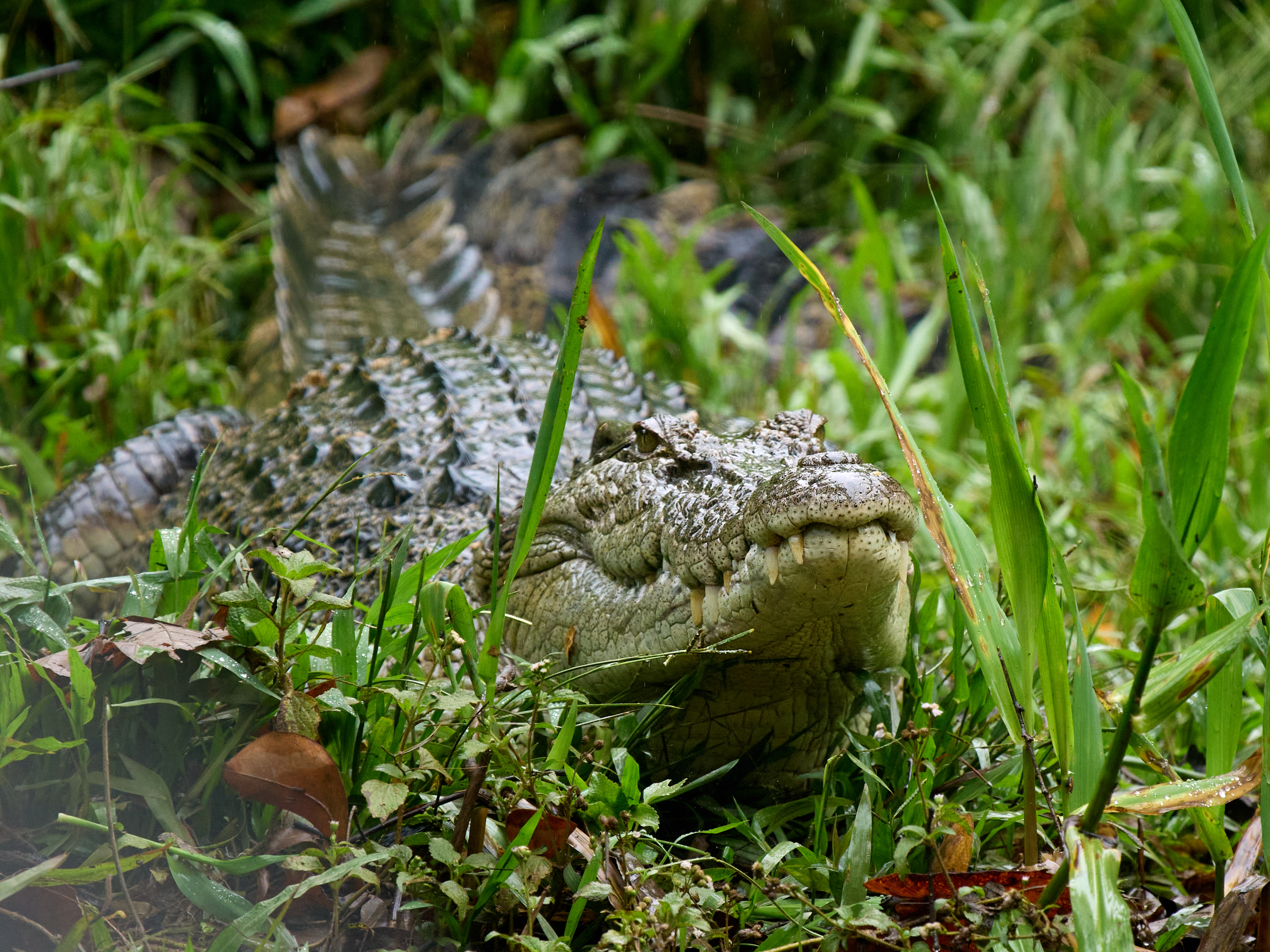
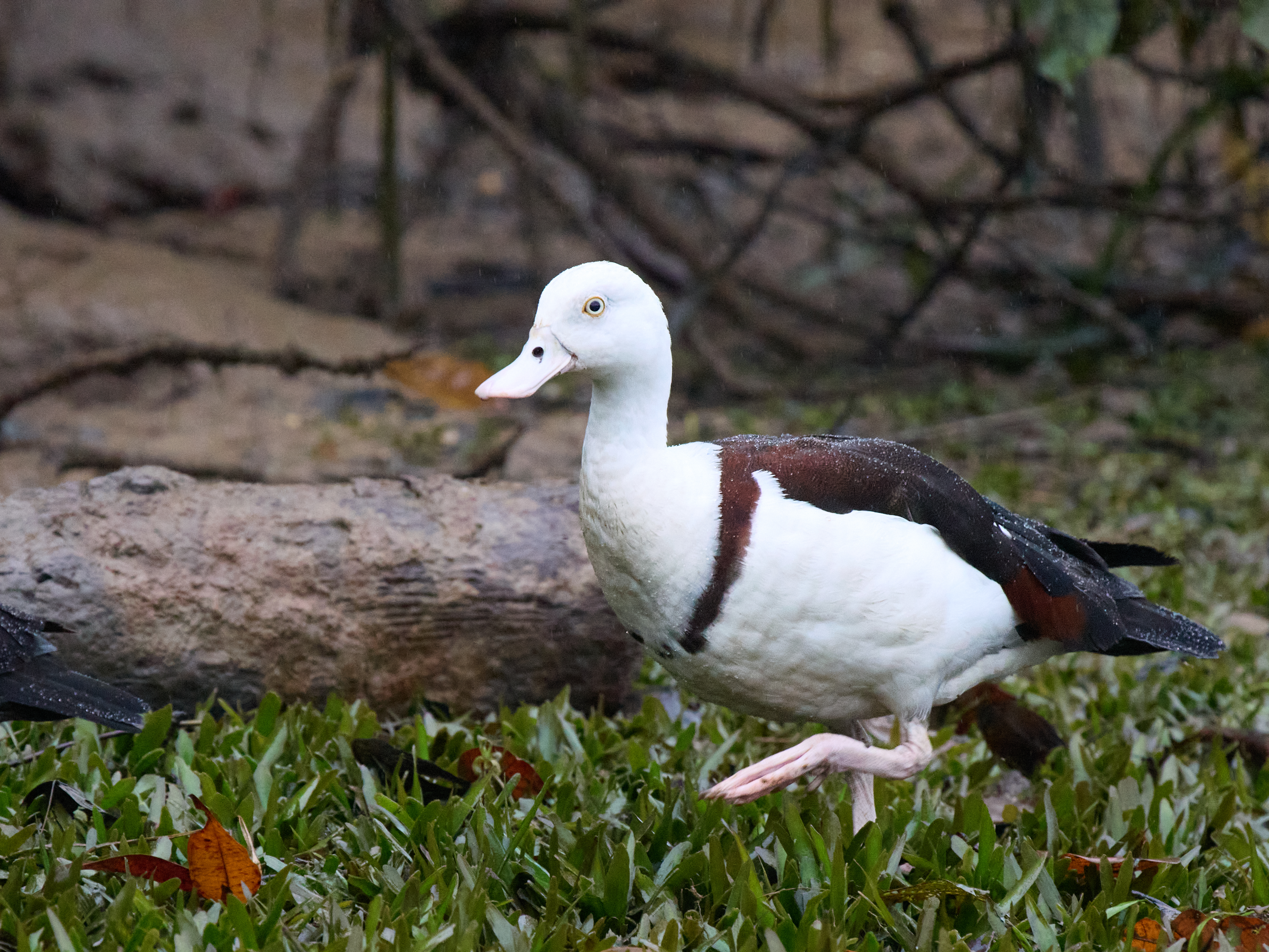
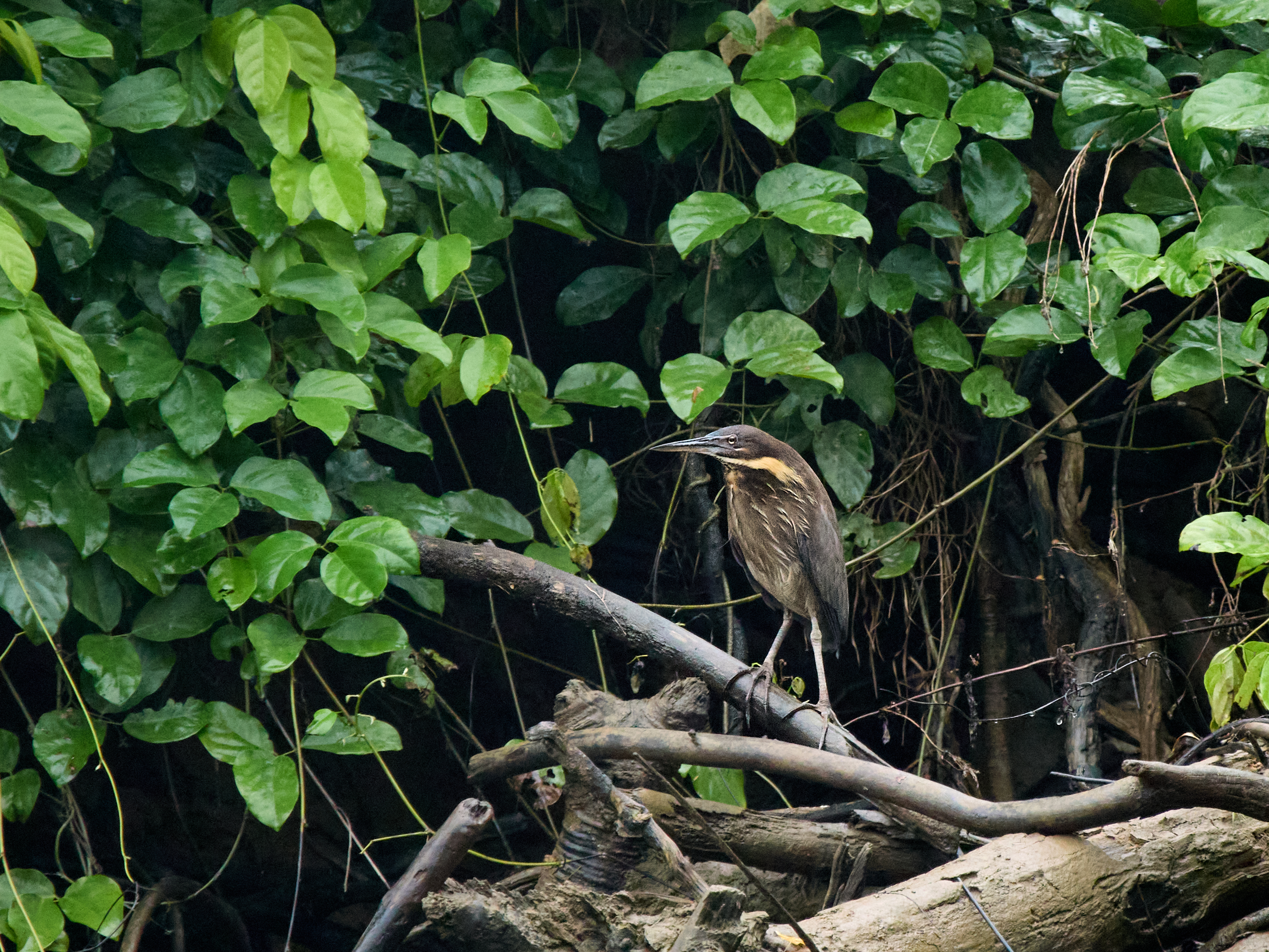
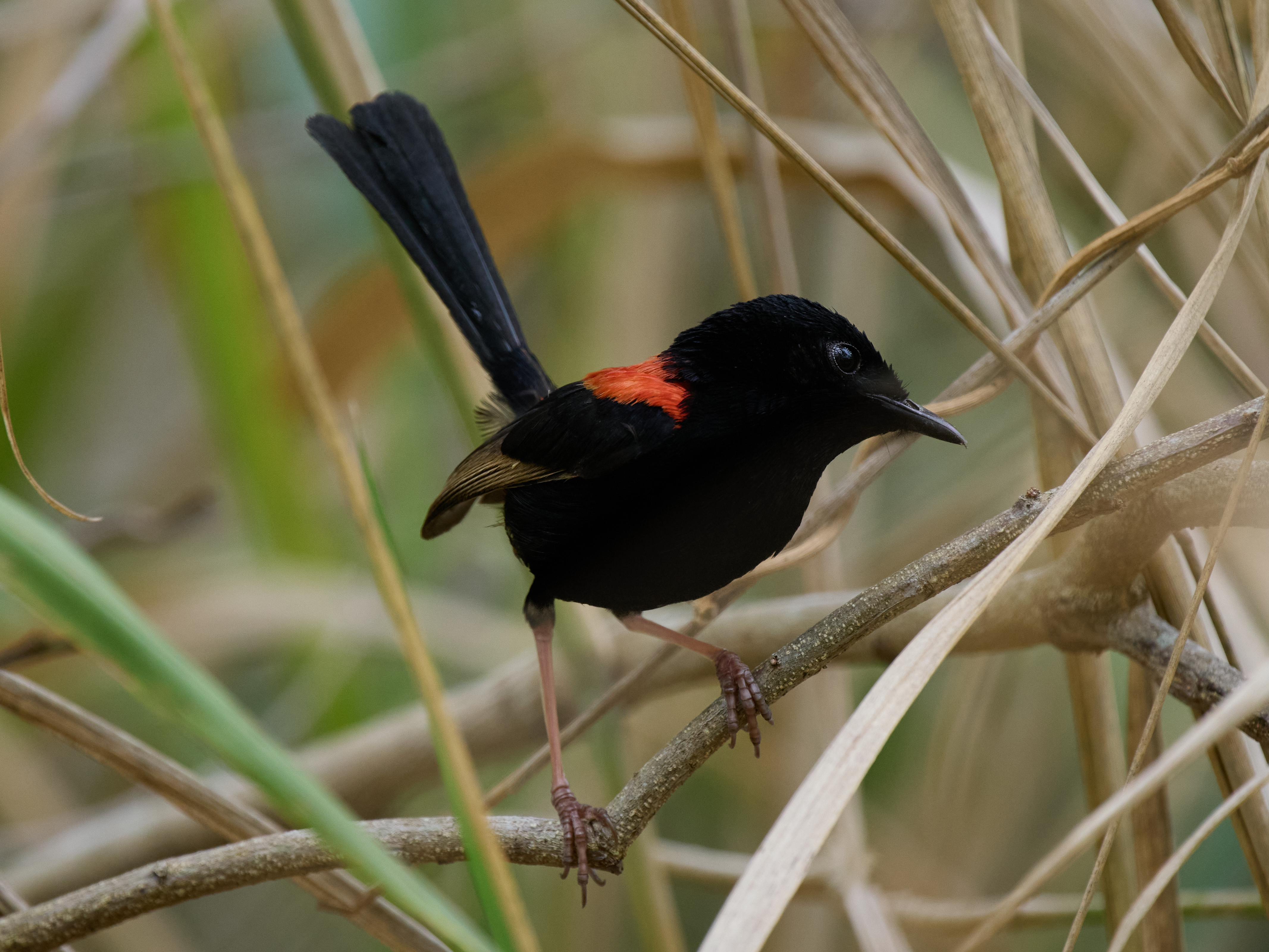
The tour officially lasted two hours But Murray could not drag himself and us away from a big male crocodile on a cow carcass so we got a bonus half hour. My bird list reached 27 species including three very lovely additions to the year total. Why could they not have been found in the Woolworths car park?
From Cooktown we retraced our steps to Mount Molloy up on the tablelands. A hilly 227 km on good made road, enlivened on this occasion by a major bushfire near Palmer River. Traffic controls were in effect, a pilot vehicle led groups through at a decent pace but in one direction at a time. The fire was right up to the road with the Rural Fire Service in attendance. There was some delay but we were in capable hands. Big shout out to the Fireys and the traffic controllers for keeping us safe.
Our destination was Wetherby Station one of our favourite camping destinations in all of Oz. The station is owned and managed by John and Kathleen Colless. They run big black beautiful Brangus Cattle. The station was founded by William and Elizabeth Groves around 1878 and there is a fine old homestead and lovely gardens. The present owners have sustainability as a top priority. The cattle get plenty of grass but are kept out of the creeks and lagoons and the fencing around the main lagoon is designed to keep the modern scourge of feral pigs at bay while it is rehabilitated as a wooded swamp. Rifle and Spear Creeks run through the property which because of its location, climate and variety of habitats has an enormous bird list.
We spent two nights camped all by ourselves by Rifle Creek. It could easily have been more. (Certainly would have been if Mount Bloody Lewis was open). Birding in and around was good. We left on 364 species for the year. Bird number 6 in the count down was Cryptic Honeyeater. At number 5 – Scarlet Honeyeater, number 4 – Black-faced Monarch, a staggeringly beautiful bird in the forest gloom. Number 3 – Yellow Honeyeater, the label says it all. Number 2 – Fairy Gerygone, pretty enough. Number 1 cannot be far away. Please let it be worthy of the honour.
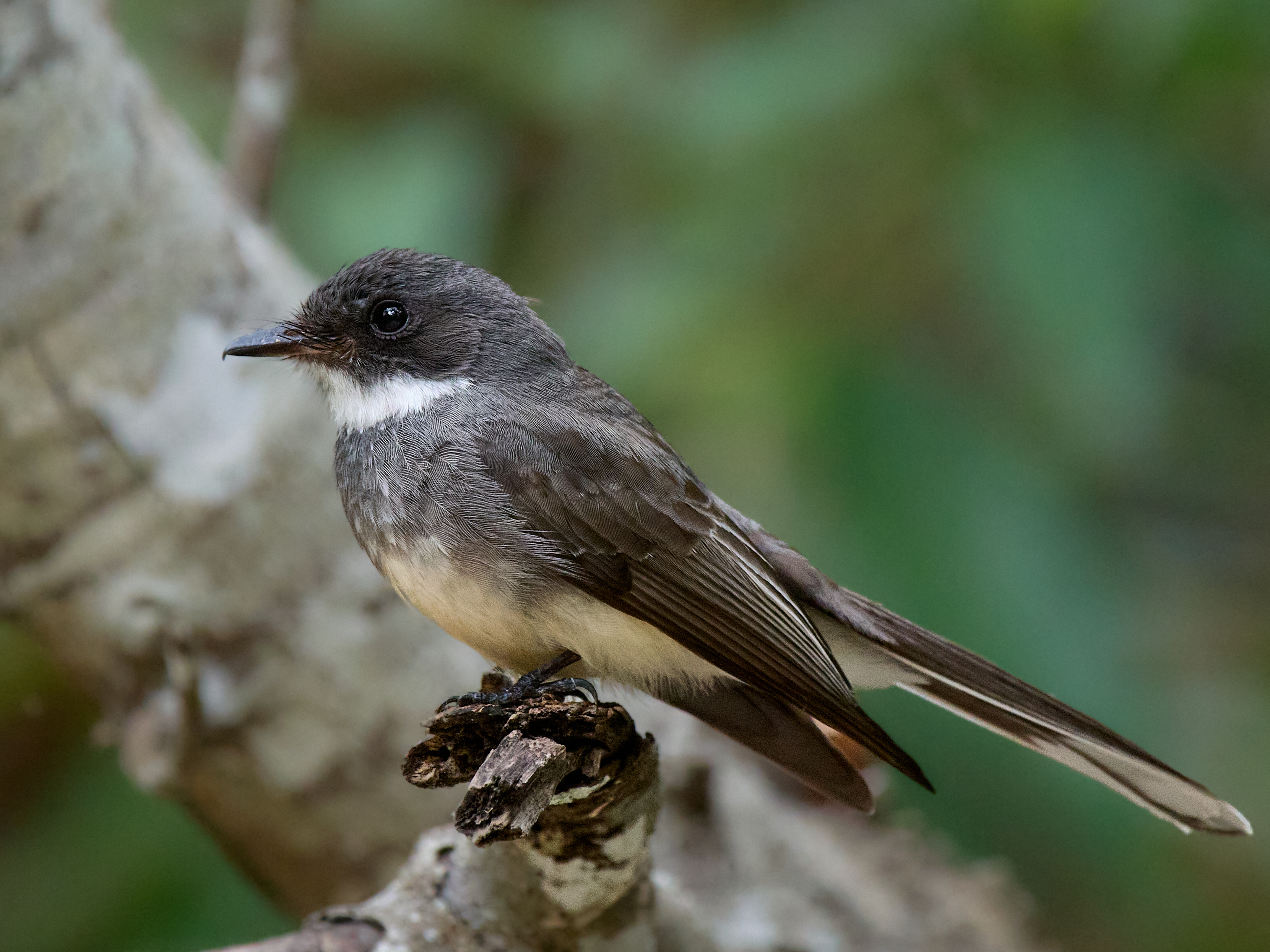
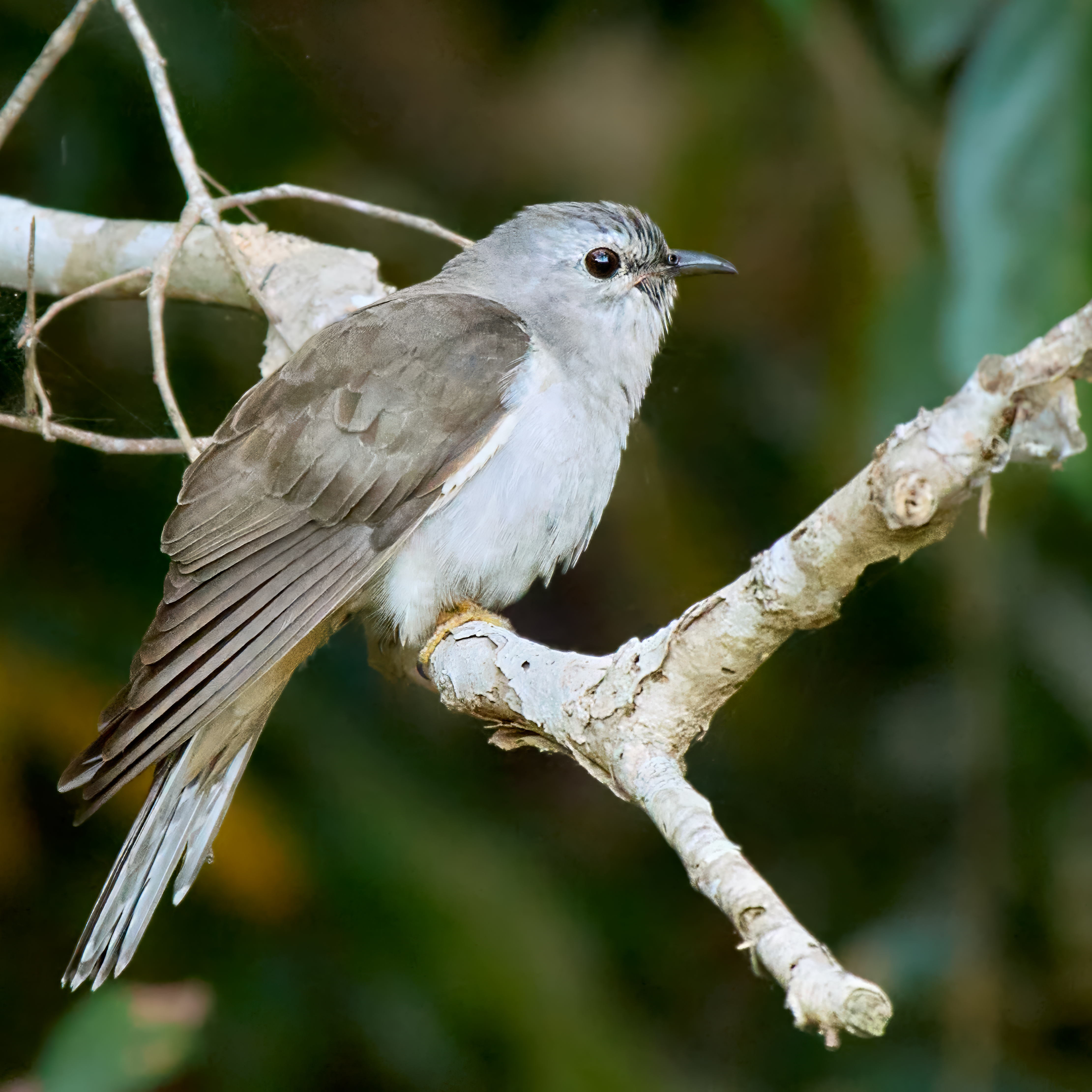
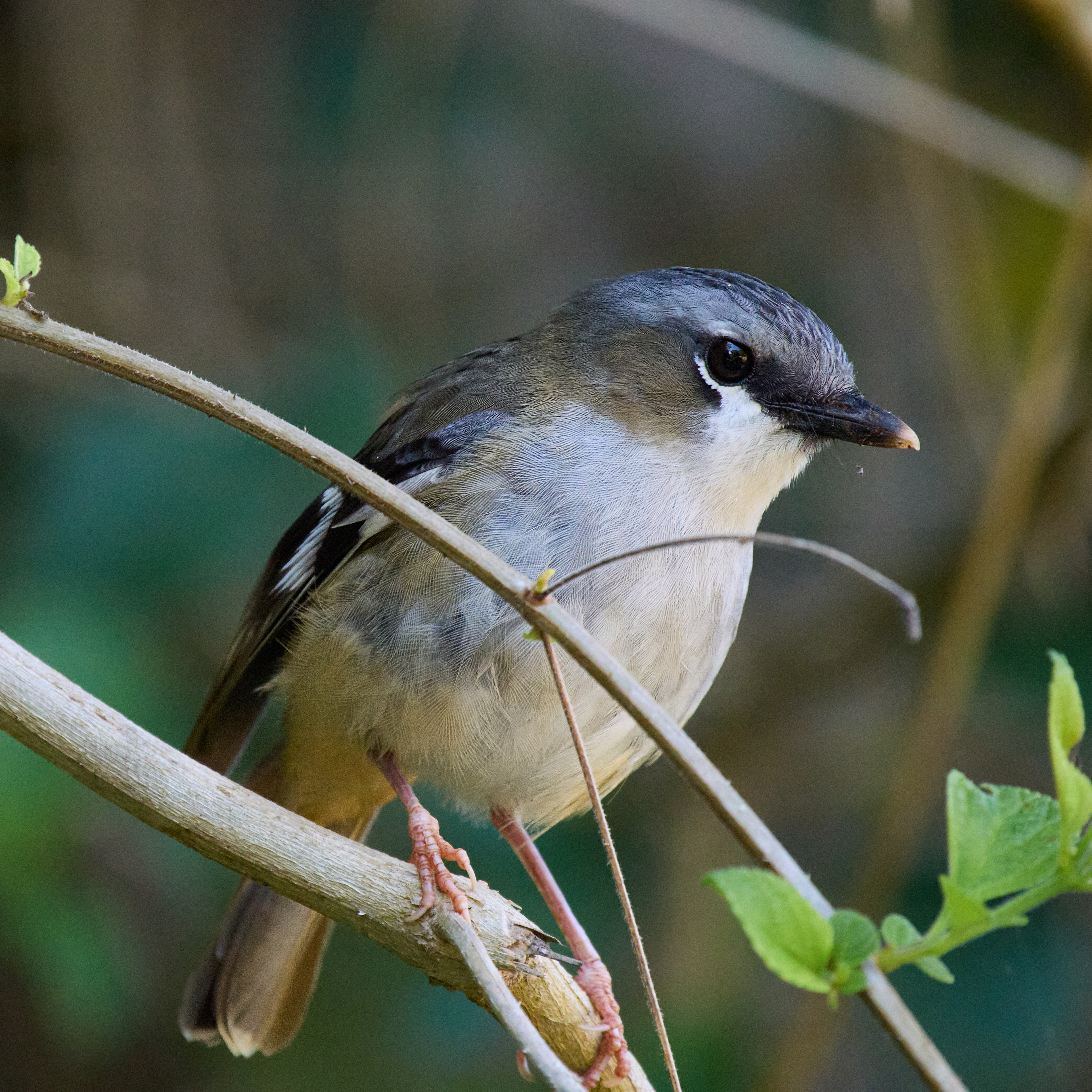
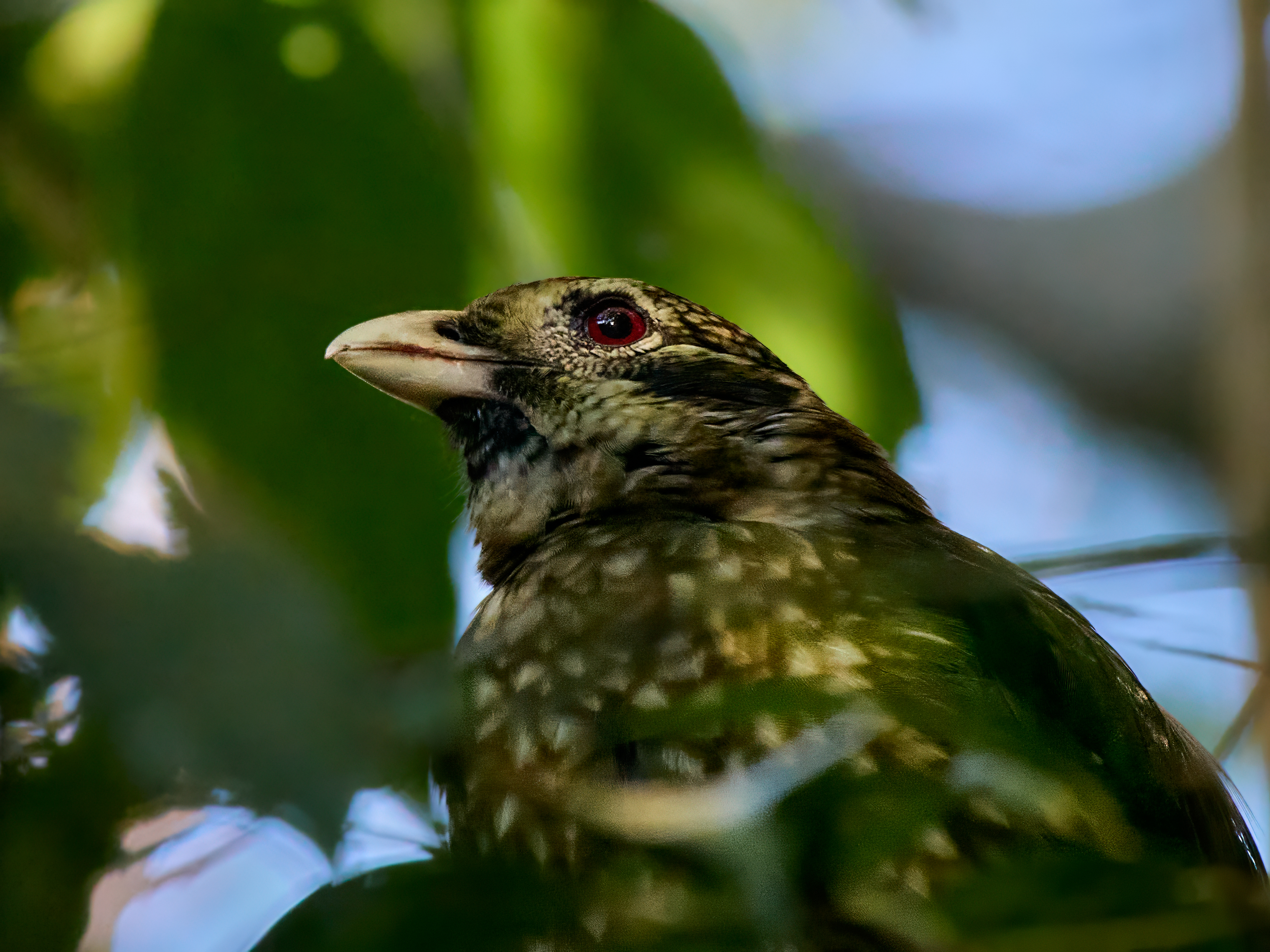
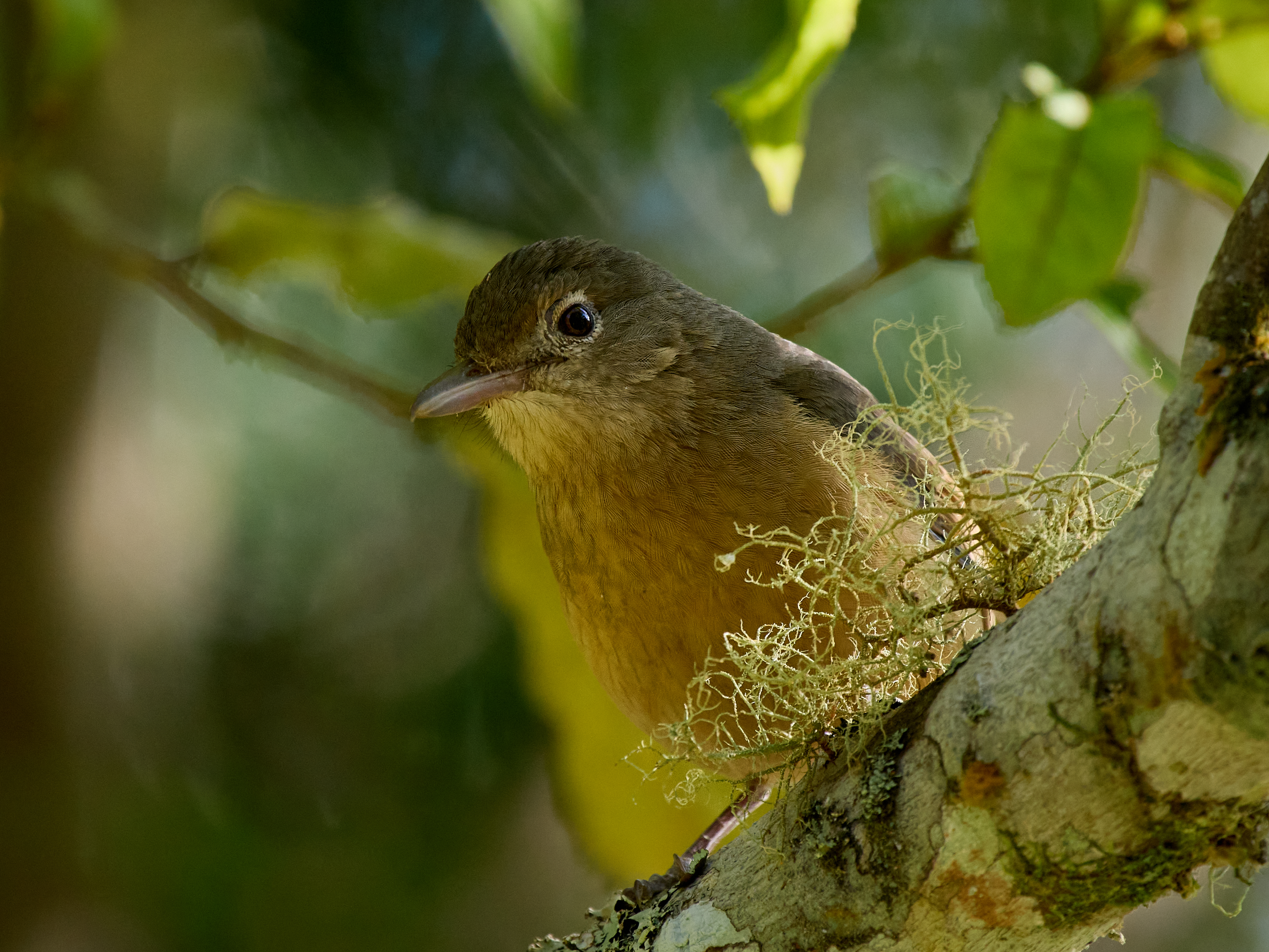
Red-backed FairywrenRed-backed FairywrenNorthern FantailSahul Brush CuckooBrown GerygonePale Yellow Robin
The last three birds were photographed within a few metres of our camp site.
The Atherton Tableland is a different world from the thousands of kilometres of savanna just a short distance behind us. It’s cooler, it’s very much greener and it’s much more populated. It would once have been a forest. Now it’s scattered remnants separated by farmland. We are camped at Lake Eacham just outside the National Park. This is home for four nights.
A short walk takes me into dense rain forest, the light hardly penetrates through the trees towering above. The birding is tough, done largely by ear. The photography is even tougher done largely without light! Bird density seems low but the variety is high. Lists are not long but there seems to be something new on every one.
The crater lakes are Lake Eacham and Lake Barrine. They formed when magma approached sufficiently close to the surface to turn the groundwater to steam producing explosions that created the craters now filled with water. These events were fairly recent. Barrine is the older forming about 17,300 years ago. Eacham formed about 9,130 years ago. Both are surrounded by lush rainforest and are National Parks.
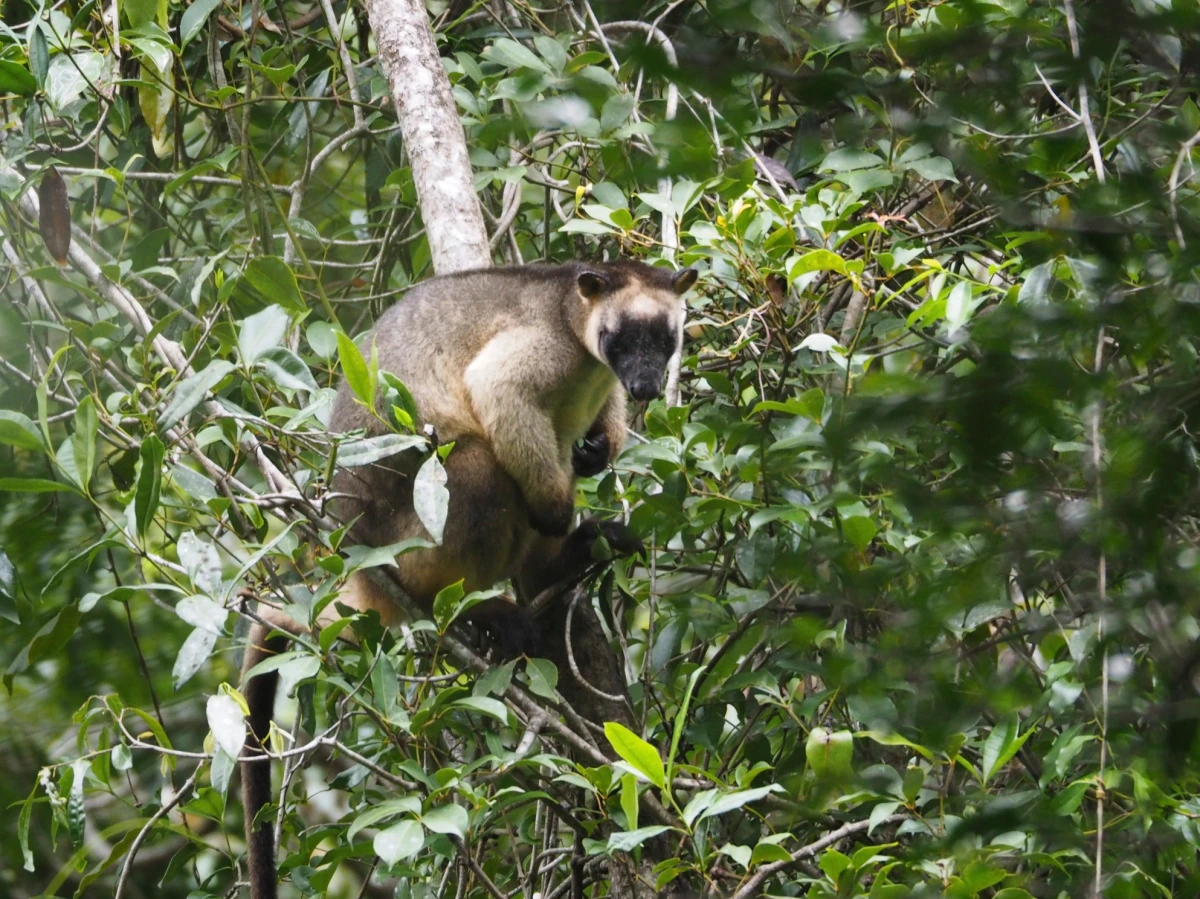
The wet tropics has 23 bird species that are either endemic or largely confined to the region. Nine of those species are only found at higher altitudes, essentially the Atherton Tableland. And there’s no shortage of more wide ranging species. Those tall trees are so inviting you can even find Kangaroos in the canopy. It is a very special place.
Over two days. First night Timber Creek. 327 km, all sealed. Population 278 slightly more than half are Aboriginal. Augustus Charles Gregory and a party explored the area in 1855 and bestowed the name Timber Creek on one of the creeks. That was adopted for the name of the settlement when the opening of a police station put the “town” on the European map in 1898.
Gregory’s party included Baron Sir Ferdinand Jacob Heinrich von Mueller, a bit of a botanist. Well perhaps the most important of Australia’s pioneering botanists. It was he that described and named Adansonia gregorii, the Boab. (And for one of my faithful readers it was he that described and named the genus Macadamia.)
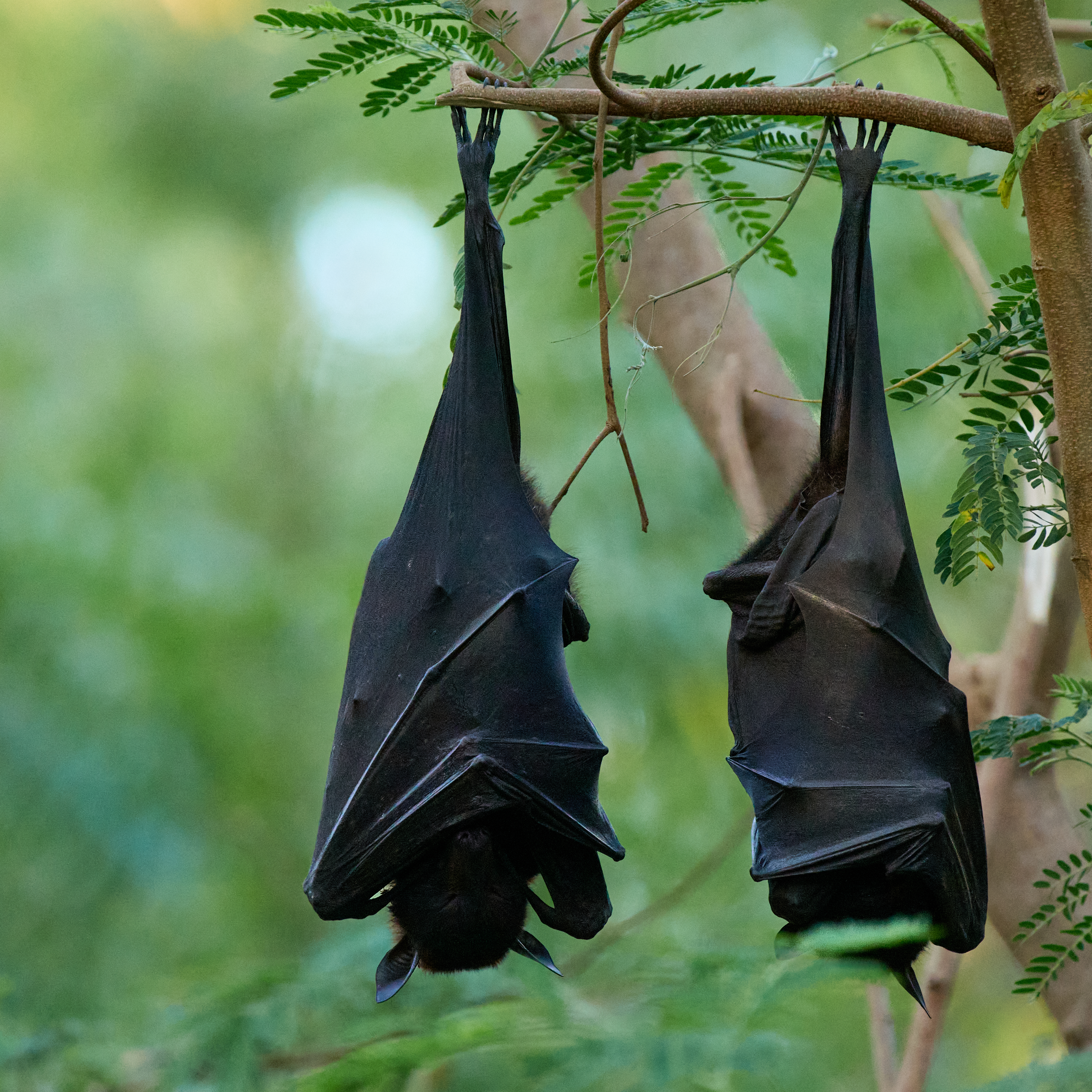
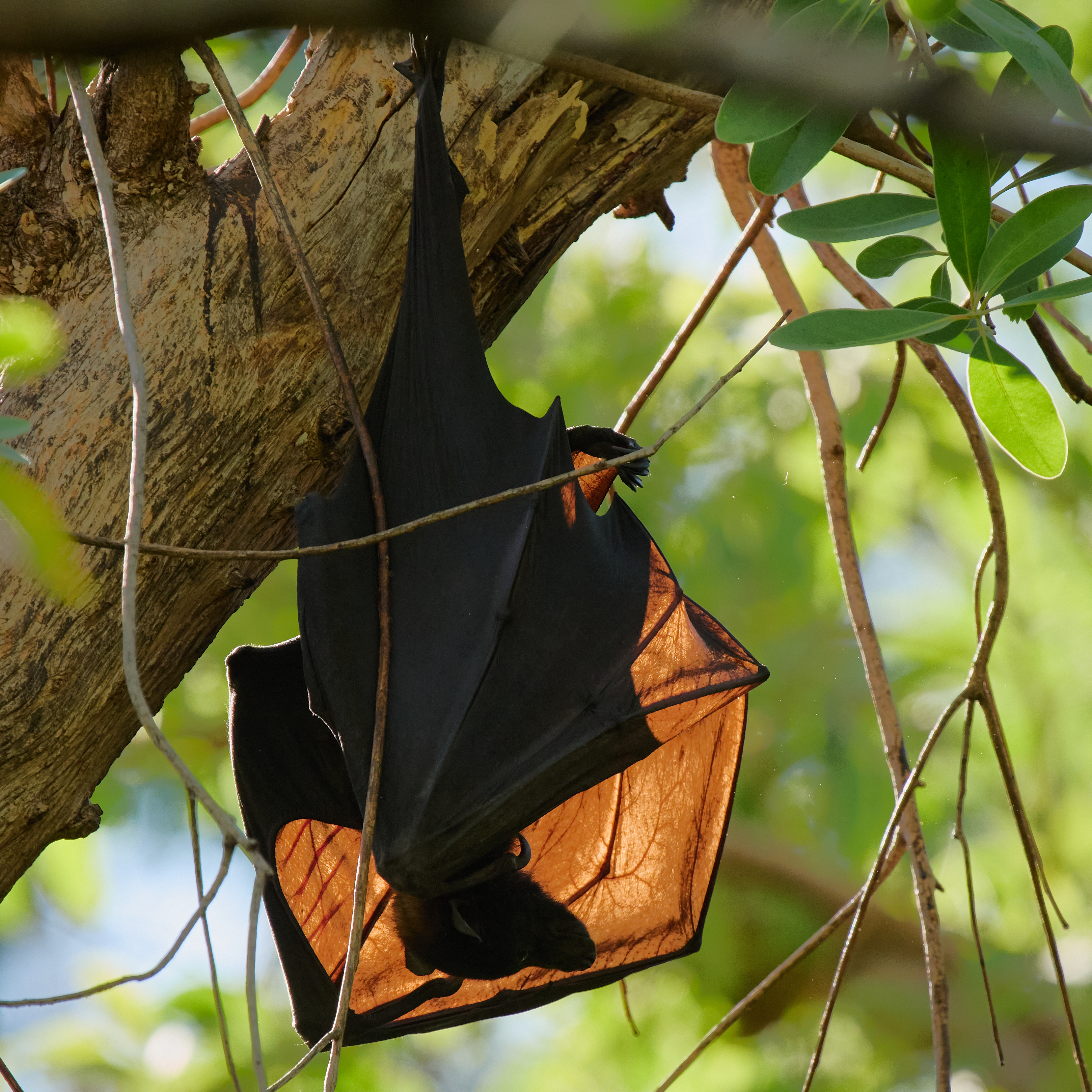
The camp ground is behind the well-stocked store. There is a swimming pool, a creek at the bottom of the garden and plenty of shady trees. There are freshwater crocodiles in the creek and a large Flying Fox camp overhanging the creek.
The camp ground, the airstrip, the race course and Policeman’s Point on the Victoria River are well known birding spots. The airstrip can be very productive but alas fire had been through and for the time being it will be quiet.
Timber Creek to Katherine is 289 km, all sealed. We are camped at Manbulloo (the local aboriginal name of the Crested Pigeon) about 10 km short of Katherine, on the bank of the Katherine River. The campsite is well shaded which is much appreciated as the temperature hits 37°C (98.6°F).
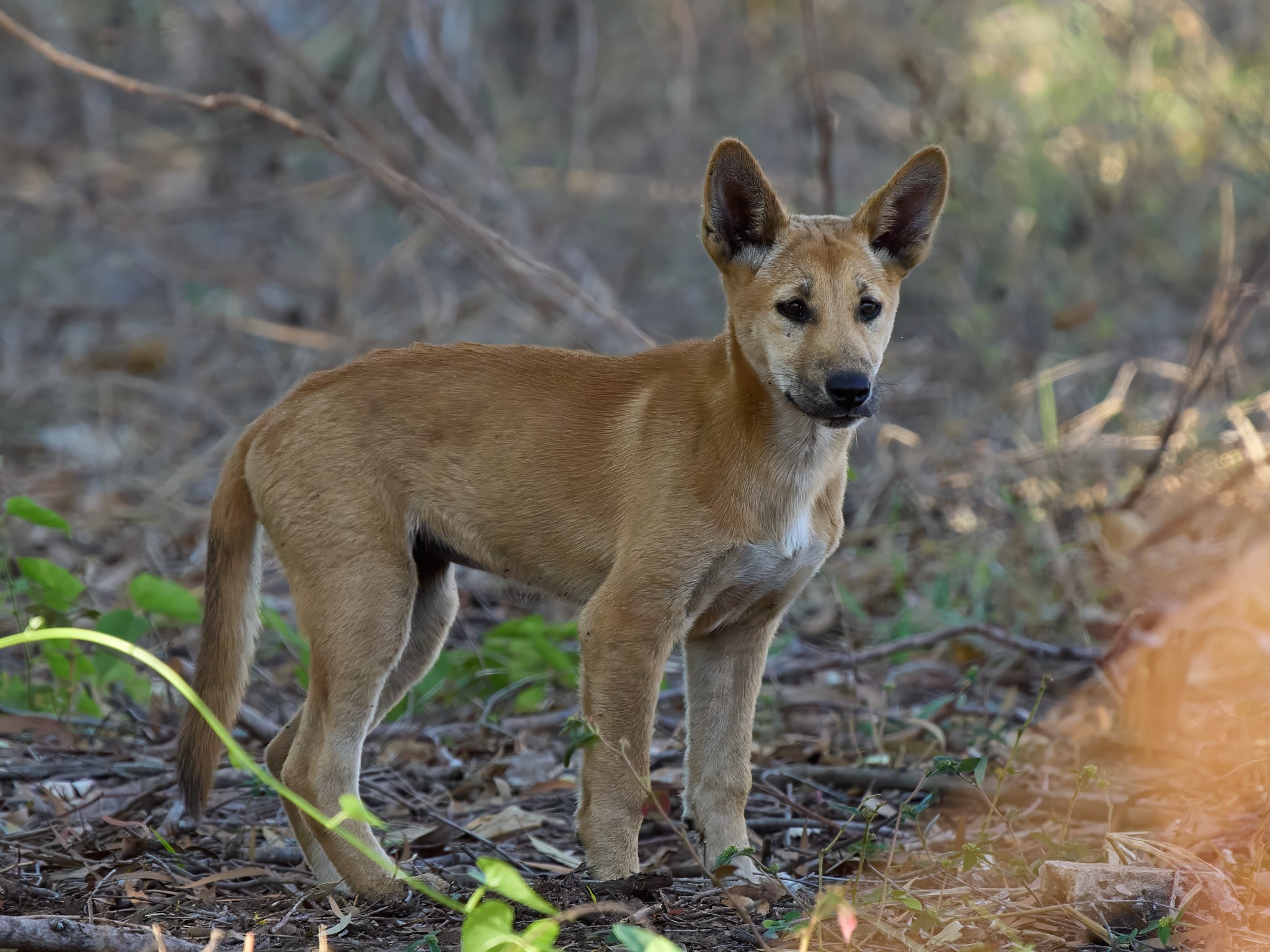
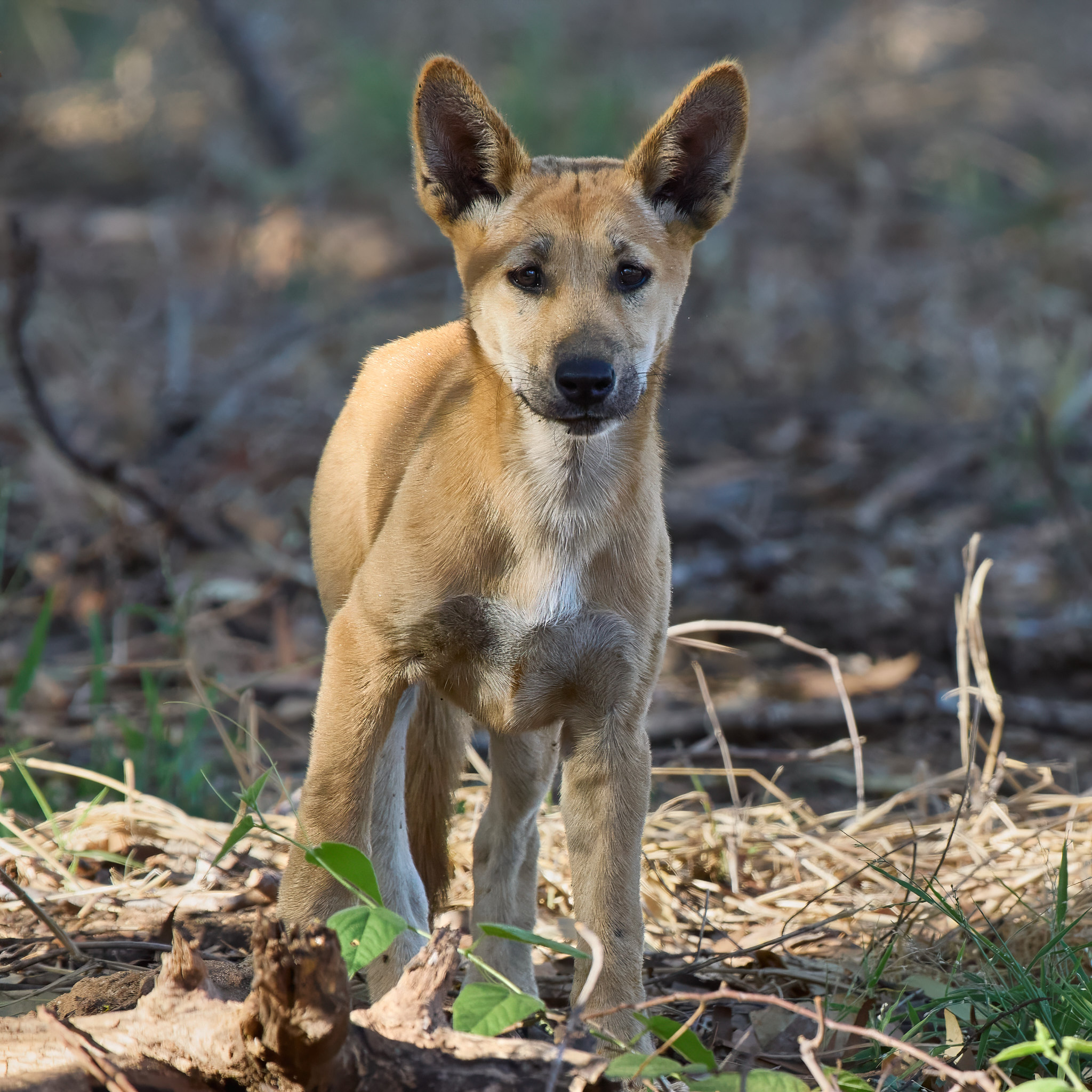
“My men saw two or three beasts like hungry wolves, lean like so many skeletons, being nothing but skin and bones”.
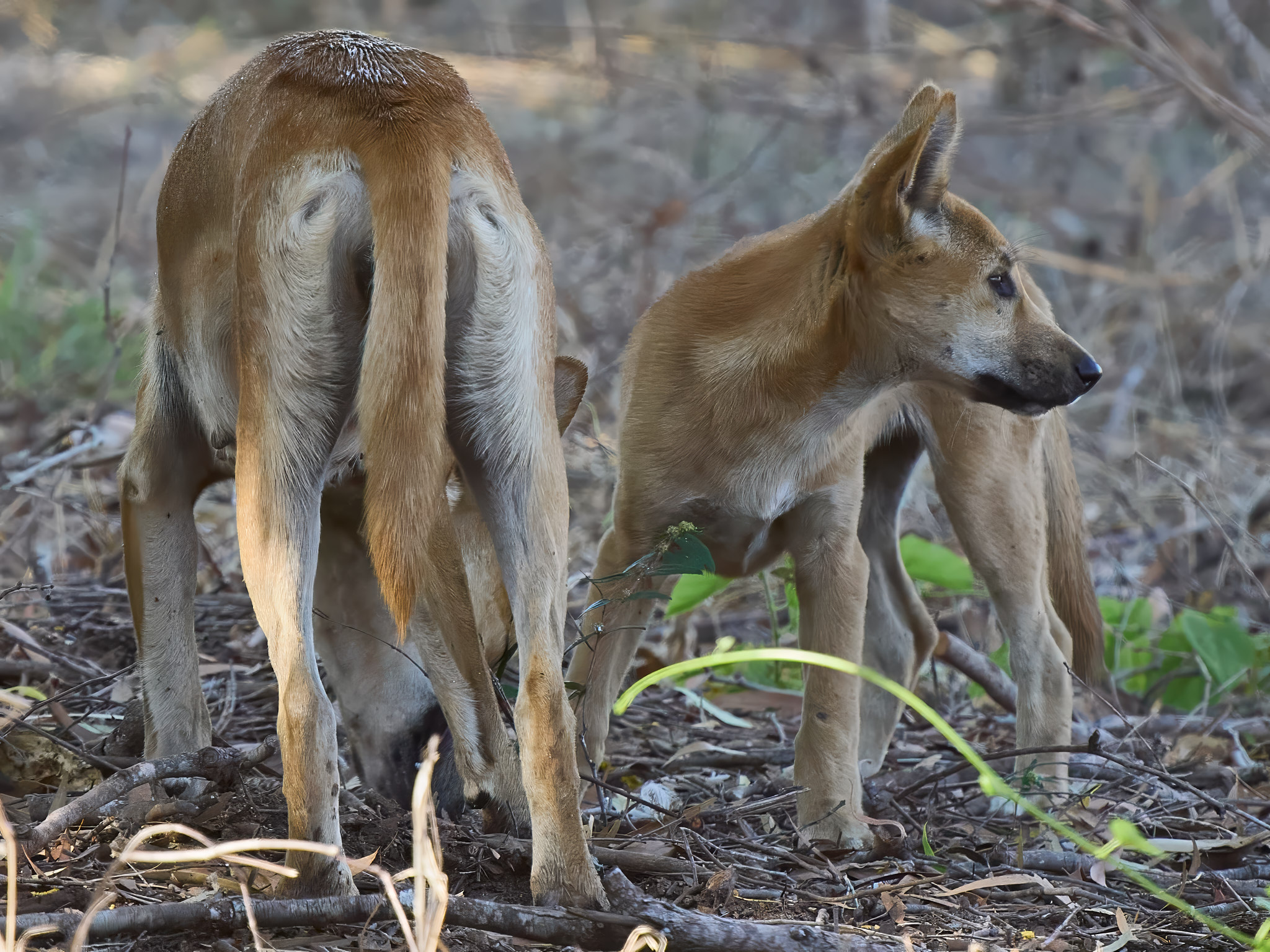
William Dampier recorded this observation from his voyage of 1699 and you can count the ribs on most wild Dingos without any trouble at all. How apt that I should take these photographs of mum and her pup on the Dampier Peninsula, not far from Cygnet Bay.
Magnificent though they are they are just domestic dogs although some people would make it much more complicated. Make it Canis familiaris dingo if you must but they belong fair and square in the dog clade along with all the other breeds. They came on boats, with people, about 3500 years ago and probably spread quickly across most of Australia, perhaps within a century. When the poms rocked up in Sydney in 1788 they found the aboriginal folk had companion animals which in the local language were called Dingos. They are also very capable of surviving in the bush without their companion animals which call themselves humans. Which means they have had a lengthy period being shaped by their environment rather than selective breeding. Hence the beautiful conformation. Built for power, agility and speed. I love’em.
On any other continent they would be considered mesopredators but since it’s the biggest predator we’ve got it is by default our apex predator. But give it its due, it can take down our biggest native herbivore, the Red Kangaroo, and a pack will give it ago with a horse or Water Buffalo if need.
Prior to the Dingo’s arrival the Australian mainland was home to the Thylacine and the Tasmanian Devil and of course since their arrival stupid white people have introduced cats and foxes. There is much debate as to the role played by the Dingo in the disappearance of the former and their influence on the latter. Toss into the mix the fact that Dingos and graziers don’t get along and our regulators have a difficult time working out just what to do with them. Yes they are considered native animals in all states. In most states they are protected inside National Parks and largely persecuted outside. In Western Australia they are not protected anywhere. Tasmania missed out on Dingos but you may import one provided you first get a permit. Once there the law regards it as a dog. You may keep one as a pet in Victoria. You must have a permit and you may not breed them except with another Dingo.
How did they cross the sea? The genetic evidence makes it very likely that Aborigines island hopped to Australia about 50,000 years ago and they have remained genetically distinct until very recent times. So I think we can dismiss the idea of a recent Aboriginal immigration bringing their hunting companions with them. However, Timor is just 500km from the Kimberley coast, Sulawesi about 1000km. At its narrowest point Torres Strait is only 150km wide. Sea levels 3500 years ago were little different from today.
Sulawesi was home to the Macassan sailors who were well documented seasonal visitors to Australia’s northern shores from at least 1700 gathering sea cucumber for sale to Chinese merchants. There is no shortage of possible origins of island hoppers a couple of millennia earlier who may have intentionally or unintentionally found their way to Australia with their pets on board. Pets that were sufficiently domesticated to share close quarters with people during the crossing.
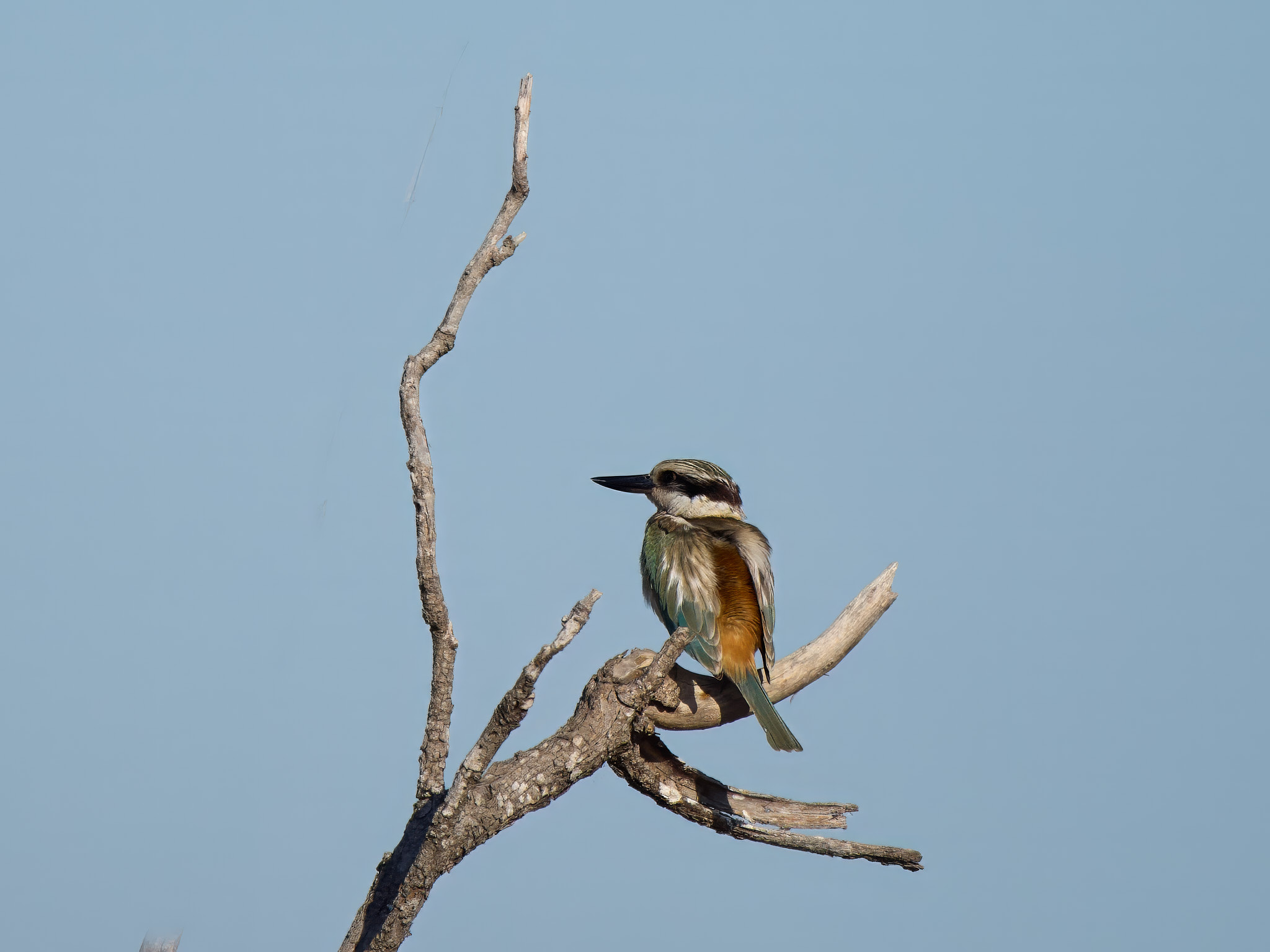
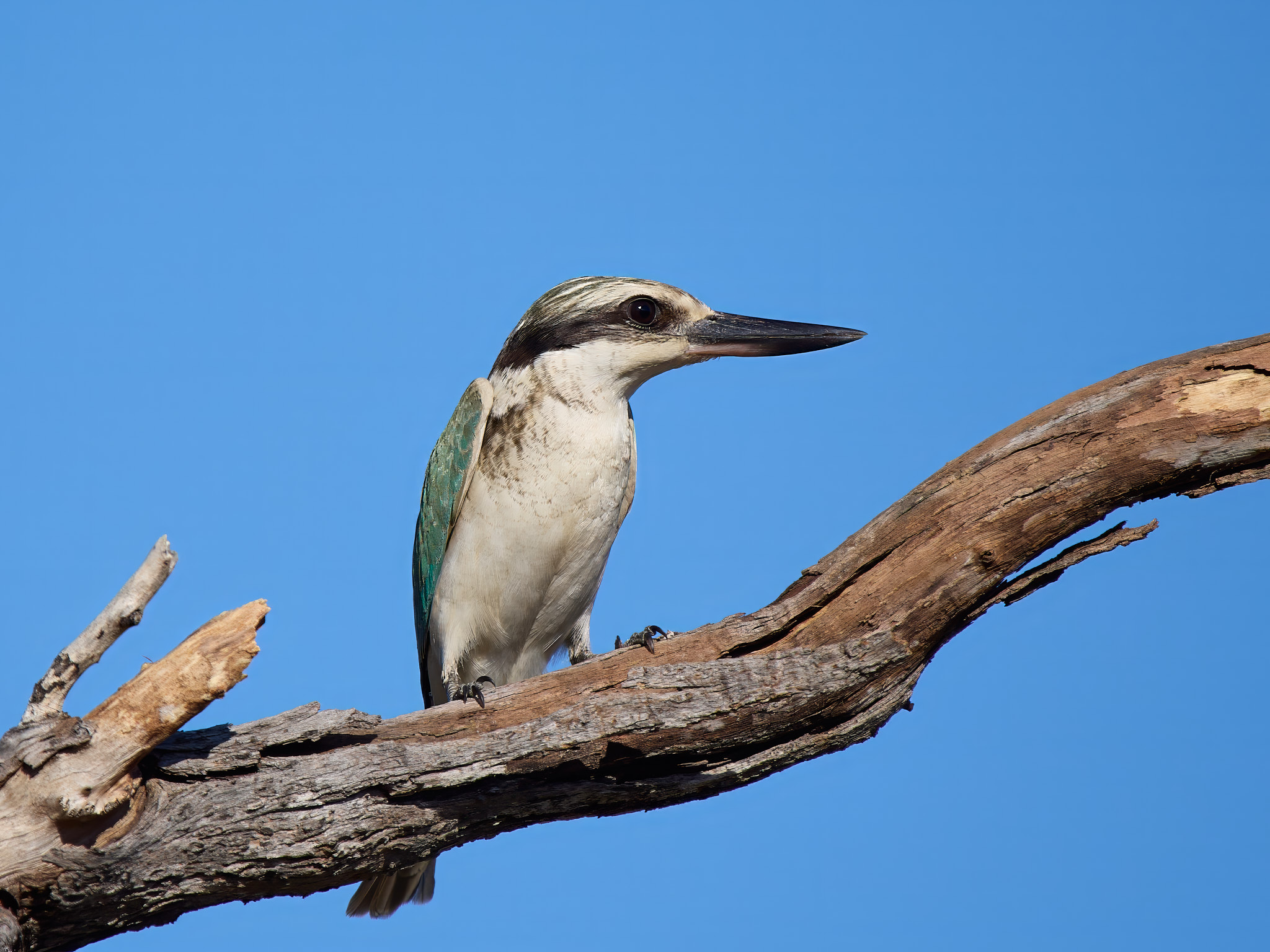
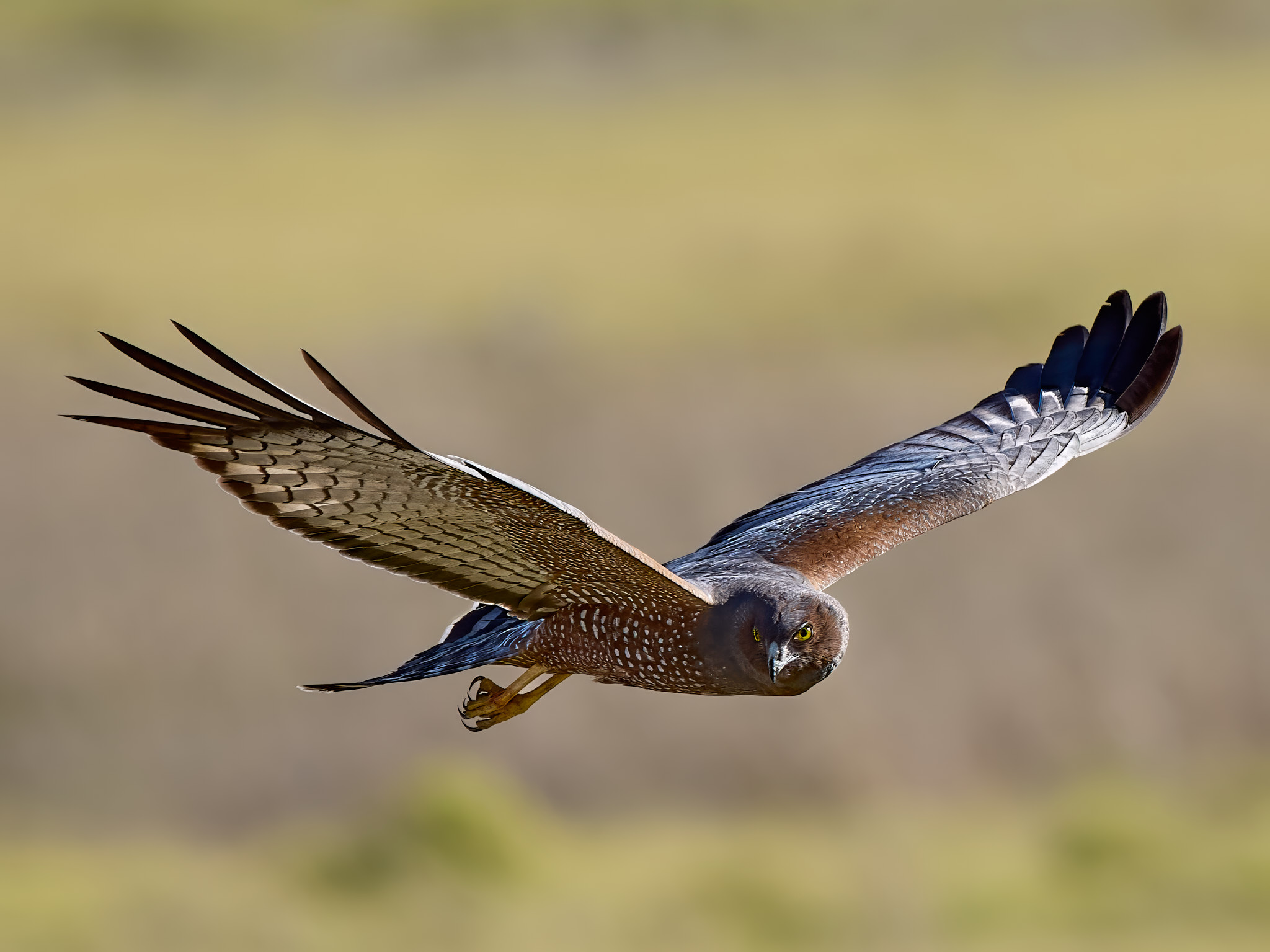
William woz here. Dampier that is. Twice, in 1688 and 1699. He left his name on the peninsula and both his ships have also been immortalised in the names Cygnet Bay and Roebuck Bay. In the latter there is a little island called Buccaneer Island in his honour. Behind Roebuck Bay the Roebuck Plains stretch off into the distance, open country, occasionally flooded, few trees. sometimes swarming with ducks and Magpie Geese, the nesting place for terns. Other times a dry grassland, home to the beautiful Spotted Harrier and the Red-backed Kingfisher. And like most of Australia’s Kingfishers the Red-back wouldn’t know what a fish is.
Dampier was a pirate, a naturalist and an author. He circumnavigated the world three times. His botanising increased the sum of human knowledge, his writing added plenty of new words to the English language and inspired Banks, Humboldt and Charley Darwin himself. He published the first English language recipes for Guacamole and Mango Chutney. Where would we be without guacamole? Living in Broome I trip over his name almost every day but on the whole he is not as well known as he should be. I recently watched a YouTube video that gives a reasonable account of the guy. You may enjoy it …
Broome’s little peninsula points south. Roebuck Bay is to the east, the Indian Ocean to the west. Shores are rocky or sandy or covered by mangroves. Habitats galore …
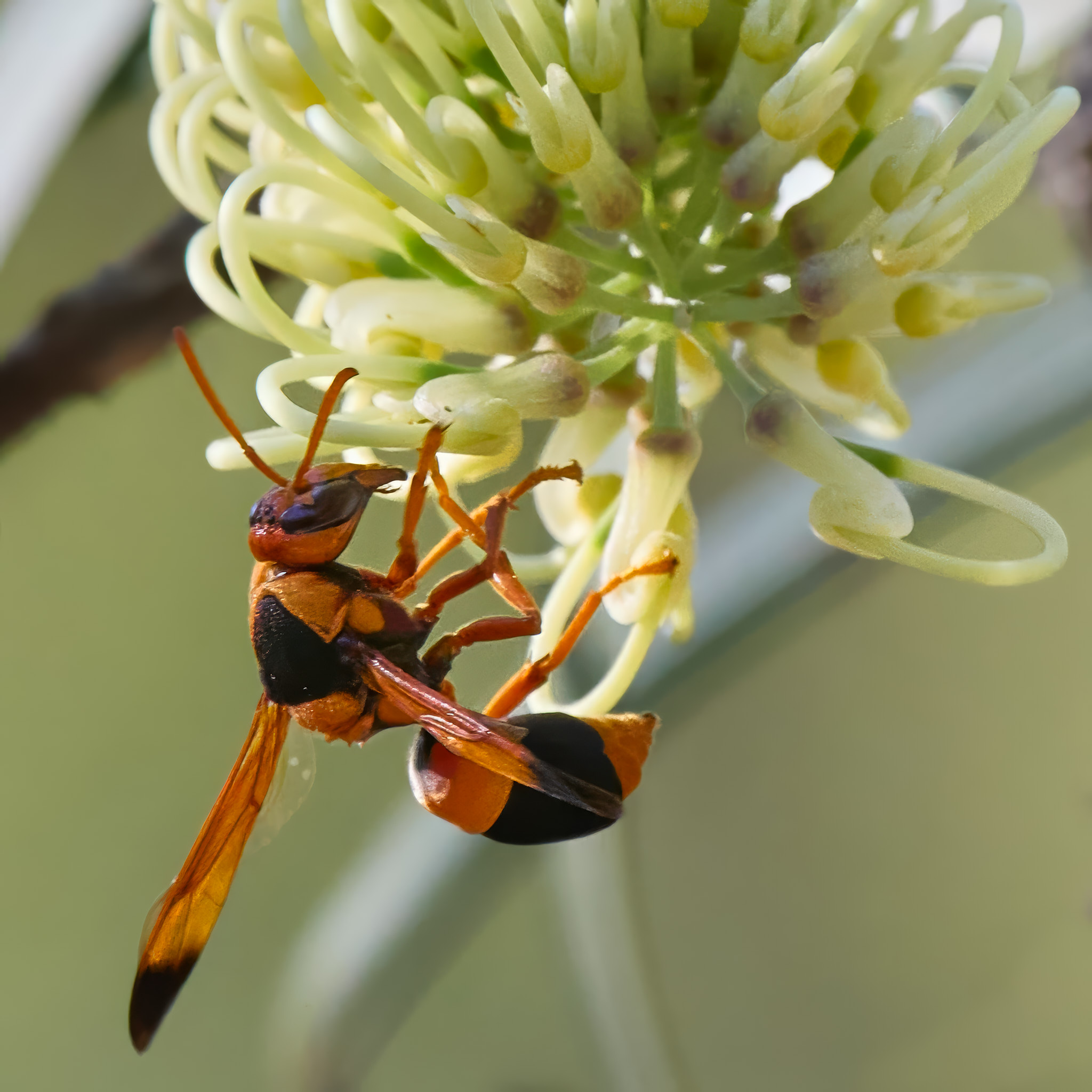
It’s called the Australian Hornet (Abispa ephippium)but it’s not a true hornet and it’s not nearly as nasty. This is one of the potter wasps (subfamily Eumeninae). The female builds a mud nest which it stocks with paralysed spiders for the larvae to feed on. They occur in all the mainland states of Australia.
We got home to Broome. I heaved a sigh and settled into a torpor.
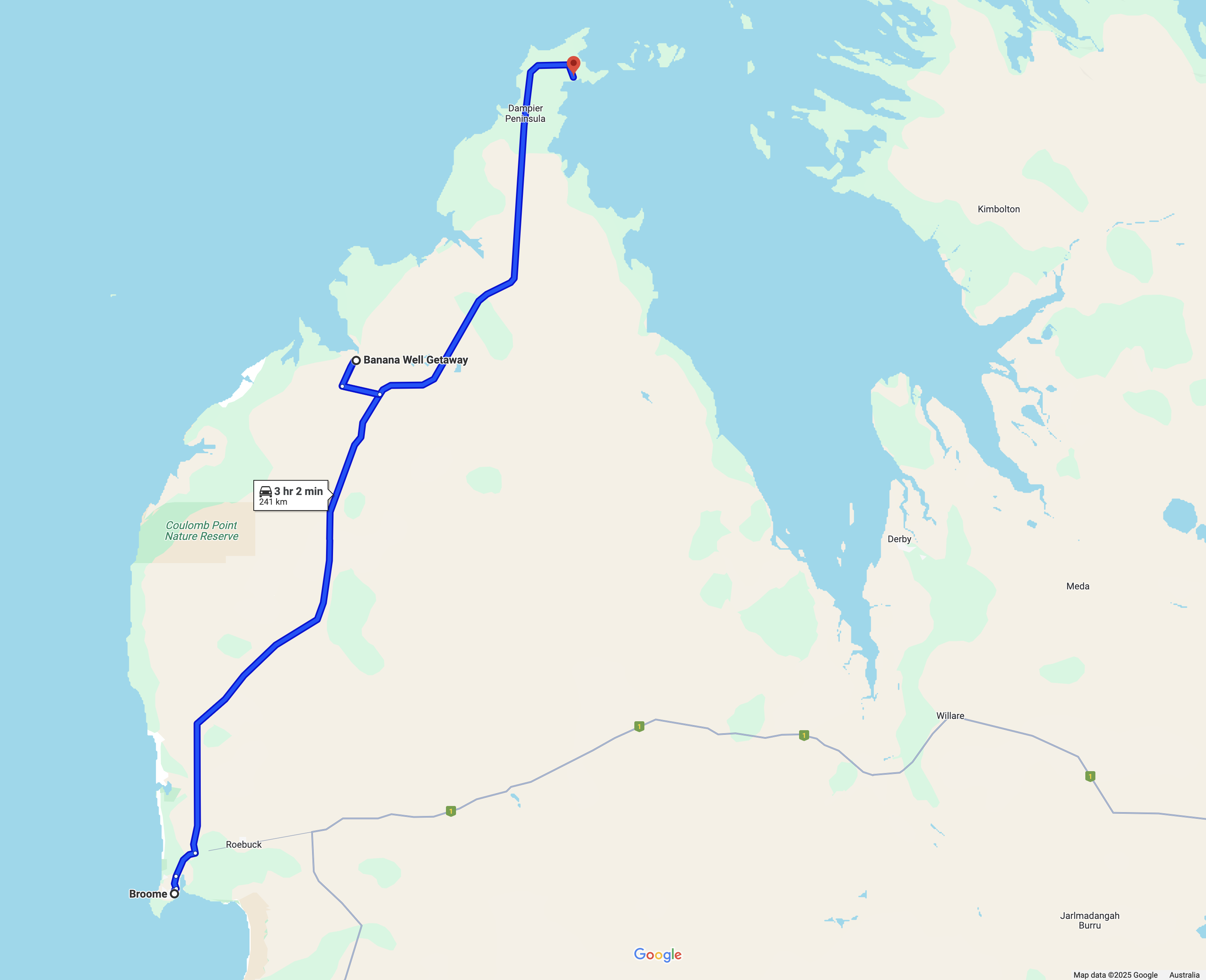
There is a limit to how much torpor I can do. So the van was rolled out again for a short expedition up the Dampier Peninsula. Broome is on a little peninsula hanging, – like a little boy’s tossel, off a big peninsula. The big peninsula is named for William Dampier (1651-1715), the first English man to explore Australia. In January 1688 his little ship the Cygnet was careened near the tip of the peninsula.
Off to the east of Cygnet Bay is King Sound with Derby near the southern end, an area famous for it’s 11 meter tides. The other blue stuff on the chart is the Indian Ocean. Highway 1 comes up from Perth on the left hand side of the map then curves around and heads east towards the Northern Territory. The country enclosed by the highway is the Great Sandy Desert. The peninsula is not desert and therein lies much of its charm.
Until just a few years ago the road up the peninsula was dirt. It was a great adventure for the tourist in the dry but a nightmare for the aboriginal communities in the wet. It is now a beautiful sealed road. The drive takes you through savanna, a few patches of open grassland and, in places, genuine forest. The blacktop stretches out in front of you fringed by bright red dirt. The dirt gives way to spear grass, some of it twice my height and the trees. Soon the Woollybutts (Eucalyptus miniata) will flower and the scene will go from beautiful to spectacular.
At Cygnet Bay and in other odd places on the peninsula there are patches of semi-deciduous tropical vine forest. That’s quite a mouthful, unpack it if you will or just think – jungle.
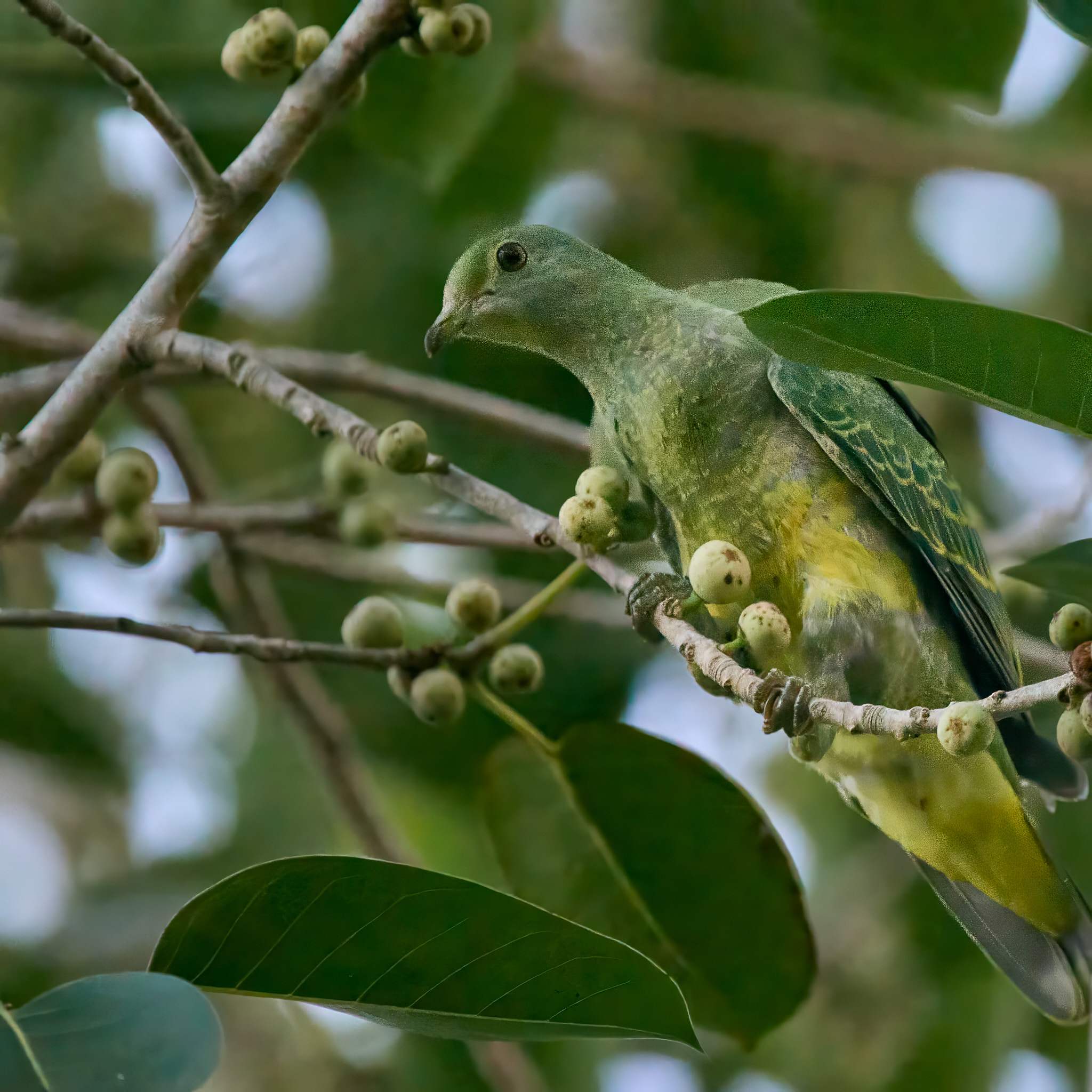
This is the western end of the north coast and the western limit of a number of north coast birds. It is still in the Shire of Broome so guess where every Broome birdo worth their salt comes to add Rose-crowned Fruit Dove, Shining Flycatcher and Mangrove Robin to their year list? Pathetic isn’t it? There is a very pleasant campground, a restaurant and a pearl shop. The Fruit Doves can be found conveniently close to the bar, and there are plenty of other birds to find as well.
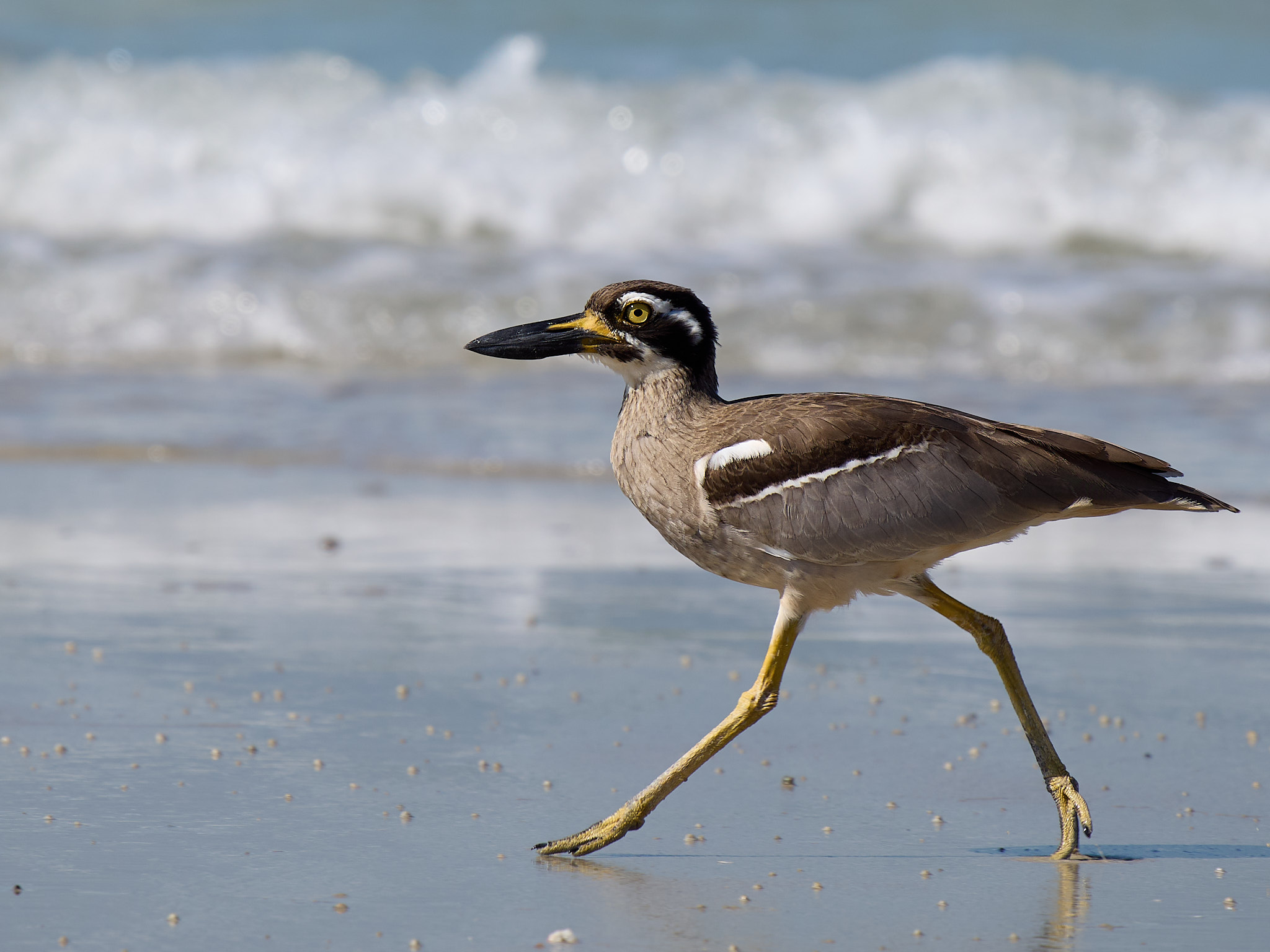
That’s a hermit crab in the Beach Stonecurlew’s grasp. I don’t know if it would crush the shell or just swallow the lot. It is a ferocious looking beak.
We spent three nights ay Cygnet Bay. On the way home we spent another night at Banana Well.
… is complete. The AOR Quantum plus has had its first trial and its first service. Tomorrow we cut the umbilical cord and head into the outback.
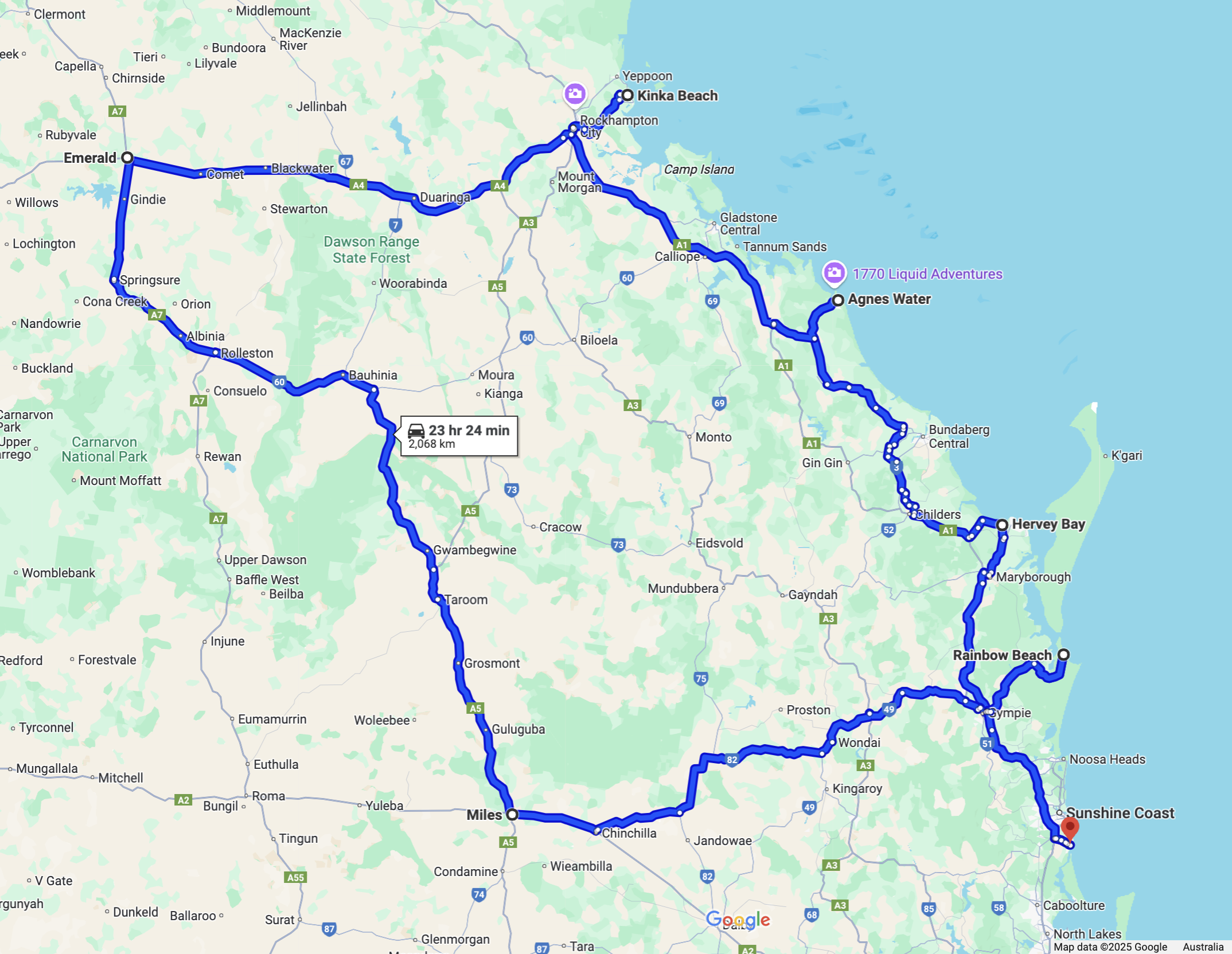
The tour took in a circuit of south east Queensland, covered just over 2000km of towing over two weeks and looked something like this …
The Quantum plus passed with flying colours. Minor teething troubles have been fixed. The three burner stove was fixed before leaving Caloundra. A stabiliser leg needed minor attention and a shock absorber was replaced on our return. I have tried to avoid a millimetre by millimetre account of the rainfall but the weather has been dreadful. The Quantum+ does not leak and the awning can withstand some hefty gusts.






















 bobmcgee