Mackinac …

As a child growing up in London I had a penpal from Detroit. Not long after the Mackinac Bridge was completed he sent me a photograph. It took a while but now I’ve seen it for myself. So Denis Cadaret, formerly of Hunt Club Drive, if you’re out there … Hi.

Mackinac Bridge

Along with the photo came instructions on pronunciation. It rhymes with awe which it generates as well. The first Europeans in the region wrote down the native name for the area. Since the Europeans in question were French they put a letter on the end that they had no intention of pronouncing.

The bridge is 26,372 feet long, almost precisely 5 miles (8 km). It is currently the fifth longest suspension bridge in the world. The span between the main towers is 26,372 feet (1,158 m). The total weight of the bridge is 1,024,500 tons (929,410,766 kg). Clearance for shipping in the centre is 155 feet (47 m). The bridge was opened in 1957, the 150 millionth vehicle crossed the bridge on September 6, 2009. These and many more fascinating facts can be found on the Mackinac Bridge Authority’s website and don’t forget the rivets all 4,851,700 of them.

The bridge crosses the Mackinac Straits, Lake Michigan is to the west, Lake Huron to the east. The City of St. Ignace is at the northern end, the Village of Mackinaw City at the southern end. Yes that’s right, it’s Mackinac everything except the city which is written as it’s spoken, and yes, the city is in fact a village as provided for by the General Law Village Act, Public Act No. 3, of 1895, as amended.

From Mackinaw City you can take a ferry to Mackinac Island, a very pleasant place to visit. There are no motor driven vehicles on the island (except for emergency vehicles that are kept out of sight except during emergencies). It is home to the greatest concentration of fudge outlets in the universe as well as a fair bit of history. And eminently photogenic.

This is the view that awaits as you pull into the dock …

Mackinac Island

Why not take a carriage?

Mackinac Island
Mackinac Island
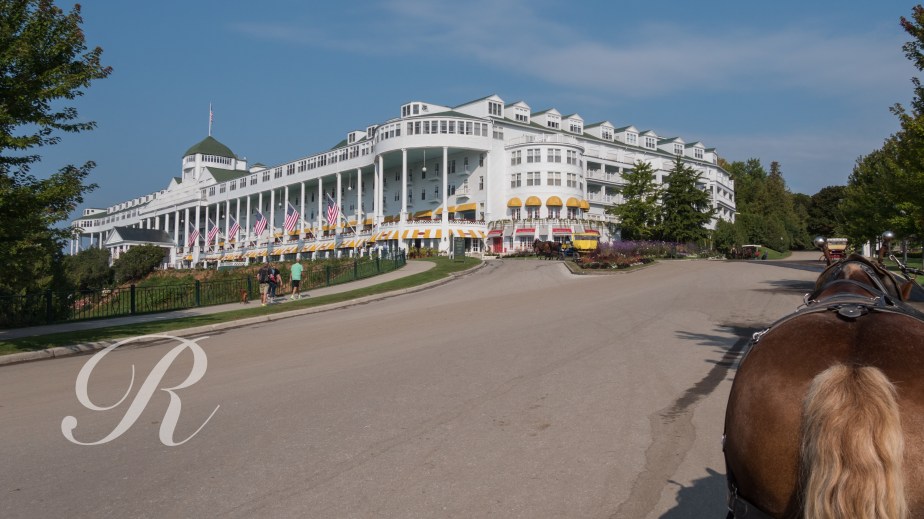
The Grand Hotel

The Grand opened in 1887. It provided the location for the 1980 film Somewhere in Time.

There is an arch on the island that makes it into everything written about the place so for the sake of completeness here it is …

Arch Rock

As you leave you have the bridge out in front of you or you can look over your shoulder take a last look at the Grand Hotel.

farewell to the Grand Hotel

Michigan …

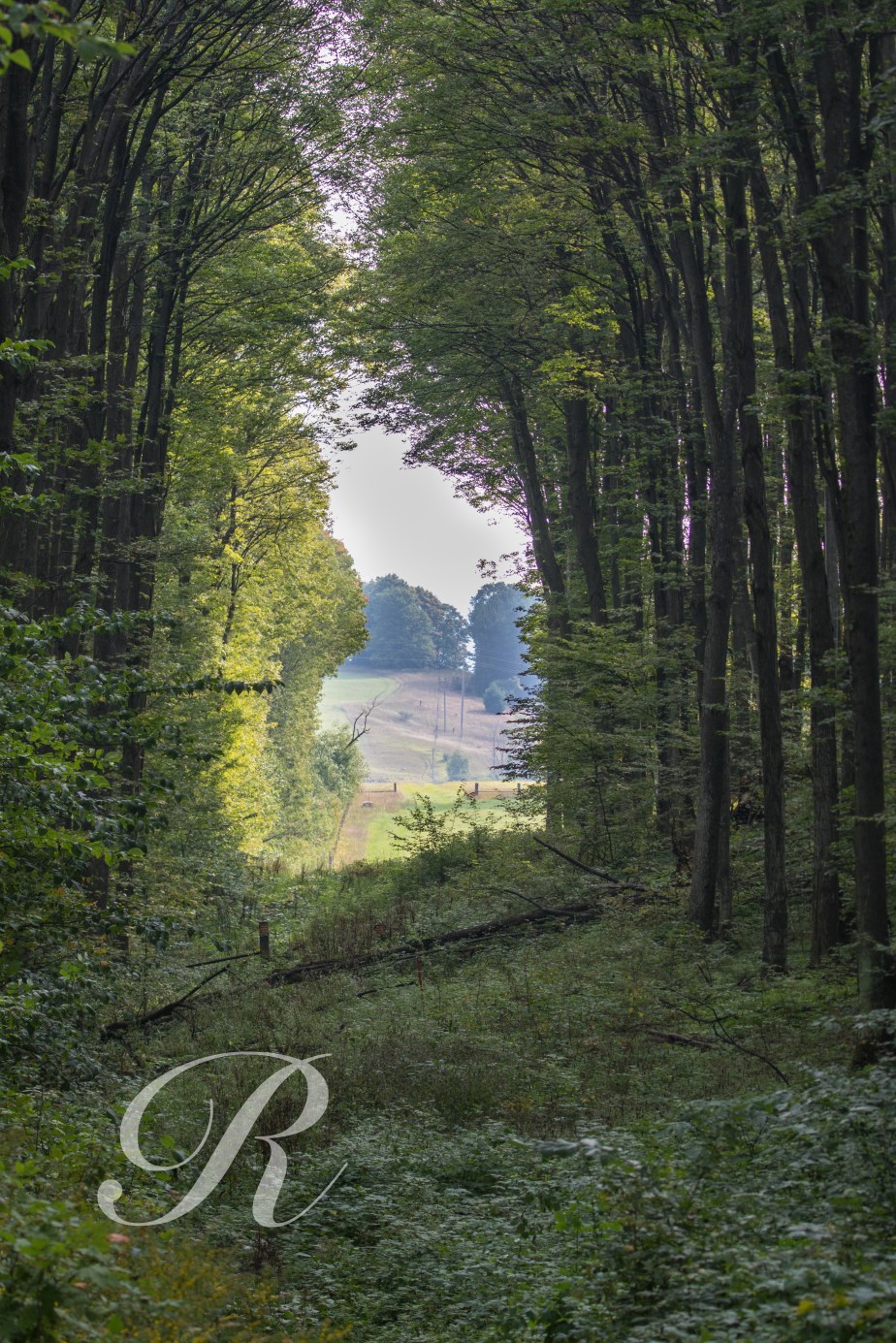
We bypassed Detroit and headed north up the peninsula. Population density fell away as we went, northern Michigan has some of the least populated areas in the eastern half of the US and some absolutely gorgeous forests.

Our destination was Boyne City where we would be staying with very generous friends for a few days. En route we stopped at Shiawassee National Wildlife Refuge. This is open to the public from June to October from an hour before sunrise until sunset. It’s a one way six and a half mile drive (10.4 km) mostly along an embankment giving good views over fields and wetlands. Views of the wildlife tend to be quite distant but it’s a good place to make the acquaintance of a few ducks, Sandhill Crane and Bald Eagle. Well worth putting on your travel plans next time you’re passing through Saginaw County.

Boyne City sits at the end of the north arm of Lake Charlevois an off shoot of Lake Michigan. We would get a cruise on both in our host’s very nice 40 footer. We also got to explore some nearby state forests and the Darnton Family Nature Preserve. Some of the highlights …

Green Heron
Common Merganser
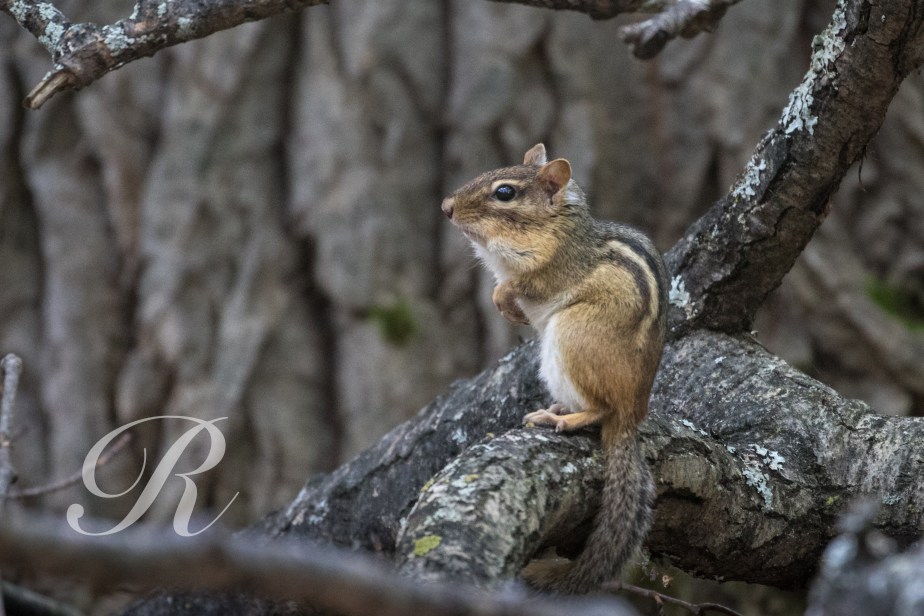
Eastern Chipmunk
Red Squirrel

Eastern Grey Squirrels were also quite common, a good proportion of them were black in colour, the melanistic form.

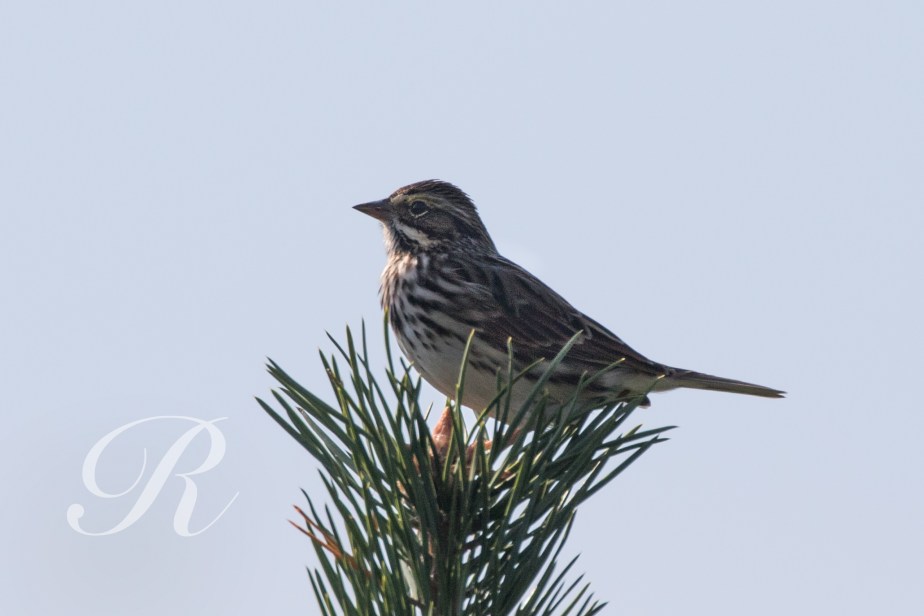
The American Sparrows are nearly as much fun as the Warblers. I might have to revisit them. One to keep you going …

Savannah Sparrow

The Warblers …

Specifically the New World Warblers of the family Parulidae, if it’s opera singers you’re after you should head <HERE>.

The Warblers have something for everyone. For the bird watcher they are very close to addictive. For the taxonomist they provide a lesson in total chaos and for the superstitious their entry in The Handbook of the Birds of the World Vol 15 starts on page 666. Scary.

Authors have written books on them, dozens of books. Mt favorite is The Warbler Guide by Tom Stephenson and Scott Whittle. No voyage to the New World should sail without it. On the journey it will serve as ballast, once landed it will serve as a deterrent to theft … no one will steal your suitcase with a copy inside, they won’t be able to lift it.

Currently the Americas are home to 116 species, at other times the family has been submerged in a much larger family, the Coerebidae, or itself enlarged, or reduced, or in the immortal words of the HBW …

… which had contained, among others, the Neotropical honeycreepers, and placed the Conebills (Conirostrum) and the Bananaquit with the New World Warblers and …

If you’d just hold my beer for a moment there will be a new arrangement by the time you give it back. The one thing that does remain certain is that they are not closely related to the Old World Warblers or the Australian Warblers.

Identification is a challenge not made any easier by their frenetic activity, their changes in plumage through the seasons and their habit of taunting you from high in the canopy. I managed to capture a few presentable images which I offer here along with my suggestion as to identification. Should it be the case that you disagree please state your case for an alternative ID in the comments.

Cape May Warbler
Tennessee Warbler

One particularly confusing duo comprises the Blackpoll and Bay-breasted Warblers. The spring males are easily distinguished but in fall plumage things become challenging. Some folks simply record them as Baypolls. A very useful article by Tom Schultz can be found on ebird.

There is a little ochre on the flanks and the legs are black which indicates that this is Bay-breasted (against that is the streaking on the breast which points to Blackpoll but the ochre shows well in other photos and clinches it for me).

Bay-breasted Warbler

For some really stunning Warbler photos you should head to Glenn Bartley’s site <HERE>.

Maumee Bay …

Australia’s national parks are actually managed by the states with grant money from the commonwealth. In Victoria a State Park has exactly the same level of protection as a National Park and is governed by the National Parks Act.

In the USA National Parks are Federal affairs while State Parks are run quite independently by the States. American State parks are quite different from Victorian State Parks. You are likely to find a golf course and tennis courts, you can take your dog, there is likely to be a full service camp ground and there may even be a nice hotel.

Maumee Bay boasts all of the above, although the dog can’t stay in the hotel (but there are dog-friendly cabins – prior notification required).

Natural values aren’t totally neglected. There is a boardwalk through marsh and woodland. It extends for a couple of miles and is an excellent way to work up an appetite for breakfast.

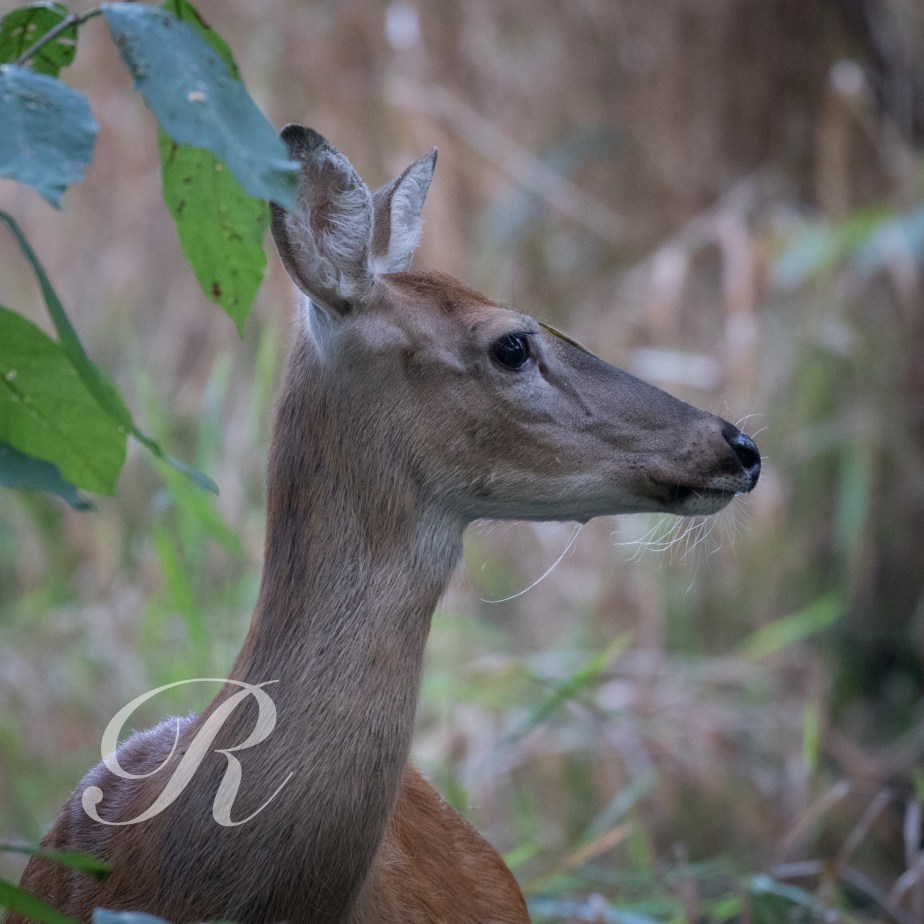
White-tailed Deer

Here’s the front end of an Eastern Fox Squirrel …

Eastern Fox Squirrel

… although it’s the rear end that earned it its name.

A night walk is sure to turn up a Racoon or three and there are Muskrat present as well.

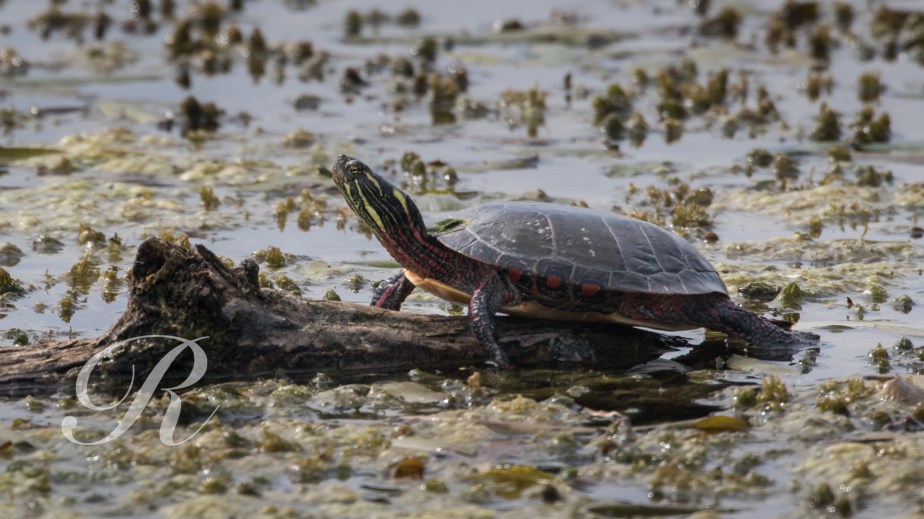
When the sun is a bit higher turtles might sit out to enjoy the warmth.

Midland Painted Turtle

There is plenty of bird activity. Red-winged Blackbirds are abundant, woodpeckers are plentiful, there is the odd sparrow. This Heron was intent on finding its breakfast and took no notice of me at all …

Great Blue Heron

Erie Shore …

Magee Marsh and the surrounding region offer a mix of habitat that is attractive to birds and other wildlife. Throw in the fall migration and the chances are good that a bird watcher from another continent is going to have a very frustrating time trying to identify lots of half seen, hyperactive, totally uncooperative little brown jobs. It’s so much fun.

There’s only one road into Magee Marsh, pity about the spelling, so navigation is pretty easy. The first obvious land mark is the visitor centre. It’s an attractive building set behind a small lake. Adjacent to it is a trail that takes a loop through the woods around some more water ways. The visitor centre didn’t open during the three days we were there and the nature trail desperately needed some pruning. The area wasn’t getting the love it deserved.

Continuing on that single road the woods give way to genuine marsh some of which has been mowed for the benefit of Sandhill Cranes.

Sandhill Cranes

And leads to an extensive parking area on the lake shore. Back from the shore there is a boardwalk through the woods again. This is in good condition. So, excellent access, shore birds on the shore, long-legged birds in the marsh, swimming birds on the water and bewilderment on the board walk.

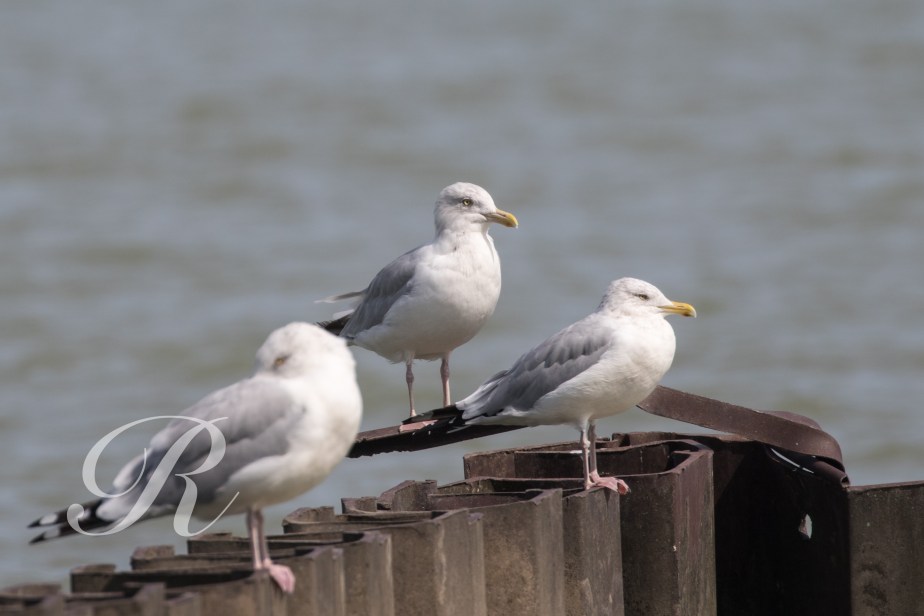
Herring Gull

The Warblers are one particular group of American birds that offer excitement and challenge to all. They are migratory, so no matter where you live in the US you are likely to have some pass through your neighbourhood twice a year and if you’re lucky there will be a few that spend a whole season with you. There is a little book by Chris G Early that has advice for the beginner – start with the spring males. Cool, it’s autumn, I’ll come back next spring.

Well no, I’ll put the camera to good use and email the photos to my good friend from St Simon’s Island who is currently living in a motor home in Virginia. It’ll help to keep his mind off what hurricane Irma is doing to his house.

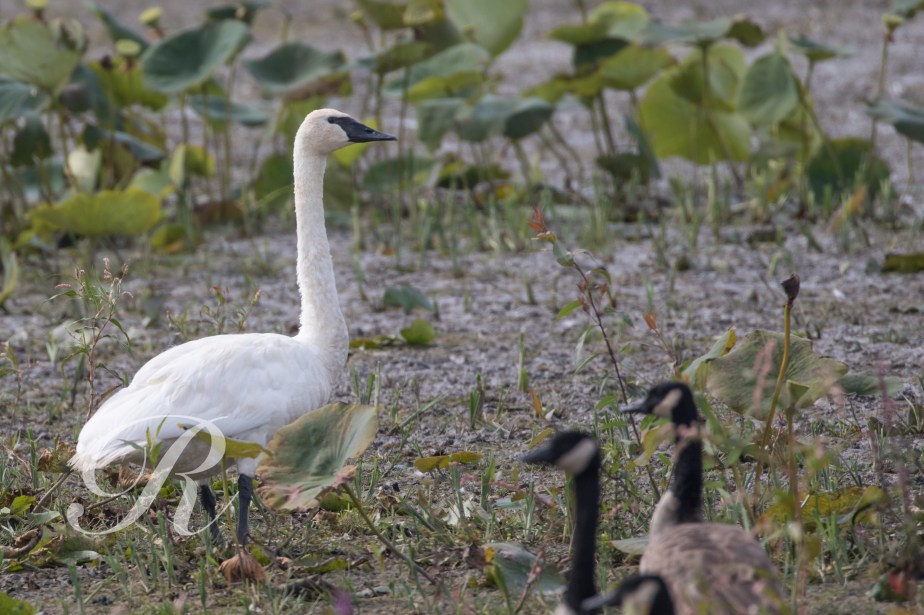
Heading west along the Erie shore the next birding spot is Ottawa National Wildlife refuge, this is more open habitat mainly in the form of shallow ponds.

Trumpeter Swan

Further west there is Metzger Marsh, then Maumee Bay State Park and if you keep going a little further there is Pearson Metropark which is mainly forest. Plenty to keep the visitor entertained.

Ohio …

The impressive skyline of Cincinnati welcomed us to the midwest.

You will recall that our departure from Florida coincided with the evacuation brought about by Irma’s impending visit. We were four days on the road. On this fourth day the proportion of Florida number plates finally tailed off. We hadn’t done justice to the states we’d passed through but it was our intention to spend the next few days on the shores of Lake Erie. It was time to get off the Interstate and hit the back roads of Ohio.

Our first stop was Fort Loramie.

It’s a pretty country town. Its heyday was back in the late 1800’s as a canal town. The Miami and Erie Canal made it possible to navigate from the Ohio River at Cincinnati to Lake Erie at Toledo. Almost 250 miles (400km) long, it boasted 19 aqueducts and 106 locks. Loramie is situated at its highest point 512 feet (156m) above the Ohio River. It was open end to end from 1827 until the new fangled railway put it out of business in the early 1900’s.

The Ohio countryside is fairly flat, open agricultural land dotted with big barns that hint at severe winters.

We stopped for a little birding at nearby Lake Loramie. Bird watchers do tend to be somewhat obsessive and Gayle is no exception. Tattooed down her side are the names of all the birds that she has seen and I have not. In Georgia she caught up with the Black-and-white Warbler and I did not. Fortunately we hadn’t passed a tattoo parlour en route.

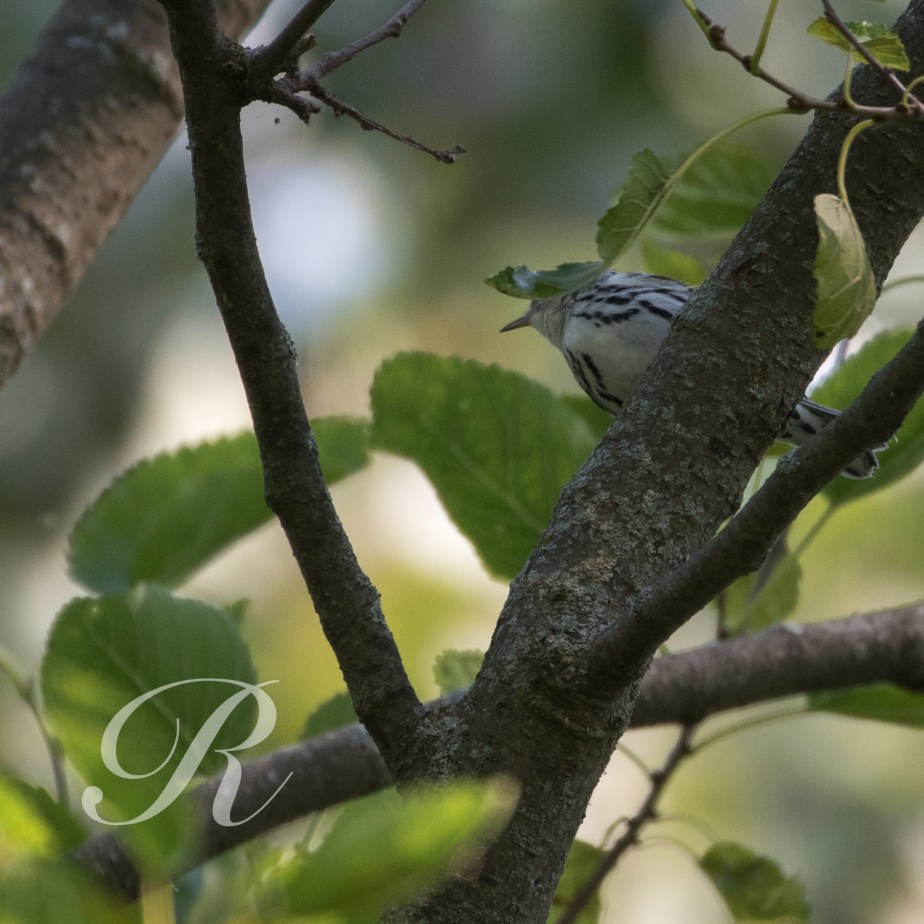
The fall migration was just getting underway. At the lake we caught up with a few warblers including this little guy. It’s not a prizewinning photo but gee it was a sweet moment …

Black-and-white Warbler

Our destination that day was Maumee Bay State Park. Where there is an almost luxurious hotel conveniently close to the world famous birding spot, Magee Marsh.

Kentucky …

The geography of the Commonwealth of Kentucky is very straight forward, in the east you have part of the very beautiful Appalachian mountains, the rest is a horse paddock.

The place is blessed with lots of navigable waterways, bourbon distilleries, some coal mines and any number of fried chickens. The grass is much the colour of Marge Simpson’s hair.

Natural attractions include Mammoth Cave and Cumberland Gap …

See what rubbish you get when there’s no saxophone in the band.

The I-75 is a very efficient way of getting through Kentucky without seeing very much. We did make one stop at Wildcat Camp.

Kentucky is in the most northerly band of southern states. When the Confederacy left the Union Kentucky was divided on which way to go. After a few shenanigans it decided that neutrality would suit it just fine. The protagonists soon put an end to that ambition. One of the early battles of the American Civil War was fought at Wildcat in Laurel County, north Kentucky, on October 21, 1861.

Prior battles had not gone well for the Union, for example at the first Battle of Bull Run Union casualties were 460 killed, 1,124 wounded, and 1,312 missing or captured. This one was a very welcome victory albeit on a very small scale. Confederate losses were 11 killed and 42 wounded or missing., almost exactly double Union losses.

Today you can take a very pleasant walk through the woods up to Round Hill where the remains of the earthworks can still be seen.

Tennessee …

When you hear the whistle blowing eight in a bar

then you know that Tennessee ain’t very far …

We slipped over the Georgia Tennessee border just outside of Chattanooga. If you just took in the clip above you’d have seen the snow through the window. There was none on the I-75 … perhaps because the movie is set in a ski resort in Idaho. I believe the baritone sax player was Ernie Caceras. The support crew are the Glenn Miller Orchestra and some dancers.

Tennessee is much broader east west than it is north south. We didn’t pause until we got to Rocky Top in the north east. The motel receptionist was the very model of miserable, grudging unhelpfulness. I would give the Scottish Inn a miss, there are other motels. On the other hand next time you’re in Rocky Top make sure you eat at La Fiesta, inexpensive but plenty of excellent food. And served with a smile.To go with the meal I would recommend a Dos Equis, a big one. Two if you’re staying at the Scottish Inn.

Gayle settled for a Budweiser, very much like making love in a canoe …

… itself an excerpt from the Philosopher’s Song which you can also find on YouTube if philosophy is your thing.

The following morning we had a picnic breakfast in the Norris Dam State Park.

Norris Dam

Then we headed for Kentucky …

Where was I …

Half way up the I-75 as I recall.

Since then I’ve visited London, UK and now I’m back in Oz.

A quick walk around the country estate (in the Goldfields, Victoria) this morning turned up some of our spring migrants, Sacred Kingfisher and Horsefields Bronze Cuckoo. The signature tune of spring here is provided by the Rufous Songlark. Whoever named this bird was using rose-tinted hearing aids. It’s back and welcome despite its scratchy voice. I guess it was never going to be called a Screechlark.

I found a platypus busy in the creek that makes my eastern boundary. I haven’t seen one in ages so it’s almost a relief to find they’re still around. Last summer the creek was just a series of billabongs but it’s flowing presently.

The grass is up. The fire season approaches so the mower will get plenty of work in the next few weeks. But there’s less need for firewood so I can put down the chainsaw for a while.

The winter crop this year has been canola (rapeseed for some of you). It got off to a poor start. It was very cold this winter and germination was very slow. It’s patchy but overall it’s done better than expected …

Life’s good.

Back to the I-75 …

Kennesaw …

In March 1861 the Republican Party candidate, Abraham Lincoln was elected 16th President of the United States. He did not carry a single southern state. The Republicans had taken a position against slavery. The south took a position against the federal government.

The first military action of the American Civil War took place at Fort Sumter, Charleston, South Carolina in April 1861. The war was a brutal affair that took the lives of about 8% of America’s white males aged 13 to 43; 6% in the North and 18% in the South. In the aftermath the North prospered and the South was impoverished for a century.

By 1864 the South were losing but progress was very slow and costs were high. It was an unpopular war. Lincoln seemed unlikely to win a second term, his opponents were promising to sue for peace rather than continue to fight for victory. Atlanta, Georgia was a crucial resource to the Confederates. It stood at the intersection of four important railroad lines that supplied the Confederacy and was a centre of military manufacturing.

Maj. Gen. William T. Sherman was commanding the Union forces ranged against Confederate troops commanded by Gen. Joseph E. Johnston. Rather than make a frontal attack, Sherman had chosen several times to pass Johnston’s position and threaten his supply line. Johnston had fallen back each time.

After two months and 70 miles (110 km) of gaining ground with few casualties on either side , Sherman’s progress was blocked by imposing fortifications on Kennesaw Mountain, near Marietta, Georgia. This time Sherman ordered a large-scale frontal assault.

The Battle of Kennesaw Mountain was fought on June 27, 1864. The Union forces suffered about 3,000 casualties in comparison to Johnston’s 1,000. Sherman wrote to his wife …

I begin to regard the death and mangling of couple thousand men as a small affair, a kind of morning dash.

Essentially it was a Confederate win but on the far right of the Union lines troops under the command of Maj. Gen. John M. Schofield were able, once again to outflank Johnston’s position, all that lay between them and Atlanta was the Chattahoochee River. Johnston withdrew to the river where he was outflanked yet again and was relieved of his command in favour of John Bell Hood.

Sherman took Atlanta after a month-long siege. It was the beginning of the end for the Confederacy and enough to swing public sentiment behind Lincoln. He was reelected and concluded his second inaugural speech with a plea for reconciliation …

With malice toward none, with charity for all, with firmness in the right as God gives us to see the right, let us strive on to finish the work we are in, to bind up the nation’s wounds, to care for him who shall have borne the battle and for his widow and his orphan, to do all which may achieve and cherish a just and lasting peace among ourselves and with all nations.       Abraham Lincoln March 4 1865.

The visitor to Kennesaw Mountain can walk to the summit passing the positions where the Confederate army was dug in. The city of Atlanta can be seen from the top. A few cannons remain on duty where so many lost their lives.

At the foot of the hill there is a museum and an informative video is shown regularly.

Lincoln was assassinated on April 14, 1865. His successor, Andrew Johnson was able to announce the end of the war the following month.