Not long ago I managed to trim down the weight of my camera kit. The ever tightening stance of the airlines caused me concern. I even managed to get a lighter pair of binoculars. But …
Inevitably the weight has crept up again. I currently carry two cameras when I travel, one for landscape and time-lapse, a Lumix GH4, and a Cannon 7d mark ll with a telephoto for wildlife. At home I leave a full frame Sony with a nice macro lens. Of course none of them talk to each other, three different sensor sizes, incompatible lenses. Why? Because no one just buys a whole kit in one go and times change.
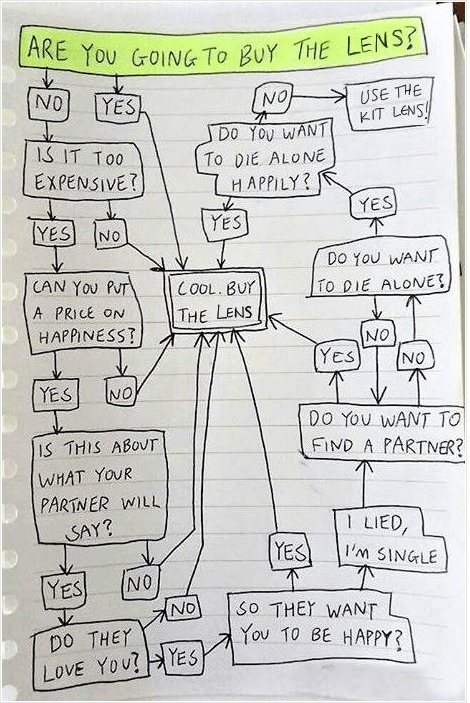
I’m thinking ahead to another big trip. Do I buy a bunch of lenses for just one of my much-loved cameras? What happens if it fails in the time I’m away? It is so hard but fortunately there is a flow chart …
It doesn’t solve the problem but it does amuse you while you ponder.
Some birds are residents, some are migrants. Some birds just wander around in response to conditions, none of them care a fig about state boundaries. So if you hang out near the borders of your state or territory your list will grow.
I live in the western half of Victoria where sooner or later you can expect to find Budgerigars, Diamond Doves, Black and Pied Honeyeaters and other occasional visitors. These are birds that spill out of the more arid interior.
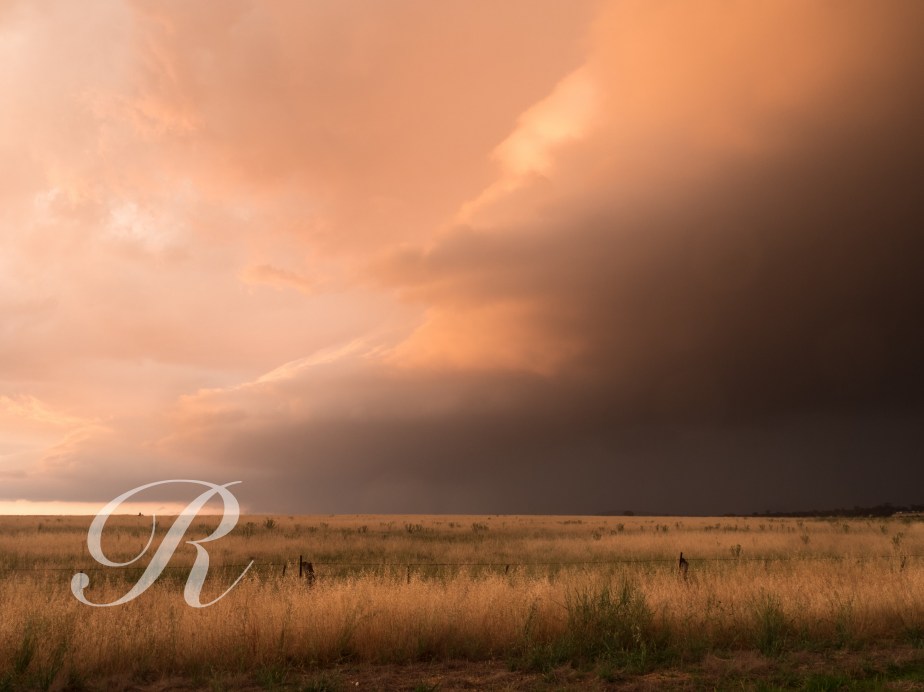
Over in the east of the state their counterparts are birds of the east coast forests that wander around the corner from New South Wales, usually in summer. There have been reports recently of a few congregating in one particular front yard in the little town of Metung. It seemed a good time to put in some time in the Gippsland Lakes region. The weather gods thought it might be a good time to visit the same area.
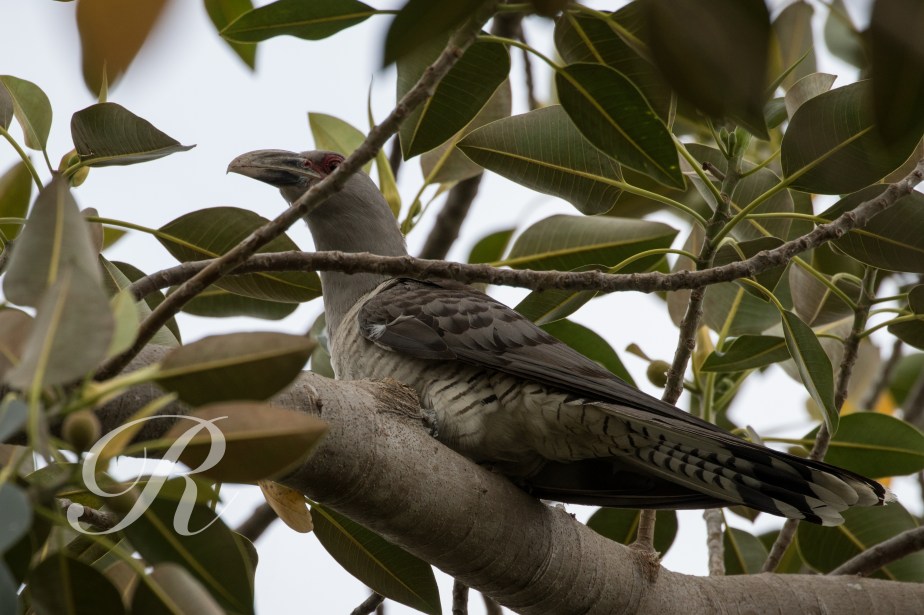
The Fig Trees of Mairburn Road deserve to be as famous as the Flame Trees of Thika. In the space of half an hour I saw Koel, Channelbill Cuckoo, Topknot Pigeon, White-headed Pigeon and Figbird. All in or close to two enormous Morton Bay Figs thoughtfully planted as ornamentals in somebody’s front garden. Thanks, mate.
These three were new to my Victorian list …
Channel-billed CuckooTopknot PigeonFigbird
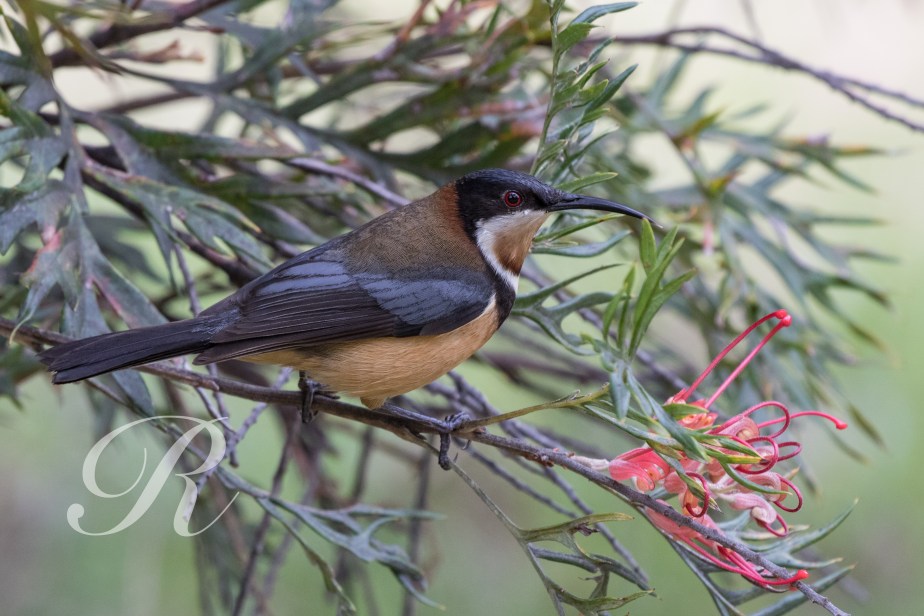
You can’t spend all your time pointing your binoculars and telephoto lens into fig trees in people’s front gardens. You have to consider the Grevilleas in their back gardens …
The view from outer space (courtesy of Google Earth) shows the guano on Lawrence Rocks. You can also just make out a tiny spot more on Point Danger, the nearest point on the mainland. The cloacas at work belong to these …
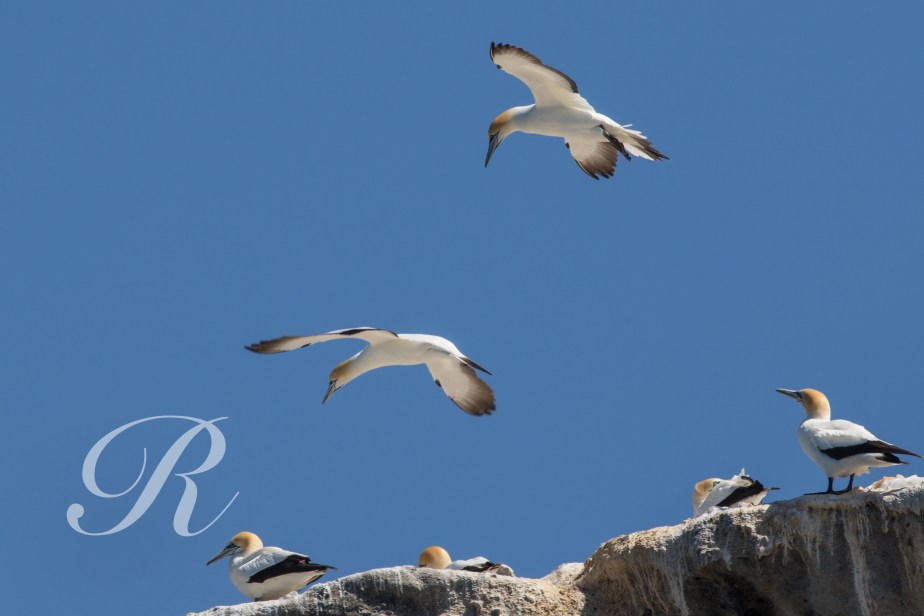
Australasian Gannet
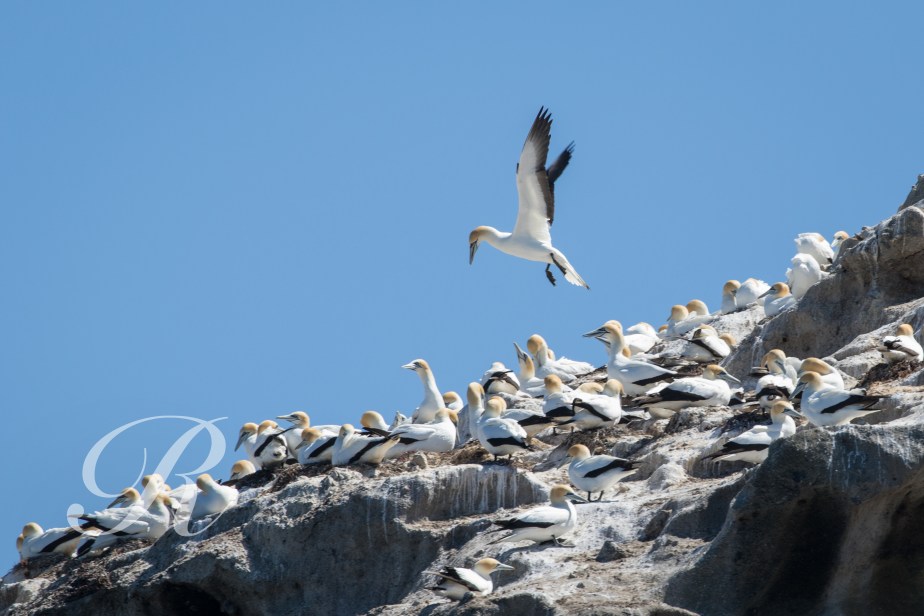
The colony on the rocks spilled over onto Point Danger, the only mainland breeding colony of Australasian Gannets. It’s survival has been greatly assisted by fencing that keeps out foxes and other terrestrial predators.
The rocks also provide a resting place for Black-faced Cormorants and Australian Fur Seals. In winter the White-fronted Terns can usually be seen here. Crested Terns are common all year.
Not many people get to resign at 93 years of age, Mr Mugabe can put that on his list of outstanding achievements.
Achievements like turning the foodbowl of Africa into a net food importer, reducing the country’s life expectancy by more than 18 years, attaining staggering rates of inflation and unemployment. Simultaneously he and his allies helped themselves to the mineral resources and development funds and looked after themselves very nicely.
Those allies included the Zanu-PF machine, the military and Mr Mnangagwa. They had no problem with kleptocracy enforced by violent suppression of an impoverished and long-suffering people. Their problem was the spectre of the Amazing Grace gathering the reins of power into her hands and cleaning out the old order.
What now for Zimbabwe? Probably more of the same … but it could have been worse.
Sadly, the opportunities for it to be much better were missed long ago.
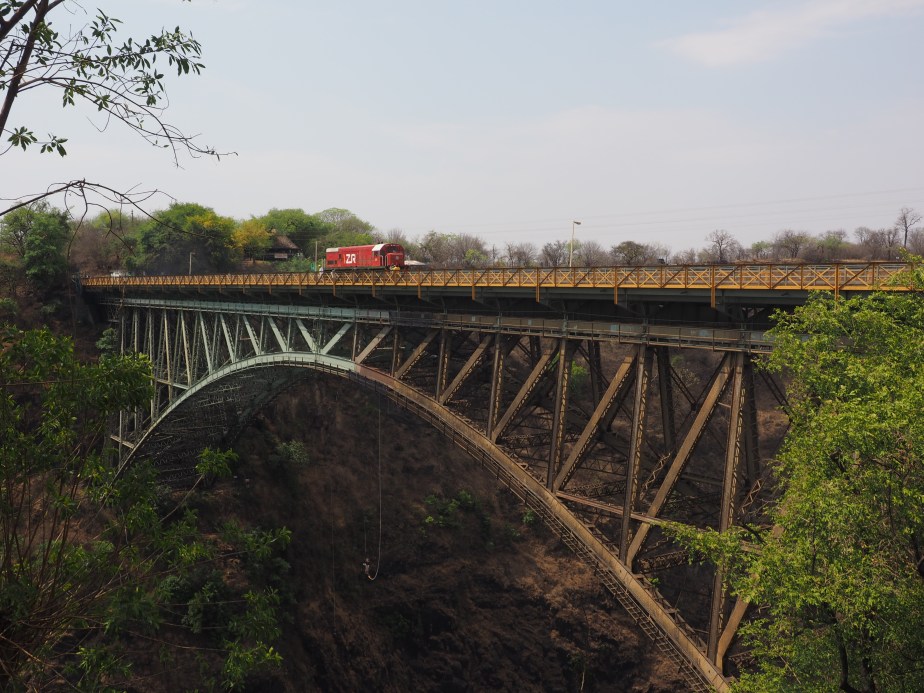
The border with Zambia … Zimbabwe starts where the paint stops.
Stuck in Melbourne between a rehearsal and a gig. Totally bored, and just to prove it …
This is of course the Hollywood version, in real life you die.
Don’t believe me then volunteer for a double blind crossover trial. It is, after all, the gold standard for clinical trials and indeed the subject of a scholarly article in the British Medical Journal of December 2003 …
Parachute use to prevent death and major trauma related to gravitational challenge: systematic review of randomised controlled trials
Gordon C S Smith, professor, Department of Obstetrics and Gynaecology, Cambridge University, Cambridge CB2 2QQ,
Jill P Pell, consultant, Department of Public Health, Greater Glasgow NHS Board, Glasgow G3 8YU
Abstract
Objectives
To determine whether parachutes are effective in
preventing major trauma related to gravitational challenge.
Design
Systematic review of randomised controlled trials.
Data sources:
Medline, Web of Science, Embase, and the Cochrane
Library databases; appropriate internet sites and citation lists.
Study selection:
Studies showing the effects of using a parachute
during free fall.
Main outcome measure
Death or major trauma, defined as an injury
severity score > 15.
Results
We were unable to identify any randomised controlled
trials of parachute intervention.
Conclusions
As with many interventions intended to prevent ill health, the effectiveness of parachutes has not been subjected to rigorous evaluation by using randomised controlled trials. Advocates of evidence based medicine have criticised the adoption of interventions evaluated by using only observational data. We think that everyone might benefit if the most radical protagonists of evidence based medicine organised and participated in a double blind, randomised, placebo controlled, crossover trial of the parachute. BMJ 2003;327:1459-1461.
Many birds make long journeys over the sea. They’re not all sea birds, for instance about two-thirds of the migratory song birds of North America cross the Gulf of Mexico twice each year. North-south that’s about 850 km (530 miles). Tiny warblers and hummingbirds regularly venturing further from the shore than many of the birds we think of as seabirds.
So what is a seabird?
Before I launch into a list of characteristics let’s think about the difference between a fish and a scuba diver. One lives in the sea, the other makes special preparations and chooses their conditions for a brief visit. So it is with migratory birds, they fuel up first by laying down fat. They do their best to choose periods when the weather is favorable. Then they make their journey. They don’t eat or drink en route. If they get it wrong they die.
On the other hand true seabirds can feed and drink at sea, withstand the weather and stay out there for long periods, sometimes years. They don’t quite fit the fish analogy because they can’t lay their eggs on the water so they need suitable breeding sites on land.
If you head to the sea and stand on a cliff you see birds like gulls, terns, cormorants and gannets. These are birds of inshore waters, the neritic zone. They can drink salt water and secrete excess salt from a gland adjacent to their nose. They generally don’t venture far from shore, they may wander widely during the non-breeding season but feed locally when they have chicks to rear. Several families of birds fit the bill. Depending on which cliff you choose you may see penguins, auks, gannets, boobies, pelicans or frigatebirds.
Out beyond the continental shelf is the pelagic zone. Out here one family dominates, the Procellariiformes, procella being Latin for storm. In English the tubenoses or albatrosses and petrels. They wander long distances even when feeding young which means just one chick every year or two. They produce an oil in their stomach which is stored in the proventriculus. It is composed of wax esters and triglycerides and is solid at room temperature. At 9.6 kcal/gram it is a very efficient way of storing energy with the advantage over fat that it can be regurgitated. It can be fed to their chick or sprayed over predators. The smell is said to be very offensive and very persistent.
Long lives, delayed reproductive maturity followed by low birthrate, stable population size are all features of a life strategy designated as K. Plague locusts and mice have short lives, many off spring, population boom and bust. These and many others are R stategists. Procellariforms are very K. If their population is depressed because of an increased mortality rate soon extinction beckons.
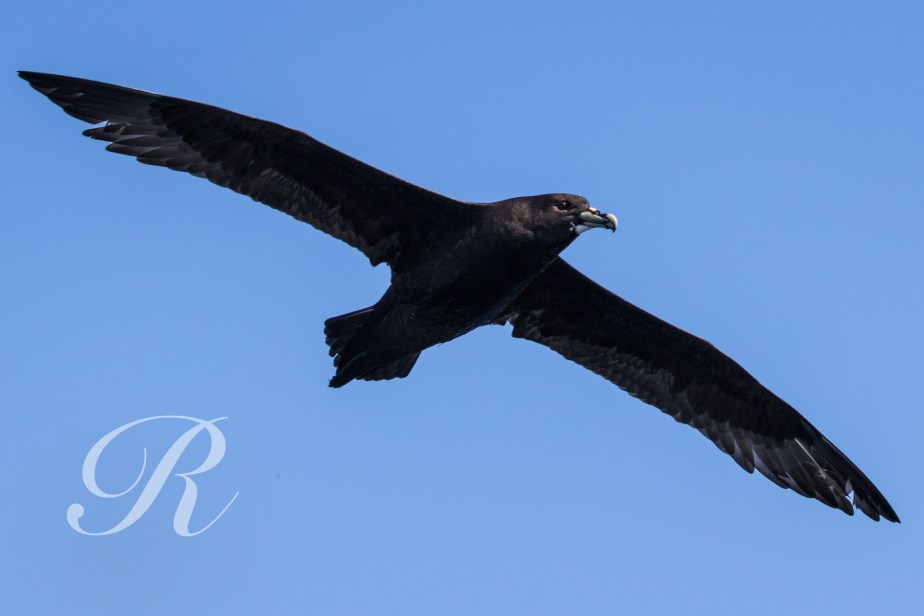
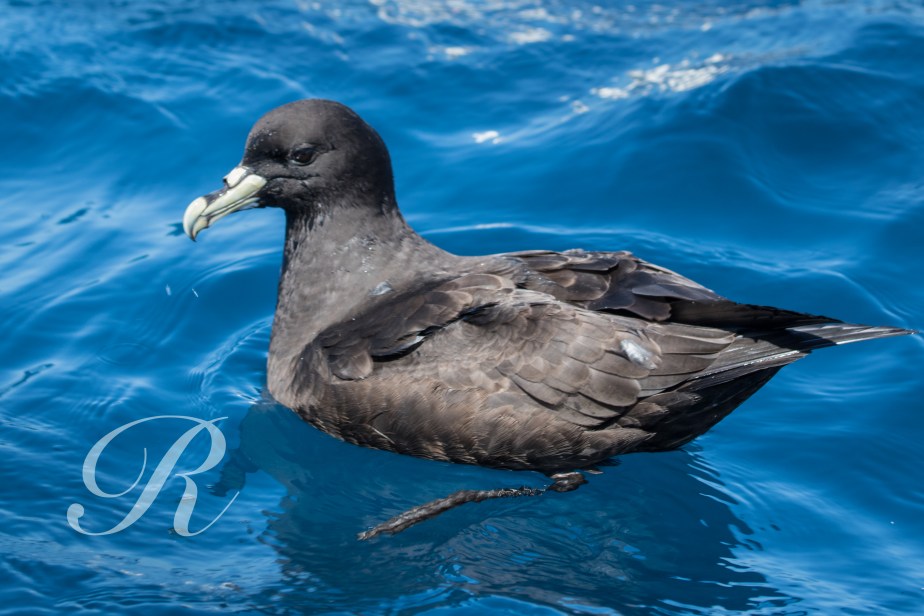
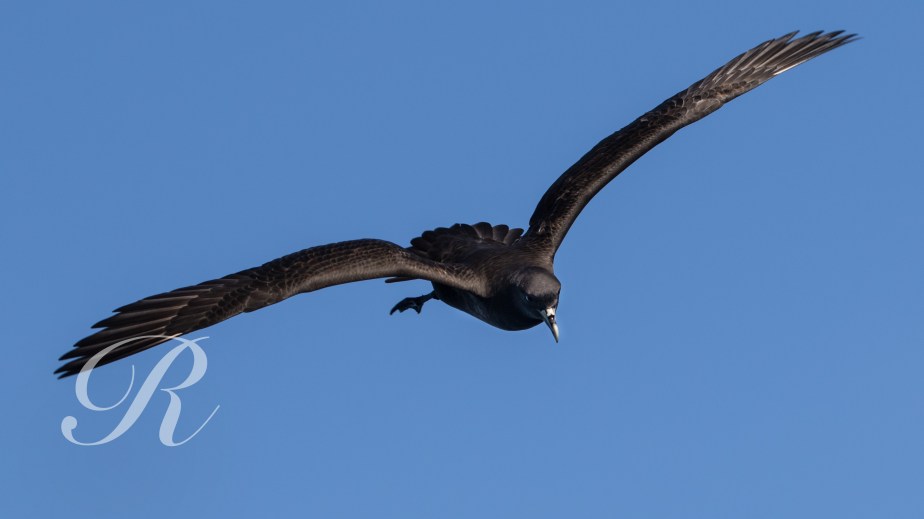
The White-chinned Petrel, Procellaria aequinoctialis, is a fairly typical tubenose that was numerous off Portland the other day. They breed on many of the subantarctic islands. The species is classified as Vulnerable by the IUCN, the main threatening processes are long-line fishing and habitat degradation on the breeding islands.
Portland is close to the western extremity of the Victorian coast. It was settled illegally by the Henty brothers back in 1834. It provides a reasonable harbour which has been important in whaling and fishing and these days live meat and woodchip exports.
The attraction for the sea bird enthusiast is its proximity to the edge of the continental shelf, where the lighter blue meets the darker blue in the image above. Most of Victoria’s coast is deep water deprived. Upwelling water at the shelf edge brings in the long distance wanderers of the sea, the true pelagics.
So eight birdos assembled on the dock in the early morning looking like they had been dressed by a Salvation Army Op shop and carrying about 80,000 dollars worth of optics. Tragics in search of pelagics.
The sea was initially a metre plus slop on top of almost no swell whatever, reasonably comfortable for the 50 km ride out to the shelf. Once there the dispensing of handfuls of shark liver soon attracts the birds which are then continuously and thoroughly depixellated to the machine gun like sound of overheating motor drives … for about four hours.
It was not a day of great variety. White-chinned Petrels dominated the scene with Shy Albatrosses running second, two flavours of Shearwater showed themselves at various times along with the odd Fairy Prion and a few also rans.
Shy AlbatrossFairy Prion
The wind and sea picked up as the day wore on heading towards a forecast 30 knots. We had a less comfortable and fairly wet ride home.
On the way we stopped for a look at Lawrence Rocks just off Point Danger at the entrance to Portland Bay. It is home to a massive breeding colony of Australasian Gannets and a good place to rest for a variety of terns, cormorants and fur seals.
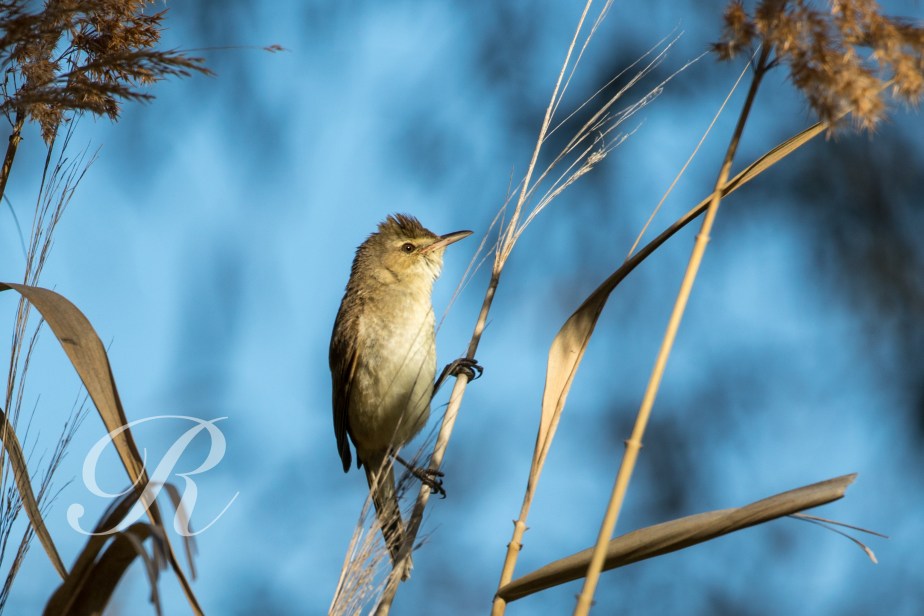
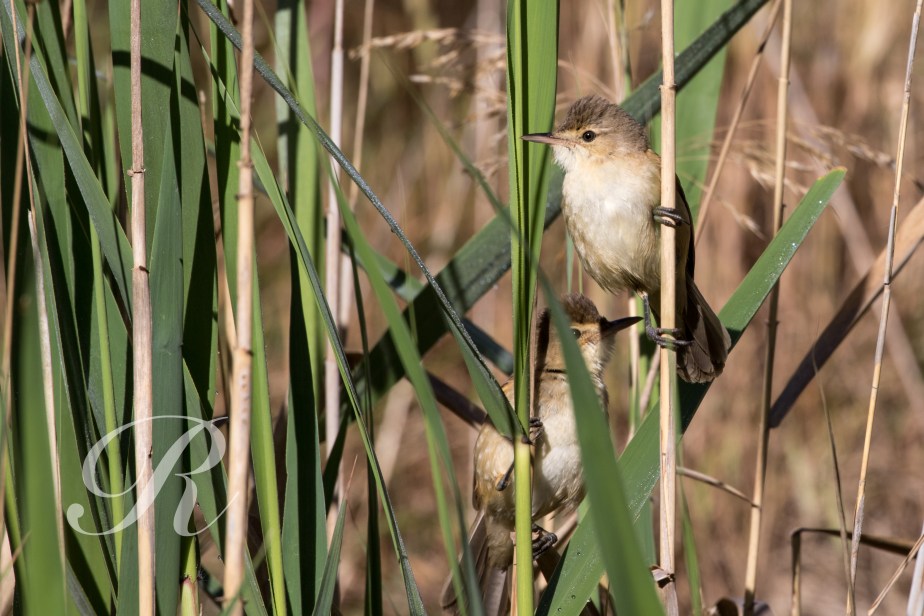
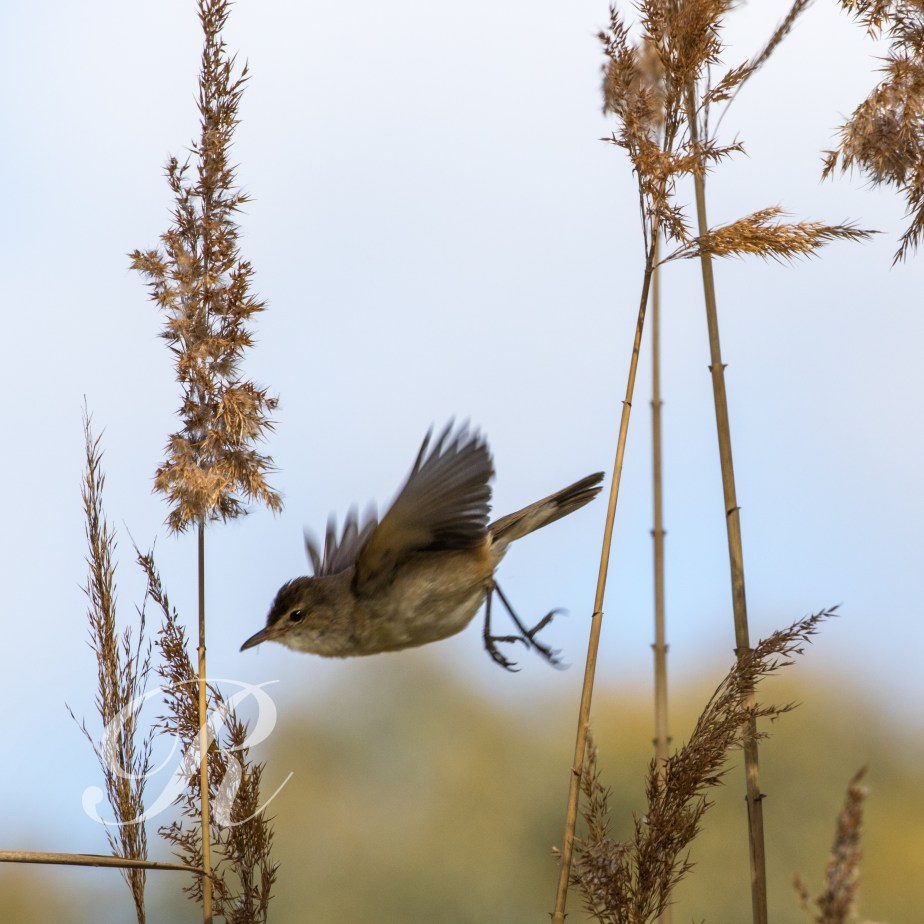
Well I’m back from Broome, life is back to normal. I was wondering how to conjure up a post from the ordinary, the humdrum. It occurred to me to post some recent photos of Australian Reed-warbler.
For those of you who enjoy the natural history side of the blog, there is an excellent blog run by Geoff Park called Natural Newstead. Geoff limits his observations to the area around his home, also in the Victorian Goldfields, about 40km from mine. It’s well worth a visit.
Just as I was delving in my catalogue Geoff posted this …
I’ve been trying for years to get some decent images of Australian Reed-warblers, especially that iconic shot of one perched sideways on the stem of a reed. It remains an ongoing project.