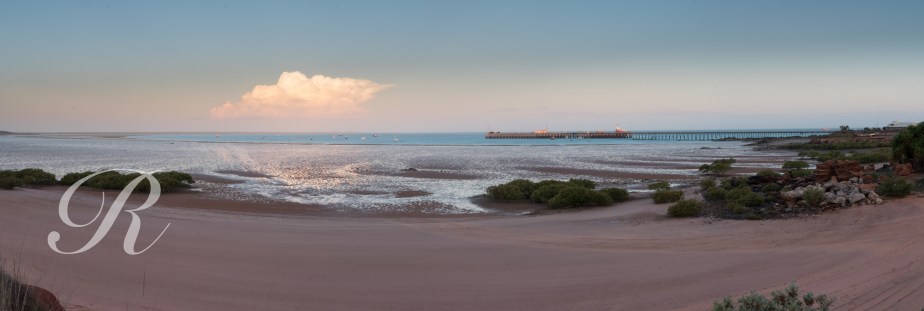
Derby Day …

Administratively Broome is part of the Kimberley but in terms of geology and biology it doesn’t quite fit. If you drive north to Derby you cross the Boab line and then the Fitzroy River. Now you’ve got one toe in the real Kimberley.

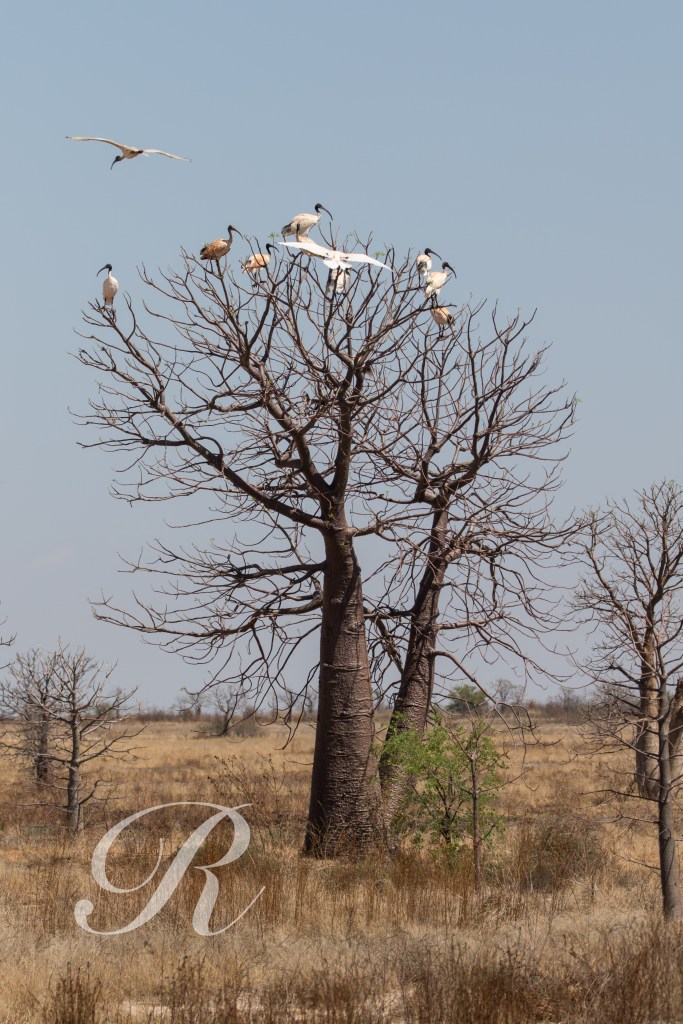
As you approach Derby the Prison Boab is off to your right. The tourist will want to have a quick look. The bird watcher will also want to stop. There is a cattle trough adjacent to the venerable tree that attracts the odd thirsty bird.

The next stop for the birdo is the sewage pond. On the left just past the speedway sign you’ll find a sign to Derby Wetland pointing down Conway Street. The road surface changes to dirt (dry season, mud in the wet). Don’t be tempted by the bitumen off to your right. At the end of Conway turn left, the ponds are now on your right, turn right again to keep them there. Shortly you encounter tracks off to the left both will take you to the wetland, the second one is usually in better condition.

The sewage plant may be the only one in the world to have a Boab tree within its boundaries. There was a fine White-bellied Sea Eagle sitting in it when I was last there. Good birds can be seen through the fence.

The wetland has been improved in recent years. The waste water used to run out the back making a very nice wetland where I’ve seen Ruff and other delicacies. The Golf Course coveted the water. So a pond was created to give the illusion of a wetland and the water was put to good use. It’s now an ideal place for Purple Swamphens and White Ibis. Whereas in the past every serious bird watcher in Australia found their way to Derby in the course of their career, maybe now every serious golfer treks here instead.

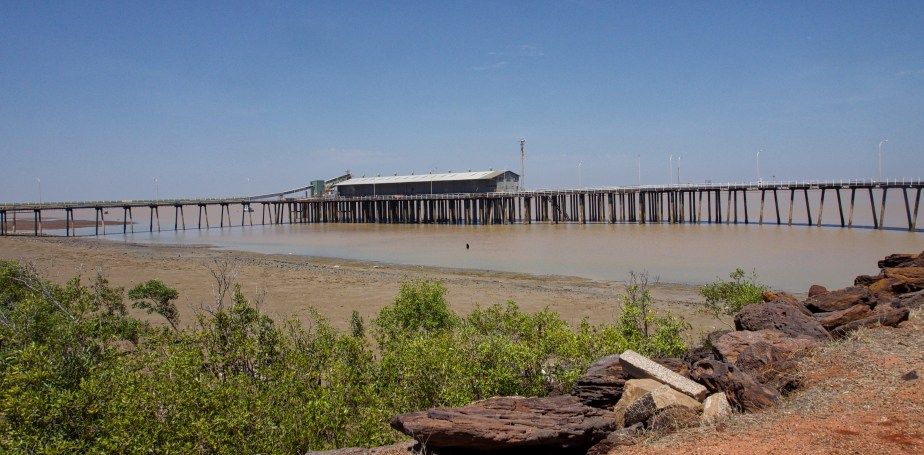
Then it’s into town, look out for Little Curlew on the ovals. I have even seen them on the median strip. The port is worth a visit. You can peer into the mangroves at the boat ramp. There’s a nice cafe by the pier.

photo – GHD

Someone in an air-conditioned office thought it would be nice to put a walkway between the port and town through the most desolate landscape you’ll find this side of the Sahara. If you’re planning to migrate to Mars you could train here.

Out on the plains …

Meet Roderick Percival Smith, all the cows out here have individual names and wear their initials in their ear …

Well no. They all have the same tag and RPS stands for Roebuck Plains Station. The point of introducing you to Roderick is simple. There’s a lot of good birding out on the plains but it is a working cattle station and private property. You will need permission to visit and it’s a huge place. Local knowledge and permission is readily available if you go with the redoubtable George Swan or with staff from Broome Bird Observatory.

George is a top bird guide and lovely guy. He can be found at <Kimberley Birding>. The link for Broome Bird Observatory is <BBO>.

What’s happening on the plains depends on the weather, it might be dust or it might be under water. Presently it’s in between, some dust and some water. It’s nice although the temperature did reach 42°C (107°F) the other day.

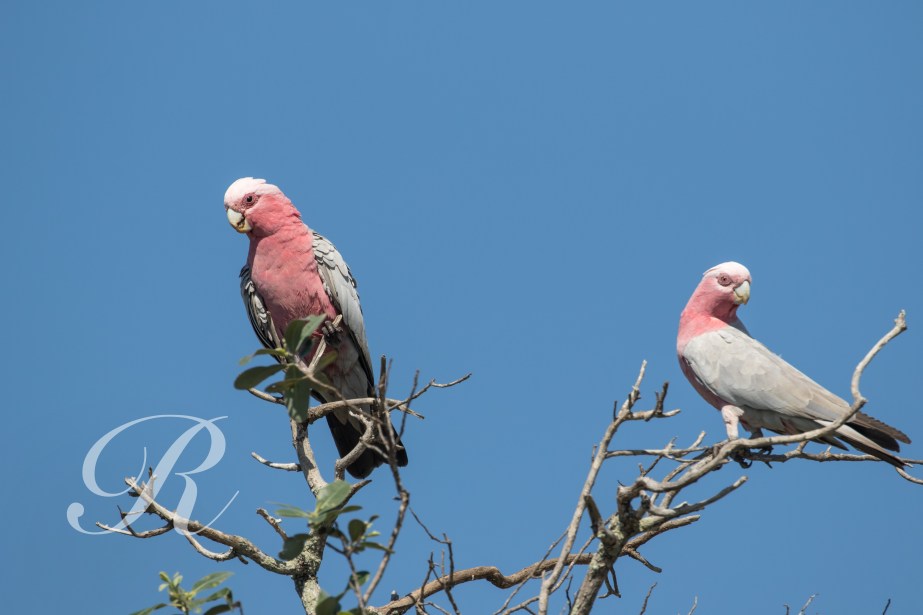
Galah
Oriental Plover
Rainbow Bee-eaters

You may be lucky enough to encounter Yellow Chat. They are not easy to find but if they’re about George Swan or the guys at the Observatory will know where they are. In breeding plumage they are a knock out. The ones I found this time were not at their finest but hey, that’s the way it goes.

Yellow Chat

The Lakes …

Last year the rain gods were very generous to Broome. The last wet was a big wet. Even after the intervening dry season, lakes out on the Roebuck Plains still hold a good amount of water. The birds are loving it.

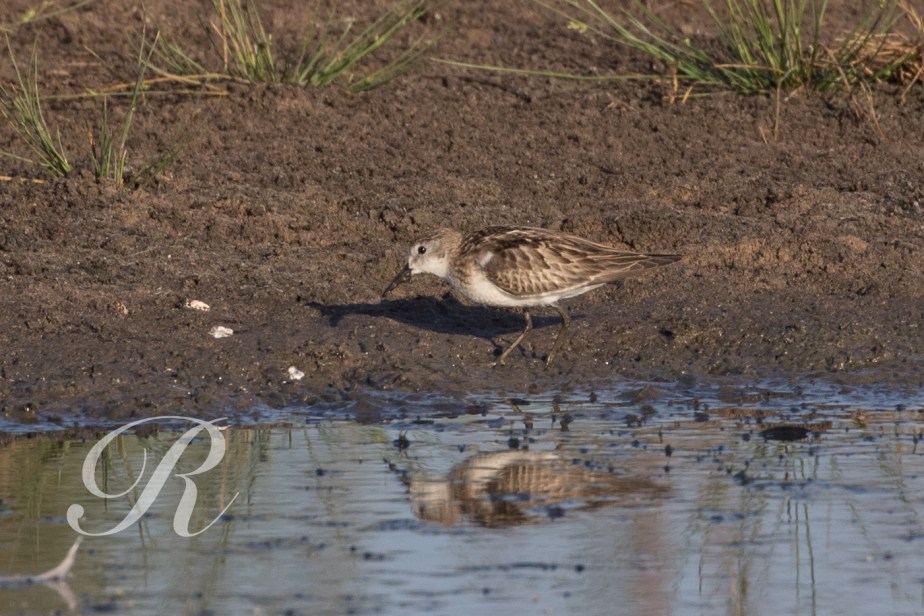
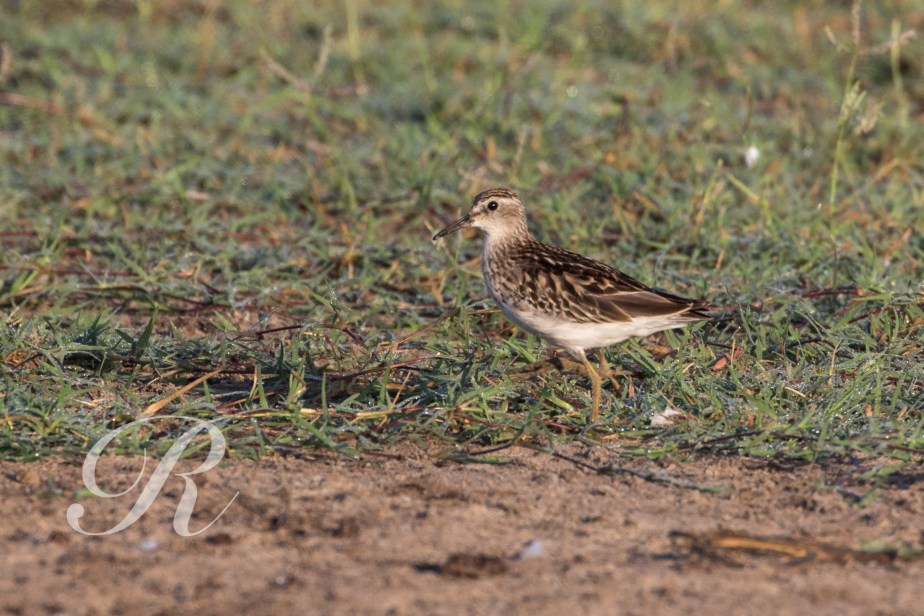
First a couple of photos for the true aficionados, answers at the bottom …

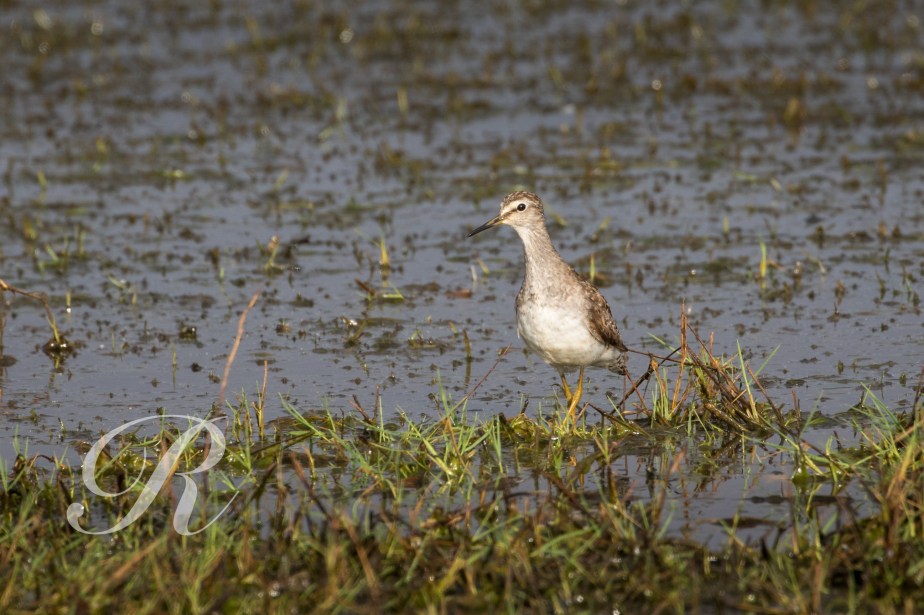
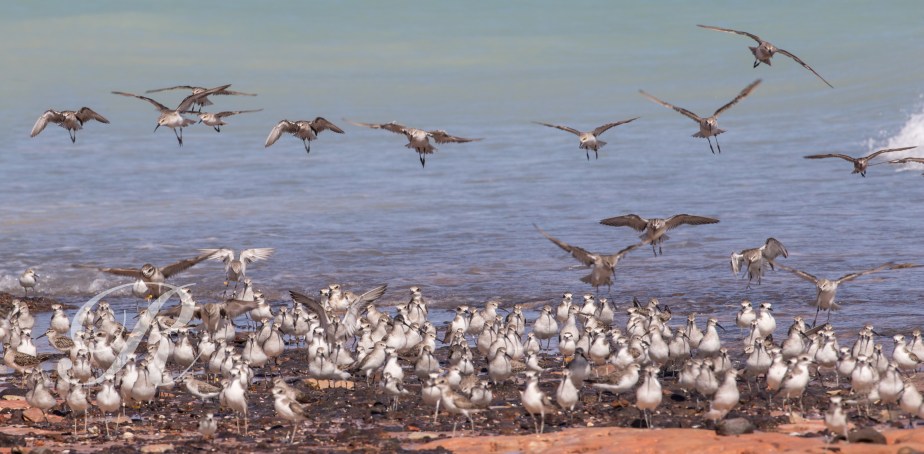
Like the two above, many of our shorebirds are very long distance migrants breeding in the far north of the northern hemisphere and coming to Australia to escape the northern winter. Dual citizens as it were …

Wood Sandpiper
Long-toed Stint

Whilst others are resident.

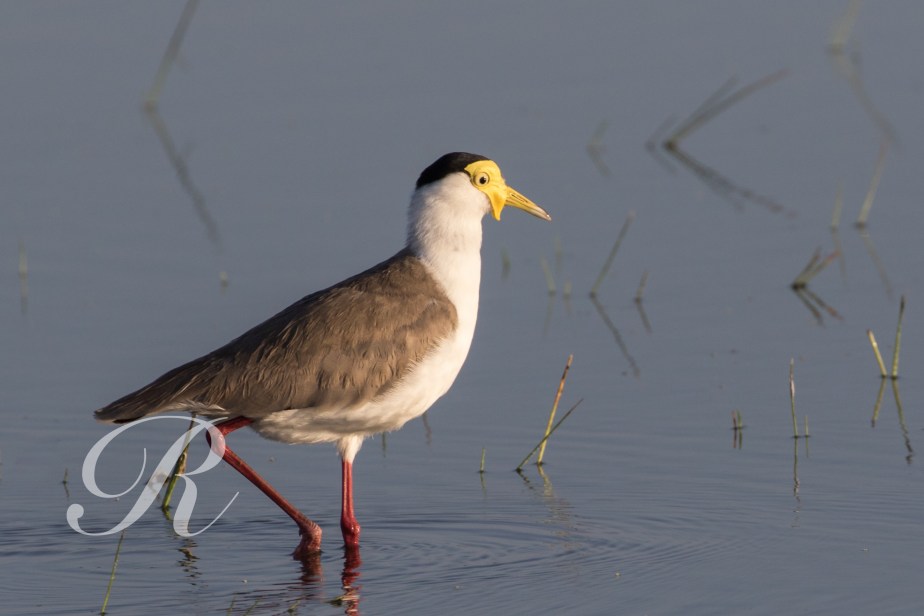
Masked Lapwing
Black-winged Stilt
Red-kneed Dotterel
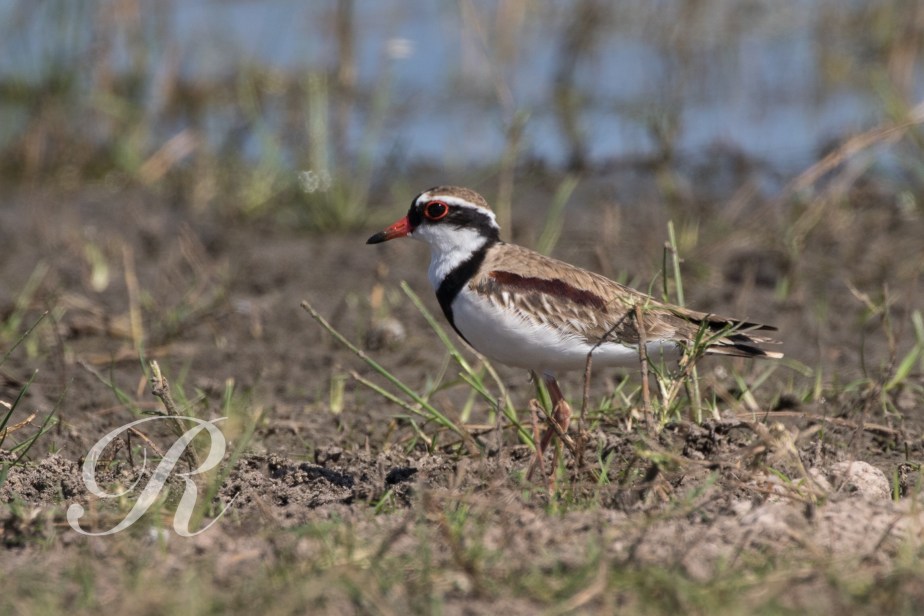
Black-fronted Dotterel

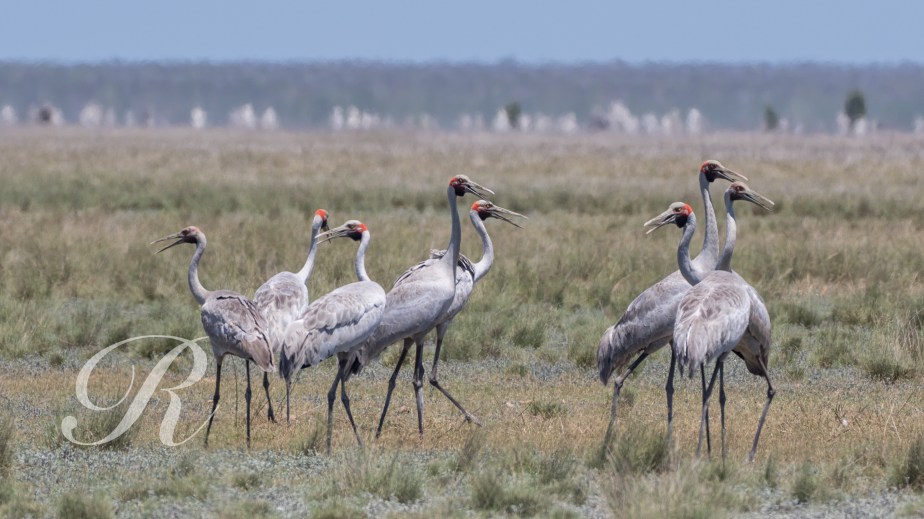
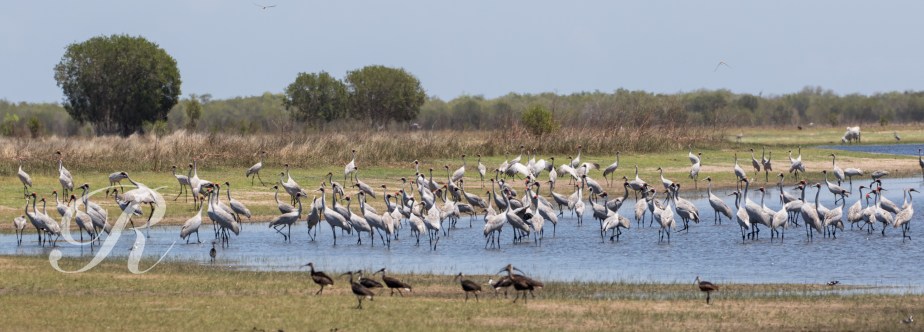
Others aren’t shorebirds at all, they just have long legs, well adapted for feeding in shallow water. This would include the Brolgas in the headline photo, herons and Ibises – waders in the American sense.

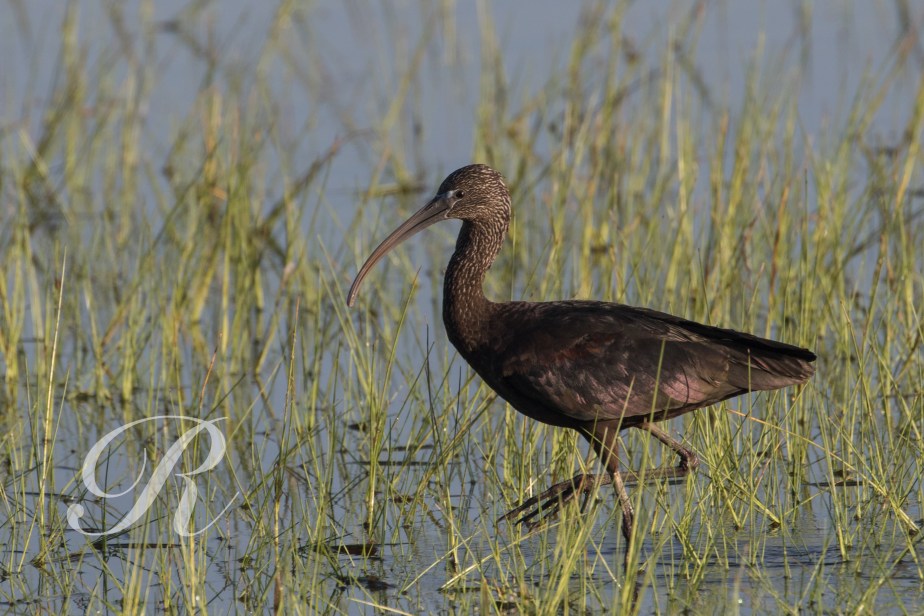
Glossy Ibis

Now the answers, these two individuals have been discovered in the last few days. The upper one is a Pectoral Sandpiper. These breed in Alaska and the Russian far east and most winter in South America. A few join the east Asian flyway and find their way to Australia or New Zealand.

The second bird is a Little Stint. Their breeding ground is in the Eurasian high arctic. Most go to Africa to escape the northern winter. A few find their way further east. It’s only a small minority that find their way to Australia.

In the Mangroves …

There are mangroves aplenty around Broome and plenty of birds that use them. There are about 19 species of mangrove up here so the habitat varies from place to place and to some extent the suite of birds varies, too.

Access to mangroves is often difficult due to deep mud and the density of the vegetation. Mosquitoes can be a little tedious as well. There are a couple of spots that are reasonably easy of access and quite rewarding to visit.

The mangroves that run from Town Beach to Chinatown can be entered in various places and are really good for Red-headed Honeyeater. Streeter’s jetty is the most famous in birding circles and is excellent. Out of town at Little Crab Creek is the place to go for Dusky Gerygone. Between the two you can find just about all of the local mangrove specialists, and it’s not only the birds …

Flame-backed Fiddler Crab

Fiddler crabs and mudskippers abound. they probably make a nice meal for some of the larger denizens. And there is plenty of invertebrate life in the mud.

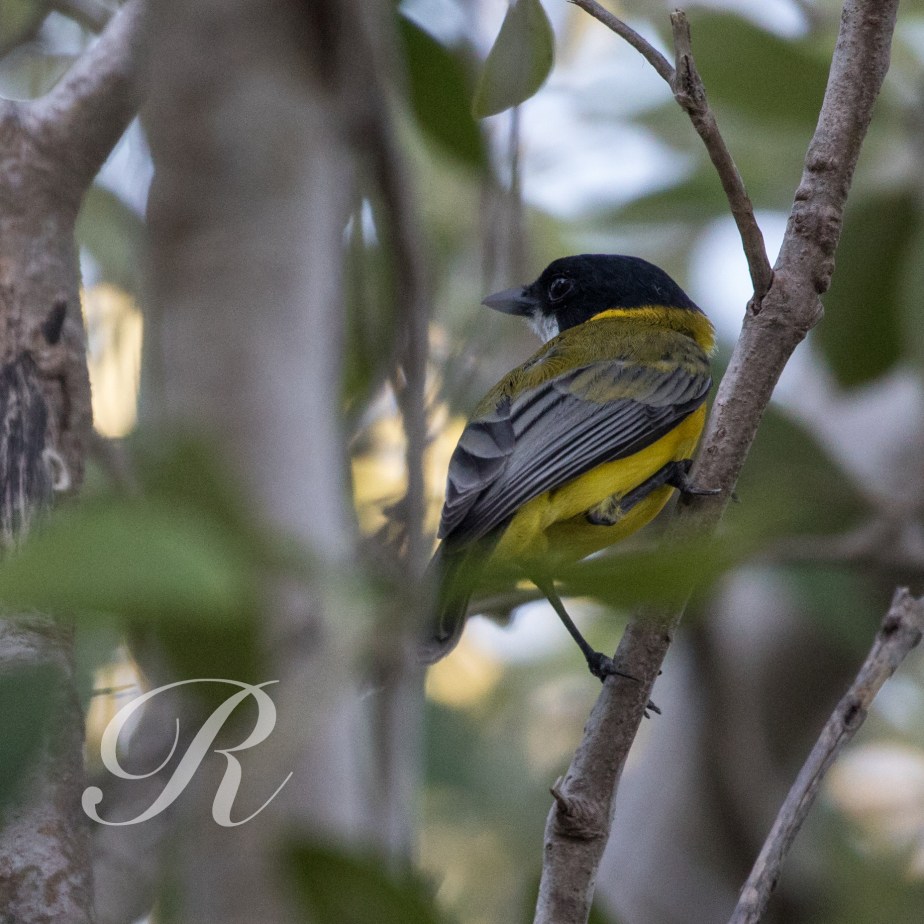
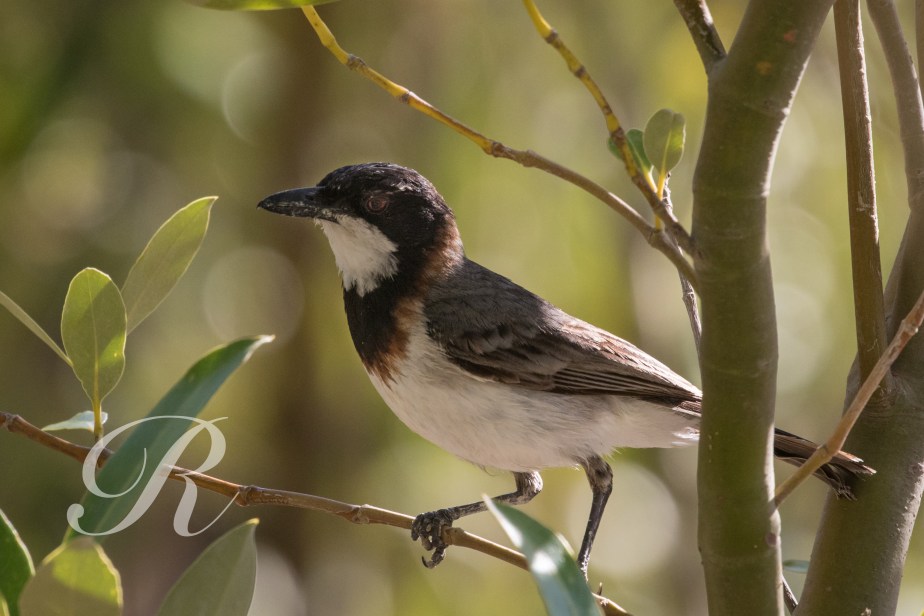
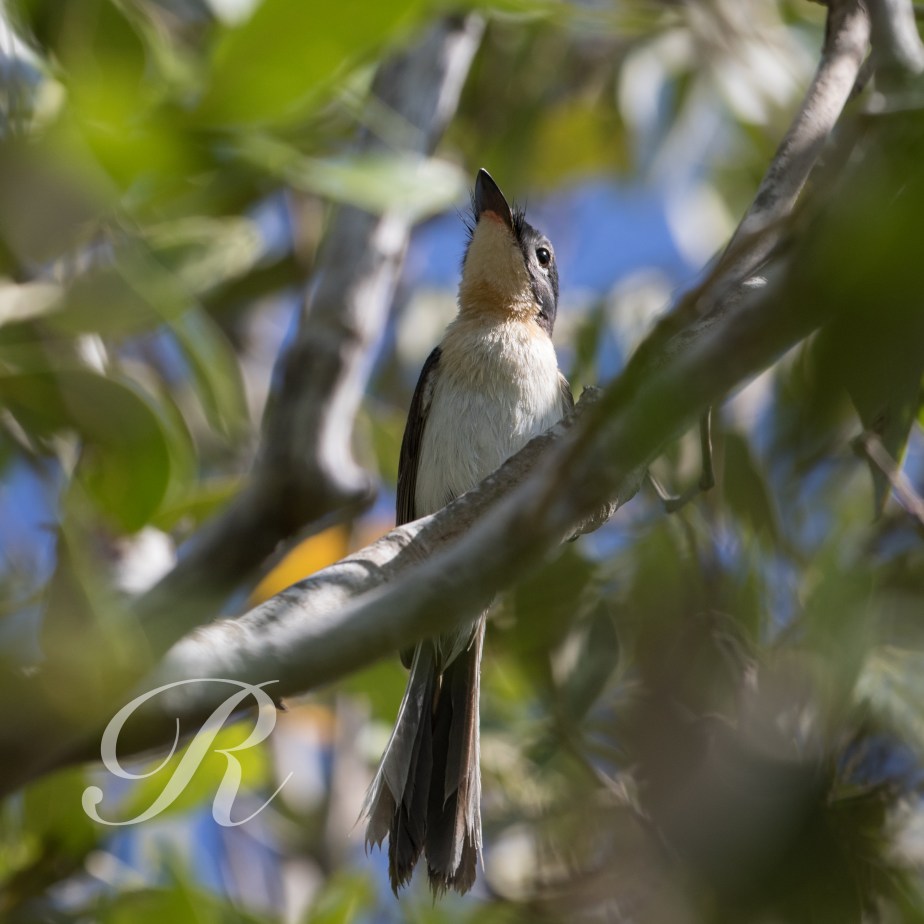
A couple of the Pachycephalidae are mangrove specialists, the Mangrove Golden Whistler and the White-breasted Whistler …

Mangrove Golden Whistler
White-breasted Whistler

Both very handsome birds.

The Honeyeaters are represented by these two …

Red-headed Honeyeater
Brown Honeyeater

The Red-headed is always found in or near mangroves, the Brown is found in a much wider range of habitats but is common in the mangroves.

Broad-billed Flycatcher

Nicely posed to show us how it got its name, the Broad-billed Flycatcher will wander into adjacent Melaleuca woodland but is essentially a mangrove species.

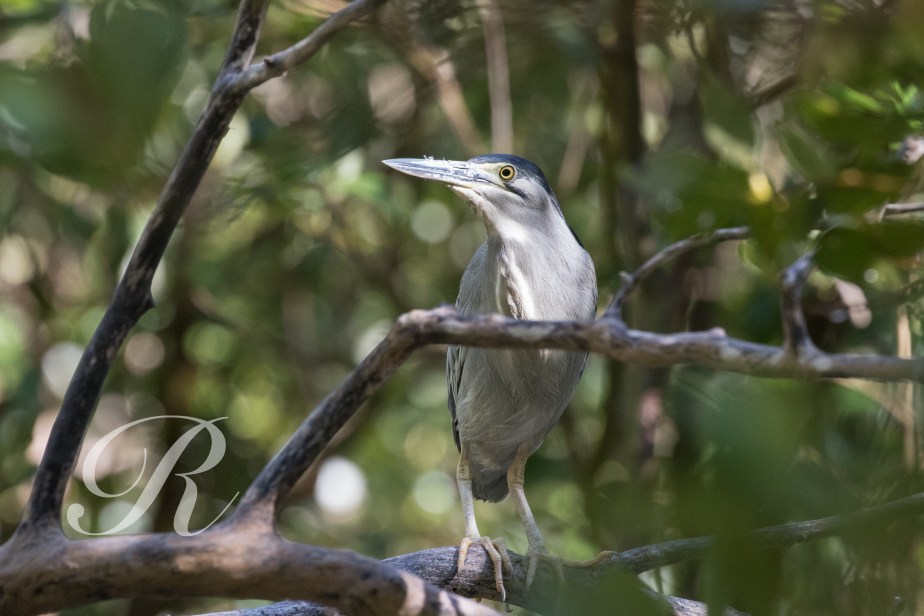
The tidal zone provides a living for the Striated Heron but it nests in the mangroves …

Striated Heron

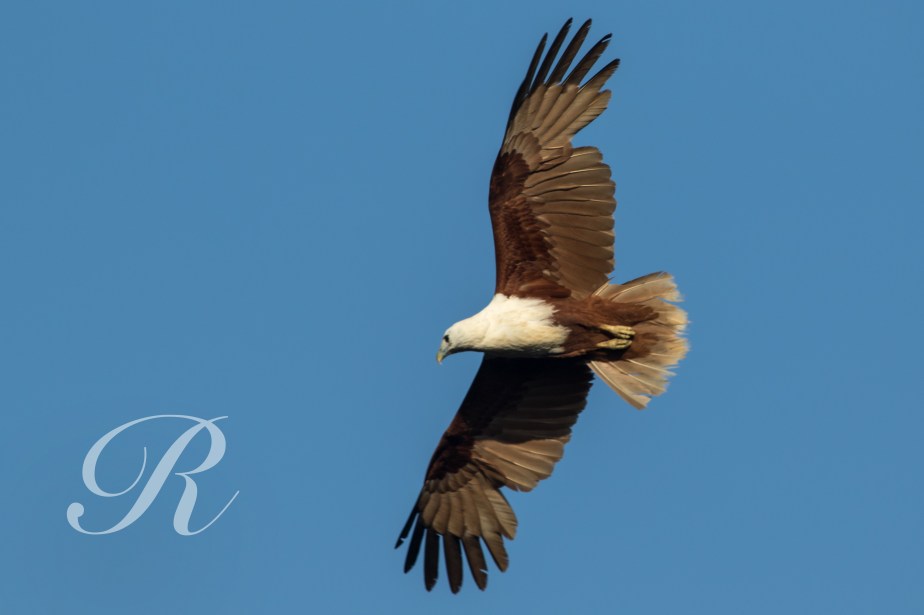
And circling above the mangroves, the Brahminy Kite.

Brahminy Kite

Broome, Here We Are …

It’s warm, currently 37°C at the airport.

We flew Qantas, they boarded on time, took off on time, landed a few minutes early and didn’t lose our luggage. Good job, Qantas.

But … they messed up our veggie breakfast. We got one instead of two. It was an ommlette. Had Gayle needed to do emergency repairs to a shoe it would have come in handy as a temporary sole. We didn’t know whether to complain about not getting a meal or getting a meal.

We’re staying at a house with a large Pulp Fiction poster on the verandah. Very nice accommodation.

We wasted no time heading for the Port, the Sewage ponds and the town mangroves. Very nice new bird hide at the sewage ponds.

Isn’t that what everyone does when they visit Broome?

Bigger than Texas …

I’m tired out from all this travel. Need a holiday. Where to?

Western Australia perhaps. There are 2.646 million square kilometres to get lost in and just 2.6 million people to share it with. That’s almost three times the size of  Texas which is a mere 696,241 square kilometres. Texas is a little crowded though with more than ten times as many people (nearly 28 million).

So, it’s off to Broome, a favorite stamping ground. You can read about my last visit while you wait for me to share this visit.

Just click <HERE>

Ecclesiastes 3:1 …

The change of seasons in Victoria is far less dramatic than in the US or UK. There as summer fades the leaves change colour and a big proportion of breeding birds head south for winter. An influx of winter birds take refuge from what will soon be a snow-covered landmass further north.

Here autumn is a bit of a flop. The plants tend to be evergreen and there is no major landmass to the south to provide us with a winter influx. Antarctica doesn’t have much to start with. Tasmania does its best for us with a couple of parrot species. New Zealand sends us a tern and a shorebird.

But spring is everything it should be. The wild flowers bring some colour. The Superb Fairywrens take on their breeding plumage. Bird activity and numbers increase.

Our Clamorous Reedwarblers arrived the other day and a big flock of White-browed Woodswallows has passed through.

Superb Fairywren
Waxlip Orchid
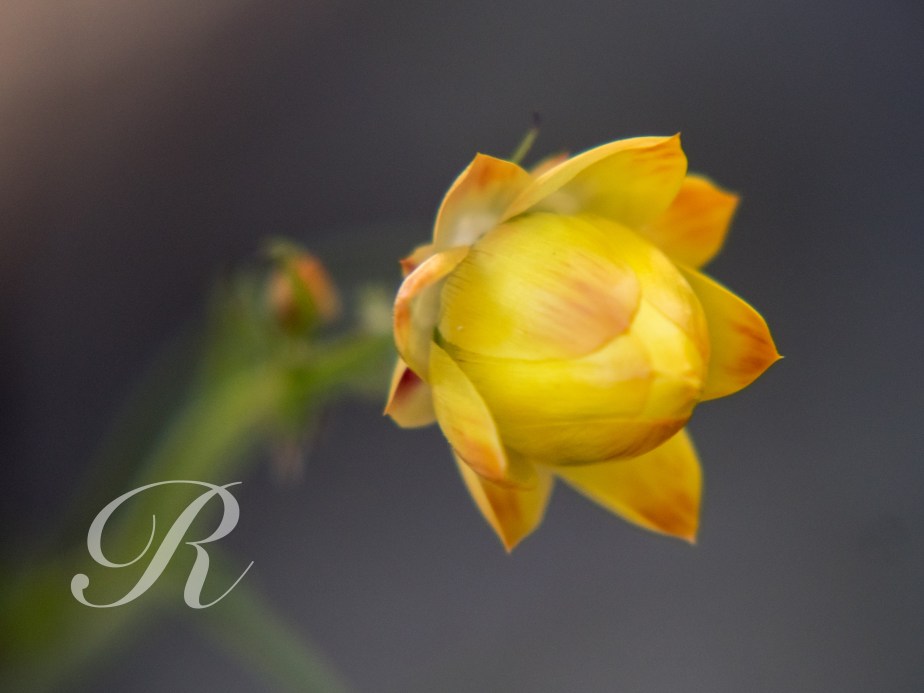
Sticky Everlasting
Sticky Everlasting
White-browed Woodswallow

Home Again, Home Again …

The three days in London flew past. Time, too soon, to fly home to Australia.

In doing my research for the historical context of my account I came across an interesting map that I didn’t use but is both interesting and amusing, the Roman Roads of Britain by Sasha Trubetskoy …

Quoting myself here …

Around AD 410 rule from Rome came to an end. The Angles and Saxons were invading Britain, the Visigoths were besieging Rome. Paganism was the new thing. Except in Ireland where the Celts had proven quite resistant to Roman rule but had adopted Christianity.

Gives the impression that Christianity was flourishing in Ireland before Roman rule in Britain had faded. This is incorrect. As the pagan Angles and Saxons forced themselves into Britain Christianity retreated into Wales from where it made its way across the Irish Sea from AD 431 on.

Some sources give the impression that Celtic practice was vastly different from the Roman. This is ascribed to the influence of Coptic Christianity of the time which was more monastic and ascetic rather than congregational. The devout retreated from the general community rather than live within it and gather at church on Sunday. In Egypt they tended to take themselves off into the desert. There are quite a few place names in Ireland that include Dysart which might indicate proximity to one of these early monasteries. (See sacredconnections for example).

Other sources suggest that the differences weren’t great, although they did come to differ in the calculation of Easter.

After the reintroduction of Christianity to England around AD 600 until the Norman conquest 1066 we have four and a half centuries with no churches to show for it. Recycling me again …

Until the Norman’s popularised the practice of building with stone, churches in Britain had been mainly timber and thatch affairs. None has survived to the present day. So 1066 marks the beginning of church architecture in Britain …

The Romans in Britain had built in stone, not only roads and walls but substantial villas as well. Christians elsewhere were building in stone such as the magnificent Hagia Sophia in Istanbul dating from AD 537. Why not the Anglo-Saxons?

Mea culpa, I repeated the popularly held oversimplification that there are no pre-Norman churches remaining in Britain. There aren’t too many in their original state but there are a few.

This is perhaps the finest of them. It is Escomb church from the far north-east of England. The photo is taken from the web site greatenglishchurches with permission from Lionel Wall the author. It was built somewhere around AD 680.

A few other examples exist but most have been modified extensively.

Anyone planning a visit to England that has an interest in the great parish churches would do well to browse this site. It’s a beauty.

Escomb has gone on my bucket list, its not far from Durham so I can combine it with a visit to Durham Cathedral and the Oriental Museum at Durham University (which was called the Gulbenkian Museum last time I was there).

Take the Ermine line from Londinium, change at Petuaria …

Naturally …

Where my interest in nature came from is anybody’s guess, none of my family shared in it. It was evident very early, by age eight I was off on my own making lists of the birds I came across. Whipps Cross was my patch.

When I was older and got a bike I could venture further afield. I tended to concentrate on larger birds, I didn’t own any binoculars until much later.

I counted it a particularly successful outing if I managed to see a Jay or a Great Crested Grebe.

Great Crested Grebe

So, naturally, I managed to fit a little birding in between seeing the sights of London, starting with Whipps Cross where I saw both a Jay and a Great Crested Grebe plus a couple of birds that were not present in my young days, Little Egret and Egyptian Goose. Interestingly I didn’t come across Chaffinch or Yellowhammer.

Little Egret
Egyptian Goose

Other spots that I visited included Fisher’s Green near Waltham Abbey. This was a place that I used to fish at. It’s changed a great deal since then. Some old powder mills are gone. Gravel extraction has produced extensive shallow lakes. It’s now a great place to see water birds and even an otter if you’re very lucky.

Another old favourite was the Lea Valley reservoirs running from the back of Hackney Marshes out to Tottenham. Arriving there I found that Europe’s most extensive urban wetland was in development and would open October 20th. The place where I saw my first Smew was being recycled as Walthamstow Wetlands.

Although it wasn’t yet open it wasn’t all that closed either so I found my way in and had a wander and found perhaps the most exciting bird of the UK trip …

In flight it showed triangular white patches at the base of the tail. The photo shows the patterned plumage and the white supercilium. It’s a Whinchat, exciting because quite unexpected on the outskirts of London. It’s a summer visitor to Britain, I may just have been lucky to see it as it made its migration southwards.

But it’s not all about the novel or the rare. It’s nice to spend time with old friends.

Mute Swan
Mute Swan
Grey Heron

Three Mills …

Waltham Abbey stands on the bank of the River Lea. In 1577 a lock was constructed nearby. It was the first of a series that improved the river for barge transport. If you point your barge down stream you will pass through Enfield Lock, Ponders End, Edmonton, Chingford, Tottenham, Walthamstow, Upper Clapton, Leyton, Hackney Wick, Stratford, Bromley-by-Bow (past Fish Island), Poplar, Canning Town and finally Leamouth where it meets the River Thames.

You will also pass through much of my family history. Just before you go under the bridge at Leabridge Road you will have Hackney Marshes on your left. In the days when Tottenham Hotspurs were semipro my Grandfather played for them here. My father and then I too played football here although not for such illustrious teams. One of the most memorable spectacles of my young life occurred here. I was playing cricket for my school when Porter’s Paints caught fire. Drums of solvent were exploding and flying into the sky all afternoon. New Year’s Eve has nothing on it.

Shortly after passing under the bridge you will pass the site of a wood yard that occupied one side of Rock Road. Half my family occupied the other side of the road.The timber came on horse drawn barges. On hot days my father and uncles and aunt would swim in the Lea.

It was here in 1952, at a street party to celebrate the coronation of Queen Elizabeth ll that I won half a crown in a fancy dress contest. My mother had dressed me as Wee Willie Winkie, I was running around waving a candle stick in a holder. Rock Road and the wood yard are long gone in the process of slum clearance.

At Hackney Wick you will pass my first home. We lived upstairs in two rooms, there was no bathroom. The toilet was in the back yard. We shared it with the occupants of downstairs. In the London I grew up in there was an adventure playground in every street courtesy of the Germans. “I’ll be playing in the bomb site, mum”.

On the corner of Wick Road there was a pub, The Tiger. It was hit by the last bomb of the war. My uncle was standing at the bar. That last bomb fell in more places and killed more people than any other bomb of the war. That area too has been demolished and rebuilt.

But keep going, the Lea is becoming tidal now. And we’ll stop at the Three Mills, Bromley-by-bow. Two are still standing, this is the older …

It stands astride the river. It was built in 1776. There are two tides a day that filled a 57 acre mill pond, when the ebb started to run the water turned water wheels beneath the building which drove the mill stones and also did the lifting that took the grain up to the top floor. Depending on the height of the tides the mill would operate seven or eight hours each day.

The grain would come by cart or by barge, the flat stones were there so that cart wheels needn’t run over the cobbles.

The miller’s house is to the right running out of the photo. There is no communicating door between the two for the very simple reason that a naked flame would have led to a massive conflagration. Candles were OK in the house but open a door to the mill and disaster would have ensued.

My good friend Kathy is a volunteer at the mill. Her friend Tony gave me a very comprehensive and informative private tour. The paying public do not get to see the roof …

The working day was dictated by the tide not the clock. Without any artificial light it was largely managed by ear. The control room is on a lower level, an ingenious arrangement of levers and ropes controlled most of what happened on the floors above.

There have been tidal mills on the Lea throughout recorded history. The Domesday Book, commissioned by William the Conqueror to take stock of his new realm, records nine mills along this section, although it is uncertain if this meant nine pairs of stones or nine buildings perhaps holding even more pairs.

The flour produced traditionally went to the bakers of Stratford-atte-Bow who sold their bread in the City of London. By 1776 there was a more valuable commodity than bread. The output of this mill mainly went into gin production. Hogarth would have been horrified.


As you can see the building behind the stone facade is wood. The stresses imposed by the milling machinery were enormous. The carpentry owes more to ship building than residential housing.