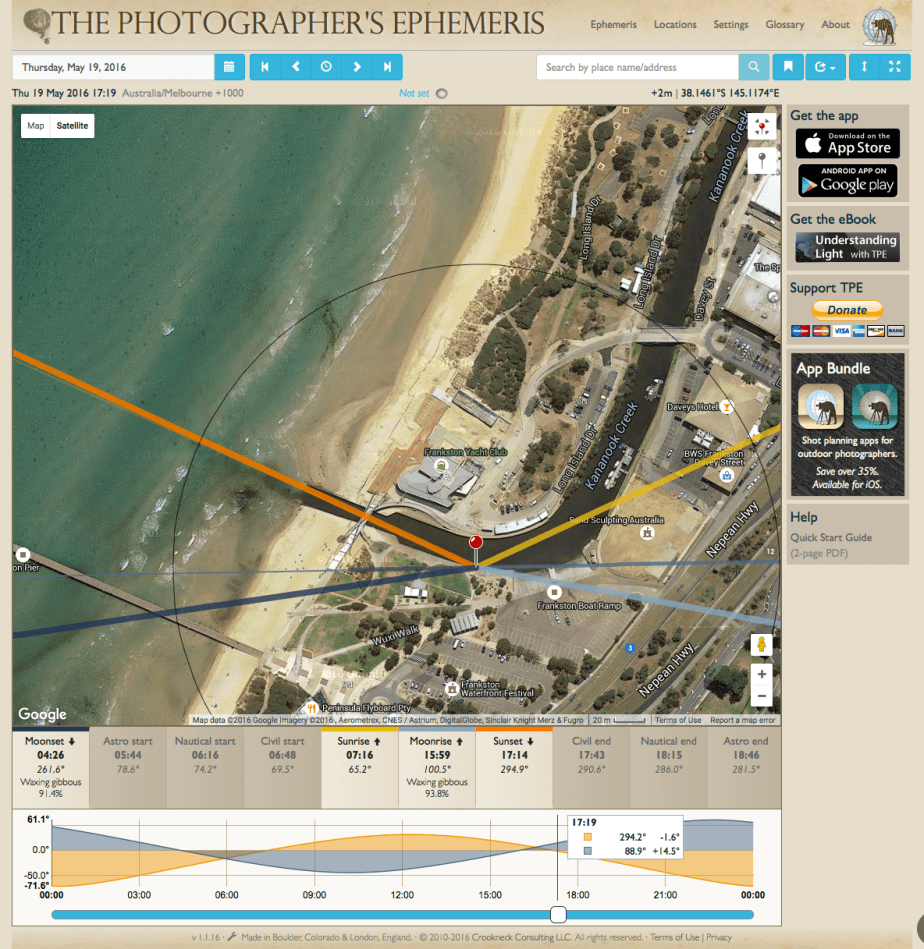
The Photographer’s Ephemeris …

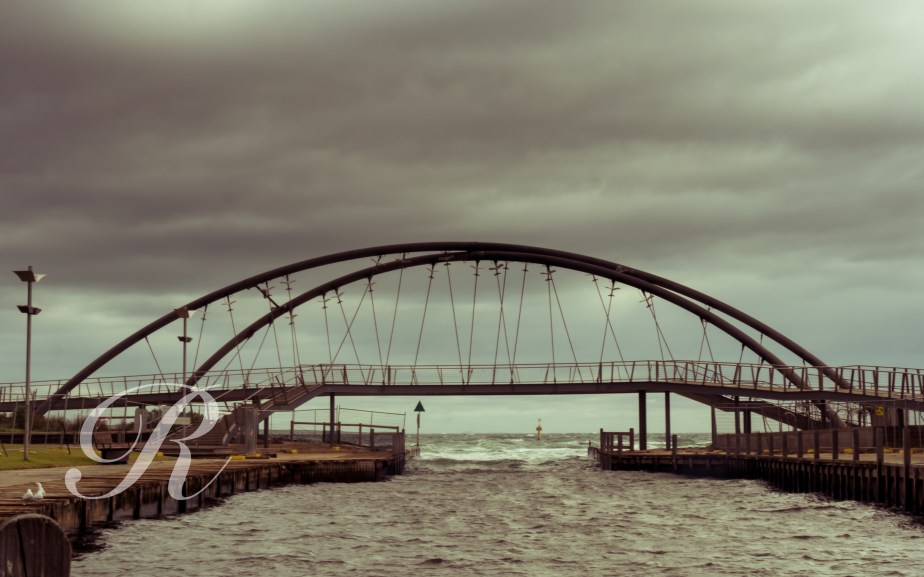
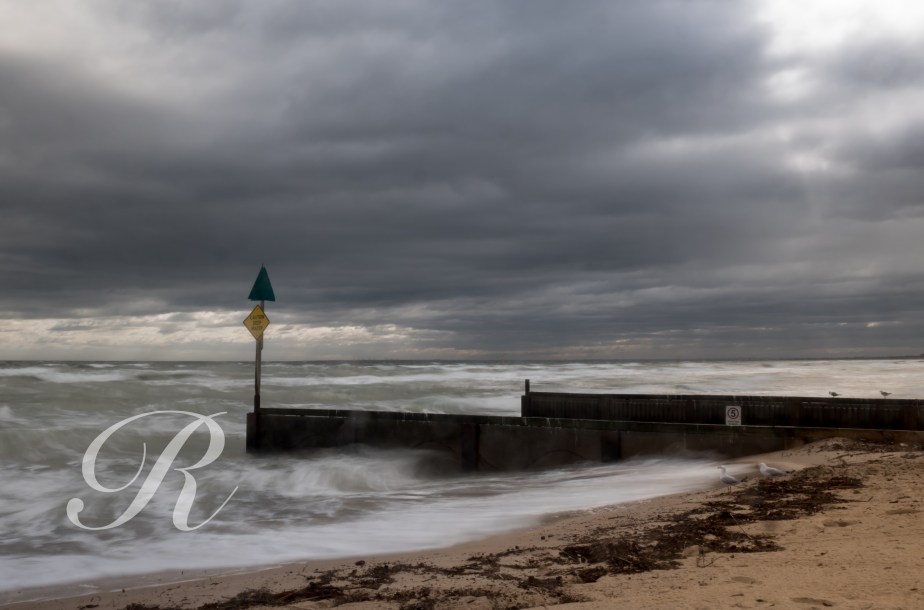
I’m in the big smoke for a few days. The weather was fairly wild the other day so I headed to Frankston to see what the waves were doing.

They were trying to knock down the pier …

bobmcgee.live

No one was game enough to fish off the end.

bobmcgee.live

The bridge over Kananook Creek is something of a local landmark …

bobmcgee.live

Which brings me finally to the point. The Photographer’s Ephemeris will show you where the sun and moon will rise and set as well as where they will be any time in between and as it happened that very day the sun would set right under the bridge …

Screen Shot 2016-05-21 at 1.24.58 pm

The pin marks the spot where the camera was situated for the photo above it. The orange line shows the direction of the sun at sunset which would be at 1714. That, I thought, would convert an ordinary photo into something more interesting.

I was on the spot at 1714. It was pouring with rain, the sun wasn’t even represented by a glow through the cloud.

Writer’s block …

Writing up the big trip to Japan was easy. I finished just as my monthly internet allotment ran out with two weeks to wait until I could get back into it. By that time I had lost the urge.

Why don’t I get unlimited access, you ask, anyone who can afford to go to Japan can surely buy a bit more broadband. The explanation is simple. I live in the bush. The block I live on has no mobile service to speak of, sometimes you can find a bar or two half way down the drive. A copper wire snakes across the countryside from the Rathscar Telephone Exchange which is housed in a small corrugated iron shed and not ADSL capable, nor is there a plan to ever make it so. The internet and I communicate by satellite. I am only permitted so much and this measly amount must be shared with my dearly beloved and her Facebook fan club.

Get used to it, Robert, you live in the Australian Bush. Japan is so exciting. There is a reason for this … you live in the Australian Bush. If you lived in Japan the Australian Bush would be exciting. So snap out of it, most of your followers don’t live in the Australian Bush so tell them what it’s like.

Well, it’s nice, I like it.

P1120756-Pano

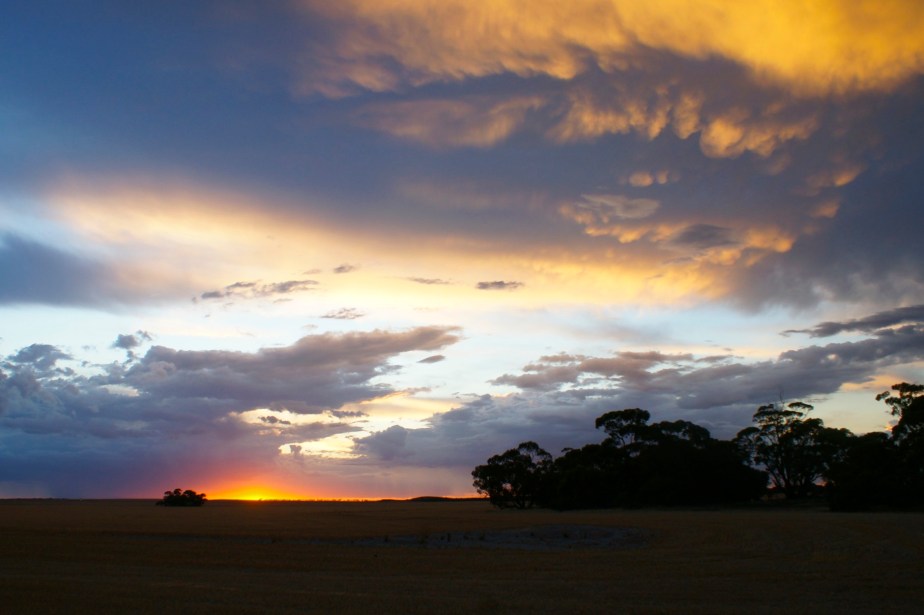
This was the view from my front gate yesterday. If you click on it you will get a better look, the back arrow on your browser brings you back here. I took it because of the cloud. We don’t see a lot of cloud. We had 11mm of rain overnight. Winter crops have just gone in, people had put it off as long as they could because of the long dry summer. That 11mm will decrease the suicide rate around here considerably.

The shops are 15km away. A pizza is a 30km round trip. I bake my own bread and make my own pizza bases. The place is alive with birds. There were kangaroos in my back yard this morning.

Do I sound excited? Well, I’m trying. Let me tell you all about baking bread.


Back down to earth …

Sunny Victoria, Australia.

Quite a change from Hokkaido but home in time to head to Terrick Terrick National Park to lend a helping hand in some fauna monitoring.

The Terricks are in the northwest of Victoria, 225 km from Melbourne, 60 km north of Bendigo. Some granite outcrops had got in the way of agricultural development so some forest had survived. This was the core of a state park and it preserves some very nice, revegetating Calitris woodland. North of that there is some marginal grazing country that had been lightly stocked and never cropped. It is the principle refuge of Victoria’s remaining Plains Wanderers, cute little birds whose closest relatives are the seed snipes of South America. Some of this country has been added to the park with a view to managing it for the benefit of our cute but endangered little birds. And somewhere along the journey the enlarged park became a National Park.

The management plan for the grassland seemed an excellent one, I am sure the Plains Wanderers would have been thrilled with it. Sadly Parks Victoria have done a woeful job of sticking to it. Still, the Wanderers are hanging on, just.

Finding them is a night-time task. They are not nocturnal but their eyes show up well in a spotlight and they tend to run rather than fly, they can be caught with a hand net, banded and released. Volunteering has its rewards …

Plains Wanderer
Plains Wanderer

And on a warm night the grassland can turn up other delights …

Fat tailed Dunnart
Fat tailed Dunnart
Eastern Scaly foot
Eastern Scaly foot

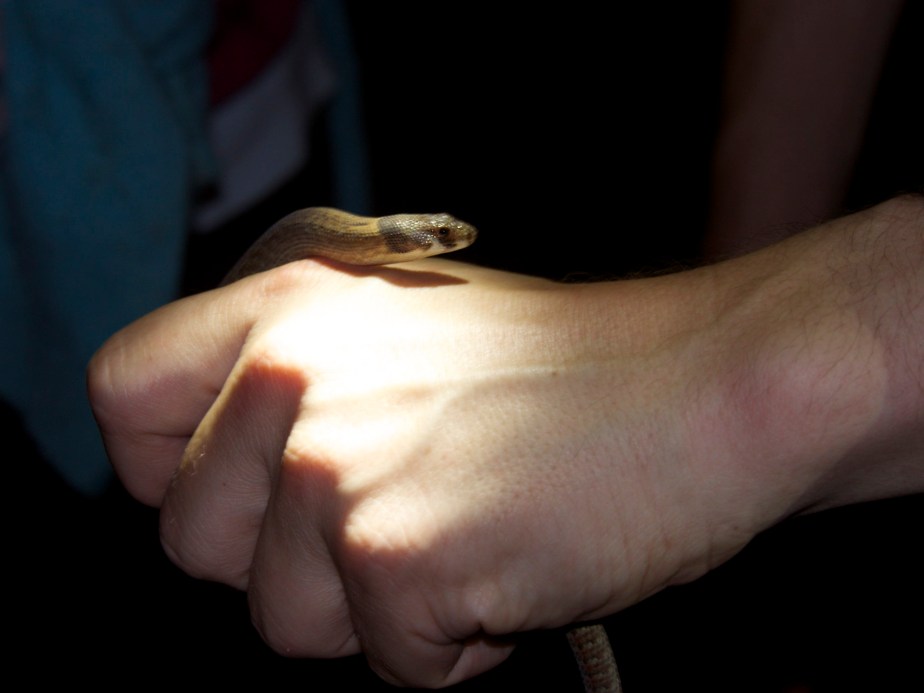
And whilst some are a handful of cute don’t try it with this one, it might result in being very unwell …

Curl Snake
Curl Snake

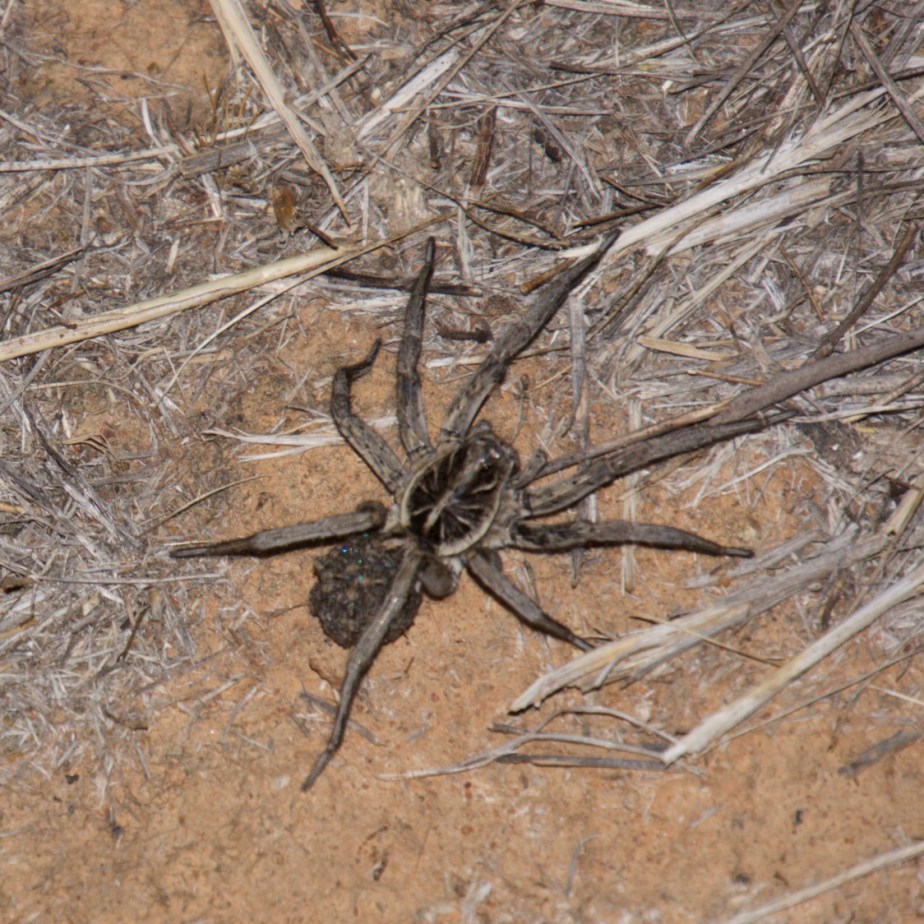
and most people would prefer not to handle this one either …

P1090620

but they are cute in their own way, the little blue dots are the eye reflections of some of its babies that are riding on its back.

A Day Around Brisbane …

I had some time spare in Brisbane, rented a car and headed out with the binoculars.

Birds Queensland and the Brisbane City Council have produced a very useful little brochure of good birding spots which can be down loaded <HERE>.

I headed north and spent most of my time in the vicinity of Nudgee Beach and Boondall Wetlands then headed west to the Gap and Enoggera Reservoir.

GyBB

LaKo

A productive day and I even found out which way to head for my next stop …

Japan

The New Camera …

I’ve had it for two days now and I seem to be getting the hang of it …

Golden-headed Cisticola

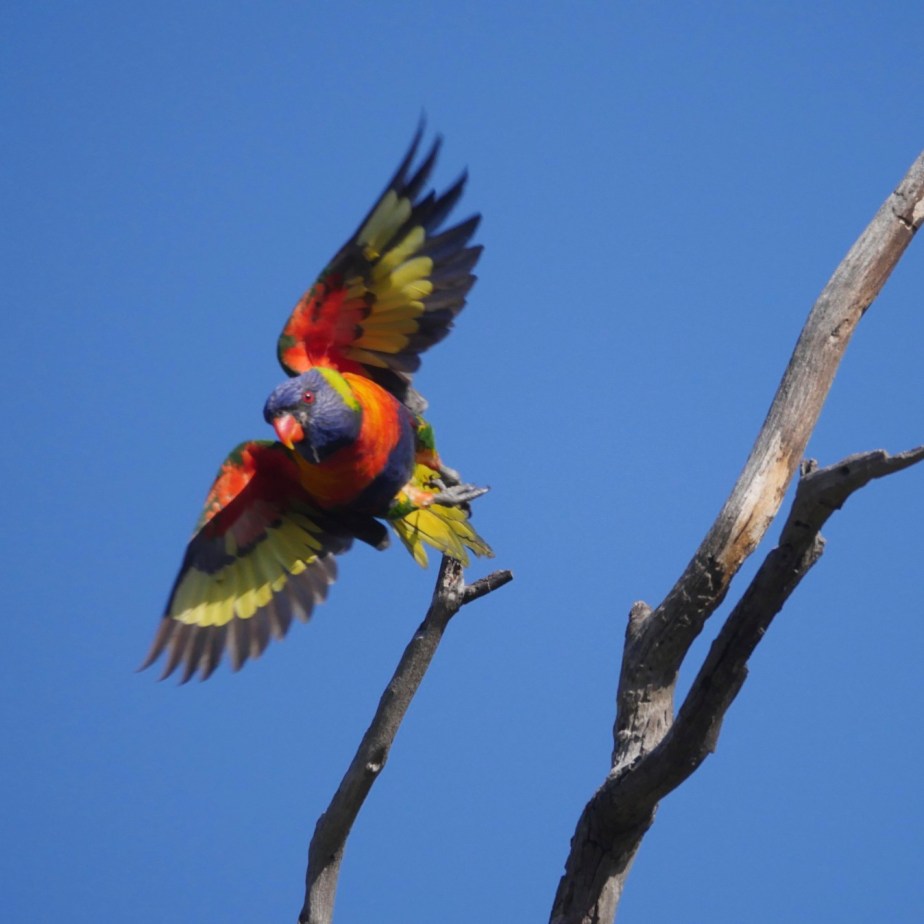
I am in Melbourne for a few days so the first morning I headed to Ricketts Point on Port Phillip Bay, one of my favorite spots. A lot of birds roost on the rocks but you do need to get there early because a crowd will build up. I was there early … and the first thing to try was birds in flight in low light. Why start with a bowl of fruit?

P1010092

It passed that test reasonably well.

As the light improved some colour crept into the show.

P1010308

P1010305

P1010469

By which time it was time for a coffee from the tea house.

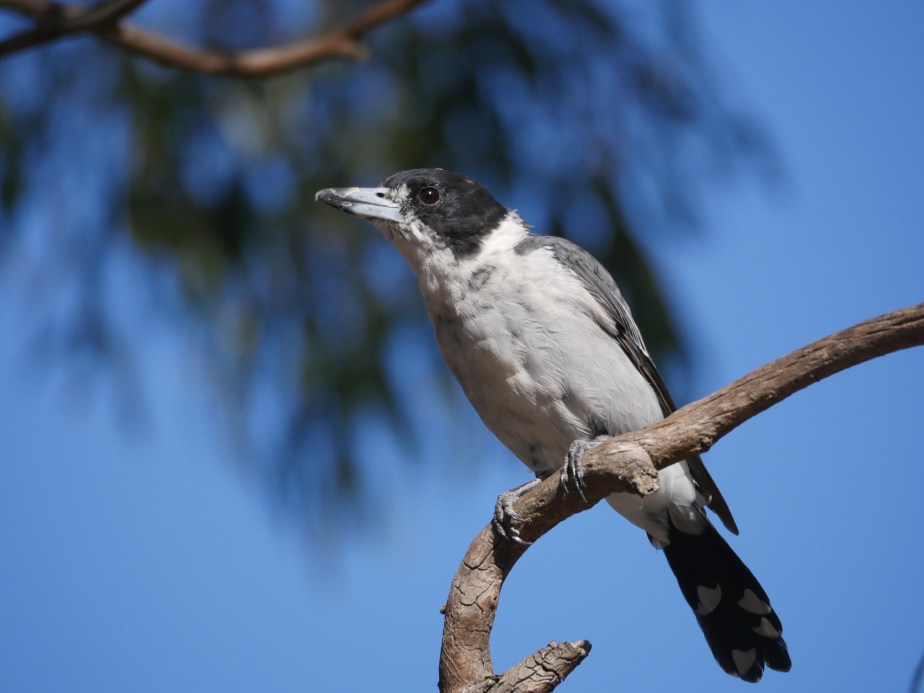
The next morning I was at Braeside Park, another favorite place. That’s where I found the cisticola at the top. I also found this Grey Butcherbird

Grey Butcherbird

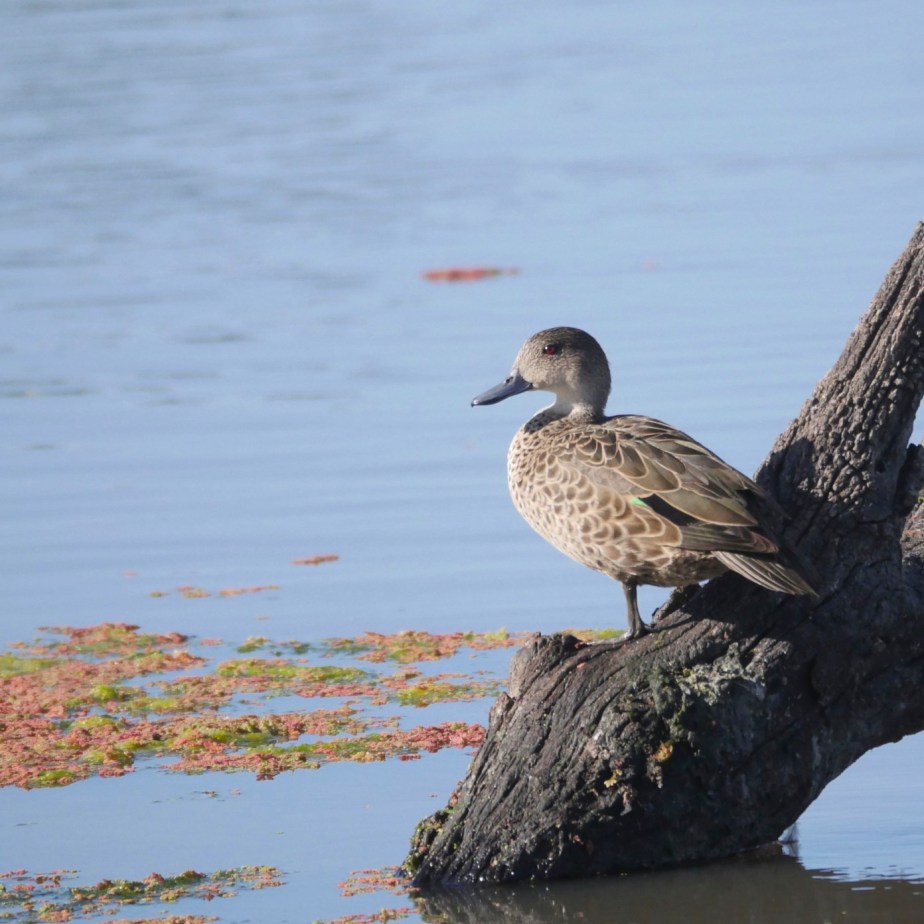
and a Grey Teal looking into the morning sun.

Grey Teal

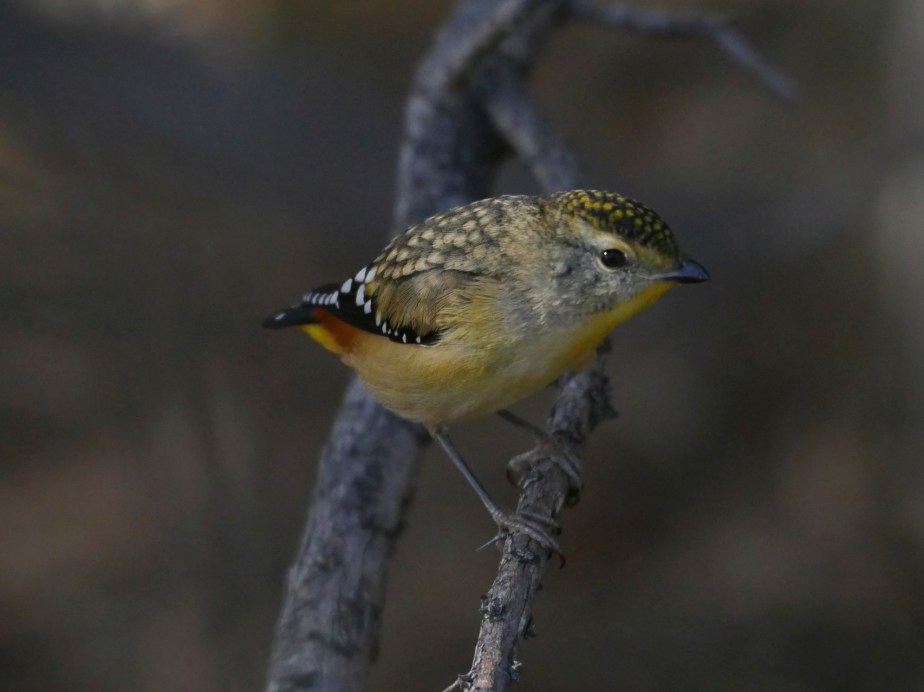
As the sun climbed higher I moved into the shade and found this little jewel, a Spotted Pardalote.

P1010488

So the camera? A Lumix GH4. Early impressions are extremely favorable. It will get quite a work out in the next few weeks after that I will write a review.

Mark my words …

For just about everything that Mark Twain is said to have said there is a Twain scholar to say he didn’t say it. For instance that thing about golf being the opiate of the masses, he never said that.

Not far from me is the Maryborough railway station which Twain thought so grand that he said “Maryborough, a station with a town attached”. It’s pretty certain that’s another of the things he didn’t say but he did say this …

Don’t you overlook that Maryborough station, if you take an interest in governmental curiosities. Why, you can put the whole population of Maryborough into it, and give them a sofa apiece, and have room for more.

He visited the town in 1895 during a year long world tour at a time when he was deeply in debt in the US. It invites comparisons with our own Clive Palmer, up to his eyes in debt and living it up. However Twain’s was a lecture tour intended to raise the funds to repay his debts. Which to his enormous credit he did, despite the fact that he was protected by the bankruptcy laws and could have walked away from them. So no comparison after all.

The station is a bit of a curiosity. It’s part of popular local mythology that it was actually meant to be built elsewhere. There is a Maryborough in Queensland which still causes confusion. I’ve also been told with all apparent seriousness that Madras has a little station and Maryborough a huge one because the plans were accidentally switched. In reality it was erected just as intended, just where intended at a very important intersection of various country rail lines.

It was begun in 1890, completed in 1891. Passenger services stopped in 1993 but resumed in 2010. I took my camera along recently when an old diesel locomotive brought a train full of enthusiasts to town …

M S F

MBSP

M S Pl

Loco

Rain …

It has been a dry old time in Victoria’s Goldfields. The wettest day last year was on January 18th when we were deluged with 49mm (2 inches). We had had 21mm nine days earlier. Since then it seemed to have forgotten how to rain. My neighbours are hand feeding sheep and, unless they have a good bore, are carting water every day to keep their stock alive. It’s hard work at the hottest time of the year. Australia is, and always has been, a tough place when el Niño comes to visit.

Bare paddock

But there are wetter parts. The hills east of Melbourne are clothed in tall forest and in the gullies there are pockets of  genuine rainforest. Some cooler weather was forecast so what better time to visit. A few showers? Well, that would reduce the risk of bush fire. Fifty millimetres, could be uncomfortable in the tent.

I arrived in Australia in August many Augusts ago. I bought a sporty Mazda car with a rotary engine and I was keen to try it out. The ski season was in full swing, snow in Australia, not what I was expecting, must take a look. I took a long spin up the highway to just beyond Mansfield where the snow capped summit of Mount Buller could be seen. Wow. Where to now? I might add at this point, that in England, I had never had the opportunity to drive on a gravel road.

I consulted my brand new map of Victoria and found a road down the east side of Lake Eildon, through Jamieson, the A1 Mine Settlement, Woods Point and on to Marysville. From there it’s a shortish trip to the eastern suburbs of Melbourne. More interesting to make it a round trip, I thought, and set off.

The bitumen ran out. It was raining. It was getting late in the afternoon. It can’t be all that far, I thought.

Soon it was dark, the wind was howling, the rain was lashing down. I was traveling very slowly on a loose stony road that divided its time between climbing and descending steep hills and sharing  the valley bottom with a rapidly swelling river. The car was second hand, I hadn’t even checked whether I had a jack or a spare tyre. My way forward might be blocked by a fallen tree or the river in flood. So might my way back if I turned around. My heart was in my mouth. Jamieson to Marysville is 136 km (85 miles). Along the way a Wombat the size of a sheep wandered out into the road and stood looking at me. It could have been asking itself, “What the hell is he doing here?” Which is exactly what I was asking myself.

So there I was, a few days ago, camped at Woods Point, next to the Goulburn River, in the pouring rain. On the way there I had stopped to photograph the Noojee Trestle Bridge. A number of these fine old rail bridges survive, I find them very interesting …

Noojee Trestle

You can see that the area is much lusher than my neck of the woods, there’s even grass.

And tall trees …

Woods Point

it has crossed my mind that given my girth, if I was a tree I would be about a hundred metres tall.

Meanwhile, outside my tent, a very damp Flame Robin was playing in the puddles.
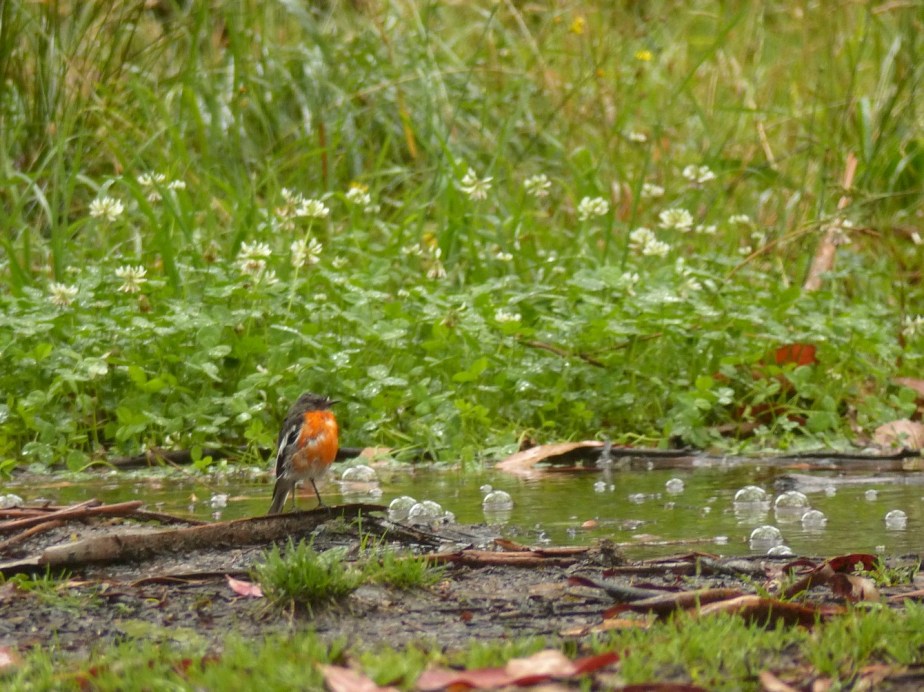
Wet Flame Robin

The next morning there was nothing more than light showers. A short walk turned up some wreckage …
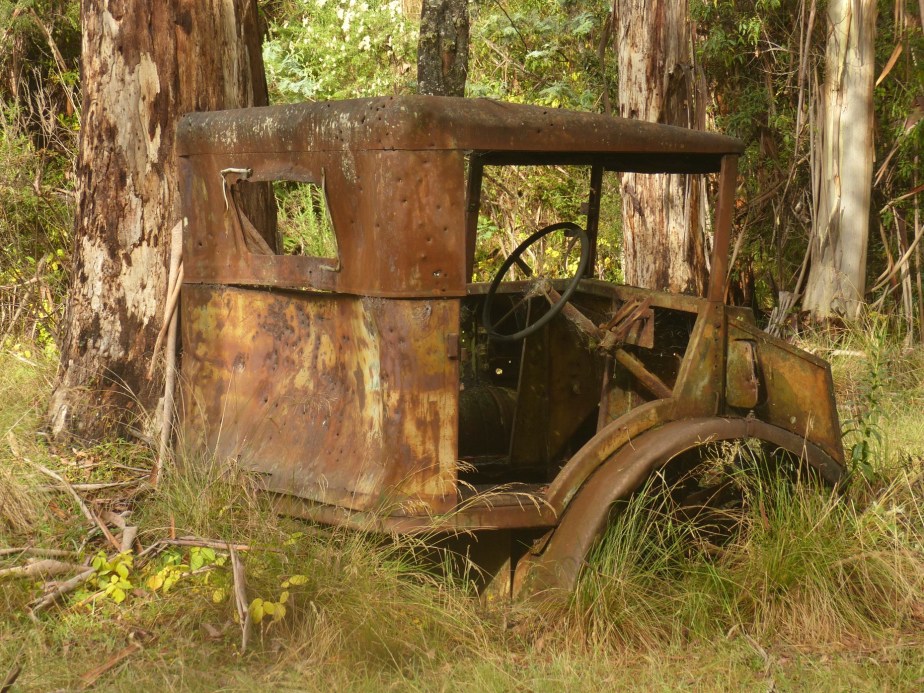
Old truck cabin

for a moment I thought it was my Mazda.

I added 20 more bird species to my year list, enjoyed recounting my first trip down this road and enjoyed the ride in my FJ Cruiser, too easy.

When I got home there was a very welcome 21mm in the rain gauge. May have to service the mower soon.

Echidna …

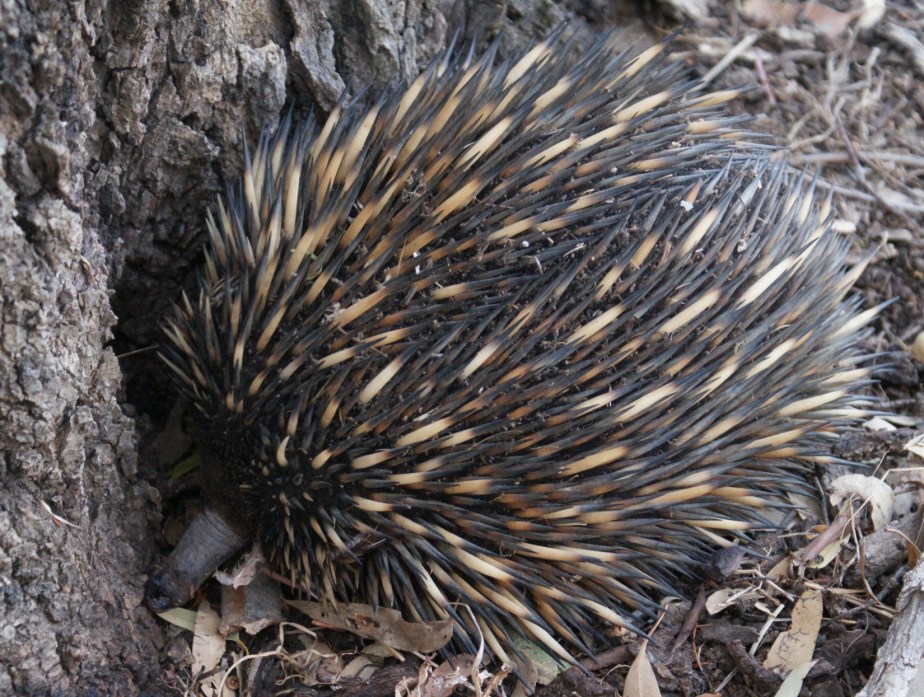
Echidna 1

They are found throughout Australia and you often come across them as they amble down the side of the road, the Short-beaked Echidna Tachyglossus aculeatus. I encountered this one last evening just outside my front gate. They can be active at any time of the day or night but when the weather is very hot they are more likely to be out and about in the cooler hours.

The moment they are disturbed they dig and very quickly they are a half buried ball of sharp prickles. To get these photographs I approached as quietly as I could then sat and waited until it got the confidence to move about.

They are mammals, they have a single lower jaw bone, hair, suckle their young on milk and maintain a warm body temperature. The class mammalia can be divided into three broad groups, monotremes, marsupials and the eutherians (often called placental mammals but some marsupials have a placenta). The echidna is a monotreme. It lays a single egg which it then carries around in a pouch. Yes, some marsupials have a placenta and some monotremes have a pouch, how confusing. When the egg hatches the baby stays in the pouch for about 50 more days.

Echidna 2

That long specialised snout has no teeth but the echidna is equipped with a long sticky tongue with which to catch ants, termites, beetle larvae and other soil invertebrates. Sharp claws serve not only to dig but also to tear apart rotting wood to get at the insects within. In light soils it often leaves a series of holes that indicate where it has been probing.

Echidna 3

They are usually encountered on their own but in the mating period (June – September) a train of hopeful males may be found following a single female.

There are three other echidnas living in New Guinea, all in a different genus, Zaglossus. Aboriginal rock art depicts a larger, longer beaked echidna that probably died out here about 5,000 years ago. According to David Andrew a museum specimen exists that was supposedly collected in the Kimberley in the early 20th century, so there is some very faint hope for the Long-beaked Echidna in Oz although the habitat in the Kimberley is very different from the New Guinea higher forests where Zaglossus bruijni lives mainly on earthworms.

The only other monotreme is the Platypus.

A Tale of Two Cities …

Not London and Paris but Warracknabeal and Brim.

They are not as far apart as London and Paris but the rivalry is just as intense and the Brim Silos have really heated it up.

You will find them out in the dry west of Victoria, sheep wheat country. Warracknabeal has a population of about 2 400 people, about half the population are descended from Harry Yambiak and are named Smith, Jones, Scott or Brown. The rest are named Avery. The second greatest moment in the town’s history was the birth of its most famous son, Nick Cave. The greatest moment was when he went to live somewhere else.

The Council thought that the town lacked a little zing so they came up with the notion of some civic art. What an achievement …

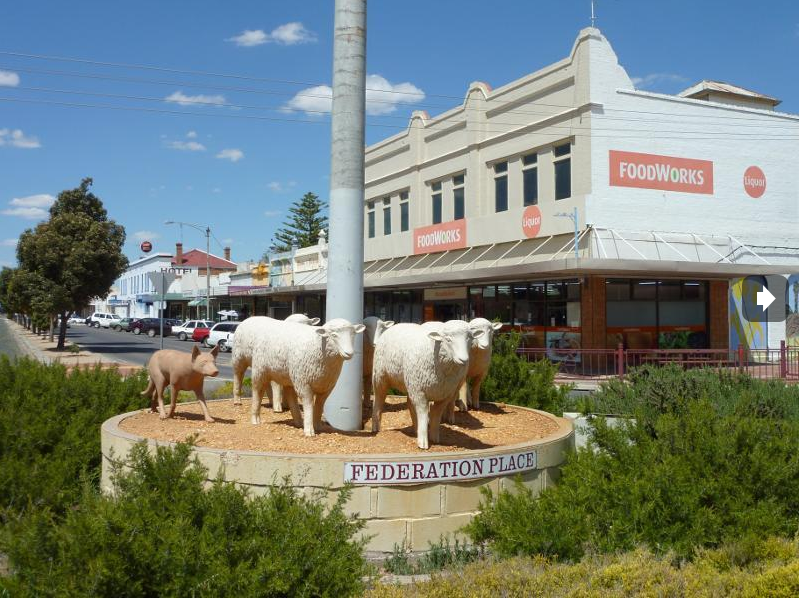
Waracka

It has never been accused of distracting passing drivers.

Twenty kilometres away is the little hamlet of Brim, population about 100 (261 at the last census but falling so fast 100 might be about right). The school closed in 2000, the pub closed in 2013. But when it comes to civic art they know how to do it …

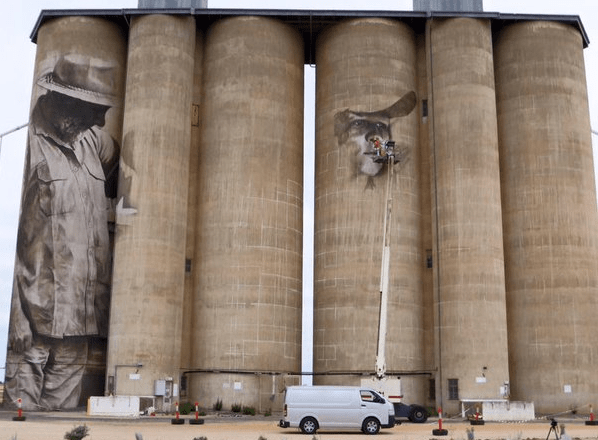
Brim I P

… on a grand scale. Now that it’s completed it is a traffic hazard, the signs are out on the highway, the silos are being so frequently photographed that the image must be wearing away pixel by pixel.

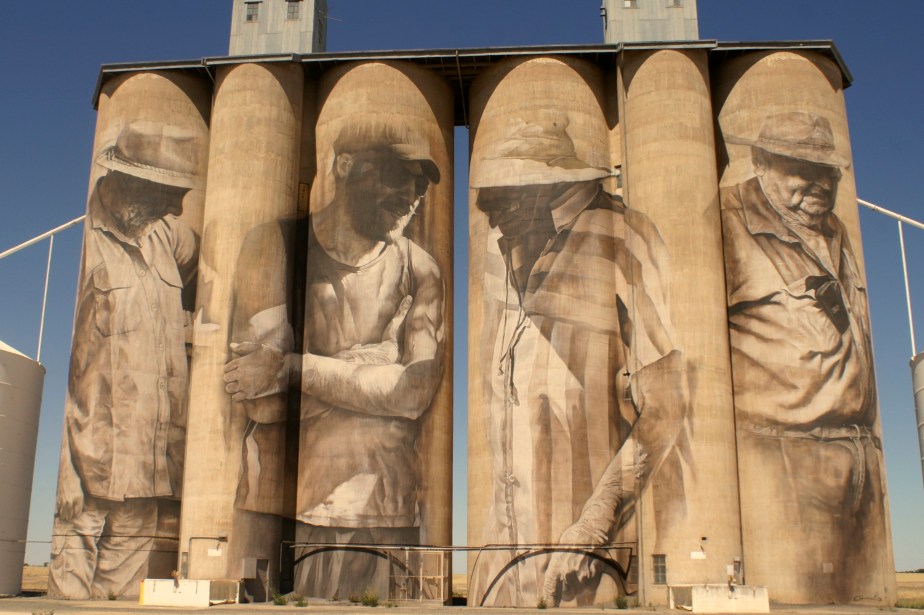
Brim Silo

The big story now is who are they? Are they real? The artist is a Queenslander, is that Joe Bjelke-Peterson? The official line is that they should not be seen as individuals but as representatives of the local folk. Fortunately my Warracknabeal correspondent is able to shed a little light on the matter. She has kindly provided the following photos.

Brim ll

From which we learn that the subjects are real and none of them are Joe Bjelke-Peterson.
Even before completion the people in Warracknabeal knew they were being shown up in a big way. Here are some that have driven over there to display their silo envy …
SiloEnvy

Footnote. If you have never heard of Nick Cave or Joe Bjelke-Peterson there is absolutely nothing to be gained by looking them up.

Another Day in the Desert …

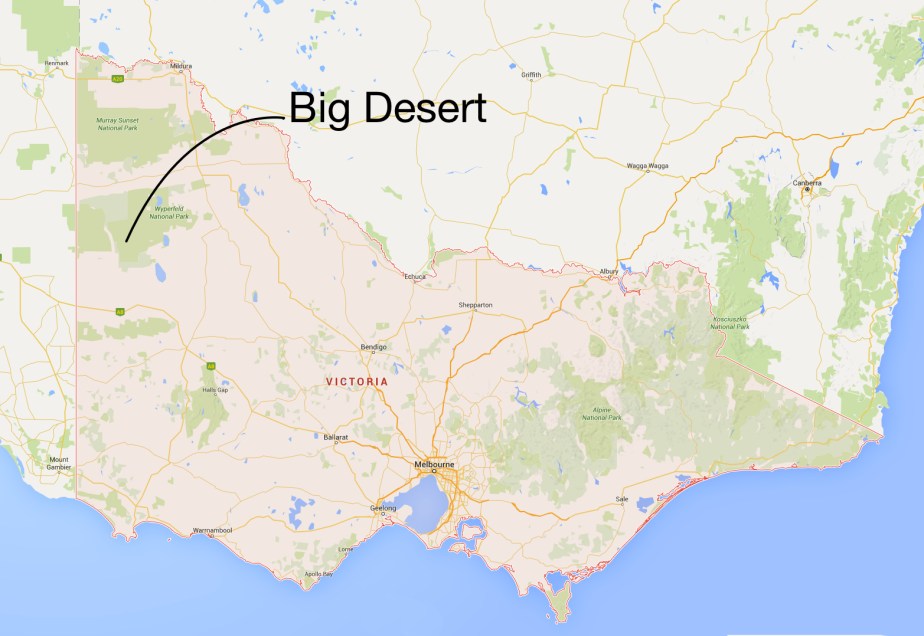
The south west of Victoria has a reasonable rainfall and fertile volcanic soils. Imaginatively named the Western District it is a rich agricultural area. Moving north rainfall diminishes and temperature increases. To the north of the Western District Victoria has its deserts. The sand was donated by South Australia during past ice ages brought by the  prevailing westerly winds.  These deposits are known as the Lowan sands. The Big Desert is in the middle, to the north is the Sunset Country, to the south the Little Desert. They are dry, they are hot in summer but they are all quite well vegetated.  Too well vegetated to be real deserts.

BigDesertLocale

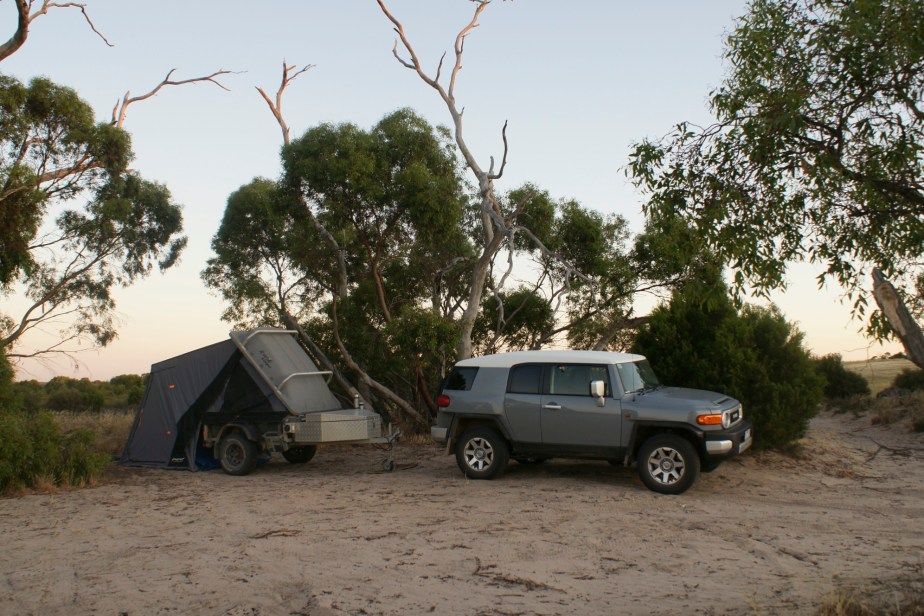
I thought the Big Desert would be a good place to try out the new FJ Cruiser on the sand. Here it is with my trusty Pod Camper on the edge of the desert.

Desert Edge

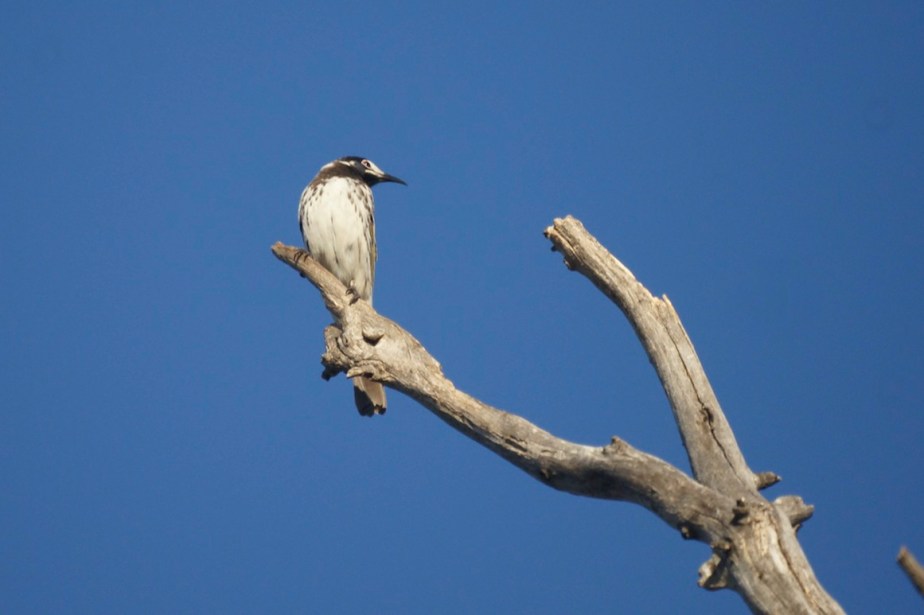
The next day was a hot one. Birds were fairly scarce except for a patch where the Mallee Eucalypts were just bursting with blossom. I took a seat close by and photographed the incoming flock. The White-fronted Honeyeaters came in good numbers …

White-fronted Honeyeater

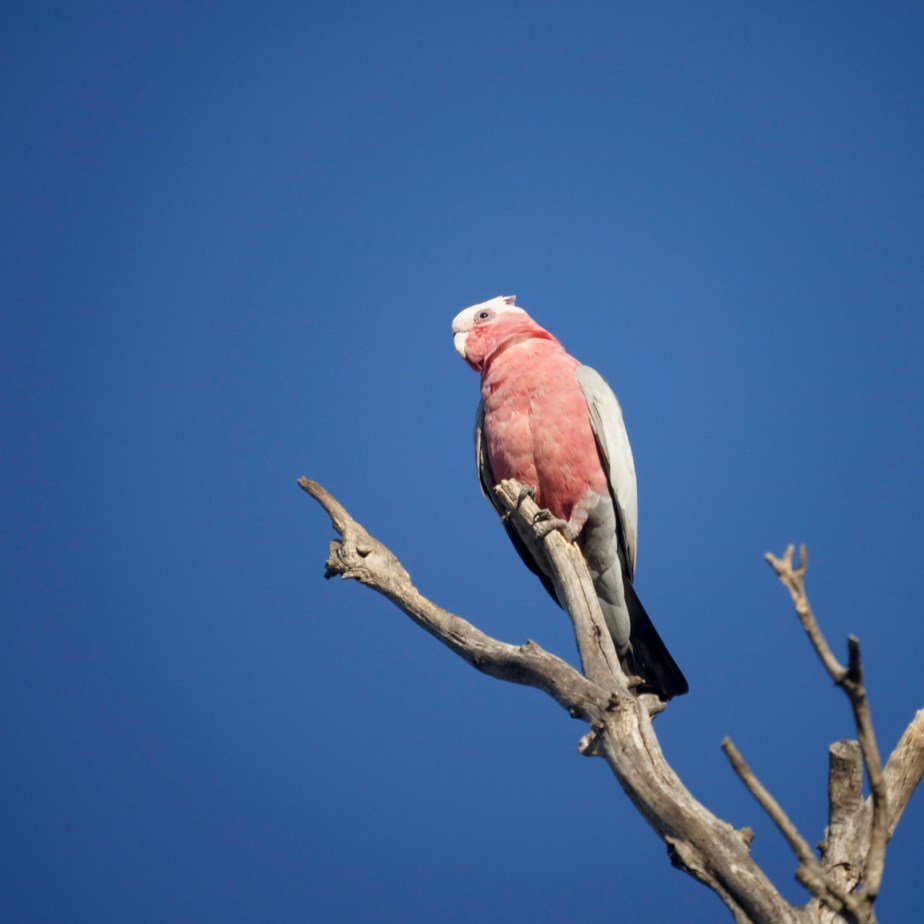
WFHand the ubiquitous Galah posed nicely …

Galah

I had to work a little harder for this one …

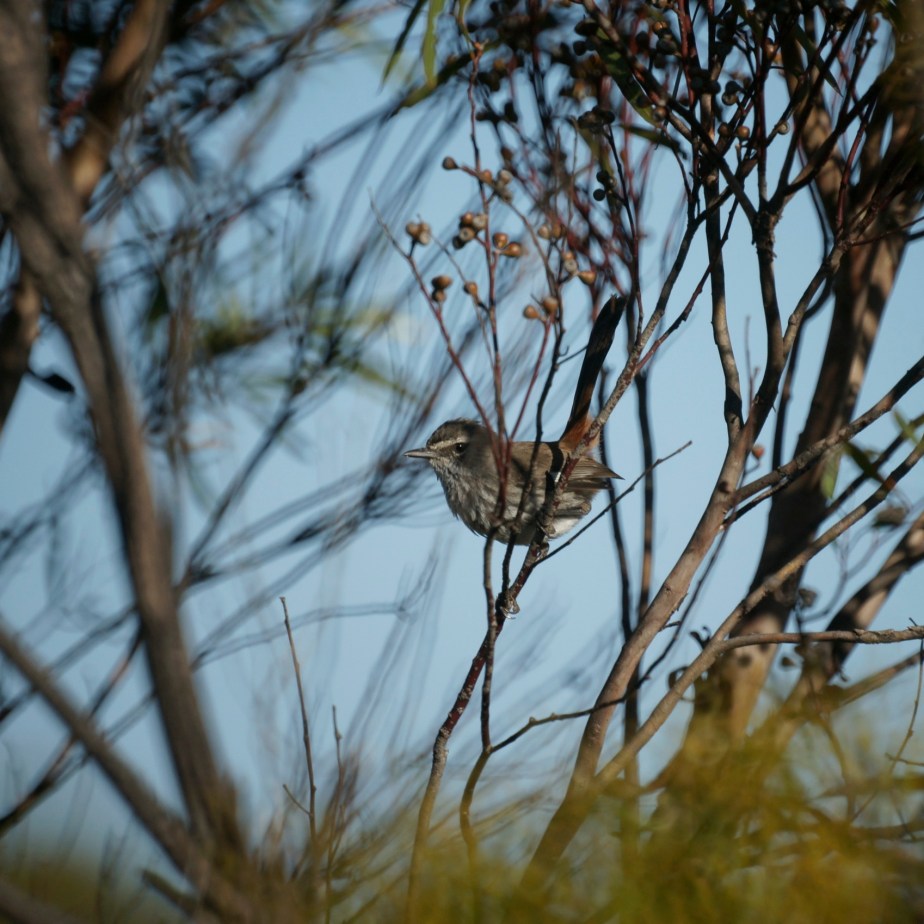
Shy Heathwren

This is the Shy Heathwren, Hylacola cauta. There is another species in the same genus, the Chestnut Rumped Heathwren, that is even harder to find. It has been said that the Chestnut-rumped Heathwren makes the Shy Heathwren look like a social butterfly.

A rewarding day, day’s end brought yet another treasure …

B D Sunset