Never Walk Backwards …

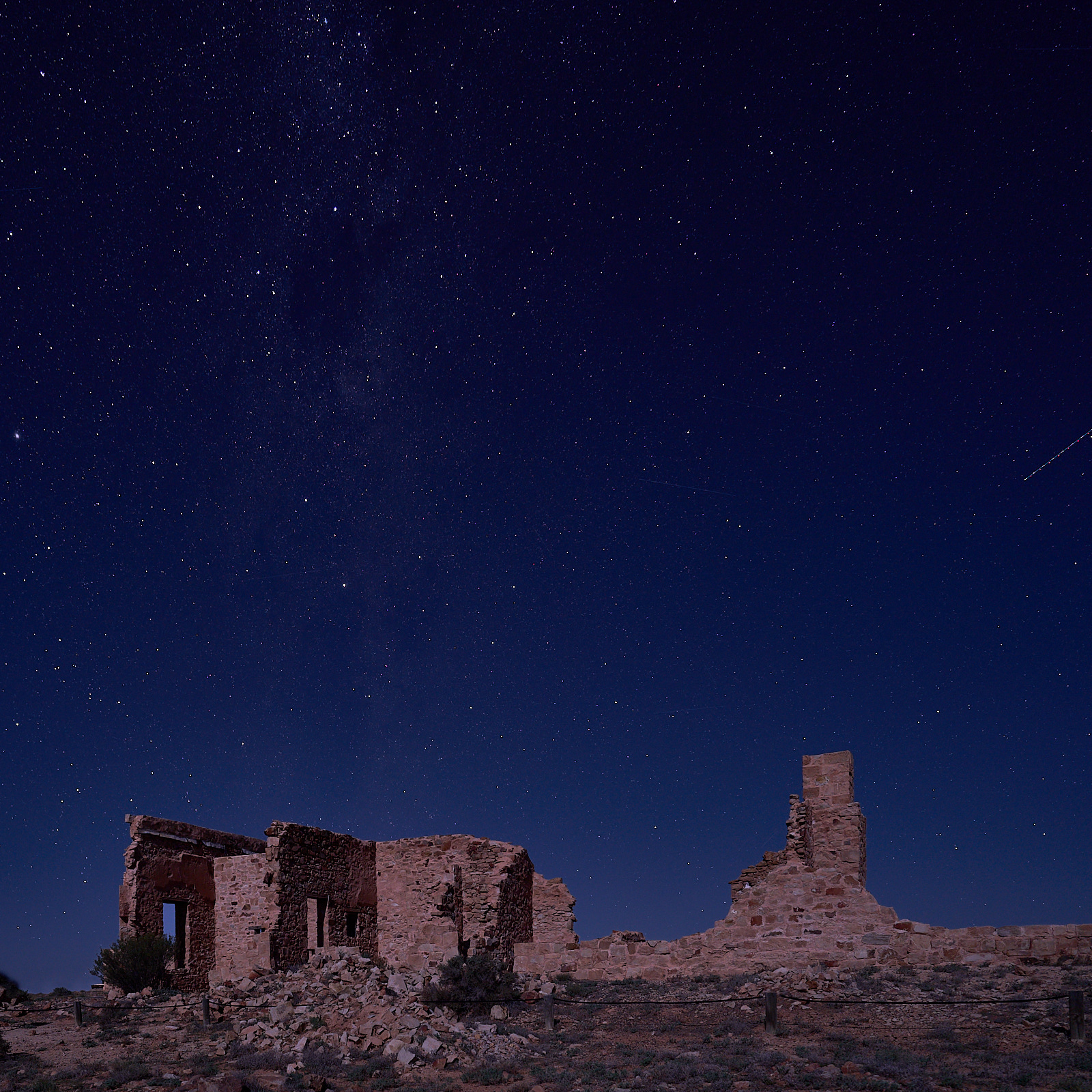
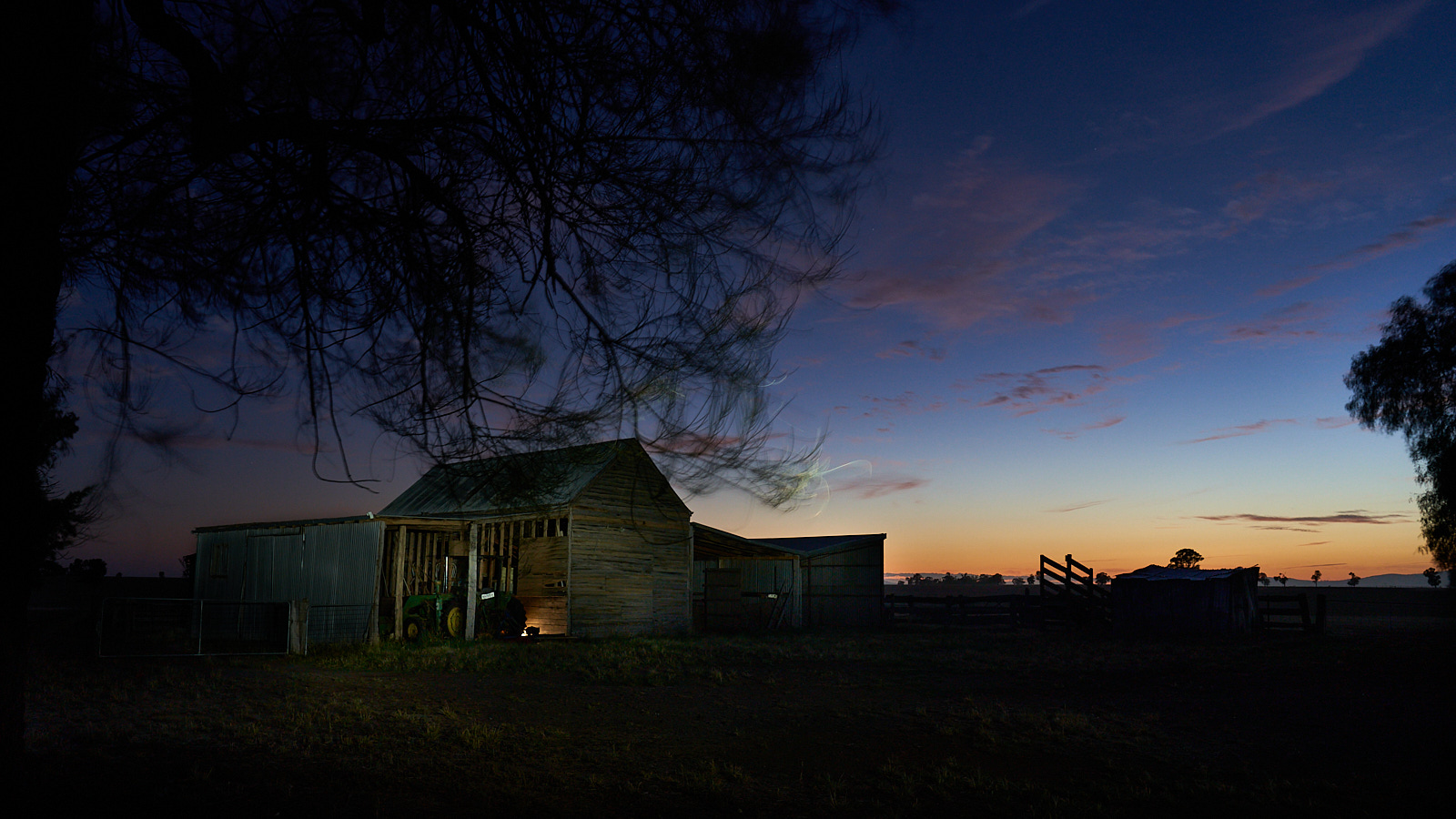
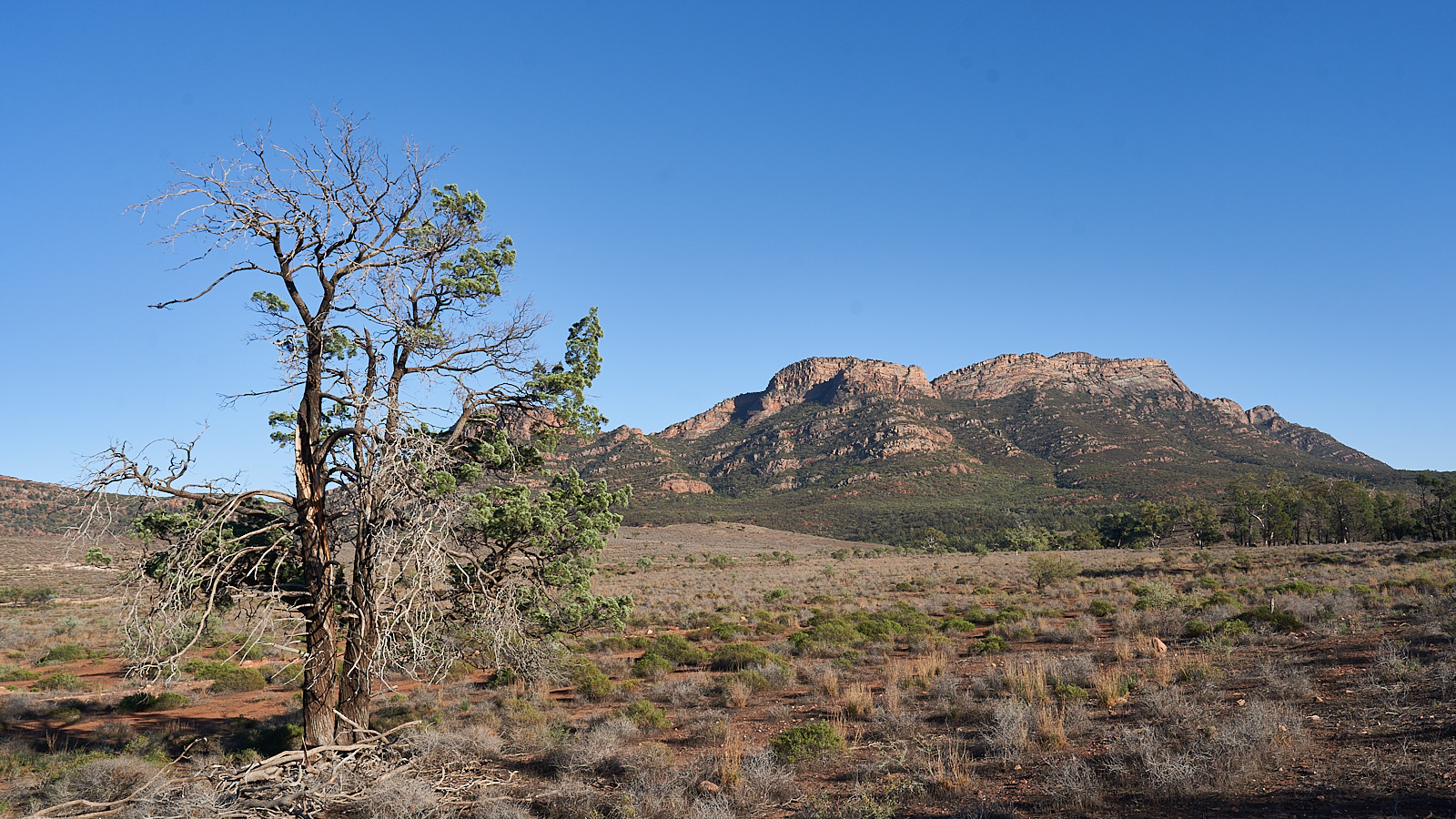
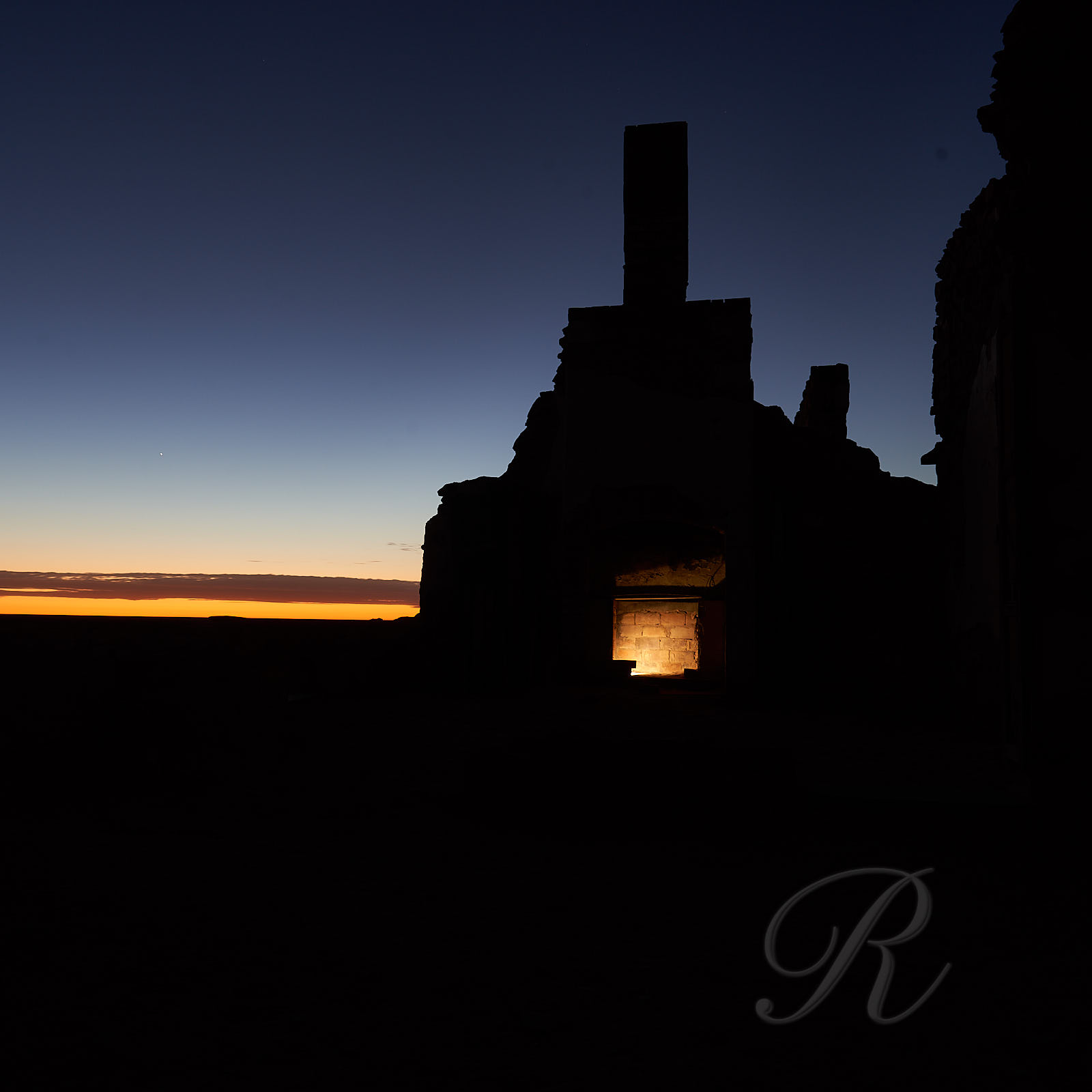
I never seem to visit Farina at New Moon. These shots were taken with a first quarter moon behind me …

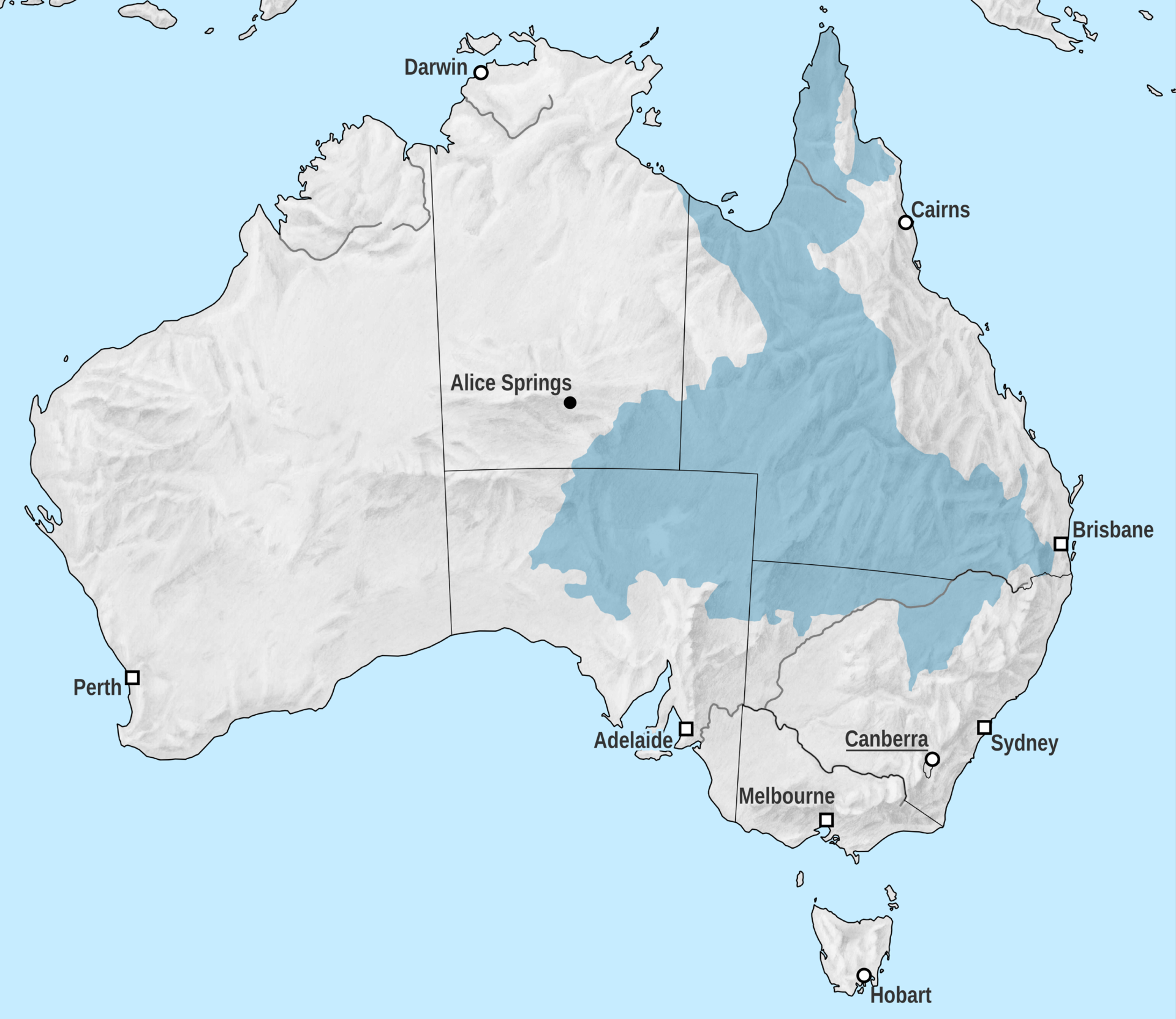
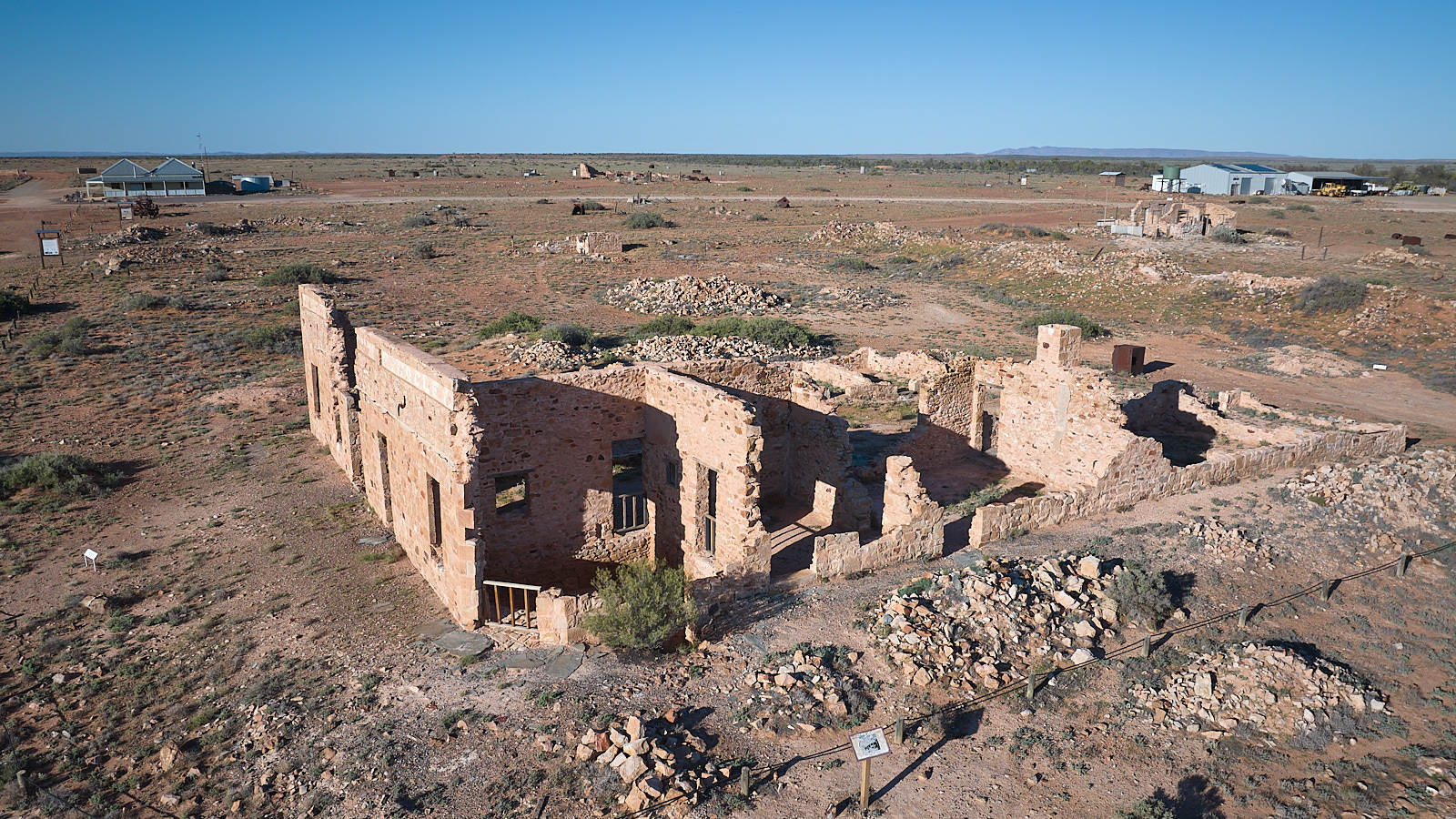
Poor old Farina is north of Goyder’s Line and south of the Great Artesian Basin. It had a big problem with fresh water. Once the Ghan was rerouted and the Telegraph fell into disuse it became a ghost town.

Goyder was the Surveyor-General of the then colony of South Australia. In 1865 he made a journey on horseback crossing some 3200km to come up with a line demarcating land suitable for agriculture from land prone to drought. This followed the 10 inch isohyet which Goyder determined mainly by reference to the vegetation. Settlers ignored his advice to their cost – the buildings at Farina are accompanied by numerous abandoned farm houses north of the line.

A number of wells were dug at Farina with minor success. Sixty kilometres north and plenty of water lies just below the surface. The Great Artesian Basin underlies about 22% of the continent .

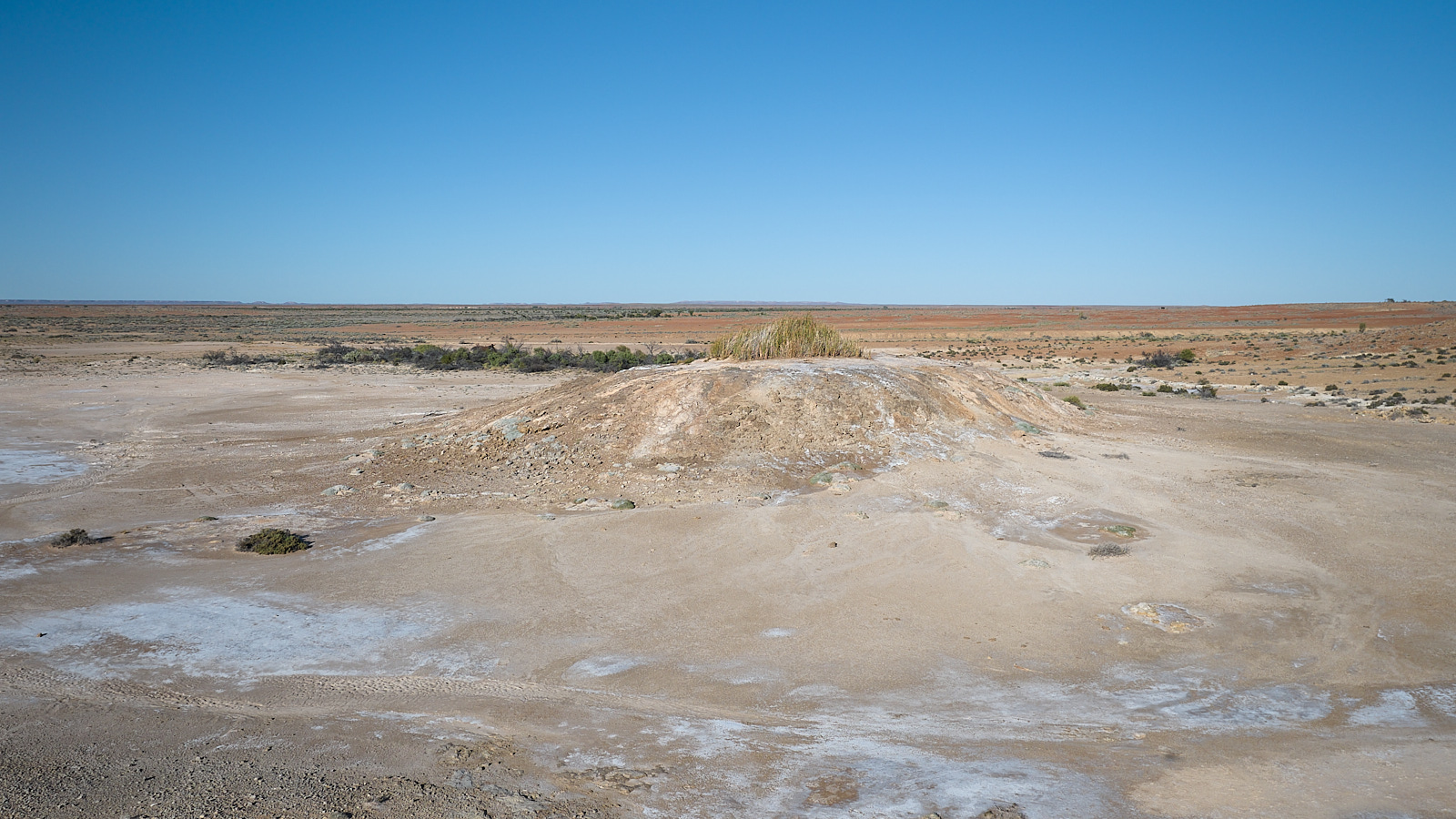
From Farina we traveled up the Oodnadatta Track to William Creek passing Lake Eyre South and spending the night at Coward Springs. There are quite a few springs along the southern edge of the Great Artesian Basin. As they bubble out of the ground they bring minerals that eventually produce a mound with a small pond on top. If the flow is strong enough a small wetland forms at the base. One can find water birds such as Spotted Crake right out here in the desert. Notable mound springs along the track are Blanche’s Cup and the Bubbler. I photographed a small, so far as I know, unnamed one just north of Coward Springs.

The Oodnadatta north of William Creek was closed to towing vehicles so we made a left turn and headed to Coober Pedy where there are opal mines and spoil heaps dotted across the landscape. A warning sign advised of open holes and sternly admonished the traveler “Never Walk Backwards”.

The road had not been as rough as we had expected. Cober Pedy is on the bitumen, the Stuart Highway. The next few days will be far less exciting than the last few days.

Farina …

The Flinders was as dry as a chip. We took the scenic route through the Parachilna Gorge – not as scenic as Glass Gorge but gentler on the trailer. Then north up the Outback Highway. There was some green pick after Leigh Creek, then some surface water and by the time we pulled into Farina actual grass and even some mud. And by all accounts there’s a lot more of that ahead of us.

This route north brings you face to face with history, John McDouall Stuart followed by the Overland Telegraph, then the Ghan, the birth and death of little towns like Farina. How could you not love this country?

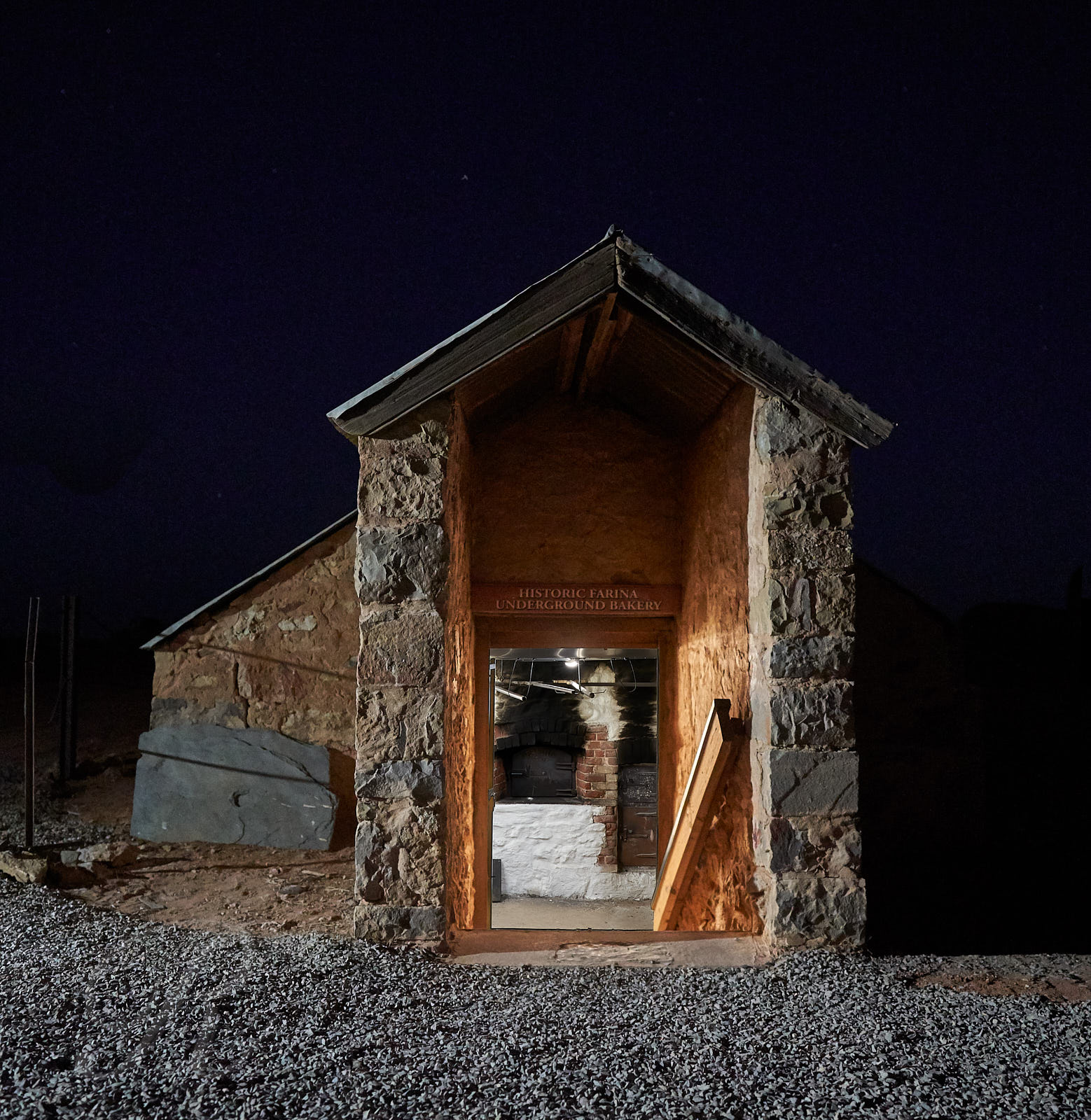
A number of things had conspired to draw people north from Adelaide. As dry as it is, cattle and sheep can be grazed in the hinterland. The railway provided a good way to transport them to market. The telegraph and the railway provided employment. And of course, at the time it was thought that the rain would follow the plough. Plant your crops and the rain would come, a theory promoted by scientists of the day such as the noted American climatologist Cyrus Thomas. The settlement here was founded in 1878 as Government Gums. Its name was changed to Farina to reflect the intention to grow wheat. It grew to reach a peak population of approximately 600 in the late 1800s. It was the rail head for a time. In its heyday, the town had two hotels (the Transcontinental and the Exchange) and an underground bakery, a bank, two breweries, a general store, an Anglican church, five blacksmiths, a school and a brothel. Wild oats were sewn but no wheat was grown. All that remains today are the ruins and the cemetery.

It’s a great camp site and an excellent spot for birding. Inflation has hit, the fee is now $10 per person per night, a 100% increase in 9 years. The bakery has been restored and is in action during the winter months when the camp is busy. At the moment we have it almost to ourselves.

Flinders Ranges …

A few days ago We saw in the day on a friends property in the Victorian Goldfields …

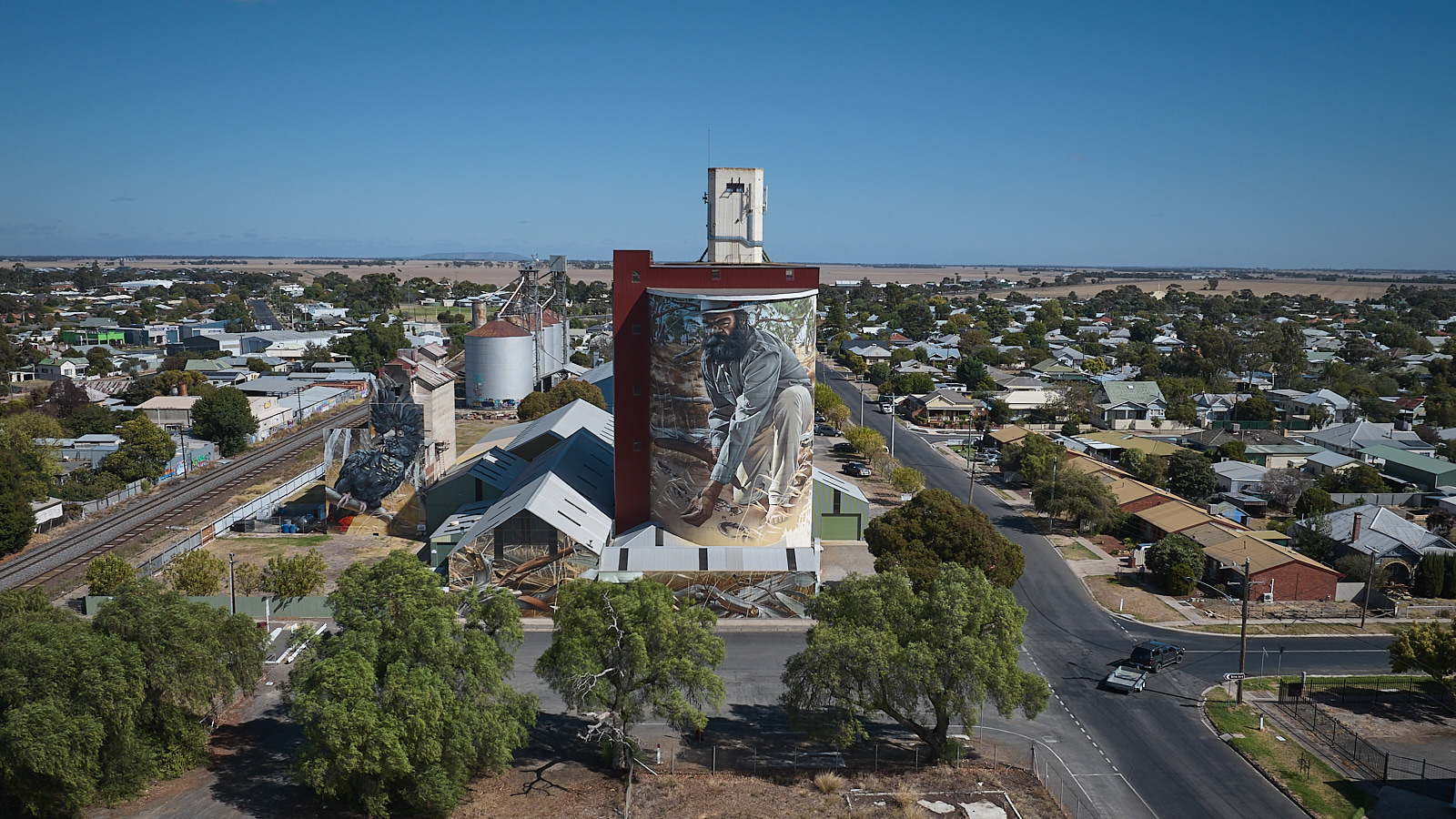
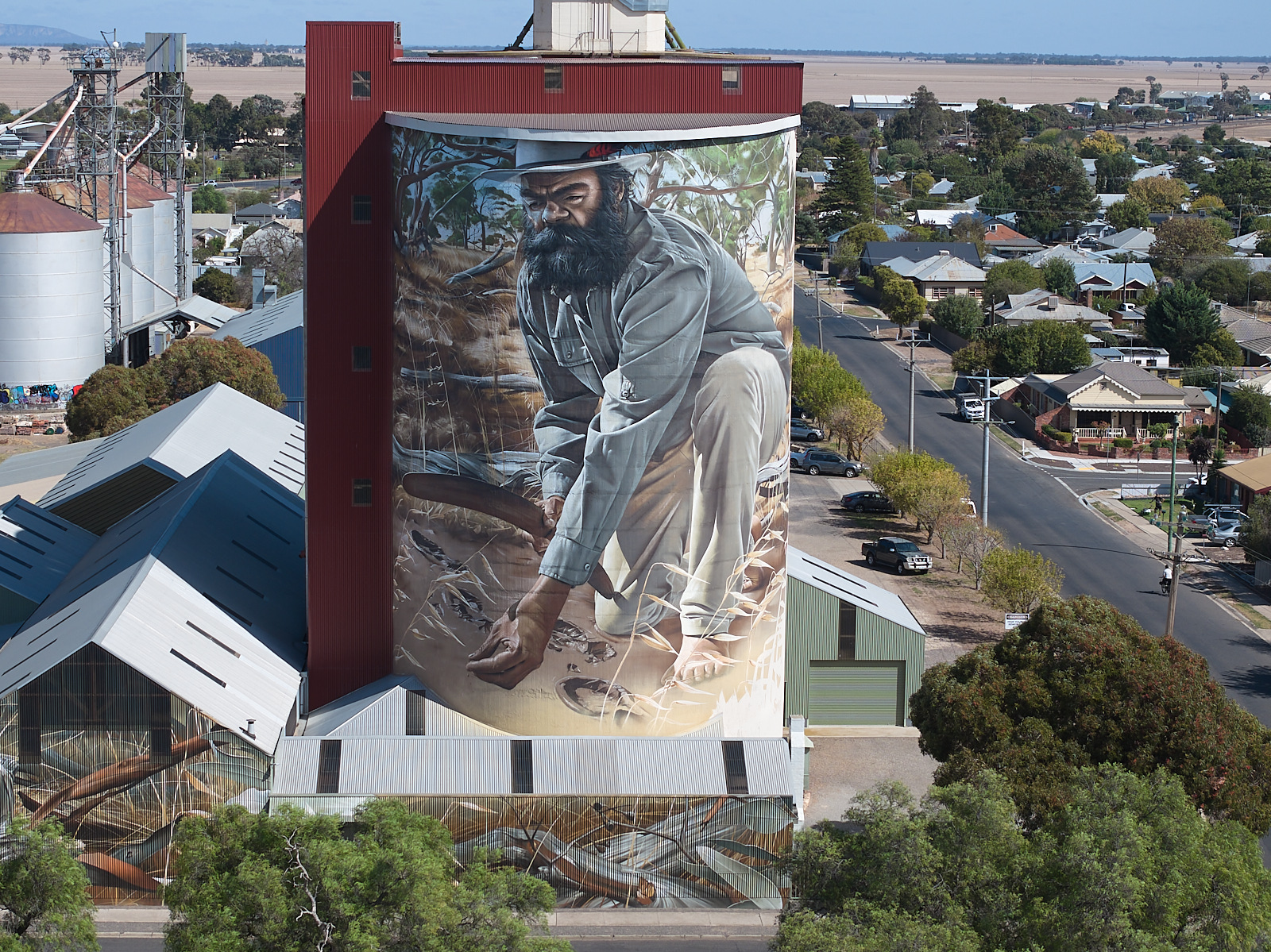
and then headed west passing through Horsham which has grown some silo art since we were last there …

After a couple of nights in the west of Victoria it was on to South Australia and the Flinders Ranges. Matthew Flinders was the first to circumnavigate Australia and was also influential in having the name Australia adopted for good old New Holland. He sailed up into Spencer Gulf in March of 1802 and landed a party that were the first Europeans to encounter the rather spectacular mountain range now named after him.

This little party, two Australians and a Fox Terrior, have spent the day touring around spectacular landscapes and fighting off some spectacular birds. Wilpena Pound is perhaps the most famous spot in the range but we can thoroughly recommend the Glass Gorge route from Blinman to Parachilna and the Morelana Scenic Drive.

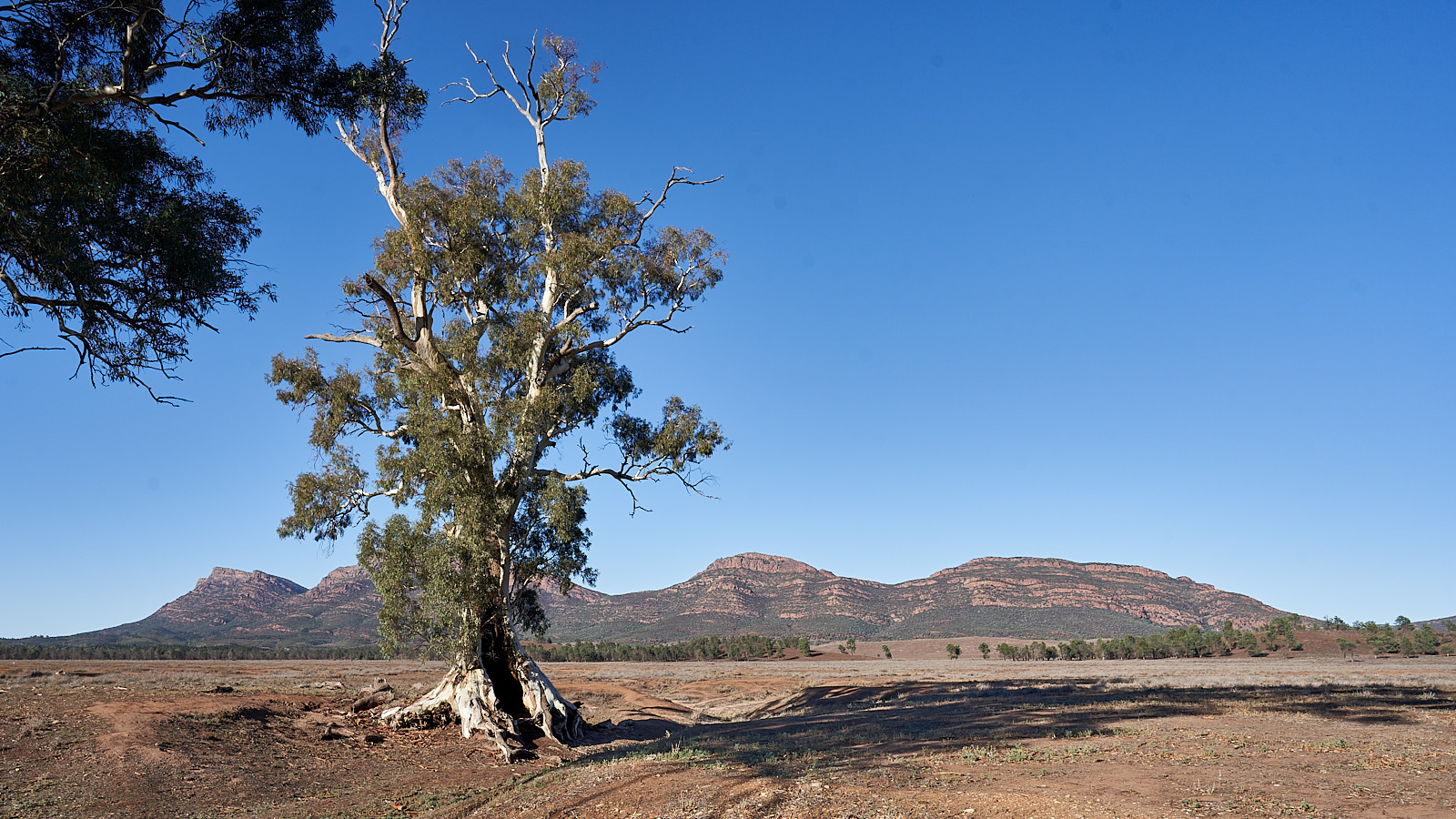
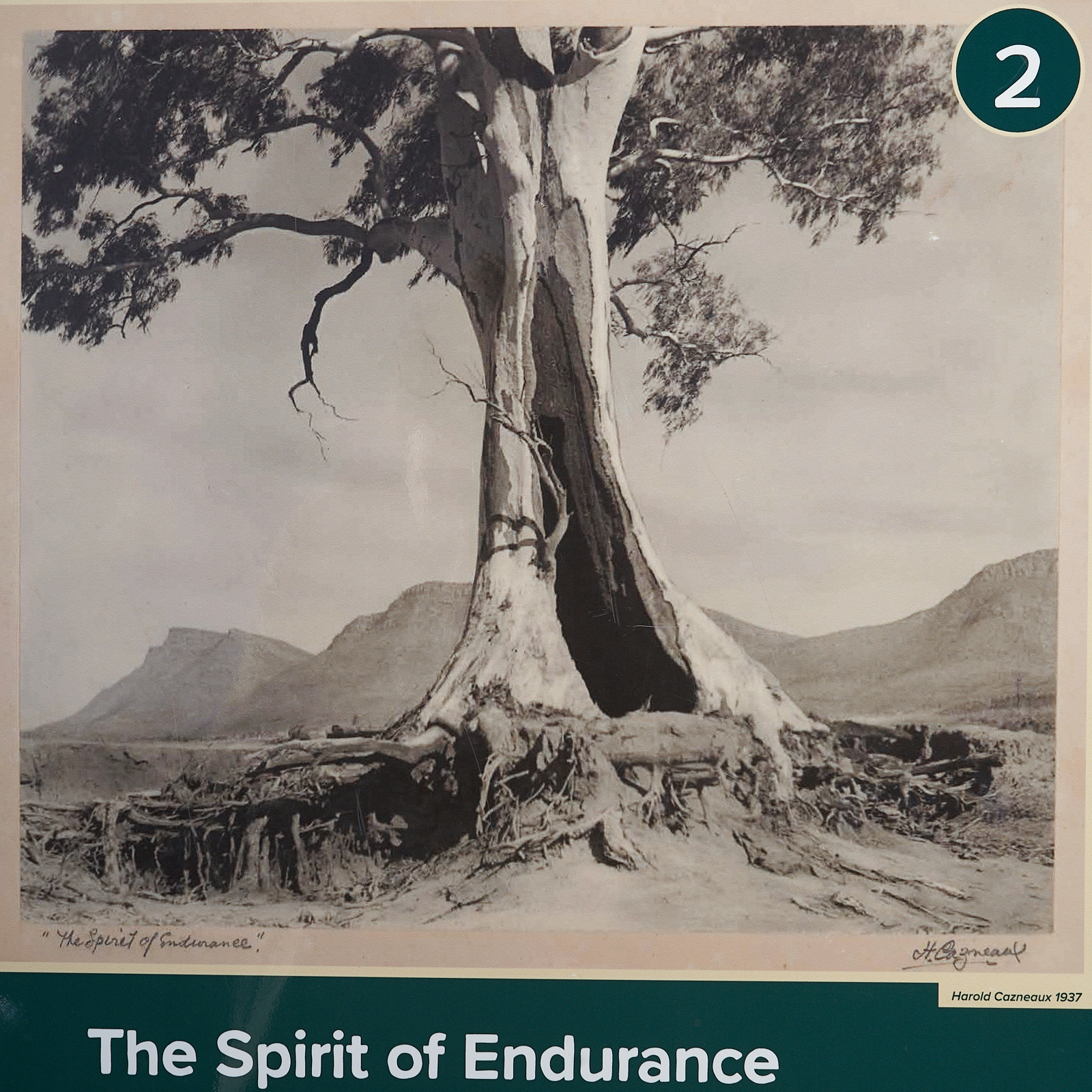
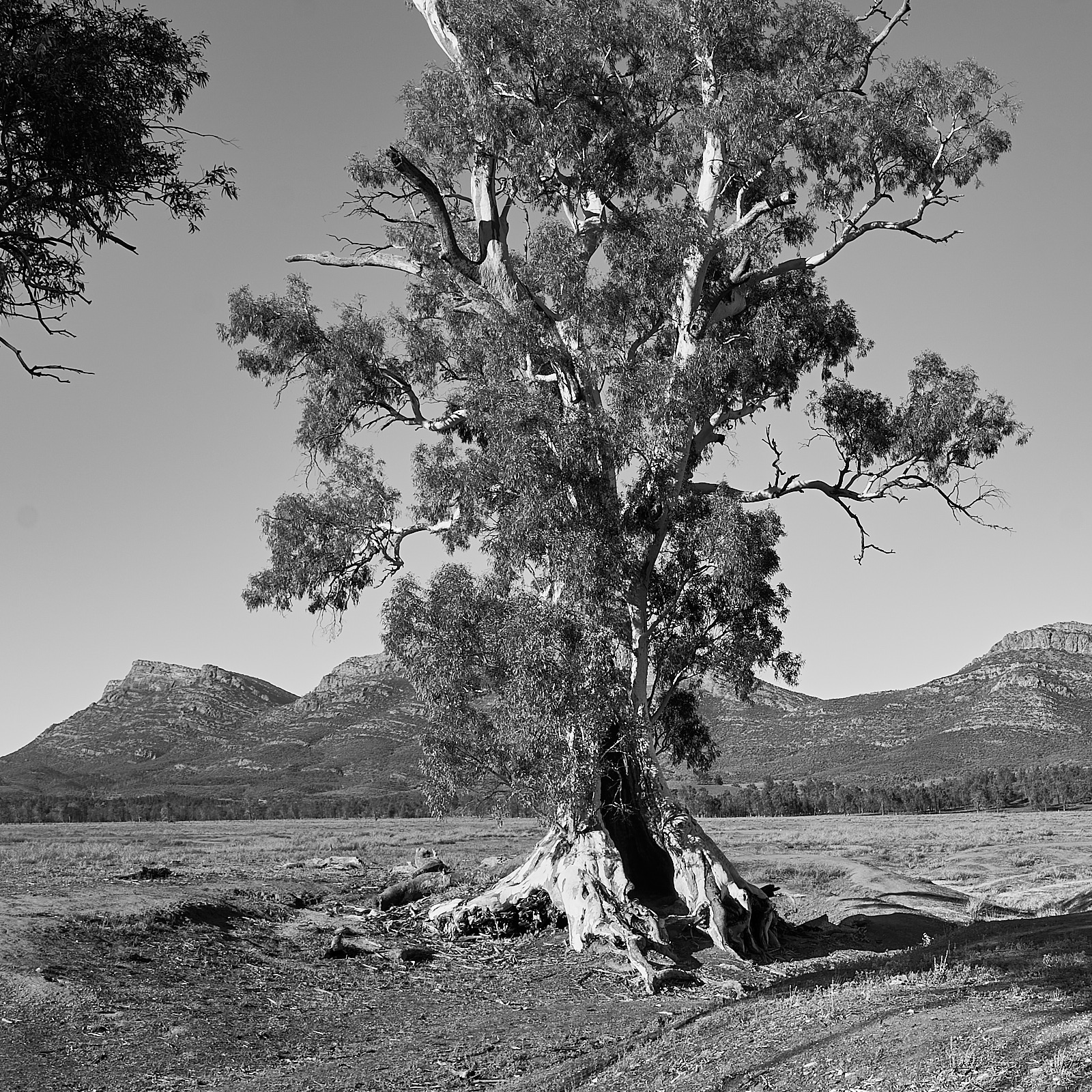
Along the way we stopped at the tree where Harold Cazneaux took a photo in 1937 that he titled Spirit of Endurance. It won him numerous prizes in photographic competitions. Unless you are prepared to climb a fence you can no longer stand down in the creek bed where Harold took his photo but I had a go at reproducing the shot. Here is my homage to Cazza …

Tomorrow we head north. Modifications are needed to plan A but according to a very helpful man at the William Creek Hotel we will probably be able to negotiate the southern section of the Oodnadatta Track but will have to divert to Coober Pedy at William Creek. The problem is not so much the flooding but the damage caused by people driving on it when it was wet and plastic.

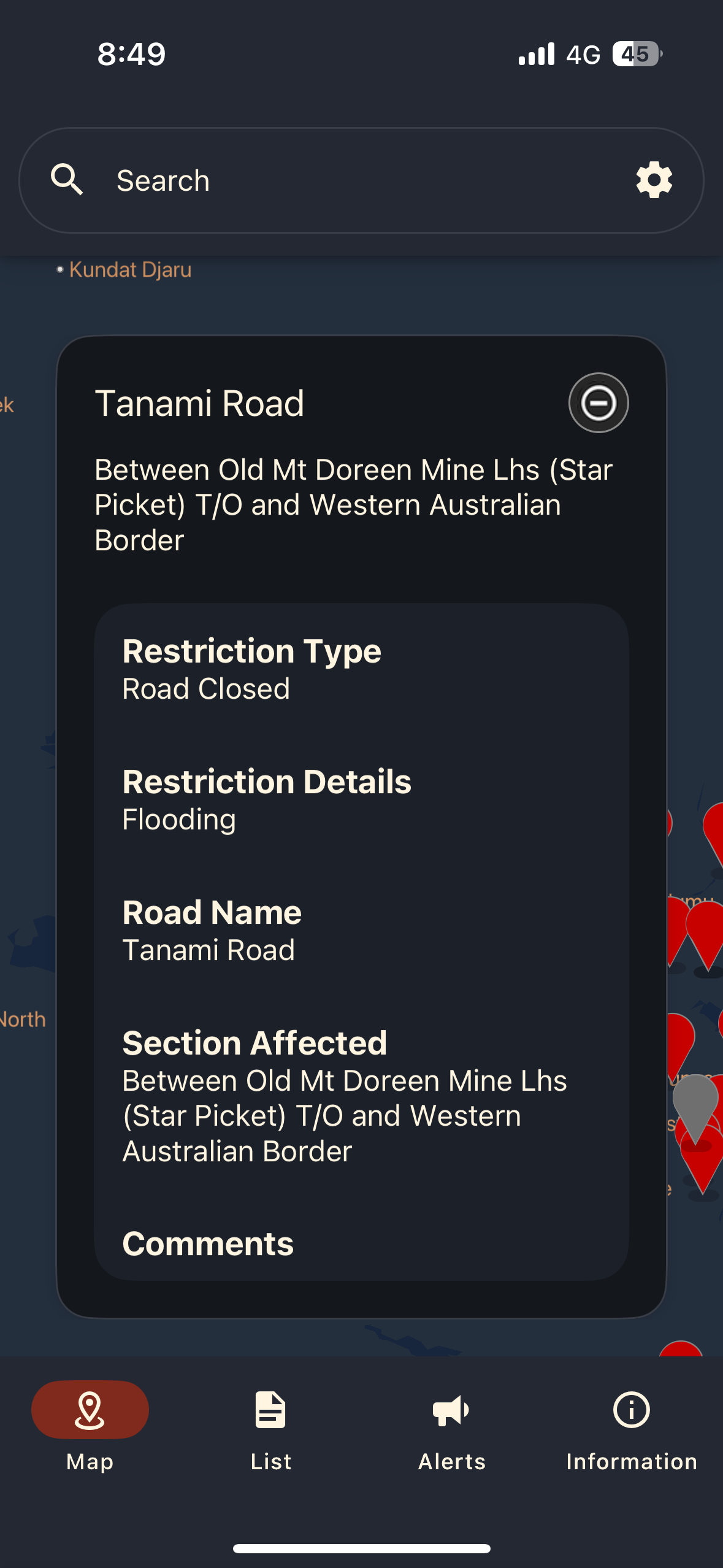
The Todd River at Alice Springs actually has water in it – it does happen occasionally. While the Tanami is under water! Further modifications to our plan will need to be made in due course.

Eyre Peninsula …

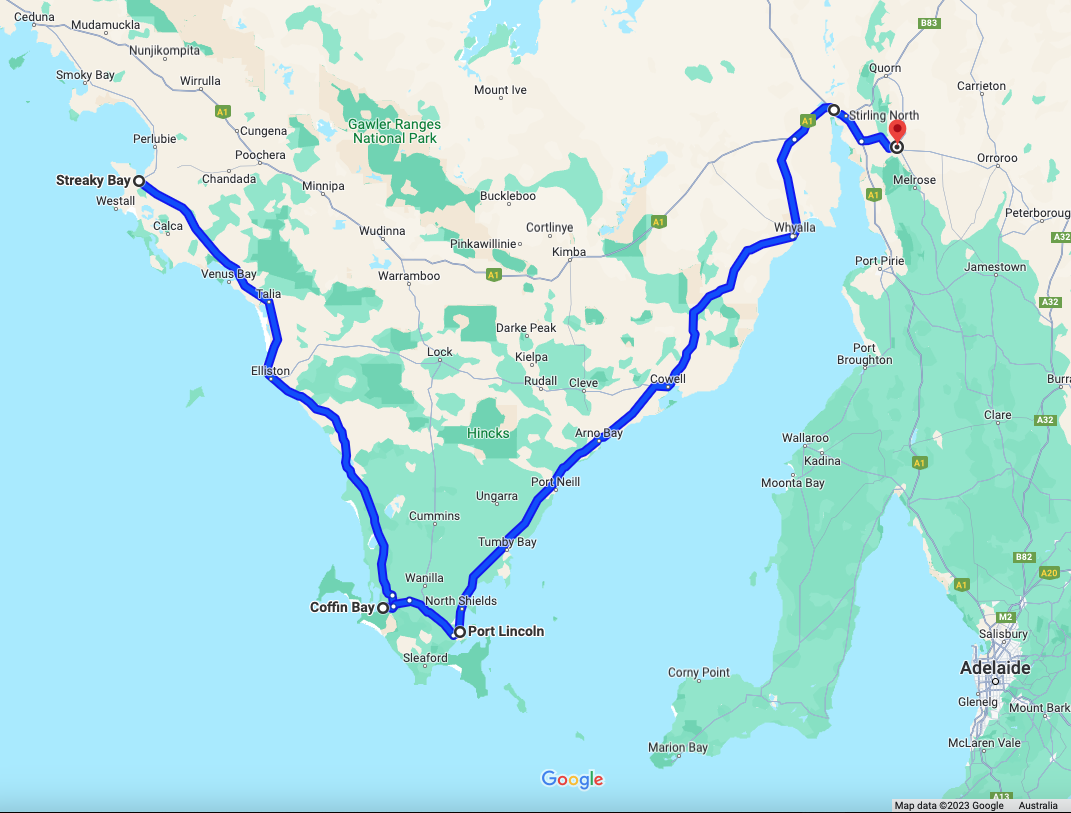
Arid scrub and rich farmland, amazing coastal scenery, mineral wealth, seafood, fascinating ornithology and the occasional ferocious bushfire. It’s interesting. On this occasion our journey took us around the triangle. If we weren’t traveling with a dog it would have included the Lake Gillies conservation park. We spent two nights at Streaky Bay and two at Coffin Bay. Port Lincoln has a population between 16 and 17 thousand, Whyalla is a mining town, the rest of the place is lovely!

No trip to Streaky Bay would be complete without driving the Cape Bauer Loop and another trip to the Sealion colony at Cape Labatt. You could throw in Murphy’s Haystacks if you’re geologically inclined.

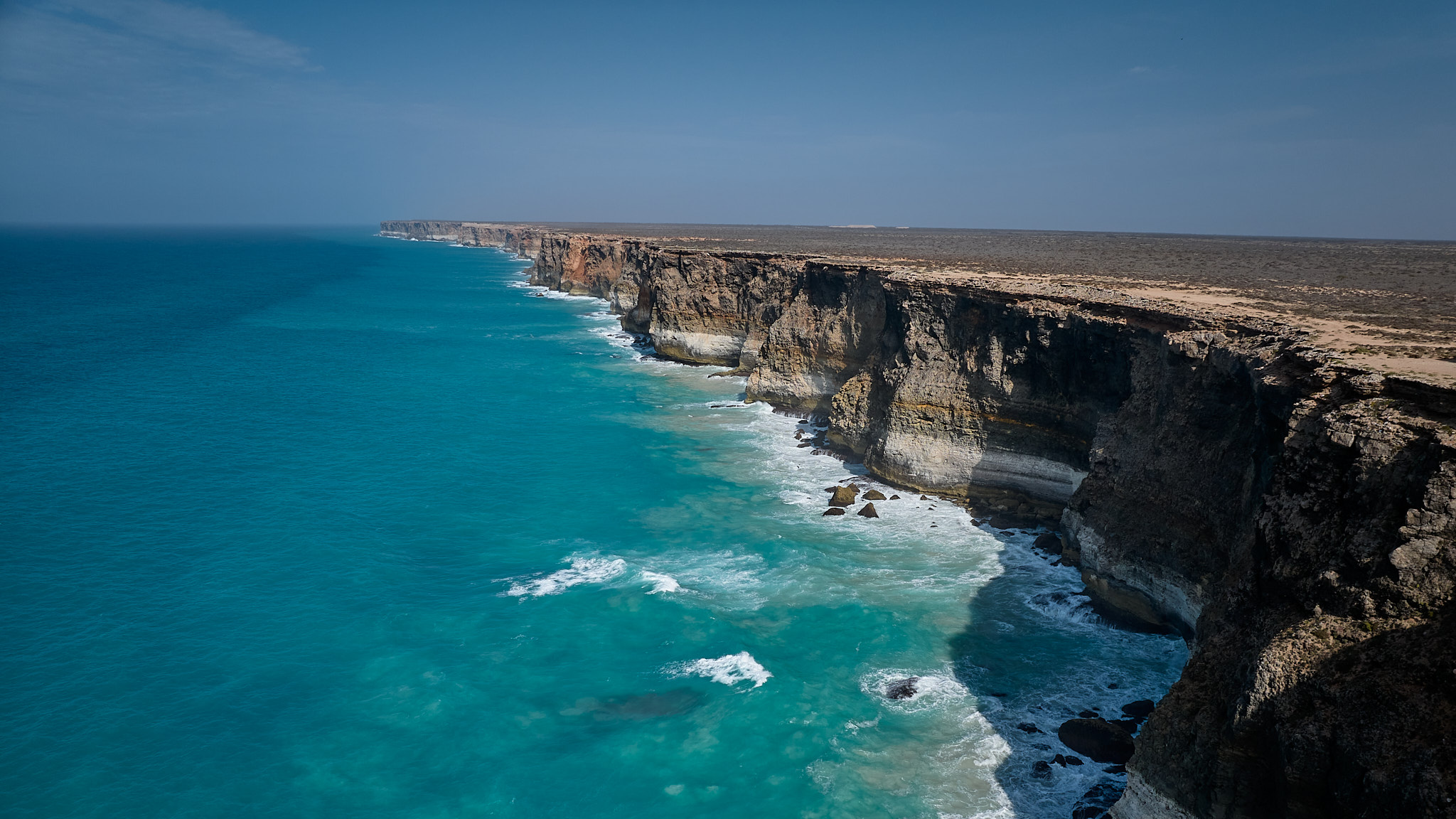
A short diversion at Elliston takes you on the Elliston Clifftop loop. If you are impressed by Victoria’s Great Ocean Road prepare yourself for something even more splendid. There are also some sculptures that can be seen along the way … they don’t stand a chance against the scenery.

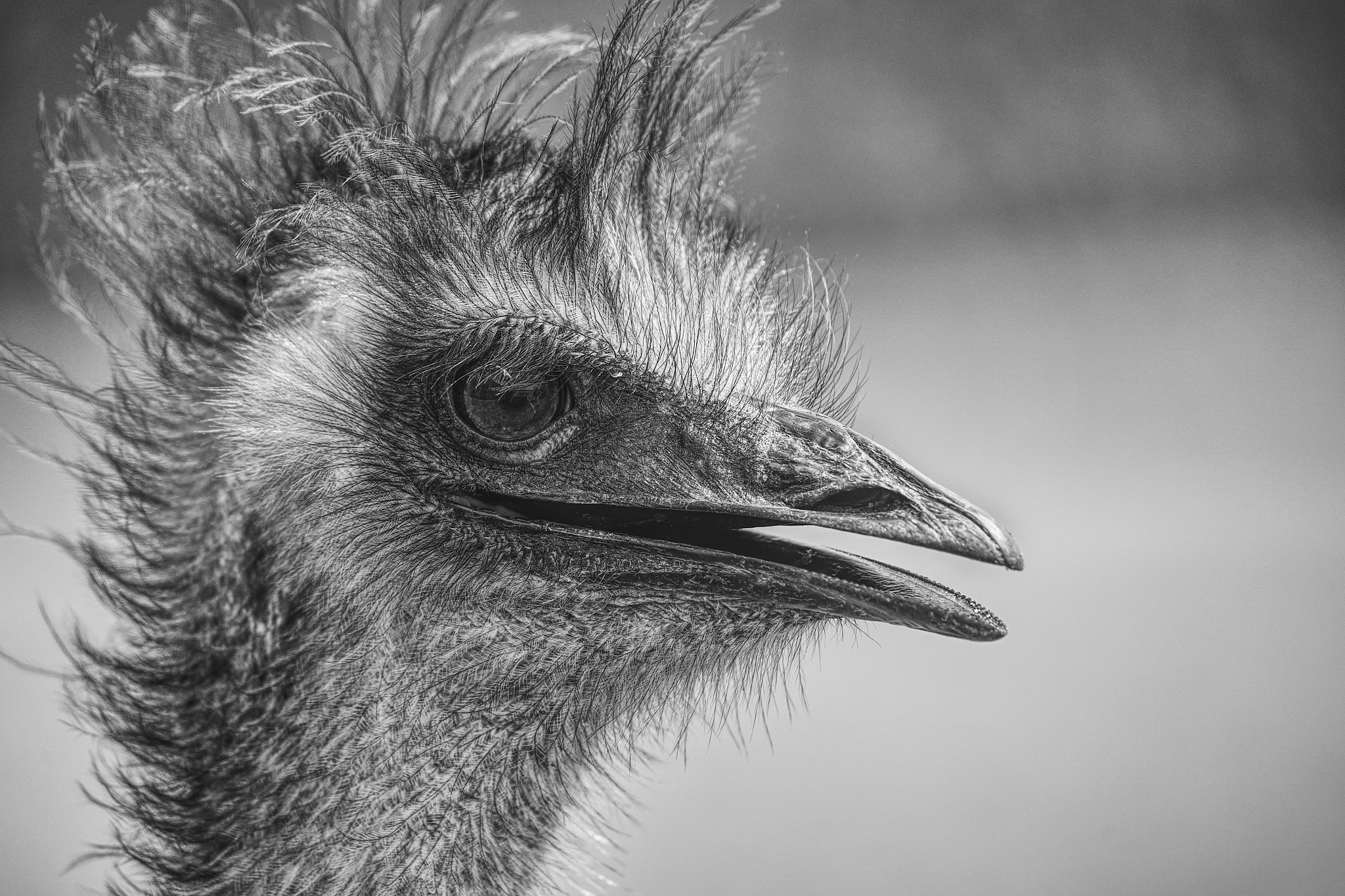
Coffin Bay sounds like a place with a story attached and there is one, but it’s very tame. Matthew Flinders put the bay on the map in 1802 and named it after his friend Sir Isaac Coffin, later a rear admiral. It is famous for its oysters and a wonderful national park. Emus roam the streets and remarkably photogenic they are.

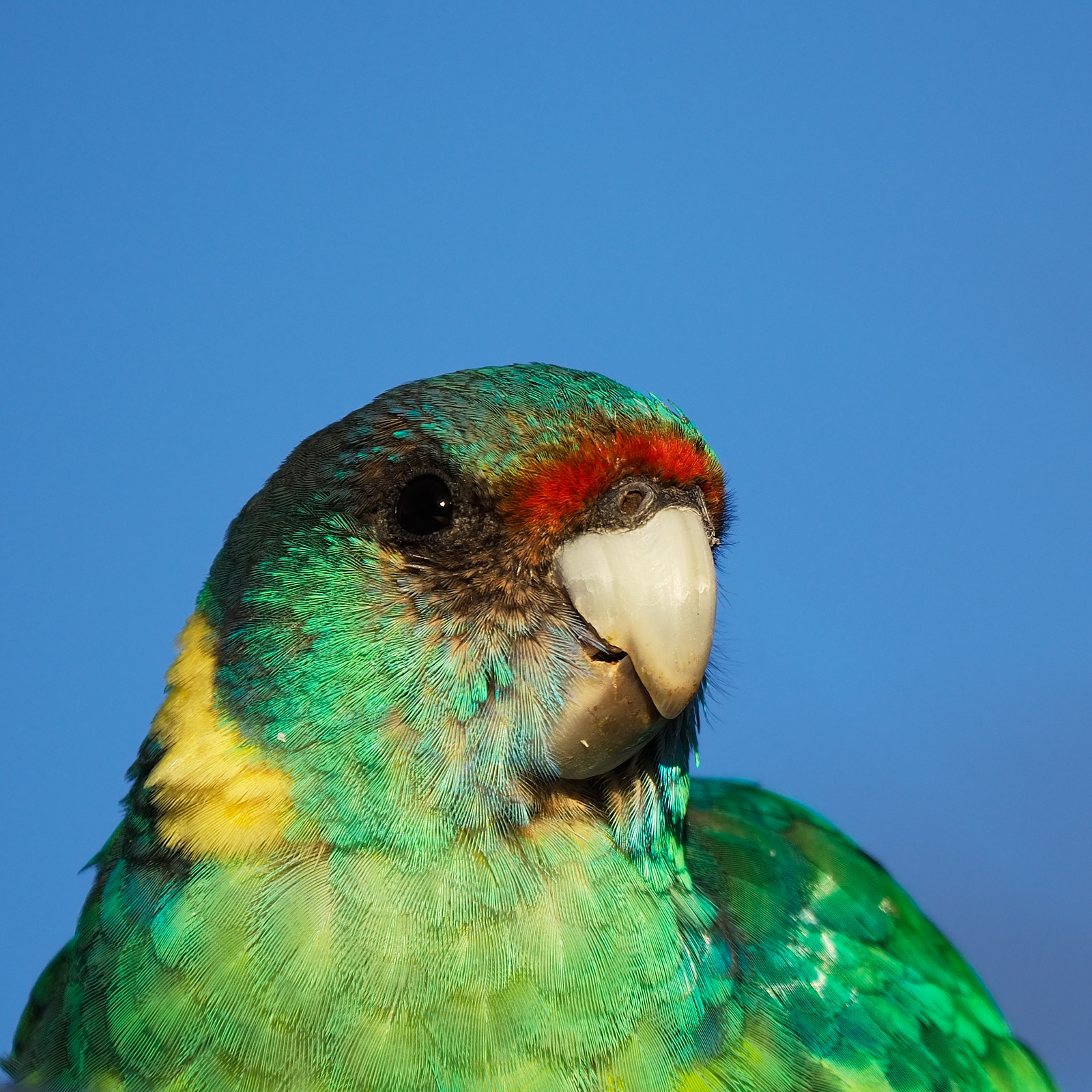
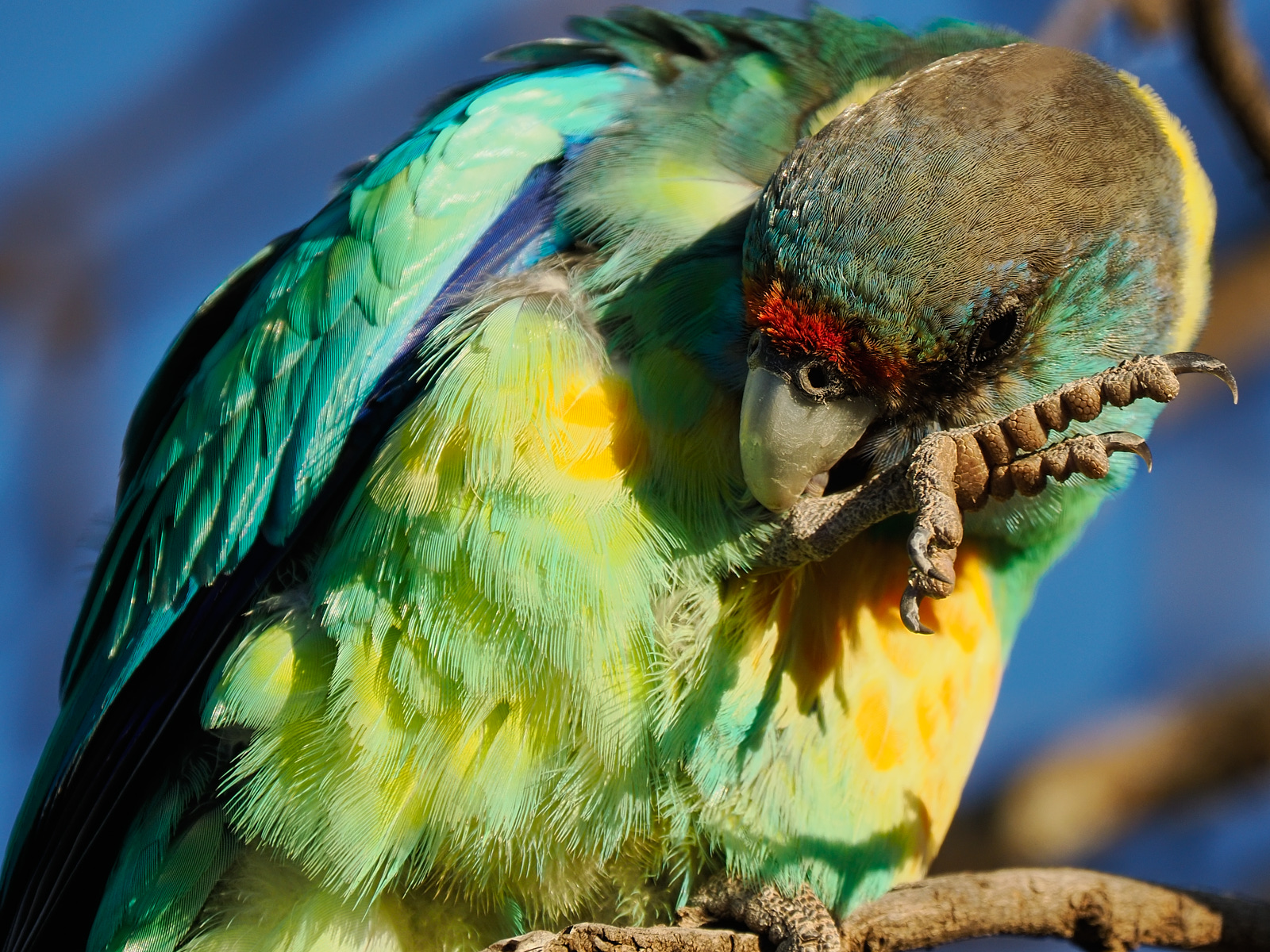
The Eyre Peninsula is very interesting ornithologically. It is a thousand kilometers around the Great Australian Byte to Esperance in Western Australia and there is some very inhospitable country in between yet there are a number of birds that are found in southwest WA and the Eyre Peninsula and not further east. They include birds from quite different genera, the Blue-breasted Fairywren,Rufous Treecreeper and Western Yellow Robin. The Western Whipbird, Western Whistler, Rock Parrot and Elegant Parrot almost qualify but their ranges stretch a little further east. There must have been a time when Australia’s climate permitted suitable habitat for these birds to extend right across the Nullarbor. Somehow the Laughing Kookaburra failed to make that journey. They are common in southwest WA now but were introduced deliberately about 120 years ago. It’s a similar story for Rainbow Lorikeets but they are much more recent aviary escapees.

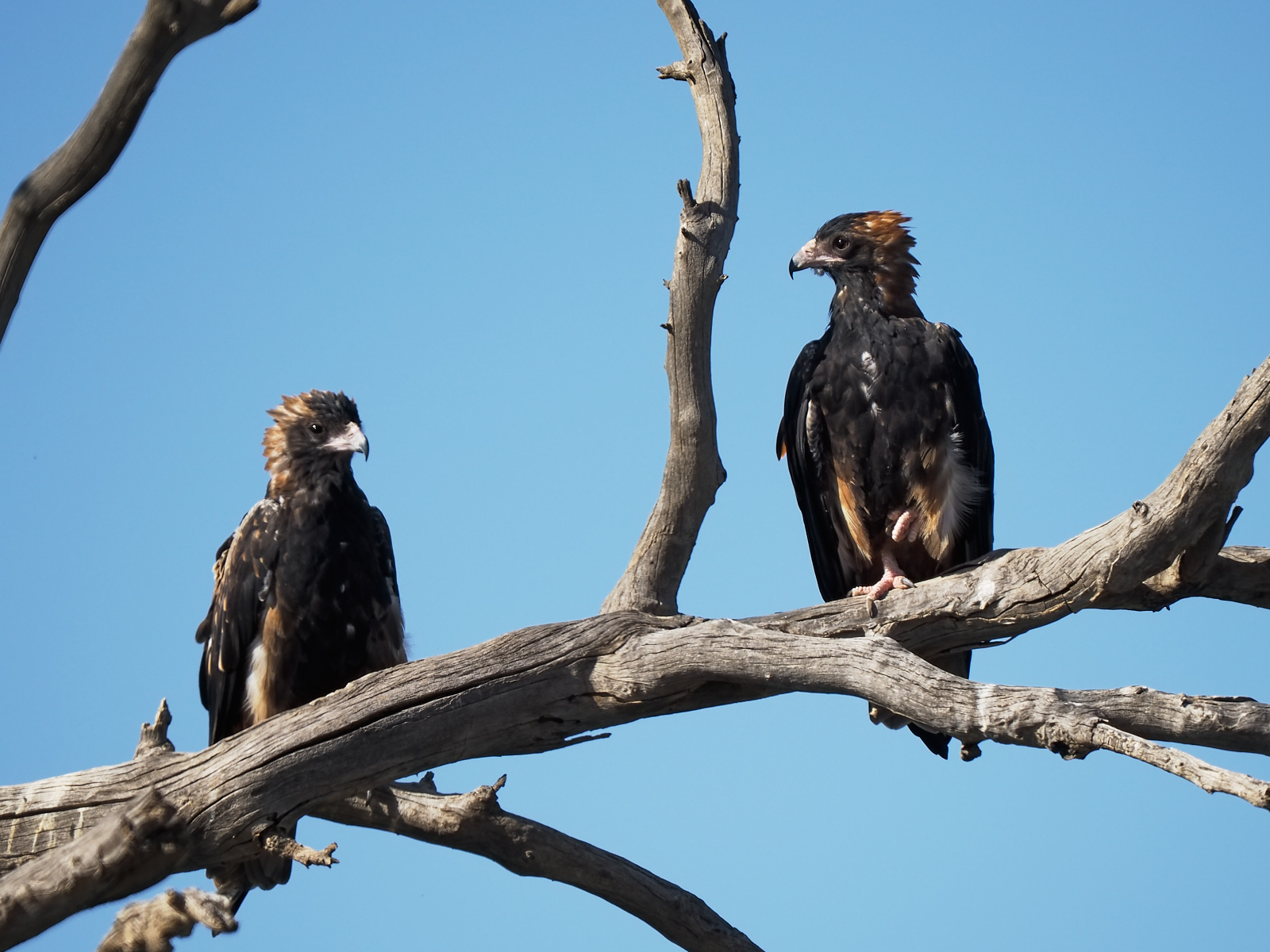
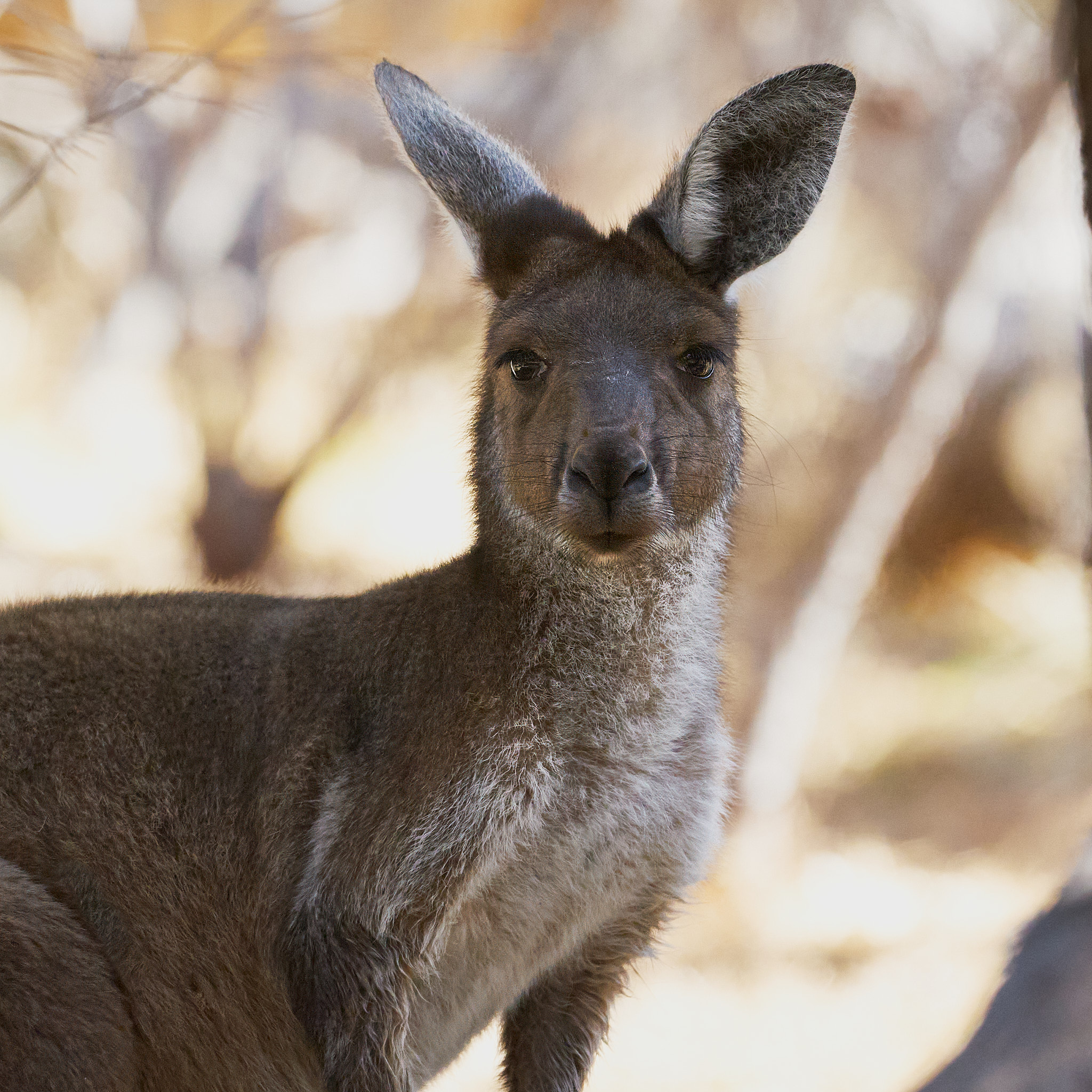
Birding around Coffin Bay was most productive and some of the wildlife even posed for a photo.

We left Coffin Bay on a hot and windy day, 43°C, gale force winds, extreme fire danger.

We passed a couple of silo masterpieces on the way north.

Tonight we are at Wilmington. It was originally called Beautiful Valley. I can understand why they changed the name.

A Speck in the Universe …

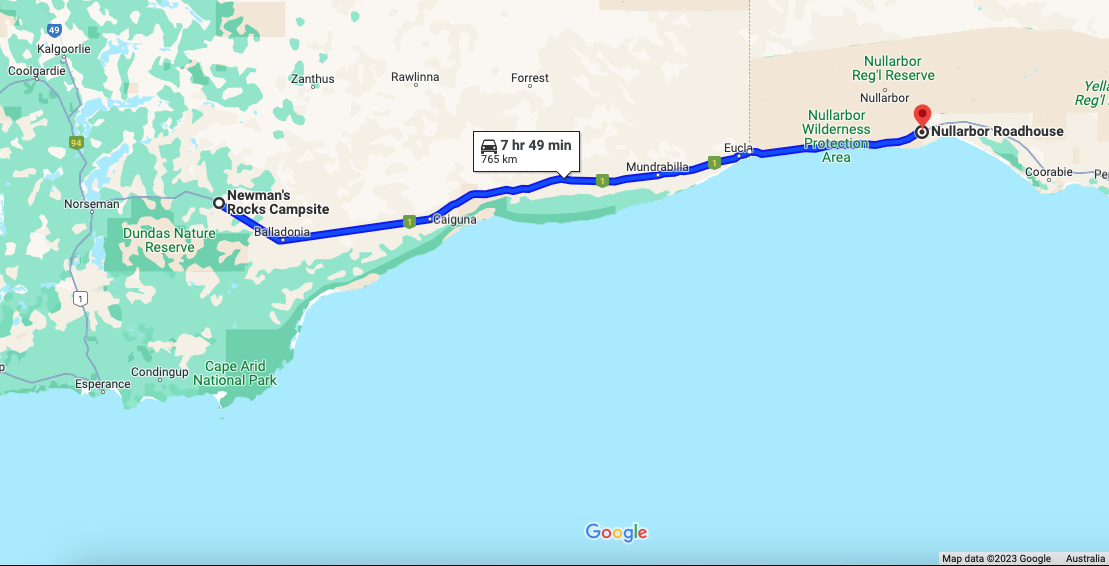
When I emerged from the van there was a last quarter moon high in a cobalt blue sky. You can see for miles across the Nullarbor Plain, the lights of the roadhouse were shining in the distance and there was a red glow on the eastern horizon warning of the day to come. I was but a speck in the universe.

It was 8°C, the van and car were dripping with dew. I was glad that I would not be dealing with wet canvas.

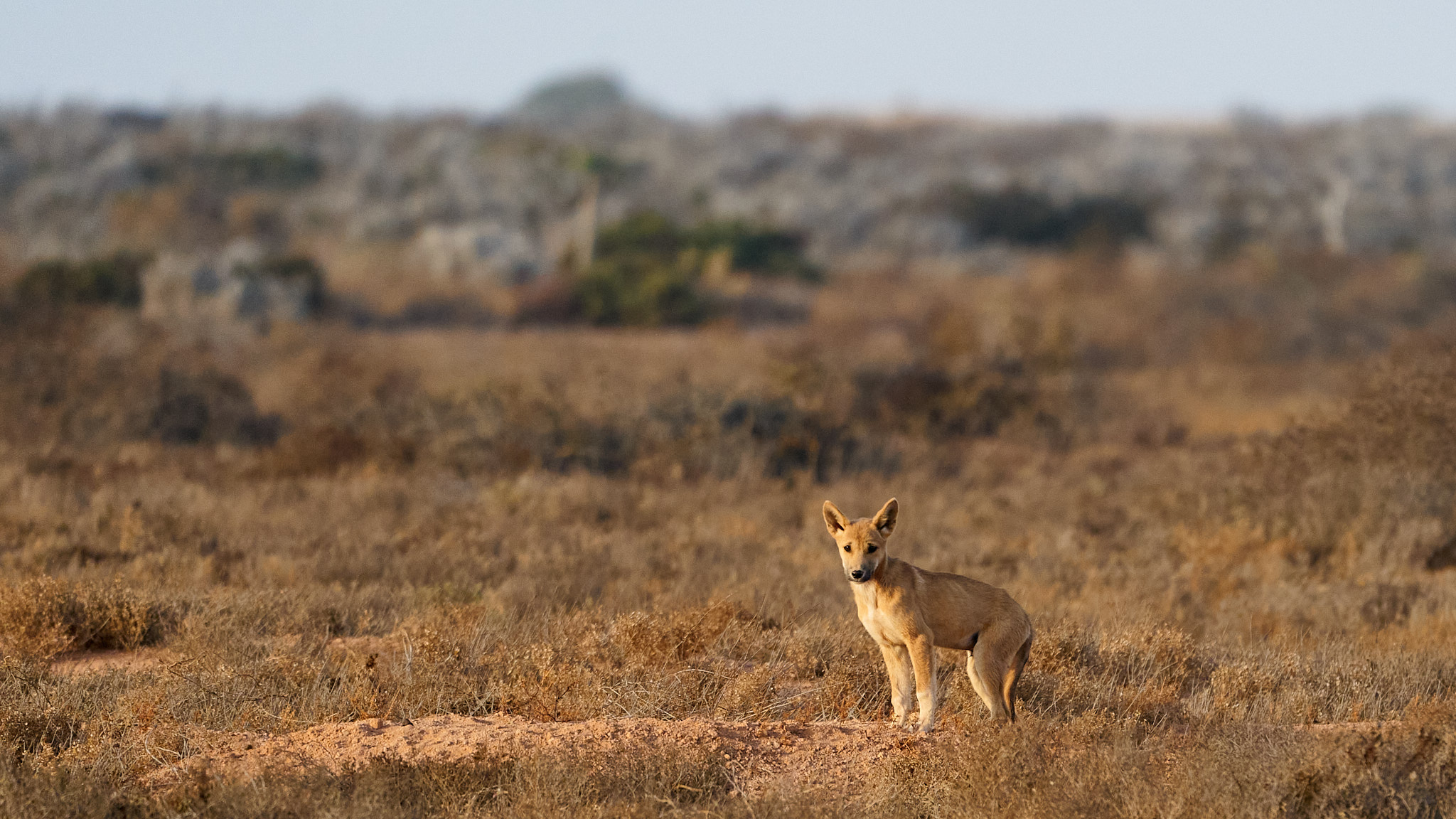
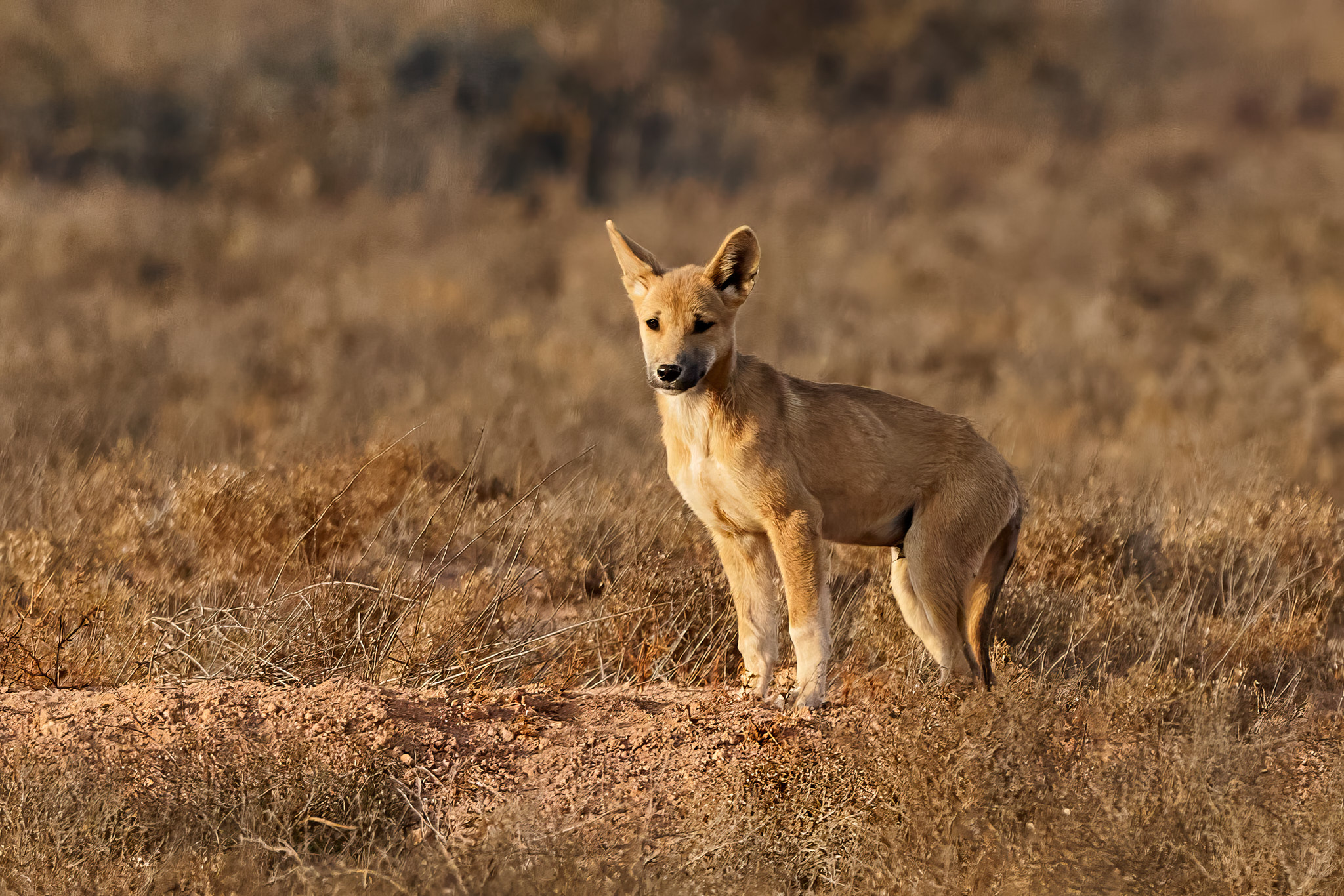
Last evening our little dog had been very restless and overnight some dingoes had been howling. We had been careful not to leave our shoes outside.

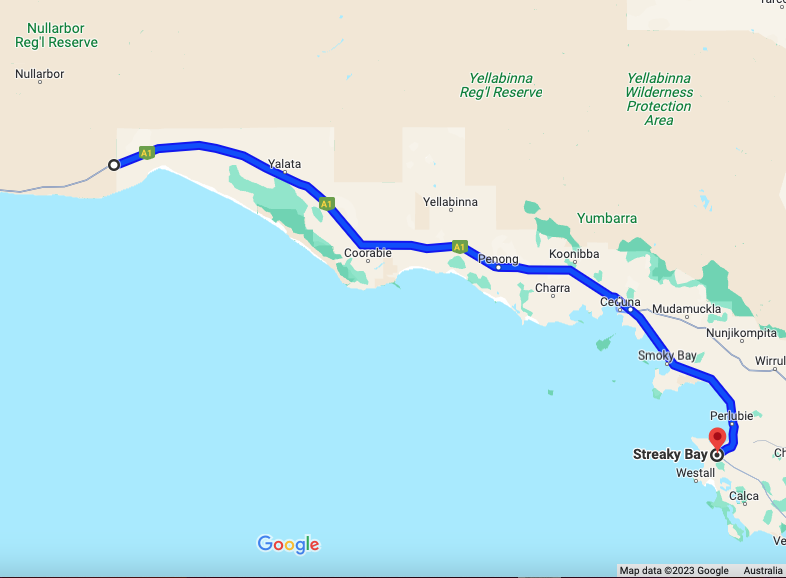
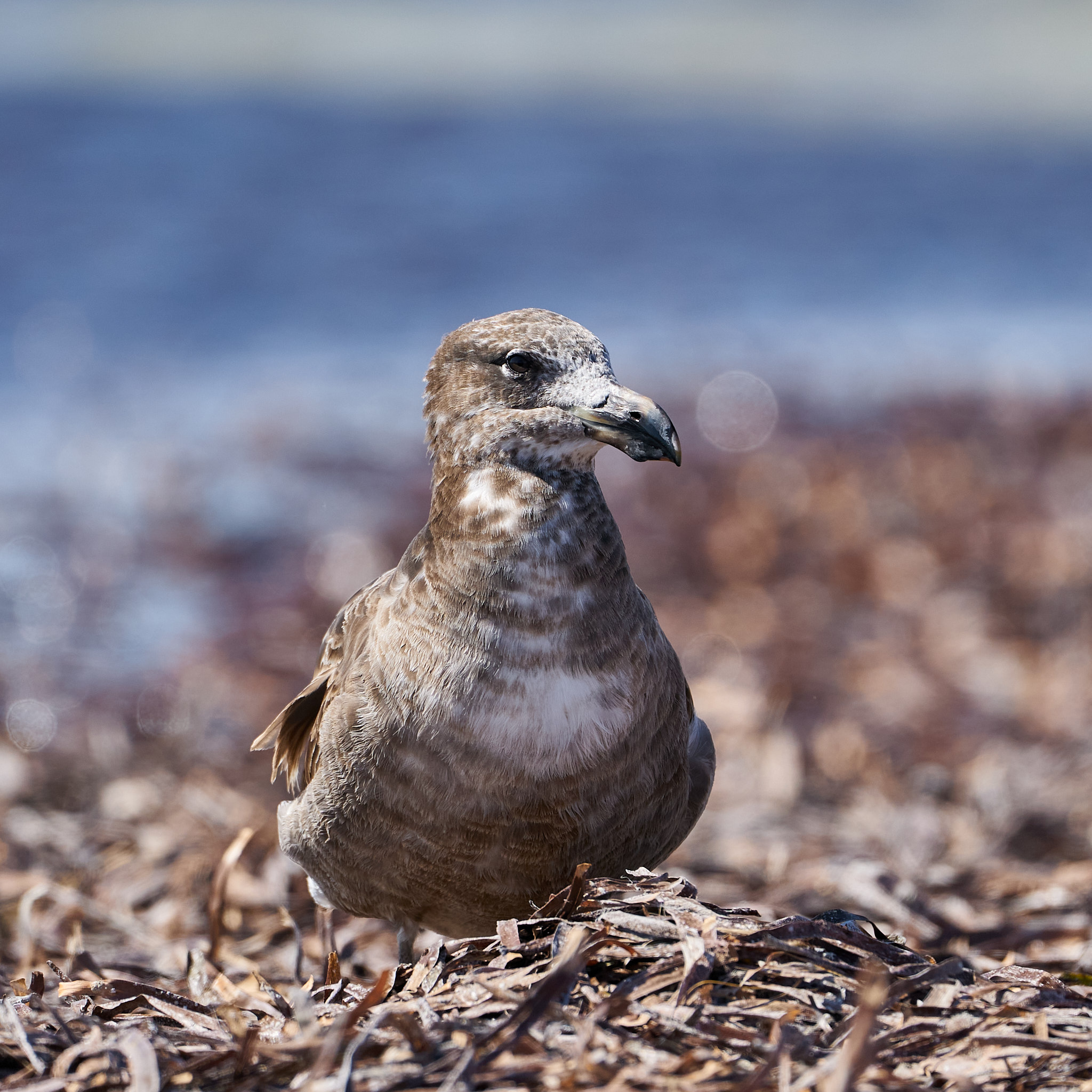
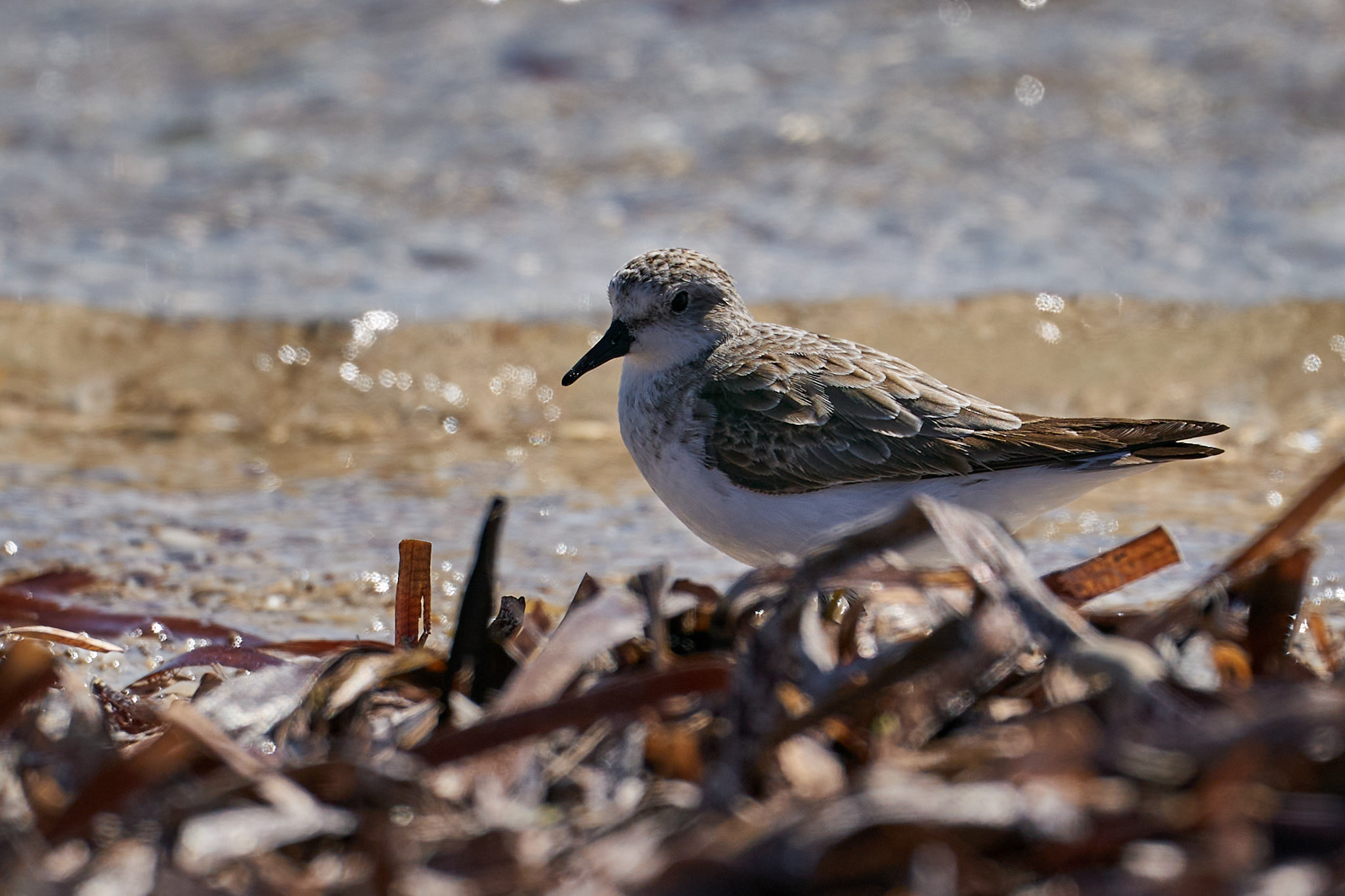
After breakfast we were on our way. It was the reverse process that we’d experienced in the few days prior, Nullarbor Plain giving way to mallee woodland and then wheat fields. The biggest difference was flocks of Starlings once we hit the South Australian wheat belt. Once we reached Ceduna we added House Sparrows and a Blackbird. WA is not entirely without introduced species but around Broome it’s rare to encounter them and it’s never Sparrows and Starlings, it’s the odd Muscovy or Peafowl.

Our destination was Streaky Bay for a couple of nights at the wonderful Islands Caravan Park which is beautifully planted, well maintained and run by some very nice people. It’s right on the beach …
Woodlands to a Plain with No Trees …

Newman’s Rocks was very kind to me. A parrot flew and landed close by. For a brief moment I was treated to an intoxicating splendour. Small, bright scarlet breast, blue face, green back, a jewelled bird – ruby, sapphire, emerald. A male Scarlet Chested Parrot Neophema splendida. A tick but no photo. It was gone too soon.

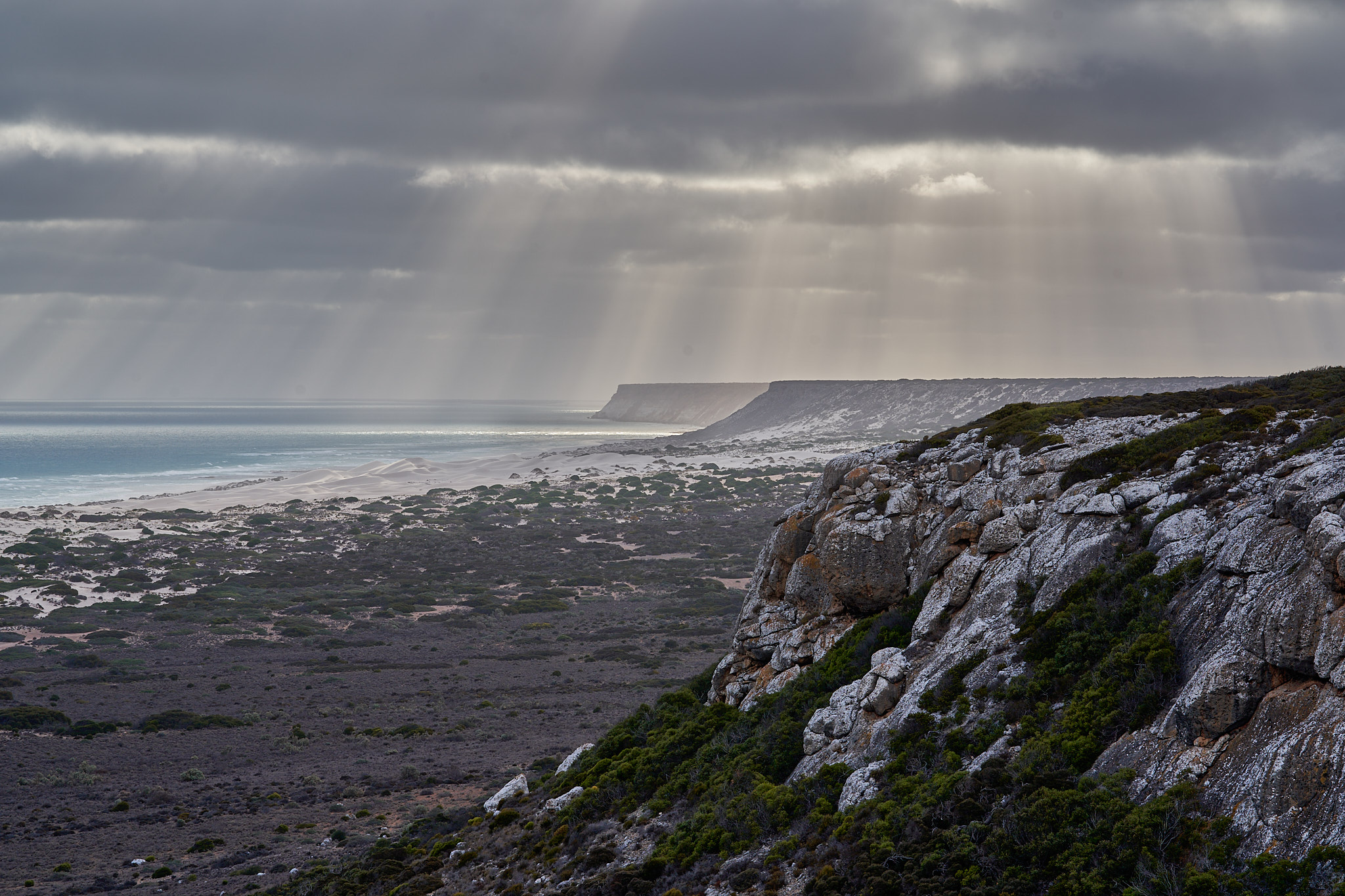
The day started in the Great Western Woodlands, 160,000 square kilometers of mallee and other eucalypts located between Australia’s moist, cooler south-west corner and its desert interior. As we traveled east the woodland was interspersed with open saltbush patches which slowly came to dominate until we were on the Nullarbor Plain. No trees here. Our first camp site was on the cliffs looking out at the Southern Ocean and the Great Australian Byte.

The next day was a short one to camp in the vicinity of the Murrawijinie Caves. The Nullarbor Plain is limestone. There is no surface water but plenty of deep caves. The low scrub around this area is home to the Nullarbor Quail-thrush. Gayle and I have put in quite a few hours on a previous visit trying unsuccessfully to find this bird. So on this occasion we set aside a full afternoon and a full morning the next day. It took about 10 minutes to find the first one and then we found at least five more. Unfortunately they notice you at the same time you notice them and then they’re gone, hiding under bushes or simply flying away.

Heave away, haul away …

Bound for South Australia. Reference doubtlessly to the fact that it was such an awful place they had to tie up the settlers to take them there.

We made sure where we’d stashed the candles and crossed the border from WA. There was the minor detail of completing the Nullarbor crossing then we would be just a couple of silos from home.

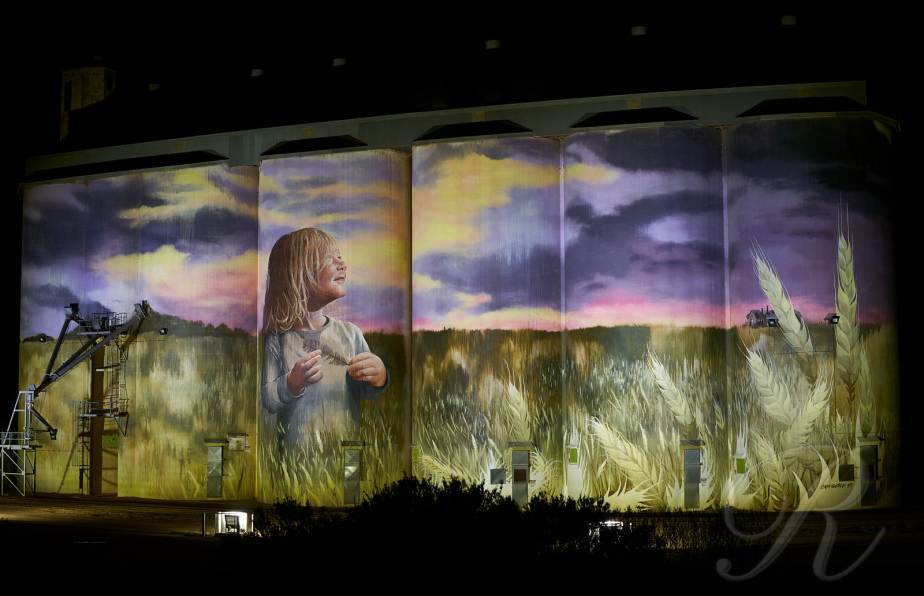
First was Kimba. Once just a sleepy wheatbelt town with a big galah now it’s a sleepy wheatbelt town with a big galah and a painted silo. It’s become quite famous on the grey nomad circuit for its free camping at the recreation reserve. Free but a donation is expected and it seems a victim of its own success. You could not have swung a cat there when we looked. We settled for the caravan park.

As if to cock a snoot at the jokes about South Australia’s electricity supply the silo is lit at night.

Kimba – Cam Scale

The focal point is a child with an adult proportioned head. I find it slightly disturbing. Even more unsettling is that to my eye it bears a striking resemblance to Julia Gillard (before she developed the Pinocchio nose).

We detoured through the Adelaide Hills and Murray Bridge to reach Coonalpyn just after sunset. The grey nomads have not yet swamped the recreation reserve here. The donation of $21 is expected for an un-powered site. Very pleasant.

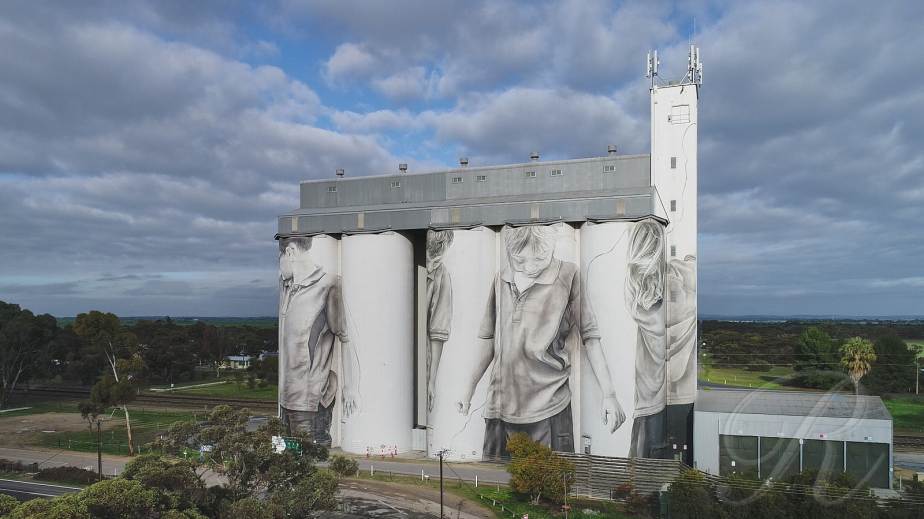
The silo here is cleverly organised so that you cannot see or photograph all of it from any one position. Some exercise is required.

Coonalpyn – Guido van Helten

Van Helten is also the artist responsible for the silo at Brim in Victoria which is one of my favourites. I don’t find this one quite as appealing but there are no mis-proportioned children here and their hair is portrayed exquisitely.

From there to home was just a hop, skip and a jump.

Heading North …
From Waikerie it was a northward trip through the picturesque town of Burra, passing south of the Flinders Ranges then north with the hills on our right. We were traveling in the footsteps of the explorers Eyre and Stuart.

Eyre had been thwarted to the east by the mud of the salt lake, Lake Torrens. He ascended a peak at the top of the range and could see more salt lake to the west and the north. He was out of water. He turned back with the belief a horseshoe shaped salt lake blocked travel to the north.

It was John McDouall Stuart from 1858 onwards that found a way between the lakes culminating after six attempts in the first return trip north south across the continent. He could always find a drink, unfortunately when in town that was alcoholic.

At Lyndhurst you have a choice of adventures, the Strzelecki Track runs off to the right Marree and Farina, our next waypoint, are straight ahead. We pulled into the Farina camp site as the light faded. Its a ghost town presently getting a face lift. One of the old bakeries is up and running and the bread is beautiful.

I have written about Farina previously <HERE>.

A run out in the surrounding country the next day produced the first casualty of the trip. The aerial for the CB radio snapped about 100m into the first corrugations we had encountered. Bugger.

Day one …

Central Goldfields, Victoria to Wakerie, South Australia – 615km.

A long day to get a good step over the familiar. Travelling north west through the sheep-wheat-painted silo country of Victoria, pausing at Patchewollock to admire the art work and allow Fifi McGee to stretch her legs.

Next step the border, quarantine and new time zone. The quarantine station was unmanned which made for a speedy transition.

Onto Waikerie and the newly minted silo art, a double sided affair …

Three silos together make for a wavy canvas that is hard for the artist to get a great result from.

The campsite we chose is at Holder Bend on the banks of the mighty Murray. Quite picturesque but very close to the Sturt Highway. The dawn chorus was a competition between a Darter and a choir of Mac trucks.