The Reckoning of Time …

There was a bit of a family gathering last evening. Those who would normally eat meat ate fish. Good Friday. God clearly favours cows over fish.

Easter wanders around a bit so how do the good people know when not to eat meat? The formula for calculating Easter has varied over time. As I have told you in a previous lecture on early Christianity in England there was once a time when half the Northumberland King’s court were celebrating Easter while the other half were still observing Lent. Violence ensued, probably because all the Easter eggs had been eaten. The synod of Whitby (AD 664) restored peace to the land.

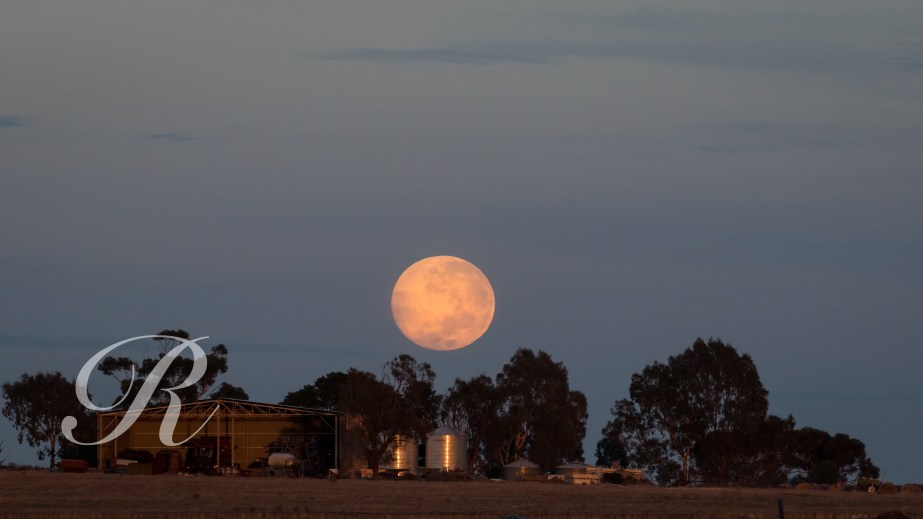
The formula these days is the first Sunday after the first full moon occurring on or after the northern hemisphere’s spring equinox.

Does that mean we antipodeans should be celebrating Easter six months later? And remember, rabbits are an introduced pest.

But back to Northumberland and the Venerable Bede, historian of his era. In chapter 15 of his magnum opus, De temporum ratione, he tells us …

Eosturmonath, qui nunc Paschalis mensis interpretatur, quondam a Dea illorum quæ Eostre vocabatur …

or in English

Eosturmonath has a name which is now translated “Paschal month”, and which was once called after a goddess of theirs named Eostre, in whose honour feasts were celebrated in that month. Now they designate that Paschal season by her name, calling the joys of the new rite by the time-honoured name of the old observance.

So Eastermonth existed before Christianity reached those pagan shores, the rites of spring. Eostre, radiant goddess of the dawn brought the flowers, put new leaves on the trees and turned the minds of hares and rabbits to procreation. It is not a coincidence that the sun rises in the east.

Have a good one.


Great Ocean …

… no road.

As beautiful as the Great Ocean Road between Lorne and Peterborough is, it does mean that there are no secluded hideaways along the coast. It’s one of Victoria’s top tourist attractions but I can’t help feeling that an inland road with dead end offshoots would have given the magnificent coastline more of a Cornwall feel. For me the adventure starts where the road stops and this road goes on and on.

But at least there is access. Continue west beyond Peterborough and the highway ducks inland. It hits the coast at Warnambool, very settled and domesticated but a good place to see whales in the winter. You can get to the sea again at Port Fairy, more rugged and way more charming. After that access to the coast is extremely limited until you get to Portland. Tourists can look across privately owned farmland to the distant ocean and wonder what they’re missing.

In fact they’re missing scenery that is the equal of the Great Ocean Road.

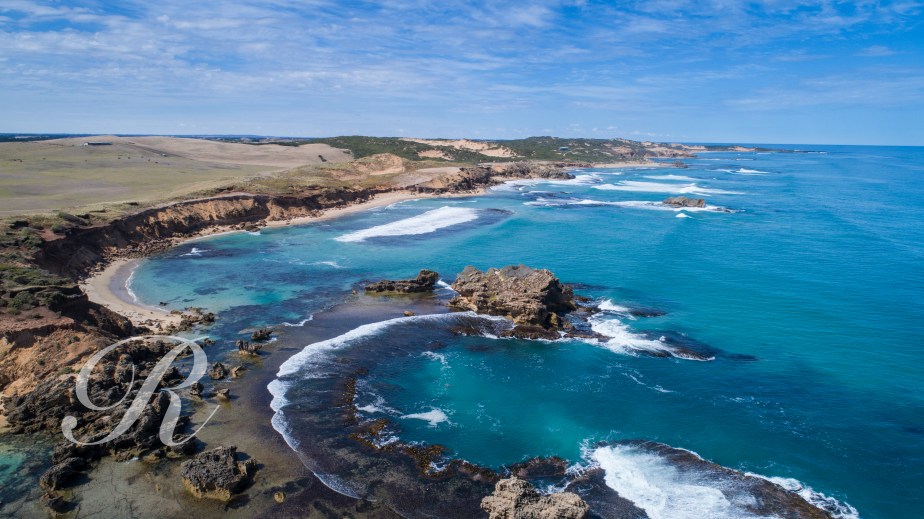
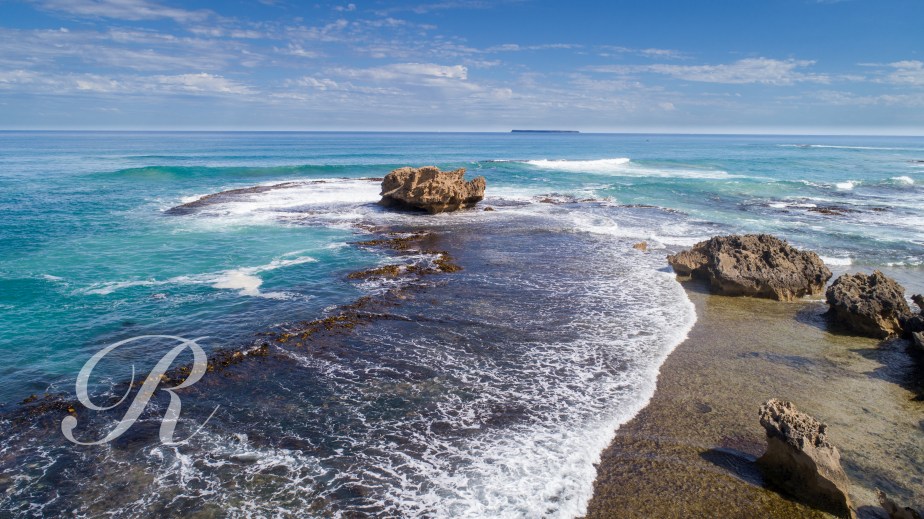
From the Crags and from Yambuk Lakes you can see Australia’s only off shore volcano, Lady Julia Percy Island. It’s been fairly quiet for the last 6 million years but you could get lucky. The island is home to Australia’s largest fur seal colony – about 27,000 strong. Sea Lions and Elephant Seals are occasional visitors. A number of different sea birds nest there. It’s the long flat topped one on the horizon …

Ship wrecks are a dime a dozen along Victoria’s coast but plane wrecks are not so common. There is a memorial at the Crags to four airmen who lost their lives in 1944. They were the crew of an Avro Anson thought to be looking for submarines. For reasons unknown it failed to return to its base in Mount Gambier. Wreckage was found on Lady Julia Percy Island and in the sea nearby. The bodies of the crew were not found.

You can visit the island by boat from Port Fairy courtesy of Southern Coast Charters. It’s a great trip.

Griffiths Island …

The early history of the European settlement of the Victorian coast is shrouded in mystery. Most of the early players came across Bass Strait from Van Dieman’s Land to explore and exploit what was then the Port Philip District of New South Wales. By ship it is less than half the distance from Launceston to any part of the Victorian coast than it is from Sydney. Settlement was forbidden and mostly went undocumented.

Port Fairy gets its name from The Fairy, a cutter that visited the Moyne River in search of fresh water in about 1828. Sealers and whalers from Van Dieman’s Land were probably using the area from about that time on.

There were three islands at the mouth of the Moyne. Some characters named Penny and Reiby established a whaling station on the  largest of them.

In 1834 the Henty brothers settled an area about 70 km to the west which would become Portland. They were the first settlers to come to the government’s notice, their presence being discovered by an exploring party commanded by Major Thomas Mitchell. By the time officialdom, in the form of Foster Fyans reached the area in 1839 there was already a settlement at Port Fairy catching whales and growing potatoes. Captain Foster Fyans, magistrate and Commissioner for Crown Lands arrived in Geelong in 1837 charged with the virtually impossible task of overseeing the orderly settlement of all of south west Victoria. Geelong and Portland are 240 km apart. Fyans and his party made the first recorded overland journey between the two.

In 1835 a gentleman named John Griffiths purchased the whaling station at the mouth of the Moyne and the island acquired his name. The station operated until about 1843 by which time Southern Right Whales were too scarce to warrant such an establishment. But as whaling declined the importance of the port increased.

Melbourne was also pioneered by adventurers from Van Dieman’s Land. The founding of a town wasn’t approved until 1837. Until Melbourne eclipsed it Port Fairy was the busiest port in the district. It remained busy until 1960 when the harbour at Portland opened for business. It still is a working port – 30 tonnes of squid were landed during my stay.

Victoria gained its independence from New South Wales in 1851. Van Dieman’s Land became Tasmania in 1856.

A lighthouse was built on Rabbit Island in 1859. Various improvements were made to the mouth of the river which combined with natural build up of sand caused Rabbit, Goat and Griffiths Islands to coalesce into one, still known as Griffiths Island.

Griffiths Island

The lighthouse was manned by two keepers until it was automated in 1954. The keepers’ cottages were demolished soon after but some plants from their garden linger on.

The island is home base for a colony of Short-tailed Shearwaters. They nest in burrows during the summer. They spend the remainder of the year on an extraordinary journey that takes them way into the northern hemisphere.

A stroll around the island takes about 45 minutes. You are quite likely to meet one of these on the way …

Pied Oystercatcher

Ball Scratching …

… to head scratching.

A friend I was talking to the other day linked the status of the Australian Cricket captain to the status of the Australian Prime Minister. It’s probably true that more people around the world can name Steve Smith than Malcolm Turnbull. Yes, even in the United States where fewer than a handful could name either.

For the first time in history they are equally popular here at home.

There is a difference in sport between playing for great clubs like Manchester United and playing for a country. When you represent Australia you carry with you the blessings and hopes of most Australians. A fine performance enhances our reputation, a poor performance diminishes it. Cheating trashes it. We are all stakeholders.

Club  players represent fans who chose to follow that club. Neither the players or the fans are necessarily associated with a particular nation. Should a team be renowned for poor sportsmanship and rough play we accept that for what it’s worth and call it Collingwood.

And yes, everyone who plays sport breaks rules. The officials are there to police that, there are sanctions usually applied on the spot. But there is a hierarchy of misbehaviour. The taking of performance enhancing drugs is universally condemned. The sanctions are severe. Whilst ball tampering is regarded by the ICC as a relatively minor misdemeanour it is clear that the public at large see it as something akin to doping. Something that Warner was quick to condemn when the culprit was Faf Du Plessis.

The principal offenders are on their way home, further sanctions await. What I’m scratching my head about is that Coach Lehmann is still in place.

Discipline, consistency of behaviour and accountability for performances are all key ingredients that need to improve. And we see that the head coach is ultimately responsible …

Said James Sutherland, chief executive of Cricket Australia, in 2013 on the occasion of Micky Arthur’s sacking.

Perhaps Sutherland is convinced that Boof knew nothing of the intention to cheat and is waiting for the inquiry to finish before moving him along for his failure to set a more appropriate standard. He surely fails by the standard set for Micky Arthur.

What of the effects in real life?

I’m off on a cruise soon. I expect I’ll be forbidden to enter the galley in case I interfere with the meat balls. Poms will say “would you like sandpaper with that”.Oh what ignominy.

New Zealanders will want to talk about cricket for the first time in many years – I guess I’ll have to talk about sheep.

Port Fairy Again …

In the old joke an Arab goes to Blackpool for his holiday. On his return to the desert he’s asked how it was. He replied “Perfect, it rained every day”

It hasn’t rained at home in the Goldfields for two months, three days in Port Fairy and two cold fronts later has me wondering if the grass will be green by the time I get home. I doubt it but the sea looks even more exciting in a gale …

… and the sun has been out between showers. A bit of bad weather can’t spoil Port Fairy. Stay at Doc’s at the Mill, it’s right on the wharf. You book through Langley’s (03 5568 2899), tell them I sent you and I’ll get a discount next time! A morning walk on East Beach and lunch at Rebecca’s. You can’t beat it.

The mill was built in 1860 and enjoyed a relatively brief career as a steam driven flour mill. It’s right on the wharf and the tallest building in town.

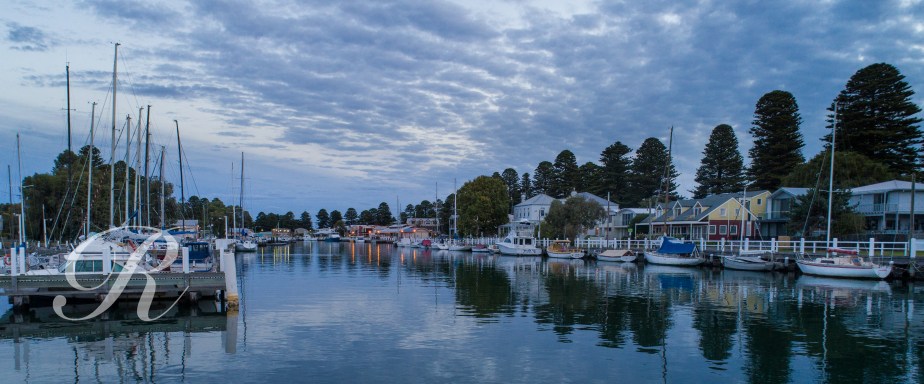
In the evening as the lights come on …

The town is situated where the Moyne River reaches the Southern Ocean. It is one of the oldest settlements in the state of Victoria and was once an important port.

If you are reading this blog in your email program you are missing out on features that are not supported in that format. Your web browser is the place to be.

Bright Yellow …

and utterly stupid.

I just know from an Australian cricket perspective, we hold our heads high and I’d be very disappointed if one of our team members did that …                                        David Warner 2016

It is an enormous honour to represent your country. And that’s exactly what you do, you represent it. If you do well you enhance its reputation. If you cheat you diminish it.

I’m all for holding a trial before the execution. Steve Smith has pleaded guilty which makes that part of it quite easy. He has sought to share the blame as widely as possible but so far I think we only have his word on that, for what a cheat’s word is worth.

I was obviously nervous about it because with hundreds of cameras around that’s always the risk, isn’t it?

Said Bancroft, what a cretin, bright yellow tape – you’d have thought he would have been smart enough to conceal some carborundum in sticky tape on his fingers.

Leadership group? I doubt that we’ll see the minutes of the meeting. It matters little really, it’s more about the responsibility group. Smith as captain is the one who must ensure that sportsmanship prevails. He should be assisted by his vice captain … if he’s not too busy in a bout of fisticuffs. And the whole philosophy of the team is the business of the coach.

It’s time for the three of them to go. And I do mean go. None of them should ever have the honour of representing their country again.

Flat out …

I heard a standup comedian on the radio the other day. His shtick was essentially based on the notion that men are always flat out busy whilst women just get things done. I doubt his career is going to rocket along, as comedy it was quite unfunny and if it was a snivelling attempt to curry favour with women he’s forgotten that in the new snivellisation it’s at least a micro-aggression to suggest a gender difference.

But let me tell you, I have been flat out busy.

It was the vintage. Time to pick the grapes. The family gathers, the sun shines, the pretty girls ply the workers with their choice of chocolates or fruit, old uncle Joe plays his accordion, a glass of a previous vintage waits at the end of every row. Perfect bunches of fruit bursting with the elixir of life itself drop almost effortlessly into baskets that fill quickly without ever seeming to get heavier. Ah, the romance.

photo GHD

The reality may be a little different. The infinite number of people who will help you drink the wine haven’t turned up for work. You start the day early in the prolonged cold, wet, intimate embrace of dew laden foliage. You cradle a bunch in one hand cut the stalk (occasionally a finger) with secateurs wielded by the other hand, drop the fruit in your bucket and search for the next bunch. Your back is bent for most bunches, you’re on your knees for the low ones.

By 10 am it’s drying out and warming up. That’s when the European wasps arrive. Those bunches that you cradle may now be armed and dangerous. You carry your full buckets to the end of the row where band aids and empty buckets await, samples of previous vintages are nowhere in sight.

photo GHD

At the end of the day the fruit goes through the crusher-destemmer and into the vat. It’s funny how your windscreen wipers only pack up in the rain and your crusher-destemmer only refuses to work when you harvest. The day was extended by the time it took to take it apart, find that the drive chain was rusty, get that cleaned up, freed up and reassembled.

Then the grapes go in the hopper, most of the stems are ejected to one side, the grapes and their juice go through into the vat. A days picking goes through in a couple of minutes.


photo GHD

It was a productive year. It’s the second year that we’ve netted the ripening crop to keep the birds from eating it all. I was dubious but the lovely Gayle insisted and she has been proven right. She gets things done.

We have some white grapes too but my attempts at white wine have been disappointing so we just leave them for the birds. With the nets we can leave the grapes longer to develop a bit more sugar. By the time that they were ready to pick a vine without a net on was a vine without a grape on.

Yeast is added and fermentation begins. The liquid, now called must, ferments on the skins for a week. This will be red wine in due course and that’s how it gets its colour. The berries float on top and need to be pushed into the liquid four or five times a day, a process known as punching the cap.

Then it’s time to transfer the liquid to a variable capacity stainless steel vat and press the skins to get the last few litres.

photo GHD

Nature now takes its course. Time for a few days break at the seaside.

Autumn …

In this neck of the woods the leaves stay green, and for the moment the grass stays brown. Not for us the fall colors that give the American and English photographers fresh inspiration.

Walking in the bushland reserve just across the creek yesterday I saw dozens, perhaps hundreds of Dusky Woodswallows, many of them juveniles with their streaky heads. The reserve supports a couple of pairs that breed there most summers. The large numbers are the result of the previously dispersed population forming flocks and making their way north.

The Reedwarblers, Bushlarks and Sacred Kingfishers seem to have quietly departed already. Time to start looking for Swift Parrots and Flame Robins.

Dusky Woodswallow (juvenile)

The Swamp Wallabies will be sticking around. At the moment they’re eating my grapes. I’m just about ready to pick what ever the birds and wallabies have left for me. Before the one above took off she gave me a moment of her time. Just long enough to grab this portrait of her and her joey against the early morning light.

Wallabia bicolor