Ohio …

The impressive skyline of Cincinnati welcomed us to the midwest.

You will recall that our departure from Florida coincided with the evacuation brought about by Irma’s impending visit. We were four days on the road. On this fourth day the proportion of Florida number plates finally tailed off. We hadn’t done justice to the states we’d passed through but it was our intention to spend the next few days on the shores of Lake Erie. It was time to get off the Interstate and hit the back roads of Ohio.

Our first stop was Fort Loramie.

It’s a pretty country town. Its heyday was back in the late 1800’s as a canal town. The Miami and Erie Canal made it possible to navigate from the Ohio River at Cincinnati to Lake Erie at Toledo. Almost 250 miles (400km) long, it boasted 19 aqueducts and 106 locks. Loramie is situated at its highest point 512 feet (156m) above the Ohio River. It was open end to end from 1827 until the new fangled railway put it out of business in the early 1900’s.

The Ohio countryside is fairly flat, open agricultural land dotted with big barns that hint at severe winters.

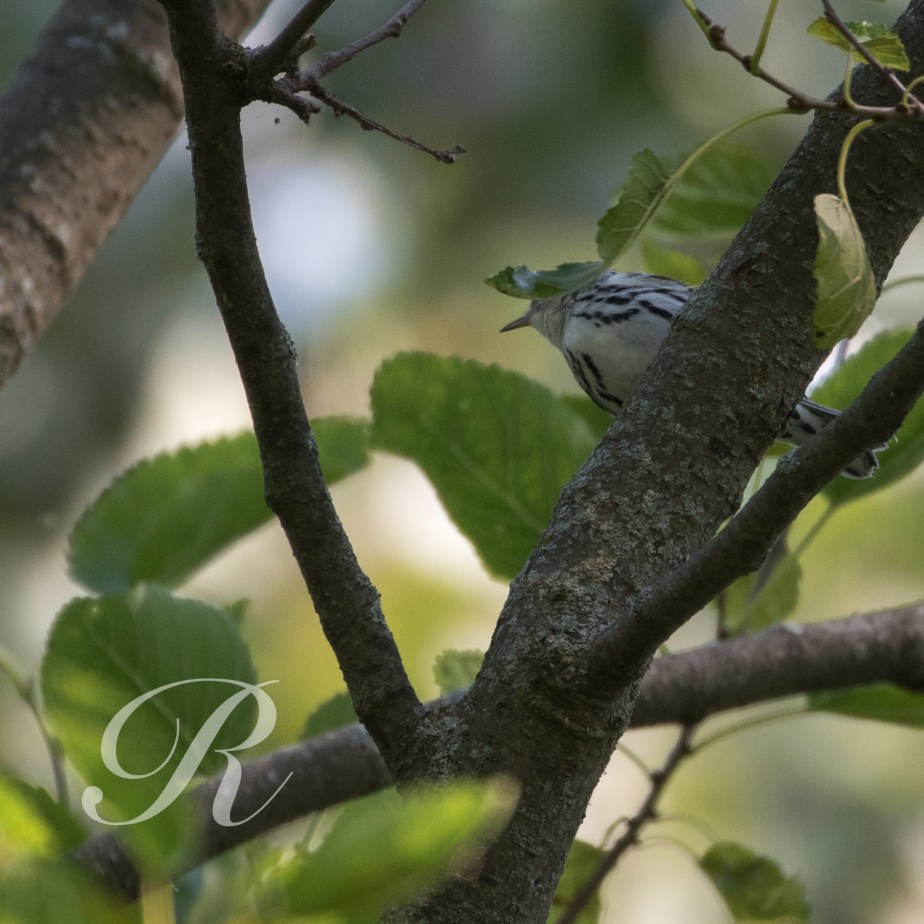
We stopped for a little birding at nearby Lake Loramie. Bird watchers do tend to be somewhat obsessive and Gayle is no exception. Tattooed down her side are the names of all the birds that she has seen and I have not. In Georgia she caught up with the Black-and-white Warbler and I did not. Fortunately we hadn’t passed a tattoo parlour en route.

The fall migration was just getting underway. At the lake we caught up with a few warblers including this little guy. It’s not a prizewinning photo but gee it was a sweet moment …

Black-and-white Warbler

Our destination that day was Maumee Bay State Park. Where there is an almost luxurious hotel conveniently close to the world famous birding spot, Magee Marsh.

Kentucky …

The geography of the Commonwealth of Kentucky is very straight forward, in the east you have part of the very beautiful Appalachian mountains, the rest is a horse paddock.

The place is blessed with lots of navigable waterways, bourbon distilleries, some coal mines and any number of fried chickens. The grass is much the colour of Marge Simpson’s hair.

Natural attractions include Mammoth Cave and Cumberland Gap …

See what rubbish you get when there’s no saxophone in the band.

The I-75 is a very efficient way of getting through Kentucky without seeing very much. We did make one stop at Wildcat Camp.

Kentucky is in the most northerly band of southern states. When the Confederacy left the Union Kentucky was divided on which way to go. After a few shenanigans it decided that neutrality would suit it just fine. The protagonists soon put an end to that ambition. One of the early battles of the American Civil War was fought at Wildcat in Laurel County, north Kentucky, on October 21, 1861.

Prior battles had not gone well for the Union, for example at the first Battle of Bull Run Union casualties were 460 killed, 1,124 wounded, and 1,312 missing or captured. This one was a very welcome victory albeit on a very small scale. Confederate losses were 11 killed and 42 wounded or missing., almost exactly double Union losses.

Today you can take a very pleasant walk through the woods up to Round Hill where the remains of the earthworks can still be seen.

Tennessee …

When you hear the whistle blowing eight in a bar

then you know that Tennessee ain’t very far …

We slipped over the Georgia Tennessee border just outside of Chattanooga. If you just took in the clip above you’d have seen the snow through the window. There was none on the I-75 … perhaps because the movie is set in a ski resort in Idaho. I believe the baritone sax player was Ernie Caceras. The support crew are the Glenn Miller Orchestra and some dancers.

Tennessee is much broader east west than it is north south. We didn’t pause until we got to Rocky Top in the north east. The motel receptionist was the very model of miserable, grudging unhelpfulness. I would give the Scottish Inn a miss, there are other motels. On the other hand next time you’re in Rocky Top make sure you eat at La Fiesta, inexpensive but plenty of excellent food. And served with a smile.To go with the meal I would recommend a Dos Equis, a big one. Two if you’re staying at the Scottish Inn.

Gayle settled for a Budweiser, very much like making love in a canoe …

… itself an excerpt from the Philosopher’s Song which you can also find on YouTube if philosophy is your thing.

The following morning we had a picnic breakfast in the Norris Dam State Park.

Norris Dam

Then we headed for Kentucky …

Where was I …

Half way up the I-75 as I recall.

Since then I’ve visited London, UK and now I’m back in Oz.

A quick walk around the country estate (in the Goldfields, Victoria) this morning turned up some of our spring migrants, Sacred Kingfisher and Horsefields Bronze Cuckoo. The signature tune of spring here is provided by the Rufous Songlark. Whoever named this bird was using rose-tinted hearing aids. It’s back and welcome despite its scratchy voice. I guess it was never going to be called a Screechlark.

I found a platypus busy in the creek that makes my eastern boundary. I haven’t seen one in ages so it’s almost a relief to find they’re still around. Last summer the creek was just a series of billabongs but it’s flowing presently.

The grass is up. The fire season approaches so the mower will get plenty of work in the next few weeks. But there’s less need for firewood so I can put down the chainsaw for a while.

The winter crop this year has been canola (rapeseed for some of you). It got off to a poor start. It was very cold this winter and germination was very slow. It’s patchy but overall it’s done better than expected …

Life’s good.

Back to the I-75 …

Kennesaw …

In March 1861 the Republican Party candidate, Abraham Lincoln was elected 16th President of the United States. He did not carry a single southern state. The Republicans had taken a position against slavery. The south took a position against the federal government.

The first military action of the American Civil War took place at Fort Sumter, Charleston, South Carolina in April 1861. The war was a brutal affair that took the lives of about 8% of America’s white males aged 13 to 43; 6% in the North and 18% in the South. In the aftermath the North prospered and the South was impoverished for a century.

By 1864 the South were losing but progress was very slow and costs were high. It was an unpopular war. Lincoln seemed unlikely to win a second term, his opponents were promising to sue for peace rather than continue to fight for victory. Atlanta, Georgia was a crucial resource to the Confederates. It stood at the intersection of four important railroad lines that supplied the Confederacy and was a centre of military manufacturing.

Maj. Gen. William T. Sherman was commanding the Union forces ranged against Confederate troops commanded by Gen. Joseph E. Johnston. Rather than make a frontal attack, Sherman had chosen several times to pass Johnston’s position and threaten his supply line. Johnston had fallen back each time.

After two months and 70 miles (110 km) of gaining ground with few casualties on either side , Sherman’s progress was blocked by imposing fortifications on Kennesaw Mountain, near Marietta, Georgia. This time Sherman ordered a large-scale frontal assault.

The Battle of Kennesaw Mountain was fought on June 27, 1864. The Union forces suffered about 3,000 casualties in comparison to Johnston’s 1,000. Sherman wrote to his wife …

I begin to regard the death and mangling of couple thousand men as a small affair, a kind of morning dash.

Essentially it was a Confederate win but on the far right of the Union lines troops under the command of Maj. Gen. John M. Schofield were able, once again to outflank Johnston’s position, all that lay between them and Atlanta was the Chattahoochee River. Johnston withdrew to the river where he was outflanked yet again and was relieved of his command in favour of John Bell Hood.

Sherman took Atlanta after a month-long siege. It was the beginning of the end for the Confederacy and enough to swing public sentiment behind Lincoln. He was reelected and concluded his second inaugural speech with a plea for reconciliation …

With malice toward none, with charity for all, with firmness in the right as God gives us to see the right, let us strive on to finish the work we are in, to bind up the nation’s wounds, to care for him who shall have borne the battle and for his widow and his orphan, to do all which may achieve and cherish a just and lasting peace among ourselves and with all nations.       Abraham Lincoln March 4 1865.

The visitor to Kennesaw Mountain can walk to the summit passing the positions where the Confederate army was dug in. The city of Atlanta can be seen from the top. A few cannons remain on duty where so many lost their lives.

At the foot of the hill there is a museum and an informative video is shown regularly.

Lincoln was assassinated on April 14, 1865. His successor, Andrew Johnson was able to announce the end of the war the following month.

Hitting the road …

The time had come, we said farewell to our St Simon’s friends and picked up the Chevy in Jacksonville. They packed up and took themselves to safety. We headed north, initially in heavy traffic out of Florida.

Our route largely followed Interstate 75, the modern version of the old Dixie Highway. We were in no great hurry. You don’t see the place at its best from the Interstate so we took other paths from time to time.

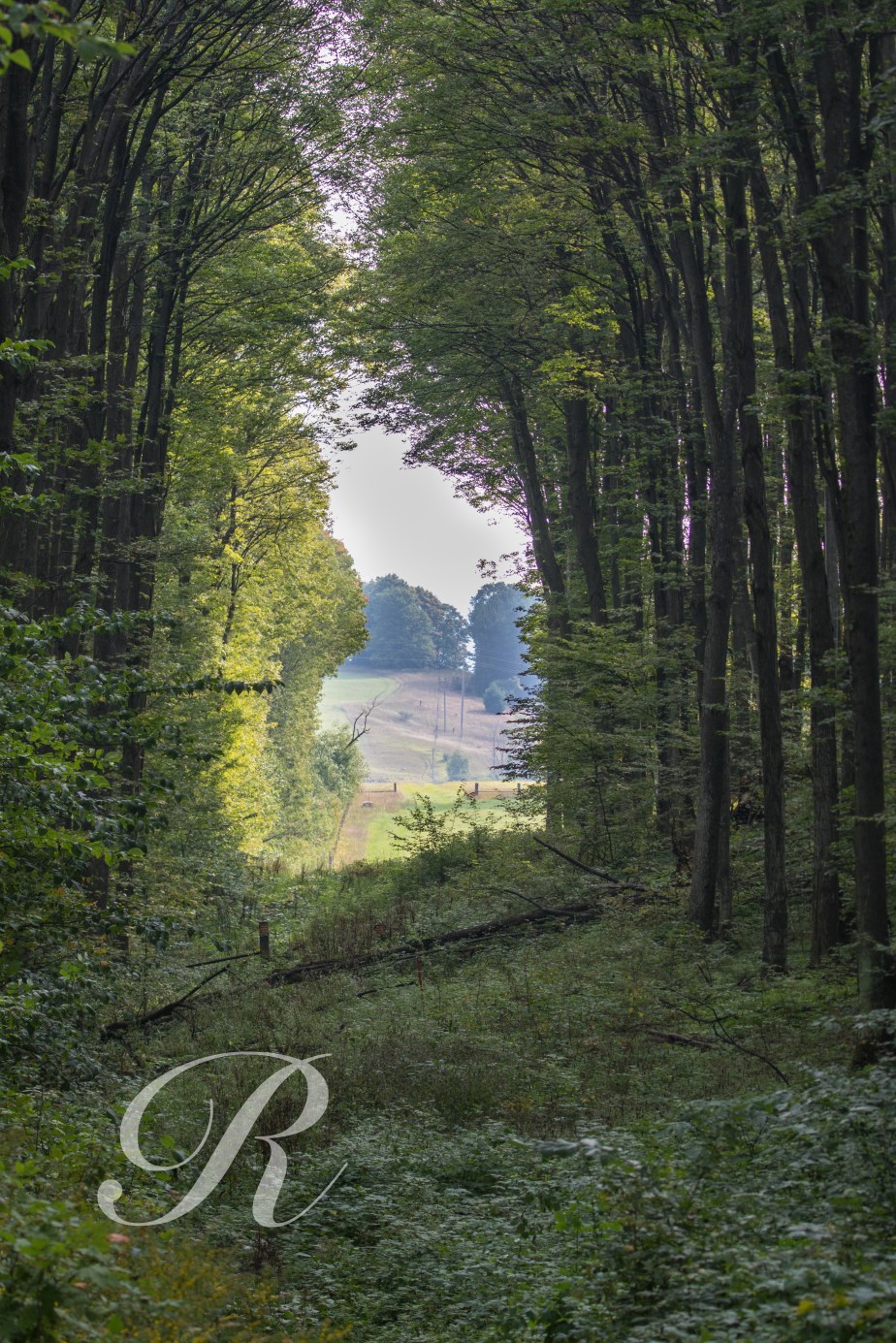
The journey was more than 1,300 miles (2,100 km) and visited six states. The road system and signage are excellent and the navigatrix was perfect. At one end of the journey it was summer plumage and green leaves …

… at the other end it’s faded feathers and autumn leaves.

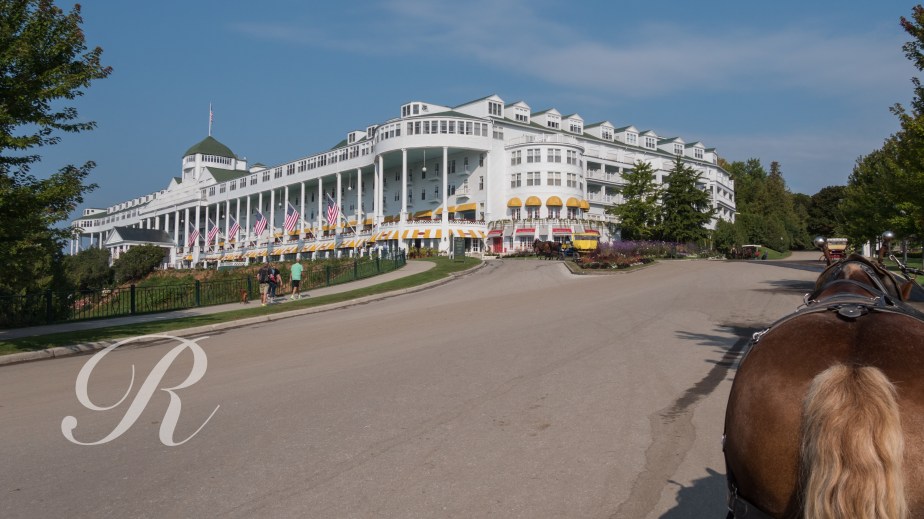
This last week we have been staying with friends in Boyne City. Our furthest north was Mackinac Bridge and Mackinaw City in Michigan.

Tomorrow we fly to London, England. We will be taking the tube from Heathrow, light a candle for us.

Before I relate our adventures in the Old Art I will post a few more of the highlights here in the US of A.

Birding Glynn County …

At the start of the year I had no intention of pursuing a big year. However an unusually busy travel schedule has provided an interesting opportunity. My bird tally will break no records except my own but I arrived in Georgia having seen about 900 species so far this year.

Glynn County, Georgia includes St Simon’s Island, Jekyll Island and nearby Brunswick. I birded with the local A team, Eugene Keferl, Bob Sattelmeyer and Sterling Blanchard. A hundred more birds? No problem. In fact I don’t think I could have left the county until we’d got them.

Ruby-throated Hummingbird
Red-bellied Woodpecker
White Ibis
Roseate Spoonbill

Sterling Blanchard made sure that we got out to the outer limits of the barrier islands with Brooks Good of Coastal Outdoor Adventures. Brooks knows his birds and where they hang out. We went around Little St Simon’s to Egg island picking up shore birds and more …

Black Skimmer
Forster’s Tern
Royal Tern
Long-billed Curlew
Bald Eagle

We had beautiful morning on the water. Brooks was taking his boats out of the water right after he finished with us and putting them under cover until Irma passes.

Irma has taken out the jetty. I hope Brooks can get back to business quickly.

Darien …

Not far from St Simon’s Island is another spot where I can indulge my interest in history and my passion for birding.

Darien in McIntosh County was originally founded by by Scottish Highlanders recruited by James Oglethorpe. They arrived in January 1736 and wasted no time building a town and fortifications. This was during the period when many Scots were moved off their traditional lands to make way for sheep farming – the highland clearances. Most of the settlers spoke no other language than Gaelic.

They had a tough time of it during the period when Britain and Spain were battling for domination in the south-east.

The city was built adjacent to the site of Fort King George which had been built in 1721, the earliest British fort on the Georgia coast. It has been rebuilt from old plans and is an interesting place to visit.

Fort King George – blockhouse
Fort King George – smithy
Fort King George – barracks

Darien also suffered badly in the Civil War. In 1863 it was burnt and looted by Union soldiers in order to deny supply to the Confederate forces.

When rebuilt after the Civil War it enjoyed great prosperity as a timber exporter … until they ran out of trees.

Just south of the town is the Altamaha Wildlife Management Area, which attracts thousands of wintering and migrating ducks and provides excellent habitat for migrating shorebirds and resident wetland birds.  There are a number of observation towers. Take your telescope.

St Simon’s After Irma …

The lovely Gayle and myself are safely in Ohio looking out onto Lake Erie.

Until a few days ago we were staying on St Simon’s Island in Georgia, guests in the house that you can see in the video below. This was shot by a neighbour, our friends evacuated to South Carolina and are also safe but have a lot to do when they are eventually allowed home.

Currently residents are not allowed to return, a curfew is in force for those who chose not to leave. 90% of Glynn County is without power, trees are down, roads and bridges are being checked for damage.

Okefenokee …

Down in the south-west corner of Georgia you can find the largest swamp in the USA, the Okefenokee. It covers about 700 square miles (1,800 square kilometres). It is the source of the Swanee River. Fifty inches (127cm) of rain a year provide the water. Shallow waterways wind through cypress trees and peat bogs, canoes are the simplest means of getting about. We settled for a motorised pontoon boat.

It’s a great place for Alligators …

… and interestingly, a great place for Black Bears who like to raid Alligator nests and plunder the eggs. Female Alligators guard their nests, large ones can fight off a bear, smaller ones are likely to come off second best. Since the swamp has been protected the bear population is recovering from past persecutions. None volunteered to be photographed.

It’s also a great place for birds, especially those with long legs …

Little Blue Heron

We got a glimpse, as well, of a pair of Sandhill Cranes.

The trees and shrubs in the swamp provide opportunities for a different suite of birds.

Barred Owl

The waters are acidic and nutrient poor, ideal for pitcher plants …