Broome …

I first visited Broome in 1996. I played a small part in an Australian Wader Studies Group expedition that caught and banded birds like these …
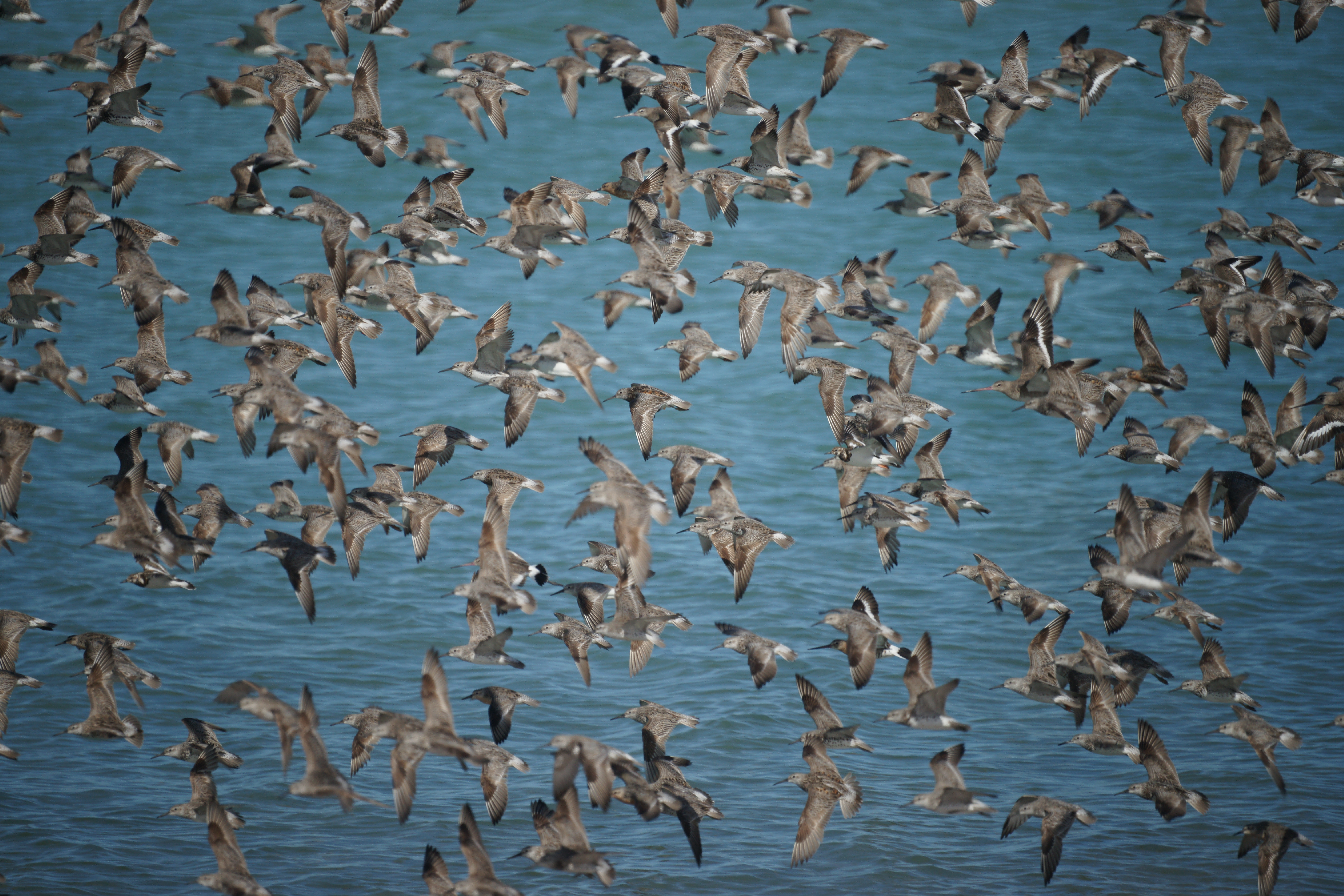
If you click on the picture it will fill your screen and you can test your diagnostic skills. The back arrow on your browser will return you here. (This is true of almost all the photos on this blog).

It’s a place that has a great magnetic pull. A couple of the guys on the expedition stayed on and made it their home. I have been back many times and usually stay with one of them.

Most of the waders nest in Siberia and come to Oz to escape the winter snow of their breeding grounds. Roebuck Bay is a key resource for enormous numbers of them. It is the premier site for shore birds in Australia.

William Dampier explored the northern coasts of Western Australia back in the 17th century. The bay is named for his ship. By the 1880’s the surrounding waters were being exploited for pearl shell. In 1883 John Forrest chose the site for a port town that would serve the pearlers as a base. He named the place after Sir Frederick Broome who was the Governor of WA at the time. Sir Fred was not much impressed to have his name associated with such a humble outpost.

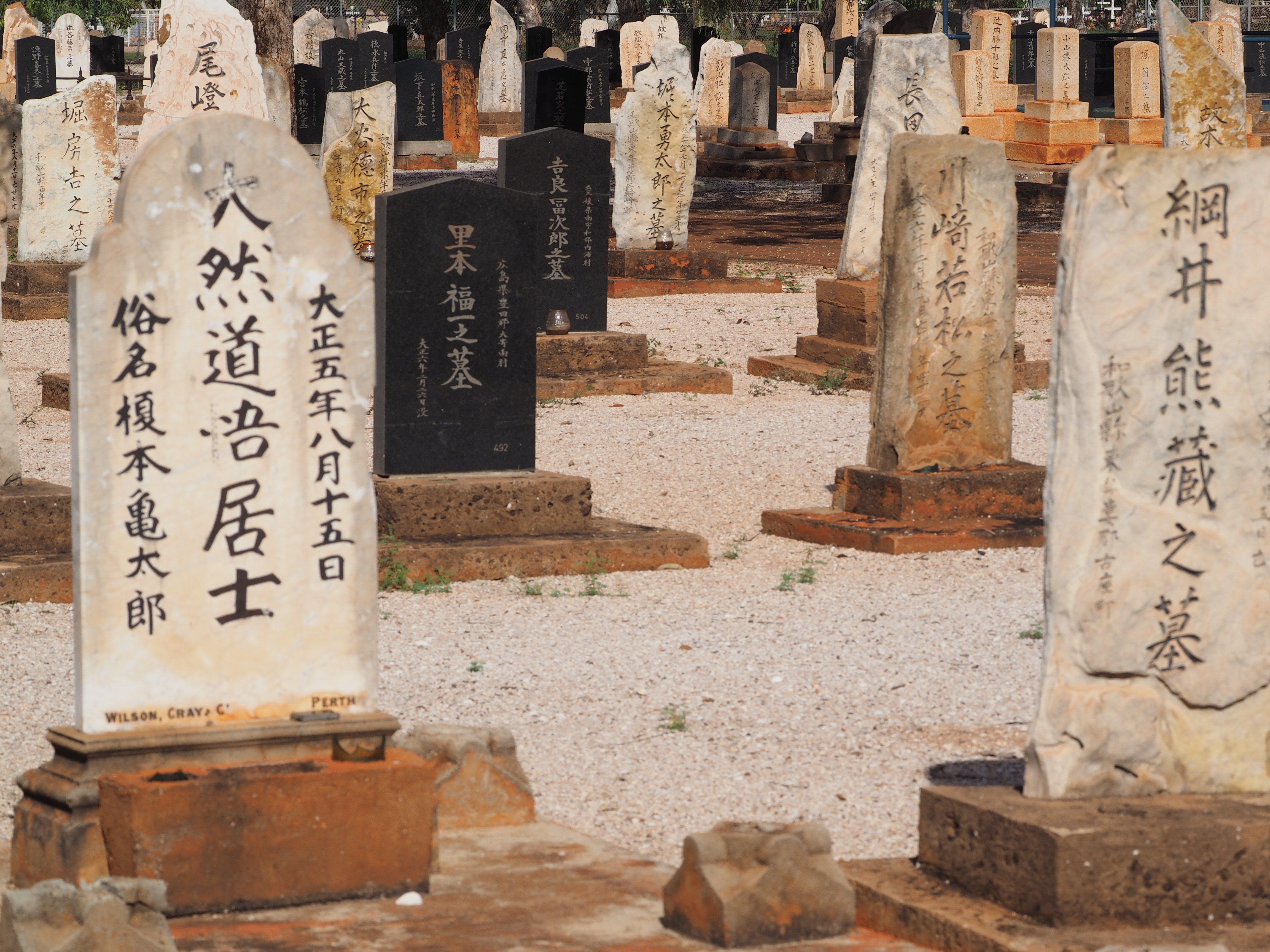
Quite an assortment of humanity worked in the pearling industry. The Japanese were especially prominent and there is a cemetery that provides a last resting place for many of their dead.
OLYMPUS DIGITAL CAMERA

They also exerted their influence in the Second World War when they bombed the place four times killing 88 on one occasion.

The pearl industry is still important but has changed considerably. In past times it was all about pearl shell which was used extensively for buttons. Nowadays buttons are made of plastic and the industry makes its money out of pearls, mainly cultured.

Broome is the administrative centre for the Kimberley and is a base for the mining and gas extraction industries.

Above all, though, it’s a tourist destination. It boasts an international airport, an open air cinema, dinosaur footprints, camel rides, spectacular sunsets and a nude beach that extends some 17km from Cable Beach to, believe it or not, the mouth of Willie Creek.

This visit was part of a package with Zegrahm Expeditions so I got to stay at the Cable Beach Resort, such luxury. Nonetheless I played hookey the first day and went birding with my good friend Chris Hassell who is a professional ornithologist with Birdlife International and the Global Flyway Network.

A splendid day was had and at the end of it I was deposited at the port and embarked on the Oceanic Discoverer for a voyage to Darwin via the Kimberley coast.

And a splendid vessel she is.



The Kimberley revisited …

Back in 2013 I made a 4WD trip to the Kimberley in search of the Black Grasswren. It was a splendid adventure which I described on my return.

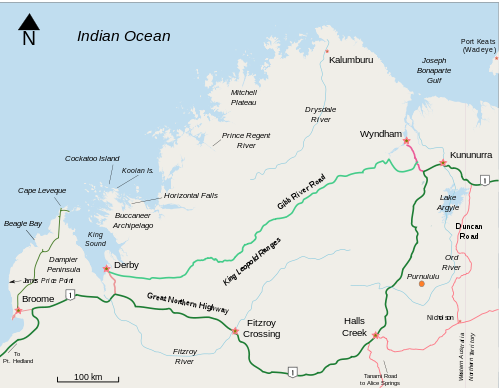
The Kimberley is a remote and sparsely populated part of Western Australia. It is located entirely in the tropics. In summer it’s hot and wet, in winter it’s hot and dry.


270px-KimberleyHere is the red bit in a little more detail …

500px-Kimberleys,_Western_Australia_map,_labelled.svg

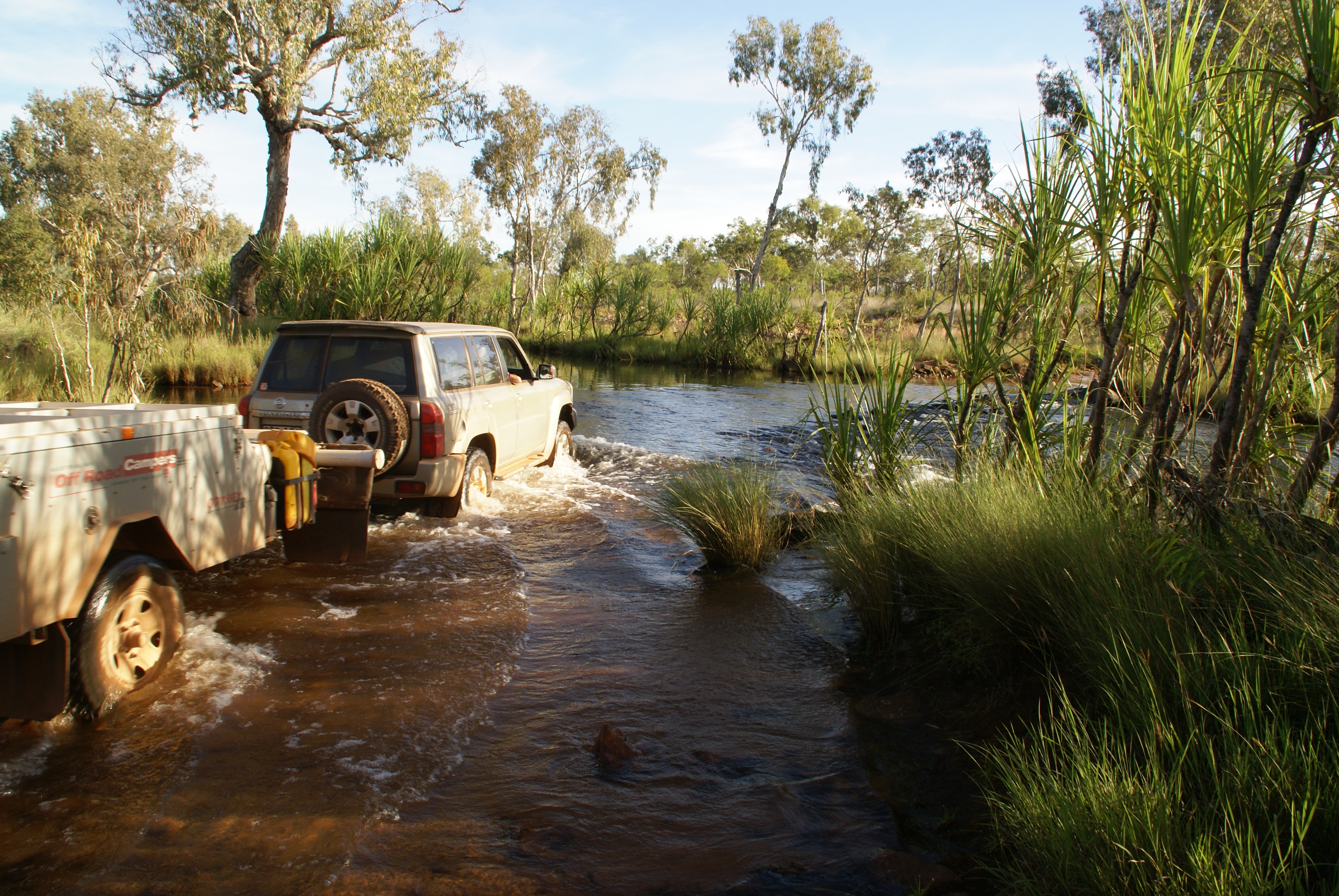
As you can see, between Derby and Wyndham the “main road” is always more than one hundred kilometres from the coast. The Gibb River Road is a modest expedition in itself but to really get to grips with the Kimberley you have to do battle with situations like this …

King Edward River

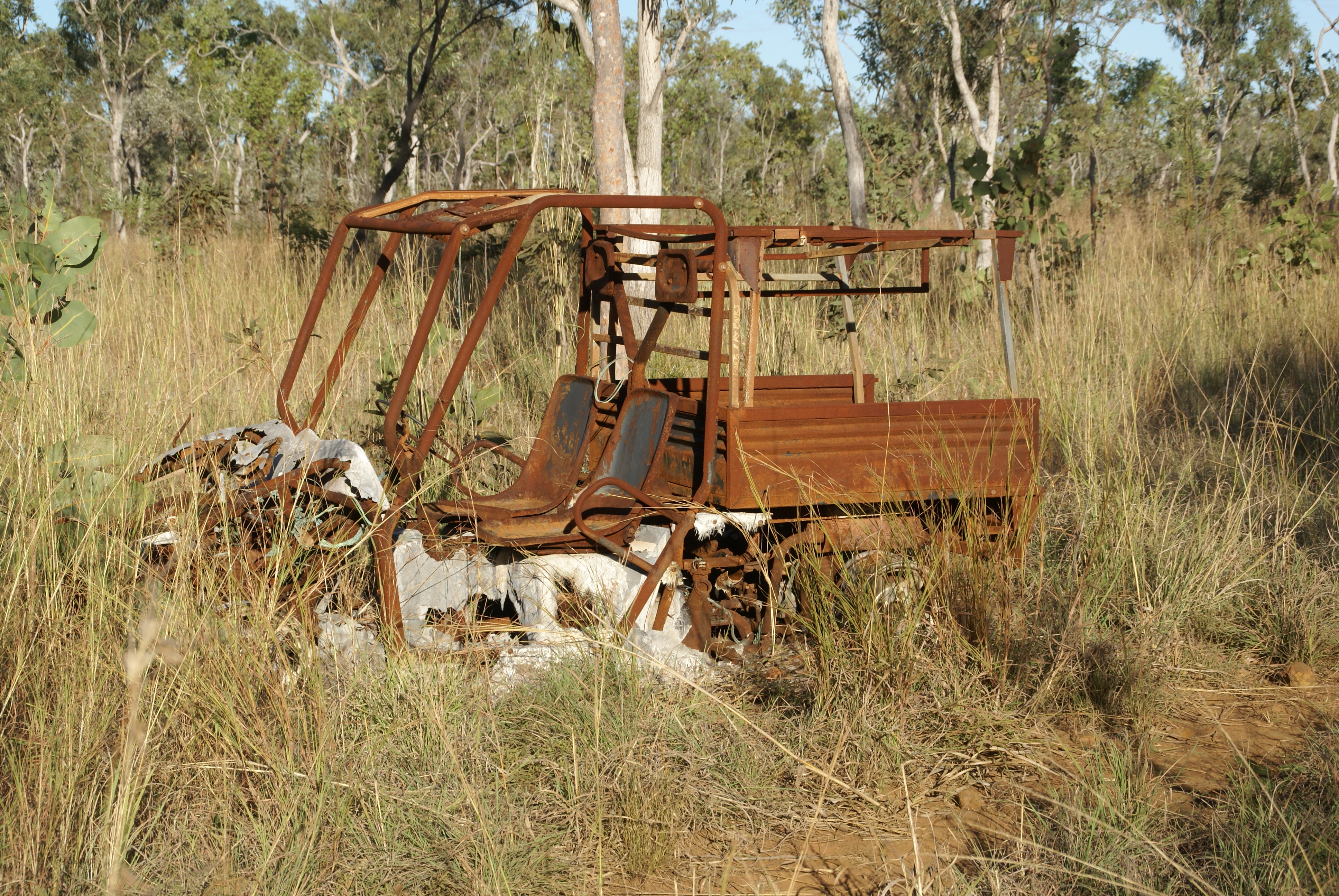
and from time to time you pass the skeletons of the vehicles that didn’t make it …

SONY DSC

Your rewards are the bush, the waterfalls, the wildlife, the rock art and the exhilaration of getting out intact. All of which just makes you want to see more … and the way to do that is by ship.

OLYMPUS DIGITAL CAMERA


It’s Etiquette …

Filed by our Warracknabeal correspondent …

Australian bush etiquette is world famous but in case you may have forgotten the finer details …

In General:

  • Never take an open stubby to a job interview…
  • Always identify people in your paddocks before shooting at them.
  • It’s tacky to take an Esky to church.
  • If you have to vacuum the bed, it’s time to change the sheets.
  • Even if you’re certain you’re included in the will, it’s rude to take your ute and trailer to the funeral.

Eating Out:

  • When decanting wine from the box, tilt the paper cup and pour slowly so as not to bruise the wine.
  • If drinking directly from the bottle, hold it with only one hand.

Entertaining at Home:

  • A centrepiece for the table should never be anything prepared by a taxidermist.
  • Don’t allow the dog to eat at the table, no matter how good his manners.

Personal Hygiene:

  • While ears need to be cleaned regularly, this should be done in private, using one’s OWN ute keys.
  • Even if you live alone, deodorant isn’t a waste of money.
  • Extensive use of deodorant can only delay bathing by a few days.
  • Dirt and grease under the fingernails is a no-no,it alters the taste of finger foods and if you are a woman it can draw attention away from your jewellery.

Theatre/Cinema Etiquette:

  • Crying babies should be taken to the lobby and picked up after the movie ends.
  • Refrain from yelling abuse at characters on the screen. Tests have proven they can’t hear you.

Weddings:

  • Livestock is a poor choice for a wedding gift.
  • For the groom, at least, rent a tux.  A tracksuit with a cummerbund and a clean football jumper can create a tacky appearance.
  • Though uncomfortable, say “yes” to socks and shoes for the occasion.

Driving Etiquette:

  • Dim your headlights for approaching vehicles, even if your gun’s loaded and the roo’s in your rifle sight.
  • When entering a roundabout, the vehicle with the largest roo bar doesn’t always have the right of way.
  • Never tow another car using panty hose and duct tape.
  • When sending your wife down the road to fill up a petrol can, it’s impolite to ask her to bring back beer too.

Hotter and hotter …

It’s worse than we thought. Gee, it’s getting hot.

All the models show it and according to the consensus we all know it.

The thermometer, however, has been uncooperative. To counter this Australian thermometer readings have been homogenised, that is adjusted.

The Bureau of Meteorology have published the improved temperatures as the ACORN data set. The result – an increase in temperature of 0.9 °C over a century. QED.

Two issues cloud the matter somewhat. One is the urban heat island (UHI) effect. Increase the bitumen and the buildings around weather stations and you expect a warming bias in the record. The second issue is the adjustment process. One would expect that, for urban weather stations, either the modern records would be corrected downwards or older records to be corrected upwards, in order to compensate for the UHI. The mechanism the BoM uses for temperature adjustment has not been published. But trust us, we are from the government and are here to help. As was said of another government “the future is certain, only the past is subject to change”.

The past has left a record. In 1933 what was then called CSIR published 74 years of weather records. Twenty years later The Commonwealth Bureau of Census and Statistics published an Official Year Book of Australia which included the mean temperature readings from 1911 to 1940 at 44 locations.

One Chris Gillham has been working very hard to compare the historical records with the ACORN set. And guess what … the older records have been adjusted downwards. Almost half of the vaunted warming has been due entirely to changes in the record. My guess is that the rest is due to the UHI.

My source is Jo Nova where you can find far more detail.

Australia Day …

Around about 85,000 years ago my ancestors, and yours, took advantage of a bit of climate change and escaped northwards from Africa. They weren’t the first people in the genus Homo to make the break but there is good genetic evidence to suggest that all modern people outside of Africa are descended from that group.

They initially spread along the coast and by 74,000 years ago they had reached as far as China.

Mt Toba, a volcano in Sumatra then went pop, big time. Volcanic ash covered India and Pakistan, it produced a winter that lasted six years or so. The human population went through a bottleneck, there may have been no more than about 10,000 adults that survived this event. If you’re reading this your ancestors were in the lucky few, oh that gossamer thread.

Sometime in the ten thousand years after that folk in the east shook hands and said “good luck”. Some continued east and colonised Australia, others headed back west, and when things thawed out a bit colonised Europe. There is a nice summary of events <HERE>.

On 26 January 1788 the First Fleet arrived at Port Jackson and the descendants of those brave, early Homo sapiens were reunited. We are all one species. Your ancestors are my ancestors, my ancestors are yours. G’day.

Emerging from the bush …

A happy new year to all and sundry. I am full of optimism, it can’t be anywhere near as disastrous as Tim Blair predicts

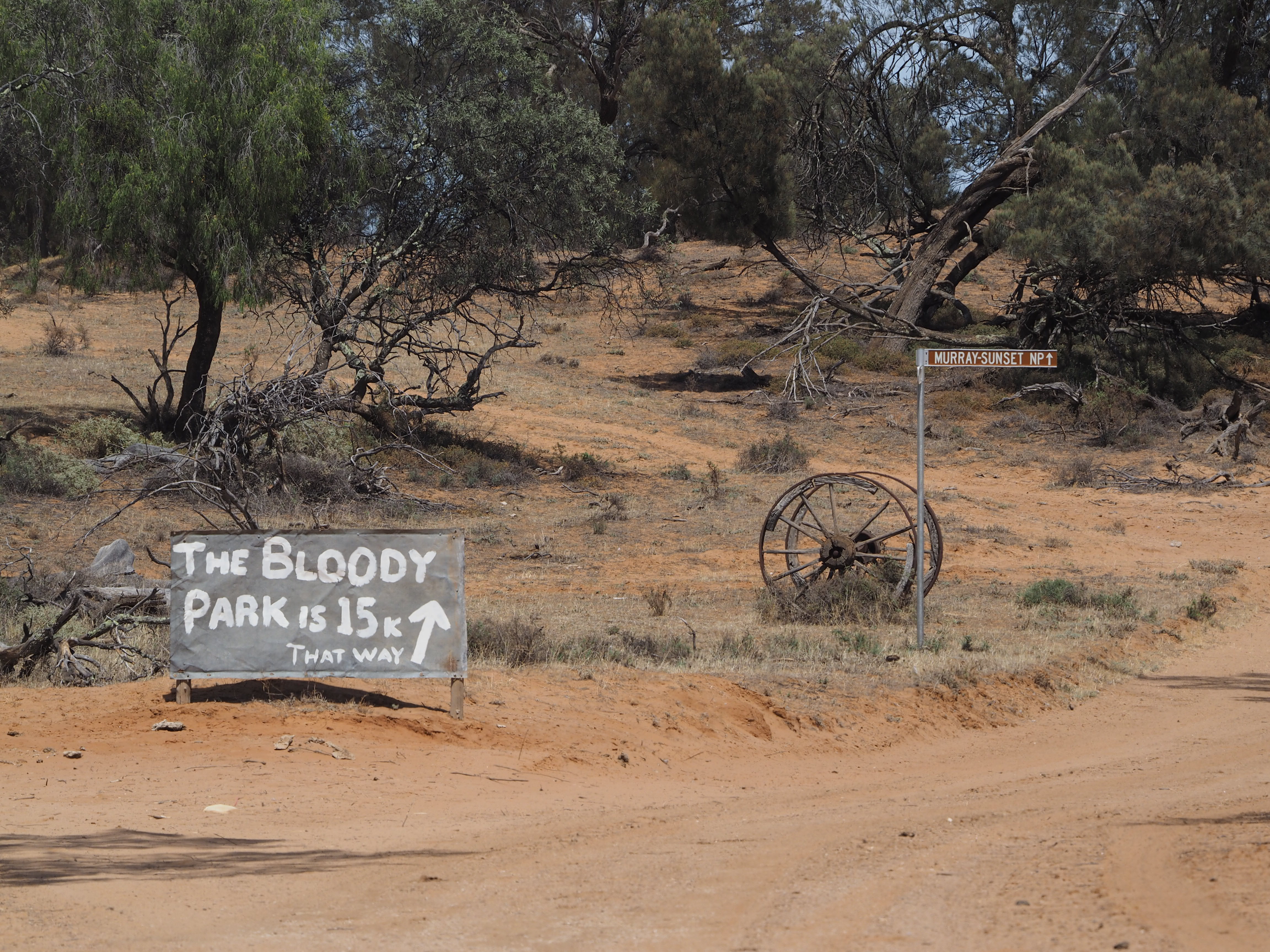
I woke up to 2015 in Victoria’s Sunset country not far from this sign …

OLYMPUS DIGITAL CAMERA

This is the part of Australia that achieved fame when Apple Maps was launched. Version one directed people going to Mildura into the wilderness. The press made much of the prospect of people dying of thirst or succumbing to snake bite. I did neither but I did make an excellent start to my 2015 bird list.

A couple of people have taken on the challenge of the Calendar Game. I will post my progress from time to time, hopefully they will inform us all of their progress in comments. So far this year I have seen 110 species, so I’m safe until April 20th.

Summer is harsh. Weather is always a topic of conversation in Victoria because it changes frequently. The cycle runs from a hot north wind through a cold change from the west, a couple of cooler days then the wind turns northerly and things hot up again. The dramatic moment is the change itself, it can drop the temperature 15 degrees in half an hour. In summer that’s usually very welcome.

When it’s very hot and windy the fire risk is high. Fires tend to start during the northerly, all too often because some nutbag deliberately lights it. Initially the fire front travels south, burning embers often travel ahead on the wind, starting spot fires that make firebreaks ineffective. Despite reports that it travels faster than a speeding bullet the front is likely not to exceed 16–20 km/h. After five or six hours then the area affected will look like a relatively narrow triangle with its base in the south about 100 km from the apex at the fire’s origin.

The change arrives with a strong westerly wind, the fire front now becomes the eastern side, much longer than the southerly base. If the change is accompanied by heavy rain … great. In summer it often isn’t. In Victoria the loss of life and property is usually greater after the change.

The most recent weather cycle produced the fires in the Adelaide hills, South Australia, which has destroyed at least 26 houses, and fires in western and southern Victoria that have been less destructive. Looking west from my front gate the change looked like this …

OLYMPUS DIGITAL CAMERA

My fire plan is simple. There is a road leading south and another going east. Fire from the north, McGee goes south, fire from the west, McGee goes east.

But on a brighter note, my meanderings over the last couple of days have turned up some beautiful sights …

OLYMPUS DIGITAL CAMERA

The old trestle bridge at Archdale, and below a Rainbow Bee-eater at Newstead.

OLYMPUS DIGITAL CAMERA


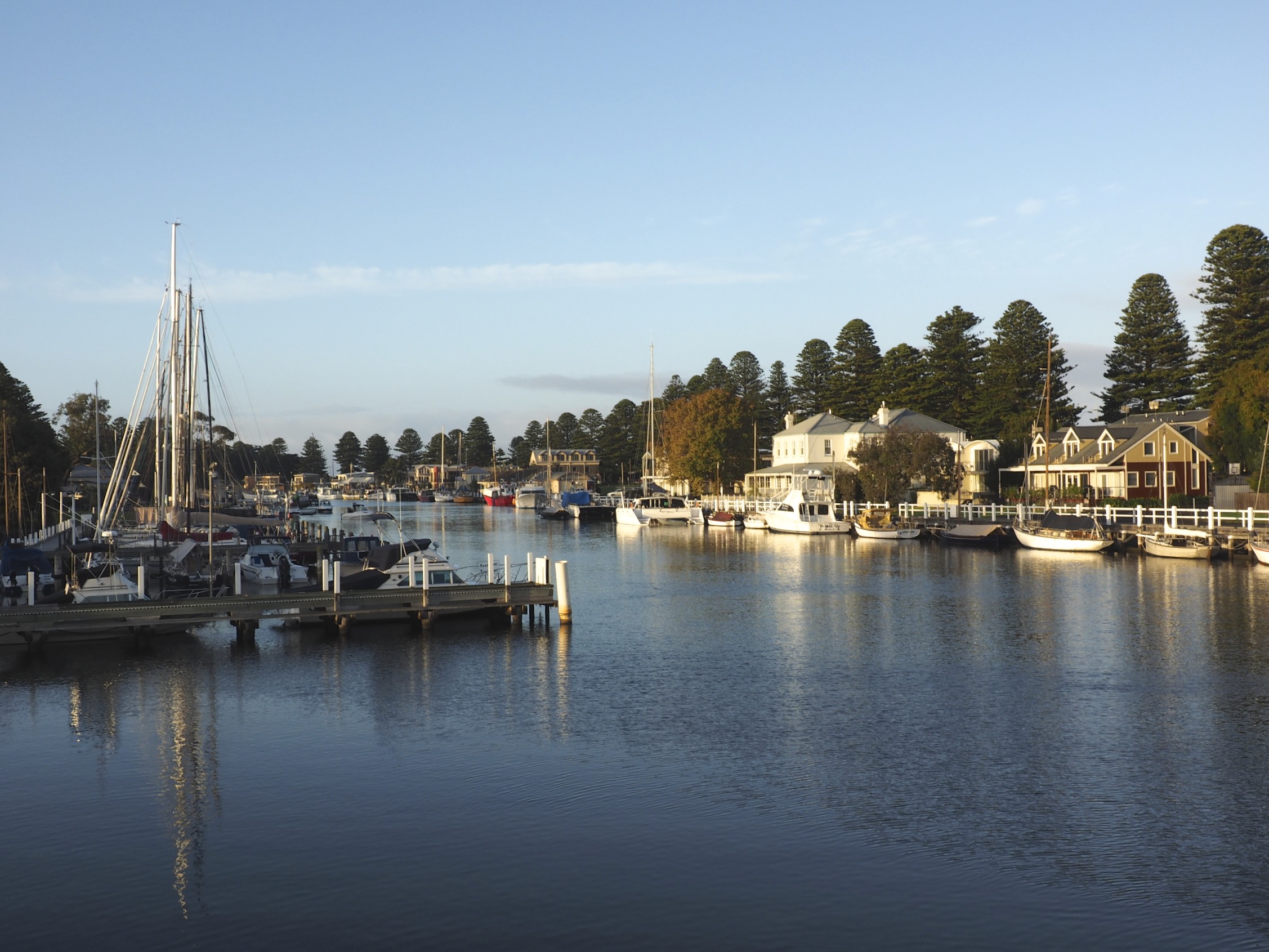
Ah, Port Fairy …

Jewel of Victoria’s west coast.

I have the enormous luxury of spending a few days here.

OLYMPUS DIGITAL CAMERA

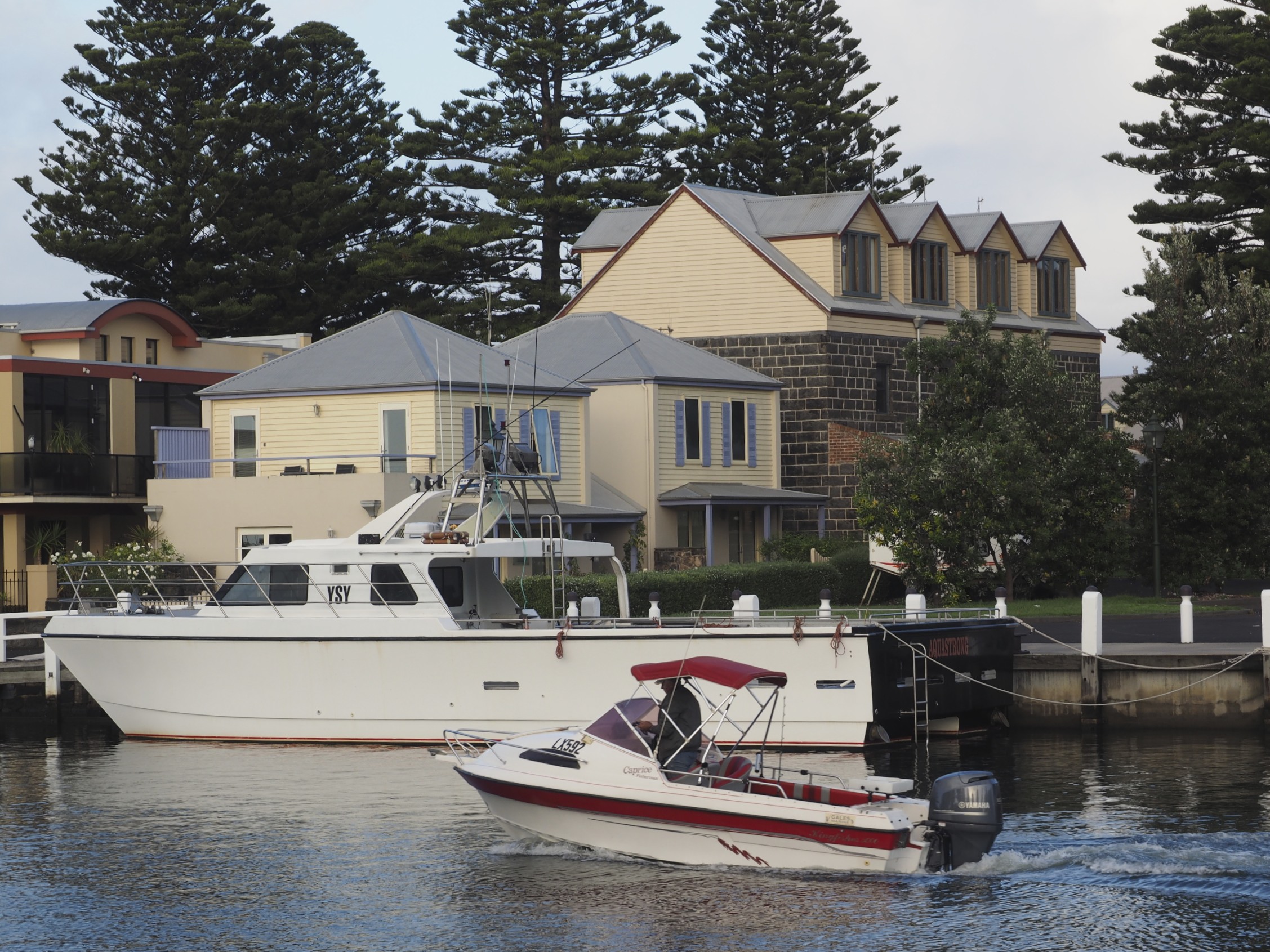
It is 290 km west of Melbourne where the River Moyne reaches the southern ocean. This coast was home to a small whaling industry from the 1830’s, a store opened here in 1839 and the Post Office in 1843. It is the home of Victoria’s oldest continuously licensed pub and some other fine heritage buildings. If it wasn’t for the sand on the beach and the better weather it could be an English seaside village.

It is still a working port. Less than a hundred metres from where I’m staying there is a guy making wicker cray pots on the deck of his fishing boat. A couple of days ago they were just a bundle of rods soaking in the river.

The tourist can walk along the wharf, take a stroll around Griffith’s Island, the early whaling base, or visit the koalas and emus at Tower Hill fifteen minutes drive away. Have lunch at Rebecca’s, tea at the Lemongrass Thai Restaurant and recharge the soul. They tell me the folk festival in March is not to be missed although it’s not my scene.

It is a splendid place for the bird watcher.

OLYMPUS DIGITAL CAMERA

The best place to stay is Doc’s at the Mill, right at the wharf and an easy walk into town or to the beach. The old flour mill was built in 1860, it’s the only three story building in town. It has had a colourful history itself, as you can see from the photo the third story is now wood. If you want to see the stone that used to be there you need to look at the tower of the Anglican church in Regent Street!

It has been converted to luxury accommodation with three bedrooms. Contact Langley’s  +61 3 5568 2899.


Australia explained …

For my many overseas visitors, a little explanation is sometimes in order. A couple of current topics are cases in point.

The first thing to remember is that Australia brought its governance style, constitution, respect for the rule of law etc from the Old Art, ie England. It is no surprise that to understand some aspects of our lives we must look to English history. First cab off the rank then …

The Star Chamber (Latin: Camera stellata) was an Englishcourt of law that sat at the royal Palace of Westminster from the late 15th century until 1641. It was made up of Privy Councillors, as well as common-law judges and supplemented the activities of the common-law and equity courts in both civil and criminal matters. The court was set up to ensure the fair enforcement of laws against prominent people, those so powerful that ordinary courts would never convict them of their crimes.

Court sessions were held in secret, with no indictments, and no witnesses. Evidence was presented in writing. Over time it evolved into a political weapon, a symbol of the misuse and abuse of power by the English monarchy and courts.

In modern usage, legal or administrative bodies with strict, arbitrary rulings and secretive proceedings are sometimes called, metaphorically or poetically, star chambers. This is a pejorative term and intended to cast doubt on the legitimacy of the proceedings. The inherent lack of objectivity of politically motivated charges has led to substantial reforms in English law in most jurisdictions since that time.

It is also handy to know that Penfold’s Grange is Australia’s premier wine, a 1959 can cost an entire career …

From the Penfolds website (my emphasis) …

Grange is arguably Australia’s most famous wine and is officially listed as a Heritage Icon of South Australia. Grange boasts an unbroken line of vintages from the experimental 1951 and clearly demonstrates the synergy between Shiraz and the soils and climates of South Australia.

Penfolds Grange displays fully ripe, intensely flavoured and textured Shiraz grapes. The result is a unique Australian style that is now recognised as one of the most consistent of the world’s great wines. The Grange style is the original and most powerful expression of Penfolds multi-vineyard, multi-district blending philosophy.

From humble beginnings in the 1950s, Grange has maintained its place as Australia’s most prestigious red wine over five decades. Today, it is a wine of international renown, with each vintage eagerly awaited by collectors both in Australia and overseas.

Penfolds Grange is a wine of extraordinary dimension and power. Richly textured, intensely concentrated and packed with fruit sweetness, these wines, regardless of vintage, require medium to long-term cellaring. They develop into immensely complex, beguiling wines that seduce the senses.

An Australian icon, Grange represents a tradition in winemaking that is totally uncompromising. Grange has bypassed the fads and trends of modern winemaking in the sense that it has maintained an integrity of style and remained true to its origins in the mind of Max Schubert. Penfolds Grange is the quality standard against which all other Australian red wines are judged. To share a mature Grange, 15 to 20 years old, in fine condition, is one of the great wine experiences.

  • Food Matches
  • Beef, dehydrated vegetables, shaved mojama, quinoa, braised oxtail and horseradish
  • Rare roasted aged fillet of beef with a red wine reduction
  • Wagyu beef

On a roll …

According to The Australian

A MAN has died after a vehicle drove off a Perth road, entered bushland and rolled over.

Police were notified of the single vehicle rollover off the Great Northern Highway about 30-kilometres south of Wyndham at 10.30am (WST) on Saturday.

It appears the vehicle left the road at or near a bend, entered bushland and rolled over.

From Perth to Wyndham is a roll of 3,215 km … no wonder the poor bastard was dead.