Wet …

Most of Australia is very dry

Australia Rainfall

If it’s brown, yellow or the lightest green on the map then average annual rainfall is less than 400mm (less than 16 inches). That’s most of the country. Rainfall is highest near the coast, on the mountains and in the far north. In the southern half of the continent rainfall in winter exceeds that in summer. In the north summer rainfall predominates.

We pick up our journey at Alligator creek just south of Townsville. Even at the scale of the map it’s possible to see that from there heading north is a journey into a part of Australia that is way wetter than the average.

The wet tropics stretches up the Great Dividing Range  from Townsville in the south to Cooktown in the north. The highest point along the way is Mount Bartle Frere at 1,622 metres and not far away is Bellenden Ker (1,593m), This part of the region enjoys 8 metres of rainfall per year. The mountain range has been dissected by at least nine significant rivers leading to plenty of opportunity for local evolution and the region as a whole is cut off from other wet areas by the surrounding dry country. This is a formula for high levels of endemism in flora and fauna.

Wet Tropics

Driving up from the south the first chance to get amongst it is at Paluma 90km from Townsville. It’s a steep drive up from the coast. Your first stop has to be the Ivy Cottage tea rooms! Take scones on the balcony overlooking the forest, fight the birds off  your food with one hand whilst taking photos of them with the other.
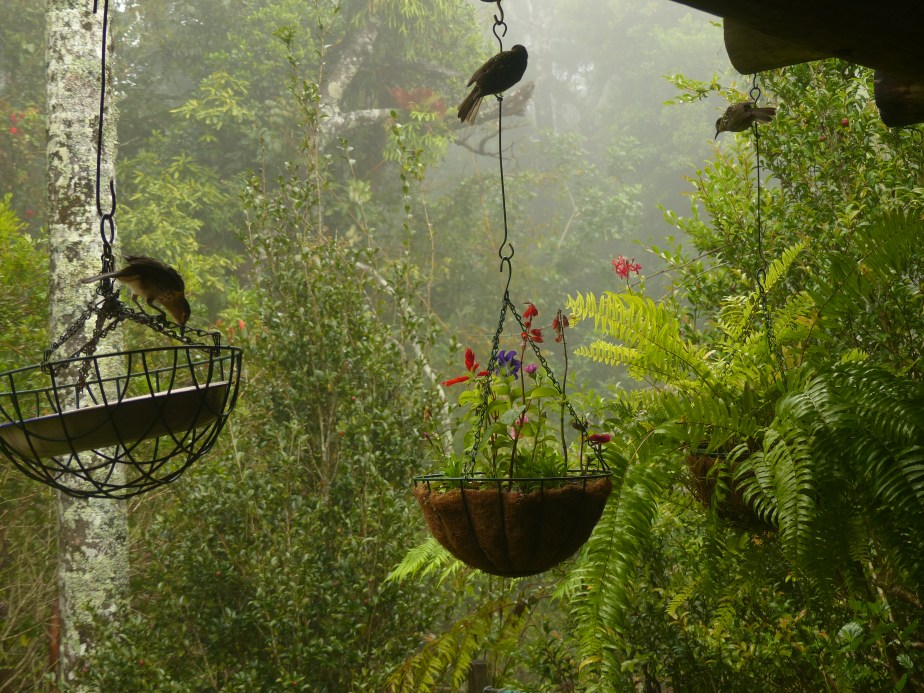
Ivy Cottage

Macleay's Honeyeater


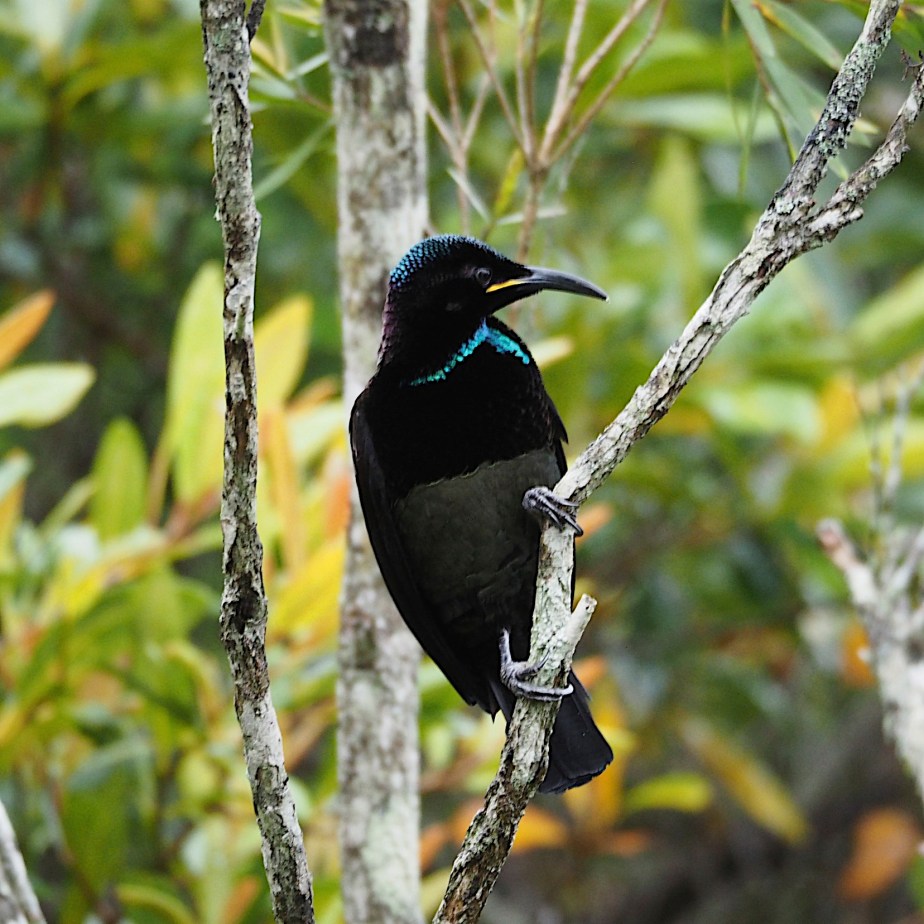
Victoria's Riflebird


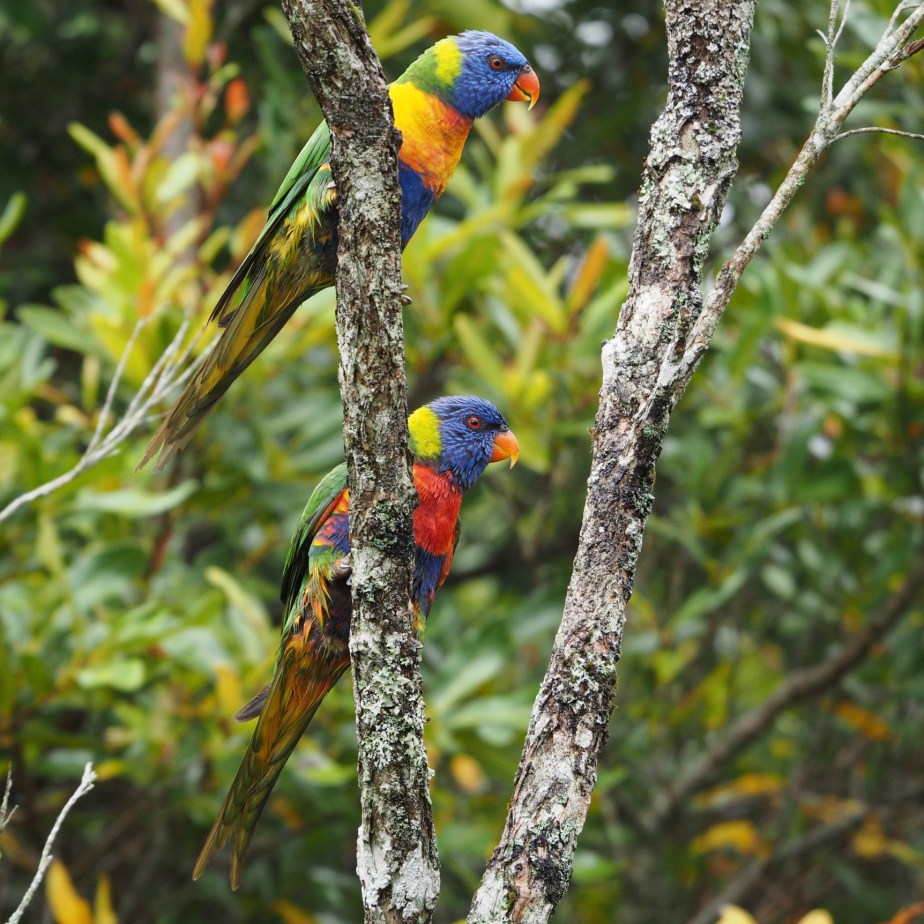
Rainbow Lorikeet

I recommend the cheesecake.

When we tore ourselves away from there we had to work a little harder for our birds but not too far away we found the maypole bower of the Golden Bowerbird.
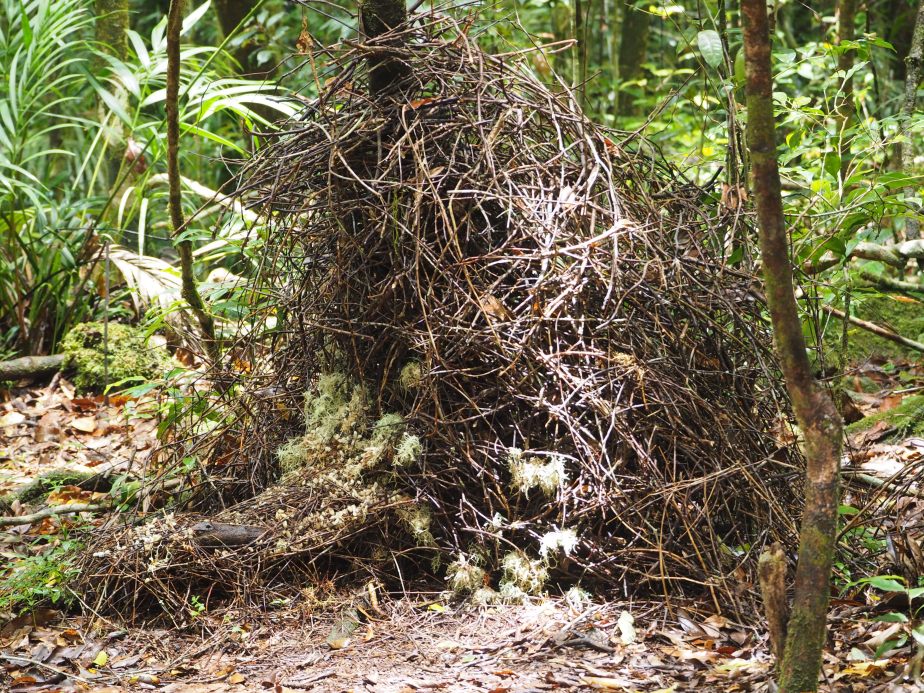
Maypole

The male constructs and maintains this remarkable edifice, decorating it with lichen throughout the breeding season. Females visit to inspect his work, if impressed they mate with him. He plays no further role in the raising of his offspring. He was keeping a watchful eye on his bower when we were there.

Golden Bowerbird

Our next objective was Wallaman Falls. We could have retraced our steps to the coast turned north and run up the escarpment again but we opted to take the road less travelled on the inland side of the range via Home Valley and Fox Mountain. This was a fairly rough track mainly through dry eucalypt woodland. Wallaman Falls has the longest drop of any Australian waterfall.
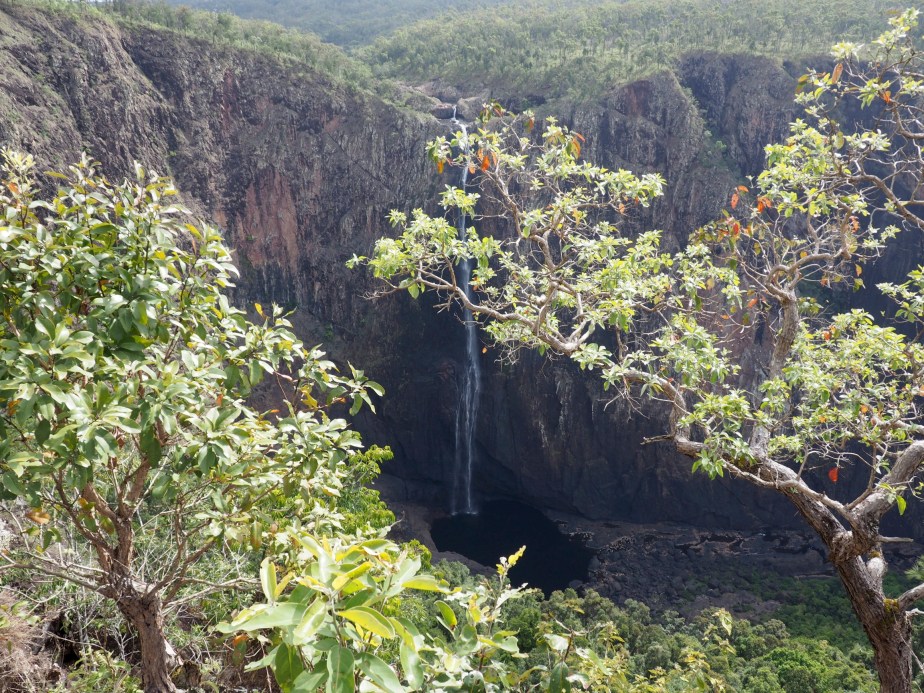
Wallaman Falls

Not exactly Niagara especially at the end of the dry in this El Niño year. What we really wanted to see here was a Cassowary which would have been a tick for Mark. No luck. So on to our camp site for the night, at Etty Beach near Innisfail.

Why camp at a caravan park when there is so much national park in the neighbourhood?

Cassowary

That’s Dad with the chicks and this is a reliable place to see them.
Townsville …

With the Eungella Honeyeater ticked off, the next step of the journey was to pick up young Mark at Townsville Airport.

Once again, our campsite was chosen for its convenient location and not given the attention it deserved. Alligator Creek is 25km south of Townsville in the Mount Elliot section of Bowling Green Bay National Park. The park covers just under 58,000 hectares ranging from mangroves on the coast to rainforest on the mountain tops. It includes some significant wetlands. It is home to some very interesting creatures including the Estuarine Crocodile although it might be better to encounter an Allied Rock Wallaby or a  Rufous Bettong. An overnight stay just doesn’t do it justice. Camping needs to be booked online. Facilities include showers and toilets and a picnic shelter or two, very pleasant.

As we arrived we discovered that there is a gate some ways from the camp site that is closed from 6.30 pm until 6am. We were picking Mark up at 7.30 pm. This raised two obvious considerations. Firstly the car would have to be out of the area prior to 6.30. Secondly, Mark’s camping gear and food were in the vehicle and weighed a ton and therefore a moral dilemma. Should I take his gear out in the camp site and bask in the awareness of my great kindness or would it be more amusing to watch him carry it?

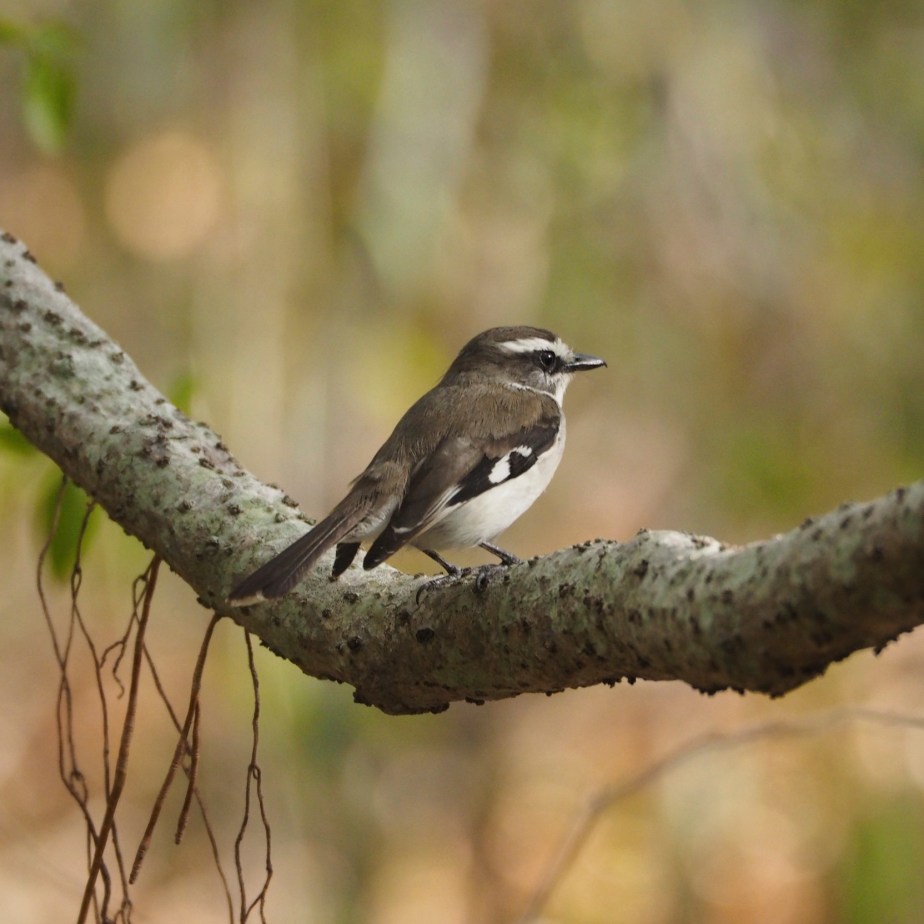
We set up tent. I took out Mark’s gear. And then we explored. One of the highlights was a pair of White-browed Robins occupying a territory near the campsite …

OLYMPUS DIGITAL CAMERA

Then into town we went, the flight was on time and we were soon back at the gate. It was wide open, presumably the closure occurs only at busy times. On this occasion we were the only campers in the place.


Destination …

Darwin

From the Tiwi Islands to Darwin was an easy overnight cruise. We had an appointment with the pilot for first light.

Pilot climbs aboard

The travel company that managed the cruise was Zegrahm Expeditions and, as always, they added a great deal of value to the product. The cruise director made sure that we had the opportunity to extract the max and he was well supported by guides who really knew their stuff. They included Chris Done who had been the regional manager for the state’s Department of Conservation and Land Management, Terry Done, a marine biologist, Shirley Campbell, anthropologist from ANU and Brent Stephenson, a first rate ornithologist.

The ship was part of the Coral Princess fleet, first class facilities and a wonderful crew.

Off the ship early and flying late; what to do? Go birding.

The only disappointment of the day was finding a new fence around the Palmerston sewage ponds, you can no longer see the birds that it attracts. Yet another sewage pond falls by the wayside, every one of them a sad loss.


Oranges and Lemons …

Sterna Is.

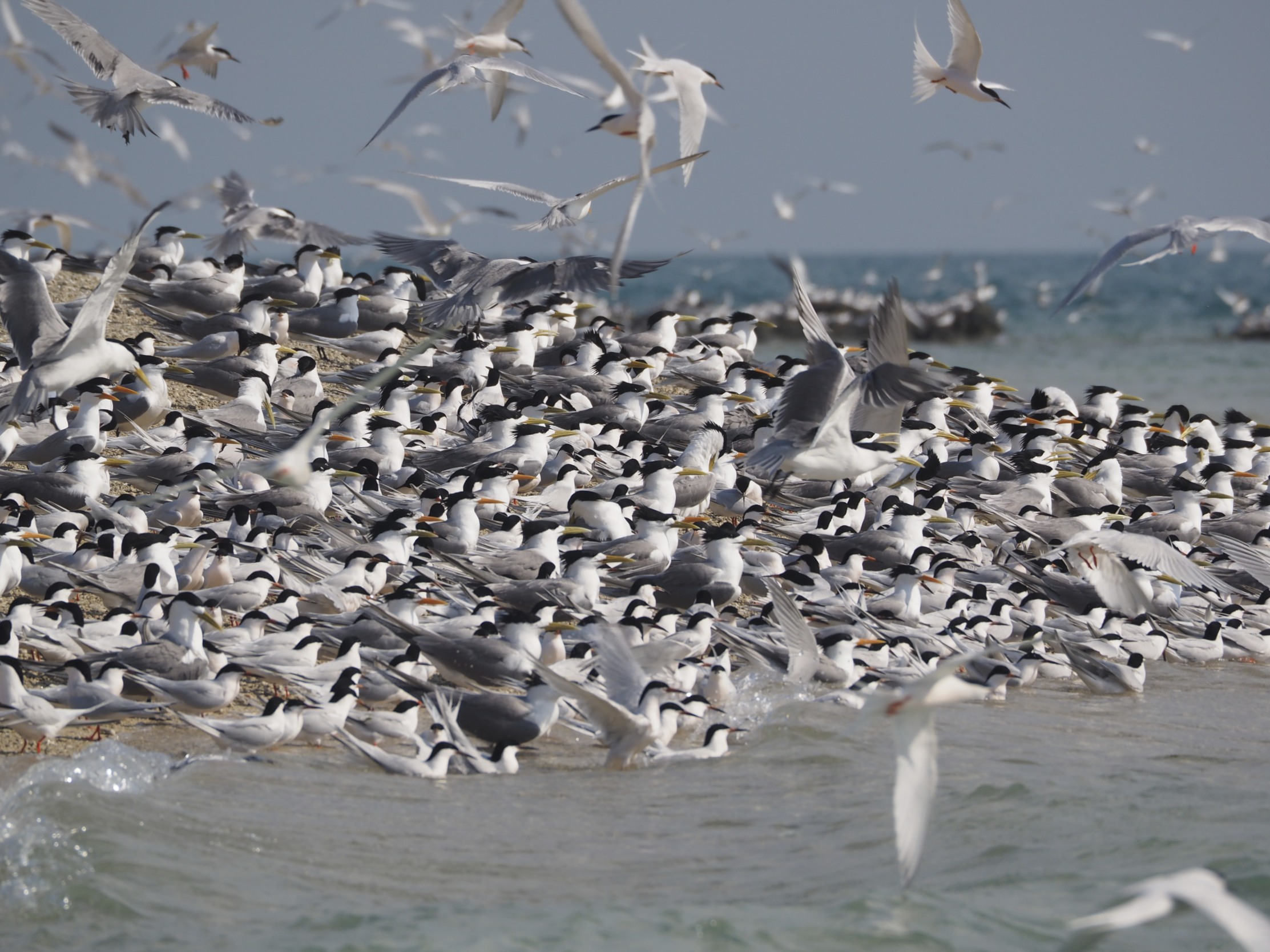
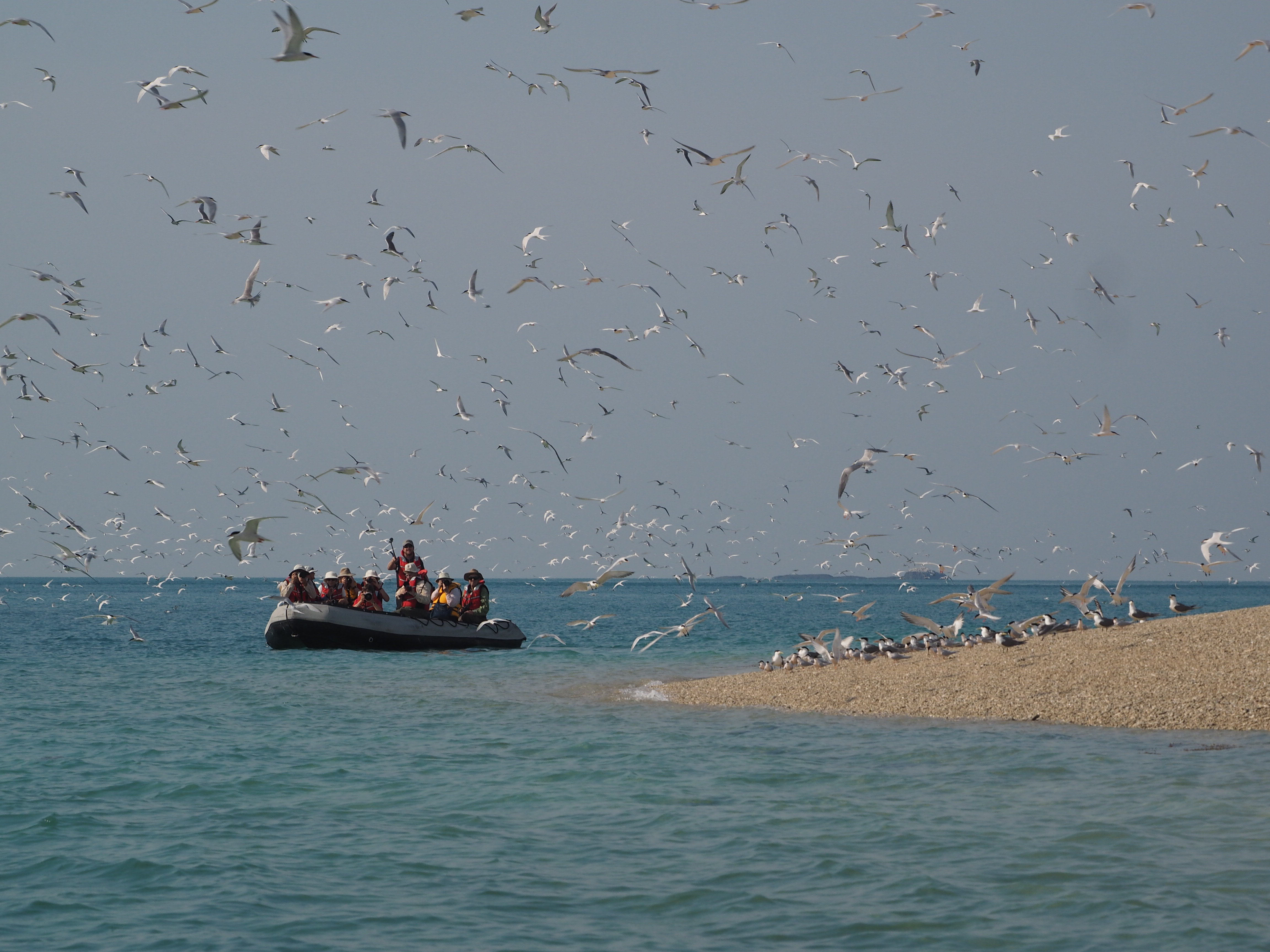
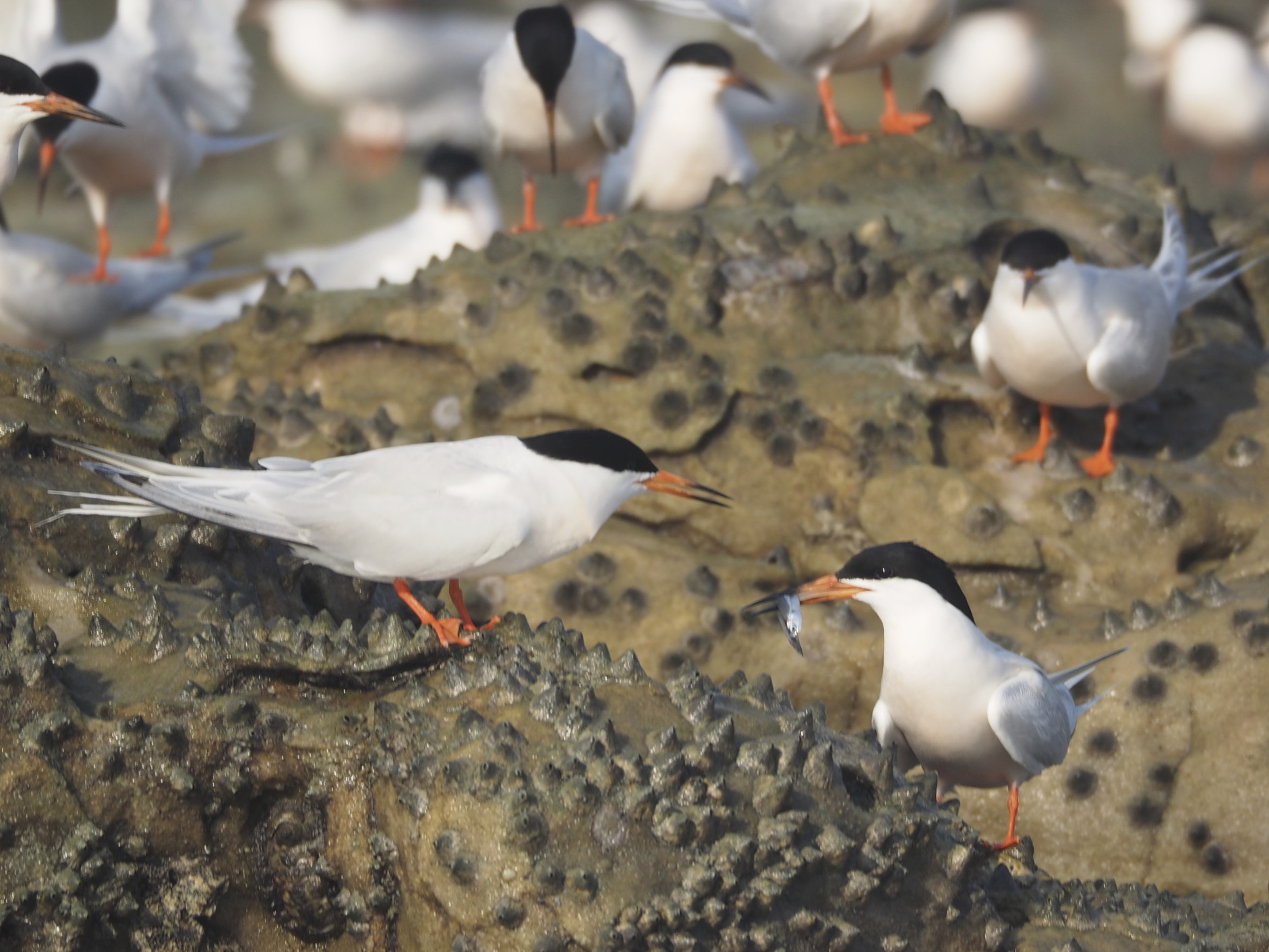
Not far from Bigge Island was, for me, one of the highlights of the Kimberley trip, Sterna Island. If you click on the photo it will fill your screen and you can try your diagnostic skills. There are three species of Tern to be found. If you find a fourth let me know. The back arrow in your browser brings you back to this page.

Sterna Is.

There were many thousands of breeding pairs of terns. Plus a pair of Peregrines that could have lunch whenever they wanted and one did before our very eyes. A White-bellied Sea Eagle also flew through causing a fair bit of mayhem. But it was mostly about the terns. The Roseate were in peak breeding plumage …

Roseate Terns

The presentation of a fish serves the same purpose as a rose on Valentines day.

Roseate Tern

The next photo shows Crested and Lesser Crested Terns in the one view. To tell them apart just remember the Crested has a bill the colour of Lemon peel, the Lesser Crested has a bill the colour of Orange peel …

Crested & Lesser Crested

Birds just bursting with energy. You have to click on this one …

Never alone


Update …

The year rolls along. My Aussie birdlist for 2015 currently stands at 212 comfortably ahead of the days elapsed. The addition of new species has slowed. That’s inevitable, but the change of seaons brings its own rewards. The first Flame Robin of the winter turned up on the farm on 11th of April, a lone female plumaged bird. Numbers are building. I’m looking forward to Swift Parrot.

A change of scenery will also help. I think I’ll head to the Kimberley … I’ll tell you about it when I get back.

The calendar game …

In 1998 I visited Townsville in Queensland, it was shortly before new year. I bumped into some local birdwatchers and went out with them on Townsville Common. Like most birdwatchers I meet, they were very generous  with their knowledge, you can’t beat local knowledge, and they put me onto some other birds to tick off before heading back to Victoria.

Amongst themselves topics of conversation included the start of the new year, the start of a new year list and preparation for a game that they played among themselves. You were in the game on January first. To stay in the game you had to have added at least one species to your year list for each day elapsed. They were plotting a big day out for that first day. A one hundred bird day would see them safe until the beginning of April. The last one to go out would be the winner or by reaching 365 (plus one in a leap year) there could be any number of winners. They were laughing about who had lasted how long in the year then coming to a close.

They restricted the game to birds seen in Queensland. It would be tough but not impossible to see 365 species in a single year in Victoria, my home state. McGee’s Victoria list stands at 386 but that includes birds that don’t turn up here every year. McGee’s Queensland list stands at 438 despite the fact that he only spends a small fraction of his time there.

Since then I have played the game privately, allowed myself the whole of Australia to play in, and it is one measure of how successful a year has been. If I allowed myself the whole world to play in it would be just too easy, this year’s world total was 632 (with 12 hours to go). However my birding within Australia has been confined to Victoria, no further east than Melbourne. I was out of the game by the end of June.

I won’t be posting for a couple of days …

Long-billed Dowitcher …

Couldn’t wait …

OLYMPUS DIGITAL CAMERA

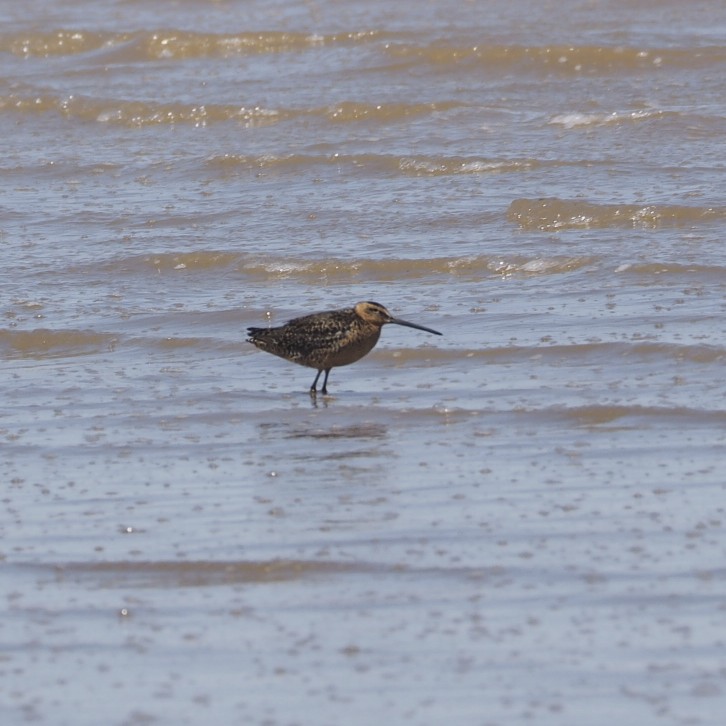
This magnificent creature takes McGee’s Aussie list to 717 species.

For anyone wishing to see this bird you first have to find Lake Tutchewop (in the state of Victoria). It’s just off the Murray Valley Highway. All the lakes between Kerang and Lake Boga seem to be well sign-posted except this one. Heading north from Kerang, Kangaroo Lake will disappear into the rearview mirror, some signs to Mystic Park indicate that you are getting close. Turn right at the crossroads with the Benjeroop-Cresco Road. The lake becomes visible on your right after a short while. Currently there are some road works in the middle of which there is a track that runs down towards the lake. The track heads around the lake perhaps making a complete circuit and at present is easily managed. It would be an exciting proposition after rain.

The waders, and there were many of them including some very nice Banded Stilt, were congregated on the lee shore with a very stiff westerly blowing. Once I found the congregation I searched on foot for the Dowitcher. Its breast stands out rather nicely.

One journey’s end …

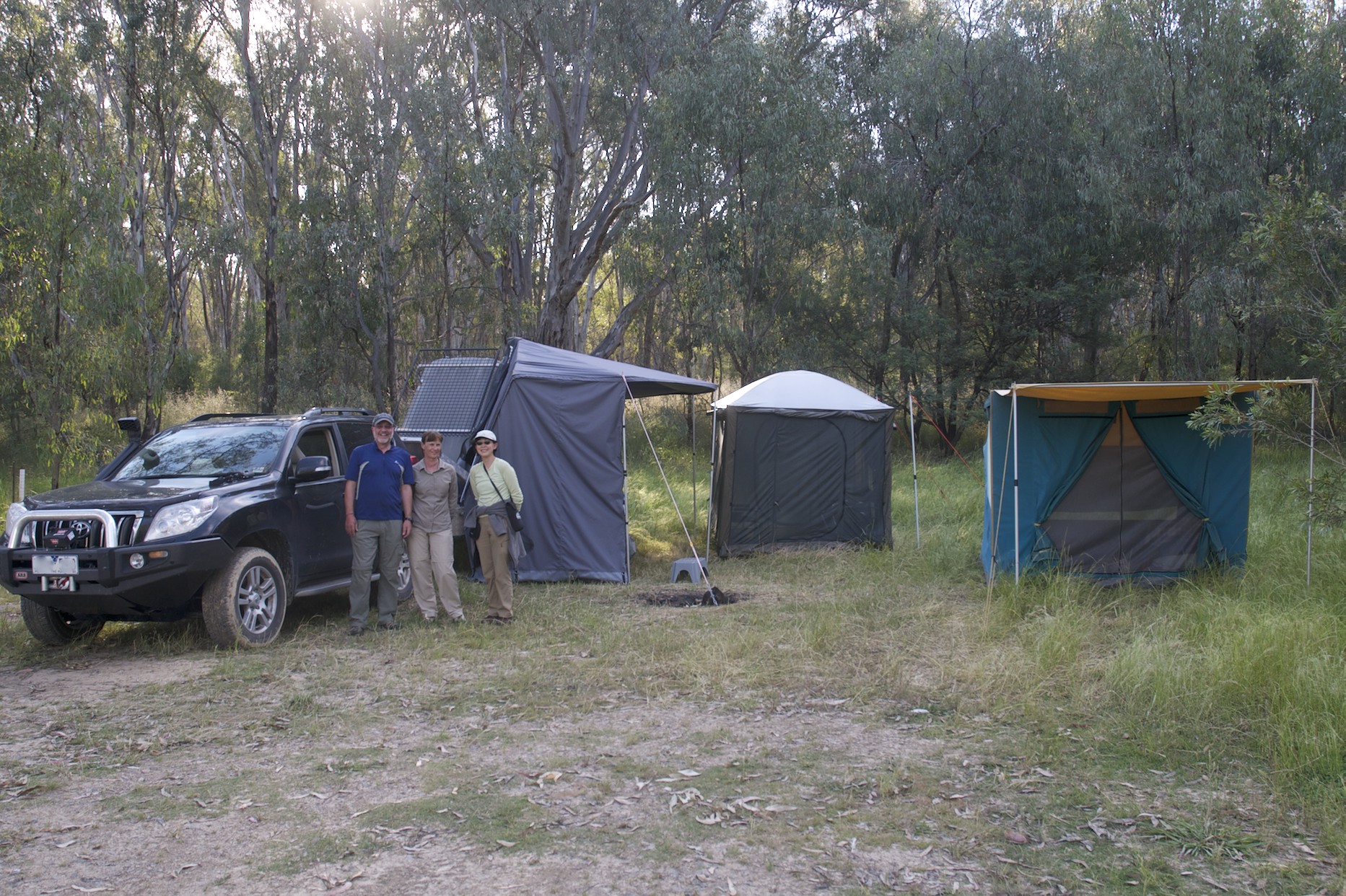
I have just got back from a spin around my beautiful home state with Mark Brazil and Mayumi Kanamura as well as my current dearly beloved. Gayle and I have travelled with Mark overseas, this time it was his turn to travel with us, and there could be no better excuse to have a fresh look at Victoria.

We started in the Dandenongs and headed west via Werribee Sewage Farm to Port Fairy. Then north into the Goldfields, west into the Little and Big Deserts and the Sunset Country. Then down the Murray Valley Highway, over the Alps and east to Mallacoota, coming back to Melbourne via Wilson’s Promontory. The round trip was nearly 2,500 km in fifteen days and took in every National Park, forest and sewage pond in reach. The weather was all that one could expect … everything from torrential hail, heavy rain and cold wind to uncomfortably hot, but nothing that could stop us having fun.

The objective was to see as much of Victoria’s natural heritage as we could find in the time available.

Gayle between Mark & Mayumi

Mark managed to level his Swarovski 10X32’s on 214 species of bird and a dozen species of native mammal. He was impressed by the birds whilst I was impressed with the binoculars, I am currently using the much heavier Swarovski 10X42’s and as lovely as they are, they are not worth the extra weight in these days of restricted hand luggage.

After the first few days had passed Mark and Mayumi began a fascinating debate on their top ten, the only criterion for consideration was the impact the bird made on them. Some gorgeous birds had their moment in the sun, stunning views of Brush Bronzewing, for instance, put it in real contention for a few days. For a while Major Mitchell’s Cockatoo was in top spot but fine feathers are not always enough to beat off the opposition. Mark and Mayumi’s final top ten were :-

  1. Laughing Kookaburra
  2. Splendid Fairywren
  3. Major Mitchell’s Cockatoo
  4. Red-kneed Dotterel
  5. Turquoise Parrot
  6. Gang-gang Cockatoo
  7. Red-capped Robin
  8. Varied Sittella
  9. Variegated Fairywren
  10. Rainbow Bee-eater

My highlights were somewhat different, I really did enjoy seeing all four Victorian Treecreepers in one trip and I was thrilled that the visitors so enjoyed the Kookaburra, it is the bird I miss most when I am away from Australia for any length of time.

They put together a similar hit parade of native mammals :-

  1. Sugar Glider
  2. Echidna
  3. Yellow-footed Antechinus
  4. Swamp Wallaby
  5. Wombat
  6. Koala
  7. Brush-tail Possum
  8. Ring-tail Possum
  9. Red Kangaroo
  10. Dusky Antechinus

It’s nice to see the little creatures beating out the Grey Kangaroos and pushing the over-rated Koala well down the list.

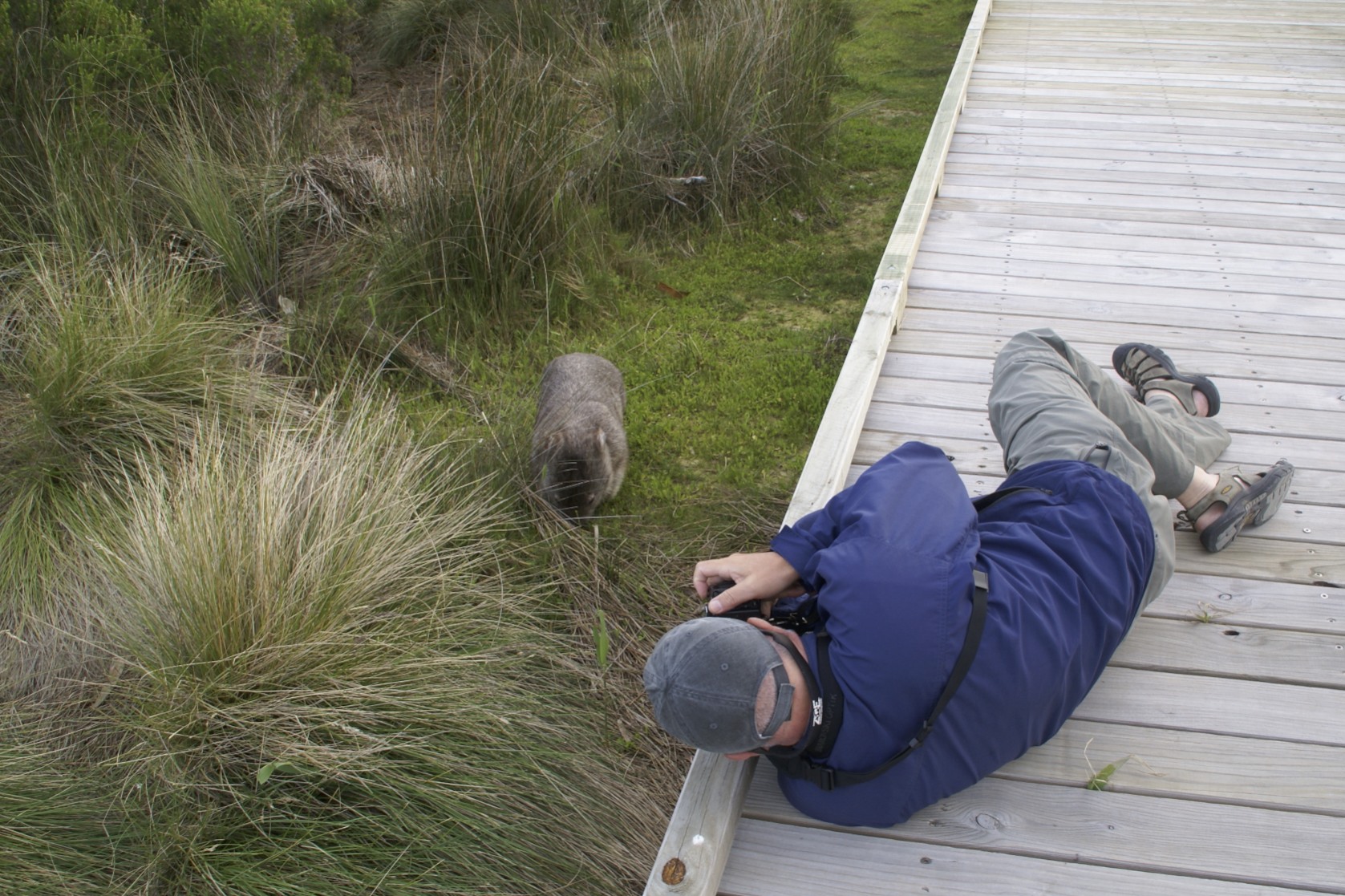
Mark Brazil (foreground)

Mark was kind enough to give us a copy of his latest book, The Nature of Japan, and Mayumi gave us a beautiful furoshiki and a calender. We look forward to catching up with them again…


Victoria …

My apologies, dear reader, or maybe, even to both of you, for the current lull in my instruction of how you should think.

I am part way through a grand tour of Victoria with Mark and Mayumi Brazil. Mark is a well known ornithologist and author of some good books on birds, a resident of Japan and regular contributor to the Japan Times. It is the couple’s first visit to this neck of the woods. So far we have waded through the mud in the pouring rain in the Dandenongs, enjoyed the great pleasures of the Werribee sewage works, frozen in the bitter winds of Port Fairy and the Great Ocean Road, thawed out in the Goldfields and enjoyed every minute.

Our next leg takes us through the Little and Big Deserts and the Sunset Country. Then we head east.

I will post some photos and more detail when we hit some broadband.