Atherton Tableland …

An early start from Etty Beach and we were soon on our way up onto the tableland. This is the premier bird watching destination in Australia but one the party had visited quite a few times before. We had allowed ourselves two days here and we intended to wring the absolute maximum out of our stay.

We drove up via South Johnstone and Millaa Millaa and made our first birding stop at Hypipamee National Park. We were quickly rewarded with Fernwren and Mountain Thornbill but after that birds were fairly slow to surrender and some of the regular suspects didn’t turn up at all. But if we were surprised at that we were even more surprised by Mark’s discovery of a Lumholtz Tree Kangaroo wide awake in the mid morning …
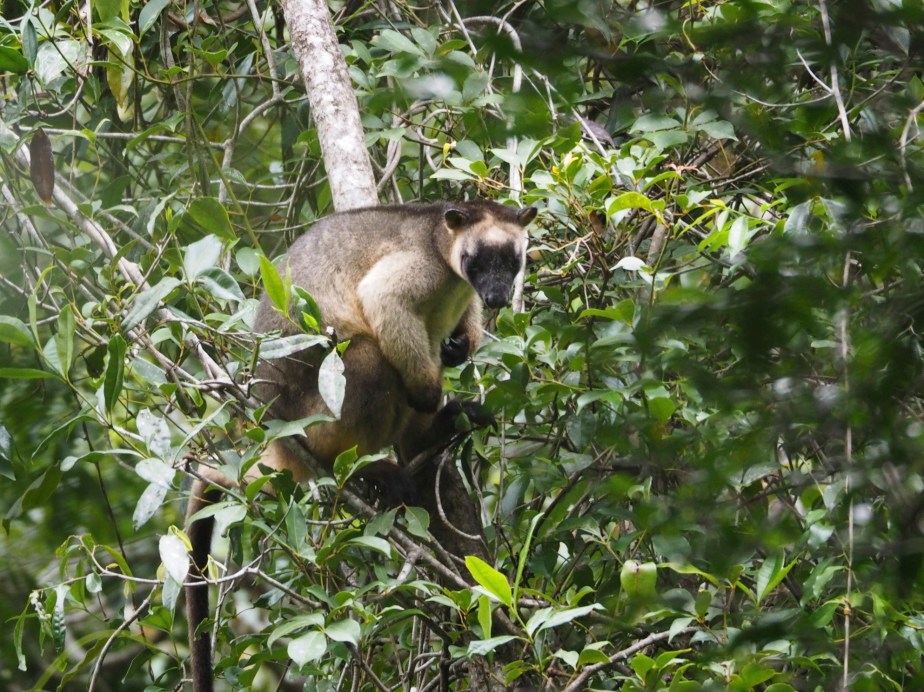
 

L T K

Our destination for the night was Malanda, specifically chosen so that we could spotlight for this extraordinary creature, the best way to find this always elusive animal. They feed on leaves of rainforest trees in which they are agile and competent climbers aided by impressive claws and the ability to use their hind legs independently. When they come to the ground they bound along in the same fashion as other kangaroos. Generally they spend the daylight hours curled up in dense foliage sound asleep.

Hypipamee is also called The Crater in honour of its striking geological feature, a diatreme created, so they say, when gas exploded beneath a granite surface layer blasting a pipe to the surface. The pipe is 70 metres in diameter and contains a lake. It is 58 metres from rim to the water level and the water is another 70 metres deep. It would appear from the viewing platform that visitors have made a significant effort to fill it in with thrown objects. If it weren’t for the 400 metre walk from the carpark it would now be full of fridges, TVs and old mattresses. The walls are shear but somehow a population of Saw-shell Turtles has made its home there. I suspect though that their descendants will not be making any contribution to the wider gene pool.

From there we made our way up Highway 1 towards Atherton. The next stop was the Wongabel Forest walk. Much of the tableland would have been forest but most has been cleared for agriculture. For some inexplicable reason the patch that the walk is in was reforested. It must have seemed a quite revolutionary idea at the time. Many of the trees are labelled, it makes for a very pleasant and informative walk.

A complete contrast awaited us at Hastie’s Swamp where we quickly notched up a list of water birds along with a few migratory waders. We had lunch there. A majestic White-bellied Sea Eagle also dropped by for lunch causing considerable unrest among the residents. From there to Malanda we looked out for Brolga and Sarus Cranes, there are often quite large flocks to be seen in the surrounding fields but on that occasion we were not successful.

For a commercial caravan site Malanda is a very pleasant place to camp. There is plenty of room and easy walking access to the Johnstone River and the Malanda Falls Conservation Park. There is a new and rather splendid visitor centre in the conservation park. We took tea in the company of Red-legged Pademelons and two of Australia’s Megapodes, the Brush Turkey and the Orange-footed Scrubfowl. These are mound building birds. They lay their eggs in their mound where the vegetable matter they have incorporated composts providing all the necessary heat for incubation. The youngsters hatch, dig their way out and are immediately able to fend for themselves.


Wet …

Most of Australia is very dry

Australia Rainfall

If it’s brown, yellow or the lightest green on the map then average annual rainfall is less than 400mm (less than 16 inches). That’s most of the country. Rainfall is highest near the coast, on the mountains and in the far north. In the southern half of the continent rainfall in winter exceeds that in summer. In the north summer rainfall predominates.

We pick up our journey at Alligator creek just south of Townsville. Even at the scale of the map it’s possible to see that from there heading north is a journey into a part of Australia that is way wetter than the average.

The wet tropics stretches up the Great Dividing Range  from Townsville in the south to Cooktown in the north. The highest point along the way is Mount Bartle Frere at 1,622 metres and not far away is Bellenden Ker (1,593m), This part of the region enjoys 8 metres of rainfall per year. The mountain range has been dissected by at least nine significant rivers leading to plenty of opportunity for local evolution and the region as a whole is cut off from other wet areas by the surrounding dry country. This is a formula for high levels of endemism in flora and fauna.

Wet Tropics

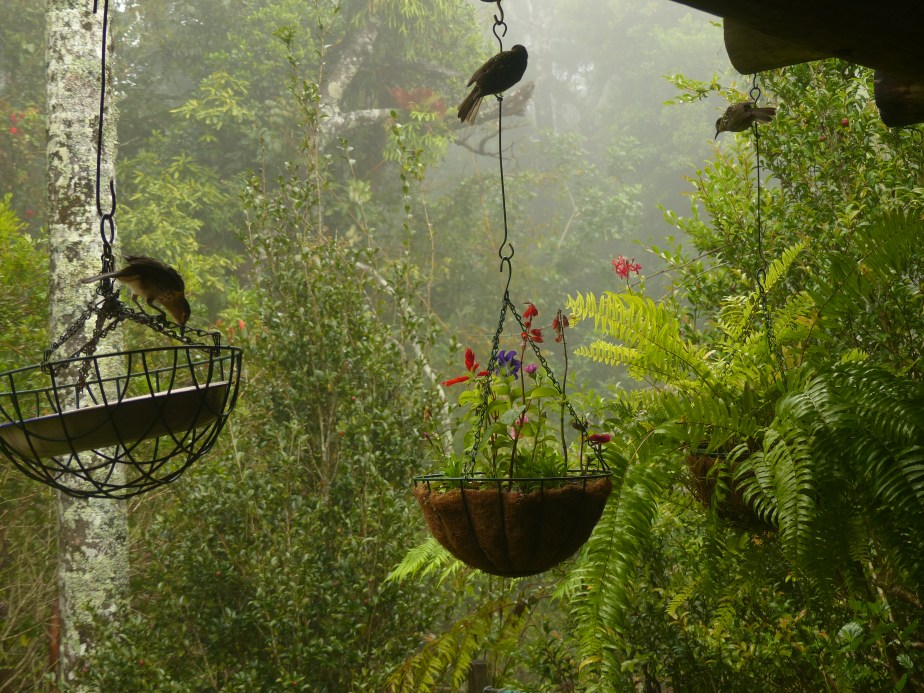
Driving up from the south the first chance to get amongst it is at Paluma 90km from Townsville. It’s a steep drive up from the coast. Your first stop has to be the Ivy Cottage tea rooms! Take scones on the balcony overlooking the forest, fight the birds off  your food with one hand whilst taking photos of them with the other.

Ivy Cottage

Macleay's Honeyeater


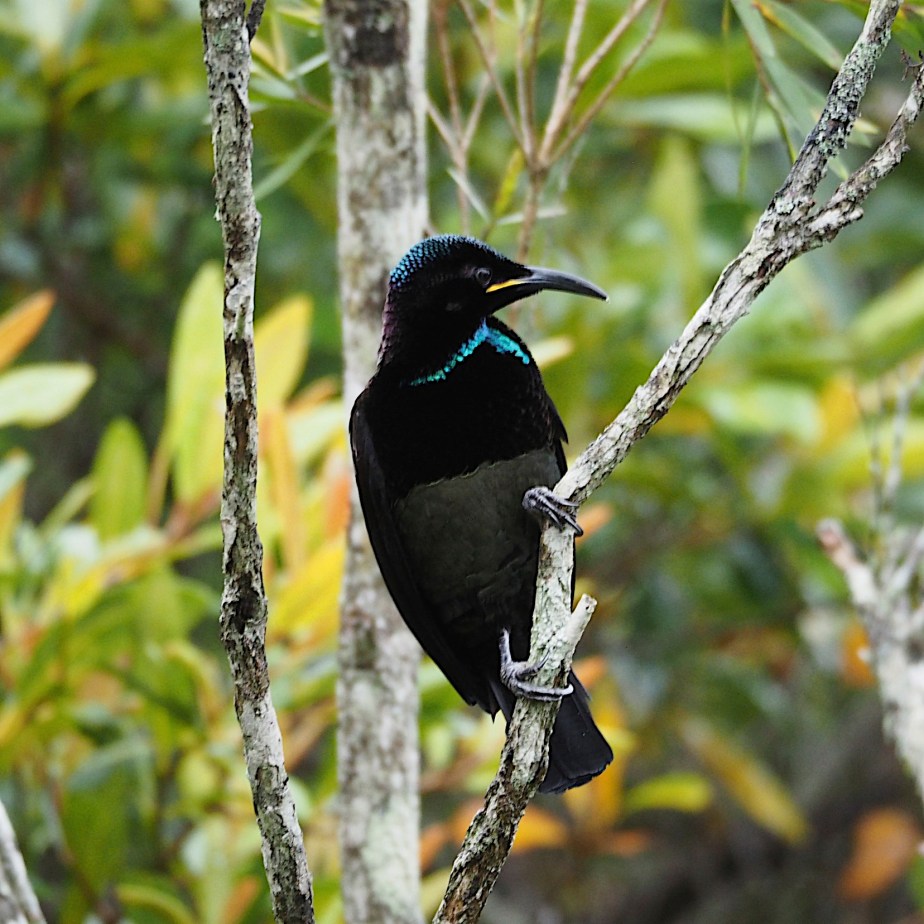
Victoria's Riflebird


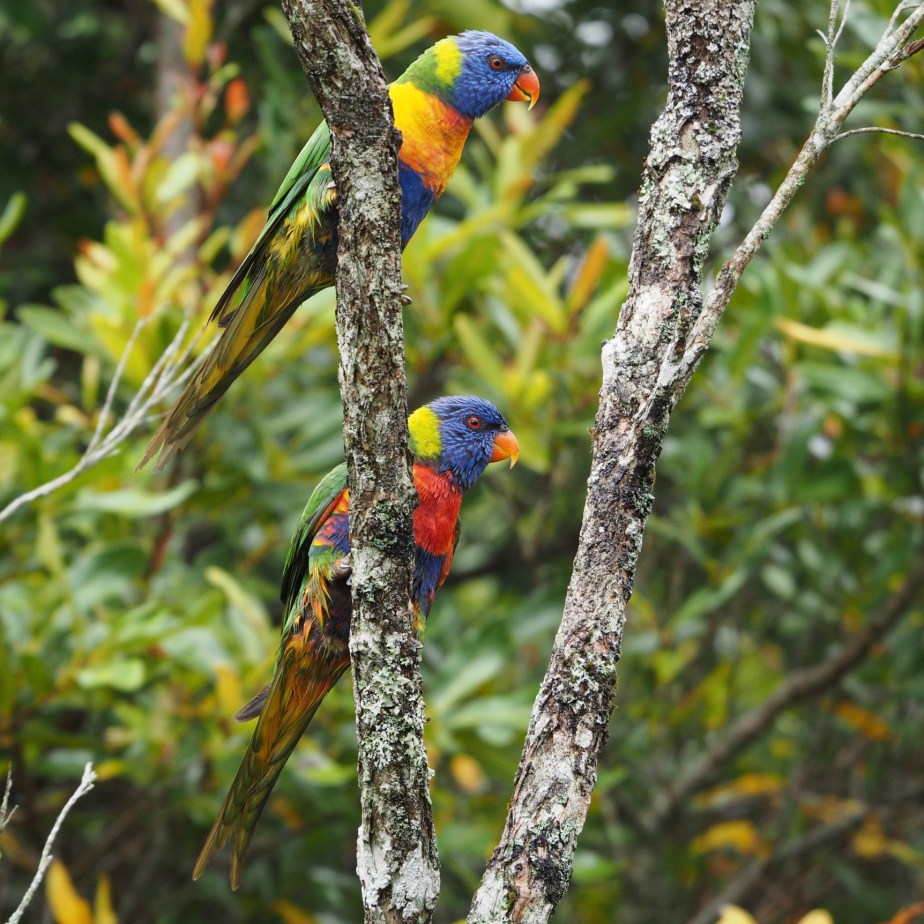
Rainbow Lorikeet

I recommend the cheesecake.

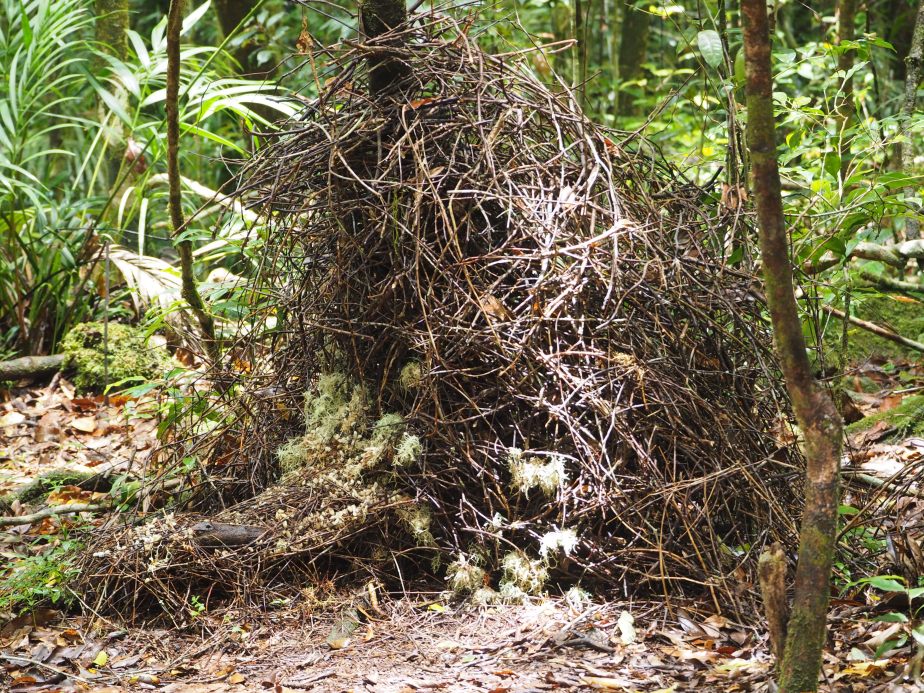
When we tore ourselves away from there we had to work a little harder for our birds but not too far away we found the maypole bower of the Golden Bowerbird.

Maypole

The male constructs and maintains this remarkable edifice, decorating it with lichen throughout the breeding season. Females visit to inspect his work, if impressed they mate with him. He plays no further role in the raising of his offspring. He was keeping a watchful eye on his bower when we were there.

Golden Bowerbird

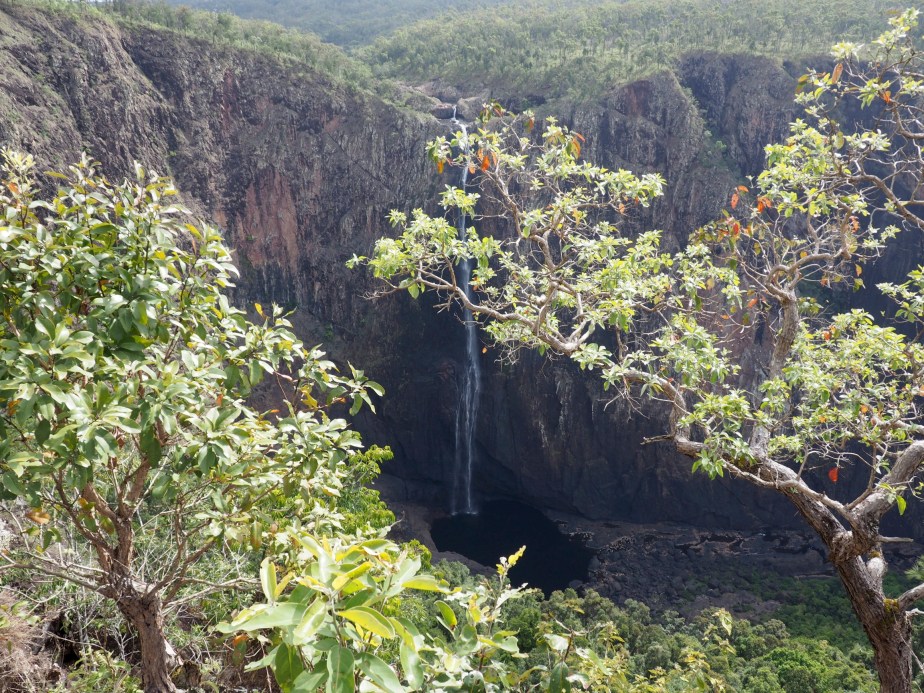
Our next objective was Wallaman Falls. We could have retraced our steps to the coast turned north and run up the escarpment again but we opted to take the road less travelled on the inland side of the range via Home Valley and Fox Mountain. This was a fairly rough track mainly through dry eucalypt woodland. Wallaman Falls has the longest drop of any Australian waterfall.
Wallaman Falls

Not exactly Niagara especially at the end of the dry in this El Niño year. What we really wanted to see here was a Cassowary which would have been a tick for Mark. No luck. So on to our camp site for the night, at Etty Beach near Innisfail.

Why camp at a caravan park when there is so much national park in the neighbourhood?

Cassowary

That’s Dad with the chicks and this is a reliable place to see them.

Townsville …

With the Eungella Honeyeater ticked off, the next step of the journey was to pick up young Mark at Townsville Airport.

Once again, our campsite was chosen for its convenient location and not given the attention it deserved. Alligator Creek is 25km south of Townsville in the Mount Elliot section of Bowling Green Bay National Park. The park covers just under 58,000 hectares ranging from mangroves on the coast to rainforest on the mountain tops. It includes some significant wetlands. It is home to some very interesting creatures including the Estuarine Crocodile although it might be better to encounter an Allied Rock Wallaby or a  Rufous Bettong. An overnight stay just doesn’t do it justice. Camping needs to be booked online. Facilities include showers and toilets and a picnic shelter or two, very pleasant.

As we arrived we discovered that there is a gate some ways from the camp site that is closed from 6.30 pm until 6am. We were picking Mark up at 7.30 pm. This raised two obvious considerations. Firstly the car would have to be out of the area prior to 6.30. Secondly, Mark’s camping gear and food were in the vehicle and weighed a ton and therefore a moral dilemma. Should I take his gear out in the camp site and bask in the awareness of my great kindness or would it be more amusing to watch him carry it?

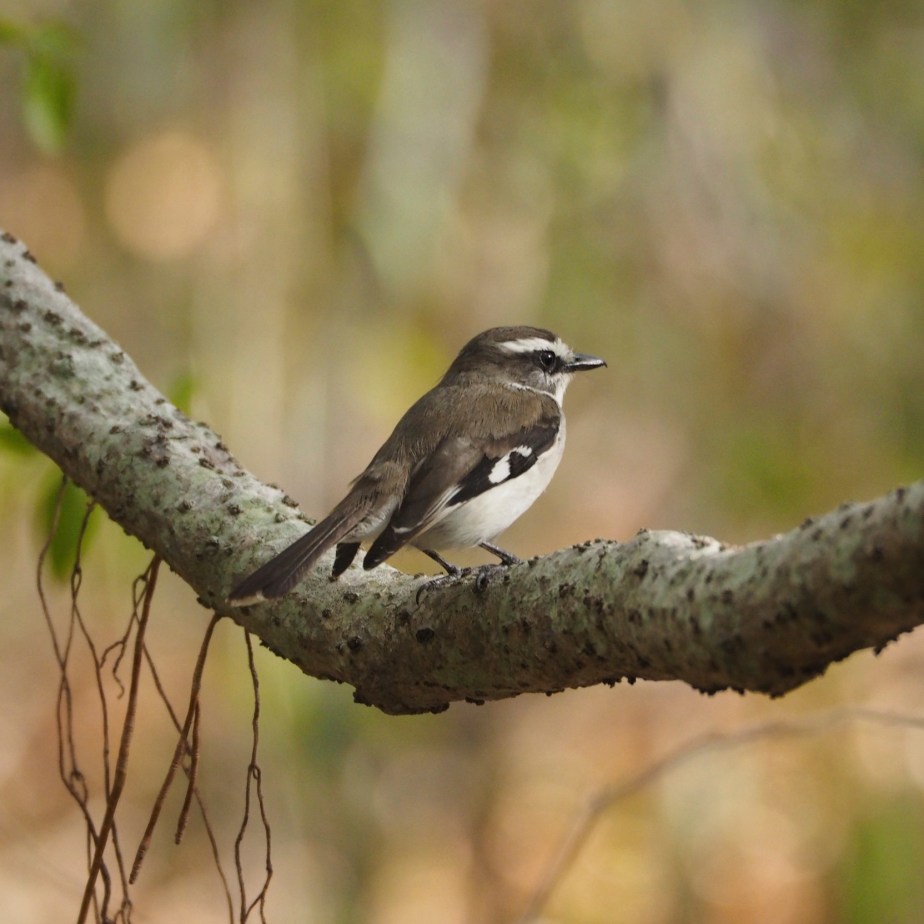
We set up tent. I took out Mark’s gear. And then we explored. One of the highlights was a pair of White-browed Robins occupying a territory near the campsite …

OLYMPUS DIGITAL CAMERA

Then into town we went, the flight was on time and we were soon back at the gate. It was wide open, presumably the closure occurs only at busy times. On this occasion we were the only campers in the place.


Eungella …

It’s nice, from time to time, to come across a bird that you haven’t seen before. When you first start birdwatching that is a frequent occurrence, even at the local park. As your list grows you eventually reach a stage where you can pick a few target species and join the dots to draw up an itinerary. This particular trip had just two avian dots. The first was the Eungella Honeyeater. It was once lumped with the Bridled Honeyeater but is isolated from it geographically and sufficiently different to earn a promotion. It is found only in the hills inland of MacKay in Queensland. Part of its range is protected in the Eungella National Park (which the locals pronounce Young-gella).

From Gundabooka to Eungella is a mere 1400 km, we broke the drive at Tambo, spending the night at Stubby Bend, no charge, no need to book, no facilities whatever. An acceptable bush campsite overlooking a billabong.

In Eungella we stayed at the Broken River camp site which needs to be booked online in advance. I suspect that school holidays would be best avoided.  It is a very pleasant spot and a rather more luxurious camp site than I’m used to. The creek is one of the most reliable places for Platypus I have ever visited. We stayed three nights and saw a few every morning and evening.

Platpus

Over the eons Australia’s climate has changed, rainforest has expanded and contracted. There are three quite distinct refugia which have given rise to three distinct groups of rainforest birds. The most southerly straddles the NSW Queensland border and among other things is home to the Paradise Riflebird. Moving north one finds the Atherton Tablelands, inland of Cairns, home of Victoria’s Riflebird and at the tip of the country on Cape York you can find the Magnificent Riflebird. Eungella is a less famous fourth. Whilst it can only claim the Honeyeater in the way of endemic birds the level of endemicity is far higher in its flora.

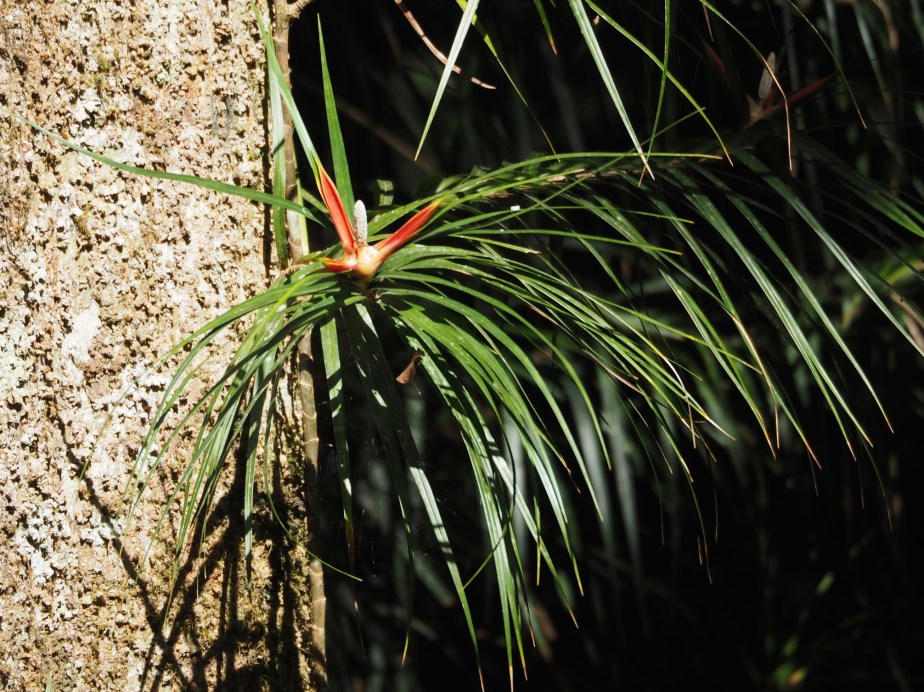
We arrived in the evening and made do with Platypus watching the first day. The morning couldn’t come soon enough. We were armed with some information to help us in our search. In the wet season, and November qualifies as being wet enough, the Honeyeater is a denizen of the rain forest, and is associated especially with climbing pandanus. In the dry it moves into drier forest and is more difficult to find.

Freycinetta excelsa

The first spot we tried had changed beyond recognition from the description we had. At the second we were soon successful. So here is the good oil …

From the little township of Eungella take Dalrymple Road, follow it to the very end. The last road you pass will be Fredericksons Road. For most of the way you will have rainforest on one side and dairy farms on the other. Soon after Fredericksons road you will have rainforest on both sides of the road. Look for the pandanus and listen out for the very distinctive scratchy call. They are easy enough to find but they don’t stay still to have their photo taken.

Another spot said to be successful is a little way up Diggings Road which is between Eungella township and Broken River camp site. The habitat looks good but we didn’t find the Honeyeater here. We had to make do with a Noisy Pitta as consolation.

We celebrated in style with a pleasant evening meal at the Broken River Mountain Resort. They feed the possums from the balcony and offer a spotlighting walk on Tuesday and Thursday evening. So we capped off the day with a good look at Long-nosed Bandicoot and Feather-tailed Glider. Who could ask for anything more?

There are many other great birds to find in the national park and not too far away there is Finch Hatton Gorge, excellent for a morning walk, and Eungella Dam, great for waterbirds even in the heat of the day. A top destination.

Gundabooka …

The expedition from north central Victoria to far north Queensland was some time in the making.

The lovely Gayle* would accompany me up, we would pick up Mark* in Townsville. Gayle would part with us in Cairns. Mark and I would return south via Birdsville in the far south west of Queensland. The trip was designed to take in the best of Australia’s tropical rainforest and the driest of desert.

The Toyota Prado was freshly serviced and fuelled up. The first day was intended to be a big step over all places close and familiar. Across the Murray River at Echuca, north east to the Kidman Way then north to Gundabooka National Park not far from Bourke in New South Wales, a little over 900km.

Not far from Echuca the fuel system warning light fired up! We’d hardly started. Out came the iPad, Toyota dealers … yes. We were on the doorstep when Toyota Echuca opened. They had replaced the fuel filter and reset the alarm within 30 minutes. That was the only mechanical problem we would have to face. Gotta love Toyota.

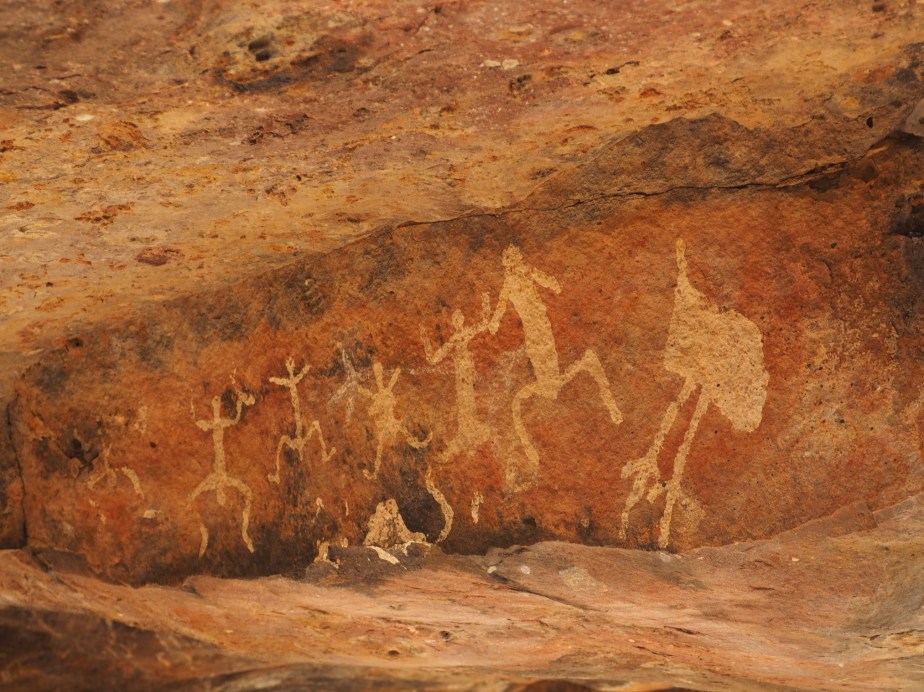
We made it to Gundabooka in daylight, set up our camp and had time for an evening walk. On this occasion it was to serve only as a stopover but it is a worthy destination in its own right. The park is mostly dry woodland with some rocky outcrops, hills and a gorge. The area is of great significance to the Ngemba aboriginal people and there are paintings at a rock shelter that can be visited.

Gundabooka

Gundabooka

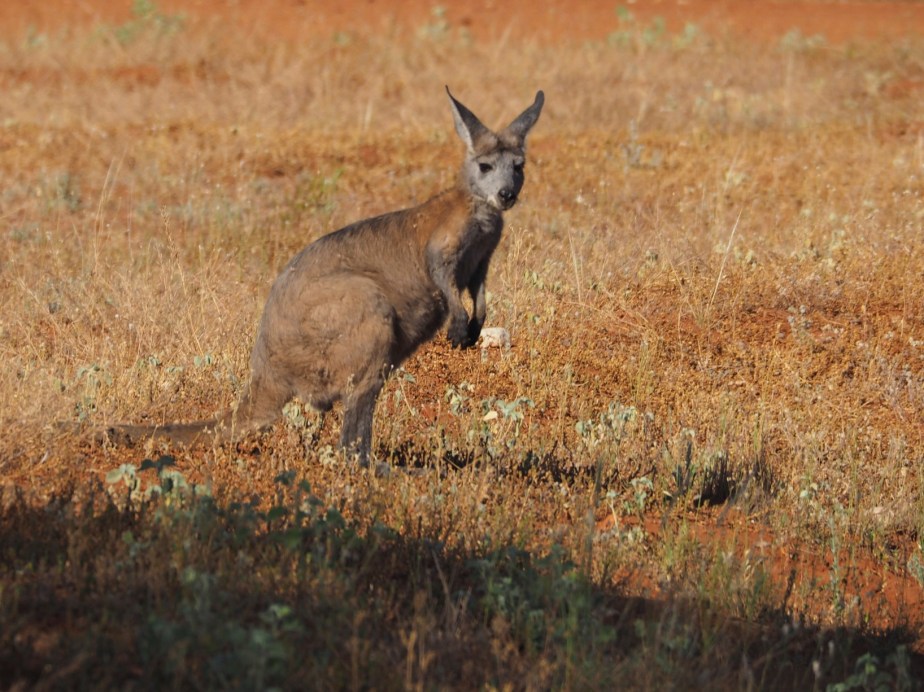
Some of the wildlife is quite friendly…

Gundabooka

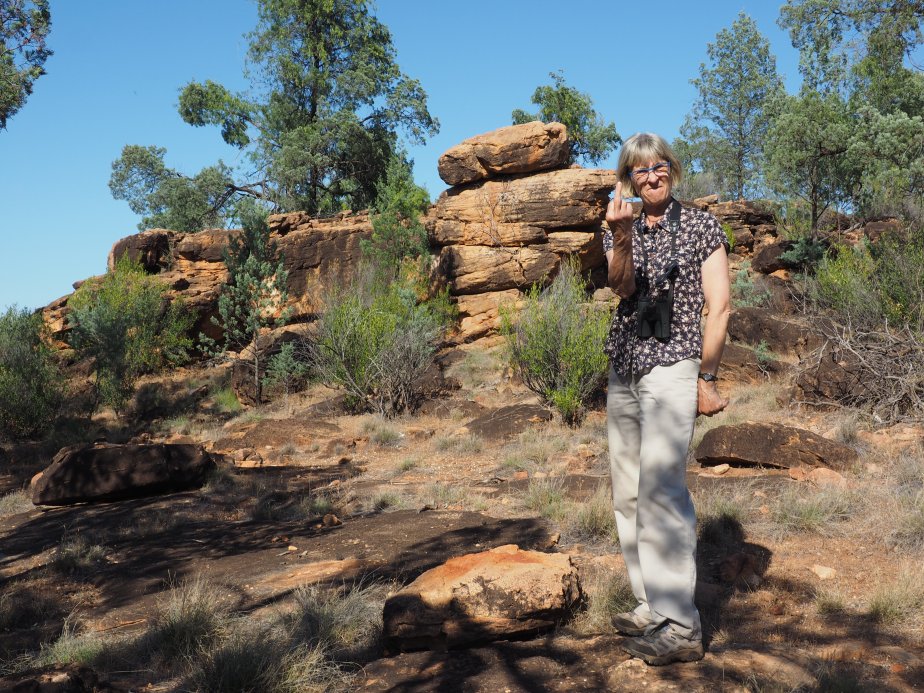
Some less so …

Gundabooka

*Names changed to protect their privacy.

From here to FNQ …

Australia starts right at my doorstep.

It’s a huge place with many facets. The parts that most interest me are the natural ones, the more remote, less tamed places. To see these places you need a reliable vehicle and portable accommodation. So you buy your 4WD and ensure that it has a long range fuel tank, you mount a bull bar at the front to fend off the kangaroos. On goes the winch that will pull you out of the mud surrounding your axles. The suspension is improved and the body raised. The best camping equipment is purchased, tested, refined and ready to go.

Then you realise that you’ve only got two weeks holiday so you fly to your destination, rent a stock standard 4WD and stay in motels.

Here’s a picture of our stock standard vehicle stuck in a creek in the Kimberley …

No winch, but fortunately a wench that could cook, food for a fortnight and, as you can see, plenty of water. We were there for a little more than a day.

It happened back in 2002 that a young friend of mine had just finished his PhD and had not started work, therefore time rich, income poor. He drove my car from Melbourne to Cairns. I flew up and put my two weeks to good use with all the equipment my heart could desire. We even got to use the winch.

He is now a professional biologist and I am recently retired. My turn to drive from Victoria to far north Queensland. He flew up to Townsville.

Over the next few days I shall relate the adventures of the winch, the wench, the biologist and the senior citizen as they travelled to the rainforest and the desert in search of the wildlife of good old Oz.

The journey north


Destination …

Darwin

From the Tiwi Islands to Darwin was an easy overnight cruise. We had an appointment with the pilot for first light.

Pilot climbs aboard

The travel company that managed the cruise was Zegrahm Expeditions and, as always, they added a great deal of value to the product. The cruise director made sure that we had the opportunity to extract the max and he was well supported by guides who really knew their stuff. They included Chris Done who had been the regional manager for the state’s Department of Conservation and Land Management, Terry Done, a marine biologist, Shirley Campbell, anthropologist from ANU and Brent Stephenson, a first rate ornithologist.

The ship was part of the Coral Princess fleet, first class facilities and a wonderful crew.

Off the ship early and flying late; what to do? Go birding.

The only disappointment of the day was finding a new fence around the Palmerston sewage ponds, you can no longer see the birds that it attracts. Yet another sewage pond falls by the wayside, every one of them a sad loss.


Tiwi …

Blown Apart Gulf was a mill pond.

The Tiwi Islands are in Australia’s Northern Territory about 100km north of Darwin. There are two large inhabited Islands, Melville and Bathurst and nine small uninhabited islands. The largest settlement is Wurrumiyanga on Bathurst Island with a population of about 1500. From there Melville Island is a short car ferry ride away.

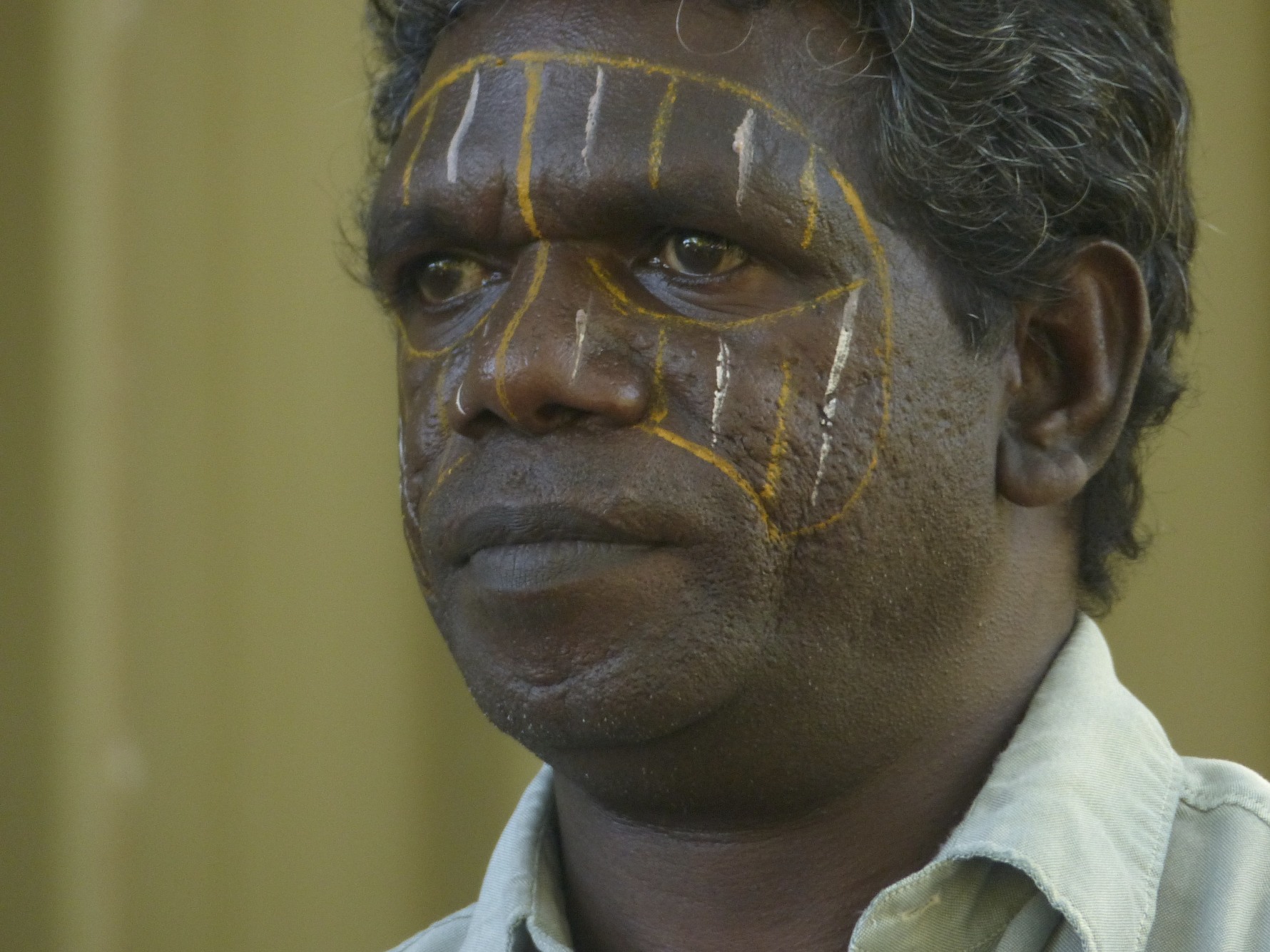
The Tiwi are aboriginal folk that have a different language and some significant cultural differences from their neighbours in Arnhemland, the nearest part of the mainland. Local Government is the responsibility of the Tiwi Land Council, an outsider needs a permit to visit. This is true of a number of areas under aboriginal control. As an Australian I always find it odd that I need a permit to walk down an Australian street, a Tiwi Islander doesn’t need one to walk down my street. But hey, I had one, and the Tiwi guides made us very welcome.

Wurrumiyanga is a tidy little town of well maintained houses and gardens. We had the opportunity to visit three art galleries, the museum and the church. Along the way we got to see kids at a school that could have been anywhere in Australia.

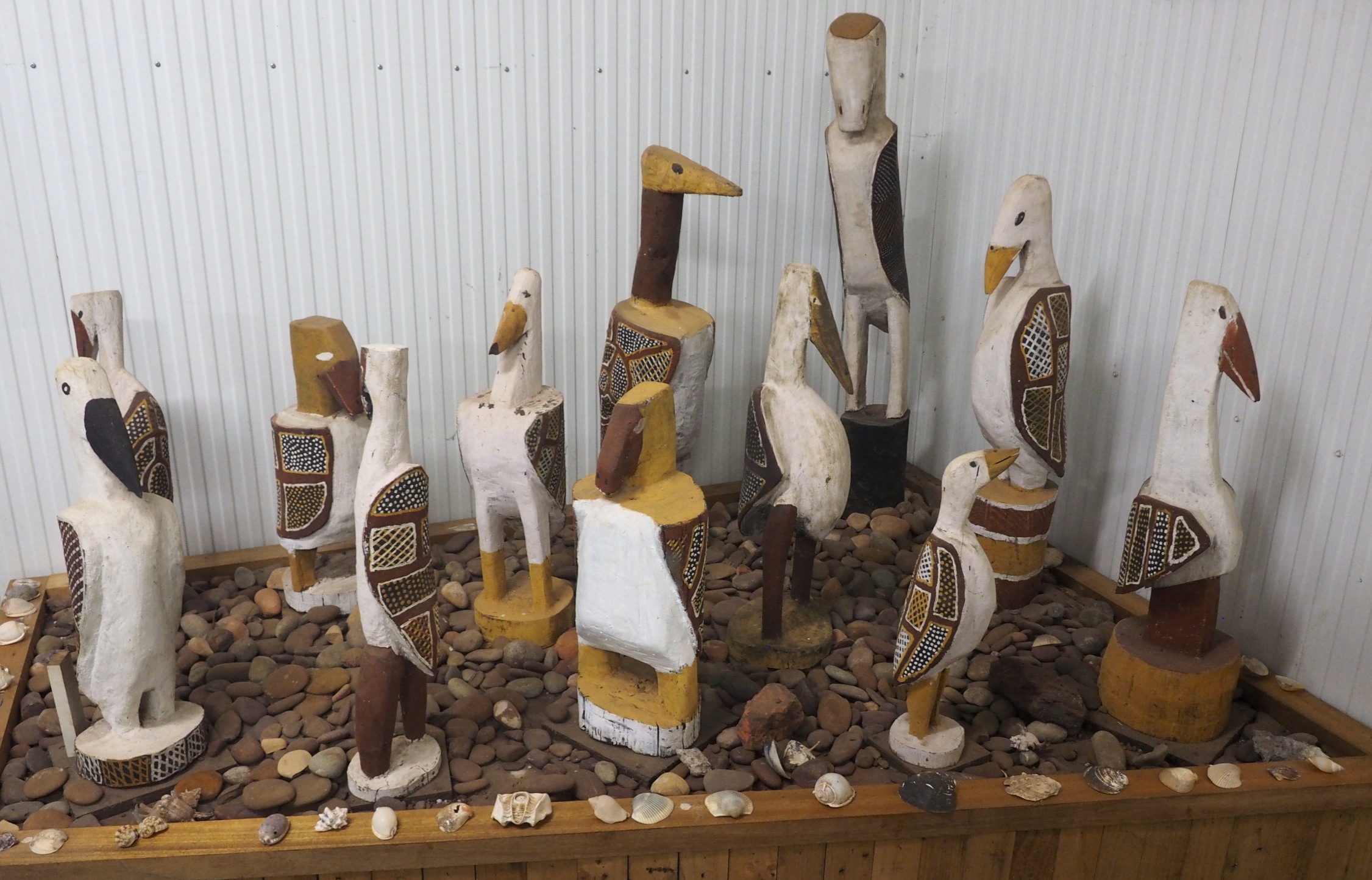
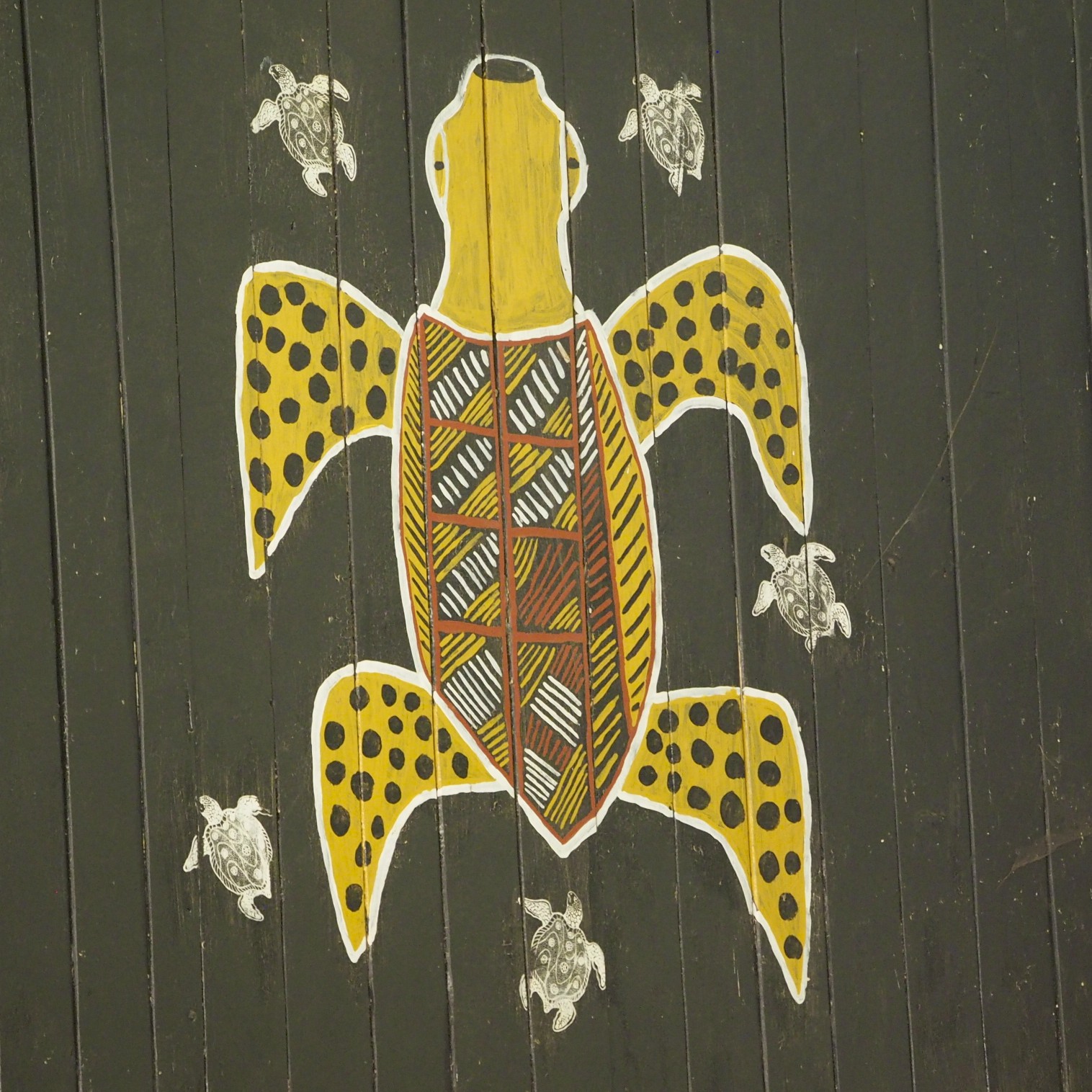
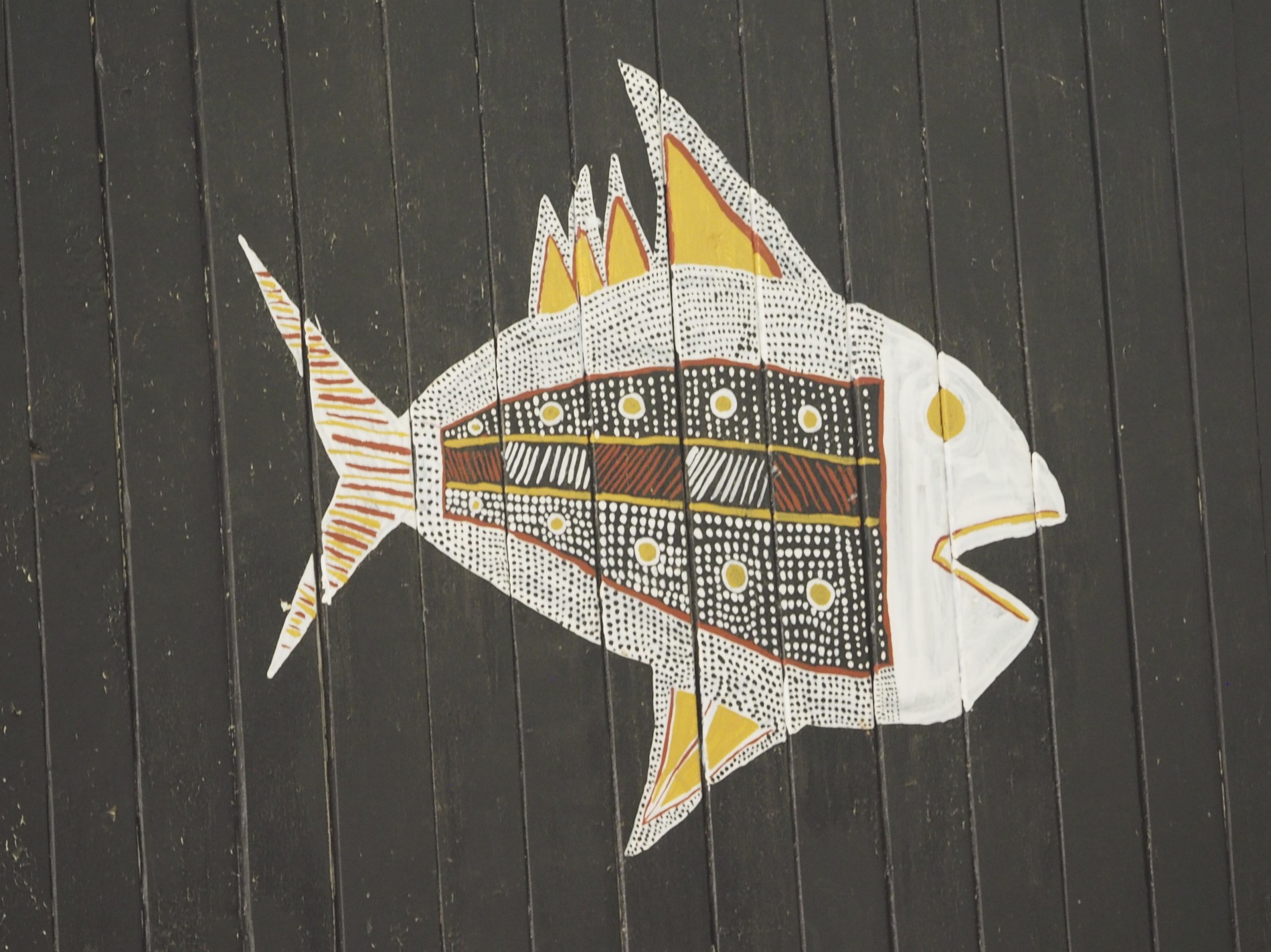
The strongest feature of the local art was, I thought, the carving which often featured birds. Here are some housed in the museum but there were many fine examples for sale.

Tiwi museum

Carving has its greatest significance in the Pukumani which are carved for the dead. The Pukumani poles are carved by men selected by the deceased’s family but not closely related. They are placed by the graveside in a ceremony that takes place two to six months after burial.

Some of the beautiful designs are also committed to fabric by a technique similar to batik.

As well as their indigenous culture two outside religions have been adopted … Aussie Rules football and Catholicism.

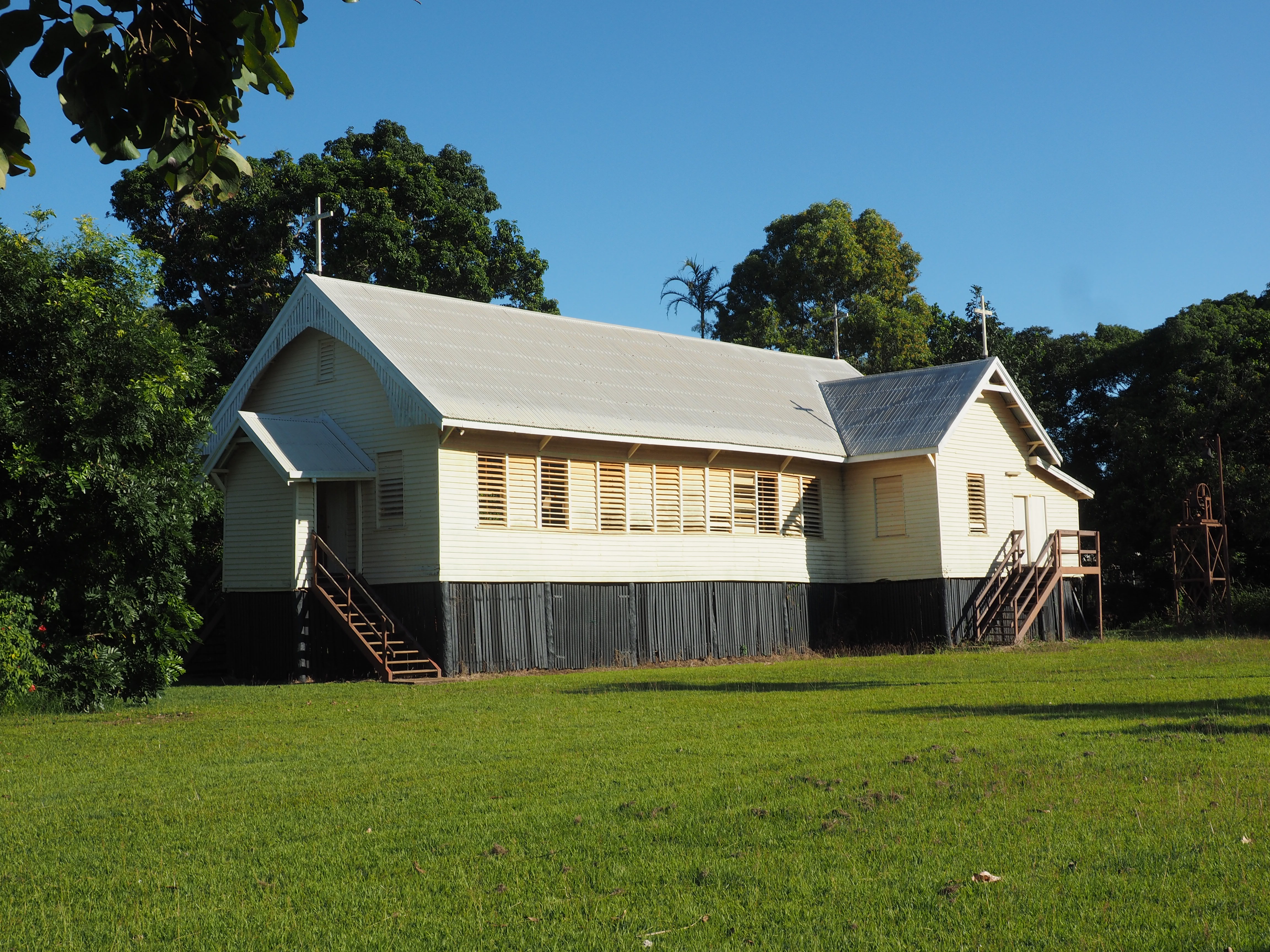
Catholicism came first, Father Gsell founded the mission in 1911. The Church is rather lovely with the interior decorated in the local style.

Tiwi church

Panels behind the altar …

Altar panel

Altar panel

Standing next to the church is a little radio shack. From here Darwin was warned of impending bombing raids during the Second World War. Local people also captured a Japanese pilot during the war as well as assisting in the rescue of some friendly combatants.

Combat these days is on the footy field. The Tiwi have taken to Aussie Rules with a passion, about a third of the population are active participants in the local league and some of the great AFL names learnt the basics right here, including Michael Long and Cyril Rioli.

The last activity on the agenda was tea and some traditional dancing. Here is one of our guides ready to impart some culture …

P1050779


Kimberley Wildlife …

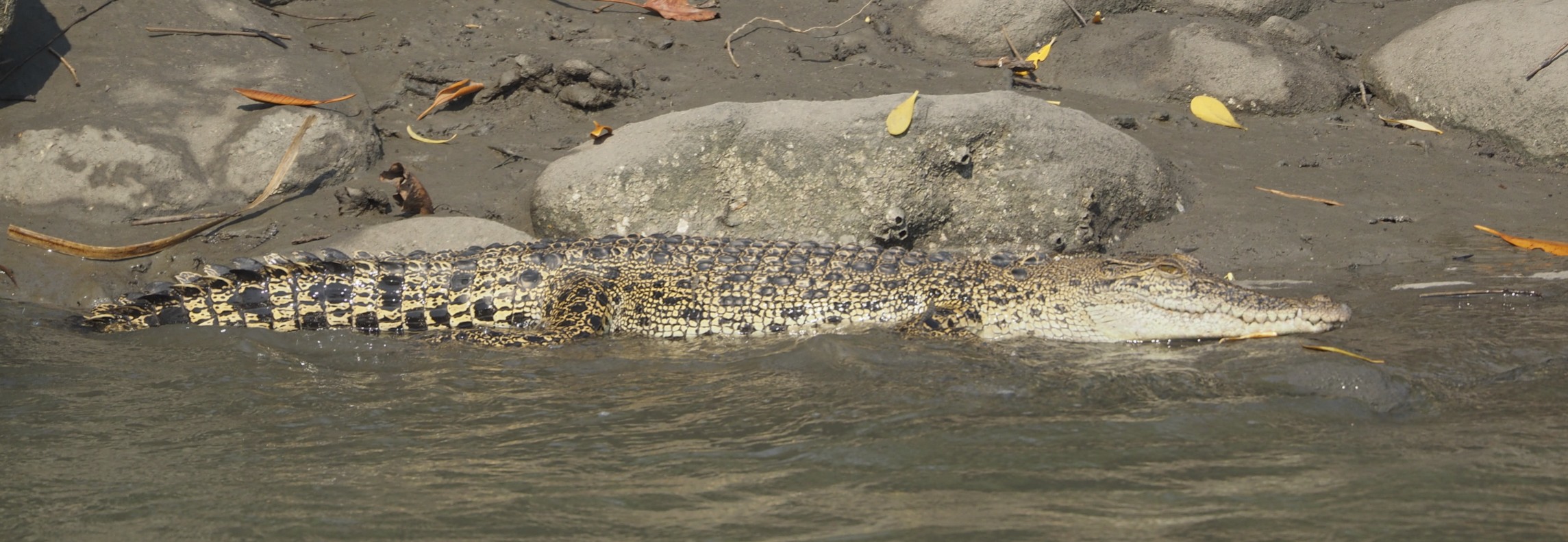
Estuearine Crocodile

I hope that it’s obvious to anyone who has read this far into the trip that I get a great deal of pleasure from this sort of travel. But if I had to say what is the most important component of it all I would say the wildlife. And if pressed to be even more specific it would be the birds.

My hope was that I would get a look at the Kimberley Honeyeater, it would have been the only likely chance of a new species for my Ozzie list. It was not to be, I will have to go again. I’m glad to have done the cruise but next time it will be 4WD again, it is far more productive in wildlife encounters … of every sort except hopefully crocodiles.

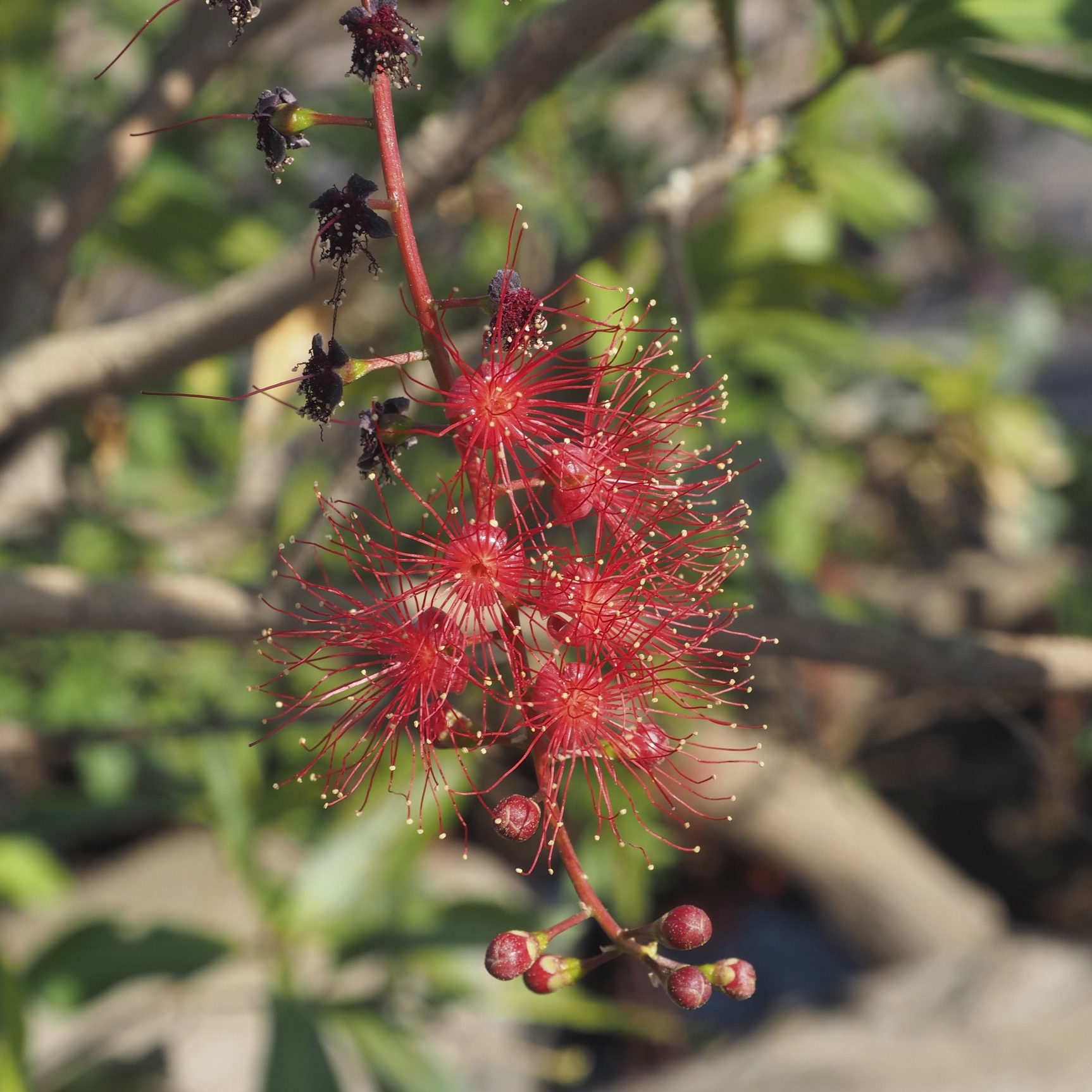
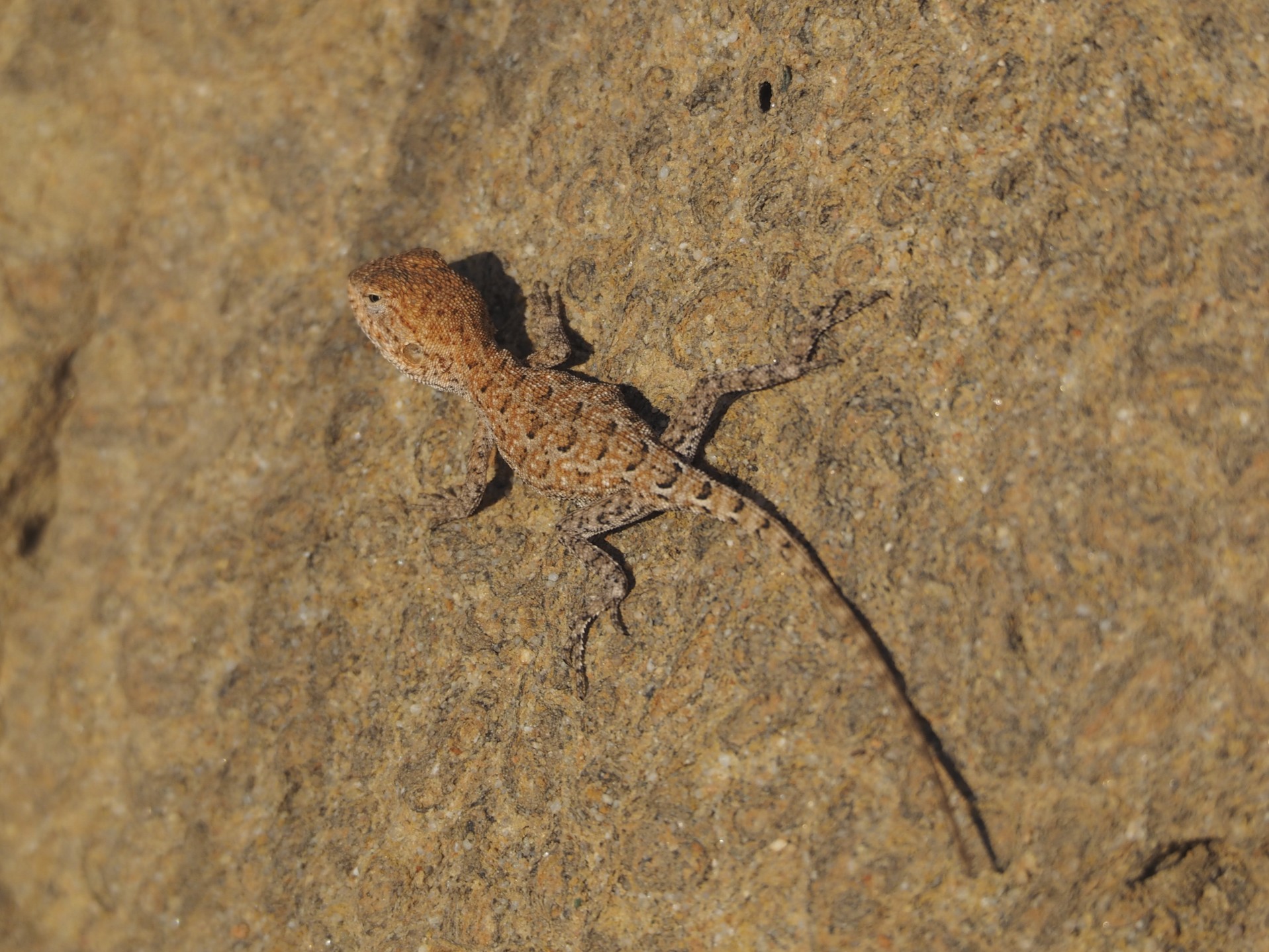
But before leaving the Kimberley let me share a little more of the flora and fauna that I caught up with.

Caspian Tern
Caspian Tern
Lesser Crested Tern
Lesser Crested Tern

Osprey

Native Hibiscus
Native Hibiscus

Dragon

But the cruise ain’t over yet, we now have to turn the corner and cross Bonaparte Gulf en route to the Tiwi Islands. The gulf, commonly known as Blown Apart Gulf, has an ugly reputation.

Let them eat pheasant …

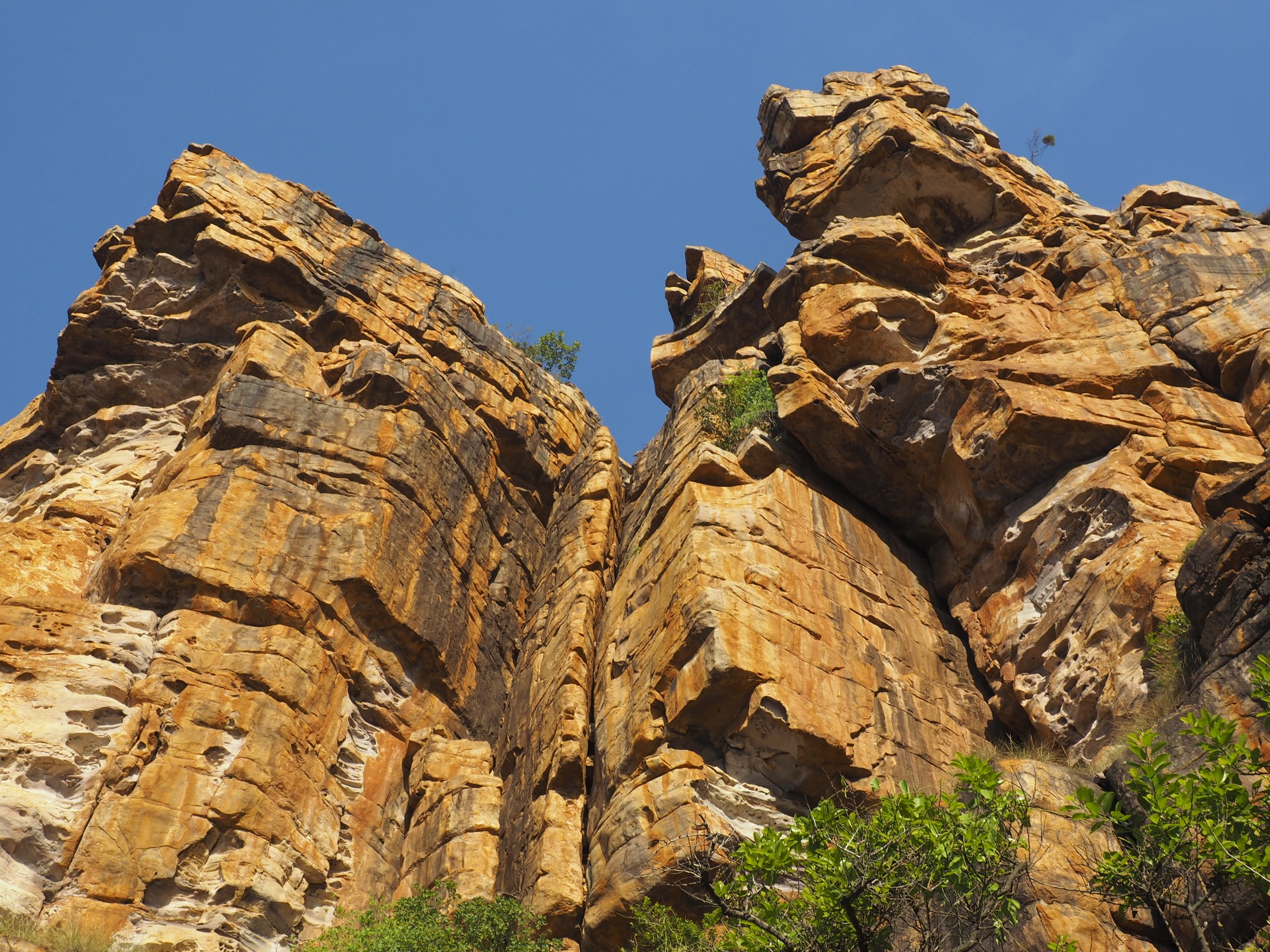
Kimberley cliffs

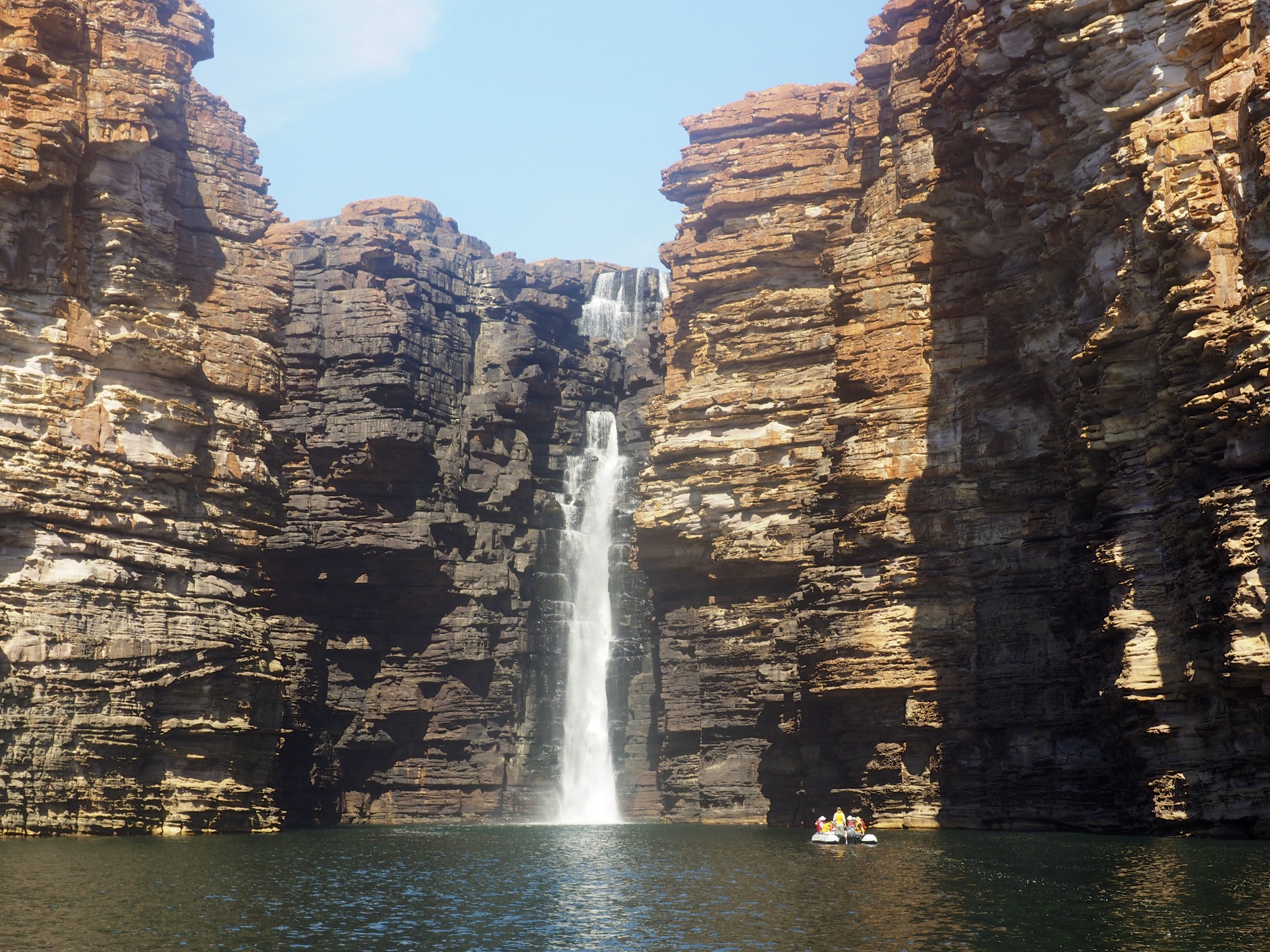
The Kimberley cruise was rapidly approaching its end but there was one last splendour to see, the King George Falls. These tumble from the top of 100 meter high cliffs into tidal waters of, neatly enough, the King George River.

King George falls

Not named after that King George who lost America to the unwashed rabble living there but King George V who gave us the house of Windsor. Prior to 1917 the Royal House was called Saxe-Coburg but the activities of his first cousin, Kaiser Wilhelm II of Germany was attracting some opprobrium so he changed his name.

As well as taking a zodiac cruise directly under the falling water we also climbed a steep path to the top.

King George Falls

King George River

The catamaran down below was a Seawind 1200 and at that moment I could not imagine a more perfect fit between place and mode of transport. Sit me there and pass me a beer.

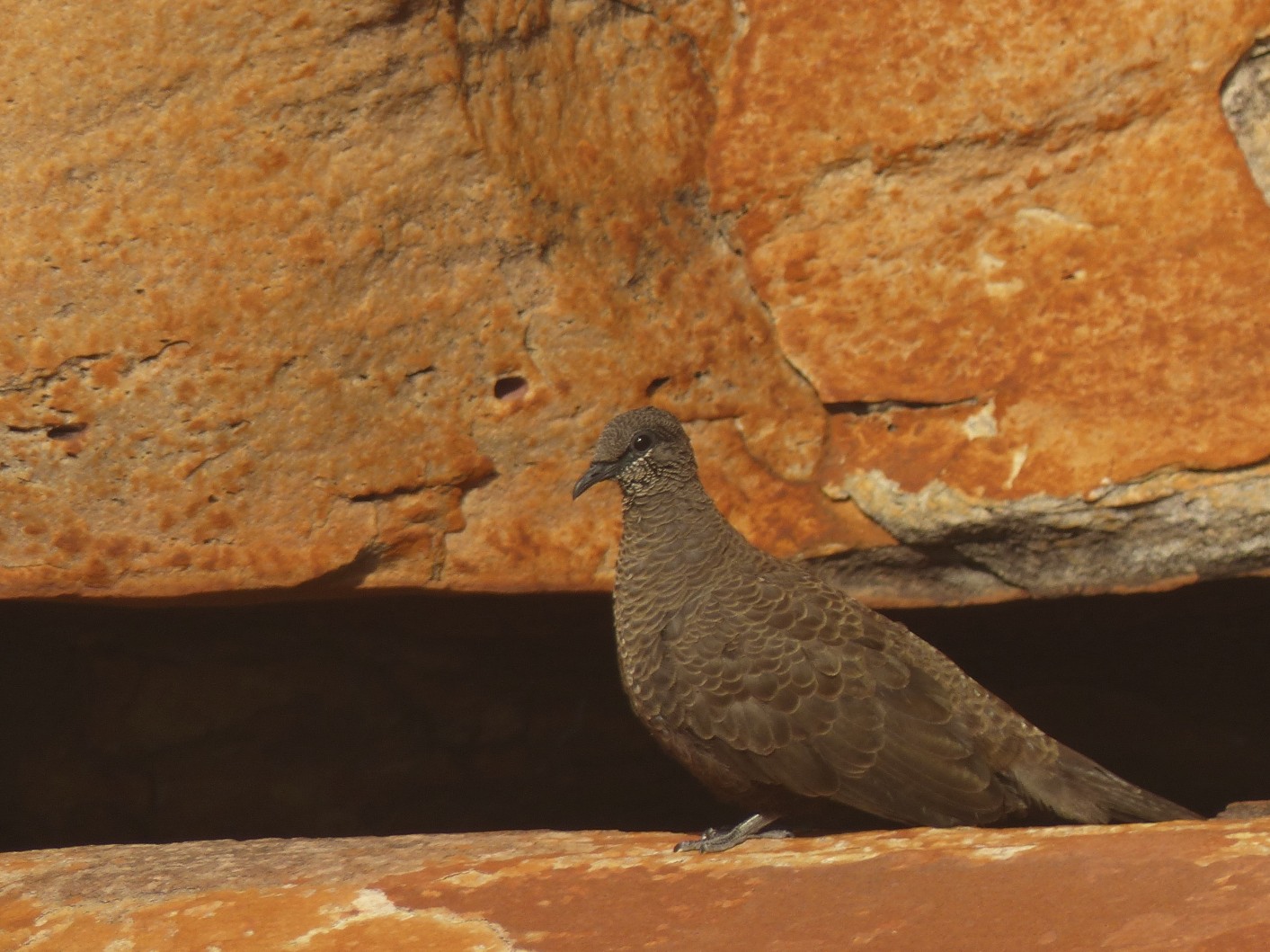
Waiting for us just a few metres from the edge of the falls was a very cooperative White-quilled Rock Pigeon …

White-quilled Rock Pigeon

Good King George would doubtless have shot it, having despatched  over a thousand pheasants in six hours on 18 December 1913. Other notable achievements included shooting 21 tigers, 8 rhinoceroses and a bear over 10 days in Nepal, what a guy.