Kaeng Krachan …

Thailand’s largest national park covering an area of 2914 km² and just part of an even larger forest that extends west into Myanmar and north and south in Thailand. According to the Thai National Parks web page it is home to at least 420 species of bird, 57 mammals and about 300 species of butterfly.
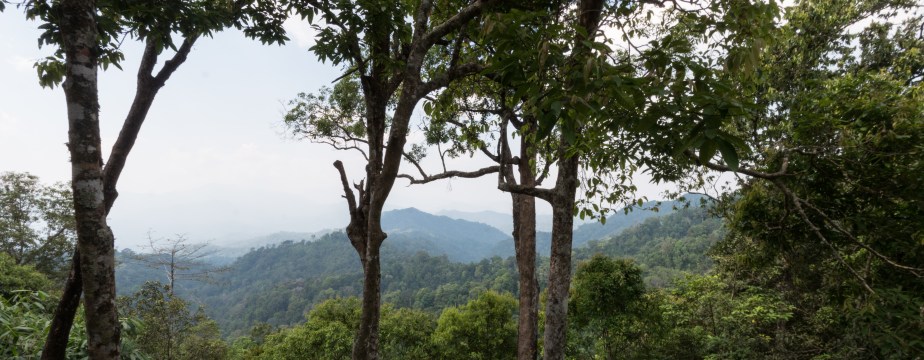
Looking west into Myanmar

Just to conjure with some delicious possibilities, Tiger, Leopard, Asian Elephant, White-handed Gibbon and Great Hornbill are all here, although you might not want to meet all of them on a dark road. The possibility exists … there are three campsites!

The Great Hornbill has to be the signature bird, it may measure as much as 122 cm from tip of bill to tip of tail, that’s almost exactly 4 feet in the old money. Its wing beats can often be heard before the bird is seen. It’s a hole nester and therefore needs a lot of forest with a lot of very big, very old trees. It’s why places like Kaeng Krachan are so very precious.

That’s right, my photo was lousy but it inspired me to have a go with the crayons.

Spent three days here and divided the time between different elevations. The birding was excellent.For me the hornbills were the stars of the show, besides Great there were also Oriental Pied, Wreathed and Tickell’s Brown. Hanging Parrots, Barbets and especially the odd Trogon threw in some colour …
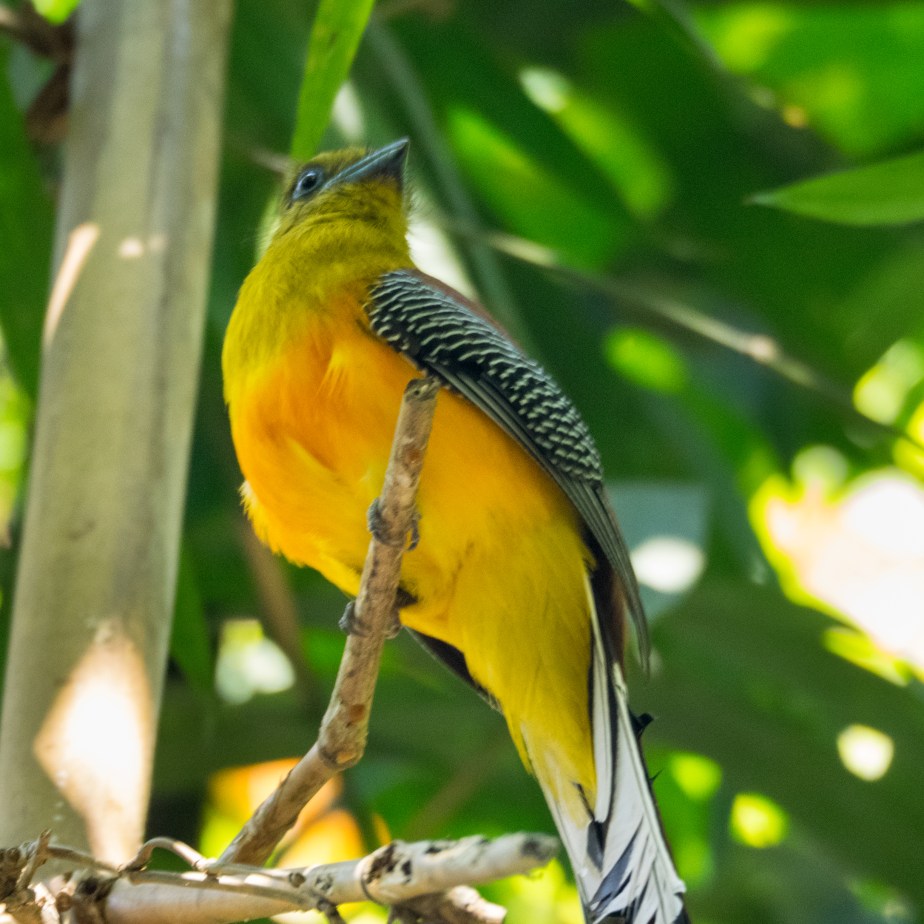
Orange-breasted Trogon

Occasionally the watchers were themselves under scrutiny …

Dusky Langur

Other primates we encountered were Banded Langurs and Stump-tailed Macaques. White-handed Gibbons were often heard calling but stayed out of sight.

Some of the 300 butterflies were about. I would be grateful to anyone who can identify this one, just drop me a comment …

Even large creatures can be hard to find in a dense forest, there was plenty of evidence of elephant but neither they or the tigers put in an appearance. But I am not prejudiced against smaller things …
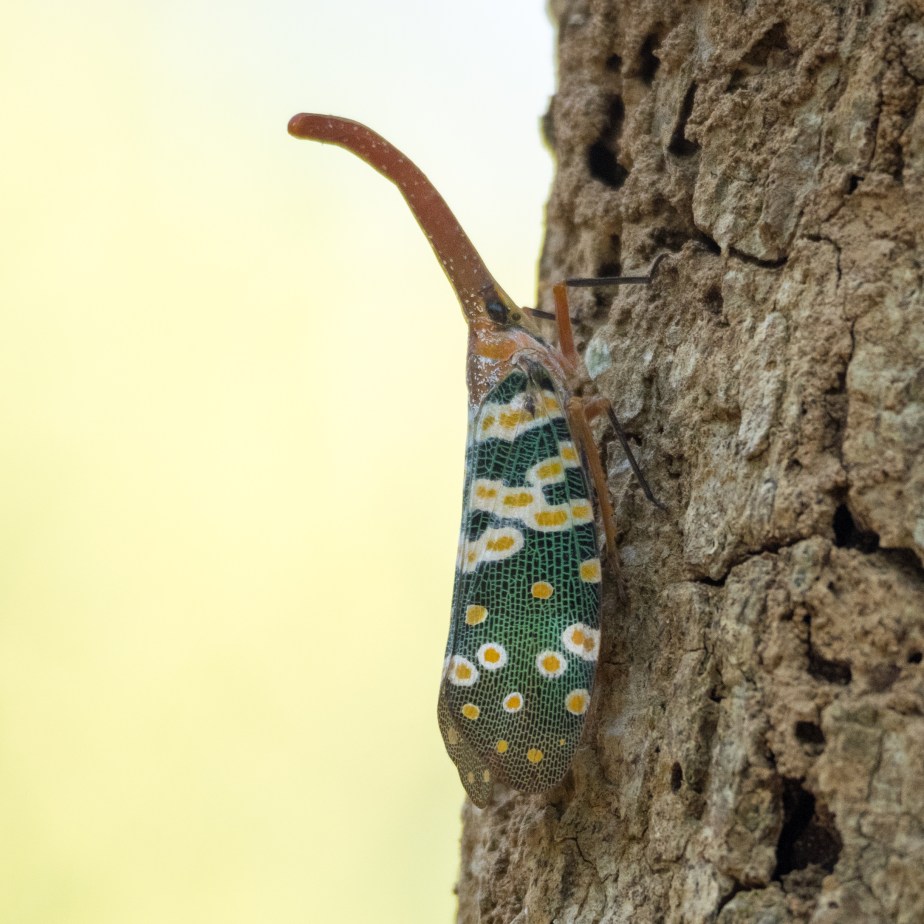
Lantern bug

I have a reasonable faith in my identification of this little beauty as Pyrops candelaria. In the distant past it was thought that they emitted light from their proboscis. Sadly, this is not true.

And my chances of identifying a Skink aren’t especially great but this is probably Dasia olivacea in a confiding mood …

Olive Dasia

Three days amassed a good bird list but in many ways just scratched the surface. I would love to go back.

The serious birdwatcher should check out Nick Upton’s page for some great information on how to get the best from their visit or book through Rockjumper.

Back down to earth …

Sunny Victoria, Australia.

Quite a change from Hokkaido but home in time to head to Terrick Terrick National Park to lend a helping hand in some fauna monitoring.

The Terricks are in the northwest of Victoria, 225 km from Melbourne, 60 km north of Bendigo. Some granite outcrops had got in the way of agricultural development so some forest had survived. This was the core of a state park and it preserves some very nice, revegetating Calitris woodland. North of that there is some marginal grazing country that had been lightly stocked and never cropped. It is the principle refuge of Victoria’s remaining Plains Wanderers, cute little birds whose closest relatives are the seed snipes of South America. Some of this country has been added to the park with a view to managing it for the benefit of our cute but endangered little birds. And somewhere along the journey the enlarged park became a National Park.

The management plan for the grassland seemed an excellent one, I am sure the Plains Wanderers would have been thrilled with it. Sadly Parks Victoria have done a woeful job of sticking to it. Still, the Wanderers are hanging on, just.

Finding them is a night-time task. They are not nocturnal but their eyes show up well in a spotlight and they tend to run rather than fly, they can be caught with a hand net, banded and released. Volunteering has its rewards …

Plains Wanderer
Plains Wanderer

And on a warm night the grassland can turn up other delights …

Fat tailed Dunnart
Fat tailed Dunnart
Eastern Scaly foot
Eastern Scaly foot

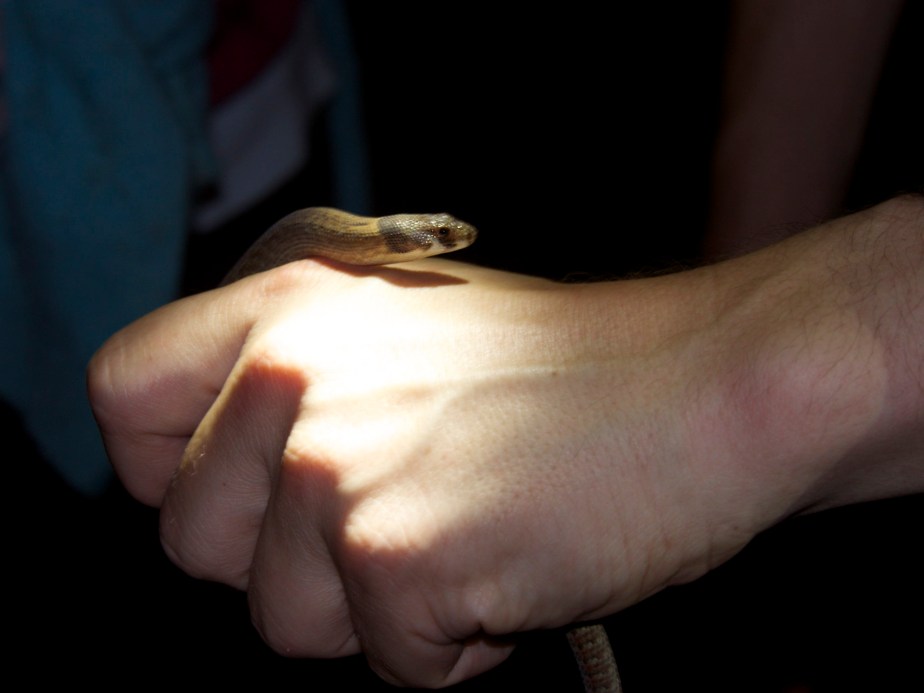
And whilst some are a handful of cute don’t try it with this one, it might result in being very unwell …

Curl Snake
Curl Snake

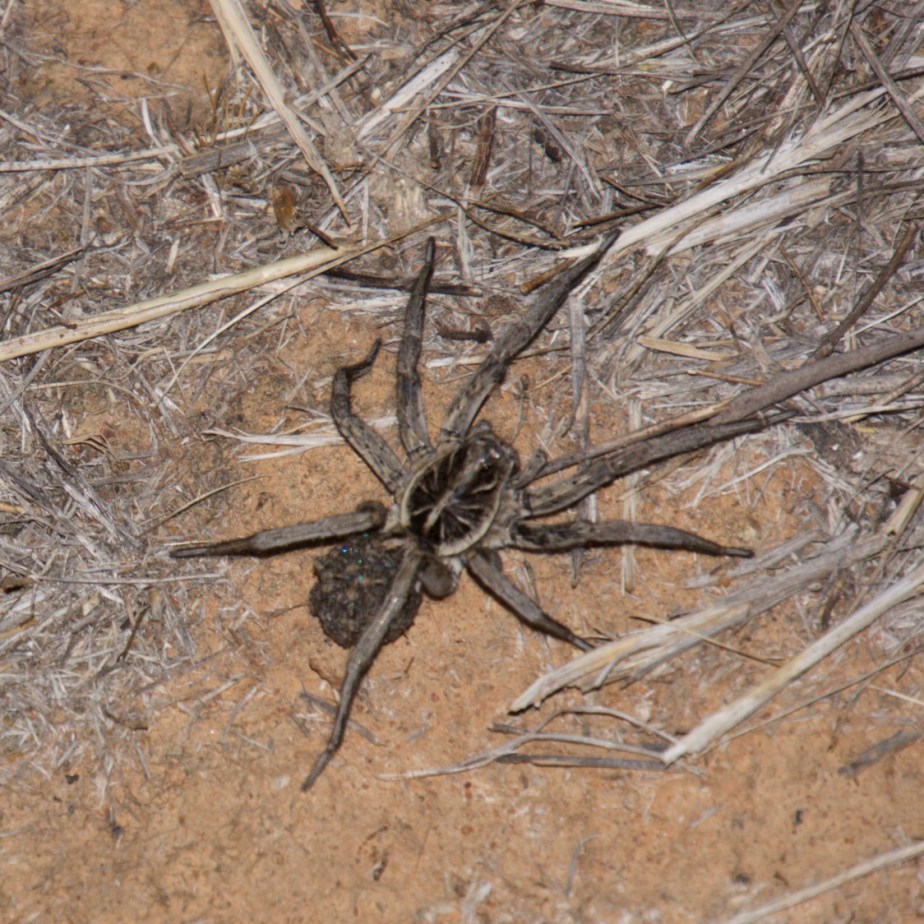
and most people would prefer not to handle this one either …

P1090620

but they are cute in their own way, the little blue dots are the eye reflections of some of its babies that are riding on its back.

A Mammal or Two …

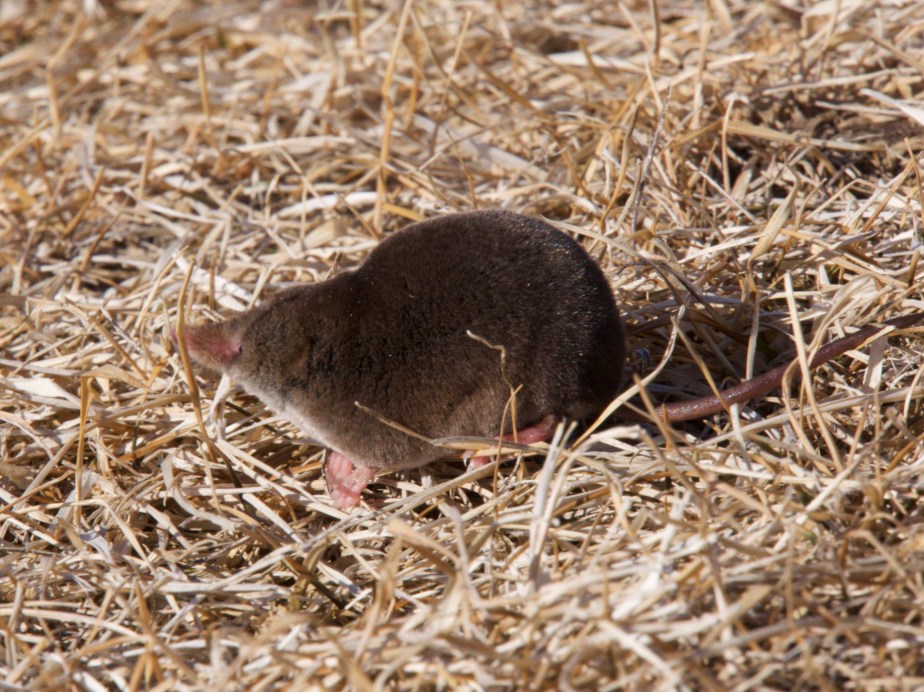
Hokkaido has quite a list of mammals, it still has Brown Bears for example. These are formidable creatures closely related to the Grizzly. They may reach more than two meters tall, weigh about 300 kg and can run at a speed of 50 kph. They mostly eat shoots and salmon but are not averse to the occasional hiker. It does nothing for your comfort to know that, not only can they outrun you, they can out swim and out climb you as well. According to a Japan Times article the government started keeping records in 1962, between then and 2008 there were 86 attacks 33 of which were fatal. The article has some amusing suggestions for people venturing into bear country. They hibernate from mid-December to late March. So no photos this trip, here’s a Long-clawed Shrew to make up for it …
 

Long-clawed Shrew
Long-clawed Shrew

Blakiston’s line divides the Brown Bear, found only in Hokkaido,  from the Asiatic Black Bear of Honshu and Shikoku. The Long-clawed Shrew is also found only to the north of the line.

For more on bears in Japan, including the story of the Sankabetsu Brown Bear Incident of 1915 go <HERE>. The Long-clawed Shrew standing on its hind legs would barely make 10 cm, it weighs up to 20 g moves quite slowly and has never been involved in attacks on humans.

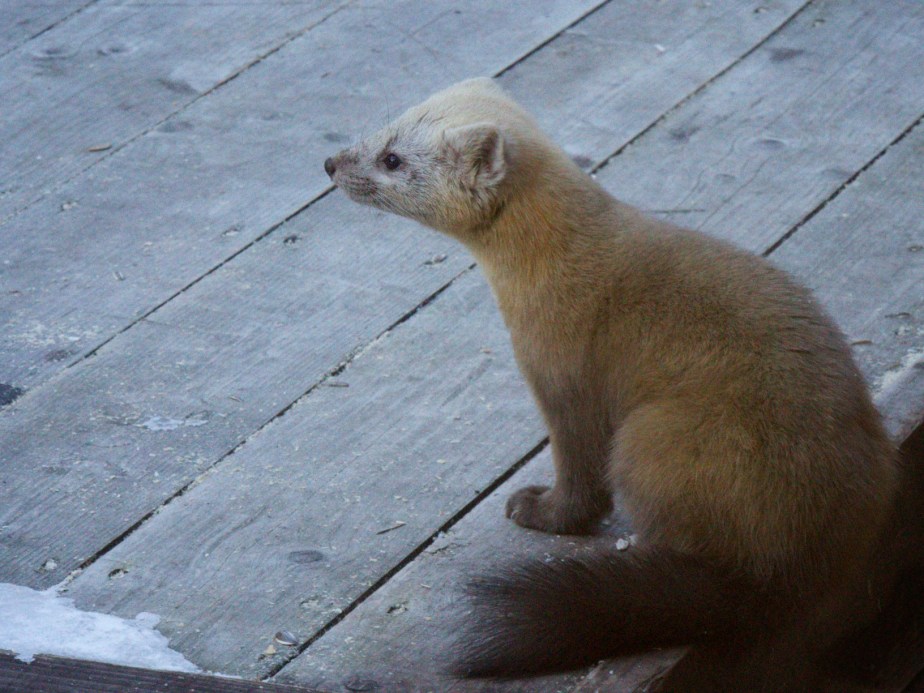
A few other mammals were kind enough to pose. This Sable, once again only found north of Blakiston’s line, had its den under the deck of one of the hotels I stayed at.

Sable
Sable

It is a Mustelid along with weasels, badgers and otters. It is happiest eating squirrels, smaller rodents, birds and fish but will also eat berries, vegetation and pine nuts when the going gets tough. This one mostly ate bread.

The next couple of species have no regard for Blakiston. They do not toe the line.

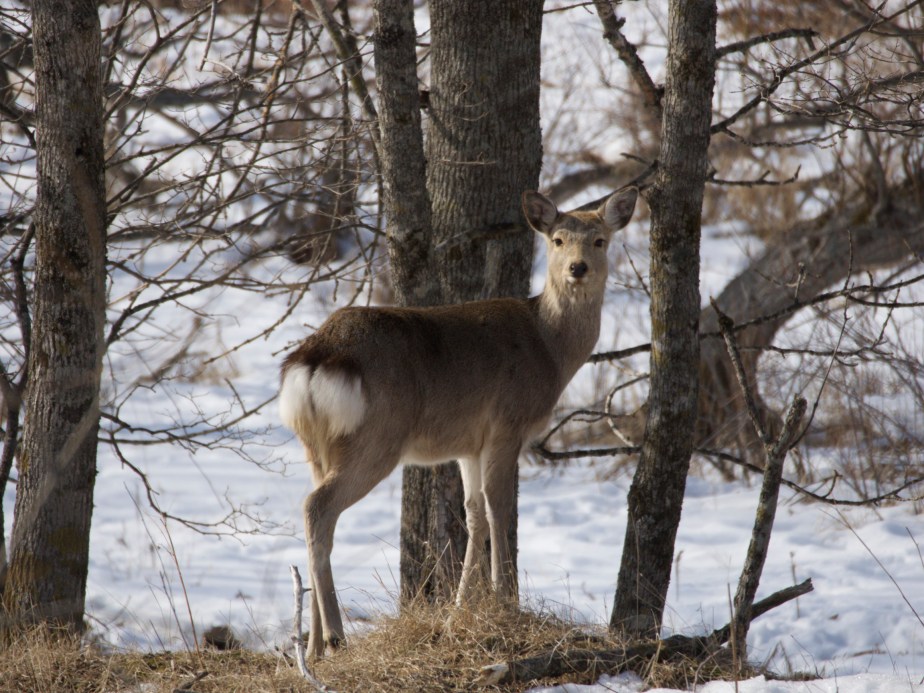
Sika Doe
Sika Doe
Sika Stag
Sika Stag
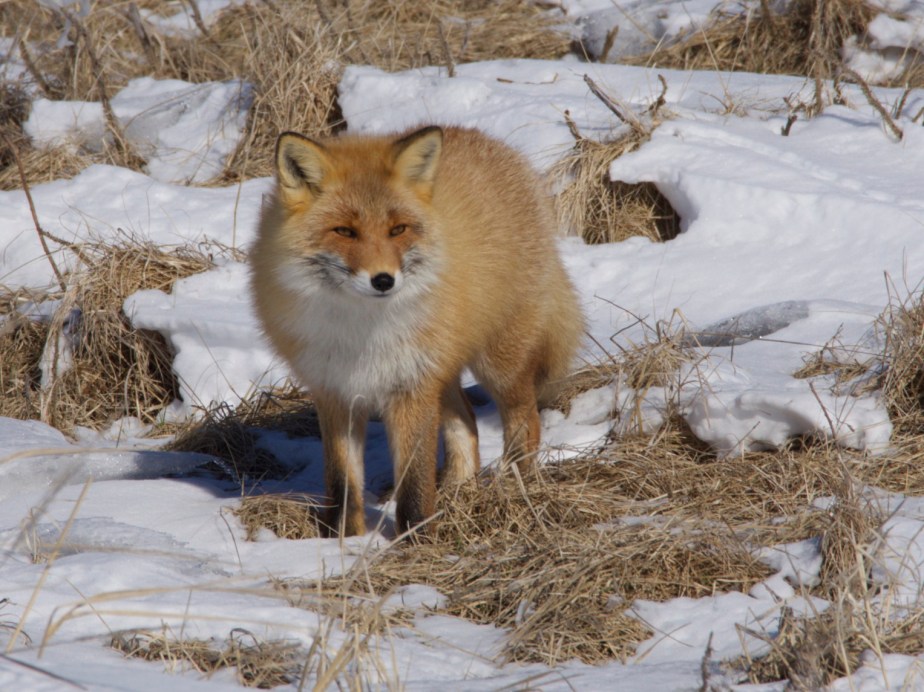
Red Fox
Red Fox

Whilst back in the woods …

Hokkaido is a really cool place, literally, the year round average temperature is just 8°C. Trees are found up to about 1500 metres. In the lowlands there is deciduous forest dominated by Mongolian oak (Quercus mongolica) with dwarf bamboo (Sasa spp.) undergrowth. Above that the dominant forest cover is coniferous, mainly Asian spruce (Picea jezoensis) and various firs (Abies spp.). Where climate and landform suit agriculture the forest has been cleared and much of the remainder has been logged but there still seems plenty for most of the birds.

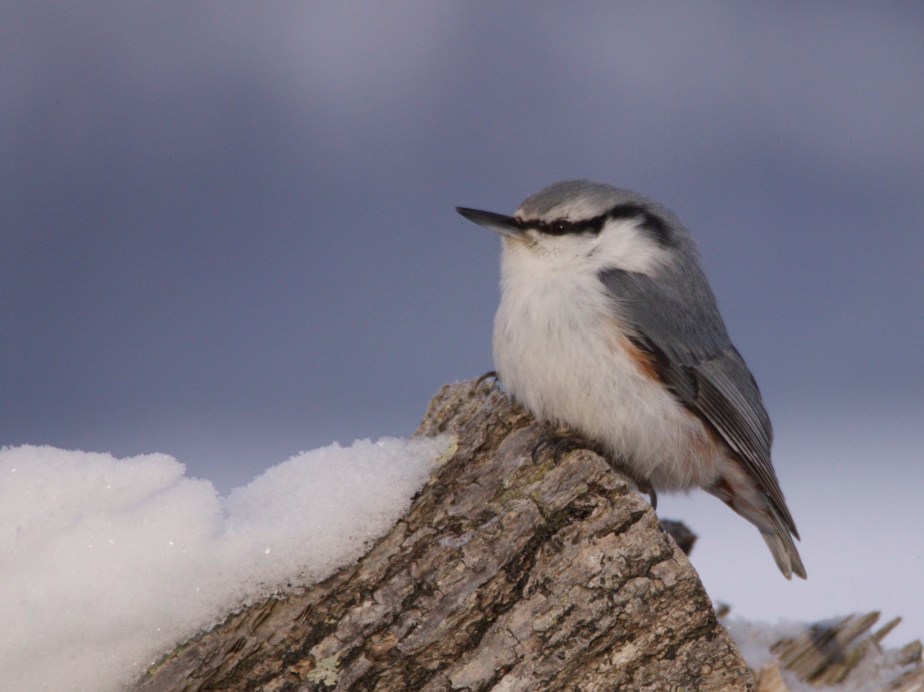
Eurasian Nuthatch
Eurasian Nuthatch

This one is right way up but the nuthatch is often seen creeping head first down the trunks of trees inspecting the bark for insects.

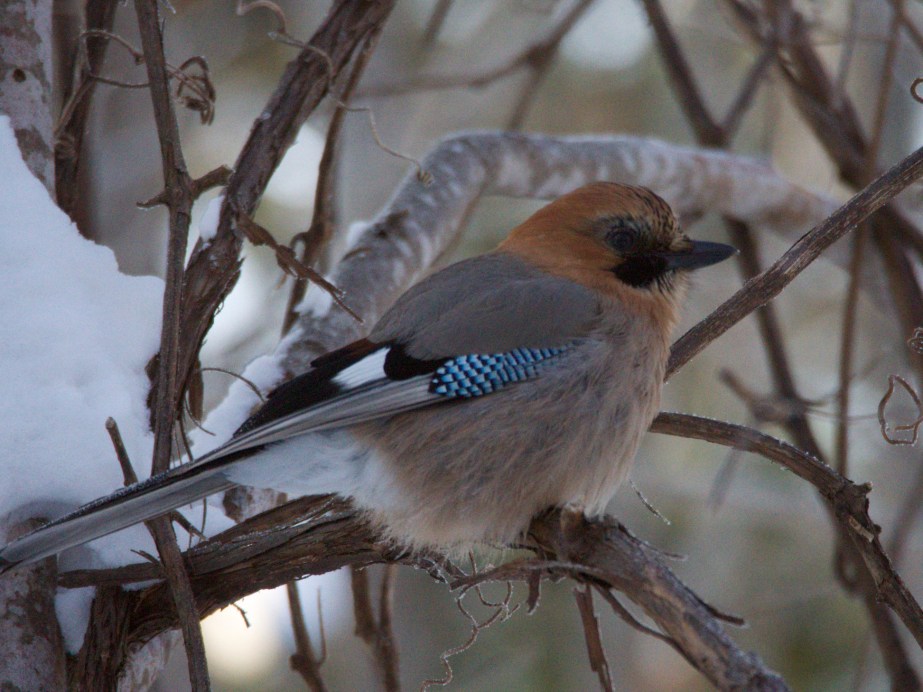
Eurasian Jay
Eurasian Jay
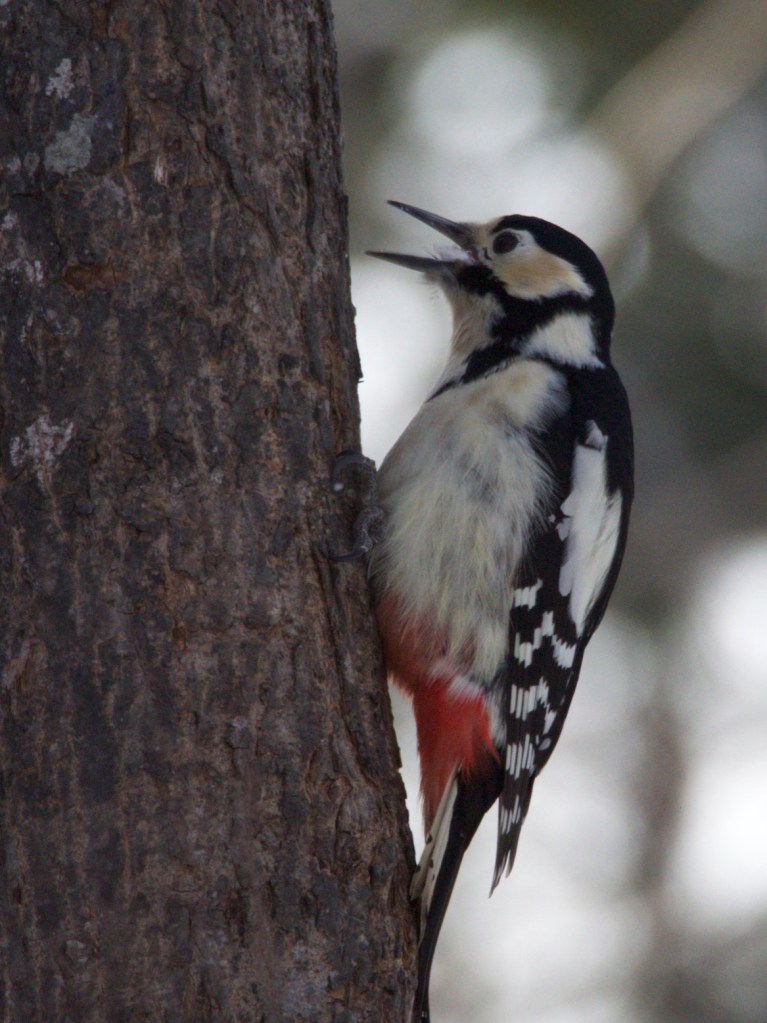
Greater Spotted Woodpecker

These three are old friends. Their range extends across Asia and Europe. As a kid growing up in England I could find all of them in the local forest.

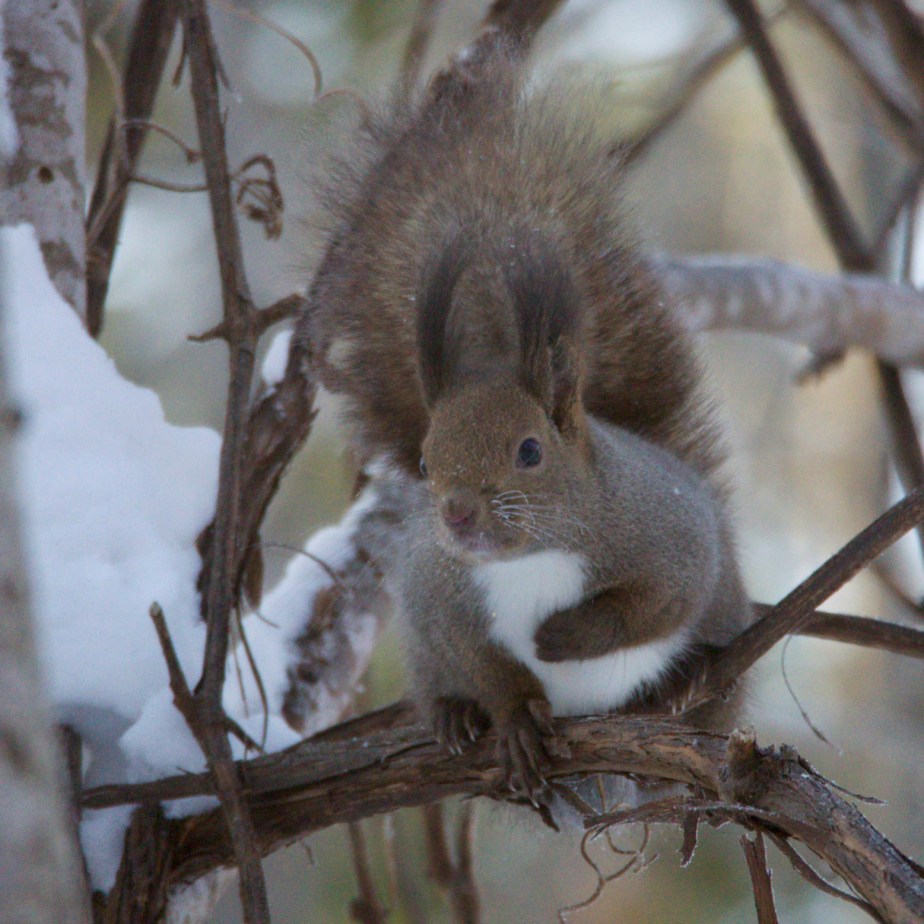
This next guy is another example with which to illustrate Blakiston’s line. In the three large southern islands of Japan there is an endemic squirrel, funnily enough called the Japanese Squirrel (Sciurus lis). In Hokkaido, though, we find the Eurasian Red Squirrel. The local subspecies (Sciurus vulgaris orientis) has really cute ears. (The scientific term being auribus vere bellus).

Red Squirrel (Sciurus vulgaris orientis)

A Little Geography …

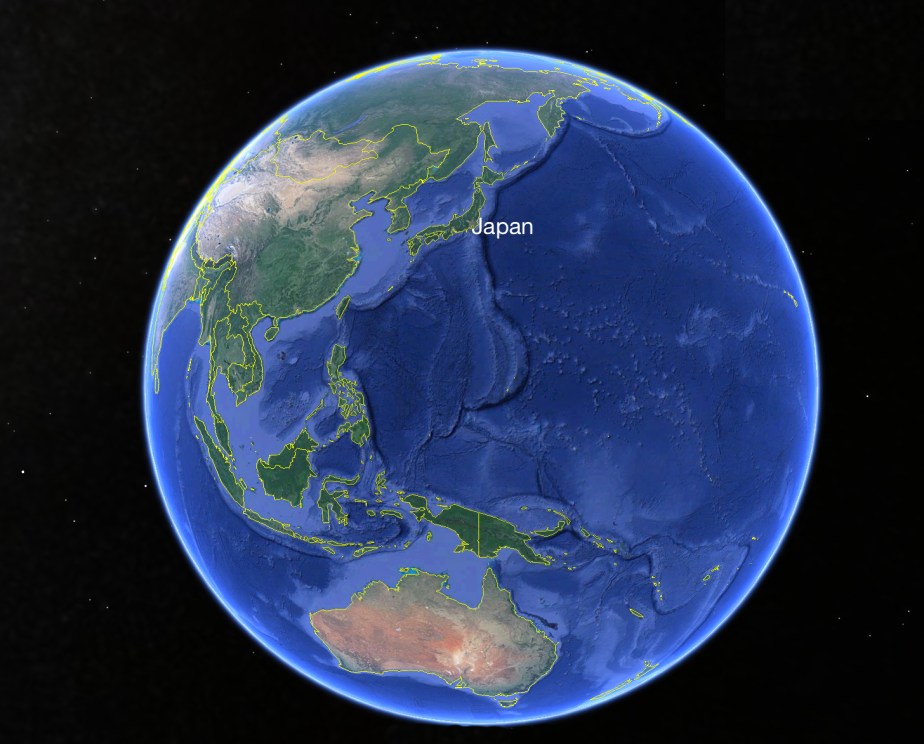
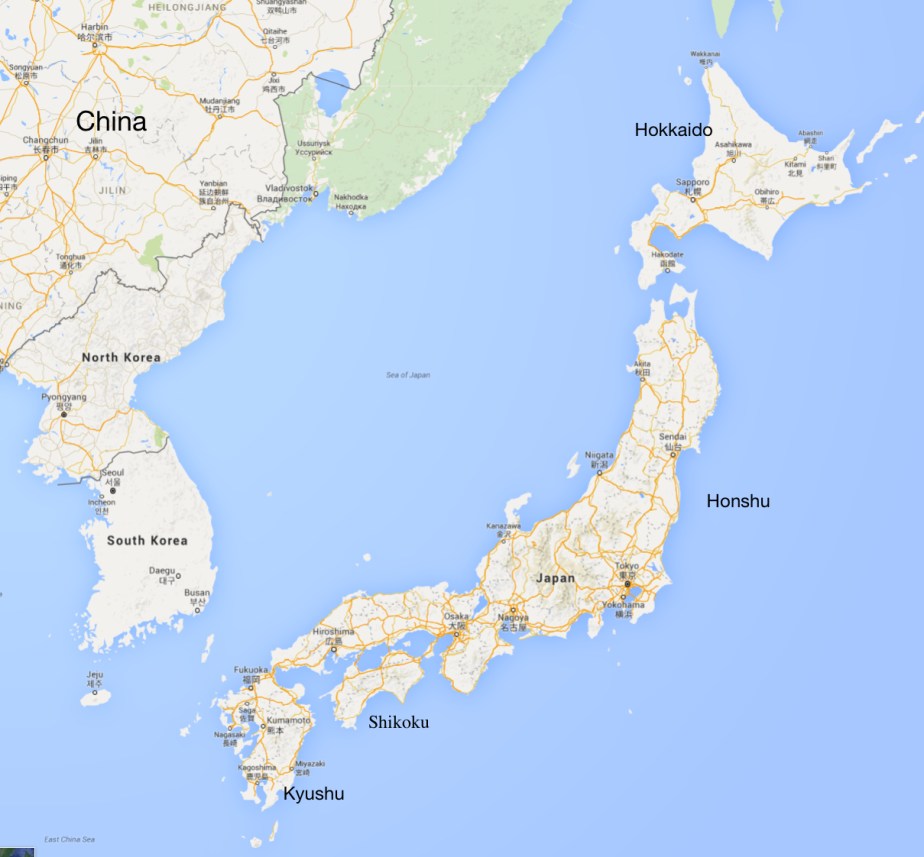
Our Google globe has been placed north up with Australia at the bottom, Japan at the top.

Globe 1

Japan is part of a great archipelago that hangs off the Kamchatka peninsula and curves away to the east of the main landmass of Asia, swings away around the north of Australia and then down to New Zealand.

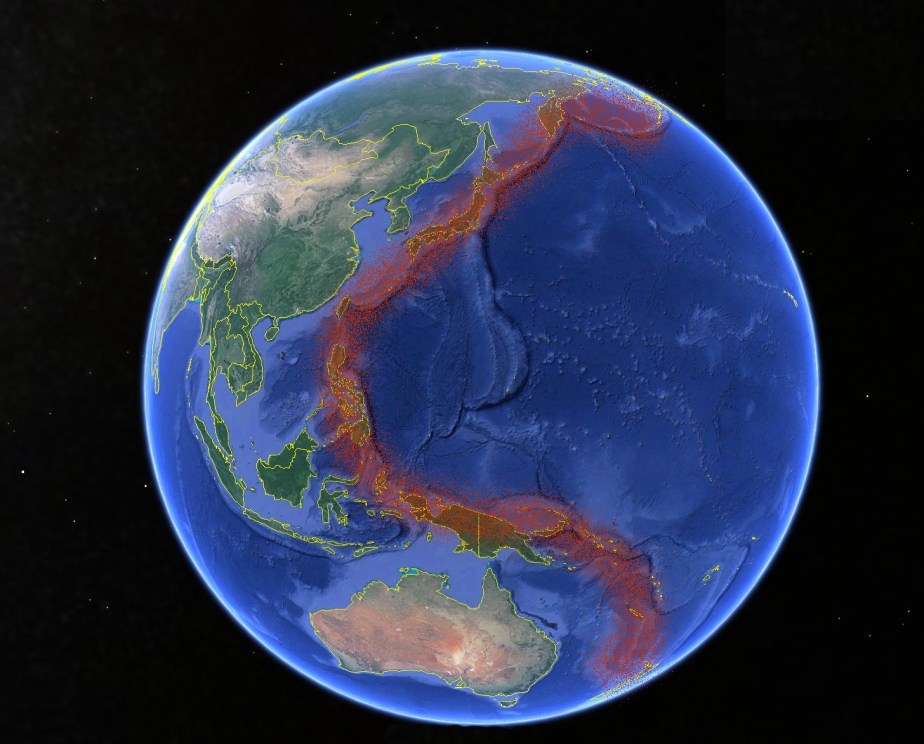
If we superimpose the relevant part of the Great Ring of Fire on the map we can then deduce a great deal about the underlying geology.

Ring of Fire

The Japanese part of that great archilelago consists of almost 8,000 islands between latitudes 24°N and 46°N, and longitudes 122°E and 146°E. That’s 2600 km from Okinawa to the tip of Hokkaido. The four largest islands are Honshu, Hokkaido, Kyushu and Shikoku and together they make up about 97% of the land area.

Japan is mountainous, only 27% of the country is suitable for agriculture and urban settlement. It is prone to volcanic eruptions, earthquakes and tsunamis. There are more than a hundred active volcanoes. More than 140,000 people died in the Tokyo earthquake of 1923. The 2011 magnitude 9.0 earthquake off the Pacific coast of Tōhoku killed about 18,000 people and triggered several nuclear accidents.

From a natural disaster point of view Japan is the most dangerous place in the developed world.

Japan Islands

Looking from China, Japan lies in the direction of the rising sun, hence the way Japan is rendered in Kanji is 日本. The Chinese character 日 means sun or day; means base or origin, combined they convey the meaning sunrise.

The population is about 126 million people and slowly declining. The population density is high in the areas suitable for settlement.

Japan has the third largest economy in the world, but things aren’t quite as great as they used to be.

Life expectancy ranks second in the world. The infant mortality rate of 2 per thousand live births is as low as any where in the world. Educational standards are high.

Virtually no one shoots anyone else in Japan but they make up for that to some extent by killing themselves. Suicide is the leading cause of death in people under thirty.

The whole place is in one time zone (GMT +9hrs) and they don’t mess with the clocks for summertime.

The electricity supply is 100 volts (not 120 like the US or 240 like Australia and the UK) the plugs and sockets are 2 pin connections compatible with their American counterparts.

The climate is officially described as temperate. What this means is that it’s mild in the south. Tokyo is hot and humid in summer and cold in the winter, not a threat to your ears and nose but remember the hat and gloves. Hokkaido is mild in the summer and definitely a threat to the extremities in winter, don’t leave home without your parka.

Wildlife has done well in Japan, bears, deer, voles, shrews, deer, mustelids and monkeys can all be found and the bird life is exceptional. The mountains have helped preserve habitat and modern Japan seems conservation minded. There are well managed wildlife reserves. And surprisingly it is a good place to go whale watching!

The birding is heavily influenced by the strong seasonality and the proximity to land north and south and there is always the chance of vagrants coming from the Asian mainland.

The only English language field guide worth having (for the moment) is … A Field Guide to the Birds of East Asia (2009), by Mark Brazil.

Got all that? Cool. It’s time to go.


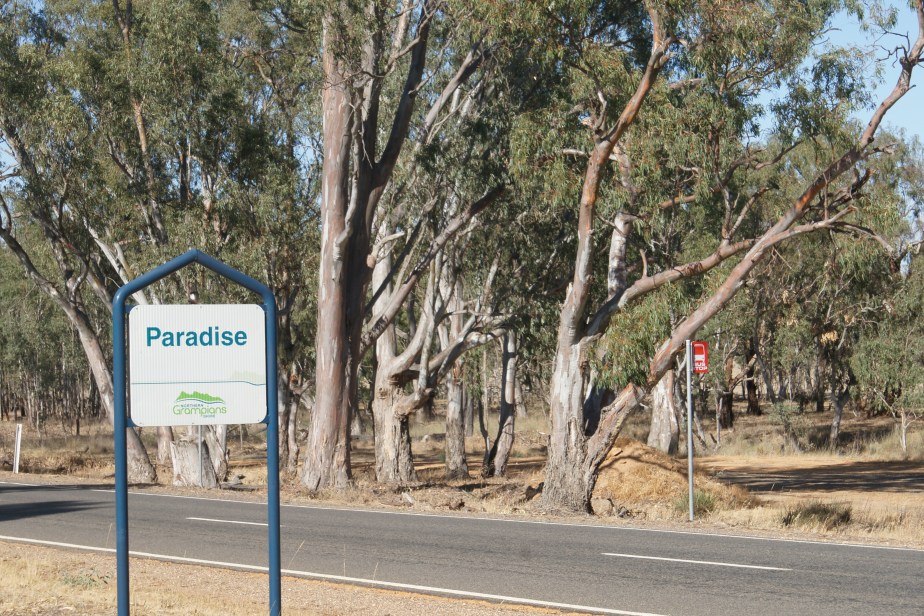
Not far from Paradise …

In summary of the recent trip. The Prado and I covered 8,820 km (5,512 miles). The binoculars were turned on some 271 species of bird, one of which they had never seen before. They were also trained on some of Australia’s quite unusual mammals including both Tree Kangaroos, Platypus and Spectacled Hare Wallaby.

Round Trip

Getting home to the drab and mundane, the humdrum, the ordinary might be a challenge, if a word of that were true. But it’s not, I have Platypus in the creek at the bottom of my back paddock, this guy was waiting for me a few metres from my front door …

EaGyK

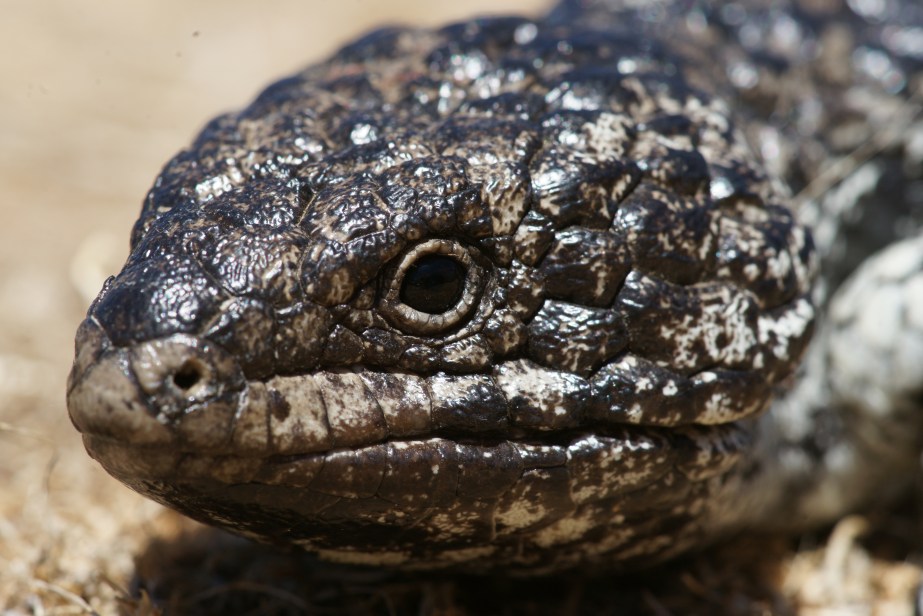
This one was out on my driveway enjoying the summer sun …

Shingleback

I live not far from Paradise and I can get there by bus.

Near here

Around and about …

We spent a few days in the Cooktown region. Overall it was a very productive time from a wildlife perspective. The sighting of Bennett’s Tree Kangaroo was the crowning moment. If you are considering a visit, some of the places to include are the McIvor River, Mt Webb National Park, Keatings Lagoon, Black Mountain and Little Annan Gorge.

The McIvor River can be reached at a couple of spots, the easier place is via a bitumen road. On the way from Cooktown to Hopevale turn left 10 km prior to Hopevale in the direction of Laura. There is a second crossing not far downstream from there  that can be reached via a dirt track from Hopevale airstrip or from the crossing on the made road via a commercial plantation a little further in the direction of Mt Webb. Good birding in pockets of riverine rainforest can be had at both.

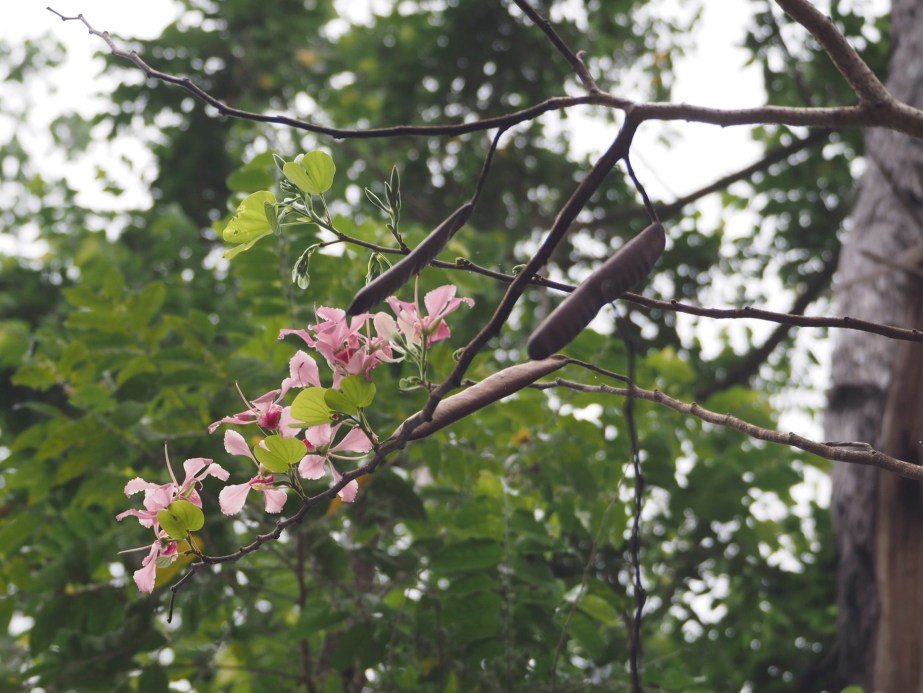
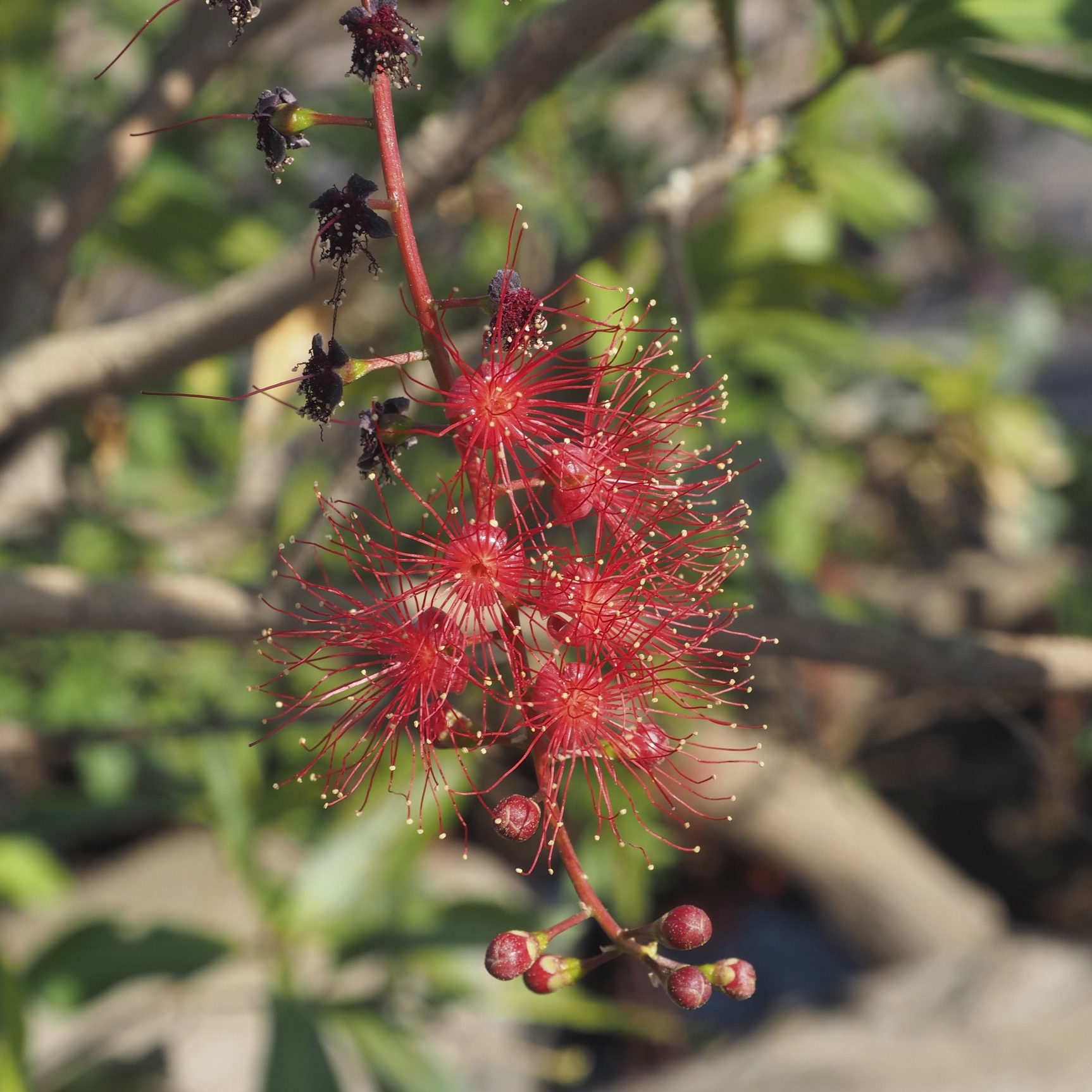
Flowering tree

There are no real facilities at Mt Webb but you can get off the main road and poke around. We saw White-eared and Black-winged Monarch here, the latter is a summer migrant to Cape York and this is just about its southerly limit. I photographed this Little Shrike-thrush here …

Little Shrike-thrush

Also had good views of an Amethystine Python which I was about to photograph when the Black-winged Monarch flew by. I chased it and ended up without good photos of either. A snake in the hand or a bird in the bush?
A little further north on the east side of the road you can explore a heathy area that looks productive.
There are foot paths and a hide at Keating’s lagoon. It was good for water birds and is surrounded by some dry forest that yielded Silver-crowned Friarbird and other passerines. Magpie Geese …

Magpie Goose

Our main target at Black Mountain and Little Annan Gorge was Godman’s Rock Wallaby but in that we were unsuccessful.


Kimberley Wildlife …

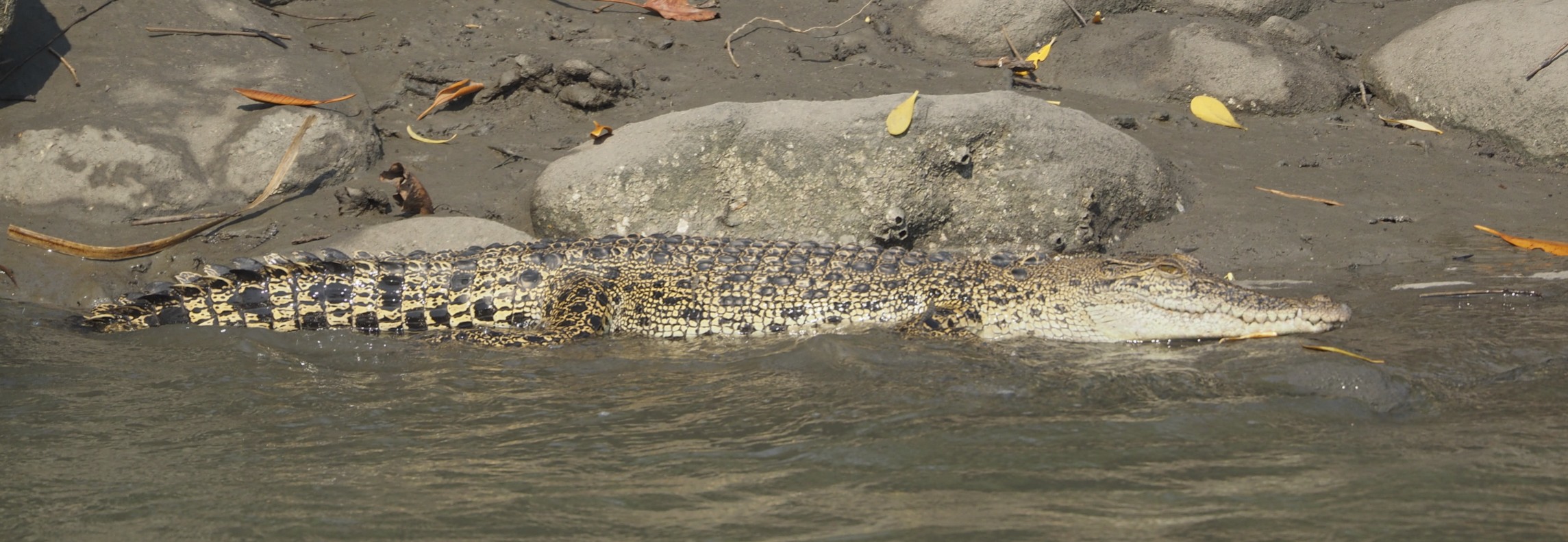
Estuearine Crocodile

I hope that it’s obvious to anyone who has read this far into the trip that I get a great deal of pleasure from this sort of travel. But if I had to say what is the most important component of it all I would say the wildlife. And if pressed to be even more specific it would be the birds.

My hope was that I would get a look at the Kimberley Honeyeater, it would have been the only likely chance of a new species for my Ozzie list. It was not to be, I will have to go again. I’m glad to have done the cruise but next time it will be 4WD again, it is far more productive in wildlife encounters … of every sort except hopefully crocodiles.

But before leaving the Kimberley let me share a little more of the flora and fauna that I caught up with.

Caspian Tern
Caspian Tern
Lesser Crested Tern
Lesser Crested Tern

Osprey

Native Hibiscus
Native Hibiscus

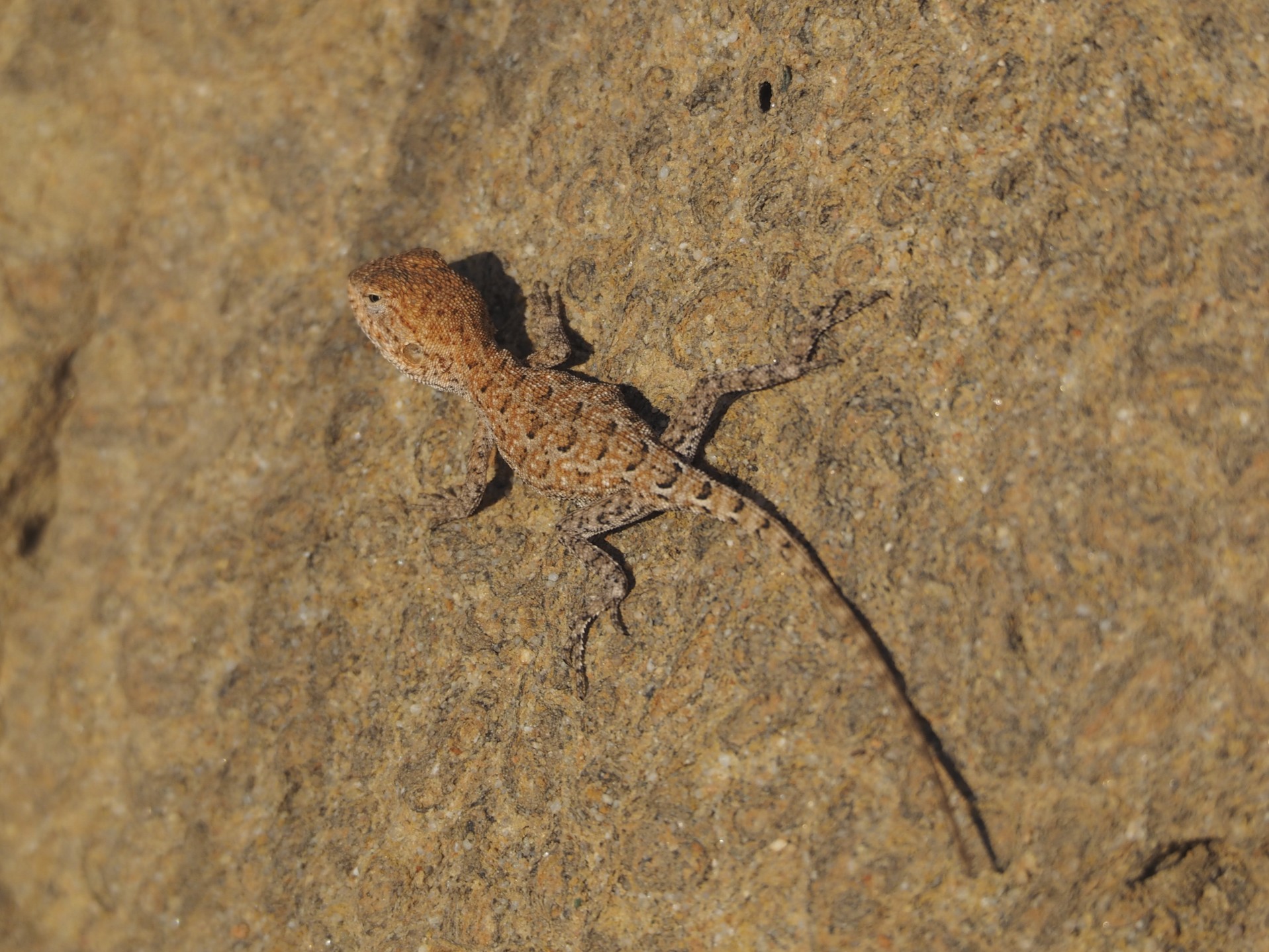
Dragon

But the cruise ain’t over yet, we now have to turn the corner and cross Bonaparte Gulf en route to the Tiwi Islands. The gulf, commonly known as Blown Apart Gulf, has an ugly reputation.

Velavadar …

After a last morning safari at Gir it’s on the road to Velavadar.

The journey takes us about 206 km north-east through countryside that is fairly flat and intensively farmed with the aid of extensive irrigation. From time to time we pass cotton processing plants with little mountains of cotton waiting for the gin (just to remind us that Gujerat is a dry state … it’s been four days now). There is still plenty of cotton awaiting harvest in the fields. Other crops include Castor, Millet and Mustard. Later in the year it will be time to plant Sorghum.

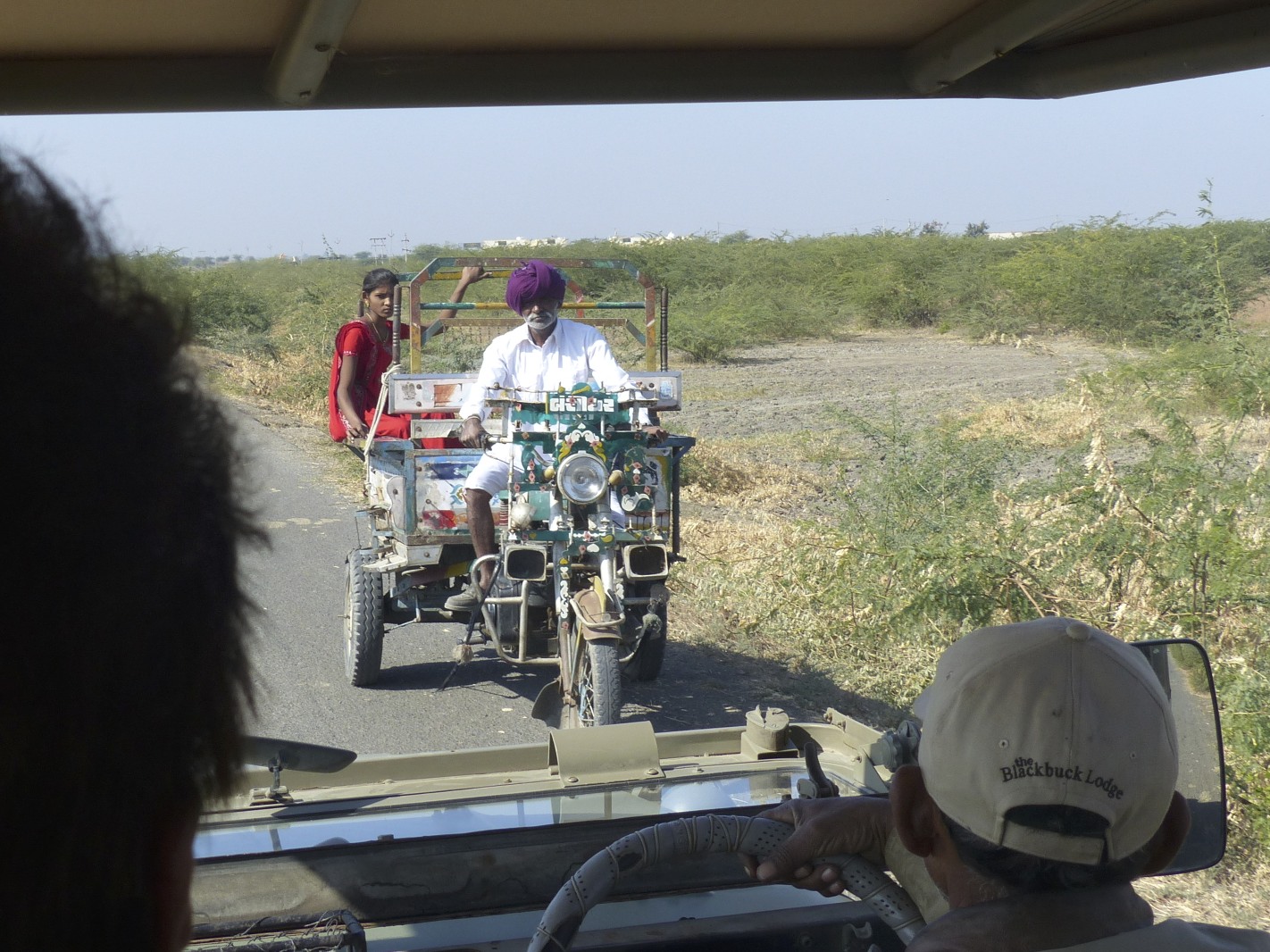
The roads are fair but busy. The trucks tend to be small by Australian standards and mobile works of art. As well as cars, they have to contend with tractor hauled carts, camel hauled carts, oxen hauled carts and a strange hybrid of motorcycle and cart called a chakra. Motorbikes and motor scooters are numerous and generally low powered. I will need to undertake a great deal more study before I can explain the system by which all these vehicles avoid collision but initial observations reveal that a good horn, good brakes and good luck are vital ingredients. An average speed of 50 km an hour would be a pretty good achievement and four or five hours of that should bring you to the verge of exhaustion.

Chakra
Chakra

In former times the region we are headed to was an extensive open grassland. Much of the area has given way to agriculture or been lost to the encroachment of  Mesquite, Prosopis juliflora, a native of the americas. It was introduced to provide fuel wood, which it has and it is also used to make fences. It has ferocious thorns and grows as dense thickets. Overall it has been much too successful. An area of 34.52 sq.km. has been preserved as Blackbuck National Park.

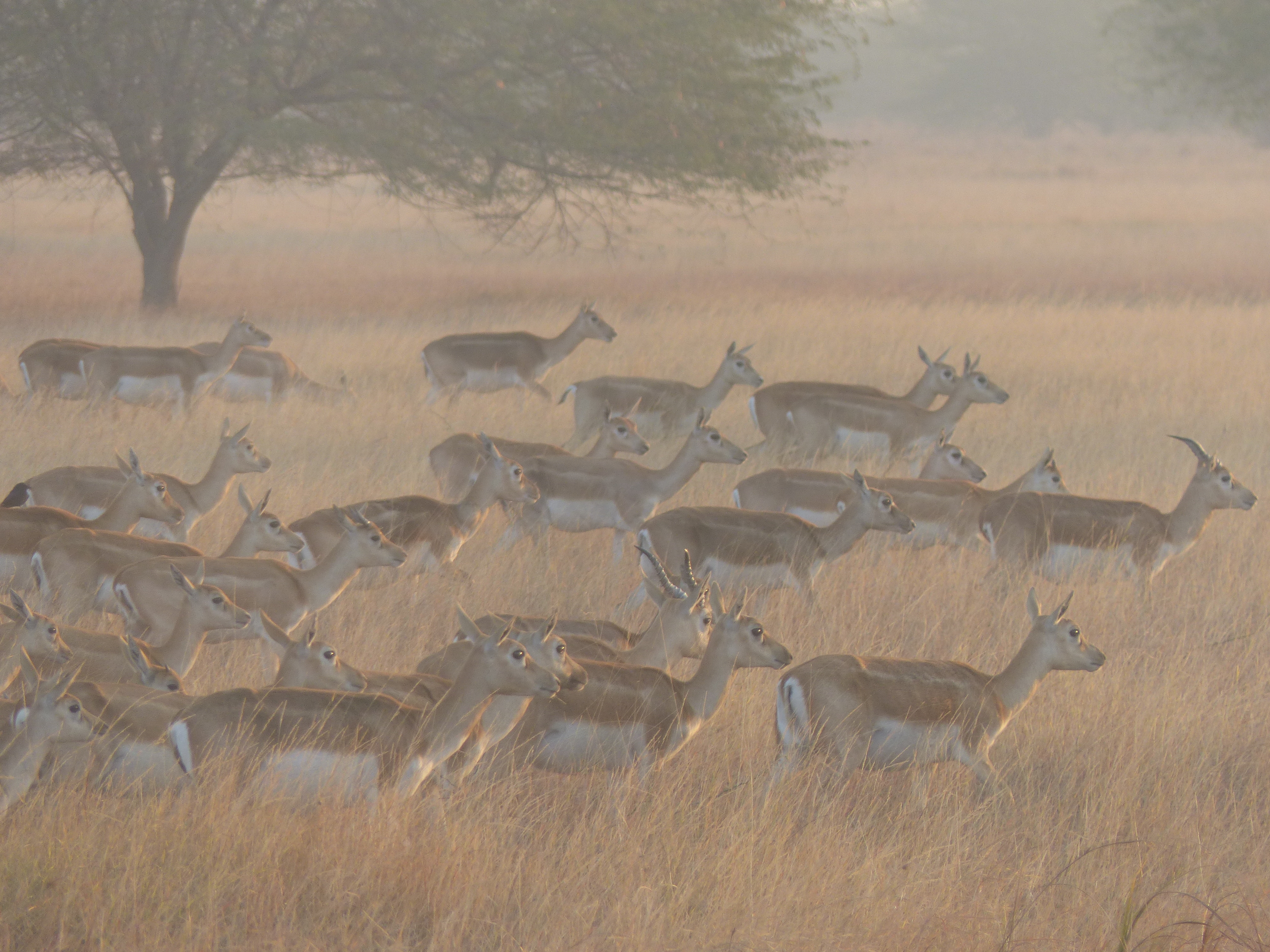
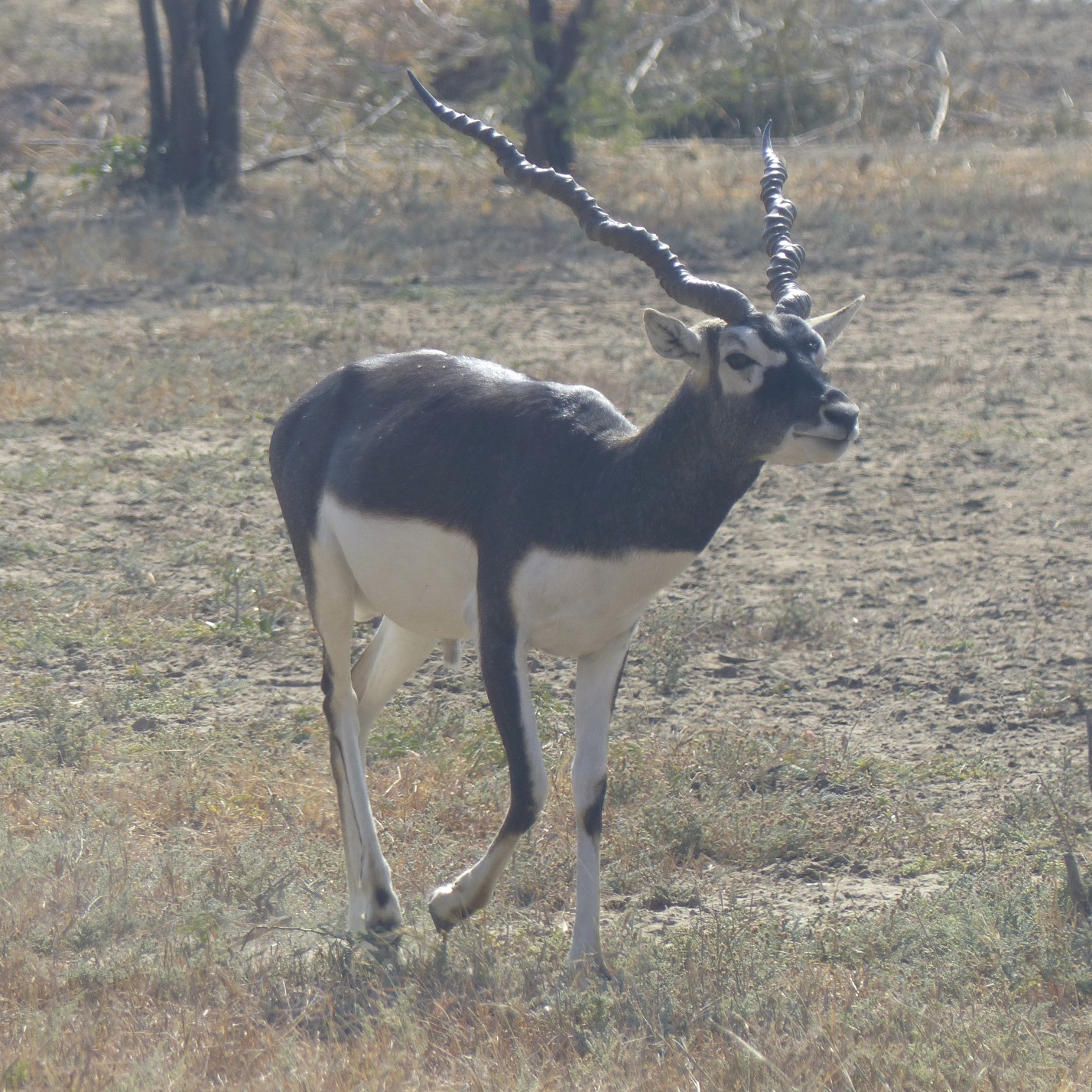
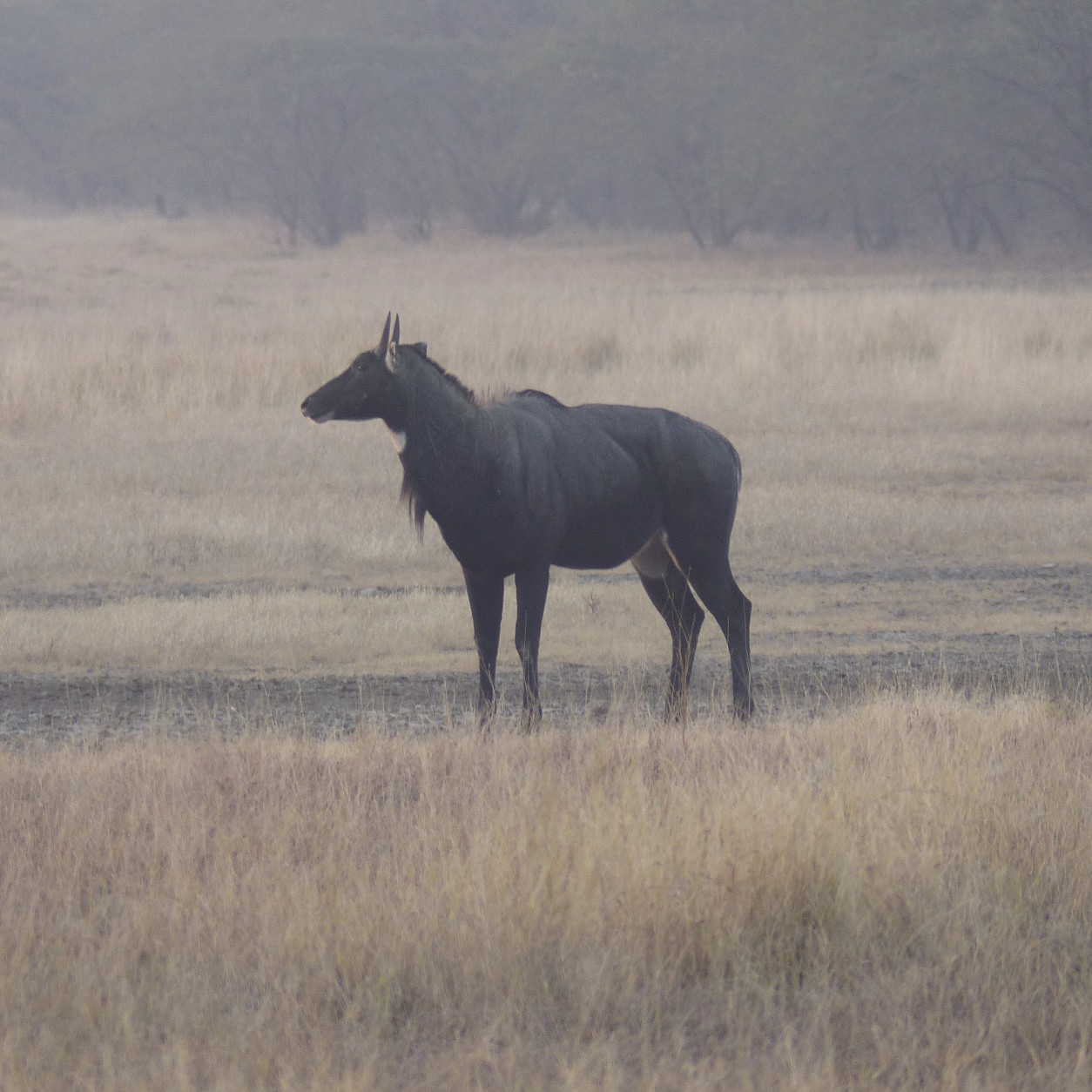
The grassland is home to the very elegant Blackbuck and also Asia’s largest antelope, the Nilgai. In winter it is visited by large numbers of Montague’s and Pallid Harriers, in the monsoon it provides a refuge for the small and endangered bustard, the Lesser Florican. There is a wetland in the park that can amuse the birdwatcher for hours with such creatures as pelicans, cranes, avocets and flamingoes, although they can be sure that the other occupants of the vehicle will drag them away in pursuit of wolves and hyena.

Blackbuck
Blackbuck
Blackbuck male
Blackbuck male
Nilgai male
Nilgai male
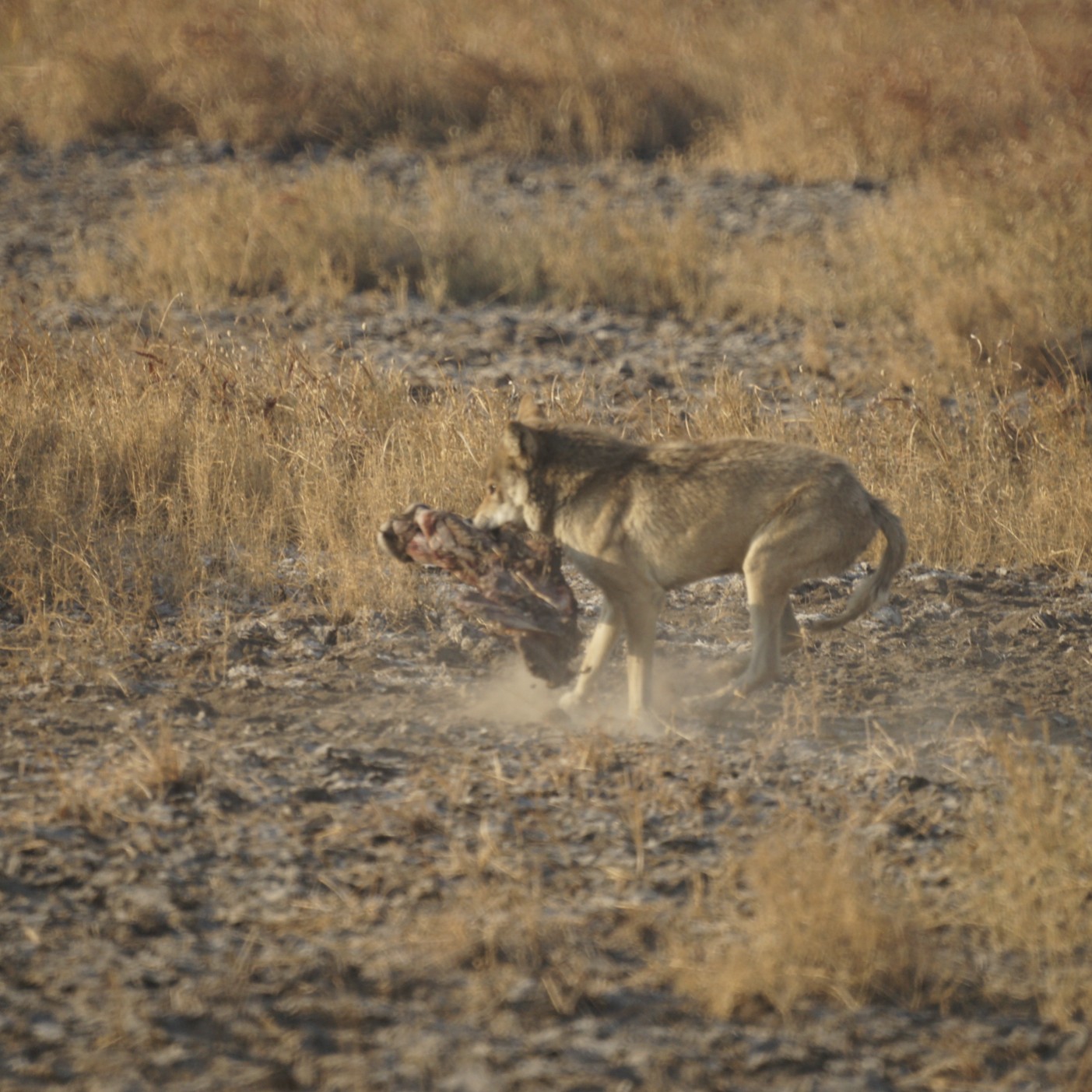
Wolf
Wolf

The wolf was in possession of a buffalo leg.

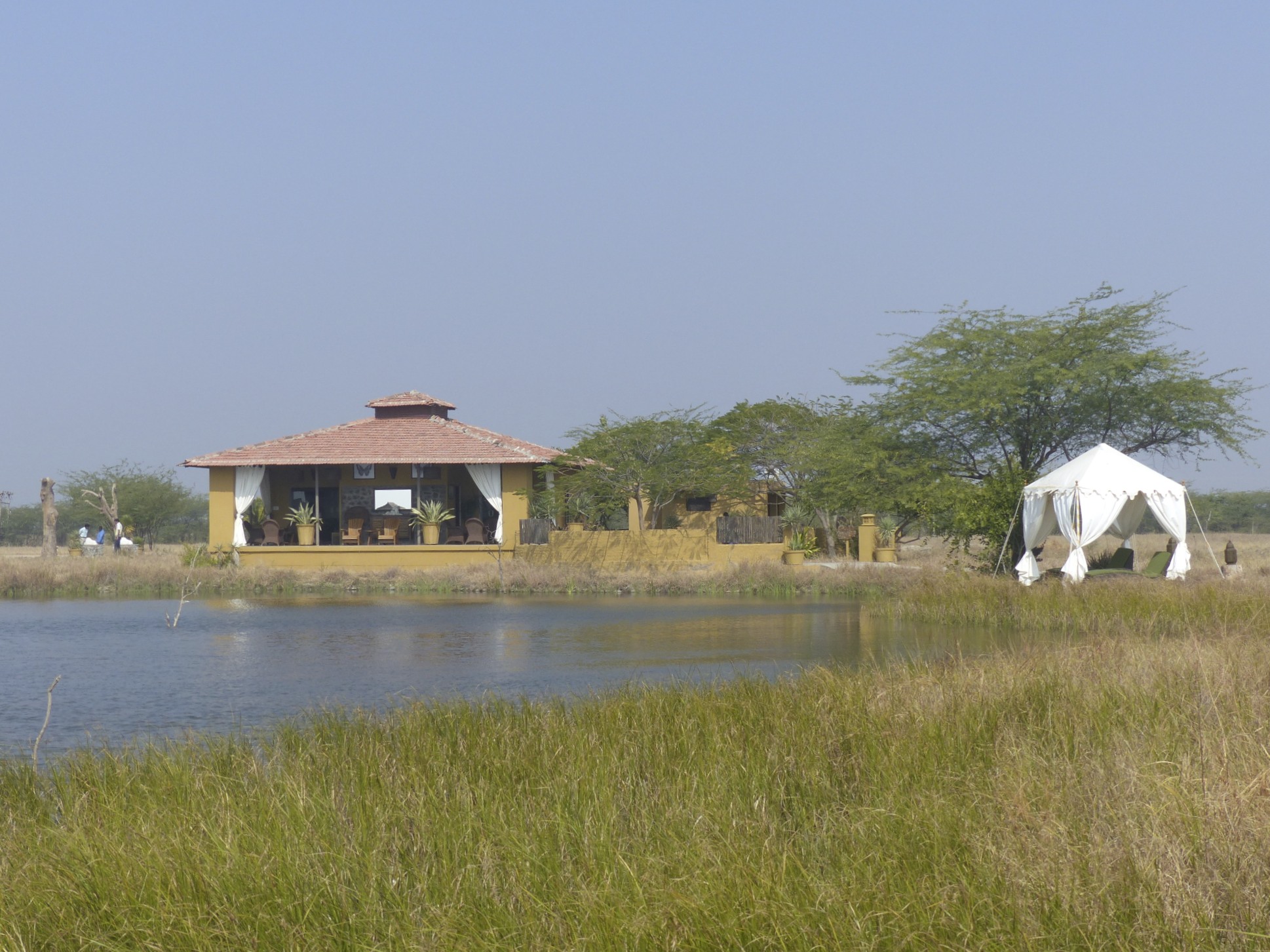
The obvious place to stay in Velavadar is the very comfortable Blackbuck Lodge situated only a couple of kilometres from the park gates …

P1010356P1010148

and as you watch the sun go down over the mesquite you can contemplate a couple of lines from the Blackbuck National Park website …

The Park provides one of the world’s best roosting sites to thousands of Harriers that arrive here from Central Europe for wintering …

… An entirely different experience of the wildlife begins to transcend as the darkness falls. The persistent howls of jackal add to the feeling of true wilderness. The long, deep and threatening howls of wolves, occasionally penetrate the darkness .

SONY DSC

… such a pity that the visitors had to be out of the park an hour or so earlier and won’t see the thousands of Harriers at their roost or be able to feel a shiver run down their spine as a wolf howls nearby.

Creature of the night …

Across the creek from the McGee country estate, in the Central Victorian Goldfields, is a bushland reserve.

Someone loves the reserve and has put up some nest boxes. I pass two of the boxes on my morning walk. Both are chewed and worn around the opening in the front, indicating that some creature has used them. One of them, though, has since been taken over by feral bees.

Having seen nothing come or go during daylight I deduced that the inhabitants might well be mammalian, perhaps there might even be gliders at the bottom of my garden.

One evening in summer I took a camp chair and staked out the box, through the twilight and into darkness. I provided a considerable feast for the mosquitoes but saw not a glimpse of a glider.

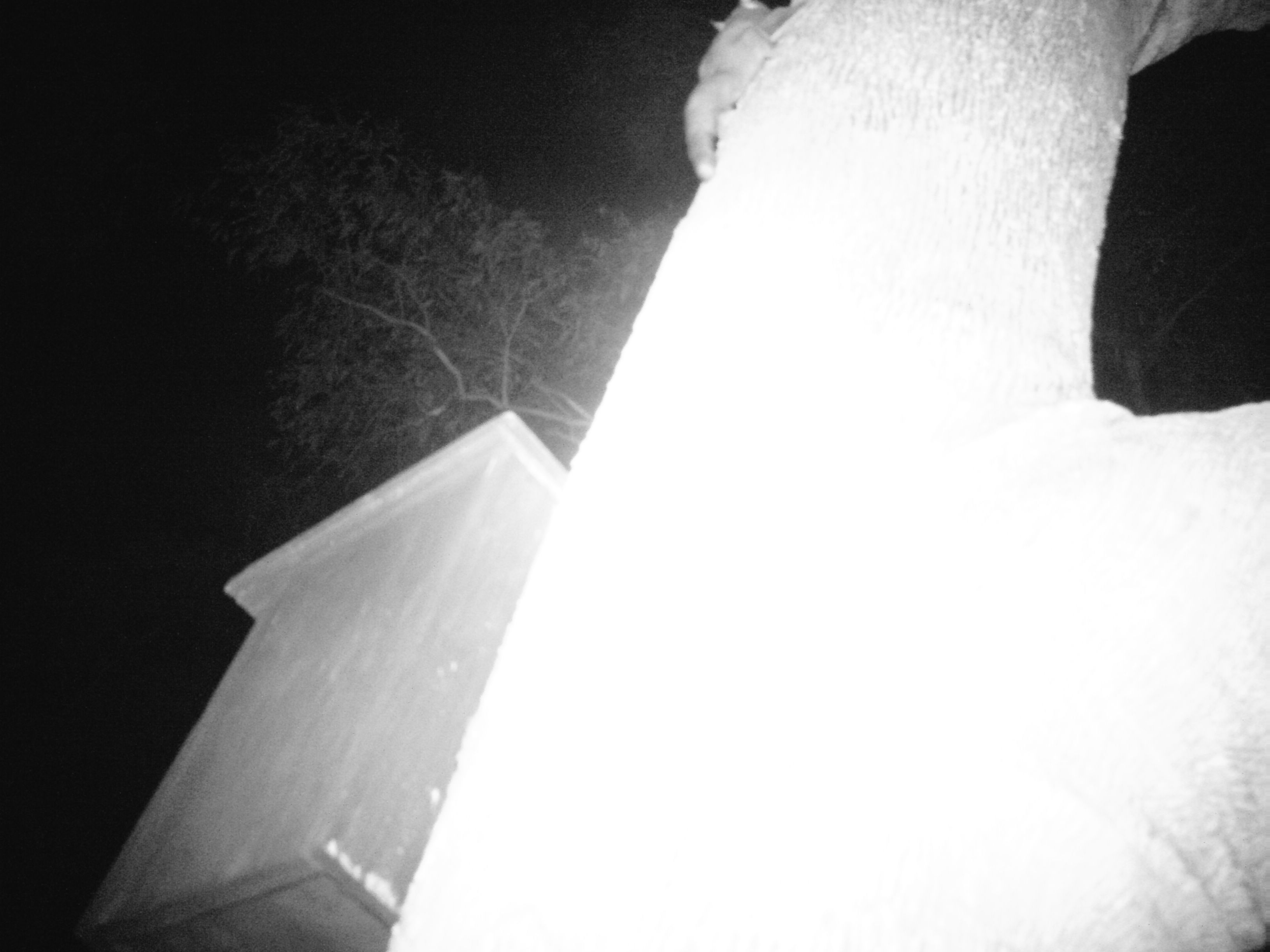
I subsequently bought a Trail Camera from Faunatech. It is mosquito-proof. I mounted it where it could see the box and also the canopy. It sat there for two nights and three days. It took pictures, almost exclusively of the canopy swaying in the breeze, by day this looks conventional enough, at night it uses infrared. I then examined more than 1200 photographs of a tree, a box and some swaying leaves and found four photos with a critter included. Here’s one …

IMAG1005

My working diagnosis is Sugar Glider but I am discussing this with a more knowledgable friend, a scientist with Parks Victoria.

Congratulations to the people who provided the box. I will be erecting a few on my side of the creek.